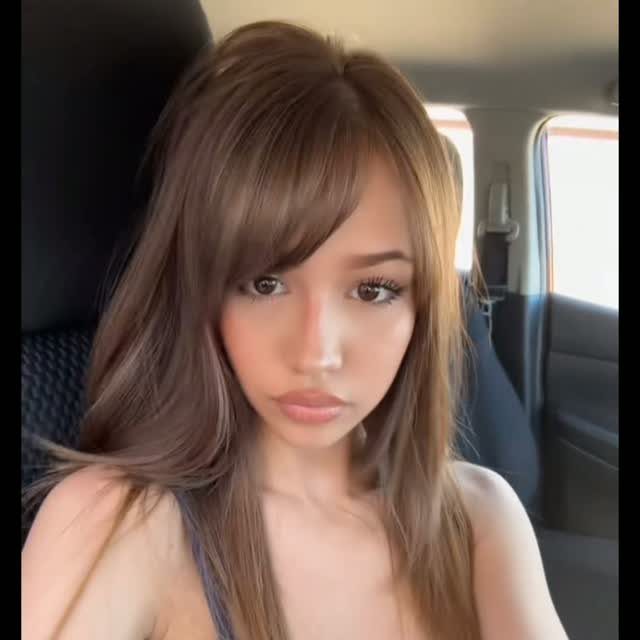
Length runs from cheekbone-grazing wisps to thick, eye-covering curtains.
The length you choose depends on how much time you want to spend with a round brush each morning and whether you need the option to tuck them behind your ear when they’re in the way.
Chin-length fringe transitions into layers without the usual grow-out limbo.
1. Layered Lob
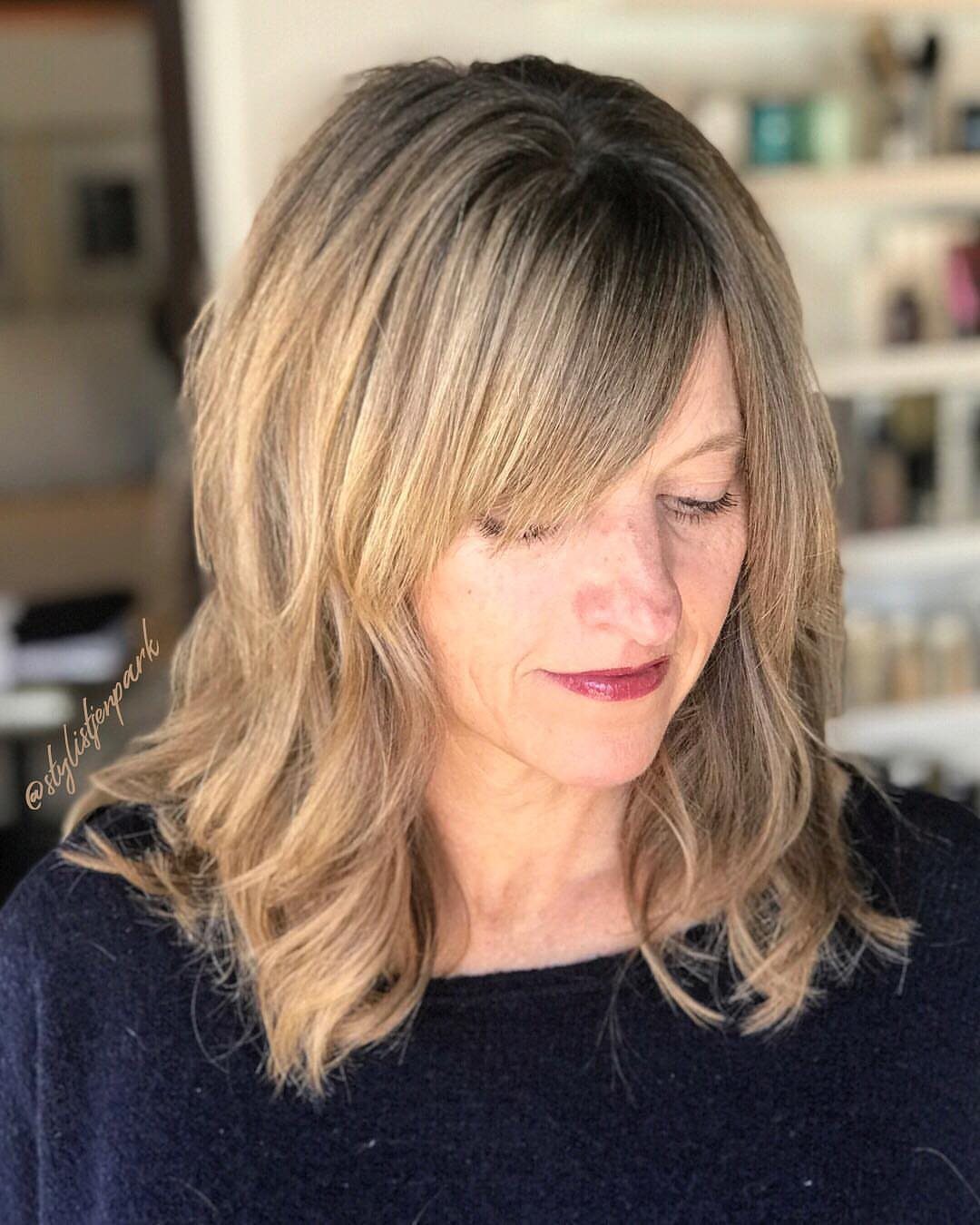
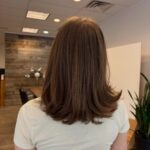
A lob cut to shoulder length and layered past the chin gives the cut movement without much work each morning. The fringe here sweeps across and falls just past the cheekbone, softening the face.
Ask for layers that start around chin level and continue through the ends, with the bangs cut long enough to tuck behind the ear when you want them out of the way.
The whole cut works with a quick blow-dry or air-dried with texture cream worked through damp hair.
2. Side Bang High Ponytail
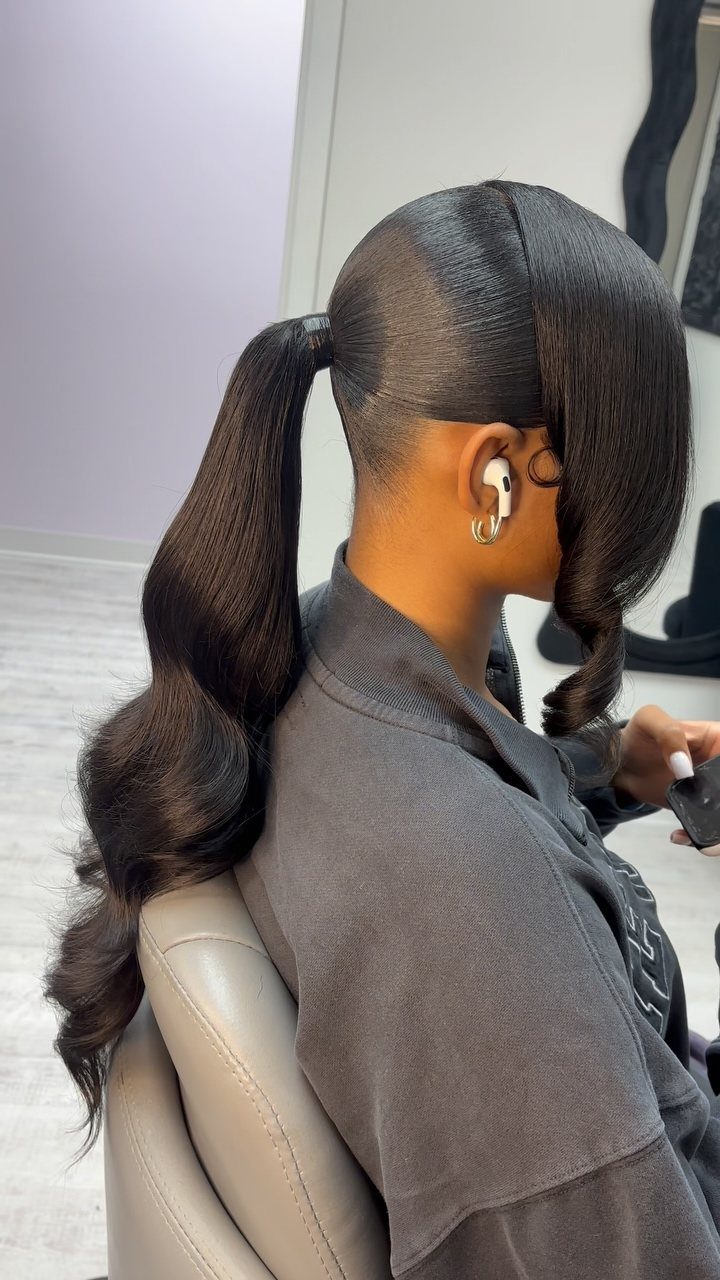
Pulling long hair into a high ponytail and leaving the side bangs out draws attention to the eyes and keeps the look from reading too severe.
The bangs here are long enough to curve past the cheekbone, and the ends are given a slight curl with a round brush or iron.
The ponytail sits at the crown, and the bangs are brushed forward and to one side before the rest of the hair is secured.
If your bangs are shorter, they will sit higher on the forehead; longer ones like these rest closer to the eye and can be pinned back when needed.
3. Voluminous Layered Bangs
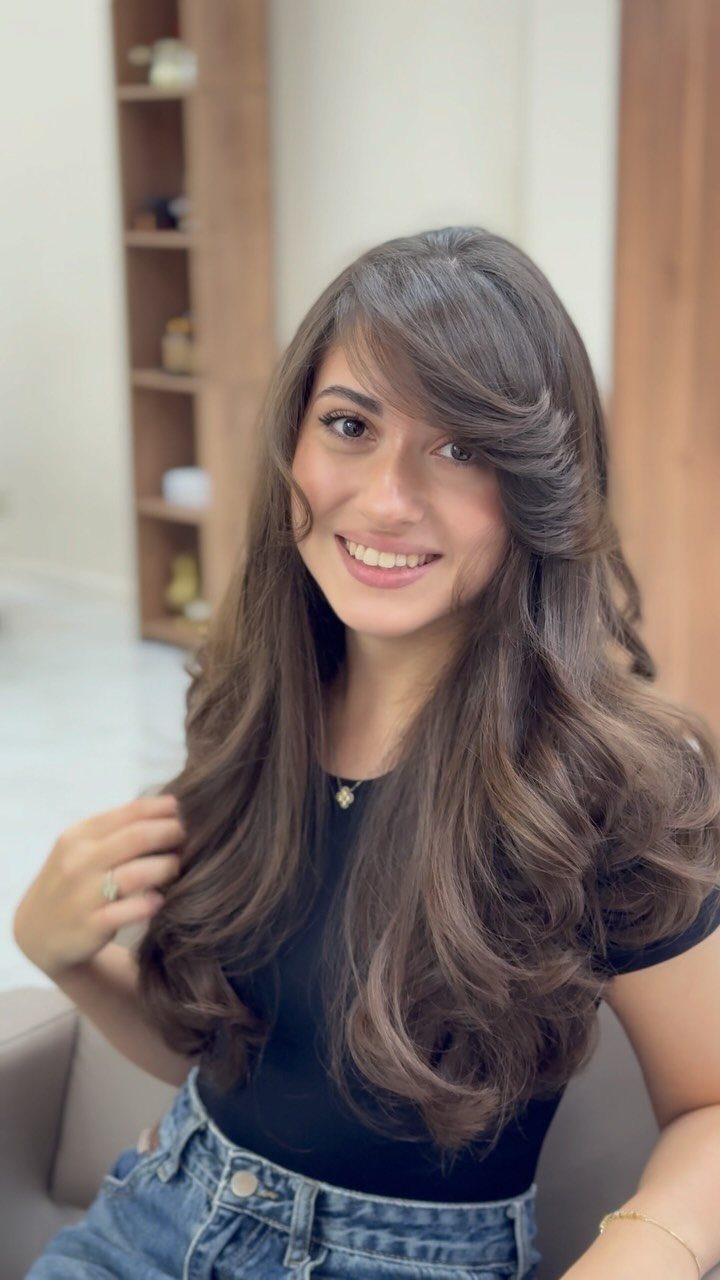
Layers cut through long hair and side-swept bangs that start at the part and angle across the forehead add volume without adding products. The bangs here fall to cheekbone length and blend into the rest of the cut.
Blow-dry the bangs with a round brush, lifting at the root and directing them across the forehead.
The rest of the hair can be waved with a curling iron or left to air-dry if your hair holds natural texture. The layers keep the cut from sitting flat against the head.
4. Medium-Length Comb-Over Bangs
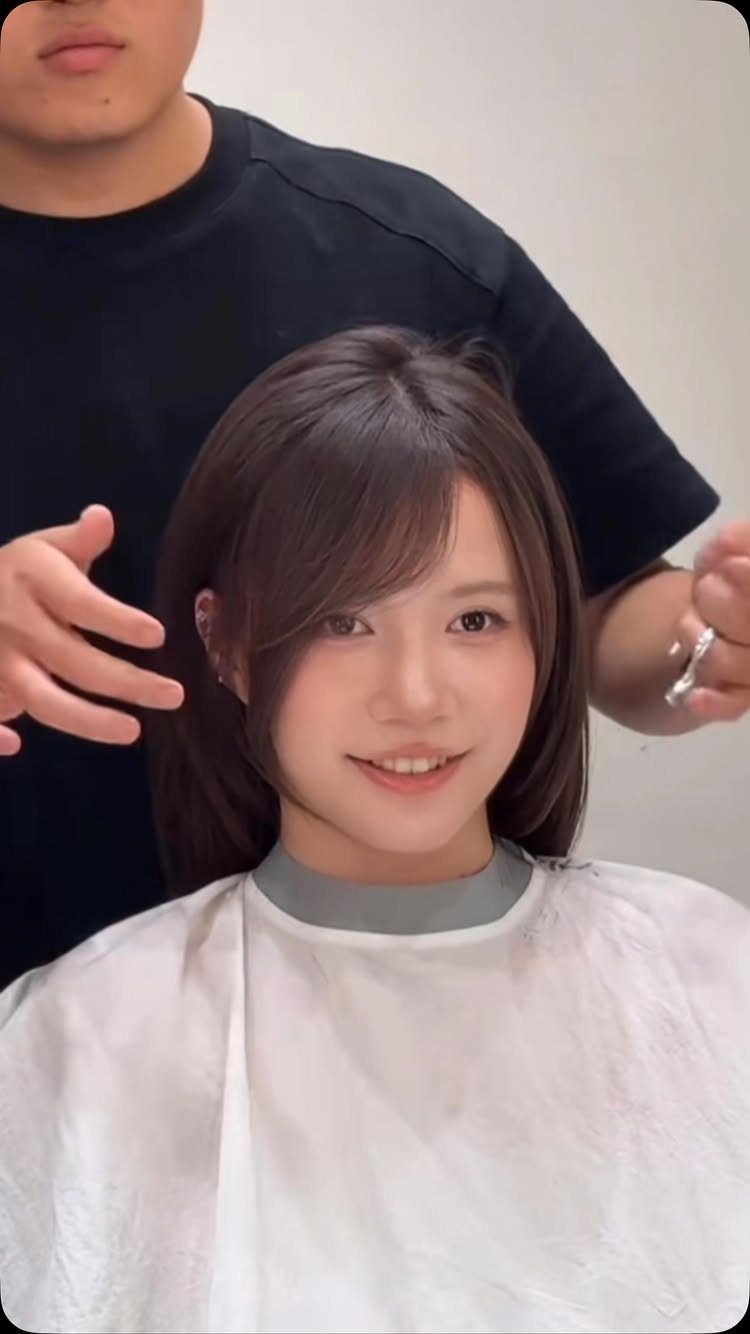
Medium-length hair with bangs combed to one side and falling just below the brow gives a clean, polished look that works for straight or slightly wavy hair.
The bangs here are cut to sit between the brow and the eye when swept over.
Part the hair to one side and comb the bangs across the forehead, securing them with a light styling cream or spray if they tend to fall back.
The rest of the hair is cut to fall between the chin and shoulders, and the bangs grow out more gracefully than blunt-cut styles because they blend into the length.
5. A-Line Long Bob with Edgy Bangs
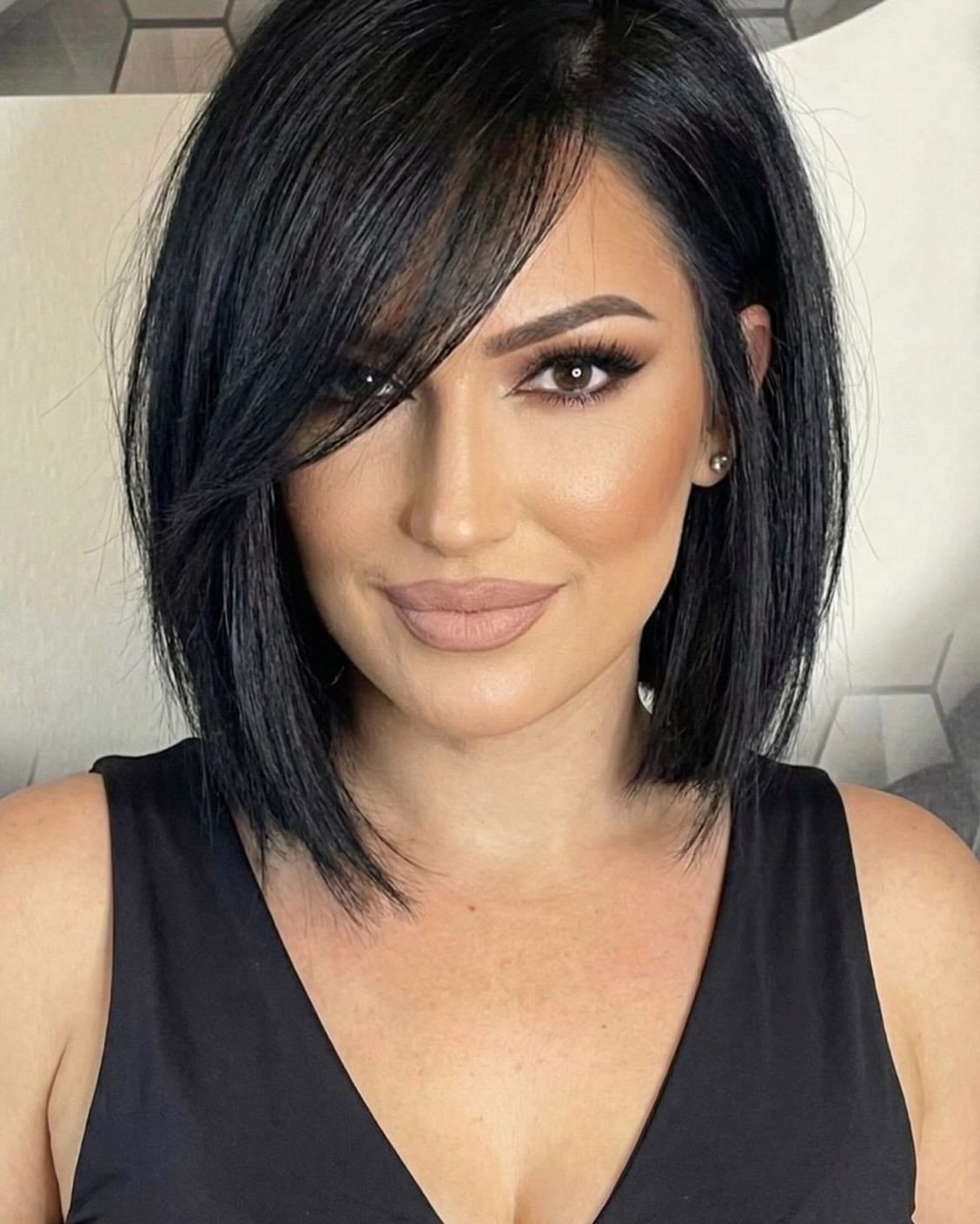
An A-line bob that angles slightly longer in front and side-swept bangs cut with feathered, textured ends give the cut an edgier finish than a standard bob.
The bangs here fall across the forehead and past the eye, and the ends are point-cut to avoid a heavy line.
Ask for the back to be cut shorter than the front, with the bangs left long and textured at the tips.
The feathered ends soften the look and let the bangs sit lighter on the face. Style with a flat iron for a sleek finish or leave slightly tousled for more texture.
6. Blonde Swoopy Wispy Bangs
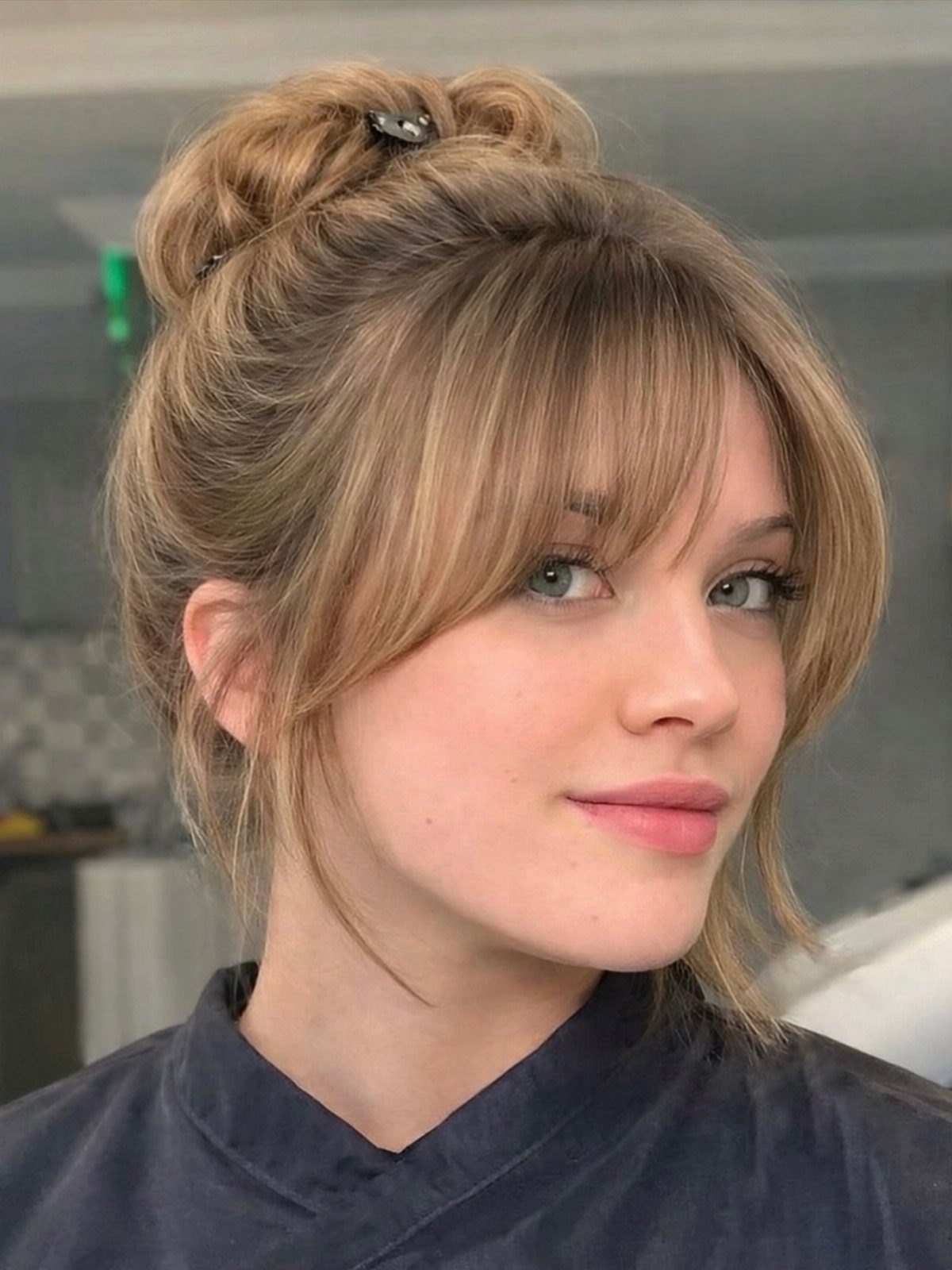
Long, wispy bangs that sweep to one side and fall to cheekbone length or lower soften the face and work with hair worn up or down.
The bangs here are fine and textured, with the ends thinned to avoid a blunt edge.
Ask for the bangs to be cut long and point-cut or razored at the tips so they taper rather than end in a solid line.
When hair is pulled into a bun or ponytail, these bangs stay out and frame the face without needing to be pinned.
7. Fine Medium-Length Hair with Tousled Bangs
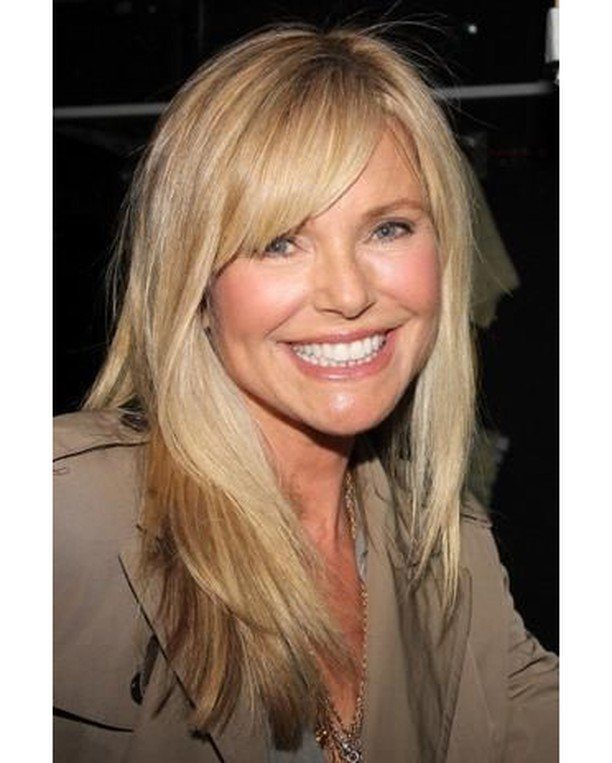
Tousled side-swept bangs that fall past the brow add texture to fine, straight hair without weighing it down.
The bangs here are cut long enough to reach the cheekbone and styled with minimal product so they move rather than sit stiff.
Blow-dry the bangs with your fingers, directing them to one side, then rough them up slightly at the roots.
A small amount of dry texture spray keeps them from looking too polished. Fine hair benefits from the tousled finish because it hides any gaps or flatness that can show up in a smooth sweep.
8. Full-Bodied 2000’s Side Bang

A thick, heavy fringe that sweeps fully to one side and covers part of the forehead brings back the side bang as it looked in the early 2000s.
Tell your stylist to leave the weight in rather than texturizing them, then blow-dry with a round brush to bend the ends under.
The look works best on straight or slightly wavy hair; curly or very thick hair will need more time with a flat iron to get the smooth finish this style relies on.
9. Shoulder-Length Smooth Swoopy Bangs
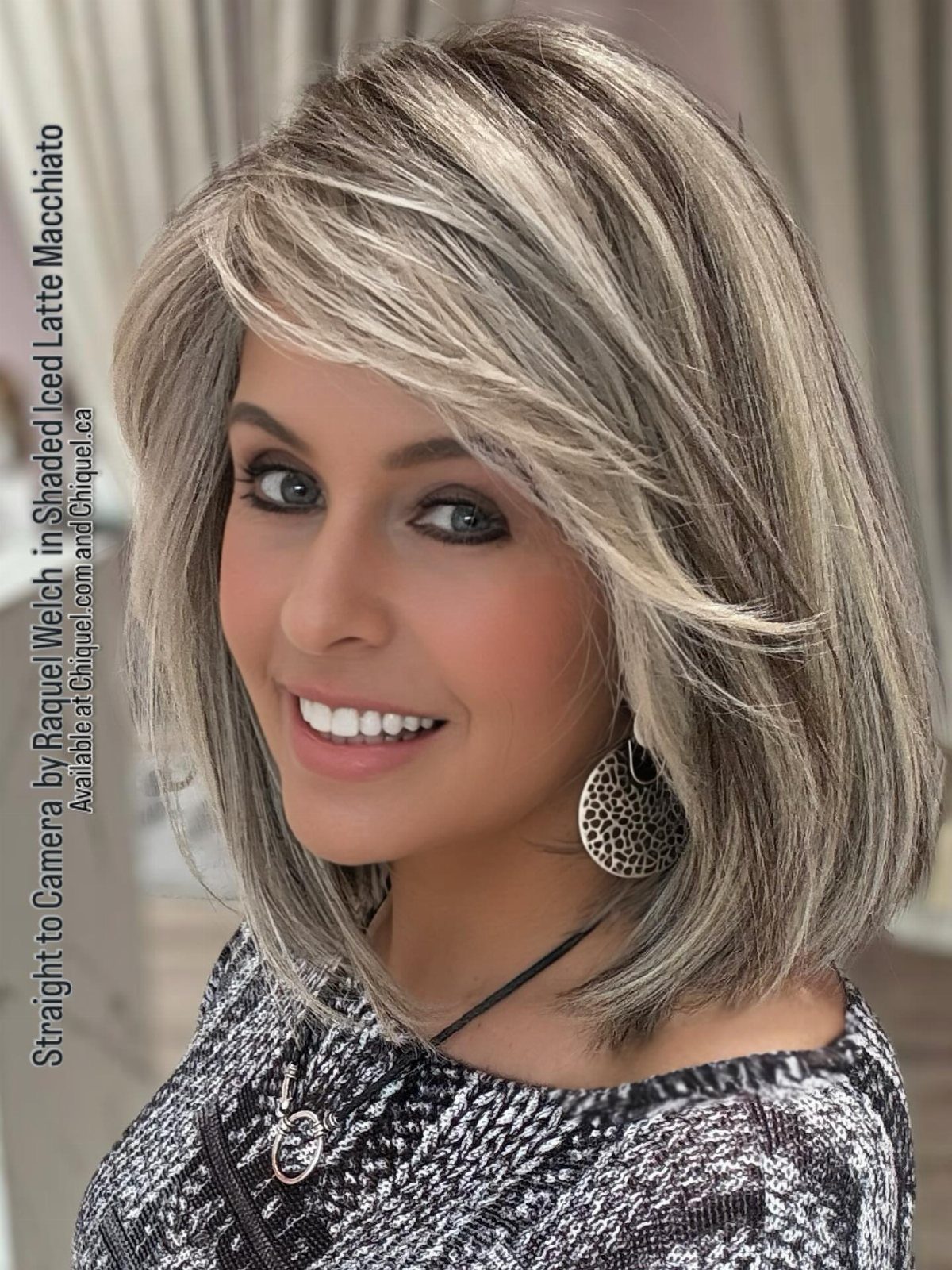
Bangs that sweep low across the forehead and curve smoothly to one side pair well with a polished bob that falls to the shoulders.
Blow-dry the bangs with a paddle brush to keep them smooth, and finish with a flat iron if your hair holds a bend.
The rest of the hair is styled straight or with a slight bend at the ends. This cut reads more formal than tousled or wispy versions, and it grows out cleanly because the bangs blend into the length.
10. Chin-Grazing Swoopy Bangs
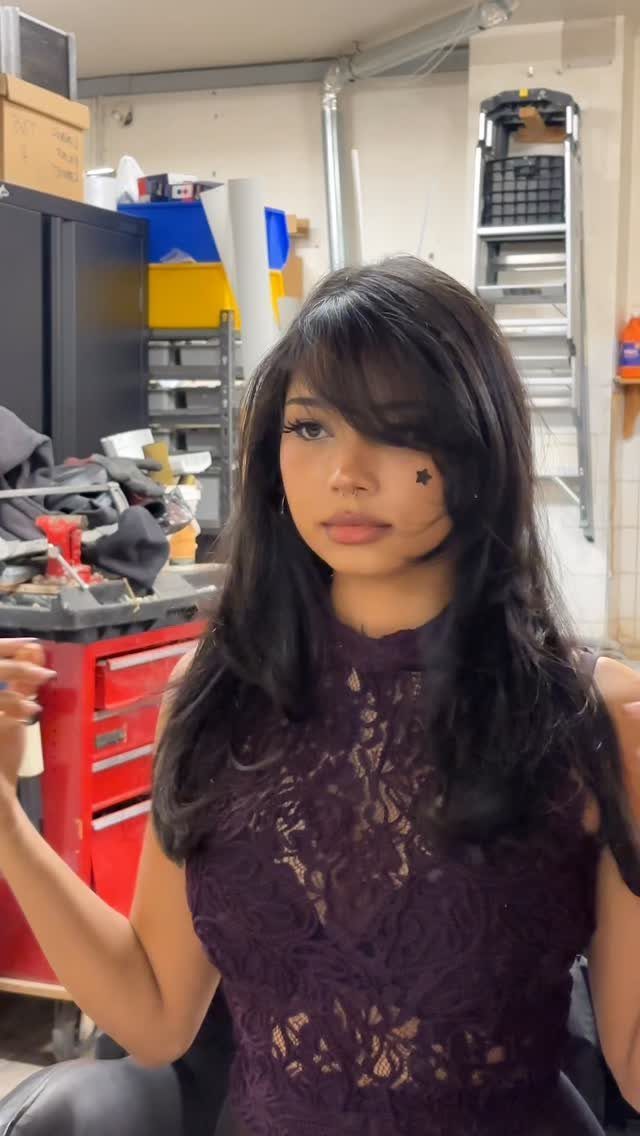
Side-swept bangs cut long enough to reach the chin soften the face and work with long hair worn down or pulled back.
Style them with a round brush or flat iron, curving the ends slightly inward.
These bangs are long enough to tuck behind the ear or pin back when you need them out of the way, and they blend into face-framing layers as they grow.
11. Layered Haircut with Framing Side Bangs
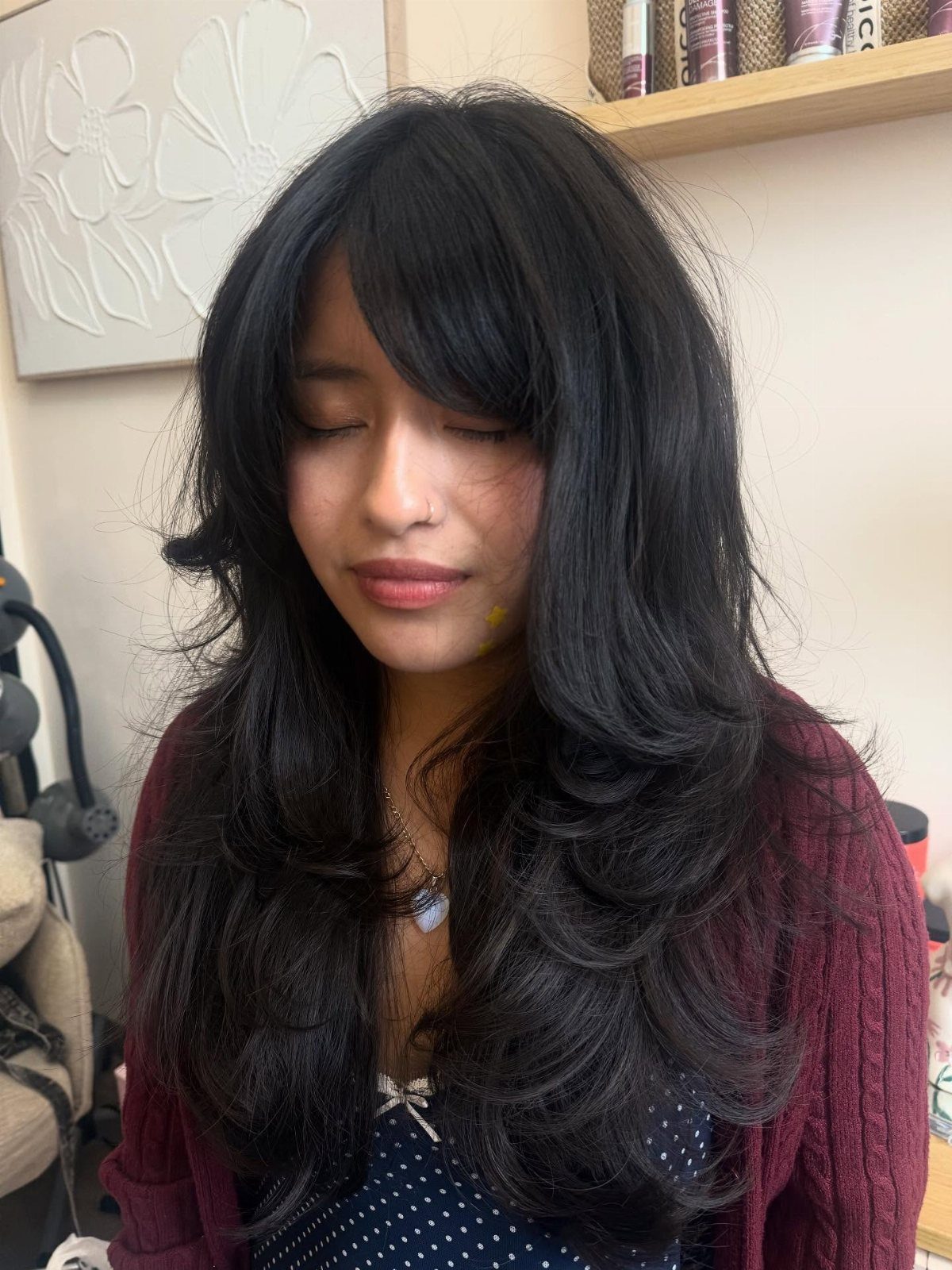
Wispy bangs that sweep across the forehead and thin out at the ends frame a layered cut without adding bulk.
The rest of the hair is layered from the chin down. Style the bangs by blow-drying them to one side with your fingers, and the layers can air-dry or be waved with a curling iron.
The textured ends keep the bangs from looking heavy, and they grow out without needing frequent trims.
12. Layered Haircut with Long Flowy Bangs
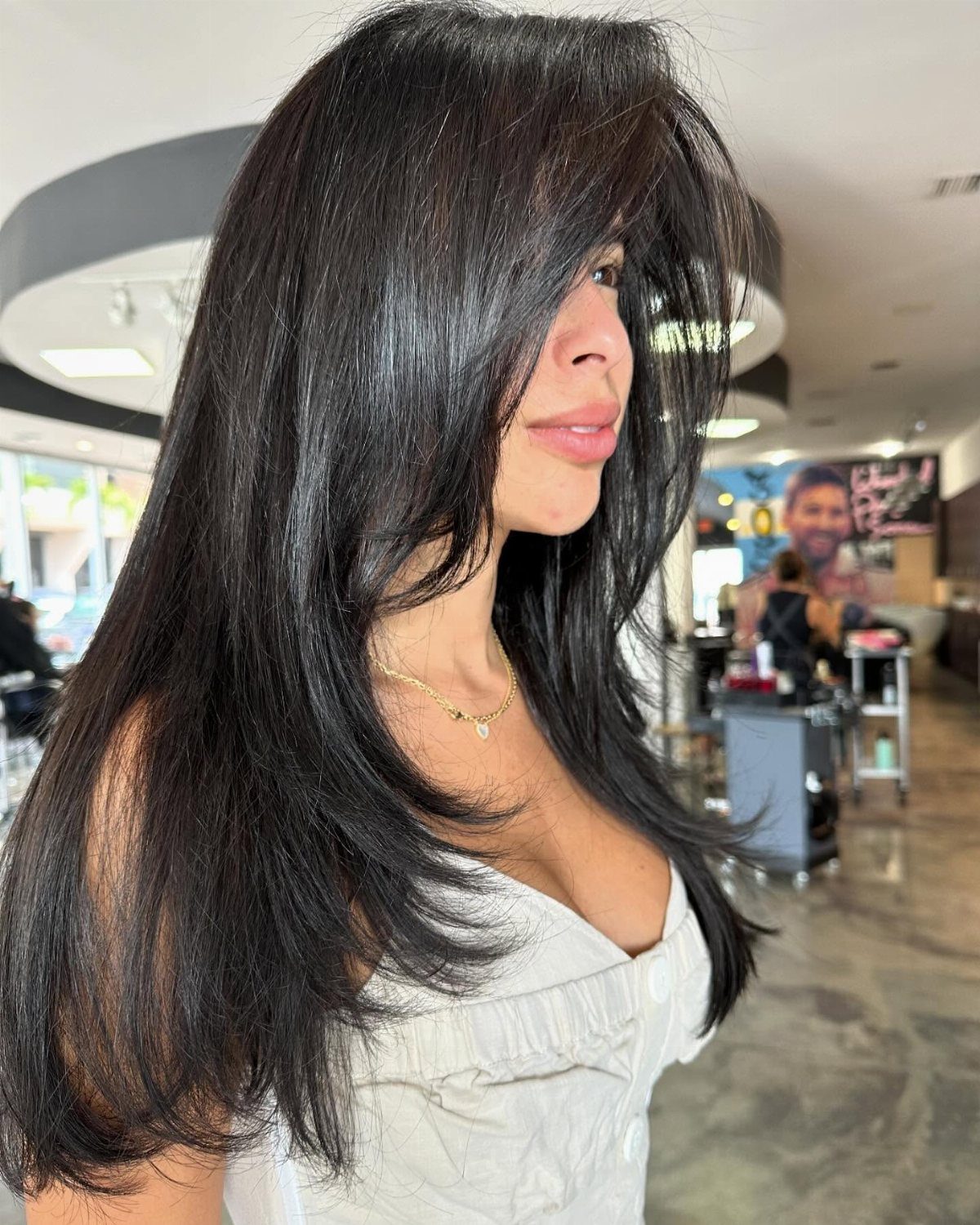
A thick side-swept fringe that starts shorter near the part and blends into longer face-framing pieces gives the illusion of bangs without a separate cut.
Ask for layers that start at brow or cheekbone level and angle longer toward the face.
Blow-dry the shorter pieces to one side with a round brush, and the longer strands can be left to fall naturally or curled under slightly.
This setup avoids the commitment of a full fringe because the bangs are just the shortest part of the layers, and they grow out as part of the same progression.
13. Tousled Bob with Long Bangs
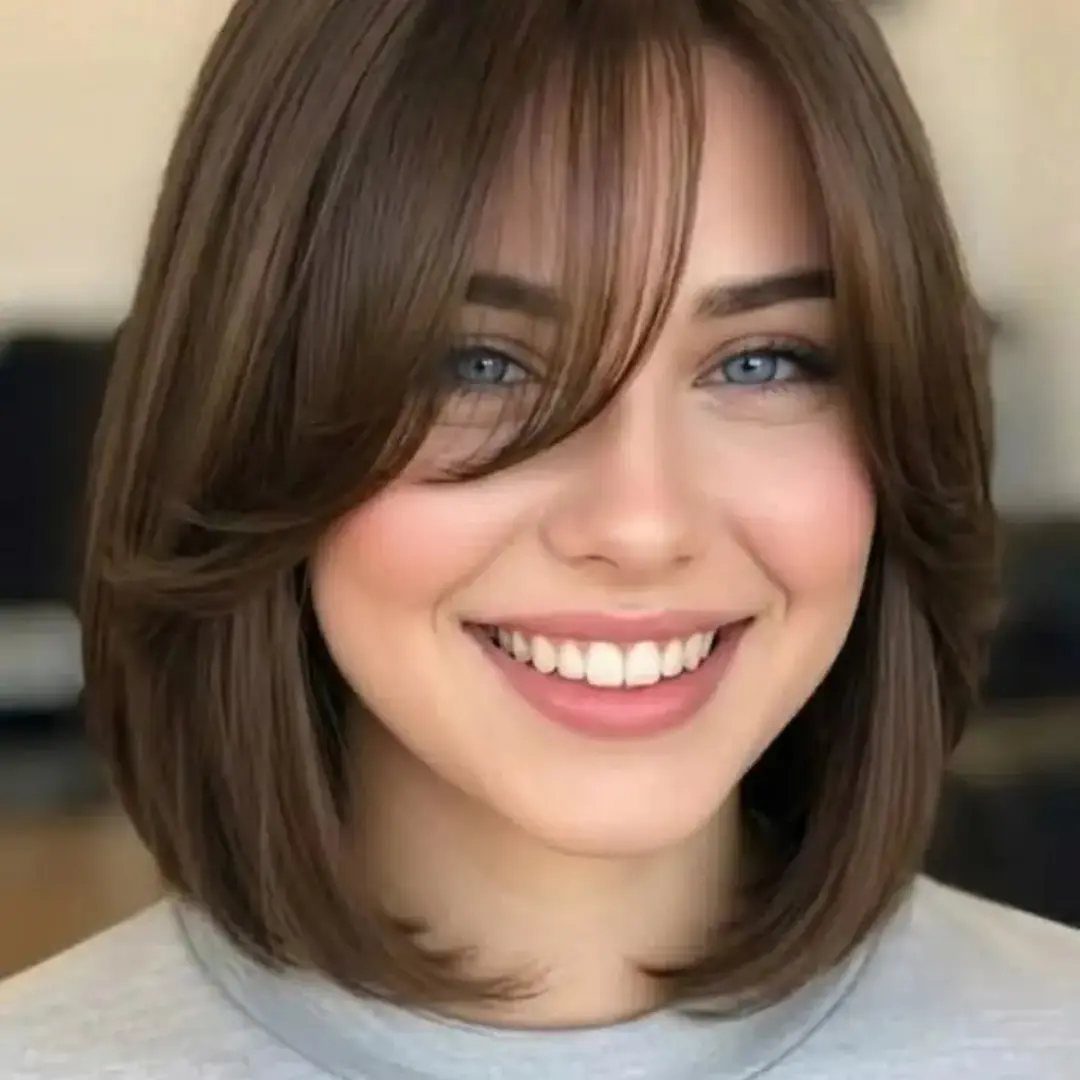
A bob cut to chin or shoulder length with long, tousled bangs gains volume when the part is shifted to the opposite side for a day or two.
Blow-dry them with your fingers, directing them across the forehead, and let the rest air-dry or scrunch with a texture spray. Changing the part every few days lifts the roots and keeps the style from falling flat.
14. Off-Center Butterfly Bangs
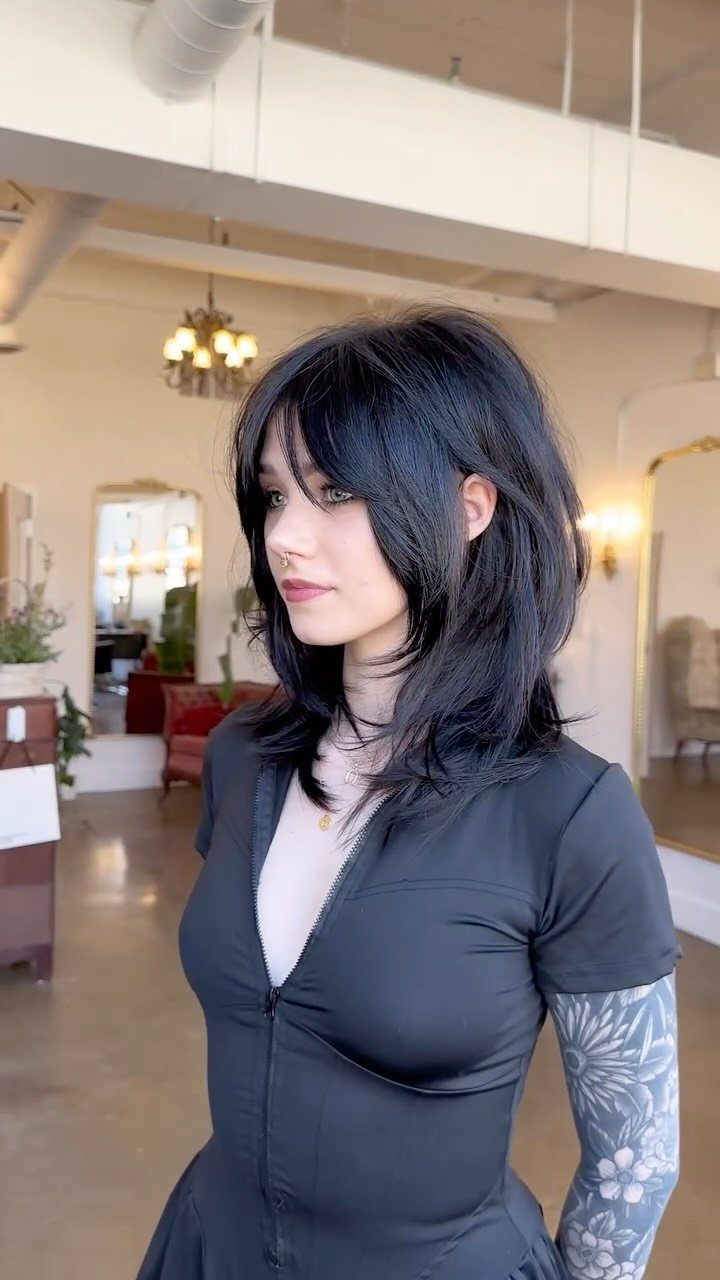
Face-framing layers cut shorter at the cheekbone and flipped outward rather than curled under give an off-center, 1980s-inspired look. The layers here are swept to one side and styled away from the face with a round brush or flat iron.
Blow-dry the layers while turning the brush outward, or flat iron them and flip the ends out with your wrist.
15. Eye-Covering Wispy Bangs
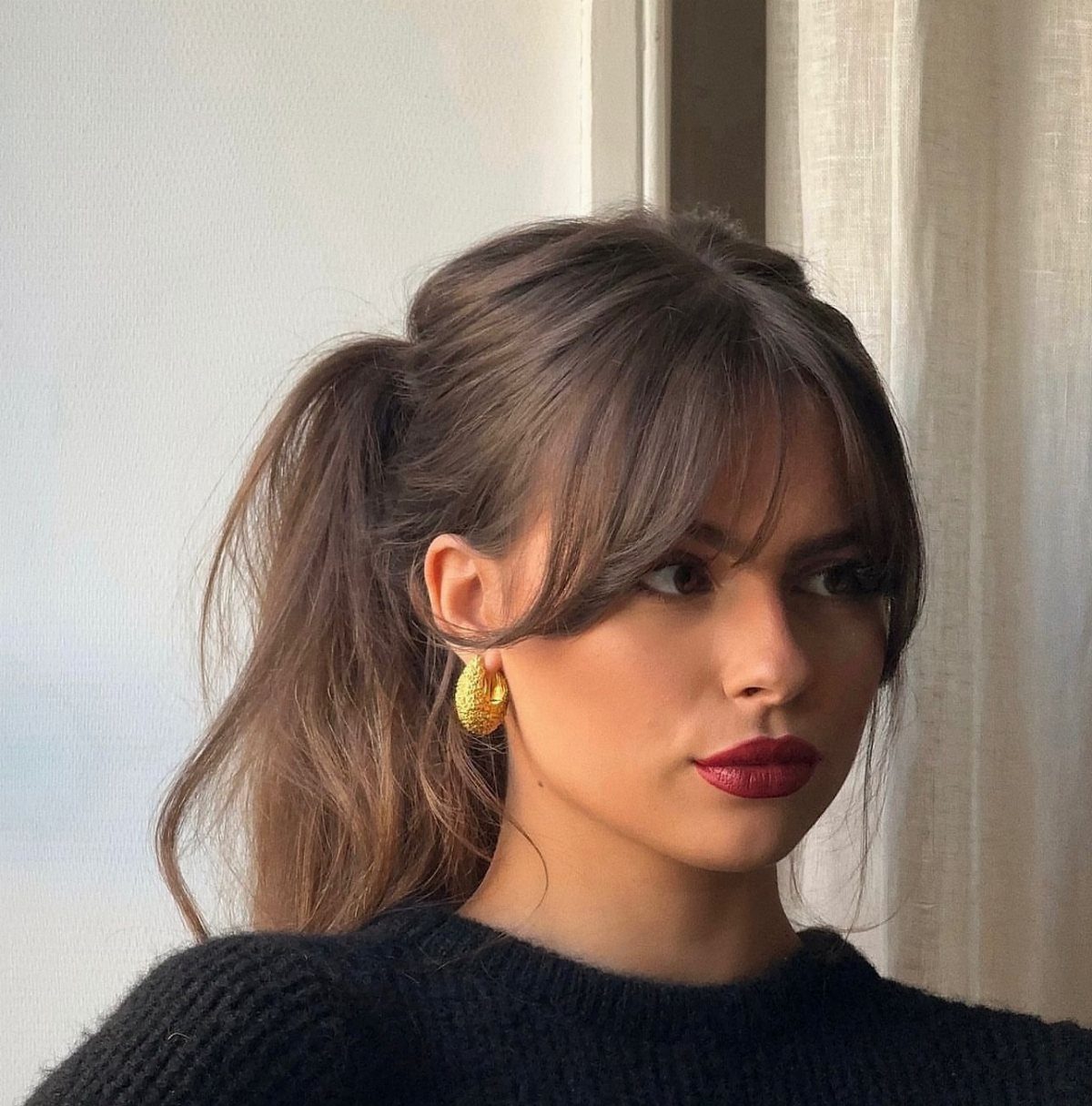
Blow-dry them to one side with your fingers, and leave them loose or pin them back when you need them out of the way. The wispy texture hides any uneven growth as they grow out.
16. Rounded Side Bangs
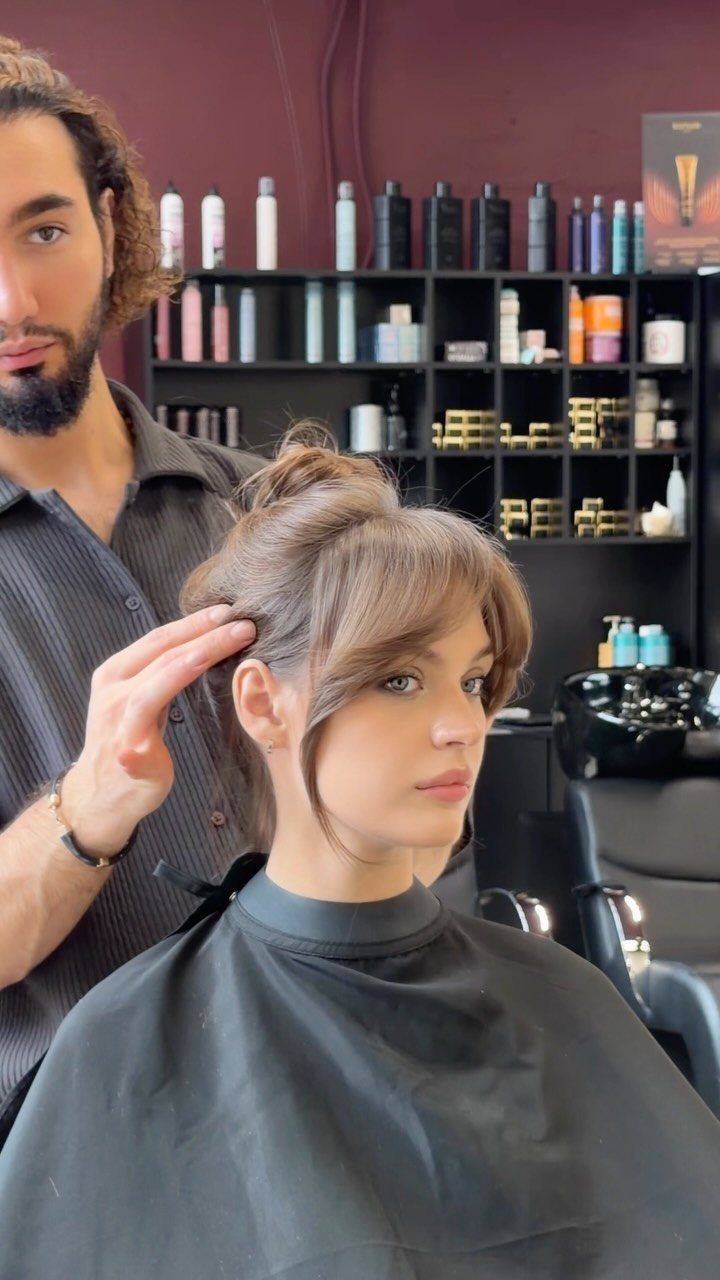
Bangs that curve in a soft, rounded arc from the part to the cheekbone sit lower on the forehead than straight-across bangs and soften the face.
The bangs here are cut with the longest point near the temple and the shortest near the inner brow.
Ask for the bangs to follow a rounded line rather than a straight one, with the ends left slightly textured.
Blow-dry them with a round brush, directing them to one side, and the curve will hold with minimal styling. This cut suits oval and heart-shaped faces.
However, there are a few caveats to consider—think awkward grow-out periods and a long-term commitment—but side bangs are the alternative that gives the best of both worlds.
17. Tousled Choppy Bangs
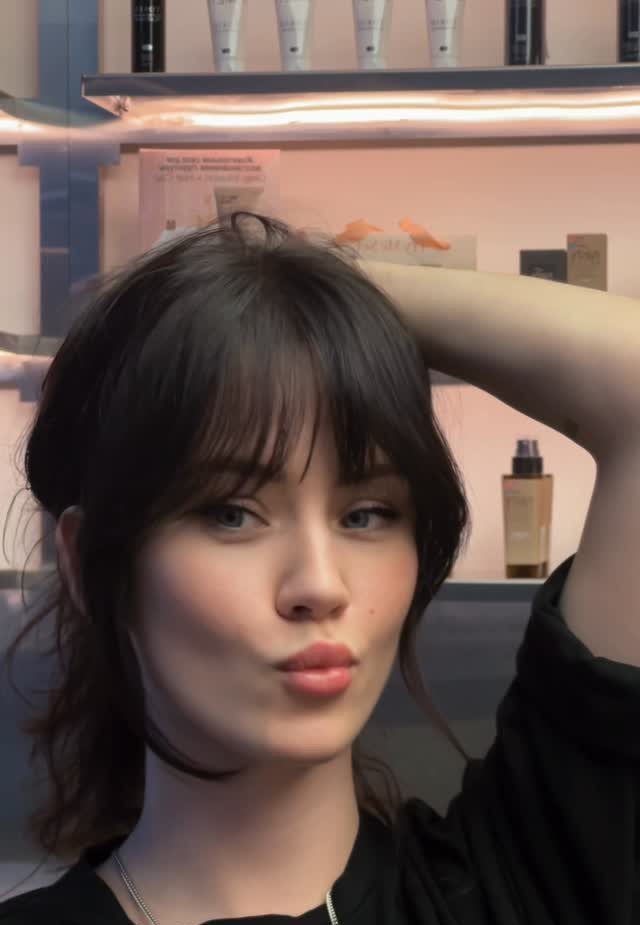
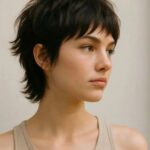
Choppy bangs cut with jagged, uneven ends and styled tousled rather than smooth add texture to a layered cut.
The choppy ends work best on straight or slightly wavy hair.
18. Multicolored Angled Fringe
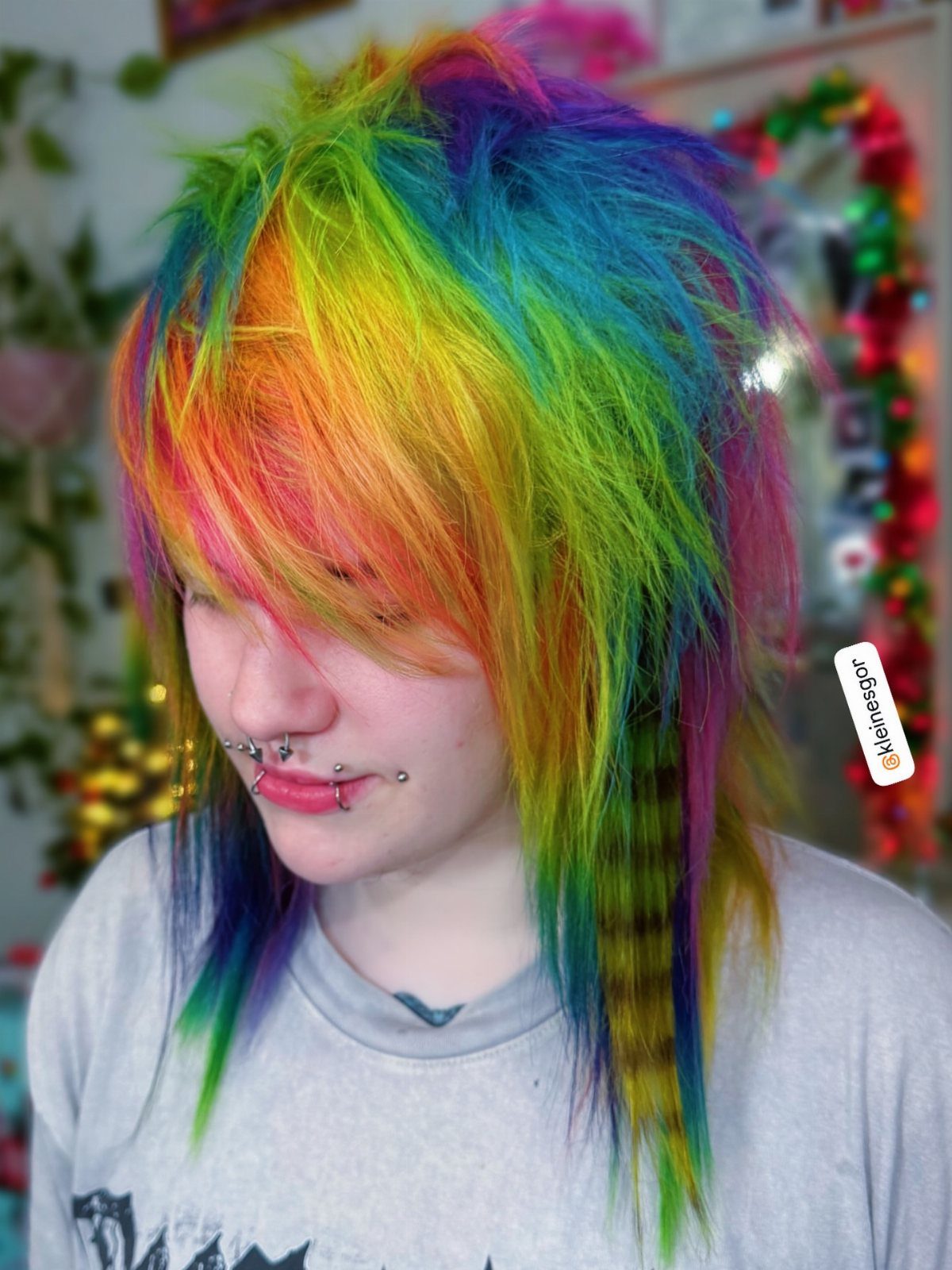
An angled fringe cut shorter at one side and longer at the other, dyed in multiple bright colors, makes the sweep more visible by following the color shifts.
The fringe here is cut at an angle and swept across the forehead, with each color sitting in a separate section.
Dye the hair in blocks or gradients before cutting the bangs, or cut the bangs first and apply color to each section separately.
Blow-dry the fringe with a paddle brush to keep it smooth, and the angle will show the color transition as it moves across the face.
19. Long Sleek Side-Swept Hair
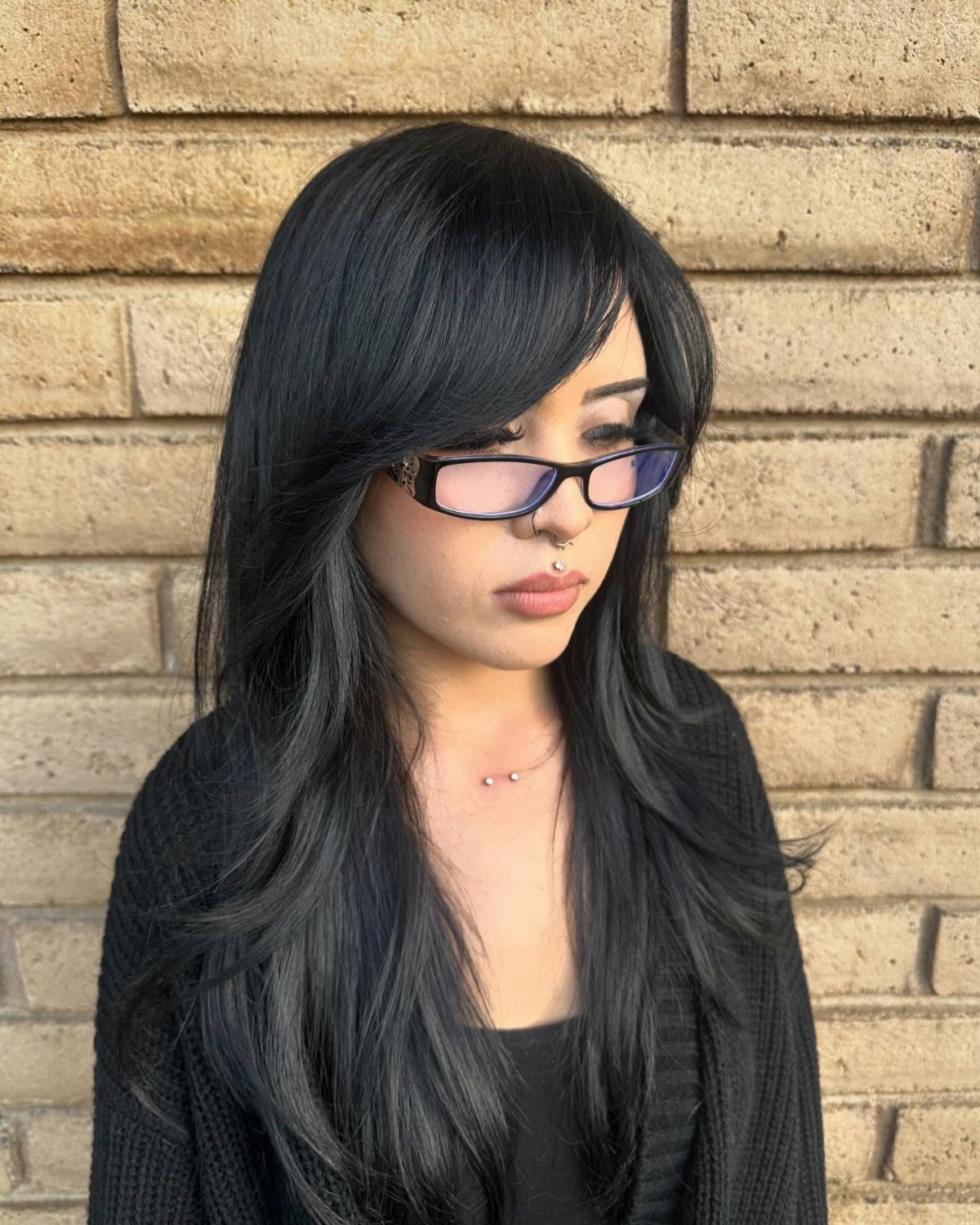
Long black hair worn straight and smooth with a side part and bangs swept across the forehead gives a polished, simple finish that takes minimal styling time.
Part to one side and direct the bangs across with the brush as you dry them.
The length stays out of the way when pulled into a low ponytail or braid, and the bangs can be tucked behind the ear when needed.
20. Auburn Bob with Side Bangs
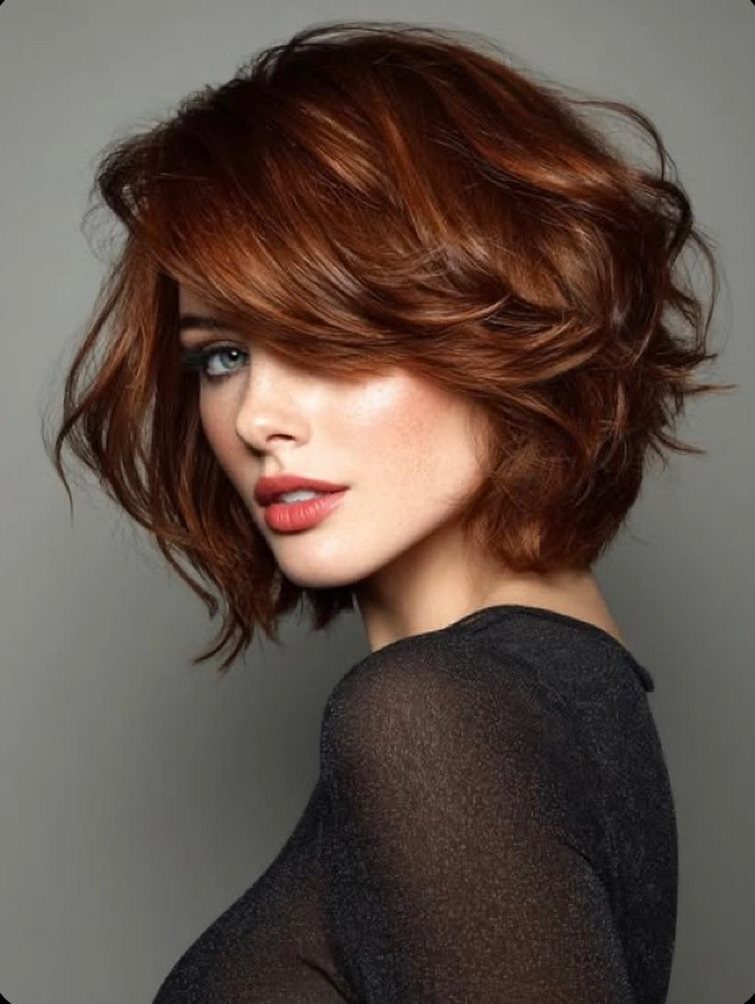
Auburn color on a short, layered bob brings warmth to the cut, and long side-swept bangs that fall past the eye add softness.
The bangs here are left thick and angled across the forehead, with layers cut through the rest of the bob to lift at the crown.
Blow-dry with a round brush to add volume at the roots, and the auburn tone shows best on hair lightened a few shades before the color is applied.
21. Side Bangs with an Updo
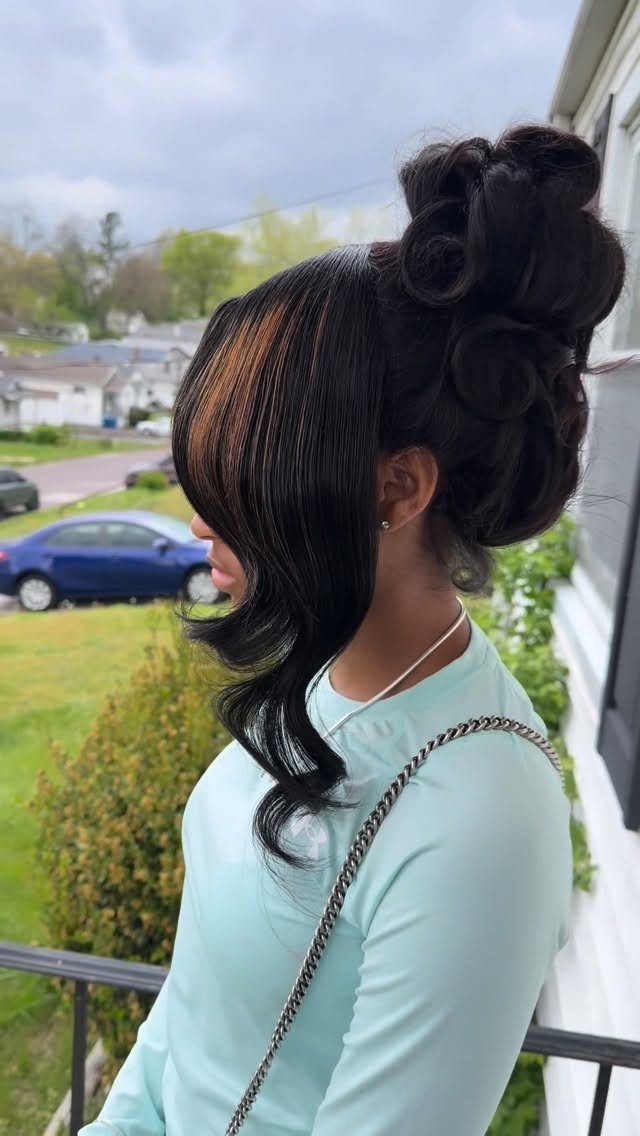
Leaving the bangs down when the rest of the hair is pinned up keeps the updo from looking too formal.
Curl the hair before pinning it into a high bun or twist, leaving the bangs out.
Style the bangs with a flat iron or round brush to direct them to one side, and secure the updo with pins rather than an elastic so the curls stay visible.
Choosing Bangs for Your Features
Length, thickness, and finish all matter.
Hair density and texture affect how the bangs sit. Fine hair benefits from bangs left slightly thicker; thick or curly hair may need thinning or texturizing at the ends to keep them from looking too heavy.
A cowlick near the hairline can pull bangs in the wrong direction, so part and sweep them in the direction the hair already wants to go rather than fighting it.
A stylist familiar with your texture can recommend a length that will hold the sweep without constant restyling.
Managing Fringe Grow-out
The awkward phase is shorter, and you have more options for managing them while they grow.
Tuck them behind the ear when you need them out of the way, or pin them back with a small clip.
Request that the stylist taper the fringe so it graduates into your existing length and disappears as face-framing layers.
Frequently Asked Questions
Do side-swept bangs make you look younger?
Side-swept bangs soften the face and add movement, which can make the overall look feel less severe and more approachable.
The layers and texture typical of a side fringe create depth around the face rather than drawing hard lines, and that lightness reads as a fresher, less formal finish.
Who do side-swept bangs look good on?
Side-swept bangs work on any face shape as long as you adjust the length, thickness and finish.
Oval and heart-shaped faces suit most versions, while round faces benefit from longer bangs that fall past the cheekbone to add length, and square faces do better with softer, textured ends rather than blunt cuts.
Are side bangs still in style in 2026?
Side bangs remain current, with the full-bodied 2000s version seeing a return alongside softer, wispy styles. The look adapts easily to different textures and lengths, so it stays relevant rather than reading as dated.
What is the difference between side bangs and side-swept bangs?
The terms are used interchangeably.
Both describe a fringe parted to one side and swept across the forehead rather than cut straight across, and both rely on light layering or texturing to keep the bangs from sitting heavy on the face.