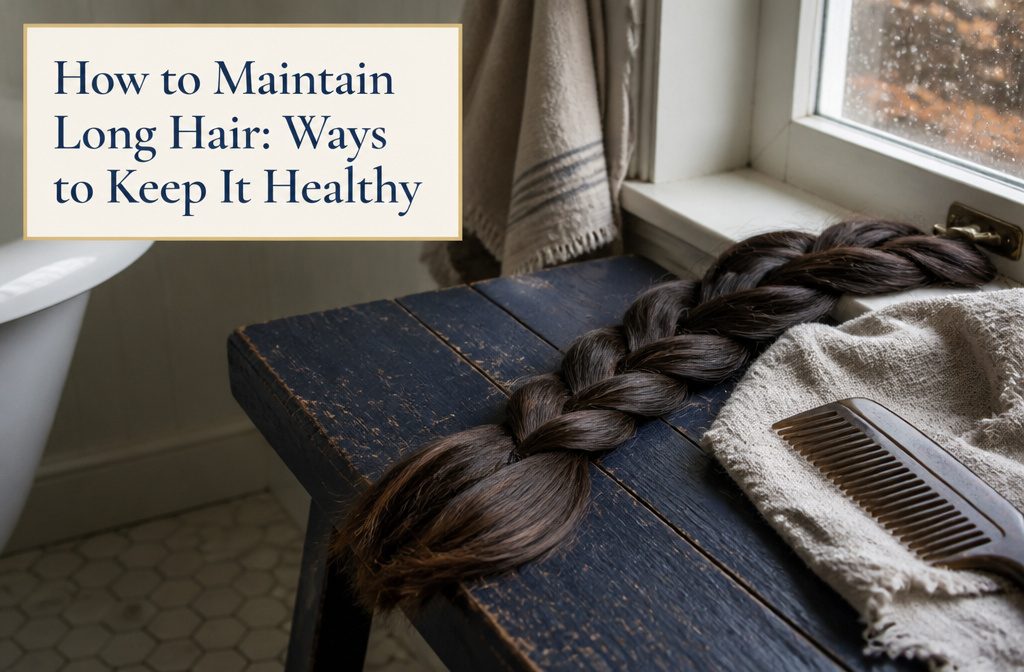
Long hair stays healthy when you wash less often, condition the ends every time, and trim every 6 to 8 weeks.
Most people wash too frequently and strip the natural oils that protect their hair, then wonder why the ends look dry and split.
Shampooing once a week or every third day keeps hair hydrated, and a silk pillowcase prevents the friction that causes breakage overnight.
1. Wash Gently and Skip Days Between
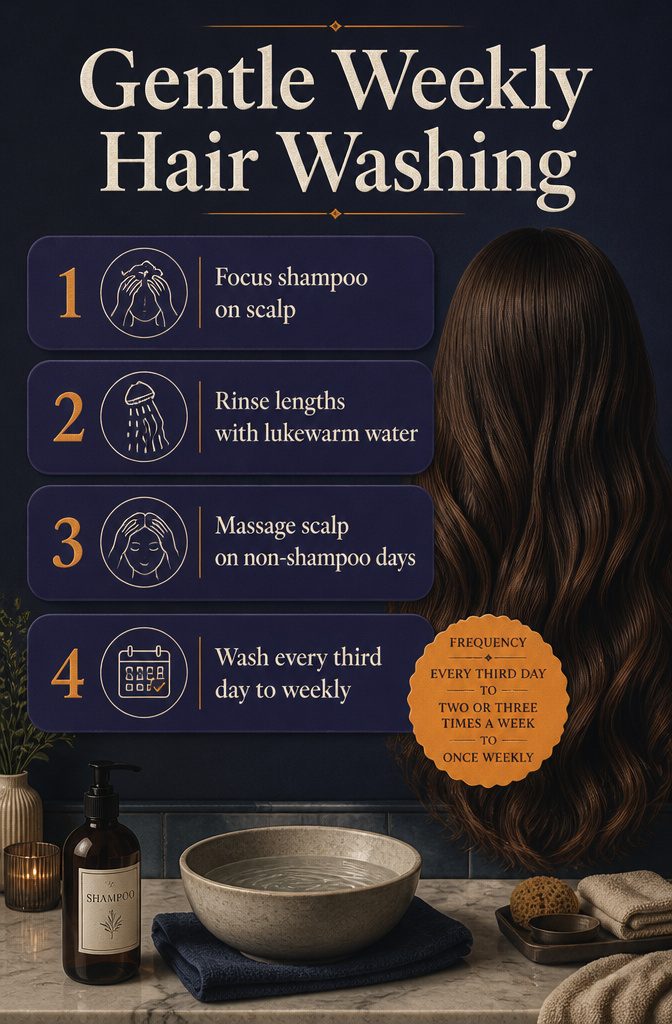
Long hair benefits from shampooing focused on the scalp rather than the full length, since ends tend to run dry and product rarely builds up past the roots.
I wash once a week, the same schedule my grandmother kept, because too-frequent shampooing strips the natural oils that keep hair hydrated and protected.
If your hair looks greasy after three or four days, you can wash twice weekly or use dry shampoo between sessions.
How often you wash depends on how oily your scalp runs.
Sources suggest washing every third day to two or three times a week, with some stretching it to once weekly. Overwashing leads to dryness, brittleness and breakage, and your scalp may overproduce oil to compensate for what you stripped away.
On non-shampoo days, rinse thoroughly with lukewarm water and massage your scalp as if you were shampooing. Hot water strips oils and leaves hair prone to breakage.
2. Condition and Add Moisture to Lengths and Ends
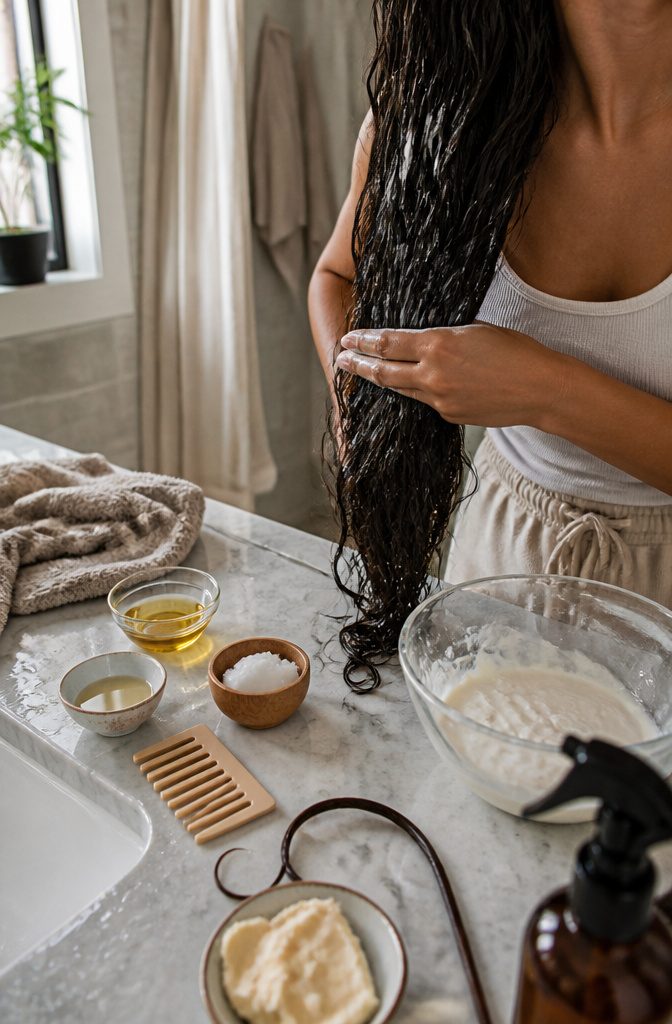
Conditioner goes on every time you shampoo, focused on mid-lengths to ends rather than roots. Those sections dry out faster because natural scalp oil has farther to travel, and conditioner seals in moisture while reducing tangles and frizz.
On days you skip shampoo, you can still condition the ends to rehydrate them after rinsing with water.
Once a week, swap your regular conditioner for a deep conditioning treatment or hair mask. Apply it through mid-lengths to ends, let it sit for around ten minutes, then rinse.
The richer formula repairs dryness and damage from the inside out, leaving hair softer and shinier. Look for ingredients like argan oil, jojoba oil, keratin, shea butter, or coconut oil when choosing products.
Leave-in conditioner adds another layer of hydration without weighing hair down. Apply a generous amount to damp hair, avoiding the roots, and it prevents frizz while keeping hair touchable.
A few drops of oil brushed through the ends at night fortify strands that rarely see scalp sebum, reducing split ends and breakage over time.
3. Massage and Care for Your Scalp
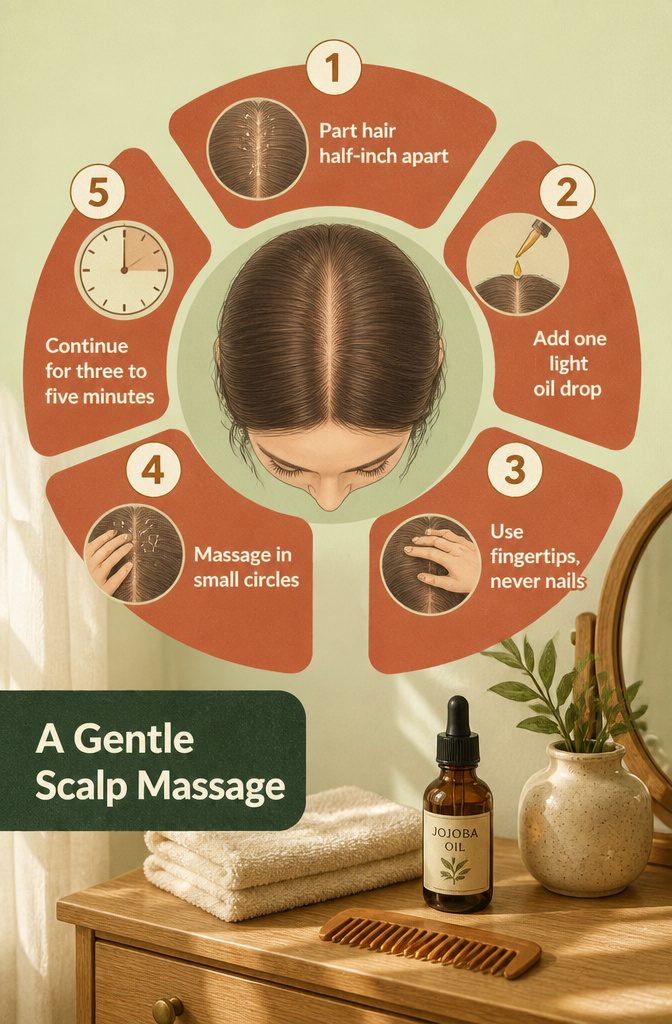
Fingertips, not nails, do the work: press and move the skin in small circles for 3–5 minutes, a few times a week. Claws scratch, and an irritated scalp only adds itching and dryness to the list.
If you want oil, jojoba or argan is light enough to rinse out. Part your hair, add a drop, make the next part about half an inch over, and repeat across the head, then massage for about a minute.
Leave it on at least an hour before washing. I’d skip coconut oil, since it’s known to clog drains.
On wash day, rub the shampoo in lightly instead of scrubbing. Outdoors, a hat or a spray sunscreen protects the scalp without greasing your roots.
4. Detangle Gently, Starting at the Ends
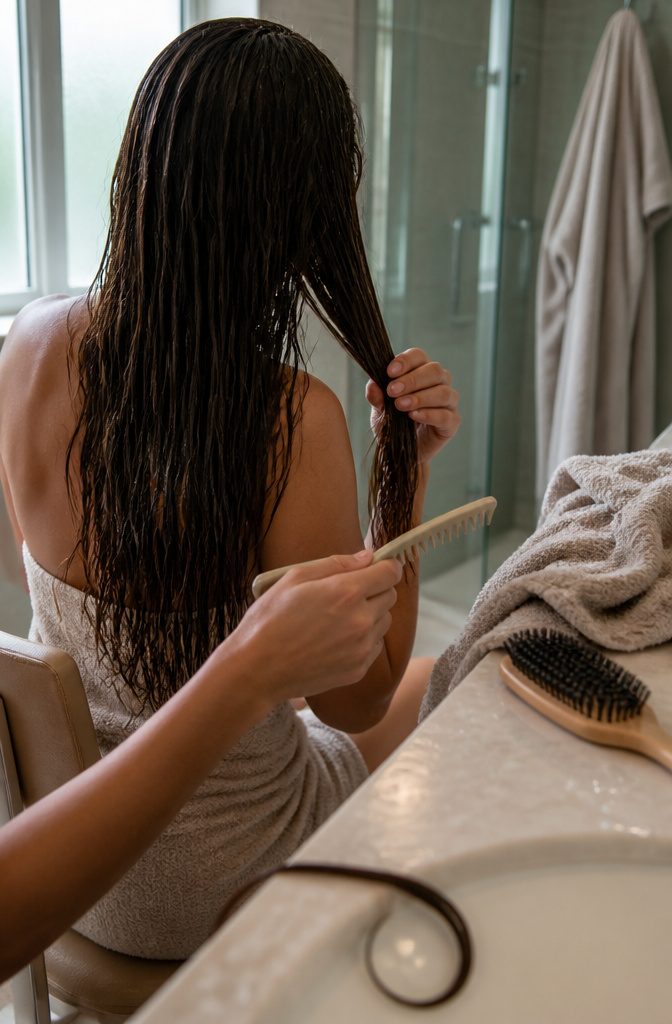
Start at the bottom: hold the hair a few inches above the ends, work out those knots first, then move up in small sections until the comb glides from root to tip.
Pulling down from the scalp drags every tangle into one tight knot and snaps strands mid-shaft.
Wet hair is the weak point, so a wide-tooth comb is the tool I’d reach for after a shower, ideally on hair that already has leave-in conditioner in it. Save the brush for dry hair.
Match the bristles to your texture.
Fine hair does best with boar bristle, which spreads natural oil and adds shine. Medium texture suits a boar and nylon combination.
Coarse hair needs nylon, which detangles without pulling. Skip fine-bristled brushes; they add friction and pull out single strands.
5. Limit Heat and Use Protectant When Styling
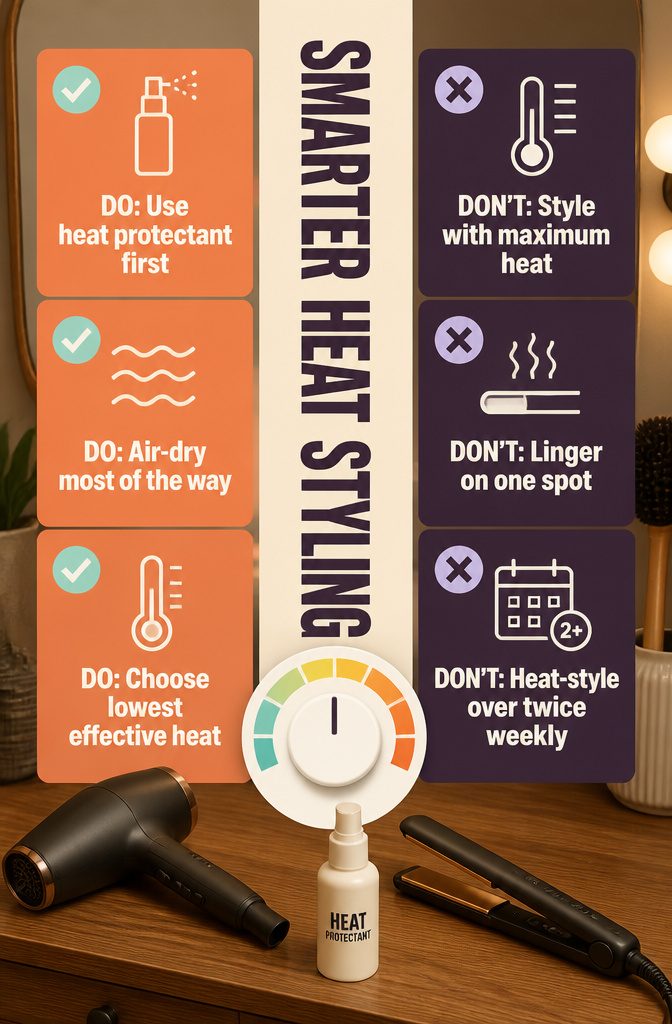
Air-drying whenever you can is the cleanest move for long hair, but when you do reach for a blow dryer or flat iron, use a heat protectant first.
High heat breaks down keratin and weakens strands permanently, and no product reverses that once it happens. The tools are fine in moderation if you use them right.
I limit heat styling to twice a week at most. When blow-drying, let hair air-dry most of the way before turning on the dryer to cut down the time you expose it to heat.
If you have the patience, air-dry time on a hot summer day runs about three hours. For flat-ironing, hair should be completely dry before you start, and use the lowest heat setting that allows one pass over each section.
Working quickly matters. High heat on the maximum setting and lingering too long in one spot both invite dryness and split ends you cannot fix.
6. Trim Damaged Ends Every 6 to 8 Weeks
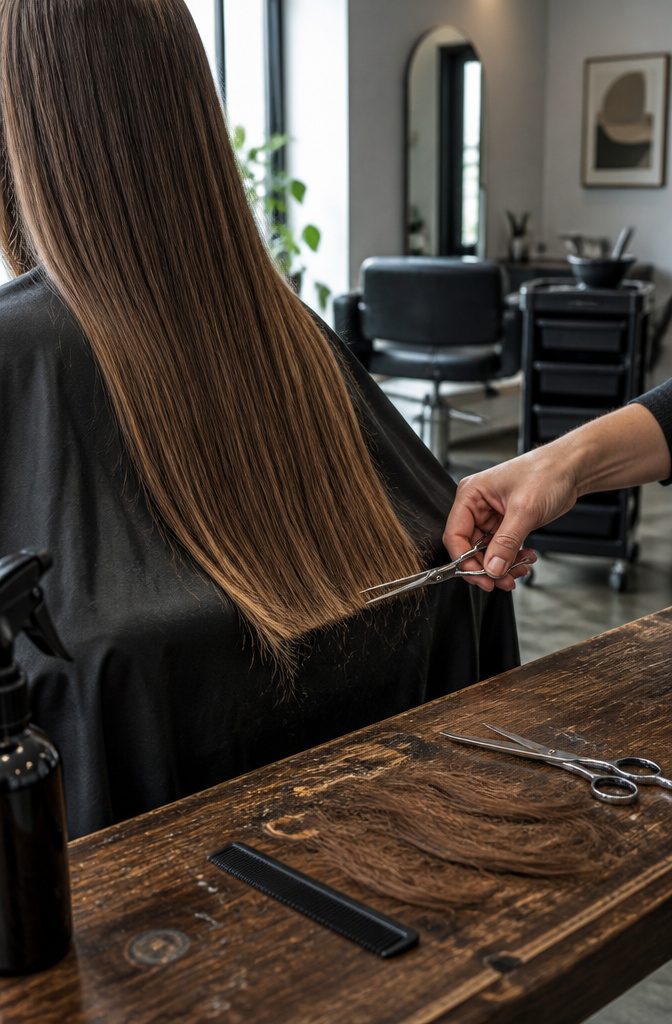
Split ends don’t heal, and left alone they travel up the strand and cause more breakage.
A trim every 6 to 8 weeks removes the damaged ends before they unravel further. Some stylists call this dusting when you want the smallest possible cut, taking off just the frayed tips without sacrificing length.
Regular trims won’t make hair grow faster.
Hair grows about half an inch per month no matter how often you visit the salon. What trimming does is keep the ends from looking scraggly and help the hair you already have look healthier and fuller.
Split ends make long hair appear thinner and duller as it grows, so cutting them off is damage control rather than a growth hack.
If you see no visible splitting yet, I’d still trim every few months. Your oldest hair sits at the ends, and it’s usually the driest and most prone to damage even before the split becomes obvious.
7. Avoid Tight Styles and Harsh Hair Ties
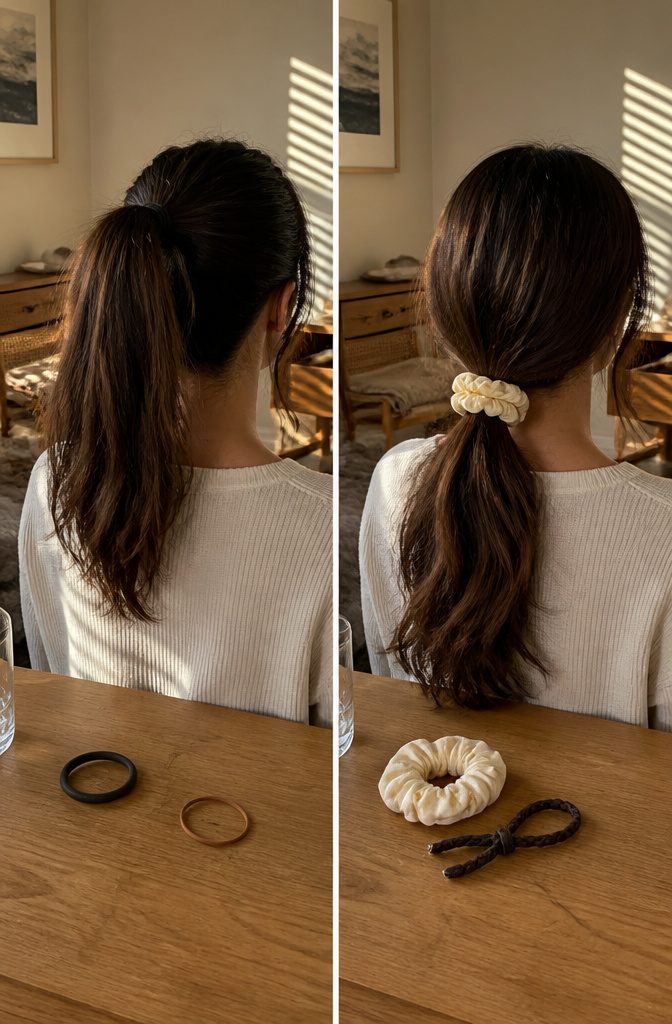
Tight ponytails and high buns put constant tension on your hair, and that pulling can snap strands and damage follicles over time.
The result is traction alopecia, a type of permanent hair loss that shows up first at the hairline and anywhere the hair is repeatedly pulled tight.
The American Academy of Dermatology suggests changing your hairstyle every two to three months if you wear braids or cornrows, and getting them done with looser tension when you can.
When you do need to pull your hair back, go for looser styles. A low ponytail or a braid that sits gently rather than stretched wins over a topknot that feels like a facelift.
Scrunchies cause less friction than rubber bands, and any elastic with metal parts is worth skipping entirely since the metal snags and breaks hair. Long hair can be tied back without being tied down.
8. Sleep on Silk or Satin and Braid Loosely
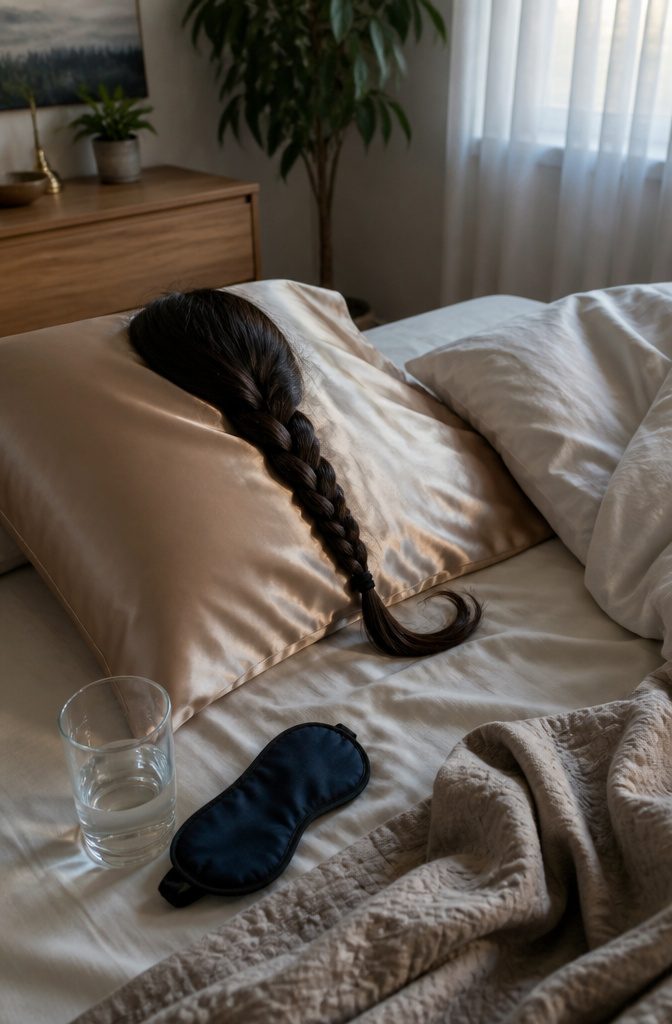
Cotton pillowcases create friction while you sleep, which tangles long hair and can lead to breakage and frizz by morning.
Switching to silk or satin pillowcases reduces that friction enough to make a difference you can feel when you wake up. The smoother surface lets hair glide rather than catch, so strands retain moisture overnight and stay less knotted.
If you move around a lot at night, a loose braid helps keep hair traveling in one direction instead of wrapping around itself.
I find a low, loose braid or a low bun prevents the kind of tangling that takes ten minutes to work through in the morning. Keep it loose.
Tight ponytails or buns pull on the hair shaft all night, which can cause damage and, over time, even lead to traction alopecia at the hairline. Save tight styles for daytime, and let your hair rest while you do.
9. Choose Products Suited to Your Hair Type
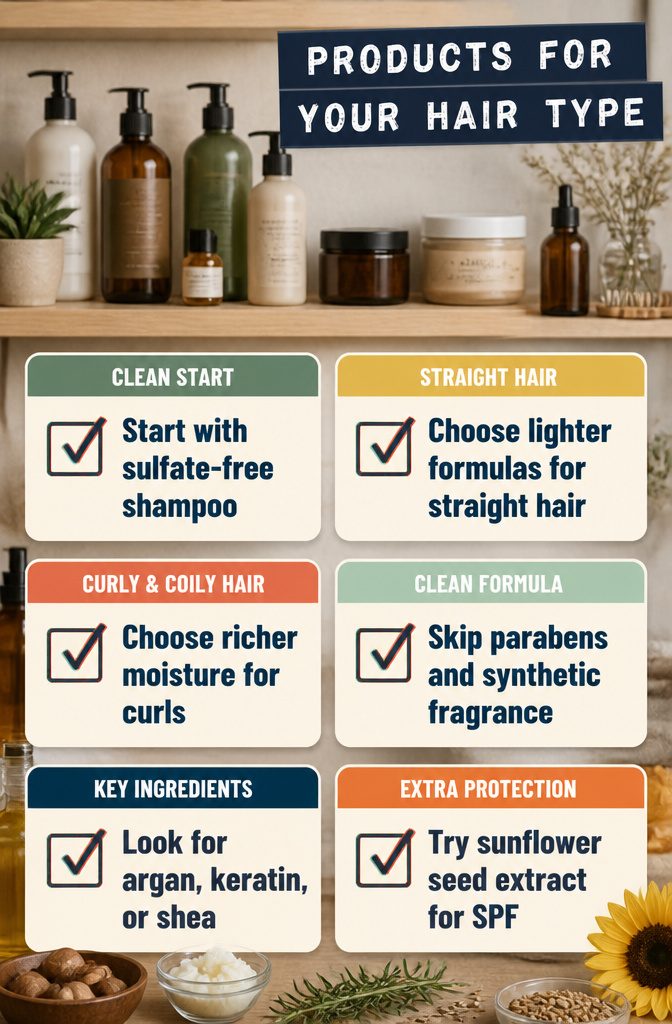
Hair type decides whether a product works for you or against you. Straight hair gets greasy faster and wants a lighter formula.
Curly and coily hair runs drier and can hold more moisture, so it does better with richer conditioners and masks. Wavy hair sits in between and turns frizzy fast when it’s handled wrong.
Whatever your type, start with a sulfate-free shampoo, since sulfates strip natural oils and leave long strands brittle.
I’d also skip parabens and synthetic fragrance, which can irritate the scalp. On labels, look for argan oil, keratin, or shea butter for moisture, and sunflower seed extract if you want a natural thermal protectant with some SPF.
10. Blot Rather Than Rub When Drying
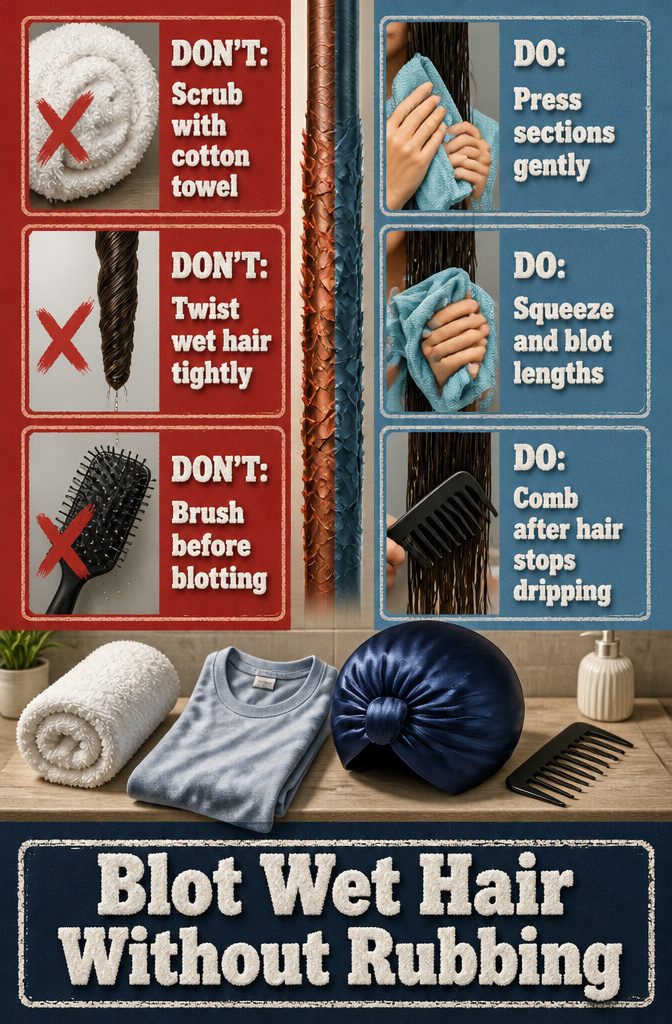
A cotton towel wrapped tight and scrubbed over wet hair roughs up the cuticle, and on long hair that shows up as frizz and fresh tangles.
I skip it. Press sections of hair between a microfiber towel or an old soft t-shirt and squeeze and blot instead of rubbing, working down the lengths until they stop dripping.
A hair wrap does the same job and holds the weight off your neck. Satin versions slick the water off without scrubbing, which suits anyone whose hair frizzes in the wrap.
Wet long hair is fragile, so leave the brush alone until it is blotted, then work in a leave-in and use a wide-tooth comb.
11. Support Hair Health Through What You Eat
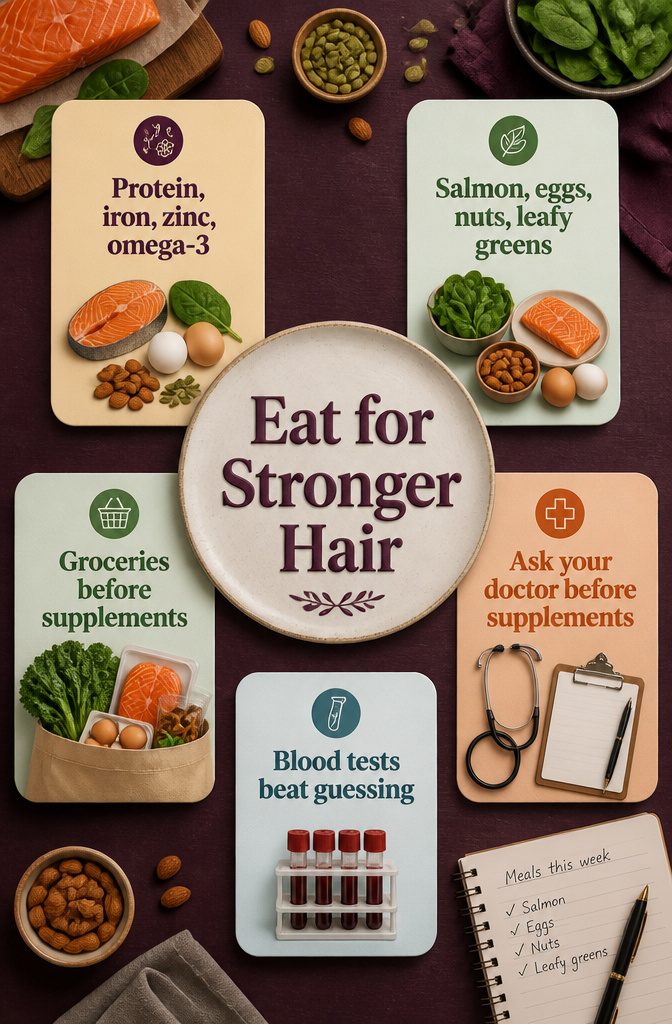
Hair follicles need protein, iron, zinc, and omega-3 fatty acids to stay in growth mode, and when any of them runs short, growth slows and shedding picks up.
No conditioner on your shelf can fix that from the outside, so the plate comes first.
Salmon, eggs, nuts, and leafy greens cover most of the list in one week of ordinary meals. Biotin and vitamins A and E also get named for strength and shine, and eggs and greens help there too.
I would spend on groceries before supplements. If shedding seems heavier than usual, talk to your doctor before buying a supplement, since iron and zinc deficiencies are linked to hair loss and a blood test beats guessing.
12. Rinse With Water or Dry Shampoo Between Washes
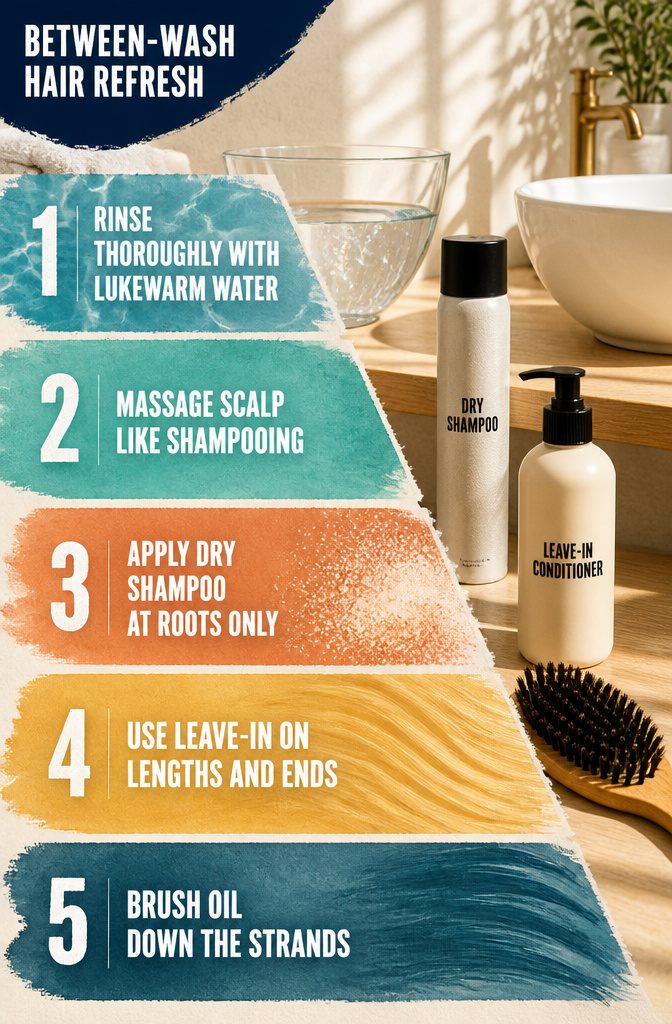
Lukewarm water does most of the work on a day you skip shampoo.
Rinse thoroughly and massage your scalp the way you would with lather; that clears sweat, oil and dirt after a workout. Hot water strips natural oils and leaves long hair crispy and prone to breakage, so keep the dial down.
For a midweek routine I like a water rinse, a light pass of dry shampoo at the roots only, then leave-in conditioner on the lengths and ends. Dry shampoo absorbs oil, and a little goes a long way.
Follow with a boar-bristle brush to carry scalp oil down the strands. Rinsing also beats extra shampoo because ends run drier than the scalp and rarely hold buildup.
How Layers and Shags Frame Long Hair
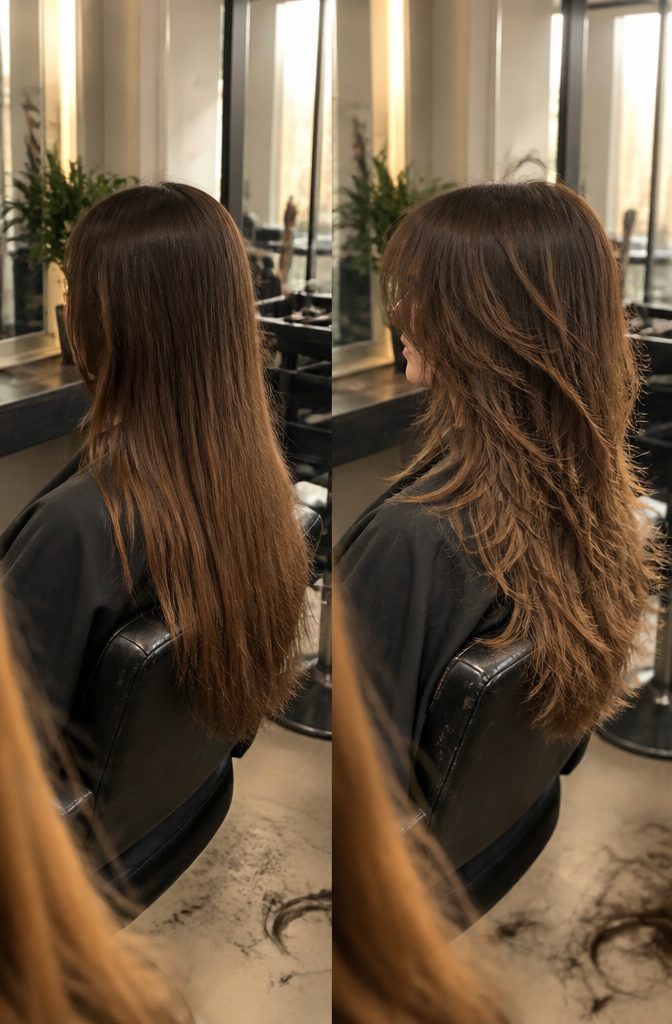
Long hair cut to one length pulls the eye straight down and away from your face.
A shag fixes that by stacking several lengths: the bangs frame your eyes, the side layers point to your cheekbones, and the rest carries the eye down toward the collarbone.
I’d pick a shag over plain layers if you want the framing to be obvious.
Plain layers are the easier ask. Layers add movement and body without costing you length, and they flatter nearly every face.
Keep the front modest, though. Think classic Cher, not The Rachel, since heavy face-framing pieces can look dated fast.
Protect Hair From UV and Sun Exposure
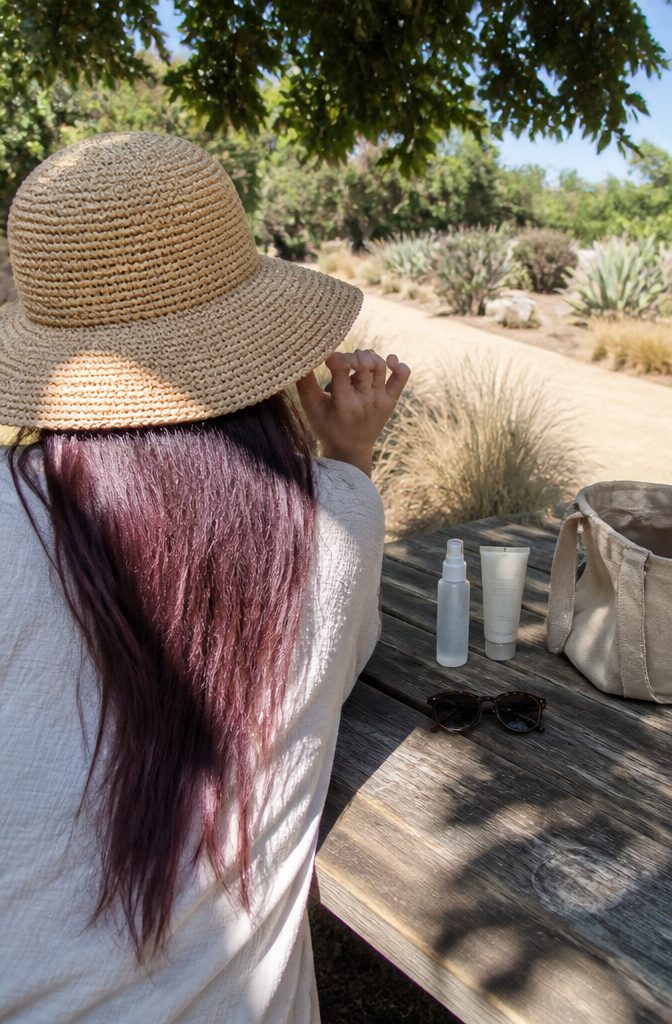
Sun dulls hair color, and long hair takes the most hits because the ends have been exposed for years. Colored hair fades first, so a UV-protective spray is the easiest fix.
Keep one in your bag and mist it before you head out. A hairspray with a UV filter, like L’Oréal Paris Elnett Satin Extra Strong Hold, protects color from fading and also holds through humidity.
Your scalp burns too, especially along a center part.
Wear a hat on long days outside, or dab sunscreen along the part. I’d pick the hat: it shades the lengths as well, and you skip the greasy residue.
Growing Out Men’s Hair Without Losing Shape
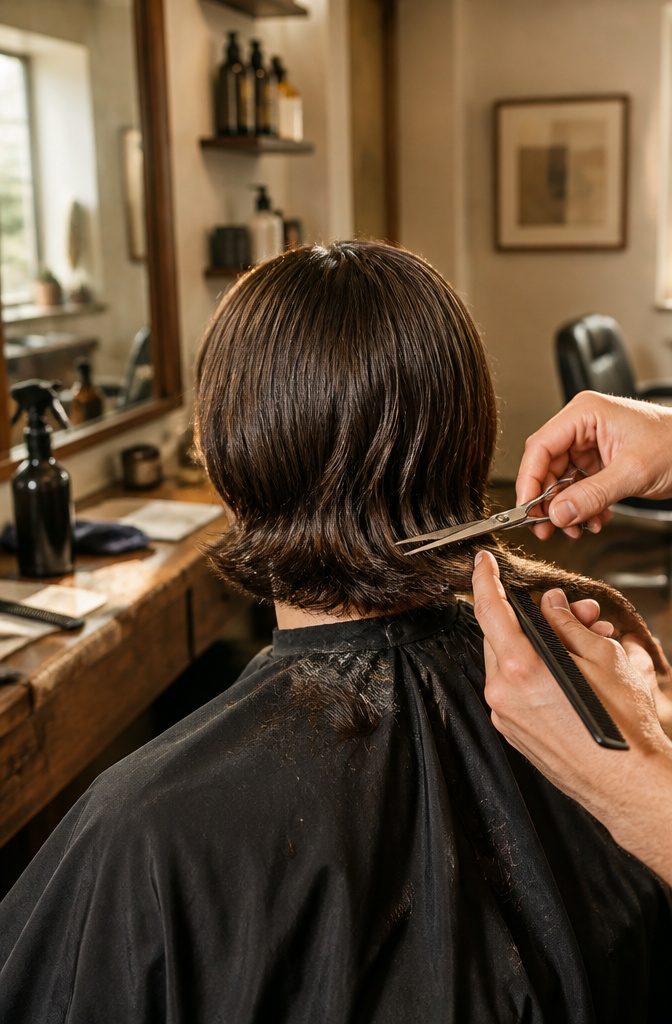
Skipping the barber is the most common mistake men make while growing out their hair, and it usually ends in ragged, shapeless length.
Tell the barber you’re growing it out, and they can cut a shape that looks intentional at each stage, then adjust it as you hit new lengths.
Trims still matter. Split ends can travel up the shaft and leave hair frizzy and scraggly, so book a visit every 8–12 weeks and ask for just the damaged ends to come off.
A barber can also tell you whether your hair is thick enough to carry length; thin hair tends to look stringy, and styling that pulls at it can make loss worse.
Frequently Asked Questions
How often should you wash long hair?
Wash long hair every third day to 2 or 3 times a week, depending on how oily your scalp runs.
Some people with less oily scalps can stretch washing to once weekly. Overwashing strips natural oils and leaves hair dry, brittle and prone to breakage.
Does long hair require more maintenance?
Long hair needs more attention to prevent breakage and split ends, but the routine itself isn’t complicated.
The main difference is focusing conditioner on mid-lengths to ends, detangling carefully from the bottom up, and protecting hair during sleep and styling to avoid damage that shows more on longer strands.
How long does it take to air dry long hair?
Thick, long hair takes about 3 hours to air dry on a hot summer day and longer in winter.
If you’re short on time, let hair air dry most of the way before using a blow dryer to finish, which cuts down heat exposure while still speeding up the process.
What is the best hair care routine for long hair?
Shampoo the scalp only once or twice a week, condition mid-lengths to ends every wash, and use a deep treatment weekly.
Detangle with a wide-tooth comb starting at the ends, limit heat styling to twice a week with protectant, and trim every 6 to 8 weeks to remove split ends before they travel up the strand.





