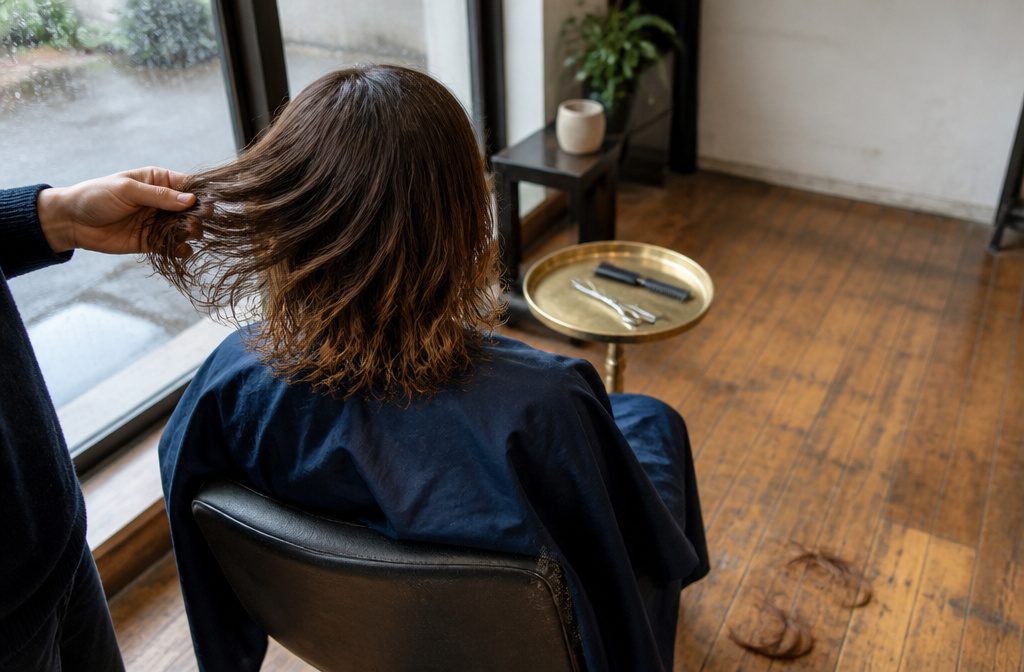
These thirty cuts run from a pixie that sits less than an inch long to a shoulder cut that keeps most of your length, and the right one depends on how much weight you want gone and how often you will trim.
A blunt bob or lob grows out cleanly for weeks, while a pixie loses its shape in four and a short shag needs regular layering to keep the choppy crown from flattening.
1. Short Pixie
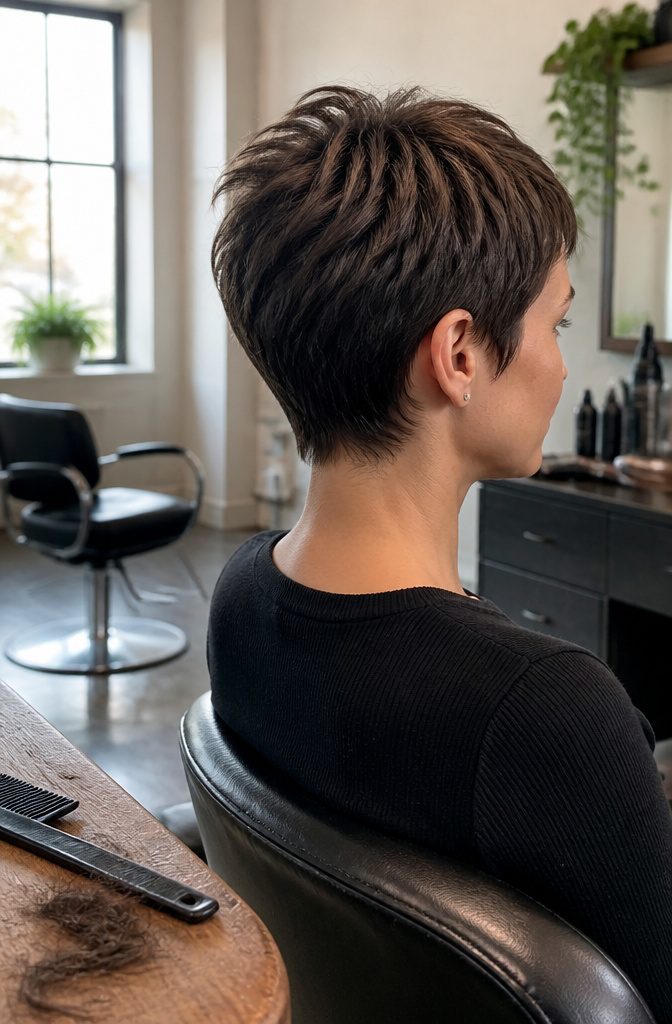
A short pixie makes layers look more pronounced, because there is so little length to hide the steps between them.
The cut suits anyone who wants that choppy, defined shape and has the patience for upkeep. I’d also say it works best if you’re happy to look at your face, since a pixie leaves nothing to hide behind.
Plan on a trim every 4–6 weeks. Short hair grows out fast and loses definition sooner than long hair does, and uneven layers show right away.
Split ends also creep in if you wait. Ask your stylist for a maintenance schedule that fits your hair type, and book the next visit before you leave the chair.
2. Chin-Length Cut With Bangs
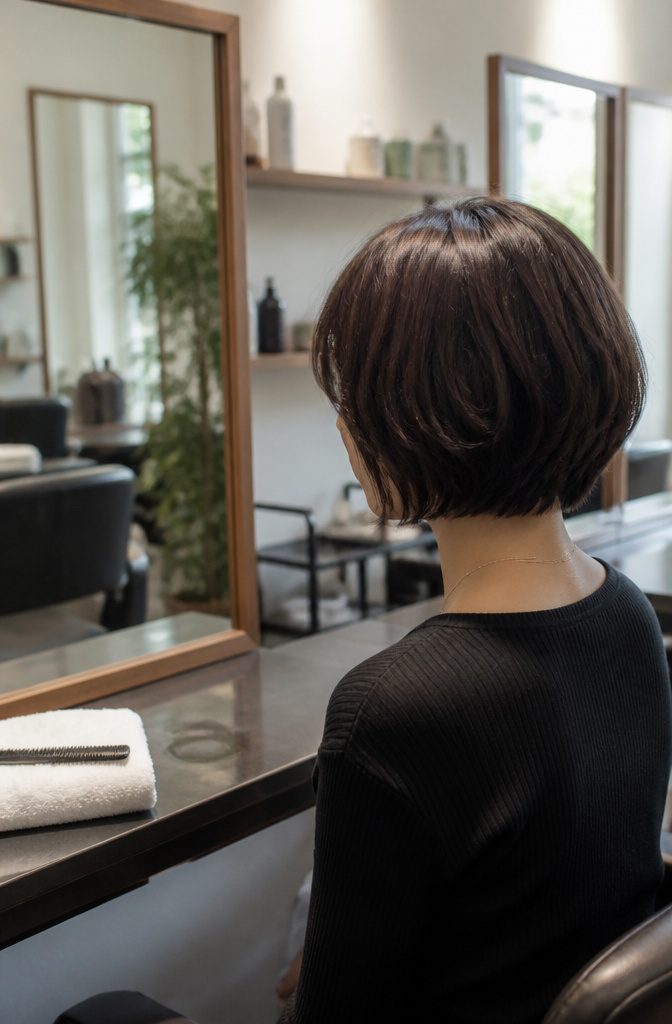
Bangs framed close to the face pull the viewer’s eye straight to yours. This chin-length option sits right at the jawline and pairs well with a textured fringe that skims the brows.
The bangs do most of the shaping work here, softening the forehead and drawing attention inward rather than letting the outline of the cut dominate.
I find this look works best when the bangs have some weight to them. Wispy pieces disappear against the face, but a fuller fringe holds the frame and makes the transition from long to short feel deliberate instead of tentative.
The length itself stays manageable without clips or frequent trims to keep it out of your eyes, which matters if you’re used to pulling longer hair back every morning.
3. Pixie Mullet
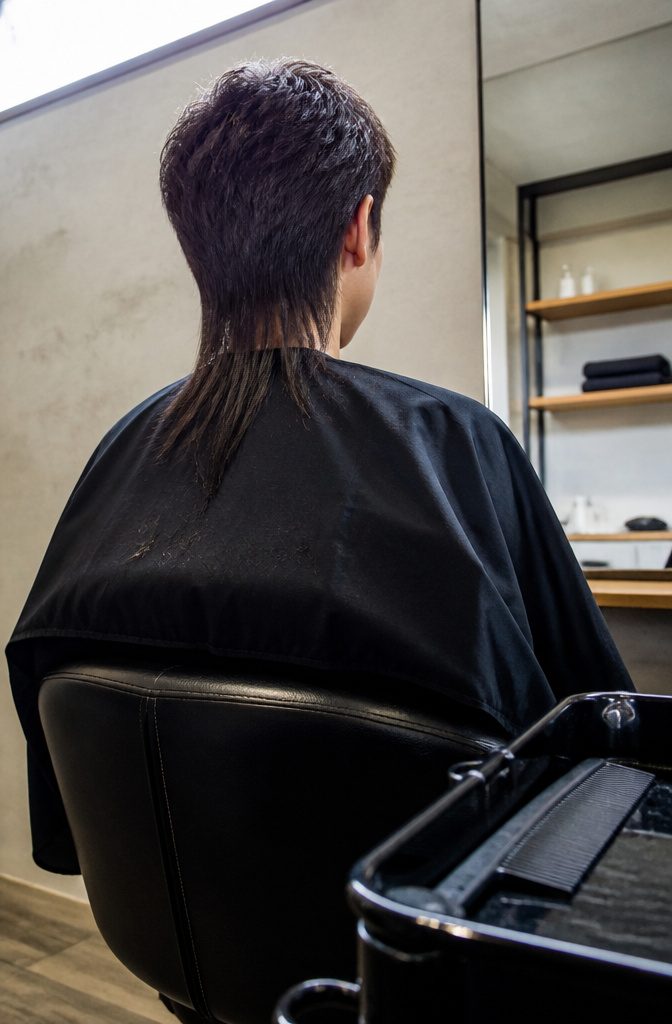
A pixie mullet keeps the back longer than the top and sides, which puts the nape in plain view.
Ask for it if you want the neck to be the feature: a long, slim neck looks best, and so does anyone who likes a visible tail at the back without keeping full length.
I’d skip it if you hate having your neck exposed, because the shape only works when that area stays clean and defined.
Ask the stylist to keep the nape tidy and leave the back length visible, then bring a photo from behind, since most saved pictures only show the front.
Expect shorter, more frequent trims at the neckline to keep the outline crisp.
4. Blunt-Baseline Cut
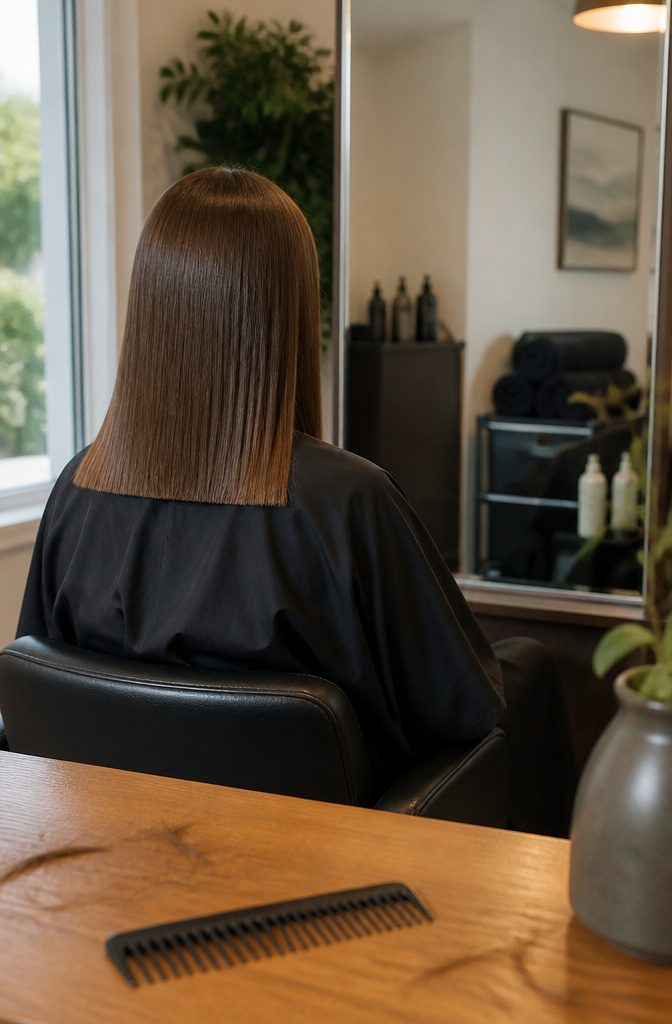
A blunt baseline is a hem cut straight across at a 90-degree angle, with the ends left full instead of feathered or razored.
That weight sitting along the bottom edge makes hair look thicker than it is, which is why I’d steer fine or thinning hair toward it before almost any layered option when going from long to short.
Ask for the line to be cut with the hair combed smooth and your head level, so the edge lands even.
Interior layers, if any, should be few and light, or they will thin out the very edge you came for.
Blunt ends also show every split, so plan a trim before the edge starts to fray. Wavy hair can look boxy cut this way, so take the photo only if yours dries mostly straight.
5. French Bob With Bangs
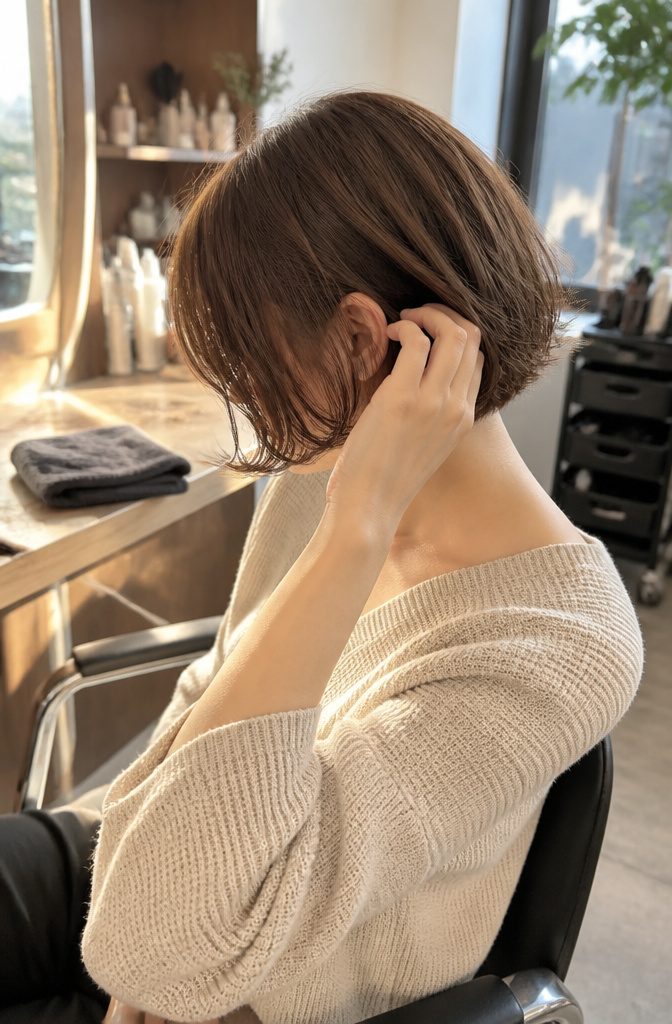
The French bob sits just above or at the jaw and pairs with soft, eye-grazing bangs that frame an oval face shape without cutting it shorter.
The length gives you room to tuck hair behind your ears or let the fringe fall forward, and the bangs soften the forehead in a way a blunt bob without them can’t.
If your hair has any natural texture, this cut works with it rather than requiring a flat iron every morning.
Upkeep centers on the bangs: they need a trim every three to four weeks to stay out of your eyes, though you can stretch that if you’re comfortable pinning them back between appointments.
The bob itself grows out cleanly because the baseline is fairly even, so you get a few extra weeks before the shape starts to feel heavy or unbalanced.
6. Butterfly Bob
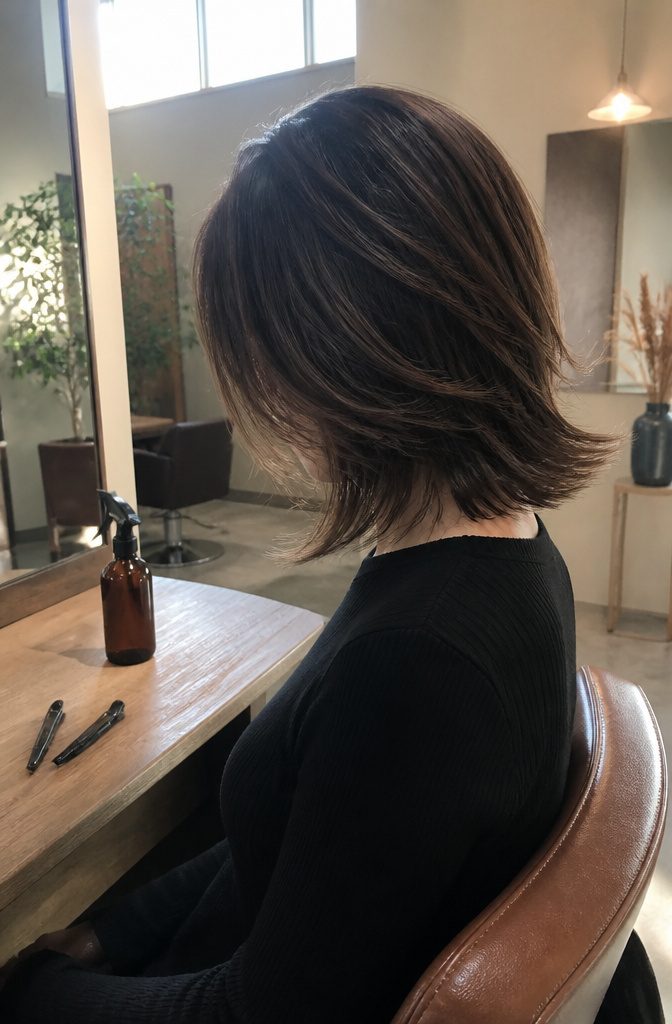
The butterfly bob works because of angle, not length.
Cutting the ends at 90 degrees gives a blunt edge, while a 45-degree angle adds softness and movement, and that is what lets the shorter layers float around the face instead of stacking into a shelf.
On the photo you save to Pinterest, look for ends that feather rather than stop.
Ask your stylist for the angle by name, and for a taper toward the nape so the back doesn’t look abrupt.
Fine hair gets the airiest result; very thick hair may need extra sectioning to keep it from puffing. I’d pick this over a blunt bob for anyone leaving long hair behind and wanting to keep some swing.
7. Lip-Length Cut
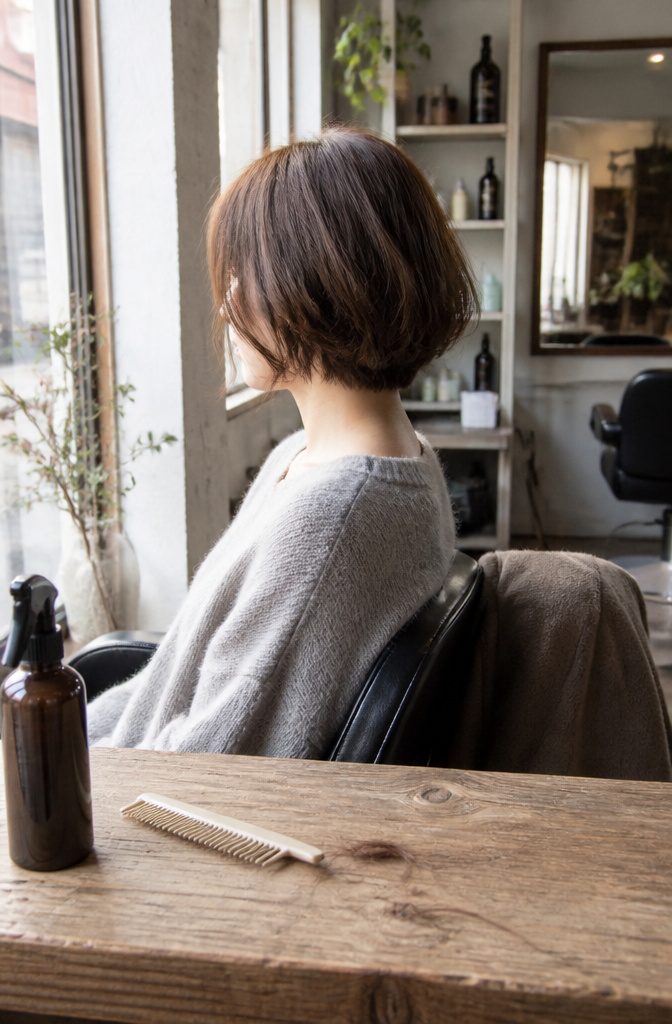
A lip-length cut sits right at the mouth, which is why it reads as Parisian: it’s short enough to show the jaw and neck, long enough to tuck behind one ear.
Ask for a slightly undone finish with ends that stay a little soft, not a sharp, polished line. The look relies on movement, so a light air-dry with a texture spray usually beats a blowout.
I’d pair it with a bit of fringe or a loose side part, since either gives the cut that effortless, just-out-the-door attitude.
Plan a trim every 6–8 weeks, because once it grows past the lips it loses its shape and drifts toward a shapeless chin-length cut.
8. Short Curly Cut
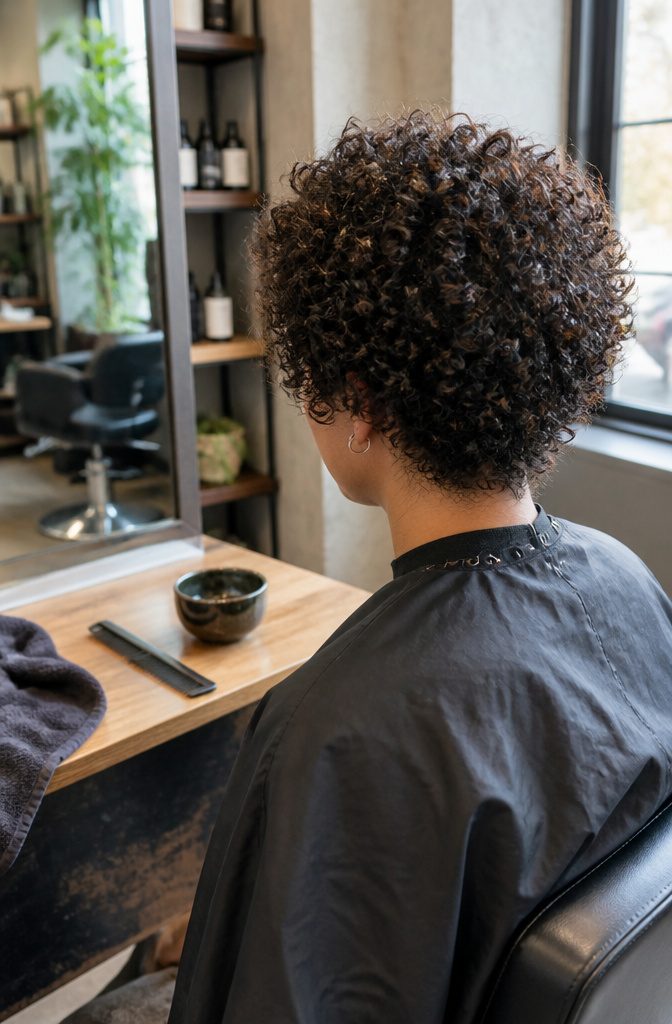
Cutting length is the fastest way to find out what your curl pattern really does.
Weight pulls a curl straight, so once 8–10 inches come off, the spring that hung quietly in your lengths shows up, and often in a tighter shape than you remember. Volume and texture usually increase with it.
Ask for the cut to be shaped while your hair is dry, or at least with the curls in their natural state, since a wet cut hides how far each curl will jump.
I would also skip heavy thinning, because curls need some bulk to clump together. Styling gets shorter too, and a little product on damp hair often covers the whole routine.
9. Bob With Bangs
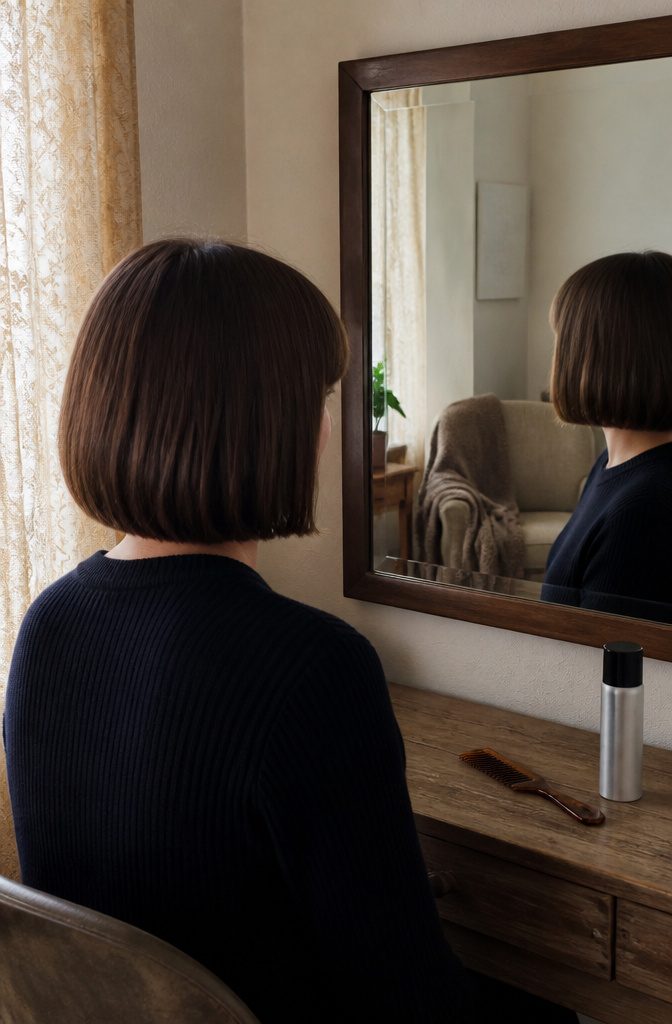
The bob took off in the 1920s, when flappers cut their hair to the jaw and made it a symbol of independence.
A century later it is still the cleanest answer to long hair that has become a chore. Adding bangs gives it a frame, and full, blunt bangs on a chin-length bob read most like the classic version.
Bangs do add upkeep. They need a trim every few weeks, and they show oil faster than the rest of your hair, so dry shampoo at the roots helps.
I’d pick this cut for straight to slightly wavy hair; very curly hair shrinks up under bangs, so show your stylist how yours behaves dry.
10. Short Cut With Removed Weight
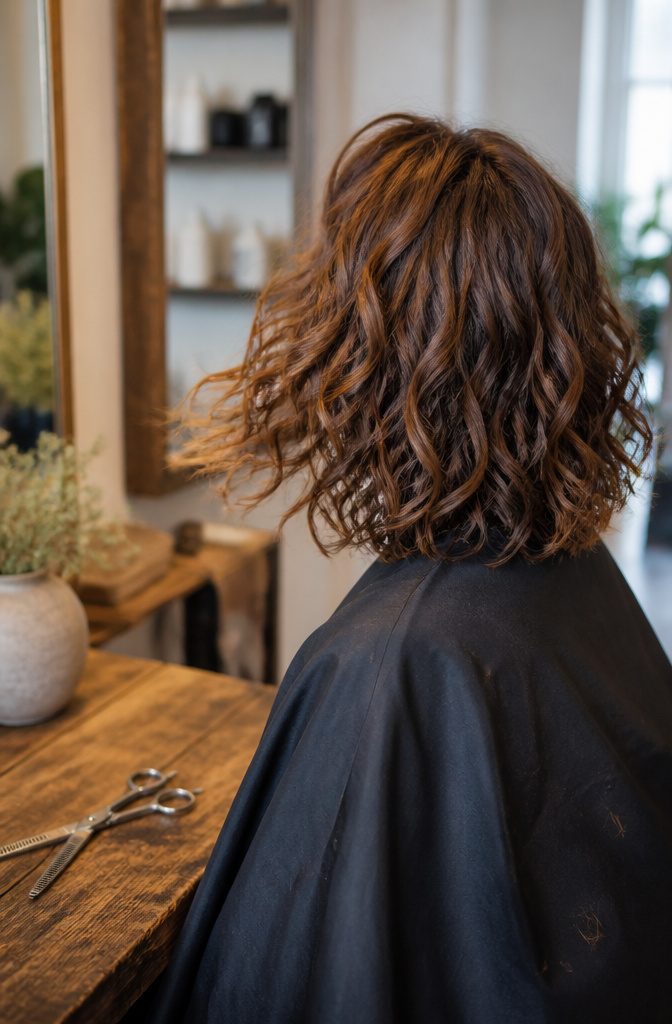
Removing weight matters more than length when hair has been held down by its own bulk for years.
Heavy hair sits flat at the crown and flares outward at the ends, while the same hair thinned through interior layering lifts at the root and moves when you turn your head.
The change shows up most clearly in naturally wavy or curly textures that have been stretched straight under the weight of long hair.
Once a stylist cuts in layers and removes density with thinning shears or a razor, the curl pattern that was always there tightens back into shape.
The difference between a blunt shoulder cut and a layered one of the same length is how much air gets between the strands.
Straight fine hair benefits less from this approach, since removing weight can make it look thinner rather than fuller.
11. Jagged Bangs
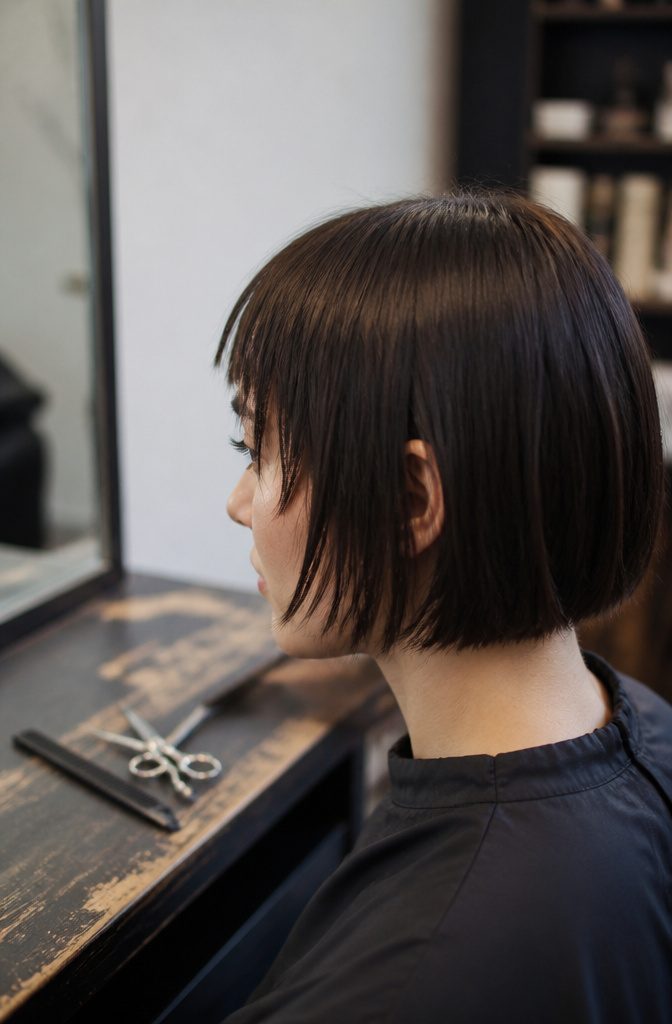
Jagged bangs add enough disruption that the eye reads the cut as genuinely different without touching length anywhere else. The edges break up softness, so a face that reads round or wide suddenly registers more angles.
That shift matters when the rest of the hair moves from long to a blunt bob or lob: the baseline gets heavier, and jagged bangs pull visual weight back toward the top half of the face.
The texture keeps them from sitting as a solid block, which makes them easier to wear if your forehead is narrow or if you part to the side rather than straight down the middle.
Growth is more forgiving than with blunt bangs because the uneven ends blur into the rest of the cut instead of forming a hard line you have to trim every three weeks.
12. Shorter Version of a Favorite Cut
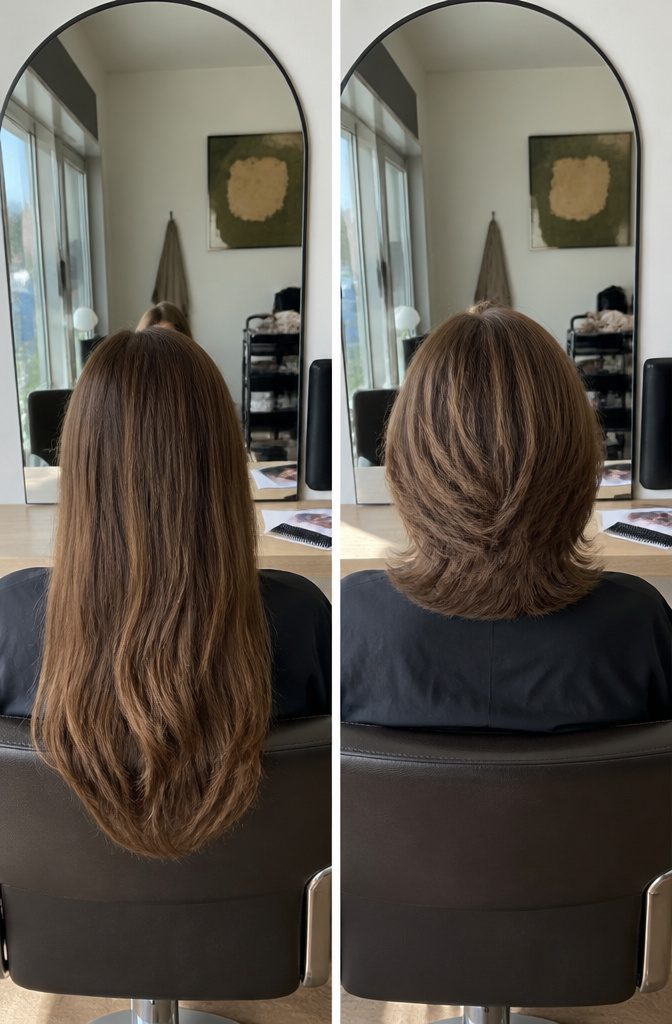
A shorter version of a favorite cut works best when you keep the shape you already like and take off the length that weighs it down.
If you’ve worn long layers for years, a shorter layered cut gives the same movement with more lift at the crown, because hair that isn’t dragging itself down bounces back up. This is the trade I’d make: length for volume.
Fine or flat hair gains the most.
Ask for the same cut in a shorter length, with the layers shifted up so they land around the cheekbones and jaw. Show your stylist the photo, and say which part of the old cut you want to keep.
Expect to trim it more often, since a shorter shape loses its outline quickly as it grows.
13. Blonde Buzz Cut
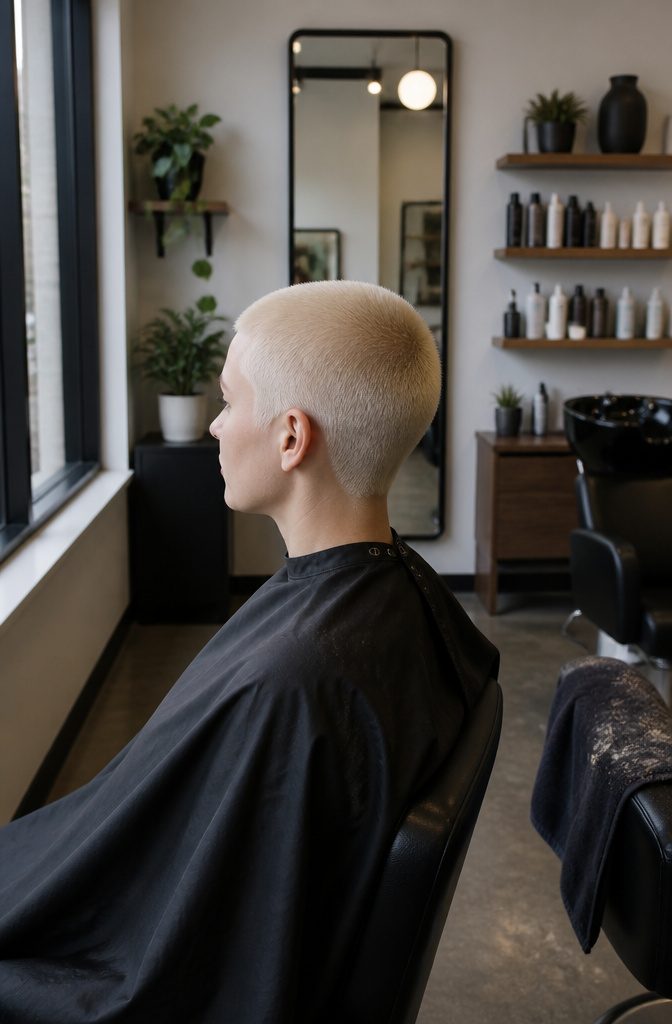
A blonde buzz cut suits a gamine look because it strips the face down to bone structure: cheekbones, brow line, jaw and eyes do all the work.
Bleached hair this short also softens the contrast against skin, so the effect reads delicate rather than severe. Dark buzz cuts can look stark on small features, and pale ones rarely do.
Going from long hair to this is the biggest jump on the list, so I’d ask for a guard length longer than you think you want. You can always go shorter next visit, but you can’t go back.
Bleach on very short hair also needs regular root touch-ups, since regrowth shows within weeks. Expect a few minutes each morning at most, and no styling.
14. Lived-In Highlights With Tousled Texture
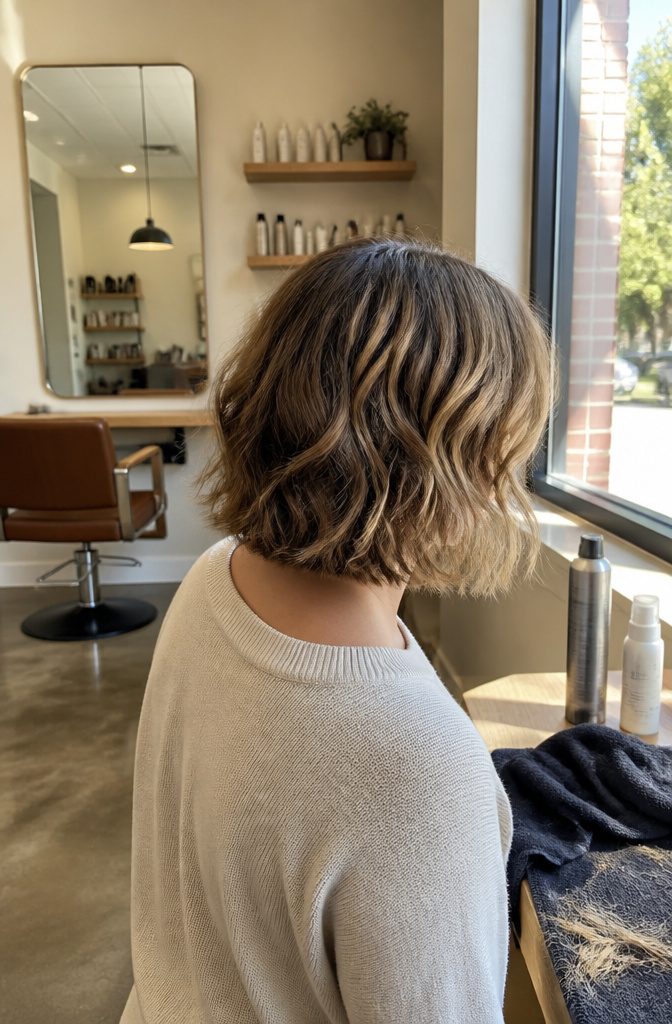
This one wins when you want the cut itself to feel easy.
Lived-in highlights paired with tousled texture take the edge off a fresh chop and make the whole thing look like it has been part of your routine for weeks already, not hours.
The color does half the work: dimensional highlights break up a solid baseline and give the eye something other than length to track, so the change reads softer.
Texture comes next.
Skip the round brush. A texturizing spray or lightweight mousse worked through damp hair and scrunched gives you that undone finish without the weight that drags short hair flat.
Pomades and waxes can define pieces if you want more separation, but the goal here is movement, not structure.
Short hair styled this way grows out without a hard line, and touch-ups stretch longer because it’s designed to look a little lived-in from the start.
15. Pixie Hawk
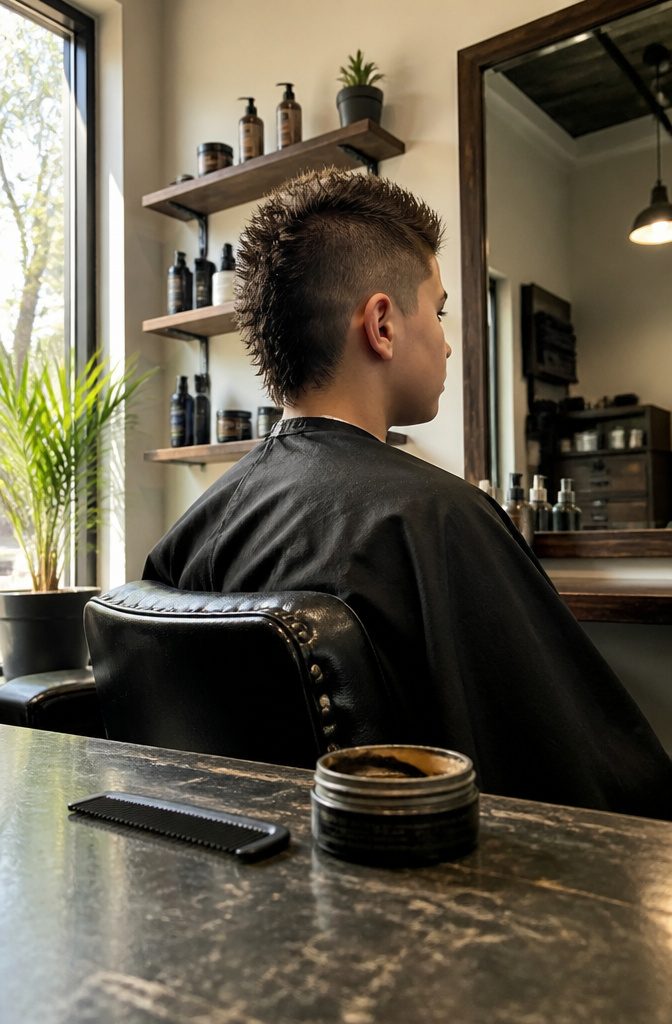
A pixie hawk is the loud cousin of the pixie: sides cut close, the center left longer and pushed up into a ridge that reads as energetic from every angle.
The ridge only holds if it is defined, so reach for a pomade or wax rather than a mousse. Work a small amount between your palms, then pinch the top into spikes and run your fingers front to back.
Skip heavy creams or butters. On hair this short they sit on the surface and make it look greasy, and the ridge collapses by lunch.
If you want a looser, messier version, a texturizing spray gives a tousled finish, though I think the spiky, waxed version is where this cut earns its place.
16. Heavily Layered Shag Mullet
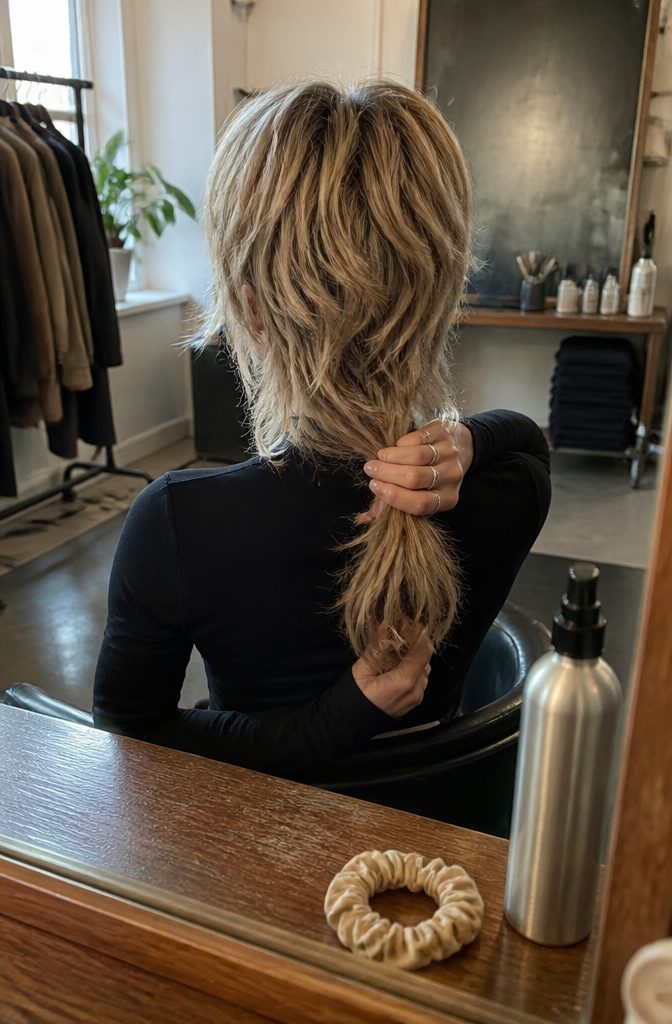
A heavily layered shag mullet suits a center part or a side part, so you can keep the part you already wear.
Center parting lets the face-framing pieces fall evenly on both sides and shows off the shorter crown. A side part pushes more weight to one side and makes the shape feel softer and a little more grown-up.
I’d pick this for anyone who wants a big cut from long hair without losing every inch.
The length stays in the back while the top and sides go choppy, which means you can still tie it up on lazy days. Ask for heavy layers through the crown and a longer, wispy back, and bring a photo.
Expect regular shaping as the layers soften. Styling takes a bit of texture spray and a scrunch.
17. Off-Center Part With Side Bangs
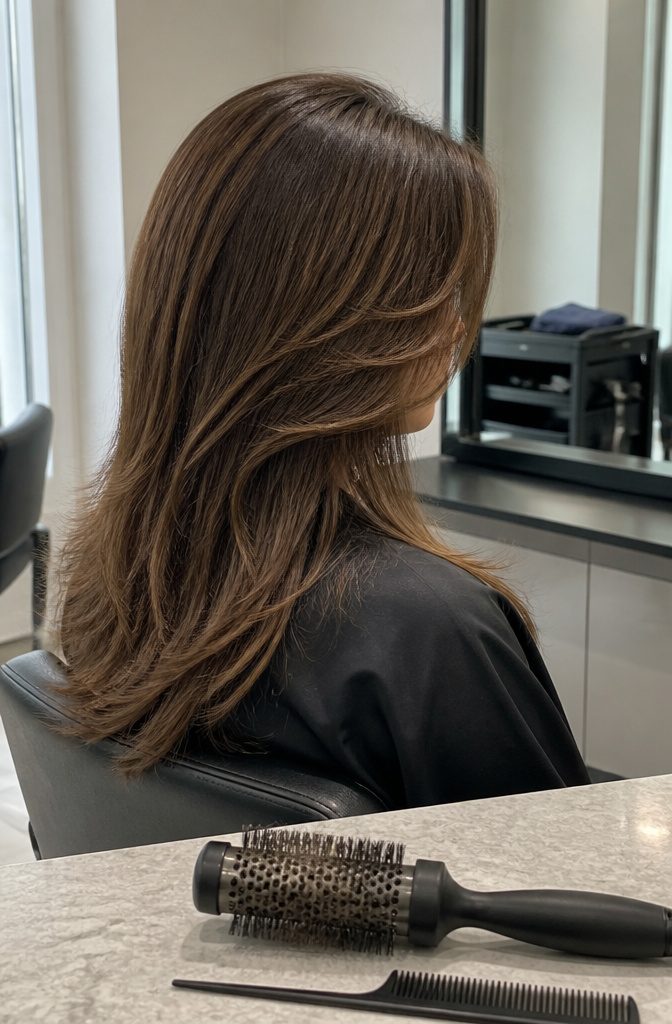
An off-center part with side bangs works because the diagonal line of the fringe points toward your cheekbone and pulls attention away from a wide forehead or a strong jaw.
Part the hair about an inch or two off the center line, then sweep the bangs long enough to brush the outer edge of your brow. Cut them too short and they stop framing anything.
Styling takes a few minutes. Blow-dry the bangs first, while damp, in the direction they will lie, then do the rest.
Ask your stylist to cut the bangs long and blend them into the sides, so they grow out into face-framing layers instead of an awkward ledge. I’d pick this over a straight-across fringe if you’re nervous about commitment.
18. Short Shag
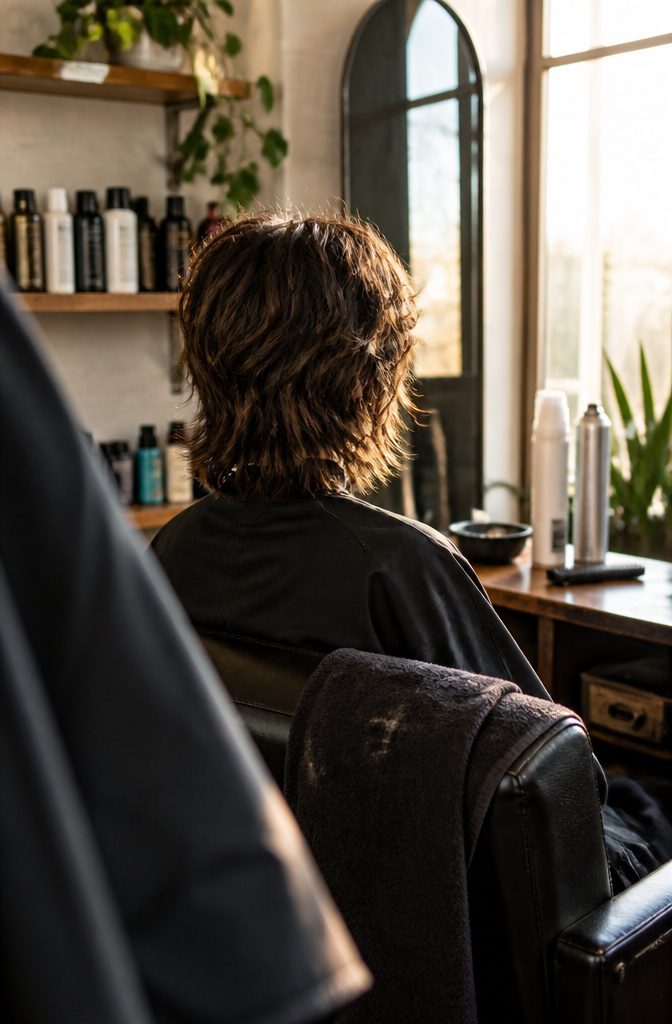
A short shag gets its volume from the cut itself, with choppy layers that lift the crown and stack texture through the sides. That does most of the work before you pick up a product.
For styling, a lightweight mousse at the roots adds hold without flattening the layers, and a texturizing spray worked through the ends keeps the tousled, natural finish.
I’d skip heavy creams and butters, which can make short hair look greasy and pull those layers down. If frizz is the problem, a drop of serum or oil on the ends is enough.
For a more defined, piecey shag, a small amount of pomade or wax pinched through the ends does the job. It’s a better pick for straight hair than for waves, which already supply their own texture.
19. Bob for Curls
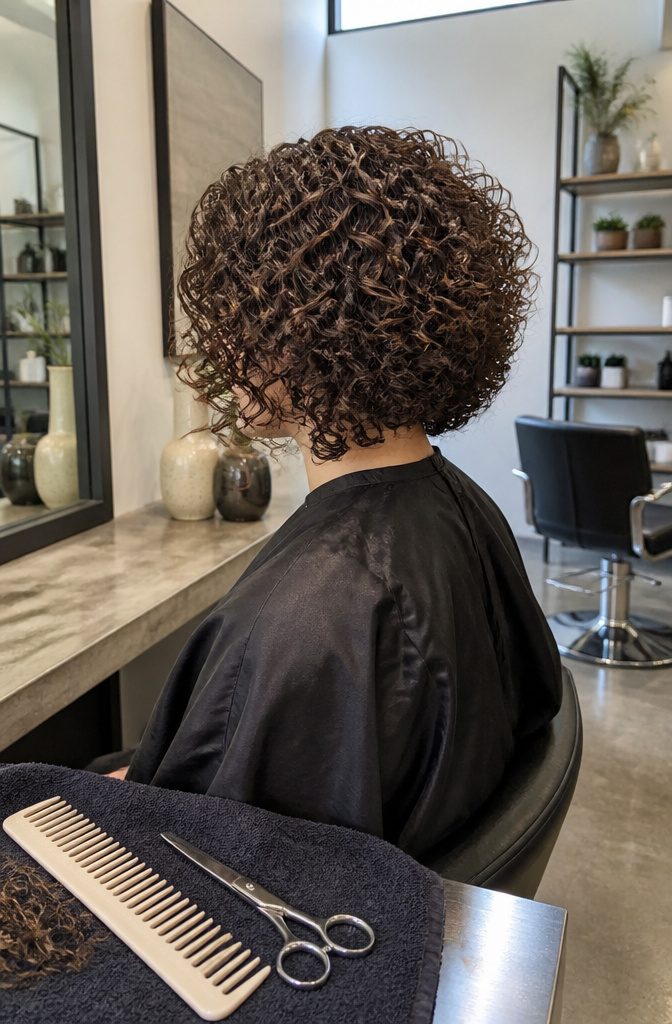
Curls shrink when they lose length, and a bob is where most people feel it.
Hair that hangs to the shoulder blades as loose waves can spring up to the jaw once the weight is gone, so ask for a cut a little longer than the length you want.
Texture also changes the silhouette: curls may frizz and the shape can turn wider than it looked on a straight-haired photo.
Growth itself doesn’t change, because follicles and genetics set that, not length. I’d still pick a precision cut with tapering, so the bob doesn’t turn bulky, and plan on a trim every 4–6 weeks to keep the shape.
20. Pixie for Natural Hair
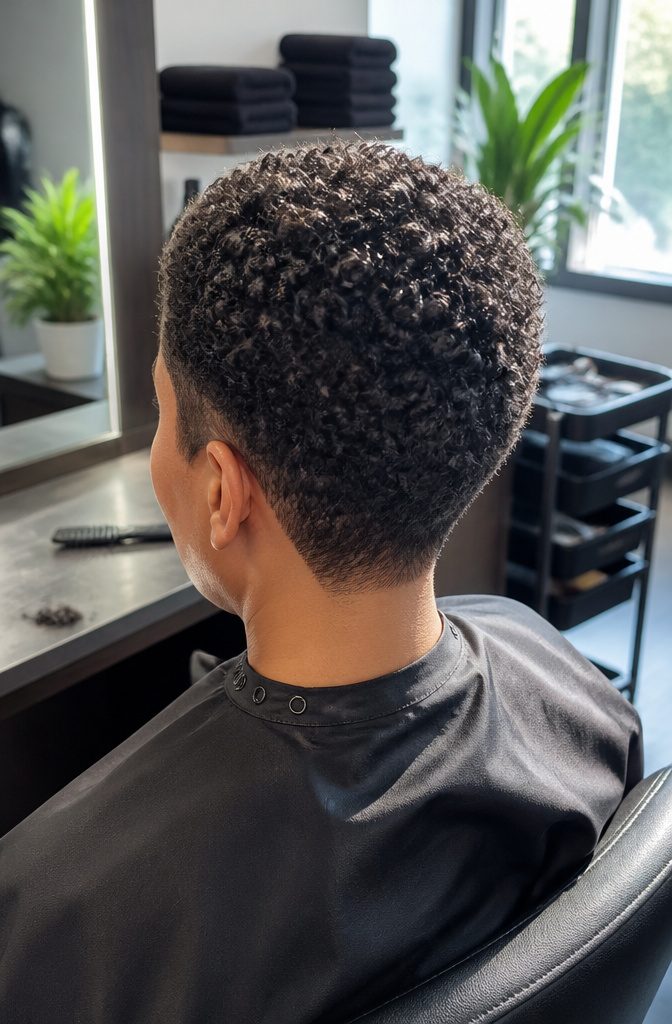
A pixie is the cleanest way I know to grow out a relaxer. The cut removes the processed length in one pass, so you never wear two textures that break at the line where they meet.
That line is the weak point: new growth and relaxed hair snap there, and a long style leaves months of it to manage.
Ask your stylist to cut the relaxed ends away and leave the new growth, then keep the sides and nape tight while the top holds enough length to show your natural curl.
Each trim takes off more of the old texture, and the pixie keeps looking intentional the whole time. Plan on regular shaping visits, because a pixie loses its outline fast.
21. Signature Deep Part
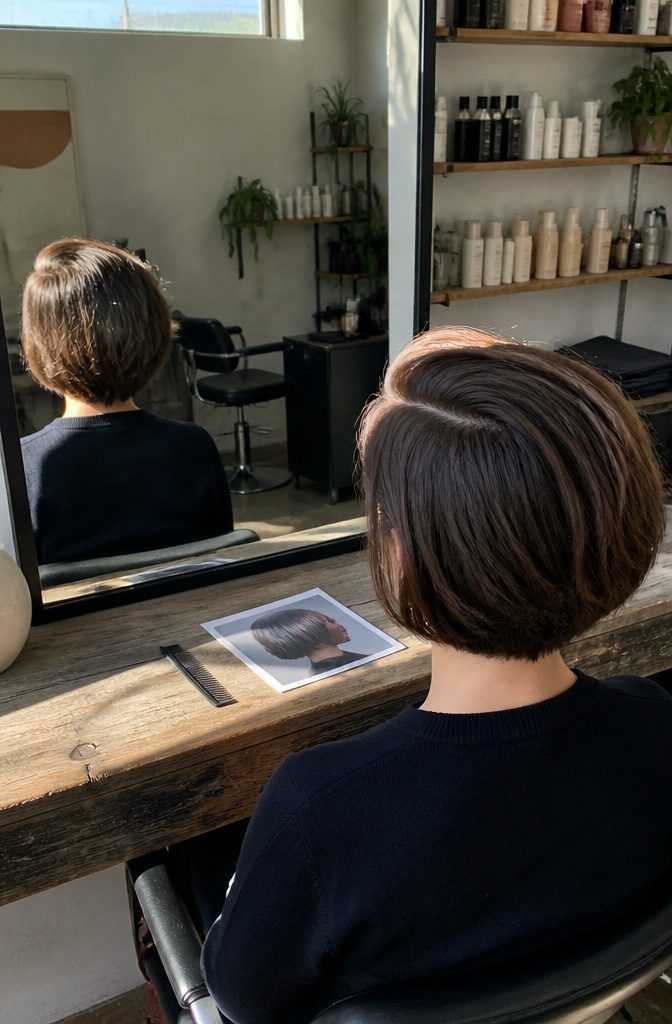
A deep part is the one thing on your head that doesn’t have to change the day you cut.
If you’ve parted your hair on the same side for years, the roots already lie that way, so a bob or lob falls into place without a fight.
Keep the part exactly where it is and let the length do the changing.
I’d choose this over a new part for a first big cut. A fresh part on short hair often looks flat or sticks up at the crown, and you won’t know which until the length is already gone.
Bring a photo of yourself with your usual part, so your stylist cuts to that line.
22. Baby Fro
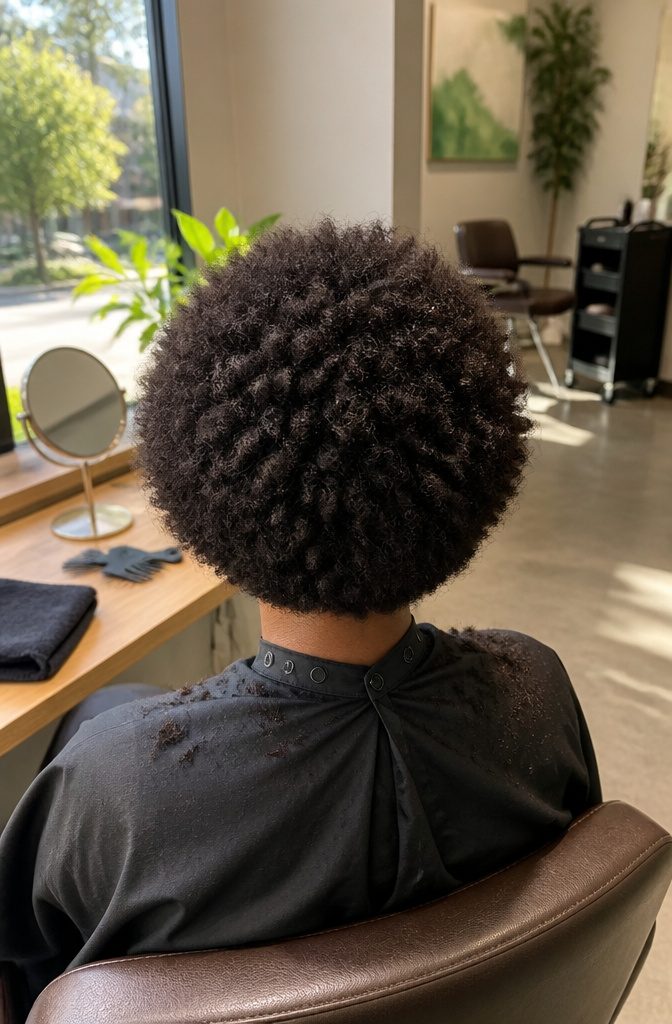
A baby fro is the long-to-short cut that lets curls be curls. Instead of trimming toward a bob outline, the shape follows the natural coil, so the hair rounds out into a soft halo with no flat-ironed edges to maintain.
I’d pick it over a blunt bob if your hair shrinks a lot when it dries, because a cut made on curls that have bounced up tells you the real length before you commit.
Ask your stylist to cut it dry, curl by curl, and bring a photo showing your own curl pattern, not a looser one. Wet-cutting a tight curl is how a "short trim" turns into a much shorter result than planned.
23. Bouncy Bob
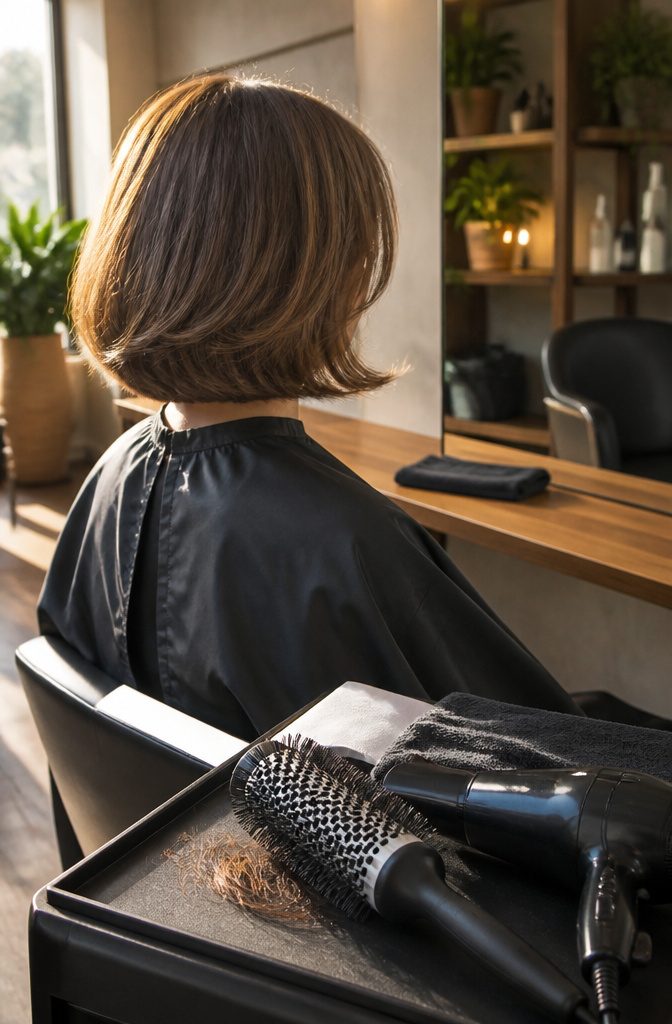
A bouncy bob earns its place on the list by doing two jobs at once: it gives you a shape and it gives you body.
Cut to around chin or jaw level, the weight of long hair is gone, so the ends spring up instead of hanging flat.
That lift is the whole appeal, and it is why I’d pick this over a blunt, heavy bob if your long hair has always looked limp past the shoulders.
Ask for movement in the ends, with volume built into the shape, and bring a photo that shows the bounce, not just the length.
Plan on a blowout or a round brush to get it, since the cut gives you the bounce but styling keeps it.
24. Razored Hairstyle
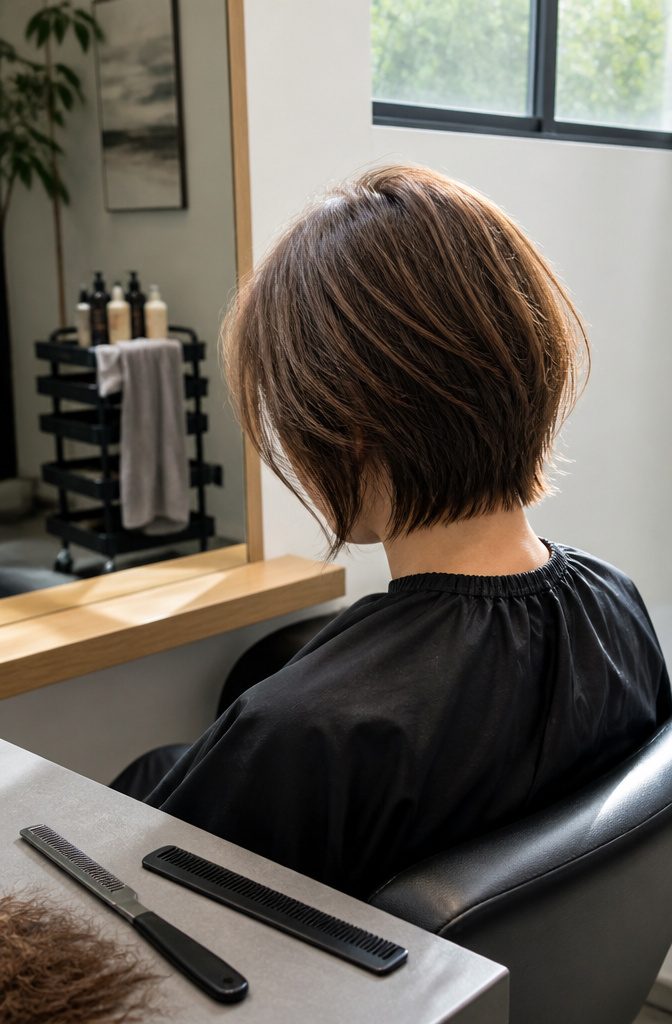
Razor work gives a long-to-short cut texture the moment it’s finished, because the blade tapers each strand instead of snipping it blunt.
The ends come out feathered and soft, so the cut moves without any product doing the work. It’s a named technique, so ask for "razored ends" or a "razor cut" and bring a photo that shows the finish you want.
I’d choose it when a blunt chop feels too heavy or too stiff for you.
Ask your stylist whether your hair can take a razor, since the feathered look suits hair that already has some body and can read frayed on very dry ends.
25. Middle Part With Blunt Bob
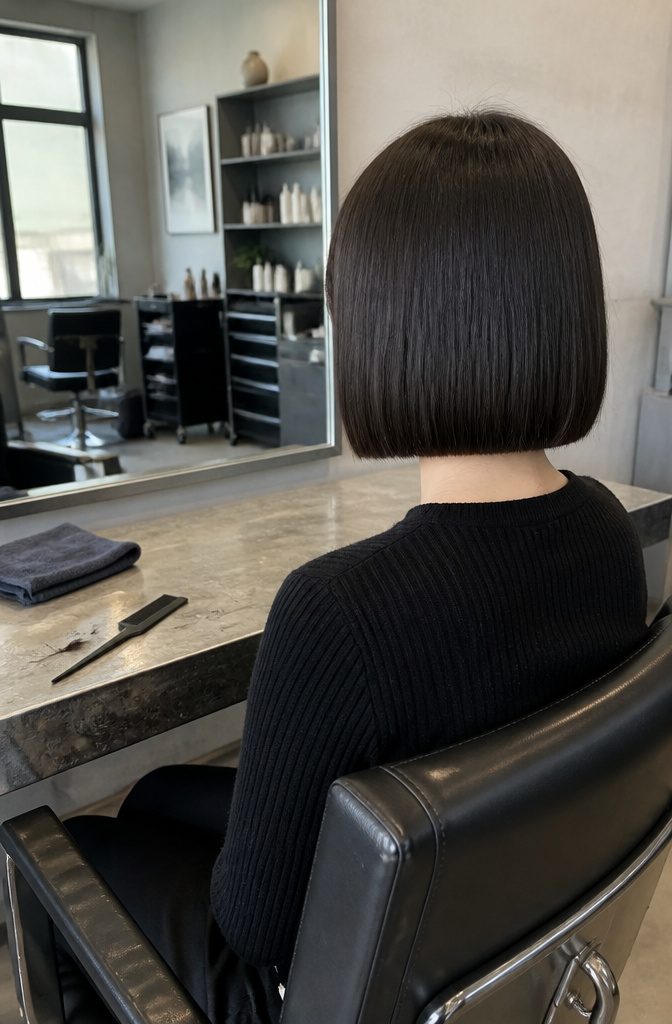
A middle part and a blunt bob make one of the cleaner pairings in a long to short haircut, because each one fixes what the other leaves open.
The part splits the weight evenly, and the blunt line gives both sides one crisp edge to hang from. Nothing is layered away, so the cut reads as a single shape.
That symmetry is also the catch. A middle part shows every crooked inch, so if your natural part wanders, plan on setting it with a comb each morning.
I’d choose this cut for straight or smooth hair, where the clean line is what makes it work, and skip it if you want much movement or softness around the face.
26. Textured Lob
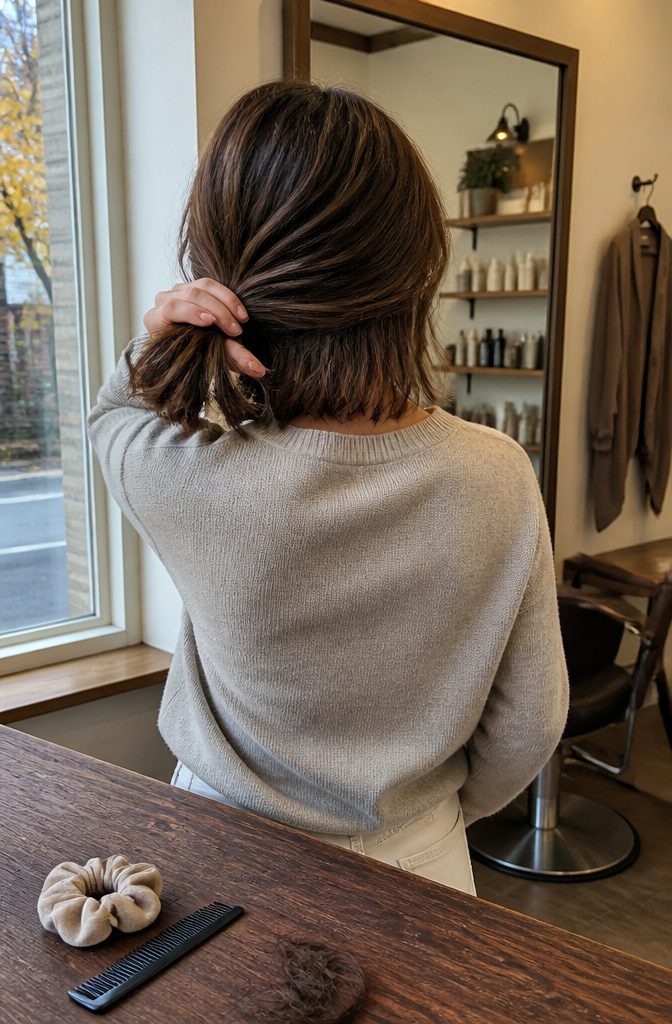
A textured lob stops at collarbone length and uses layers or point-cutting to break up blunt weight, which makes it easier to hide ends that have thinned from heat damage or shedding.
The uneven texture diffuses light differently than a clean line does, so the eye reads volume and movement rather than counting individual strands.
If you part your hair the same way every day, thinning along that line shows less in a textured cut than in a precise bob.
The lob length itself sits in a useful range: long enough to tuck behind your ears or pull into a low ponytail, short enough that you lose the straggly inches without committing to a crop.
I find the textured version grows out better than a blunt lob because new growth blends into existing layers instead of turning into a shelf at month two.
27. Curly Bob With a Hidden Part
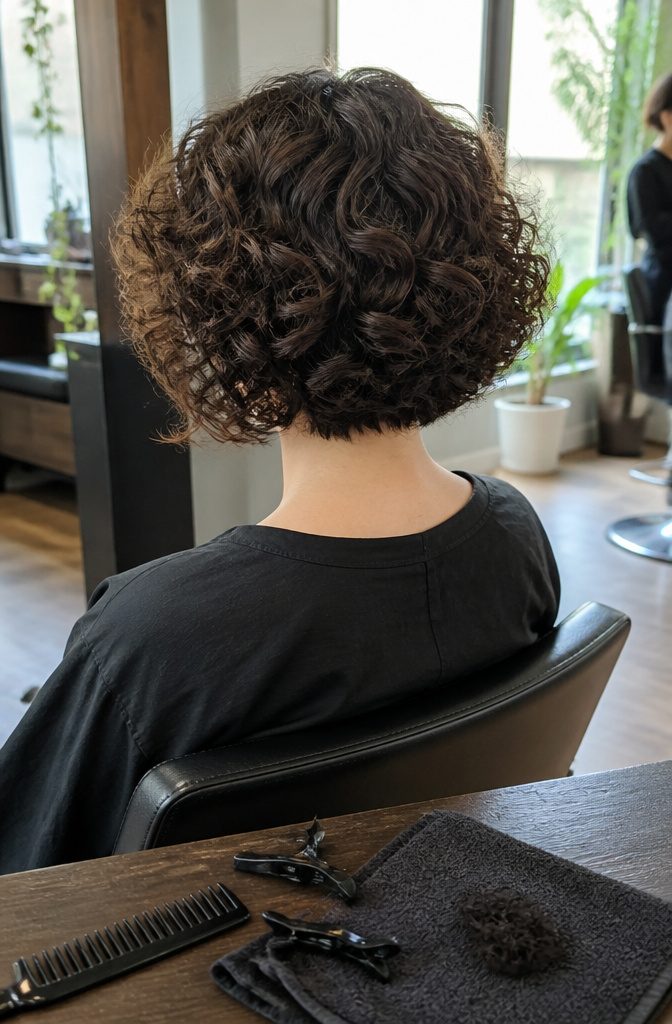
A curly bob with a hidden part gets its movement from the curl pattern, not from styling.
Part the hair deep and slightly off to one side, then let the top layer fall over the part line so no scalp shows.
The curls stack and bounce against each other, and the shape looks fuller than a center part would.
Cutting curly hair dry, curl by curl, lets the stylist see where each spiral will land, so ask for that if you’re going from long to short.
Ask for a rounded shape with the weight kept at the jaw, since a hard line tends to turn into a triangle once the curls dry and spring up.
28. Short Cut That Keeps Bangs
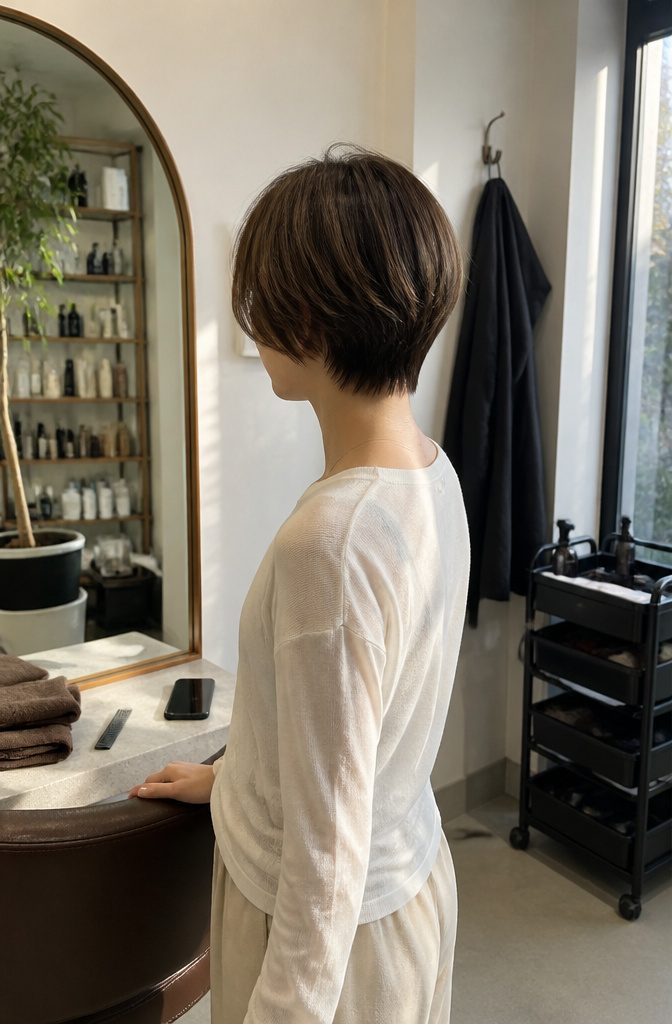
Keeping the bangs softens the whole transition. A short cut paired with face-framing fringe holds some of the movement and length you had before, so the change registers as less severe.
The fringe itself becomes the detail you recognize in the mirror while you adjust to the shorter perimeter.
If you don’t already have bangs, adding them to the new cut is an option worth testing before the appointment.
Virtual try-on tools let you preview how fringe pairs with shorter lengths on your own face, which helps you spot what works without committing to the cut twice. The added step matters most when you’re uncertain about the jump.
29. Shoulder-Length Cut
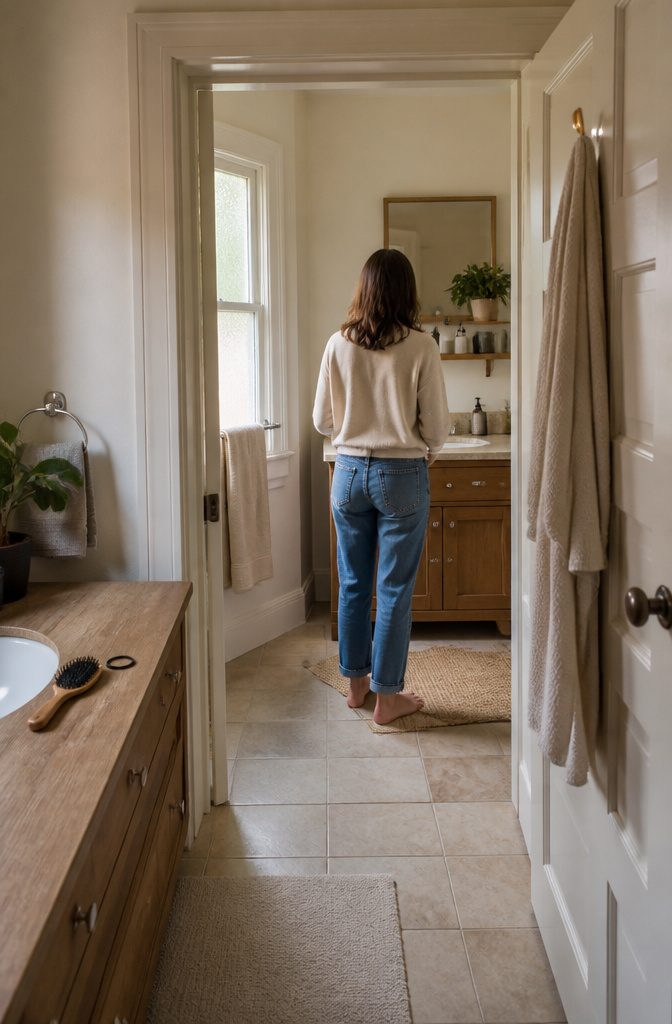
Shoulder-length sits between commitment and caution. The cut lands anywhere from collarbone to an inch or two past the shoulder, still long enough to pull back but short enough that the weight is gone.
For someone used to hair halfway down the back, this length feels like a test run rather than a leap.
Starting with layers instead of blunt length gives another gradual route.
A layered shoulder cut moves when you turn your head, where a one-length version can still feel heavy. The layers also mean the cut grows out without turning into a triangle, which buys time between trims.
Expect to book a chair every eight to ten weeks if you want to hold the shape, closer to six if the layers are aggressive.
The length works across most face shapes because it doesn’t hug the jaw or crop above the cheekbone. That range of motion makes it forgiving.
30. Choppy Cut for Fine Hair
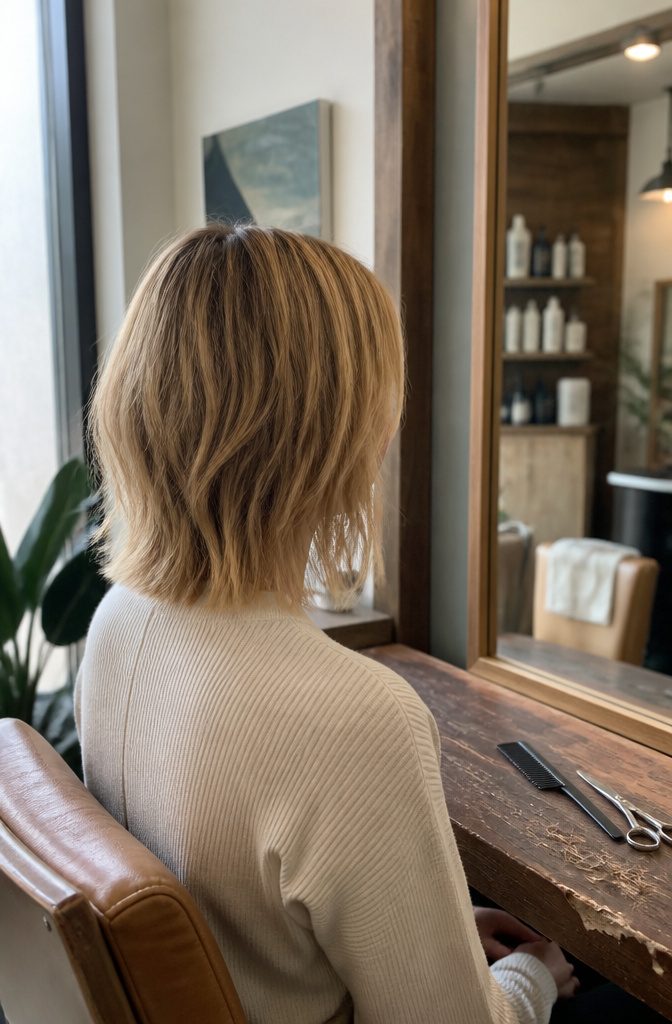
Fine hair sitting limp against the scalp tends to look thinner than it actually is, which is where choppy texture through the ends changes the story.
Instead of one blunt line that emphasizes how little hair passes through it, a choppy cut breaks the baseline into uneven pieces. Each strand catches light differently, and the stagger creates the impression of more hair occupying more space.
The texture works best when the cut falls somewhere between chin and collarbone.
Shorter than that and fine hair can stick out rather than settle; longer and the weight pulls any volume flat again. Choppy does not mean hacked.
The stylist should be cutting into the ends at varied angles rather than straight across, leaving some pieces a quarter inch longer than others. That irregularity is what lets fine hair move instead of clump.
Why Go Short
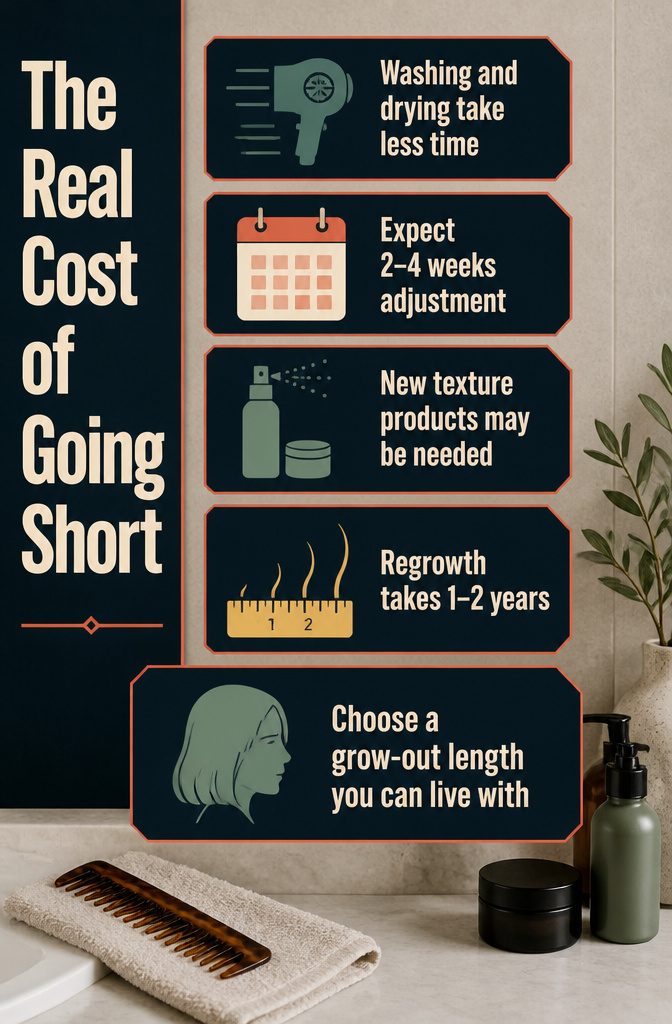
Going short takes the weight off.
Washing gets quicker, drying takes a fraction of the time, and a cut with built-in shape needs far less styling than a long head of hair that has to be detangled, braided or pinned up.
Expect 2–4 weeks of adjustment. Your hair feels lighter and less dense, your features read differently without the length around them, and you may need a texturizing spray or pomade you never owned before.
Regrowth is the real commitment: 1–2 years to get back to long, depending on how fast your hair grows. If that gives you pause, choose a length you could live with while it grows.
Matching a Cut to Your Face
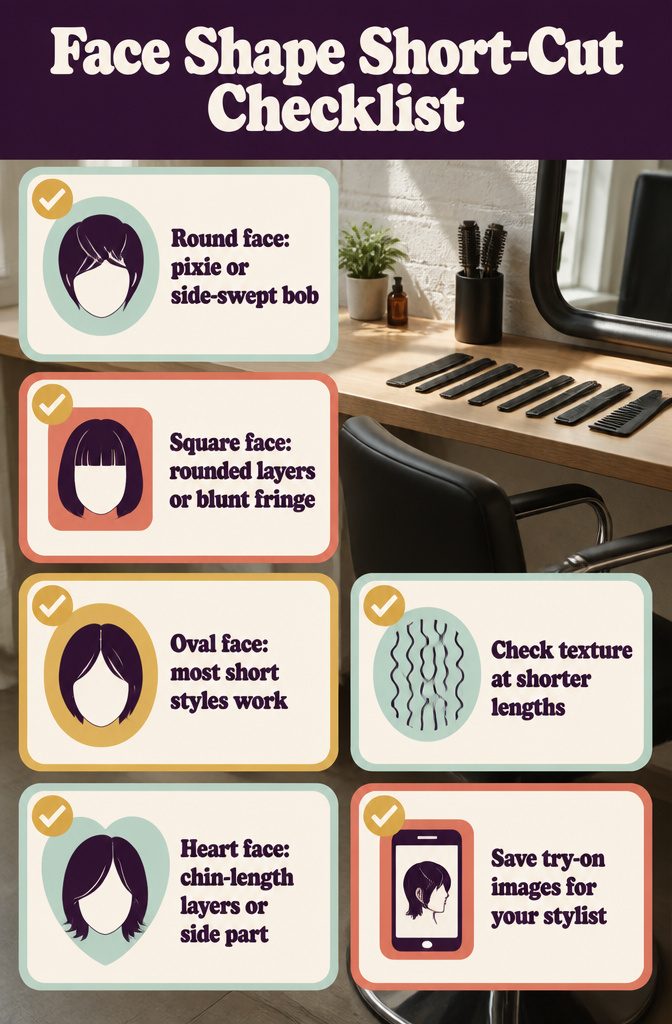
Face shape steers the decision harder than most people expect.
Round faces suit pixies or side-swept bobs because the angles create contrast where the face has none. Square faces soften with rounded layers or a blunt fringe.
Oval faces handle most short styles without a fight. Heart-shaped faces look best with chin-length layers or a side part that balances the width at the temples.
Hair texture matters just as much.
If you have wavy hair, shorter cuts can make odd curls stand out in ways a longer length would weight down. Curly hair behaves differently at chin length than it does past the shoulders.
A try-on tool gives you a preview before the scissors come out. TheRightHairstyles offers a free option with limited features, or a paid plan if you want to test more styles.
Either way, save the images you like and bring them to your stylist. A photo does more than a description ever will.
Frequently Asked Questions
How do I know if a short haircut will suit me?
Consider your face shape, hair texture, and how much time you want to spend on styling each morning.
Try a virtual preview tool to test the look, then bring photos of styles you like to a stylist who can adjust them to your features and texture.
The clearest way to know is to ask someone who cuts hair for a living and can see your face and hair in person.
What are the benefits of cutting my hair short?
Short hair adds volume and texture because weight no longer pulls it flat, and curls tighten once the length is gone.
Split ends disappear in one cut, features like cheekbones and eyes become more visible, and styling time drops to minutes. You also see your real curl pattern for the first time if you’ve been wearing it long.
How often should I get a trim after cutting long hair into short hair?
Plan on a trim every 4 to 6 weeks. Short hair loses its shape faster than long hair does, and split ends show up sooner because there is less length to hide them.
Ask your stylist for a maintenance schedule that fits your hair type before you leave the first appointment.
Can I grow my hair out again after cutting it short?
Yes, hair grows back at the same rate it always has.
Depending on your growth rate and how you care for it, regrowth can take 1 to 2 years to reach the length you started with. Cutting does not change the follicle or the way hair grows.
What products should I use to style short hair?
Use lightweight mousse at the roots for hold, texturizing spray for movement, and a drop of serum or oil on the ends if frizz is the problem.
For a piecey, defined finish, work a small amount of pomade or wax through the ends. Skip heavy creams and butters, which sit on the surface and make short hair look greasy.
How long does it take to adjust to short hair?
Most people feel fully comfortable with the change in 2 to 4 weeks.
The first few days can feel strange because you’re used to seeing yourself with more length, but the adjustment happens faster than you expect once you stop reaching for hair that isn’t there.
What’s the best way to prepare my hair before cutting it short?
Wash your hair 1 to 2 days before the cut to remove buildup but keep enough natural oil for flexibility.
Skip heat styling and heavy products that weigh it down and hide its real texture. Bring photos of the styles you want and talk to your stylist about hair health, especially if damage has thinned the ends.