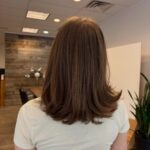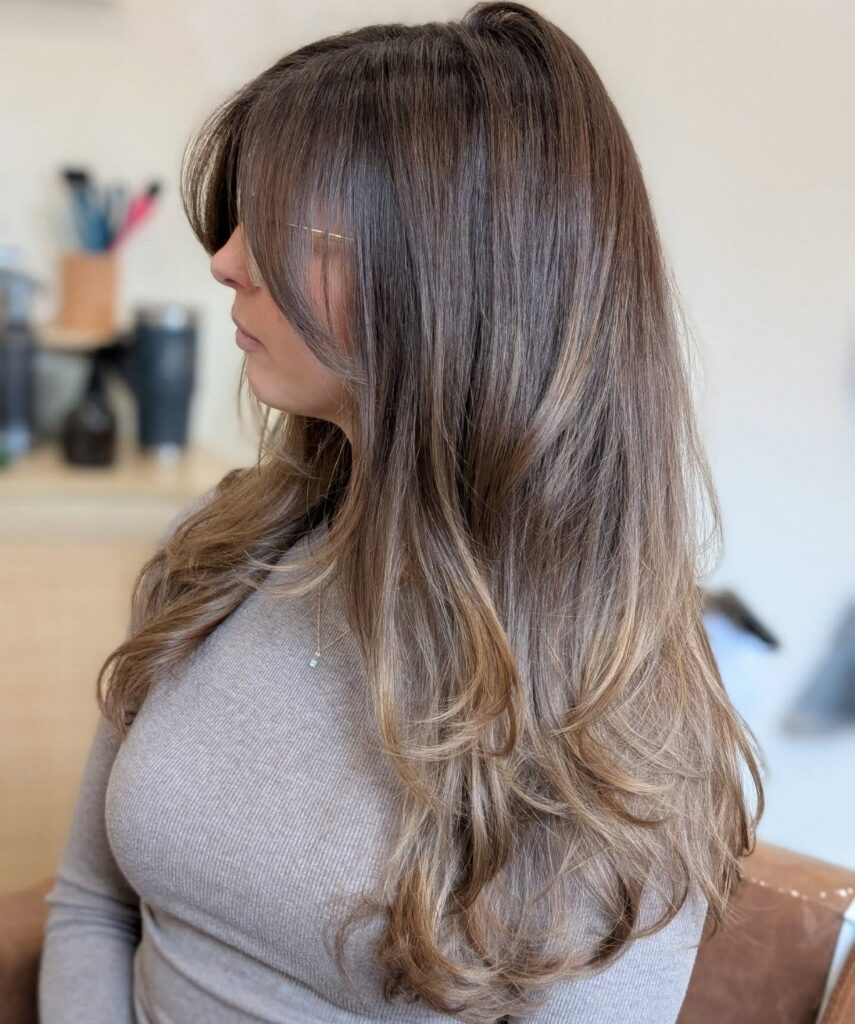
Layering cuts weight from any length, whether you’re keeping long hair past the mid-back or taking a bob down to the chin.
The choice rests on where you need the most movement: face-framing layers add dimension around the cheekbones and jawline without shortening the rest, while choppy layers distributed throughout create texture and separation, and feathered layers soften the ends with tapered cuts that blend into each other.
1. Face-framing Layers
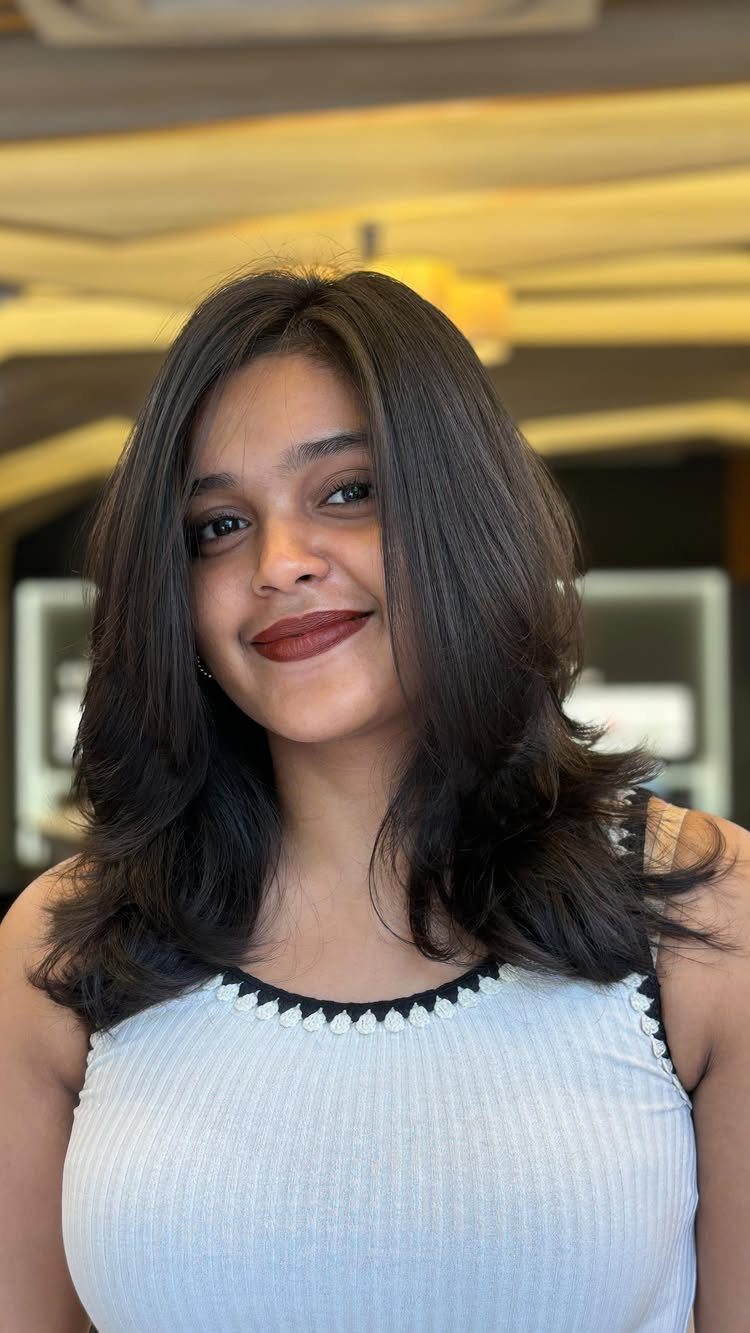
Shorter pieces around the face pull focus to the cheekbones, jawline and eyes while the rest of the hair stays longer. This gives shape and dimension without committing to an all-over short cut.
The front sections are cut to chin or collarbone length and then blended back into longer hair. Ask for soft, feathered ends rather than a blunt line for easier tucking behind the ears.
Works well for round or square face shapes since the vertical lines add length. Grows out cleanly as the front pieces simply become part of the longer length.
2. Long Layered Haircut
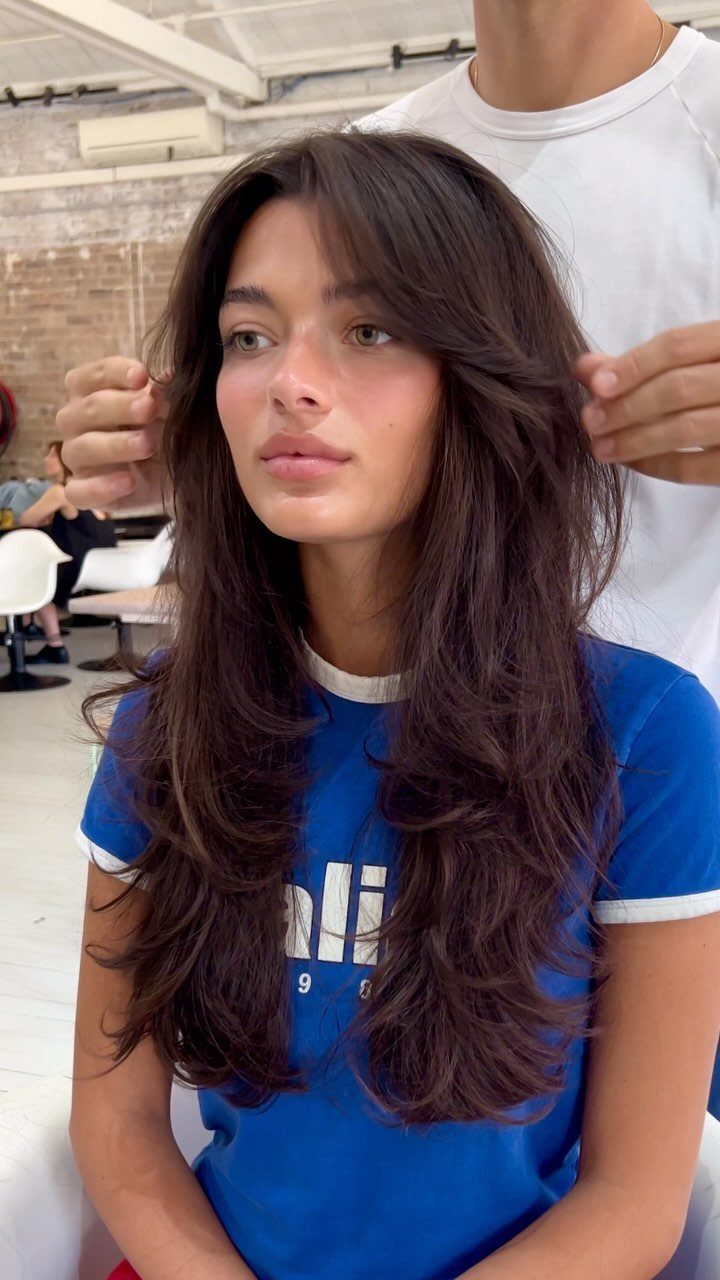
Layers cut through long hair remove weight and let the ends move instead of hanging flat. The longest layer still reaches mid-back or below, so you keep most of the length while gaining shape.
A stylist typically starts the layering around the collarbone or lower and removes bulk from the ends. Fine or thin hair gets more volume this way; thick hair becomes easier to style because there is less weight pulling it down.
Schedule a trim every 10 to 12 weeks to keep the shape from growing out into one heavy line. Between cuts, the layers soften and blend naturally rather than looking choppy.
BTW: If you are trying to grow your hair out, getting layers is an excellent way to get in your v important and v necessary trim to get rid of your split ends and prevent breakage.
3. Layered Bob with Bangs
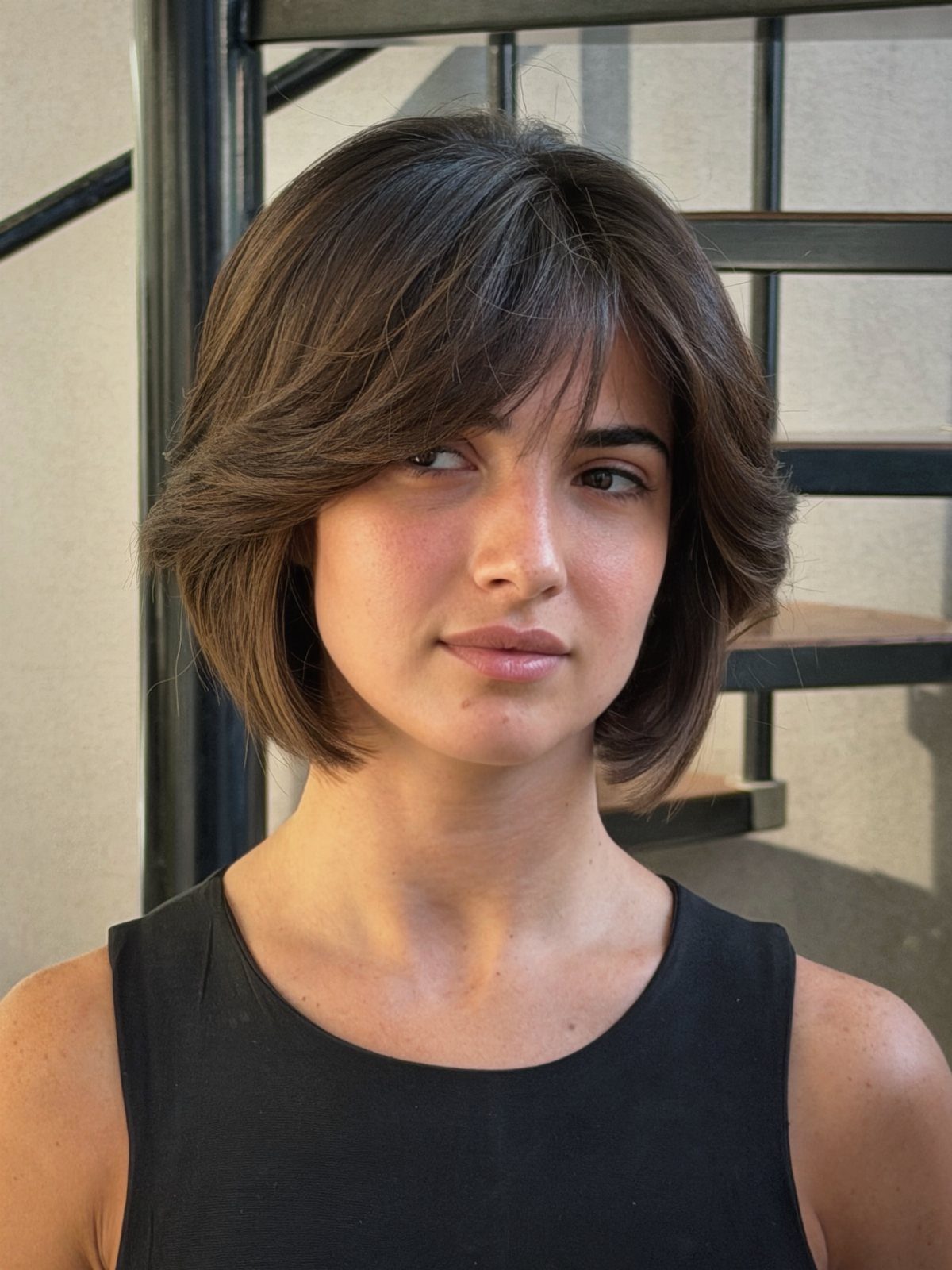
Layers through a bob add texture and keep the cut from sitting too heavy or flat, and a fringe frames the forehead and draws the eye upward.
The bangs can be blunt, wispy or side-swept depending on how much forehead coverage you want.
This combination works for most face shapes since the fringe shortens the face while the bob’s layers add width or movement where needed. Straight hair displays the layers most clearly; wavy hair gives the style more lift.
Growing out the bangs takes patience, but they blend into the layers once they reach chin length.
4. Layered Pixie
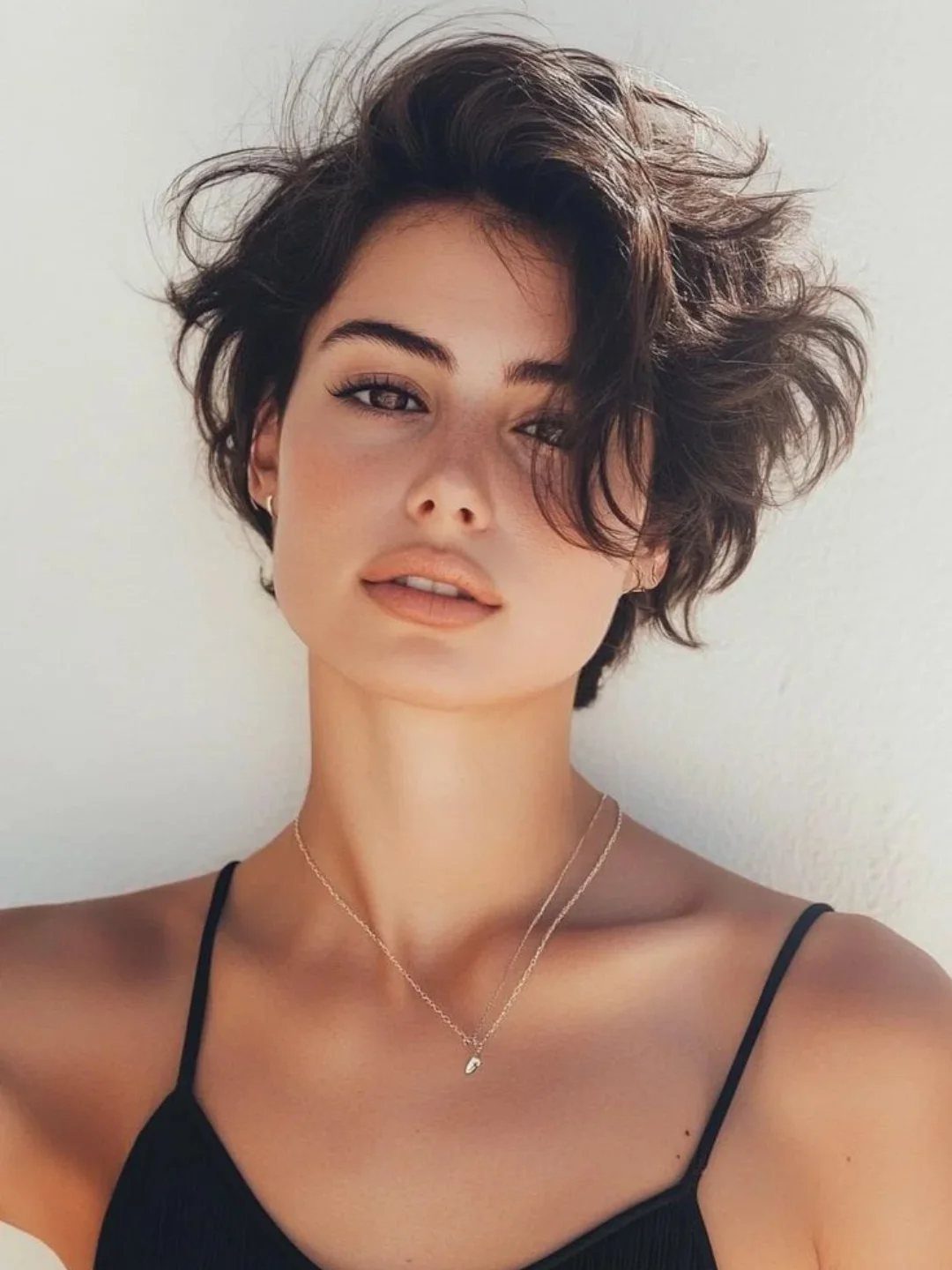
Pixie cuts gain texture and lift when the stylist adds choppy or feathered layers instead of cutting all one length. The layers stack to create height at the crown and soften the line where the hair meets the neck.
Side-swept or tousled styling makes the layers stand out. A small amount of styling cream or pomade defines the pieces without weighing them down.
Regrowth changes the silhouette quickly, so regular maintenance keeps the layers crisp. Thick hair benefits most since the layers remove bulk; fine hair may need less layering to avoid looking thin.
5. Butterfly Cut
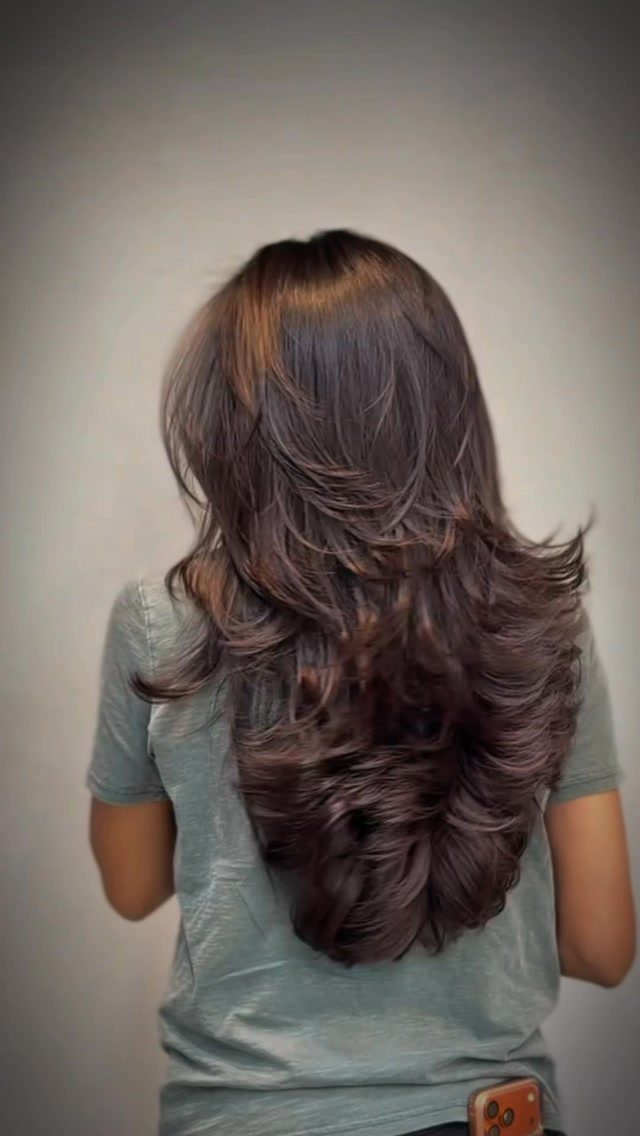
The butterfly cut stacks shorter layers through the crown and face-framing sections while leaving the bottom half long. The contrast creates volume at the top and lets the longer hair underneath stay heavy and full.
A stylist cuts the upper layers to shoulder length or above, then blends them into the longer lengths below.
Curling or blow-drying the shorter layers outward gives the signature lift, and the longer hair can be worn straight, curled or left natural.
Thick or wavy hair suits this cut best since the texture supports the volume.
6. Curtain Bangs with Layers
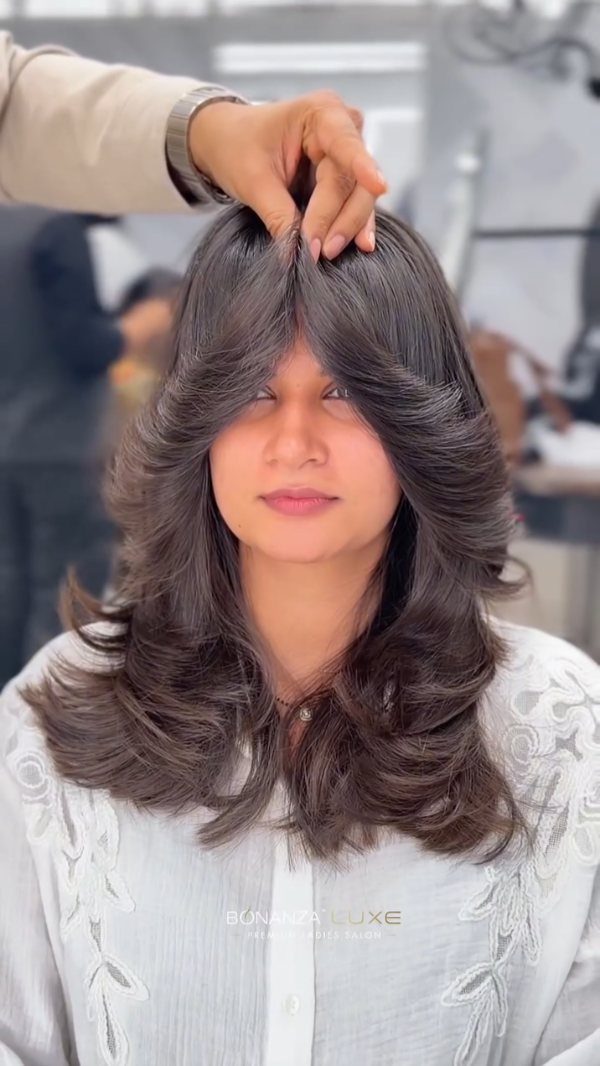
Curtain bangs part down the middle and frame both sides of the face, then blend into longer layers without a hard line.
The fringe is longest at the outer edges, so it sweeps away from the face rather than covering the forehead.
This style softens angular face shapes and works with straight, wavy or lightly curled hair. Blow-dry the bangs with a round brush to flip the ends outward, or let them air-dry for a relaxed look.
The bangs grow out easily since they are already angled toward the sides.
7. Layered Shag
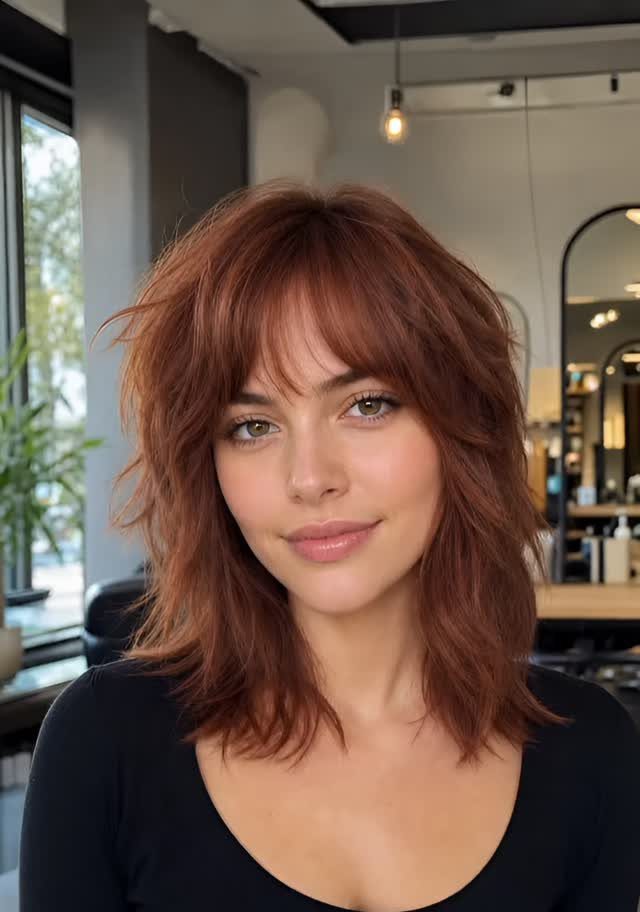
Choppy layers cut into the crown and around the face create a textured, undone look that moves without much effort.
The ends are point-cut or razor-cut to avoid a solid line, so the perimeter looks soft and lived-in rather than freshly trimmed.
Blow-dry with your fingers or scrunch while damp to bring out the texture. A small amount of texturizing spray or light mousse keeps the layers separated without stiffness.
Grows out forgivingly since the shape is already informal. Wavy or straight hair both work; fine hair gains volume from the layering, while thick hair loses weight.
8. Layered Lob
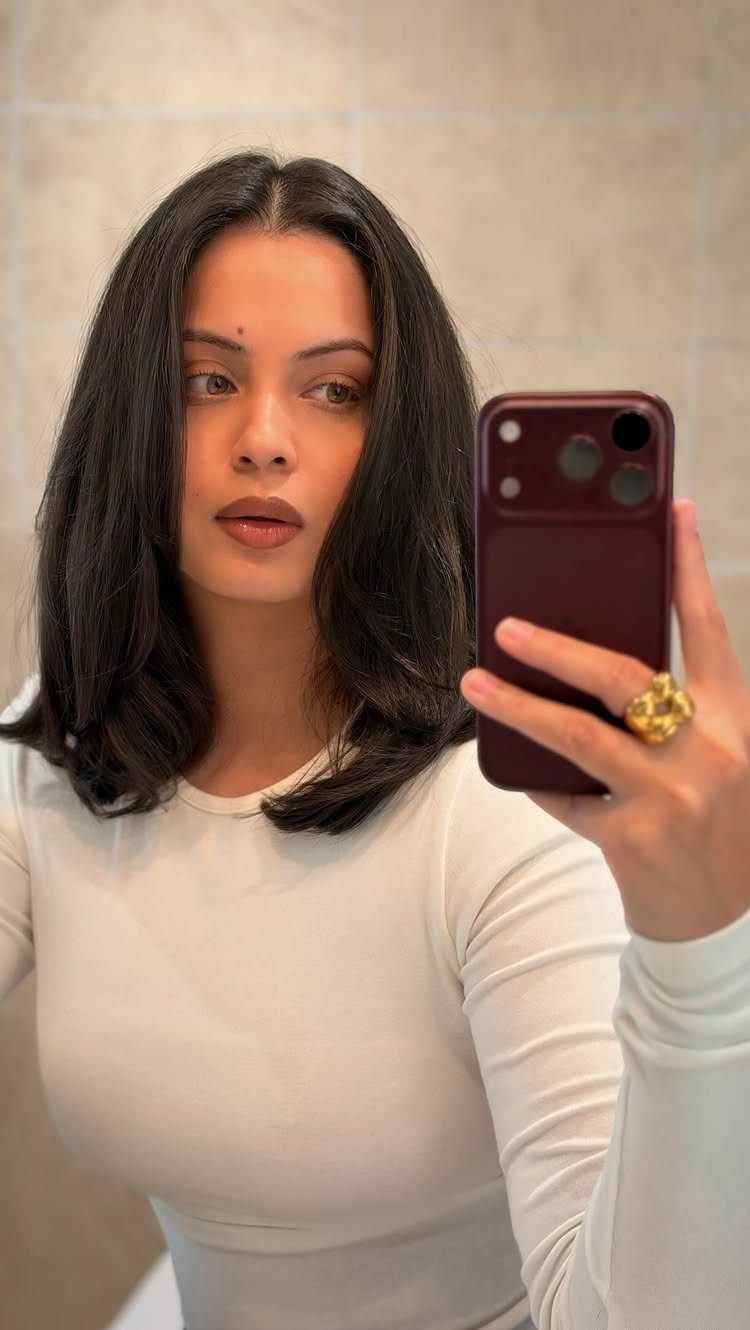
The lob sits between chin and collarbone, and layers cut through it keep the ends from hanging too heavy. The shortest layers usually start near the jawline, which opens up the shape without removing much length.
Styling time stays short since the length is easy to blow-dry or flat-iron. Adding a slight bend at the ends with a curling iron gives the layers more definition.
Straight hair shows the layering most clearly.
Thick hair benefits from the weight removal, and fine hair can handle subtle layers without looking sparse. Regular trims keep the line from turning shaggy.
9. Layered Waves
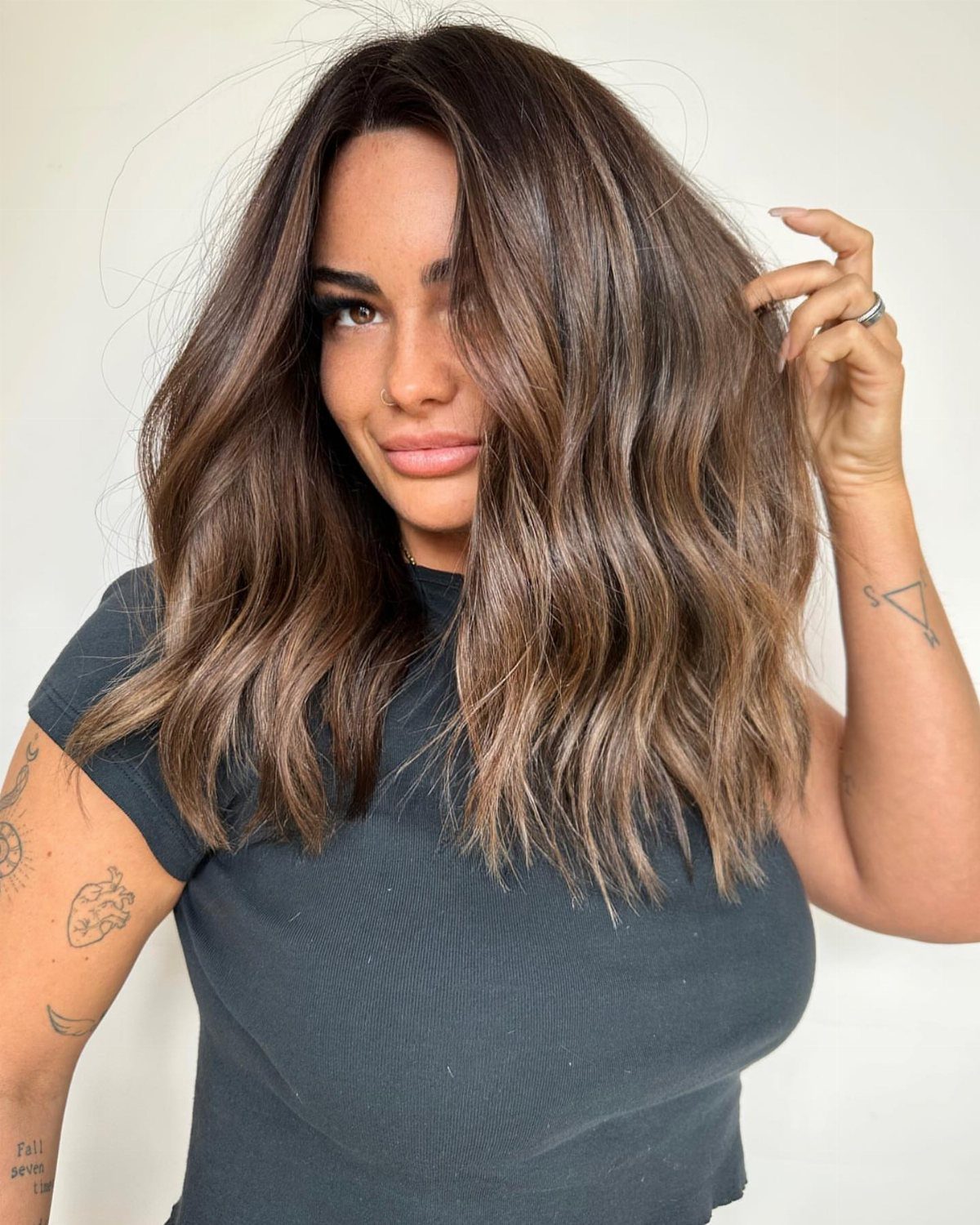
Cutting layers into wavy hair allows each wave to form its own shape instead of pulling flat from the weight. The layers can be soft and blended or more distinct depending on how much separation the cut creates.
Air-drying brings out natural texture.
For more defined waves, scrunch in mousse or curl cream while damp, then diffuse. A curling wand can add waves to sections that need more bend.
Thick or coarse waves benefit most because layering takes out weight. Fine wavy hair needs gentler layering to keep enough density at the ends.
10. Choppy Layers
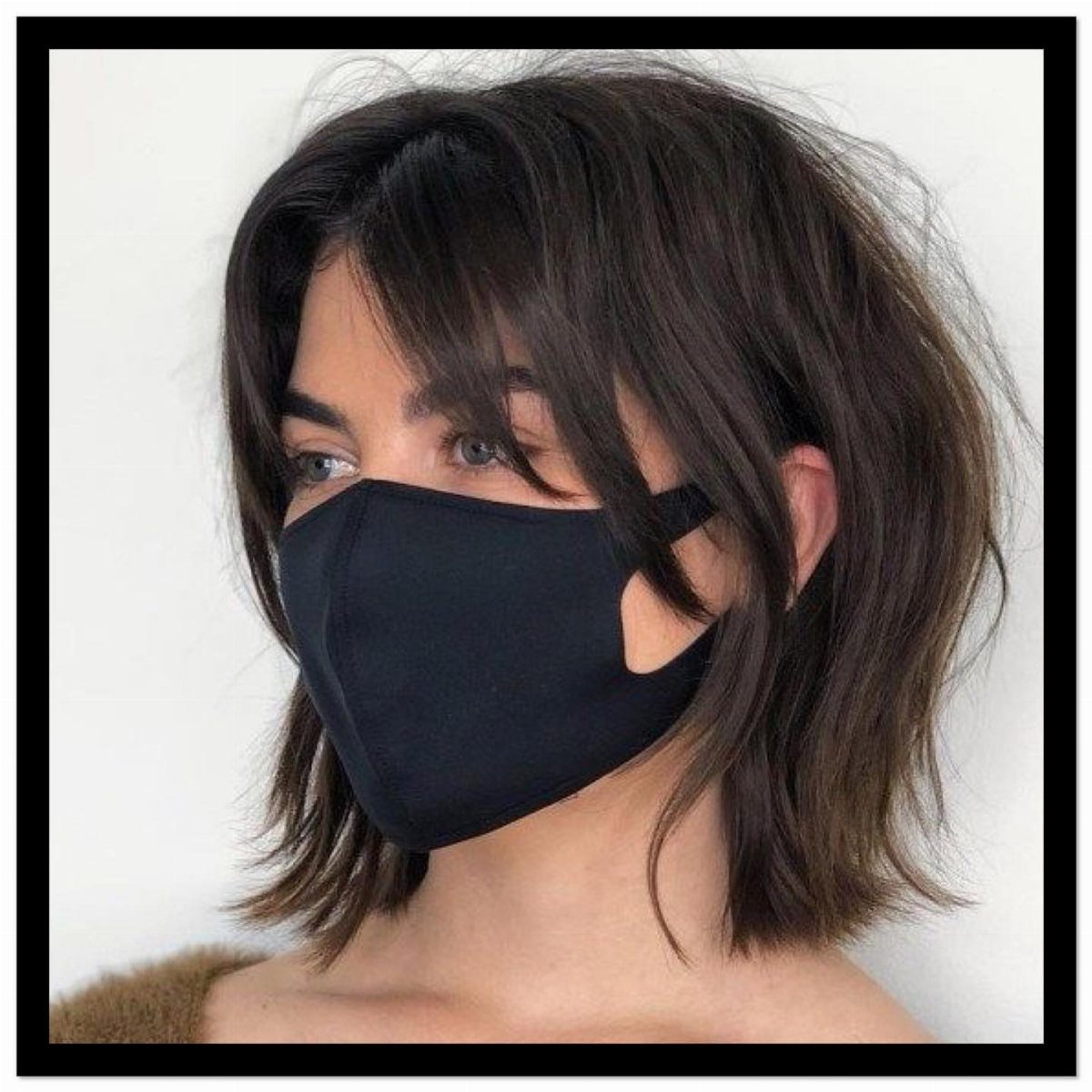
The stylist cuts layers with intentional separation rather than blending them smooth, which leaves visible gaps and texture through the hair. This gives an edgier, less polished finish than soft, feathered layers.
Point-cutting or slide-cutting the ends creates the choppy effect. The layers can be concentrated around the face or distributed throughout, depending on where you want the most texture.
Straight and wavy textures show the choppy separation best.
Thick hair gains movement; fine hair may look thin if the layers are too short or too separated. Style with texturizing paste or dry shampoo to emphasize the pieces.
11. Layered Curls
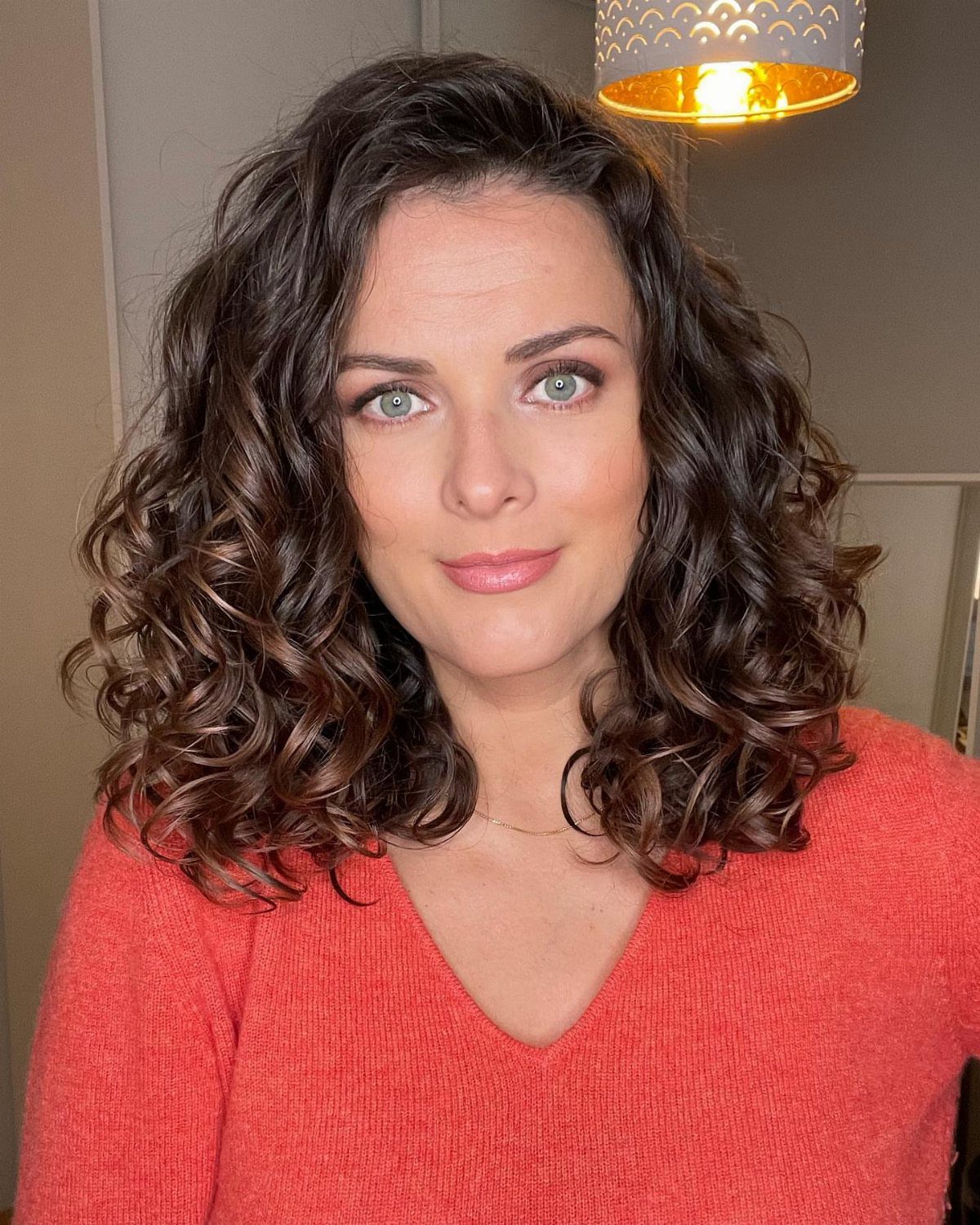
Layers cut into curly hair reduce the triangle shape that comes from weight pulling the curls down at the roots while the ends stay full. Shorter pieces at the crown give lift, and curls bounce more when you remove weight.
Ask for dry cutting so the stylist can see how each curl sits. Wet cutting tends to remove more length than expected once the hair dries and shrinks.
Medium to long curls benefit most.
Tight curls need careful layering to avoid frizz or uneven length, while loose curls tolerate more aggressive layers. Book a trim when the shape starts to lose its outline.
12. Side-swept Layers
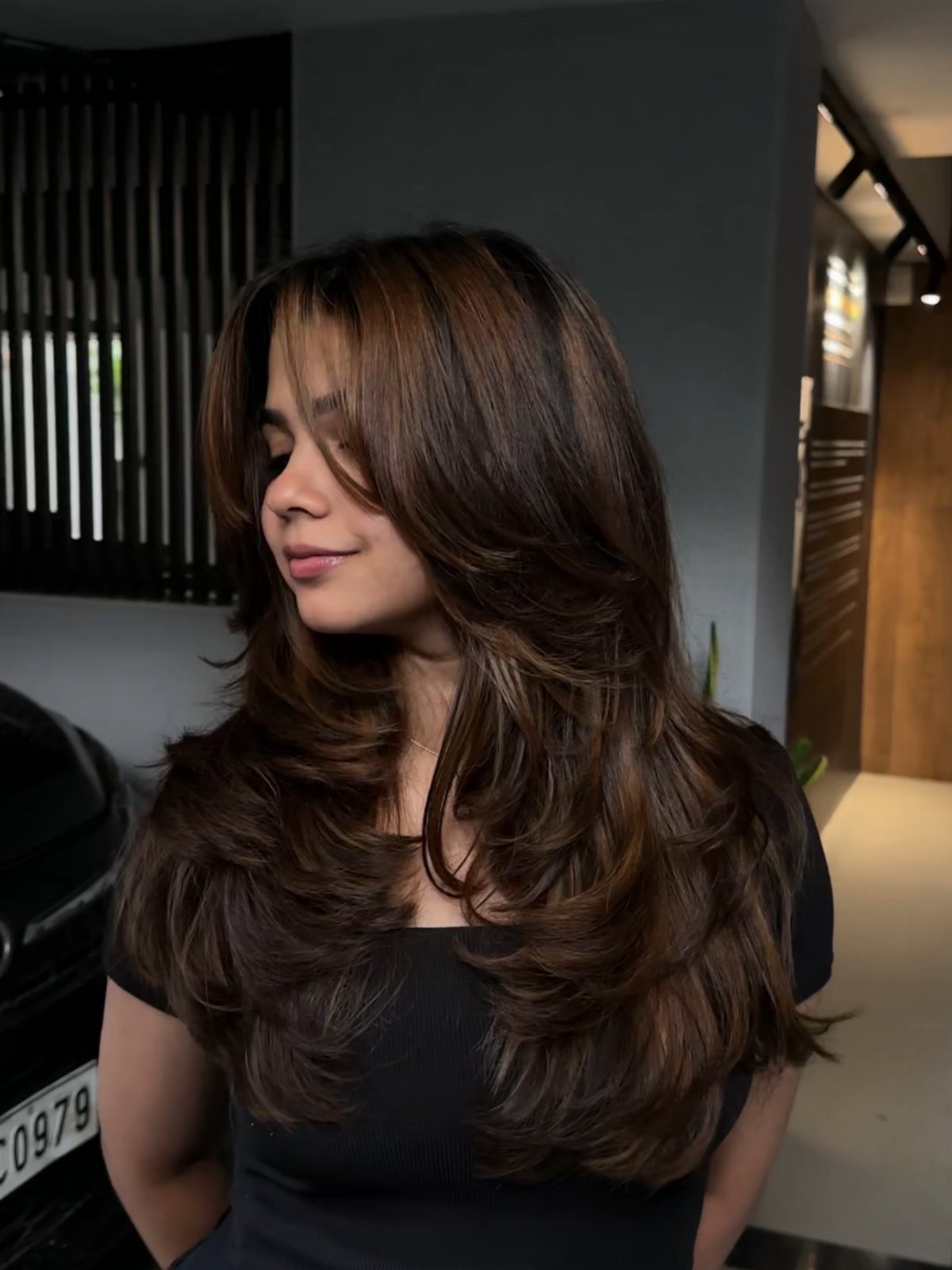
A deep side part shifts the hair’s weight to one side, and the layers are cut longer on the heavy side and shorter on the other.
This creates an asymmetric frame around the face and exposes more of one cheekbone and jawline.
Blow-dry in the direction of the part with a round brush to lift the roots on the heavier side. The shorter side can be tucked behind the ear or left loose.
Oval and heart-shaped faces suit this cut well since the asymmetry adds interest without widening.
Straight or wavy hair holds the side-swept shape most reliably. Fine hair gains volume from the uneven distribution.
13. Long Layers
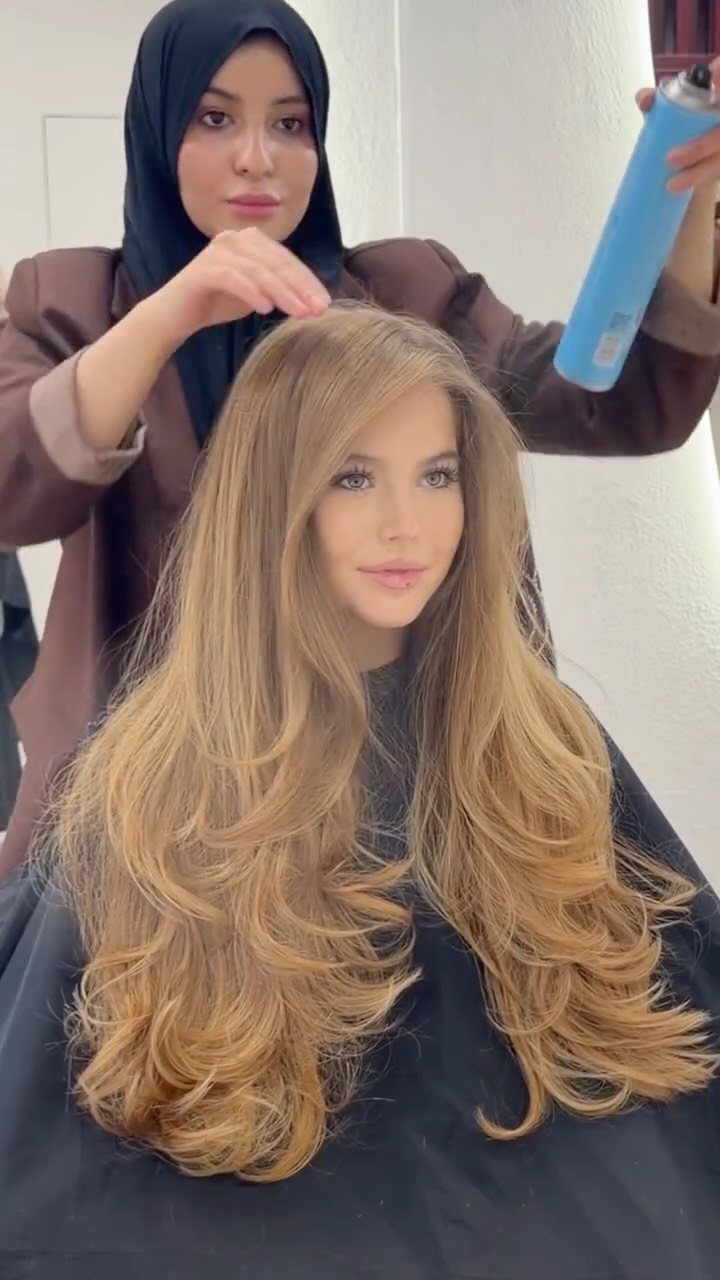
Layers cut only through the bottom third of long hair keep the overall length while opening up the ends so they swing instead of clumping together.
The top sections stay full and the layering is subtle enough that the hair can still be pulled into a high ponytail without short pieces falling out.
Wavy or straight hair both work. Thick hair loses some weight at the ends, which makes brushing and drying faster.
14. Feathered Layers
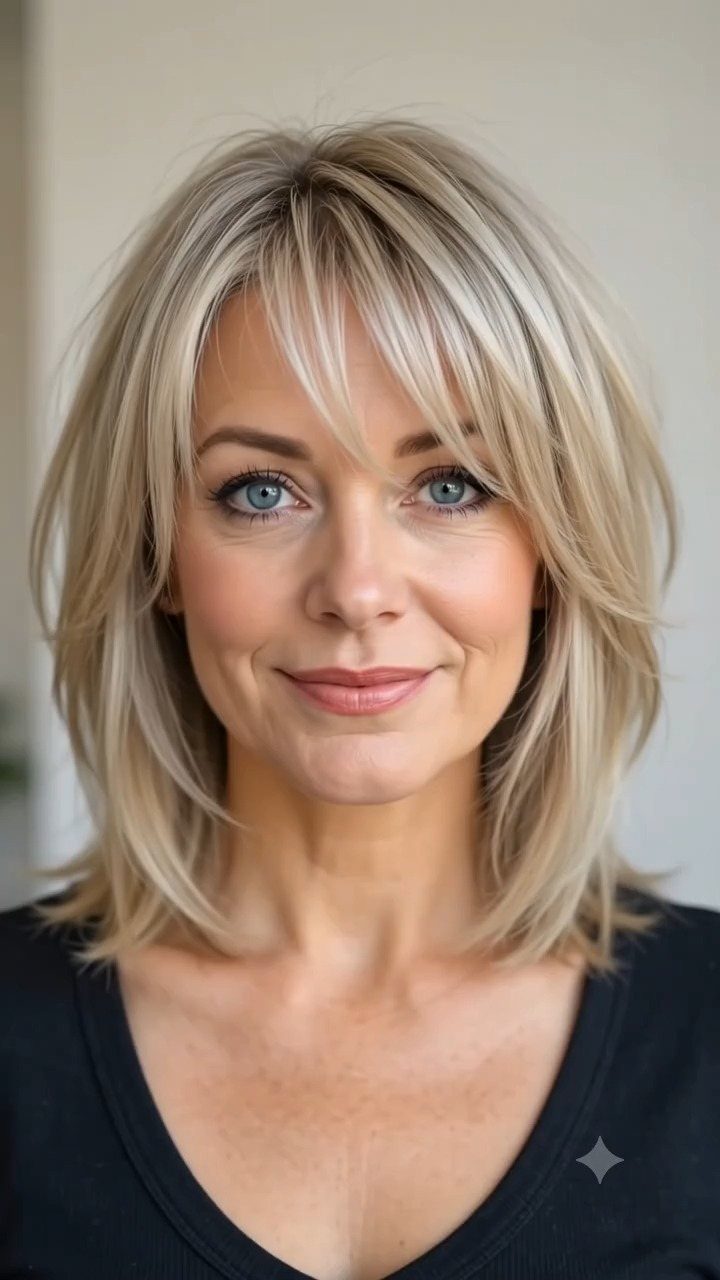
The stylist uses a razor or point-cuts the ends to create soft, feathery texture rather than a blunt line. Each layer flips outward slightly instead of lying flat, which gives the hair a lifted, airy finish.
Blow-drying with a round brush turned outward emphasizes the feathering. The layers stay light, so they need less product to hold their shape.
Fine to medium hair shows the feathering best since the ends turn easily.
15. Feathered Bob
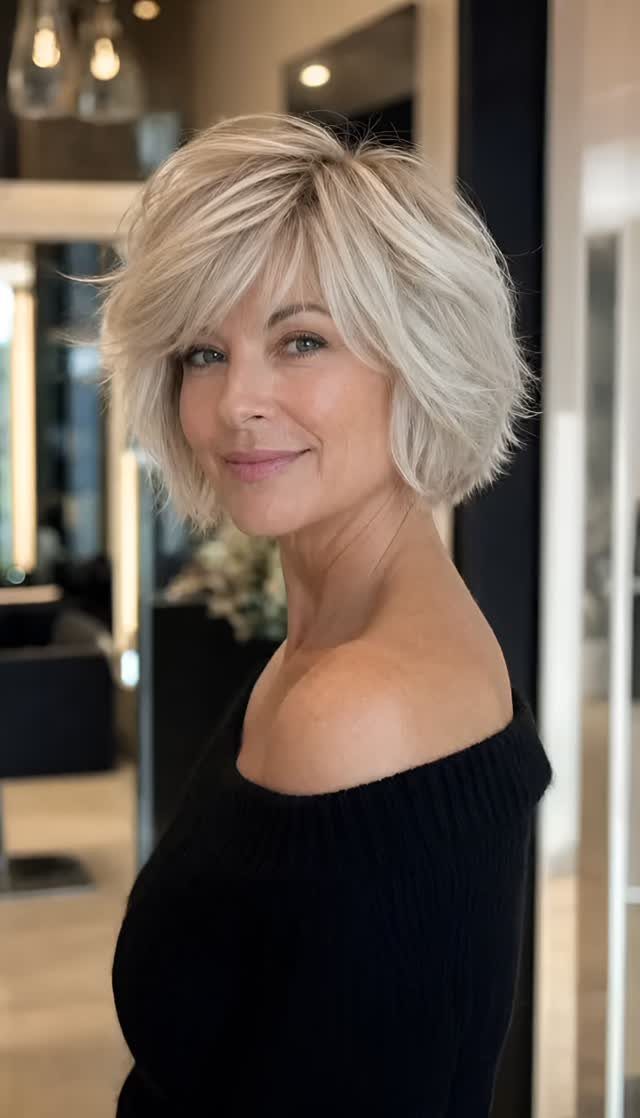
Point-cutting or razor-cutting the ends of a bob creates soft, feathery layers that flip outward or settle in separated pieces. The result looks polished when blow-dried smooth or piecey when styled with texturizing spray.
Medium to thick hair holds the feathered shape without looking sparse. Straight or wavy textures both work, though straight hair shows the separation more clearly.
16. Bouncy Blowout
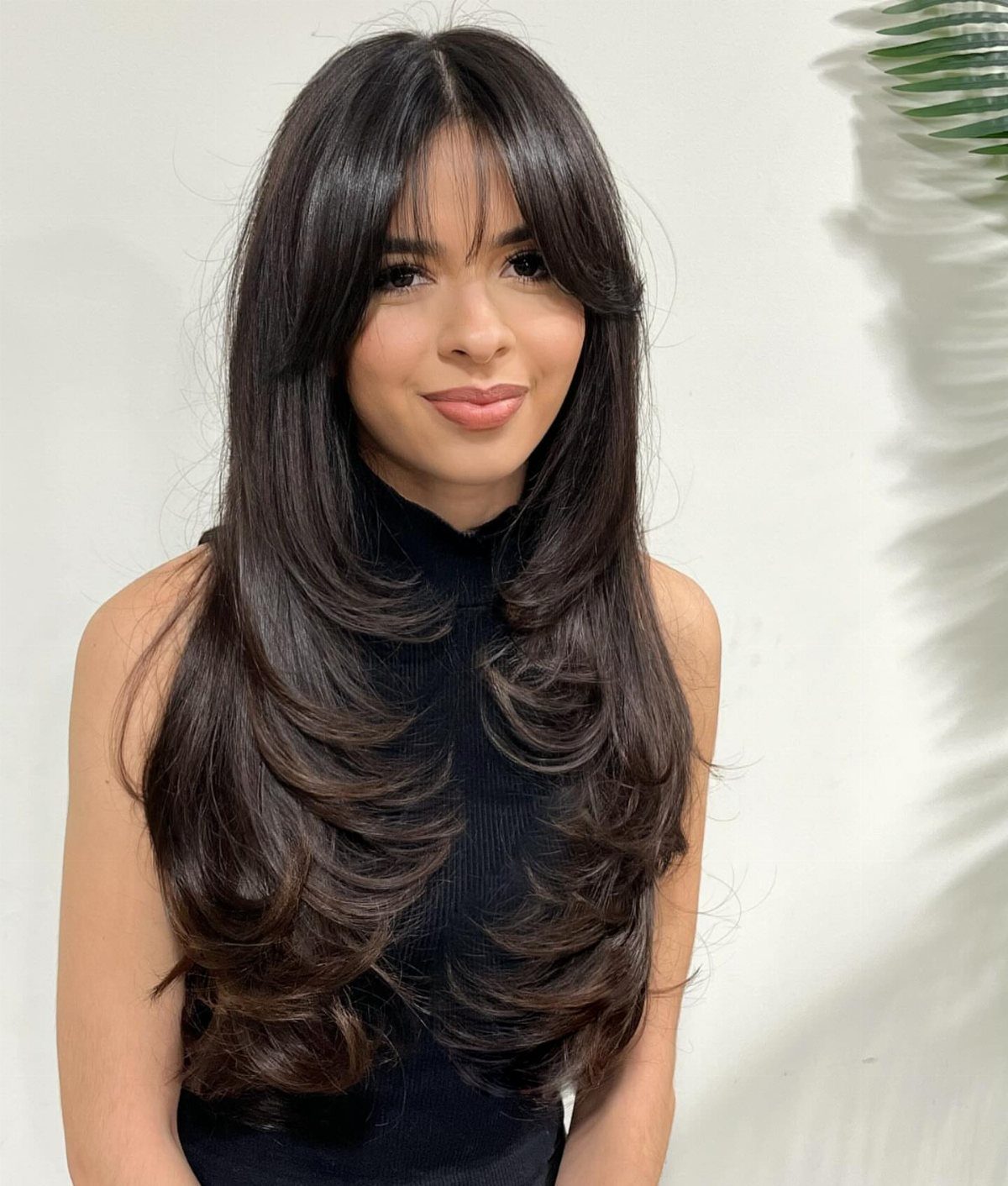
Layers cut through the length and blow-dried with a large round brush create volume and movement without stiffness. The ends are kept light and wispy, so the hair bounces when it moves rather than hanging heavy.
Blow-dry in sections, rolling the brush under at the roots and flipping the ends outward. A light finishing spray holds the shape without weighing it down.
Works for most hair types; fine hair gains lift, and thick hair becomes easier to manage.
17. Rock-and-roll Fringe

A thick, blunt fringe cut straight across the forehead and paired with choppy layers through the rest of the hair gives a strong, rock-inspired shape.
The fringe sits heavy and covers the eyebrows, and the density creates a hard line that contrasts with the textured lengths below.
Straight or wavy hair holds the squared edge. Thick hair suits this fringe best since it needs enough density to sit solid across the forehead.
Fringe needs trimming often enough that it stays above the eyes instead of hanging into them.
18. Sleek Straight Layers
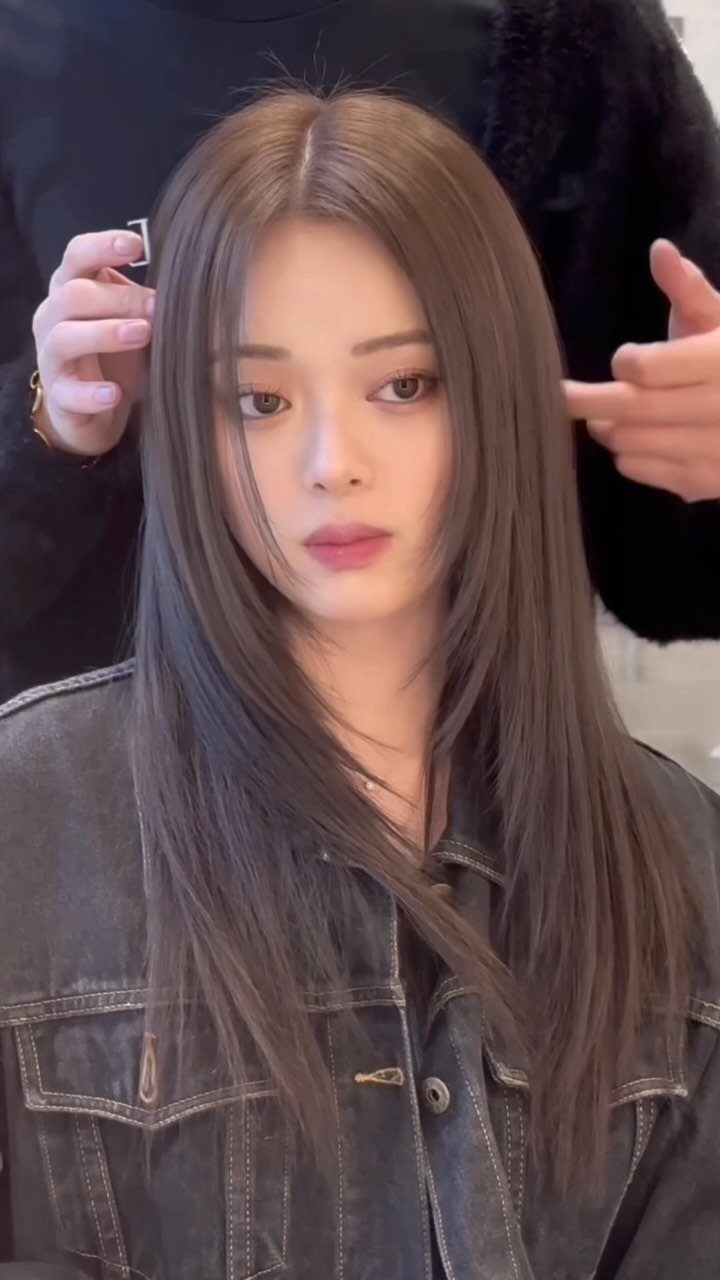
Flat-ironing layered hair from roots to ends creates a smooth, glossy finish where the layers show as clean lines rather than texture or volume.
The cut removes weight without adding lift, so the hair stays close to the head and reflects light evenly.
Flat-ironing sleek layers needs a protectant first or the heat damages the ends.
Medium to low heat works for fine hair; thicker hair may need higher settings. A single pass per section keeps the hair smooth without overheating it.
Straight hair takes this style fastest. Wavy or curly hair can be straightened but requires more time.
19. Edgy Angled Bixie
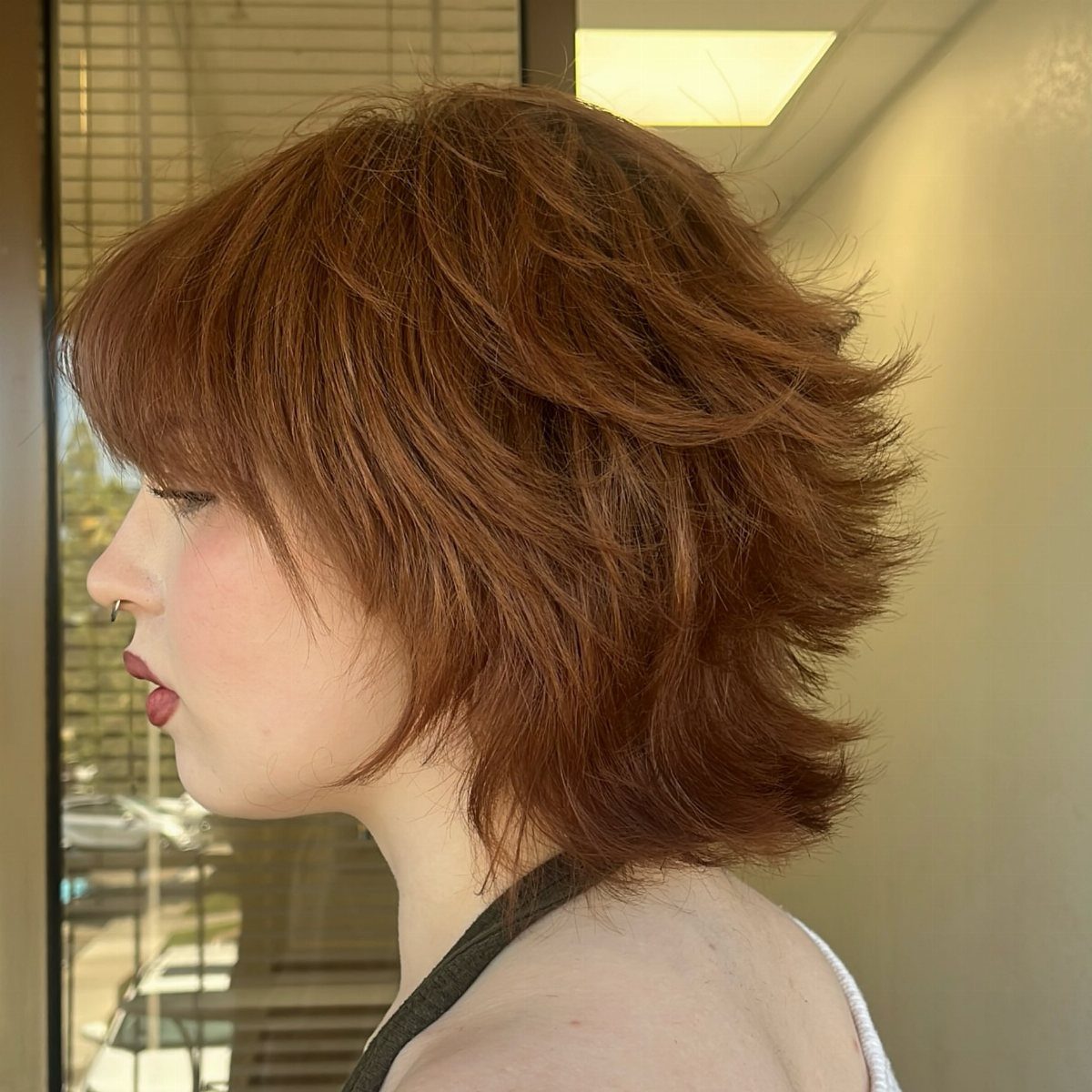
Angling the layers sharply from short at the nape to longer at the front adds structure to a bixie, and choppy ends with spiky texture push the cut away from soft or polished.
The contrast between angles and roughed-up pieces gives the style its bite.
Color that shifts from root to end or that includes darker lowlights intensifies the angled shape. Style with a small amount of paste to separate the pieces and hold the spiky texture without stiffening it.
20. Retro Layered Haircut
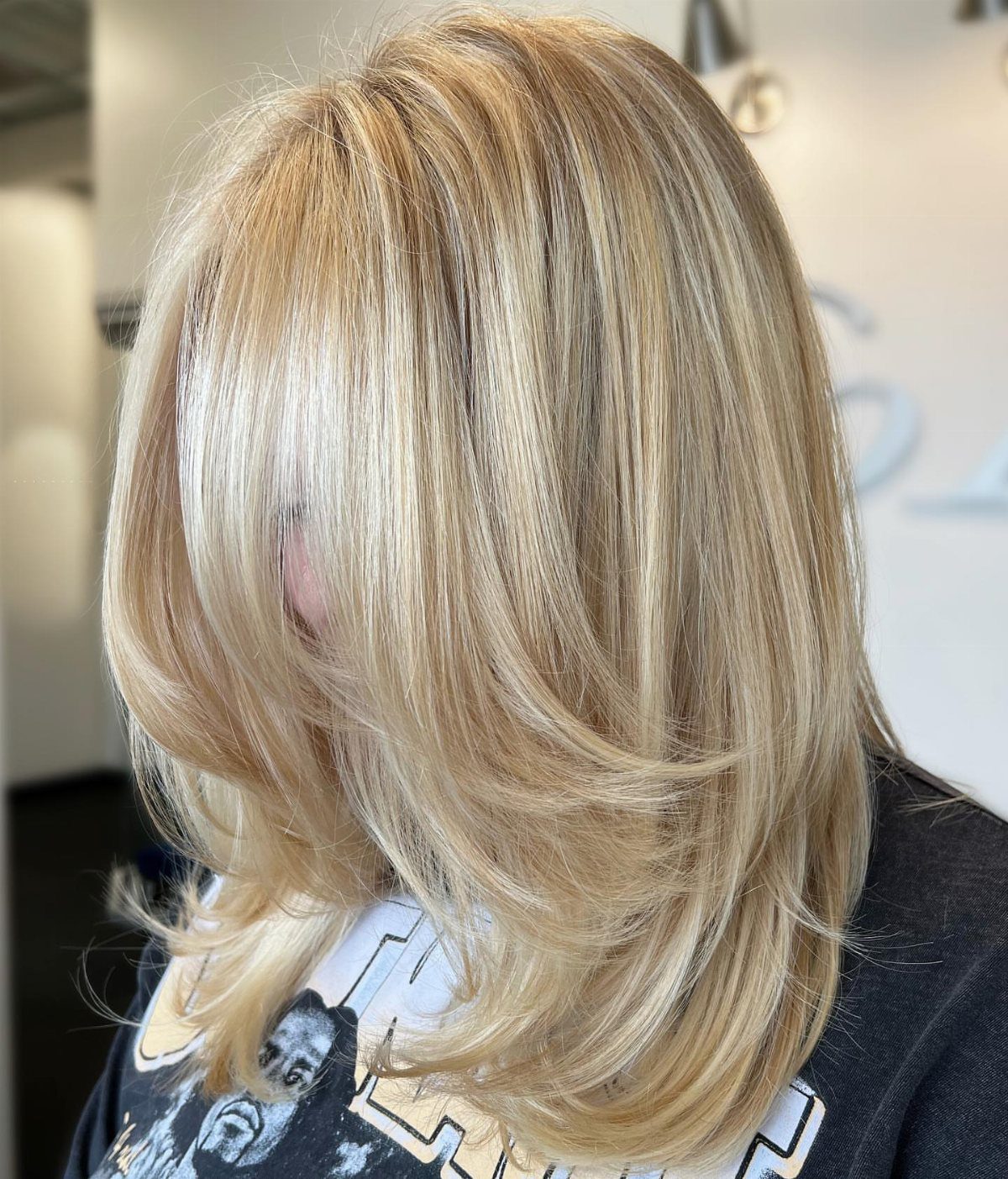
Front sections cut into curtain bangs and feathered through the sides create a face-framing sweep, then the layers taper shorter as they reach the back.
The silhouette is fuller at the front and lighter toward the nape, which gives a retro shape updated with cleaner ends.
The tapered back can be left to settle or blown smooth.
Works best on hair that is straight or has a gentle wave. Medium thickness holds the feathered movement without looking thin at the ends.
21. Romantic Half-up Loose Waves
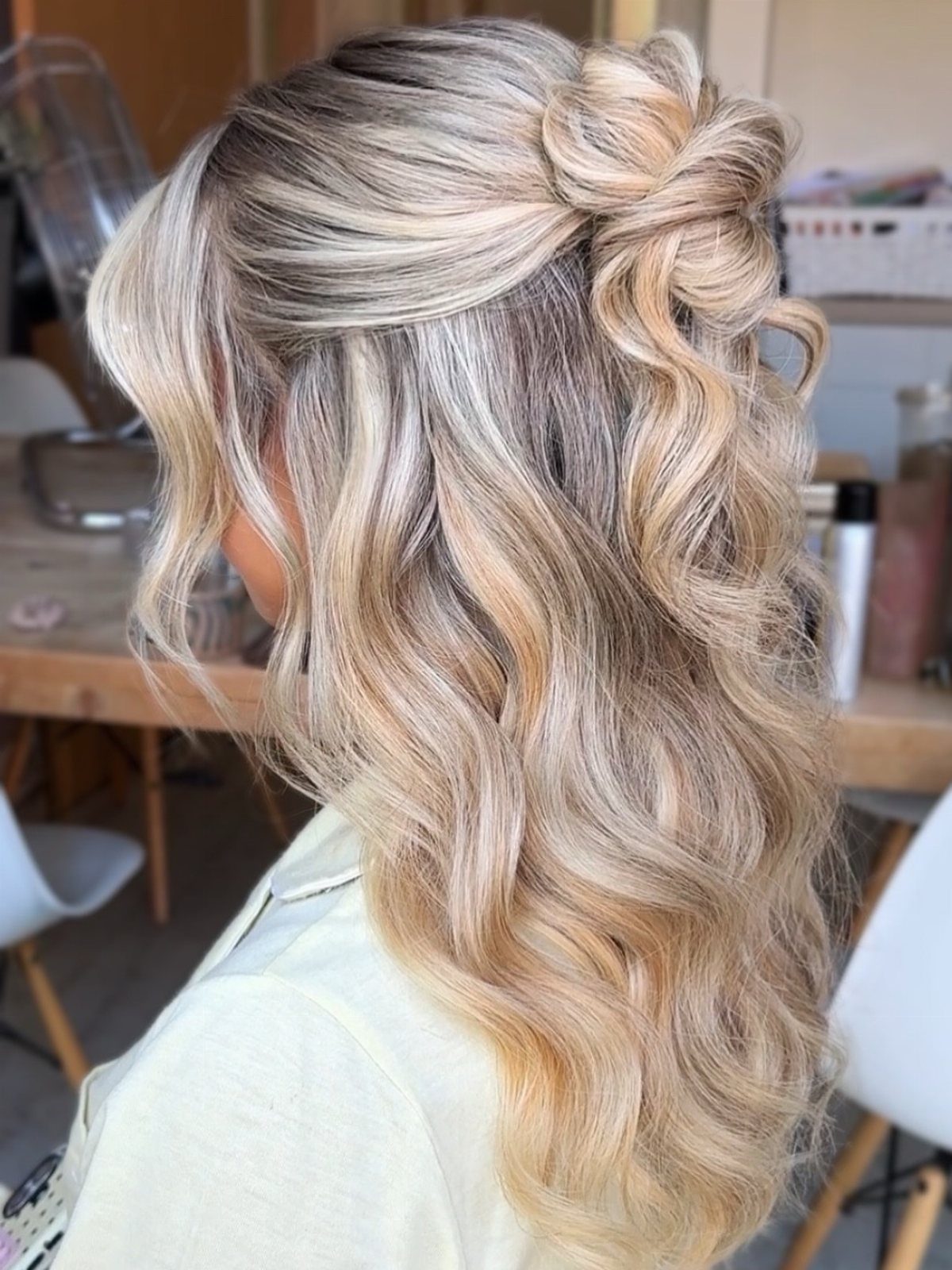
Gathering a section at the crown and twisting it into a loose knot or simple tie leaves the rest of the waves down and shows off the layers underneath. The half-up portion adds height without pinning the hair back tightly.
Curl or wave the hair first if it does not hold texture on its own, then pull the top section back and secure it loosely. Leave a few face-framing pieces out for a softer look.
Long layered hair works best since the style needs enough length to wave and enough volume at the crown to support the knot. Fine hair can be teased lightly at the roots before twisting the section up.
22. Sleek Rounded Layered Bob
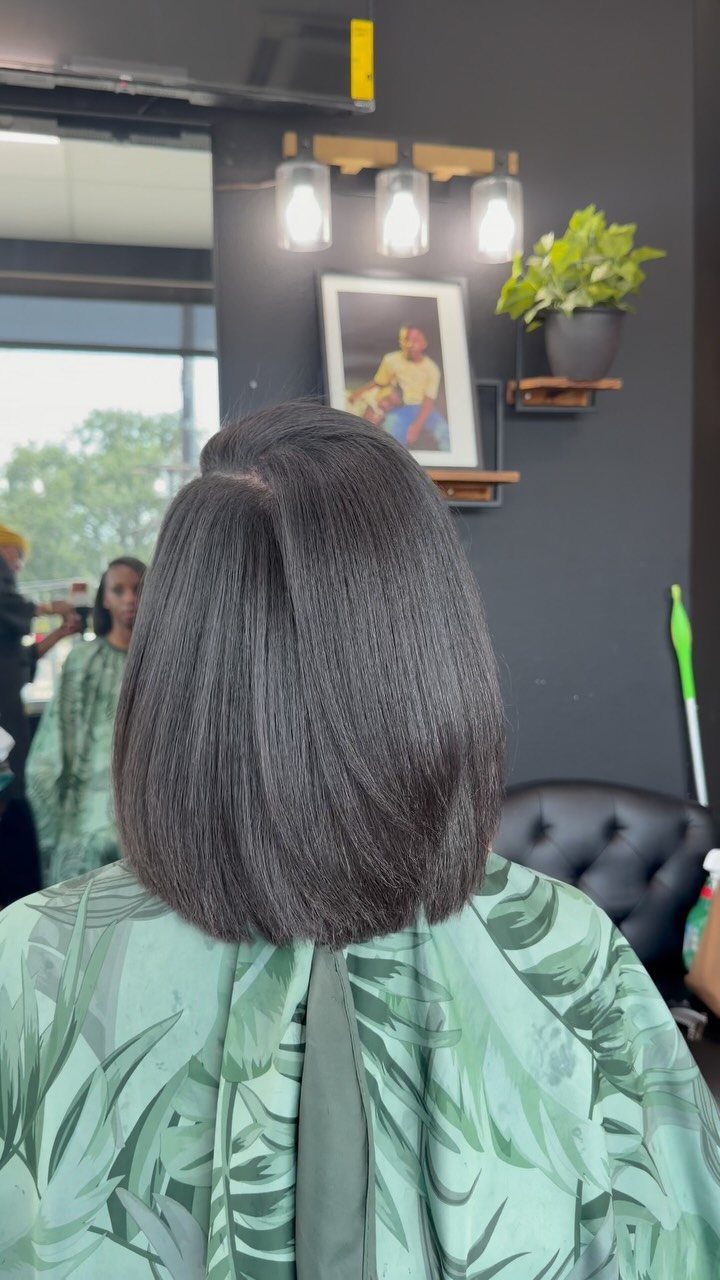
Layering the ends of a bob and blow-drying them under with a round brush creates a rounded, polished shape that curves inward at the perimeter.
The layers remove weight without making the edges wispy, so the bob sits smooth and full.
A flat iron can refine the curve once the hair is dry. A light serum or smoothing cream controls frizz and adds shine.
Thick hair benefits from the layering since it softens the bulk without losing the bob’s clean outline.
23. Graduated Layered Bob
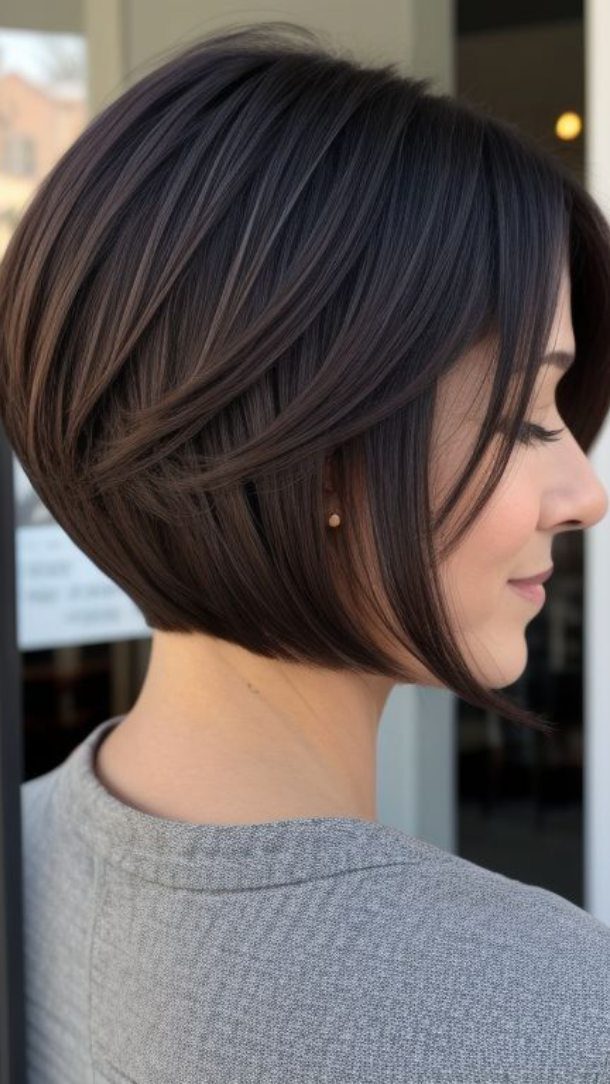
Shorter pieces at the back stack under longer ones at the front, so the bob angles downward from nape to jawline. The layering through the stacked section adds texture and stops the back from sitting too heavy.
A stylist cuts the interior layers short to build the stacked shape, then graduates the length as it moves toward the face. The result hugs the nape and opens up around the jawline.
Suits oval and heart-shaped faces since the length at the front balances a narrower chin.
Thick hair holds the stacked volume without needing much styling; fine hair may need blow-drying with a round brush to lift the back. Regular trims keep the graduation crisp as the hair grows out.
24. Blunt Bob with Subtle Layers
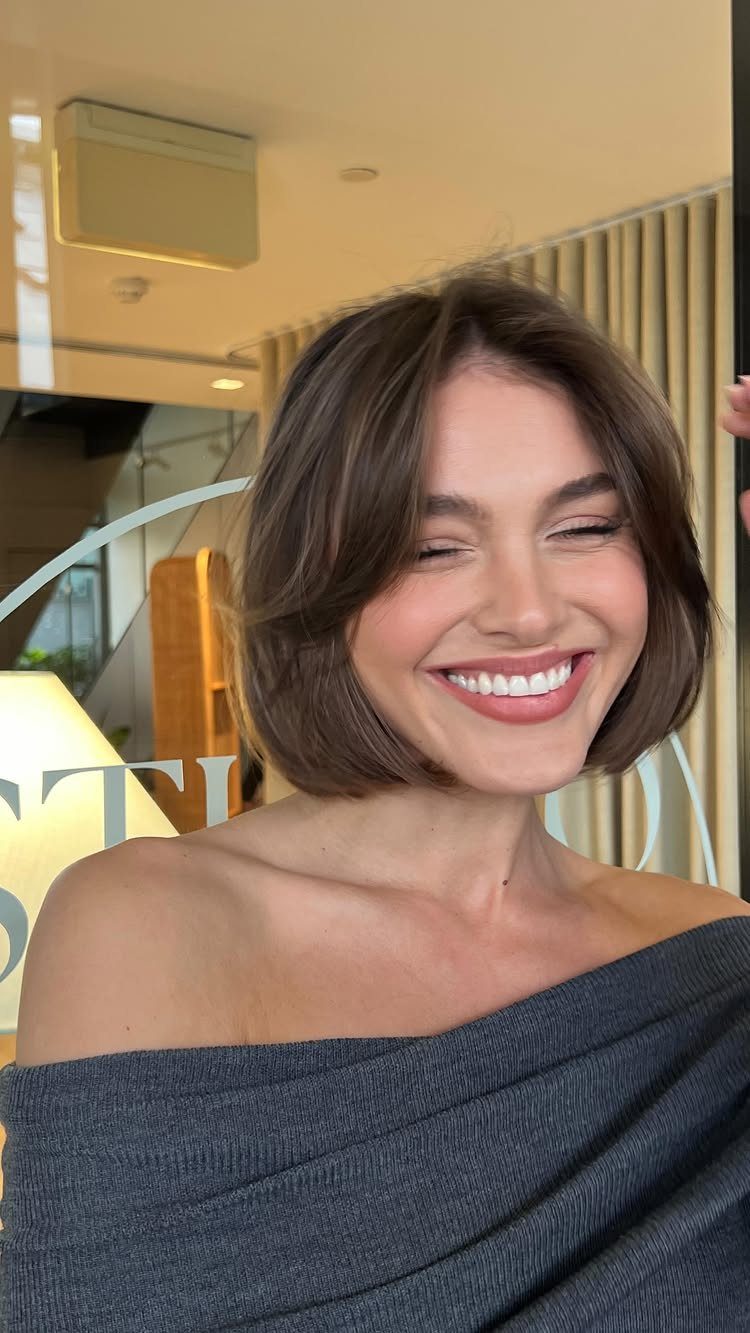
Cutting just a few layers near the ends keeps the bob’s solid line while opening up the weight slightly so the hair swings instead of sitting stiff.
The perimeter stays blunt and the layering is barely visible, which gives a polished, one-length look with easier movement.
Blow-dry smooth or flat-iron for a sleek finish. The blunt edge shows best when the ends are kept even, so regular trims matter more here than with heavily layered cuts.
Straight hair displays the clean line most clearly. Fine hair can handle this cut but may need the layers kept minimal to avoid looking thin at the ends.
25. Layered French Bob
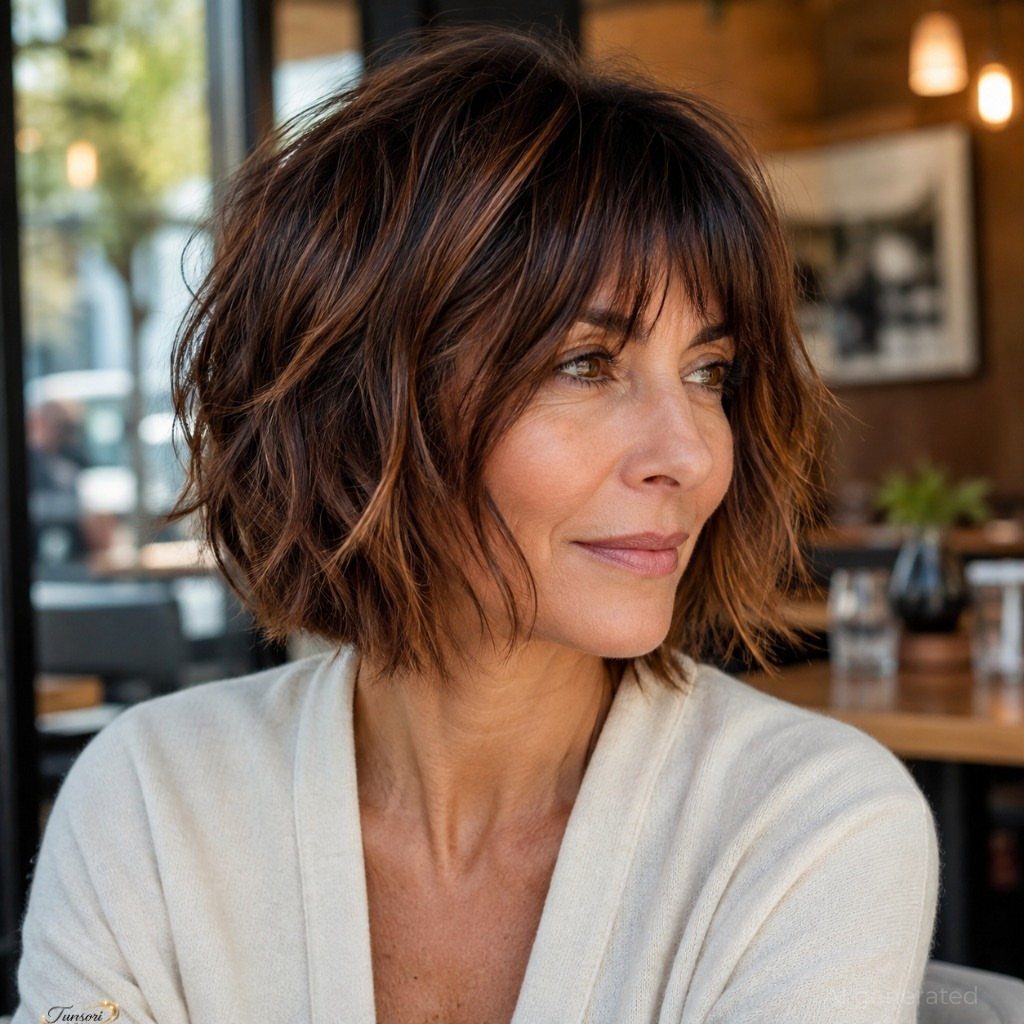
Cutting a bob to just below the chin and adding soft layers through the ends creates movement without losing the French bob’s signature weight at the perimeter. The tousled finish comes from texturizing the layers rather than blow-drying them smooth.
Bangs keep the look classic. Style with a light texturizing spray and scrunch the ends for the lived-in texture, or blow-dry with a round brush for a polished version.
Thick hair needs more layering to avoid sitting too heavy.
26. Feathered Long Layers
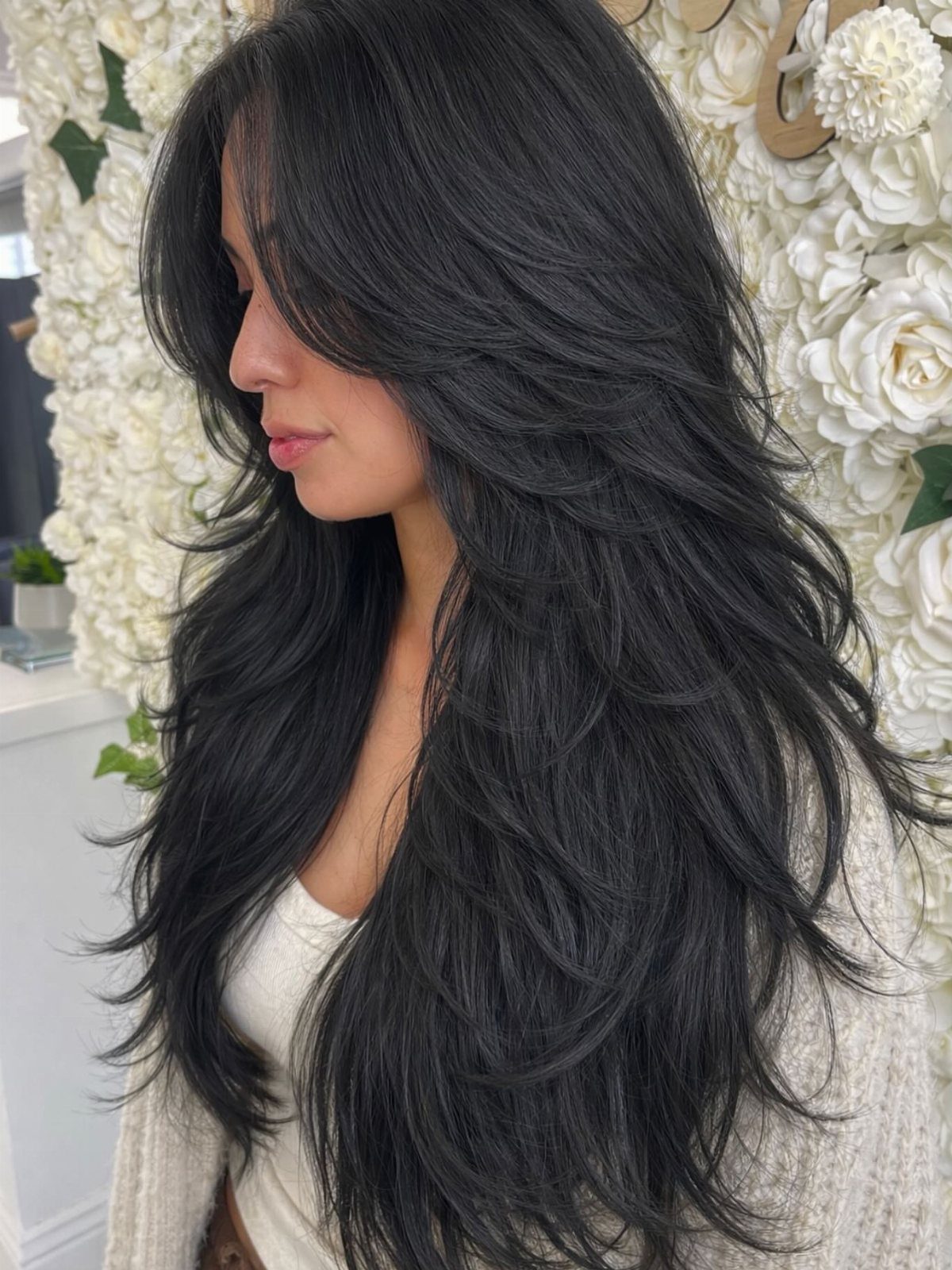
Layers start several inches from the ends and are feathered with a razor or point-cutting so they flip outward instead of blending smooth.
The rest of the length stays full, which keeps the hair long while adding movement where it matters.
Feathering reads clearest on hair that doesn’t hold tight curl.
27. Layered Shoulder-length Cut
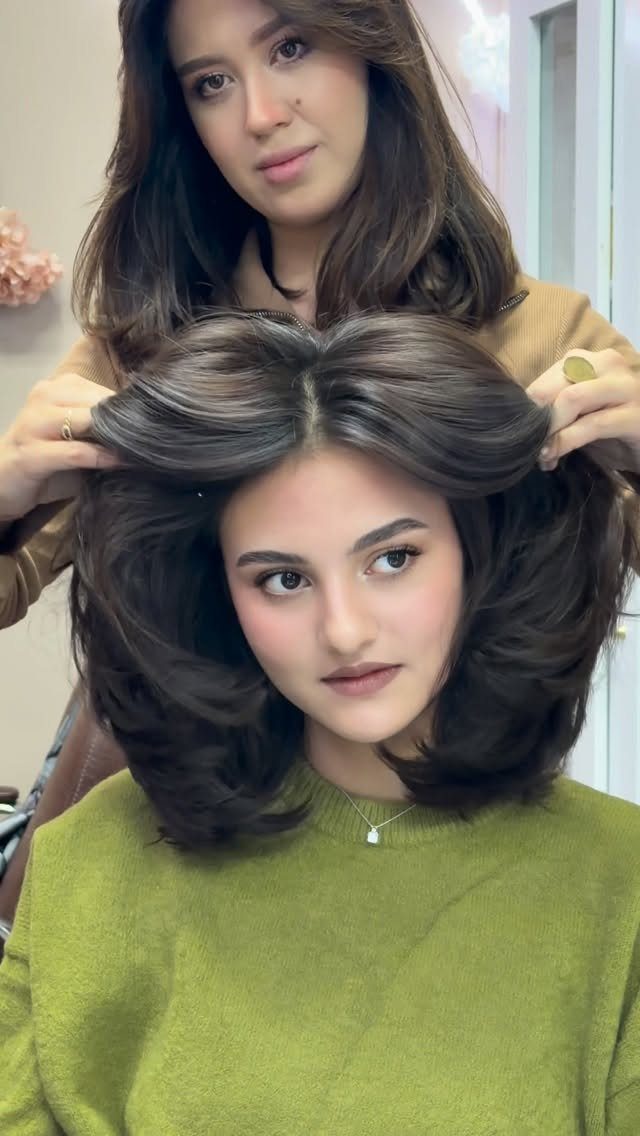
Layers cut throughout shoulder-length hair lift the roots and add fullness without removing much length. The cut works across textures and gives straight hair more body while keeping wavy or curly hair from looking triangular.
A volumizing mousse applied at the roots boosts lift on fine hair.
Suits most face shapes since the shoulder length sits neutral and the layers can be concentrated where you need the most frame or lift.
28. Short Textured Layers
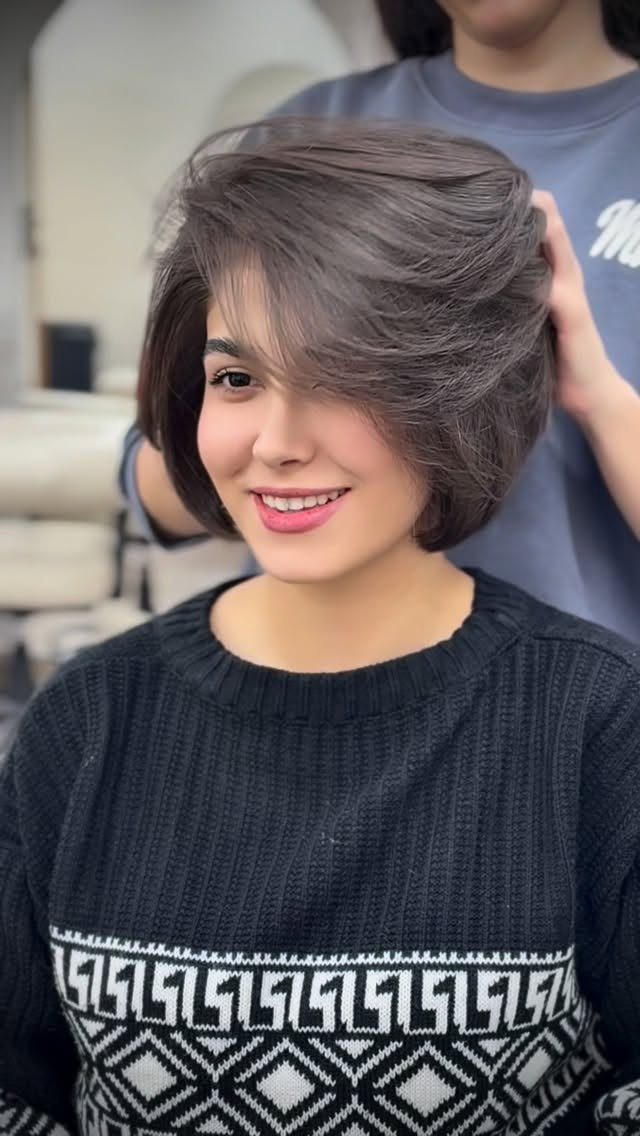
Layers cut short through the crown and sides with longer pieces at the front create texture and lift without needing much styling. Swept bangs frame the face and keep the cut from looking too cropped.
Style with a small amount of paste worked through damp hair, then air-dry or blow-dry with fingers.
29. Short Sculpted Layers
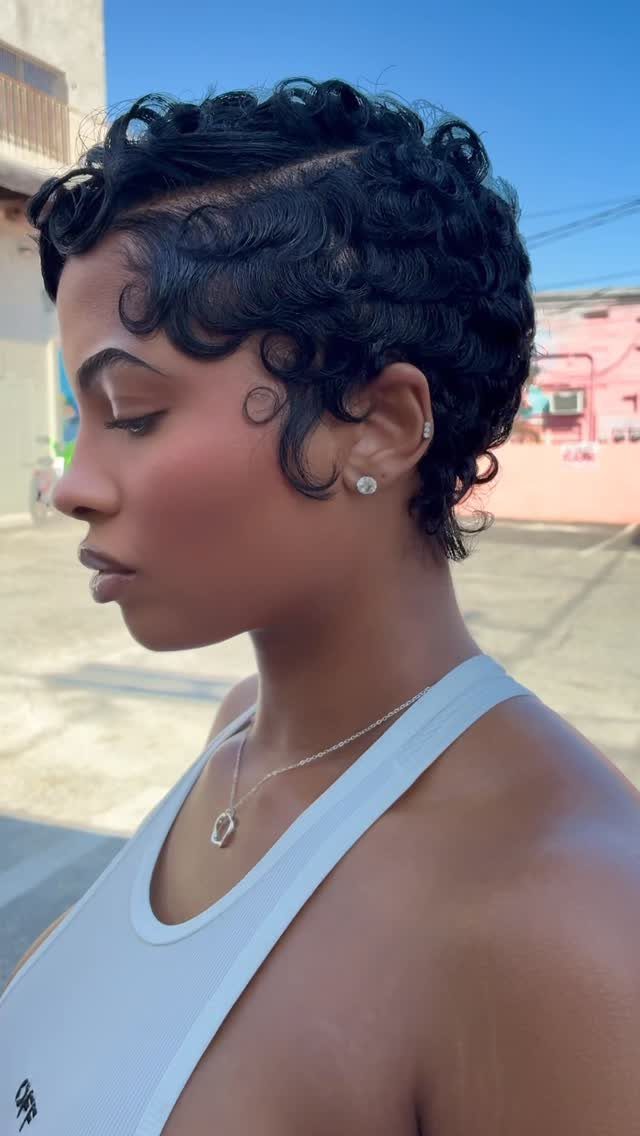
Short layers cut to follow the head’s shape are styled into defined curls or waves using a curling iron or wand, then brushed or finger-combed to soften the ringlets into sculpted pieces.
The result looks polished and intentional rather than natural.
A curl cream or light gel keeps the curl pattern in place without going stiff. Pin curls set overnight can replace heat styling if you have the time.
Works best on hair with natural texture since it already holds a curl. Straight hair can be styled this way but needs more product and heat to set the waves.
30. Chin-length Layered Cut
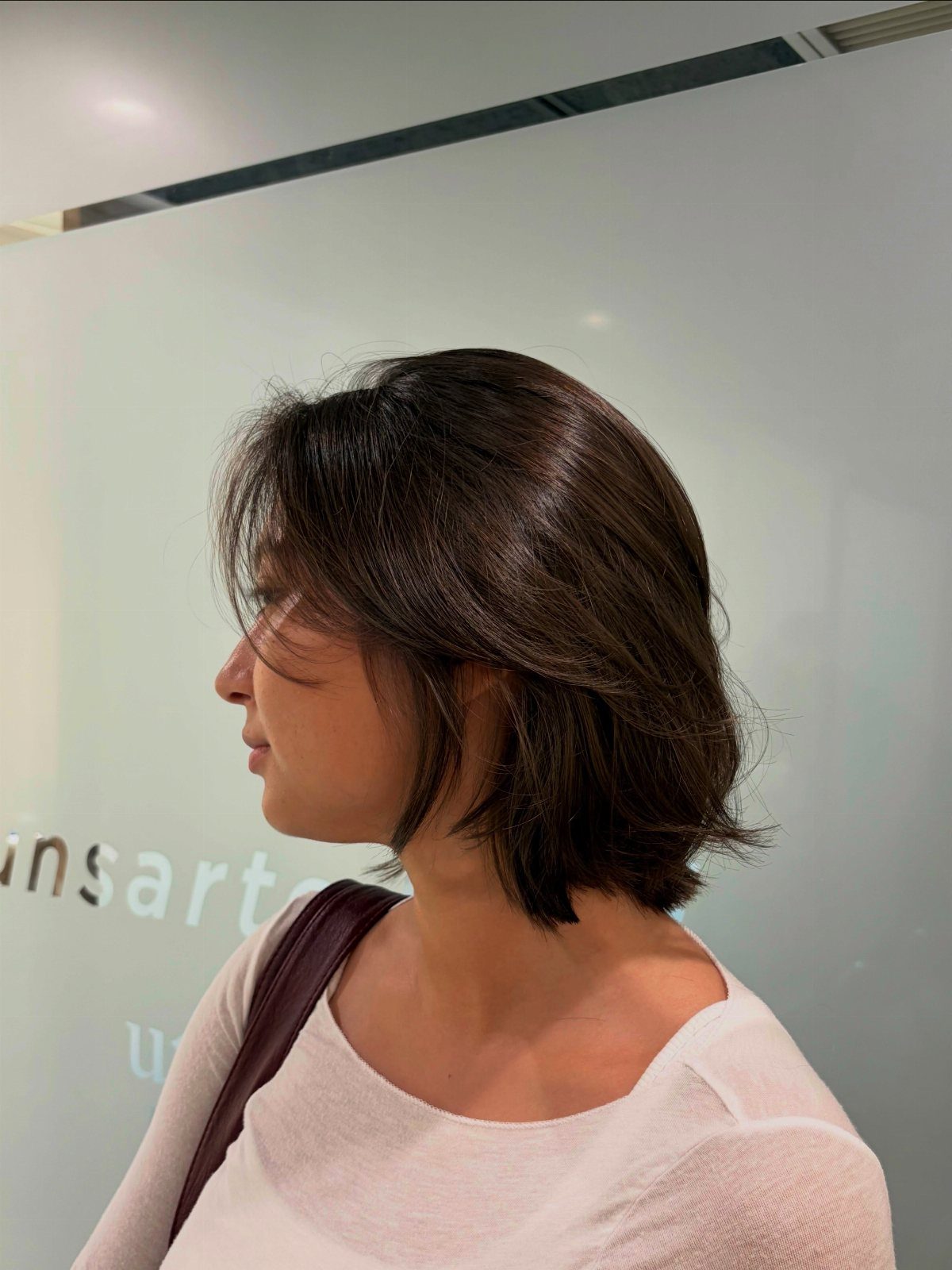
Layers cut into a chin-length bob soften the perimeter and create face-framing pieces that fall forward rather than sitting blunt across the jawline. The ends are textured so they separate slightly instead of forming a solid line.
A flat iron smooths the face-framing pieces if you want a sleeker look.
Straight or wavy hair both work.
31. Short Layered Bob
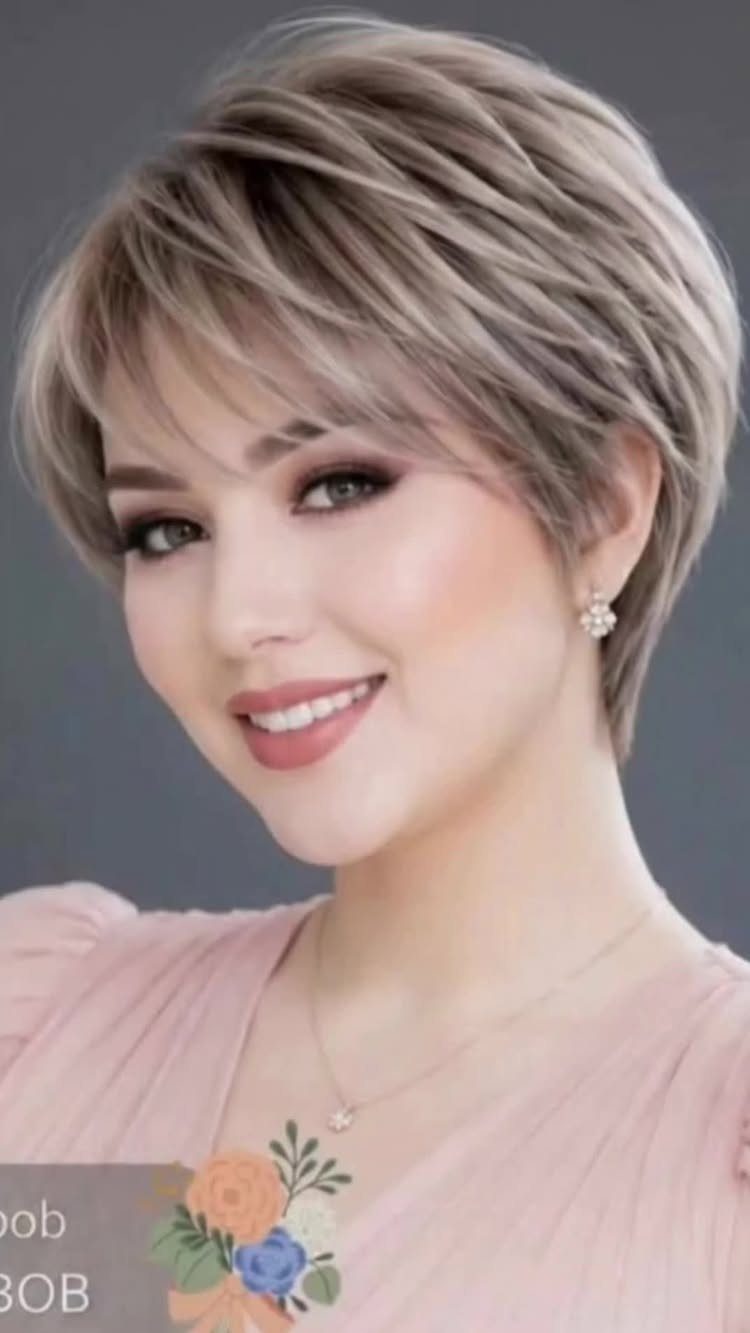
Layering a bob cut above the chin removes weight and lets the hair move without losing the bob’s structure. Side-swept bangs frame the face and soften the perimeter, so the cut looks less geometric than a blunt bob.
A round brush and blow-dryer give you control at the root, or you can skip heat entirely and work in a spray for grip and separation.
Thin strands look fuller when the weight comes off, and dense hair stops fighting you when some bulk is removed.
Face Shape and Hair Texture
Too much layering removes density at the ends, which makes the hair look sparse.
How to Explain Layers
Start by naming the length you want to keep and the point where the shortest piece should hit. Saying "I want the shortest pieces to hit my collarbone" gives a clearer target than "add some layers."
Point out the sections that pull heavy or thick and say whether you want the ends left blunt or lightened.
If you need to pull the front back for work or the gym, mention that so the stylist does not cut face-framing pieces too short to tuck.
Bring 2 or 3 photos, including one with a texture close to yours and one showing what you do not want.
Layer Upkeep and Styling
Most stylists recommend a trim every 6 to 8 weeks to keep layered cuts from losing their shape or developing split ends at the shorter pieces.
Layers need styling to show their separation, so plan for a round brush during blow-drying or a curling iron to define the pieces. Skipping the styling often leaves the layers sitting flat or looking choppy rather than blended.
Heat protectant before blow-drying or flat-ironing keeps the ends from drying out, and lightweight conditioner adds moisture without weighing the layers down.
Humid climates can make frizz more visible in layered cuts since the shorter pieces lift away from the rest of the hair.
Frequently Asked Questions
What’s a layered haircut?
The cut removes different amounts of hair at different points so the strands sit at varied lengths and create shape instead of one blunt line.
Shorter sections at the top add movement and volume while longer pieces underneath keep the overall length, and stylists use techniques like point-cutting or razoring to create soft, separated ends instead of a blunt line.
What do layers do to hair?
Layers add movement, shape and volume by distributing weight through different lengths instead of letting hair hang in one heavy sheet.
What are the trends for layered hair in 2026?
Butterfly cuts, shags, feathered layers and layered bobs are leading the trends, along with face-framing pieces and medium-length cuts that balance root volume with textured ends.
Long layers are also seeing more attention since they work well with waves and updos while keeping enough length for styling flexibility.
What are the pros and cons of layered cuts?
They build movement and height, lift fine hair away from the scalp and flatter most face shapes if the stylist places them correctly.
They may need more daily styling to keep their shape, can show frizz more in humid weather, and take patience to grow out since the shortest pieces need time to catch up with the rest.
How to ask for a layered haircut?
Bring pictures to show your stylist and talk about length, texture and how much upkeep you can handle each day.
Name the point where the shortest piece should start, tell the stylist whether you want blended softness or separated choppy ends, and point to any sections that feel too heavy.
Which layered haircut is easiest to style every day?
Long layers, butterfly cuts and layered bobs take minimal daily effort since the cut itself creates movement without much work.
Are layered haircuts good for thin hair?
A few strategic layers give thin hair lift and shape, but cutting too many or starting them too high removes the density that makes the ends look thick.
Long layers or subtle layering near the ends work better than heavy layering through the crown for fine hair.
Is layered hair good for an older woman?
The movement and lift they add fights the flatness that comes with age, which is why they suit older hair better than most alternatives.
Face-framing pieces, soft layers and styles like the layered bob or lob suit most face shapes and can be adapted to any length or texture.
Which layered haircut suits a round face?
Face-framing layers, butterfly cuts and long layers work well because they add vertical lines and length instead of width.
What type of layers creates the most volume?
Shorter layers near the crown lift the roots and distribute weight more evenly instead of letting hair sit flat, which creates the most visible volume.
The result depends on how thick the hair is and how it’s styled, and cutting too many short layers in fine hair can reduce fullness instead of adding it.