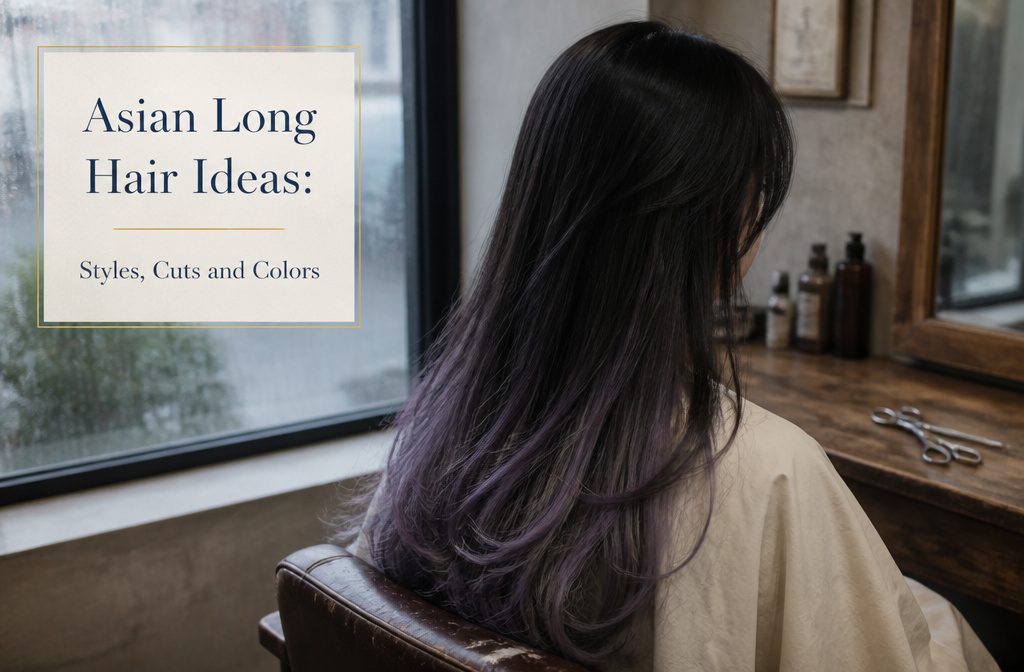
Long Asian hair spans wispy Korean bangs and face-framing layers through shoulder-length shags, soft perms, blunt one-length cuts and contrast color that fades from black to lavender.
Which one works comes down to your hair type: dense, straight hair needs strategic layers at the sides and back to stop it going flat, while fine hair wants babylights and loose curls at the ends for lift.
1. Long Waves
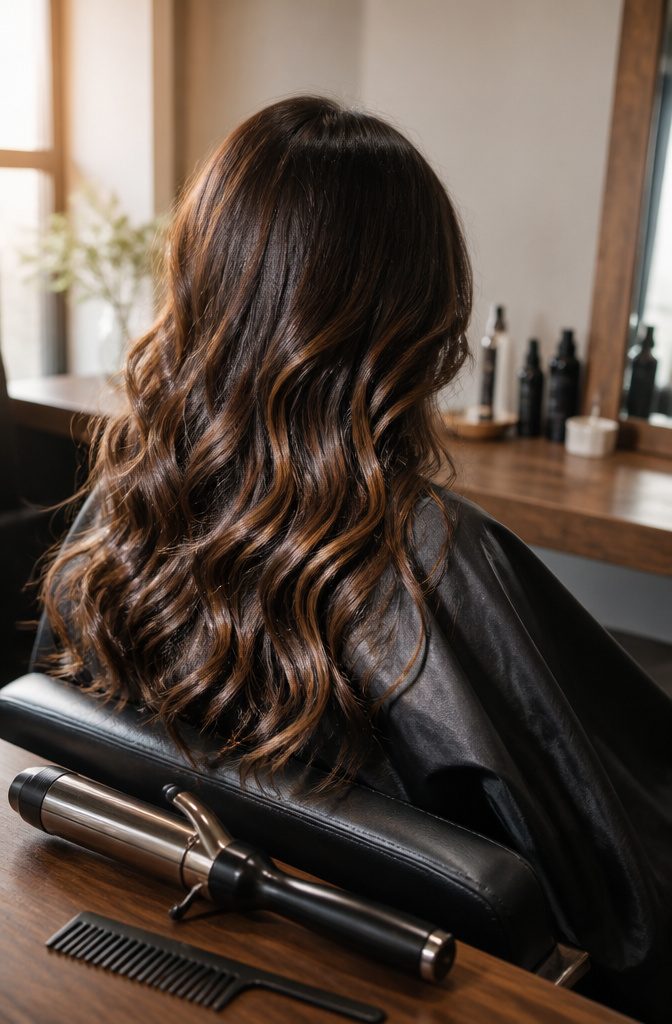
Large soft waves bring volume and movement without looking worked-over, and the 2-inch barrel curling iron is the tool that gets you there.
Wrap sections loosely around the barrel, hold for a few seconds, and release. The result reads as natural wave rather than structured curl, especially on naturally thick hair where the weight keeps things from going too bouncy.
Color lifts the whole look.
Highlights or balayage woven through chocolate brown or warm brunette bases catch light as the waves move, so you get dimension without needing to style differently. The waves themselves do the work of showing off the color placement.
Finish with a light coat of nourishing serum or oil for shine. Skip anything heavy that’ll flatten the texture you just put in.
2. Long Layered Hair
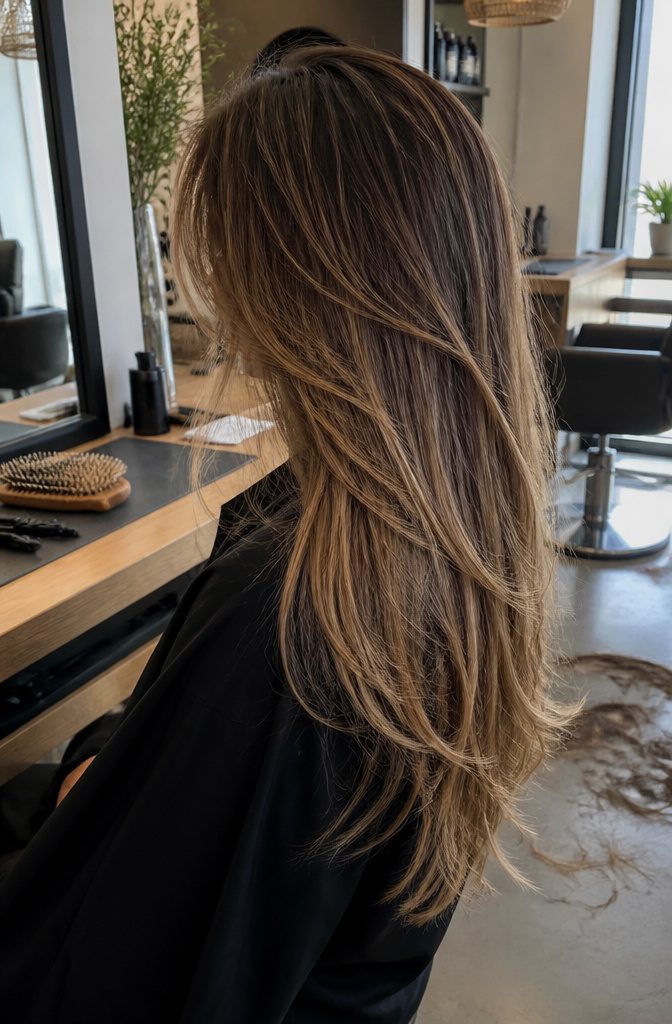
Layers are how you change the shape of long hair without giving up the length.
Face-framing layers are the gentlest version: soft pieces that start near the cheekbones, with a little weight taken out at the sides and temples, so the hair falls in a natural center or soft off-center part and never looks overstyled.
For anyone new to layers, I’d start here.
Choppy layers go further. They cut through the whole length, and paired with beige balayage and side-swept bangs they make hair look fuller without losing any length.
That’s my pick for fine hair. On thick hair, ask for the weight to be removed gradually so the ends don’t puff out.
3. Long Straight or One-Length Hair
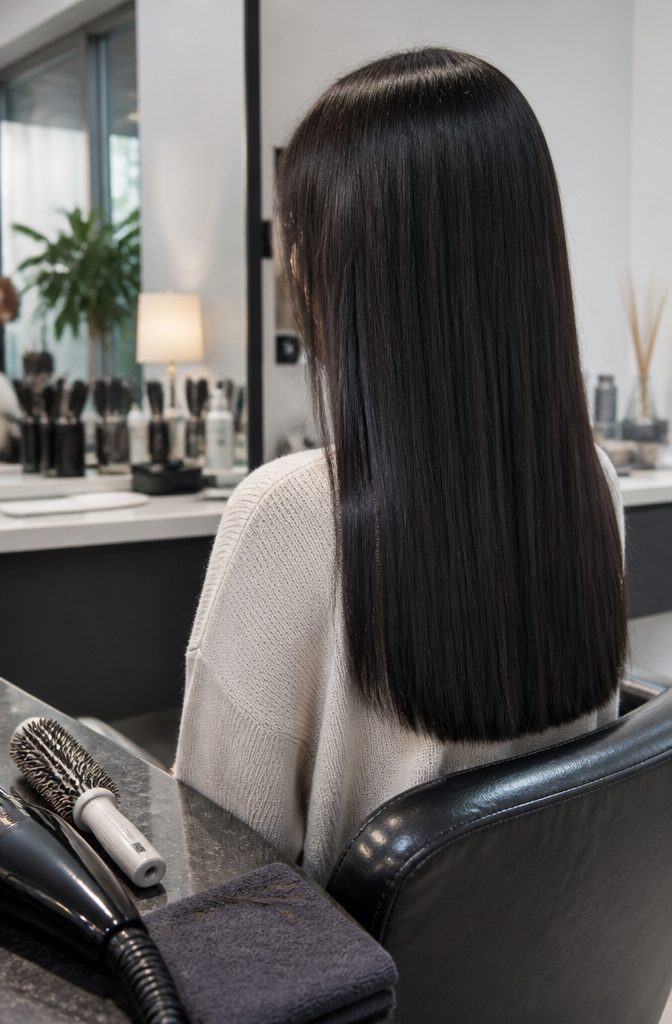
A long, blunt one-length cut shows off silky, naturally straight strands better than any other shape, and it asks very little each morning.
Blow dry with a round brush, add a touch of shine spray for flyaways, and you’re done. Pair it with side-swept bangs if you want some movement near the face.
Sleek reads as simple but is harder to pull off than it looks.
Healthy ends matter most, since a blunt line exposes every split. I’d also ask the stylist for a clean line and subtle internal shaping, so the hair hangs smooth without looking like a solid block.
4. Long Hair With Bangs or Face-Framing Front
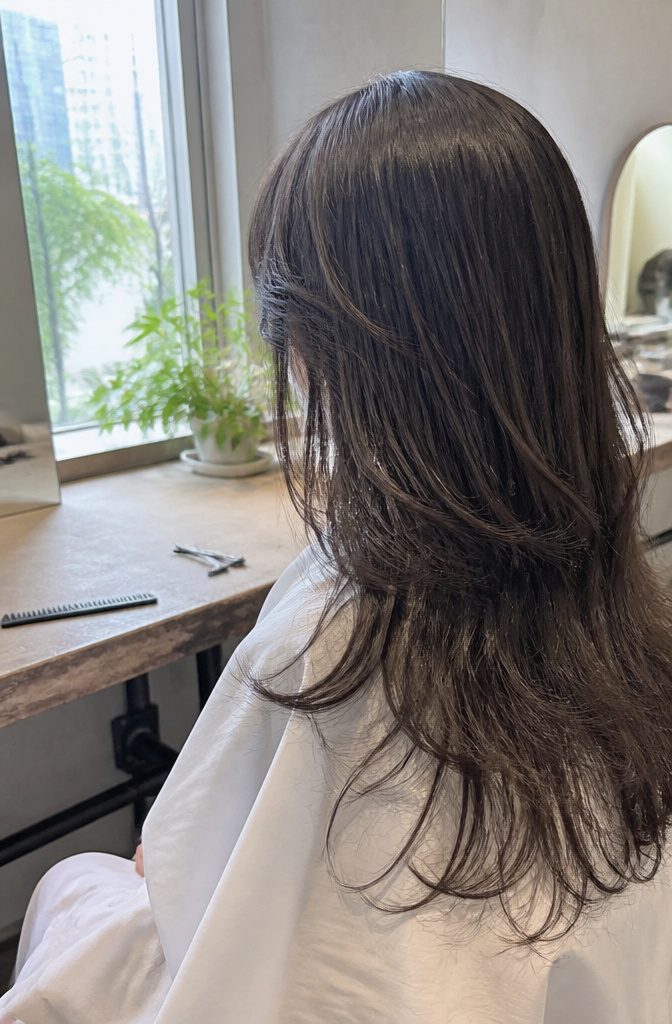
Adding wispy bangs or face-framing layers to long hair turns a one-note length into something that moves.
I like this approach when long hair reads flat or heavy, especially on longer or narrower face shapes where a fringe can break up vertical space and make features look softer.
The framing can take several forms. Korean-inspired wispy bangs are see-through and light, a textured piece that sits at the forehead without covering it completely.
Chinese bangs tend to be similarly soft but with slightly more weight. Face-framing layers start at the temples or cheekbones and fall along the sides, curling inward or outward at the ends to add variation without shortening the back.
You can wear the layers straight for a clean look or add a soft wave through the front sections.
Either way, the framing holds its shape better with a light texture cut at the sides rather than blunt edges, and it grows out more gracefully than a full fringe.
5. Long Hair With Highlights or Balayage
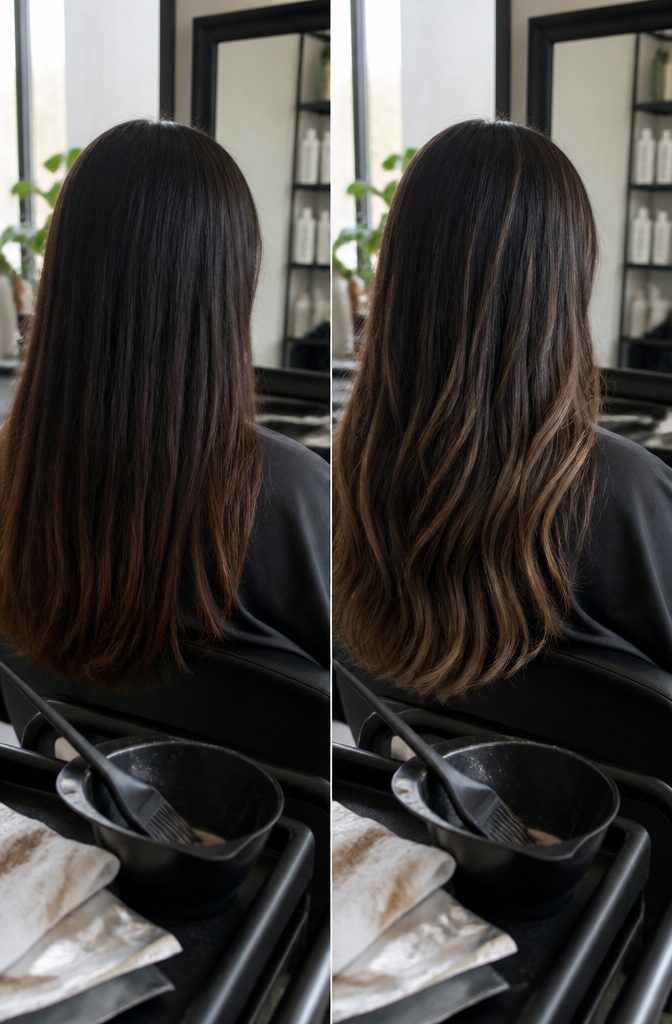
Color sits behind the cuts on a lot of the Pinterest boards I see saved, and for long Asian hair that usually means subtle highlights rather than a full dye job.
Babylights give you the finest placement: delicate, almost-natural ribbons of lighter tone that read as dimension rather than obvious color.
They work particularly well on fine hair, where the scattered lift adds both highlight and the illusion of more volume. Balayage sweeps wider and sits lower, which makes it easier to live with as it grows.
Ash blonde balayage blended into darker roots is one of the most forgiving options I have come across, since the transition from natural to lightened is painted rather than striped and the grow-out phase looks intentional for months.
Money pieces frame the face with two bright sections at the front and leave the rest untouched, so upkeep is minimal and the effect is immediate. All three options let you keep length while changing what catches the light.
6. Long Hair With Ombre or Contrasting Color
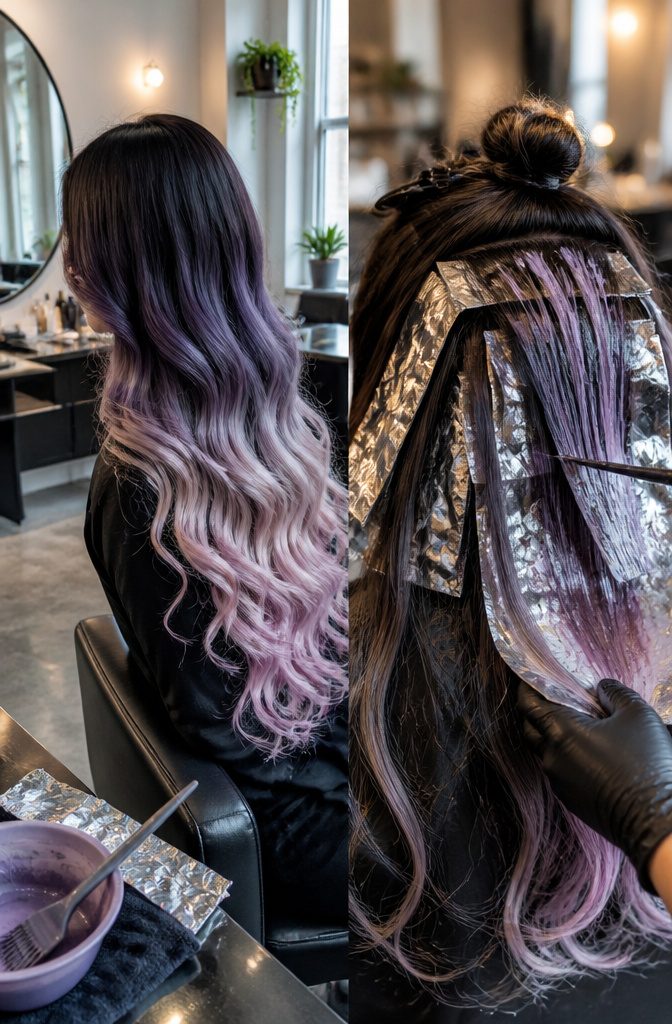
Dark hair is the best canvas for contrast color, because brights read as louder against a black or dark chocolate base.
The smoky purple version melts from black to dark purple, then into icy blonde and lavender-pink. It’s a job for a colorist, and giant, bouncy curls show off every stage of the fade.
For a softer move, caramel balayage keeps your length and your natural color while adding glow around the face. Ask for it with loose waves.
Pink dip dye on blonde ends works the same way, even on a bob. I’d choose it over all-over platinum if you want drama without bleaching every strand.
7. Long Hair With a Perm or Soft Wave
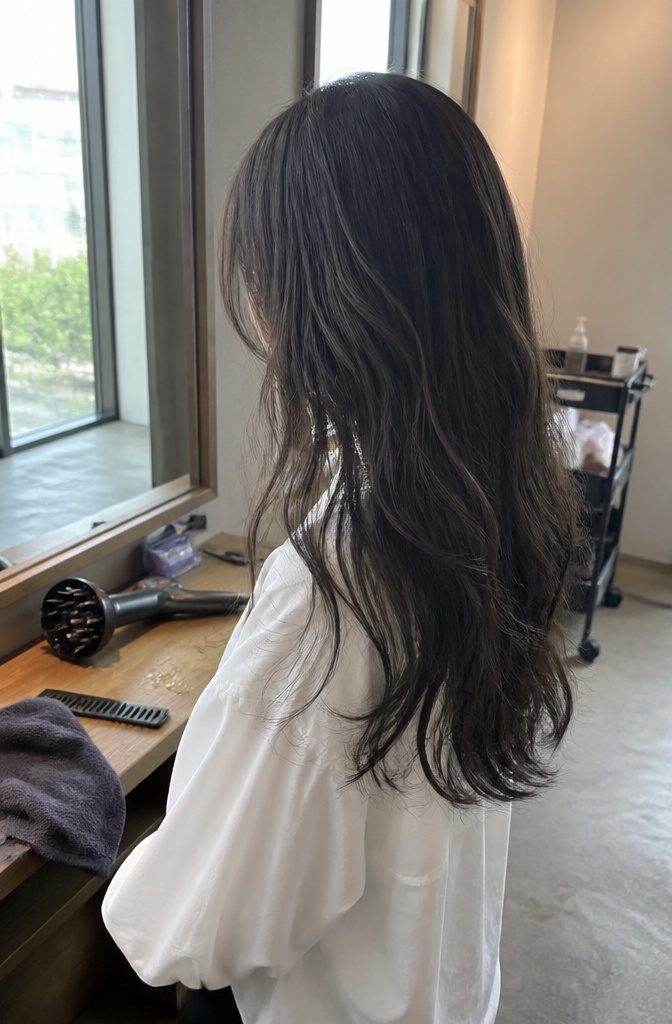
A perm on long hair does not have to mean tight curls.
A digital perm gives a natural, loose finish, and a soft Korean-style perm direction does the same job when straight hair looks flat and you want movement without a big commitment to texture.
Face-framing bangs pair well with it. They make the whole look softer and more feminine, and the waves keep them from sitting stiff.
I’d choose the soft version over a full curl for most people, because it reads as natural hair that happens to bend rather than as a perm.
Wavy hair also grows out gracefully, since there are no hard curl lines to trim away. Ask for loose movement and show a photo of the finish you want.
8. Long Shag or Wolf-Cut Direction
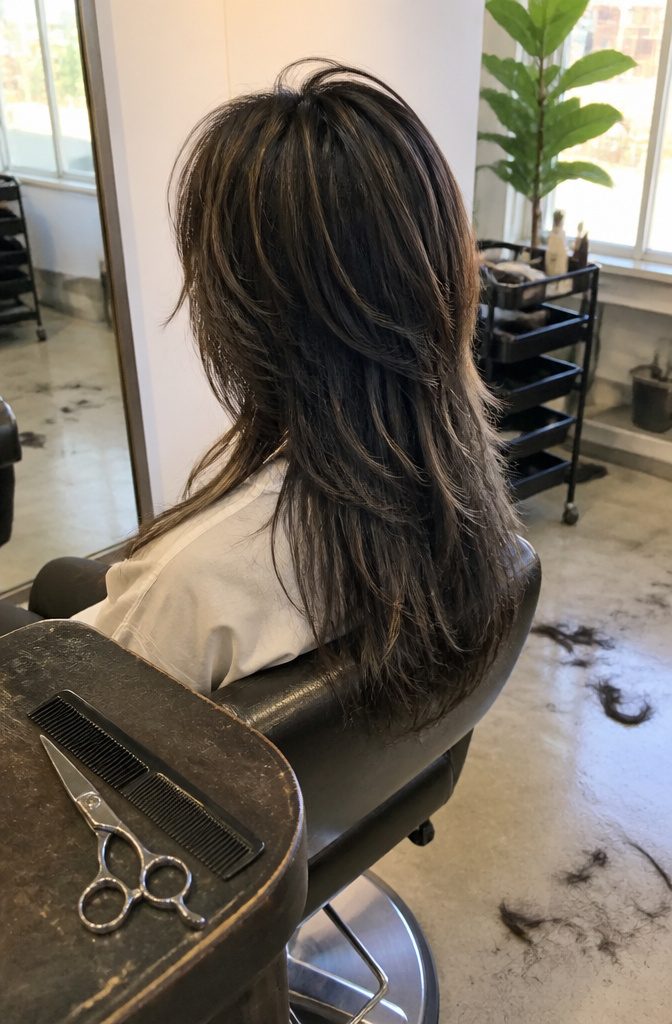
The shape is simple: shorter layers through the crown, full length left in the back, and enough visible separation that the layers read as pieces instead of one block.
The version I’d ask for is the modern one, built from medium layered strands rather than short, wispy layers. The wispy cut is the original 1970s shag, and it can look dated fast.
Keep the texture controlled. Choppy, heavily thinned ends are what turn this into a costume, while softer separation is the wearable starting point.
Add curtain-style bangs or a few fresh highlights if you want it to look current. A shoulder-length shag is a good first step if you’re nervous about the crown layers.
9. Tied-Back Long Hair
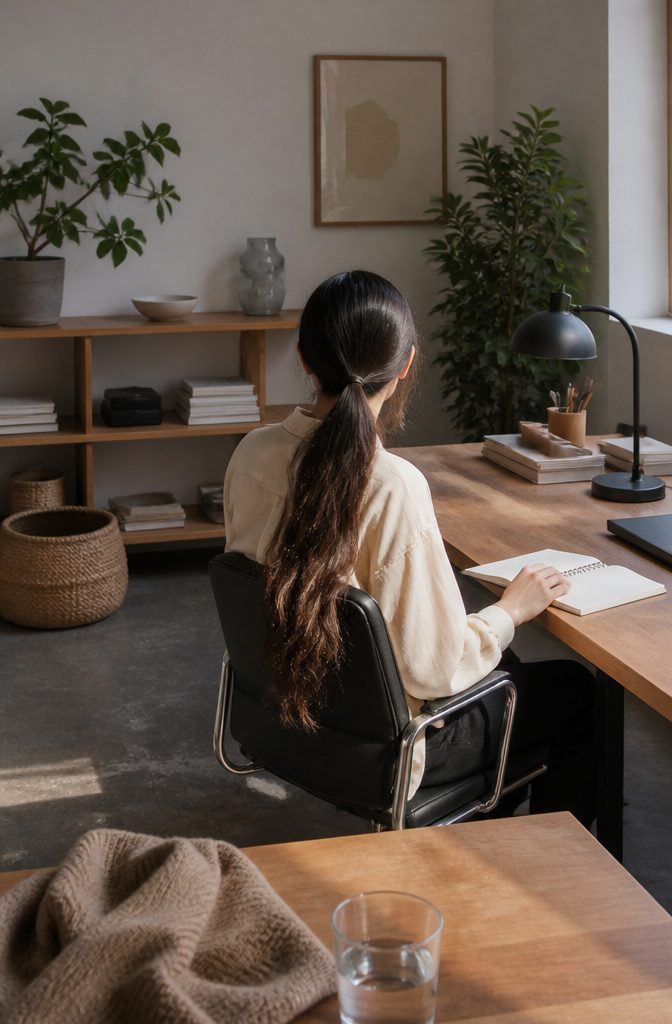
Tied-back styles are less about the cut and more about how you wear long hair once it reaches tie-back length.
A low ponytail is the one I’d pick for the office: it sits cleanly at the nape and holds up through a full day without pulling at the hairline.
Half-up, half-down keeps the length visible while clearing your face, and it’s the easiest option on mornings when you have five minutes.
If a full tie feels too severe, tuck the hair behind your ears and secure it with a loose tie. That version looks relaxed but still tidy.
For meetings or a stricter dress code, smooth the top and keep the tie low and snug for a cleaner finish.
10. Side-Swept Long Hair
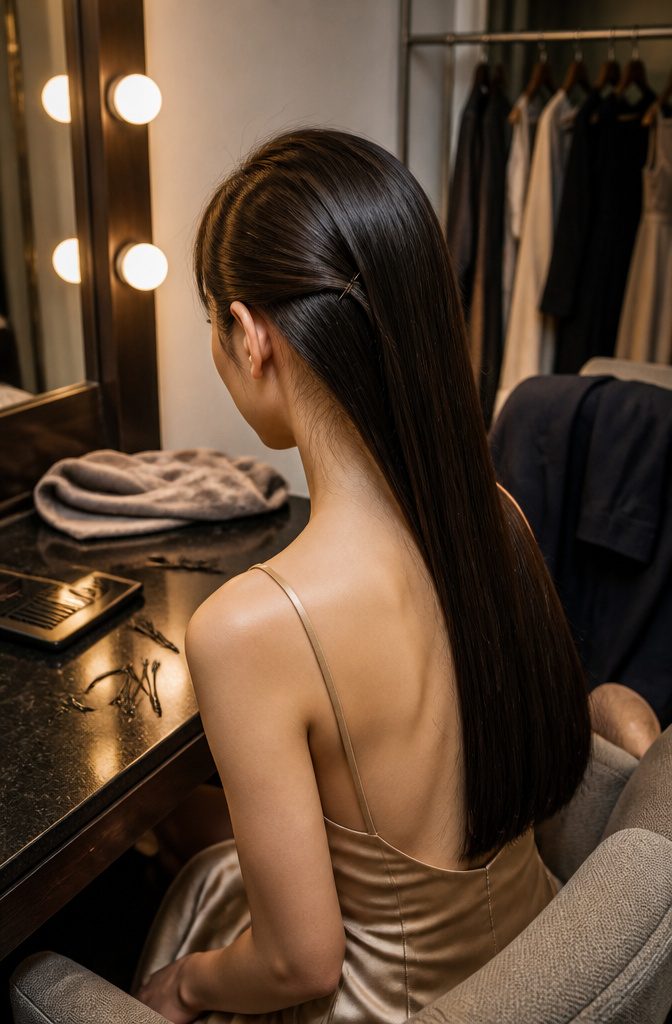
Tucking hair to one side changes the shape without touching scissors. The asymmetry softens a round face and adds movement to straight hair that otherwise sits flat.
Lucy Liu wore this to the Emmys: straight lengths side-parted, swept across and tucked behind one ear on the bare side, the rest falling forward over the opposite shoulder.
Simple, but the uneven weight makes it look deliberate rather than accidental.
For thicker hair or a night out, pin the tucked side instead of relying on the ear alone.
Aimee Song used this for red carpet waves, one side pinned back to keep the asymmetry clean through hours of wear. The pin holds better than a tuck, and you can adjust it without a mirror if it shifts.
11. Long Hair With Braids
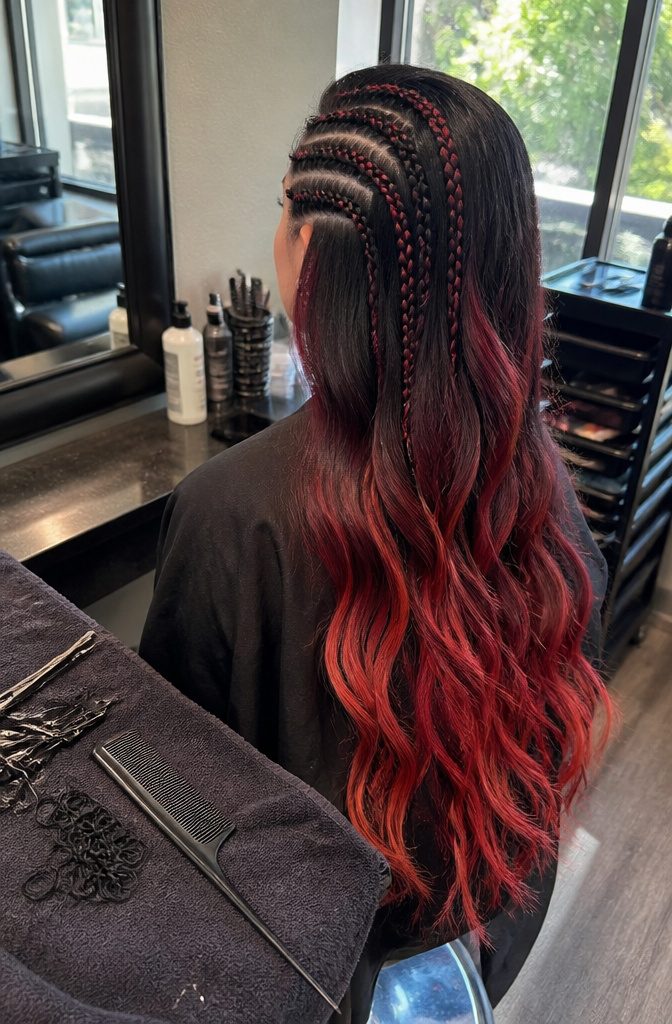
Cornrows are the easiest way I know to add texture to very long hair without touching its length.
A few side cornrows with loose waves left down give you two looks in one: tight, graphic lines at the temple and soft movement everywhere else.
The upkeep is where it gets real. Pair them with a bright, bold color and you take on maintenance for both the shade and the sheer amount of hair, since long hair, vivid color and cornrows is a three-trend commitment.
I think it’s worth it if you like being noticed, and I’d skip it if you want a low-effort morning.
For a stylist, ask for "waves with side cornrows" and bring a photo that shows the placement.
Match the Look to Your Hair Type
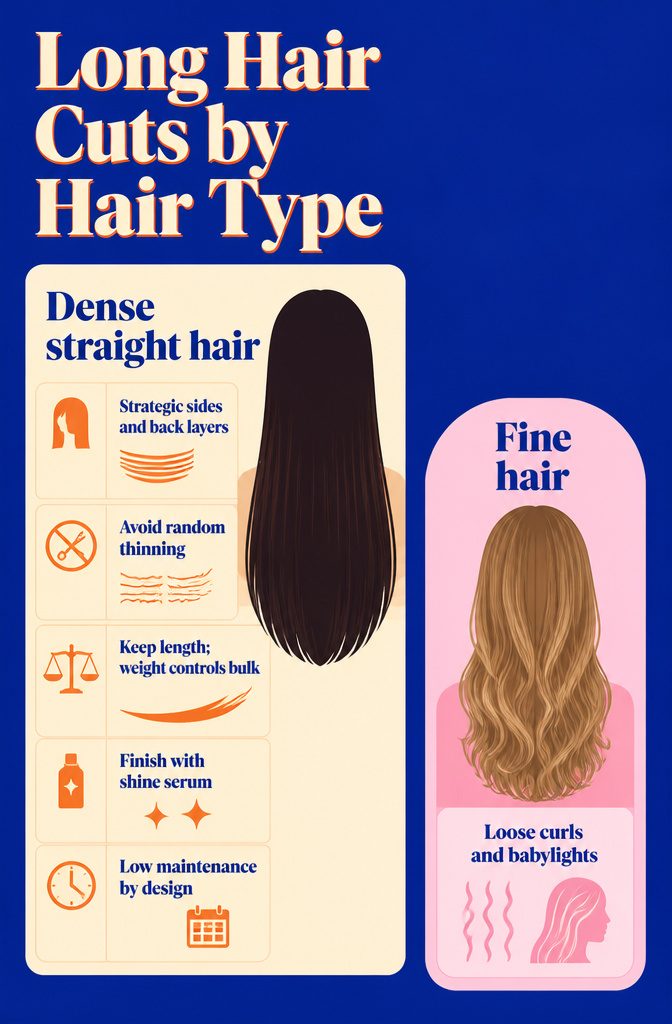
Dense, straight hair goes flat at the roots and can turn into a helmet if the sides and back are cut without a plan.
Ask for strategic layers and shaping at the sides and back to control bulk, not random thinning, which leaves frizzy, uneven ends. Finish with a shine serum, and keep the length so the weight does the work.
Fine hair wants the opposite. Soft volume is what gives straight strands bounce, so I’d curl the ends loosely, and babylights add dimension and body without much upkeep.
Face Shape Guidance for Long Hair
Passages actually given cover only round faces: lobs frame and slim, and an angled lob with long front layers draws the eye.
I must not invent beyond them. I’ll keep to what’s supported, and maybe add general-rule advice carefully.
Round-face guidance from passages is the solid part. I’ll write a short list.
Long hair rarely needs a rule, but a few choices change how a face reads:
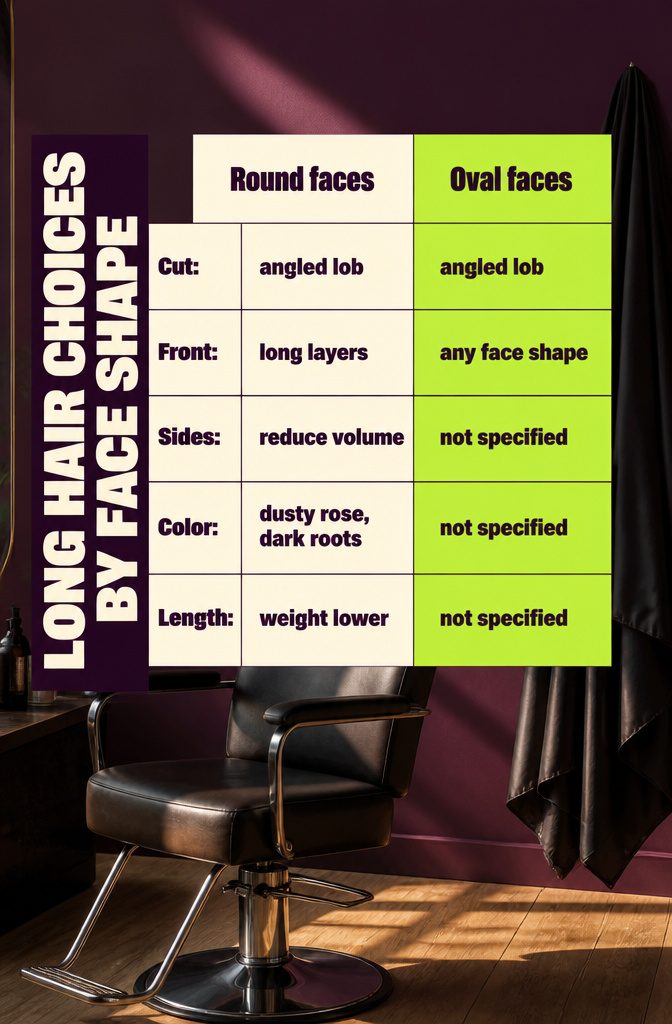
- Round faces: try an angled lob. Its long front layers pull the eye down the face, which gives a framing, slimming effect.
- Round faces, color: a dusty rose shade over dark roots adds depth without making the cut look flat. Muted tones are trending, and neon has faded out.
- Round faces, side width: keep volume off the sides. Fullness at the cheek line widens the face, so I’d put the weight lower.
- Long or narrow faces: front framing pieces break up the length. I’d choose these over a flat, center-parted curtain of hair.
- Oval faces: an angled lob suits any face shape, so this is the easiest face to style. Take the cut you like and run with it.
Frequently Asked Questions
Can Asian men grow long hair without a perm?
Yes.
Straight long hair, soft layered styles, and tied-back looks all work without a perm. A perm is only necessary if you want added movement or volume that your natural texture doesn’t provide.
Can Asian men with thick straight hair wear wavy long styles?
Yes.
Light styling or a soft wave perm can give thick straight hair movement and body. The final result depends on your hair’s density, the cut shape, and how much you’re willing to maintain it.
How long does it take to grow from short hair to shoulder length?
Around 12 to 18 months for most people. The exact time depends on your natural growth rate, how often you trim, and your starting length.
How often should I trim while growing long hair out?
Light maintenance trims every 8 to 12 weeks work for most people. Adjust based on your hair condition and how quickly split ends develop.
Are long hairstyles office-appropriate?
Yes.
Soft layered medium-long styles, low ponytails, and clean tied-back looks all work in professional settings. Keep the top smooth and the tie low for a polished finish.
What matters more: products or the haircut shape?
The cut shape matters first. A good cut gives you the right foundation, then your routine and products keep it looking clean and healthy day to day.
Do I need to go to an Asian salon specifically?
Not always.
Any stylist who understands your goal and knows how to manage bulk while preserving length can do the job. Experience with your hair type helps, but the salon’s name matters less than the stylist’s skill.
What is the typical hair type for Asians?
Most Asian hair is straight, thick, and coarse, with a round cross-section that makes it lie flat and resist curl. Fine straight hair is less common but still appears, and density varies widely person to person.





