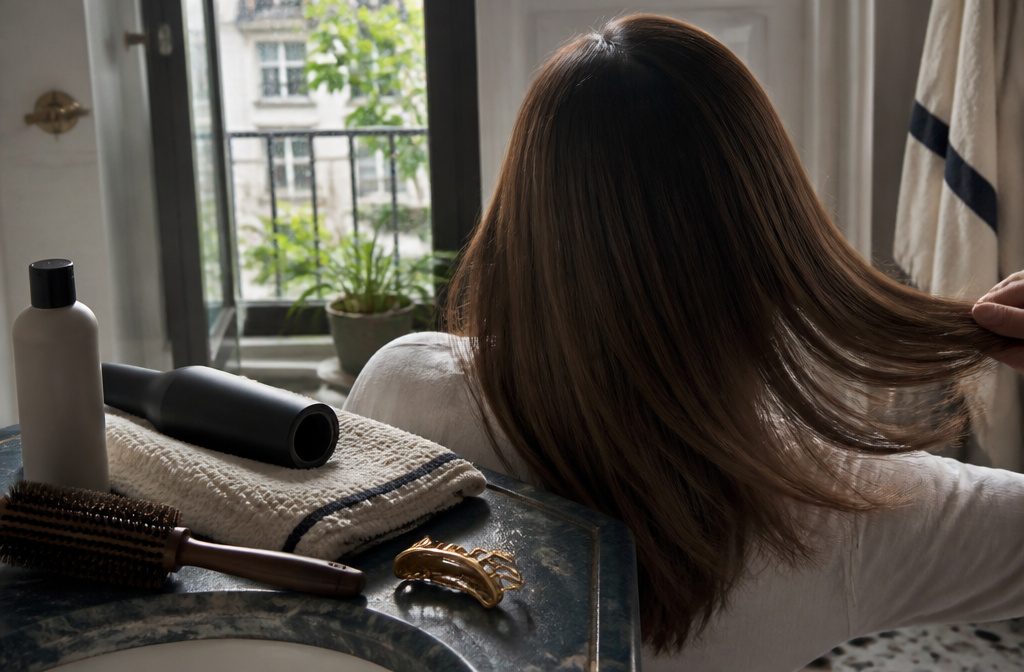
Fluffy straight hair takes volumizing shampoo, a round brush, medium heat and about thirty minutes from roots to finished shape.
The stage most people skip is rough-drying to 70 or 80 percent before touching a brush: working wet hair with tension flattens the roots you need to lift and stretches strands when they’re weakest.
What Fluffy Hair Means and How It Differs From Frizz
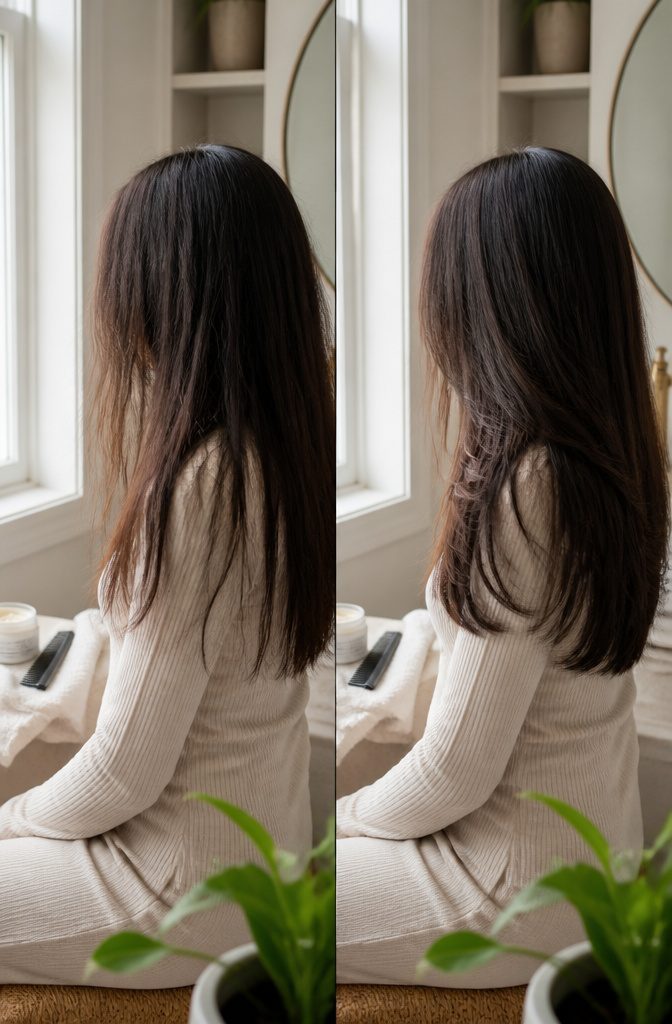
Fluffy hair means smooth, hydrated, and bouncy with intentional volume and texture rather than anything wild or unkempt. The look is airy and full-bodied, deliberately shaped to have movement and body without appearing shapeless or untamed.
Straight hair can absolutely achieve this: soft, lifted volume at the roots and mid-lengths that adds dimension without turning flat hair into something limp or heavy.
Frizzy or poofy hair is different. Frizz happens when cuticles lift because of dryness, damage, or humidity, and it shows up as flyaways and puffiness you did not ask for.
Fluffy hair, by contrast, is created through specific products and styling techniques and stays smooth even as it gains volume.
The line between the two comes down to hydration: fluffy hair holds moisture and looks polished, while frizzy hair lacks it and reads as rough or shapeless.
Straight hair lands on the fluffy side when you add lift without stripping out the hydration that keeps it sleek.
1. Wash With Volumizing Shampoo and Condition the Lengths
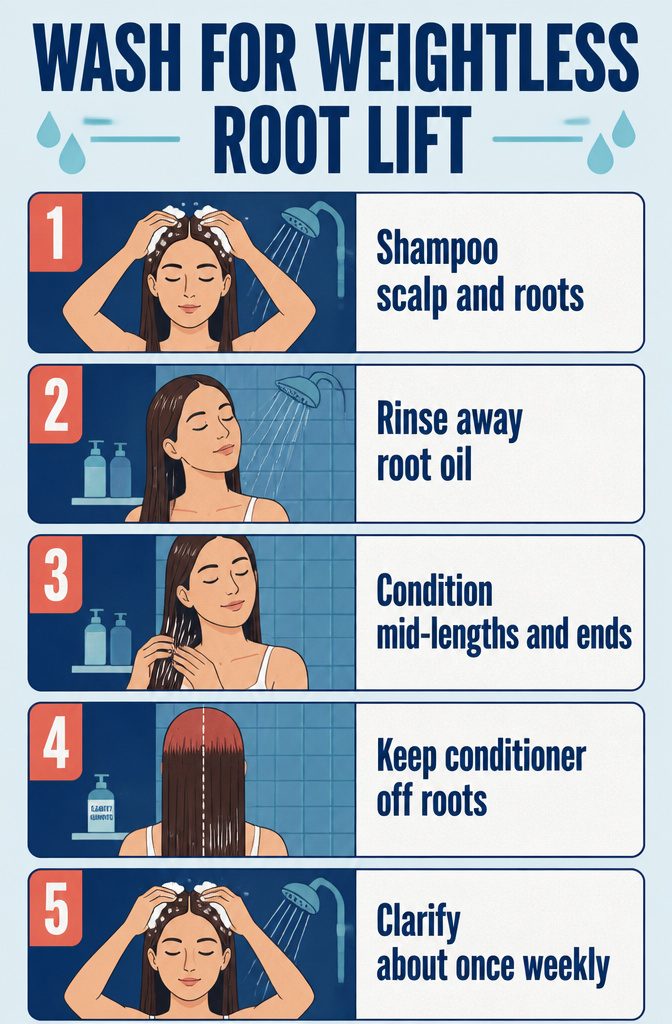
Volumizing shampoo and conditioner add the lift straight hair needs without weighing it down.
Shampoo the roots and scalp where oil builds up, then condition only the mid-lengths and ends. Too much conditioner near the roots flattens hair before you’ve even started styling, so keep it away from that zone.
Most people wash twice or three times a week. If your hair runs dry, less often works better.
Once a week or so, swap in a clarifying shampoo to strip away product buildup that regular shampoo leaves behind. That buildup sits on the strand and kills any chance of volume.
The products themselves matter.
Pick formulas made for your hair type, and skip anything heavy or moisturizing at the roots. Straight hair shows weight faster than other textures, so what works for someone with waves may flatten you by lunchtime.
2. Rough-Dry Until 70 to 80 Percent Dry
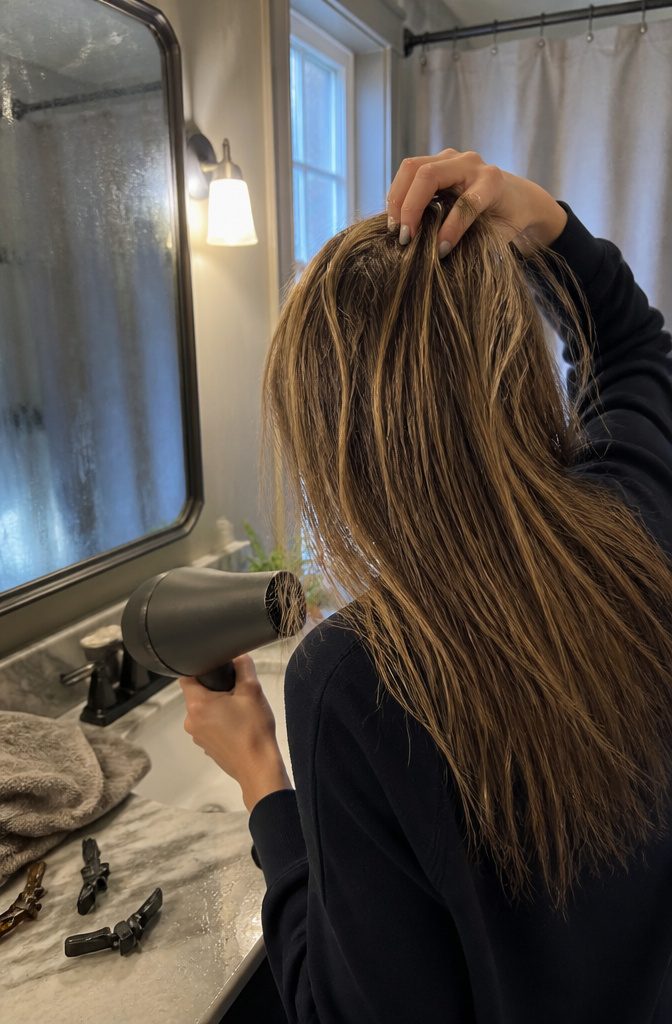
After you towel-dry your hair until damp, apply a heat protectant that guards against temperatures up to 450 degrees Fahrenheit, then layer a lightweight volumizing mousse or root lifter over it.
The heat protectant sits closer to the shaft, the volumizing product lifts without weight.
Flip your head upside down and rough-dry with your blow dryer on medium or low heat, using your fingers to tousle the hair rather than pulling it smooth.
This stage lifts the roots and sets them in a position they would not naturally take when hanging straight down.
Stop when your hair reaches 70 to 80 percent dry. At that point the cuticle has closed enough to take a round brush without stretching, but enough water remains for the final shaping to hold.
Going straight from soaking wet to a round brush puts too much tension on fragile strands and flattens the roots you just worked to lift.
3. Lift the Roots With a Round Brush and Medium Heat
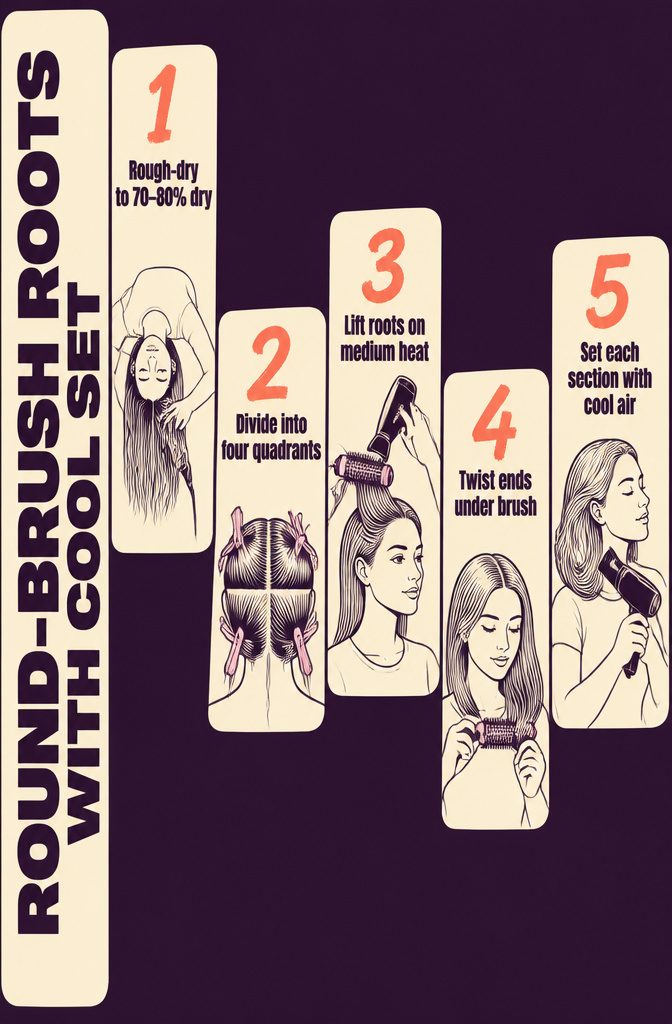
- Rough-dry your hair to 70 to 80 percent dry using your fingers and the airflow from the dryer. Hair is weakest when wet, so skip the round brush during this stage and just tousle the hair gently to remove most of the moisture. Flip your head upside down while rough-drying to lift the roots and give them a head start on volume.
- Divide long hair into four quadrants: front, left side, right side, and back. Clip the sections you are not working on out of the way.
- Starting from the bottom sections, pull each piece taut with a round brush and direct the airflow down from the dryer nozzle. Use medium or low heat to avoid damage and frizz. Lift the brush at the roots to create volume from the base, and twist the direction of the brush as you move through each section to build natural movement.
- When you reach the ends, wrap the hair over the round brush and twist it under to tuck the ends in smoothly.
- Blast each finished section with cool air to set the lift and lock the shape in place.
4. Roll In Velcro Rollers While Hair Is Damp
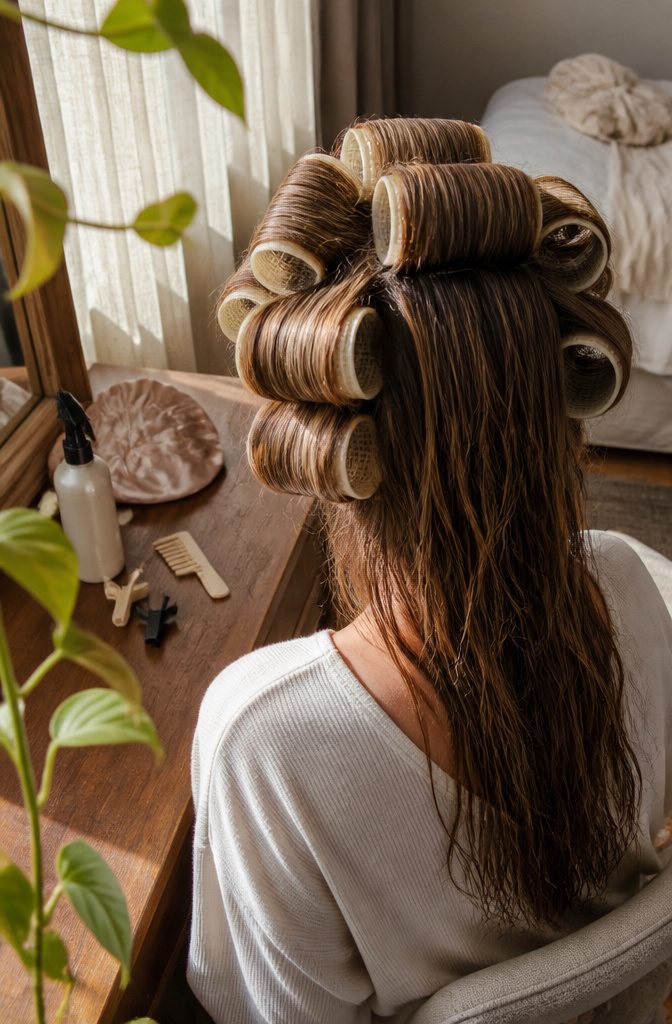
Velcro rollers give you lift without turning on a single hot tool.
Roll them into damp hair when it’s about 80 percent dry—still slightly damp to the touch—and leave them in until your hair is completely dry, which takes around thirty minutes for Velcro rollers.
The damp setting locks in the volume as it dries. Position each roller underneath the end of a section and roll it up toward your scalp, keeping tension so the hair doesn’t slip out, then clip it in place.
Once dry, shake them out or use your fingers to separate the waves.
Overnight braids work the same way: texture spray or mousse on damp hair before braiding, then undo it in the morning and gently brush through for volume and natural waves.
Twisting sections before bed or sleeping in a silk bonnet keeps the fluff you built from falling flat by morning.
5. Add Texture With Dry Shampoo or Texturizing Spray
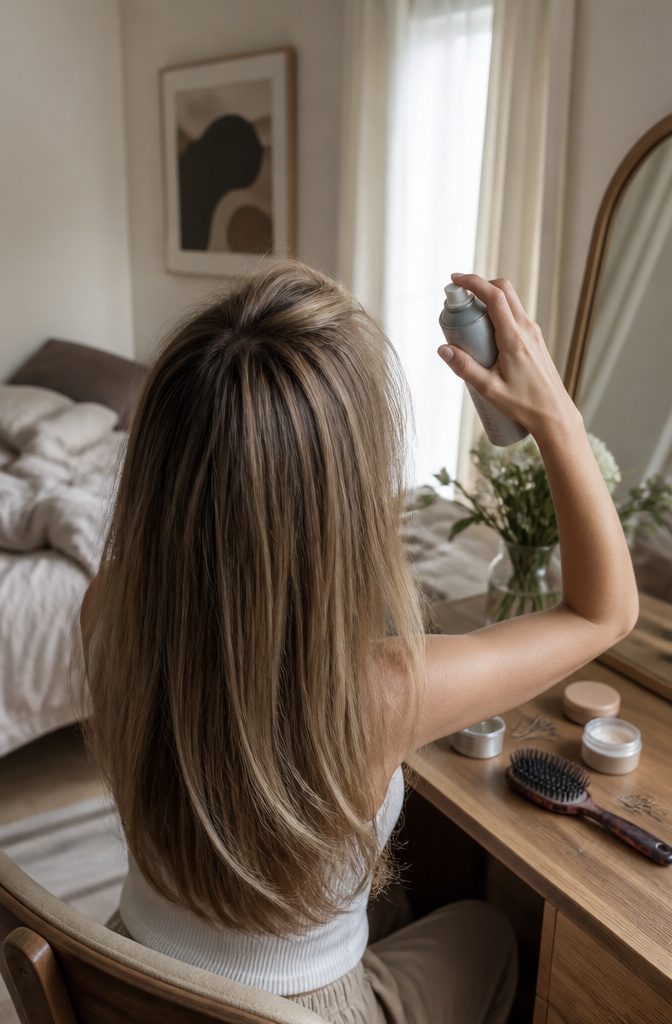
Once the volume is in, finishing products lock it in and add grip.
Dry shampoo is the easiest route: spray it at the roots in small amounts, let it sit for about a minute, then massage it in with your fingers. It absorbs oil and gives hair texture and lift without weight.
Texturizing spray or volumizing powder work the same way, adding movement and absorbing excess oil through the day. Light-hold hairspray keeps curls or waves in place without stiffness.
Mousse applied to damp hair before drying gives longer-lasting volume:
A volumizing mousse is ideal for those looking to amp up the body and bounce… [It] provides up to 24 hours of bouncy, voluminous texture.
That staying power beats reapplying dry shampoo midday when the roots start to flatten.
Teasing at the crown adds height but needs a light hand. Work with a three-inch crown section or strips one to two inches wide, hold each section taut, and backcomb the underside in three short strokes.
Frequent or aggressive teasing damages hair over time, so save it for occasions when the other options don’t give enough lift.
6. Choose Long Layers to Remove Weight and Add Movement
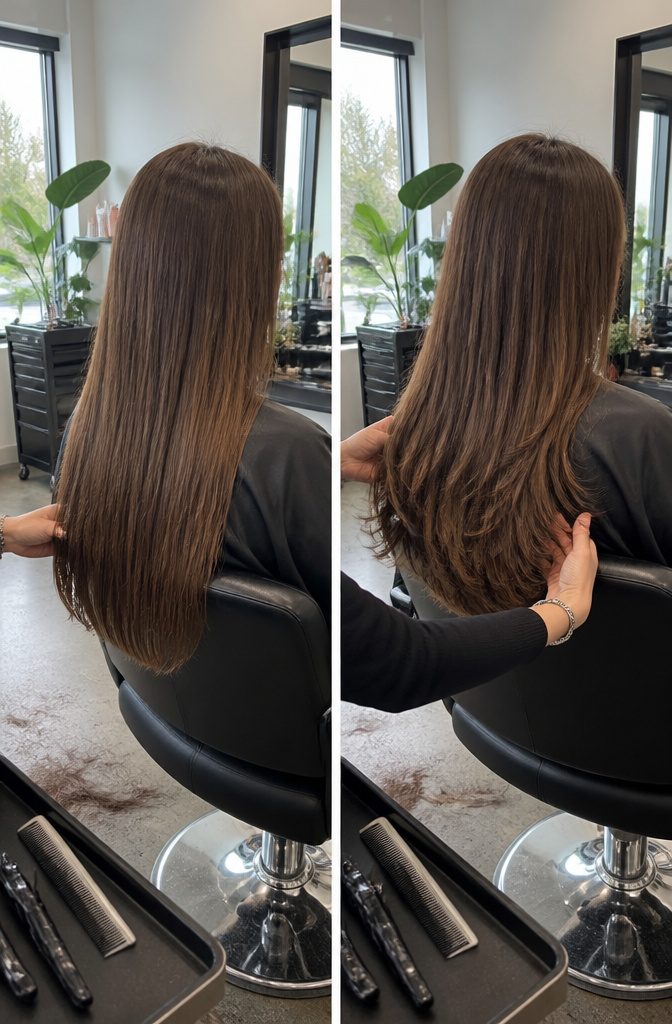
Long layers remove bulk from the weight line and let straight hair move rather than fall flat. The cut works by pulling weight out of the mid-lengths and ends while leaving enough density at the crown to support lift.
A few layering options that build volume into the cut:
- Long blended layers around the crown and mid-lengths, which create an airy appearance without the choppy texture of a shag
- Face-framing layers starting at the jawline on an otherwise blunt cut, keeping length while softening the perimeter
- Textured or feathered ends rather than a straight-across blunt line, which prevents the bottom from looking heavy and encourages natural bounce
- A hush cut, with wispy bangs and face-framing tendrils blended into feathered ends, built specifically for straight or fine hair that needs movement without product
- Layered bobs for shorter hair, which add body through the same weight-removal principle on a cropped length
Bring reference photos. Long layers can mean different things depending on who is cutting, and a photo gets you both working from the same blueprint.
7. Refresh Between Washes and Protect While Sleeping

Between washes, dry shampoo becomes the quickest volume reset.
Spray it directly into the roots in small amounts, let it sit for about a minute, then massage it in with your fingers. The powder absorbs oil and adds texture without weighing hair down.
A texturizing spray works the same way if you prefer a liquid formula. I also change my part every day or two; shifting where hair falls keeps roots from collapsing into the same flat line.
Overnight protection matters more than most people expect.
I gather my hair loosely at the crown with a silk scrunchie in a high pineapple to keep lift at the root, or I’ll twist or braid it before bed for added body in the morning.
Satin or silk pillowcases reduce friction, and a silk bonnet or head scarf works if you move around at night.
Flatness that returns too quickly usually points to buildup from styling products, over-conditioning near the roots, or aggressive brushing that flattens the cuticle and creates static.
A wide-tooth comb or your fingers are gentler between washes. Trimming every six to twelve weeks keeps ends from splitting and dragging the whole shape down.
Why Lightweight Products Matter for Straight Hair Volume
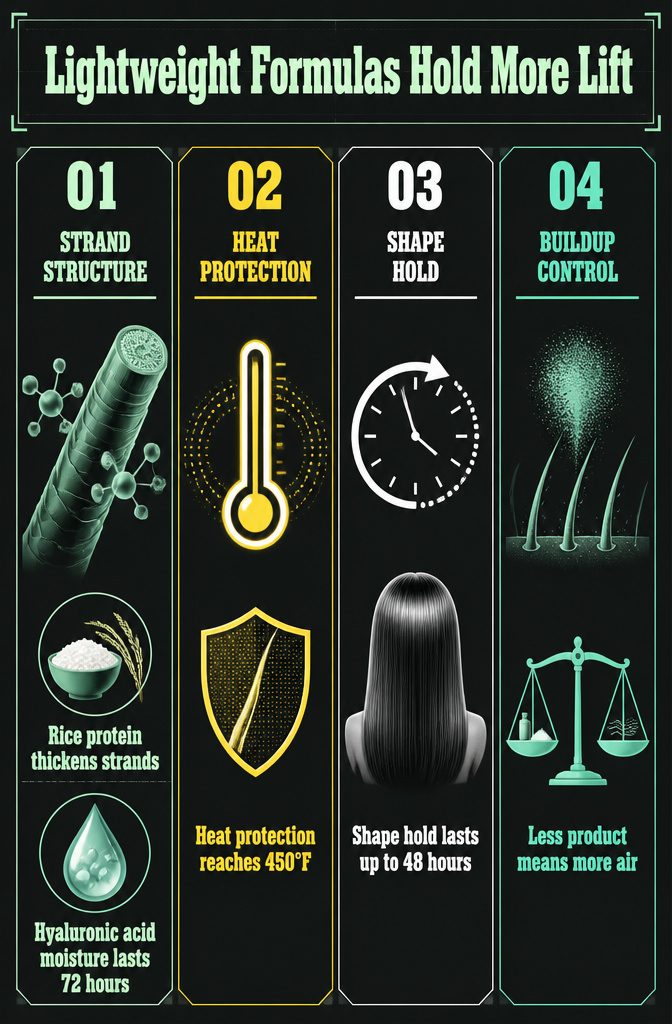
Straight hair needs lightweight formulas that add structure without coating the strand in anything heavy.
Volumizing shampoos and conditioners often contain rice protein or lightweight polymers that thicken each hair without stickiness, and volume systems infused with hyaluronic acid can lock in moisture for up to 72 hours without flattening the result.
I avoid heavy silicones and rich oils at this stage because they collapse lift before you even start styling.
Heat protectants built for volume do two things at once: they shield hair from temperatures up to 450 degrees Fahrenheit and hold the shape you create for up to 48 hours.
Look for blow-dry lotions or mousses that feel nearly weightless going on. Mousse is lighter than cream and gives flexible movement that survives the day.
Dry shampoo lifts roots and absorbs oil between washes, but too much leaves a chalky buildup that weighs more than the oil it replaced.
I use it sparingly on clean hair for instant texture, then leave it alone until the next refresh.
Texturizing sprays add grip without stiffness, and volumizing powders work directly at the root where you need the most lift. With all of these, less product means more air.
Keep Hair Hydrated to Hold Volume Without Frizz
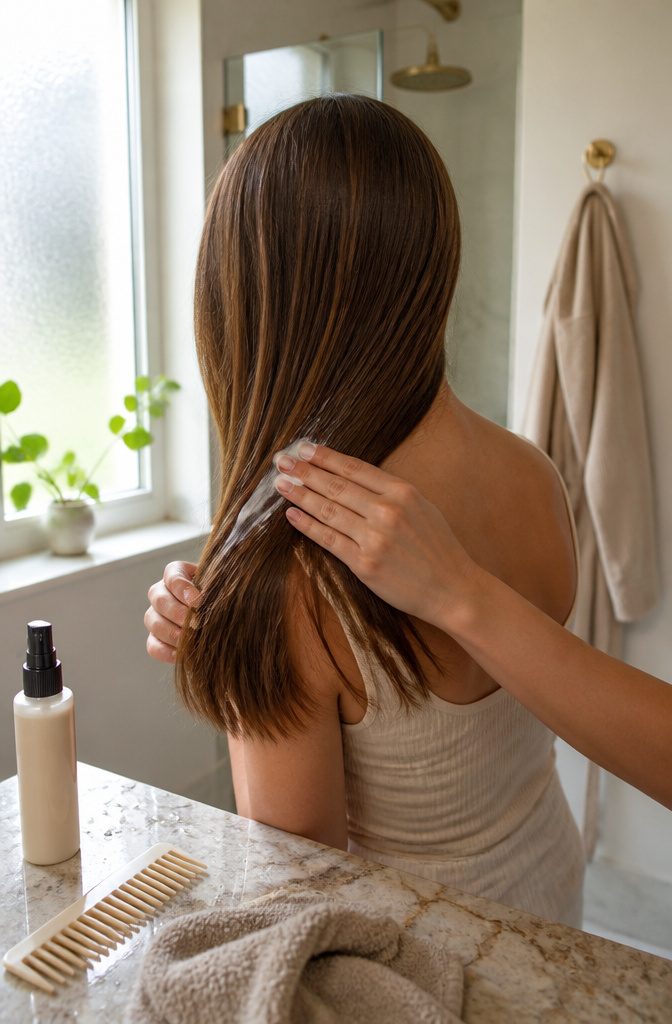
Hydration matters because dry or damaged hair loses its ability to hold volume smoothly.
When straight hair’s cuticles are parched or roughed up from heat, the texture skews frizzy instead of fluffy, and any lift you work in falls within an hour.
Buildup from heavy conditioners or excess oil weighs roots flat and keeps air from getting between strands. Fluffy volume needs hair that’s moisturized enough to behave but clean enough to move.
Straight hair already sits close to the scalp because its cuticles lie flat, and the strands themselves may be finer or heavier than wavy types.
Gravity pulls harder when there’s no natural bend to fight it. That makes protecting what you have even more important.
I reach for a heat protectant every time before a blow-dryer or round brush touches my hair. Moisturizing products between washes keep cuticles smooth without adding weight that cancels the volume you just built.
Products I Reach for to Build and Hold the Look
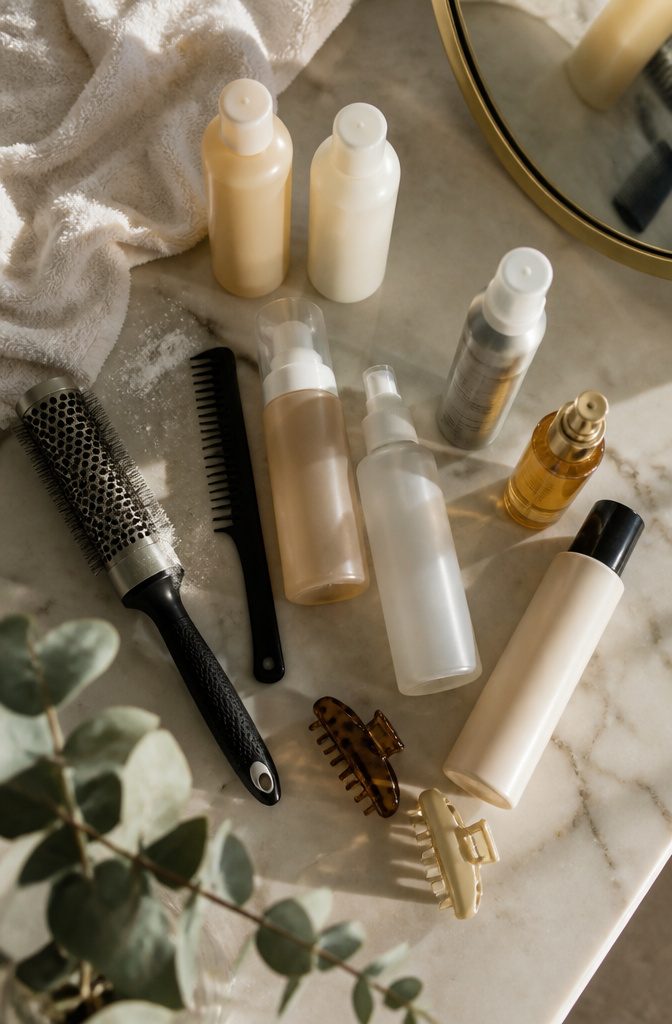
I rotate through products that do different jobs at different steps, and the set you pick depends on where your hair needs the most help.
- Davines VOLU Shampoo cleanses without stripping, then DEDE Hair Mist conditions lightly enough that roots stay lifted.
- This is a Volume Boosting Mousse from Davines or L’Oréal Paris Boost It Volume Inject Mousse goes on damp hair before you blow-dry; Redken’s Full Volume Mousse does the same job.
- Heat protectants that double as styling prep: EverPure Sulfate-Free Blow Dry Primer from L’Oréal, Biolage Professional Hydra Source Blow Dry Shaping Lotion, or Pureology Style + Protect Instant Levitation Mist.
- This is an Invisible Dry Shampoo absorbs oil at the roots with no white residue and adds volume between washes.
- Finishing sprays that hold without weight: This is a Perfecting Hairspray from Davines, Elnett Satin Strong Hold Hair Spray, or Matrix Fixer Hairspray.
- A drop of OI Oil or OI All in One Milk smooths ends only, never near the roots.
What Kills Volume and How to Avoid It
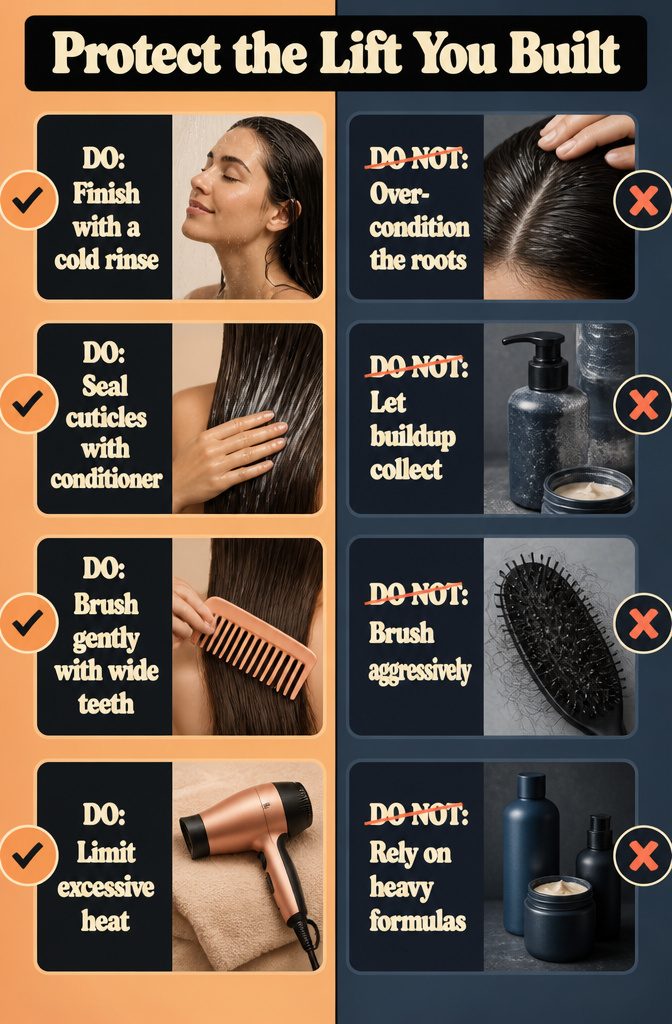
Straight hair flattens fast when the conditions stack against it.
Product buildup, over-conditioning at the roots, and heavy formulas weigh down strands before you even start styling. A few other common culprits:
- Heat from the shower opens the hair cuticles, leaving hair looking fluffy and untamed right after washing. Seal them with conditioner, hair oil, or a cold rinse at the end.
- Humidity can undo volume in minutes, especially if your hair is already struggling to hold lift.
- Brushing too hard or using a brush that creates static collapses the structure you just built.
- Dryness and damage from excessive heat styling or chemical treatments leave hair unable to hold any shape.
- Incorrect brush technique, particularly aggressive brushing, flattens roots and strips away texture.
If volume consistently falls flat despite the right products and technique, underlying hair health issues like oil imbalance or damage may be working against you.
Frequently Asked Questions
What is fluffy hair?
Fluffy hair is smooth, bouncy, and airy with volume and texture that looks shaped rather than wild.
The look has lift and body without appearing flat or heavy, and it stays hydrated enough to read as polished instead of frizzy. Straight hair achieves this through styling techniques and products that add dimension while keeping the texture sleek.
What’s the difference between fluffy hair and poofy hair?
Fluffy hair has smooth, shaped volume built through styling, while poofy hair is frizzy and shapeless from dryness or damage.
The line between them comes down to hydration: fluffy hair holds moisture and looks polished, poofy hair lacks it and reads as rough.
Fluffy hair is created on purpose, poofy hair happens when cuticles lift because of environmental conditions or lack of care.
Can straight hair really look fluffy?
Yes. The goal with straight hair is soft, lifted volume at the roots and mid-lengths that adds movement and body without going flat.
You’re building texture and bounce rather than trying to add curls or frizz. Round brushing, volumizing products, and root-lifting techniques all give straight hair that airy, full look without changing its natural texture.
Is fluffy hair healthy?
Yes, fluffy hair is well maintained and hydrated, which requires consistent care. Frizzy or poofy hair, by contrast, results from split ends, dehydration, or porous follicles that can’t hold moisture.
When straight hair is moisturized enough to behave but clean enough to move, it holds smooth volume instead of collapsing or turning rough.
Why does my hair go fluffy after washing?
Heat from the shower opens the hair cuticles, which leaves hair looking untamed right after you wash it. Conditioner, hair oil, or a cold rinse at the end of your shower seals the cuticles back down and smooths the texture.
This type of fluffiness is different from styled volume: it’s shapeless puffiness that needs to be controlled before you can build intentional lift.





