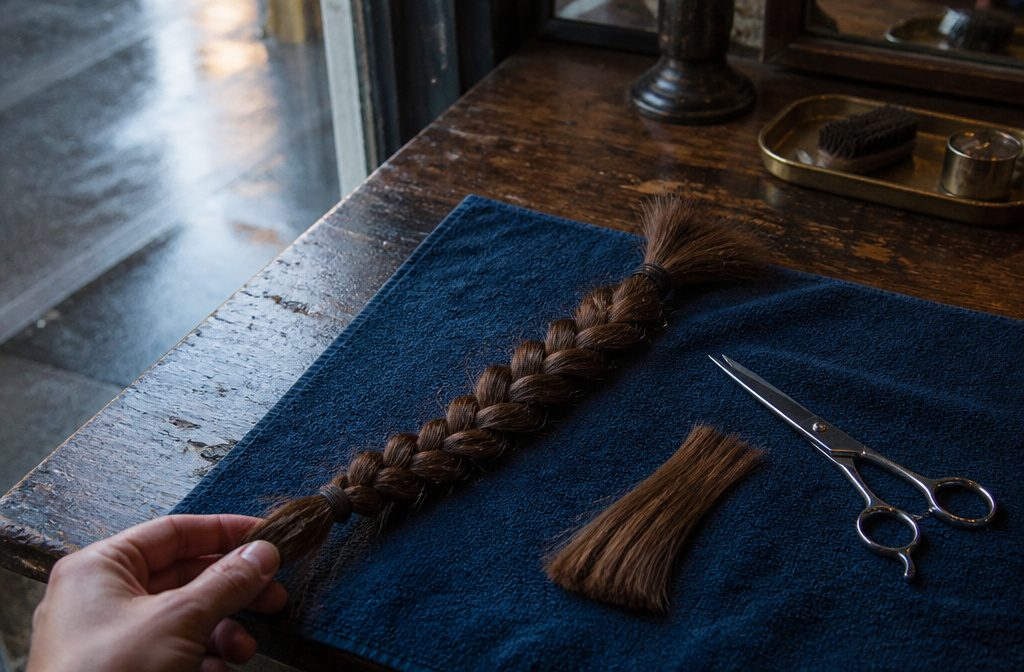
A trim removes split ends but does not speed up growth, and only scissors remove a split once it opens.
Hair grows about half an inch a month, so a cut only decides how much of that length you keep. Skip trims entirely and the split travels up the strand, so take 3 inches off once or twice a year.
1. Wash Gently and Space Out Shampoo Days
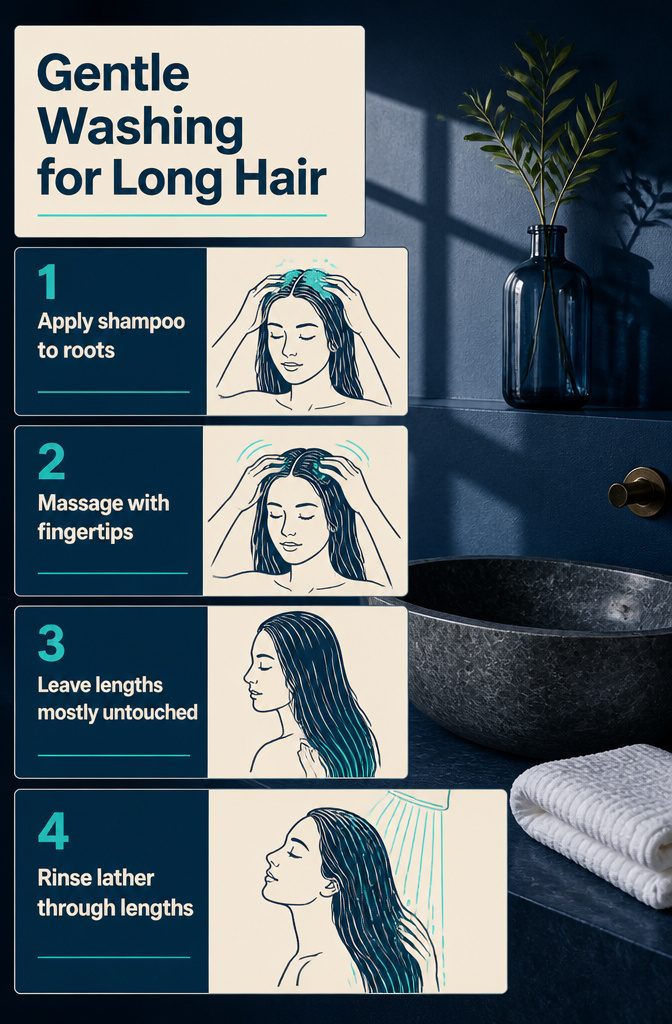
The scalp needs shampoo, the lengths mostly do not. When you wash long hair, apply shampoo directly to the roots and massage with your fingertips rather than gathering the hair and scrubbing it against itself.
The hair shaft swells with water and becomes more fragile, so roughing up the lengths invites breakage. A thorough rinse carries enough lather through the rest of the hair to lift away anything sitting on the surface.
Some routines call for shampooing twice when you do wash: the first pass lifts sebum and product buildup, the second actually cleanses. Others space washes to twice a week and treat the ends separately between shampoo days.
Both approaches work. How often you need to wash depends on how quickly your roots turn oily.
If they stay fresh for several days, you can stretch the interval. If they look flat by the next morning, a gentle sulfate-free formula daily does less damage than letting oil build up and then scrubbing harder to remove it.
2. Condition and Moisturize the Lengths
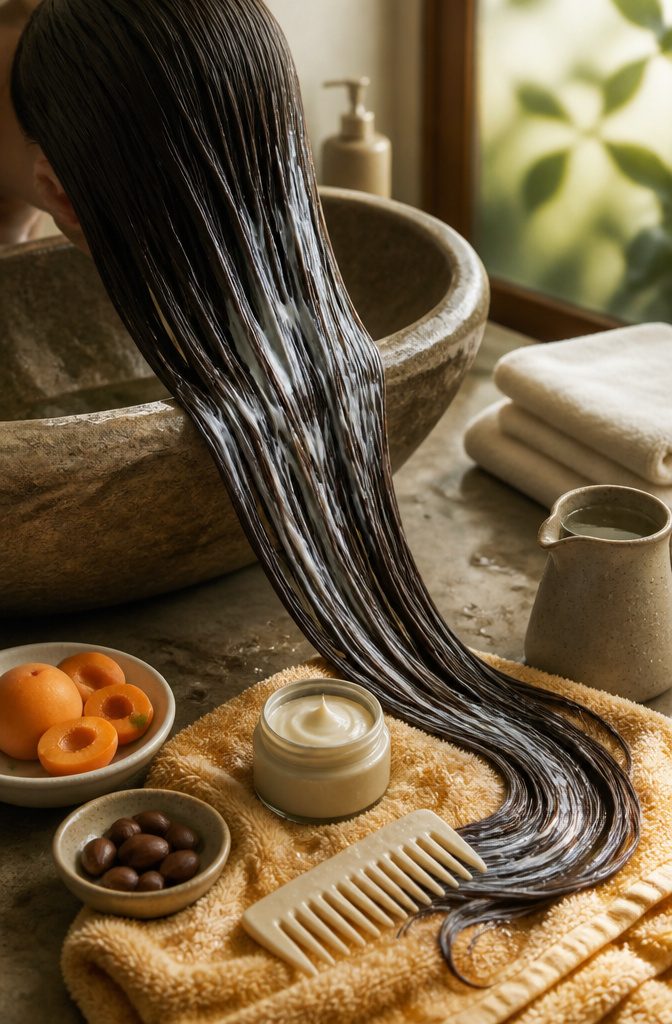
Conditioner belongs on the mid-lengths and ends, not the roots, because that is where long hair runs dry and snaps.
The Mask (97% naturally derived, €49.00) is the richer option, with plant-based ceramides and apricot and jojoba oils. Use it on towel-dried hair, never dripping wet.
Leave it on 2–5 minutes to detangle, 5–10 minutes for a standard treatment, and 20–30 minutes for a deep one. For sensitized hair, I’d save the overnight version for once a week.
Rinse thoroughly every time. The Shampoo (98% naturally derived, €35.00) cleans the scalp without stripping the lengths, so the mask has less to repair.
3. Detangle Carefully from the Ends Up
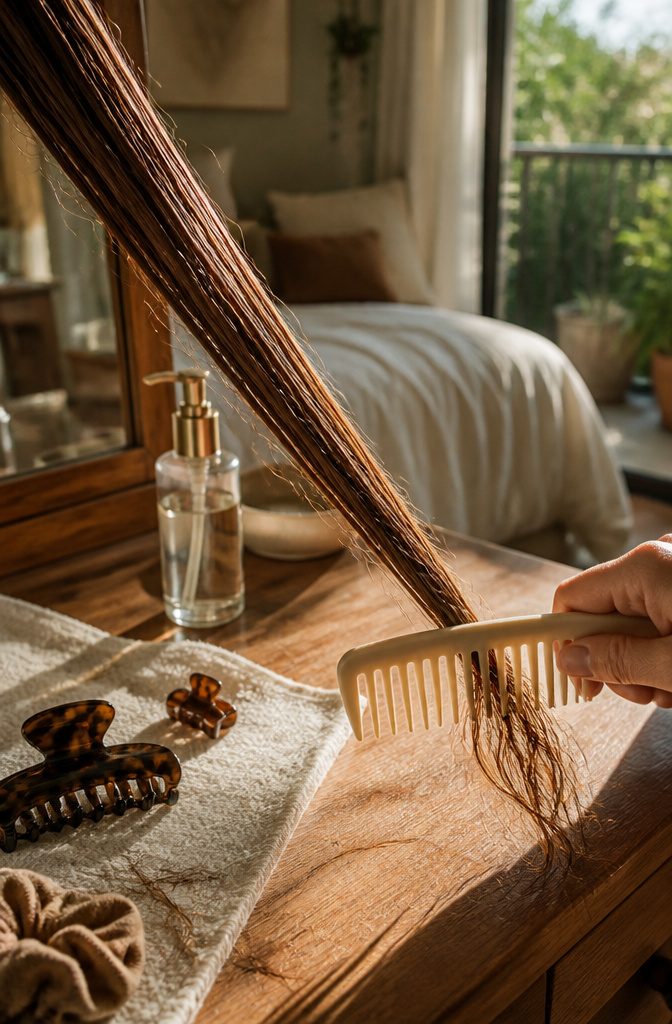
Detangling long hair without snapping strands means working from the ends upward in small sections.
Start at the very tips, hold the section with one hand to avoid pulling at the roots, and ease through tangles with a wide-tooth comb or a brush designed for wet hair like a Wet Brush or The Pink Wide-Tooth Detangling Comb (€15.00).
Once the ends are smooth, move up a few inches and repeat until you reach the scalp.
Detangling before you wash saves breakage. Wet hair stretches and snaps more easily, so clearing tangles dry or damp gives you fewer knots to fight when the hair is at its most fragile.
If a knot refuses to budge, stop and come back to it rather than forcing the comb through.
A pass with a detangler or leave-in conditioner adds slip and lets the comb glide, though patience does more than any product when the tangle is tight.
4. Limit Heat and Use a Heat Protectant
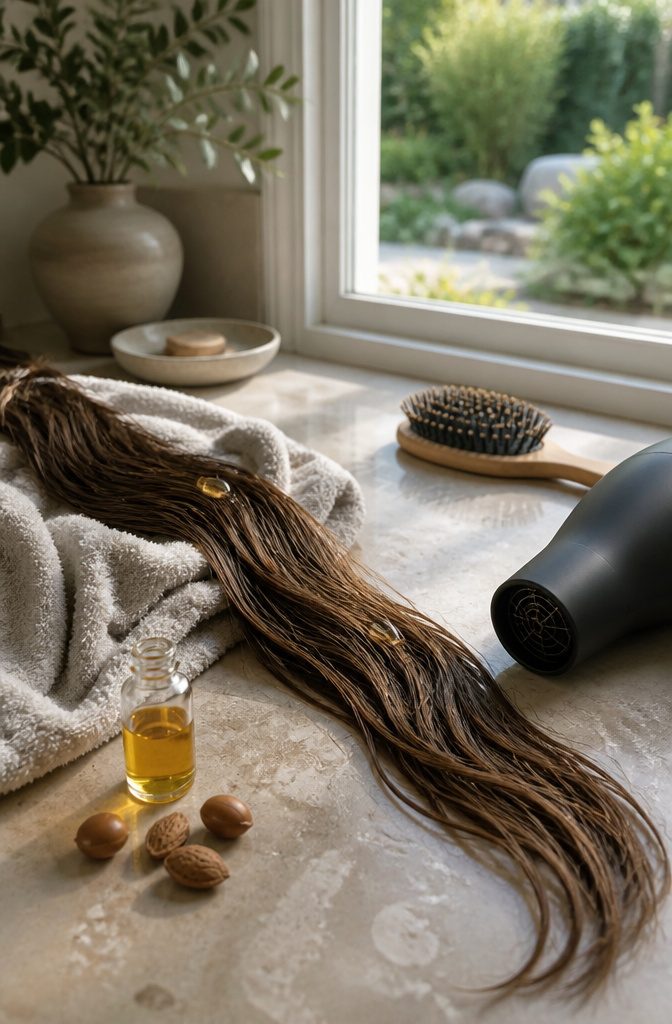
Heat is the fastest way to undo months of growing. High temperatures from blow dryers and curling irons can break down the hair’s structure, so air drying beats any hot tool when you have the time.
When you do reach for a dryer, use the coolest setting, and space out curling-iron days instead of making them daily.
Apply a protectant before any heat. Day Serum is 99% naturally derived, costs €35.00, and works up to 200 °C; use 1–3 drops on mid-lengths and ends, never the roots.
Serums with argan and jojoba oil also double as heat protectants and help with split ends. A couple of pumps through damp hair before drying is plenty.
5. Reduce Friction During Sleep and Daily Wear

Ends are the oldest hair on your head, and they take the most rubbing. Cotton doesn’t let hair glide, so a night of tossing can pull strands out on the pillow.
A satin or silk pillowcase fixes most of that. If you’d rather not buy one, a loose braid on regular cotton works, and a higher thread count beats a lower one.
A loose braid or a low, loose bun keeps hair from tangling overnight.
Skip tight elastics and use a soft fabric tie. By day, tuck your hair inside your coat, because winter scarves and collars scrub the same few inches, day after day.
6. Choose Products Suited to Your Hair
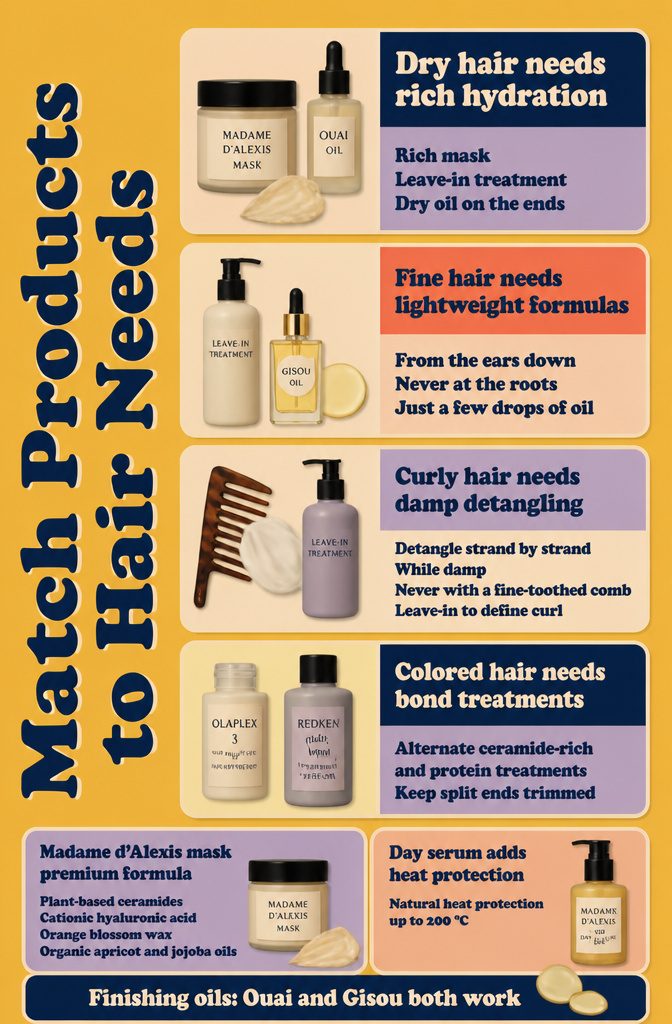
Products work when they match what your hair needs, not what a shelf display tells you to buy.
Dry hair wants hydration and lipid replenishment, so a rich mask, leave-in treatment, and dry oil on the ends keep the cuticle closed.
Fine hair needs the opposite strategy: lightweight formulas applied from the ears down, never at the roots, and just a few drops of oil so volume stays intact.
Thick hair handles richer treatments and longer processing times but tangles fast and breaks under tension.
Curly and wavy hair requires detangling strand by strand while damp, never with a fine-toothed comb, plus leave-in treatment to define the curl without snapping the shaft.
Straight hair shows every split and responds to treatments swept from top to bottom in long strokes.
Colored and bleached hair weakens at the cuticle, so I alternate between ceramide-rich formulas and protein treatments like Olaplex 3 or Redken’s Acidic Bond Treatment and keep split ends trimmed.
The Madame d’Alexis mask combines plant-based ceramides, cationic hyaluronic acid, orange blossom wax, and organic apricot and jojoba oils, and the day serum adds natural heat protection up to 200 °C. For finishing oils, Ouai and Gisou both work.
7. Trim Damaged Ends and Be Patient With Length
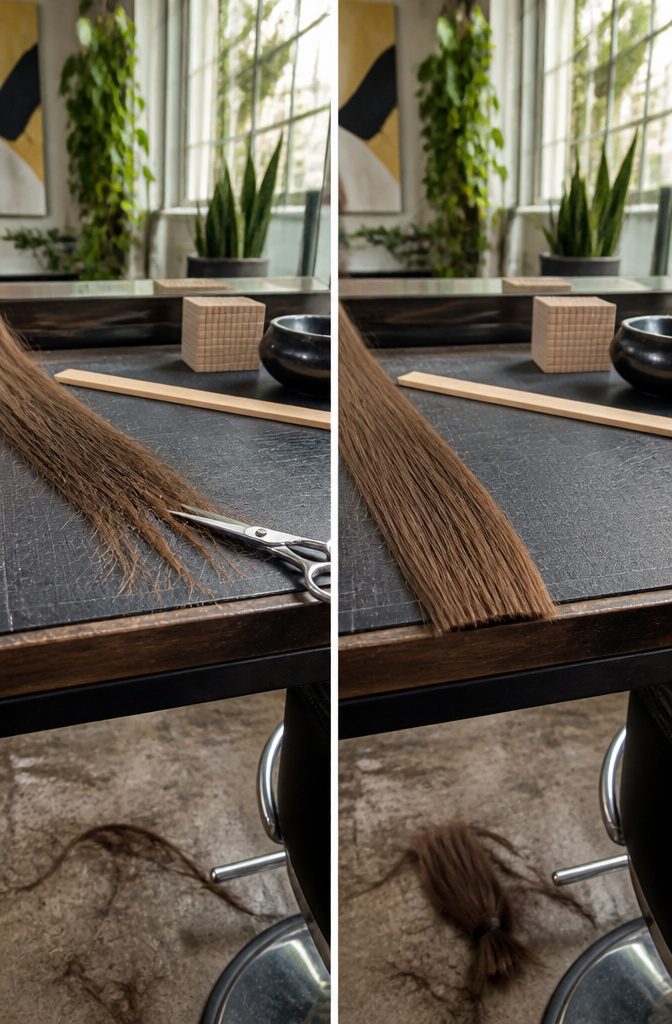
A trim removes split ends; it does not speed up growth.
Hair grows about half an inch a month, and a haircut only decides how much of that length you keep. Once a split opens, it travels up the strand and the hair snaps before it reaches the length you want.
Products can’t repair a split. They smooth and temporarily close the cuticle, so ends look better, but only scissors remove the damage.
On average, hair on a human head grows at a rate of about half an inch every month, so even if you implement all of these tips immediately, your hair still needs time to grow.
— Bustle
For long hair, I’d take 3 inches off once or twice a year rather than skip trims entirely.
Why Long Hair Breaks More Quickly
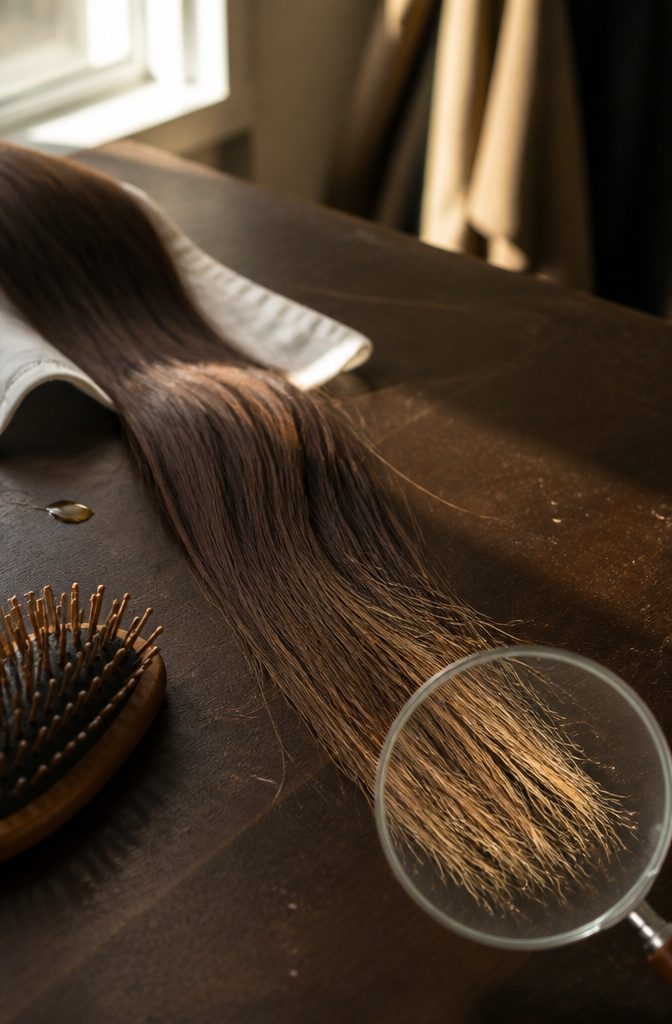
Hair does not regenerate the way skin does. Once a strand leaves the follicle, everything it goes through stays on it, so the ends of long hair carry months or years of wear that the roots never see.
Each wash, brushing and rub against a collar lifts the cuticle, the scaly outer layer, a little more until the cortex underneath is exposed.
Sebum makes it worse. The oil your scalp produces rarely travels all the way down a long length, so the ends are the driest, most porous part of the hair and snap with one pass of a brush.
Color, bleach, blow-drying and flat irons pile on top of that. I’d treat every step in this list as protection against those same few forces.
Scalp Care and Why It Matters
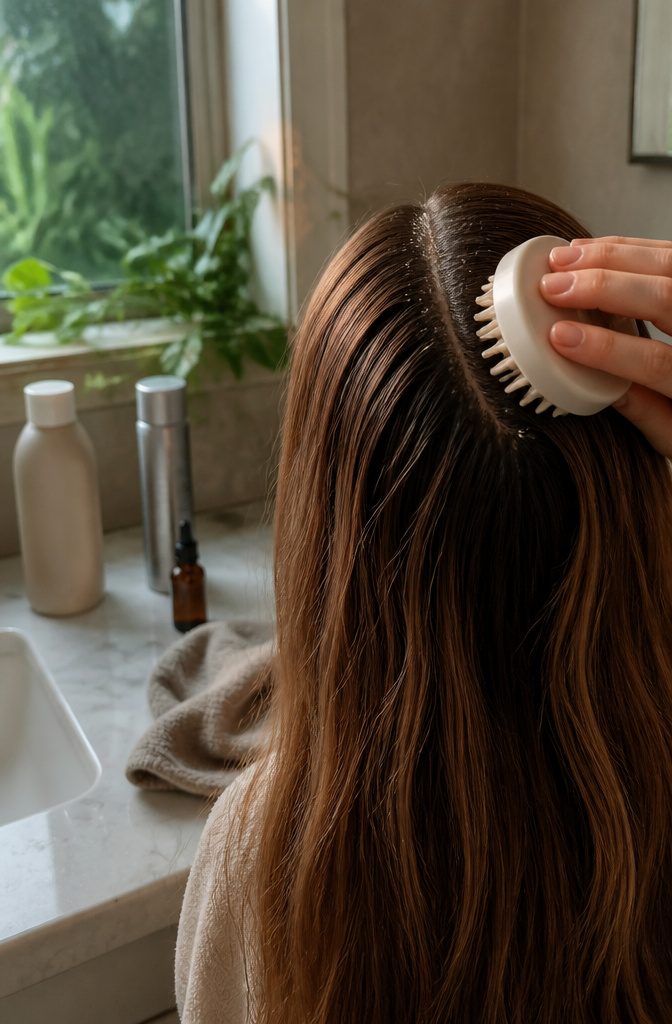
Long hair starts at the scalp, and the easiest way to protect it is to stop washing every day. Daily shampooing strips the natural oils your scalp makes, and dry shampoo can stretch the gap between washes.
A scalp massage with fingertips or a massage brush boosts blood flow to the follicles, and it loosens dead skin. An evening scalp treatment, applied section by section and left in, adds to that without weighing the lengths down.
Swap your regular shampoo for an exfoliating scrub every 10–15 days, washing twice like a double shampoo. Skip it if your scalp is sensitive.
All of this supports healthy hair. None of it guarantees faster growth.
Frequently Asked Questions
Why does long hair get damaged more quickly?
The ends of long hair are the oldest part of the strand, so they have been through months or years of washing, brushing and rubbing.
Scalp oil also rarely travels all the way down, which leaves the ends the driest and most porous section. Color, bleach and heat styling add even more wear.
What is the best routine for long hair care?
Shampoo the scalp gently, condition the mid-lengths and ends, detangle from the ends up, and protect the ends from heat and friction.
Add a trim of about 3 inches once or twice a year. Each step shields the oldest, most fragile part of the hair.
How do you wash long hair without breaking it?
Brush out tangles first, then apply shampoo only to the roots and massage with your fingertips.
Let the rinse water carry the lather through the lengths instead of scrubbing the hair against itself. Wet hair is more fragile, so rough handling in the shower causes the most breakage.
Should you wash long hair every day?
Only if your roots turn oily quickly.
In that case a gentle, sulfate-free shampoo daily does less harm than letting oil build up and scrubbing harder later. If your roots stay fresh for several days, space washes out and treat just the lengths in between.
How do you detangle long hair without breaking it?
Work from the ends upward in small sections, holding each section in one hand so you don’t pull at the roots.
Use a wide-tooth comb or a brush made for wet hair, and never force a stubborn knot. Detangling before you wash also helps, since wet hair stretches and snaps more easily.
How much product should I apply to long hair?
Start with a walnut-sized amount of mask and add more only if needed.
For dry oil, 1–3 drops on the mid-lengths and ends is enough. Too much product saturates the hair shaft and weighs it down.
How can you protect long hair from heat?
Air dry when you can, use the coolest dryer setting, and space out curling-iron days.
Apply a heat protectant to the mid-lengths and ends before any heat tool. Skipping the roots keeps them from looking greasy.
Should long hair be tied up at night?
Yes, a loose braid or a low, loose bun cuts down on tangles and friction overnight.
Use a soft fabric tie instead of a tight elastic. A satin or silk pillowcase reduces rubbing even further.
How can you protect your hair ends day to day?
Cut down on friction from pillowcases and clothing, and keep a treatment on the ends.
Tuck hair inside your coat in winter so scarves and collars don’t rub the same few inches. Choose products that match your hair type, such as a rich mask and dry oil for dry hair.
Should you trim split ends regularly?
Yes, because trimming is the only way to remove split ends, though it won’t make hair grow faster.
Hair grows about half an inch a month, and a cut only decides how much length you keep. Taking off 3 inches once or twice a year works better than skipping trims.
Can split ends be repaired?
No, products can only smooth the cuticle and make split ends look better for a while.
Only cutting removes the damage. Left alone, a split travels up the strand and the hair snaps.