
Hair types span straight, wavy, curly and coily, but which one is yours depends on the pattern you see when your hair air-dries without product or heat.
That test only works if you haven’t chemically treated it recently, because straightening or perming masks the follicle shape you were born with.
Once you know your base pattern, 3 more tests for strand thickness, porosity and density tell you which products will actually work.
1. Start With Your Natural Curl Pattern

Start With Your Natural Curl Pattern
Curl pattern is the most visible trait when you try to pin down what type of hair you have.
It describes the shape your hair takes as it grows from the scalp, and you need to see it without interference: wash your hair, then let it air-dry without product, heat, or manipulation.
What you see after it dries is your natural pattern.
Four main groups exist.
Straight hair dries without bends. Wavy hair dries with a slight S-curve.
Curly hair forms defined loops. Tight curly hair dries with compact spirals.
The shape is encoded in your DNA and determined by the follicle’s geometry in the scalp. The more asymmetrical the follicle, the tighter the curl.
Temporary changes don’t count.
If you’ve chemically straightened, permed, or heat-styled your hair recently, that isn’t your natural type. The pattern you were born with doesn’t shift because you blow-dried it yesterday.
2. Classify Your Pattern Using the Four Main Groups
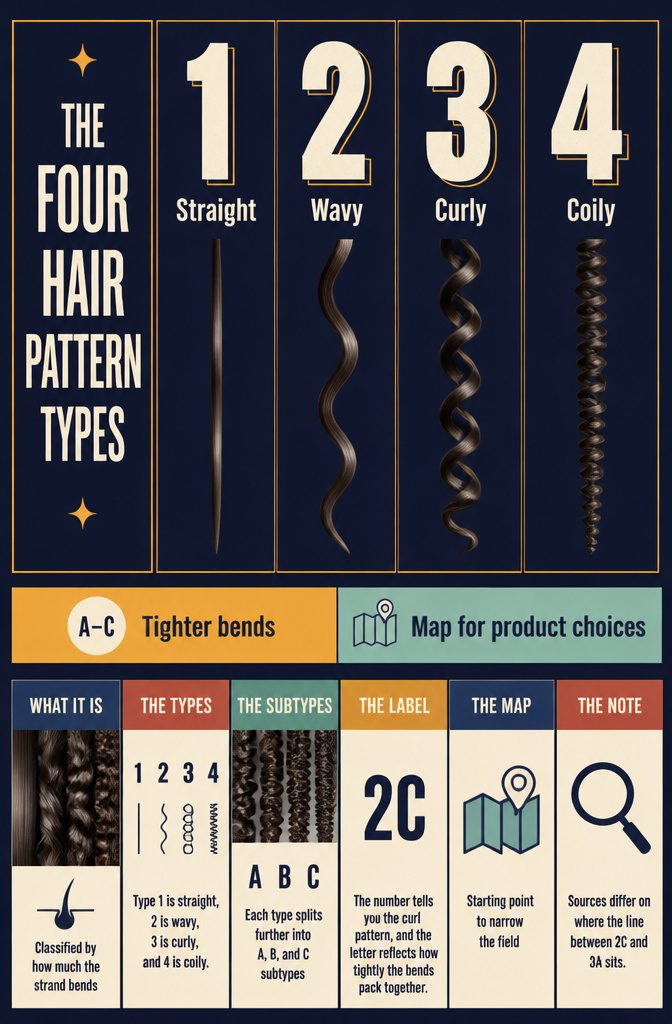
The system most stylists use divides hair into four numbered types based on how much the strand bends. Type 1 is straight, Type 2 is wavy, Type 3 is curly, and Type 4 is coily.
Each type splits further into A, B, and C subtypes, giving you a label like 2C or 3B. The number tells you the curl pattern, and the letter reflects how tightly the bends pack together.
Type 1 is straight, 2 is wavy, 3 is curly, and 4 is coily.
That shorthand gives you a starting vocabulary when you look up what works for your hair or ask a stylist what cut holds up.
Sources differ on where the line between 2C and 3A sits, and some describe the subtypes with slightly different details.
I think of it as a map to narrow the field, not a complete account of every trait your hair has.
3. Check Strand Thickness Separately
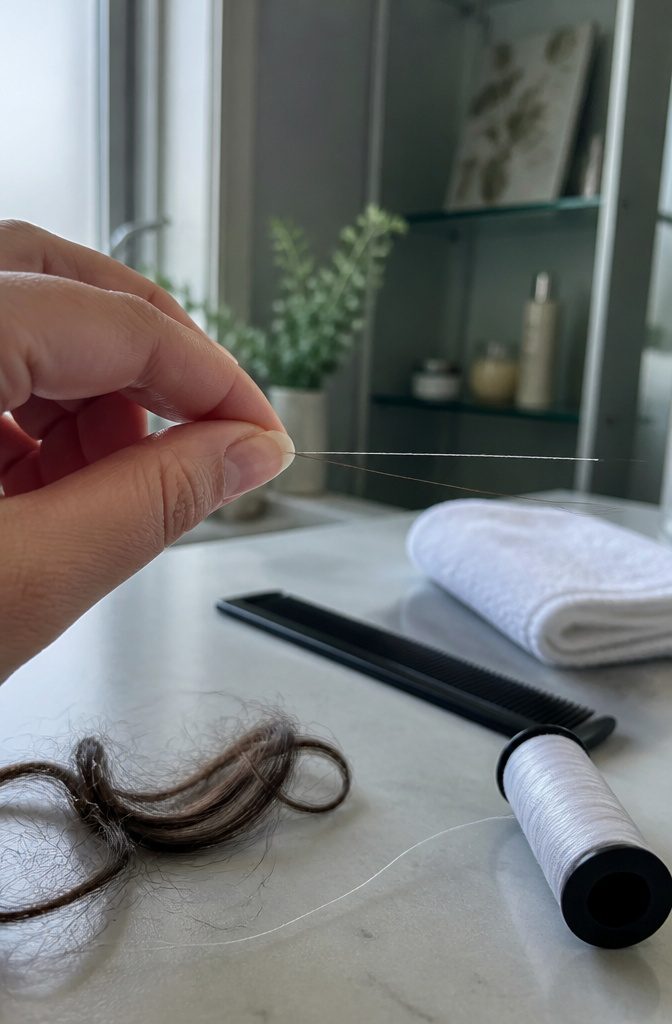
Pull one strand loose and roll it between your thumb and forefinger. **If you barely feel anything, the strand is fine.
If it feels clearly there, it’s coarse. If it sits somewhere in between, call it medium.**
Another way to judge: hold the strand next to sewing thread. Fine strands run thinner than the thread, coarse strands thicker, medium about the same width.
Strand thickness is not the same thing as density. You can have coarse individual strands but relatively few of them on your head, or fine strands packed tight.
The diameter test tells you about one strand in isolation, which matters because fine hair tends to show oil faster and coarse hair dries out more quickly.
That difference affects which products hold without weighing things down and how much moisture your routine needs to replace.
4. Test Porosity, Density, and Scalp Oiliness
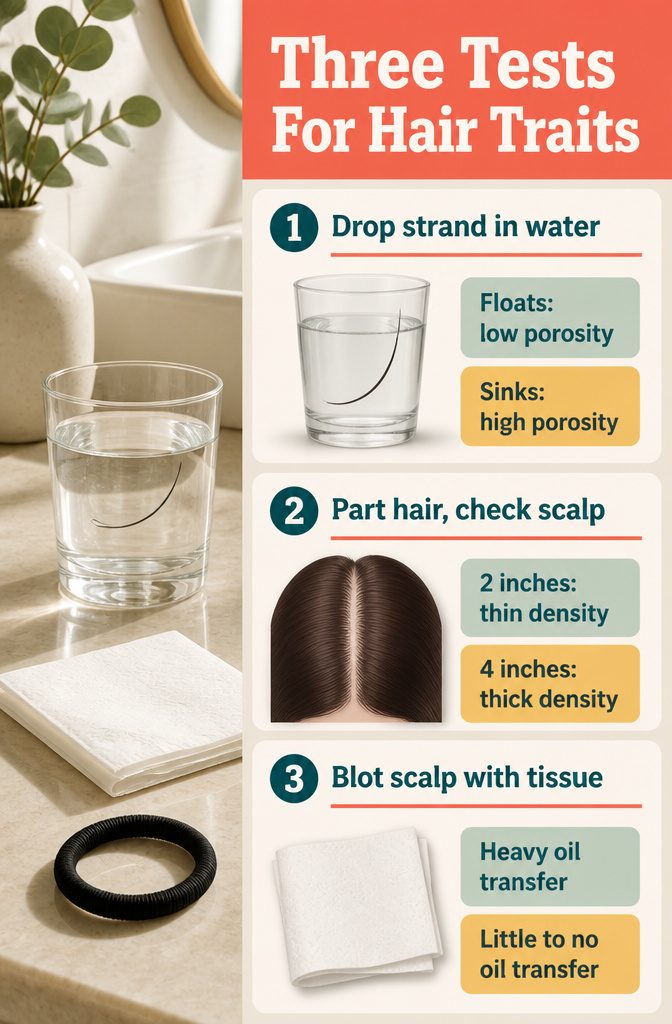
Three more tests fill out the picture once curl pattern is settled.
Drop a clean strand in a glass of water and wait a few minutes. If it floats, your hair has low porosity and resists moisture.
If it sinks, porosity is high and your hair soaks up water quickly but loses it just as fast. Porosity drives how product sits on the strand versus how much gets absorbed.
Density is about head coverage, not individual strand width.
Part your hair and check how much scalp shows through. If you see a lot of scalp, density is low.
Barely visible scalp means high density. Another quick check: pull your hair into a ponytail and measure across.
A ponytail around 2 inches thick indicates thin density; 4 inches signals thick. Low density hair benefits from lighter products that add volume, while high density hair often needs heavier formulas to control bulk and frizz.
For oiliness, blot your scalp with a tissue the day after you wash.
Heavy oil transfer means your scalp produces sebum at a high rate. Little to no oil suggests underproduction.
You may also find combination patterns, such as an oily scalp with dry ends. Oiliness determines wash frequency and whether you need clarifying shampoo or extra conditioner.
Why Curl Pattern and Other Traits Matter for Care

Once you know whether your hair is straight, wavy, curly or coily, that pattern tells you how easily natural oil from your scalp can slide down the strand.
Oil moves quickly along straight hair, which is why type 1 tends to look greasy faster and benefits from lighter products or less frequent washing.
The tighter the curl, the harder it is for sebum to travel the length of the hair, so coily types often need added moisture to prevent dryness.
Strand thickness changes which products work.
Fine hair is easily weighed down by heavy conditioners or oils, so lightweight formulas keep volume without the flatness. Coarse strands hold less moisture and dry out faster, so they handle richer treatments without looking greasy.
Porosity affects how well your hair absorbs and holds water. High-porosity hair soaks in moisture immediately but loses it just as fast, leaving it dry and prone to breakage.
Low-porosity hair struggles to let water in, so products sit on the surface and build up. Knowing this guides whether you need clarifying shampoo or intensive hydration, and whether water-based or oil-based products will actually penetrate.
When You Have More Than One Pattern on Your Head
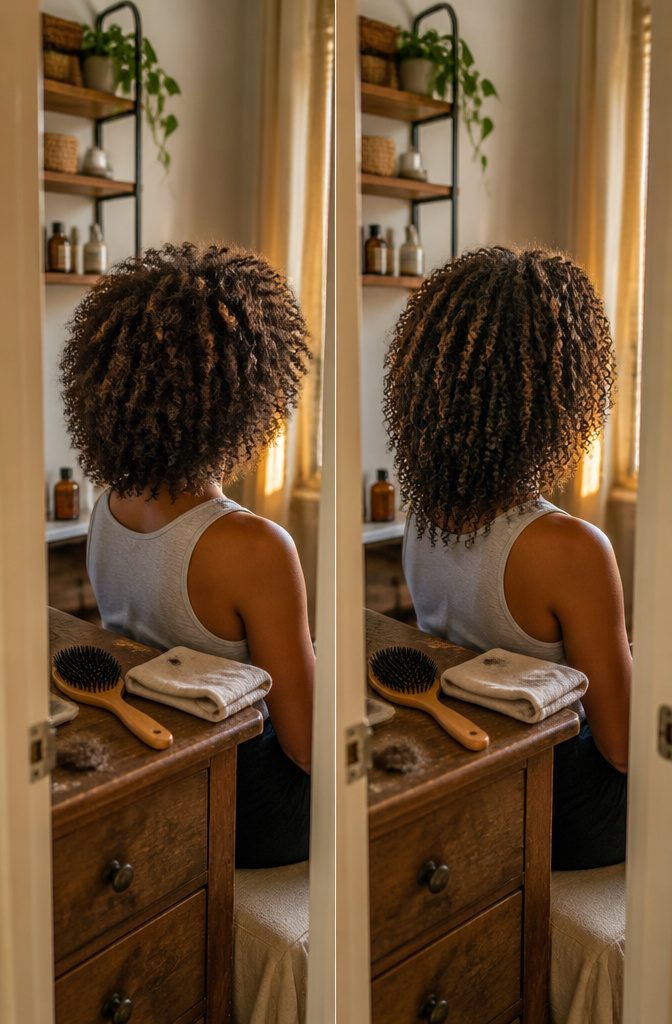
Mixed texture is normal. You may find coily hair at the back of your head and looser curls near your face, or tight spirals along the crown with waves underneath.
It happens because different follicle shapes sit across your scalp, sometimes inherited from different sides of your family.
When I need to choose products or read styling instructions that call for a specific pattern, I look at which texture covers the most area and buy for that.
If your head is mostly type 3 curls with a small patch of tighter coils at the nape, the curl product wins.
If half your hair is wavy and the other half curly, pick the one that gives you more trouble or the look you want most, then adjust technique in the sections that behave differently.
The variation stays. You will not train one zone to match another, and pretending the whole head is uniform leads to frizz in one area or limpness in another.
Frequently Asked Questions
What type of hair do I have?
Start by identifying your curl pattern: straight (Type 1), wavy (Type 2), curly (Type 3), or coily (Type 4).
Then assess strand thickness, porosity, density, and scalp oiliness to complete the picture. Your curl pattern is visible when you wash your hair and let it air-dry without product or heat.
How do I know what kind of Black hair I have?
Wash your hair with a clarifying shampoo and let it air-dry without any products.
Compare the pattern, shrinkage, and how much the hair coils to reference charts for Type 3 and Type 4 hair. Most Black hair falls into the curly or coily categories, but you may find multiple patterns across your head.
What are the different types of men’s hair?
Men’s hair follows the same 4 types as anyone’s: straight (Type 1), wavy (Type 2), curly (Type 3), and coily (Type 4).
Each type is further divided into A, B, and C subtypes based on how tightly the bends pack together. Strand thickness, density, and porosity affect which products and cuts work best.