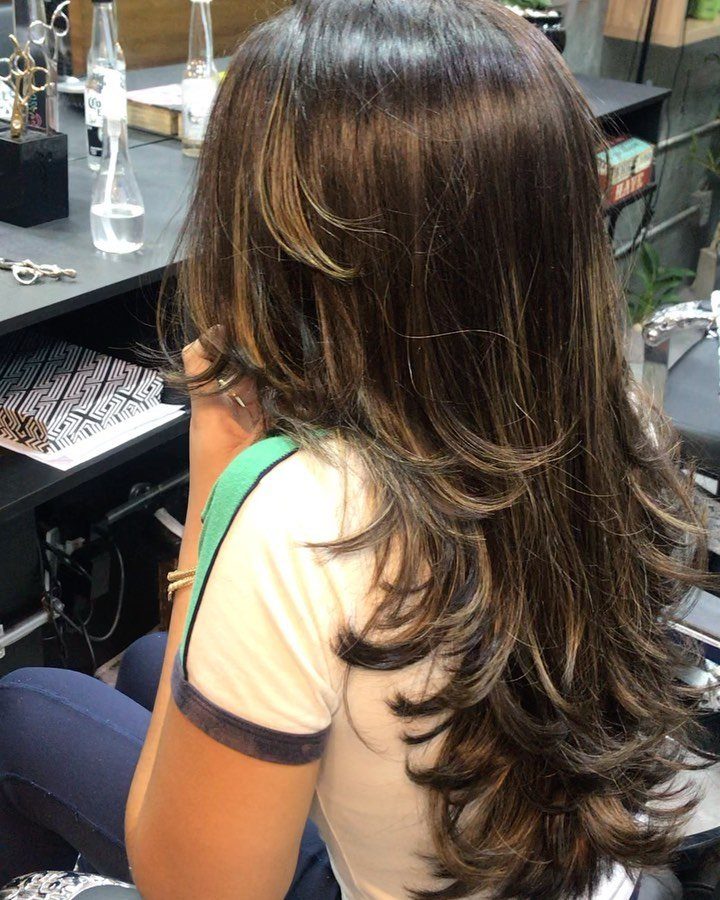
Layers can start at shoulder level and cascade toward the ends, or they can cut short at the crown and graduate down through the length in visible steps.
The examples below cover everything from subtle blunt layers and graduated cuts to face-framing pieces, shags, and the butterfly haircut.
Curtain bangs blend into layers starting at cheekbone level, while a butterfly cut keeps the longest pieces near waist level and opens the face with shorter layers that flare outward.
Fine hair, thick hair, curly and wavy textures each take a different approach, and the styling section covers what each cut asks for.
1. Long Layers
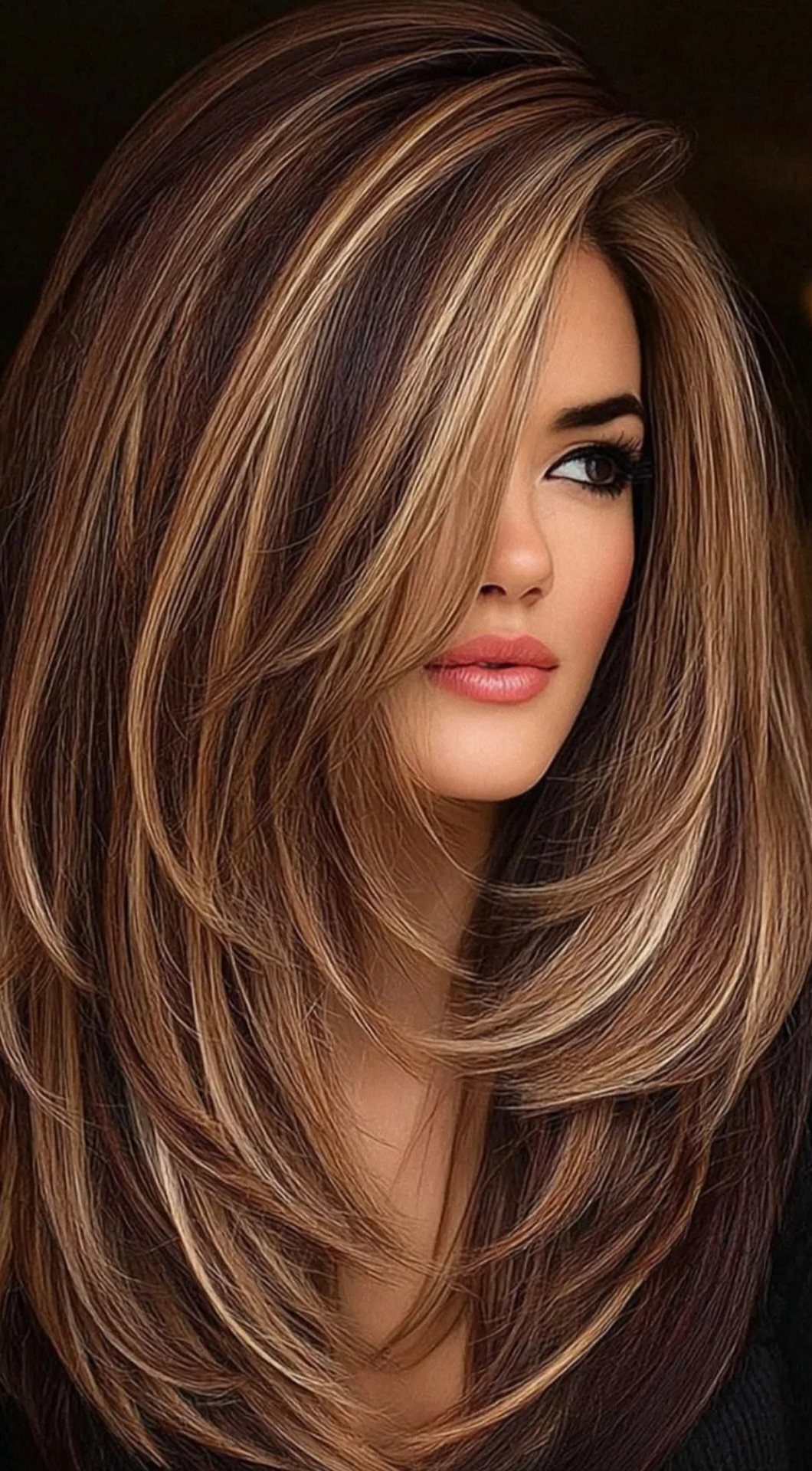
Layers cut through the bottom half of long hair add movement without shortening the front. The cut suits women who want to keep length while reducing weight and creating shape that shows when hair moves or catches light.
Ask for layers starting at shoulder level or below, with the shortest pieces landing where you want the most volume. Hair that tends to sit flat gets lift; thick hair loses bulk without looking thinned out.
The cut grows out cleanly. Book a trim when the ends start to feel ragged or look uneven.
2. Face-Framing Layers
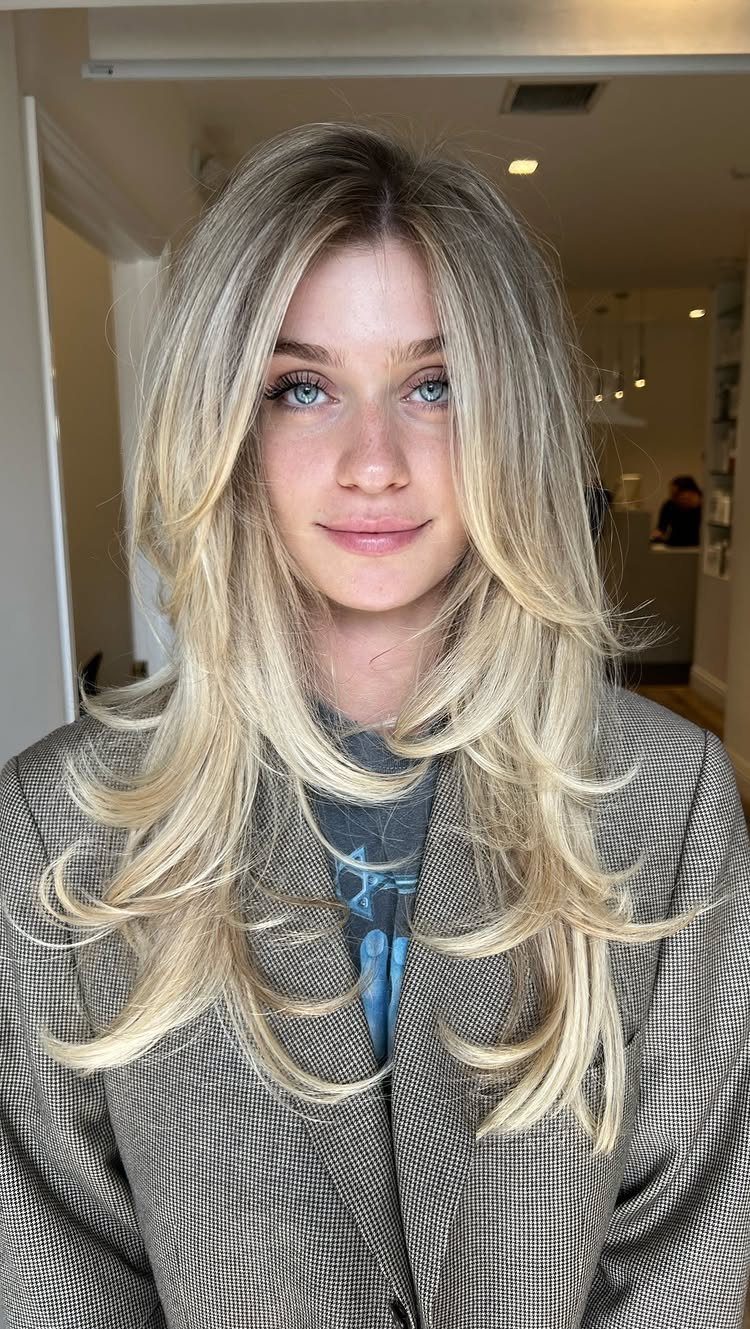
Shorter pieces cut around the face create shape that draws attention inward and softens a strong jawline or wide forehead. The layers usually start at cheekbone or chin level and blend into longer hair behind.
This cut works well for women who want dimension near the face but prefer to keep length everywhere else. Straight hair shows the cleanest lines; wavy hair gets bounce and curve where the layers sit.
Style time stays low. The front pieces dry into shape on their own or need a quick pass with a round brush.
3. Long Shag
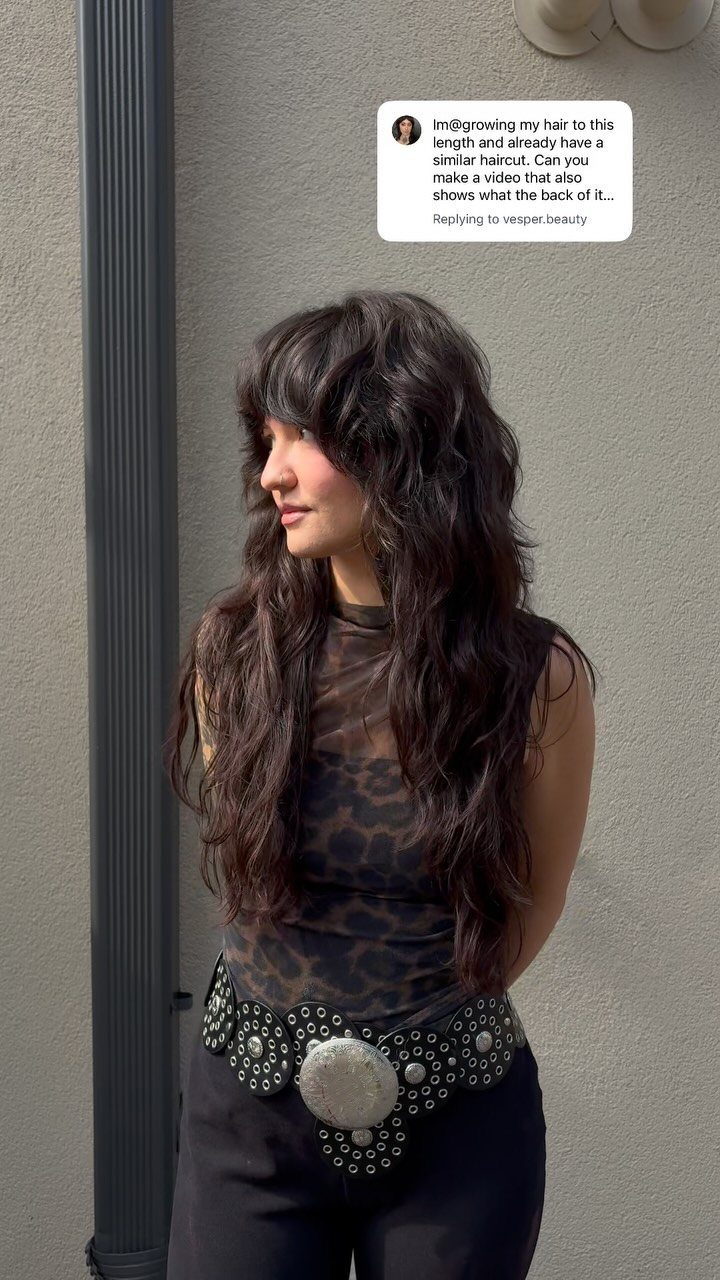
Choppy layers cut at varying lengths create texture that looks intentionally undone. The shag uses shorter pieces through the crown and mid-lengths, with the layers staggered rather than blended smooth.
This cut suits women comfortable with a looser, lived-in look.
Fine hair gains volume; thick hair gets movement. Styling takes minimal effort since the cut is designed to look tousled, but the texture shows best with a texturizing spray or light mousse worked through damp hair.
Plan for more frequent trims to keep the shape crisp. The shape depends on those uneven ends.
4. Feathered Layers
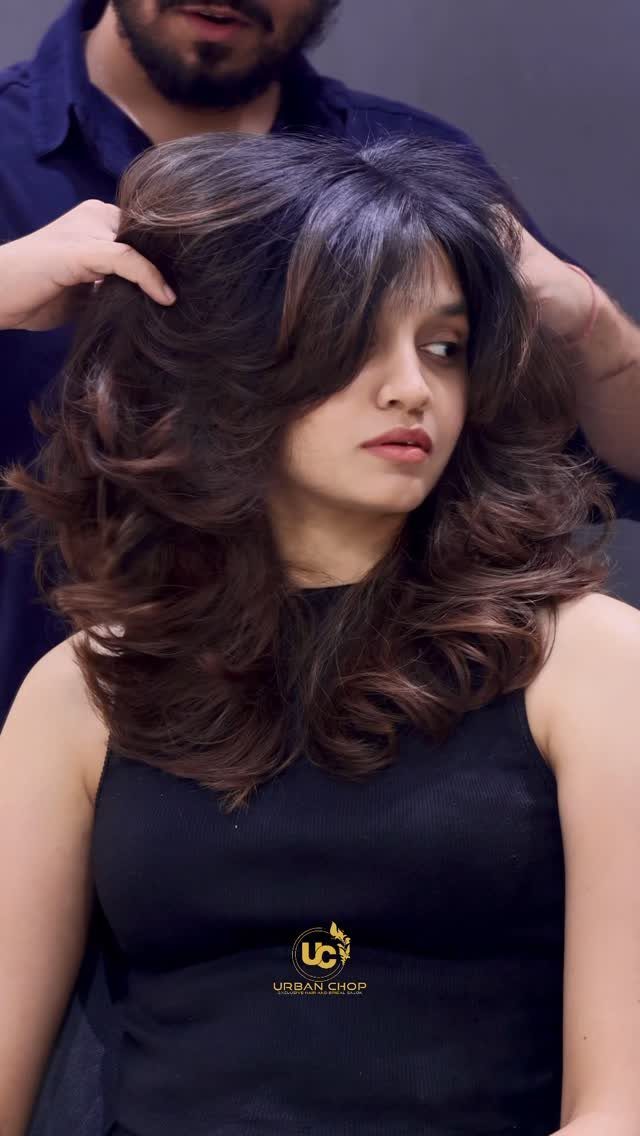
The ends curve outward instead of lying flat, which gives the cut that airy, blown-back feel you see in old 1970s hair.
The feathering comes from how the layers are angled and styled, with ends flipping gently away from the face rather than falling straight.
The cut works for women who like volume and prefer a polished, feminine shape. A round brush and a few minutes with a blow dryer bring out the feathering; without heat styling, the cut loses most of its signature lift.
Hair that holds a curl or has natural body takes to this shape more easily than very straight, heavy hair.
5. Blunt Cut
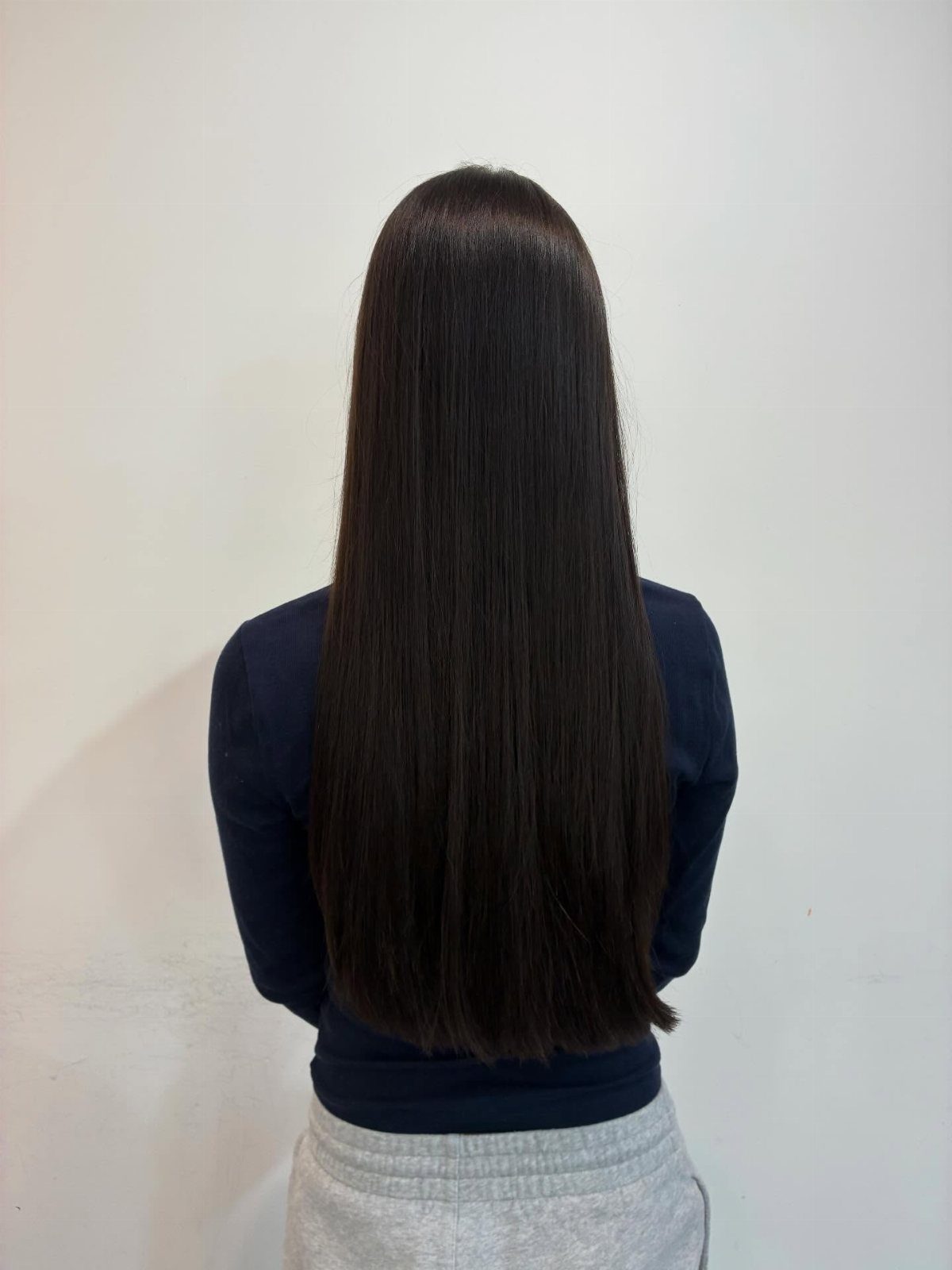
A blunt cut keeps all the hair at one even length with no layers. The solid bottom line makes hair look thicker and the ends appear healthier, which matters most when length is the priority.
This cut suits women who want simplicity and maximum fullness at the hem. It works especially well on straight or slightly wavy hair; very curly hair hides the blunt edge.
Maintenance stays minimal. The cut grows out without losing its shape.
6. Curly Hair
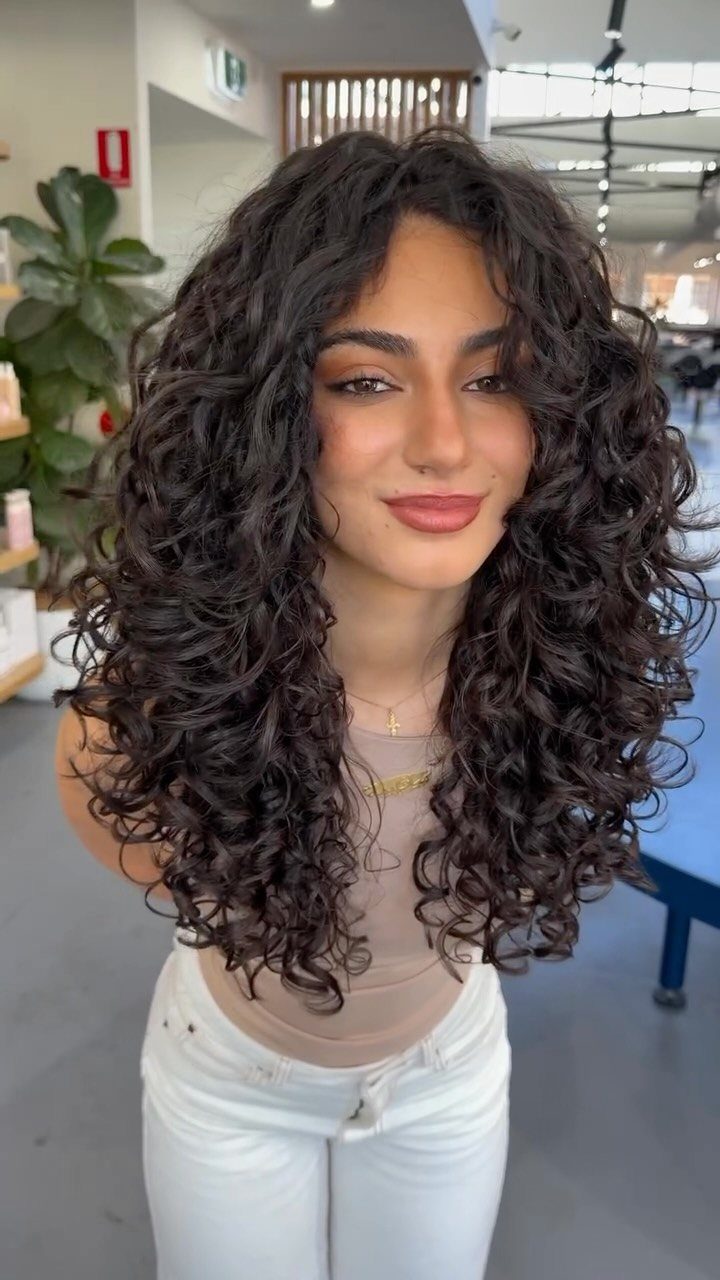
Layers cut into curly hair remove weight so curls lift at the roots and separate into individual ringlets instead of clumping into a heavy mass.
The layers follow the curl pattern, with shorter pieces through the crown and longer lengths below.
This cut suits women with natural curls who want volume and definition.
Too many layers thin out fine curly hair; too few leave it heavy and shapeless. The balance depends on curl tightness and density.
Dry cutting works best since curls shrink when wet. Book a trim when the shape starts to lose definition or the ends look scraggly.
7. Blunt Subtle Layers
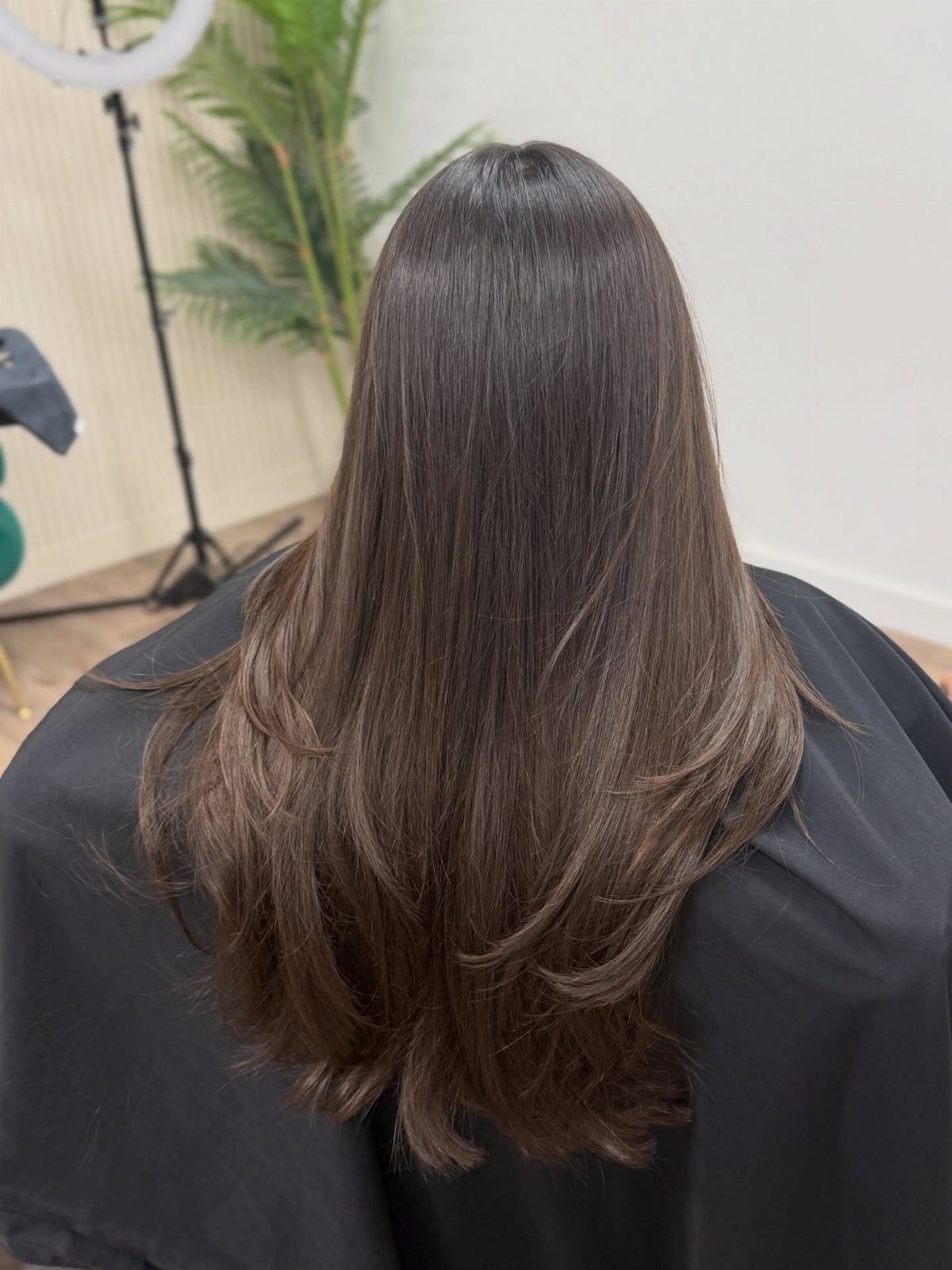
A blunt cut with a few soft layers through the ends keeps hair looking thick and healthy while adding just enough movement to prevent the one-length line from sitting completely flat.
The layers stay subtle and concentrate toward the ends, so the overall shape reads as blunt from a distance.
This suits women who want the fullness and simplicity of a blunt cut but find a true one-length hem too heavy or static. The cut works across most hair types and requires almost no styling.
Growth happens without disruption. Schedule a trim when split ends appear or the line loses its clean edge.
8. Curtain Bangs
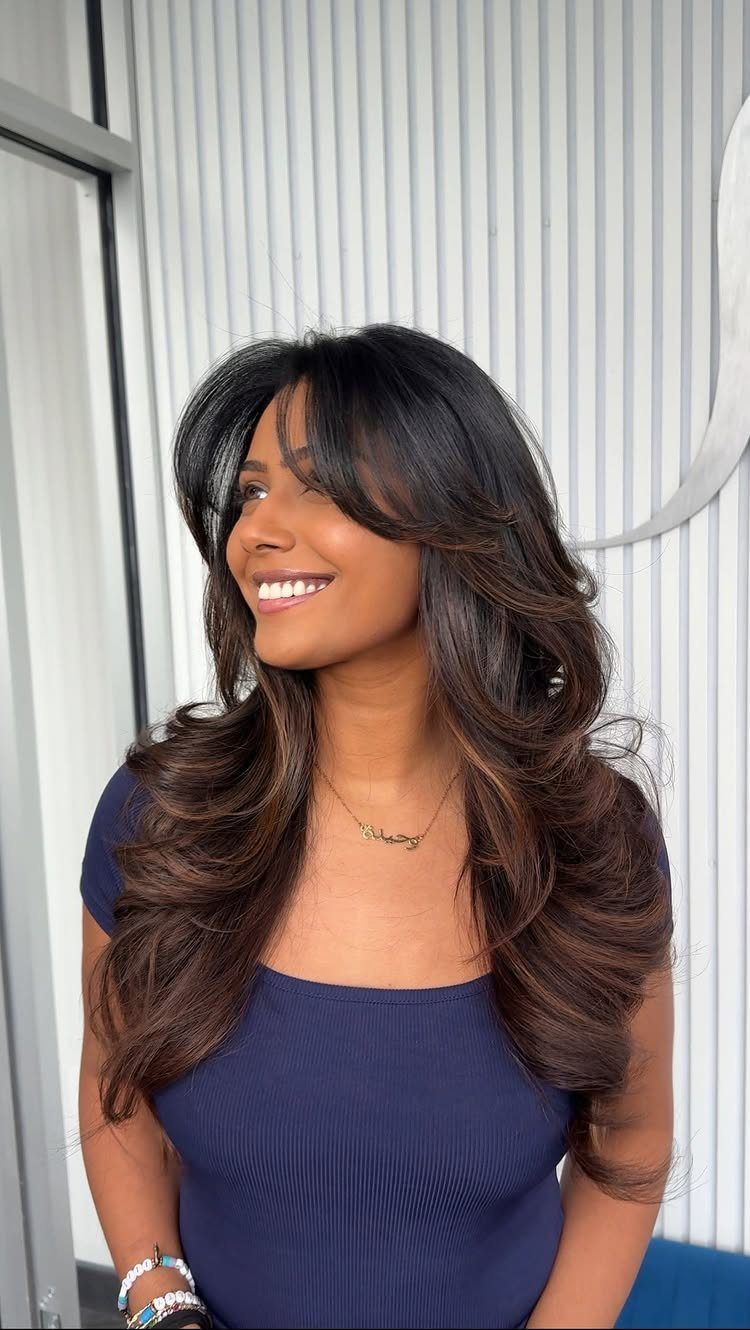
Bangs parted down the center sweep to either side of the face, usually starting near the cheekbones and blending into the longer layers below. The shape opens at the part and tapers outward, framing the face from cheekbone to jaw.
This suits women who want fringe but prefer a style that can be pinned back or tucked behind the ears.
Curtain bangs need less upkeep than full straight-across bangs since they blend into the rest of the hair as they grow.
A round brush or flat iron helps curve the bangs away from the face. Left to air-dry, they part naturally but lose the polished swoop.
9. Butterfly Haircut
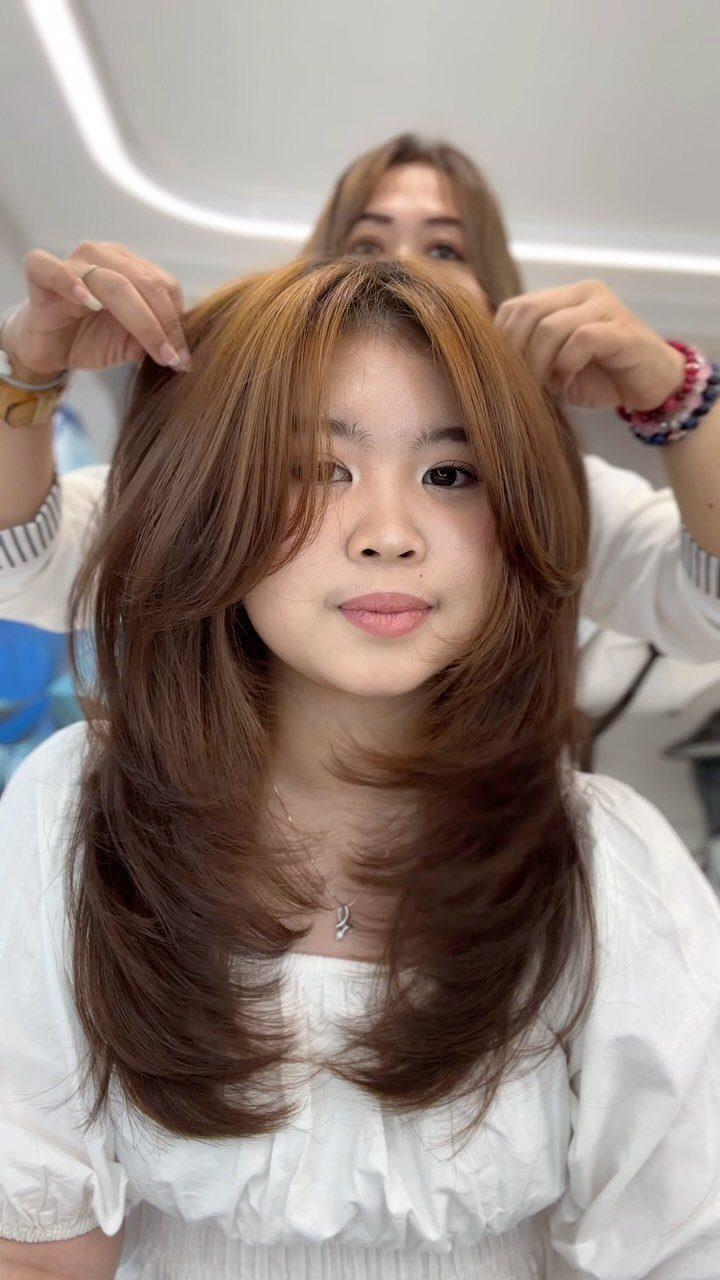
Shorter layers frame the face and flare outward while the longest pieces stay near waist level, which creates the cascading wing shape this cut is named for.
The top layers sit light and open, and the contrast between the short and long sections gives the cut its signature silhouette.
It delivers drama and movement for anyone who wants to keep their length. Straight or lightly wavy hair shows the shape most clearly; very curly hair softens the definition.
A round brush and blow-dryer will push the face layers outward and give them sweep. Plan a trim when the shortest layers start to blend back into the length below.
10. Textured Ends
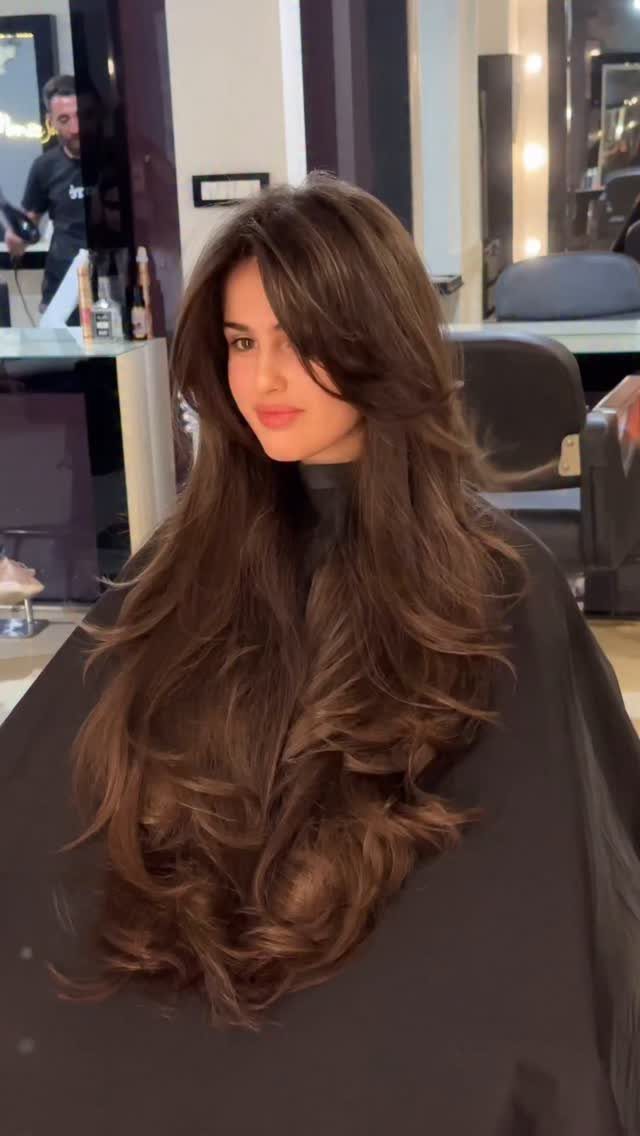
Point-cutting or razoring the ends creates a broken, piece-y finish that makes layered hair look more casual and lived-in.
The texture prevents the ends from lying flat and adds separation, which suits women who prefer an undone look over a polished one.
Point-cutting or razoring through the ends gives the layers soft, broken-up texture on hair with enough natural density to support it. Fine hair gains visual weight; thick hair sheds bulk without thinning out too much.
A texturizing spray or light pomade worked through damp ends brings out the separation. The texture grows out gradually, so the cut stays low-maintenance between trims.
11. Wavy Layered Hair
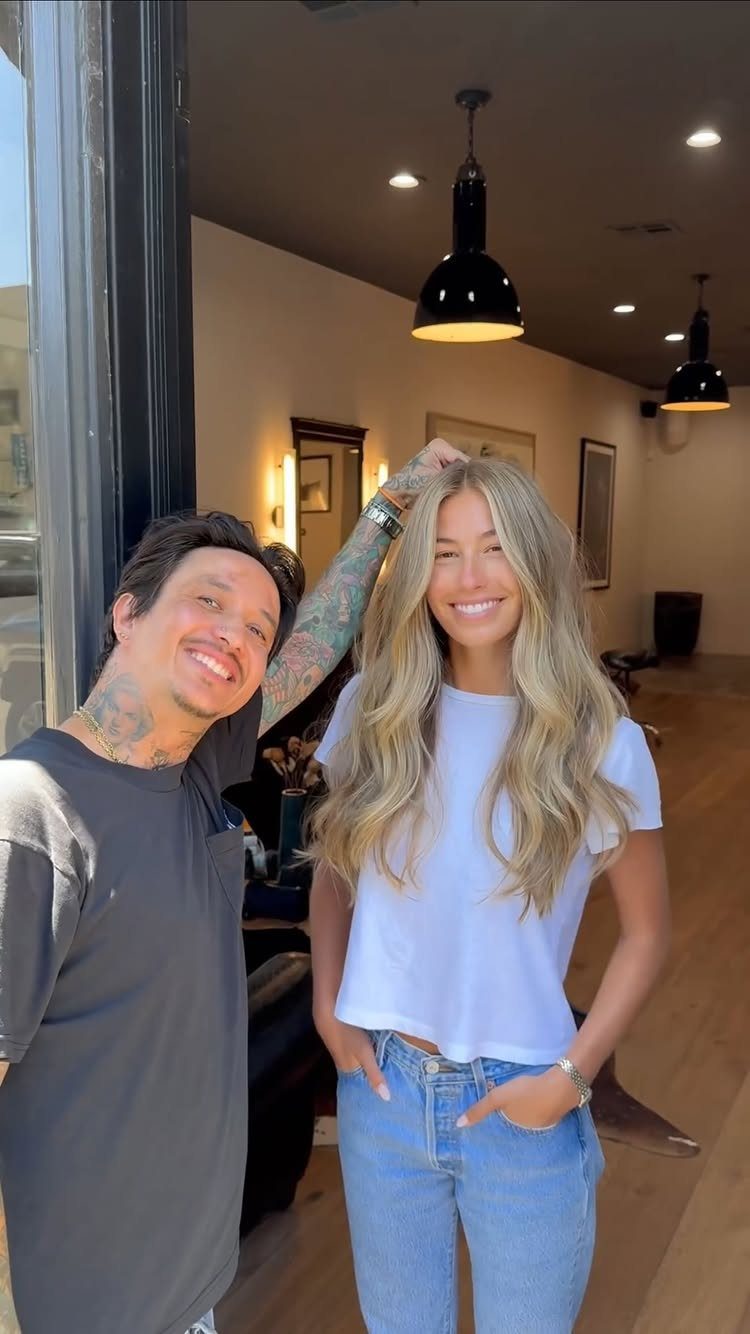
Layers cut into wavy hair follow the natural curve and create movement that looks intentional rather than accidental.
The cut shortens styling time since the layers enhance what the hair already does.
12. Side-Swept Bangs
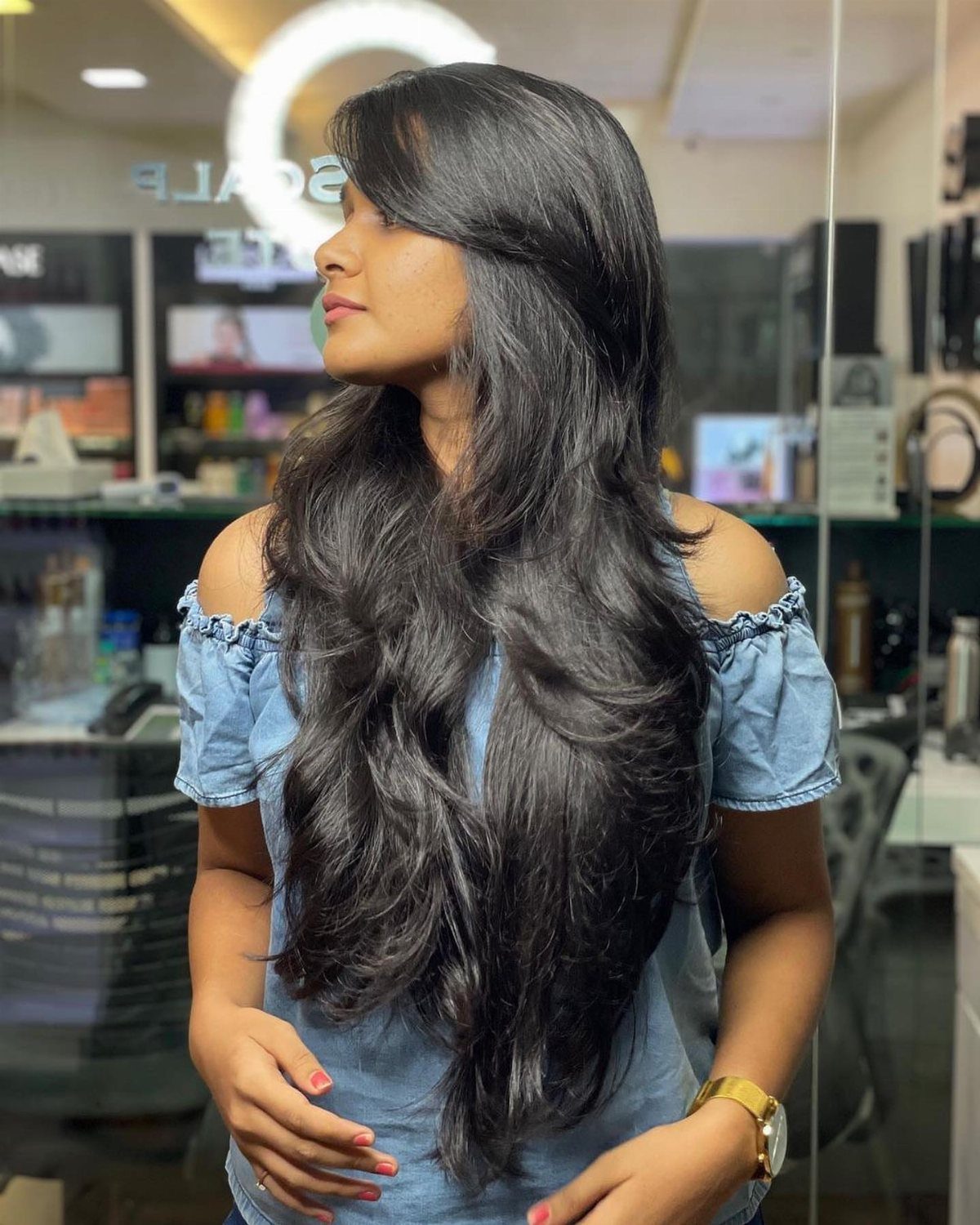
Longer bangs cut to sweep across the forehead and one eye create asymmetry that balances a round or square face.
The fringe usually starts at the brow and tapers down to cheekbone length on the longest side, blending into the face-framing layers.
The cut grows out gracefully since the bangs merge with the rest of the hair as they lengthen.
Style with a round brush, pulling the bangs to one side as you dry. Skip the styling and they fall softer but lose the sharp sweep.
13. U-Shaped Layers
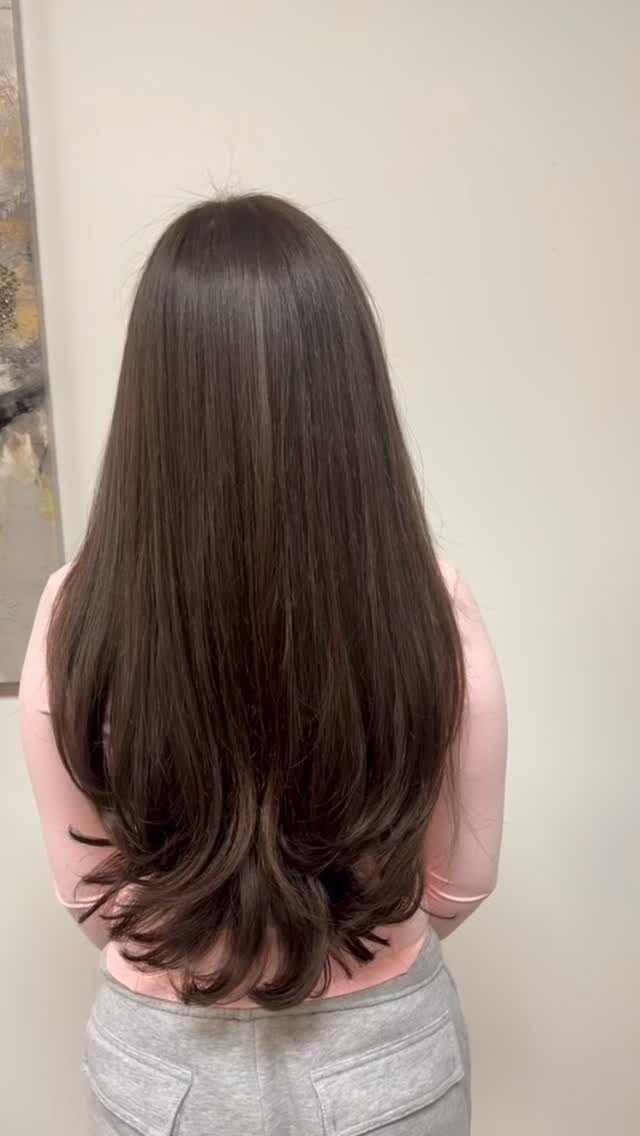
The bottom edge curves gently inward at the sides and rounds out at the back, which keeps the longest hair centered and prevents the corners from looking thin or wispy.
The shape suits women who want their length concentrated at the back rather than spread evenly across the shoulders.
Wavy or curly hair softens the U-shape but still keeps fullness through the center back.
Ask for the shortest points to sit at collarbone level and the longest at mid-back or lower. The cut grows out without creating harsh lines.
14. Waterfall Layers
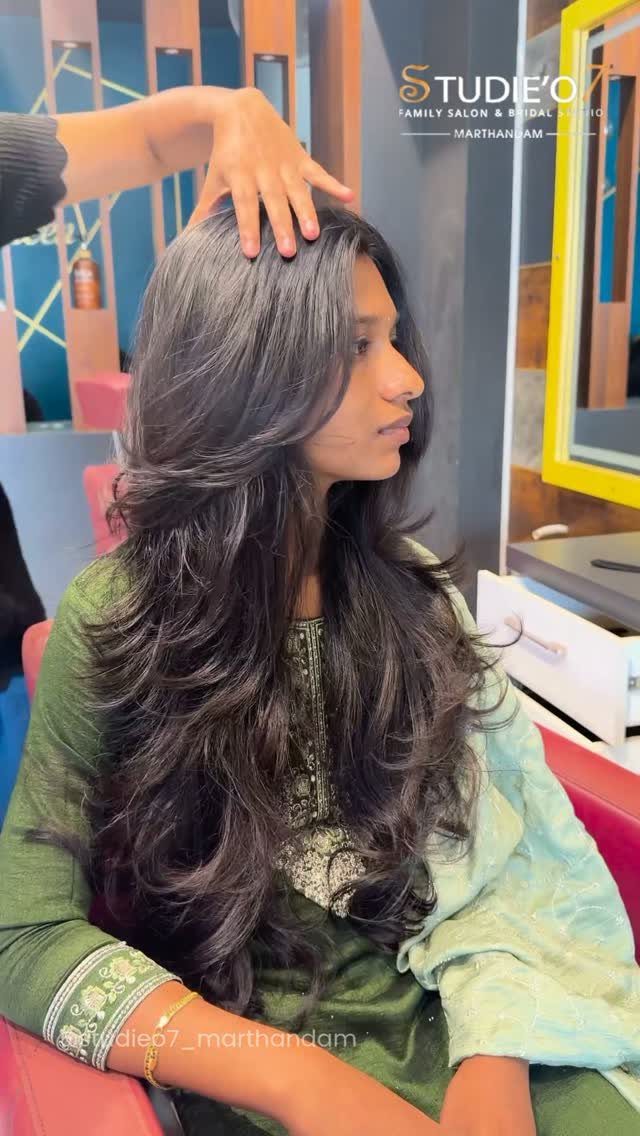
Staggered layers cut at different lengths create a flowing, tiered effect where each section cascades into the next.
The shortest layers sit near the crown and the longest fall at the ends, which gives hair visible dimension and keeps it from sitting flat.
Length stays, fullness arrives. Thick hair sheds weight; fine hair gains the appearance of fullness through the layered sections.
Styling takes little effort since the layers create movement on their own. A blow-dryer and round brush add polish, but air-drying leaves the cascading shape intact.
15. Wispy Layers
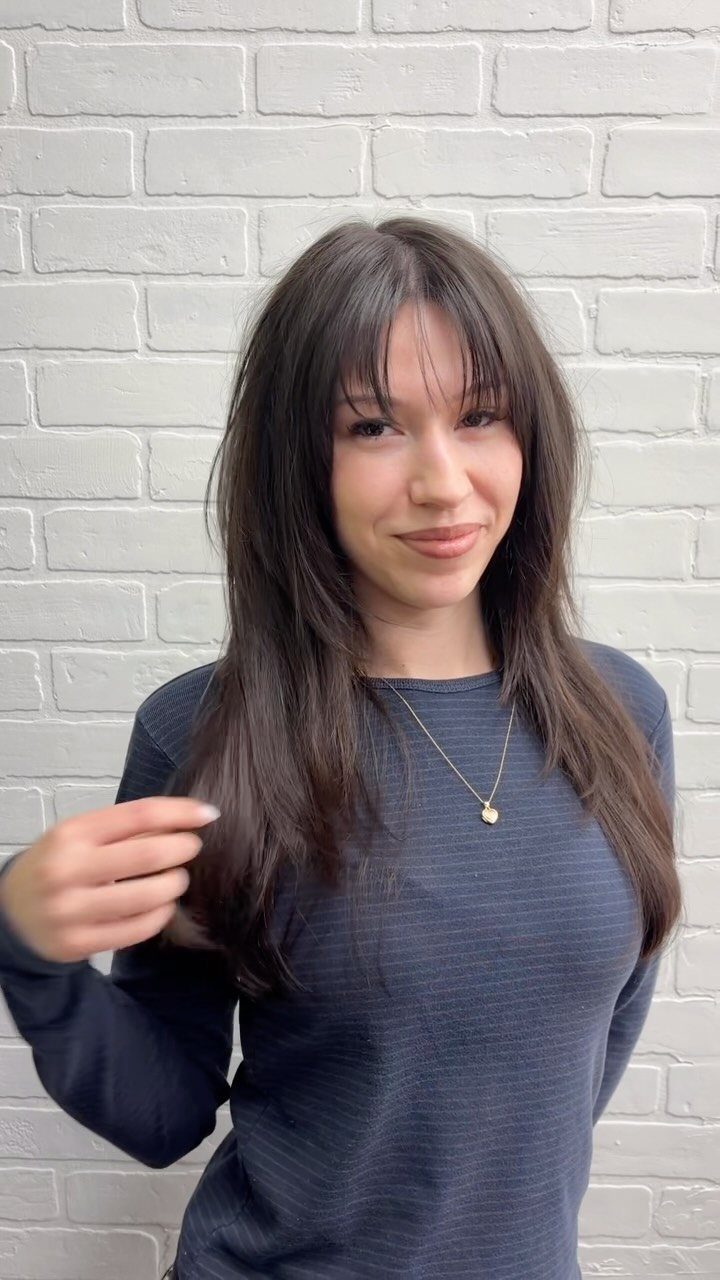
The layers stay close in length rather than cutting dramatically short pieces into the top, which keeps hair looking full while adding just enough separation to prevent it from lying heavy.
The cut grows out gently. Minimal styling is needed since the layers are designed to move softly on their own.
16. Graduated Layers
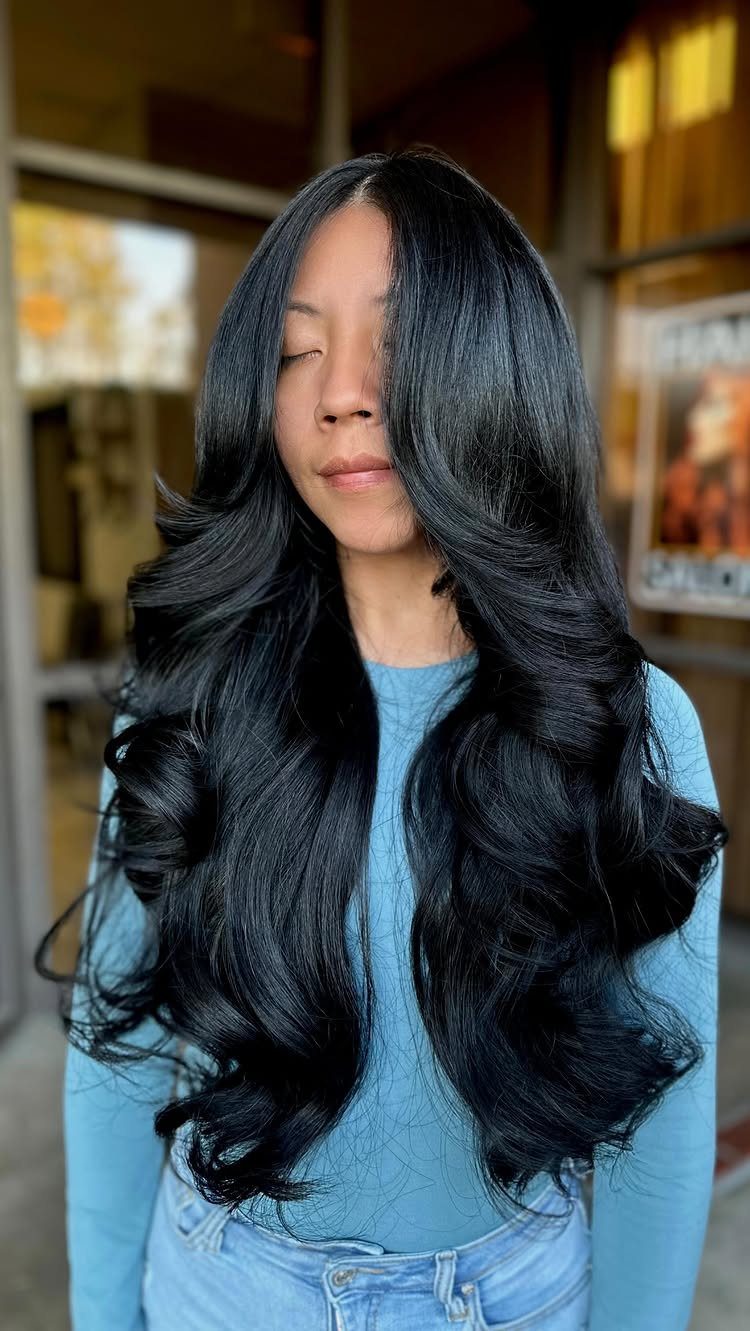
Each layer cuts progressively shorter as you move up toward the crown, which creates a stacked, structured shape with the most volume concentrated at the top and back.
The difference between layer lengths is more pronounced than in a standard layered cut, so the silhouette reads as intentional and geometric.
The cut works for women who want noticeable volume and aren’t looking for a subtle, blended finish.
A round brush lifts roots while you blow-dry. Plan trims when the layers start to blend together and lose their distinct shape.
17. Long Layered Waves
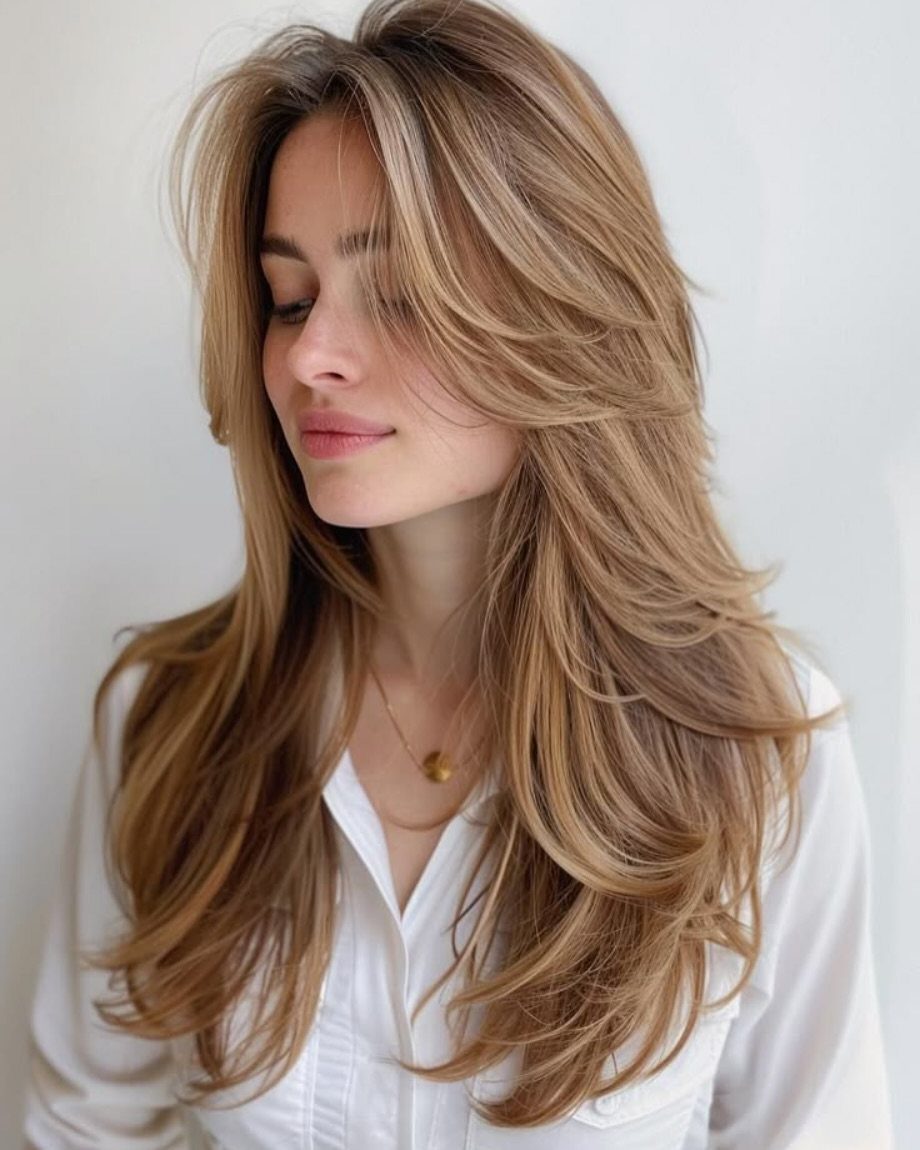
Layers cut through waved hair enhance the natural curve and keep waves from sitting flat or looking limp. The layers remove weight so waves lift at the roots and separate into defined sections that catch light and move freely.
This cut reduces styling time since the layers work with the wave pattern instead of against it.
The cut grows out without disrupting the wave or requiring a sudden change in routine.
18. Swoopy Layers
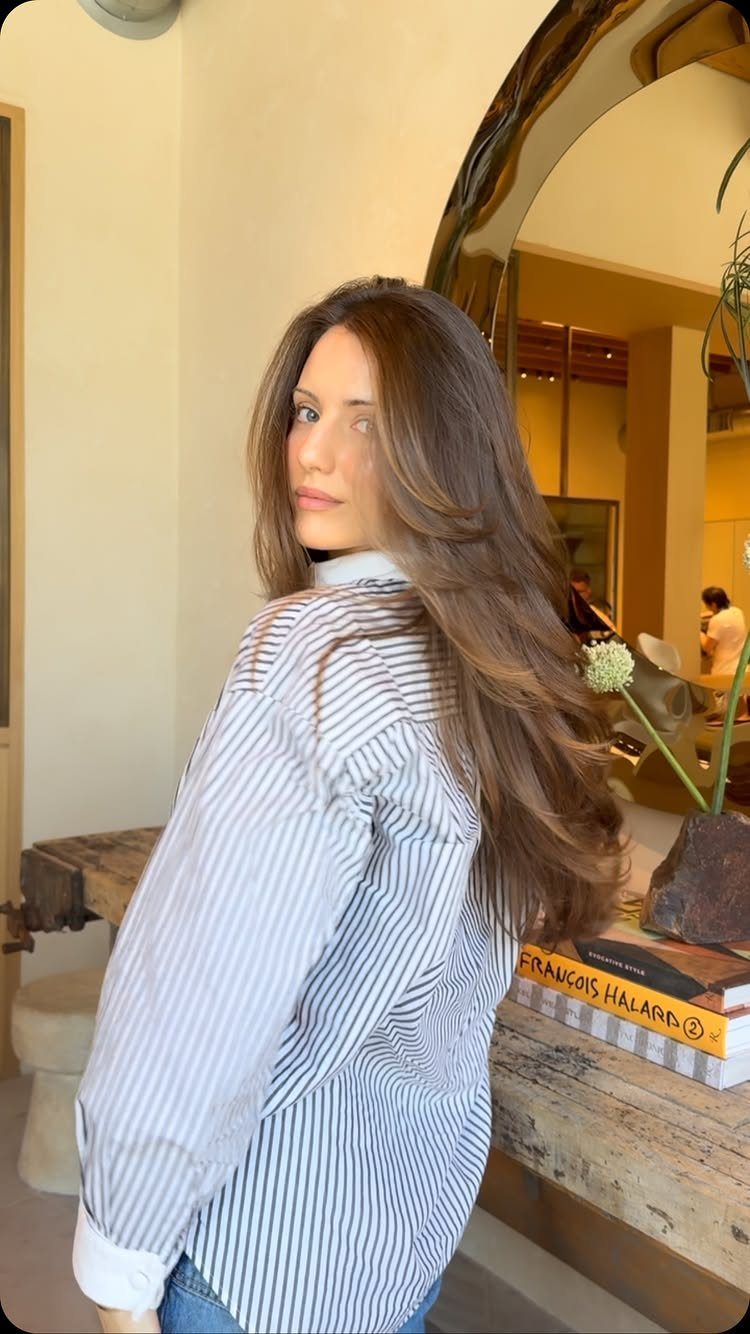
Layers curve gently outward or away from the face rather than falling straight down, which creates soft, fluid movement that looks polished without reading as stiff or overly styled.
The swooping shape comes from how the layers are angled and usually shows best with a round brush or flat iron that bends the ends into a subtle curve.
This suits women who want a feminine, finished look and don’t mind spending a few minutes on styling.
The curve relaxes as hair air-dries, so the swoopy effect fades without heat.
19. Center-Parted Layers
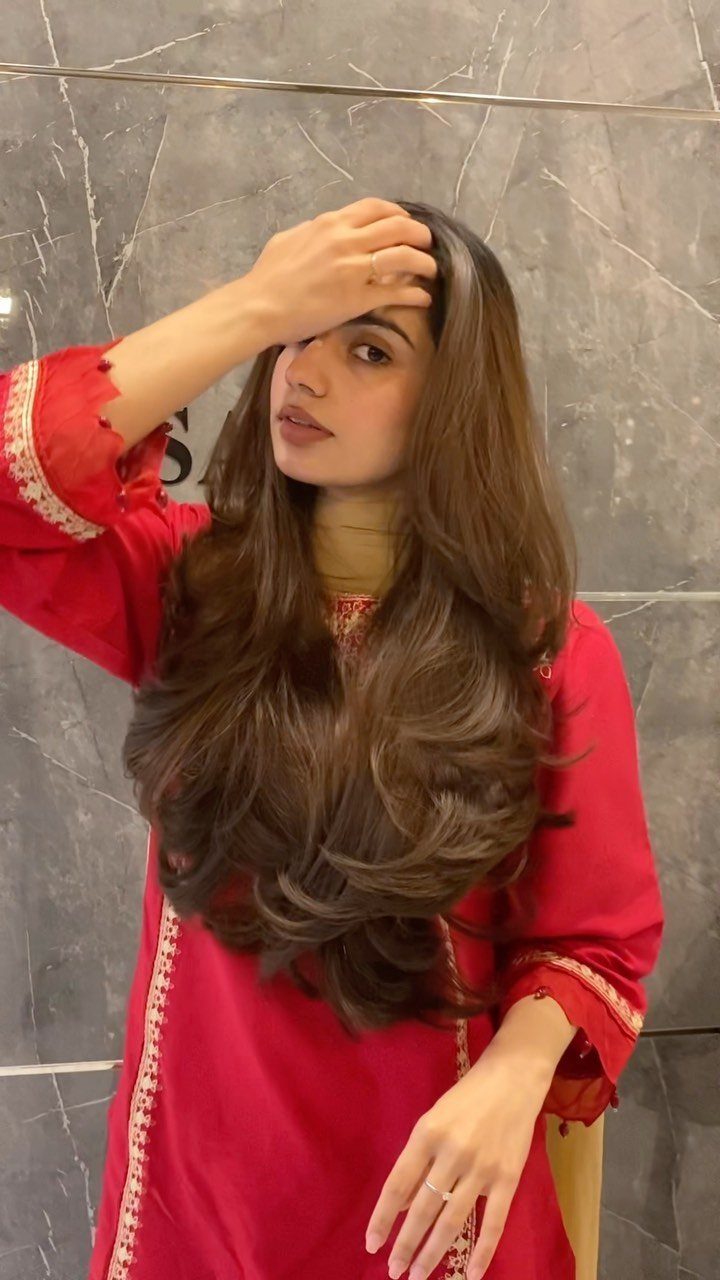
A center part opens the face symmetrically and balances features that might otherwise pull to one side.
The layers start below the chin and graduate down through the length, which keeps weight off the roots and lets the hair lift naturally without styling.
The part suits women with oval or heart-shaped faces. Round faces can look wider with a strict center part; a slight diagonal often works better.
I blow-dry mine with a round brush to keep the part smooth, or skip heat and let it settle on its own.
20. Angled Front Layers
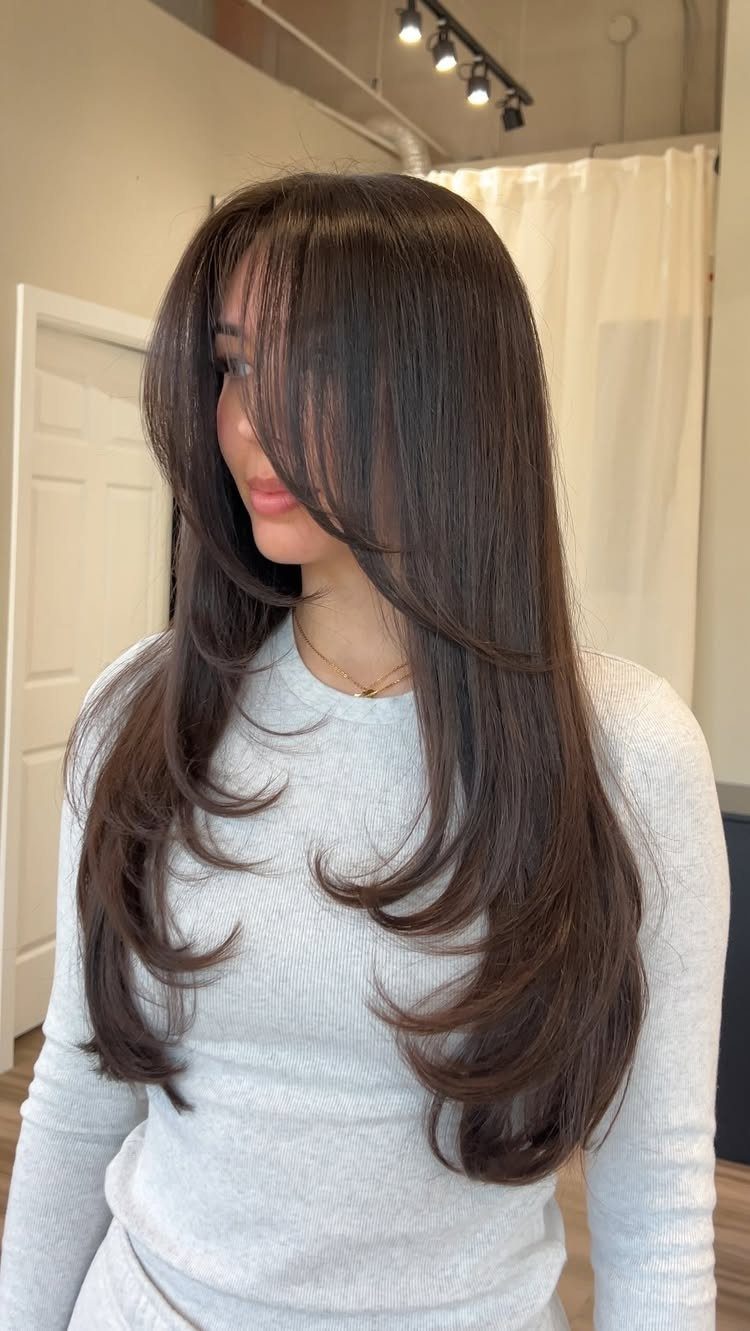
The layers start at chin length and angle downward toward the collarbone, creating a diagonal line that draws the eye down and frames the jawline. Point-cutting the ends keeps the angle sharp rather than blended.
The cut suits women who want definition around the face without committing to bangs.
A flat iron or round brush pulls the front layers smooth and makes the angle read clearly. Without heat, the shape relaxes but still frames the face.
21. Mixed Length Layering
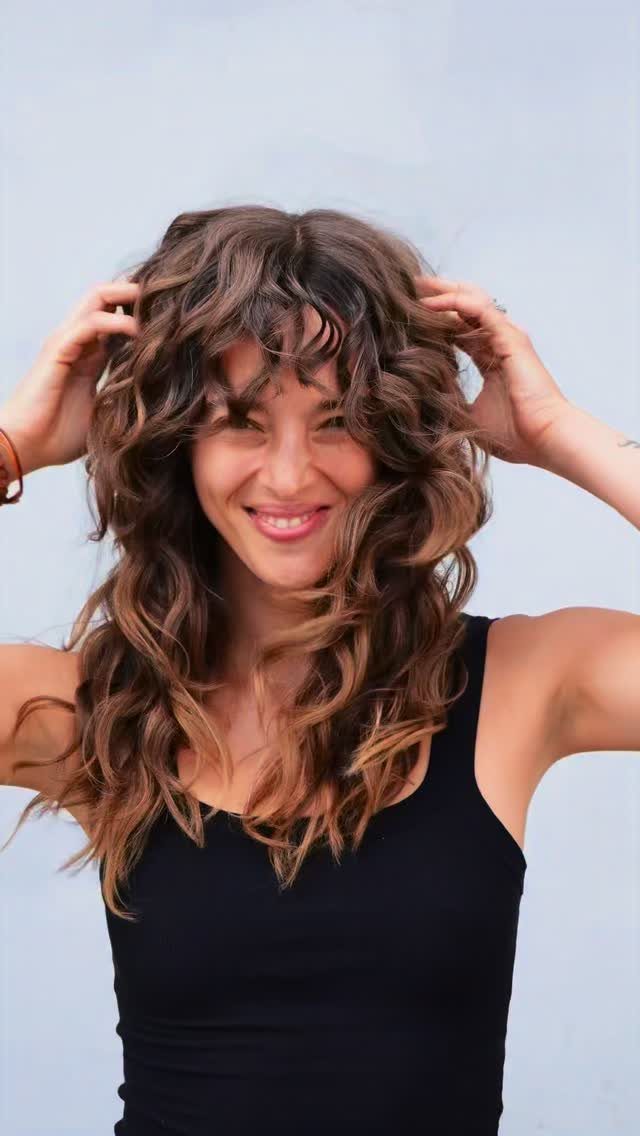
The bangs part at the center and taper outward while the layers through the mid-lengths and ends sit at different points, which gives the hair movement in several directions at once.
22. The Curved ‘90s Blowout
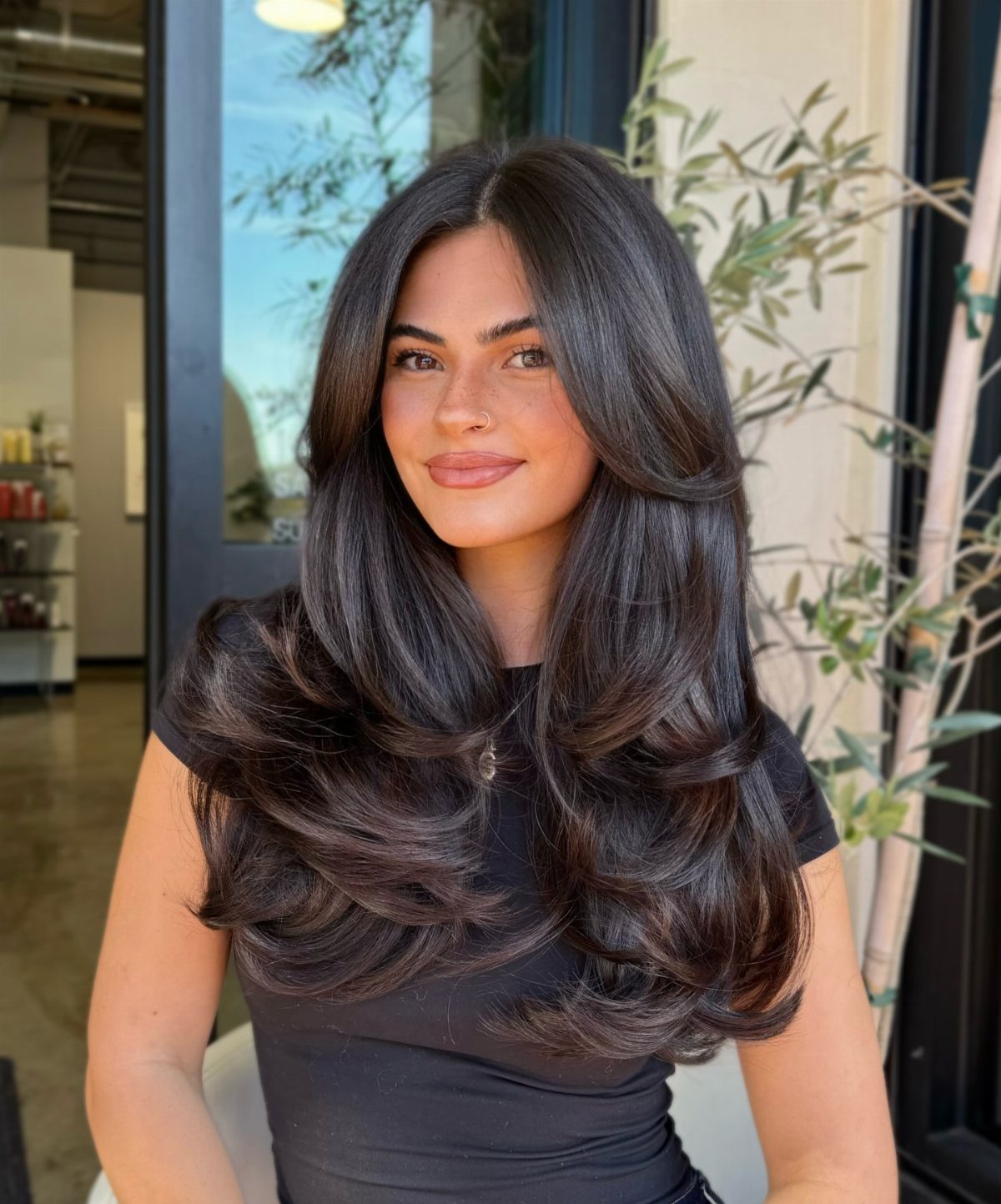
Volume sits at the roots and through the crown, with the ends curving inward in a soft, rolled finish.
The blowout uses a large round brush to lift hair away from the scalp and bend it under, which creates that polished, face-framing curve.
The style suits women who have time to blow-dry and prefer a finished, feminine look.
The technique takes time with a dryer and round brush.
23. Effortless Chic Cut
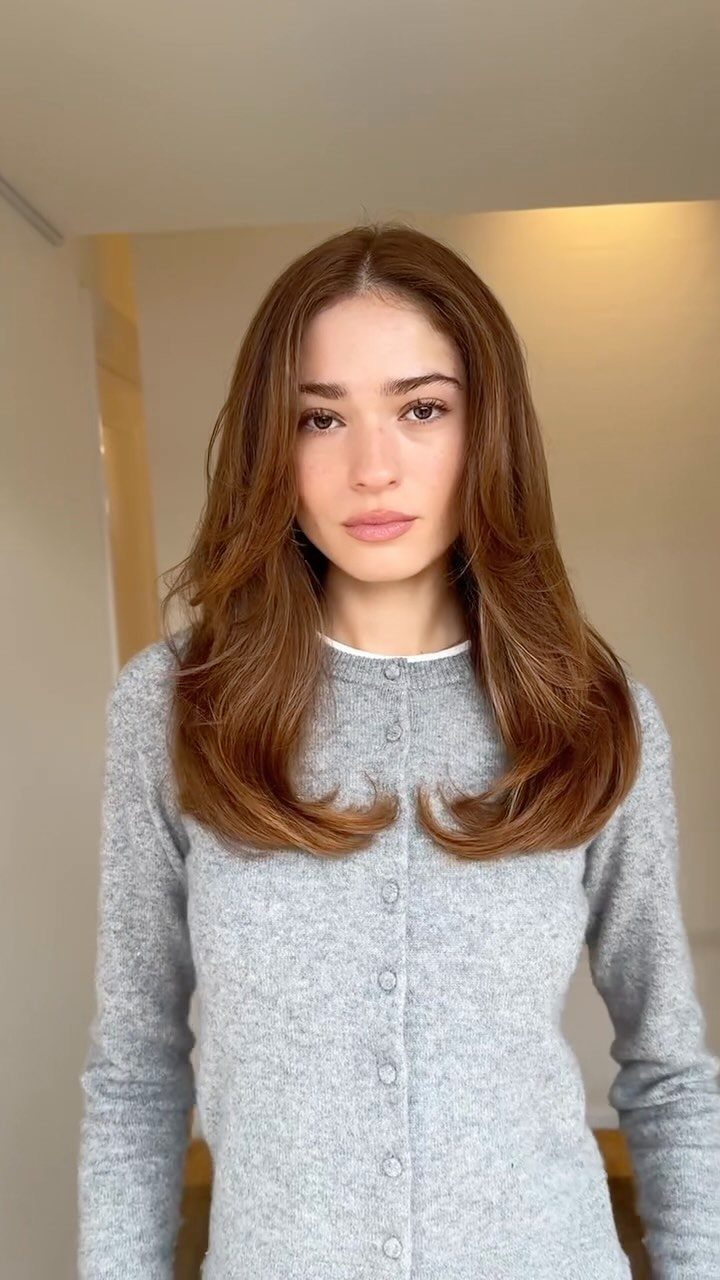
Soft layers cut through long hair remove just enough weight to let the hair move without looking heavily worked. The layers stay close in length and concentrate toward the ends, which keeps the cut simple and wearable for daily styling.
The cut suits women who want a polished look without spending time on heat tools. Blow-drying adds smoothness, but the layers also air-dry well and look intentional either way.
24. Highlighted Brunette Cascade
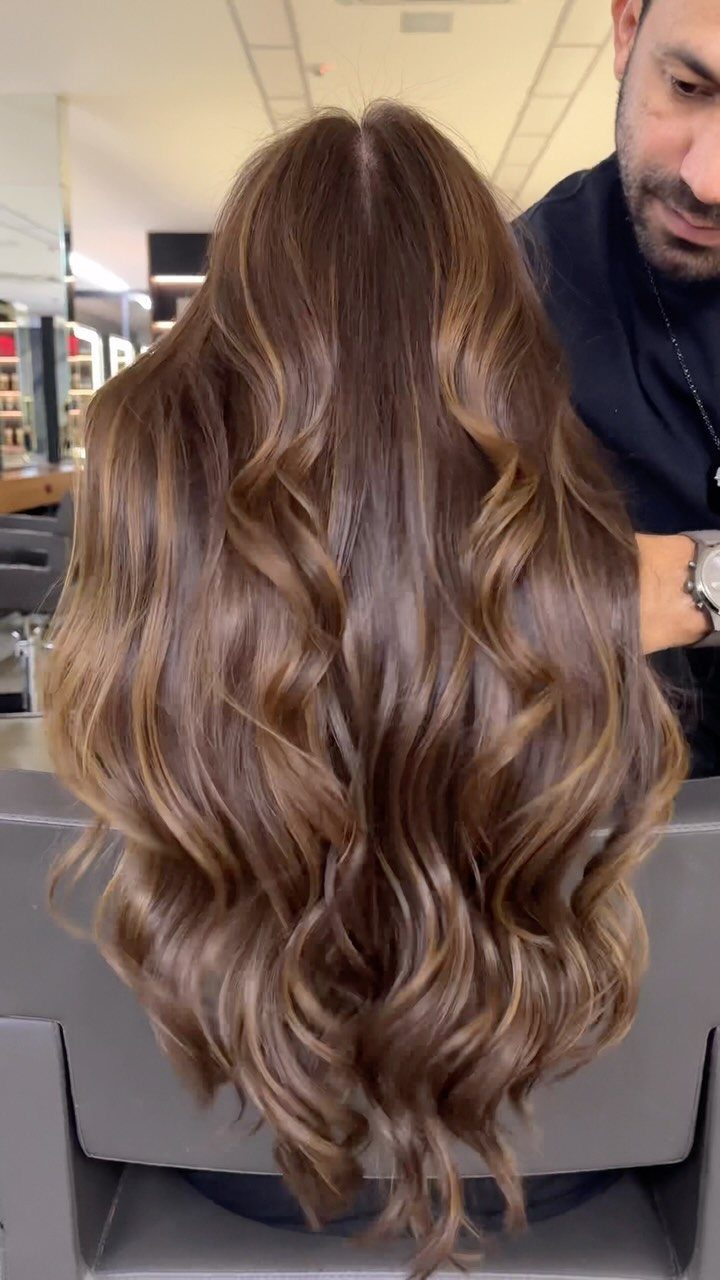
Highlights woven through brunette layers catch light at different points along the cascade, which makes the layered shape more visible and adds dimension that a single-tone cut cannot deliver.
The placement of the highlights follows the layers, so color and cut work together to create movement.
The combination suits women who want their layers to read clearly and are comfortable with color upkeep. Balayage or foil highlights both work; balayage grows out softer.
Schedule a color refresh when the contrast fades or roots grow out visibly.
25. 90s Supermodel Layers
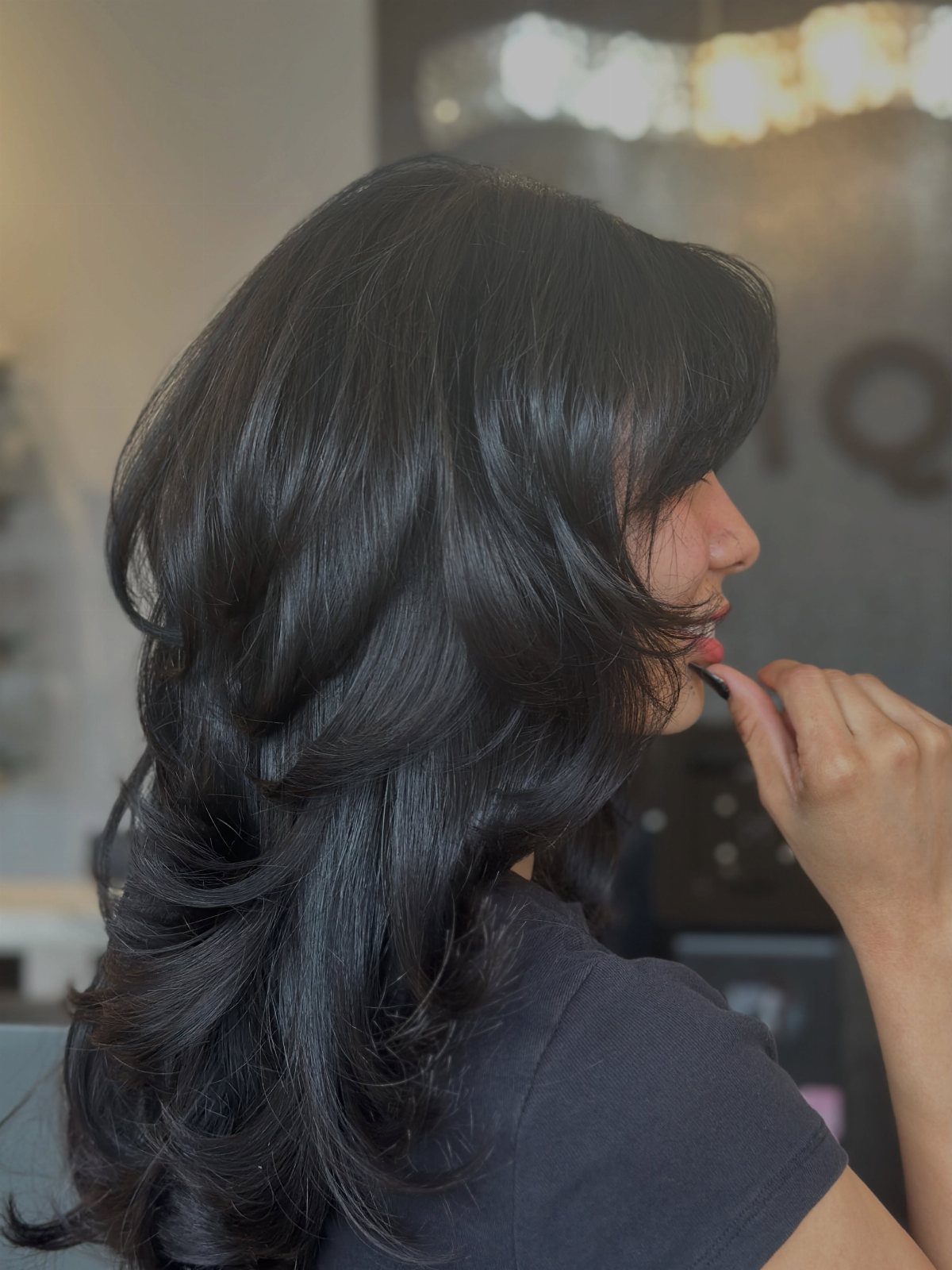
Layers cut to start around the collarbone and graduate down through the length create fullness that reads as glamorous without shortening the hair. The volume concentrates through the mid-lengths and ends, which gives the cut its blown-out, editorial finish.
Without styling, the layers still move but lose the polished, voluminous shape.
This suits women who want their hair to look intentionally styled and have time to blow-dry.
Martin’s next recommendation is another luxurious-looking style inspired by the supermodels of decades gone by. “For women who want to keep their length, long invisible layers are much more flattering than heavy, choppy layers,” he says.
26. Long Layered Haircut
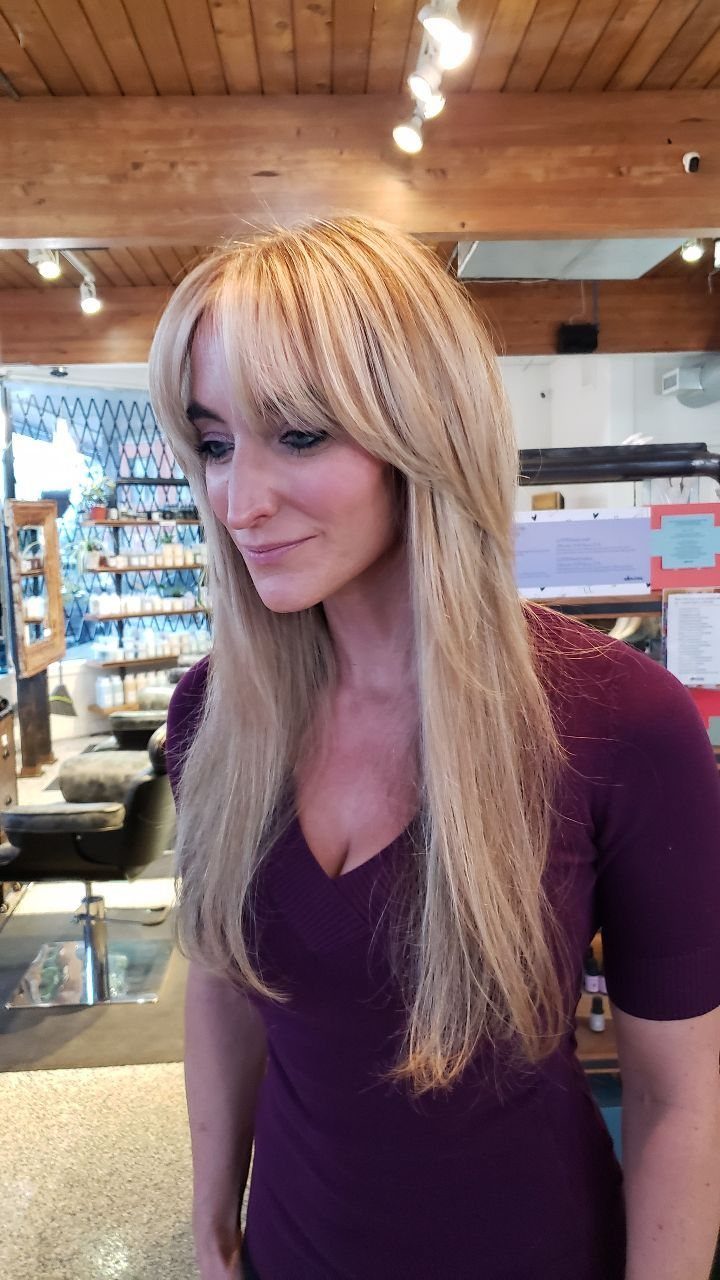
Layers cut through long hair remove weight and add movement while keeping the overall length intact. The placement of the layers can be adjusted to suit face shape, hair texture, and how much time someone wants to spend styling.
Straight-across bangs frame the face and add structure. The bangs need trimming every few weeks to stay above the eyes.
The cut works for women who want a noticeable change without losing their length. Styling time depends on how the layers are placed and whether bangs are included.
Styling and Upkeep
Lift the hair at the root while drying, then pull the brush through the mid-lengths to smooth or bend the ends inward. A ceramic brush holds heat longer and cuts down drying time.
Texture spray worked through damp hair separates the layers and keeps them from clumping. Mousse adds hold without weight; gel works better on curly hair where definition matters more than movement.
A flat iron smooths face-framing pieces or creates a gentle bend at the ends. Velcro rollers set the front sections while you finish the rest.
Lightweight oil on the ends prevents frizz without making fine hair look greasy. Hairspray holds a blowout in place but should stay light enough that the layers still move.
Trim frequency depends on the cut. Shaggy or choppy layers need more frequent refreshes; blunt cuts and subtle layers stretch longer between appointments.
Choosing Layers by Hair Type
The layers can start higher up without thinning the ends too much.
Fine or thin hair needs lighter, graduated layers that stay close in length. Cutting too many short pieces into the top removes fullness and makes the ends look sparse.
Curly hair should be cut dry so the stylist can see how each curl sits and where the natural volume lands.
A low-maintenance routine favors long, blended layers that air-dry well and need little styling between trims.
Face-shape Considerations
The parted shape frames the face without adding bulk.
Directing long layers away from the face during a round-brush blowout lifts the crown and lengthens a round face toward oval proportions.
Frequently Asked Questions
Do you have to style long layered hair?
No, layers cut into long hair create movement on their own and look intentional whether you blow-dry or air-dry.
Heat styling adds polish and definition, but most layered cuts work without it. Curly or wavy hair shows the shape with minimal effort, while straight hair may need a round brush to bring out volume.
What is the best haircut for long hair?
Layered cuts add movement and can be adjusted to suit any hair type, while blunt cuts keep hair looking thick and grow out without losing shape.
Women who want a bigger change can add curtain bangs or side-swept bangs, or choose a shag for a textured, lived-in look. The right cut depends on whether you prioritize volume, simplicity, or styling flexibility.





