The right haircut adds balance to your face shape and suits the texture you already have, but most people choose based on a photo that works on someone with a different face and different hair.
Face shape decides which styles flatter and which ones fight your proportions: oval faces suit nearly every cut, round faces need length from long layers and side parts, square faces benefit from soft layers that take the edge off a strong jawline.
Texture decides how the cut performs once you leave the salon, and fine straight hair reads thicker in blunt cuts because the line stays crisp and you lose no density to layers.
1. Start With Your Face Shape
Face shape matters because it tells you which cuts add balance and which ones fight the proportions you already have.
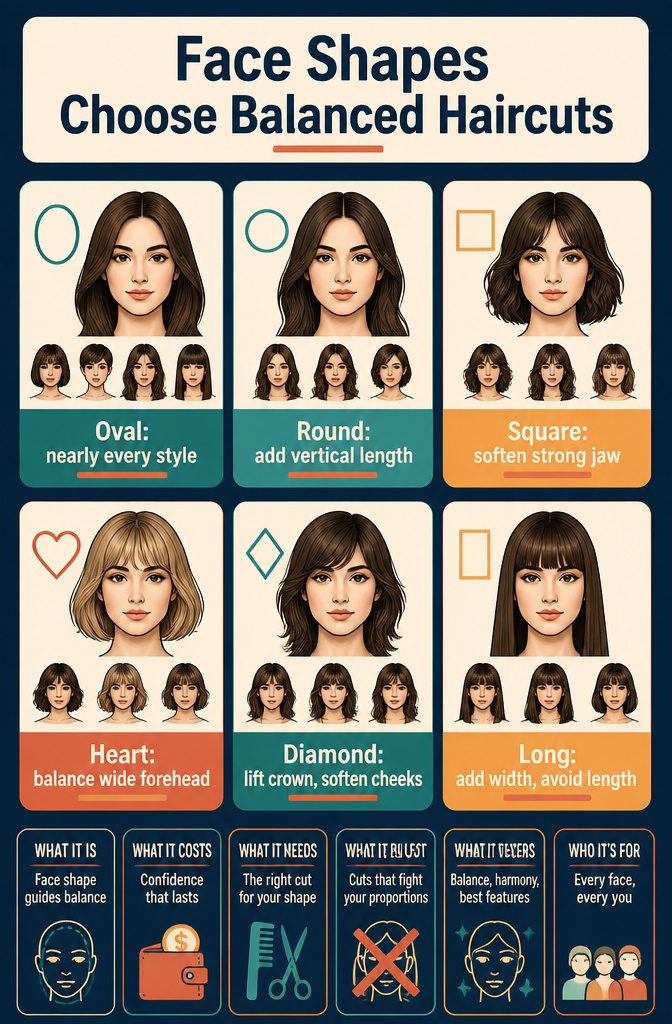
Oval faces suit nearly every style: bobs, pixies, long layers, blunt bangs, side-swept fringes. The top and bottom halves of an oval face match in width and length, so there’s no single feature that needs softening or offsetting.
Round faces gain length from long layers, lobs, and side parts that pull the eye vertically.
Square faces benefit from soft layers and curtain bangs that take the edge off a strong jawline. Heart-shaped faces carry more width at the forehead and taper toward the chin, so chin-length bobs and wispy bangs restore the balance.
Diamond faces show wide cheekbones with a narrow forehead and chin; side-swept bangs, textured fringes, and medium lengths with slight lift at the crown reduce cheek width and add visual weight up top.
Long and rectangular faces need width, not more length, so blunt bangs and shoulder cuts work better than high volume or anything that drags the face down further.
Triangle faces pair well with quiffs and crew cuts that add width at the temples.
How to Identify Your Face Shape at Home
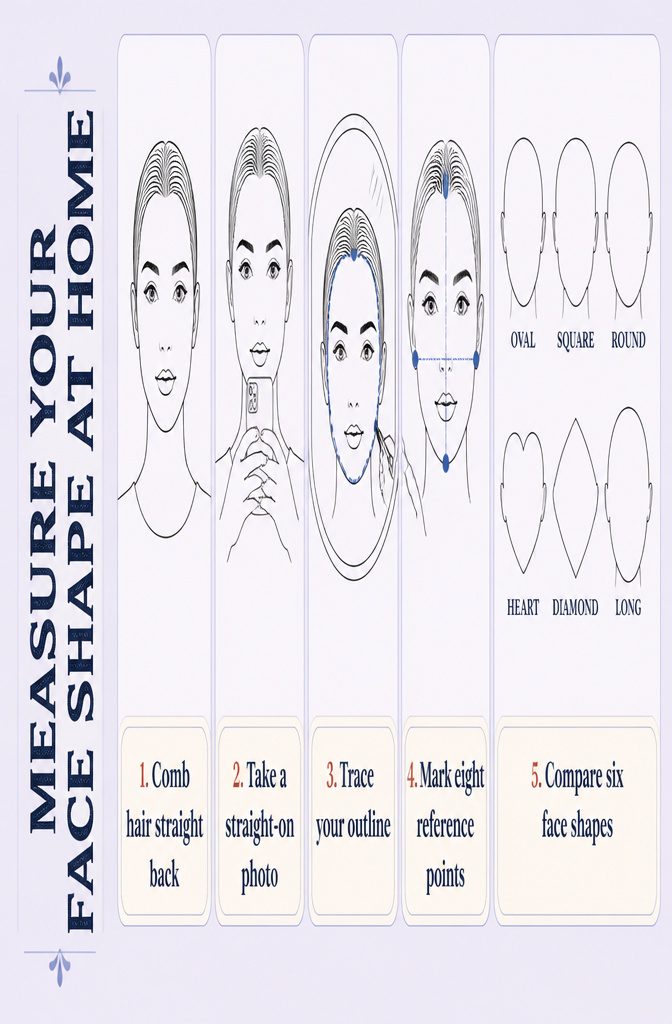
- Comb your hair straight back so your hairline and the natural contour of your face show completely. Bangs and curls both change the apparent shape, and you need the actual perimeter.
- Take a straight-on photo of yourself. A camera removes the small distortions that happen when you look at your own reflection and gives you something you can compare against reference shapes later.
- If you prefer a physical method, use a washable marker to trace your outline directly on the mirror. The traced line shows your face as a shape you can measure or match.
- Identify eight reference points: the top center of your forehead, the tip of your chin, the corners of your forehead, where your cheekbones end, and where your jaw makes a corner on each side. These points form four lines (vertical center, horizontal center, forehead, jaw) whose proportions determine your face shape.
- Compare the width of your forehead, cheekbones, and jaw to the six main face shapes: oval, square, round, heart, diamond, and long. Match on the big proportions rather than tiny details.
2. Match the Cut to Your Hair Type
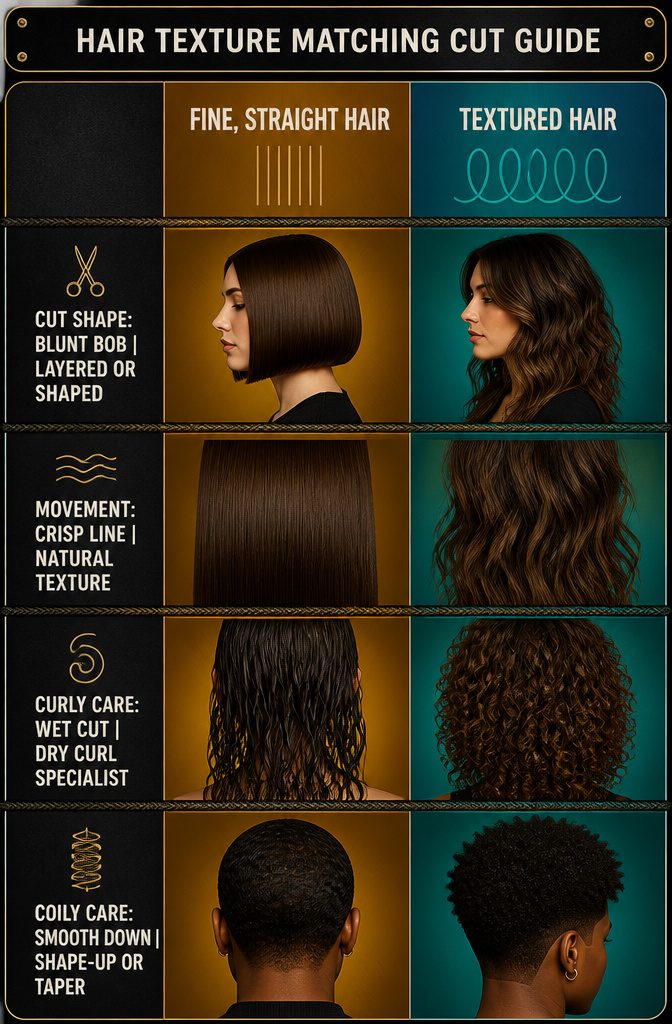
Texture decides how a cut performs once you leave the salon. Fine, straight hair reads thicker in blunt cuts and short bobs because the line stays crisp and you lose no density to layers.
Thick, straight hair carries the opposite problem: too much weight. Long layers strip bulk without shortening the whole length, so you keep what you grew but lose the triangle.
Wavy hair wants mid-length cuts with face-framing layers. The natural movement plays up instead of fighting it, and you avoid the awkward in-between stage where waves neither curl nor lie flat.
Curly hair needs a dry cut from someone who works with curls daily, not someone who stretches a ringlet straight and cuts it wet.
The curl pattern springs back shorter than you expect, and a general stylist often takes off twice what you asked for.
Coily and Type 4 hair performs best in shape-ups, tapered cuts, and shaped teeny-weeny afros that let the texture show instead of trying to smooth it down.
3. Factor in How Much Time You Have Each Morning
The cut that looks perfect in the chair still has to work at 6:30 on a Tuesday morning when you’ve got eight minutes and no patience.
I factor in how much time I’ll actually spend on it before I decide anything else, because a high-maintenance cut I won’t maintain just becomes a bad haircut.
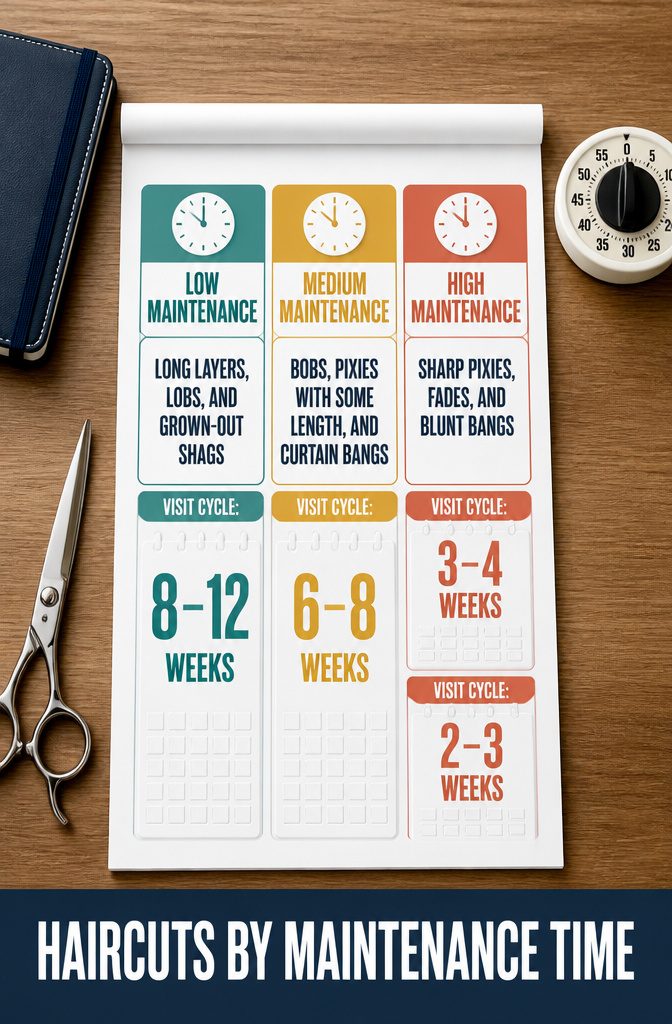
Long layers, lobs, and grown-out shags sit at the low end: a trim every 8 to 12 weeks and not much daily fuss. Bobs, pixies with some length, and curtain bangs need shaping every 6 to 8 weeks.
Sharp pixies, fades, and blunt bangs eat the most time: touch-ups every 3 to 4 weeks to keep the line clean. Shorter styles and faster-growing hair can push that to every 2 to 3 weeks.
Tell your stylist how often you’ll realistically come back. That number steers you toward cuts that grow out gracefully instead of looking ragged two weeks past due.
4. Use a Virtual Try-On Tool Before You Book
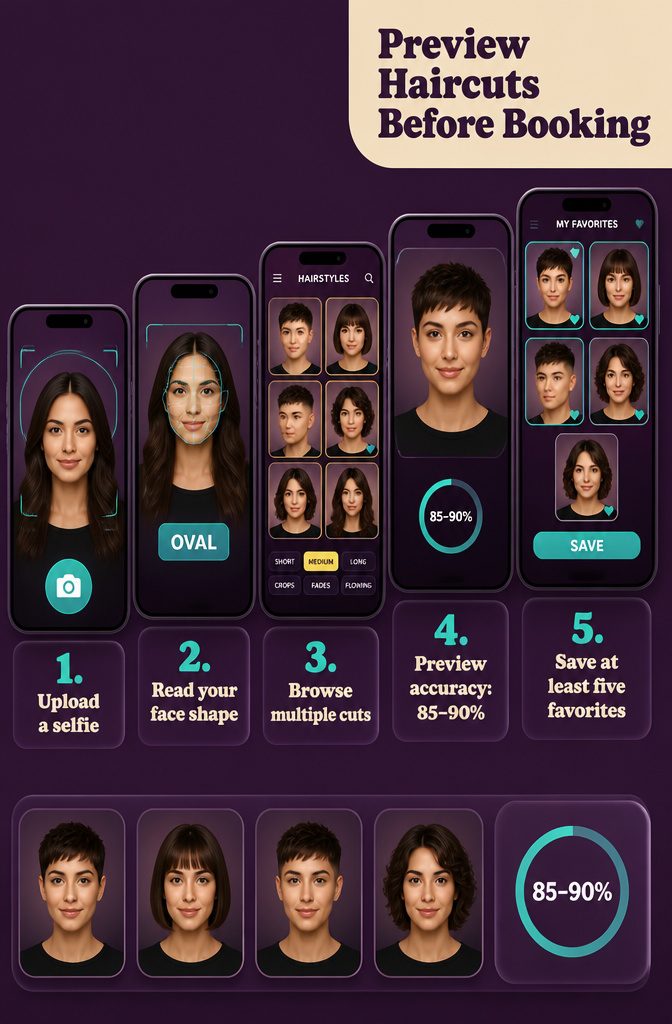
AI hairstyle tools let you upload a selfie and see what a cut will look like before you book the chair. TheRightHairstyles.com and HairHunt both analyze your face shape automatically and apply realistic previews to your photo.
Accuracy sits around 85–90 percent, which means the rendering holds close enough to judge proportion and balance even if the texture won’t be exact on screen.
What separates a useful tool from a gimmicky one comes down to five criteria: realistic rendering that keeps your features intact, automatic face-shape reading so you skip the manual tagging, a style range that covers crops and fades through longer flowing cuts, simple upload with no account wall, and save or share options so you can compare side by side or show your stylist.
Most platforms work in a browser, and the basic preview is free.
Try at least four or five cuts minimum.
One preview tells you almost nothing, but five will show you whether a shorter fringe flatters or whether adding volume at the crown pulls your proportions into better balance. Save your favorites and bring them to the appointment.
5. Bring Reference Photos and Know the Haircut Name
Bring Reference Photos and Know the Haircut Name
Walking into a salon with a clear picture of what you want makes the difference between a cut you wear for weeks and one you apologize for.
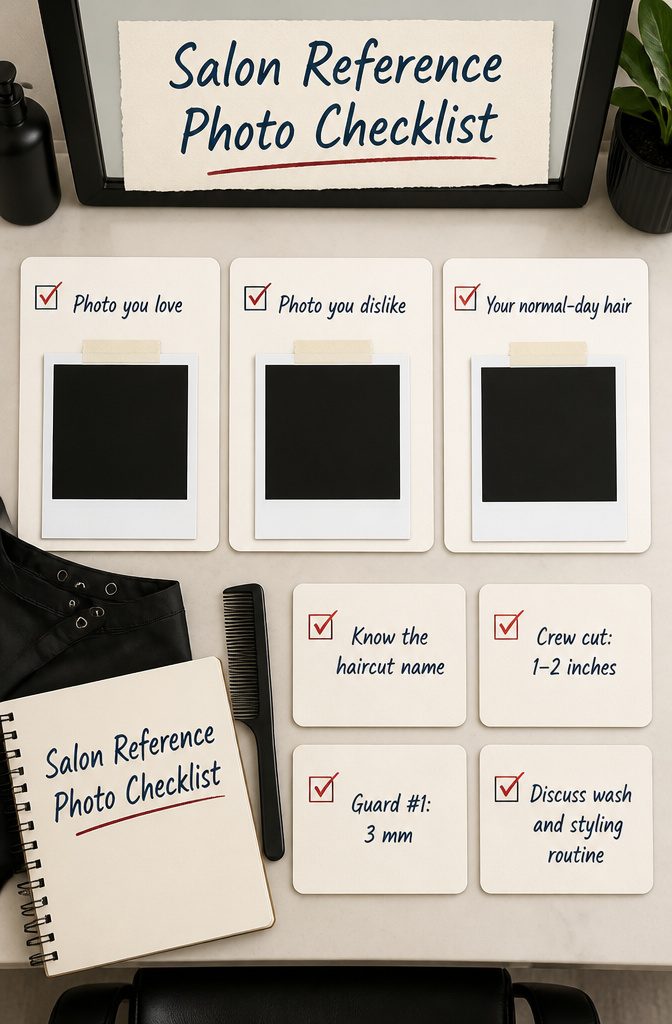
Bring three photos: one you love, one you dislike, and one of your hair on a normal day.
The contrast tells your stylist what you actually want and what to avoid, and the normal-day shot shows how your hair behaves when you are not staging it.
Bring a photo of a cut you love, a photo of one you don’t, and a photo of your hair on a "normal" day. The contrast helps your stylist understand what you actually want versus what you don’t.
That conversation should cover how often you wash, whether you blow-dry, and how much time you will actually spend each morning.
If the cut you want needs daily heat styling but you are a wash-and-go person, your stylist can adjust the plan or steer you toward something that grows out better on your timeline.
Know the name of the cut if it has one, and be ready to talk length.
A crew cut runs 1–2 inches on top, a wavy crew cut sits at 2–3 inches, and slicked-back bro flow needs 4–6 inches to work. Medium wavy styles run 3–5 inches on top.
Guard numbers matter too: #1 leaves 3 mm, #2 leaves 6 mm, #3 leaves 9 mm, #4 leaves 12 mm. The more specific you are about side length, top length, and neckline, the less guessing happens in the chair.
6. Cuts That Work for Thinning Hair and Receding Hairlines
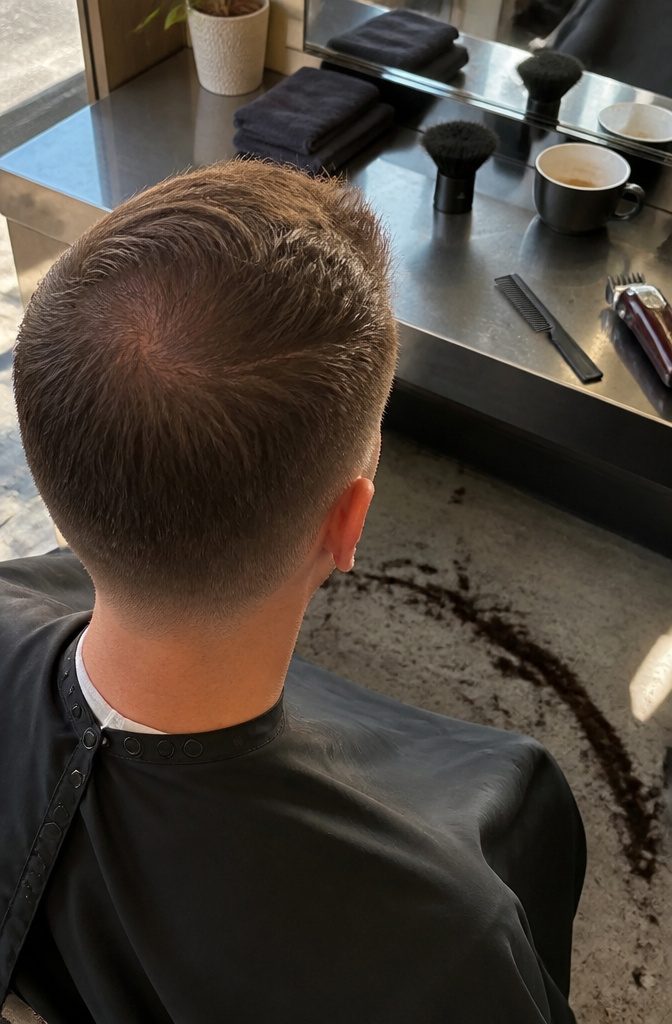
Thinning hair calls for short sides and more length on top.
The contrast creates the appearance of density where you need it most, and the volume at the crown draws the eye up rather than letting it settle on areas that are sparse.
If you are dealing with a receding hairline, keeping the overall length short helps. The less contrast between the thinning sections and the fuller ones, the less obvious the difference becomes.
I have seen fiber fillers recommended for instant density, and they do work if you need coverage for a single day.
Longer-term options like Rogaine, which contains minoxidil, or a supplement like Viviscal can help maintain what you still have, though neither will restore what is already gone.
If you are past the point where length does you any favors, go shorter still. A very short cut, the kind Jason Statham wears, looks intentional rather than like you are managing loss.
A full shave is cleaner yet and reads as confident. Ask your barber to blend around any visible bald spots by reducing density nearby so the transition stays smooth.
Cuts by Face Shape: What Each One Needs
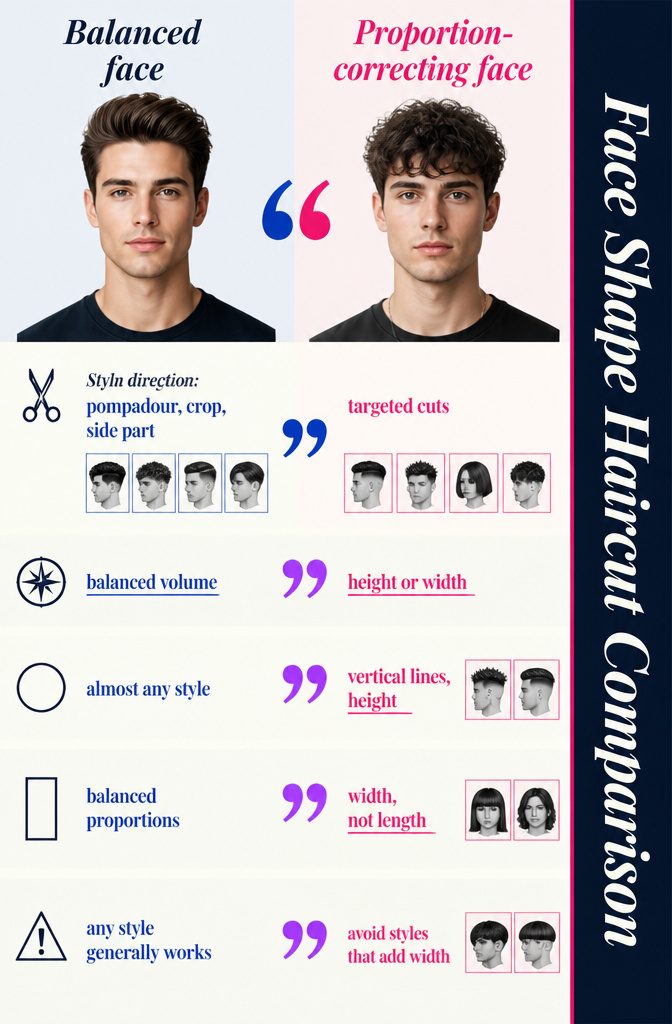
Oval faces handle almost any style.
The classic pompadour, quiff, short textured crop, and medium-length side part all work because the proportions are balanced top to bottom. I’d lean toward the textured quiff or messy fringe if you want something current that still grows out cleanly.
Round faces need vertical lines and height on top to add definition.
A high fade with textured top, spiky cut, slicked-back undercut, or angular fringe all pull length upward. Skip anything that adds width at the sides.
Square faces benefit from soft layers and styles that don’t emphasize the strong jawline. Curtain bangs work well here.
Heart-shaped faces, wider at the forehead, look better with chin-length bobs, wispy bangs, or a classic undercut that balances the proportions.
Diamond faces (wide cheekbones, narrow forehead and chin) do best with side-swept bangs, a quiff, or textured fringe to soften the cheek width.
Rectangular and long faces want width, not length. Blunt bangs, shoulder-length cuts, or a medium-length textured crop keep the face from reading too narrow.
Triangle faces suit a quiff or crew cut to add volume up top where the face is narrower.
What the Textured Crop With a Fade Looks Like in 2026
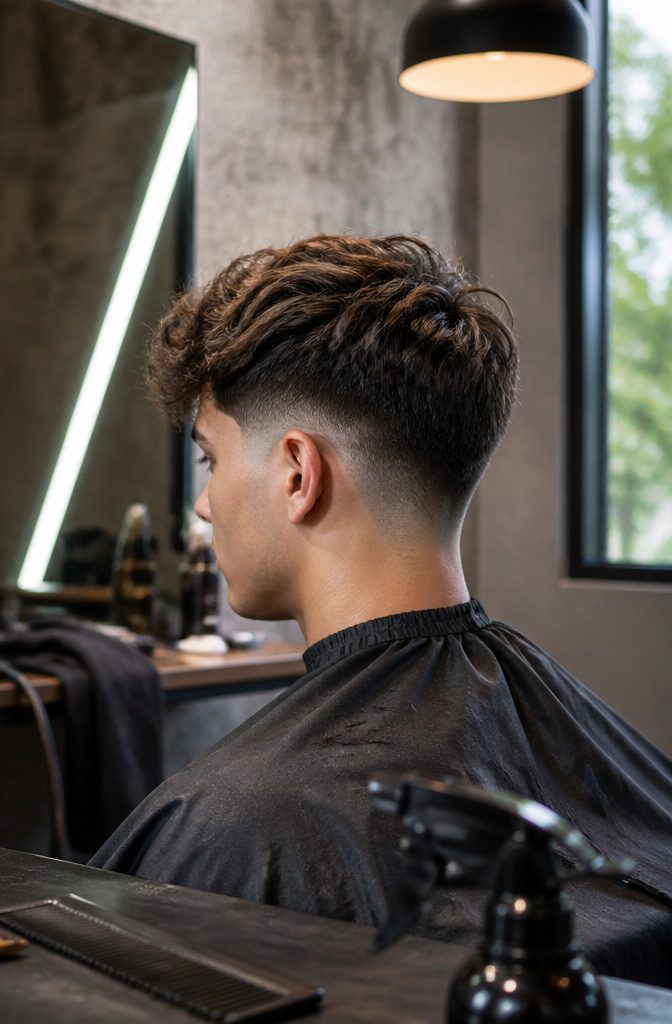
The textured crop with a fade keeps showing up because it solves problems across face shapes without demanding much from you each morning.
The cut layers texture through the top while the fade tapers the sides and back, so you get dimension where you need it and clean edges where you don’t. That contrast works whether your face is square, round, or rectangular.
Square faces benefit from the softness the textured top brings, countering the angles at the jaw without making the whole head look blocky.
Round faces get similar help: the volume on top adds vertical interest, and the fade keeps things from widening at the temples. Rectangular faces gain width at the sides from the fade’s gradual taper, which shortens the vertical line.
Hair type matters less than you’d expect here.
The crop handles straight, wavy, and curly textures as long as your stylist cuts with your natural pattern in mind. Curly and coily hair especially suits this cut because the fade showcases texture rather than fighting it.
Frequently Asked Questions
What haircut should I get?
Start with your face shape and hair type, then factor in how much time you’ll spend styling each morning.
Oval faces suit nearly every style, while round faces need height on top, square faces benefit from soft layers, and long faces want width instead of more length.
Match the cut to your texture (fine hair reads thicker in blunt cuts, curly hair needs a dry cut from a curl specialist) and pick a maintenance level you’ll actually keep up with.
How can I tell what haircut looks best on me?
Identify your face shape by combing your hair back, taking a straight-on photo, and comparing your forehead, cheekbone, and jaw width to the six main shapes: oval, round, square, heart, diamond, and long.
Once you know your shape, match it to cuts that add balance (oval faces handle anything, round faces need vertical lines and height, square faces want soft layers, heart-shaped faces suit chin-length bobs).
Use a virtual try-on tool to preview at least 4 or 5 cuts before booking the chair.
Are AI hairstyle tools accurate?
They sit around 85 to 90 percent accurate, which is close enough to judge proportion and balance even if the texture won’t be exact on screen.
TheRightHairstyles.com and HairHunt both analyze your face shape automatically and apply realistic previews to your photo. The rendering keeps your features intact and changes only the hair, so you can show your stylist what you want without lengthy explanations.
How does hair type affect which cuts work?
Fine, straight hair reads thicker in blunt cuts and short bobs because the line stays crisp. Thick, straight hair needs long layers to strip bulk without shortening the whole length.
Wavy hair wants mid-length cuts with face-framing layers that play up the natural movement, while curly hair needs a dry cut from someone who works with curls daily.
Coily and Type 4 hair performs best in shape-ups, tapered cuts, and shaped teeny-weeny afros that let the texture show.
How much maintenance do different haircut styles require?
Long layers, lobs, and grown-out shags need a trim every 8 to 12 weeks and sit at the low end. Bobs, pixies with some length, and curtain bangs need shaping every 6 to 8 weeks.
Sharp pixies, fades, and blunt bangs eat the most time, requiring touch-ups every 3 to 4 weeks to keep the line clean. Men with shorter styles or faster-growing hair may push that to every 2 to 3 weeks.
What should I bring to my haircut appointment?
Bring 3 photos: one cut you love, one you dislike, and one of your hair on a normal day.
The contrast tells your stylist what you actually want and what to avoid, and the normal-day shot shows how your hair behaves when you are not staging it.
Know the name of the cut if it has one, and be ready to talk length (how many inches on top, which guard number for the sides) plus how often you wash and whether you blow-dry.
Can ChatGPT suggest hairstyle?
AI tools can suggest hairstyles by analyzing your face shape and proportions, then matching you to cuts that add balance.
Platforms like TheRightHairstyles.com and HairHunt upload a selfie, read your face shape automatically, and show realistic previews at around 85 to 90 percent accuracy. Most work in a browser with no download required, and the basic preview is free.
What are some free AI hairstyles for men?
Most AI hairstyle tools offer basic services for free, letting you test a few styles before upgrading to bigger libraries.
TheRightHairstyles.com and HairHunt both provide free previews that analyze your face shape and apply realistic cuts to your photo. The free tier covers enough to answer which style suits you before you book the chair.