A fringe parted down the middle grows out without covering your eyes, while a blunt bang cut straight across the forehead needs a trim before it crosses the lash line.
The frequency of those trims and how much time you spend at the mirror each morning decide which option works.
1. Choppy Shag
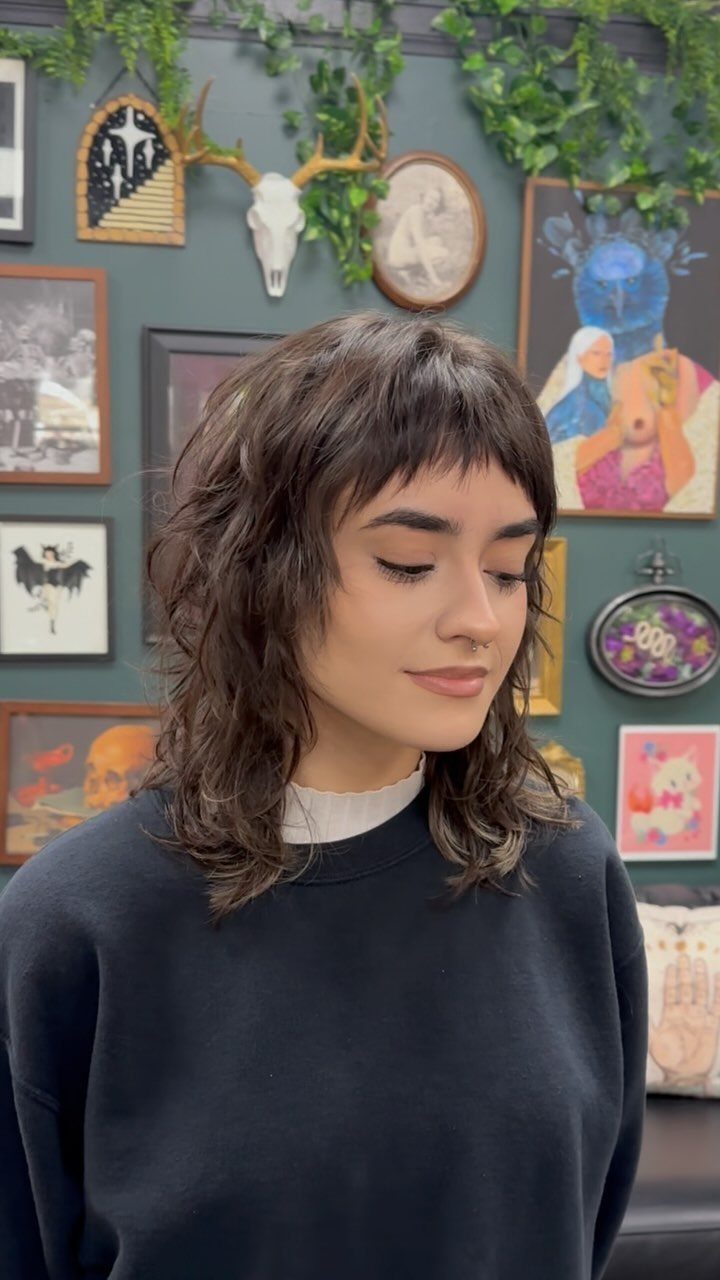
Layers cut at different heights through the hair create a broken-up texture that stops well short of polish. The fringe stays short and choppy too, often cut straight across with deliberate unevenness.
Ask for a shag with heavy layering and a short, textured fringe. The cut needs frequent trims to hold its shape; grown out, the layers start to blend and the fringe pushes past your eyes.
Styling takes a round brush or your fingers and a bit of texturizing spray to separate the pieces.
2. Curtain Bangs

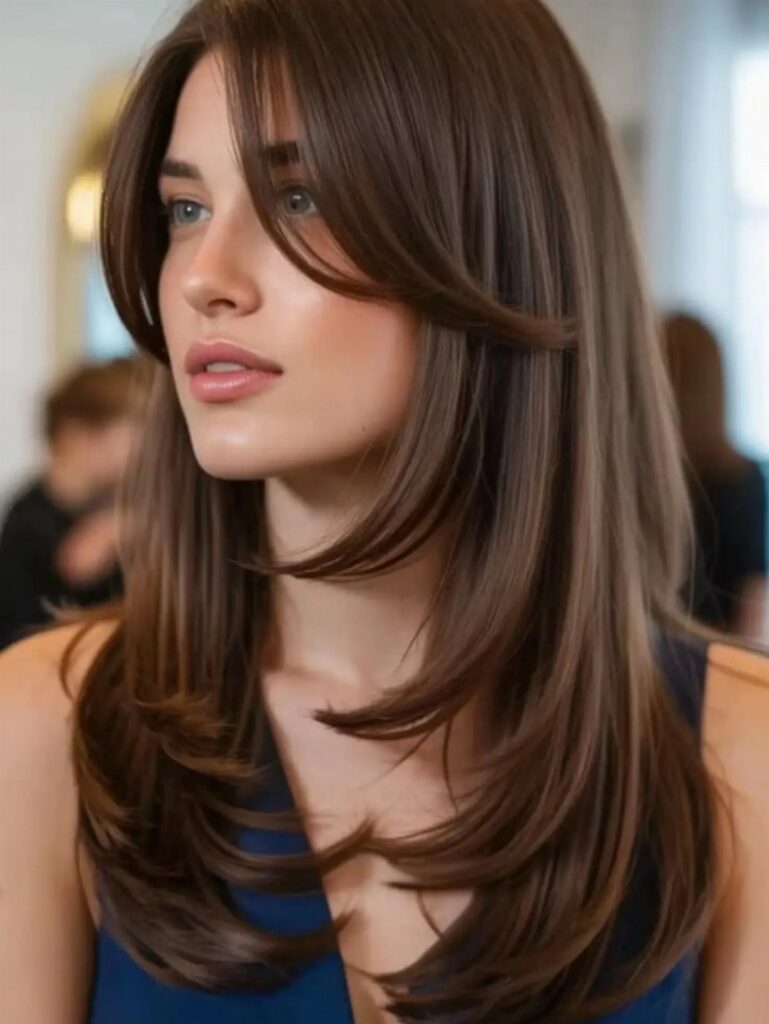
The fringe parts down the middle and sweeps to either side, leaving the center of the forehead bare. Longer pieces blend into the layers that frame the face, so there is no hard line where the fringe ends.
I prefer this to a full fringe because it grows out without covering your eyes, and you can skip styling if the hair has any natural wave.
Straight hair needs heat and a tool with tension to bend the fringe away from the center part. The cut works with most textures and grows back into long layers without an awkward in-between stage.
3. Face-Framing Layers

Shorter pieces cut around the face add shape without taking length off the back. The layers start anywhere from the chin to the collarbone and angle back toward the rest of the hair.
Blow-dry the front sections with a round brush to curve them inward, or leave them to air-dry if the hair has wave.
The layering is subtle enough that you can still pull everything into a ponytail. If the fringe is long, it blends into the face-framing layers; shorter bangs sit above them.
4. Side-Swept Bangs
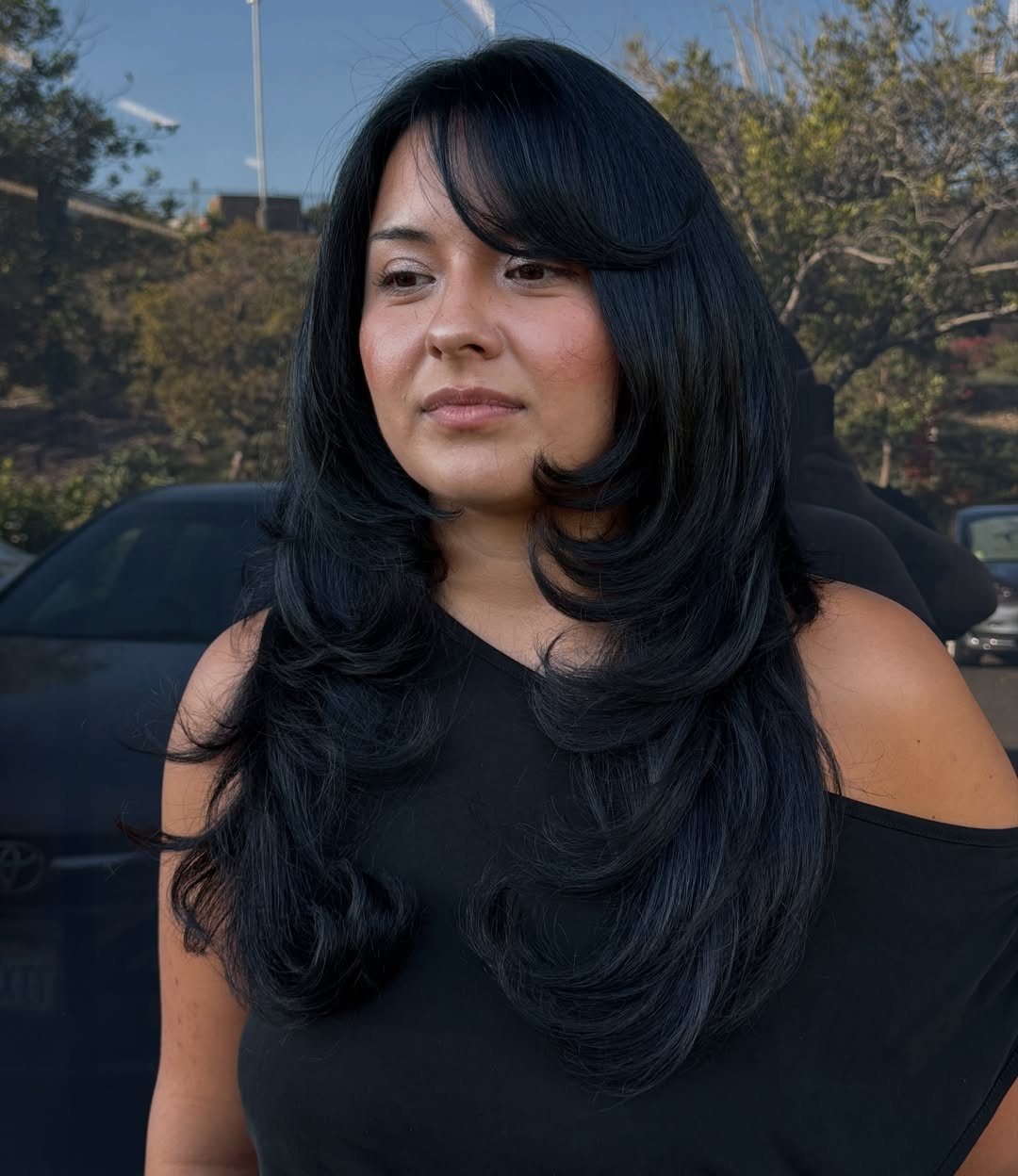
The fringe is cut longer on one side and shorter on the other, so it falls across the forehead in a diagonal line. Layers through the rest of the hair keep the transition smooth.
Blow-dry the fringe in the direction you want it to sit, or pin it to one side while damp and let it dry that way.
I like this because it softens a strong jawline and is easier to grow out than a full fringe. Trim often enough that the angle stays deliberate.
5. Long Layers with Waves
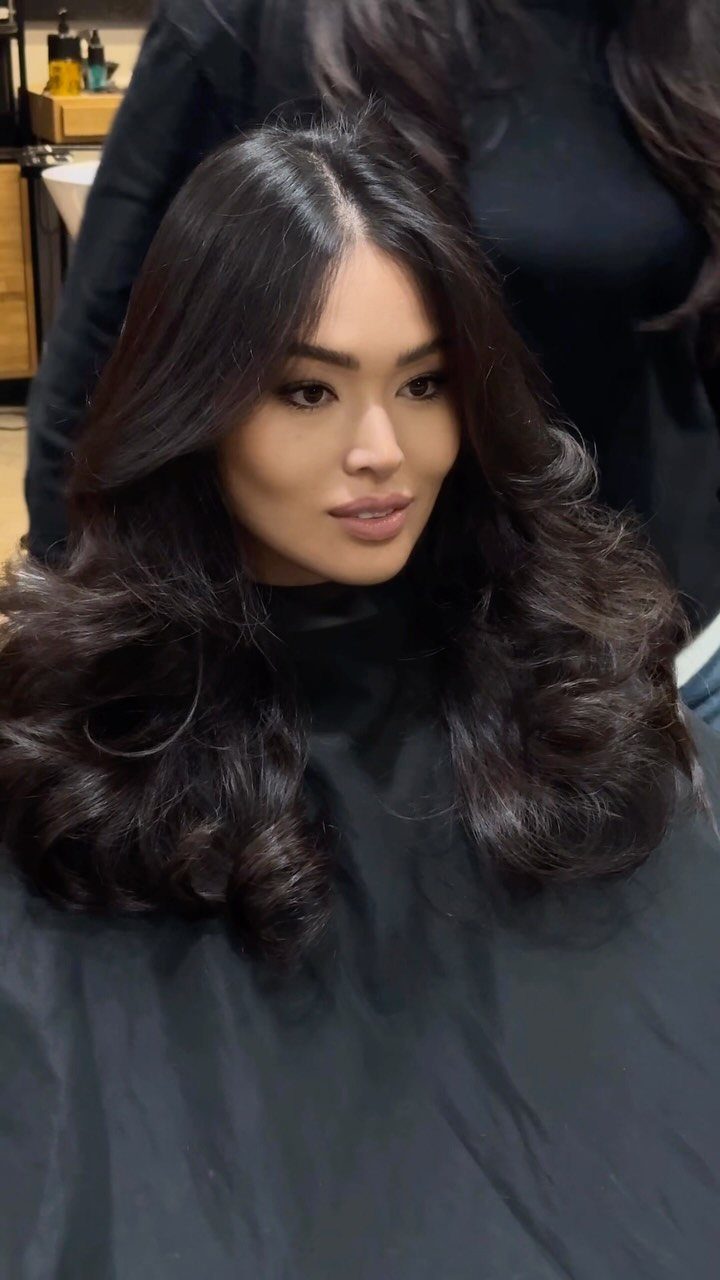
Layers cut through long hair add lift and movement, and waves styled into the length make the layering more visible. The layers can start at the shoulders or lower, depending on how much volume you want.
Curl sections away from the face, then break up the shape with your fingers so it reads as texture rather than ringlets.
A texturizing spray before curling gives the waves hold without stiffness. The cut works with or without bangs, and air-drying with a sea salt spray gives a looser, undone finish.
6. Long Sleek Layers
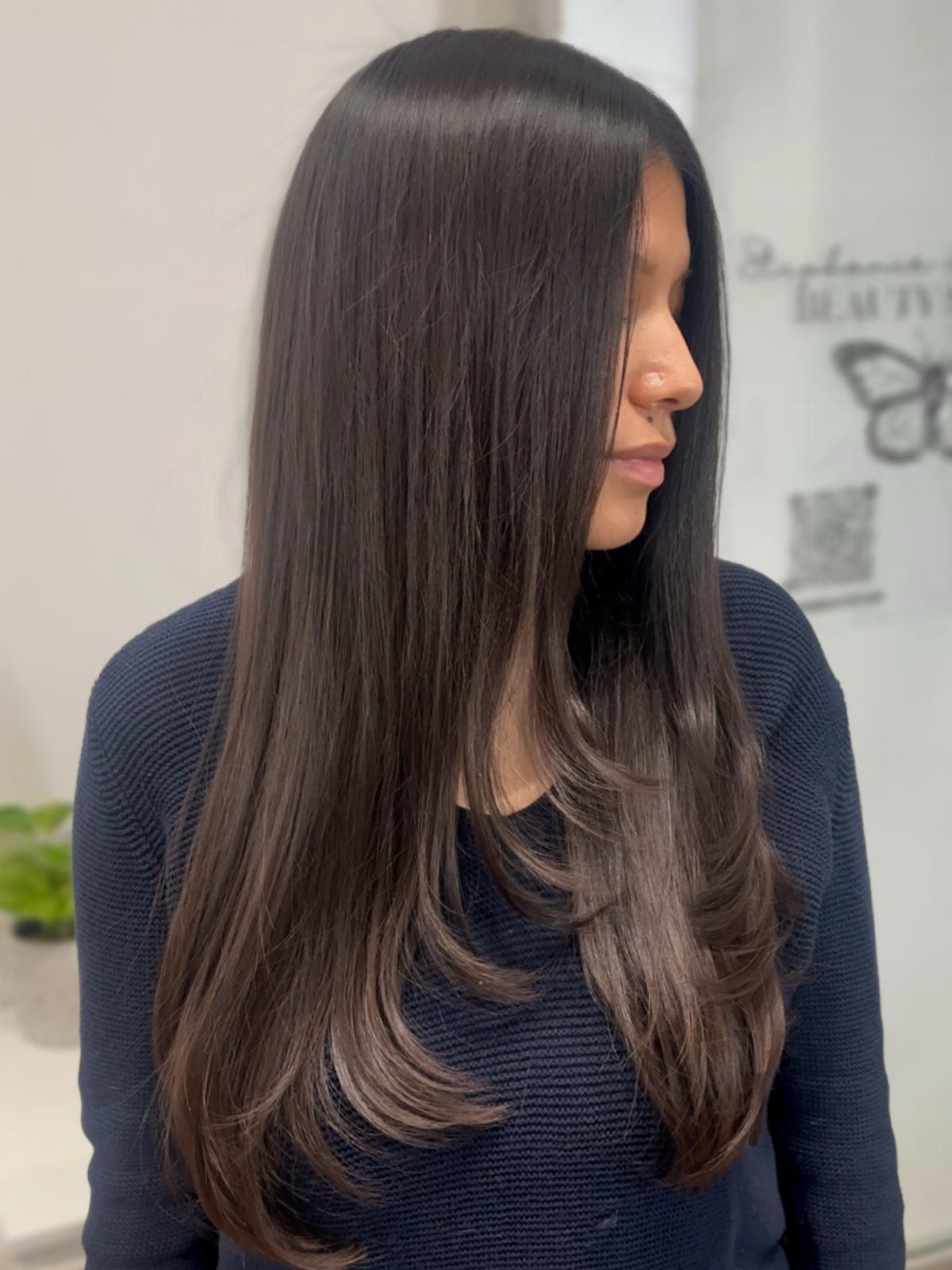
Layers cut through long, straight hair add dimension without disrupting the smooth line. The layers are long and subtle, usually starting below the shoulders, and the ends are often point-cut or slightly rounded to avoid a blunt finish.
Blow-dry with a paddle brush to keep the hair smooth, then run a flat iron through if needed. The cut suits thick hair that can carry weight without looking flat, and it grows out without an obvious line.
Layered long haircuts for thin hair can feel risky, since adding layers inherently removes volume from your hair. Ghost layers are a sneaky solution, pro hairstylist Hollie Rose Clarke tells Glamour.
— Glamour
7. Butterfly Layers with Bangs
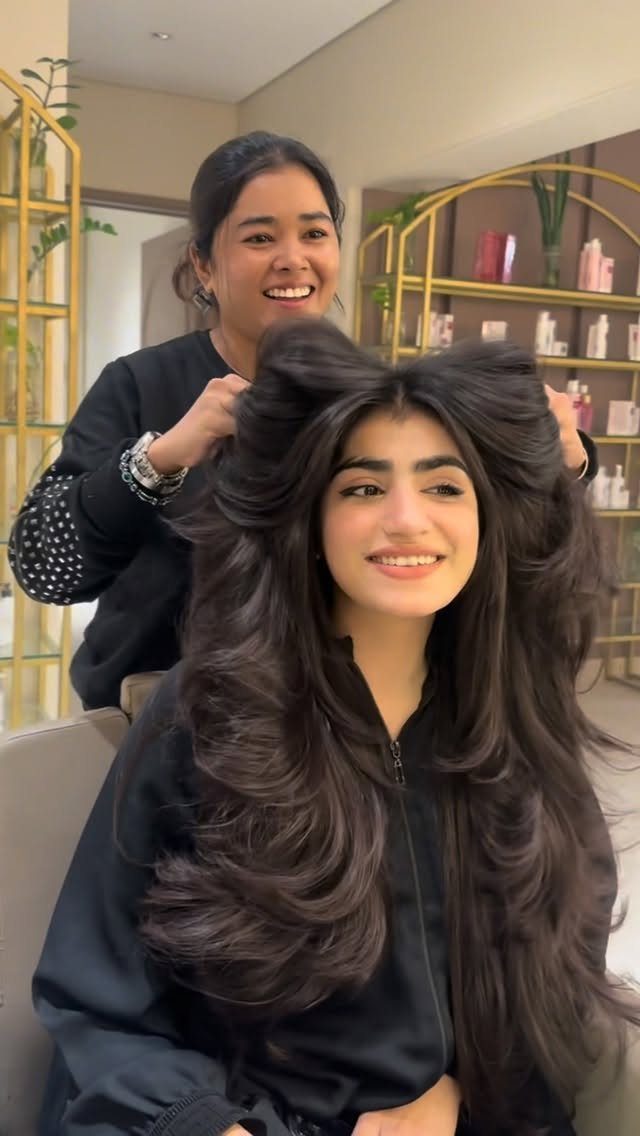
Shorter layers through the crown of the hair create volume that tapers into longer lengths below, forming a winged silhouette when styled. The bangs are cut to frame the face and blend into the upper layers.
Ask for short interior layers with long perimeter lengths. Thick hair means more time at the mirror: you’ll work section by section with a round brush to lift at the roots and smooth through the lengths.
The volume reads best on straight or wavy textures; curly hair will compress the shape.
8. Long Layers with Curly Bangs
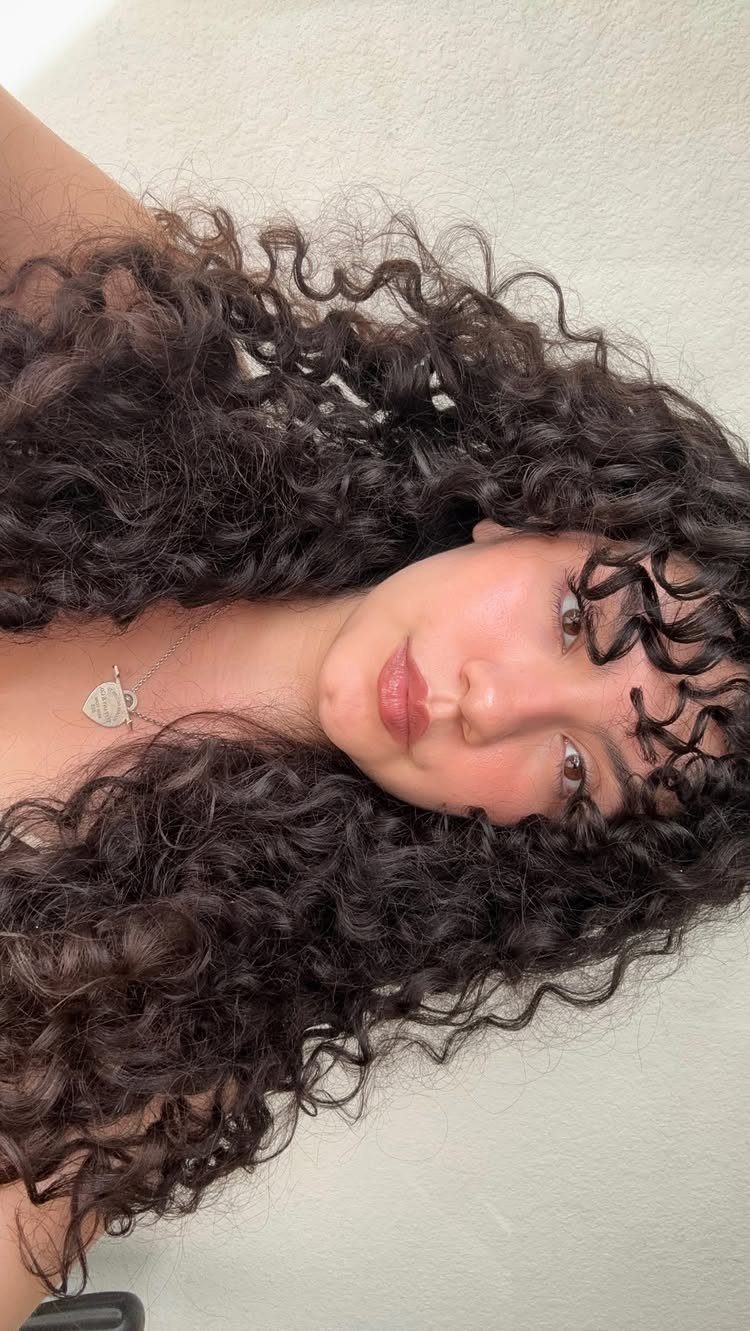
A fringe cut to match the curl pattern of the rest of the hair sits shorter when dry but stretches longer when wet. Long layers through curly hair reduce bulk and let the curls form without weighing each other down.
Curl-specific cutting techniques keep the fringe from shrinking too short or splitting awkwardly at the part.
Moisture and a leave-in product define the curls without heat. The fringe grows slower than it appears to because of shrinkage, so trims can be spaced further apart than with straight bangs.
9. Long Bangs for Thick Hair
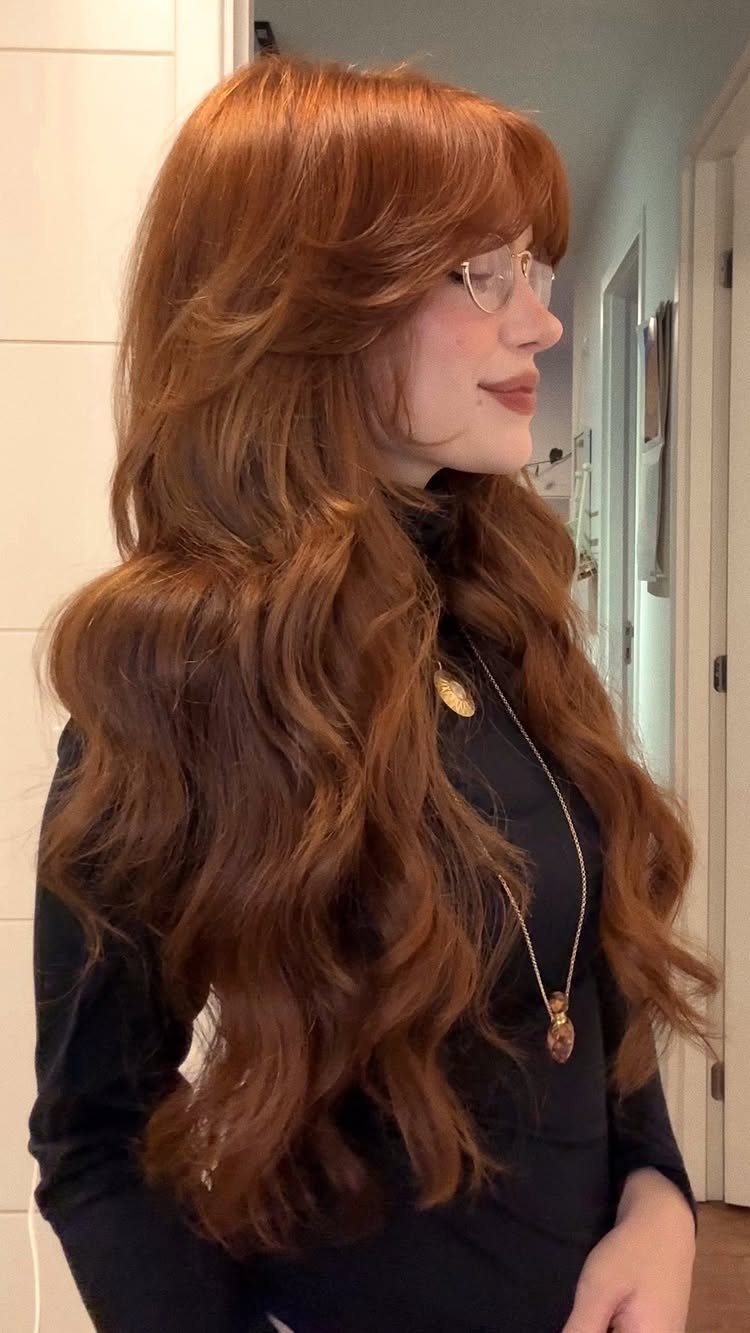
A longer fringe parted down the middle or swept to one side removes visual weight from thick hair while keeping length. The bangs fall past the cheekbones and blend into layers that thin out the bulk.
Thick hair holds this style without much product, and the length means the fringe can be tucked behind the ears when needed. Regular trims keep the fringe from creeping past your cheekbones and losing its shape.
10. Waterfall Bangs
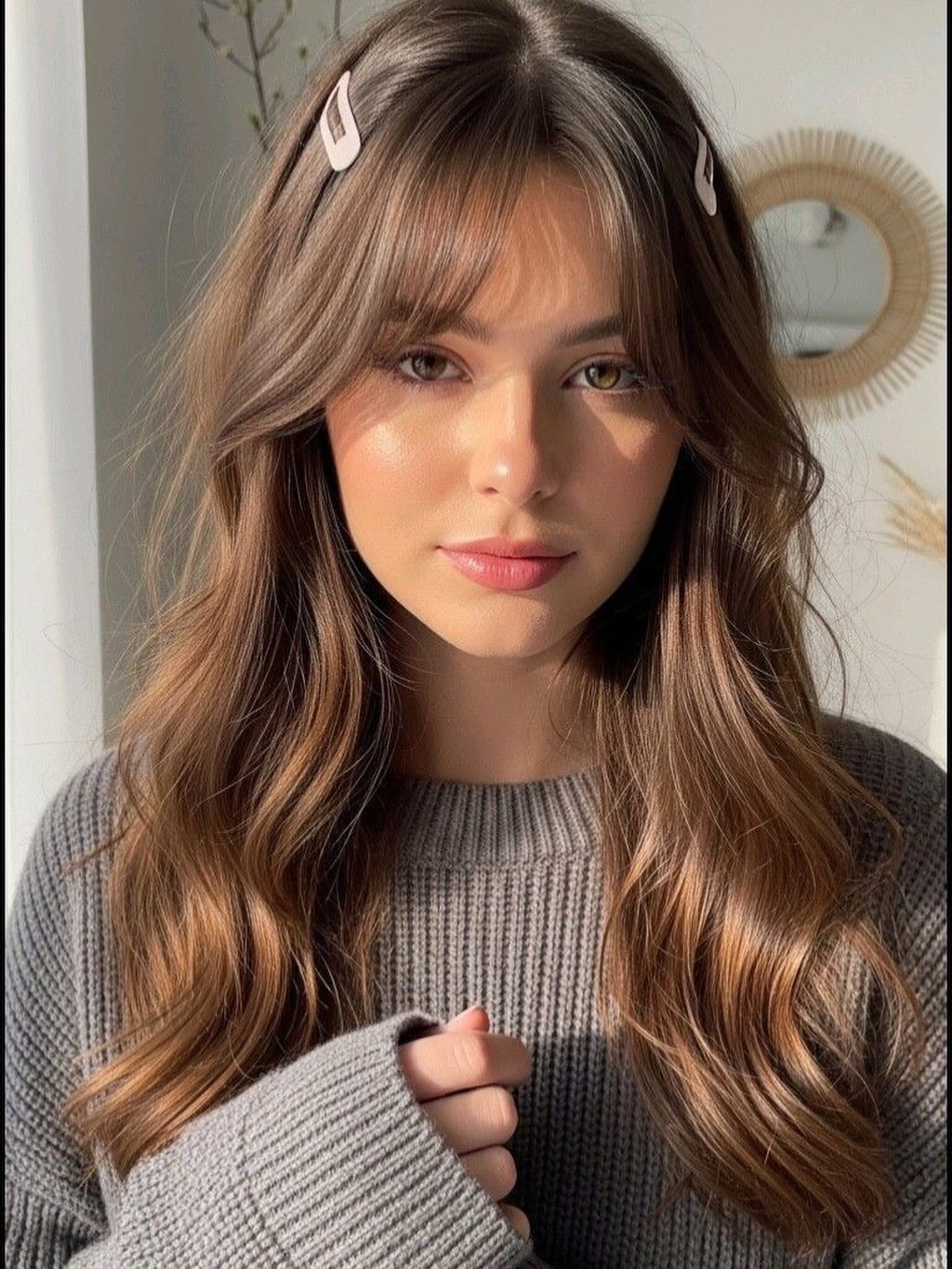
The fringe cascades around the face in graduated lengths, with the shortest pieces at the center and longer sections sweeping toward the sides.
Paired with butterfly layers, the cut creates movement that starts at the bangs and continues through the length.
Blow-dry the bangs with a round brush to bend them away from the face, pulling each section taut as you work.
The cascading effect softens angular features and works with most textures. Without styling, the fringe may fall flat or stick to the forehead.
11. Bombshell Blowout Layers
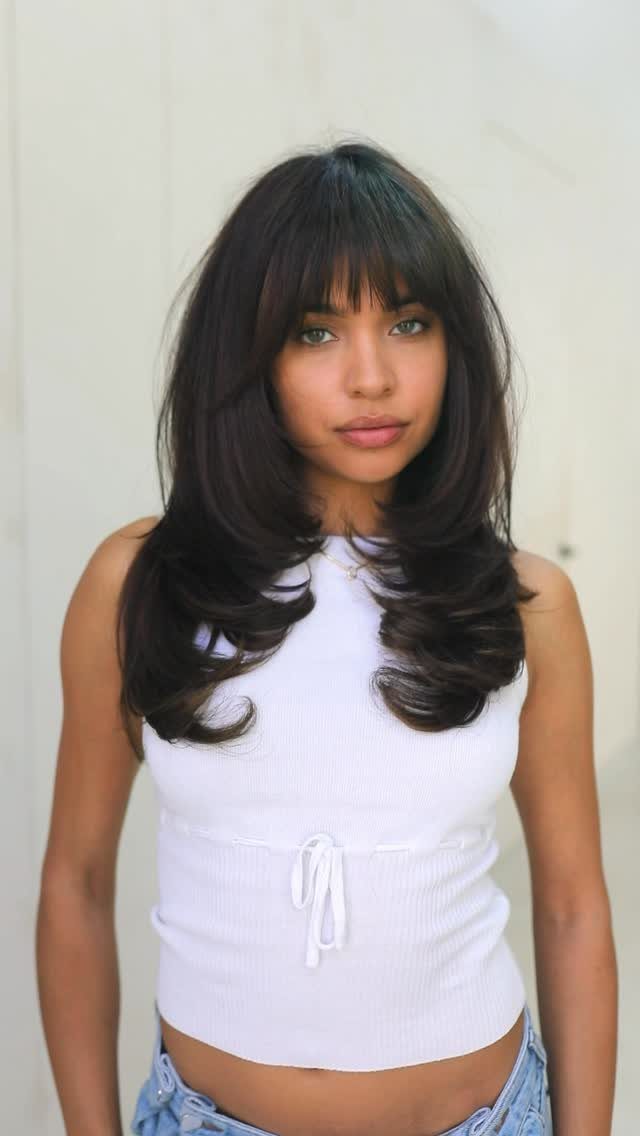
Soft, graduated layers are blown out with a large round brush to curve inward at the ends, creating lift and bounce through the length.
The bangs are styled with the same inward curve, so the whole head reads as one voluminous shape.
This takes a round brush, sectioning clips, and a blow-dryer with a concentrator nozzle. Work in small sections, pulling the brush through from roots to ends while directing heat down the hair shaft.
A finishing spray holds the shape. The style flattens within a day or two, so it suits special occasions more than daily wear.
12. Long Hair with Textured Bangs

Point-cutting or razoring through the bangs and layers creates a broken-up edge that moves without stiffness. The texture is subtle, so the hair still reads as long and layered but with a softer finish than a blunt cut.
Ask for texturizing through the ends and fringe. Air-drying brings out the texture on wavy hair; straight hair needs a bit of styling cream or spray to separate the pieces.
The cut grows out without a harsh line, and trims can wait longer if you don’t mind the fringe growing.
13. Medium-Length Lobs
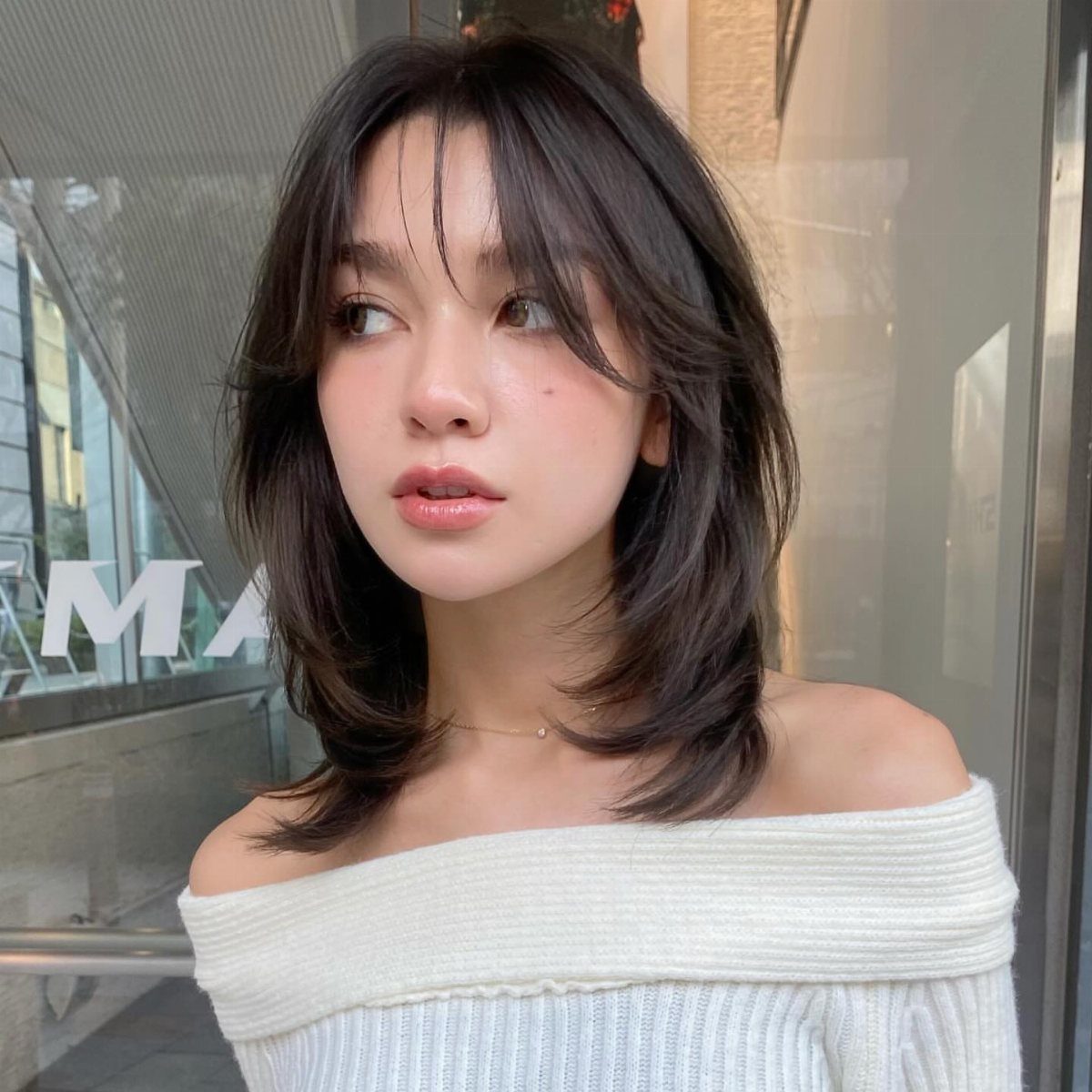
A lob cut to shoulder length with layers through the ends and a wispy fringe parted down the middle sits between long hair and a true short cut.
The layers add movement without taking much weight off, and the fringe stays light enough to blend into the face-framing pieces.
A round brush and the dryer’s nozzle aimed down the shaft smooth it, or skip heat if the hair holds a wave.
The length is practical: you can still tie it back, and it dries faster than long hair. Regular trims hold the line.
14. Blunt Bangs
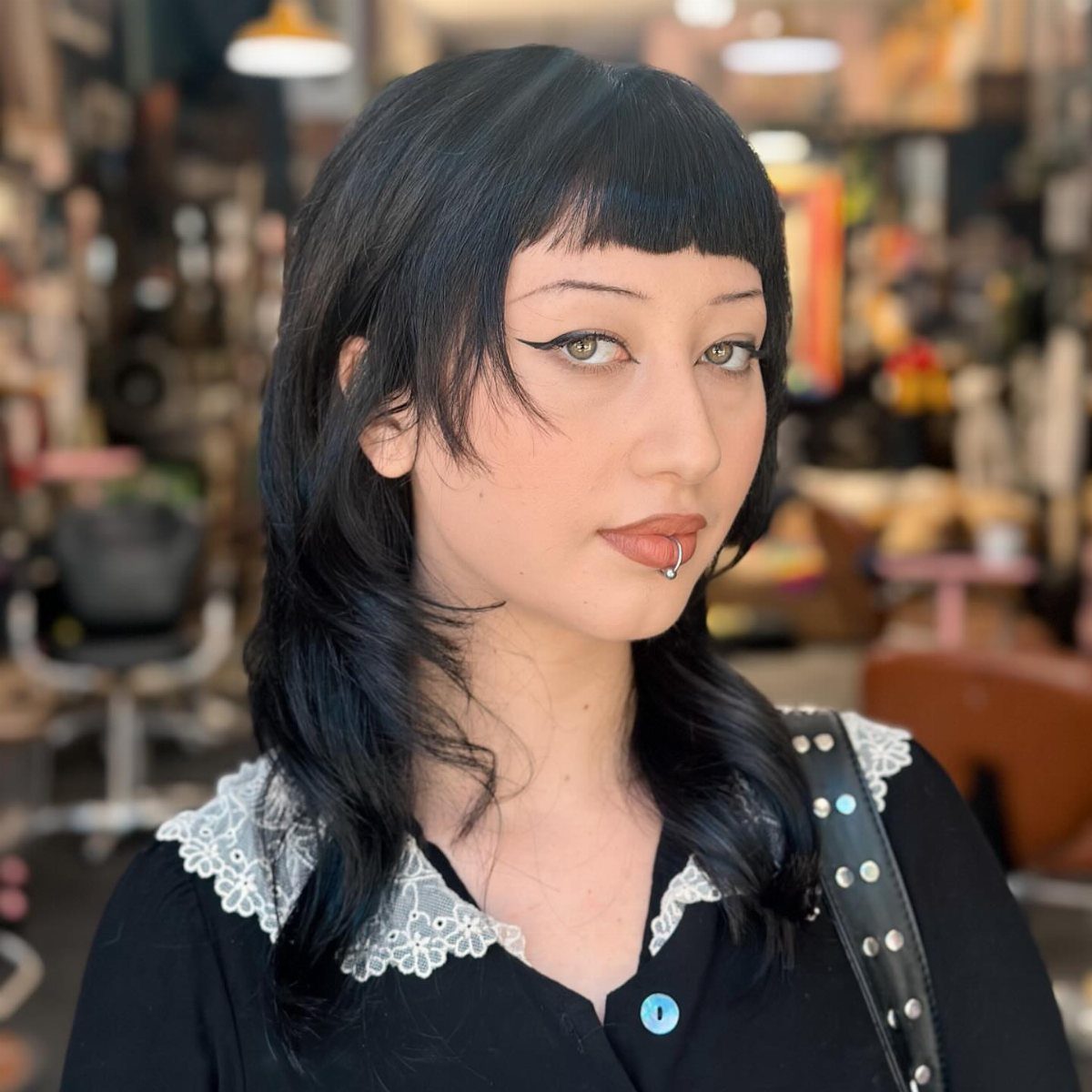
A fringe cut straight across the forehead with no tapering or texture creates a defined line that contrasts with the movement of long layers below.
The bangs sit at or just above the brows, and the layers through the length keep the rest of the hair from looking flat.
A paddle brush and the dryer flatten the fringe, or one pass with an iron takes out any kink.
The hard line shows every irregularity, so this needs more frequent trims than a textured fringe. Thick hair holds the shape better than fine hair, which can separate into clumps.
15. Feathered Layers
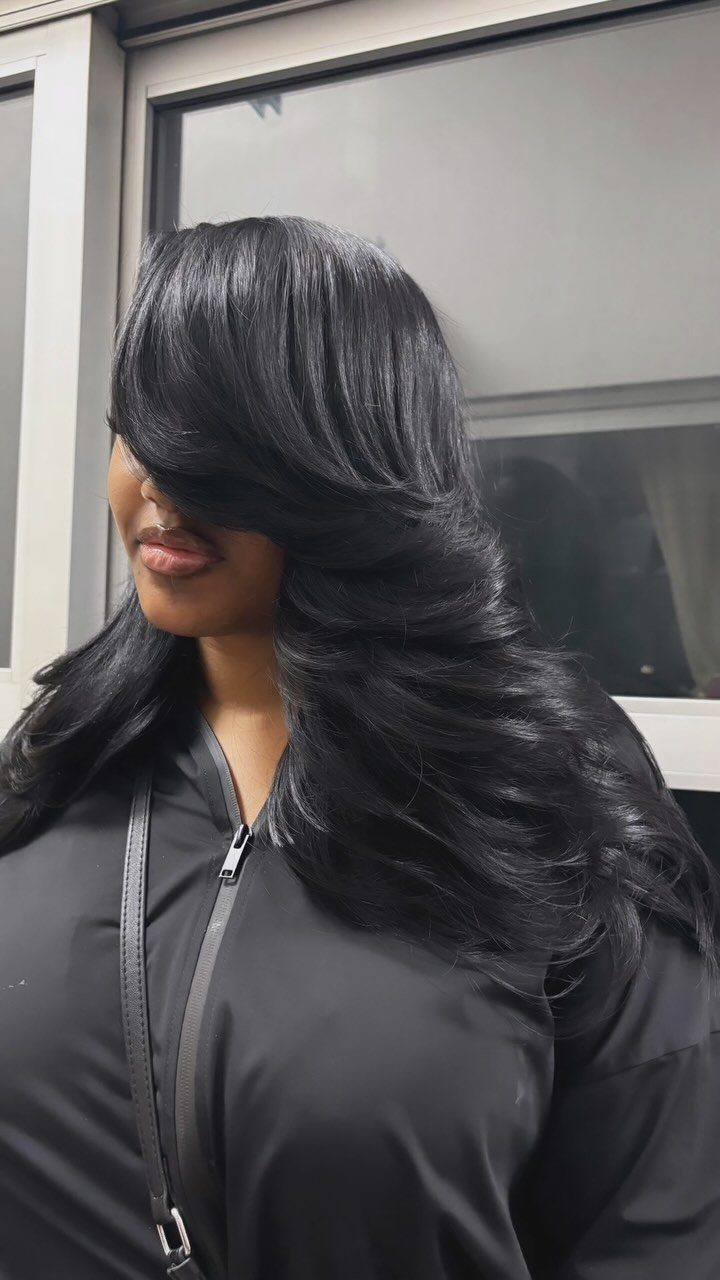
Layers cut and styled to flip outward at the ends create a soft, sweeping shape that moves away from the face. The fringe is usually side-swept or parted, and the layers start high enough to add volume through the crown.
The cut suits hair with some natural body; fine, straight hair may need product to hold the flip. A curling iron can add the bend if the blow-dry alone doesn’t take.
16. Long Layers with Straight Bangs
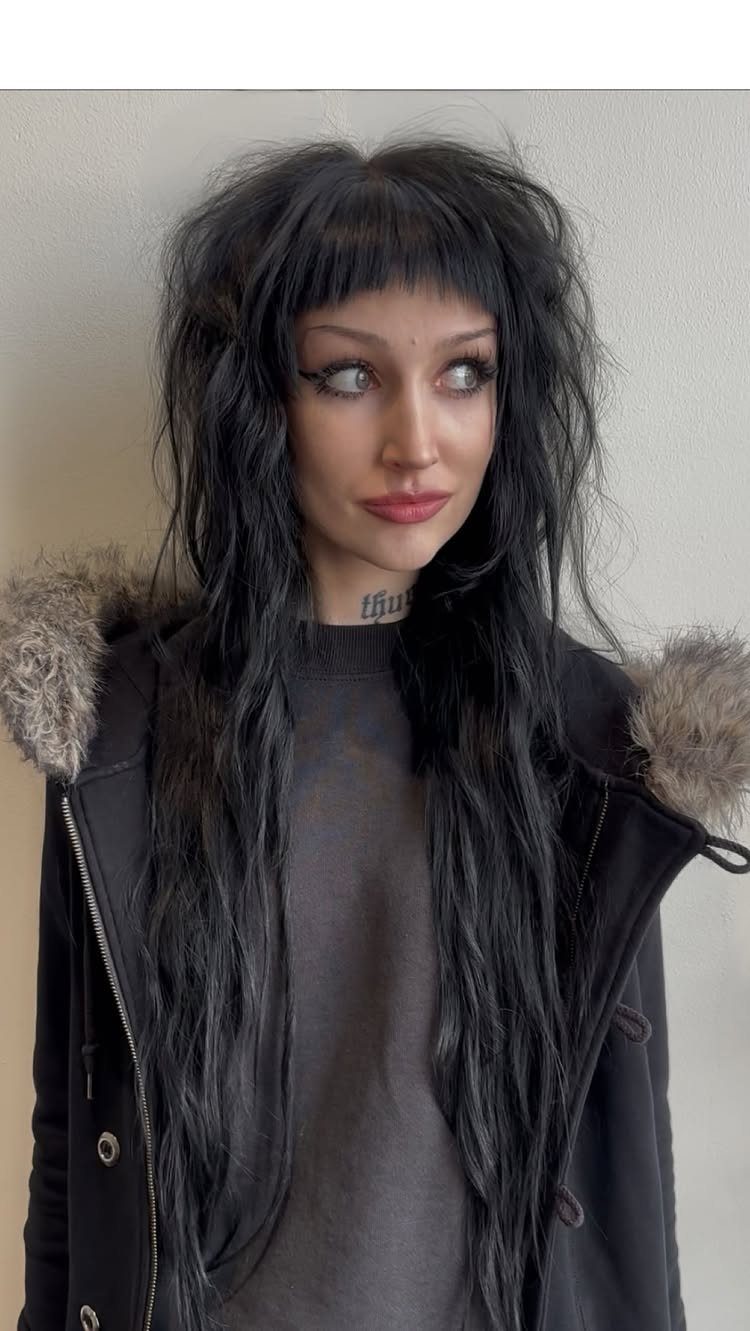
A blunt fringe that falls straight across the forehead paired with long, layered lengths creates contrast between the clean line of the bangs and the movement or wave through the rest of the hair.
The layers add shape without shortening the overall length.
Straight hair needs a flat iron to keep the bangs smooth, and wavy hair needs a round brush to pull the fringe straight while leaving the layers loose.
Bangs grow fast and need a trim before they cross the lash line.
17. See-Through Bangs
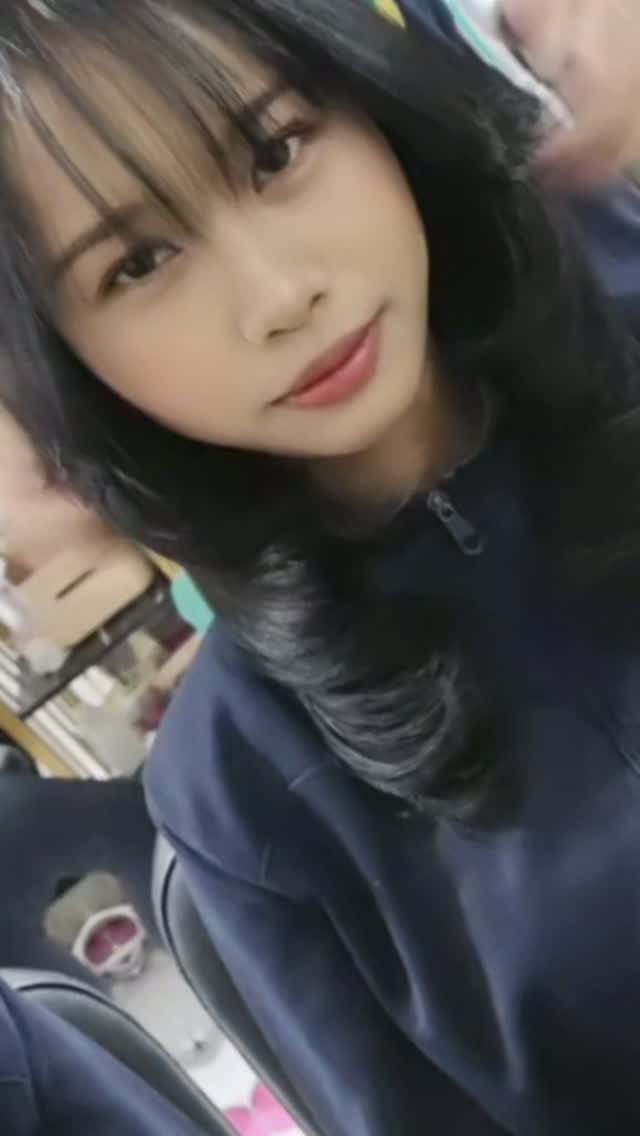
A sparse fringe cut or thinned to let the forehead show through gives the softness of bangs without the weight of a full fringe.
The layers through the rest of the hair stay long, and the bangs are usually parted or swept to one side.
Ask for a thinned or point-cut fringe with space between the pieces.
Fine hair takes this better than thick hair, which can look choppy if thinned too much. The fringe is easier to grow out than a full one because it blends into the layers as it lengthens.
18. A-Silhouette Long Layers
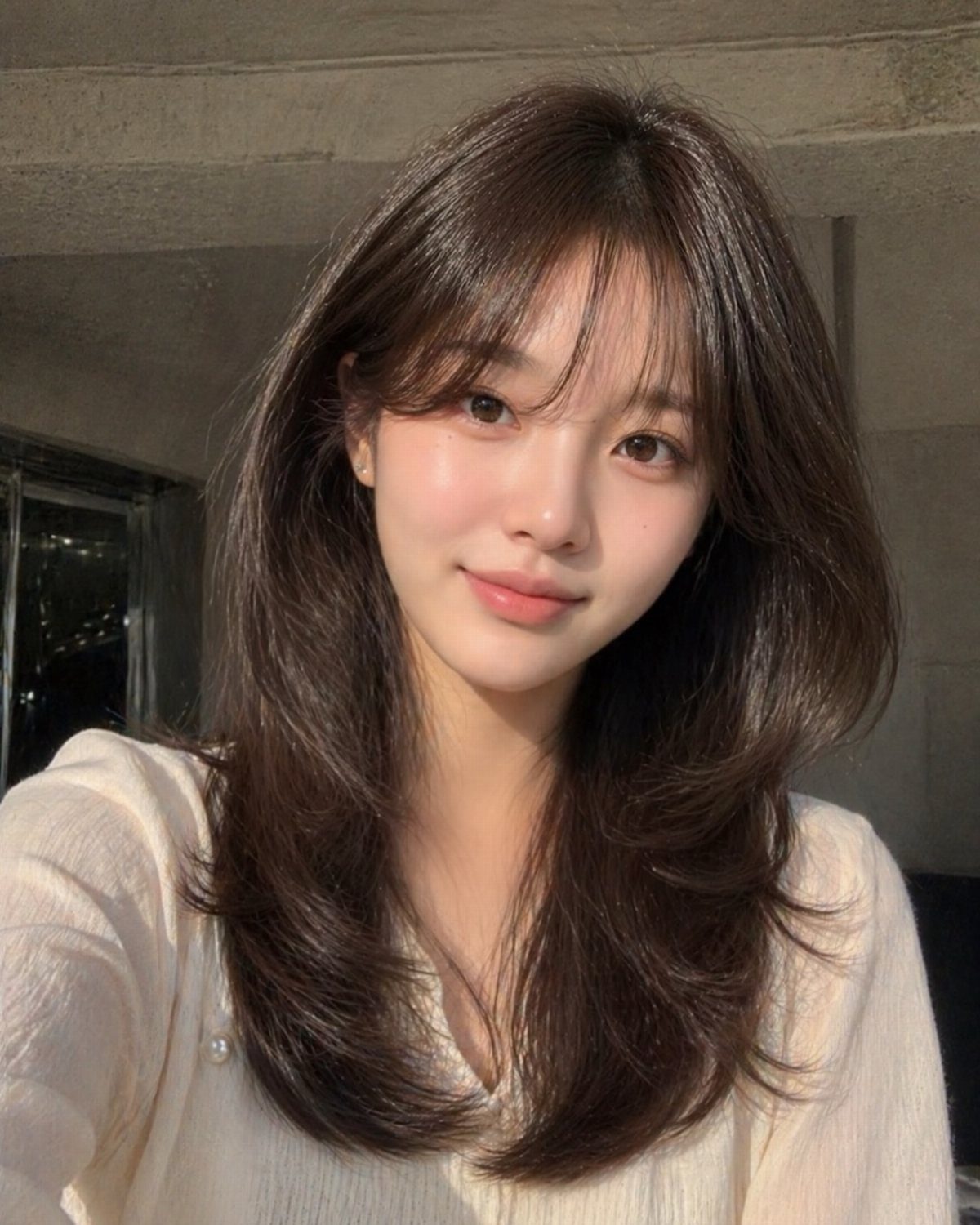
Layers cut to create more volume at the top and taper toward the ends form a silhouette that widens through the crown and narrows at the perimeter.
The bangs are light and wispy, and the overall shape reads as an inverted triangle.
Finer strands need spray or mousse at the root to keep the lift.
19. Hime Cut with Bangs

Chin-length sections cut straight at the sides frame the face, blunt bangs sit above the brows, and the rest of the hair stays long. The 3 distinct lengths create a silhouette that originated in traditional Japanese styles.
The cut works best on straight hair, where the clean lines stay sharp. Wavy or curly hair softens the geometry.
A flat iron keeps the side pieces and bangs straight, and the blunt edges need regular trims to hold the shape. The side sections sit forward when worn down and tuck behind the ears when needed.
20. Rounded Bangs with Layers
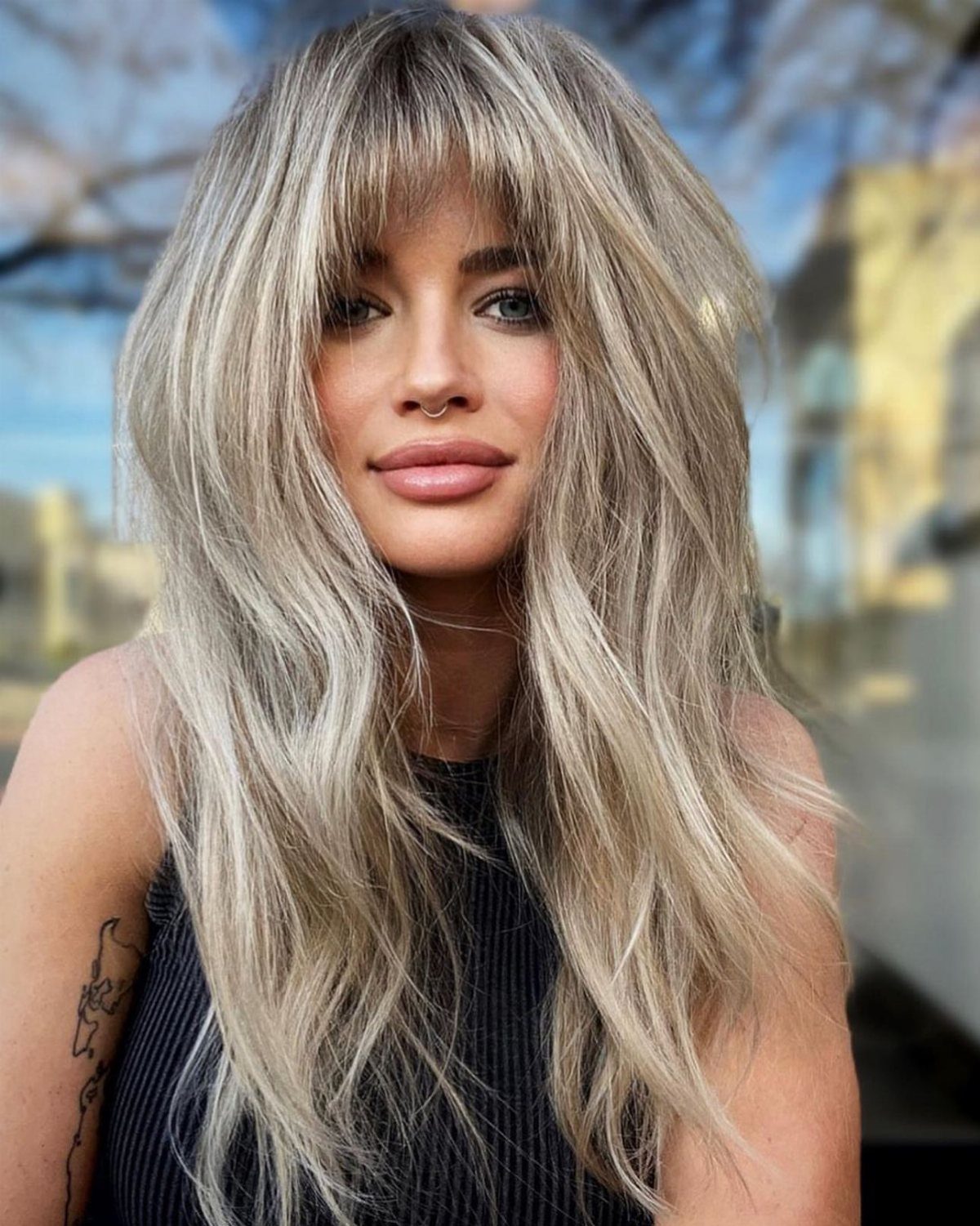
Long layers through the rest of the hair keep the overall shape light.
The rounded shape softens square or angular faces and draws attention to the eyes without the severity of a blunt line. Trims can wait a week or two longer than with straight bangs because the curve hides uneven growth.
21. Long Hair with Soft Layers
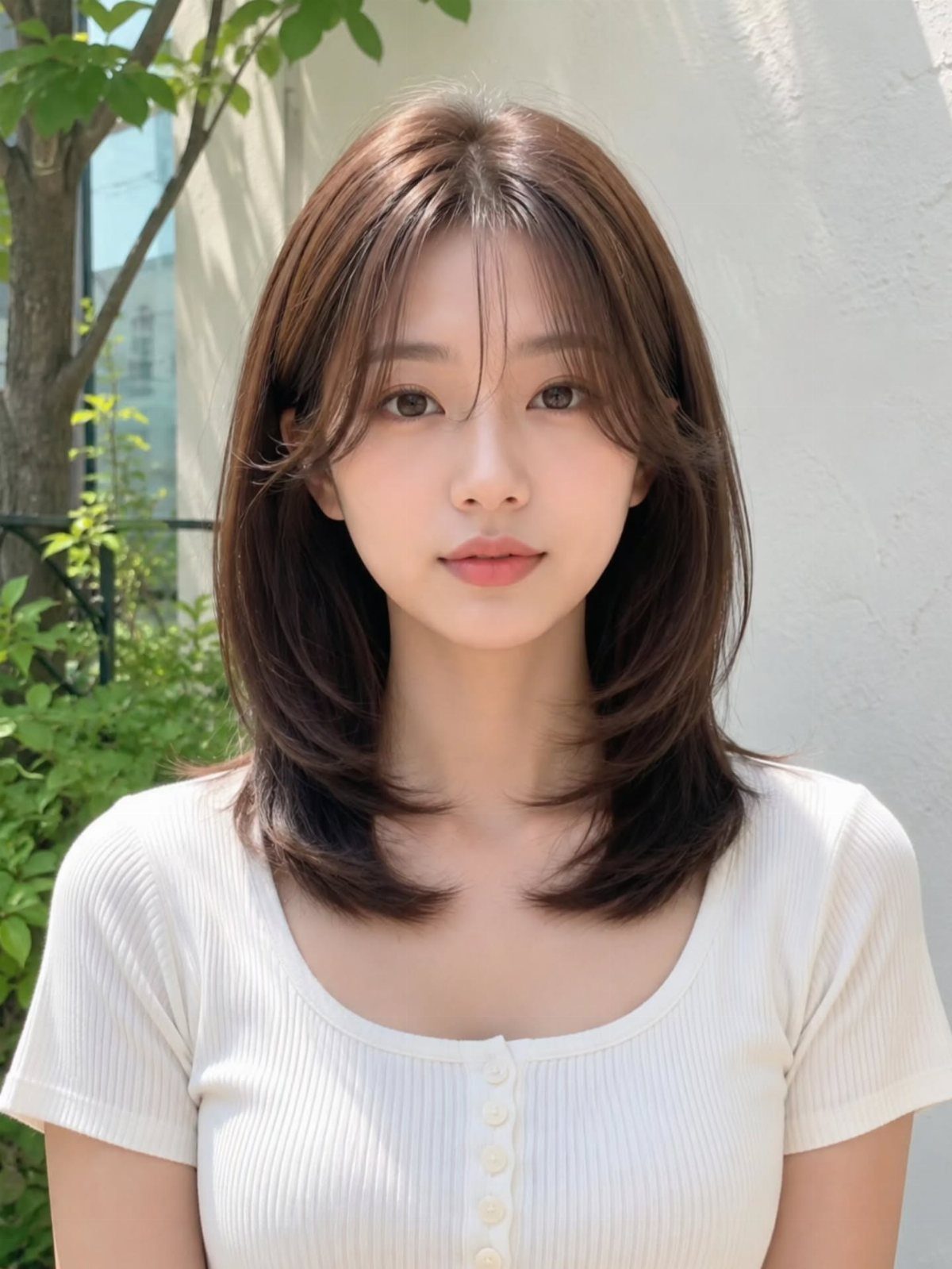
Layers cut through long hair with minimal graduation remove weight without creating obvious steps or volume spikes. The ends taper gently, and the bangs, if present, blend into the layers without a hard line.
The cut suits fine to medium hair that needs movement but not lift. Ask for long, subtle layers with soft graduation.
Air-drying works if the hair has a slight wave; a round brush and low heat smooth it without stiffness. The lack of heavy layering means less styling time and longer intervals between trims.
22. Long Hair with Tapered Ends
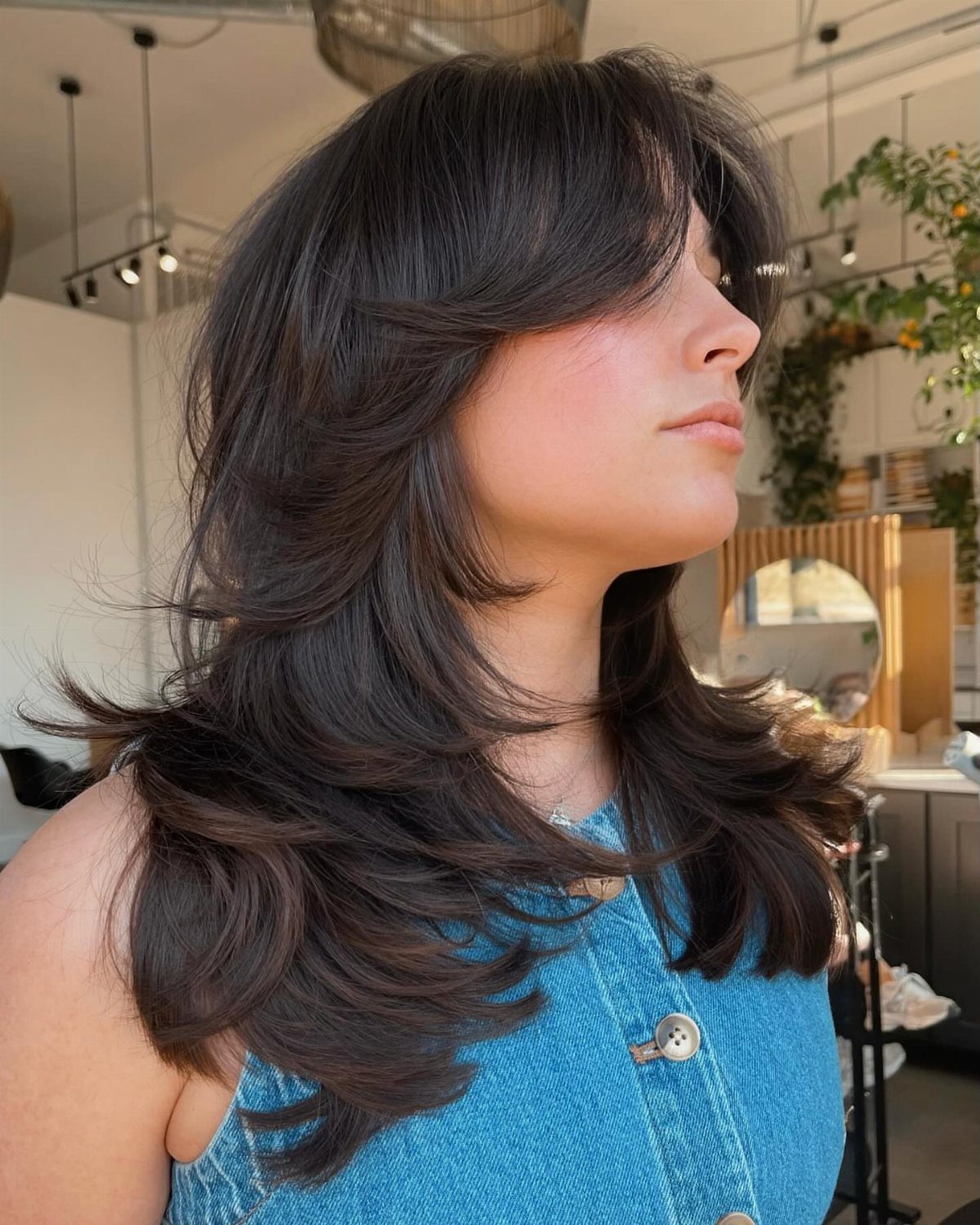
The ends of long hair are point-cut or slightly thinned to remove bulk without taking length, creating a tapered finish that moves without looking blunt.
Layers through the length add shape, and the bangs, if present, are cut with the same softening technique.
Thick hair benefits most from this because the thinning keeps the perimeter from looking heavy. Fine hair can lose too much density if the thinning is overdone.
A texturizing spray or light mousse separates the ends and shows the taper. The cut grows out gradually and doesn’t need frequent trims.
23. Wispy Bangs with Layers
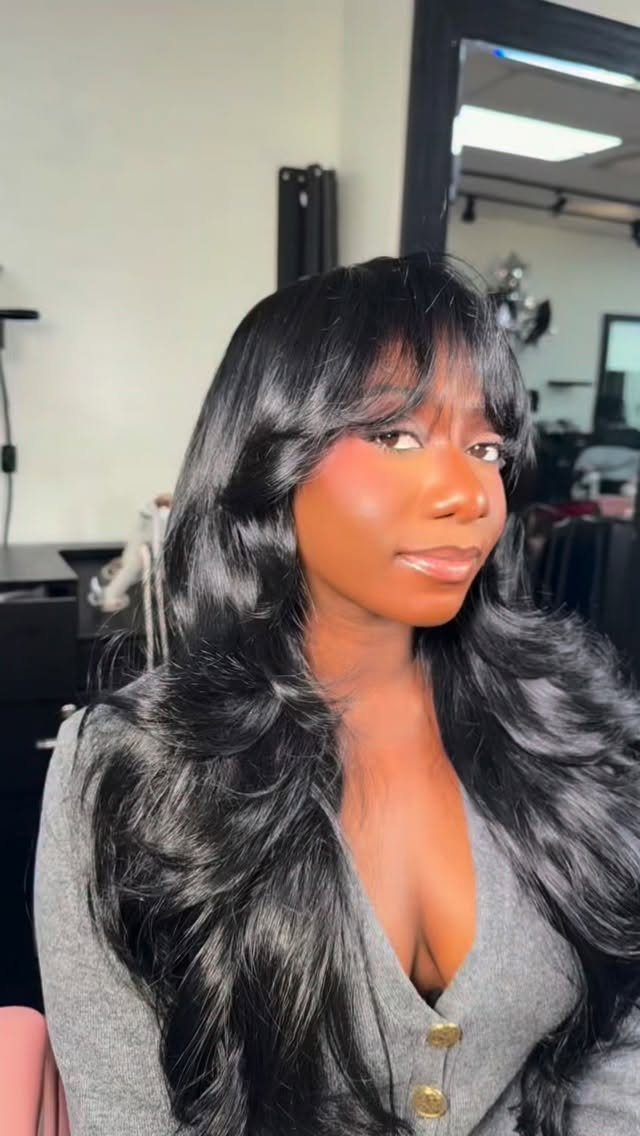
A sparse, textured fringe sits lightly across the forehead, with space between the pieces so the bangs don’t form a solid line. Layers through long hair keep the overall weight balanced, and the airy fringe blends into the face-framing sections.
Point-cut or razor the bangs to create separation, and ask for a light hand. The fringe works with air-drying or a quick pass of the dryer, and it grows out without the awkward stage of full bangs.
24. Bottleneck Bangs
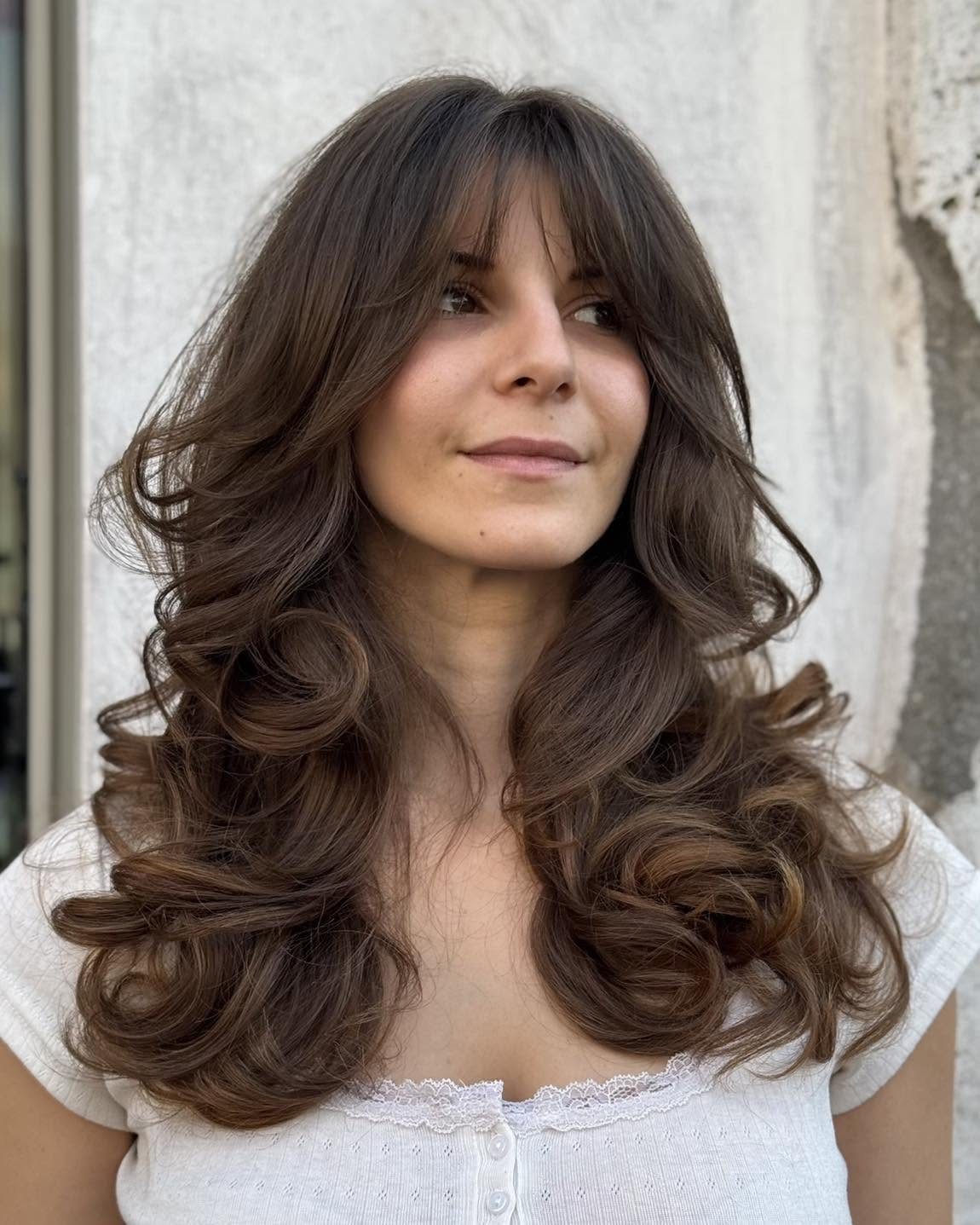
The fringe starts narrow at the center part and widens as it sweeps down toward the cheekbones, creating a shape that flares outward like the neck of a bottle.
Face-framing layers continue the taper, so the transition from fringe to layers reads as one continuous line.
Blow-dry the fringe with a round brush, pulling it away from the center and letting it curve outward at the ends. The shape suits oval and heart-shaped faces and softens a narrow chin.
25. Eyebrow-Grazing Bangs
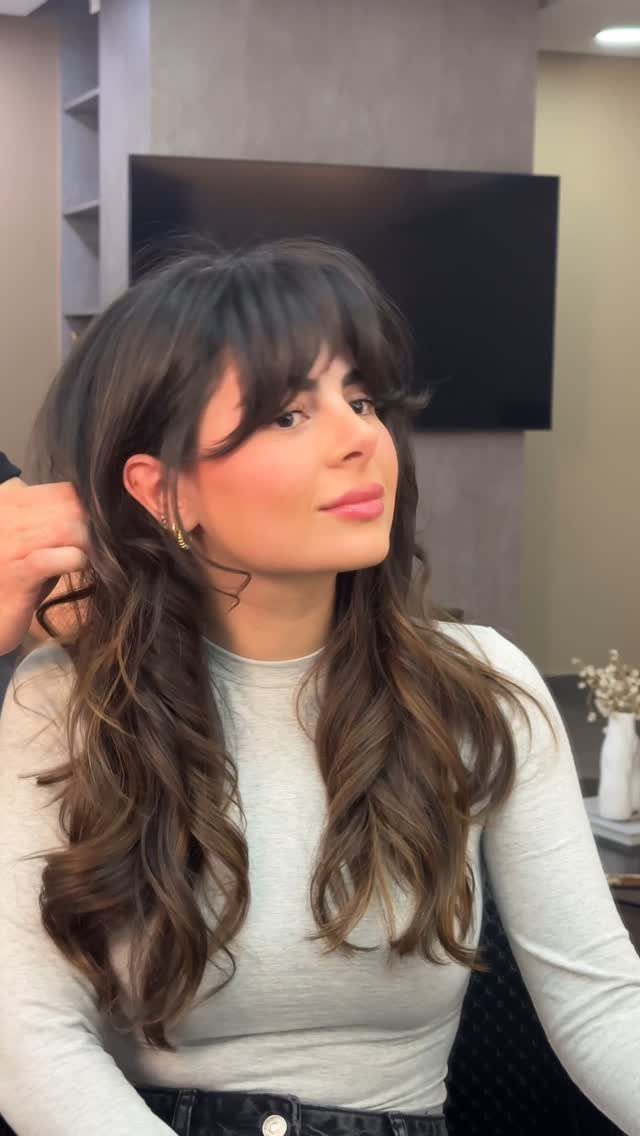
A fringe cut to sit just past the brows softens the face without covering the eyes.
The length falls between a full blunt bang and a longer curtain fringe, and it pairs with long layers that keep the overall shape light.
The fringe needs a flat iron or a round brush to stay smooth, and it grows into the lash line quickly.
Thick hair holds the shape without separating into pieces; fine hair may need a light spray to keep it from clumping. Trims keep it from crossing the lash line.
26. Razored Bangs
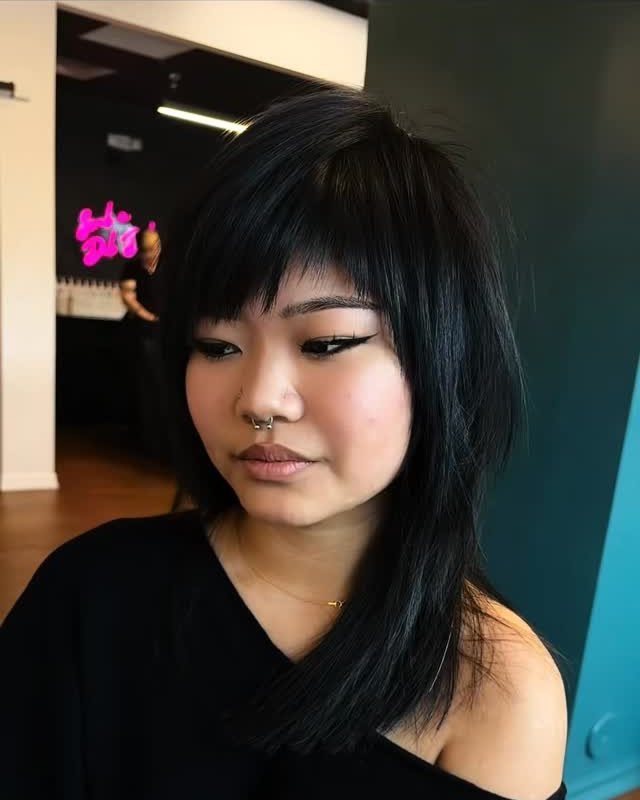
The technique works through the rest of the hair as well, so the layers and bangs share the same choppy finish.
Razoring removes more bulk than point-cutting and leaves the ends softer than a blunt cut. Thick hair responds better to this than fine hair, which can look thin at the perimeter if too much is taken off.
27. V-Cut Layers
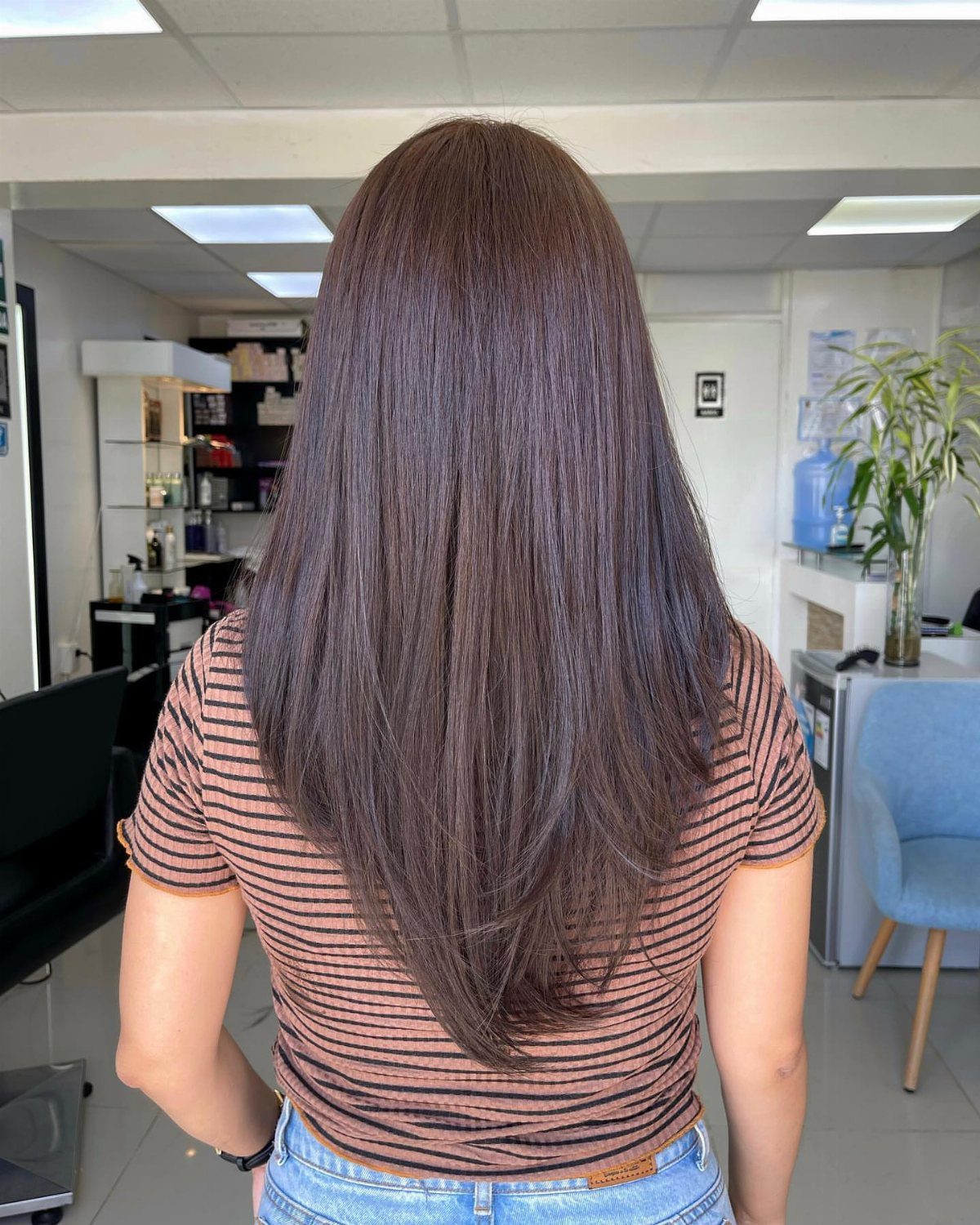
Layers taper toward the center back so the ends form a point when the hair is worn down. The shape adds movement through the length without shortening the front pieces, and the V is visible only from behind.
The cut suits thick hair, where the taper removes bulk without making the ends look sparse. A flat iron or blow-dryer smooths the layers and sharpens the point.
28. Money-Piece Bangs
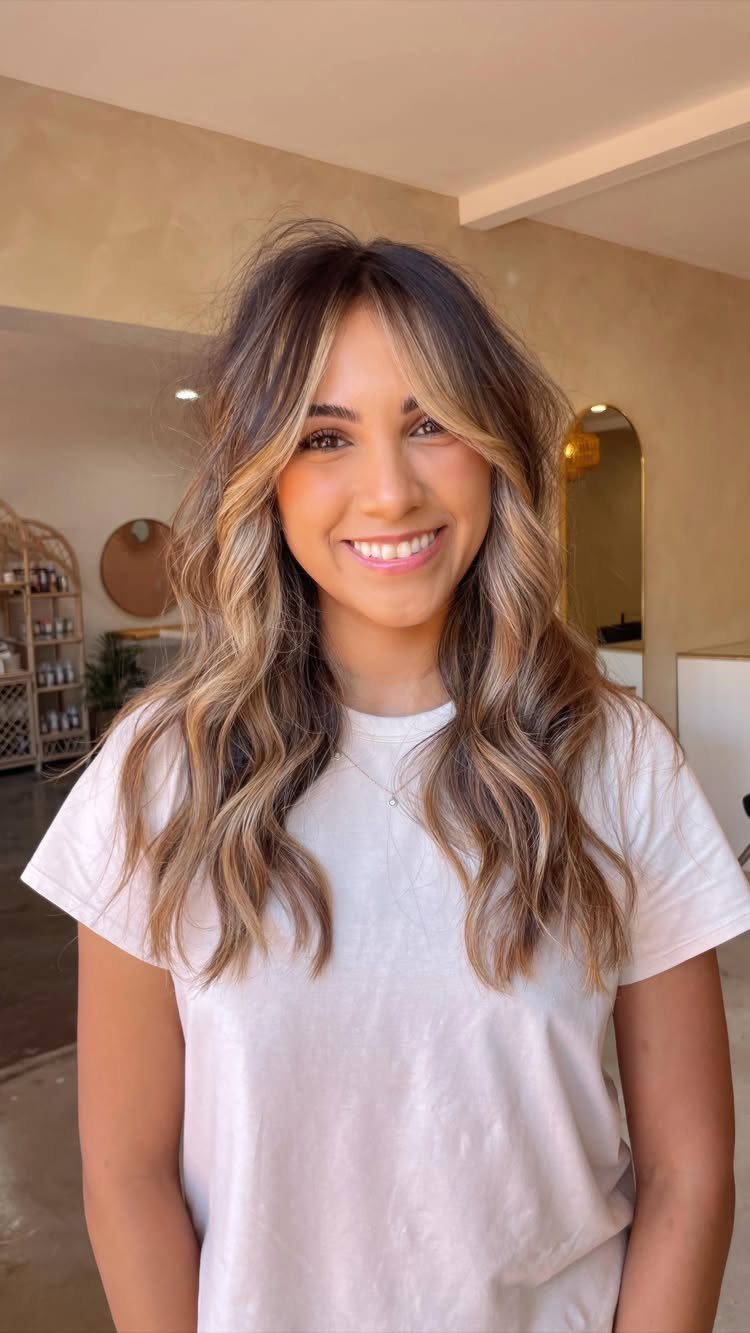
The fringe, if present, is light and wispy, and long layers through the back keep the weight balanced.
Blow-dry the front pieces with a small round brush, alternating over and under the hair and rolling the brush slightly when you go over it.
Adjust the fringe while it’s still warm to set the curve. The highlight needs a touch-up as the hair grows.
29. Flaring Layers with Bangs
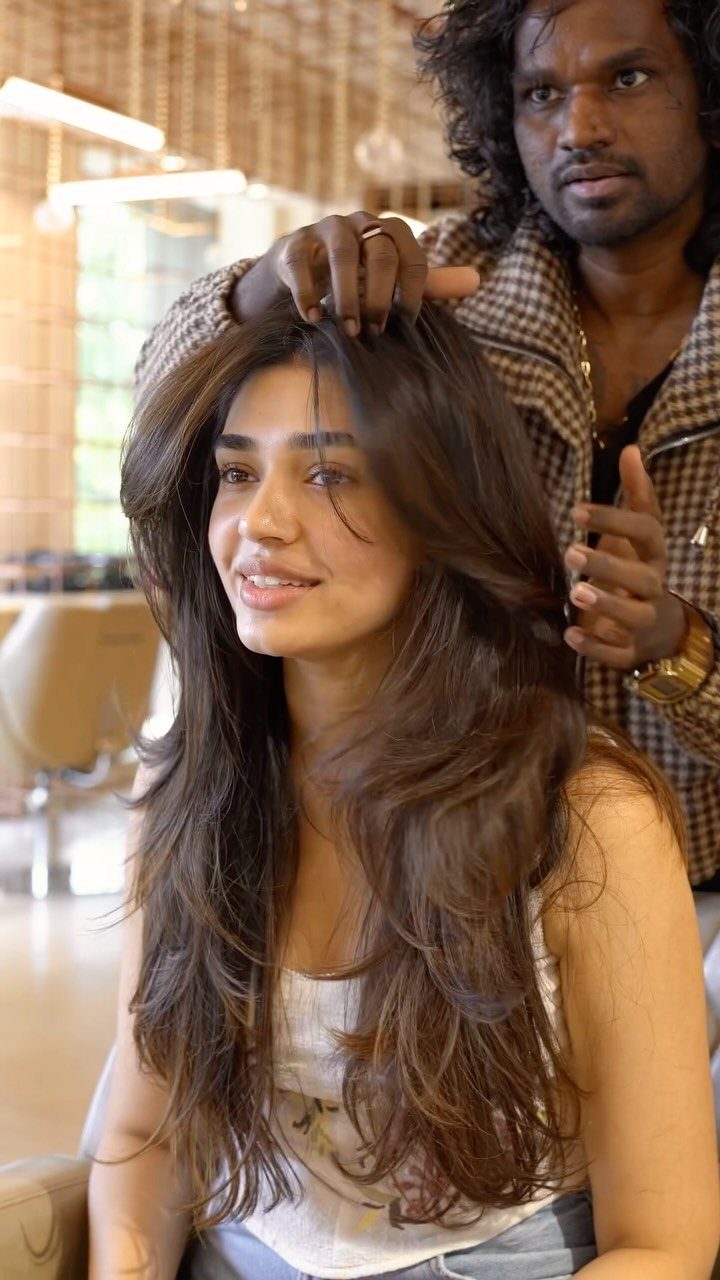
The cut works on wavy or straight hair, and the flare is more pronounced when the ends are blown out with a round brush.
The shape softens with time, so it suits hair with some body.
30. Middle-Part Bangs with Waves
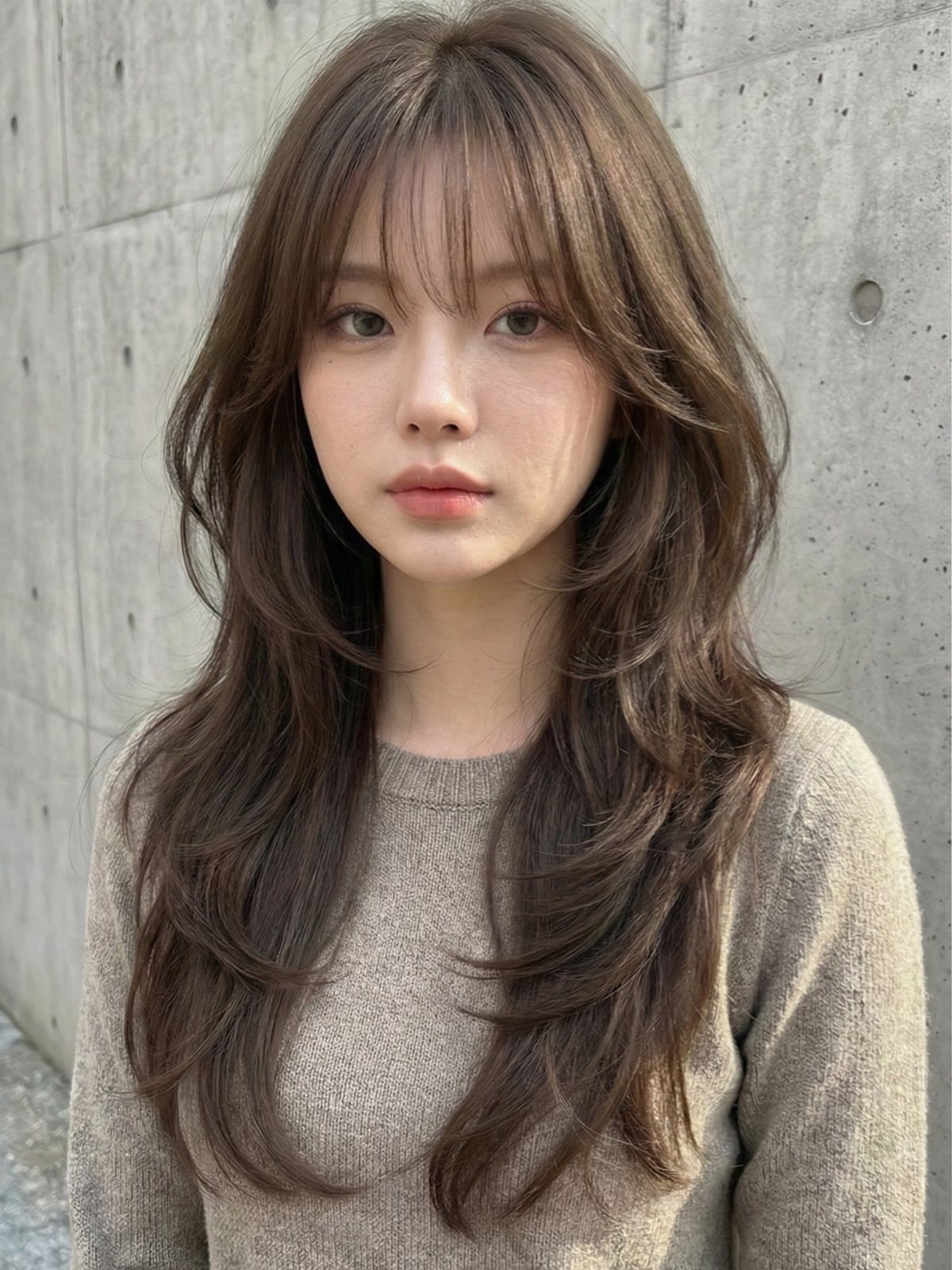
A fringe parted down the middle and cut in wispy, uneven lengths pairs with long layers that have the volume and texture of 1980s cuts.
A curling iron or large round brush adds the wave, and a texturizing spray separates the pieces without stiffening them.
The fringe needs a trim every few weeks to keep the shape clean, but the wispy texture hides uneven growth better than a solid line.
31. ’90s Layers
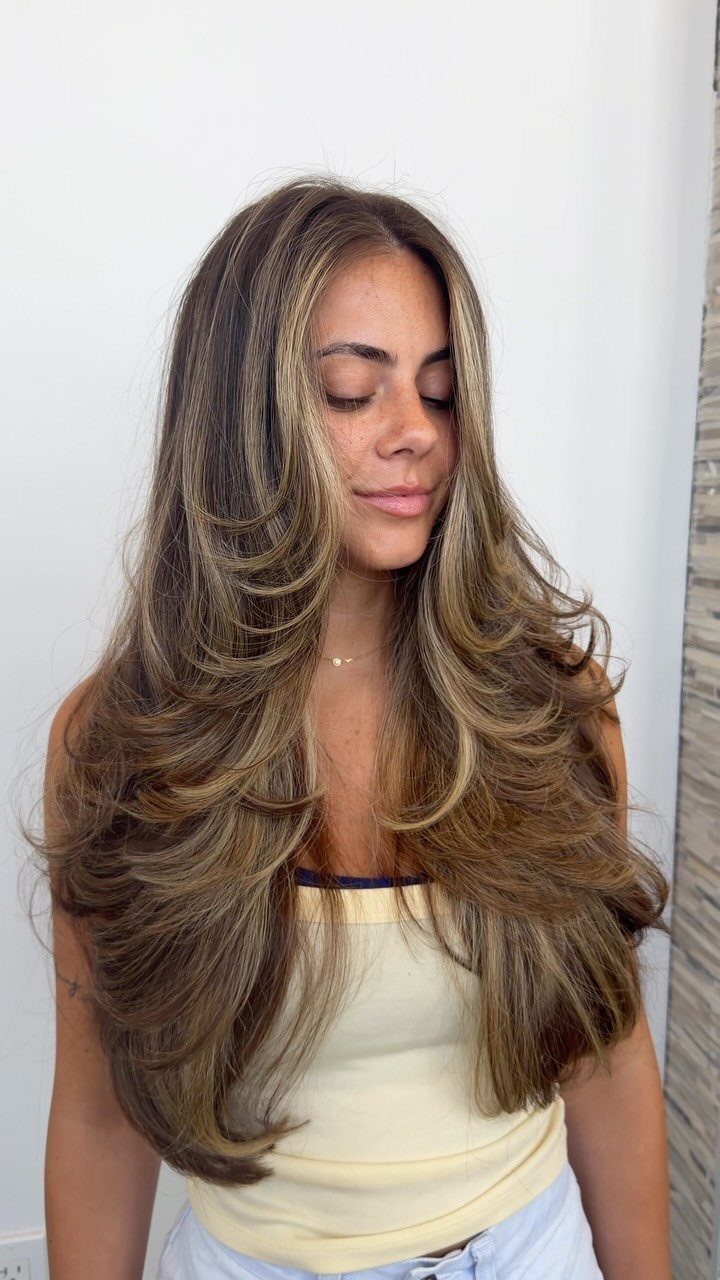
Layers cut through the full length, starting several inches below the crown and continuing to the ends, build volume without removing weight at the perimeter.
The heaviest layering sits through the mid-lengths, where the pieces stack to create lift and movement.
Ask for long layers with the shortest pieces starting around chin or shoulder level.
Run a round brush through as you dry to lift the crown and keep the layers smooth, or wrap sections around a large curling iron for soft bends halfway down.
The shape reads as full and textured, and it works best on medium to thick hair that can support the volume.
Long-layer Styling and Maintenance
Pull sections taut as you work if you want the hair to lie flat, or roll the brush under at the ends to bend them inward.
Mid-lengths and ends styled with a curling iron or hot rollers make the layering more visible; without heat, the layers still move but read subtler.
Ponytails work with most layered cuts.
Consultation and Bang Upkeep
A consultation before the cut is the time to ask how often the fringe will need trimming and how much time styling will take each morning.
Most salons offer free bang trims between full appointments, so the upkeep doesn’t mean paying for a cut every few weeks.
Bangs need more maintenance than the rest of the hair. Book a trim before the fringe becomes a problem, not after.
Frequently Asked Questions
Do bangs look better with layers?
Bangs add focus and dimension to a layered cut, and the layers keep the overall weight balanced so the fringe doesn’t sit heavy.
The two work together: blunt bangs contrast with the movement below, and wispy or curtain bangs blend into face-framing layers for a softer transition.
Layers also give you styling options, since you can still pull everything back even with shorter pieces around the face.
Are bangs in or out for 2026?
Long layers paired with bangs are showing up across style boards in 2026, with versions that feel looser and more personal than polished.
The trend leans toward curtain bangs, wispy fringes, and textured cuts that grow out without a hard line. Blunt and straight bangs are still around for contrast, but the overall direction is softer and easier to live with.
What are the trends for layered hair in 2026?
Long layers are trending because they work with textured styling and updos while keeping enough length for versatility.
Face-framing pieces add shape without shortening the back, and layering through the ends creates movement that shows up in waves or blowouts. The cuts favor texture over polish, with wispy bangs and tapered ends that grow out gradually.
Why are long layered haircuts trending?
Long layers work with textured styling like waves and voluminous blowouts, giving you face-framing pieces up front and length in the back for updos or ponytails.
The layering adds movement and dimension without requiring a shorter cut, and the versatility means the same haircut adapts to different styling approaches.
Even on-the-go styles like ponytails look more finished when wispy layers and bangs are part of the cut.