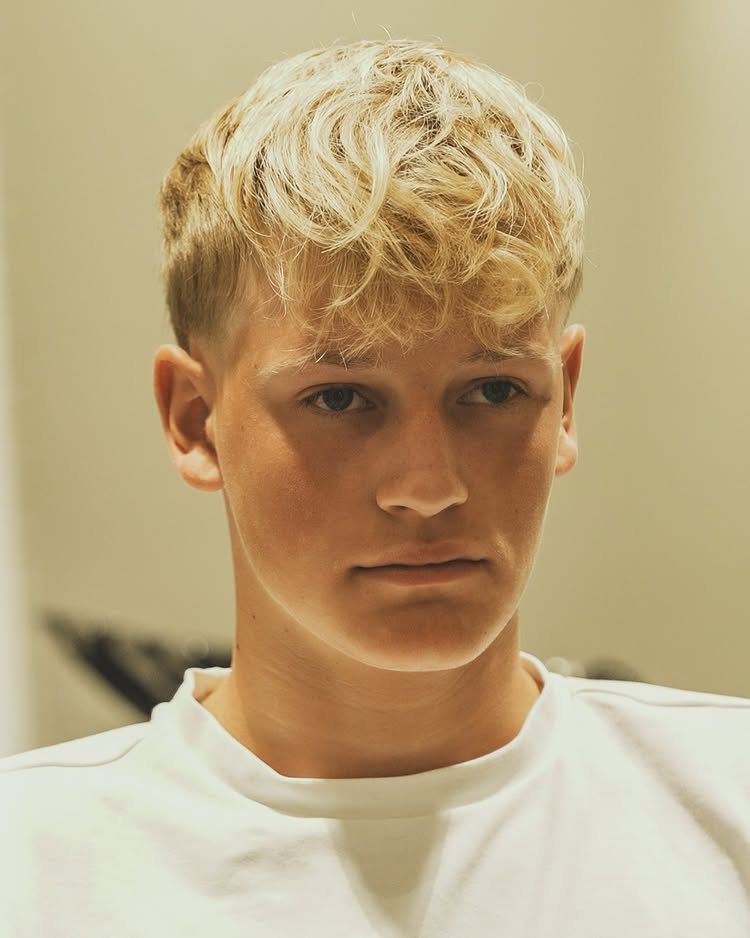
The fringe sits forward and close to the forehead, the sides taper or fade down to skin, and the top holds enough length to push texture in whatever direction your hair naturally wants to go.
Choose based on how much time you have each morning: the skin fade and high fade need a touch-up every 3–4 weeks to keep the line sharp, while the textured and messy versions hide regrowth longer and let you stretch trims to 6 weeks if you can trim the fringe yourself between visits.
Curly versions need nothing but curl cream scrunched through damp hair, and the silver crop requires regular toning to keep the color from sliding into brassy yellow.
1. Curly French Crop
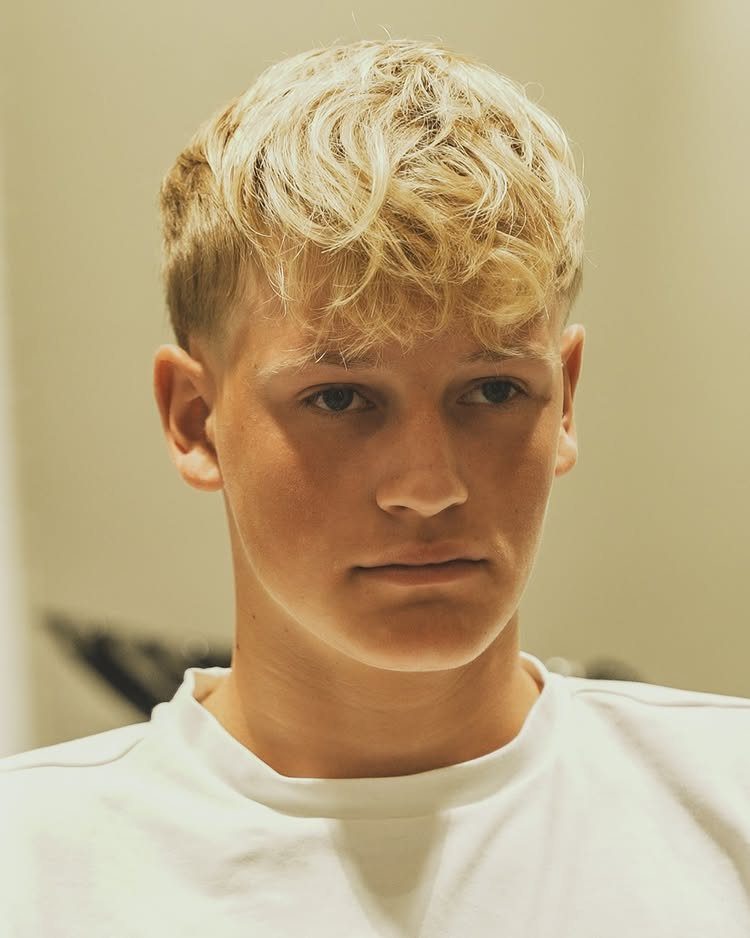
The top holds its natural curl while the sides taper close, giving you all the texture of curls without the bulk at the ears and neck.
If your curls form tight coils, this cut keeps them visible instead of shaving everything down or leaving them to sprawl.
Most stylists will use clippers on the sides and scissors on top to preserve curl length. The fringe sits forward, so styling is as simple as scrunching in a curl cream while damp and letting it dry.
Curls grow quickly, so the taper needs frequent touch-ups to stay clean.
According to French celebrity hairstylist Rudy Martins, "Most French girls had this haircut as children in Paris (often cut by their own mothers!). While the cut has a sweet and innocent touch, it’s also innately cool without trying too hard."
2. Textured French Crop
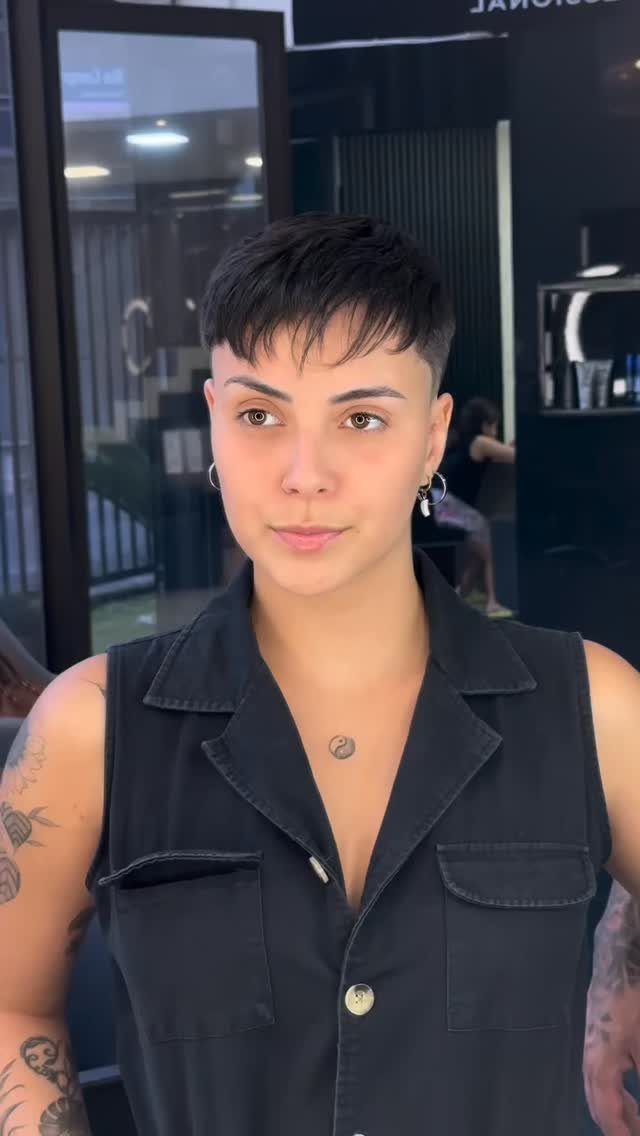
Choppy layers through the top add height and movement, so the cut reads as intentionally rough rather than flat. That texture makes fine hair look fuller and gives thick hair direction instead of weight.
Ask for point cutting or a razor to break up the ends.
The fringe stays short and can be worn forward or swept to one side. Styling takes a small amount of paste or clay worked through dry hair, then separated with your fingers.
The layered texture hides growth better than a blunt crop, so you can stretch trims longer if the sides stay tapered.
3. Short Layered Pixie
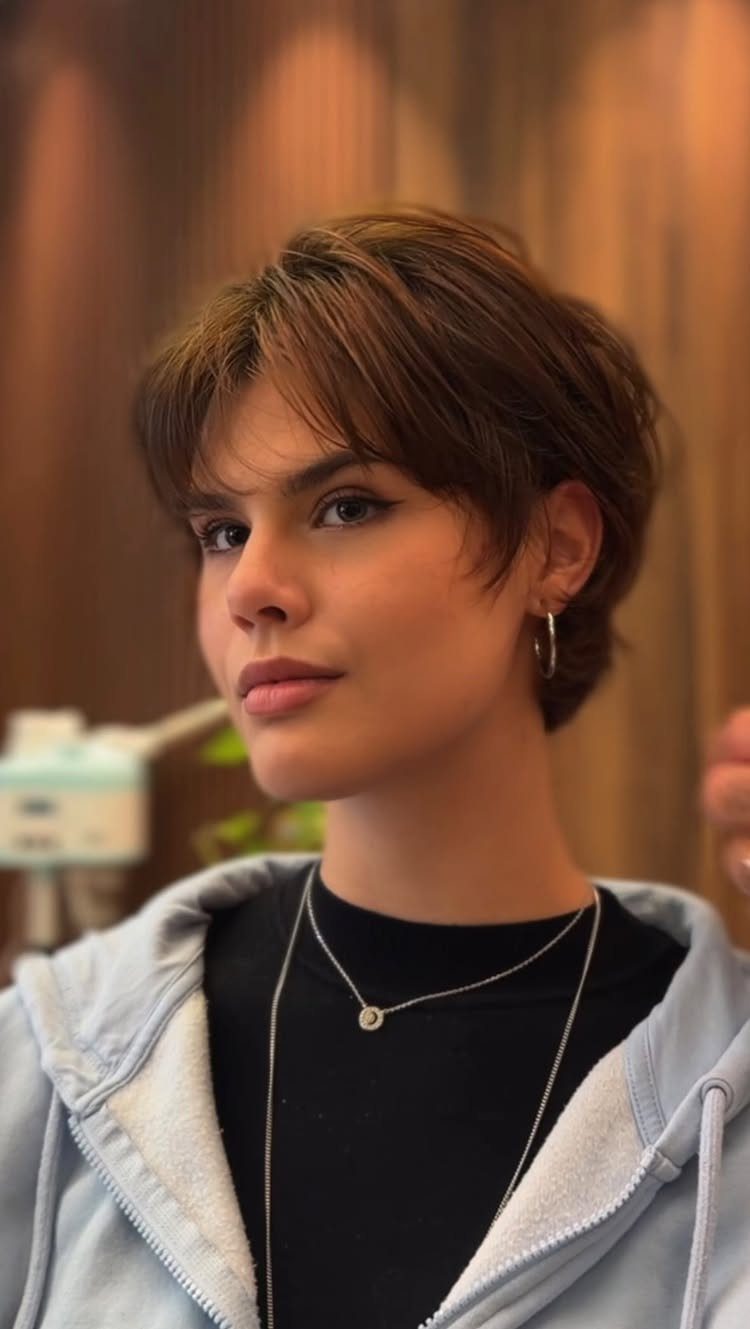
The back and sides sit close, and the top keeps enough length to push around or sweep to one side.
That length on top gives you options: wear it forward for a softer line or brush it back for more forehead.
If your hair is fine, the layers will lift at the crown without needing product.
Thicker hair may need a light texturizing spray to keep it from lying flat. Styling is usually just a quick tousle with your fingers after washing.
4. Curly Pixie
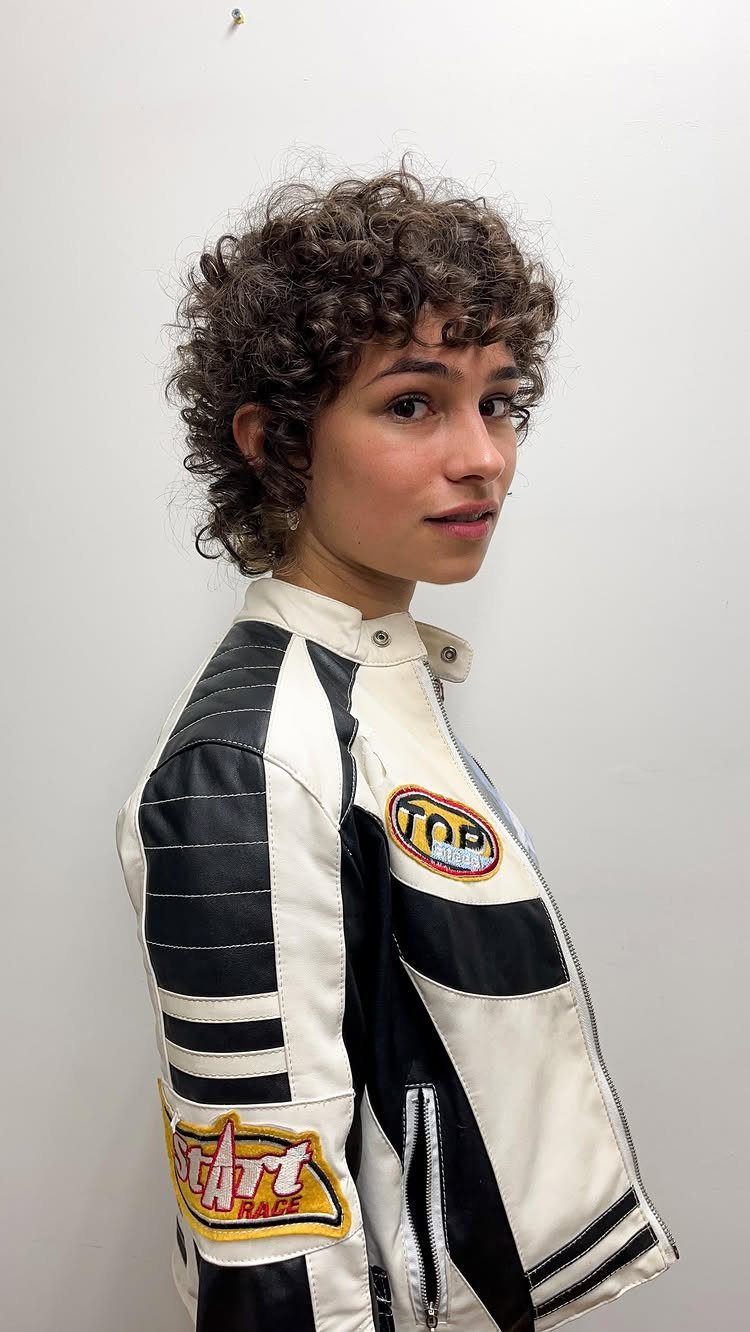
Natural waves shape the whole cut, so you skip the smoothing step that longer curly styles often demand. The sides stay short, and the top is left just long enough for curls to form their own pattern.
Loose curls lift and fan out where the crown sits.
Tighter curls sit closer and read as a textured cap. Styling takes almost nothing: work curl cream through damp hair, scrunch it, and let it dry on its own.
This cut holds its shape as it grows, then the sides start to push out and need a cleanup.
5. Messy French Crop
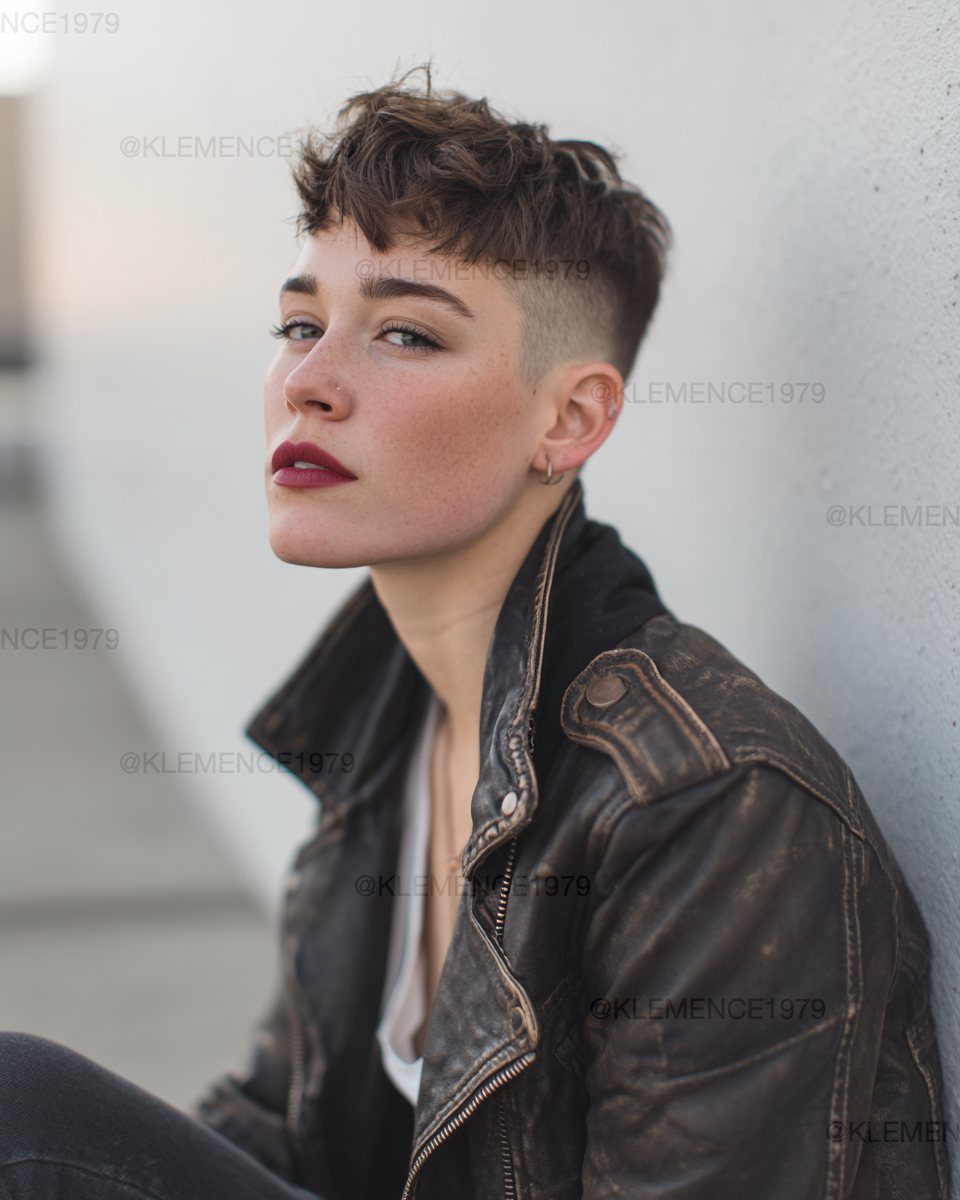
The top sits longer and is worn with deliberate disorder, pushed forward or to one side and separated into uneven pieces. That tousled finish gives the cut a lived-in look that works for wavy or straight hair.
Blow dry the top with your fingers to add lift, then work a matte paste or clay through the lengths and pull small sections in different directions.
The fringe can fall forward or be pushed up slightly, depending on how much forehead you want to show.
6. French Crop Mullet
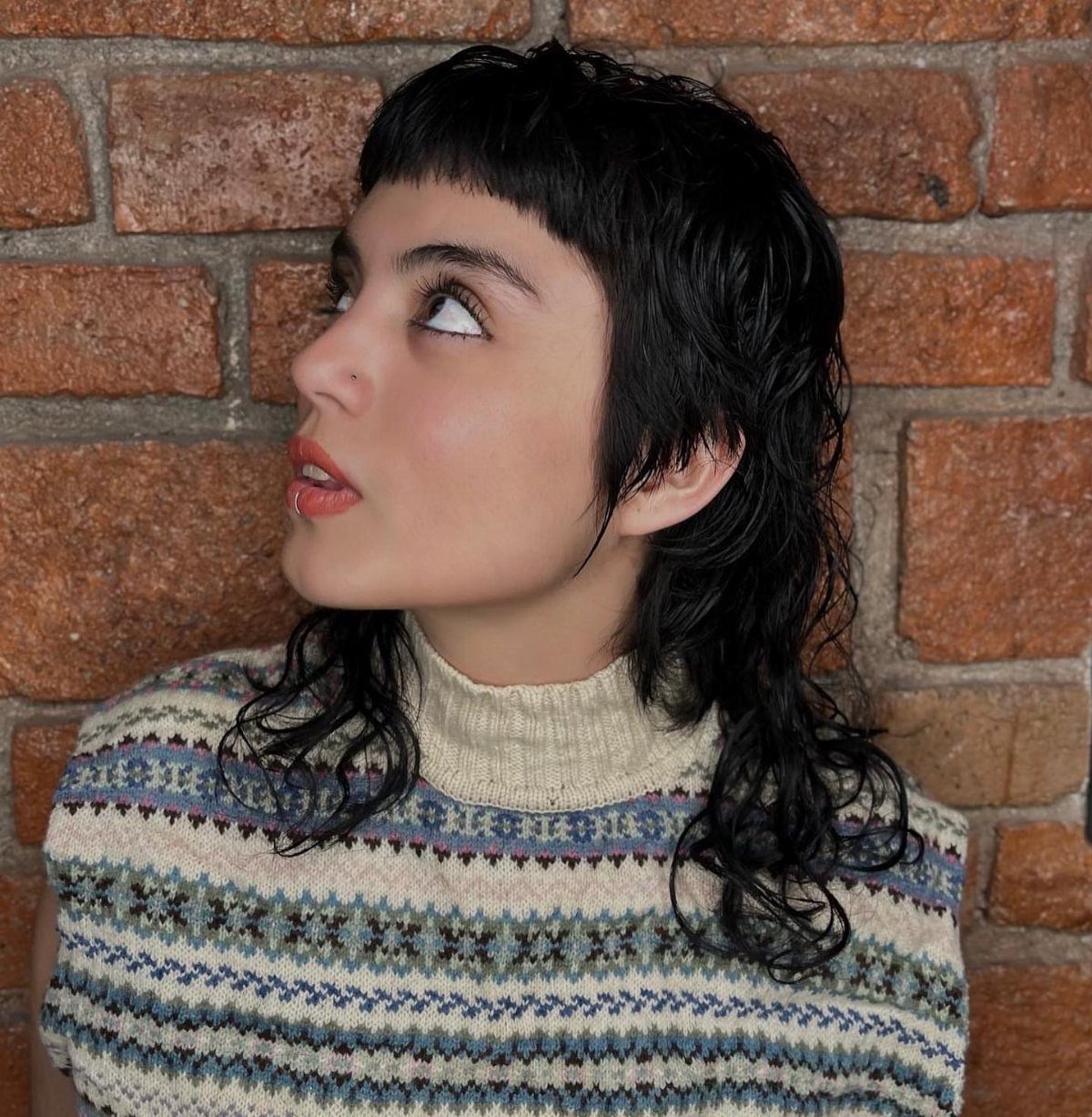
The fringe stays short and blunt, while the back extends into a longer mullet that can reach the shoulders or stop mid-neck.
That contrast between the cropped front and the length behind makes this one of the more dramatic versions of the French crop.
The back can be worn straight, wavy, or curly, and the sides usually taper or stay short to keep the shape readable.
Styling the fringe takes a flat iron or blow dryer, and the back needs whatever your texture calls for: a curl cream, smoothing serum, or nothing at all.
Regular trims keep the fringe sharp and the back length even.
7. Short Bangs
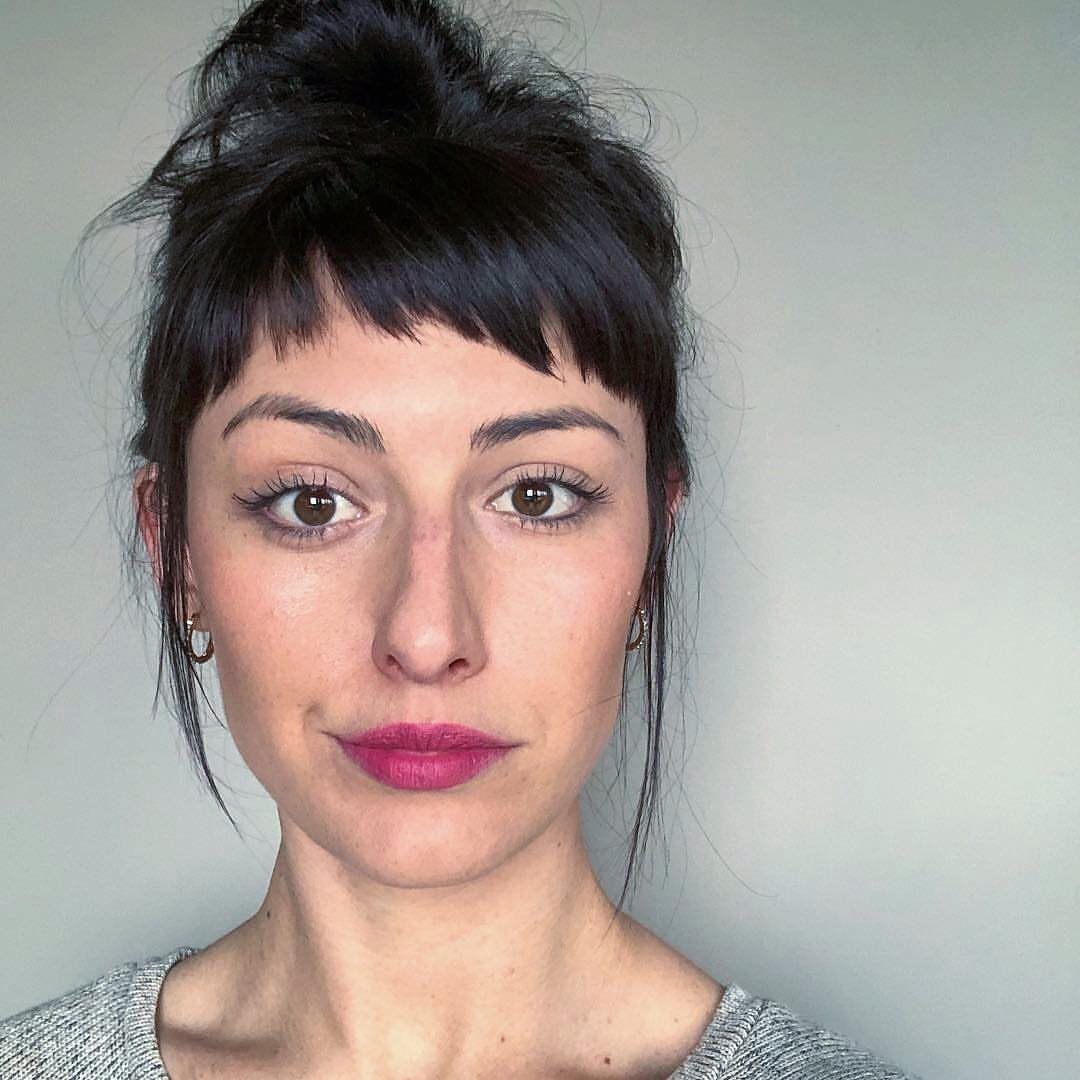
The bangs stop well above the brows, leaving the forehead open and giving the face a sharper, more geometric frame.
That short length makes the cut read as bold rather than soft, and it works best when the rest of the hair is kept equally short or pulled back.
If you style at home, trim the bangs every 2 to 3 weeks to keep them from dropping into your eyes. The cut needs almost no daily work: wash, towel dry, and go.
8. Textured Pixie
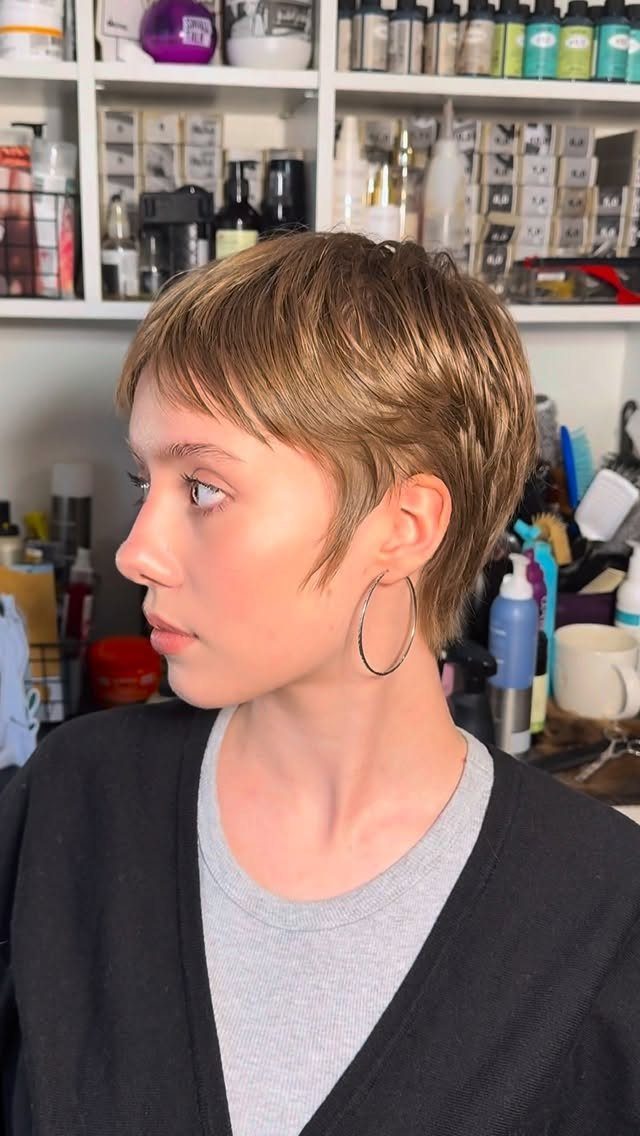
Choppy, piece-y layers give the pixie a roughed-up finish instead of a polished one. The texture breaks up the line where the hair meets the scalp, so the cut looks fuller and less precise.
Thicker hair may need a second pass with a matte product to keep the pieces defined.
9. Skin Fade French Crop
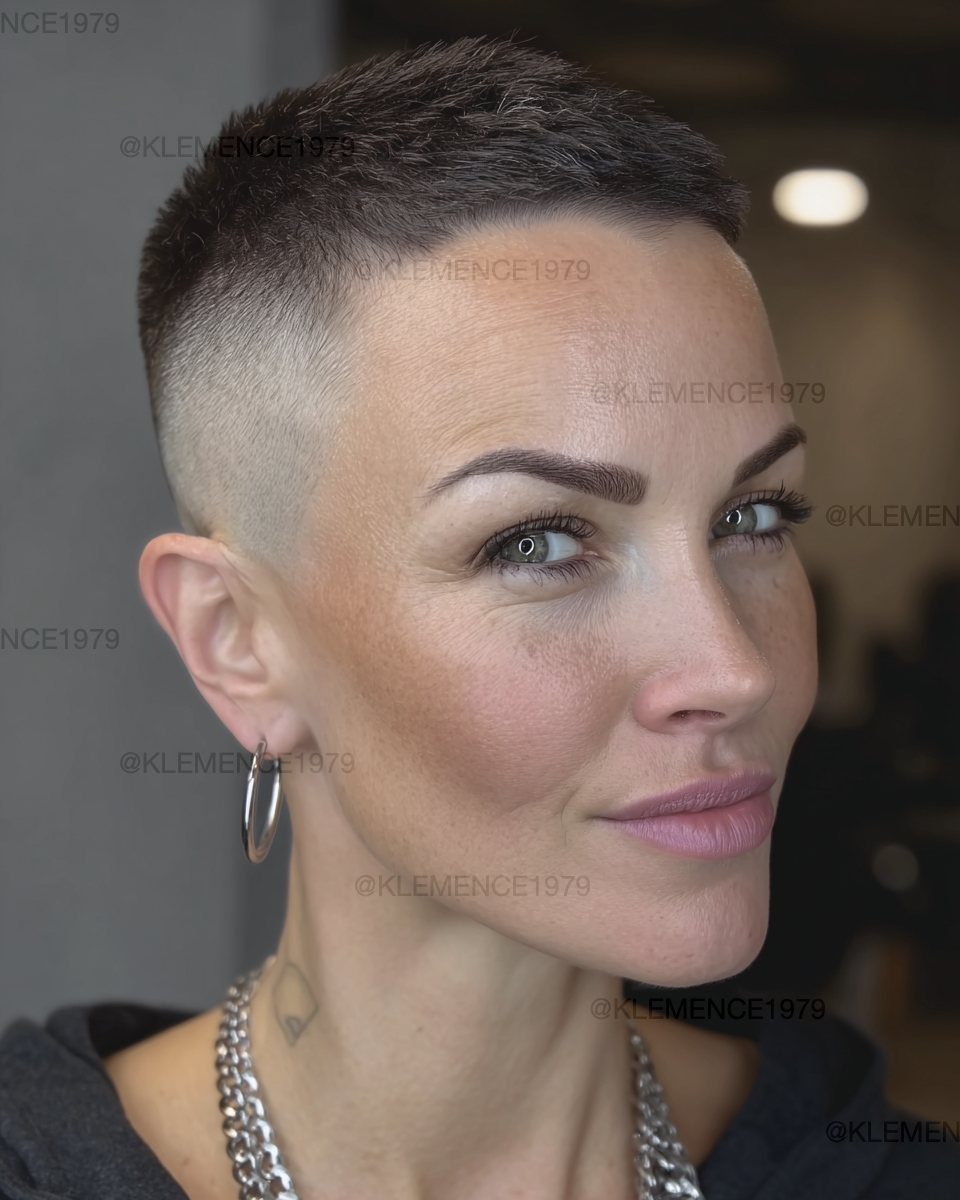
The sides taper all the way down to bare skin, leaving no visible hair below the fade line. That contrast makes the textured top stand out and gives the cut a clean, graphic edge.
The fade needs upkeep to stay sharp, since even a small amount of regrowth softens the line.
10. High Fade French Crop
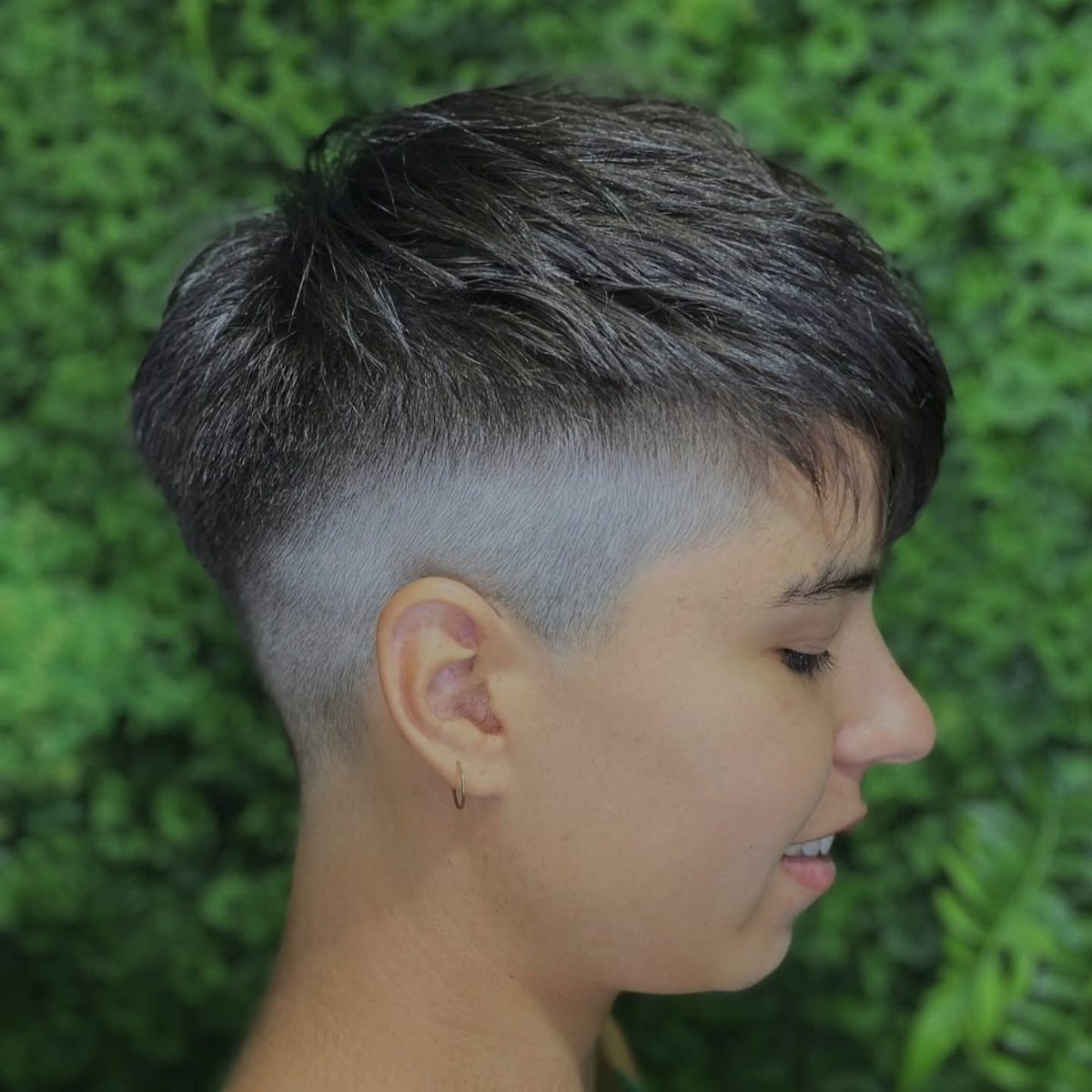
The fade begins above the temples instead of lower down, so more of the head shows a gradual taper rather than solid length. That higher start point makes the cut look taller and gives the face a longer line.
The fade itself needs regular touch-ups to keep the transition smooth.
11. Pixie with Shaved Undercut
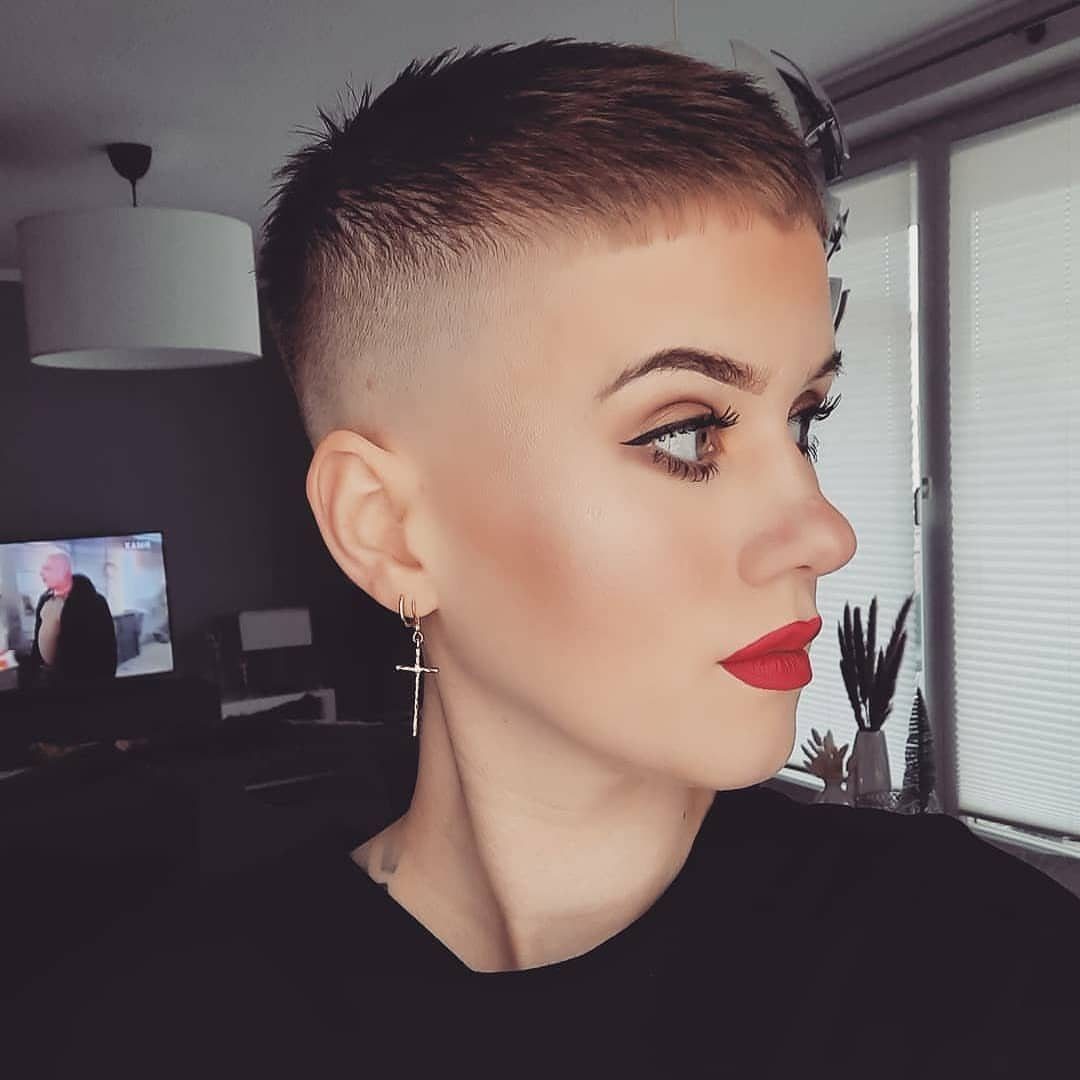
The top keeps enough length to style or sweep, while the sides and back are shaved close or taken down to the skin.
That undercut gives you cooling in summer and a strong contrast between the textured top and the bare sides.
Daily styling is minimal: towel dry, add a small amount of product to the top if you want separation, and go. The shaved sections grow back quickly, so you’ll need a touch-up to keep the line sharp.
12. Uneven Asymmetrical Crop
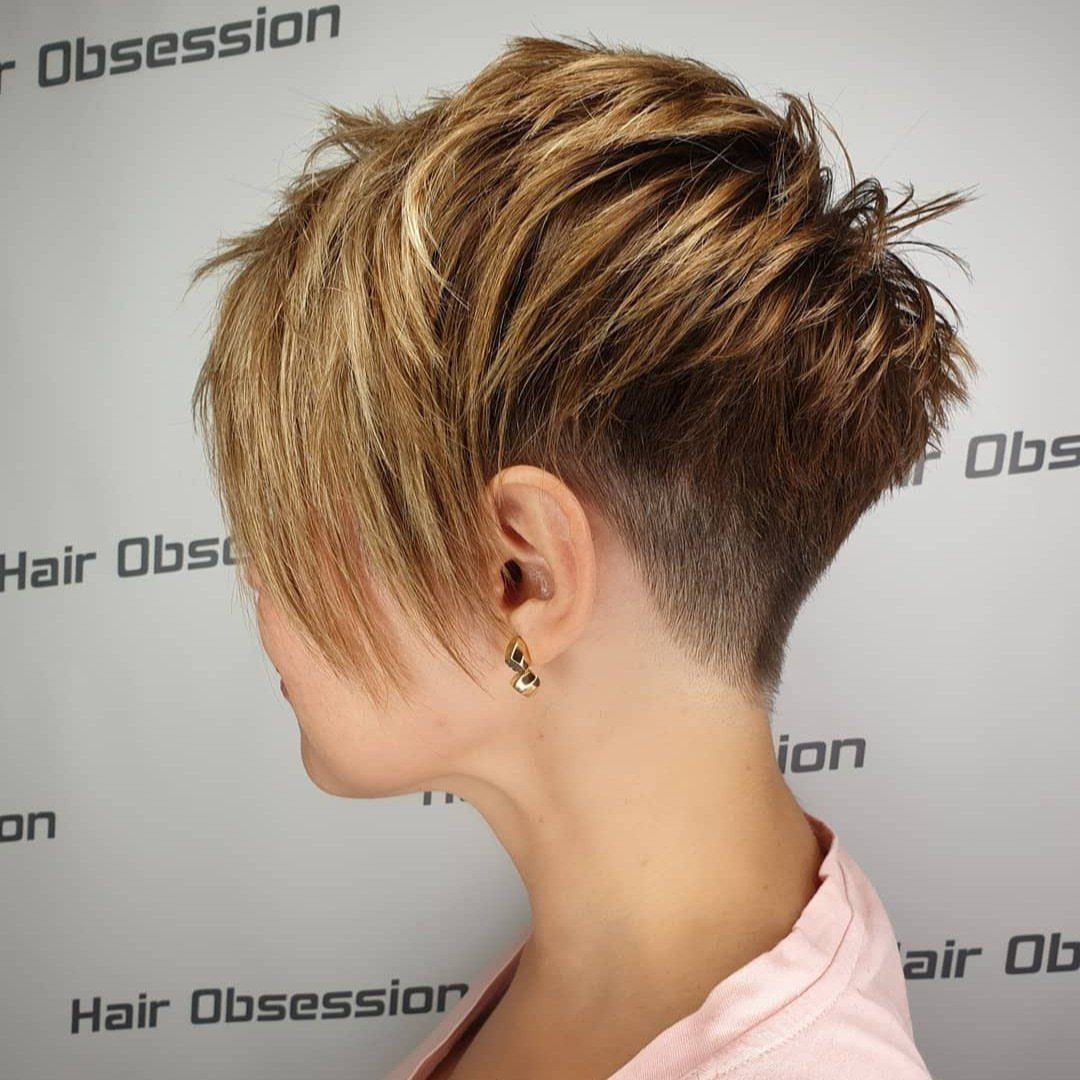
One side sits longer than the other, so the fringe sweeps across the face at an angle instead of falling straight.
That asymmetry gives the cut more movement and works well if you prefer to part your hair to one side.
Styling takes a flat iron or blow dryer to smooth the longer side and direct it where you want it.
The shorter side can be tucked behind the ear or left forward. The uneven lengths make regrowth less obvious, so trims can be spaced out slightly.
13. Silver French Crop
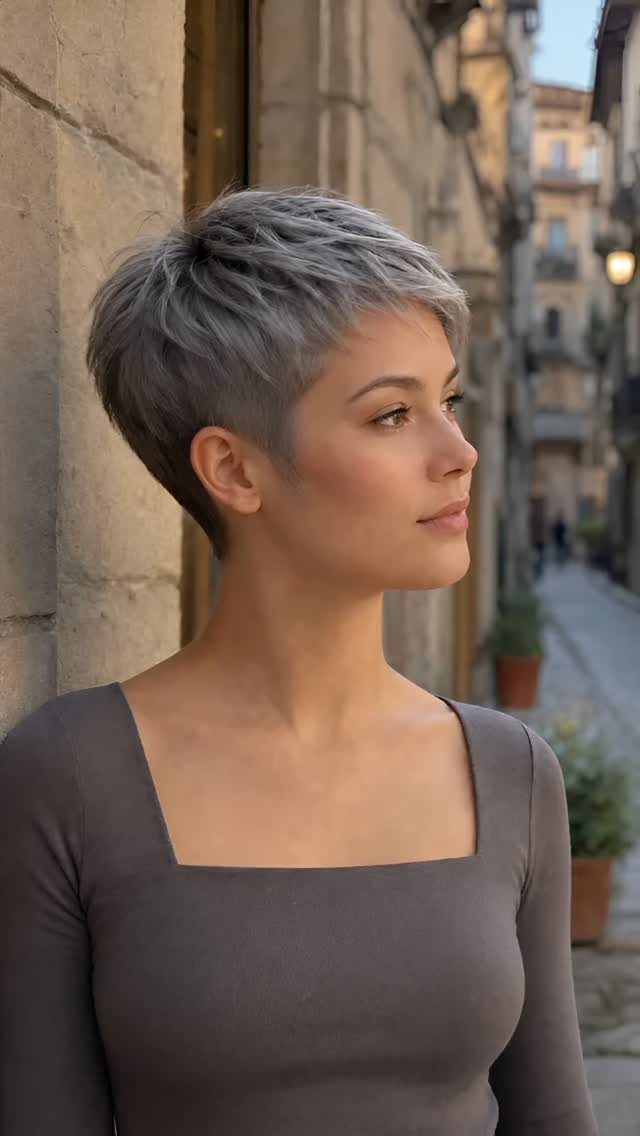
Gray lifted to silver through toner keeps the crop looking intentional rather than half-grown, and the layered top holds enough texture to avoid reading as flat or stark.
The contrast between the cool tone and the closely cropped sides makes the cut more graphic.
Maintaining the color means regular toning to keep the silver from sliding into yellow or brassy tones. Purple shampoo extends that window slightly but won’t fix the color once it shifts.
Fine hair often takes silver more evenly than coarse hair, which can hold warm undertones longer.
French Crop Upkeep
The sides grow faster than the top, so the taper softens first. Most people book a cleanup every 3–4 weeks to keep the fade or taper sharp, though the cut itself still works through week 4.
By week 5, the fringe usually reaches your eyes.
If you can trim it yourself between salon visits, you’ll stretch the full appointment to 6 weeks. Use sharp hair scissors, cut dry in good light, and take less than you think you need.
Growing it out means keeping appointments for the back and sides while the top catches up in length.
How often you touch up color depends on the job: partial highlights every 8–10 weeks, full bleach roots every 5–6, lowlights maybe once a year.
Choosing and Explaining the Cut
Bring a photo of someone with your hair type, not just your face shape. Straight hair and curly hair produce two entirely different crops, and texture drives the cut more than face shape or head size.
Bring a front view and a side view so the stylist can read both the density and the drop angle. Say whether you want a blunt or textured edge, because stylists default to their own preference if you don’t specify.
If you have a cowlick, point it out while your hair is wet so they can adjust the fringe length before they start cutting.
Ask for the top length in inches, the side length or clipper guard, and the type of taper: gradual scissor blend or a fade.
Short-hair Styling Products
Matte paste or texture cream works for most crops. Use a pea-sized amount on damp hair, push it forward toward the fringe, and leave it alone.
For a clean finish, aim the dryer nozzle down the fringe, follow with a thin layer of styling cream, and pull the ends apart with your fingers.
Without heat, press out water with a microfiber towel, work in texture cream, rake it all forward, and leave it alone for 10–15 minutes. One quick shake once it dries and everything falls where it should.
Gel or mousse adds hold if your hair is wavy or curly and you want the texture to stay defined through the day.
Frequently Asked Questions
What face shape is best for a French crop?
Oval, square, and heart-shaped faces work especially well with a French crop because the fringe and textured top balance facial proportions without adding bulk.
Round faces benefit from keeping the sides short and adding height on top to lengthen the face. Most face shapes can wear this cut with small adjustments to fringe length or side taper.
What are the key characteristics of a French crop?
Short sides, a longer textured top, and a fringe that moves forward are the 3 defining features.
Sides can be clipped tight with a fade or scissor-cut for a softer taper, while the top keeps enough length to move. The fringe can be styled blunt for a structured look or textured for a softer finish.
What products do I need to style a French crop?
Matte paste or texture cream handles most French crop styles, applied to damp hair in a pea-sized amount and pushed forward. A blow dryer and styling cream give a cleaner finish if you prefer more control.