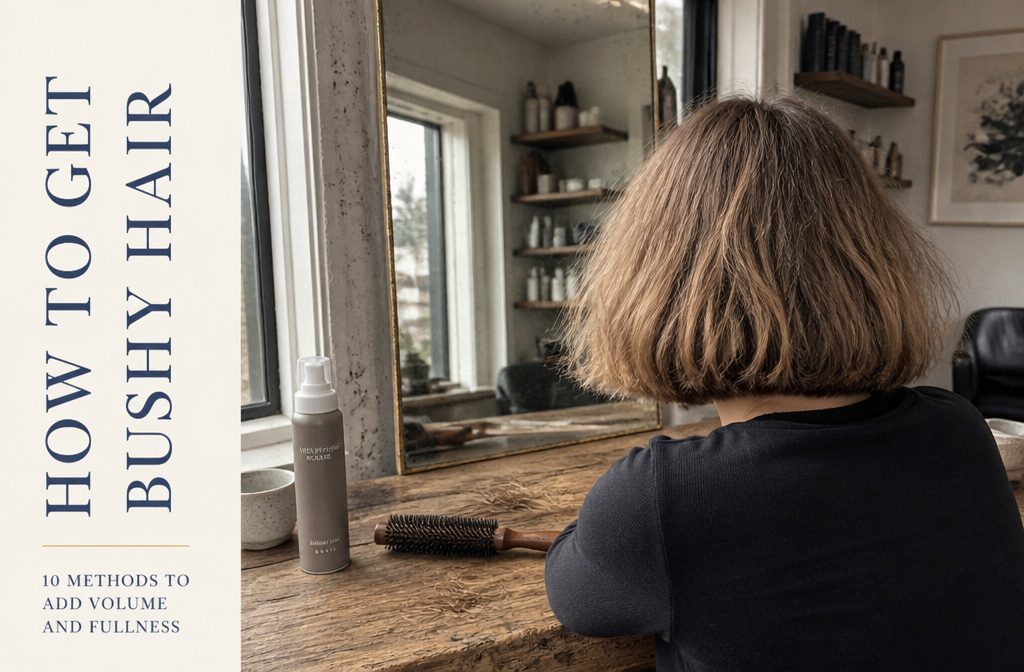
Getting bushy hair comes down to cut, product choice, and scalp care.
Most of the thickness you see is air and spacing between strands, not strand diameter itself, and the usual mistake is layering fine hair when a blunt perimeter would have kept all the density at the ends.
Blunt bobs hold fullness where it shows; volumizing mousse at the roots while hair is damp gives lift that lasts through the day without the weight that flattens finer textures.
1. Choose a Haircut That Creates Fullness
The cut matters more than most treatments, and what you ask for depends entirely on whether you need hair to look fuller or just need thick hair to behave.
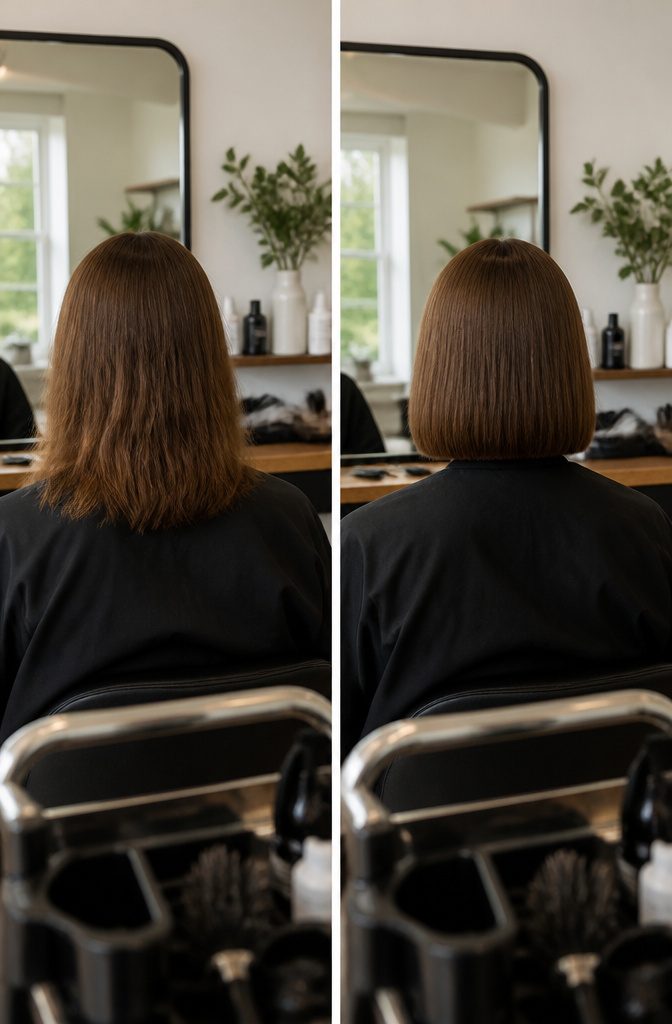
For fine hair, a blunt, one-length bob or lob wins every time.
Keeping all the hair at the same length prevents the ends from looking straggly and creates the appearance of thickness where it counts. Excessive layering pulls volume out and leaves fine hair flat.
Thick hair calls for the opposite approach. Layers remove weight without losing length, and that makes styling faster and keeps hair from sitting heavy at the ends.
A textured lob or a shag with choppy layers cuts through bulk and gives the hair movement. Face-framing layers starting at the cheekbone or jawline pull weight away from the perimeter and let you keep length everywhere else.
The goal flips depending on type: fine hair needs density at the ends, thick hair needs less of it.
2. Use Shampoo and Conditioner Suited to Your Hair’s Needs
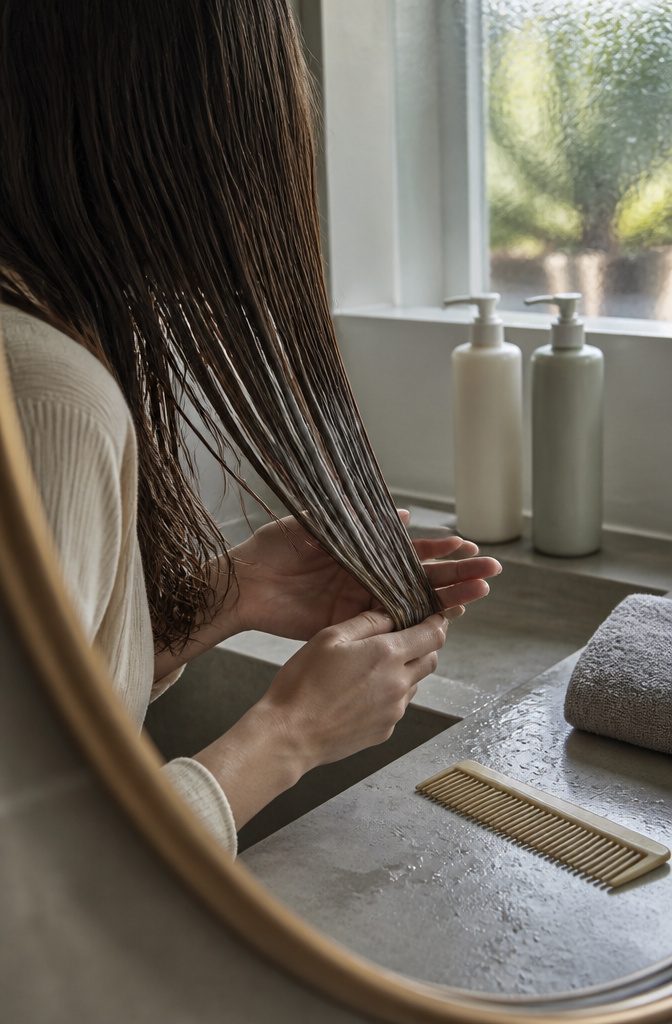
Volumizing shampoos lift at the roots and create an airier feel, while thickening formulas plump each strand with proteins, vitamins, and moisture to make fine hair appear denser.
Both work, but thickening shampoos target the strand itself rather than just root lift. Sulfate-free versions avoid product buildup that can flatten hair before you even start styling.
Conditioner matters as much as the shampoo you pick. Lightweight formulas on the mid-lengths and ends add softness without dragging down volume.
Heavier, deep-conditioning treatments flatten fine hair, so I skip those entirely and keep conditioner away from the roots. The Vegamour Gro Revitalizing Shampoo and Conditioner Kit ($86) pairs both in one system designed for fuller-looking hair.
Washing frequency splits depending on hair type.
Fine hair may need washing every other day to avoid oil buildup that makes it look thinner. Thick hair holds less oil at the root and can stretch four to seven days between washes.
Most advice lands somewhere in the middle: about two to three times weekly. Dry shampoo at the roots buys another day when oil starts to show.
3. Use Styling Products Selectively to Add Volume
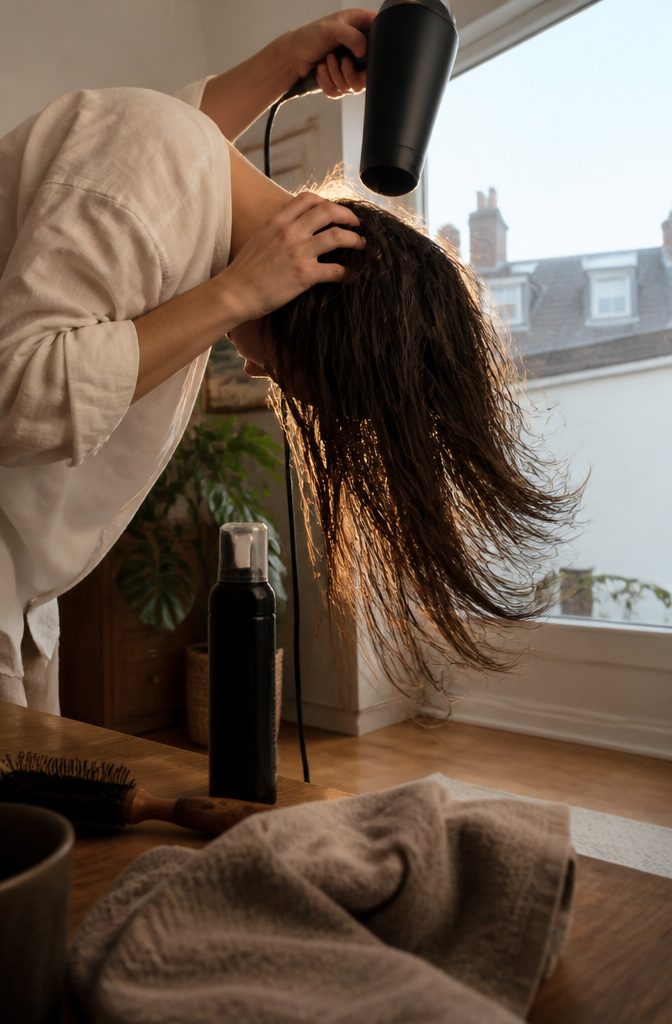
Root lifters and volumizing mousses do the most to add body without weighing strands down.
Apply mousse at the roots and mid-lengths while hair is still damp, then blow-dry upside down. Garnier Fructis Sky-Hi Volume Lifting Mousse runs $5.99, and SexyHair Big Spray & Play Volumizing Hairspray sits at $23 for a root-targeted spray option.
I reach for the mousse when I want lasting lift, the spray when I need a quick fix on dry hair.
Strand-coating formulas like Garnier Fructis Hair Filler + Polypeptides Fullness Repair Thickening Spray ($9.99) wrap each strand to make it look thicker, though they add weight that can flatten finer textures if you go heavy.
Garnier Fructis Mega Full Thickening Lotion ($6) and Sky-Hi Volume Hairspray ($7.99) both add structure without stiffness.
The warning I follow: stick to one product per styling session. Layering a mousse, a spray and a lotion invites buildup that makes hair look dull and feel limp.
4. Limit Heat and Use Gentler Heat Styling
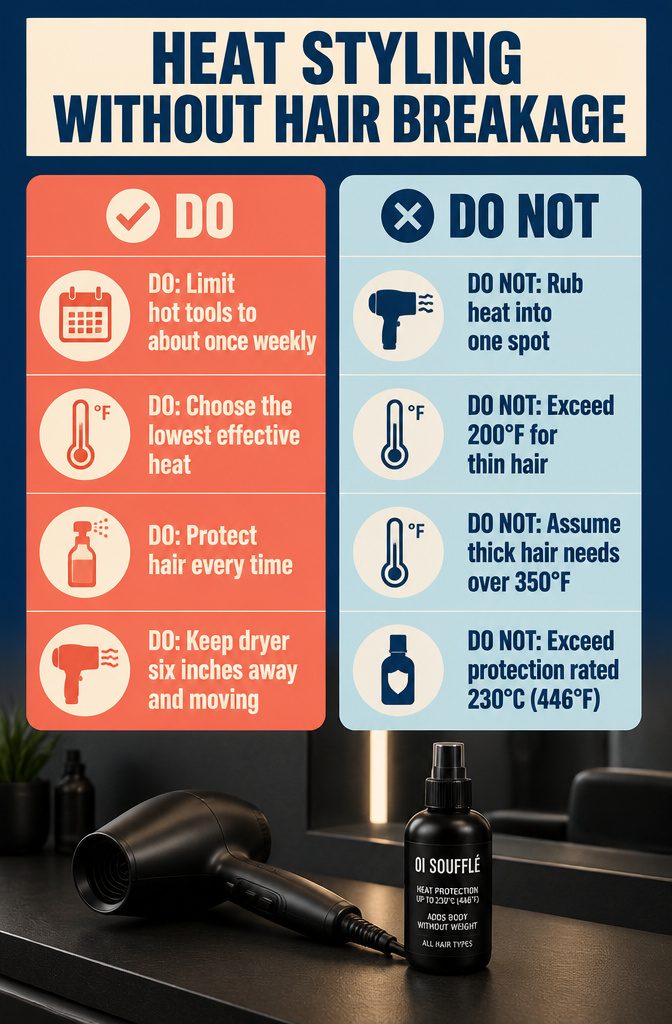
Frequent heat styling dries hair out, and dry hair breaks more easily. Breakage leaves you with shorter, uneven ends that flatten the overall shape.
I keep hot tools to about once a week and use the lowest heat setting that still does the job. Thin hair may only need a temperature around 200°F while thick hair might require 350°F to hold a style.
A heat protectant spray matters every single time. OI Soufflé offers heat protection up to 230°C (446°F) and adds body without weight, which makes it useful for fine hair that needs both volume and shield from damage.
When blow drying, hold the dryer about six inches from your hair and keep it moving rather than concentrating heat on one spot.
That distance and motion prevent the kind of localized damage that weakens strands and costs you fullness over time.
5. Handle Wet Hair Gently and Reduce Breakage
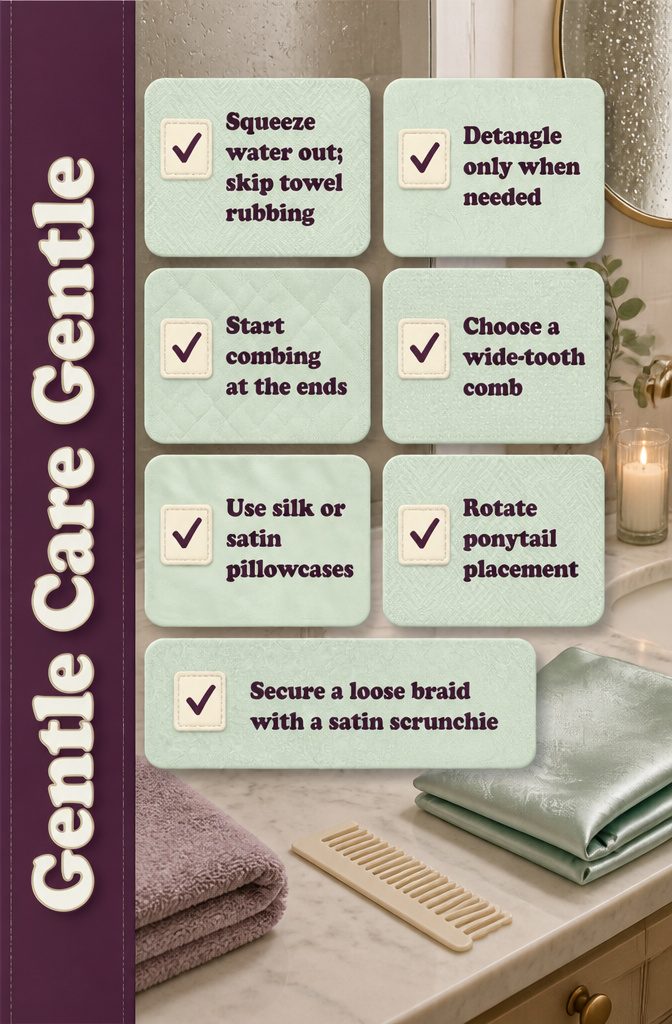
Wet hair stretches more easily than dry hair and snaps with much less force, so how you handle it in the first few minutes after washing matters for the amount you keep.
The usual instinct after a shower is to rub with a towel and comb through tangles right away, but vigorous rubbing and pulling through wet strands are two of the fastest ways to lose hair you were counting on keeping.
A better sequence: squeeze the water out instead of rubbing, use a wide-tooth comb only if you have to detangle, and start at the ends rather than dragging from the root down.
Sleeping on a silk or satin pillowcase cuts down on friction that can snap hair overnight, and the same fabric works for hair ties.
If you wear your hair up regularly, avoid putting the ponytail in the same spot every time.
Repeated tension in one place weakens the shaft there and leads to breakage where the elastic sits. A loose braid secured with a silk or satin scrunchie spreads the tension and lets you skip the tight pull.
6. Keep the Scalp Clean and Address Buildup
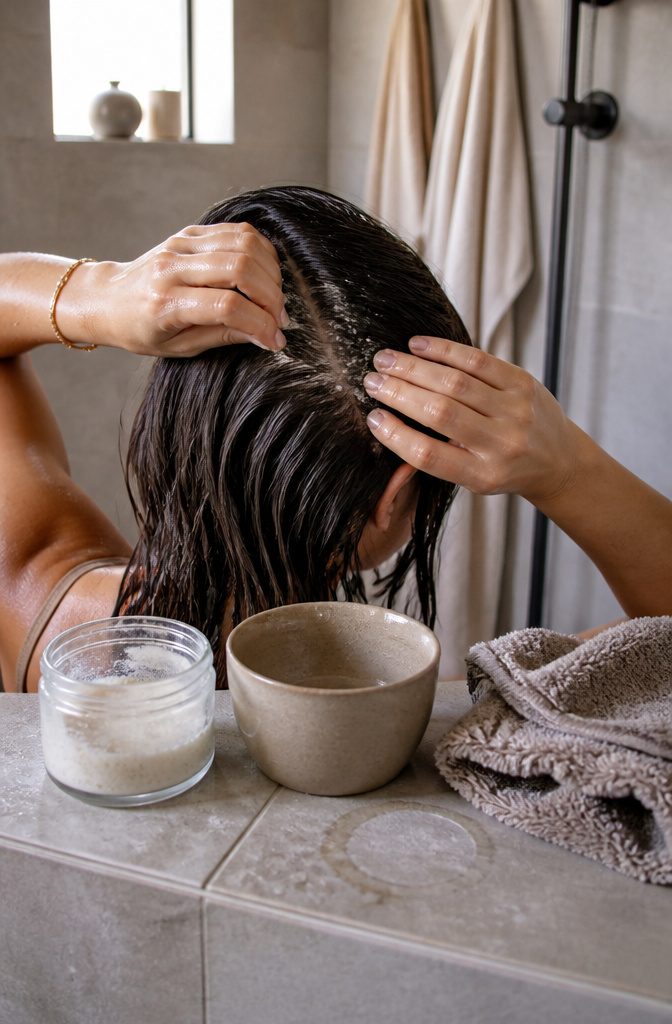
Product buildup on the scalp weighs hair down at the root, which is exactly where volume starts.
Over time, styling products, shampoos, conditioners, and oils accumulate on the scalp and around hair follicles. That buildup flattens strands before they have a chance to lift.
The fix is regular exfoliation. A scalp scrub removes residue and environmental debris, leaving a clean surface that lets each strand stand up without the weight of old product dragging it down.
I treat this the same way I think about resetting anything that stops working the way it should: strip it back, start clean, then rebuild.
If you use styling products regularly, a monthly detox with a clarifying shampoo restores volume and shine. Some formulas double as both scalp scrub and deep cleanser, which makes the routine faster.
Exfoliating also increases blood flow to the scalp and can unclog follicles blocked by sebum or product, which matters if thinning is part of the picture.
7. Support Hair With Nutrition and Supplements
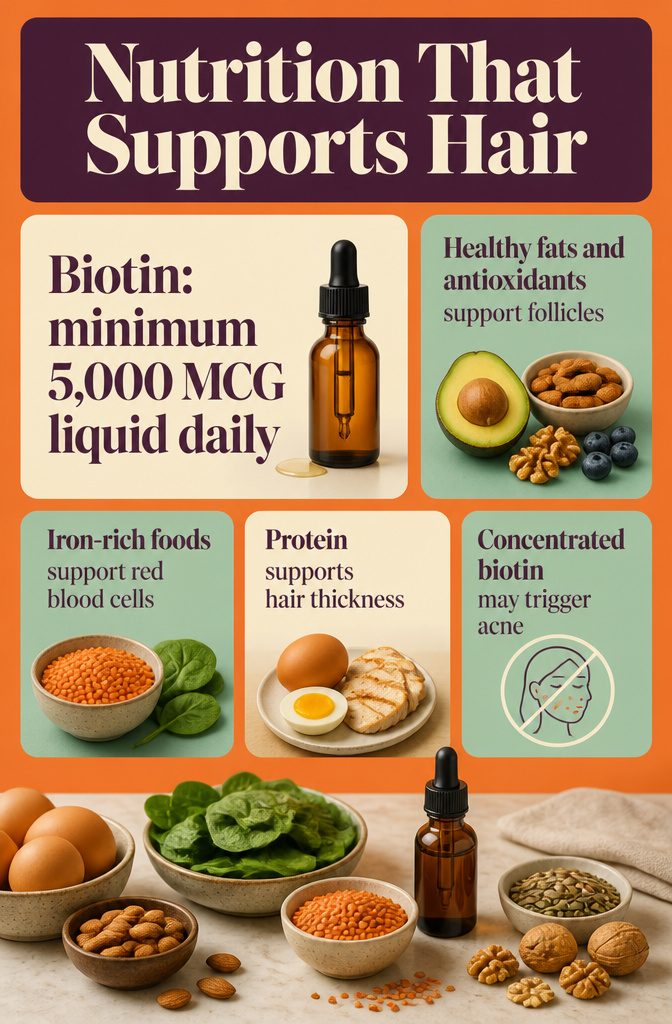
What you eat affects more than general health. Vitamin deficiency affects scalp condition and hair, and a blood test can pinpoint what is missing if thinning has gotten worse.
I see the most talk around biotin, at least 5,000 MCG daily in liquid form, which nutritionist Moon Bedeaux calls her secret weapon for hair, skin, and nails.
One caution: concentrated biotin can trigger acne in people already prone to it, though food sources like egg yolks, legumes, liver, nuts, and seeds contain smaller amounts and should not cause breakouts.
When it comes to hair growth and improving its condition, my secret weapon has to be biotin. It’s the hair, skin and nail strengthening vitamin. I recommend taking this in a minimum 5,000 MCG liquid form daily in order to get the most recognizable results.
— Vogue
Beyond biotin, a balanced diet matters: healthy fats, antioxidants to strengthen follicles, iron-rich foods to boost red blood cells, and protein.
Multivitamins with keratin, L-lysine, soya protein, iron, and vitamins B12 and D3 all help hair thickness. Lean proteins, leafy greens, and carrots for vitamin A round out a simple nourishing baseline.
8. Use Scalp Massage or Oils

Massaging the scalp supports circulation around the hair follicles, which can help promote growth and thickness over time.
The motion itself stimulates the scalp, and pairing it with rosemary oil adds anti-inflammatory support that can improve scalp health and reduce stress that contributes to thinning.
Rosemary has been shown to thicken strands from the roots and encourage growth, and it is thinner than olive or castor oil, so it absorbs without clogging pores.
I recommend Mielle Rosemary Mint Scalp & Hair Strengthening Oil for regular use.
Warm a small amount between your palms, then massage it into the scalp with your fingertips for a few minutes. You can leave it in or rinse after 30 to 60 minutes.
Use it two or three times a week to keep the scalp loose and circulation moving. A tight scalp from tension or stress is often a factor in hair loss, and regular massage helps counter that.
9. Get Regular Trims
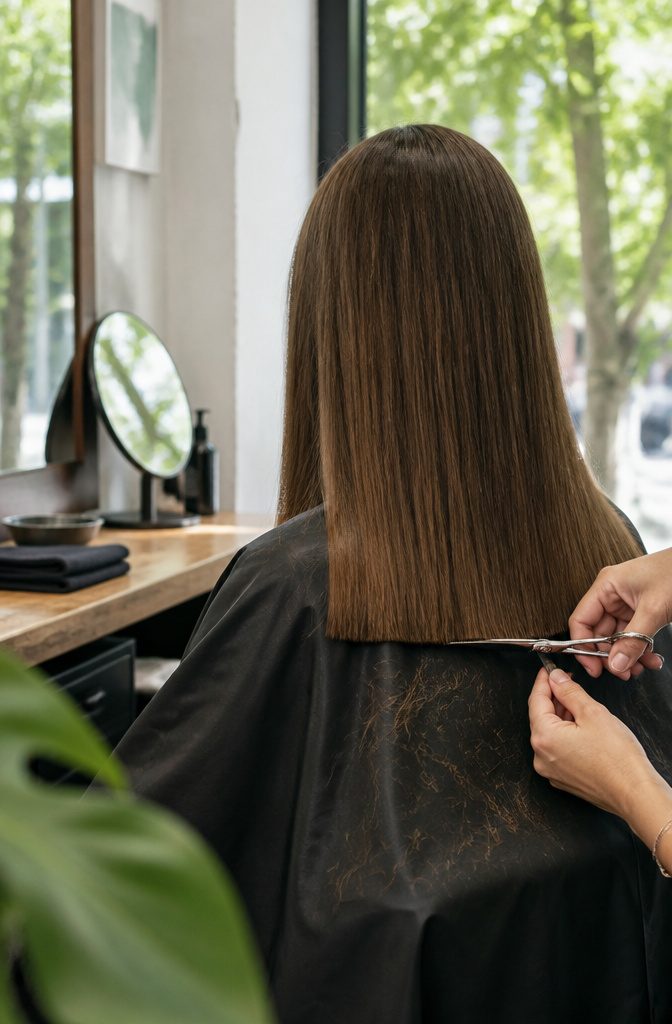
Trims keep split ends from traveling up the shaft and turning full hair into wispy strands that break off mid-length.
The schedule depends on how fast damage shows up: micro-trims every six weeks work if you want to hold the shape without losing any real length, trimming roughly every three months and about an inch above visible breakage handles most routine upkeep, and every eight to ten weeks sits in between.
I lean toward the shorter interval when I’m using heat regularly or if the ends start to snag on fabric, and I stretch it closer to three months when I’m air-drying and keeping product light.
A blunt cut shows thickness better than long tapered ends, so even a quarter inch off can make hair look denser at the bottom where thinning reads first.
10. Consider Professional or Cosmetic Options for Thinning
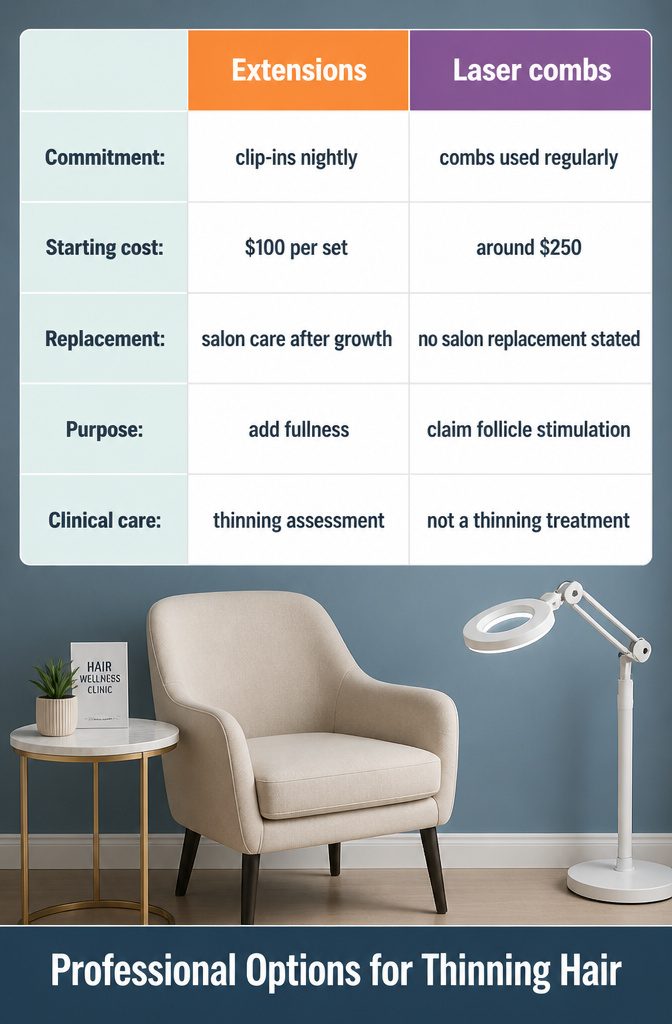
When home methods stop delivering the thickness you want, I turn to what a professional can add or fix. Clip-in extensions come out every night and let you test fullness without commitment.
Glue-in or sew-in extensions stay put for about three months and handle styling heat better, though they need salon replacement when growth pushes the attachment point too far from the scalp.
Expect to spend anywhere from $100 to $1,000 per set depending on the hair quality and method.
Laser combs start around $250 and claim to stimulate follicles over months of regular use. Keratin treatments, which smooth the cuticle and can make each strand look denser, run upward of $50 per visit but may contain formaldehyde.
Genetic thinning responds to different tools: some types reverse with targeted care, others need medical-grade treatments available through clinics that offer both in-person and virtual consultations. Active, pronounced thinning won’t disappear on its own, but clinical support can manage it.
Fuller Appearance Versus Permanent Change
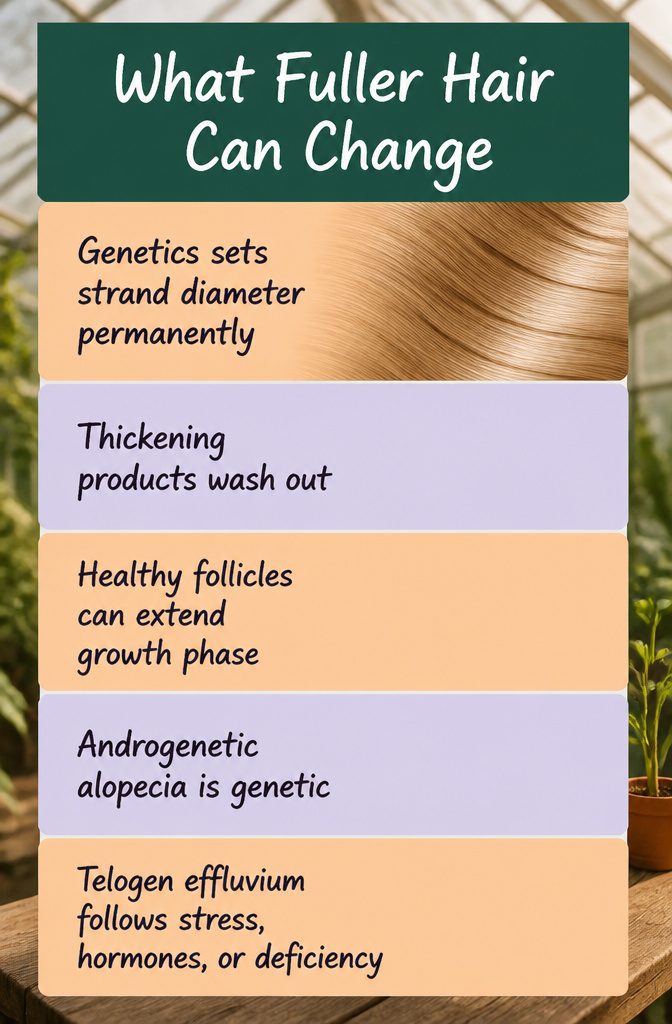
The diameter of an individual hair strand is set by genetics and cannot be permanently changed.
Fine hair stays fine hair. Thickening products can temporarily plump each strand, but the effect washes out.
What can change is the number of strands actively growing at once, and that comes down to follicle health.
A scalp that is well-nourished and free of inflammation gives each follicle its best chance to stay in the growth phase longer and produce hair at its maximum thickness.
Over time, that adds up to more coverage and a fuller appearance.
Hair loss complicates the picture. Androgenetic alopecia, one of the most common types in women, causes overall thinning when follicles are genetically sensitive to normal androgen levels.
Treatment takes time, and results depend on how severe the thinning was when you started. Telogen effluvium, by contrast, is not genetic.
It triggers excessive shedding due to stress, hormonal shifts, or vitamin deficiency. The underlying cause has to be identified and addressed, whether that means thyroid medication, nutritional supplements, or better sleep.
How Hair Type Changes the Advice
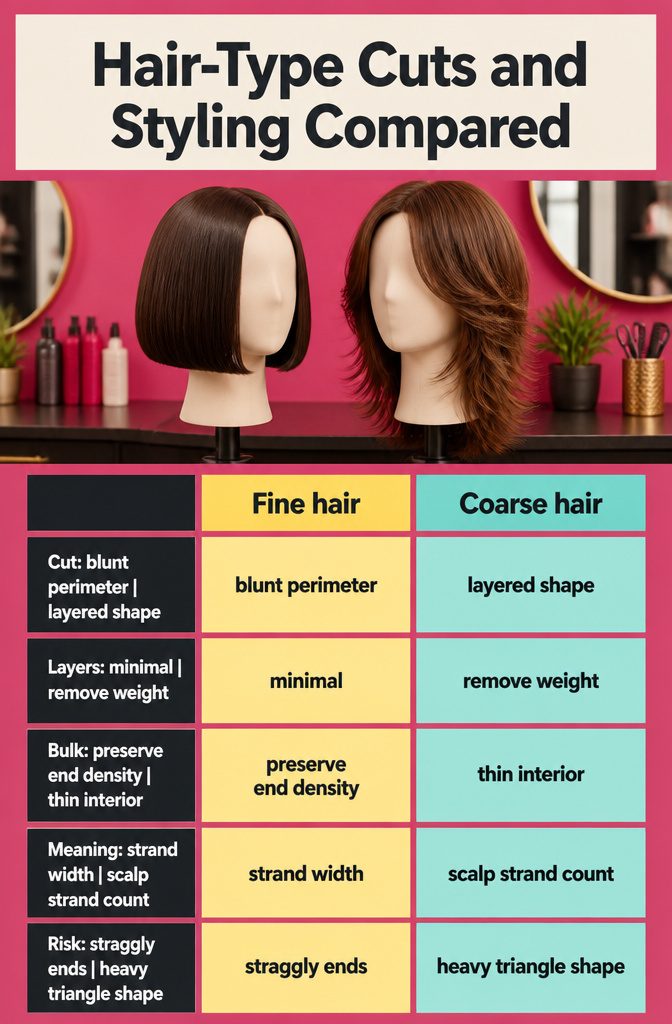
The tactics that give fine hair its fullness can flatten or overwhelm coarse hair, and knowing which category you sit in changes the entire list of what helps.
Fine hair benefits from blunt cuts and minimal layering, because every strand contributes to the perimeter and nothing is lost to interior chopping.
One-length bobs and chin-length cuts with blunt perimeters create the illusion of thickness by keeping all the density at the ends, where it shows. Too many layers leave fine hair looking straggly rather than full.
Thick or coarse hair runs the opposite direction. Layers remove weight and keep longer cuts from sitting heavy and wide at the bottom, the triangle shape that comes from too much bulk collecting at the ends.
Thinning shears take out interior bulk without shortening the style, making coarse hair more manageable without obvious layering. The distinction matters: coarse refers to the circumference of each individual strand, the width you feel between your fingers.
Thick refers to follicle density on the scalp, how many strands you have total. You can have coarse hair with lower density or fine hair that grows densely packed.
Frequently Asked Questions
Can thin hair become thick again?
Some causes of thinning are reversible and others are manageable, depending on what triggered the loss.
Common culprits like stress, vitamin deficiency, and breakage respond well to treatment. Genetic thinning is more complex and typically requires medical-grade solutions available through clinics, though virtual consultations are also an option.
What causes thin hair?
Genetics, stress, hormonal imbalance, vitamin deficiency, and thyroid issues all contribute to thinning.
Over-styling and over-coloring strip hair of strengthening fibers and leave strands weak. Taking a break from heat tools and chemical treatments, along with a sulfate-free shampoo, can help reverse damage from styling.
How is coarse hair different than thick hair?
Coarse hair refers to the width of each individual strand, while thick hair refers to the number of follicles on your scalp.
You can have coarse hair with lower density or fine hair that grows densely packed. Understanding the distinction helps you choose the right cut and products for your type.
Can I make my hair thicker?
Individual strand diameter is set by genetics and cannot be permanently changed.
Thickening products plump each strand temporarily, but the effect washes out. What you can change is follicle health through scalp care, nutrition, and reducing inflammation, which supports a fuller appearance over time.
What’s the best diet to make hair thicker?
A balanced diet with healthy fats, antioxidants to strengthen follicles, iron-rich foods to boost red blood cells, and protein supports hair growth.
Vitamins A, B, C, and E are particularly effective for those experiencing hair loss. Lean proteins, leafy greens, and carrots round out a simple nourishing baseline.
What haircut length is best for thick hair?
Mid-length cuts balance weight reduction with manageability, since hair that gets too long can lie flat or cause headaches.
Short cuts remove weight but require more daily styling. Thick hair can handle longer lengths when paired with layers and texturizing to remove bulk.
Are layers good for thick hair?
Layers remove weight without losing length, which makes styling faster and keeps thick hair from sitting heavy at the ends.
A textured lob or a shag with choppy layers cuts through bulk and gives the hair movement. Face-framing layers starting at the cheekbone or jawline pull weight away from the perimeter.
How often should you wash thick hair?
Most people with thick hair can go 4 to 7 days between washes, since thick hair holds less oil at the root than fine hair.
Some can stretch washing to once every 2 weeks. Using a boar bristle brush between shampoos exfoliates the scalp and pulls oil throughout the hair so it doesn’t build up at the root.
Why is my hair so flat on top?
Product buildup on the scalp weighs hair down at the root, which is where volume starts.
Oil buildup from infrequent washing can also flatten fine hair before you start styling. A monthly clarifying shampoo or scalp scrub removes residue, and applying mousse or root lifter to damp hair before blow-drying upside down adds lift.
What causes bushy hair?
Thick, coarse hair with high follicle density naturally creates a bushy appearance, especially when the cut doesn’t remove enough weight. Excessive layering on fine hair can also make it look bushy rather than full by creating uneven, straggly ends.
The right cut depends entirely on your hair type: thick hair needs layers to remove bulk, while fine hair needs a blunt perimeter to maintain density.





