The ideas here range from curtain bangs and side-swept styles to long layers and tucked finishes, with caramel and copper tones that bring out the depth.
Wavy and curly hair keeps the movement without tools, but straight hair loses the shape within hours unless you curl or braid it each morning.
Layers that start at collarbone level or lower keep the flow visible as the cut grows out, so you get several months before the shape needs adjusting.
1. Wavy Flow Haircut
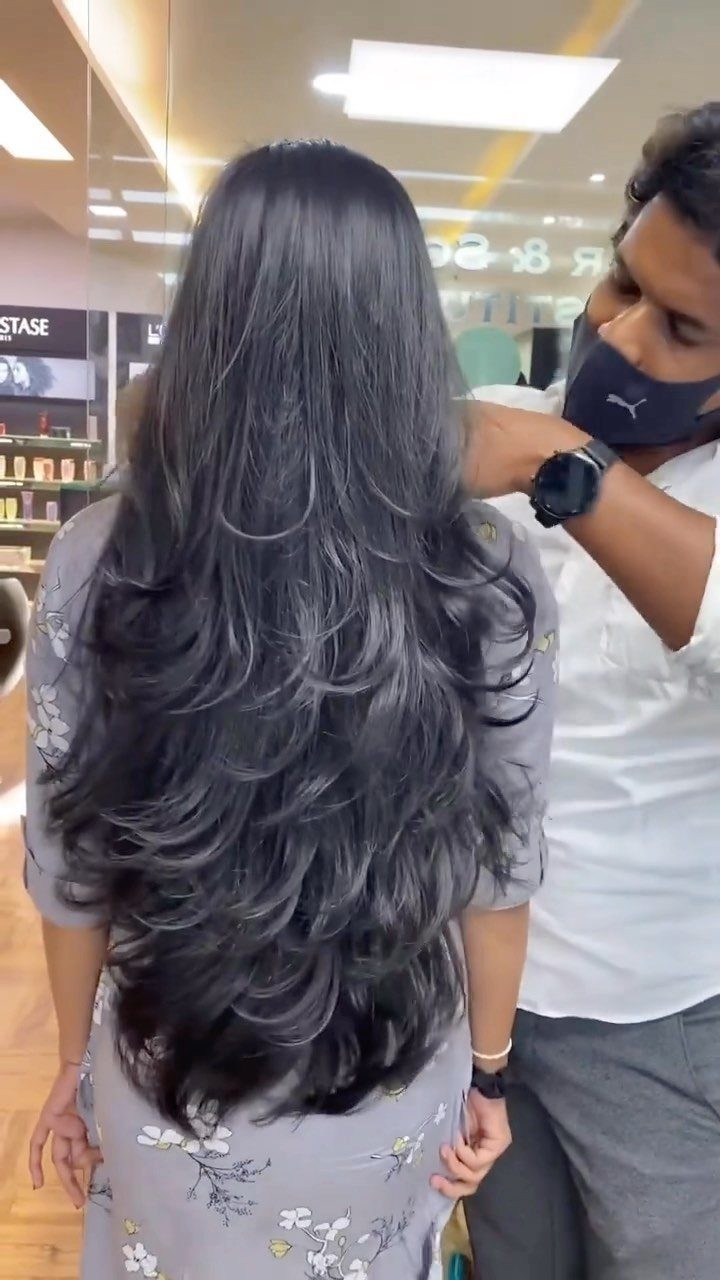
Loose waves add natural texture to medium or long hair without much effort from you. The layered cut allows the wave pattern to show through, and because the layers sit fairly long, the style stays recognizable as it grows.
If your hair is naturally wavy, ask for layers that start around chin or collarbone level so the movement stays visible.
Straight hair needs a curling iron or overnight braid to hold the texture, and you’ll repeat that routine regularly. The length keeps styling options open: wear it down, pull half back, or tie it up when needed.
2. Feathered Flow
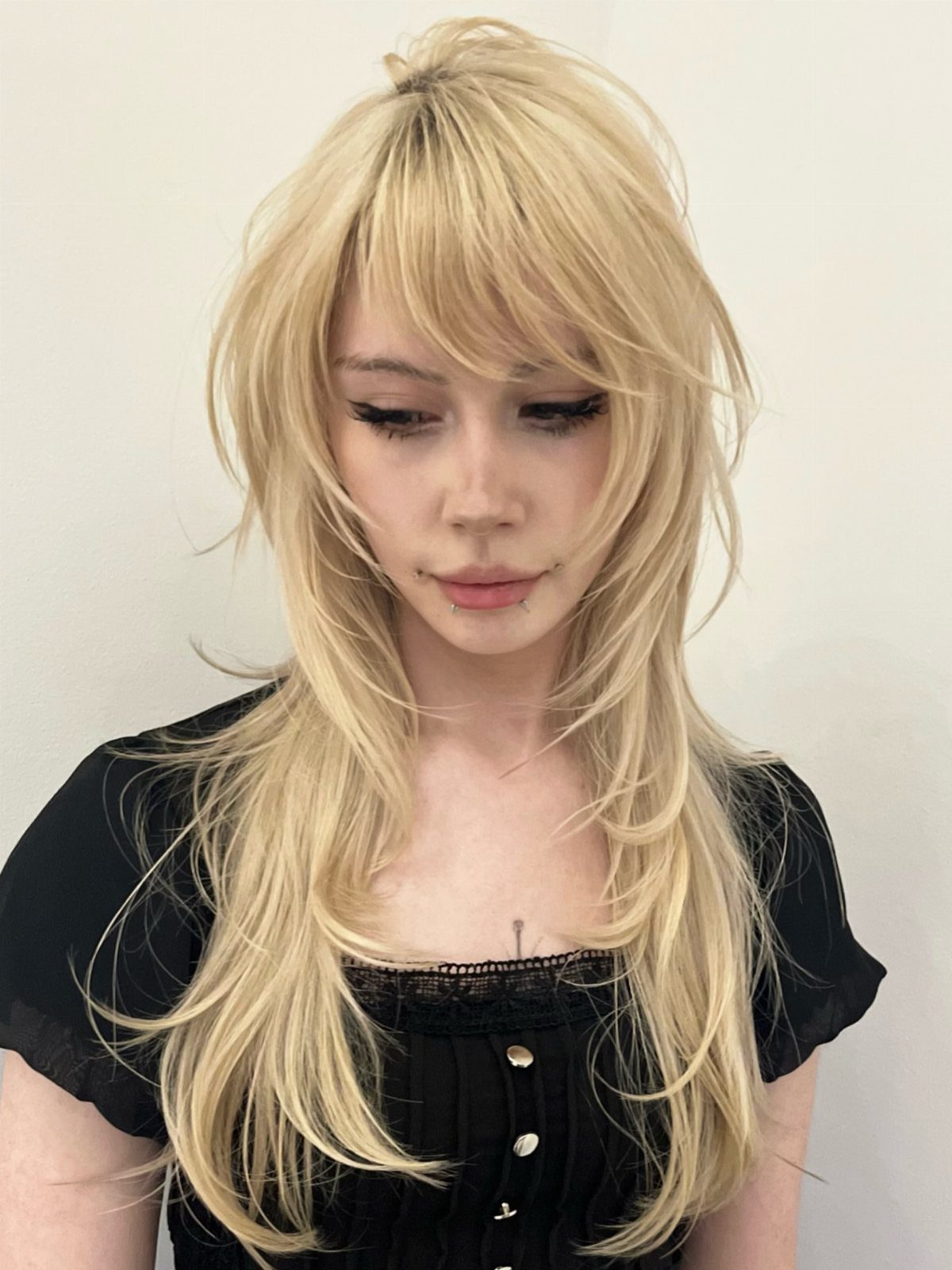
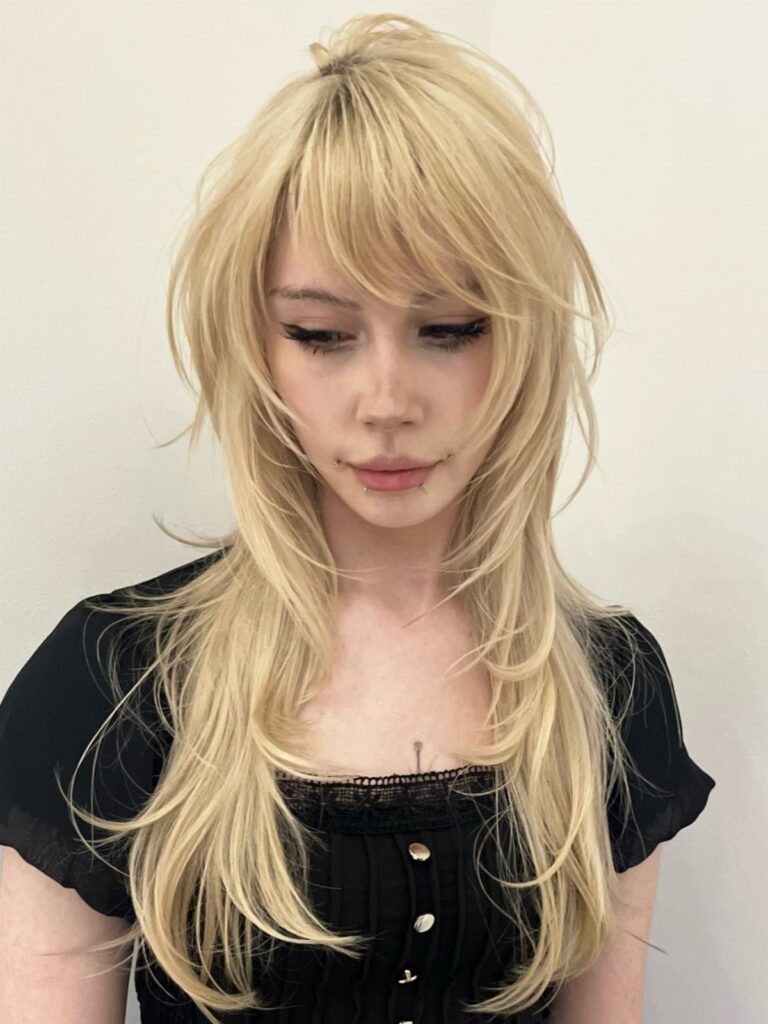
Feathered layers taper at the ends so each section blends into the next rather than landing in one blunt line.
That tapering creates softness and lets the hair move when you turn your head, which makes the flow feel intentional rather than just long.
Curly textures can lose the definition as the curl tightens. Your stylist will use a razor or point-cut scissors to thin the ends, and the result grows out gently without a harsh line forming as it gets longer.
3. Curtain Bang Flow
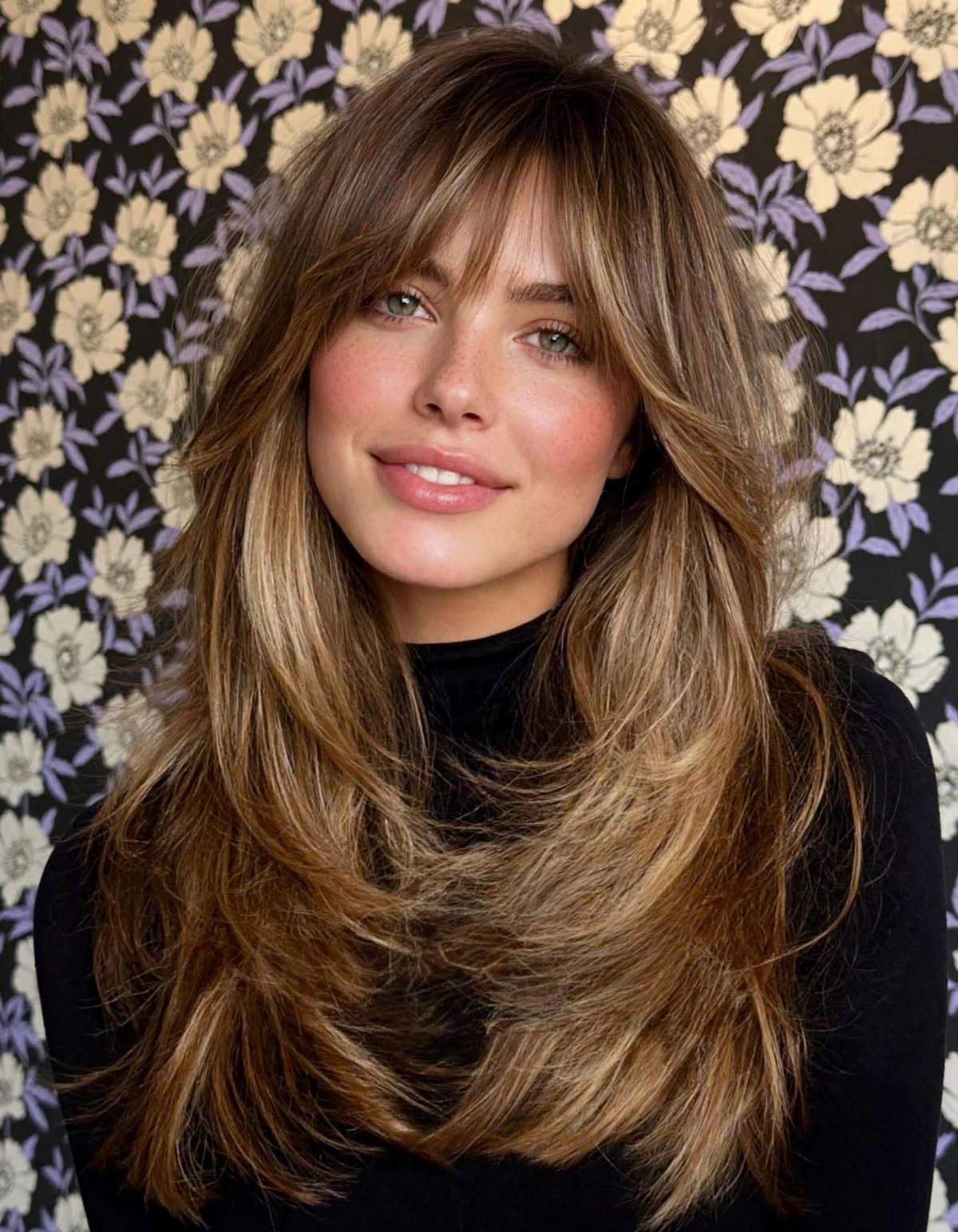
Curtain bangs split down the center and frame both sides of your face, while the rest of the hair stays long and layered.
The bangs add structure up front without shortening the overall length, so you keep the flow while defining your features.
Length matters here: the bangs should fall somewhere between your cheekbone and jawline so they can be tucked behind your ears when you don’t want them forward.
Styling takes a round brush and a quick pass with a blow dryer to set the outward curve, or you can let them air-dry if your hair has enough natural wave to hold the shape.
4. Side Swept Flow

A side-swept fringe or deep side part directs all the movement to one side, which changes the silhouette and suits faces that look better asymmetrical.
The flow still happens, but it reads as more deliberate because the hair falls in one direction rather than splitting evenly.
If you part your hair the same way every day, the roots will eventually train in that direction and hold the sweep without product.
A new part takes a few weeks to settle, so expect to use a light gel or mousse at the root while it adapts. The style works on any length past your shoulders and any texture.
5. Long Layered Flow
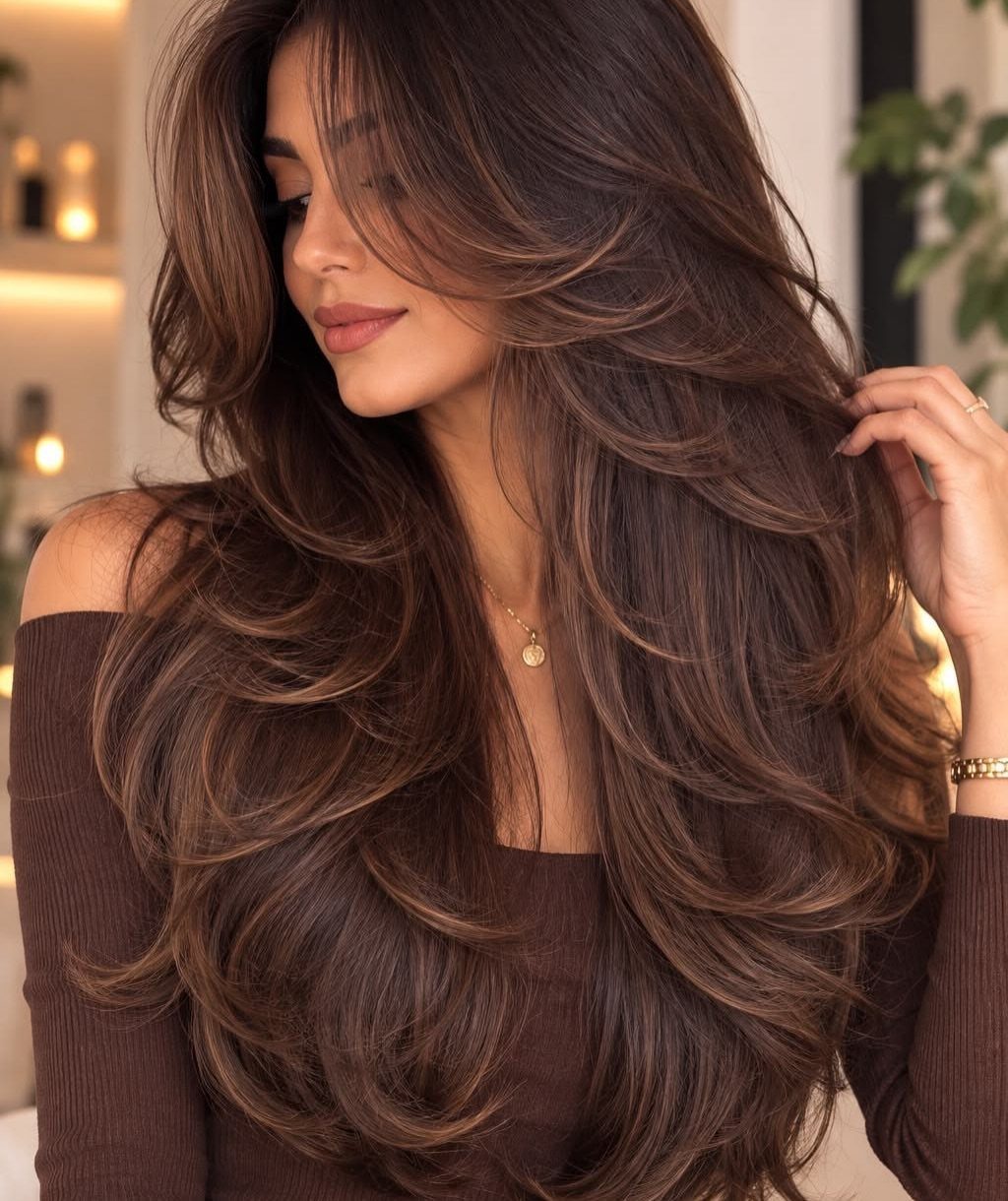
Long layers add volume through the mid-lengths and ends while keeping enough weight at the bottom to maintain length.
The cut moves when you walk or turn, which gives the flow its name, and because the shortest layer still falls well past your shoulders, you don’t lose the ability to pull everything back.
Ask your stylist to start the layers at collarbone level or lower so the graduation stays subtle. Too many short pieces near the crown will create a mullet effect instead of flow.
Wavy and curly hair benefits from this cut because the layers prevent a triangular shape, and straight hair gains movement it wouldn’t have with a blunt cut.
6. Caramel Highlighted Flow
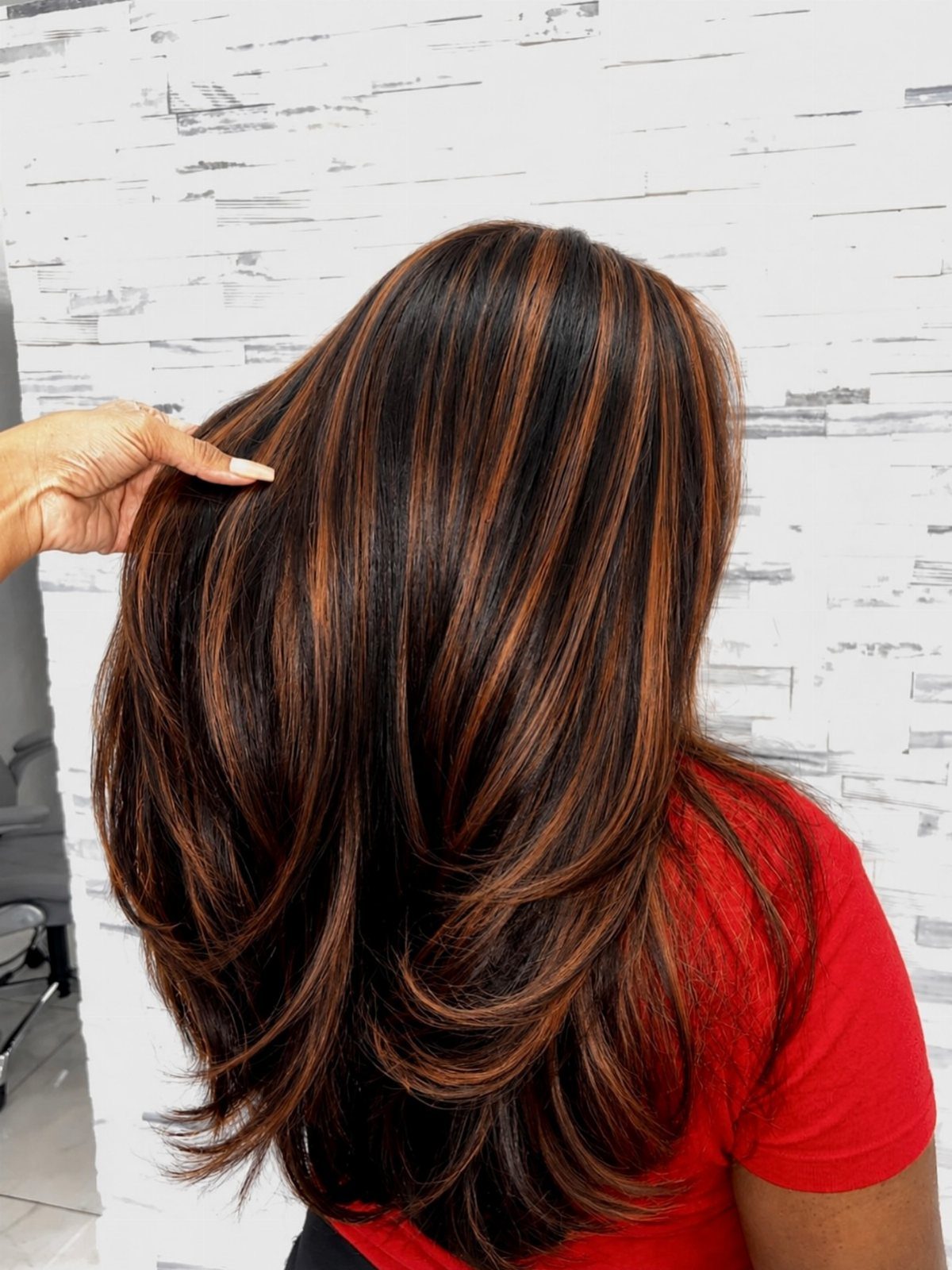
Caramel highlights break up solid dark hair with warm tones that catch light and add dimension to flowing layers. The color contrast makes each layer more visible, so the movement reads even when the hair is still.
Placement matters: highlights that follow the natural fall of the layers will emphasize the flow, while random sections can look patchy.
Your colorist should paint or foil the highlights in vertical sections that start a few inches from the root so you get several months before regrowth becomes obvious.
The technique works on all textures, though curly hair may need fewer pieces since the curl pattern already creates visual interest.
7. Copper Curly Flow
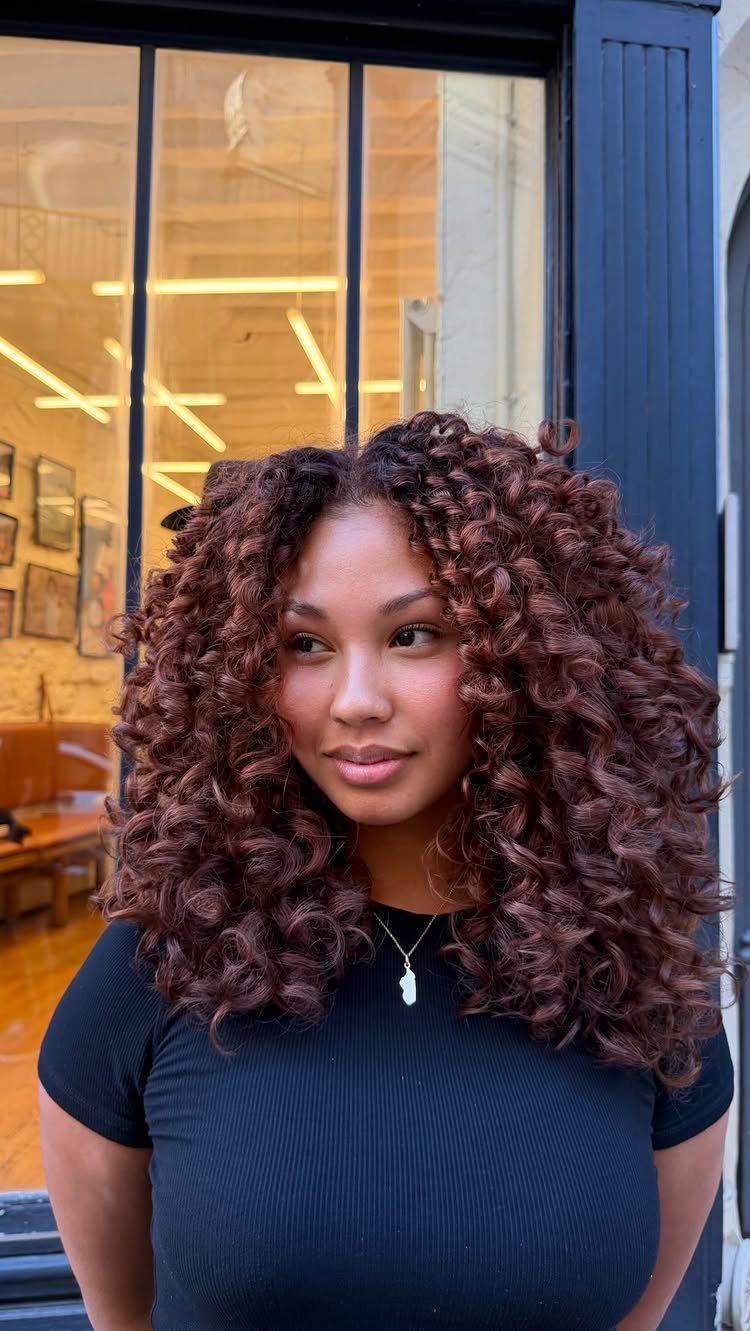
Copper tones warm up natural curls and catch light as the hair moves, so the color itself becomes part of the flow.
The shade works especially well on loose curl patterns because each ringlet reflects the color differently depending on how it falls.
If your hair is already curly, ask your colorist for a copper that sits 2–3 shades lighter than your base so the curls stay visible rather than blending into one dark mass.
Straight hair that’s been curled with heat won’t hold this look without regular upkeep, since the curl pattern will relax between styling sessions.
8. Polished Tucked Flow

Tucking both sides behind your ears changes the shape from flowing to streamlined, which works when you want the movement without the volume. The hair tucks behind your ears, opening up your face while keeping the length smooth.
This suits smoother textures or hair that’s been blown straight, since frizz or flyaways will work their way forward within an hour.
A center part keeps the look balanced, and if your hair won’t stay put, a small amount of lightweight gel at the root will hold it back without stiffness.
9. Rugged Undone Flow
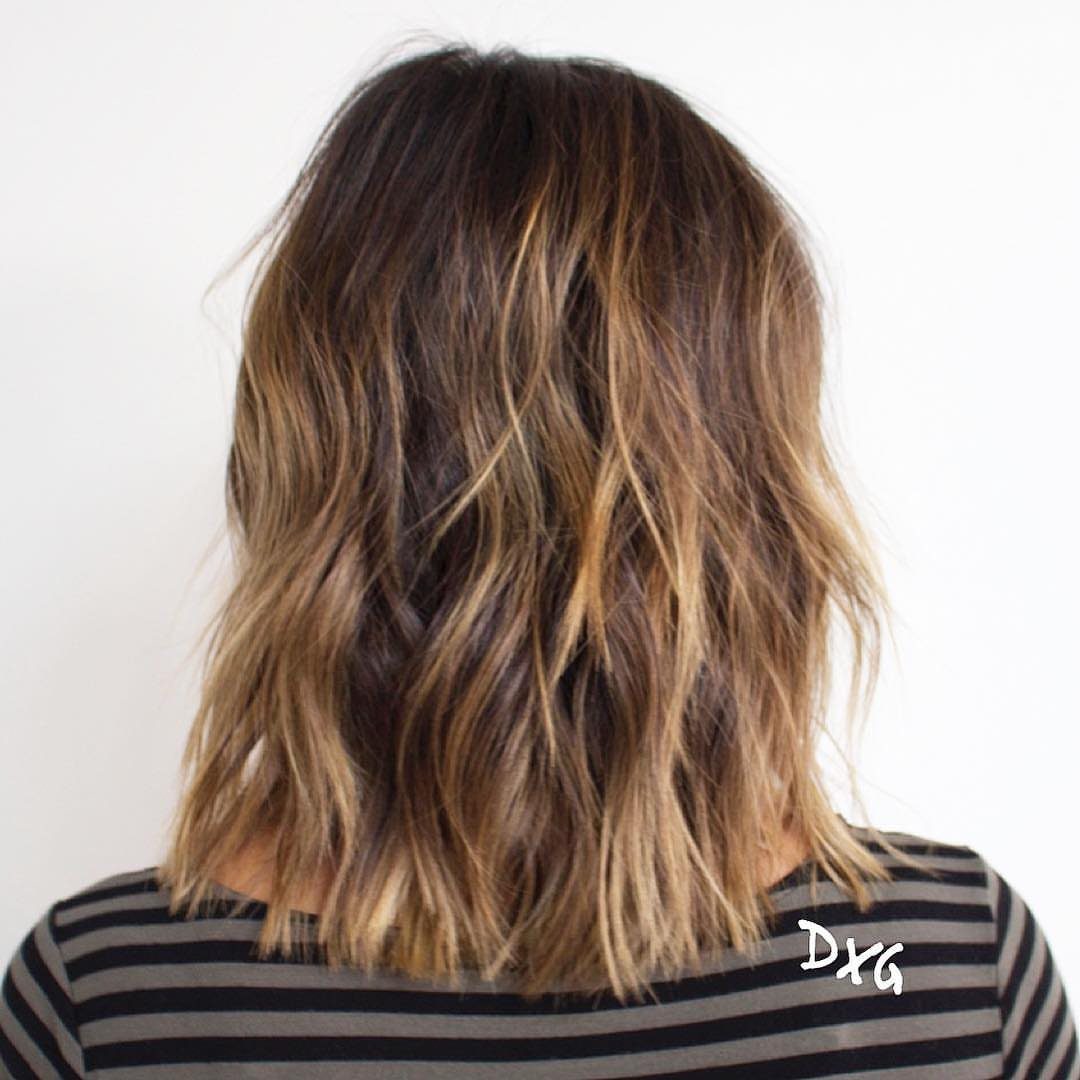
Shaking the hair out after styling leaves the waves intact but removes the polished finish, so the flow looks casual rather than set. The ends fall unevenly, and that irregularity is the point.
Air-drying works if your hair has natural texture, otherwise you’ll need to add wave with a curling iron and then brush it out partway.
The style grows out without a visible line since nothing is meant to sit in place, and it takes less time each morning than a structured wave pattern.
Frequently Asked Questions
What is a flow cut?
The flow cut describes hair that grows from the crown straight down over the back and sides, long enough to sweep behind the ears or fall forward over the face.
The style depends on layering to create movement, and it grows out gradually without losing its shape. Straight hair, wavy hair, and curls all carry it.
How long should your hair be for a flow cut?
Your hair should reach at least past your shoulders for a flow cut, with layers starting around chin or collarbone level so the movement stays visible.
Longer hair gives you more styling options like wearing it down, pulling it half back, or tying it up. The length also allows the style to grow out without needing frequent trims.
Is flow cut possible with straight hair?
Yes, straight hair can hold a flow cut, though it won’t have the natural texture that wavy hair provides. Straight hair blown smooth works better for the polished tucked version where the hair is pulled back behind the ears.