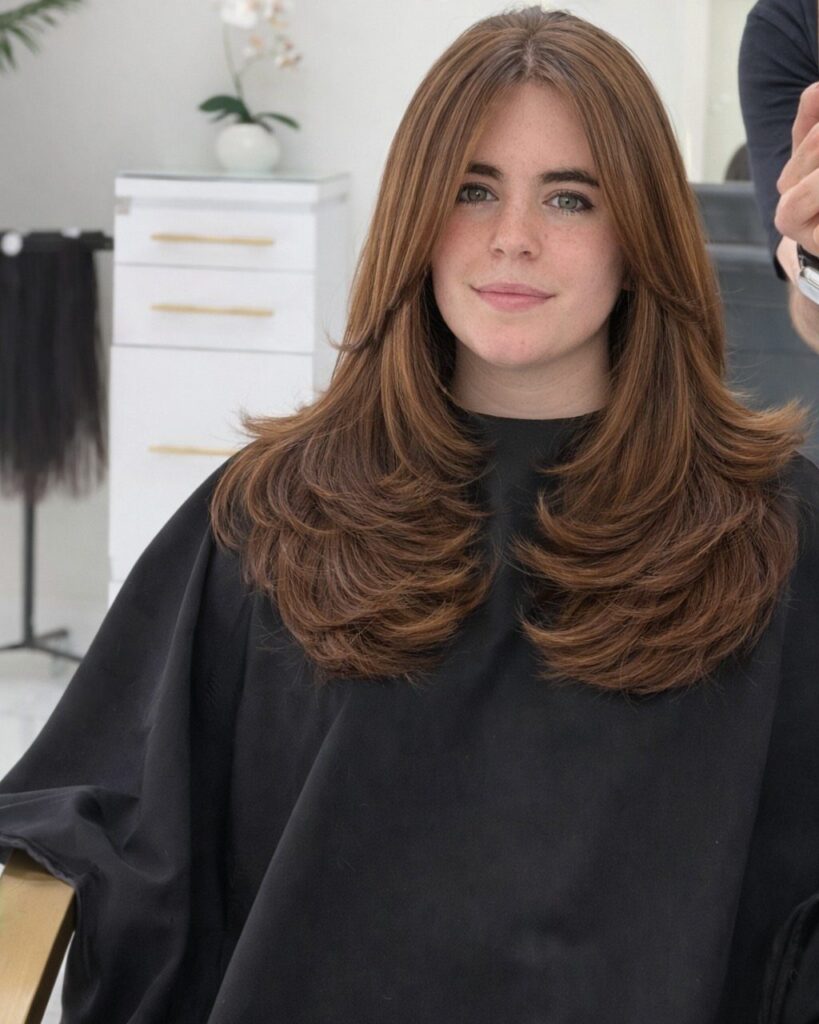
The cut decides how much time you spend each morning, because straight hair holds shape without much effort once it dries.
Blunt bobs and lobs keep ends dense and read cleanest on this texture, while feathered layers and face-framing cuts add movement and need a round brush or flat iron to direct the shape.
If your hair is fine, stick with blunt perimeters that prevent thinning at the ends; thick hair handles layering better and benefits from removing weight.
1. Face-Framing Layers
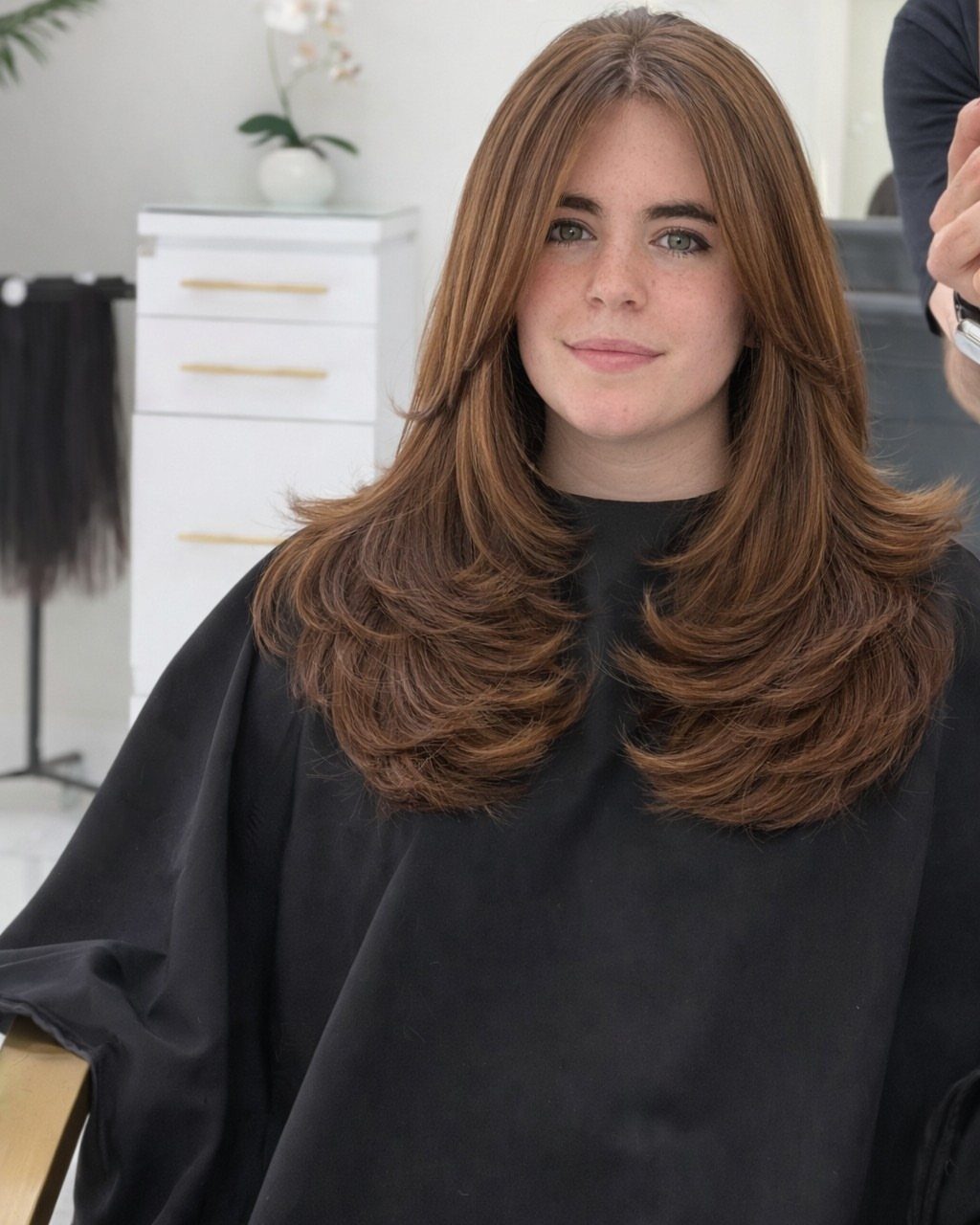
Layers cut to sit around the face soften the outline and add motion to long hair without shortening the back. The cut typically starts at cheekbone or chin length and tapers down, blending into the rest of the length.
Ask for layers that begin where you want the shortest piece to frame your face. Depending on how much movement you want, they can be cut close together for more texture or spaced further apart for a subtler effect.
This cut works well if you pull hair back often, since the shorter pieces around the face can either be tucked behind the ears or left out to soften a ponytail or bun.
2. Blunt Bob
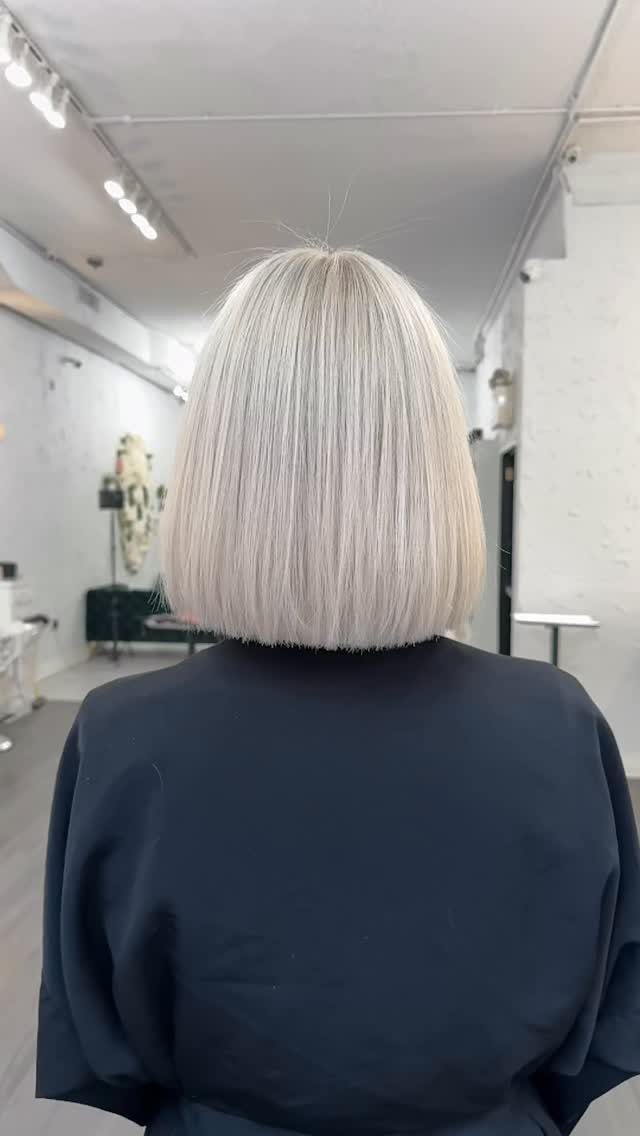
A blunt bob ends at one length with minimal layering, creating a clean, geometric edge that makes straight hair look thicker and more deliberate. The weight of the cut keeps the ends full.
The bob typically sits anywhere from jaw to collarbone, and because there is no tapering, the perimeter stays dense. Straight hair holds this shape well without much styling, though a flat iron can sharpen the line further.
This cut needs a trim every 6 to 8 weeks to keep the blunt edge looking intentional rather than grown out.
3. Deep Side Part
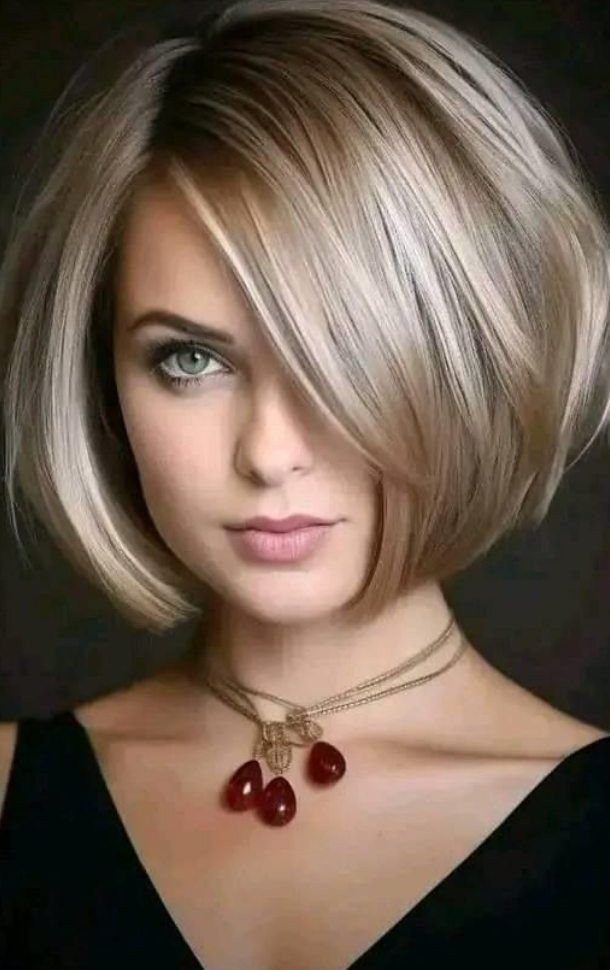
Shifting the part far to one side changes the proportions of a straight cut and adds lift at the crown. The heavier side sweeps across the forehead, which can balance a longer face or draw attention to one eye.
To set a deep part, comb wet hair to the desired side and let it dry in that position, or use a flat iron to press the roots in the direction you want.
Switching the part every few weeks can prevent a visible line from forming where the hair naturally splits.
The asymmetry works with most lengths but reads strongest on bobs and lobs.
4. Blunt Lob
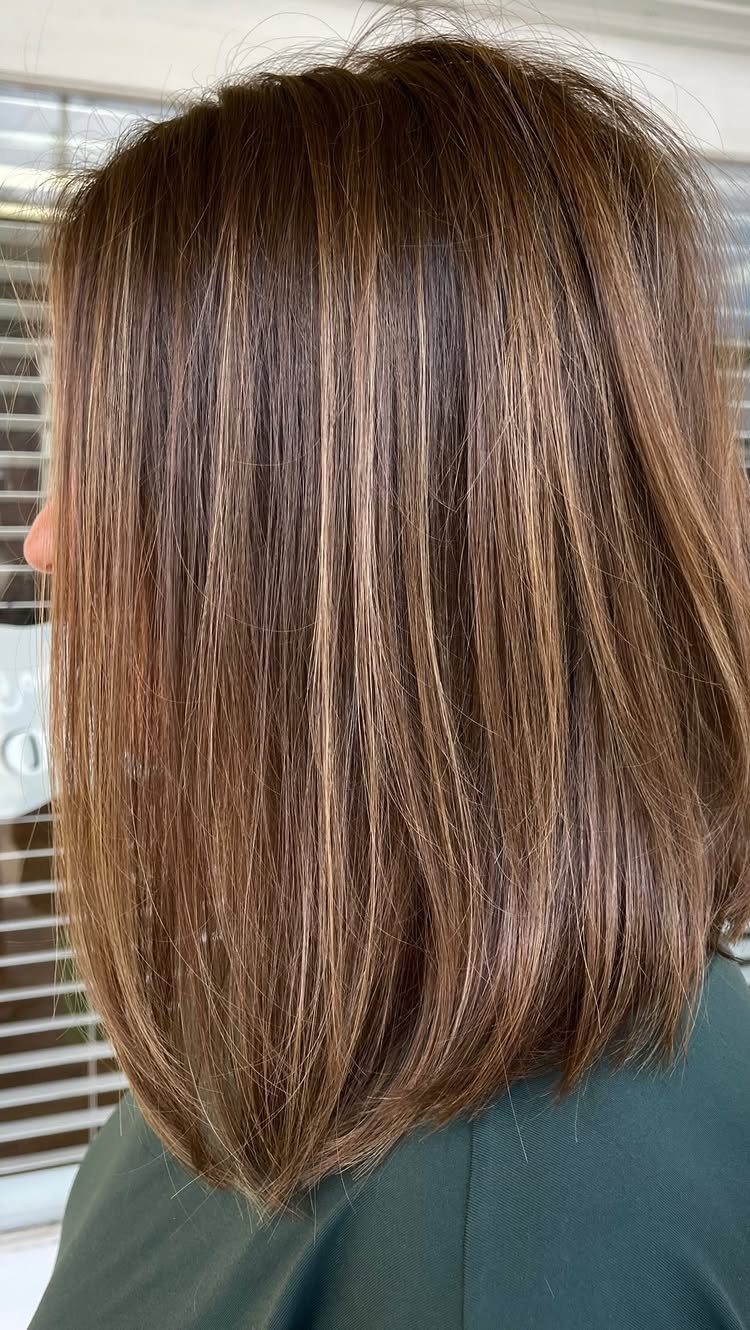
A long bob, cut blunt at the ends, sits between chin and collarbone and keeps the fullness of a shorter bob with more length to work with.
The cut can be worn straight and sleek or tucked behind the ears for a cleaner look.
Because the ends are not layered, the lob holds its shape without much effort. A quick pass with a flat iron smooths any bends from sleeping or tying hair back.
This length is easier to pull into a low ponytail than a shorter bob, and it grows out more gradually, so you can stretch the time between trims if needed.
5. Flipped Ends
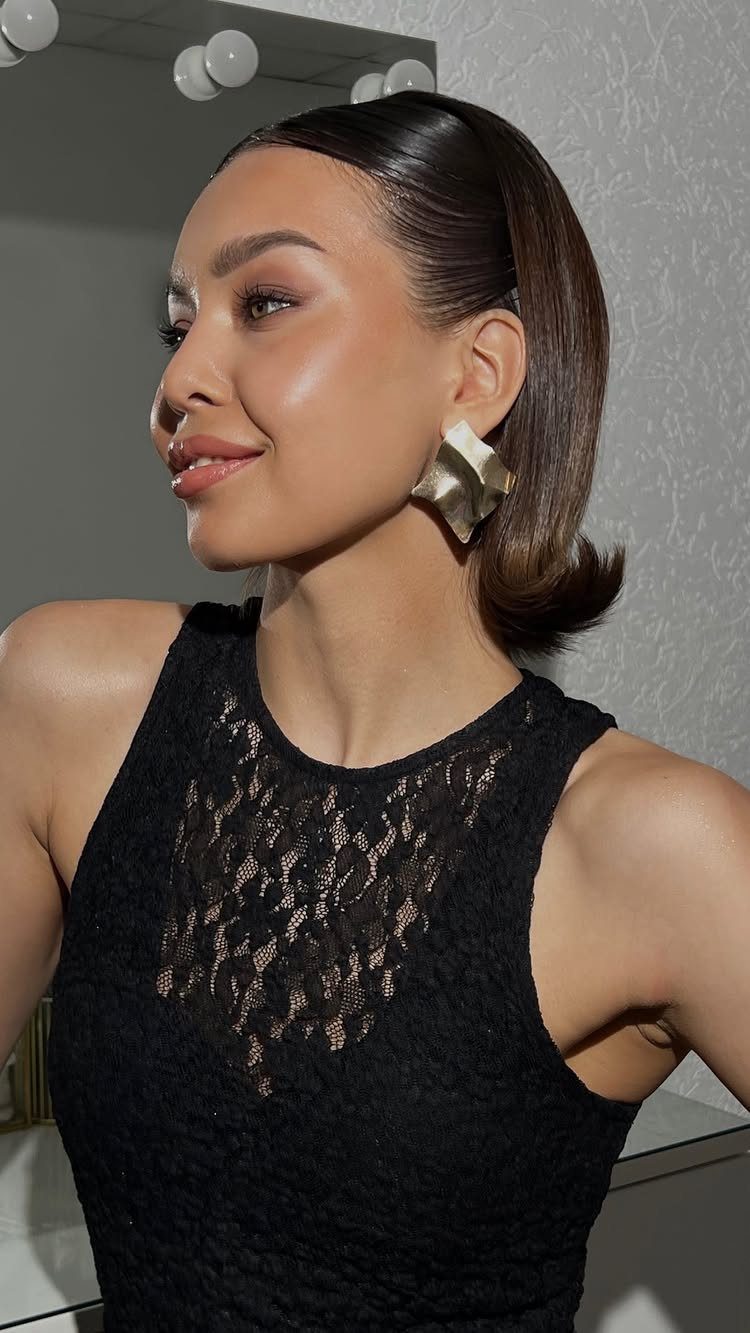
Flipping the ends outward instead of under gives straight hair a rounded, retro silhouette that recalls 60s blowouts. The style works on bobs, lobs, and shoulder-length cuts.
Roll a round brush under the ends while you blow-dry and twist it outward as you pull away, or clamp the last inch in a flat iron and turn the barrel out before you release.
It sticks better if your hair has some grip or you’ve worked in a little product, because perfectly smooth strands slip straight and lose the bend.
This finish softens a blunt cut and adds width at the ends, which can balance a narrow chin or a longer face.
6. Feathered Hair
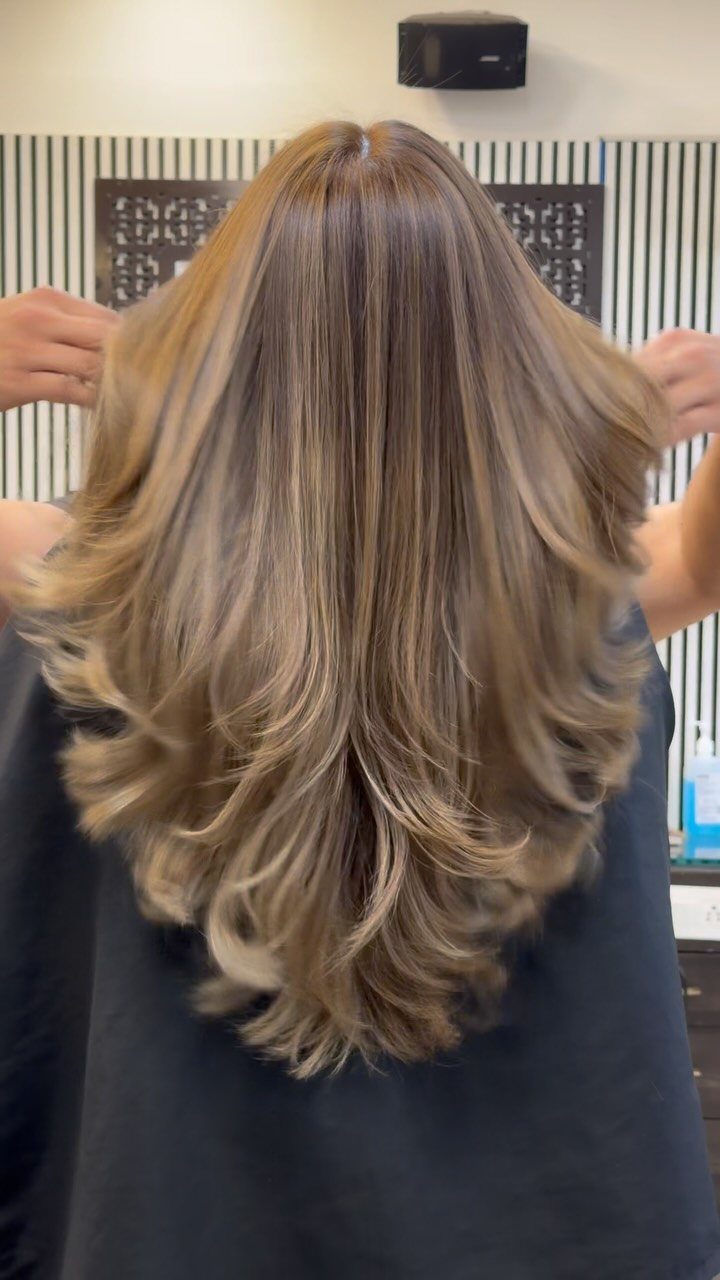
Feathered layers taper at the ends and fall away from the face in a soft, lifted shape. The cut usually involves point-cutting or razor work to thin the ends so they separate rather than clump.
The layers are cut at different lengths to create movement, and because the ends are lighter, they lift away from the scalp instead of lying flat.
Feathering works best on medium to long hair and suits straight or slightly wavy textures.
Styling usually involves a round brush and a blow-dryer, directing the layers back and away from the face to emphasize the lift. The look needs regular trims to keep the ends from looking wispy or damaged.
7. Minimalist Straight Lob
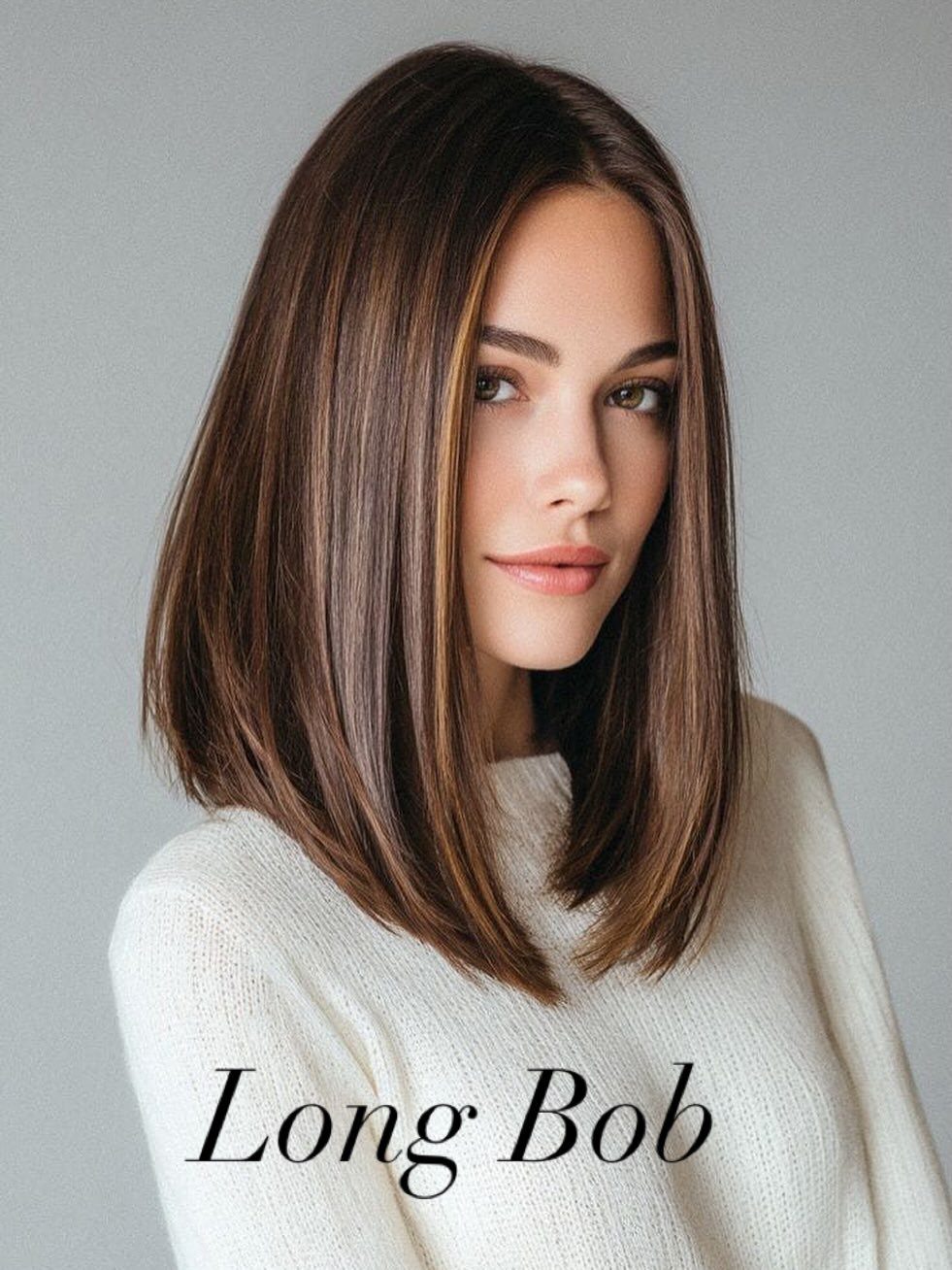
The ends are turned under with a flat iron or round brush for a polished finish.
Running a flat iron through the last inch and rolling it inward as you reach the tip creates a gentle curve that keeps the hair from flipping out or lying completely flat.
This version of the lob reads cleaner than one worn with flipped ends and suits straight hair that holds a bend easily.
The tucked shape softens the jawline and works well if you want a finished look without much styling time.
8. Long Curtain Bangs
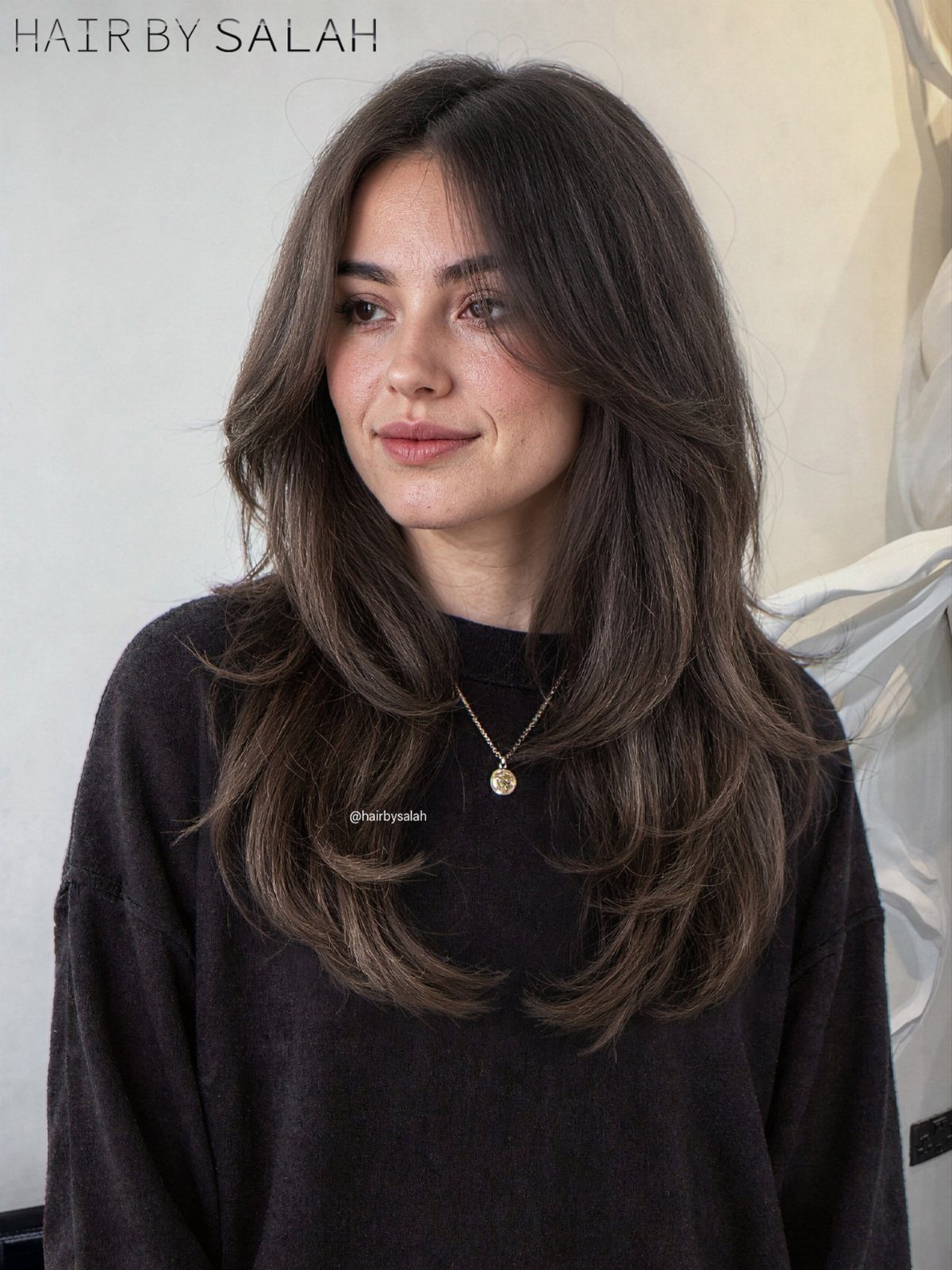
Curtain bangs parted in the middle and cut to chin length frame the face and blend into longer layers. The bangs are usually cut with some internal layering so they separate and fall to either side of the center part.
Straight hair sits in this shape on its own, or you can bend the ends inward with a flat iron when they fall too flat. The chin-length cut means they grow out slowly and stay flattering longer than shorter bangs.
9. Messy Bun
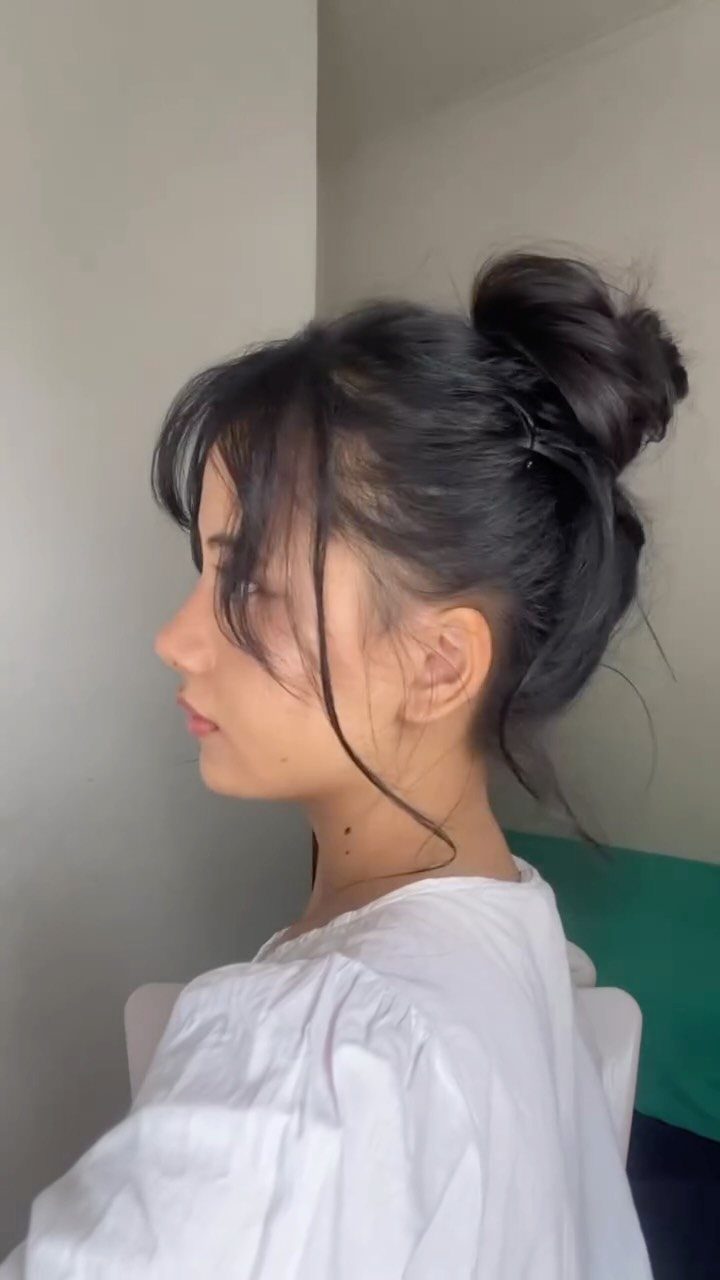
Gather hair at the crown or mid-height without smoothing it first, twist it loosely, and wrap it around itself, securing with a hair tie. Pull a few strands out around the face and let shorter pieces fall where they want.
The bun works best if your hair has some texture or grip, since perfectly smooth straight hair can slip out of a loose hold.
Leaving the ponytail slightly loose before you twist it gives the bun more volume and a less controlled shape.
10. Long Layers
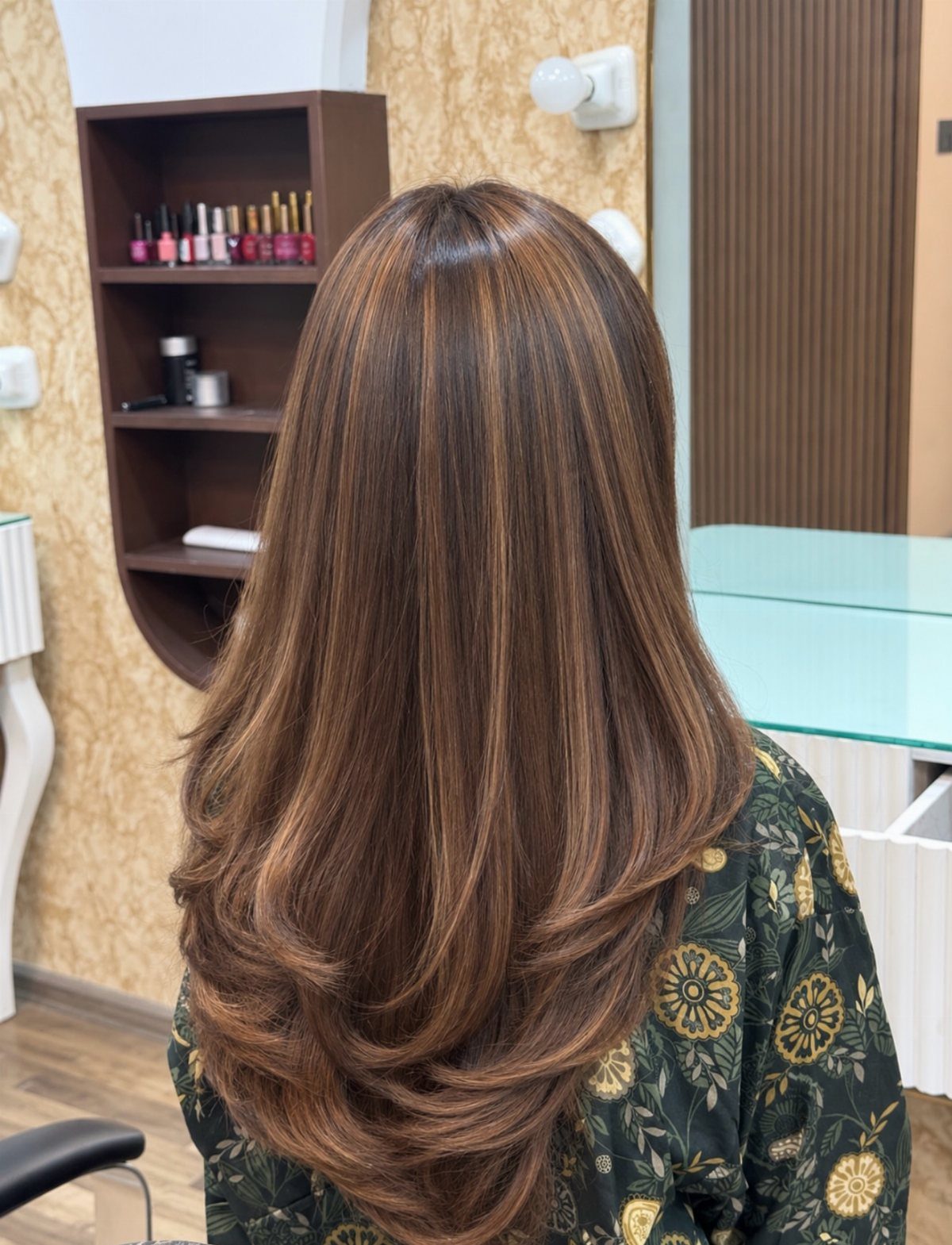
Layers cut into long hair create movement without removing much length. The layers are typically spaced out and blended so there is no visible line where one ends and the next begins.
Ask for long layers if you want to keep most of your length but add some shape. The cut works well on straight hair because the layers show clearly without needing to be styled with heat or product.
Regular trims keep the ends from looking thin as the layers settle.
11. A-Line Lob
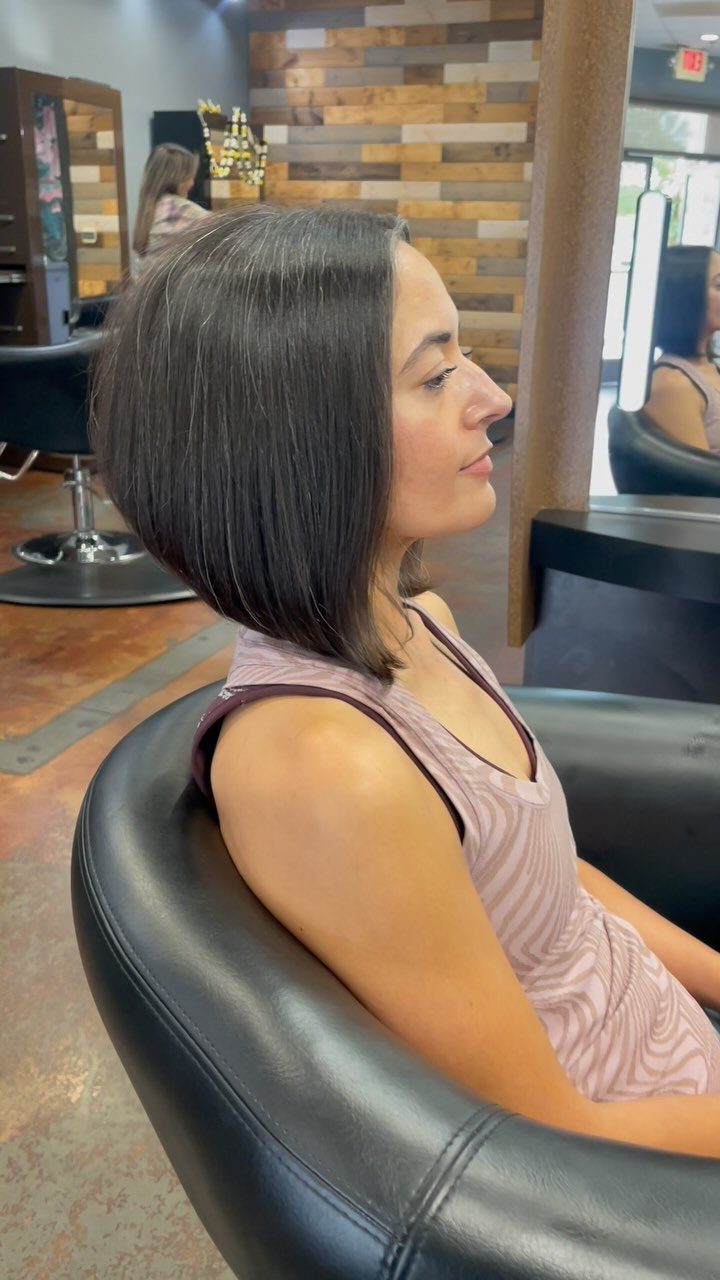
The back is cut shorter than the front, creating a diagonal line that angles down toward the face. The difference can be subtle or more dramatic depending on how much length you want in the front.
This cut adds structure and makes a lob feel more deliberate. Straight hair shows the angle cleanly, and the longer front pieces can be tucked behind the ears or left to frame the face.
The A-line holds its shape longer than a blunt cut as it grows out, giving you more time between appointments.
12. Soft V-Cut
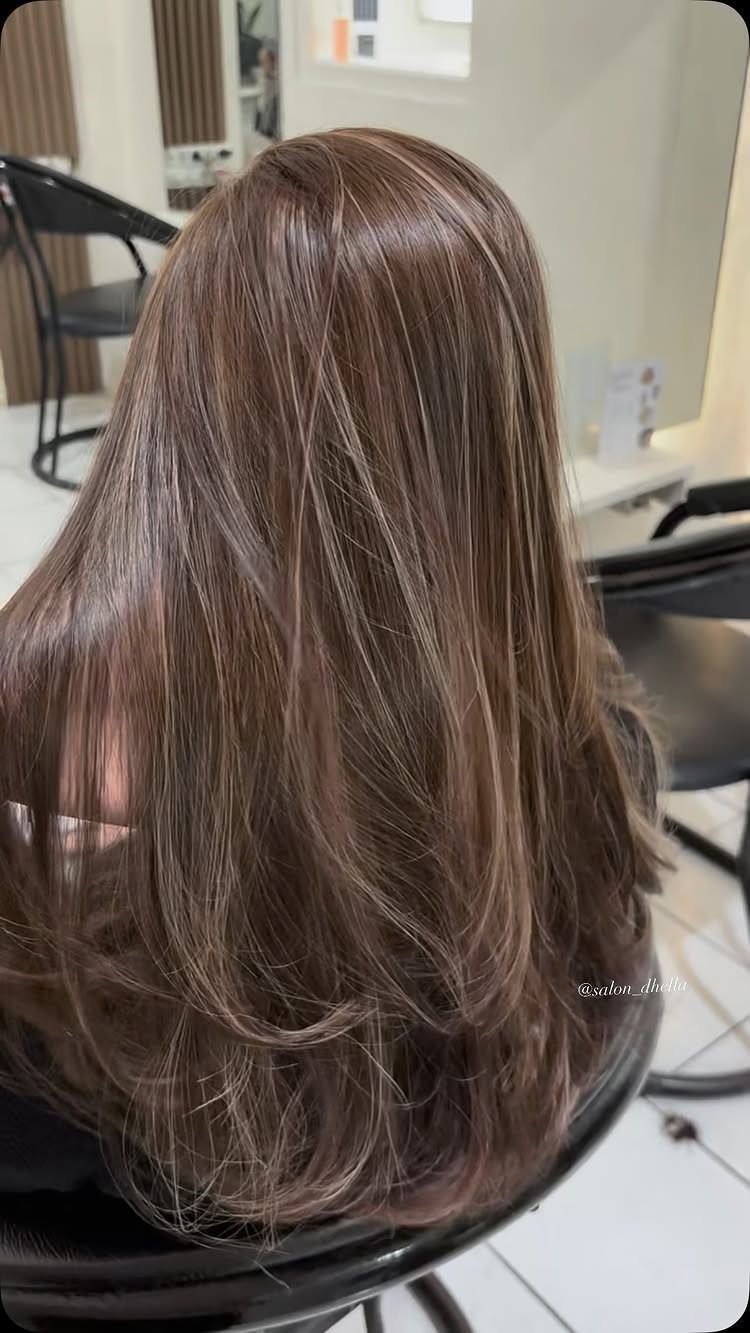
The back is cut into a shallow V shape, with the center hanging slightly longer than the sides. Layers cut throughout the length blend the perimeter and add movement.
Straight hair shows the V clearly when worn down and unstyled.
The shape adds a small amount of dimension to one-length hair without shortening it much, and because the longest point is in the center, the cut looks balanced from behind.
If you braid your hair often, the V shape creates a tapered end that looks intentional rather than blunt.
13. Soft Highlighted Layers
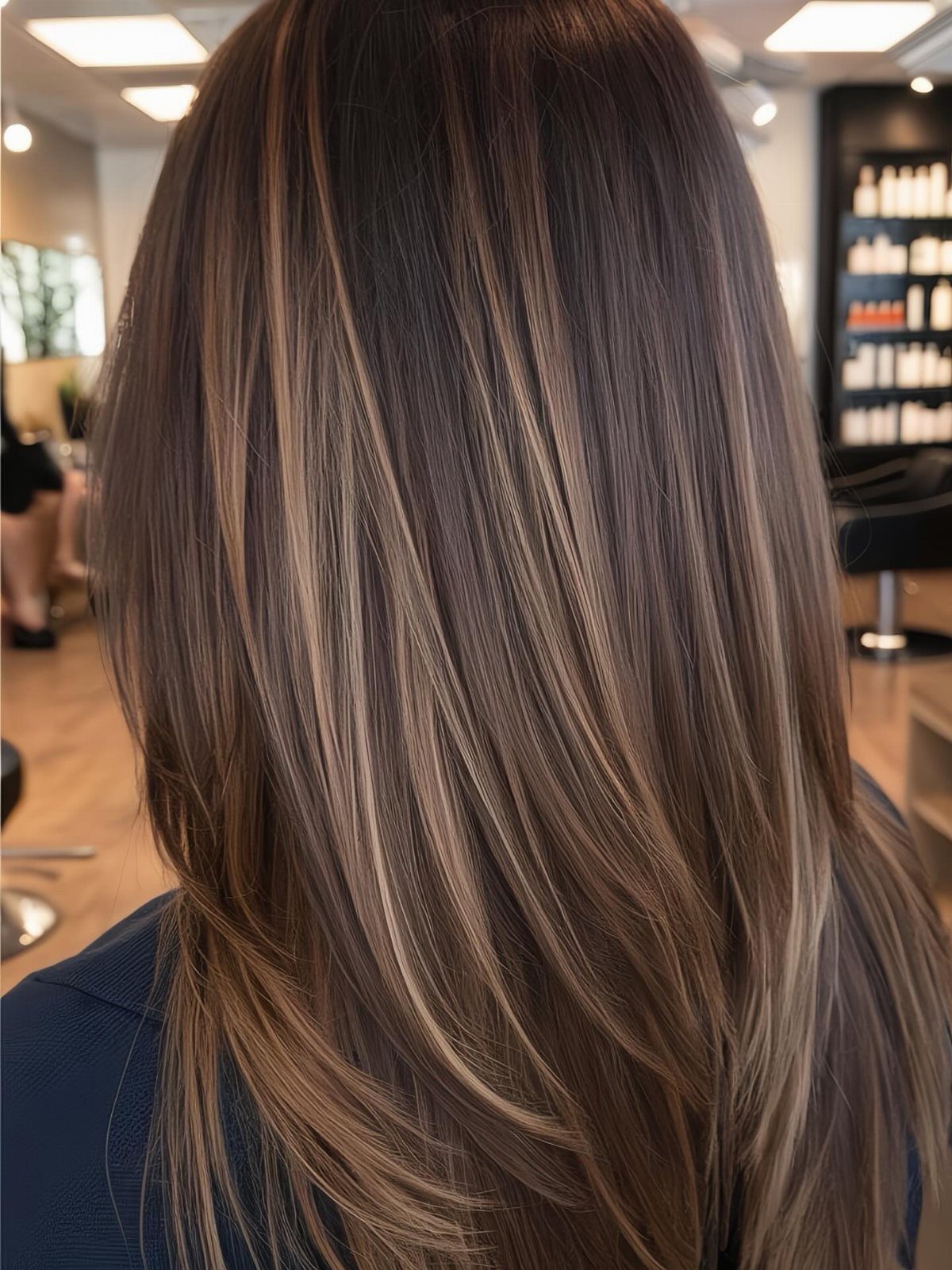
Woven highlights scattered through layered hair break up one solid color without drawing hard lines. The placement is diffuse rather than chunky, so the dimension reads as natural variation rather than deliberate contrast.
The layers are cut long and blended, so the highlights move through different lengths and catch light as the hair shifts. Straight hair shows this kind of highlight work clearly because there is no curl to obscure the strands.
Highlighting and cutting can happen in the same appointment. Keeping the layers soft means you can stretch trims longer without the cut looking overgrown.
14. Summer Blonde Feathering
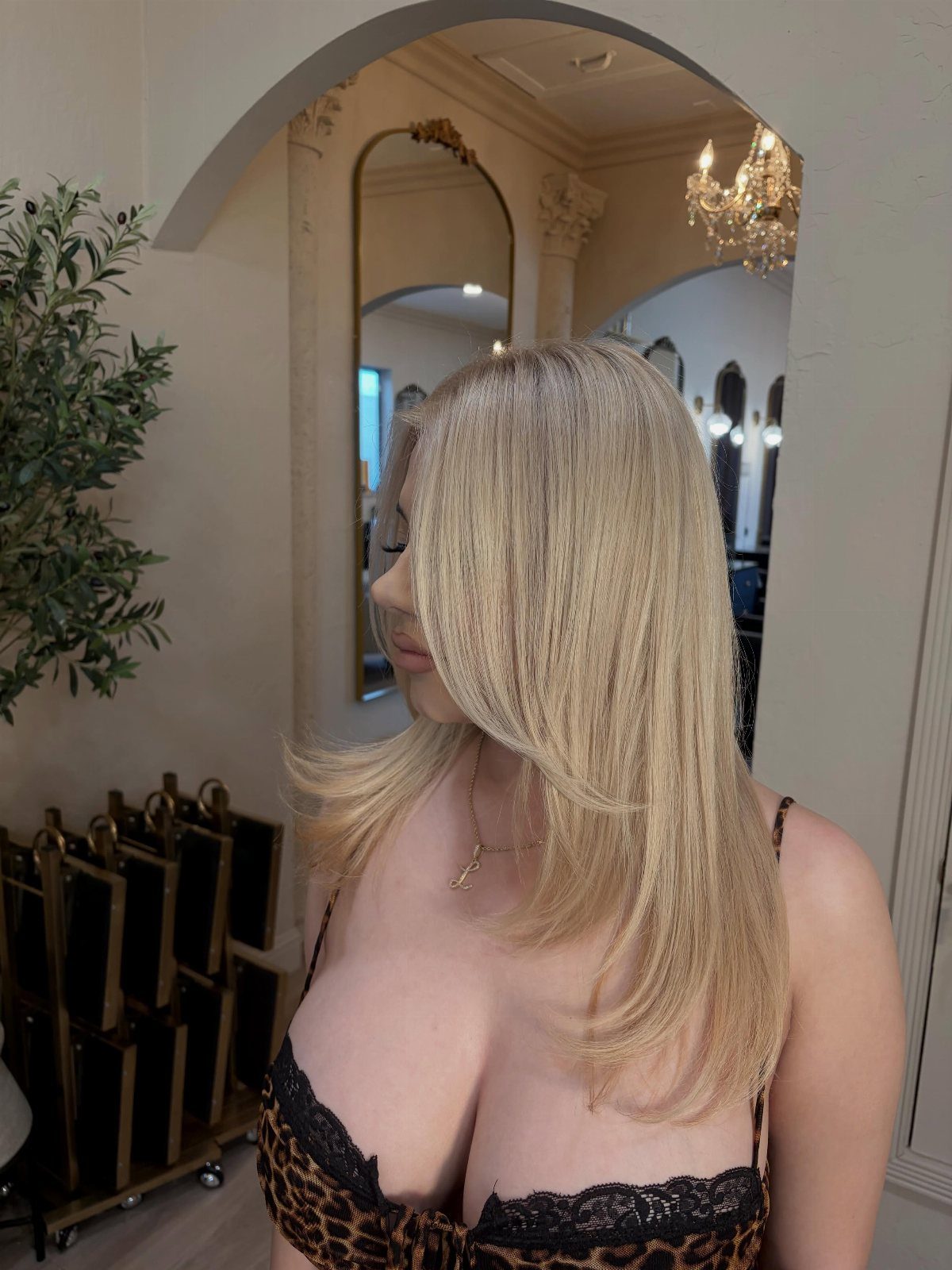
Pale blonde highlights amplify the lifted, separated texture of feathered layers. The lighter color makes the tapered ends more visible and adds brightness where the layers pull away from the face.
Feathering already creates movement by thinning the ends, and blonde highlights increase the contrast between individual strands. The combination works well on long hair where the layering has room to build up gradually.
Blonde on blonde can look flat if the tones are too close, so ask for highlights a few shades lighter than your base to keep the feathering distinct.
15. Golden-Brown Blowout
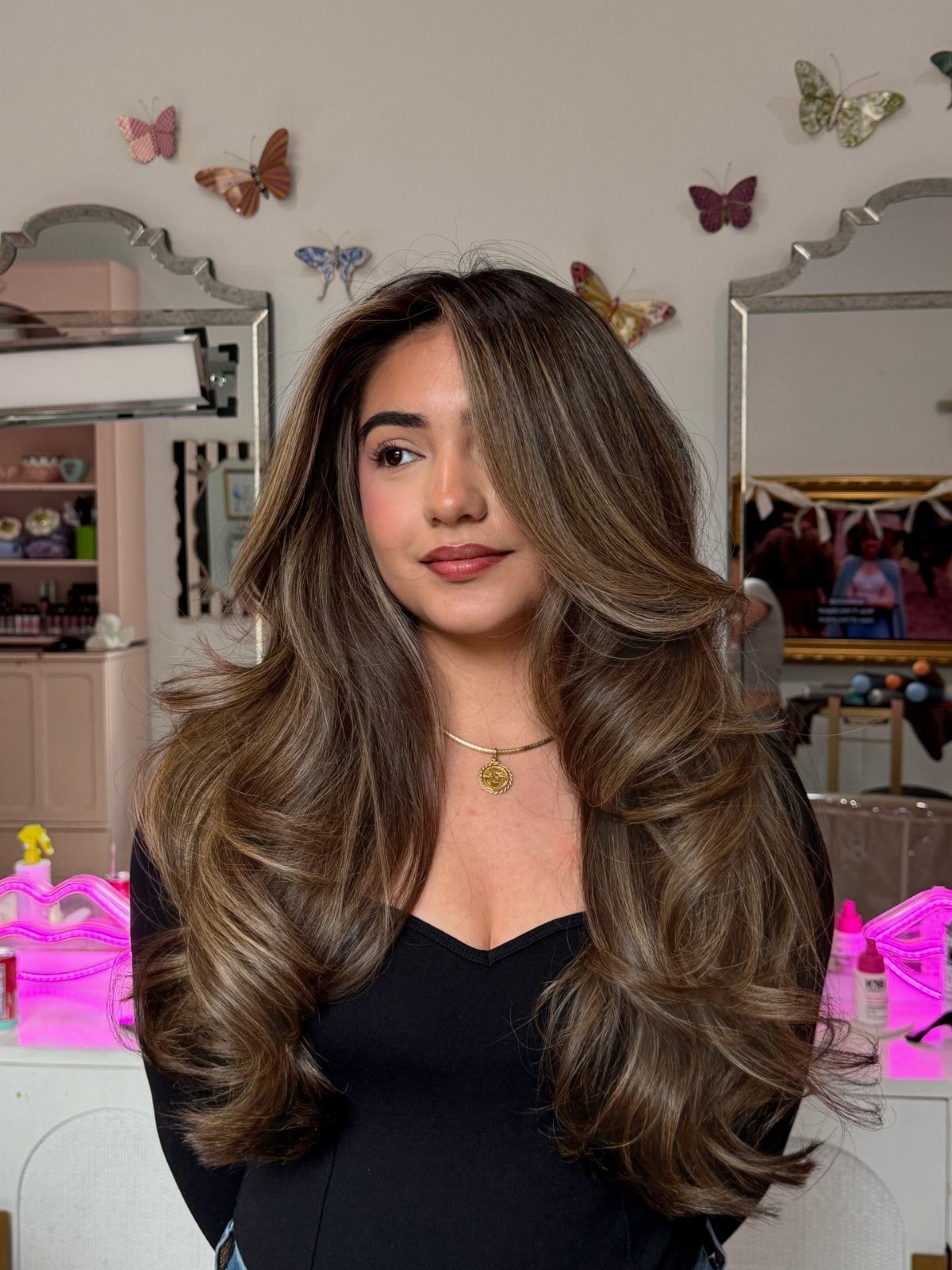
Warm brown with golden tones reads richer than neutral brown and picks up more light when styled with volume. The outward curl at the ends adds width and a finished look that suits this color range.
Round-brush the hair as it dries, flipping the ends out and away at the finish. The golden tones become more visible when the hair is lifted and catches direct light, so the blowout technique supports the color choice.
This finish holds better on hair with some texture or after applying a light styling product.
16. Mid-Back Lowlights
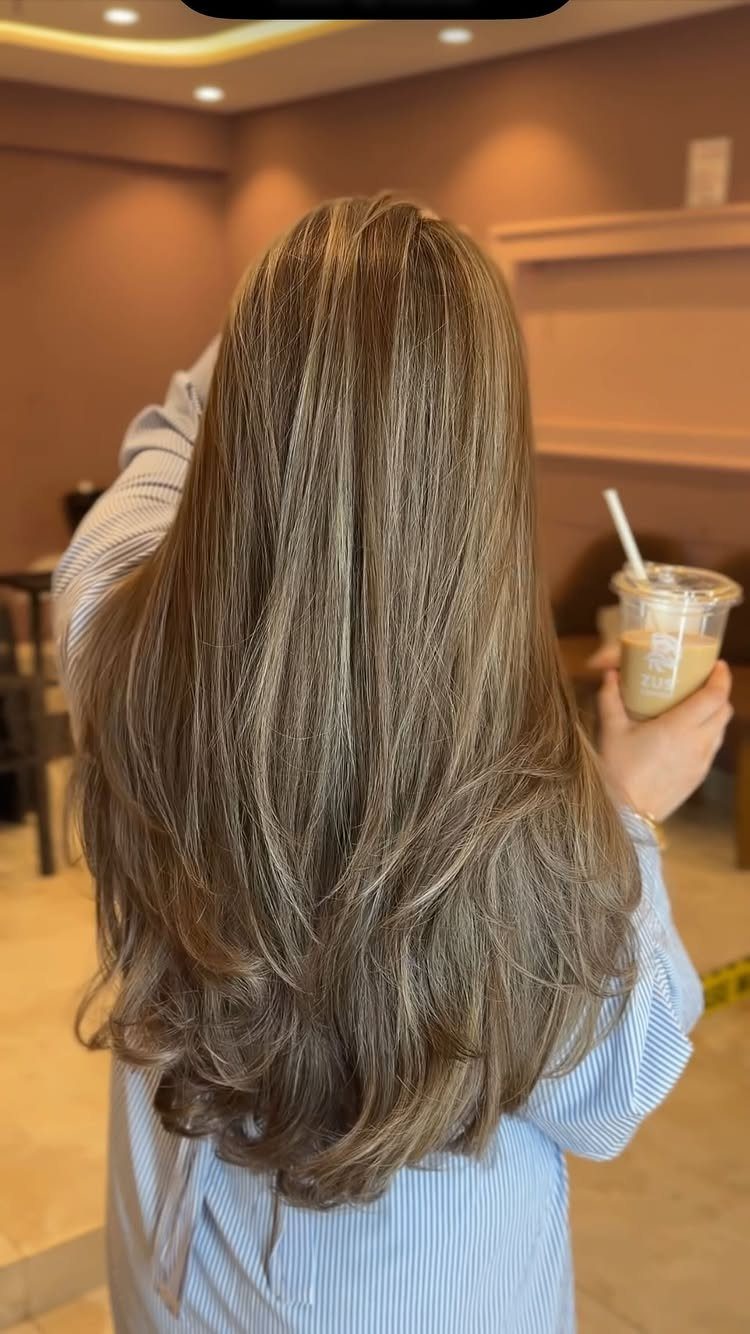
Lowlights darken select strands and add depth to hair that would otherwise read as one flat color. Placed through mid-back-length hair, they create shadow and dimension without lightening or bleaching.
Straight hair shows lowlights as distinct bands of color, so ask for them to be woven finely if you want a blended effect. The technique suits brown hair tones well because the darker strands mimic natural variation.
Lowlights require less upkeep than highlights because there is no bleach and no visible regrowth line as hair grows.
17. Subtle Dip Dye Ends
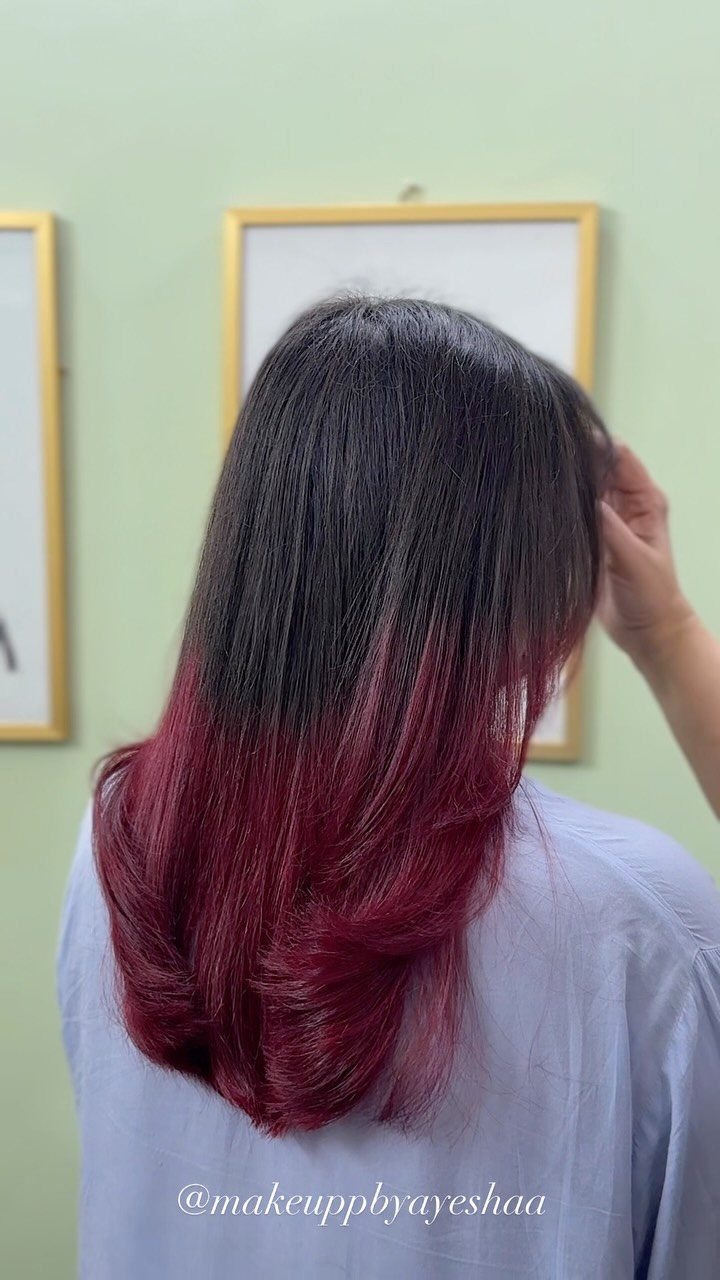
Color concentrated at the ends creates a gradient that moves from dark roots to a brighter finish. The transition can be soft or more defined depending on how much blending is done where the 2 tones meet.
Dip dye works well on straight hair because the line where the color shifts is visible and intentional.
Brighter or unconventional colors stay removable since only the ends are treated, and if you grow tired of the look, you can cut them off without losing much length.
The color fades faster than all-over dye because the ends are more porous and take more friction from brushing and styling.
18. Mahogany Soft Layers
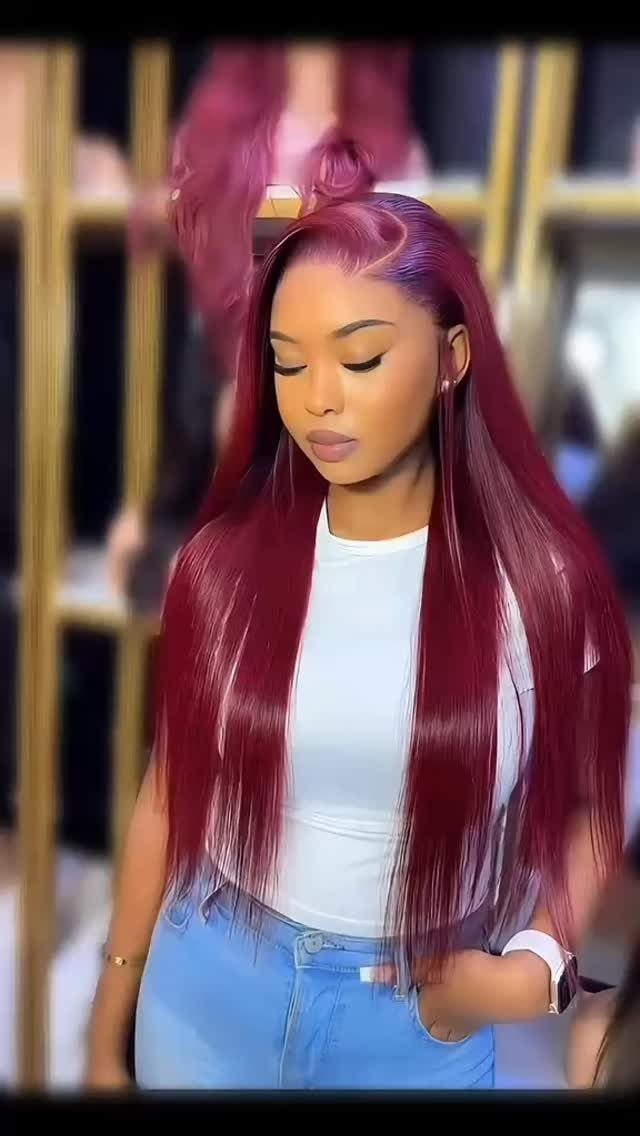
Deep red-brown tones make straight hair look thicker and absorb light in a way that adds richness without needing bright highlights. Paired with soft layers, the color shows through every length as the layers move.
Mahogany reads cool or warm depending on whether it leans more red or brown, so choose based on your skin tone. Straight hair holds this color evenly and shows the depth without much styling.
Red tones fade faster than other colors, so expect touch-ups more often if you want the saturation to hold.
19. Blended Blonde Highlights
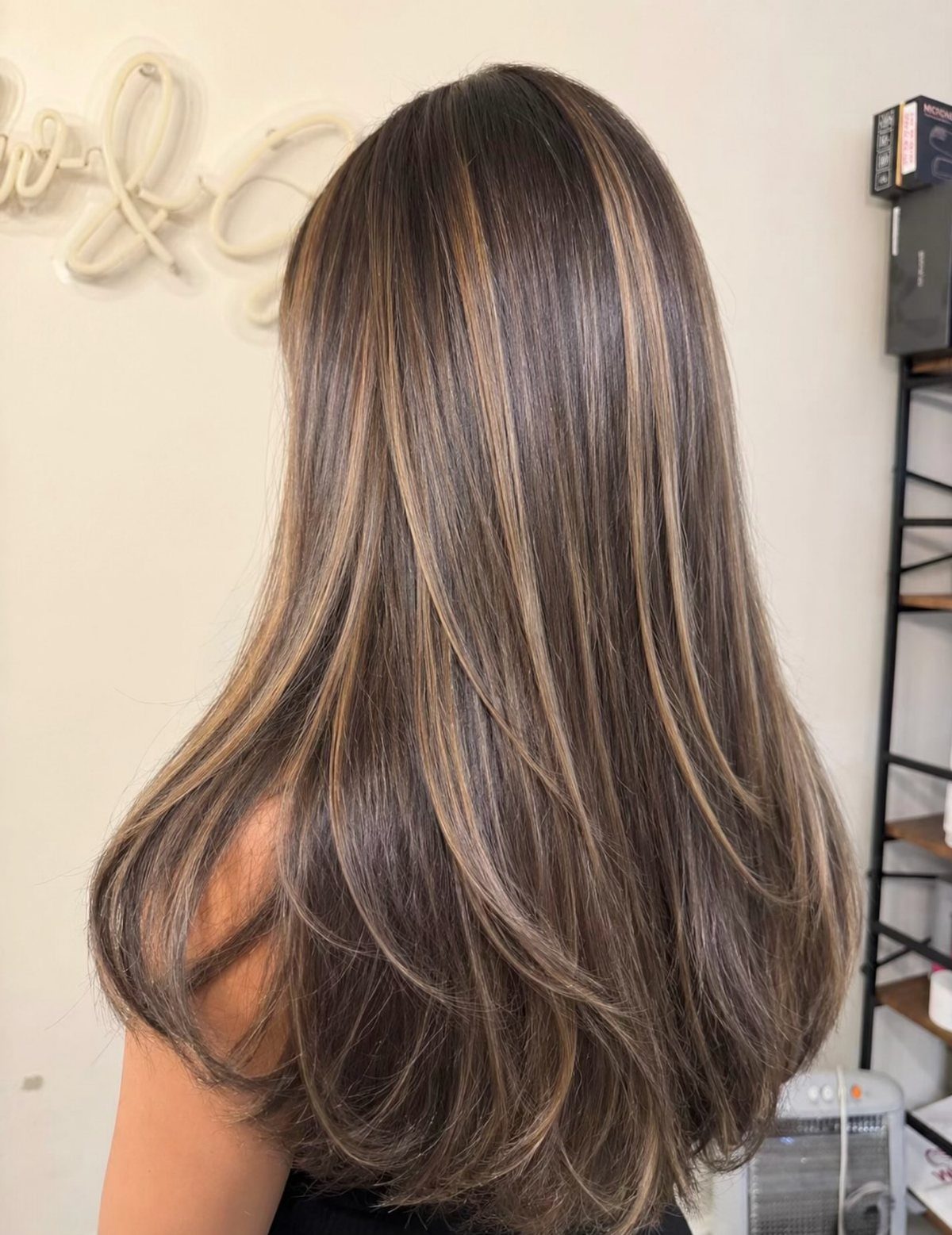
Multiple shades of blonde woven through brown hair keep highlights from looking flat or striped. The variation reads as natural dimension rather than one applied tone.
Blending works by spacing lighter and darker blonde pieces throughout the hair so no single shade dominates.
Ask for at least 2 blonde tones if you want blended highlights, and keep them within a few shades of each other so the transition stays gradual.
20. Ash Blonde Highlights
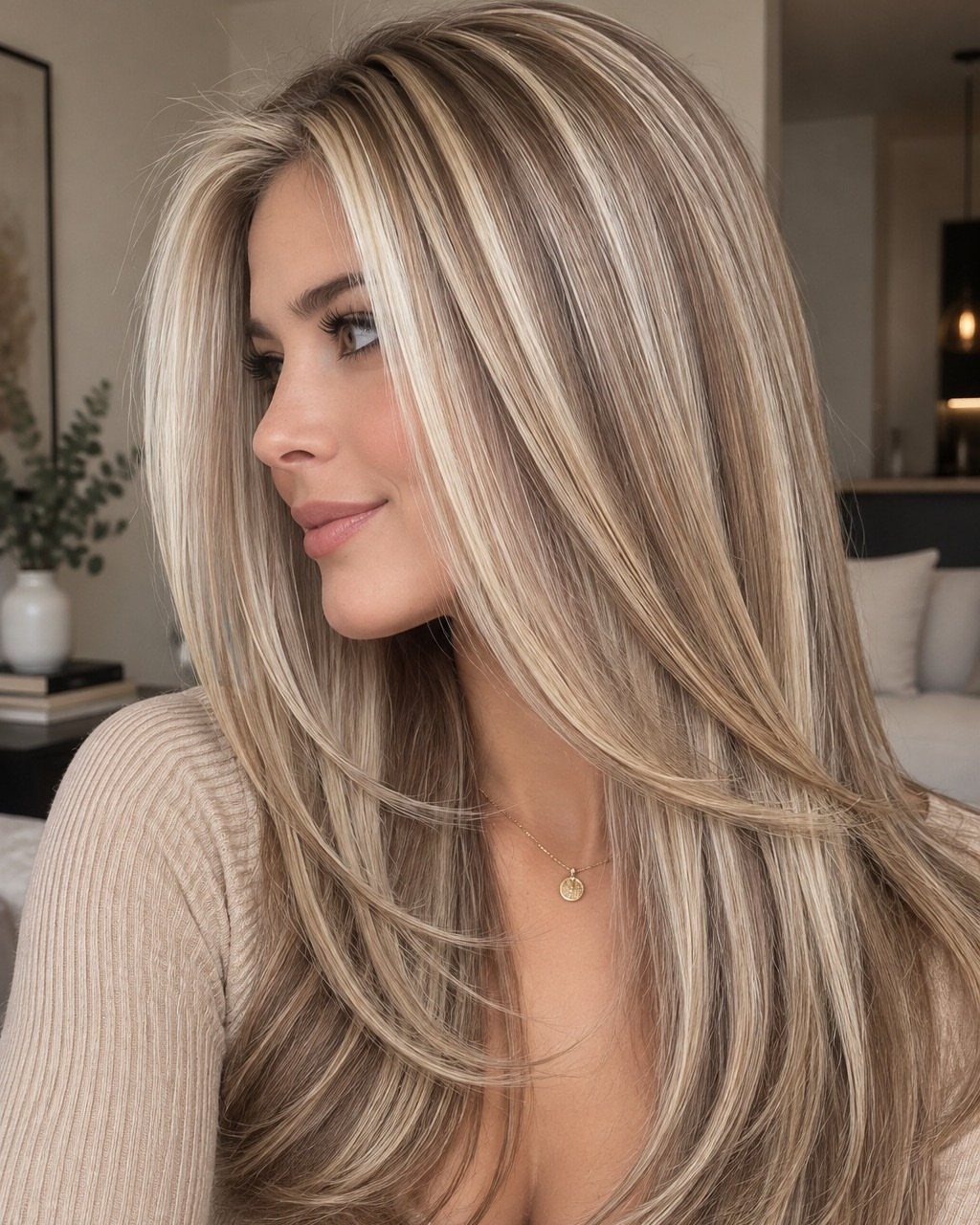
Cool-toned blonde with gray or silver undertones adds contrast to darker roots without turning warm or brassy. Ash highlights suit straight hair because the color sits flat and shows the tone cleanly.
The highlights are woven through long layers so the ash blonde catches light at different lengths. Straight hair holds ash tones evenly, but they fade faster than warm blondes and can turn green if exposed to chlorine or mineral buildup.
Purple-toning shampoo keeps ash highlights from shifting yellow between salon visits.
21. Sleek High Ponytail
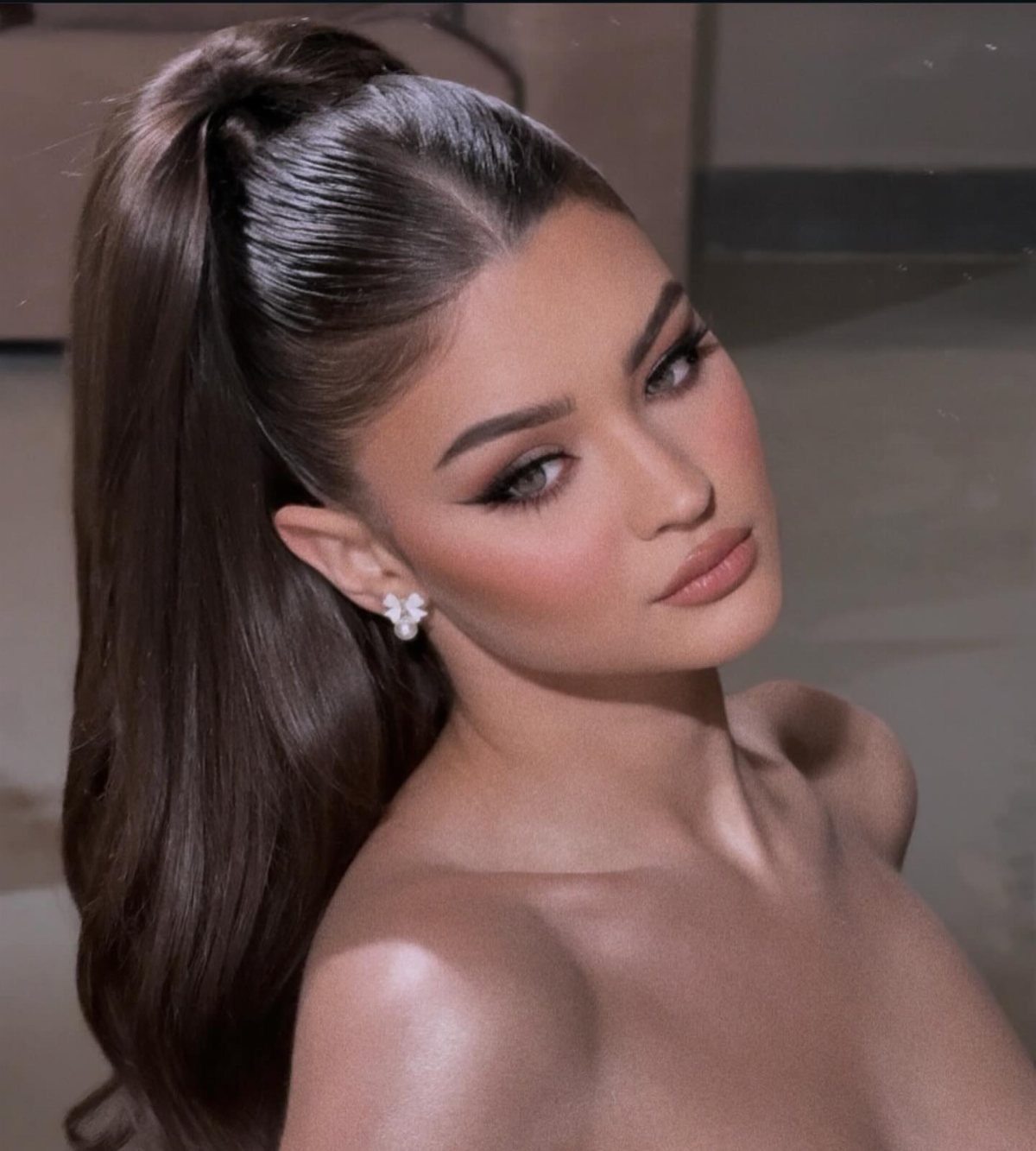
Pull hair straight back from the hairline and gather it high at the crown, securing with a covered elastic.
Smooth the surface with a brush before you tie it, or run a flat iron over the ponytail after it’s secured to remove any bends.
Straight hair holds this style cleanly without needing product, though a light spray can keep shorter pieces from slipping out. Pin a thin piece of hair over the elastic to hide the band.
The high placement suits long hair because the length weighs the ponytail down and keeps it from sticking out.
22. Straight Shoulder-Length Layers
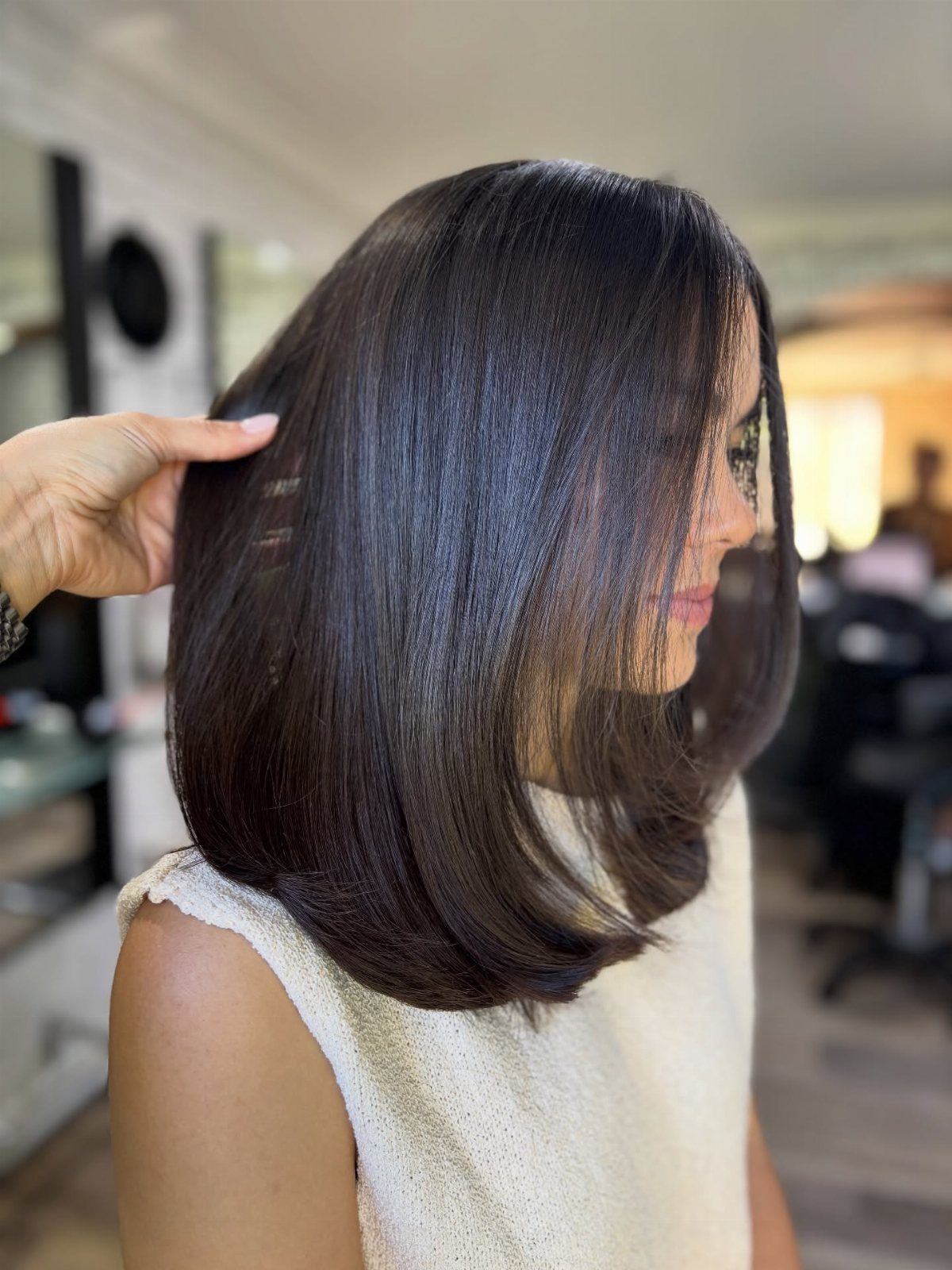
Layers cut through shoulder-length hair add movement without shortening it much. The ends are curved under slightly, creating a soft finish that sits between blunt and heavily layered.
Straight hair shows the layers clearly and holds the curve without much styling.
This length is easier to maintain than longer hair and still long enough to tuck behind the ears or pull into a small ponytail.
23. Long Straight Hair
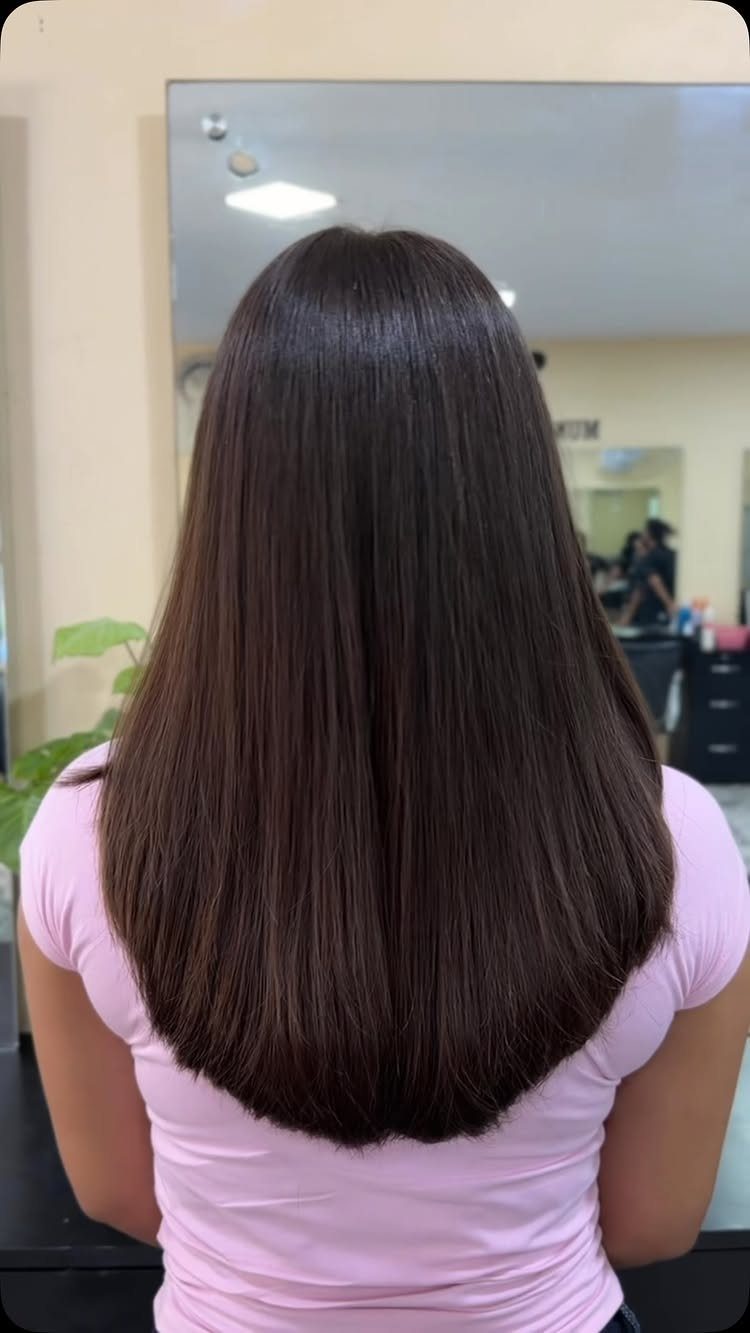
Long hair worn straight and down sits smooth and unstyled. The length gives weight that keeps the hair from lifting at the roots, and the lack of layers means the ends stay full rather than tapered.
Blow-drying or air-drying both work, and the hair can be pulled back or braided when needed.
This style requires the least styling time but the most length to work with.
24. Long Hair with Bangs
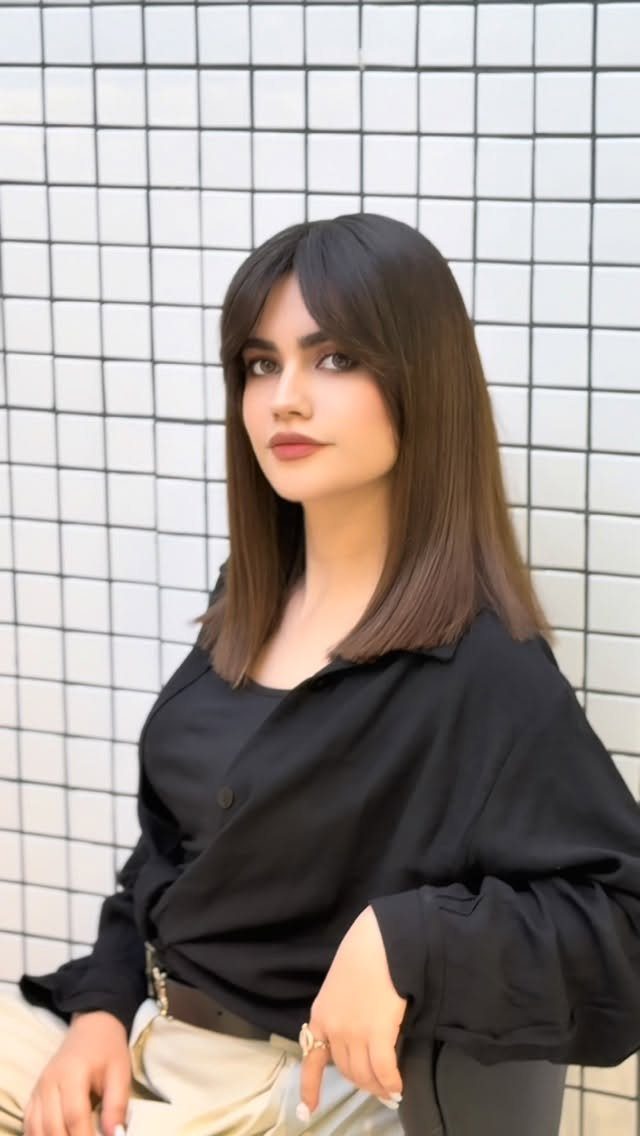
Bangs cut straight across the forehead and worn with long hair create a clear horizontal line that frames the face. The bangs sit between the brows and the lashes, and the length behind them falls past the shoulders.
Straight hair holds this look without much effort, though the bangs need trimming every few weeks to stay out of the eyes. Blow-drying the bangs forward and down keeps them from parting in the middle or flipping to the side.
Full bangs suit oval and heart-shaped faces and cover a high forehead.
Choosing Cuts by Hair Needs
Fine hair benefits from blunt cuts that keep the ends dense and prevent thinning at the perimeter. Thick hair handles layering better, since removing some weight adds movement without making the cut look wispy.
If you want to add volume, ask for layers that start above the crown. If your goal is to reduce bulk, longer layers spaced further apart remove weight without creating a choppy texture.
Face shape affects where you place the shortest layer or the length of a bob.
A longer face reads better with width at the ends or a chin-length cut, while a rounder face suits a longer lob or layers that fall below the jawline.
Bring a photo when you book.
Ask your stylist how the cut will grow out and what it will take to style it at home, since a cut that looks good in the chair can still mean a round brush every morning.
Straight-hair Shine and Damage
Heat damage shows up faster on straight hair because there is no curl to hide dryness or split ends.
A heat protectant sprayed on damp or dry hair before you flat iron or blow-dry reduces moisture loss and keeps the surface smooth.
Sulfate-free shampoo preserves shine and softness better than formulas that strip natural oils. Deep conditioning once a week or every other week prevents the brittle texture that makes hair harder to style.
Tight ponytails pulled daily can cause breakage along the hairline and at the temples. I use silk or satin scrunchies and switch where I place the tie so no single section takes all the strain.
A shine spray after styling adds finish without adding weight.
Styling Straight Hair Texture
Straight hair often slips out of curls quickly because the smooth surface offers little grip.
Texturizing spray or mousse applied before curling gives the hair more hold, and letting the curl cool completely before you touch it helps the shape set.
A round brush used while blow-drying lifts the roots and adds volume that lasts longer than backcombing. Work in small sections and hold the brush under each one as you dry, pulling upward to create lift at the scalp.
If you straighten coarse or wavy hair, flat iron in small sections and move slowly to smooth the texture without making multiple passes.
A boar bristle round brush controls stubborn texture better than a metal or ceramic brush because the bristles grip the hair and distribute heat more evenly.
Hairspray applied after styling holds the shape without adding stiffness if you mist it from a distance rather than spraying close to the hair.





