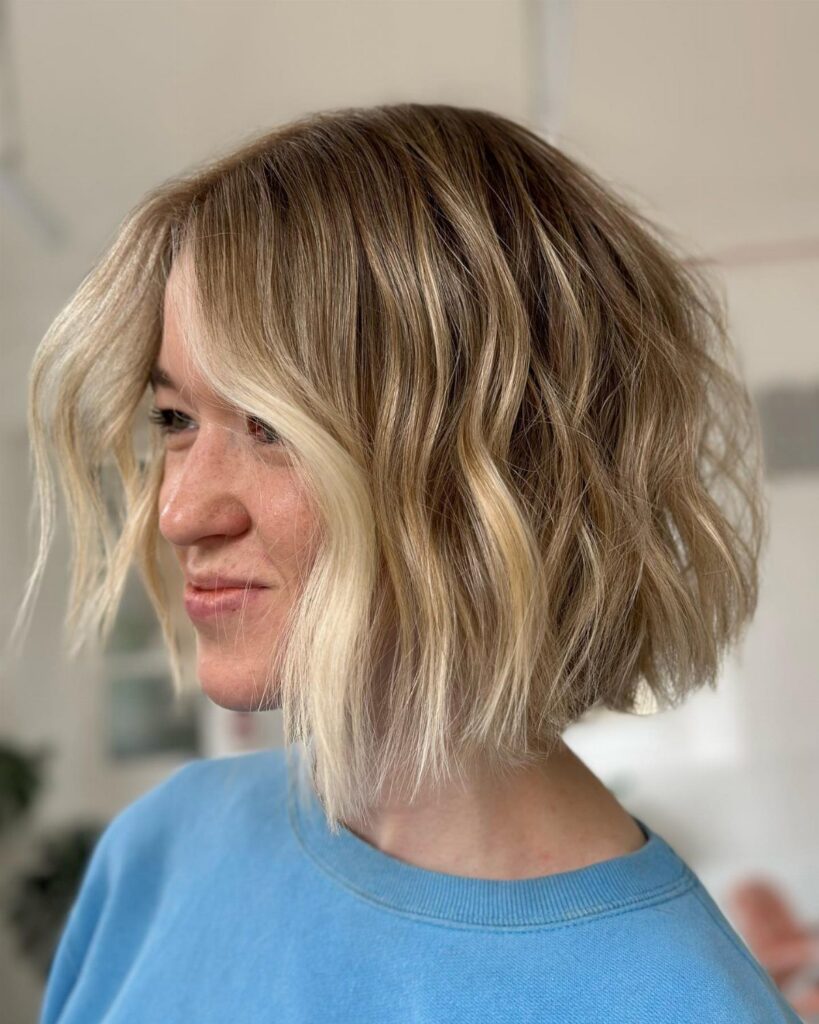
Most of these cuts stretch trims to 10 or 12 weeks because the layering is gradual enough to grow out without a visible line, or the texture is meant to look undone from the start.
If your hair has natural wave or curl, choose a cut that works with that pattern rather than against it: long layers, soft medium-length waves, or shoulder-length curls let texture do the shaping so you can skip heat tools.
Straight hair needs either blunt edges that air-dry sleek, like a one-length lob, or choppy layers that add movement without requiring a round brush every morning.
1. Wavy Lob
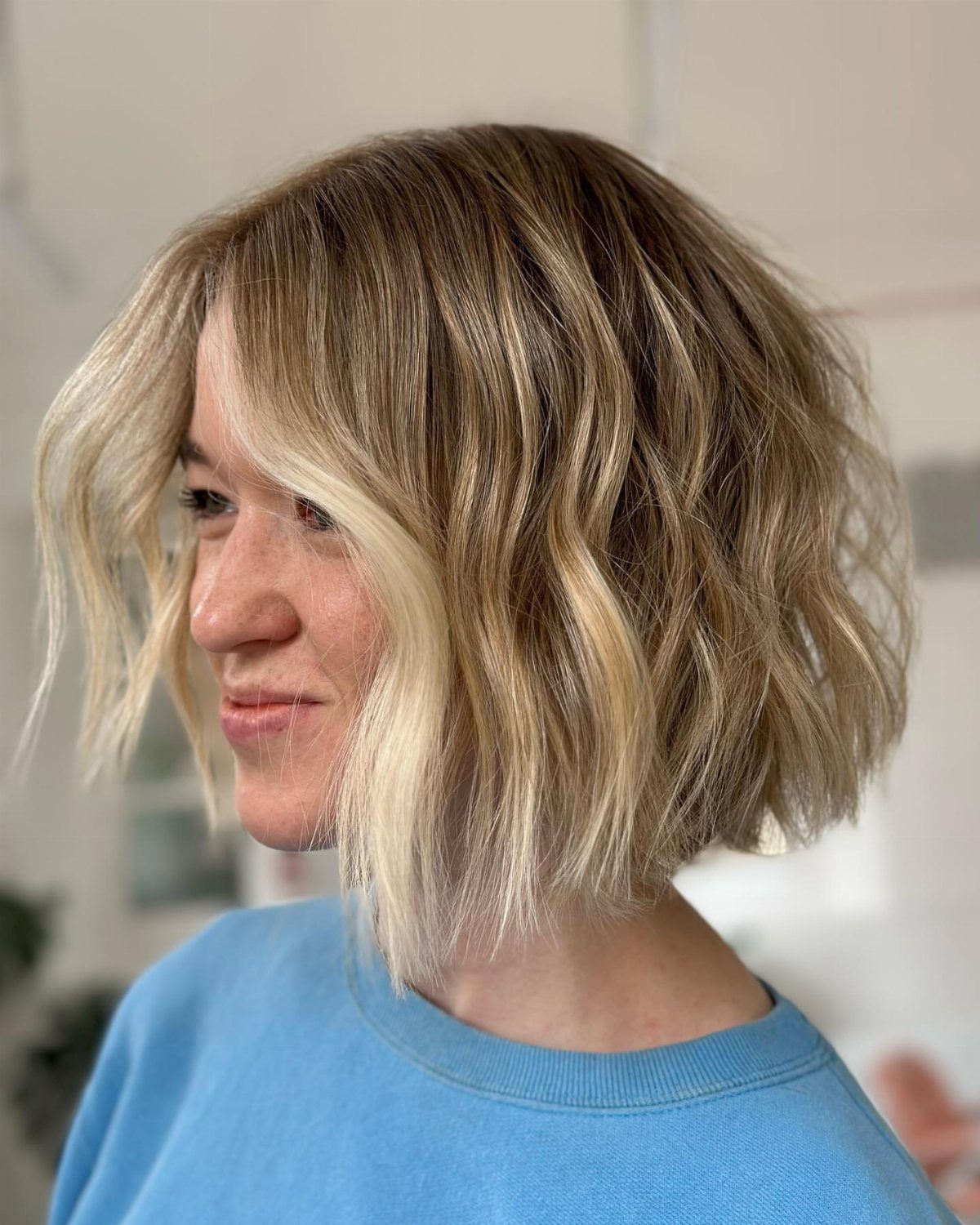
A lob cut that ends at collarbone length lets natural waves show without extra styling.
The length sits at the sweet spot where texture holds shape on its own, so most mornings you can wash, scrunch in a little mousse or sea salt spray, and let it air-dry.
The blunt or slightly graduated ends keep the cut from looking wispy as it grows, and you can stretch trims to 10 or 12 weeks without losing the line.
If your hair has a slight bend or S-wave, this cut makes the most of it.
2. Long Layers
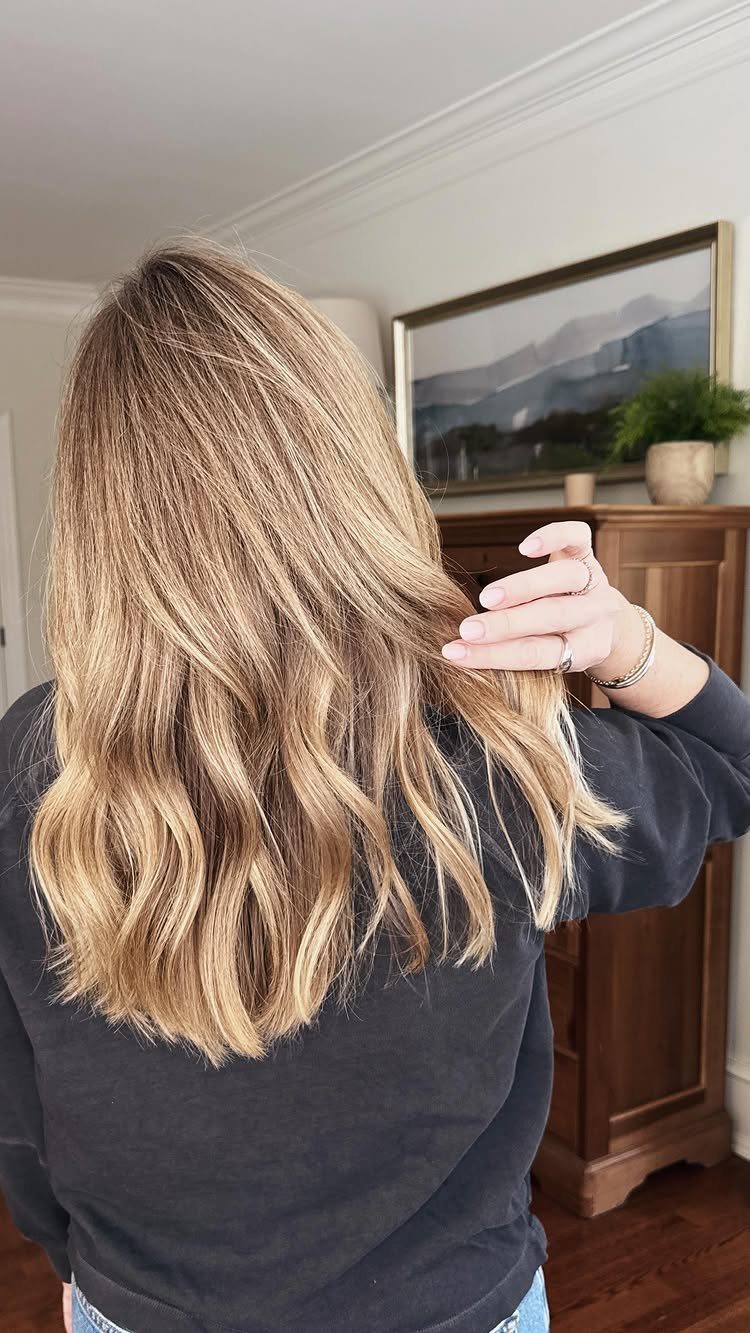
Blended layers that start below the chin and cascade through the length add movement without shortening the overall shape.
The gradual transition means the cut grows out over several months without creating a distinct line, so you can go longer between appointments.
Long layers work particularly well if your hair is thick or heavy, since the layering removes some weight while keeping coverage.
Air-drying usually gives enough shape, and if you do use heat, the layers help hair fall into place faster than a one-length cut.
A face frame can be added at the front without turning the whole cut into a shorter style.
3. Blunt Lob
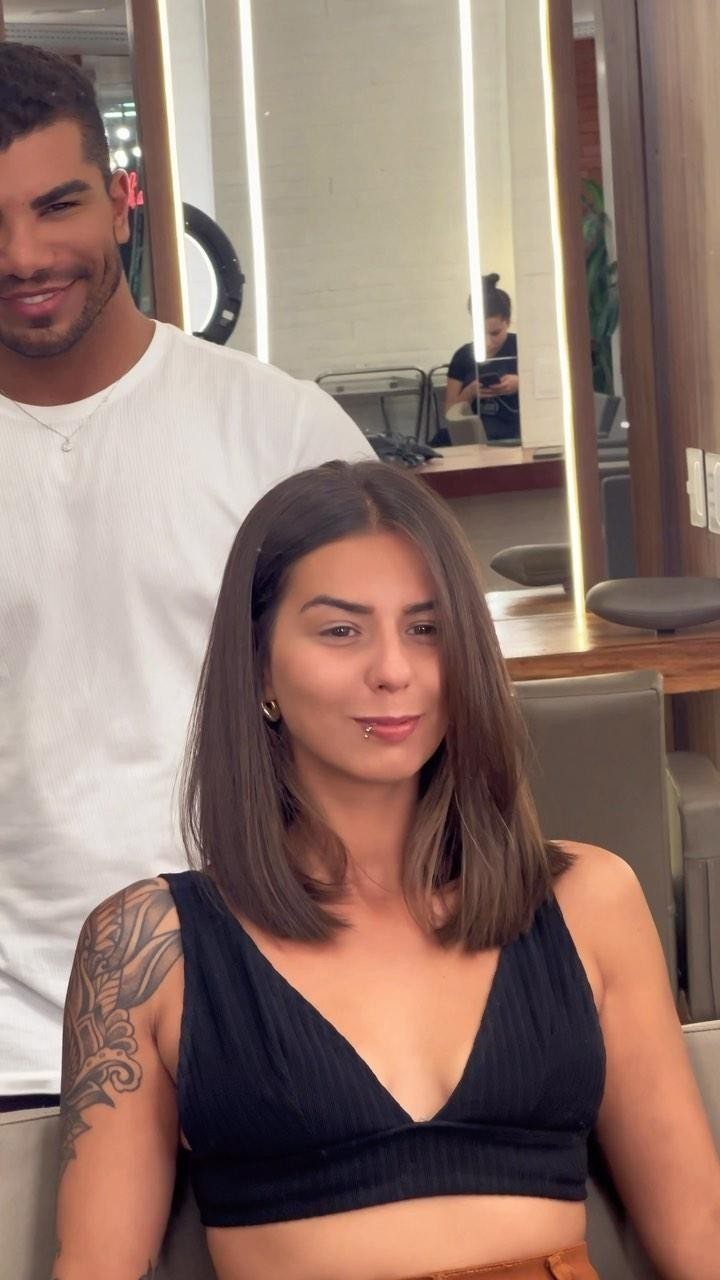
A long bob with a straight-across hemline creates a clean, geometric edge that can make fine or medium hair look fuller. The blunt cut reflects more light than textured ends, so the finish reads sleek even when hair is air-dried.
The tradeoff is that regrowth shows sooner than with layered cuts, so plan on trims every 6 to 8 weeks to keep the line sharp.
If your hair is naturally straight or has only a slight wave, this cut is low-effort: wash, rough-dry, and you’re done.
4. Textured Layers
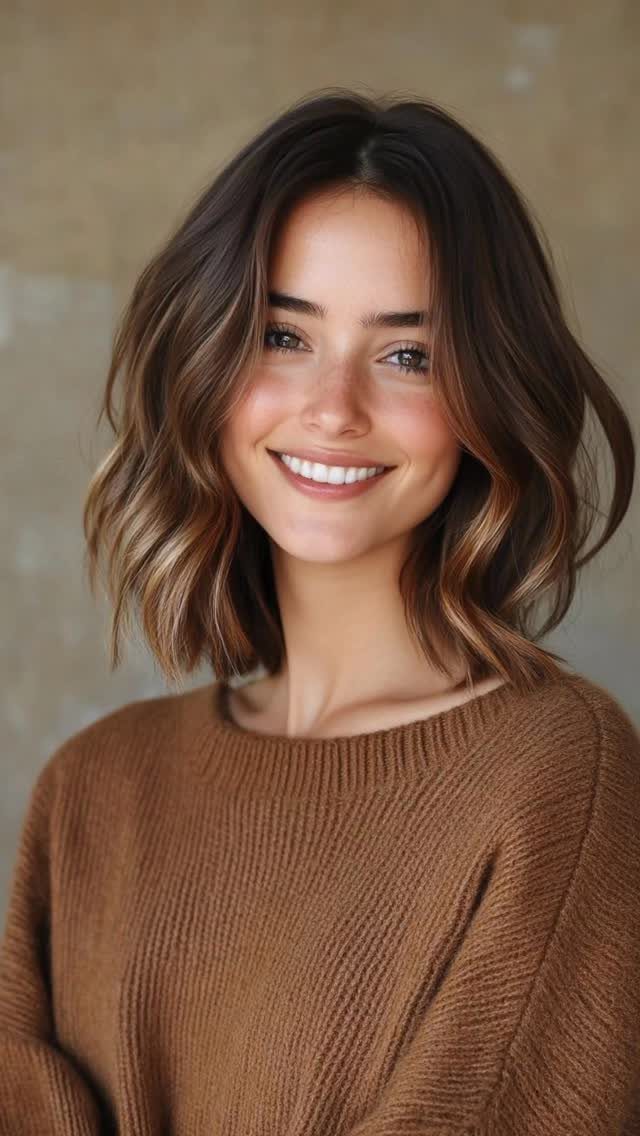
Choppy or piecey layers cut through shoulder-length hair add lift at the crown and create separation at the ends.
The uneven lengths give hair an intentionally undone finish that looks good tousled, so styling is often just scrunching in a texturizing spray and letting it dry.
This approach works well if your hair is straight to wavy and you want more volume without adding product every day.
The layers also help prevent the cut from looking too heavy as it grows, and the texture hides any small inconsistencies in length between trims.
5. Textured Shag
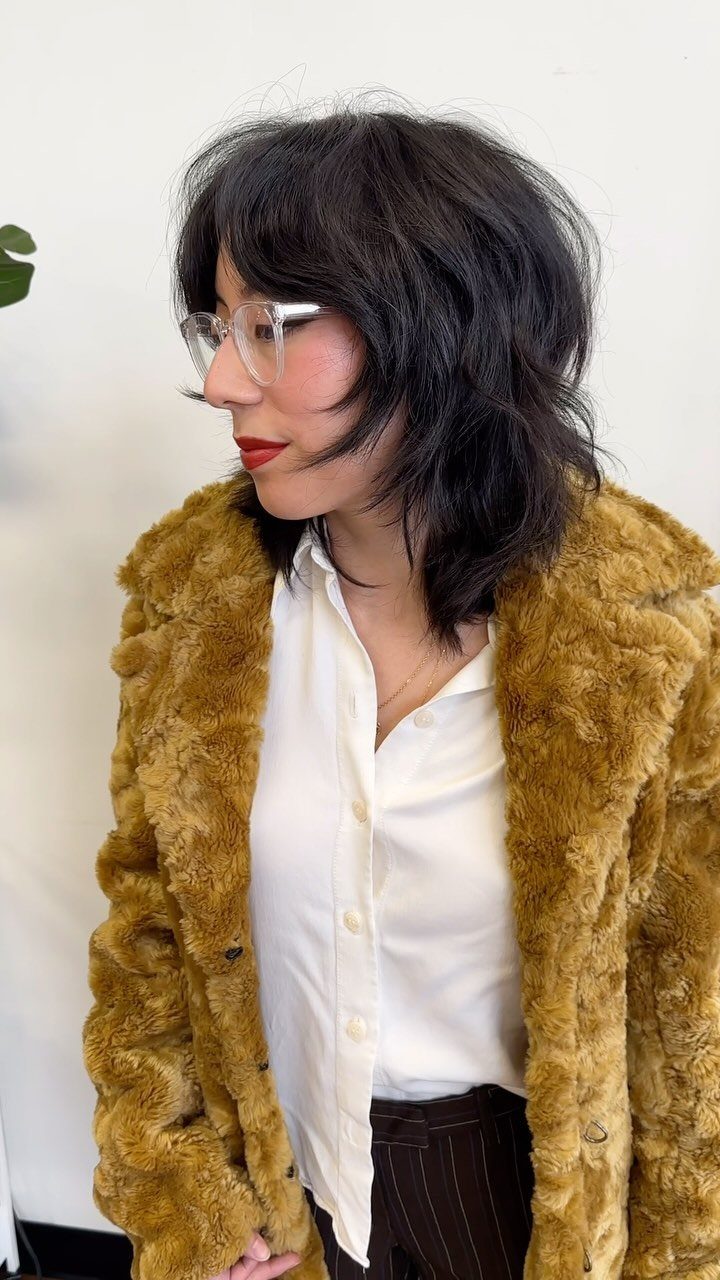
Choppy, feathered layers stacked through a medium-length cut create a deliberately imperfect, rock-and-roll finish.
The uneven lengths add volume at the crown and movement through the ends, and the shag is meant to look lived-in, so it forgives skipped styling days.
If your hair is fine or naturally holds texture, the cut does most of the work for you.
6. Beachy Waves
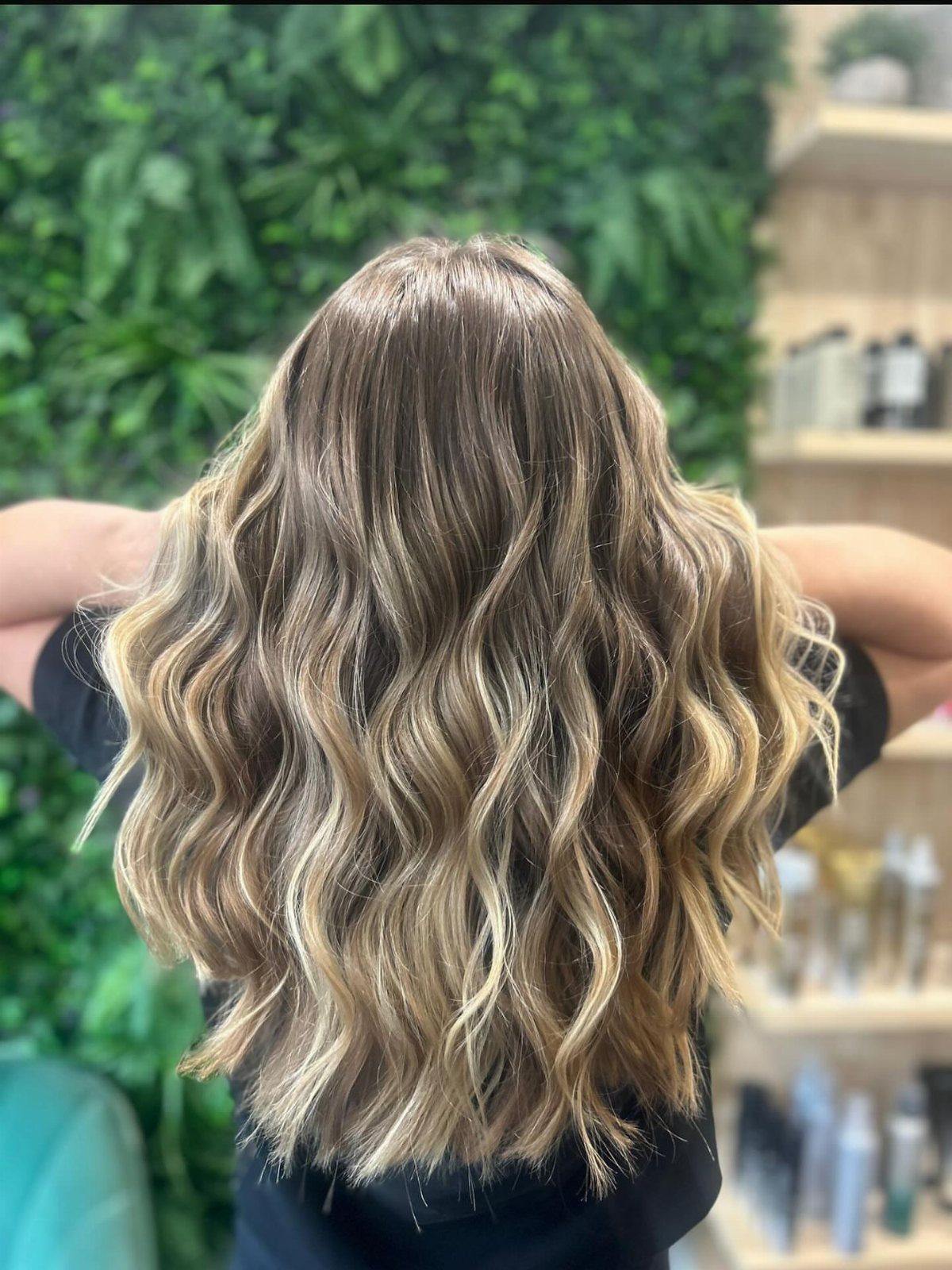
Light, relaxed waves styled with a loose curl give medium-length hair a casual, undone texture. The pattern is open and imperfect, so it looks natural even when created with a curling iron or flat iron used as a wand.
To get the look, wrap sections around the barrel in alternating directions, leave the ends out, and break up the curls with your fingers once they cool.
A bit of sea salt spray or texturizing spray before or after adds grip. The waves loosen over a day or two, which actually makes them look better, so you can stretch the style across multiple days without restyling.
7. Soft Layers

Subtle, blended layers cut through shoulder-length hair add movement without creating dramatic contrast. The lighter graduation means the cut works with most textures, whether your hair dries straight, wavy, or curly, and you can usually skip heat tools.
Because the layers are gentle, they grow out gradually and don’t create a choppy line as length builds.
You can stretch appointments without the cut looking overgrown, and styling often comes down to applying a leave-in product and letting hair dry naturally.
8. Shoulder-Length Curls
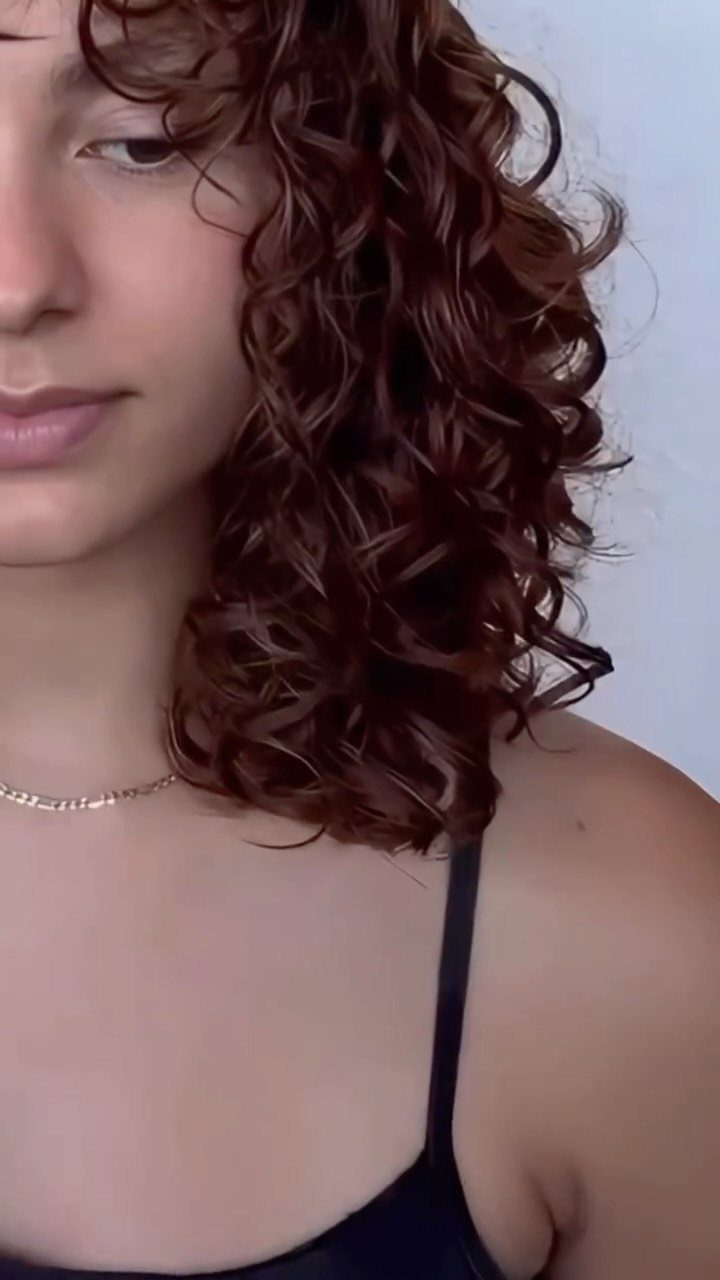
Cutting curls to shoulder length removes weight at the ends and lets the curl pattern spring up naturally.
Layers placed through the interior help distribute volume so the shape doesn’t get triangle-like, and they allow each curl to move on its own instead of clumping into one mass.
Keep conditioner in the shower routine, apply a curl cream or gel while hair is soaking wet, then let it air-dry or diffuse.
Once the curls are set, you can refresh them between washes with a bit of water and product rather than starting over.
9. Wispy Bangs
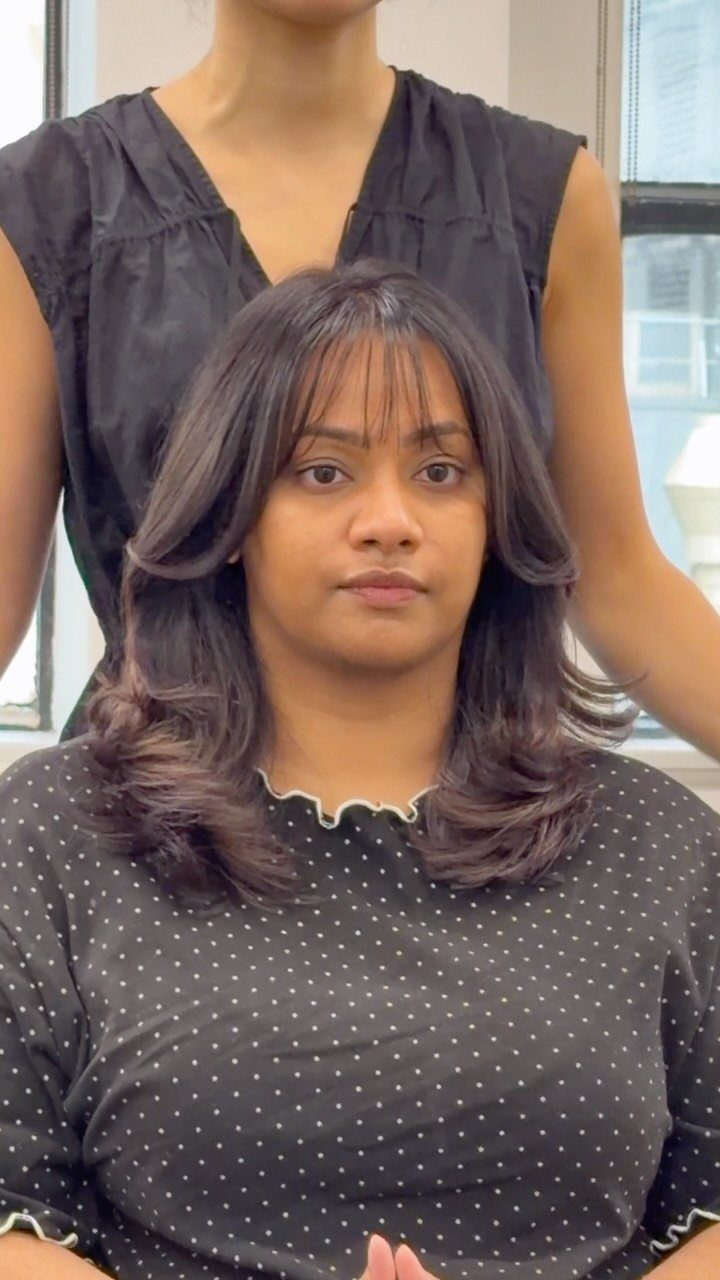
A fringe cut thin and feathered sits lighter on the forehead than a full, blunt bang. The ends are point-cut or razored to create separation, so the fringe has an airy, lived-in look from the start.
Wispy bangs need trimming to stay out of your eyes, but daily styling is minimal. Most people can brush them forward and let them dry, or run a round brush through them quickly for a little lift.
They blend more easily into the rest of the cut as they grow, so if you decide to grow them out, the transition is smoother than with heavier bangs.
10. Curtain Bangs
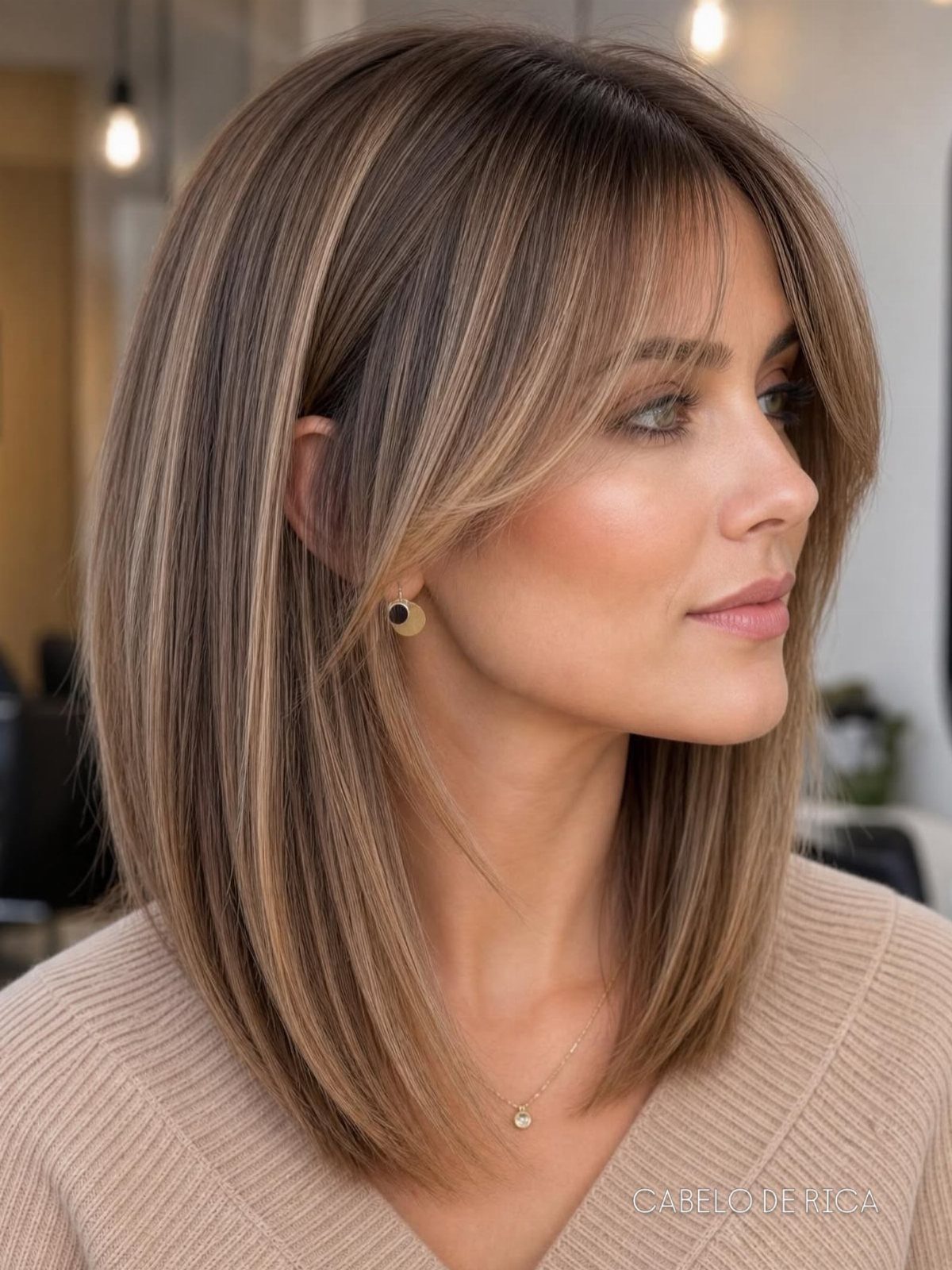
A center-parted fringe that sweeps to both sides frames the face without covering the forehead completely.
The longer lengths, usually ending at cheekbone or jaw level, make curtain bangs easier to grow out than traditional bangs, and they can be tucked behind the ears or pinned back when you want them off your face.
The parted shape works with most face shapes because it adds vertical lines rather than cutting across horizontally.
Styling can be as simple as blow-drying them forward with a round brush for a little curve, or letting them air-dry if your hair has natural movement.
11. Soft Layered Lob
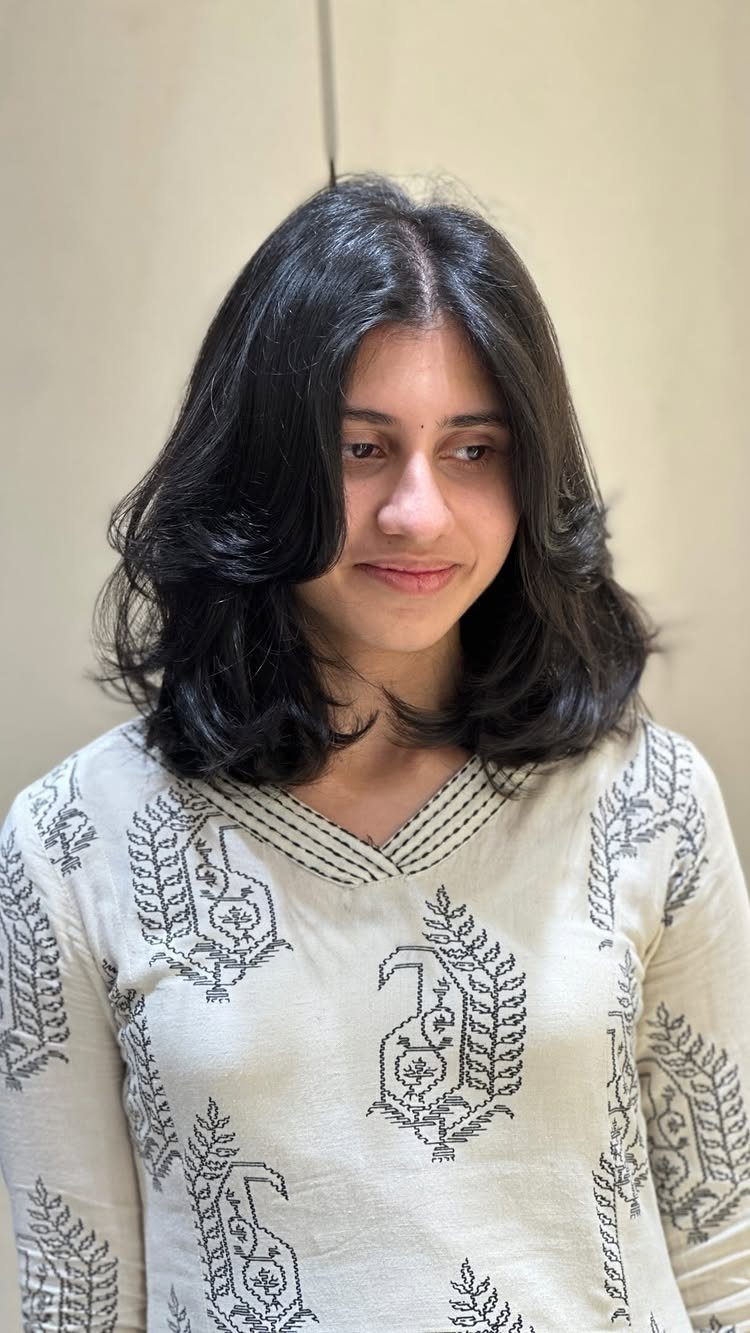
Layering a long bob adds shape through the interior while keeping the perimeter at collarbone length.
The layers start higher than they would in a one-length lob, so the cut has more lift at the crown and moves when you turn your head.
The layered structure means the cut works with different textures: straight hair gets body, wavy hair falls into place with less effort, and curly hair avoids the bottom-heavy triangle.
Because the longest pieces still hit the collarbone, you get the streamlined look of a lob without sacrificing movement.
12. Wispy Medium-Length Layers
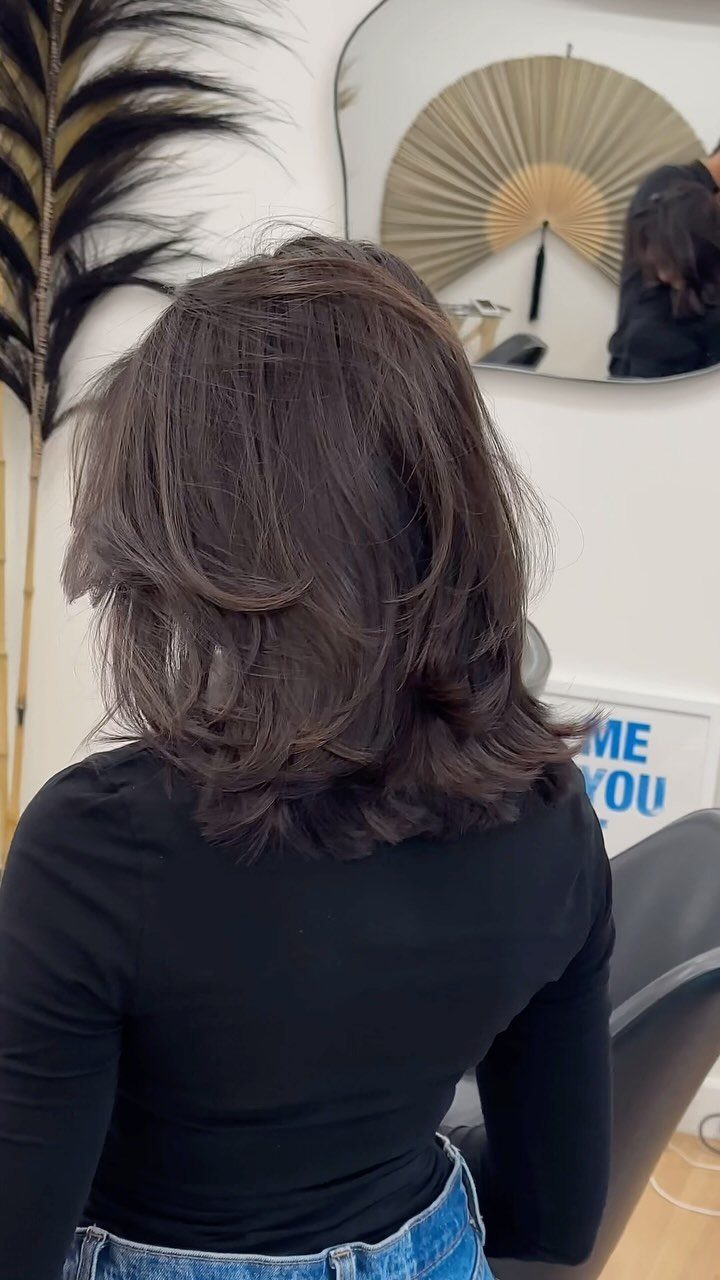
Light, feathered layers cut through medium-length hair reduce weight at the ends and create an intentionally soft, diffused edge.
The wispy finish makes fine or thin hair look fuller because the ends are separated rather than blunt, and the layers add lift at the crown without removing much length overall.
This cut air-dries well if your hair has even a slight wave or bend, and it doesn’t demand product to look finished.
The feathered texture hides any unevenness as the cut grows out, so you can skip trims longer than you would with a blunt line.
13. Side-Swept Bangs with Waves
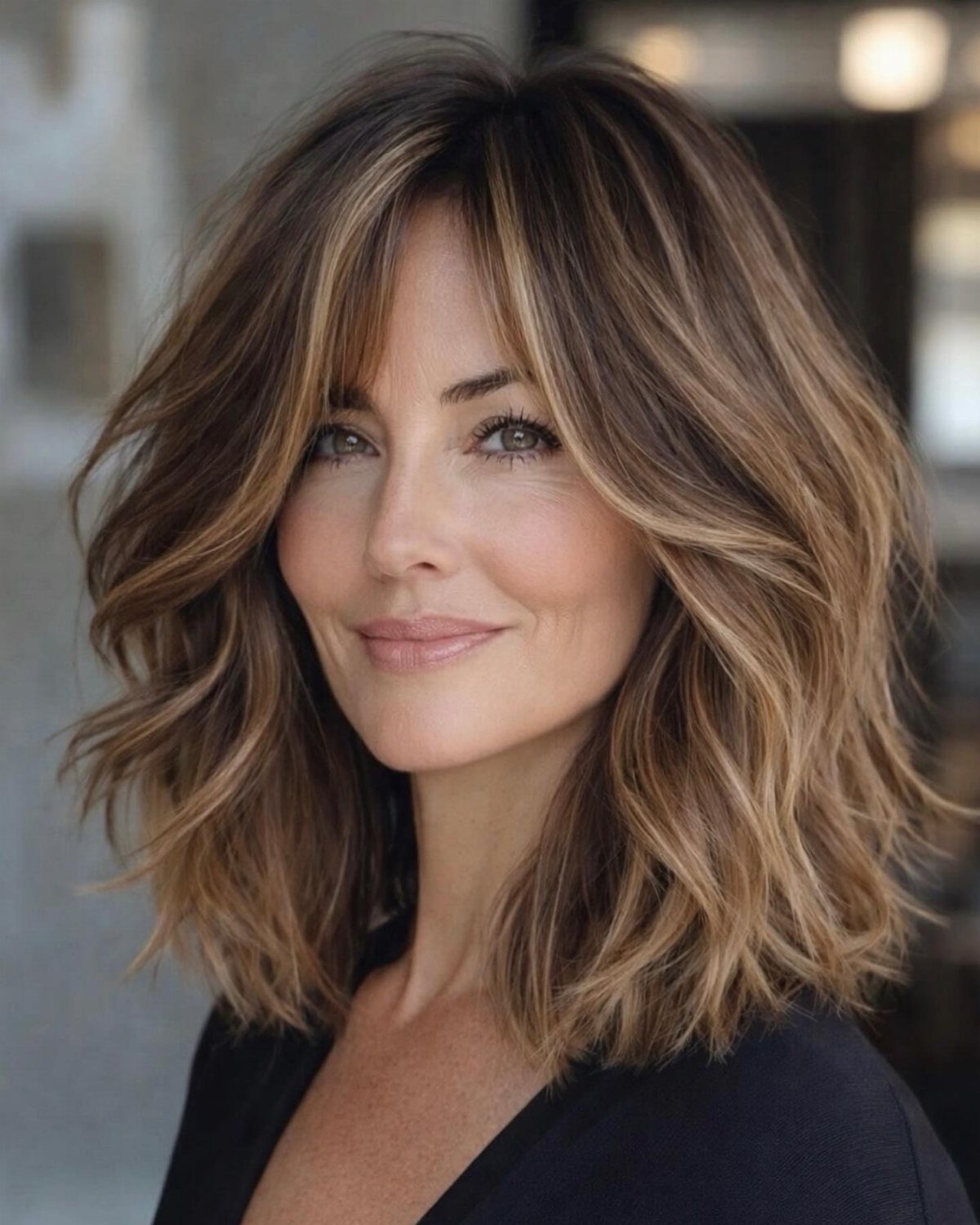
Angled bangs that sweep across the forehead pair with loose waves through the rest of the cut to soften angles and add dimension.
The side-swept fringe sits long enough to tuck behind an ear, so it stays versatile as it grows.
The waves can be heat-styled or worked in with your fingers after air-drying if your hair has natural texture.
The combination keeps the focus on the face while the texture through the lengths prevents the cut from looking too polished or rigid.
14. Layered Lob with Curtain Bangs
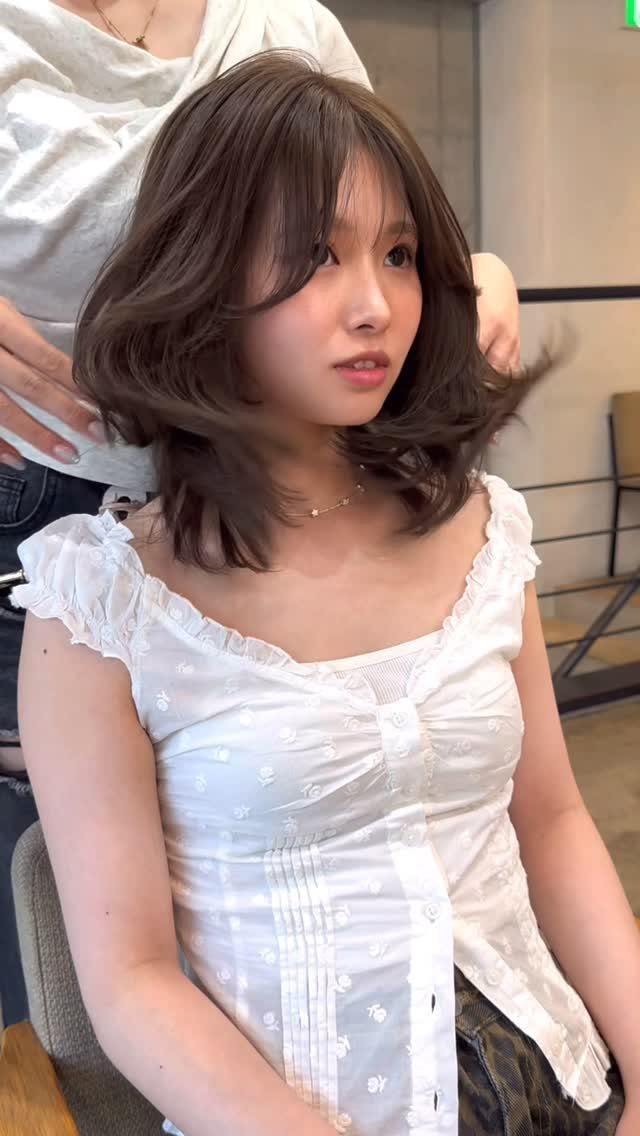
Combining a layered long bob with center-parted bangs gives you two low-effort elements in one cut. The layers add movement through the body, and the curtain bangs frame the face without requiring daily heat styling.
Both pieces grow out gradually, so the cut holds its shape between trims. If you want the bangs off your face, they’re long enough to pin back or tuck behind your ears without disrupting the rest of the style.
15. Bob with Side Bangs
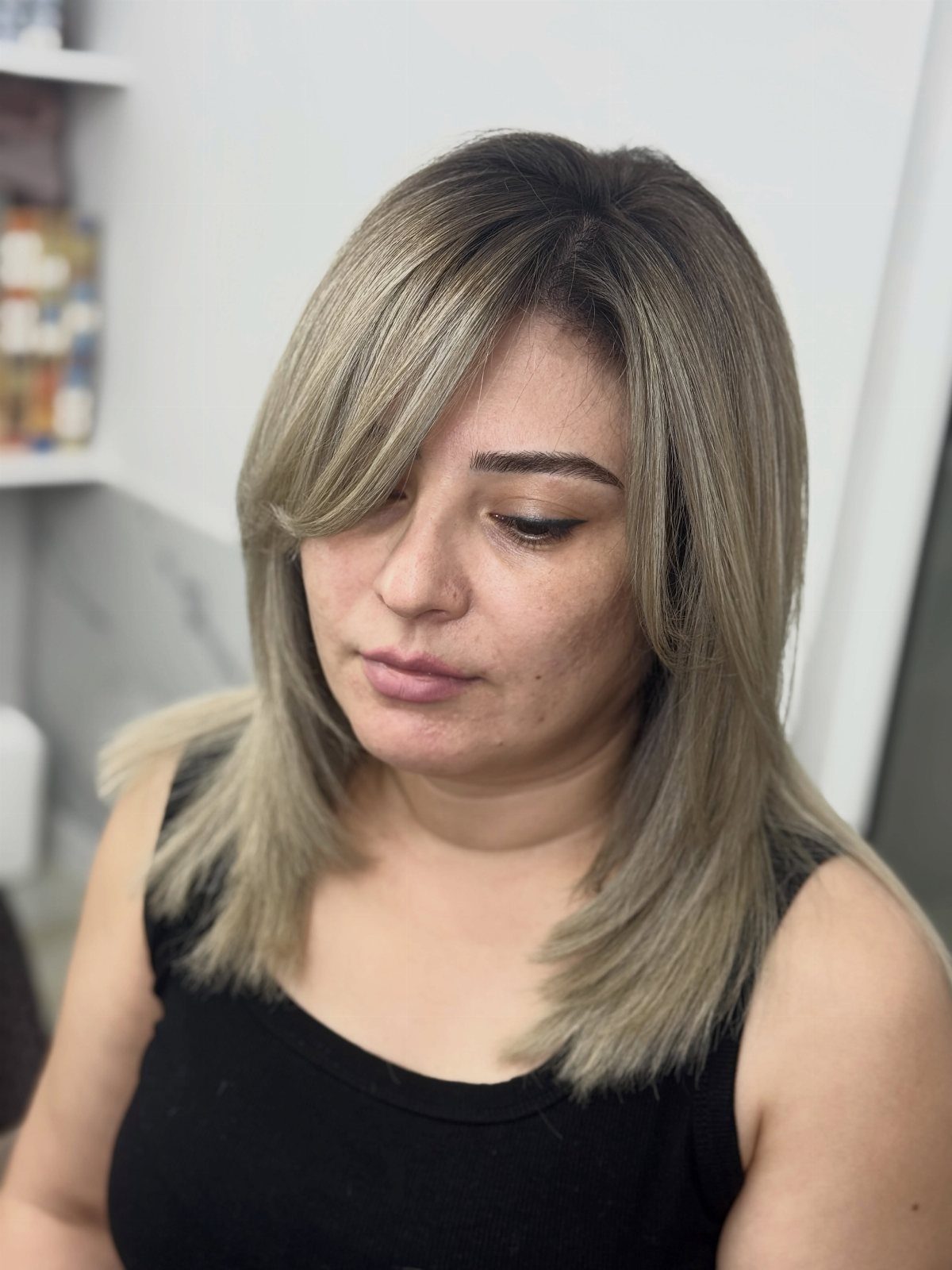
Side-swept bangs layered into a shoulder-length bob create a face-framing effect that draws attention to the cheekbones. The angled fringe blends into the rest of the cut rather than sitting as a separate piece, so the overall shape feels cohesive.
I blow-dry the bangs with a round brush to get some lift, then let the rest air-dry or straighten it if I want it smoother.
The length at the perimeter gives you the option to tuck hair behind your ears or leave it loose.
16. Curved Lob
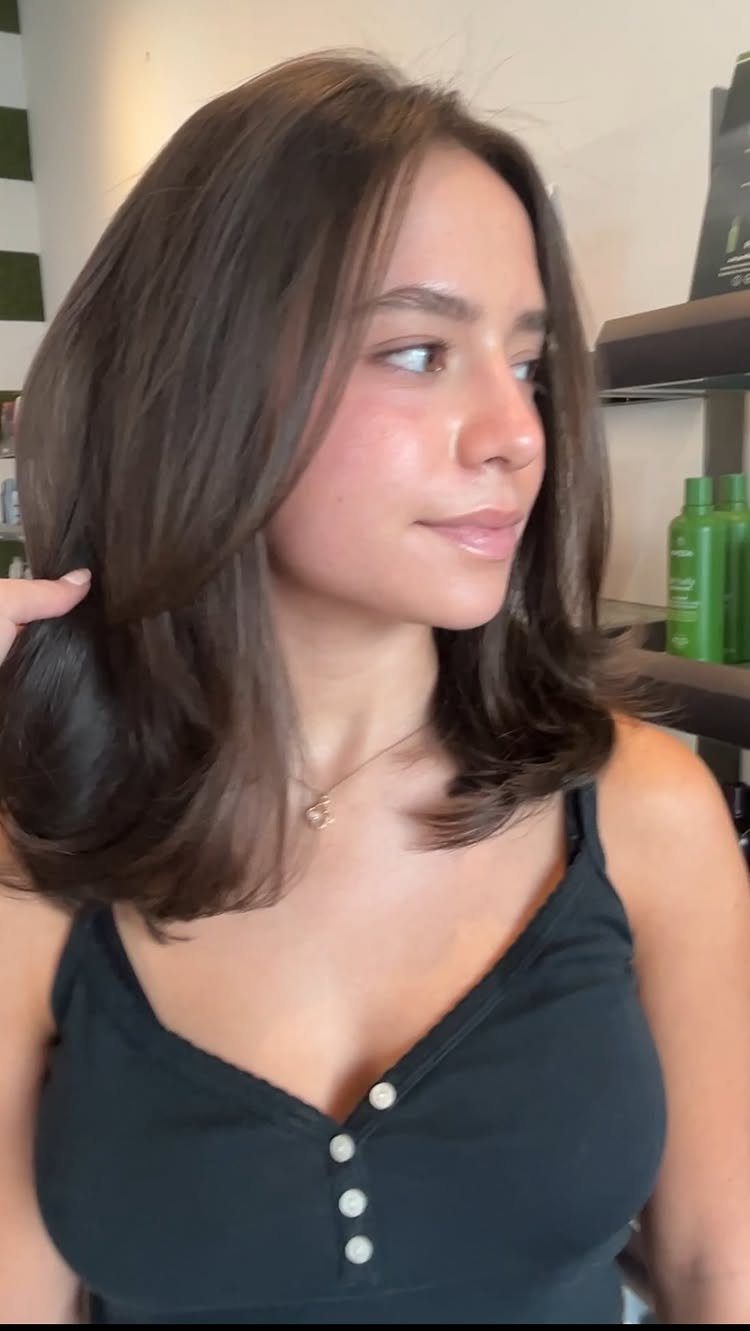
A long bob with ends that curve under slightly adds shape without needing a curling iron every day.
The inward bend can be created during a blowout with a round brush or left to form naturally if your hair has even a slight wave.
The curve makes the cut look more polished than a straight-across blunt line, and it holds better on hair that’s fine or lacks natural volume.
Because the shaping sits at the ends, regrowth doesn’t disrupt the look as quickly as it would with a heavily layered cut.
17. Long Bob
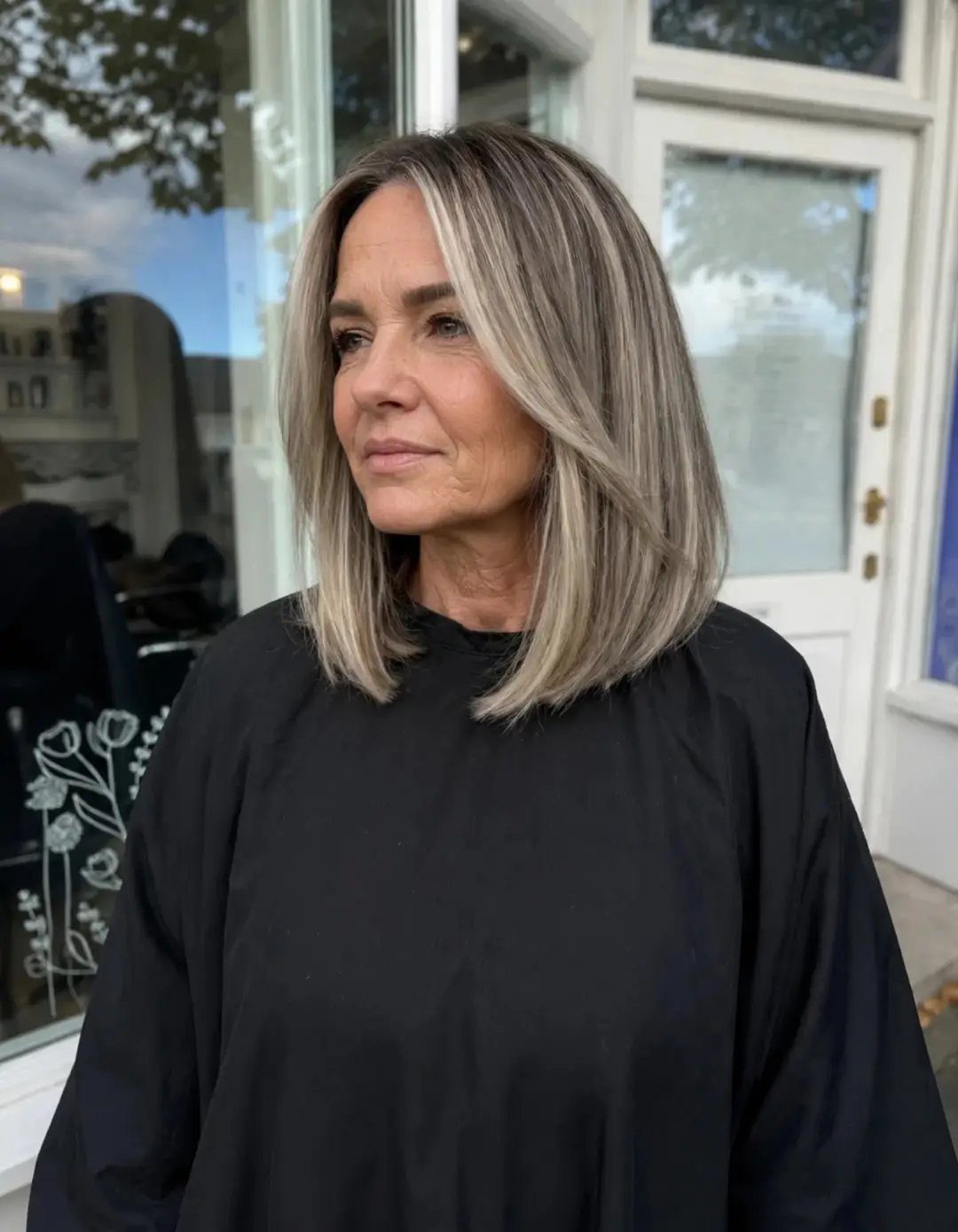
A bob that falls between the collarbone and shoulders gives you enough length to pull into a low ponytail or clip while still reading as a shorter cut.
The longer perimeter makes the style more forgiving if you’re growing out layers or transitioning from something shorter.
Because there’s more length to work with, the cut can be worn straight, wavy, or curled without losing its shape.
If your hair is thick, a long bob removes weight without sacrificing coverage, and if it’s fine, the length can be blunt-cut to create the appearance of fuller ends.
18. Shoulder-Length Layers
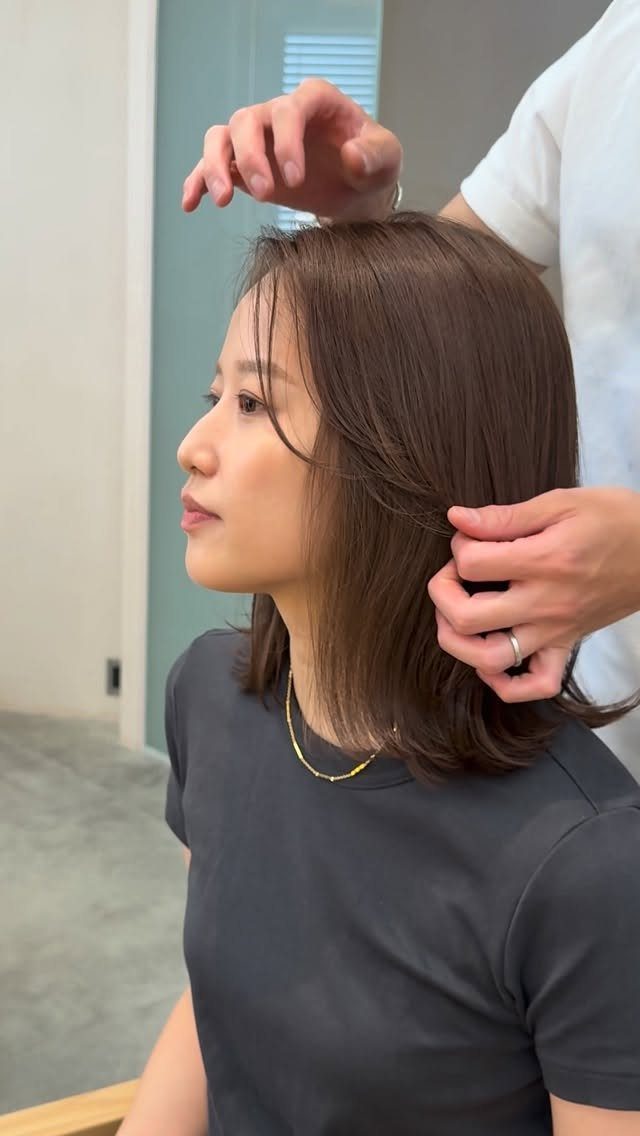
Layers cut to fall right at the shoulders create natural movement and prevent the ends from sitting flat. The layering removes bulk through the interior, so thick hair feels lighter and fine hair gets more lift at the crown.
Styling usually means applying a volumizing mousse or texturizing spray at the roots and letting hair air-dry, or running a blow dryer through it with your fingers for a relaxed finish.
The length is practical for pulling back into a ponytail or braid, and the layers keep the shape from looking too heavy as it grows.
19. Tousled Waves
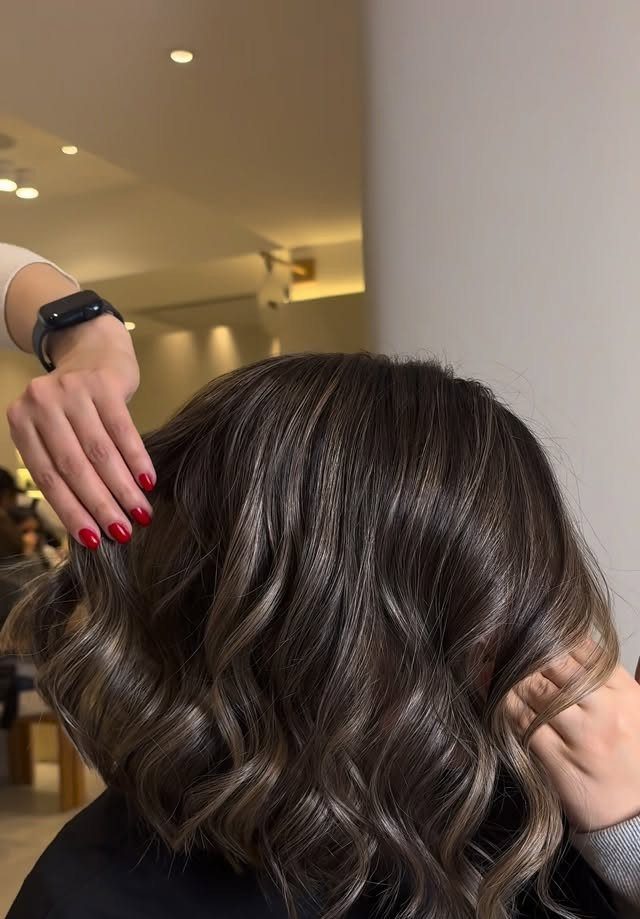
The pattern is meant to look slept-in, so it doesn’t need precision or touch-ups through the day.
A light texturizing spray adds grip without stiffness. The waves soften as they settle, and the looser texture reads more natural than fresh curls.
20. Sleek Long Bob
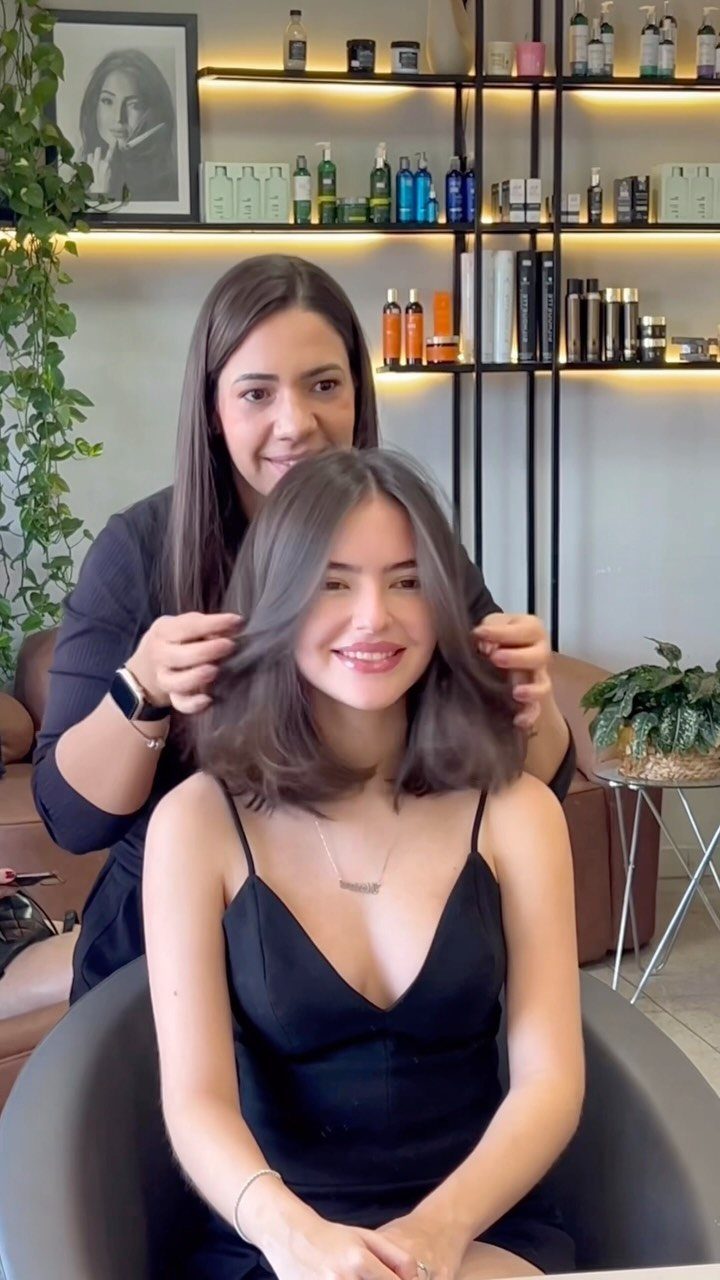
A straight, minimally layered lob cut to one length creates a polished, geometric line that works best on hair that’s naturally straight or easy to blow-dry smooth.
The clean edge reflects light evenly, so the finish looks deliberate even without styling products.
If your hair holds a natural bend, you’ll need a flat iron or a blow dryer with a paddle brush to get the sleek look. The blunt edge grows out visibly, so the line needs regular maintenance.
21. Highlighted Lob
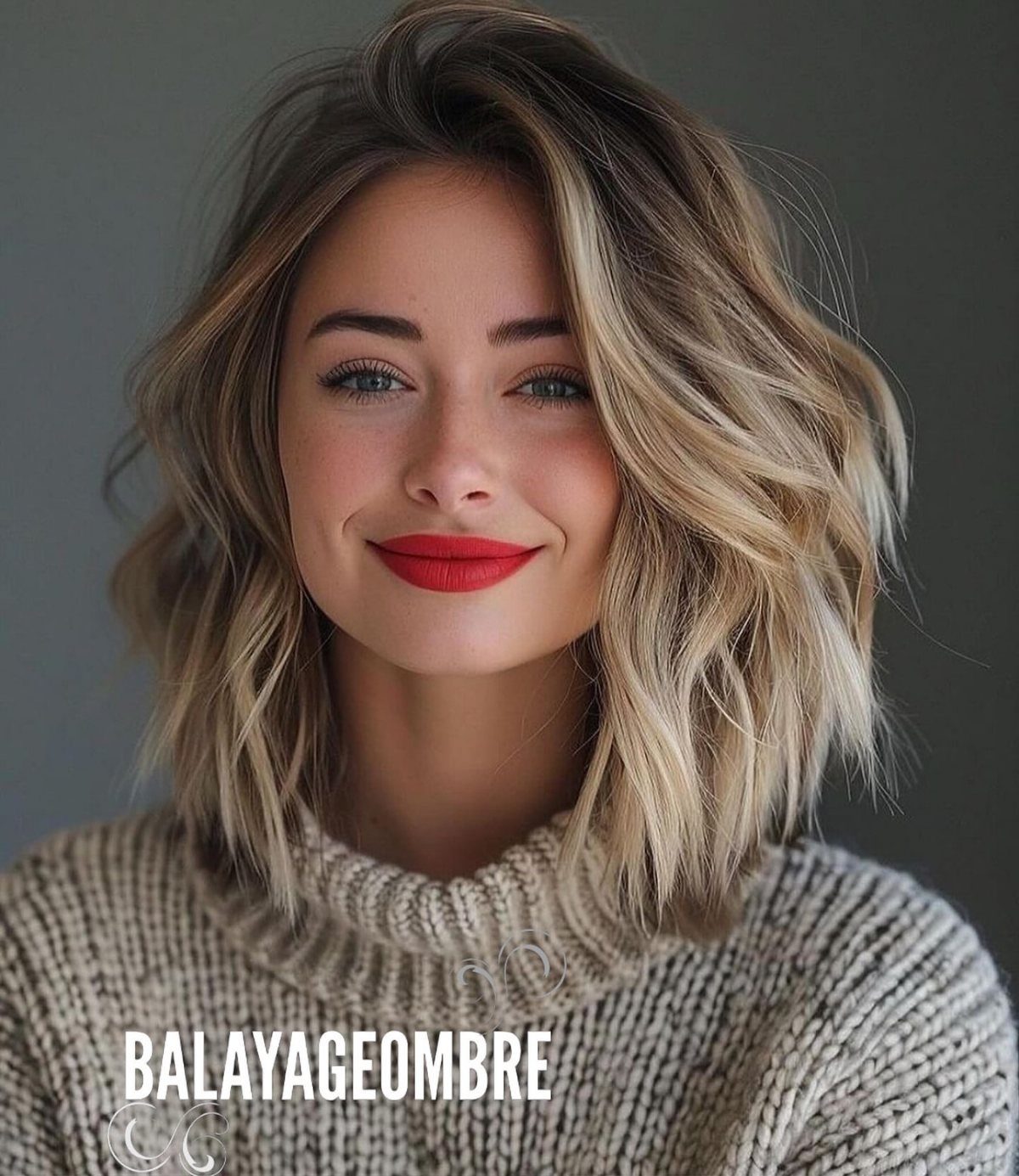
Adding highlights to a long bob creates dimension through the lengths and makes regrowth less noticeable than a single-color cut.
The lighter pieces catch light differently depending on how hair moves, so the color adds visual interest without requiring daily effort.
The lob length keeps the highlighted sections visible whether you wear hair straight or wavy, and the color variation can make fine hair look fuller.
Because the highlights blend gradually, you can stretch color appointments longer than you would with a solid dye job.
22. Feathered Shoulder-Length Layers
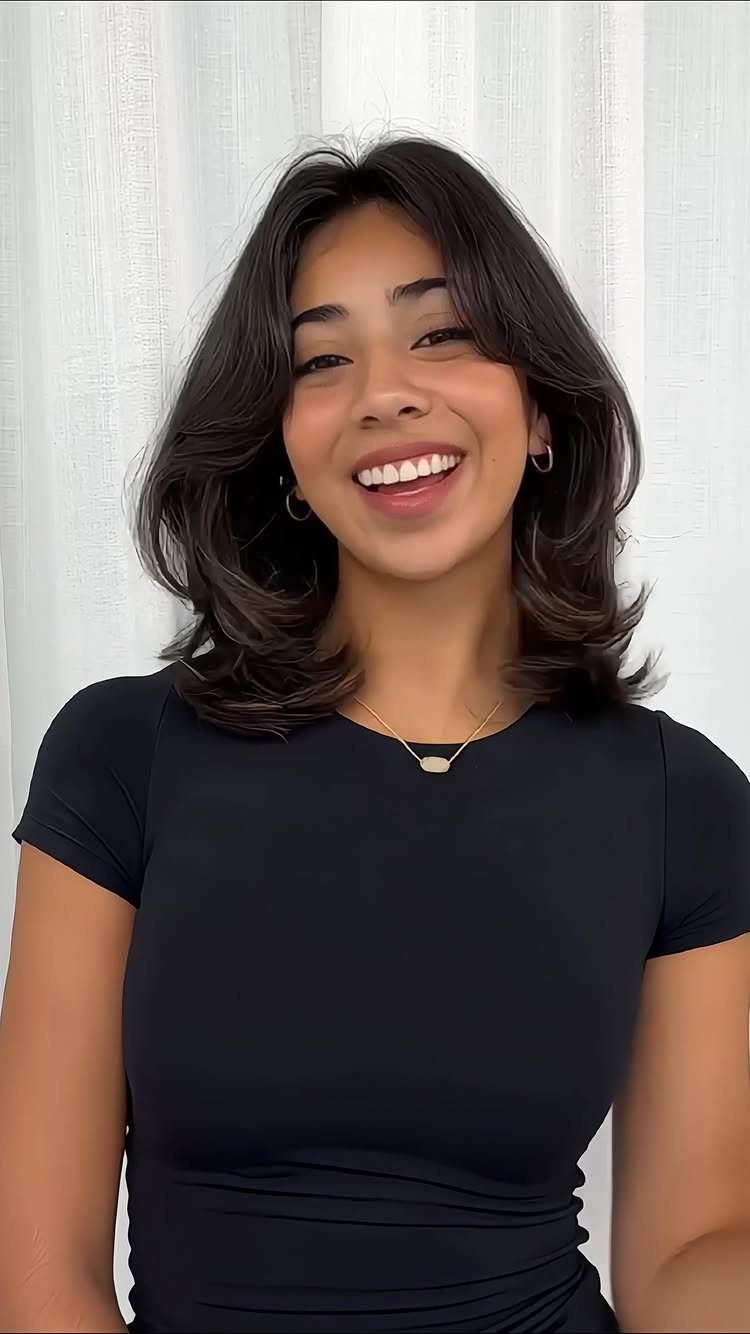
Feathering the ends of shoulder-length layers creates soft, tapered pieces that curve away from the face rather than sitting heavy.
The technique works well if your hair is thick or coarse, because the feathered texture removes bulk without shortening the overall length.
The face-framing effect comes from the way the layers are angled and point-cut, which gives them a 70s-inspired lift.
23. Blended Layers
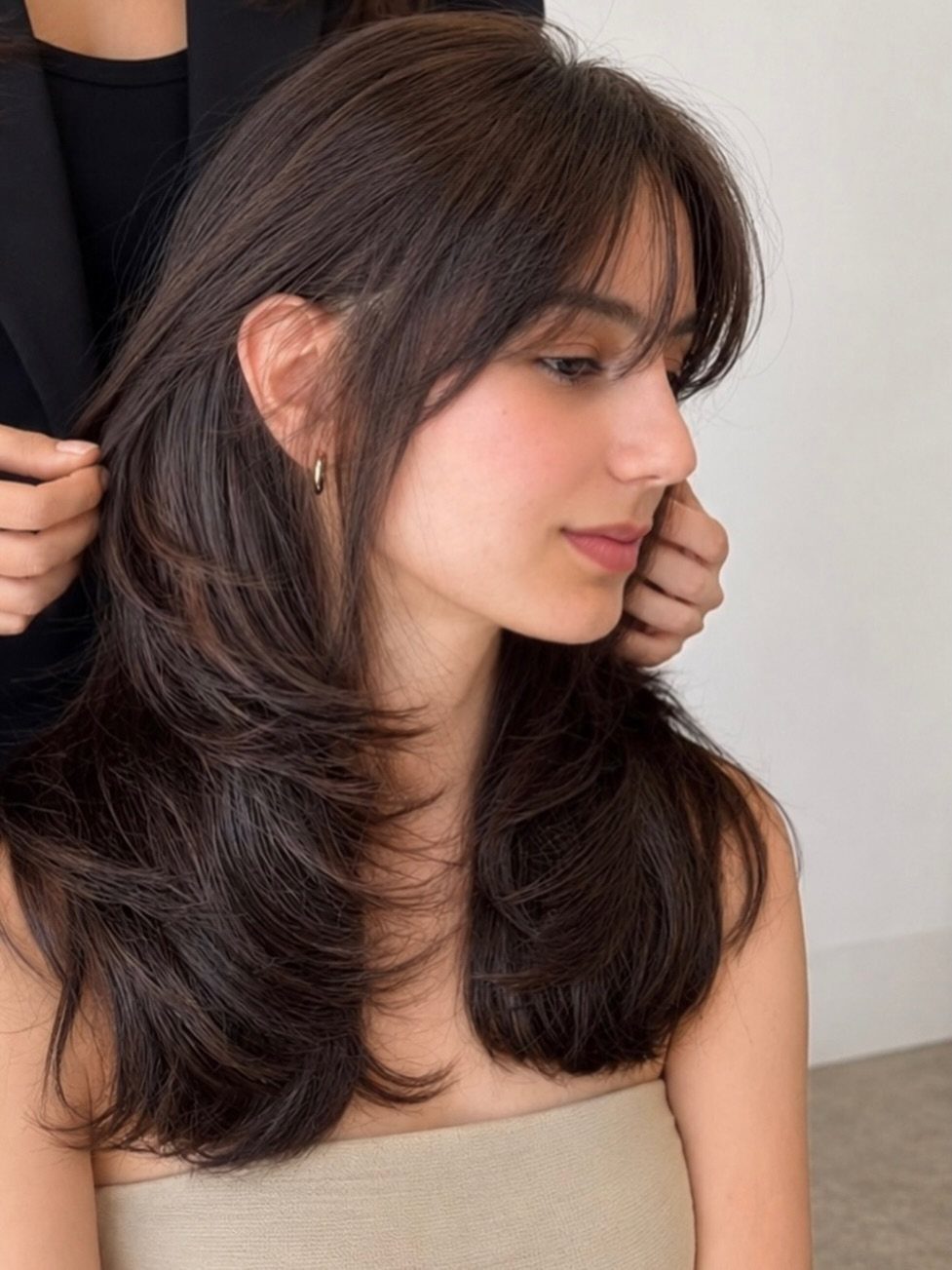
Gradual layers cut through medium-length hair with no visible demarcation create movement without a choppy, heavily stacked look. The transitions between lengths are soft enough that the cut reads as one cohesive shape rather than distinct tiers.
This approach suits people who want lift and body but don’t want an obvious layered silhouette. Because there are no hard lines, the cut grows out smoothly and doesn’t require frequent trims to look intentional.
24. Face-Framing Layers
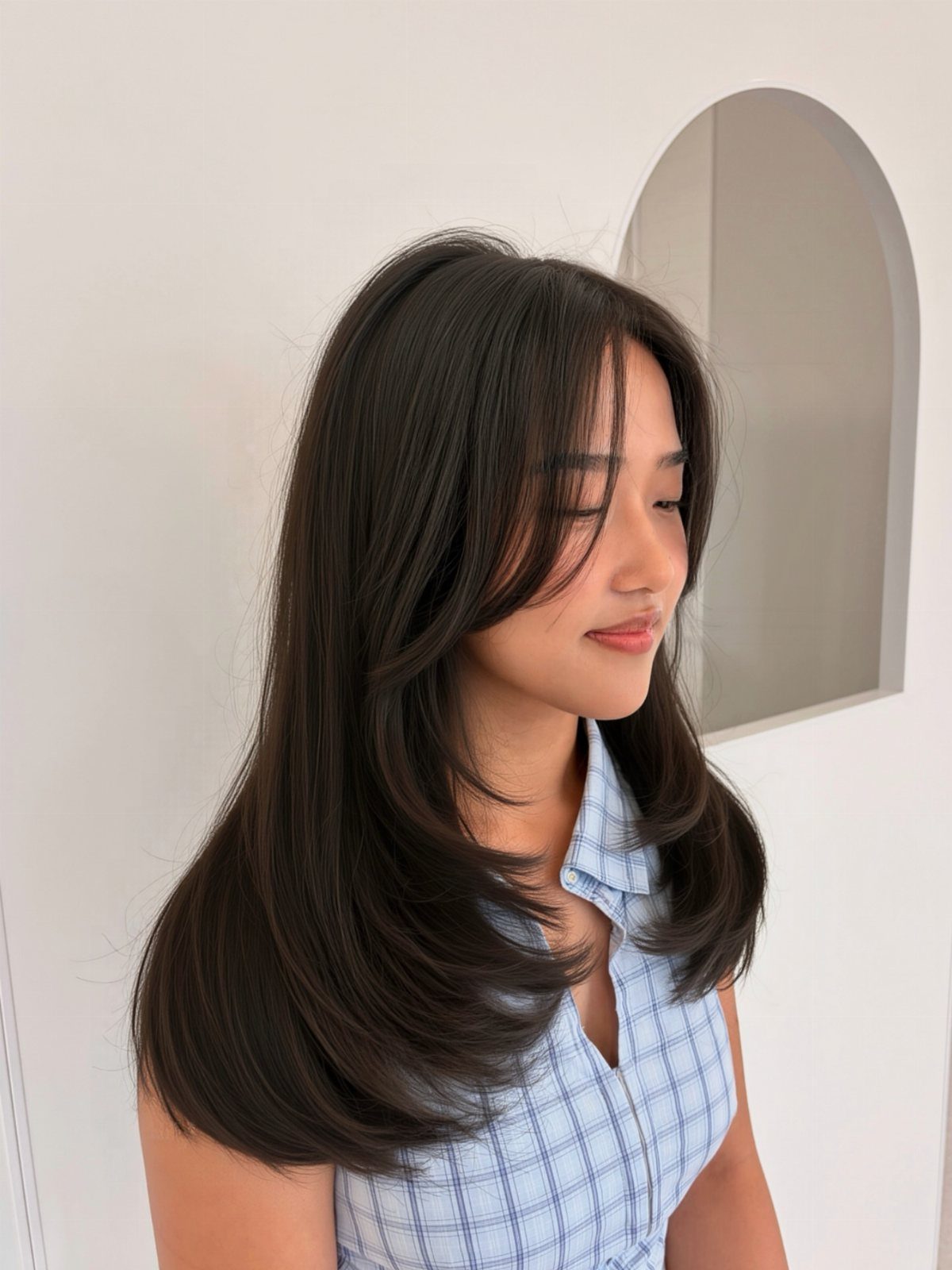
Shorter pieces cut around the front of the face, starting anywhere from mid-cheek to chin level, draw attention inward without altering the length through the back.
The longer sections in the interior stay untouched, so you keep the weight and coverage of medium-length hair.
You can wear the front pieces loose or tuck them back, and they take the edge off a blunt cut whether you use a tool or not.
If your hair has natural wave or curl, the shorter front pieces will follow that pattern and fall into place on their own.
25. Soft Medium-Length Waves
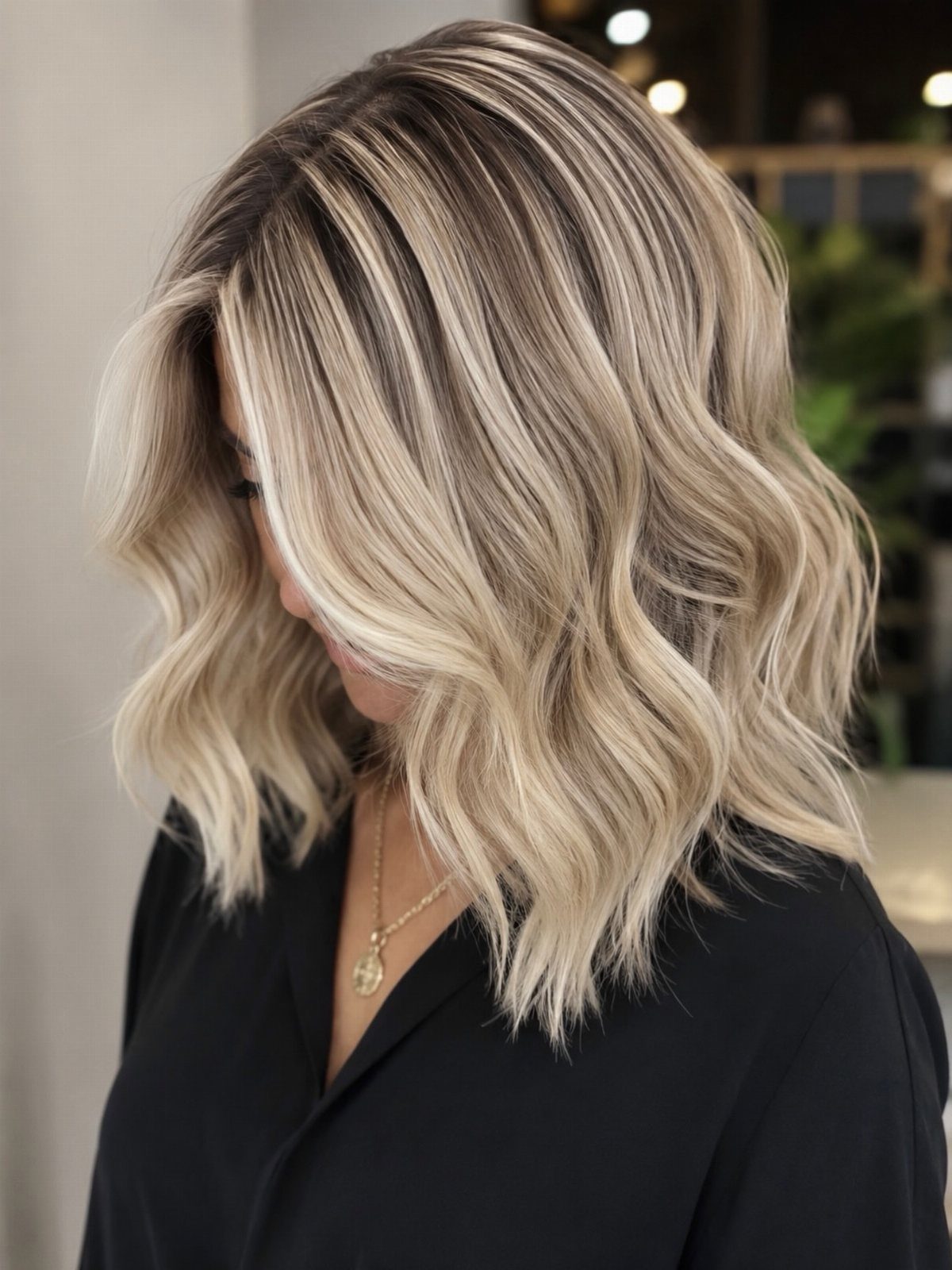
Loose waves styled into medium-length hair give texture without holding a tight curl pattern. The movement sits between straight and fully defined curls, so the shape looks intentional but not overly styled.
If your hair has a natural bend, you can work with it by scrunching in mousse or sea salt spray while damp and letting it air-dry.
Straight hair can be waved with a large-barrel curling iron or flat iron twisted at the mid-lengths, then brushed through lightly to soften the curl. The soft finish doesn’t show every imperfection, so second-day hair holds up.
26. Layered Bob
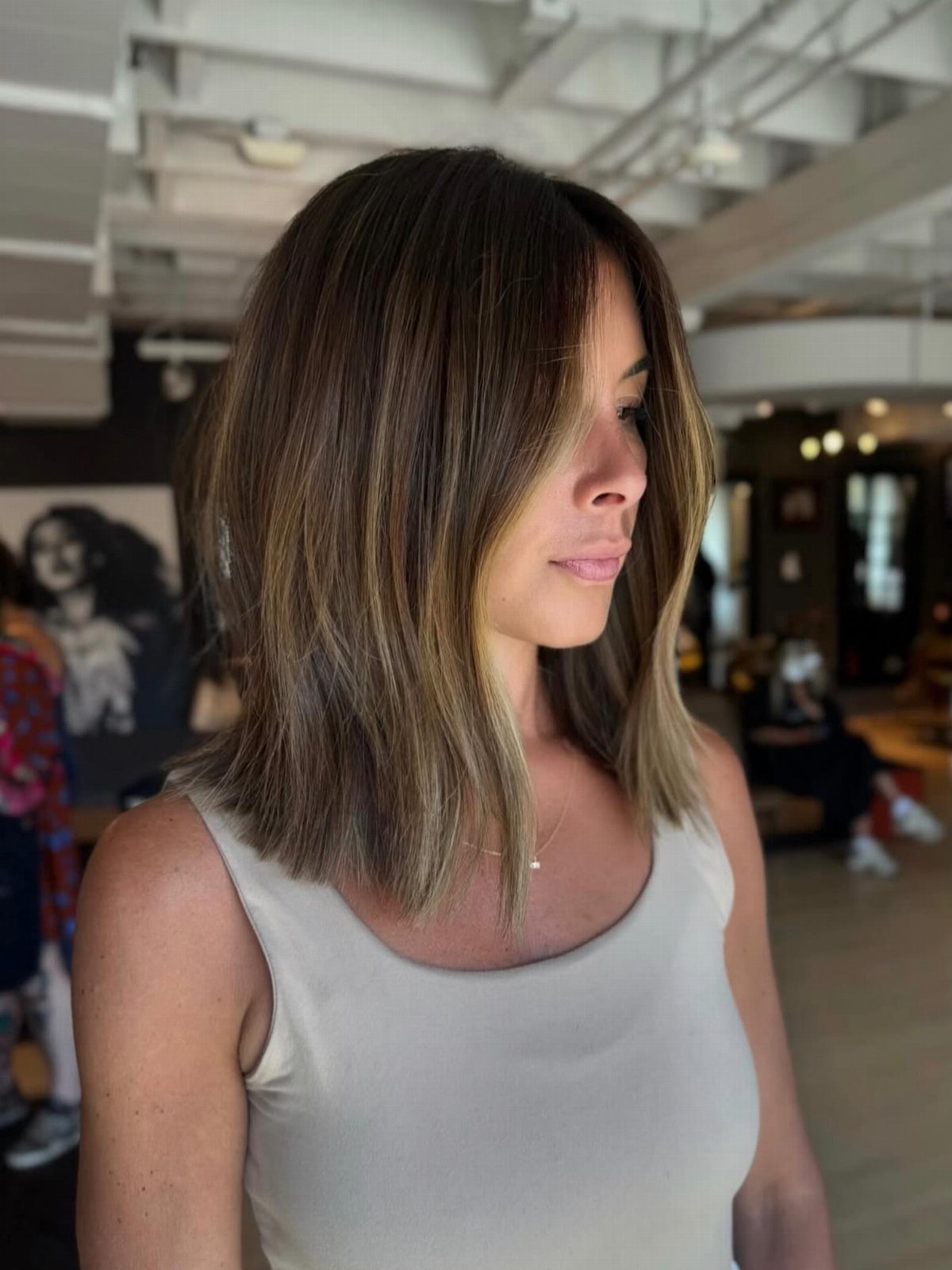
Adding layers through a bob creates lift at the crown and prevents the cut from sitting flat against your head.
The layering removes interior weight while keeping the perimeter intact, so you get volume without losing the clean line that defines a bob.
The layers make thick hair easier to manage and give fine hair more body.
Styling usually involves a quick blow-dry with a round brush at the roots, or letting it air-dry if your hair has enough natural texture to fall into place on its own.
27. Wispy Collarbone Lob
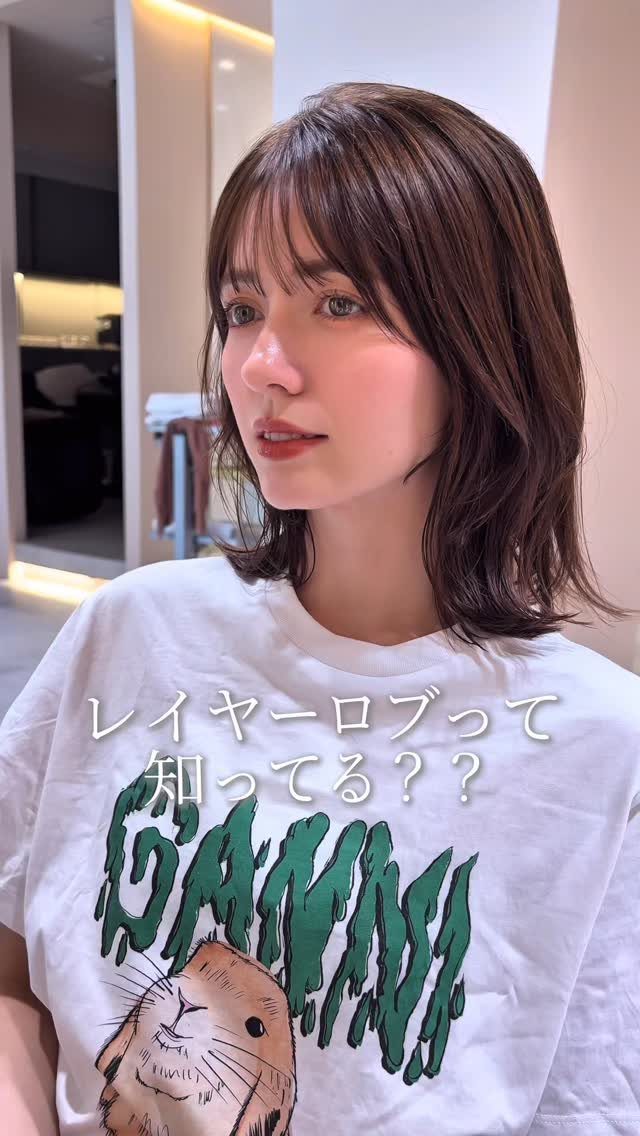
A lob cut to collarbone length with wispy, feathered ends creates a soft perimeter that doesn’t demand daily heat styling.
The length sits long enough to tuck behind your ears or pull into a short ponytail, and the light, separated ends keep the cut from looking too structured.
The wispy texture makes regrowth less obvious because there’s no hard line to maintain. Texture that bends without heat is what makes this work.
28. Medium-Length Layers All-Around
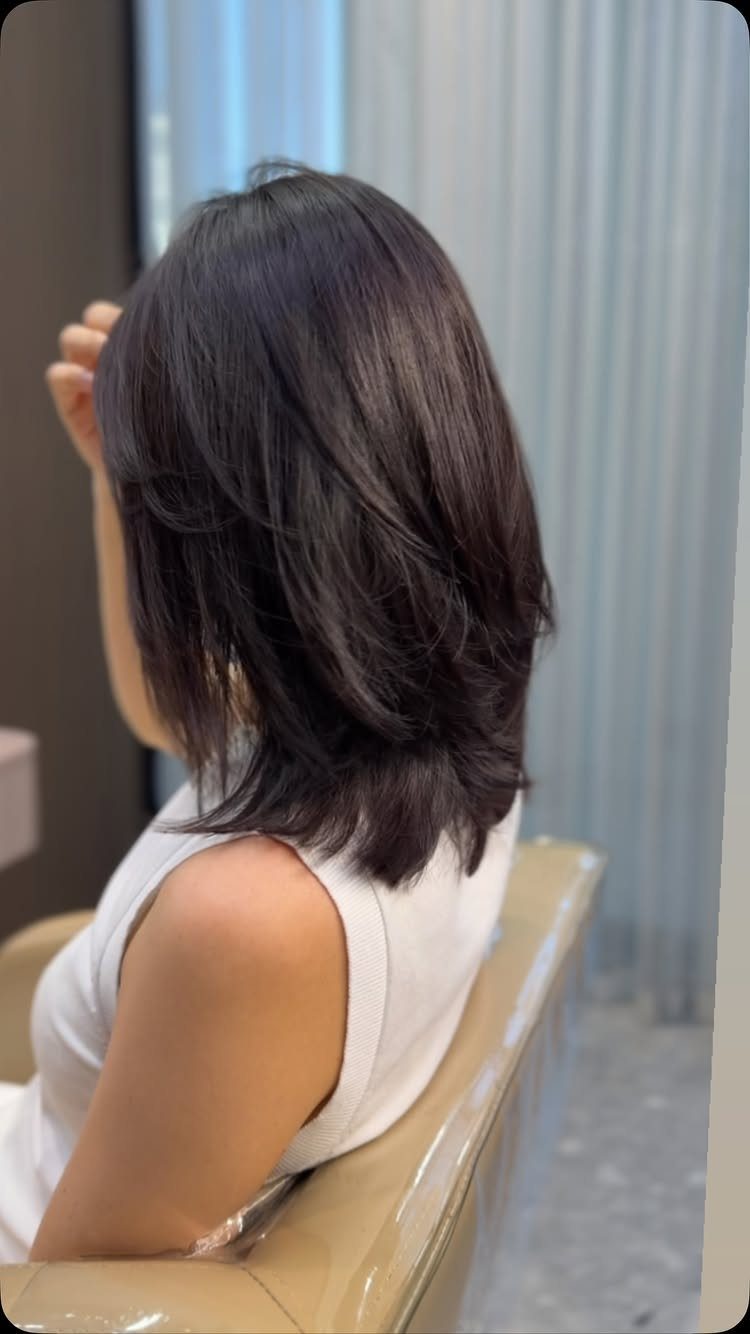
Cutting layers evenly through medium-length hair rather than concentrating them at one level distributes volume and makes the whole cut feel lighter. The all-around layering prevents a bottom-heavy look, especially if your hair is thick or tends to sit flat.
The distributed structure means the cut moves naturally whether you air-dry it or blow it out, and you don’t get visible weight lines as it grows.
If your hair has any wave or texture, the layers let each section move on its own instead of clumping together.
29. Wavy Long Layers
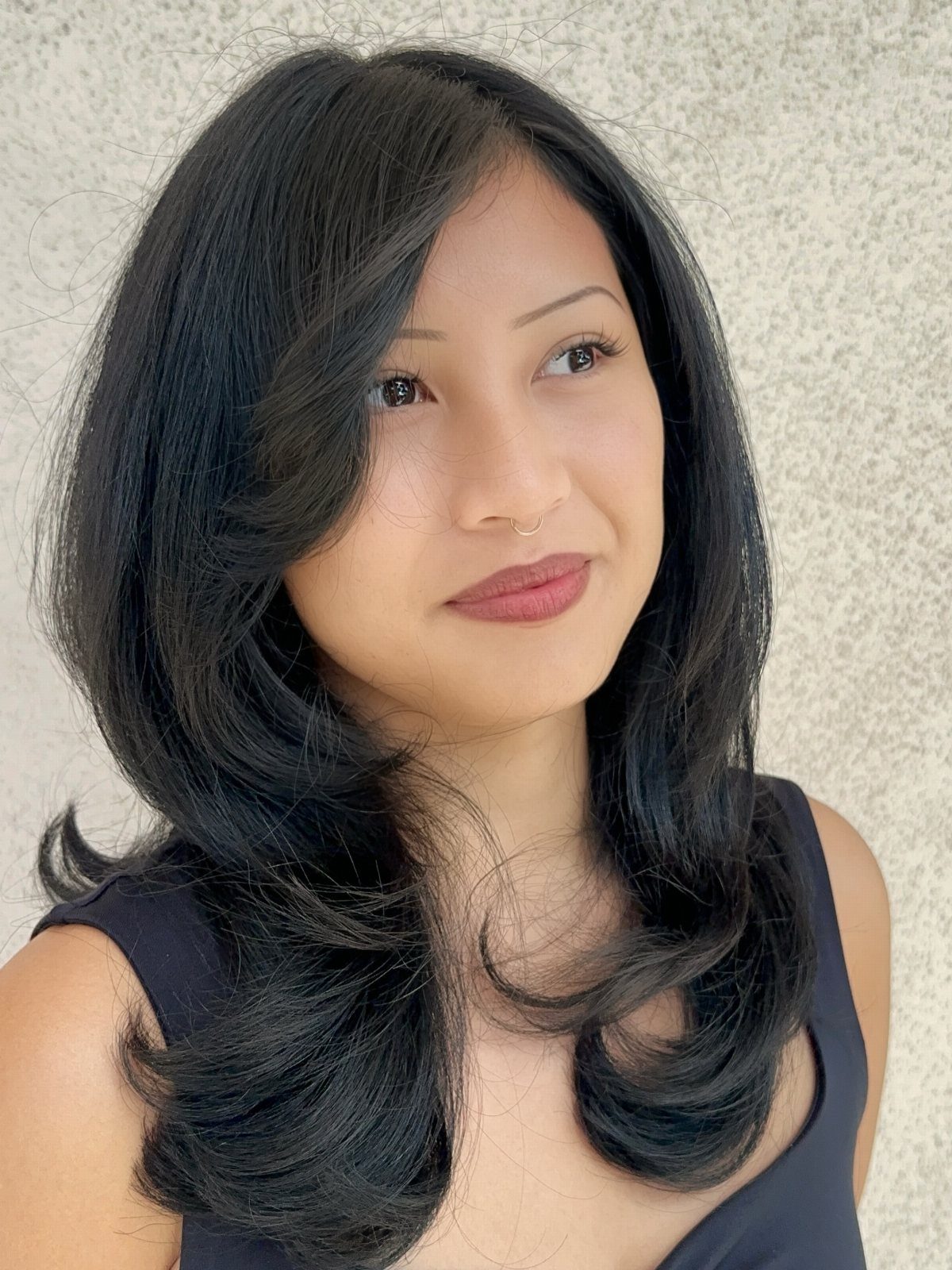
Cutting long layers into wavy hair keeps the length while adding shape through the interior. The layers start high enough to create lift at the crown but leave the ends long, so waves can form without getting weighed down.
The layering works with your natural wave pattern instead of fighting it. Work product through wet hair, walk away, and the layers hold the wave pattern as it dries.
30. Shoulder-Length Layers with Balayage
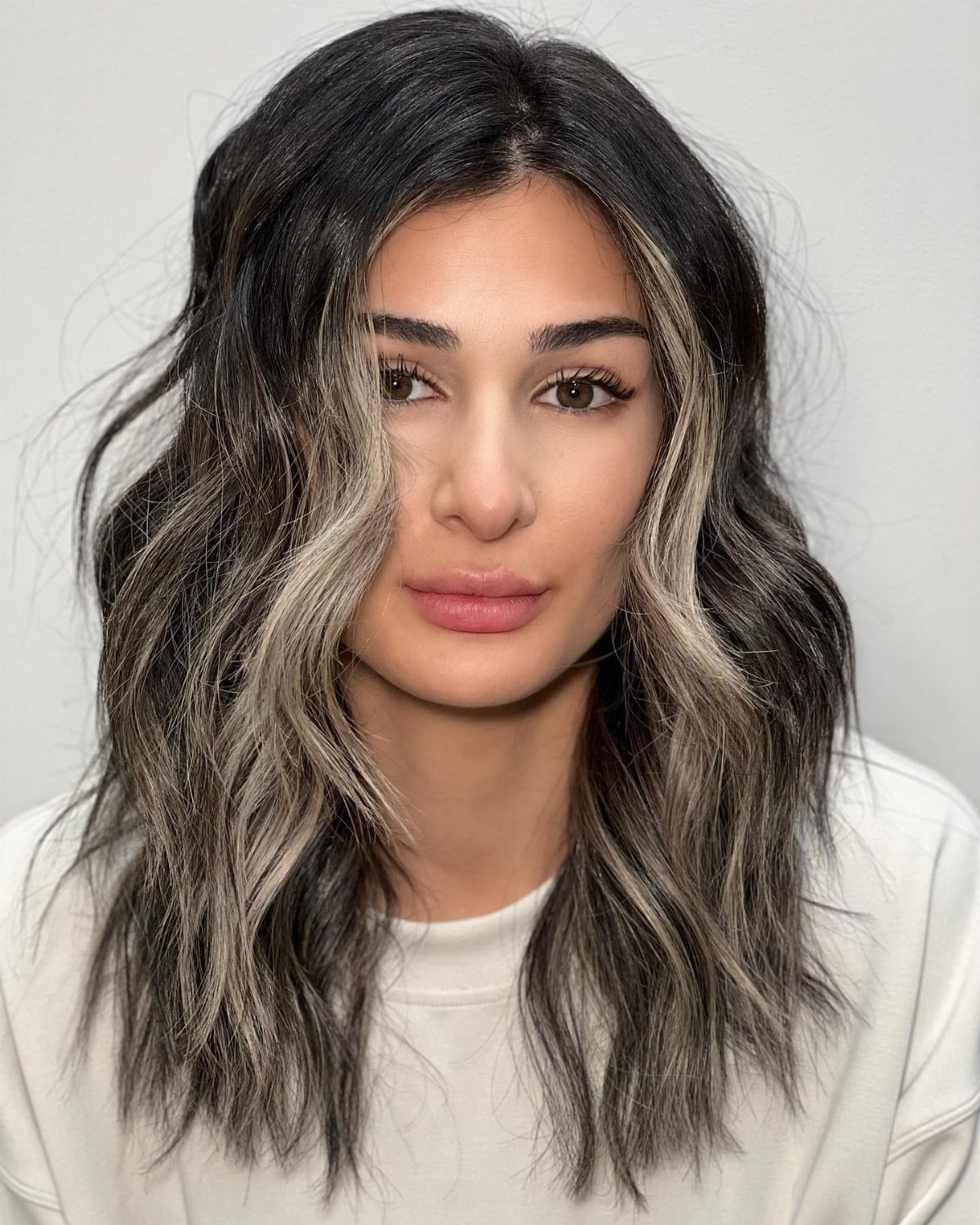
Balayage placed around the face on a layered, shoulder-length cut adds dimension where it’s most visible without requiring frequent root touch-ups. The hand-painted highlights blend gradually, so regrowth looks intentional rather than stark.
The color placement follows the layers, so the lighter pieces frame your face and catch light when hair moves.
31. Medium-Length Layered Waves
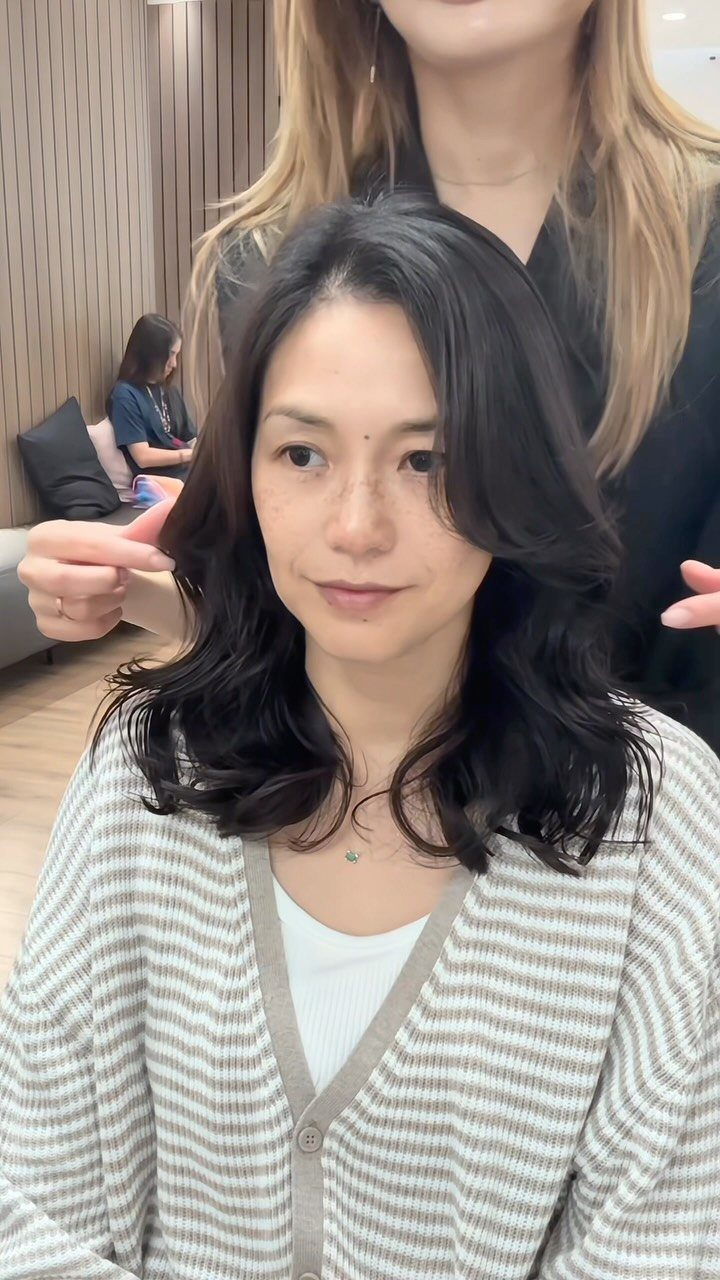
Layers cut through medium-length wavy hair keep the weight distributed so waves don’t form a wide pyramid at the ends.
Layers cut through the middle section take out weight but keep enough length that your natural wave has room to move.
If your waves are prone to expanding outward as they dry, the layers pull volume upward instead.
Scrunch in a light mousse or leave-in conditioner while damp, then air-dry or diffuse. Waves fill in the shape on their own once they dry, so there’s no need to go through piece by piece with a brush or iron.
32. Layered Textured Lob
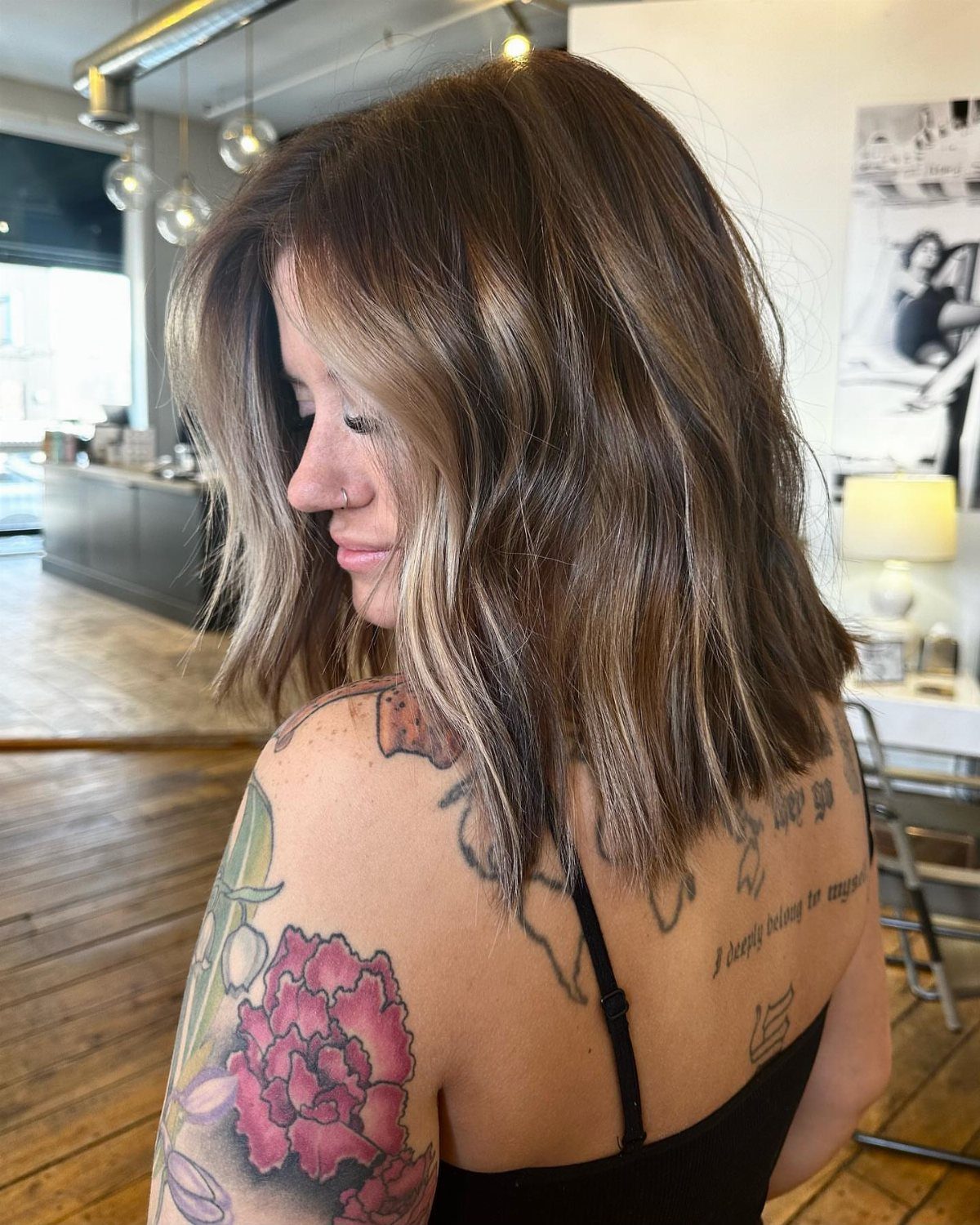
Point-cutting the ends of a long bob creates separation and gives the cut a lived-in texture that doesn’t sit flat.
The technique works by cutting vertically into the ends rather than straight across, so each piece has a slightly different length and more surface area to catch light.
If your hair is thick, the point-cut ends remove weight without thinning the overall density.
Fine hair gets more movement because the ends don’t clump together as one blunt line. A texturizing spray or dry shampoo at the roots adds grip if you want more lift.
33. Shoulder-Length Waves with Balayage
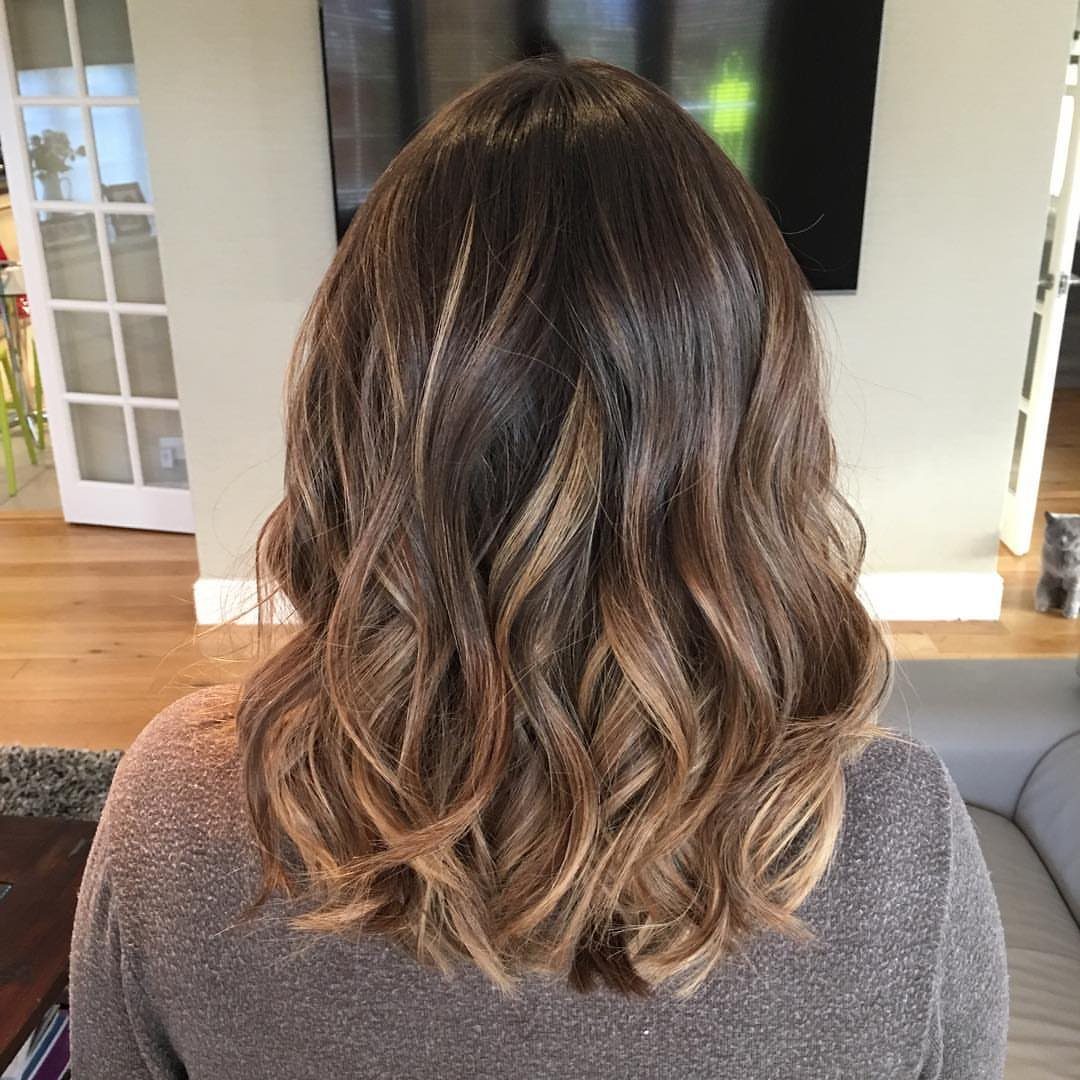
Hand-painted highlights blended into shoulder-length waves soften the line between root color and lightened ends, so regrowth looks gradual rather than obvious. The golden tones placed through the mid-lengths and ends create warmth without covering the base color completely.
Because balayage is applied by hand, the placement can follow the wave pattern and concentrate color where it shows most.
The waves themselves add dimension to the highlights, so the color moves as your hair does. Color grows out slowly enough that you can wait months between appointments once the first round is in.
34. Textured Shoulder-Length Waves
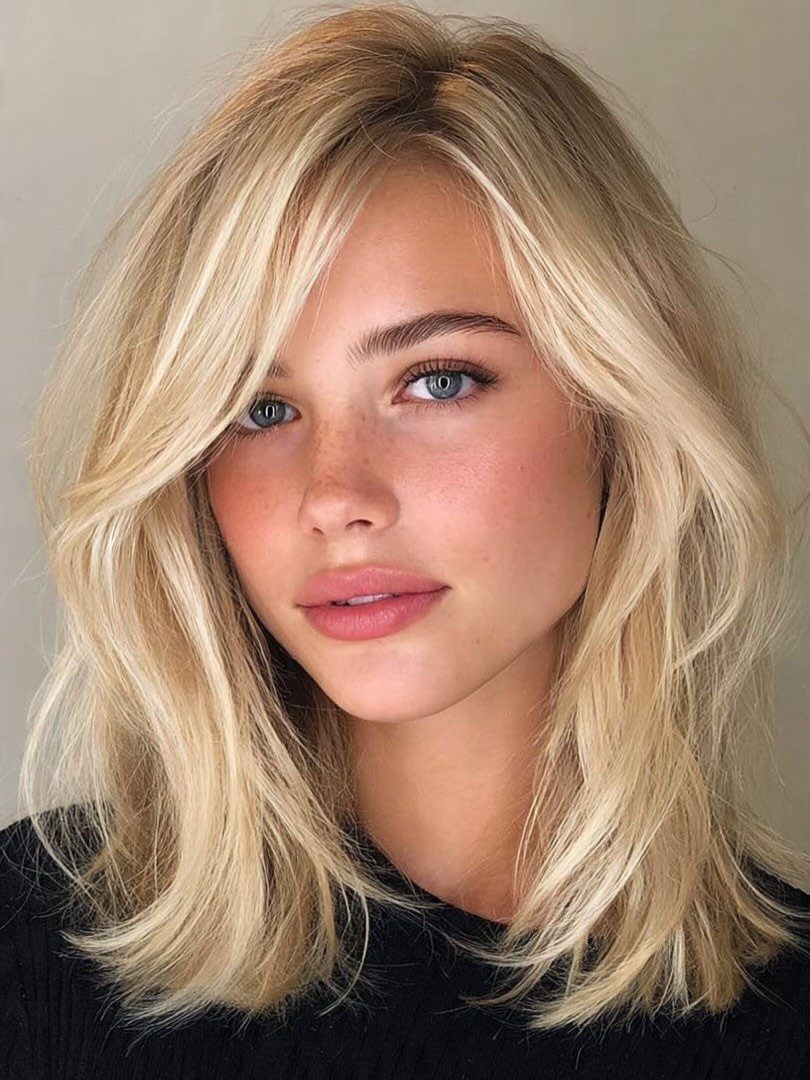
The slightly undone finish works if your hair has a natural bend or if you add movement with a curling iron or flat iron twisted through the mid-lengths.
A texturizing spray or sea salt spray scrunched through damp hair before air-drying adds grip and separation.
The cut reads as one length from the front, so the waves are what create the shape rather than any stacked layering. Second-day texture holds without restyling.
Choosing for Hair Texture
Waves respond best to longer layers that start somewhere between the cheekbone and jawline.
Avoid excessive layering, which can make curls harder to manage and increase styling time.
Grow-out and Salon Upkeep
Most low-maintenance cuts hold their shape for 3 to 5 months between trims.
Cuts with heavy layering or blunt perimeters show regrowth sooner.
Bangs add an extra maintenance step.
Choosing a cut that works with your natural texture and grows out gradually reduces salon visits without sacrificing shape.
Many think that a medium-length haircut is a safe option for anybody who isn’t interested in taking a beauty risk. But just because something is “mid” doesn’t mean it is boring.
— Vogue
Daily Styling Effort
Straight cuts that want definition usually ask for nothing more than a blow dryer and round brush.
A small amount of oil worked into the ends keeps frizz flat and catches light without making hair heavy.
Styling time depends on texture and the look you want. Wavy or curly cuts often take care of themselves with product and air-drying, while sleek or polished finishes need a blow dryer or flat iron.
Frequently Asked Questions
What hair lengths are considered medium length?
Shoulder to armpit is the range most stylists call medium.
This range gives you enough hair to pull into a ponytail or style with waves while staying shorter than true long hair. The length works for layering, texturizing, and most styling techniques without feeling heavy.
Will I need specific products to maintain a low-maintenance look?
Most low-maintenance cuts need only one or two products, not a full shelf. Texturizing spray or mousse helps air-dried styles hold shape, and a smoothing oil or cream tames frizz at the ends.
If your hair is curly or wavy, a curl cream defines the pattern without heat, and if it’s straight, you can often skip product altogether.
How do I choose a haircut that suits me?
Face shape, hair texture, and how much time you’ll spend styling each morning are the 3 factors that matter most.
Oval and heart-shaped faces can wear most cuts, while round faces usually look better with longer layers or side-swept bangs that add vertical lines.
Thick hair benefits from layering to remove weight, and fine hair often looks fuller with blunt or lightly feathered ends.