The boundary sits above the temple, where short sides meet the top, and that high line holds the proportions no matter what length you leave through the crown.
The version you pick depends on how much time you’ll give it each morning: a buzzed top dries in minutes and needs nothing more than a towel, while several inches left loose or tied back adds styling decisions and a few extra minutes with product.
1. Curly High & Tight
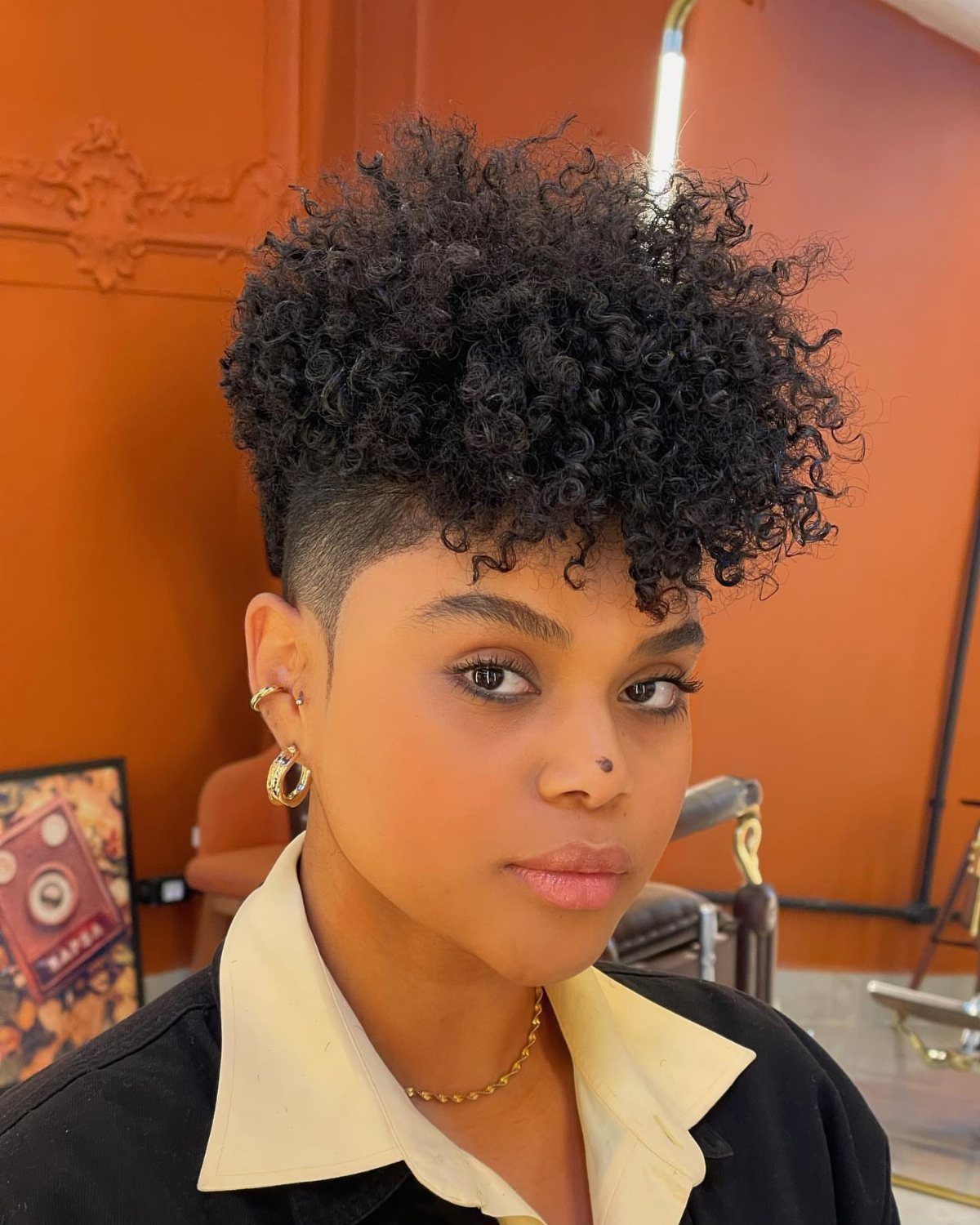
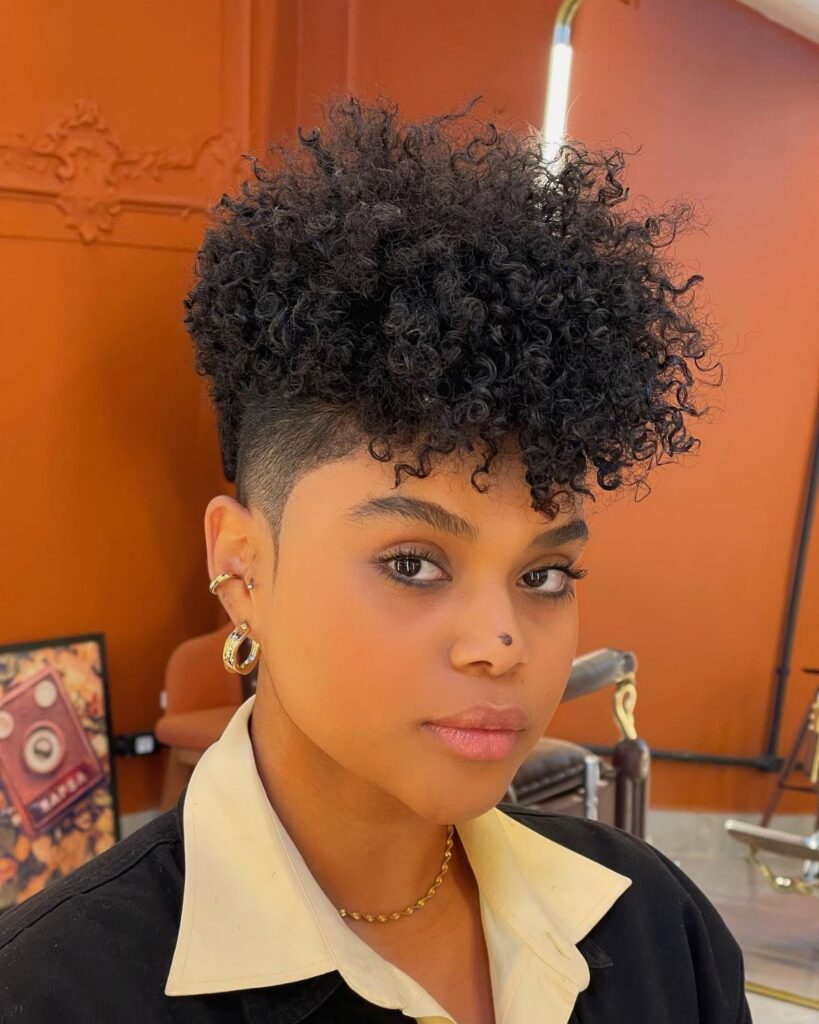
The curly high and tight keeps volume on top while cutting the sides and back close, so your texture stays the focus. Curls gain height without the weight pulling them down around your face.
Ask for short sides with clippers and length left through the crown. How much length you keep on top controls the silhouette: more length gives loose curl definition, while cutting shorter tightens the shape and cuts morning styling time.
Curls need moisture. A leave-in conditioner after washing and a refresh spray on second-day hair keep the top from drying out while the sides stay sharp.
“Request a short cut that follows your natural curl pattern, with slightly longer layers on top to give your curls room to form. For styling, use a curl-enhancing cream or gel like Class of ’93 Curl Perfecting Whipped Cream to define the curls and prevent frizz.”
— Glamour
2. Buzzed High & Tight
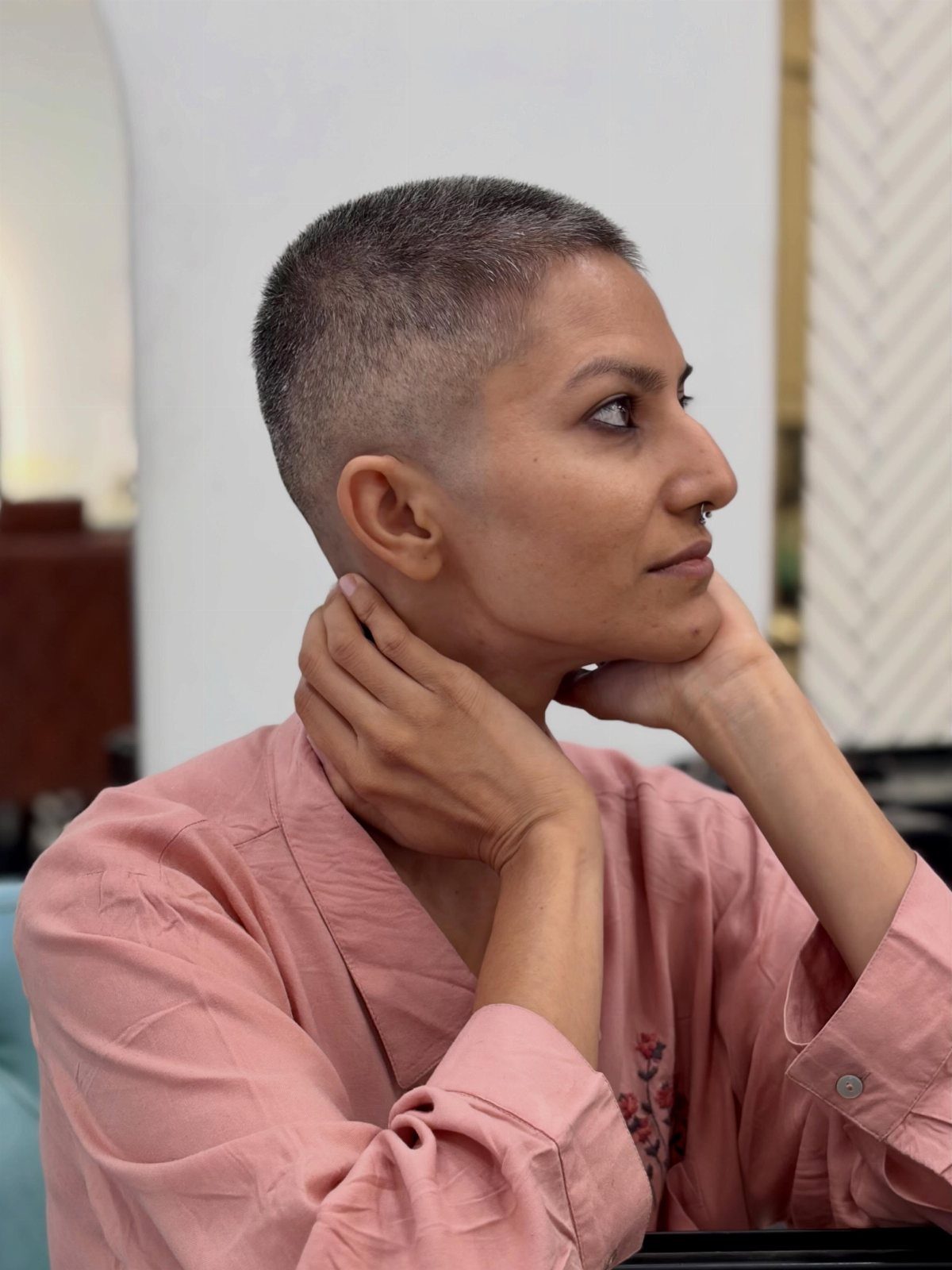
Buzzed all over with minimal length left on top, this version strips the high and tight down to its shortest form. The difference between top and sides becomes a matter of a few clipper guard sizes rather than inches.
Most versions run a #1 or #2 guard on the sides and back, then a #3 or #4 on top. That extra quarter inch is enough to see the separation without leaving room for styling decisions.
Maintenance is weekly. Hair this short grows out fast, and the line between tidy and scruffy arrives quickly.
3. High & Tight Undercut
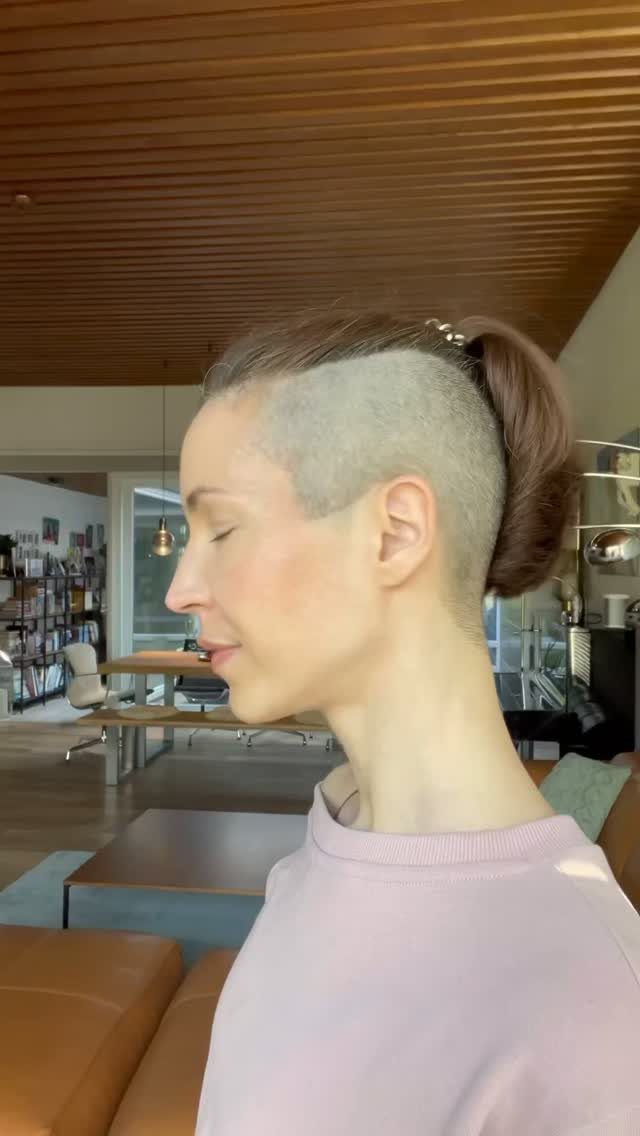
A high and tight undercut leaves a hard line where the short sides meet the longer top, with no blend between them. That disconnection makes the cut read as 2 separate sections rather than a gradual taper.
The contrast works when you want length on top for styling options but clean sides that stay off your face. Tie the top back, slick it over, or leave it loose; the undercut holds the shape either way.
Growing it out means living with the line until the sides catch up, which can take months depending on how much length you started with on top.
4. Short High & Tight
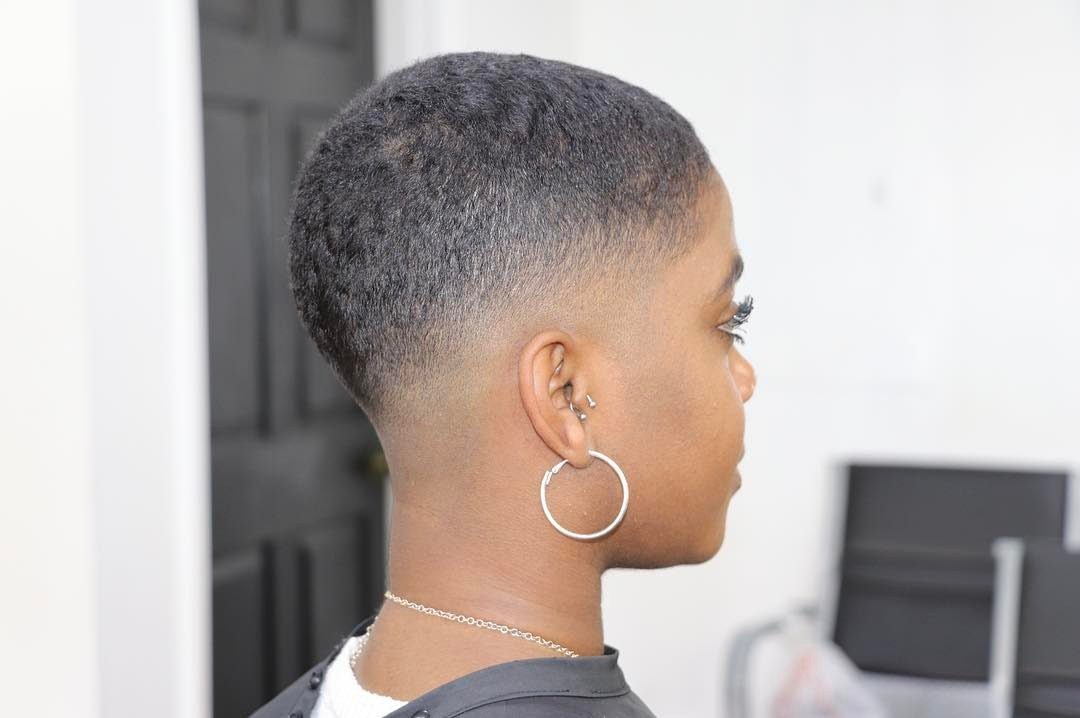
Short all around, this version keeps the top clipped to about an inch or less, just long enough to show texture but too short to move much.
Styling becomes optional because there is not enough hair to hold a shape beyond what the cut gives you.
The appeal is speed.
Wash, towel dry, and you are done. A small amount of pomade or wax adds definition if you want it, but most mornings you will skip it.
Upkeep runs frequently. Hair this short shows growth quickly, and the clean line between top and sides softens as it grows.
5. High & Tight with Shaved Sides
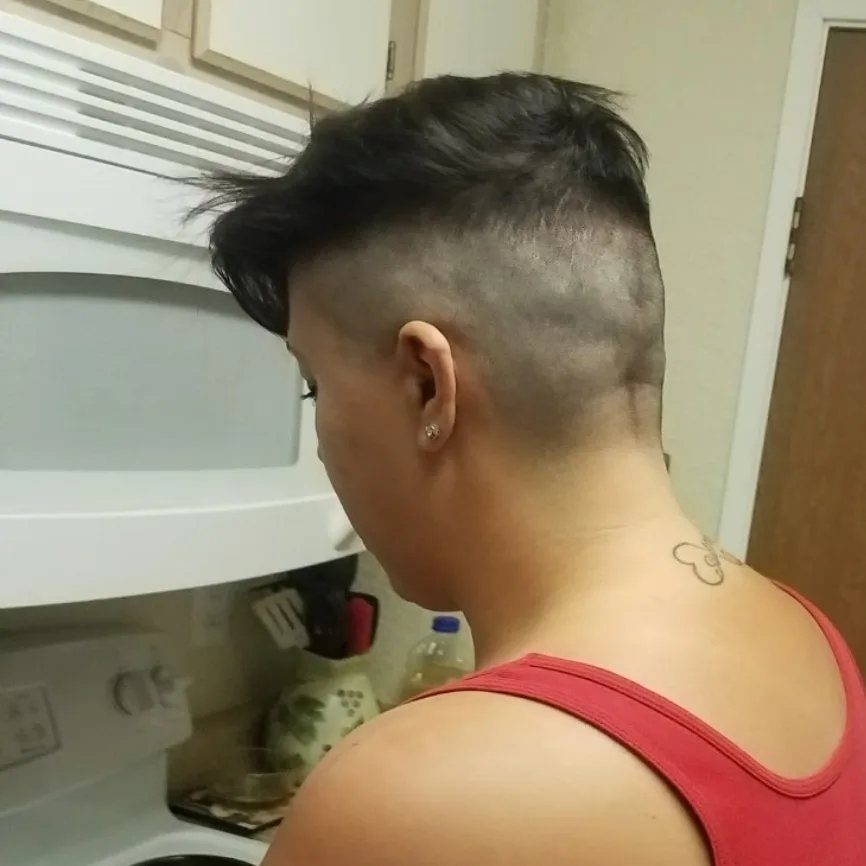
Shaved sides take the high and tight past clippers and straight to a razor, leaving the skin visible and the top looking even longer by comparison. The contrast is immediate and difficult to miss.
This cut requires frequent touch-ups. Shaved sides show regrowth within a few days, and most people find themselves back in the chair or in front of the mirror with clippers every week to keep it looking deliberate.
Length on top gives you styling flexibility, but the sides demand consistency. If you are not prepared to maintain them, a clippered version will last longer between cuts.
6. High & Tight Fade
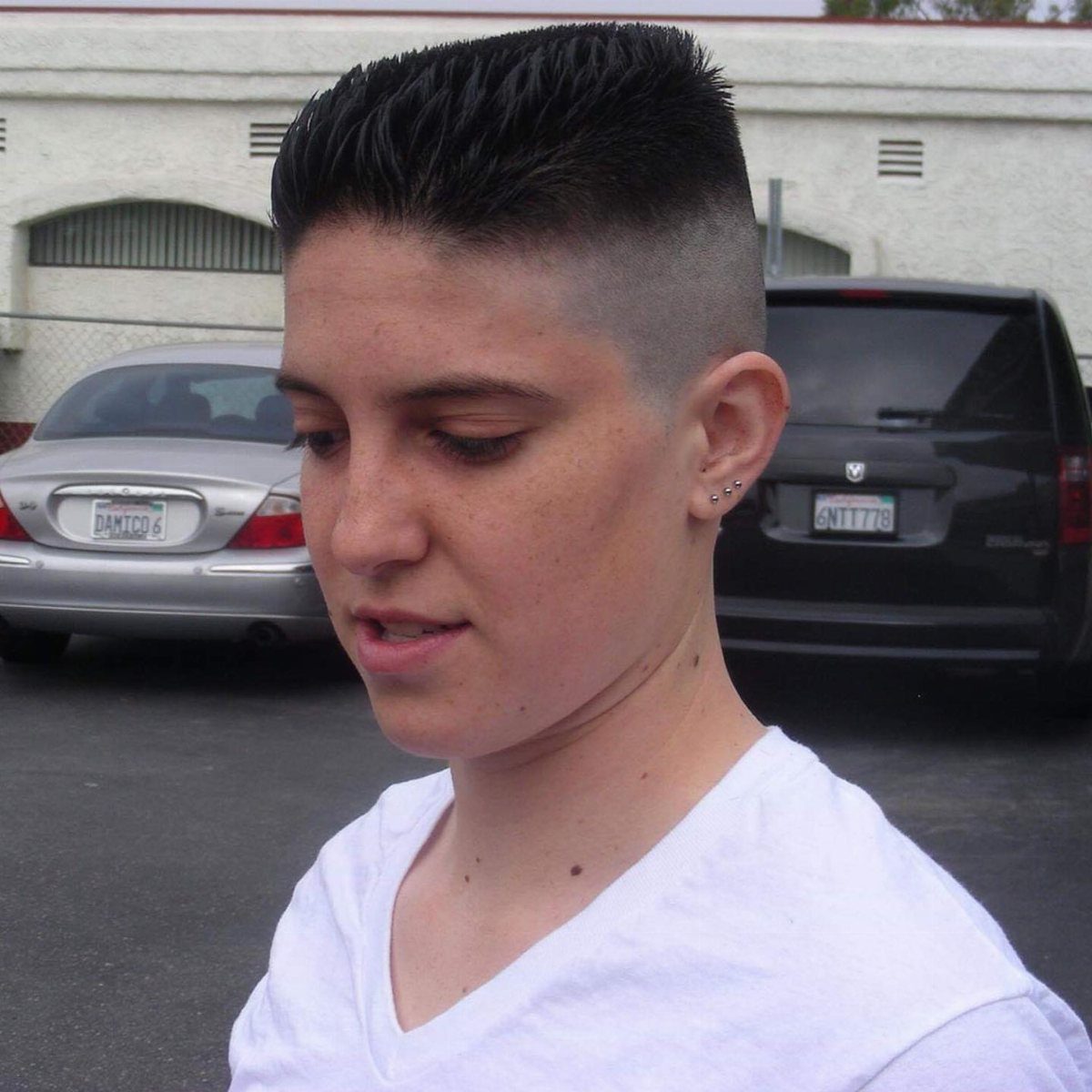
A fade softens the jump from short sides to the longer top by blending the lengths gradually rather than cutting a hard line. The result feels less severe while keeping the proportions tight.
Fades come in low, mid, and high versions depending on where the blend starts.
A high fade begins the taper closer to the top, which suits the high and tight structure better than a low fade that starts near the ears.
Plan on visiting your stylist often to keep the fade sharp. Fades grow out noticeably faster than blunt cuts, and the blend loses its sharpness as the hair lengthens.
7. Long Top with Tapered Sides
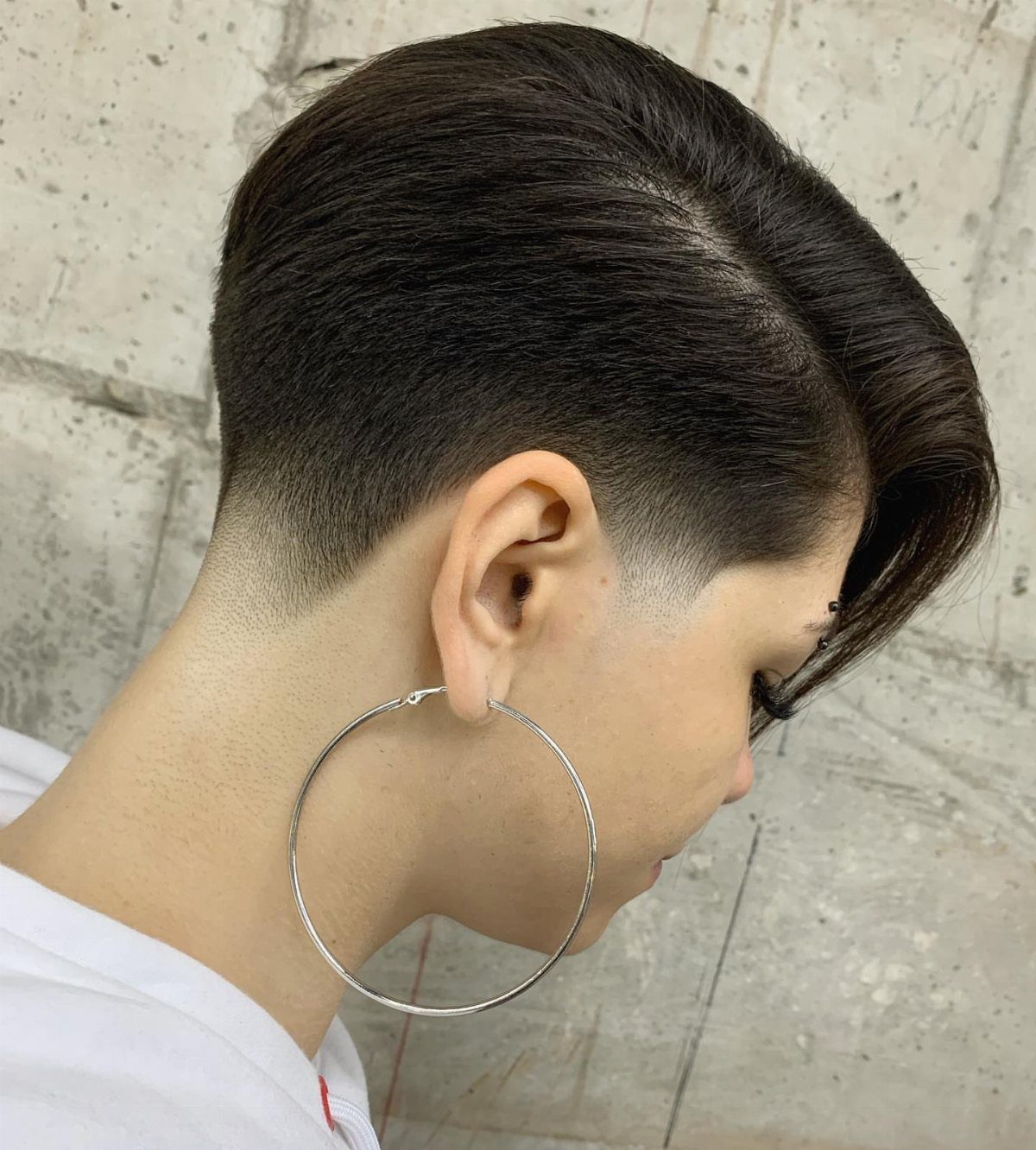
Leaving several inches on top while tapering the sides gives you length to part, sweep, or tie back without bulk around the ears and neck.
The taper blends gradually rather than stopping at a hard line, so the proportions feel balanced instead of severe.
Hair on top needs enough length to move. Most versions keep enough length through the crown for side-swept styles or a small ponytail while the sides stay close to the head.
Styling time depends on what you do with the top.
Left loose, it takes a minute with product. Swept and pinned, it holds all day.
8. Spiky High & Tight
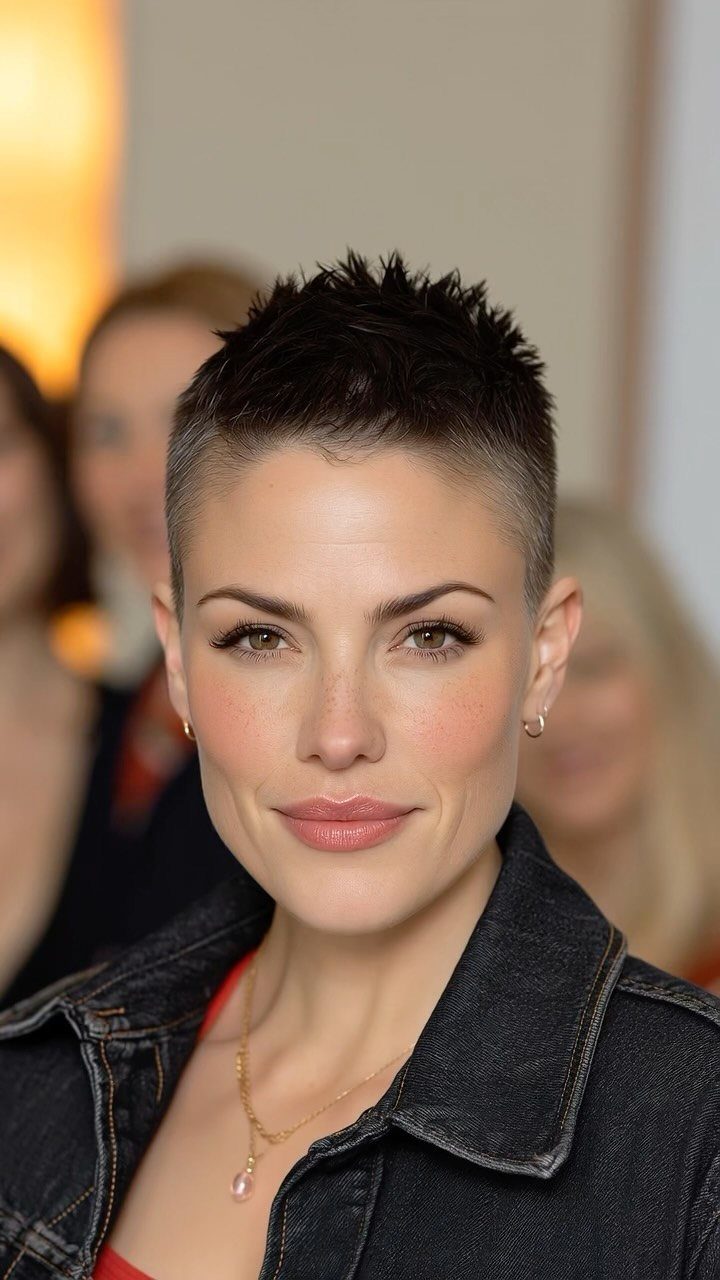
Short hair on top stands in defined spikes while the sides stay clipped close. The texture comes from product, not from length, so the top is usually cut to an inch or less.
A strong-hold gel or wax gives the spikes their shape and keeps them upright through the day. Apply it to damp hair and lift sections with your fingers while it dries.
This version takes a few minutes each morning. The spikes need reshaping after sleep, and hair this short does not hold a style without product.
9. High & Tight with Bun
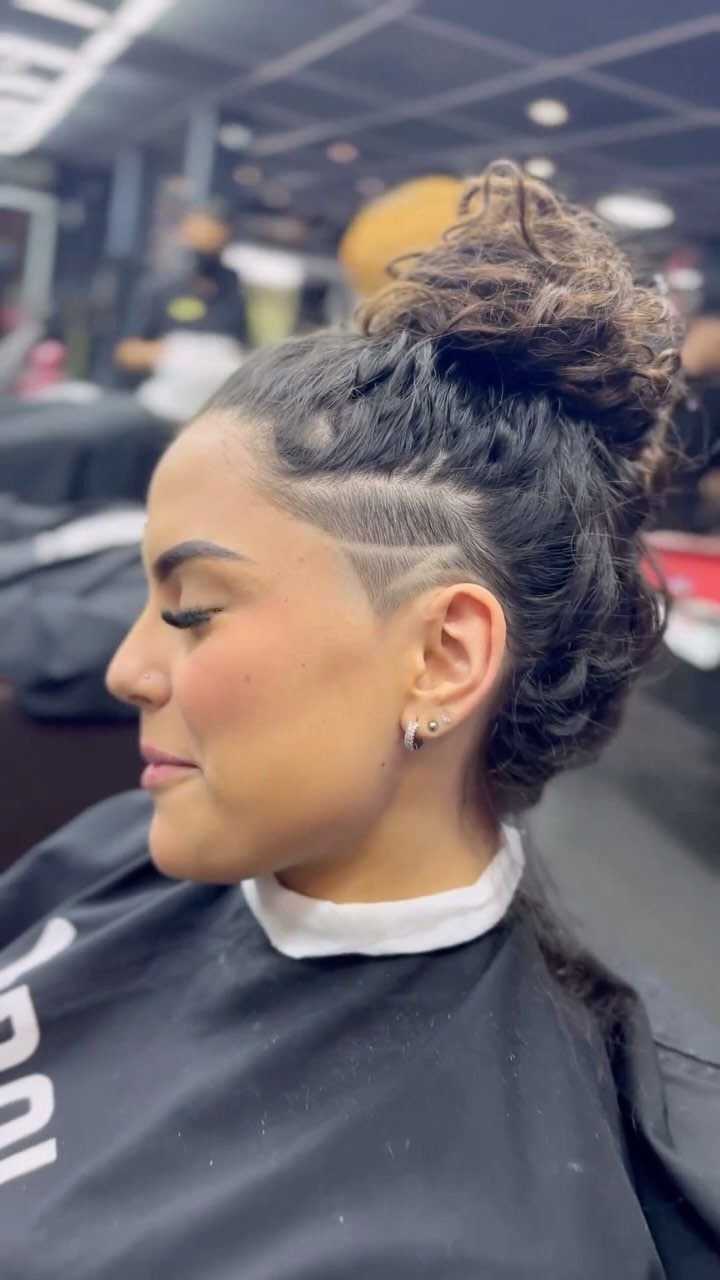
Shaving the sides while keeping length on top lets you pull the hair into a bun that sits above the buzzed perimeter.
The contrast between the 2 lengths is immediate, and the bun keeps hair off your face without cutting it short.
How high you wear the bun changes the silhouette. A low bun at the nape feels understated, while a high bun at the crown adds height and shows more of the shaved sides.
Growing out the sides takes months, so this cut works best when you know you want the length on top long-term.
10. Flat Top High and Tight
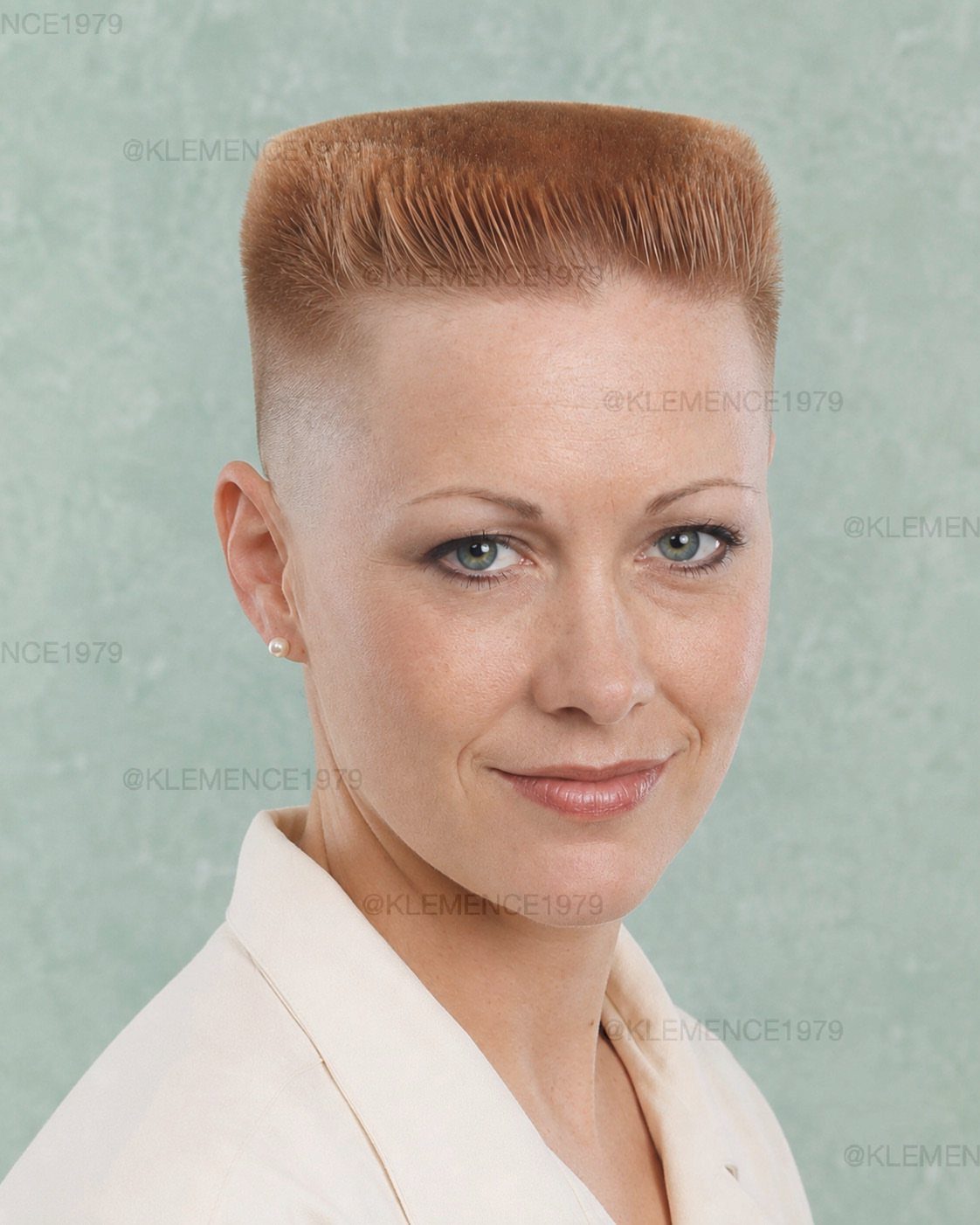
The top is cut flat across, standing perpendicular to the scalp while the sides stay short. That flat plane creates a strong horizontal line and a shape that reads from across the room.
Getting the top to stand requires density and some stiffness in the hair itself.
Fine or very straight hair may need pomade or spray to hold the angle, while coarser textures often stand on their own once cut to the right length.
Trims are frequent. The flat top loses its shape as the hair grows, and most people find themselves back for a cut frequently.
11. Textured Top High and Tight
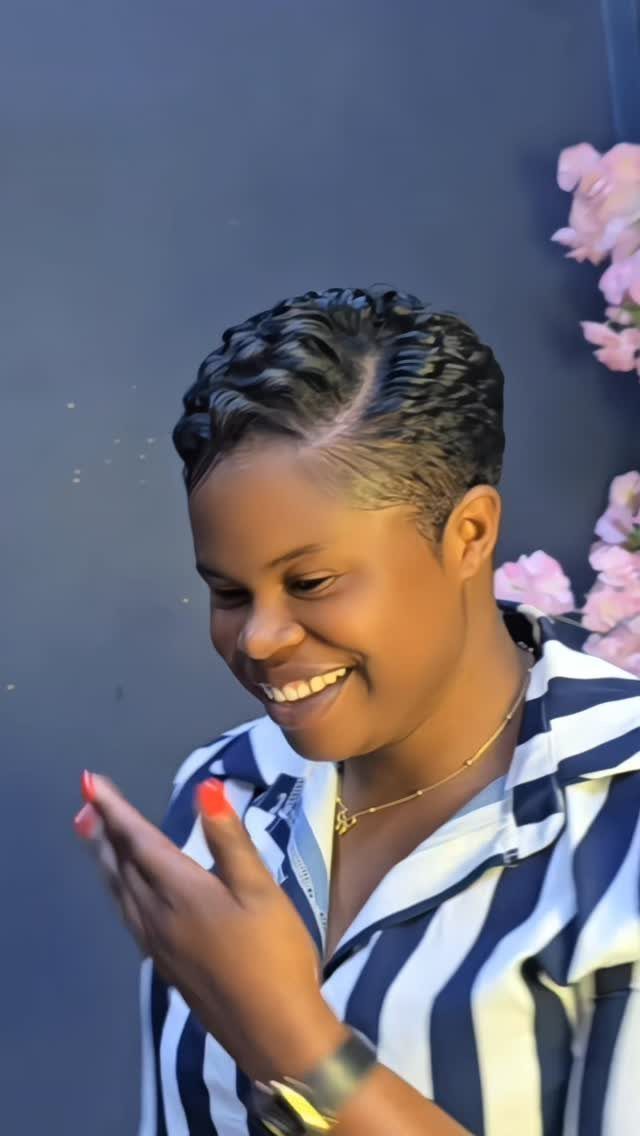
Wavy or uneven texture on top contrasts with the clean sides, so the natural movement in your hair becomes the detail. The top is left long enough to show the wave pattern while the sides are clipped short.
This version works well if your hair has natural texture you want to keep. Cutting the top with point-cutting or razor techniques adds to the uneven finish rather than smoothing it out.
A texturizing cream or light paste brings out the wave without weighing it down. Run it through damp hair and let it air dry for the most natural result.
Hair and Face Suitability
The cut works across most face shapes because the short sides reduce width while the top adds balance. Square, oval and diamond shapes suit it particularly well, as the proportions emphasize strong features without adding bulk.
Long or rectangular faces may want to avoid extra height on top, which can extend the face further. Keeping the top closer to the scalp maintains better proportion.
Natural hair texture matters more than face shape for some versions. Curly or wavy hair needs enough length on top to show the pattern, while straight hair holds a flat top or spiky finish more easily.
Bring a reference photo when you book the cut. Even a well-known style varies in how much contrast the top and sides show, and a picture makes the boundary and top length clear from the start.
Low Maintenance and Trims
Daily styling stays minimal.
Most versions need nothing more than a towel dry, and shorter tops dry completely within minutes. Product adds definition if you want it, but skipping it still leaves a finished shape.
Keeping the cut sharp requires frequent trims. The boundary between top and sides softens as hair grows, so most people return for a touch-up every 2 to 3 weeks.
A classic buzzed version can be done at home if you are comfortable with clippers.
Guard sizes are straightforward, and the short length forgives minor unevenness. More complex versions with fades or hard lines are better left to a barber.
What Defines the Cut
The line rides above the temple, and that high perimeter is where the name comes from.
Top length varies widely.
Sides may be buzzed with a 1/16-inch guard, faded gradually, or shaved smooth with a razor. The boundary may be a hard line or a blended taper, but the proportions stay consistent: short around the perimeter, longer through the crown.
Frequently Asked Questions
What is a high and tight haircut?
A high and tight is a short clipper cut with very short or shaved sides and back, and a slightly longer section on top.
The perimeter sits above the temple, giving the cut its name, while top length varies from under an inch to several inches depending on the version.
What makes a haircut low-maintenance?
Hair that needs minimal fussing in the morning, grows out without looking sloppy, and cooperates with whatever texture you already have.