Flat straight hair is hair that sits close to the scalp with no lift at the roots, usually because the strand structure lets oil travel straight down from scalp to ends and weigh everything down.
Fine or thin hair makes it worse, since fewer follicles and thinner diameter mean less volume to start with.
Rough-drying upside down until hair is 60 to 70 percent dry lifts the roots before you smooth the ends with a round brush, building height that actually holds.
Why Straight Hair Lies Flat
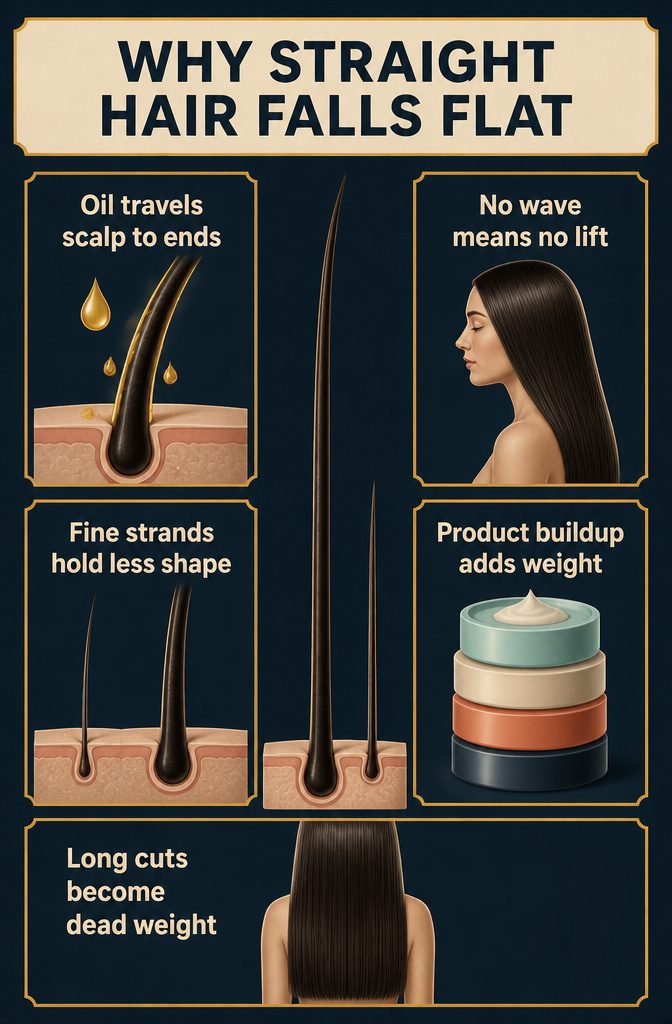
Straight hair lies flat because the structure of the strand gives oil a straight shot from scalp to ends, weighing everything down before you leave the house.
Hair that is naturally straight has no wave or curl to lift it away from the head, so it clings close.
Fine or thin hair compounds the problem: fewer follicles mean less overall volume, and individual strands lack the diameter to hold any shape you give them.
Product buildup is the other common culprit. Serums, heavy conditioners, and styling products that don’t rinse clean add weight with every application.
Over-washing can backfire too. Strip the scalp of its natural oils too often and it compensates by producing more, which then travels down the hair shaft and flattens everything faster.
An unsuitable cut pulls hair even closer to the scalp. Anything too long without layers or movement just hangs, and the added length becomes dead weight rather than body.
Use Volumizing Shampoo and Conditioner
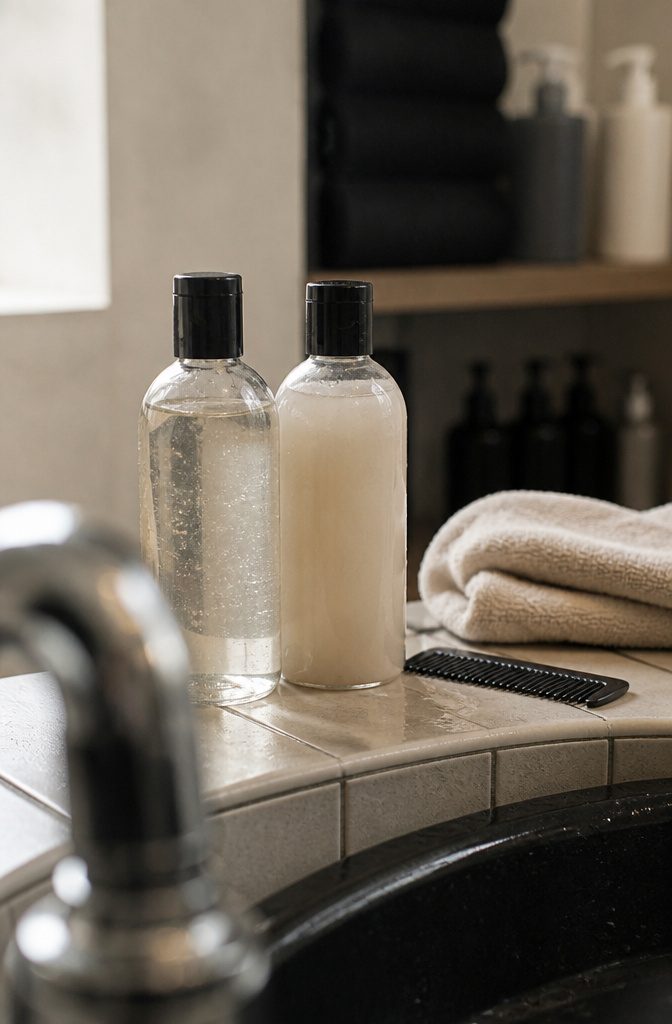
Volumizing shampoo and conditioner cleanse without piling on weight, which matters when every ounce of product pulls hair closer to the scalp. I look for formulas that claim to build body from the roots up.
Living Proof Full Shampoo and Full Conditioner promise 2x the volume, a number that shows up in their product line and gives you something concrete to expect rather than vague lift.
Ingredients like caffeine and vitamin B3 appear in volumizing formulas designed to thicken each strand and add overall fullness.
Pair the shampoo with a lightweight conditioner so you get the moisture without the drag. Heavy conditioners and oils work against volume, so saving those for the mid-lengths and ends keeps the roots from collapsing under extra product.
Clarify Once a Week to Remove Buildup
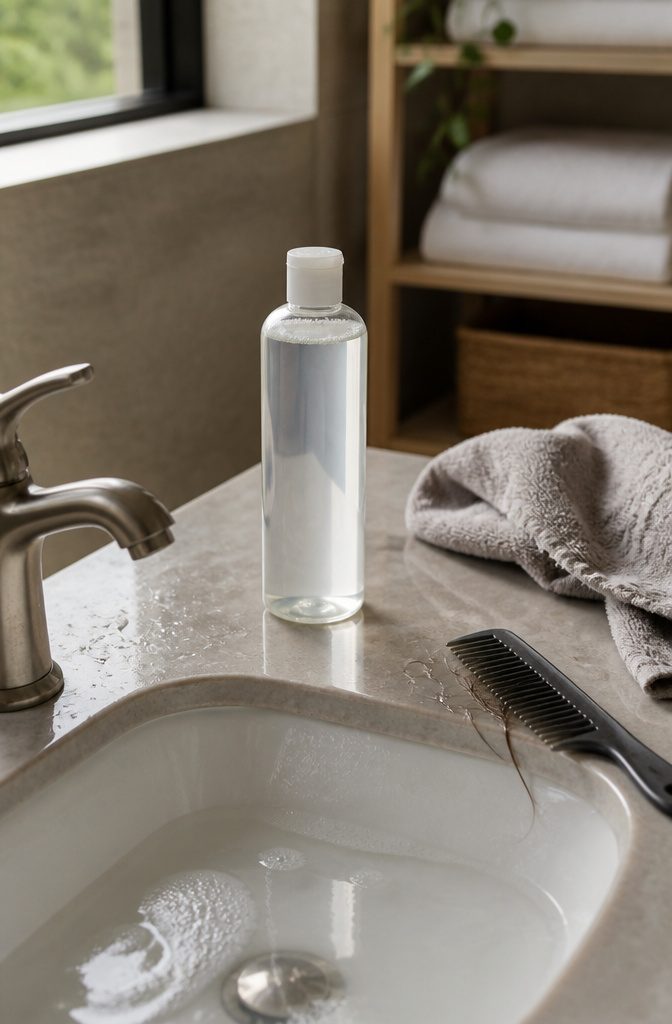
Product buildup from styling formulas, natural sebum, and dead skin cells all accumulate on the hair shaft over time.
That weight makes straight hair sit even flatter against the scalp and look limp by the end of the week, even when you are using a daily volumizing shampoo.
A clarifying shampoo once a week strips away that layer without touching your color. This is separate from your regular shampoo routine.
The clarifying formula removes residue that lightweight or volumizing shampoos leave behind, giving you a clean base before you style. Hair bounces more easily when it is actually clean at the root, not just refreshed on the surface.
If your hair feels heavy or looks greasy faster than it used to, buildup is usually the reason. One weekly clarifying wash resets everything and makes the rest of your styling effort pay off.
Skip Heavy Conditioner, Serums, and Oils
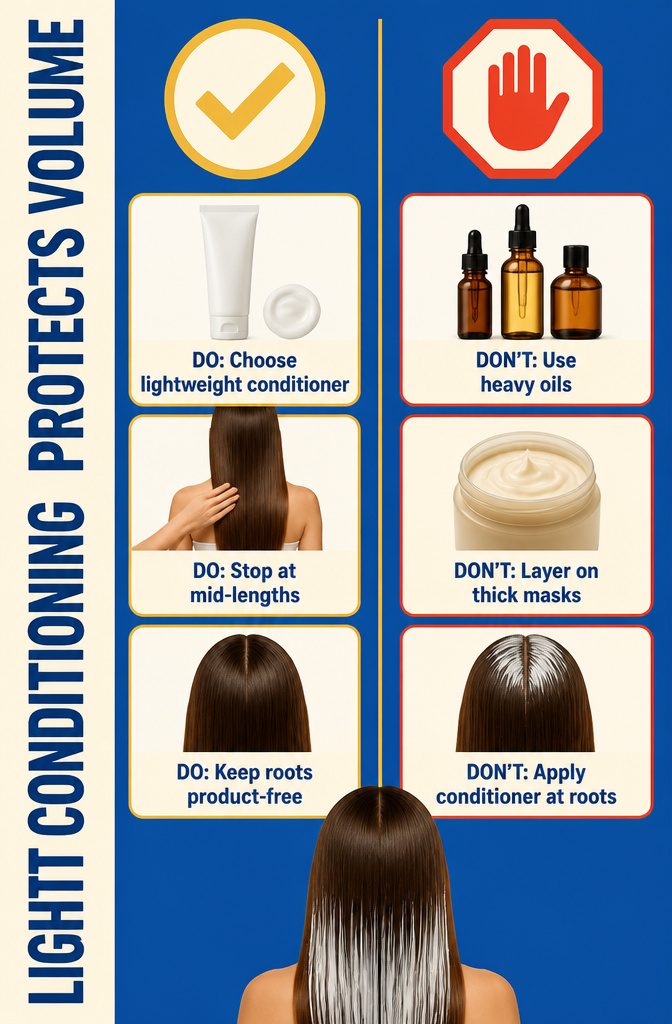
Skip heavy conditioners, serums, oils, masks, leave-ins, pomades, and waxes. Straight hair cannot hold the extra weight, so anything greasy or thick will pull the roots flat and kill whatever lift you started with.
I would avoid oils entirely if volume is the goal, and keep hair masks to a minimum.
The conditioner part matters most: choose something lightweight and stop at mid-lengths. Applying conditioner near the roots adds weight exactly where you need air and space, and that turns into the flat, pressed-down look you are trying to fix.
Condition From Mid-Lengths to Ends Only
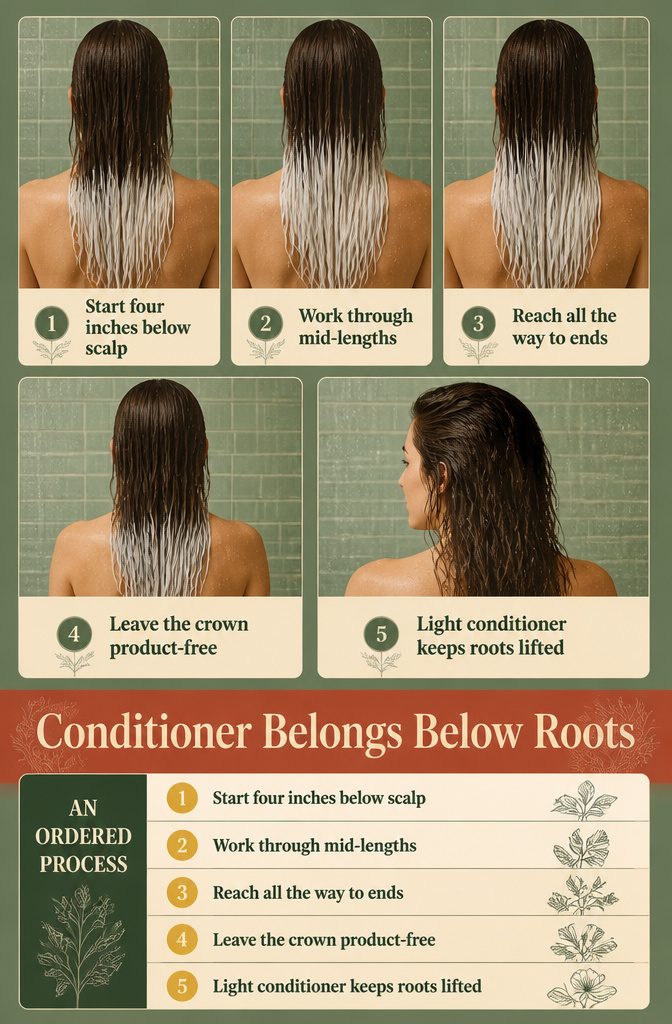
Conditioner rebuilds moisture along the shaft, but applying it from mid-lengths to ends only keeps roots from turning greasy and limp within hours.
Wet hair opens the cuticle and needs the nourishment, but glopping product at the scalp weighs everything down before lunch.
I look for conditioners light enough that staying below the roots actually works.
Ouai Repair conditioner at $28 adds moisture without the heavy slip that flattens fine hair, and it sets up frizz-free air-drying when you scrunch it through mid-lengths in the shower.
Start the application four inches down from the scalp, work through to the ends, and leave the crown alone. That small shift in placement makes flat hair stand taller by afternoon.
Try Reverse Washing
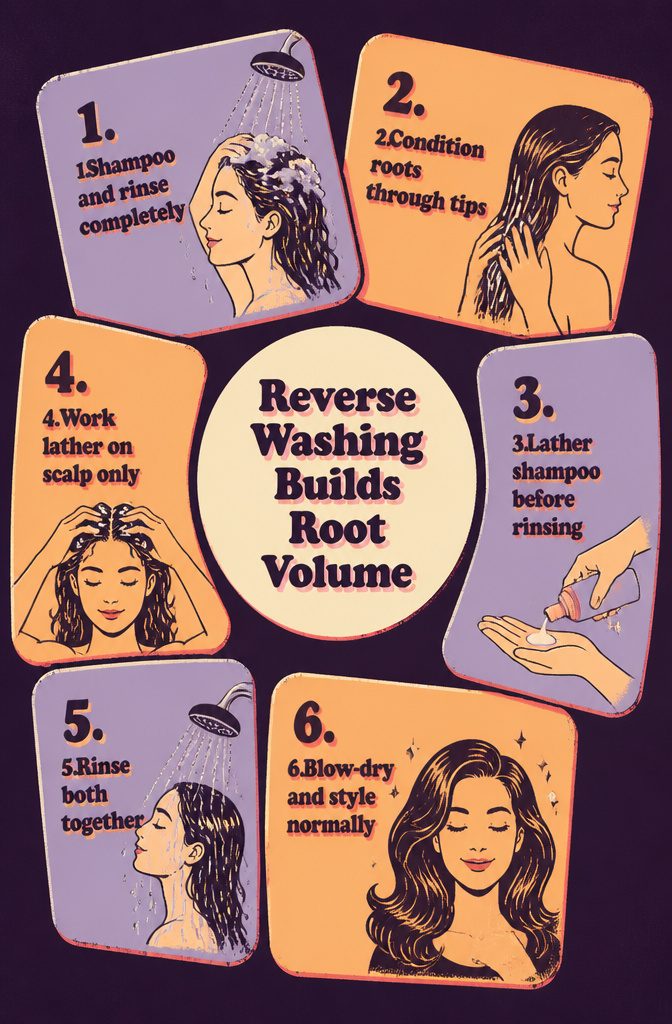
- Shampoo your hair with volumizing shampoo and rinse completely.
- Apply volumizing conditioner from roots to tips, coating your entire head.
- Before rinsing the conditioner out, squeeze a bit of shampoo into your hands, add a little water, and work it into a lather.
- Work the lather into just your scalp, leaving the conditioner on the rest of your hair.
- Rinse out both the shampoo and conditioner together.
- Blow-dry and style as usual.
The approach sounds counterintuitive since conditioning roots often weighs hair down, but the second pass of shampoo on the scalp lifts that weight while the conditioner still softens the lengths.
You end up with root and crown volume that lasts all day without the flat-head effect.
Shampoo Every Other Day or Less
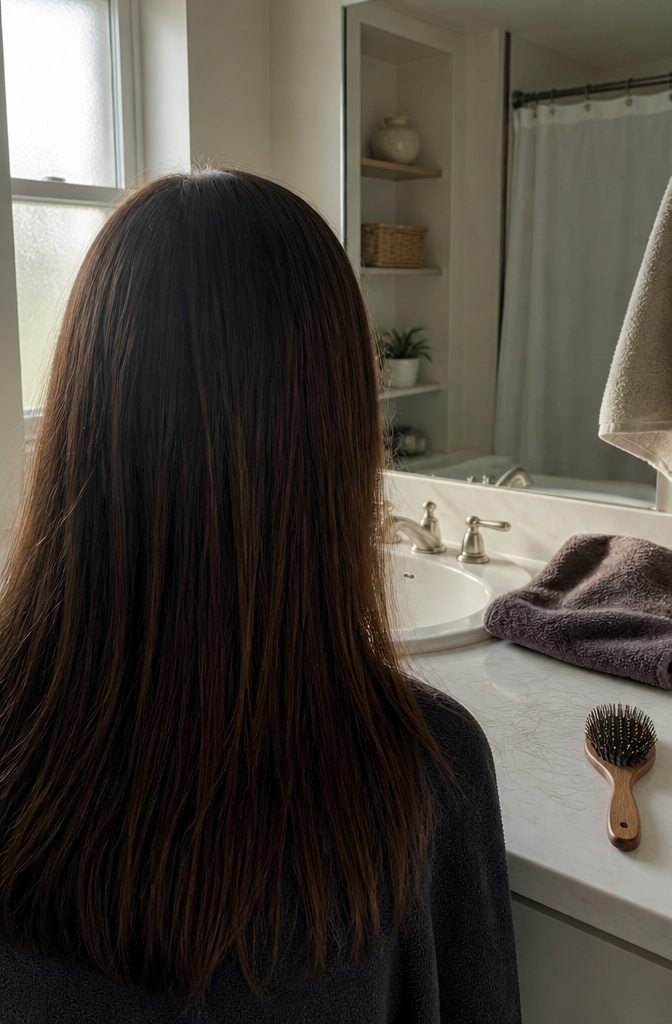
Washing every other day lets hair keep just enough natural oil to add body without building up the weight that comes with skipping too many days.
Men with straight hair generally do well on an every-other-day cycle, while three or four times a week works for many women.
Daily shampooing strips the scalp of oil, leaving hair dry and flat. The scalp compensates by producing more sebum, which creates a cycle of greasiness and limpness that volumizing shampoos then struggle to fix.
Spacing out washes breaks that pattern. The first week feels strange if your scalp expects daily washing, but oil production settles once you stop triggering it every morning.
I find the trade-off worth it. Hair that holds lift at the roots beats the clean-slate feeling of daily lather, and switching to every other day gave me volume I could not get from products alone.
Use Dry Shampoo Between Washes
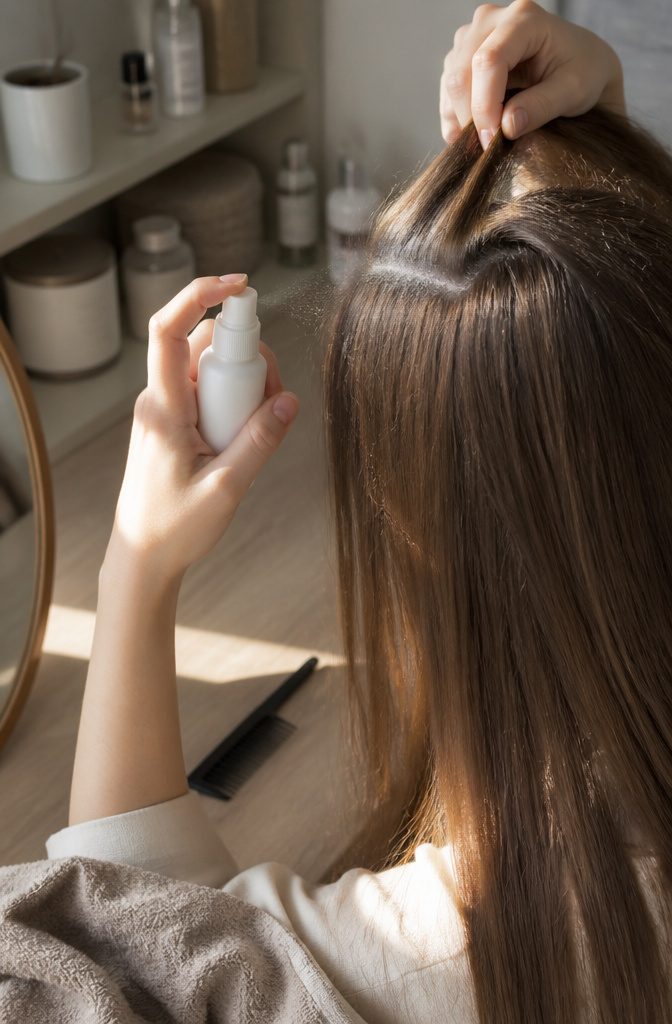
Dry shampoo absorbs oil at the roots and adds texture, which gives straight hair more grip and body between washes.
The powder and starch build on each other if you leave the product in rather than brushing it out, and that buildup creates better hold and longer-lasting volume than hairspray.
Apply it evenly at the roots and mid-lengths whenever your hair starts to flatten.
Prices range from drugstore to salon. Psst! costs $3, Drybar Detox $13, Klorane with oat milk $20, and Sally Hershberger 24K Supreme Stylist Voluminous $32.
A travel-sized bottle fits in a bag for midday touch-ups, which matters if you styled in the morning and lost lift by afternoon. Drybar and Psst! both come in small sizes that work for on-the-go fixes.
Apply Mousse, Foam, or Root Spray Before Drying
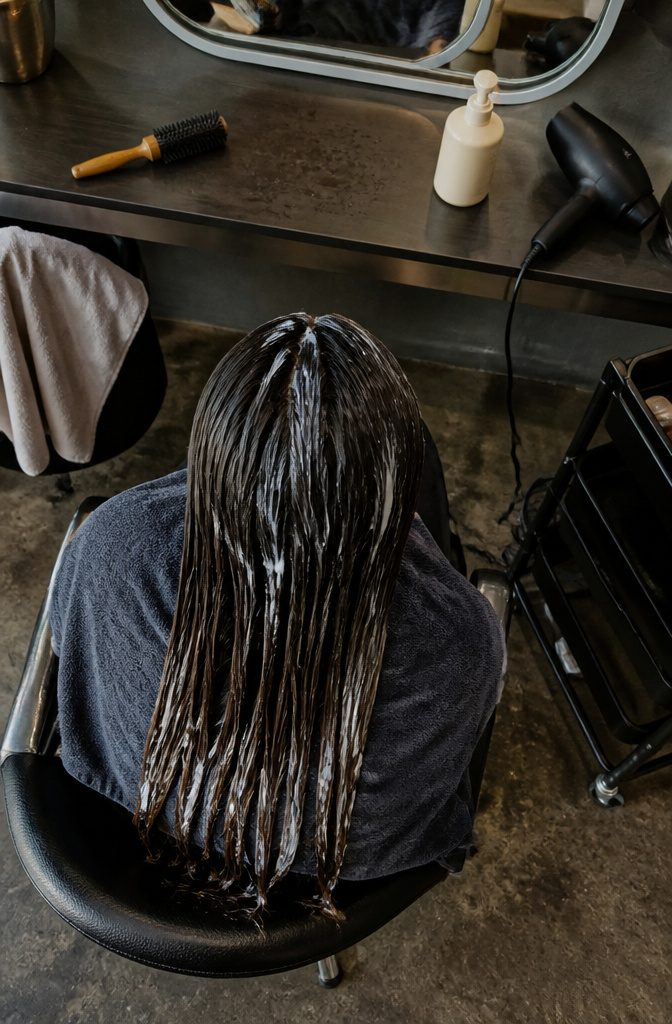
Mousse, foam, and root-lifting sprays add grip before your blow-dryer even turns on, and the formula matters less than the timing. Apply a volumizing mousse or foam to damp hair from root to ends using about a palm-sized amount.
Oribe Grandiose Hair Plumping mousse runs $39 and works well under a round brush, while Living Proof’s Full Texturizing Foam claims 3x more texture if you work it through before drying. Root sprays target the base without coating the whole head.
Dove Oxygen Moisture Root Lift spray costs $10 and activates with heat, Oribe Maximista thickening spray sits at $19, and Phyto Phytovolume Actif volumizing spray costs $30. The catch with all of them: you need the dryer.
[With] almost all volumizers you need to use a blow dryer with heat to activate them.
— SELF
Air-drying wastes the lift you just applied, since heat is what locks the product into place and coaxes roots away from your scalp.
Use Texturizing Spray, Paste, or Clay
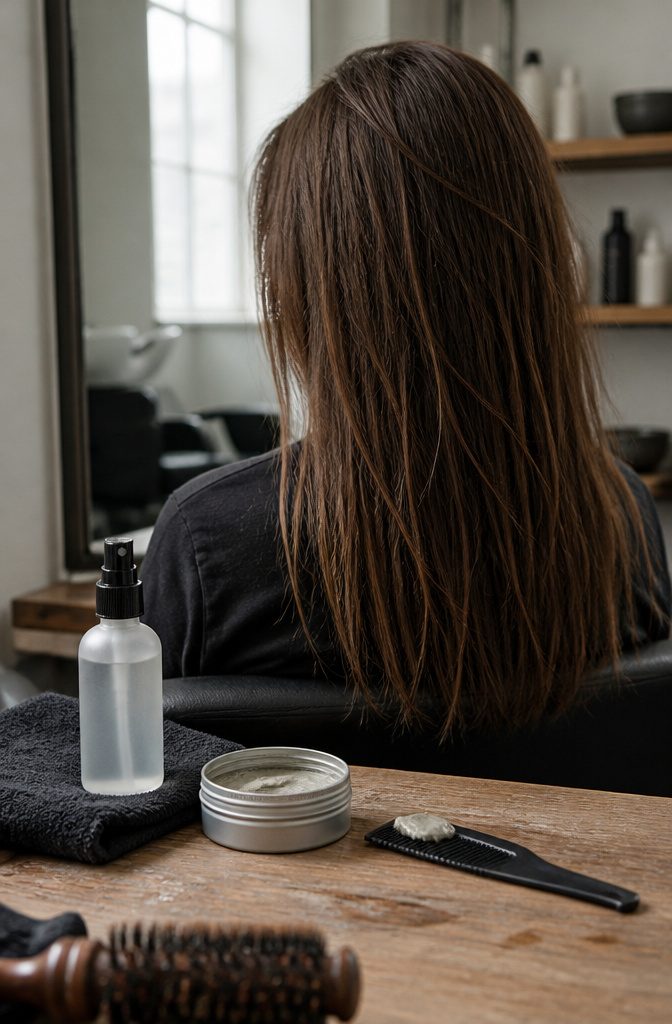
Sea salt spray, texturizing spray, and styling clays add grip and separation without the weight that drags straight hair flat. Sea salt spray goes on towel-dried hair when it’s still slightly damp, then you blow-dry with lift at the roots.
The salt creates texture that holds through the day. I pair Fusion Sea Salt Spray with Styling Clay for volume and a matte finish that stays pliable.
Oribe Texturizing spray runs $22, Ouai Wave spray $26. Both work sprayed at the root in sections after drying, so when the style drops a few hours in you can flip your head and fluff it back up.
For finer hair that needs definition, spray Ouai finishing cream ($26) into your palm first, dab your fingers in it, and work it through the strands.
Unite Expanda Dust volumizing powder ($26) does the same job dry. Pastes and creams give you moisture and control, clays give you hold, powders give you pure lift.
Blow-Dry Upside Down
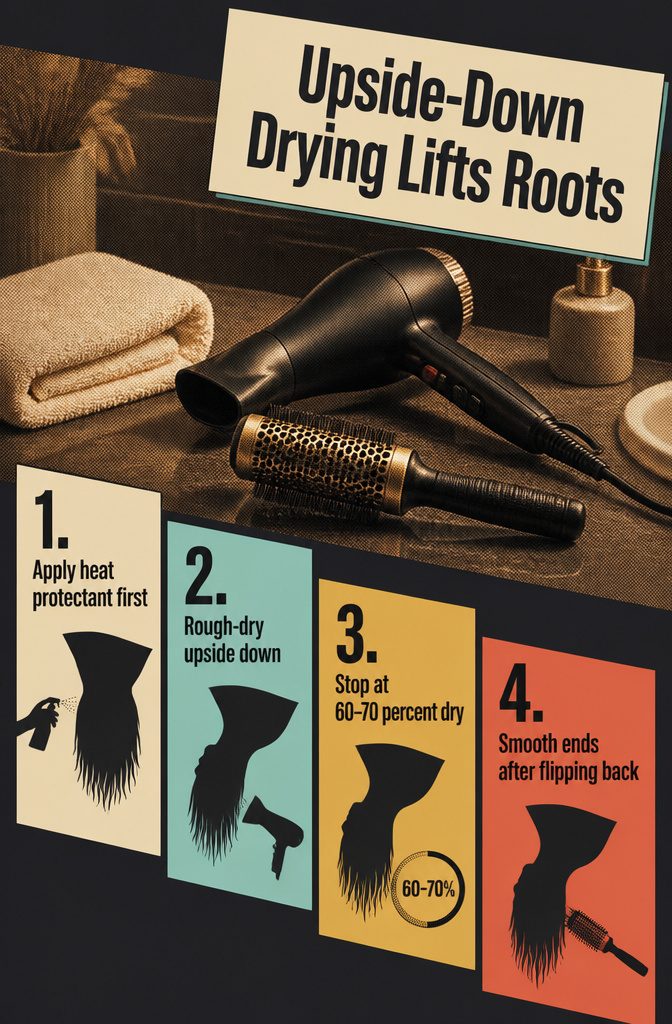
Blow-Dry Upside Down
Flipping your head upside down and blow-drying lifts the hair directly at the roots, which is exactly where flat hair needs help.
The technique works because gravity pulls the strands away from the scalp as the heat sets them, building volume that a right-side-up pass never quite delivers.
Start with damp hair and rough-dry upside down using just your hands until the hair is 60 to 70 percent dry.
No brush yet. This roughes up the cuticle and maximizes lift.
Once you flip back over, you can smooth the ends with a round or ceramic brush if you want polish, but keep the tension light. Pulling too hard flattens everything you just built.
Always apply a heat protectant before you start. The upside-down position works, but it still means heat aimed at the scalp for several minutes, and protecting the hair matters as much as lifting it.
Rough-Dry the Roots First
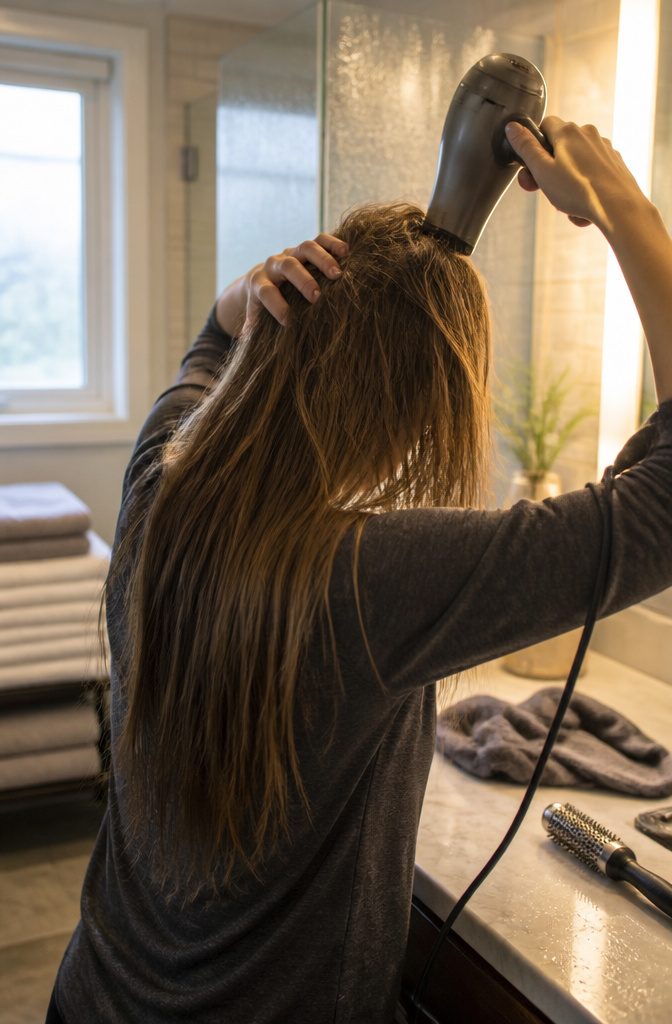
Rough-drying means working with your hands first, no brush, and it lifts the roots before you move on to anything else.
Flip your head upside down and run your fingers through from the roots as you blow-dry, letting the airflow and your hands rough up the cuticle instead of smoothing it flat.
This step adds volume where it counts. Once your hair is 60 to 70 percent dry, flip back over and only then reach for a round or ceramic brush to smooth the ends.
The rough phase does the lifting; the brush finishes the shape without pulling tension back through the roots and flattening what you just built.
Lift Roots With a Round or Ceramic Brush
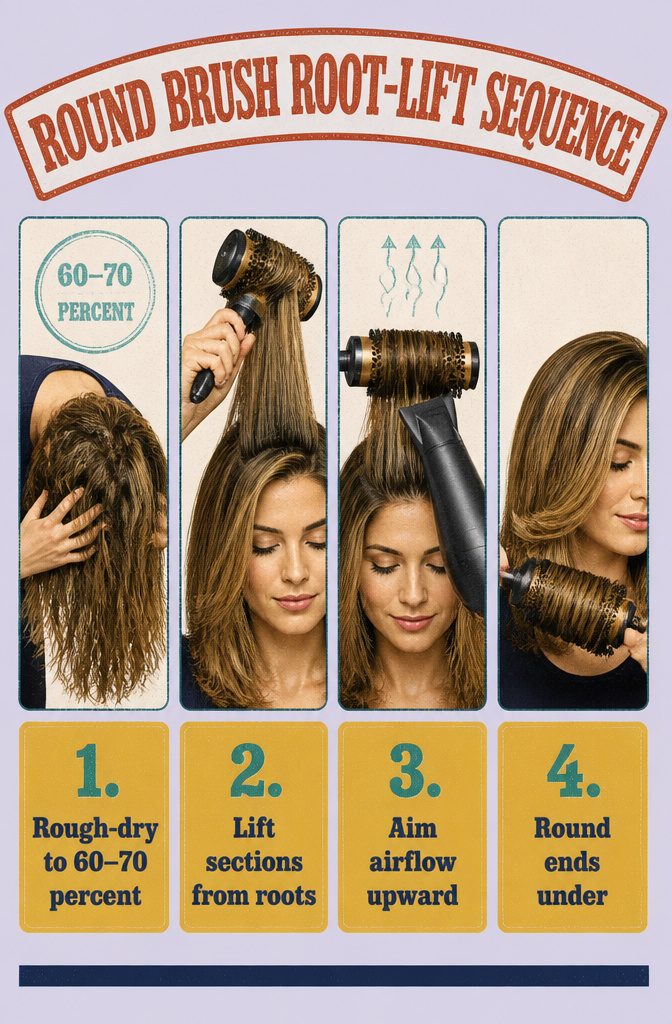
A round brush lifts hair at the roots while directing heat where you need it, and the timing is what keeps the volume from collapsing.
Start by rough-drying your hair upside down with just your hands until it reaches 60 to 70 percent dry, then flip back over and bring in a ceramic brush to smooth the ends and finish the style.
The brush should pull sections up, not flat against your scalp, and the airflow from your dryer should aim upward at the roots rather than straight down the shaft.
When you reach the ends, round them under with the brush to finish the shape. Pulling too hard flattens everything out, so lift with intention but let the brush do the work.
This is the technique that gives you bounce without teasing or product buildup, and it works because you rough up the cuticle first and seal it smooth second.
Protect Hair From Heat and Limit Excessive Use
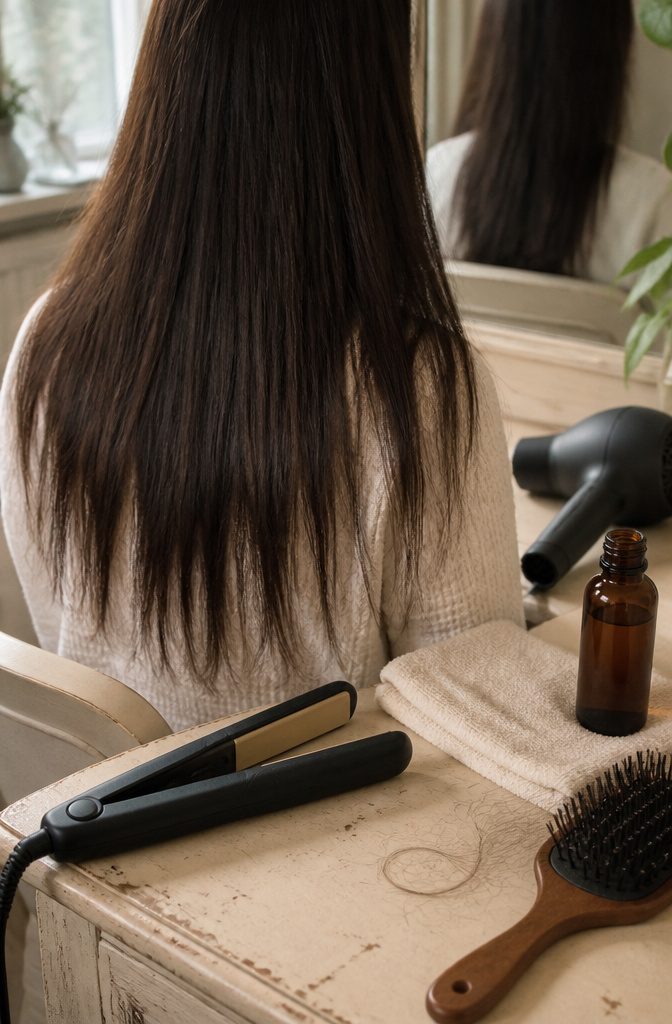
Heat styling works, but overdoing it leaves hair damaged and limp.
Flat irons, curling tools, and blow dryers all weaken strands when you use them too often, and that damage shows up as lank, lifeless texture that won’t hold volume no matter what product you pile on.
The fix is straightforward: use heat tools sparingly and always put a protectant between the iron and your hair.
A 1.5-inch curling iron or hot rollers can set lift and movement without the constant punishment of daily straightening, which tends to flatten hair further if you lean on it too hard.
Keep tools on the lowest setting that still gets the job done, and when hair doesn’t need restyling, skip the heat entirely.
Set the Crown With Velcro or Hot Rollers
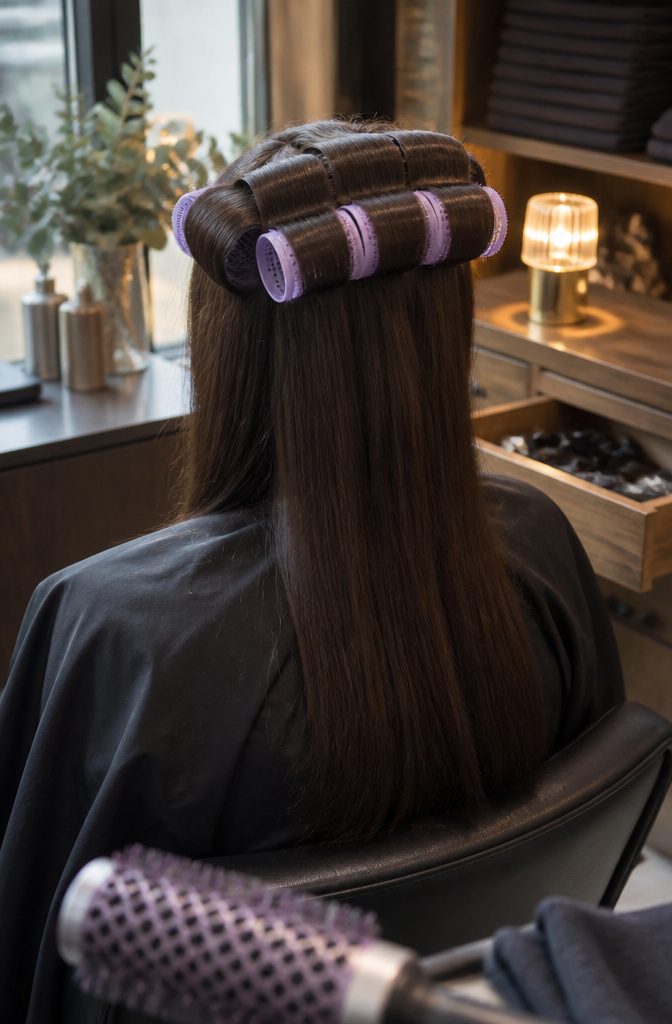
Setting the crown with Velcro rollers or hot rollers adds lasting height while the rest of the style is finished.
Roll sections at the crown, secure them, and leave them in place as you work through the rest of your hair.
The heat or tension sets lift at the top of the head, and when you remove the rollers at the end, the volume holds instead of collapsing the moment you step away from the mirror.
For hot rollers, a 1.5-inch barrel gives enough curve to lift without turning the crown into ringlets. Velcro rollers work the same way but need a blast of cool air from the dryer to set before you unroll them.
Either way, the crown gets its own dedicated lift while you blow-dry, curl, or straighten the lengths. The style starts with real height instead of trying to coax it back in later.
Curl or Wave the Hair
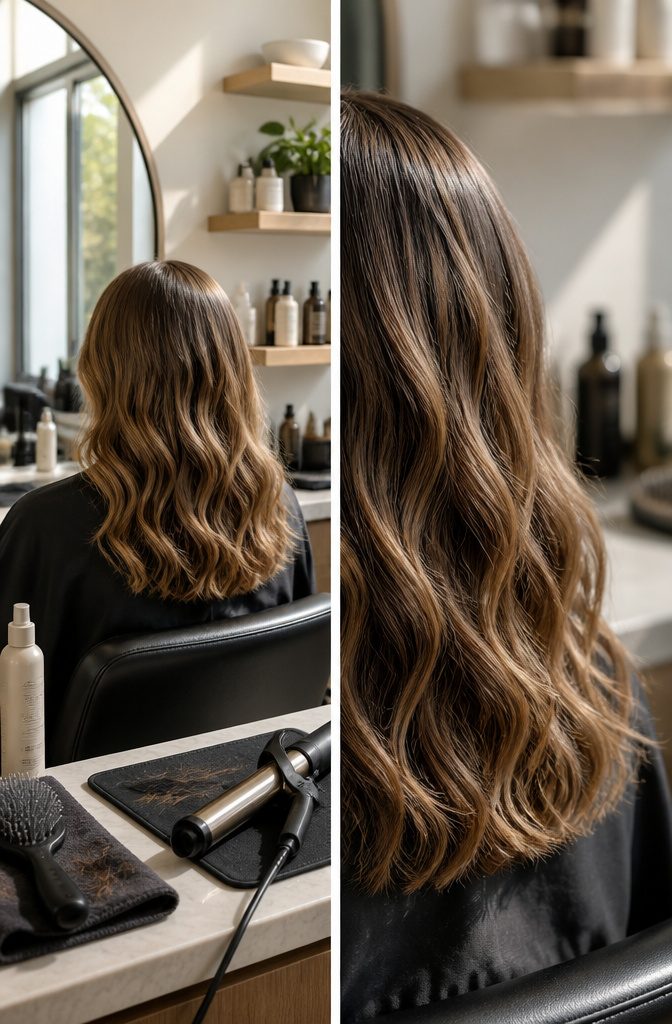
Curling or waving flat straight hair gives it the dimension and body it naturally lacks.
The shape adds texture that makes the hair look fuller, and the method works whether you reach for a curling wand, a flat iron, or hot rollers.
A 1.5-inch barrel curling iron is the size that adds volume without tight ringlets.
I use it to set the crown while styling the rest of the hair, then release the curls once the look is finished. The set holds better that way.
Alternate the direction of each curl, some wrapped forward and some back, with the iron held vertically. That keeps the waves from clumping into uniform sections and reads as natural movement instead.
Beachy waves work particularly well on fine hair because the loose texture expands how much space the hair takes up. Finish with a texturizing spray to lock the pattern in place and keep the waves from collapsing flat by midday.
Tease or Backcomb the Roots
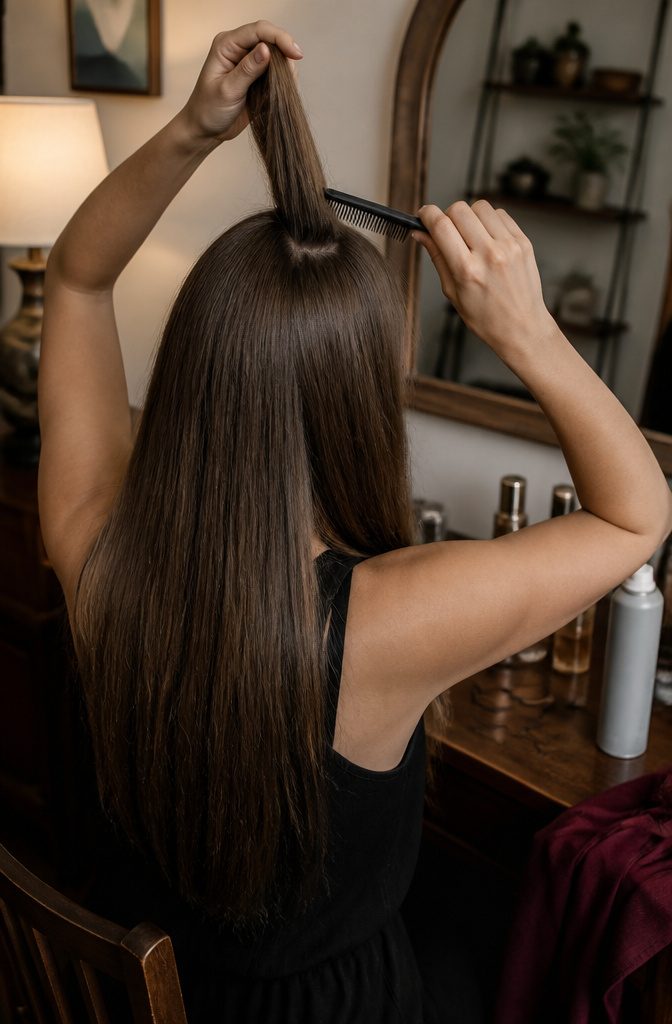
Teasing or backcombing the roots lifts flat hair at the crown in about five minutes, which makes it a go-to for events and photos.
Lift small sections and backcomb each one two or three times with a fine-tooth plastic comb, working the comb down toward the scalp so the hair tangles slightly and builds volume.
Spray each section with dry shampoo after backcombing, then smooth the top layer lightly to hide the teasing underneath.
The volume is temporary and disappears after washing, but the speed makes it worth keeping in the rotation when you need height that lasts through dinner or a shoot.
Flip or Change Your Part
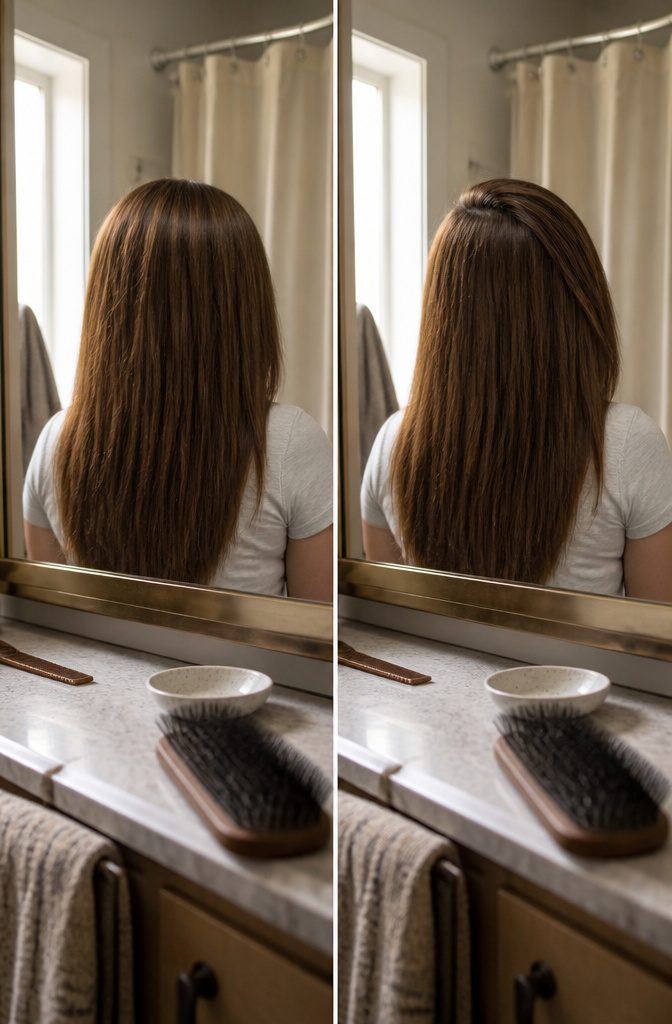
The part you have worn for years trains hair to fall one way.
Flipping it to the opposite side forces roots to stand in a new direction, lifting them away from the scalp instead of letting them lie flat. The effect is immediate and costs nothing.
A deep side part works better than a center part for adding volume. Strands propped up at the root appear fuller, especially if you have fine hair that tends to sit flush against your head.
You can flip back and forth between sides whenever the lift starts to fade, which gives you a reset without reaching for a single product or tool.
Add Layers for Movement
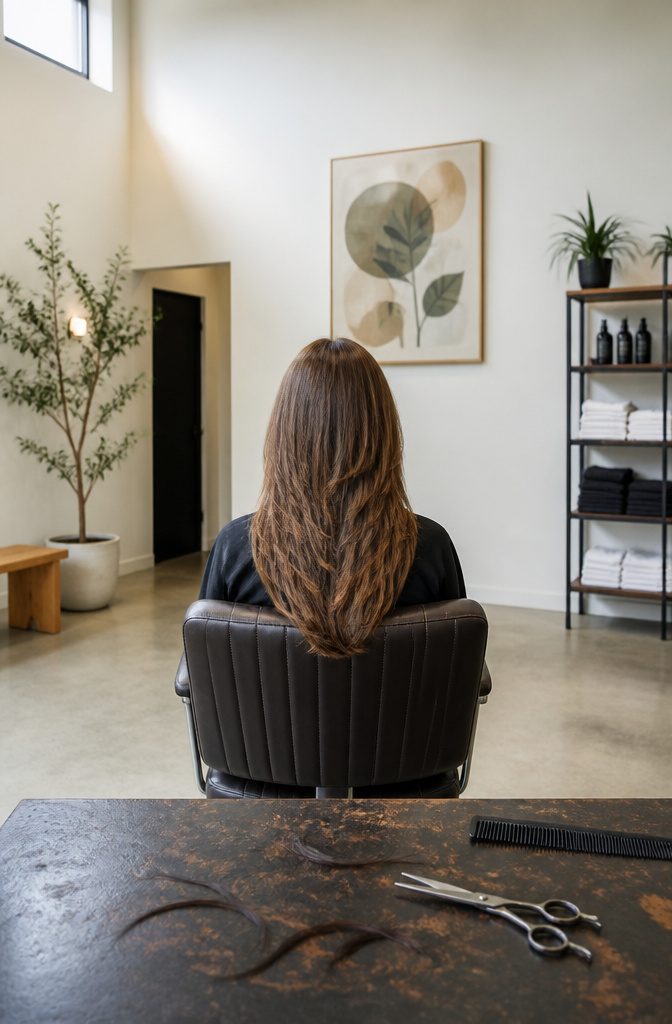
Layers lighten the load pulling hair down and let individual sections move on their own instead of lying as a single flat sheet.
The cut removes weight at different heights, so the shorter the layer, the more volume you get because there’s less dragging downward.
Short layering on top brings fullness. Longer layers give bounce without as much lift.
I’d ask for face-framing pieces and some longer layers if you want movement without a drastic change, or go for a shag with loads of layers if your texture can support it.
The catch: layers work best with enough density to carry them.
On fine straight hair without much thickness, they can turn stringy rather than voluminous. If your hair is already thin, a blunt or one-length cut holds more visual weight than a heavily layered one that shows gaps between pieces.
Choose a One-Length Bob, Lob, or Blunt Cut
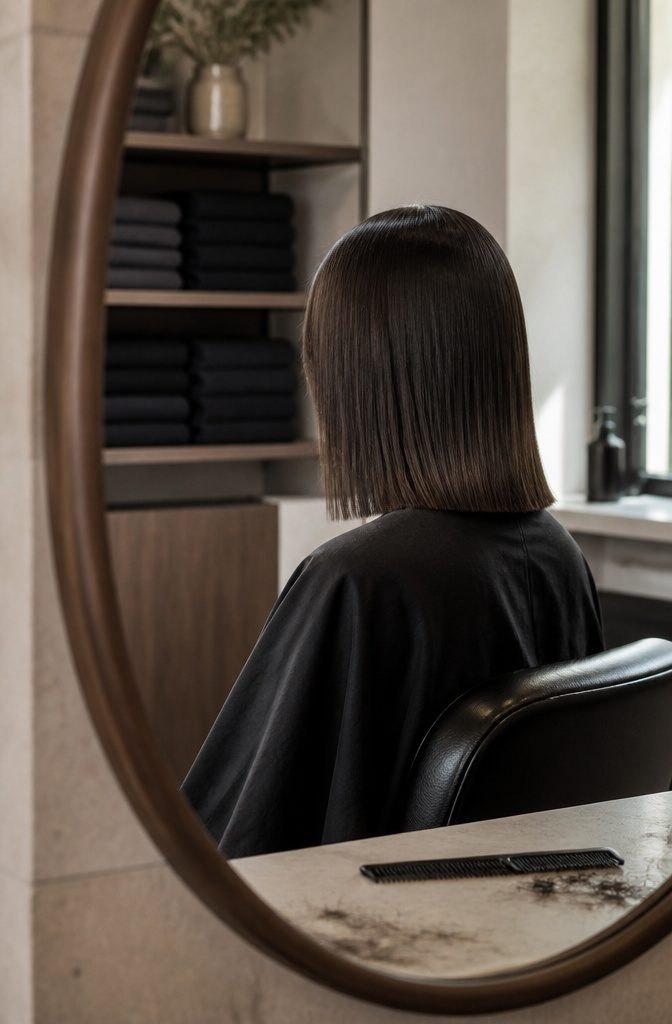
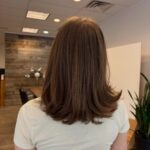
A one-length bob, lob, or long blunt cut creates the fullest silhouette for fine straight hair. The horizontal shape directs the eye across rather than down, and a clean edge builds visual density that layers can’t match.
Layers tend to thin the ends and make fine hair look stringy, so a one-length cut keeps all the weight at the bottom where it reads as volume.
The shorter the cut, the more shape you get.
A chin-length or collarbone-length bob gives maximum width. A lob sits at the shoulders and still delivers fullness without sacrificing length.
Long hair works if you keep the bottom edge blunt and add only minimal face-framing, not layers through the body. All three rely on the same principle: nothing tapered, nothing feathered, just a strong perimeter that holds its line.
Consider Bangs
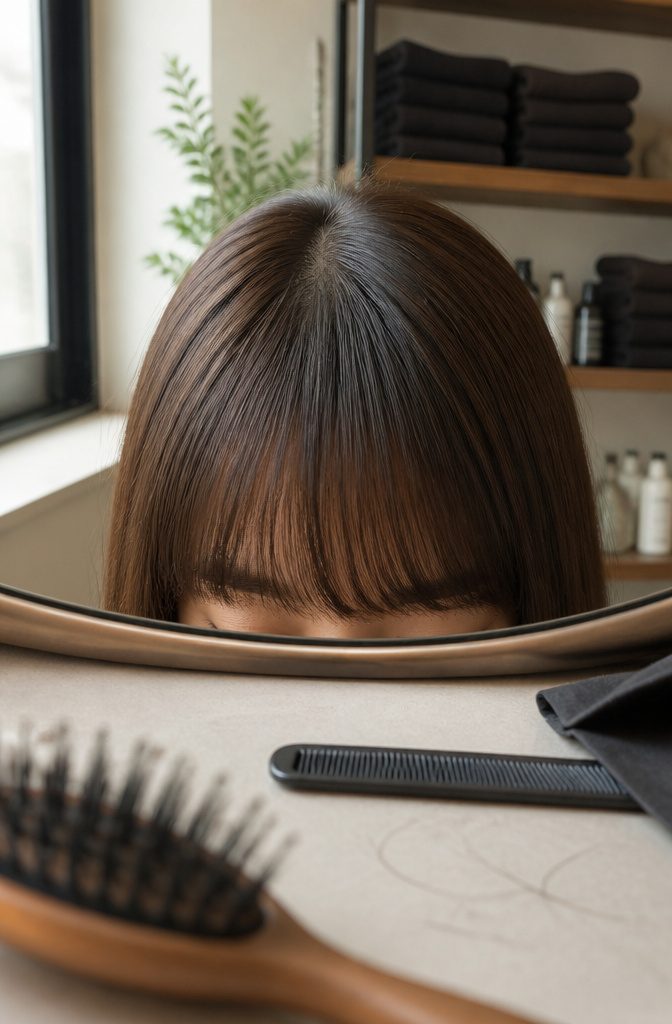
Bangs redirect the eye to the front of the hair, where straight hair is naturally fullest, and pull attention away from flat lengths.
The effect is optical: instead of reading the whole head as flat, the viewer stops at the frame.
It works whether you choose curtain bangs, blunt fringe, or wispy pieces, but the distraction only holds if the bangs themselves have body.
I find this option most useful for someone who wants volume to register immediately without changing how they style the rest of their hair.
Bangs add visual weight exactly where it counts, and they grow out in a way that still frames the face rather than vanishing overnight.
The trade is upkeep: bangs need a trim every four to six weeks to stay out of your eyes and keep that fuller front edge.
Get Regular Trims
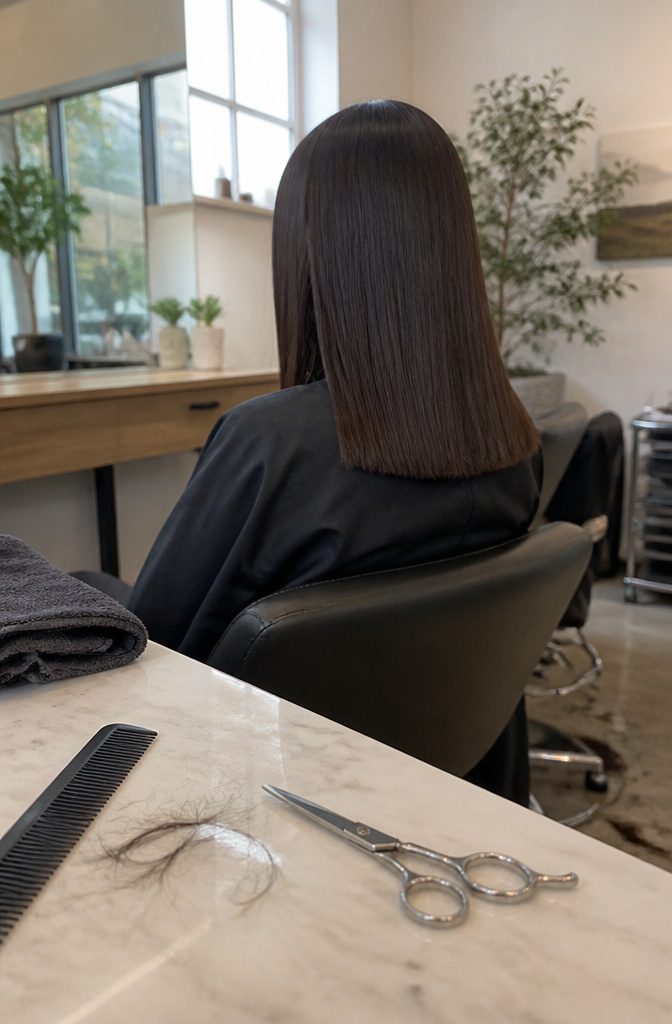
Regular trims keep flat hair from looking thin and straggly by removing split ends and damaged length.
When ends split or fray, hair loses the clean edge that makes it look fuller, and those damaged ends add zero visual weight where it counts.
Longer hair weighs itself down, so even taking off a small amount of length relieves some of that pull and lets roots sit higher.
A trim does not have to mean losing inches you worked to grow. Removing half an inch every few months prevents the kind of damage that forces you to cut off several inches later to fix it.
Straggly ends also flatten the overall silhouette. Hair that tapers to nothing at the bottom reads as limp, whereas a blunt or layered edge holds its shape and reflects more light.
The cut itself matters, but keeping that cut fresh between appointments makes a bigger difference than most product.
Use Strategic Color or Highlights
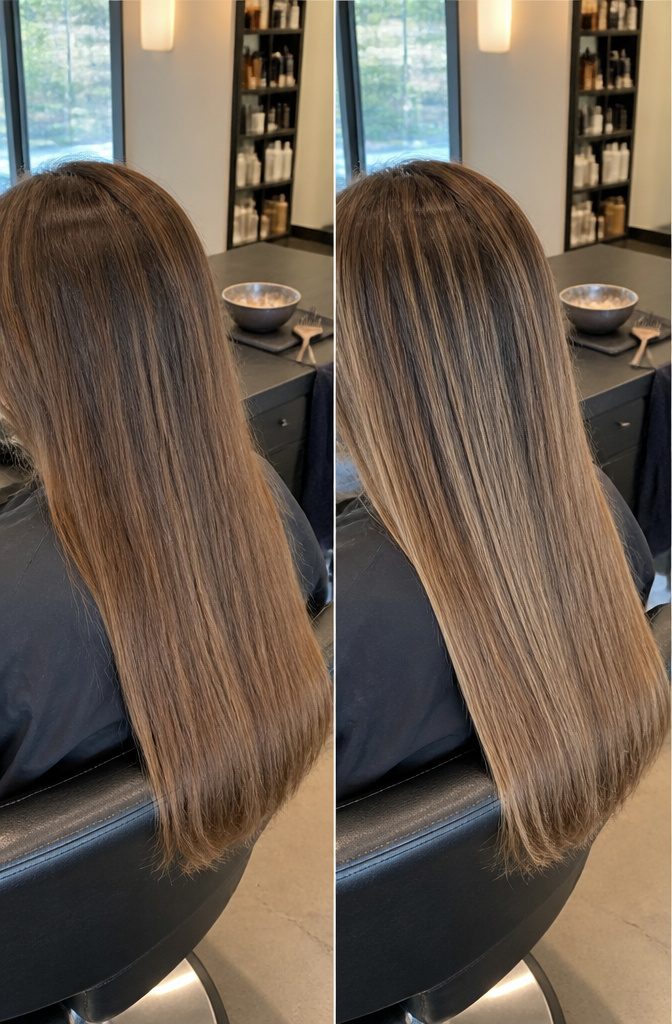
Highlights, lowlights, babylights, balayage, ombre, and color contouring all add visual dimension that makes flat hair look fuller.
The lift comes partly from the eye reading depth where there is none and partly from what the bleach does to the strand itself: lightening roughs up the cuticle, so hair that would otherwise hang limp holds texture and volume longer without product.
The cost is that highlights weaken hair over time, especially if you go in for touch-ups every few weeks. If damage is a concern, henna offers a plant-based alternative that makes hair feel fuller and shinier without the chemical hit.
A contrasting or deeper root keeps the scalp from looking transparent.
When color runs too light all the way to the scalp, the hair reads thin no matter how much is actually there. Keeping a bit of depth at the root creates coverage and makes the whole head look denser.
Try Extensions, Toppers, or Hair Fibers
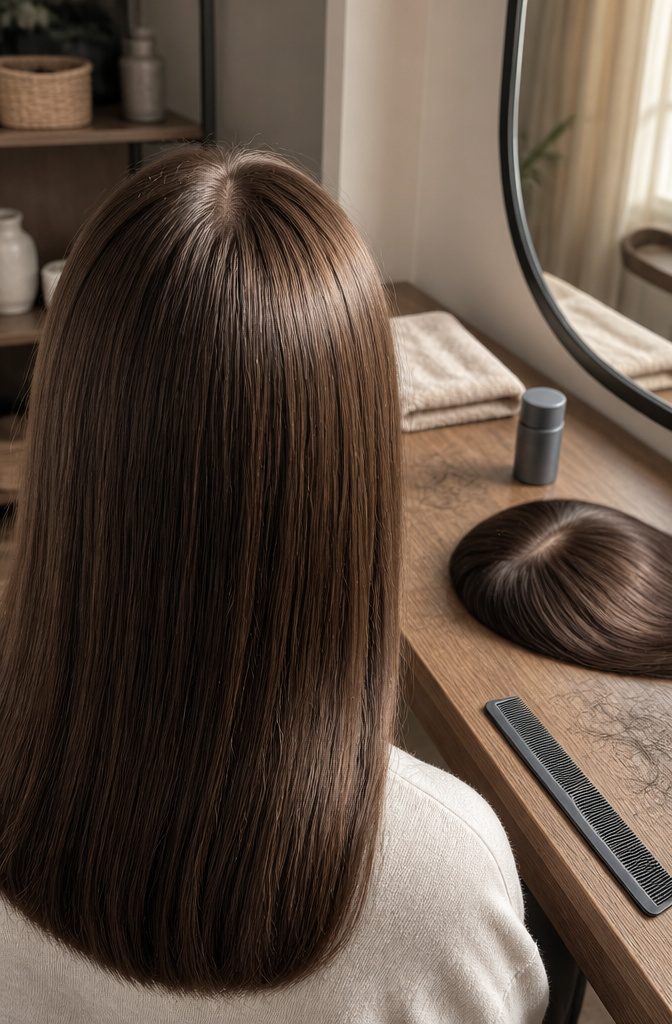
Extensions and toppers physically add hair where you want it, and they work the moment you clip them in or set them on.
Clip-in extensions fill out the body and ends, hair toppers sit at the crown or part line to add density where thinning shows most, and wigs let you tuck your own hair away entirely.
All three put less tension on fine strands than permanent methods because you remove them before bed.
Hair fibers work differently. Toppik Hair Building Fibers, $25 in nine shades, are made of keratin protein and cling to existing strands to make coverage look thicker instantly.
You spritz them into the roots, and they fill in sparse part lines, cover extension tracks, or touch up roots between color appointments.
The fibers stick until you wash them out, so the effect lasts through the day but reverses completely in the shower. Helpful if you want visible thickness without committing to a piece or dealing with clips.
Use a Scalp or Hair-Strengthening Treatment
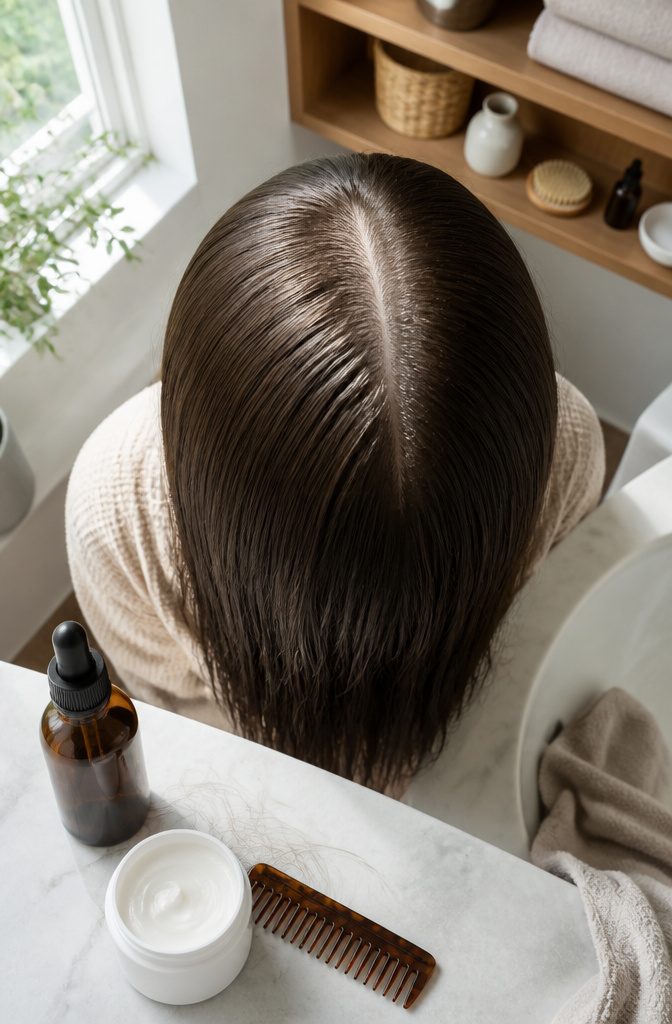
Scalp treatments and hair-strengthening formulas work by thickening individual hair fibers and reducing breakage, which adds up to more volume when hair lies flat.
One scalp treatment delivers an immediate 11.5% increase in hair fiber thickness, visible the day it goes on. That change registers when you run fingers through hair and when you look at the crown in good light.
Hair-strengthening leave-ins rebuild structure over time.
Apply weekly, let it sit, and skip the rinse. The difference shows up in how strands hold a style and how much breaks off when you brush.
Kérastase Densifique is the salon version.
It revitalizes texture and holds for four weeks depending on shampooing frequency. If you shampoo daily, expect three weeks.
Every other day stretches it closer to the full month. The treatment costs more than a drugstore leave-in, but the interval between applications keeps the monthly spend reasonable if flat hair is the one thing nothing else has fixed.
Support Scalp and Hair Health
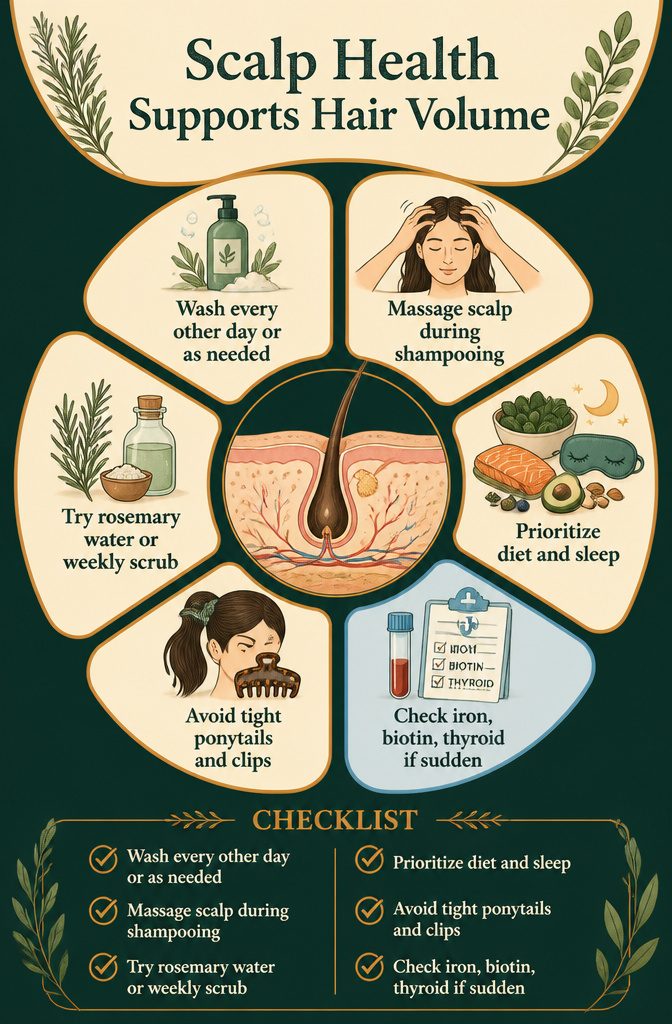
No amount of volume technique or product will work if the scalp and follicle aren’t healthy.
Gentle washing every other day or as needed prevents buildup without stripping natural oils, and scalp massage before or during shampooing improves blood flow to the roots.
Some people swear by rosemary water or a weekly scalp scrub to keep the surface clear and stimulated.
Diet, sleep, and avoiding tight ponytails or clips that stress the hairline all play a role in how much density and lift your hair can hold.
Genetics, hormonal shifts, nutrient deficiencies, and aging can thin hair from the follicle level, making flatness harder to fix with styling alone.
If your hair has changed over time or never had much body to begin with, those underlying factors may be limiting what volume you can build.
A multivitamin covers most bases, but if thinning seems sudden or severe, a vitamin panel through your primary care can rule out iron, biotin, or thyroid issues that flatten hair from the inside.
Consult a Professional Stylist
A professional stylist can match a cut, color, and product lineup to your specific hair type and face shape, which is the fastest way to get personalized advice instead of cycling through products that don’t suit you.
If you have thin, flat hair, a stylist might suggest anything shoulder-length to create a look of fullness, or recommend one-length cuts like bobs and lobs that keep fine straight hair from looking stringy.
Layers work for some textures but can fall flat on others, and a good stylist will know which side of that line your hair sits on.
Beyond the cut itself, they can suggest hair contouring, a coloring technique that uses light and dark tones to add depth and complement your face shape.
No two heads of hair are alike, so the plan a colorist builds for you won’t look like the plan they’d build for someone else.
Products That Add Volume Without Weight
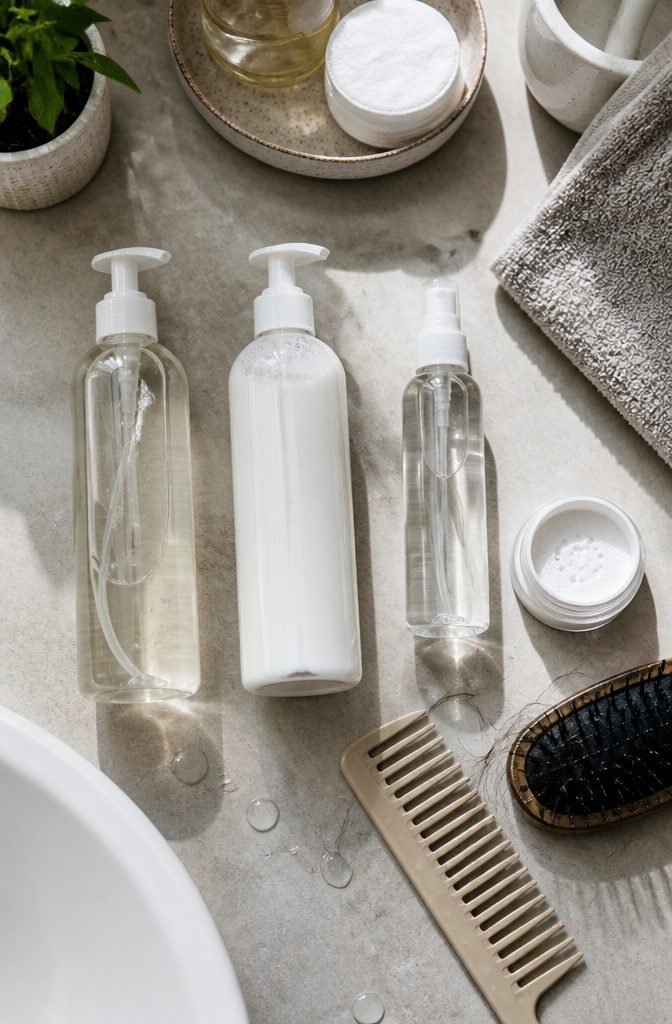
The weight of the product matters as much as the formula. Lightweight volumizing shampoos and conditioners lay the groundwork without flattening hair before you style it.
Look for formulas with caffeine and vitamin B3, which thicken without adding bulk. Dove Nutritive Solutions Oxygen Moisture shampoo and conditioner run $5 each and include moisturizing ingredients to keep the scalp from overproducing oil.
Once you move to styling, stick with water-based products instead of oil-based ones. Oil adds weight and makes flat hair worse.
Water-based options wash out cleanly, layer well with other products, and give lift without greasy buildup. Good choices across categories:
- Mousse and root spray: Dove Oxygen Moisture Root Lift spray ($10) works before blow-drying or air-drying and needs heat to fully activate.
- Texturizing products: sea salt sprays, bentonite clays, and pastes add grip and lift. Work a small amount from roots to ends.
- Dry shampoo: absorbs oil between washes and adds texture at the roots.
- Finishing powders: dust onto dry roots for immediate lift without re-styling.
Skip heavy oils, thick leave-ins, and rich conditioners. Anything greasy kills volume rather than builds it.
How Blow-Drying Technique Lifts Roots
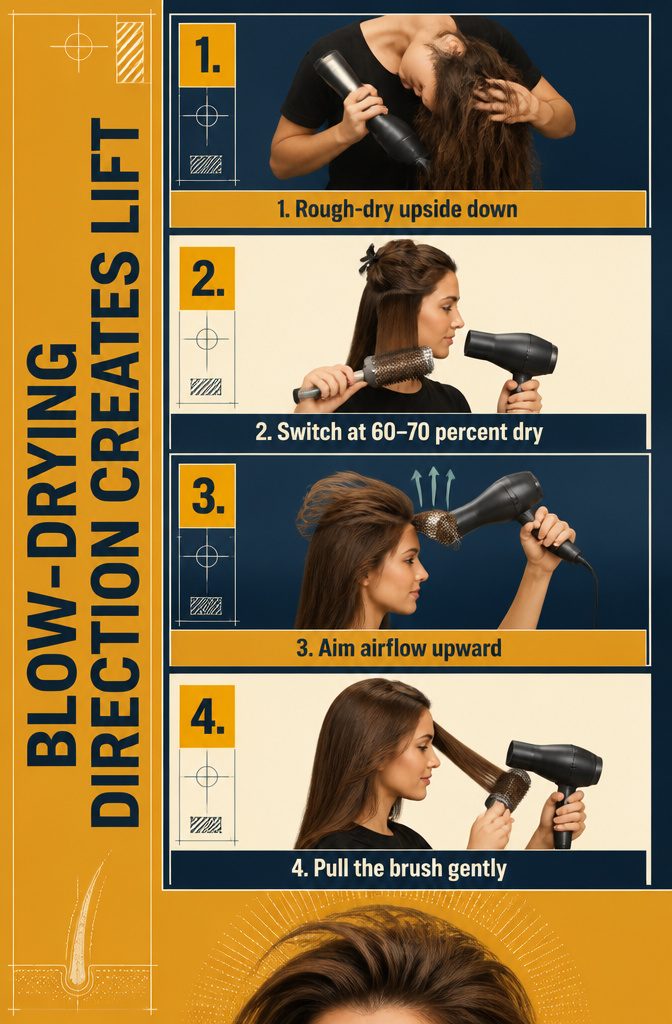
How Blow-Drying Technique Lifts Roots
- Flip your head upside down and rough-dry with your hands. No brush yet. This lifts the roots away from your scalp and roughens the cuticle, which maximizes volume before you smooth anything down.
- When hair reaches 60 to 70 percent dry, flip back over and switch to a round or ceramic brush. Use it to smooth the ends and add softness to the style.
- Direct the airflow upward at the roots, or point it in the opposite direction of your hair growth. Either method helps lift hair at the base rather than flattening it against your head.
- Pull the brush gently. Tugging too hard collapses the lift you just built.
Choosing Between Layers and One-Length Cuts
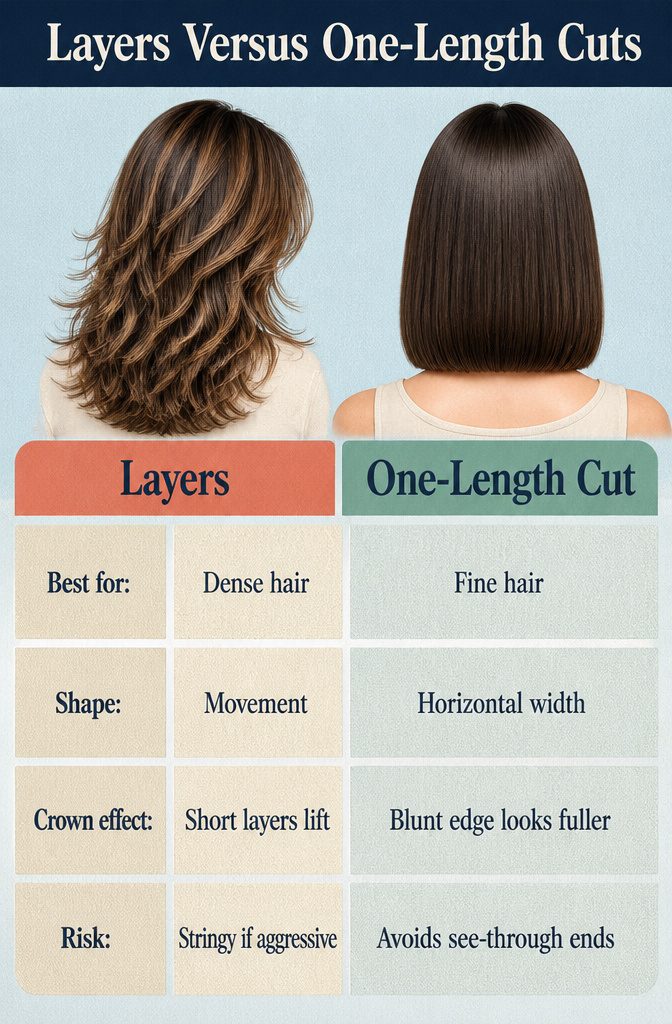
The trade-off runs on strand diameter and how much hair you have: layers cut weight and create movement, which helps if your hair is dense enough to carry them.
Short layers lift the crown most because less weight drags them down, and longer layers add bounce without changing the silhouette much.
A shag gives you texture all over. But fine straight hair can look stringy in layers, especially if the cut is aggressive or the layers stack too close together.
A one-length bob or lob creates width by directing the eye horizontally rather than letting it follow the vertical fall of long hair. Blunt cuts look fuller because every strand ends at the same place, building a heavier visual edge.
If you have fine hair that refuses to hold any volume, a clean one-length cut reads as thicker and avoids the see-through ends that layers can leave behind.
Frequently Asked Questions
Why is my hair so flat?
Straight hair lies flat because oil travels directly from scalp to ends, weighing everything down.
Fine or thin hair makes it worse since fewer strands mean less overall volume, and heavy products or buildup add extra weight that pulls hair closer to the scalp.
What is flat straight hair called?
Flat straight hair is simply straight hair that lacks volume and body. It sits close to the scalp because the strand structure has no wave or curl to lift it away from the head.
What haircut is best for flat straight hair?
A one-length bob, lob, or blunt cut creates the fullest look for fine straight hair by keeping all the weight at the bottom.
Layers can add movement if you have enough density, but they make fine hair look stringy when there is not enough thickness to support them.
How to fix flat straight hair for men?
Use volumizing shampoo and conditioner, blow-dry upside down to lift roots, and apply texturizing paste or clay for grip. Regular cuts with layers add movement, and spacing washes to every other day keeps hair from turning greasy and limp.
What to do with extremely straight hair?
Add texture with sea salt spray or styling clay, blow-dry upside down until 60 to 70 percent dry, then finish with a round brush to lift roots.
Curling or waving the hair with a 1.5-inch barrel also gives straight hair the dimension and body it naturally lacks.