Curtain bangs work on almost every face shape because the length adjusts to flatter what you’re working with.
Texture changes the rules: fine hair needs to stay between cheekbone and jaw to hold the shape, and curly hair has to be cut dry or it’ll shrink shorter than you planned.
Most stylists will trim bangs for free between appointments, which matters because these grow faster than the rest of your hair and need reshaping every few weeks to keep the curtain effect from flattening out.
What Curtain Bangs Are
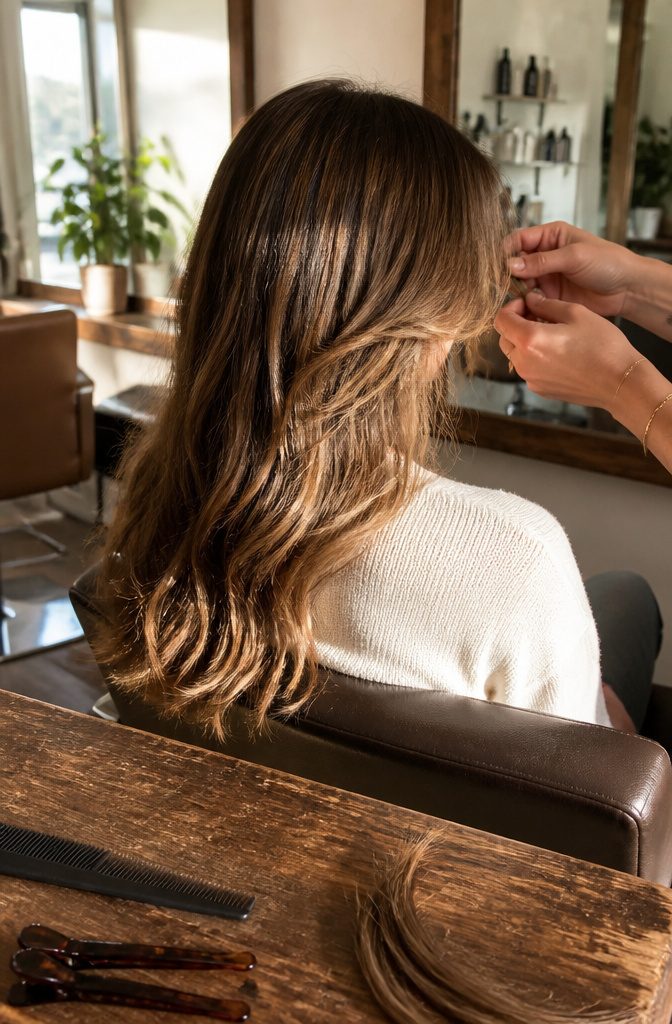
Curtain bangs are a face-framing fringe parted in the middle or slightly off-center, cut shorter at the middle of the forehead and longer toward the sides.
The shape mimics how a curtain drapes open, which is where the name comes from. The shortest pieces usually sit around the brows, while the longest ones sweep down to the top of the cheekbones.
The style works across a range of hair types because the length and thickness can be adjusted.
You can go wispy and light for a softer, more lived-in feel, or keep them fuller and more structured if you want something polished.
Both versions blend into the rest of your hair rather than sitting as a hard line across the forehead.
Curtain bangs do for your face what a set of artfully draped curtains does for a window.
— Vogue
That softer edge is what sets them apart from blunt bangs. Blunt bangs sit straight across the forehead in a clean, even line.
Curtain bangs open up in the center and frame the face on both sides, which gives you more movement and makes them easier to grow out without an obvious grow-out line.
Face Shape, Hair Texture, and Who They Suit
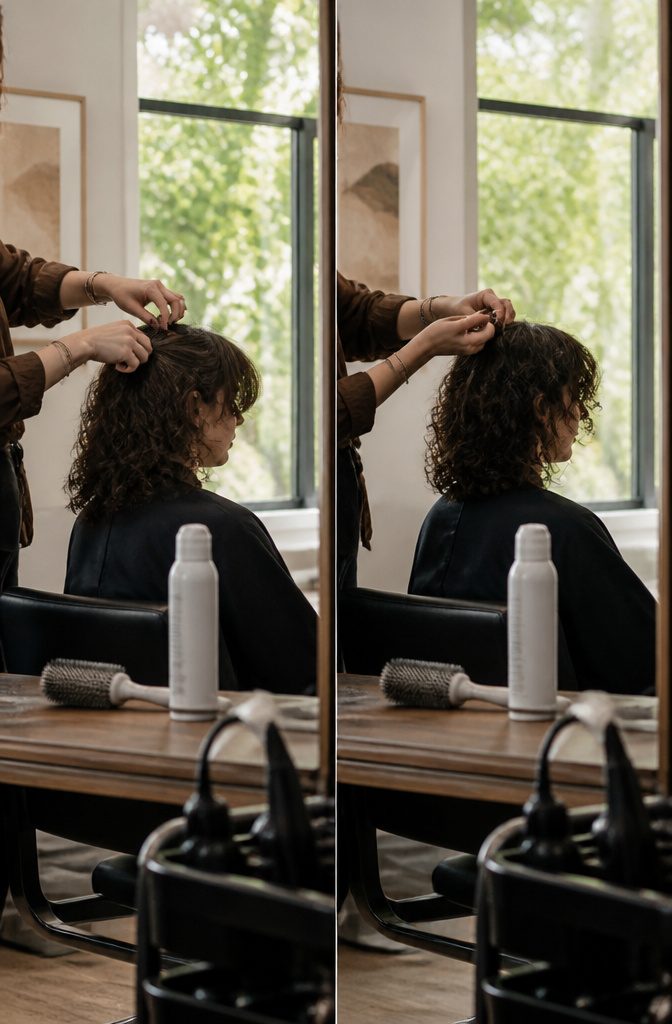
Curtain bangs flatter almost every face shape, which explains a lot of the style’s popularity.
Round faces get an elongating effect from the longer sides, square faces see softened edges from the wispy texture, and oval faces can wear any variation.
Heart-shaped faces benefit from a center part that balances the forehead with the jawline. The same flexibility extends to hair texture: straight, wavy, and curly hair all work, though styling technique changes with each.
Fine or thin hair needs a different approach. Keep the length between cheekbone and jaw rather than going very short or very long, since fine hair may not hold the shape at the extremes.
Light layers help create movement and fullness where the hair naturally sits flat. A round brush or texturizing spray gives the volume that fine hair doesn’t produce on its own.
For curly hair, dry cutting matters.
Curls shrink as they dry, so cutting while wet risks bangs that end up much shorter than planned. Cutting on dry, styled hair lets the stylist see the true length and give each curl individual attention for the softest result.
What to Ask for at the Salon
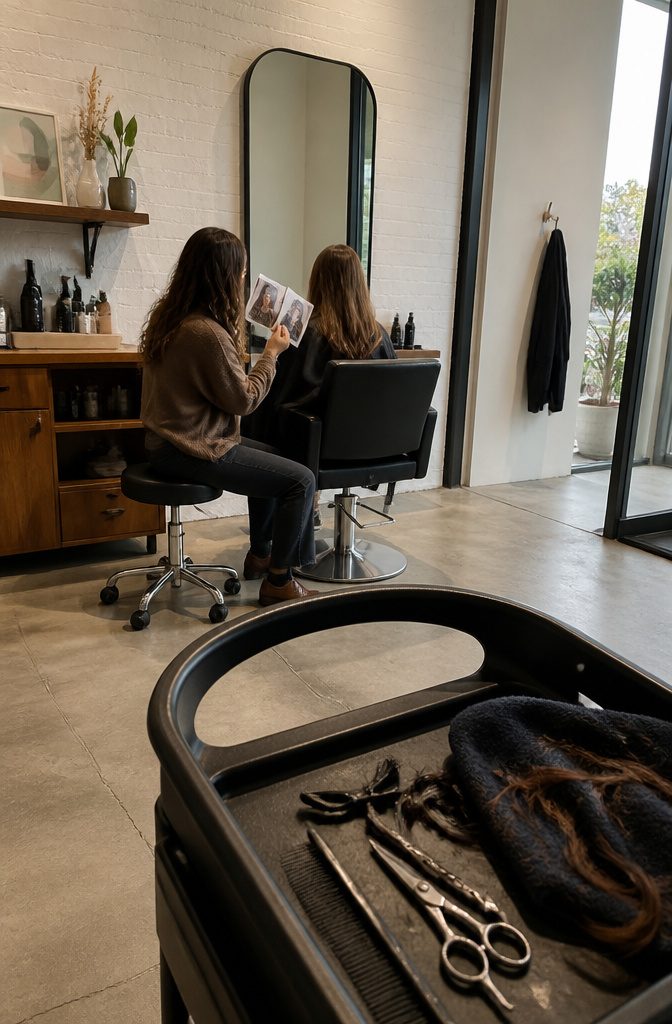
Bring reference photos that show exactly what you want, because your version of curtain bangs and your stylist’s might not match.
Point out what you like about each image and what you want to avoid. Then walk through length, whether the bangs should blend into layers or stand alone, and how thick you want them.
If you air-dry your hair or always blow it straight, say so. Daily styling habit changes where your stylist makes the cut.
Ask to start longer if you’re unsure.
Growing out a too-short fringe takes patience, and trimming shorter later is fast. Describing them as long, soft bangs that part in the middle or slightly to the side will get you there, though curtain bangs is now widely understood.
A stylist may start cutting from the tip of the nose and work toward the cheekbones, adjusting for your texture and thickness as they go.
How to Cut Curtain Bangs
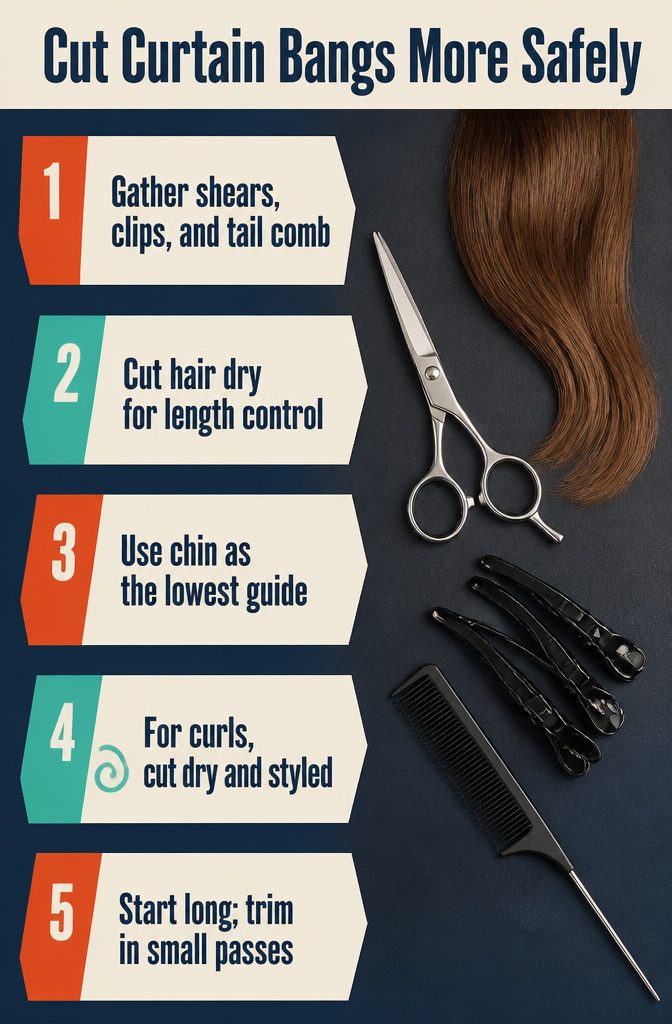
Most sources point you to a stylist for this.
A few note that curtain bangs frame your face in a way the rest of your hair does not, which means a bad cut is obvious and most stylists will trim bangs for free between appointments.
If you are determined to try it at home anyway, the method matters.
You need hair shears, hair clips, and a tail comb. Cut on dry hair.
Wet hair looks longer and shrinks as it dries, so dry cutting gives you better length control. Use your chin as a guide and do not trim above it.
For curly hair, the rule is stricter: cut on dry, styled hair so you can see the true length. Curls spring up significantly when dry, and cutting wet can leave you much shorter than you planned.
Start longer than your target and trim gradually. Fuller bangs start further back on the head, so the section you pull forward controls the density.
How to Style Them with a Round Brush
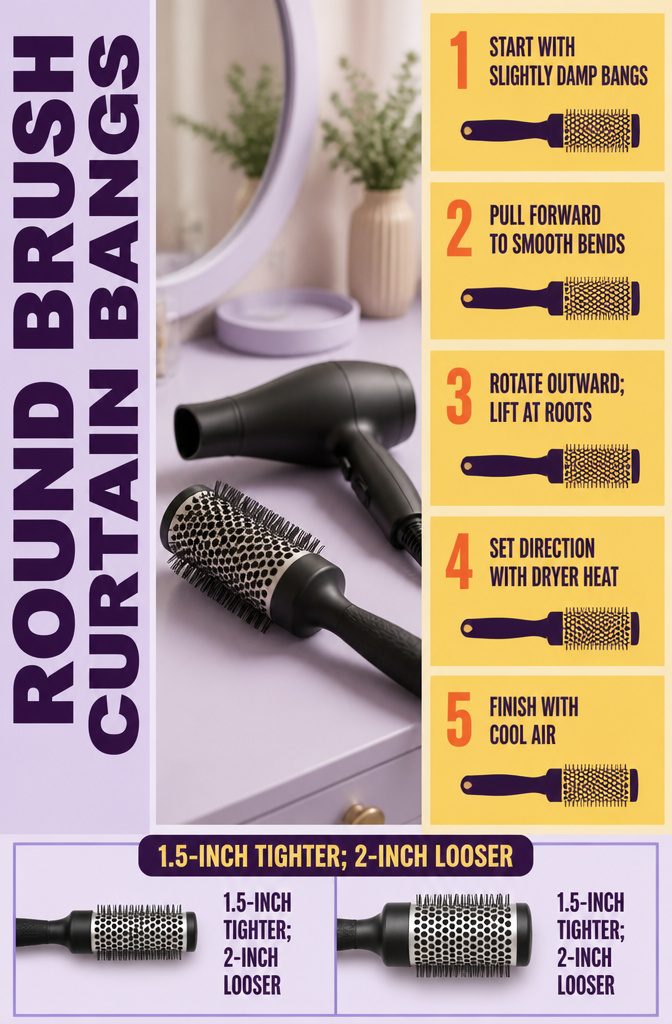
How to Style Them with a Round Brush
- Start with slightly damp hair and spray the bangs lightly if they’ve dried completely.
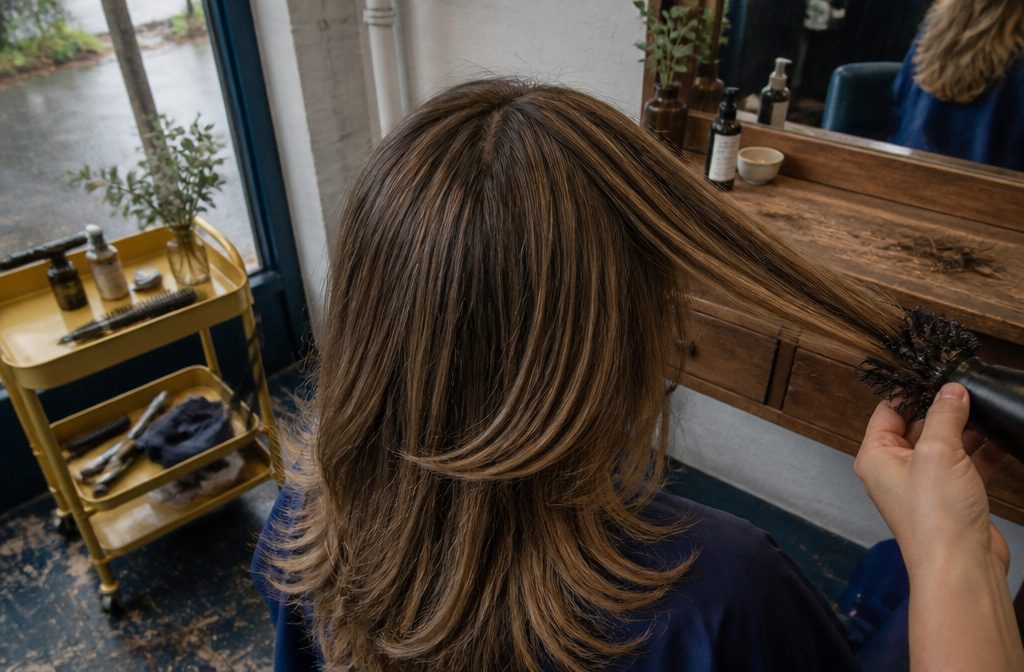
- Place a round brush underneath the fringe and pull forward first to smooth out any cowlicks or natural bends.
- Rotate the brush outward while directing the blow dryer toward the roots, lifting as you go. The heat sets the direction and creates volume at the base.
- Finish with cool air to lock the shape in place. The ends should curve softly away from your face rather than sitting flat or stiff.
Brush size matters.
A 1.5-inch barrel works for shorter curtain bangs or a tighter curl. A 2-inch barrel suits longer bangs or a looser, beachier finish.
The first few tries can take 10 minutes. Once the motion feels automatic, most people finish in one to two minutes.
Styling Without Heat
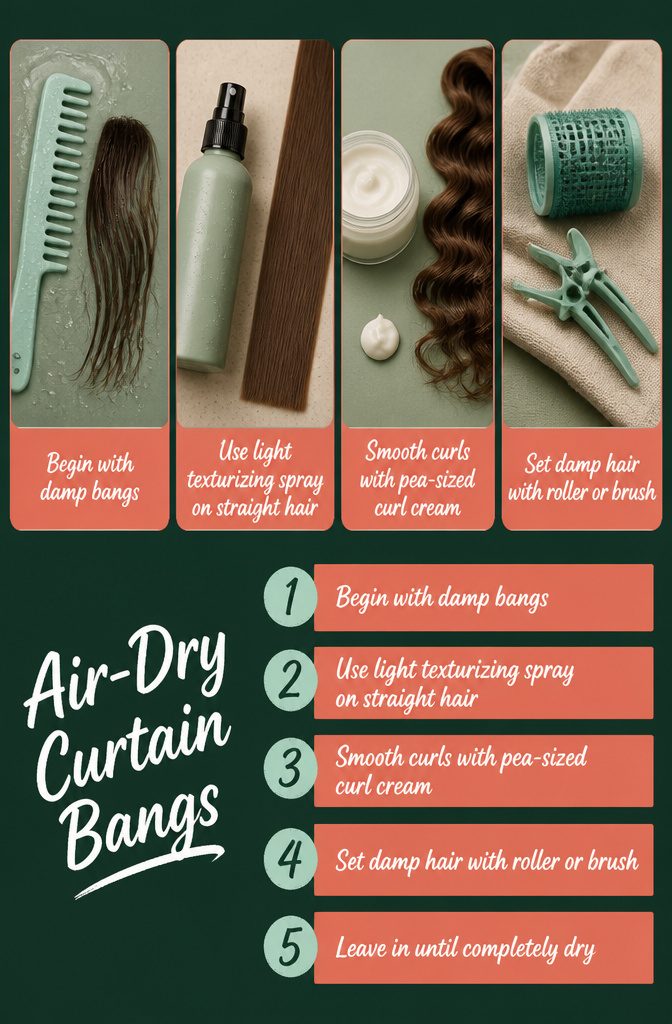
If your curtain bangs are cut well, you should be able to air-dry them without heat and still get that soft, lived-in look.
Straight hair benefits from a lightweight texturizing spray like the Tresemmé A-List Collection Dry Texturizing Spray or the Oribe Dry Texturizing Spray, both of which add hold and lift at the roots without weighing the fringe down.
Curly or wavy hair can air-dry with a pea-sized amount of curl cream applied to damp bangs. The Innersense Quiet Calm Curl Control and Isima Curls Don’t Lie Curl Perfecting Cream both enhance texture and smooth frizz.
For more control, place a Velcro roller or round brush at the front hairline while the hair is still damp, then leave it in until the hair dries completely.
The roller lifts the roots and bends the ends outward, which works especially well on straight hair that struggles to hold any styling.
Small clips can hold the bangs outward while they dry if you prefer not to use a roller. Some people sleep in heatless rollers and wake up with the curtain shape already set.
Straightening, Curling, and Other Tools
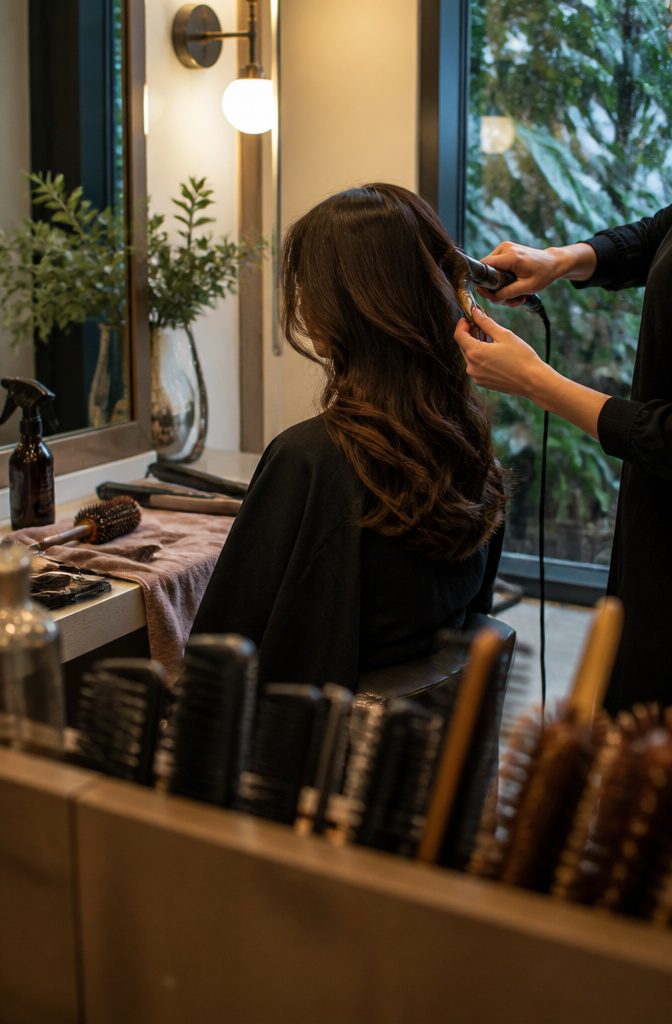
A flat iron straightens curtain bangs and smooths flyaways in a single pass. Hold each section upward, clamp the iron horizontally at the root, then twist your wrist away from your face as you glide down.
The result is sleeker and sits flatter than a round brush gives you, and the move takes seconds once the iron is warm. Keep the temperature low to avoid scorching short hair.
A medium-barrel curling iron adds lift and fullness without the stiff bounce of a small barrel.
Wrap each side loosely around the iron and hold for only a few seconds, then brush the curl outward so it relaxes into a soft curve rather than a tight spiral.
The technique works best on longer curtain bangs that blend into face-framing layers.
Before you pick up either tool, mist damp bangs with Redken Guts 10 Volume Spray Foam or Virtue Volumizing Primer at the root.
Both give you grip so the bangs stay where you set them instead of falling flat an hour later.
After heat styling, a texturizing spray pinches the shape into place, and Virtue Frizz Block Smoothing Spray keeps humidity from undoing the work. Finish with a light hold spray if the bangs tend to drift.
Trim Schedule and Daily Upkeep
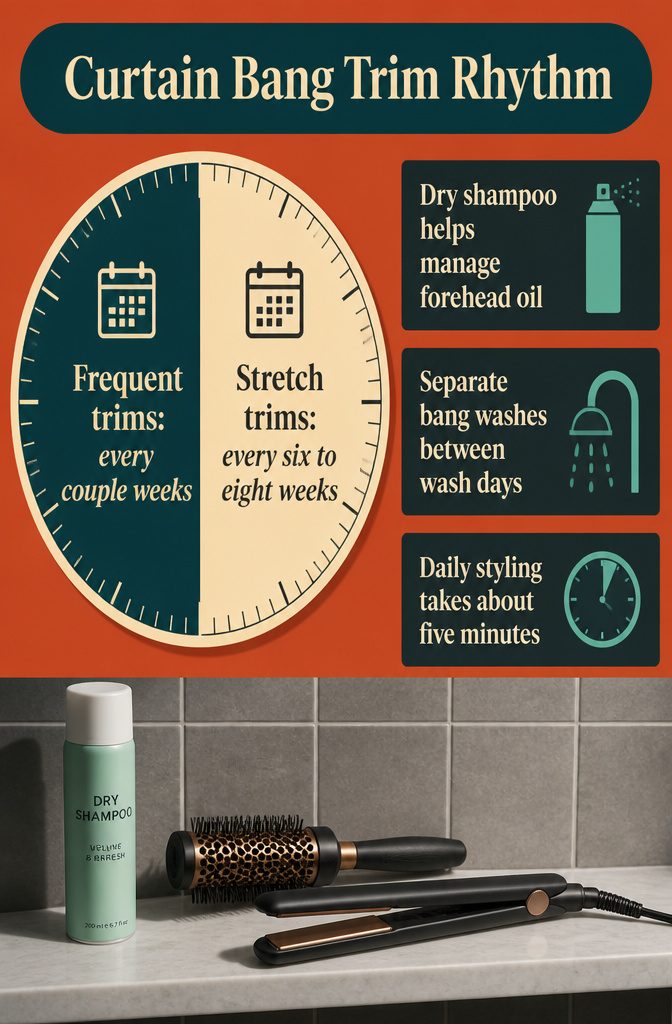
Curtain bangs grow faster than the rest of your hair because they frame your face, so what feels like the right length one week can look too long the next.
Recommendations for trims range from every couple of weeks at the most frequent end to every six to eight weeks if you’re willing to let them grow out a bit before reshaping.
I’ve seen everything in between: every three to four weeks, every four to six weeks, and every five to six weeks all show up as standard advice.
The tighter schedule keeps the shape sharp, the longer one lets you stretch salon visits if you’re comfortable trimming at home or can live with bangs that sit a little heavier.
Between trims, the daily work is mostly about grease.
Bangs sit against your forehead, so they pick up oil faster than the rest of your hair. Dry shampoo becomes part of the morning routine, and some people wash their bangs separately rather than waiting for a full wash day.
Styling itself takes about five minutes once you know what you’re doing, usually with a round brush or a quick pass with a straightener to set the part and keep the curtain effect from flattening out.
Growing Out Curtain Bangs
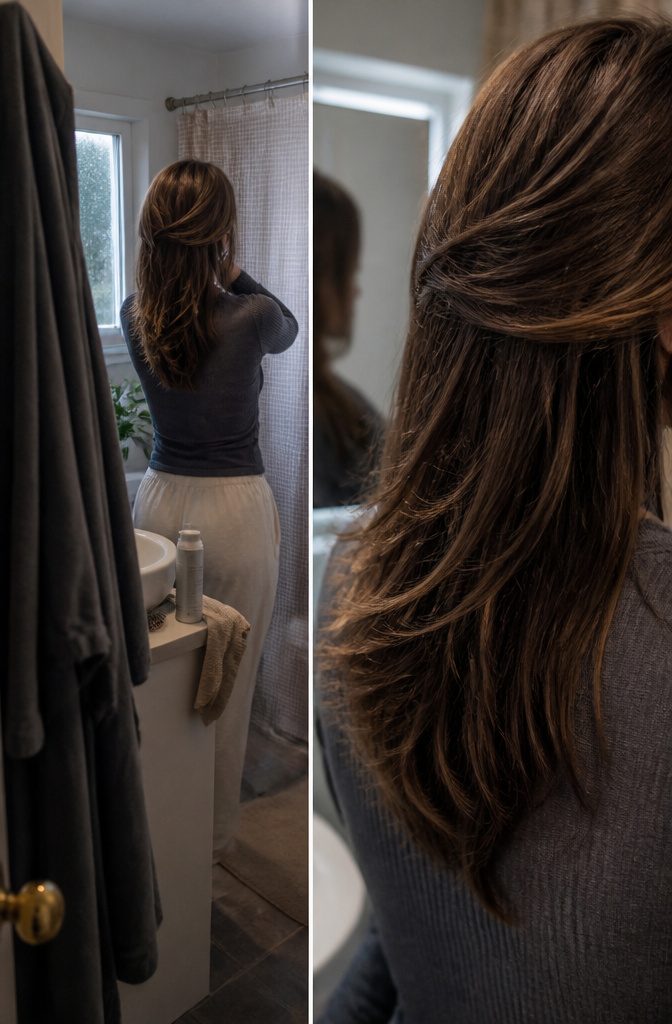
Curtain bangs are easier to grow out than most fringe styles because the longer sides blend naturally into your existing layers as they lengthen.
There’s no harsh in-between stage where the fringe sits at an awkward length and refuses to cooperate.
Ask your stylist to gradually layer and soften the fringe into the rest of your hair as it grows.
Between appointments, a side part hides the transition better than a center part, and tucking one side behind your ear keeps the longer pieces out of your face.
Sea salt spray or dry shampoo adds texture that helps the growing fringe blend with the rest of your lengths instead of hanging separately.
Growing from just below the eyebrows to cheekbone length takes patience, but the process is gentler than growing out a blunt fringe.
The curtain shape means you’re working with a gradual taper from the start, not fighting a single uniform length.
Face-Framing Layers Versus Curtain Bangs
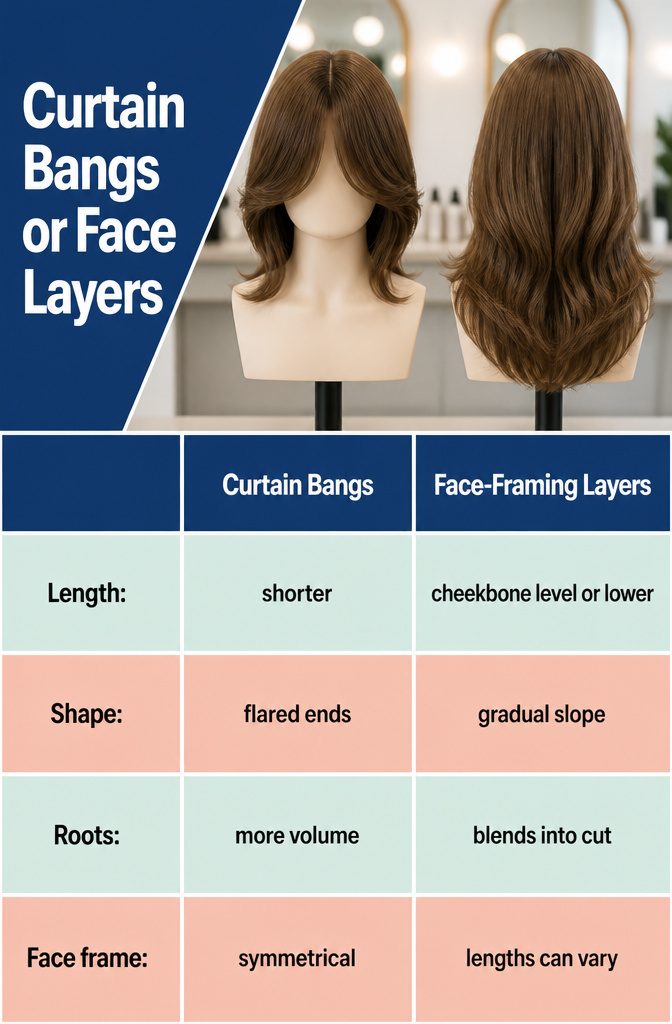
The difference comes down to length and how much shape you cut in.
Curtain bangs sit shorter, flare out toward the ends, and carry more volume at the roots. Face-framing layers slope down gradually from cheekbone level or lower and blend into the rest of the cut without stopping at one defined length.
Curtain bangs often stand alone as the only layer around the face, creating symmetry on both sides. Face-framing layers taper along each side and can be cut to different lengths depending on what contours your face.
You can wear both at once. Curtain bangs give you the shaped, voluminous piece that parts in the center, and longer face-framing layers carry movement through the rest of the cut.
The combination works when you want defined bangs without losing the softness that layers add from the cheekbone down.
Wispy, Full, Layered, and Other Variations
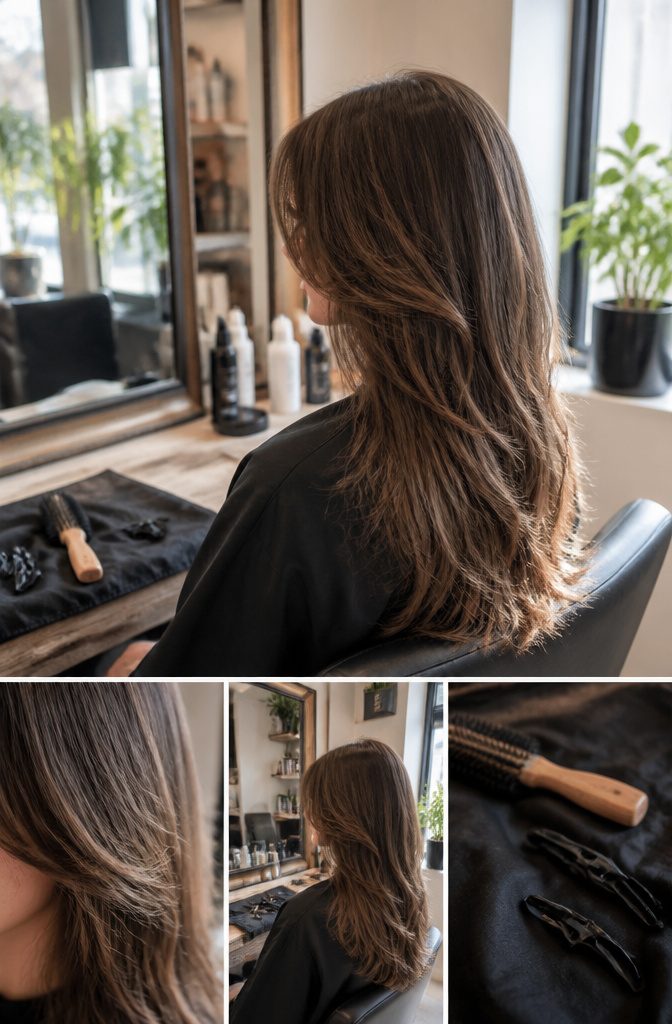
Curtain bangs come in several versions, and the weight of each one changes how it sits on your face and blends with the rest of the cut.
- Wispy curtain fringe is a mid-length option that skims the cheekbones, with lightly feathered ends that frame the face without bulk. Good for fine hair or anyone trying curtain bangs for the first time.
- Full curtain bangs are thicker and more structured, parted down the center with longer sides. They carry more weight than wispy bangs, which use thinner, lighter sections for a softer effect.
- Layered curtain fringe cuts seamlessly into medium to long haircuts, adding shape and volume without looking heavy. Best for thick hair that needs weight lifted around the face.
- Textured versions bring movement and definition, especially useful on extra-long hair where the fringe adds shape without letting the length weigh down your features.
- Short curtain bangs sit higher on the forehead and work when you want the parted look but less length sweeping past the cheekbones.
Frequently Asked Questions
What are curtain bangs?
Curtain bangs are a face-framing fringe parted in the middle or slightly off-center, cut shorter at the middle of the forehead and longer toward the sides.
The shortest pieces usually sit around the brows, while the longest ones sweep down to the top of the cheekbones. The shape mimics how a curtain drapes open, which gives them their name.
What face shape do curtain bangs suit?
Curtain bangs flatter almost every face shape.
Round faces get an elongating effect from the longer sides, square faces see softened edges from the wispy texture, oval faces can wear any variation, and heart-shaped faces benefit from a center part that balances the forehead with the jawline.
How do you style curtain bangs?
Place a round brush underneath the fringe, pull forward to smooth cowlicks, then rotate the brush outward while directing the blow dryer toward the roots.
Finish with cool air to lock the shape in place. The first few tries can take 10 minutes, but most people finish in 1 to 2 minutes once the motion feels automatic.
How often should you trim curtain bangs?
Trim curtain bangs every couple of weeks to every 6 to 8 weeks, depending on how sharp you want the shape to stay.
The tighter schedule keeps the cut precise, while the longer one lets you stretch salon visits if you’re comfortable trimming at home or can live with bangs that sit a little heavier.
Are curtain bangs high maintenance?
Curtain bangs require regular trims and daily upkeep, mostly managing oil since they sit against your forehead.
Styling takes about 5 minutes once you know what you’re doing, usually with a round brush or a quick pass with a straightener to set the part and keep the curtain effect from flattening out.
What is the difference between curtain bangs and wispy bangs?
Curtain bangs are usually thicker and more structured, parted down the center with longer sides.
Wispy bangs use thinner, lighter sections for a softer effect. Both frame the face, but wispy bangs carry less weight and volume.
Can you cut curtain bangs on curly hair?
Yes, but cut on dry, styled hair so you can see the true length.
Curls shrink as they dry, so cutting wet risks bangs that end up much shorter than planned. Start longer than your target and trim gradually.
What is the difference between face-framing layers and curtain bangs?
Curtain bangs sit shorter, flare out toward the ends, and carry more volume at the roots.
Face-framing layers slope down gradually from cheekbone level or lower and blend into the rest of the cut without stopping at one defined length. You can wear both at once for defined bangs with softness from the cheekbone down.
How do you grow out curtain bangs?
Ask your stylist to gradually layer and soften the fringe into the rest of your hair as it grows.
Between appointments, a side part hides the transition better than a center part, and tucking one side behind your ear keeps the longer pieces out of your face.
The longer sides blend naturally into existing layers, so there’s no harsh in-between stage.