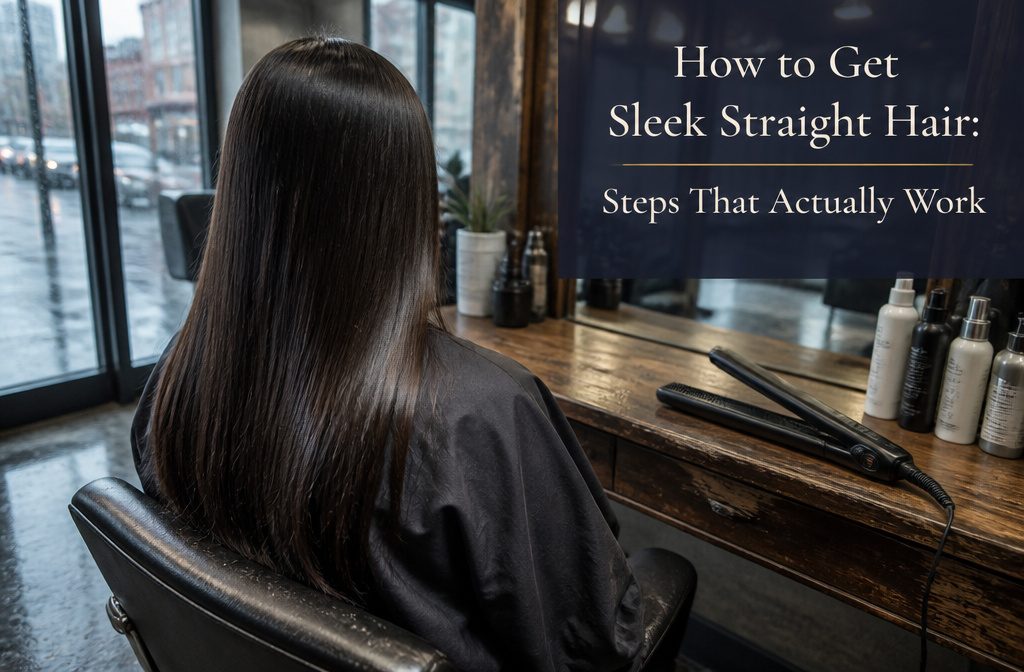
A flat iron at 300°F or higher can pull hair straight in one pass, but the finish only lasts until humidity or friction pull strands back toward their natural texture.
The step most people skip is the leave-in conditioner and heat protectant layered on before the iron touches hair; without that base, the cuticle lifts and frizzes by midday no matter how many times you straighten it.
1. Choose Your Straightening Method
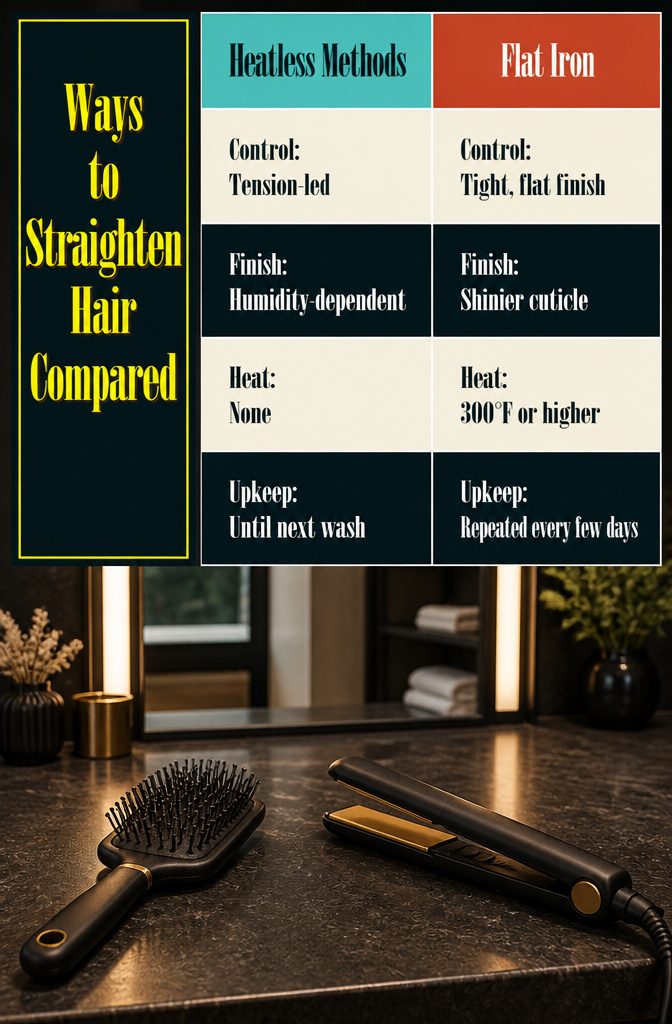
The first fork is heat or no heat.
Wrapping damp hair in a silk scarf overnight or smoothing it with tension rollers can coax fine or wavy hair straight without a flat iron, and the result lasts until the next wash if humidity stays low.
Coarser or tighter curl patterns need either more time under tension or actual heat to break the hydrogen bonds that hold the wave.
Among heat methods, blow-drying with a paddle brush gives the most control over volume and root lift, while a flat iron pulls hair tighter and flatter.
A flat iron also seals the cuticle in one direction, which is why it tends to look shinier. The downside is direct heat at 300°F or higher, repeated every few days for hair that reverts quickly.
Salon treatments bypass the daily styling altogether. Keratin smoothing, Japanese straightening, and similar processes restructure the hair for anywhere from six weeks to several months, depending on the formula and how tightly the hair curls naturally.
The time saved each morning is real, but so is the upfront cost and the commitment to a look that grows out rather than washes out.
2. Prepare Hair With Product and Detangling
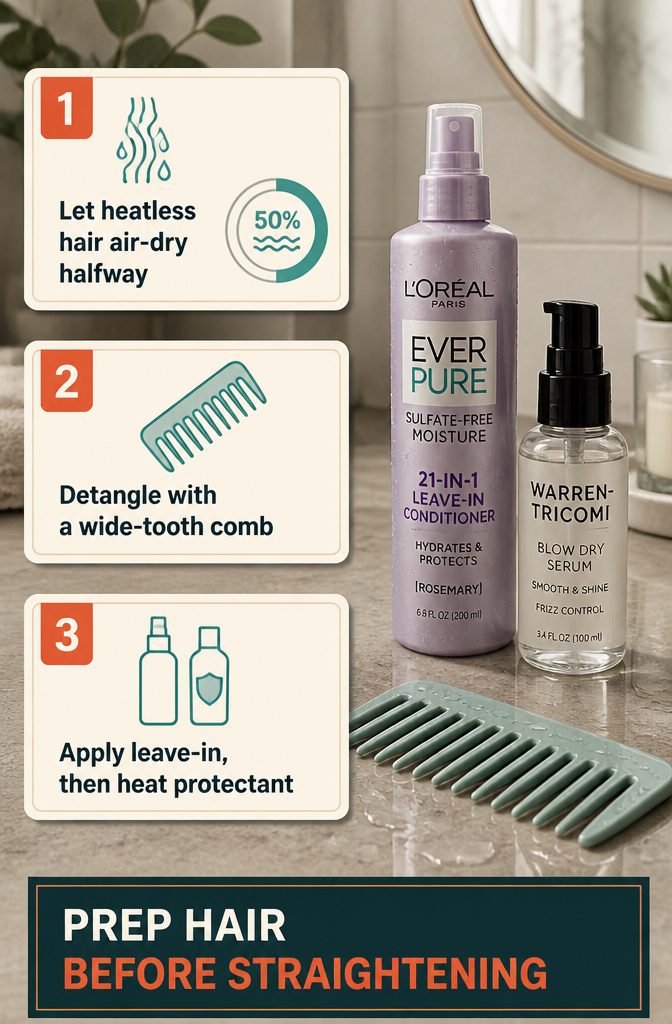
- Start with the right texture for your method. Flat irons work on completely dry hair, while wet wrapping, buns, rollers, and cool-air drying all need damp or partly dry strands. If you’re going the heatless route, let your hair air-dry until it’s about halfway there before you start.
- Detangle with a wide-tooth comb to remove knots and cut down on breakage. This step matters more than it sounds like it does; trying to straighten tangled hair just moves the frizz around.
- Layer on moisture and protection. A leave-in conditioner locks in hydration and adds shine. The L’Oréal Paris EverPure Sulfate-Free Moisture 21-in-1 Leave-In Conditioner covers both. If you’re flat ironing, add heat protectant over the leave-in. For blow-drying, a serum like the Warren-Tricomi Blow Dry Serum seals the cuticle and controls frizz.
Lock in moisture and shine with this lightweight conditioning treatment, which nourishes hair and restores hydration.
— E! News
That baseline matters whether you’re using heat or not. Skipping product prep shows up as frizz by midday.
3. Divide and Work in Sections
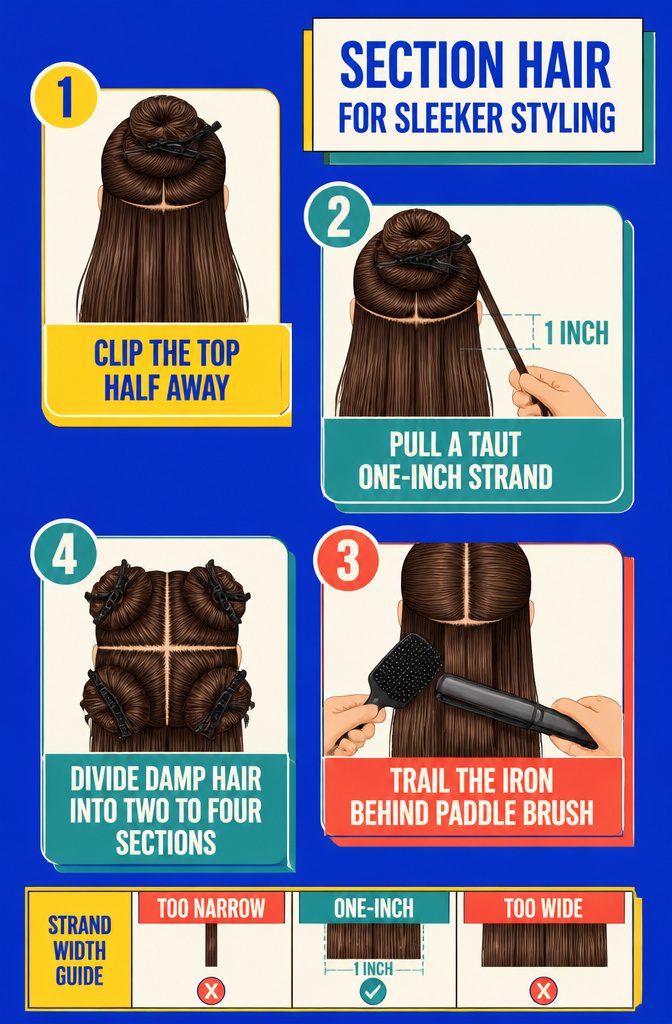
- Clip the top half of your hair out of the way and work with the lower section first. This keeps loose hair from mixing back into strands you already straightened.
- For heat styling, pull a one-inch strand taut and run your flat iron from roots to ends in one smooth pass. Smaller sections mean more passes and more time; wider sections miss spots and leave waves.
- Follow the iron with a paddle brush for extra tension. Position the brush at the roots, pull downward, and trail the flat iron just behind it. The brush holds the strand flat while the plates seal it smooth.
- For cool-air drying, divide damp hair into two to four sections and clip what you are not working on. Use a boar bristle brush to smooth each section from roots to ends as you blow-dry on the cool setting. This takes longer than hot air but cuts heat damage.
- Heatless alternatives include wrapping damp hair around your head and pinning it flat, securing it in a low bun, or placing large rollers through one-inch sections. Banding uses elastics spaced down each section overnight to stretch and straighten without heat.
4. Straighten With Heat or Heatless Tension
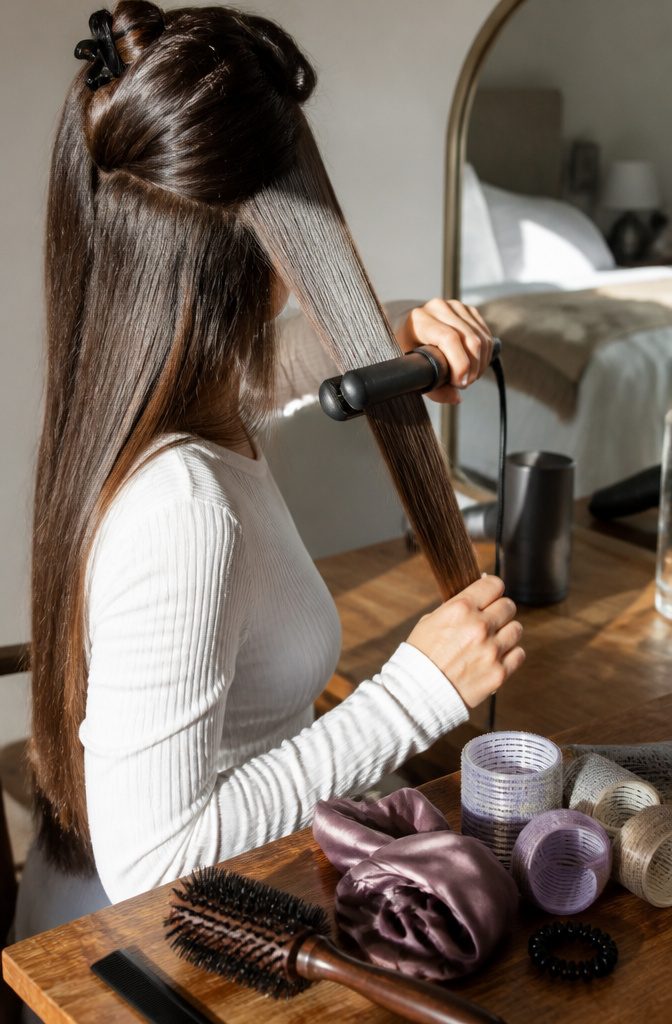
The flat iron remains the fastest route to stick-straight hair if you can handle the heat.
Work with one-inch strands secured between ceramic plates and slide the tool from roots to ends in a single pass. Smaller sections take longer but give you more control over stubborn waves.
Cool-air blow-drying splits the difference. You’re still using a dryer, but the cool setting cuts the risk of heat damage while a boar bristle brush pulls each section taut as you work from roots to ends.
It takes longer than a standard blowout, so factor in the extra minutes before you commit on a busy morning.
Heatless methods ask for patience but skip the damage entirely. Overnight wrapping, wet wrapping, and banding all work by holding damp hair under tension until it dries straight.
Extra-large rollers stretch hair around a wide barrel just once rather than wrapping it multiple times, so you get a smooth bounce instead of curl.
A slicked-back bun does the same job for hair that starts straight and only needs to stay that way.
5. Finish for Shine and Frizz Control
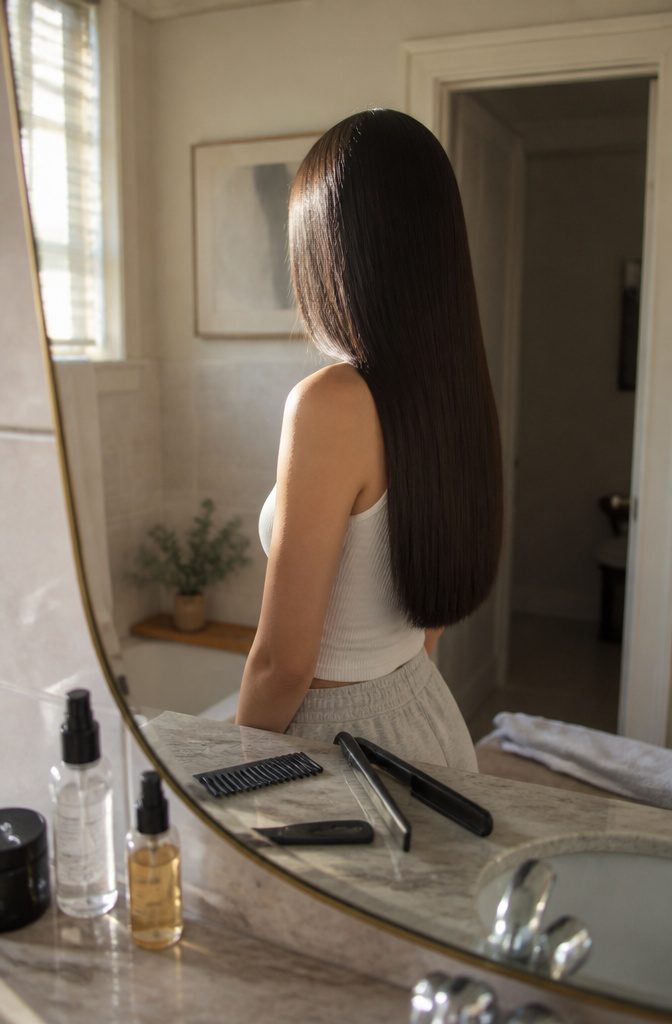
The serum or smoothing cream you choose last dictates whether the finish holds or frizzes an hour later. I run a lightweight leave-in through damp hair before heat styling to seal the cuticle and lock down flyaways.
The L’Oréal Paris Elvive Dream Lengths Frizz Killer Leave-In Serum works when wrapping hair flat to dry, and the Warren-Tricomi Blow Dry Serum resists humidity well enough that the look survives a walk outside.
For slicked-back styles, gel gives that wet-look shine once the hair is already straightened.
Comb it through smooth, set with a flat iron first, then add the product. Fine hair benefits from a volumizing gel like the Shu Uemura Fiber Lift at the root before blow-drying, so the sleekness doesn’t collapse by noon.
Conditioners and sprays nourish without weight, but they won’t tame frizz the way a serum does when you need the finish polished.
6. Keep It Straight Between Styling Sessions
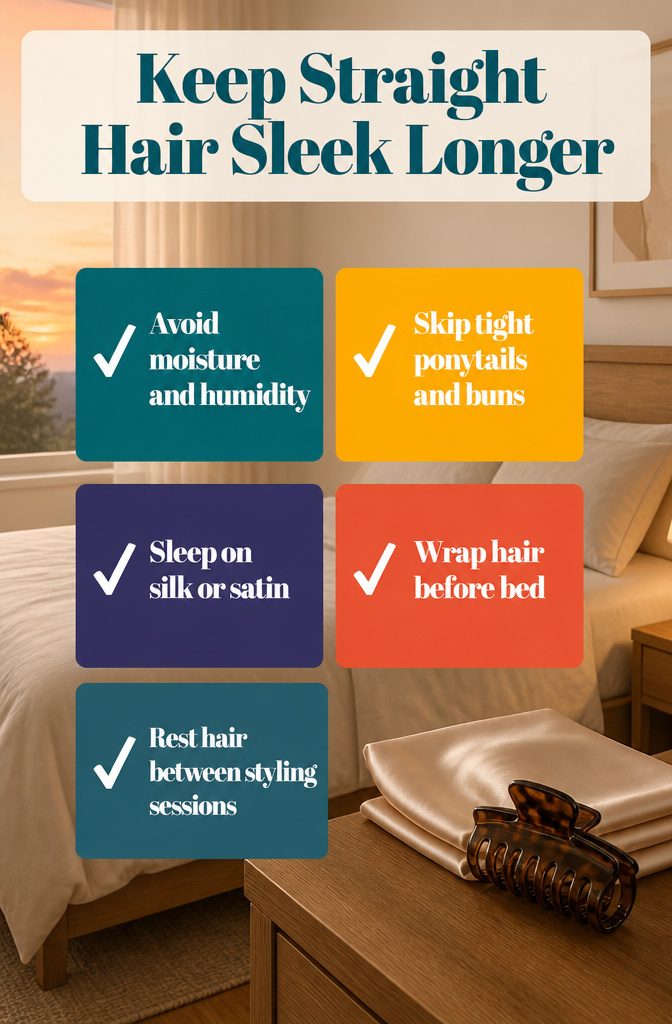
Getting your hair straight is one thing. Keeping it that way takes a few deliberate moves.
Avoid moisture and humidity wherever you can. Water causes frizz and pulls strands back toward their natural wave or curl pattern, even after a solid straightening session.
- Skip tight ponytails and buns. Hair elastics leave a dent in straight strands. If you need hair off your face, twist lengths loosely and clip them with a large claw clip.
- Switch to silk or satin pillowcases to cut down on friction while you sleep. Cotton roughens the cuticle and invites frizz overnight.
- Wrap your hair before bed to lock in the sleek finish. Twist damp or dry hair into a low bun at the nape, secure it with a silk or satin scrunchie, and let it sit until morning.
- Give hair occasional rest from repeated manipulation. Heatless straightening can be done as often as you need it, but back-to-back sessions without a break will stress the strand over time.
Heatless Straightening Methods That Work
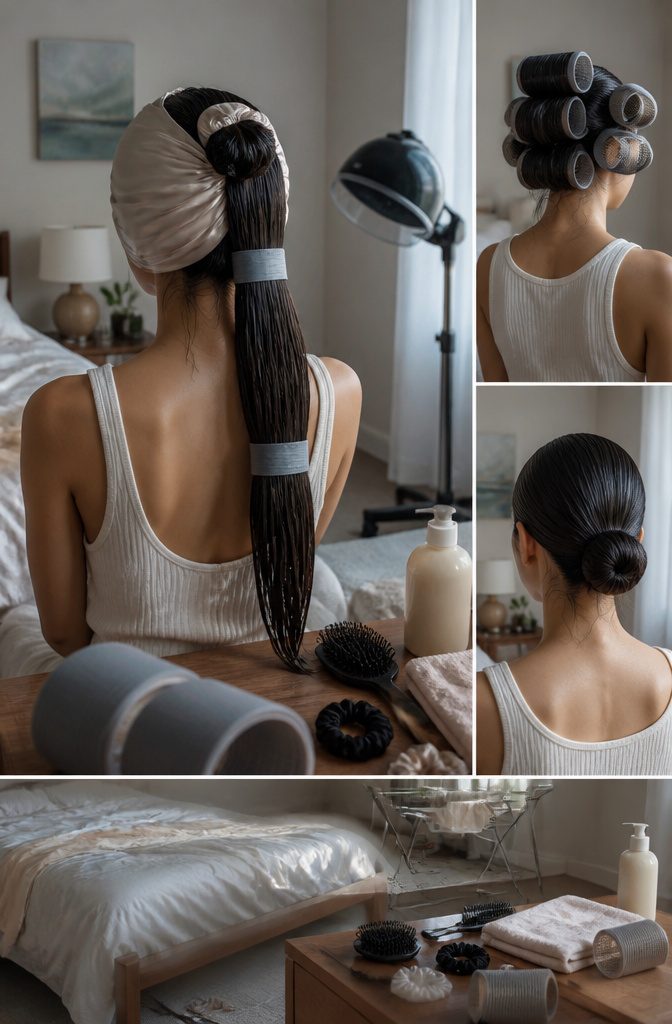
If you’d rather skip the flat iron, these seven methods pull hair straight through tension, wrapping, or very slow air-drying.
- Smoothing products alone: leave-in serums and creams can relax light waves on fine or already-smooth hair, but they won’t budge coarse or tightly curled texture without help from one of the methods below.
- Overnight wrapping: brush damp hair flat against your head in one direction, secure with a silk scarf, and sleep on it. Works best on relaxed or lightly textured hair that holds a set.
- Wet wrapping: same idea, but you sit under a hooded dryer or let it air-dry completely before unwrapping. Faster results, still gentler than direct heat.
- Cool-air blow-drying: detangle, apply leave-in conditioner, let hair dry halfway, then finish with a brush and your dryer set to cool. It takes longer than a hot blowout, but leaves hair shiny and smooth with less risk of damage.
- Extra-large rollers: the rollers need to be wide enough that hair wraps around only once or twice, not multiple loops. Roll damp hair from ends to roots, clip at the crown, leave overnight or until completely dry. You’ll get a smooth, bouncy finish without curl.
- Banding: stretch hair by wrapping small elastics down the length of each section as it dries. This is better for preserving length on textured hair than for creating sleek, straight results.
- Slicked-back bun: pull damp hair into a tight, high bun and let it dry fully before releasing. The tension smooths the hair, though the ends may still wave.
Salon Treatments That Last Weeks or Months
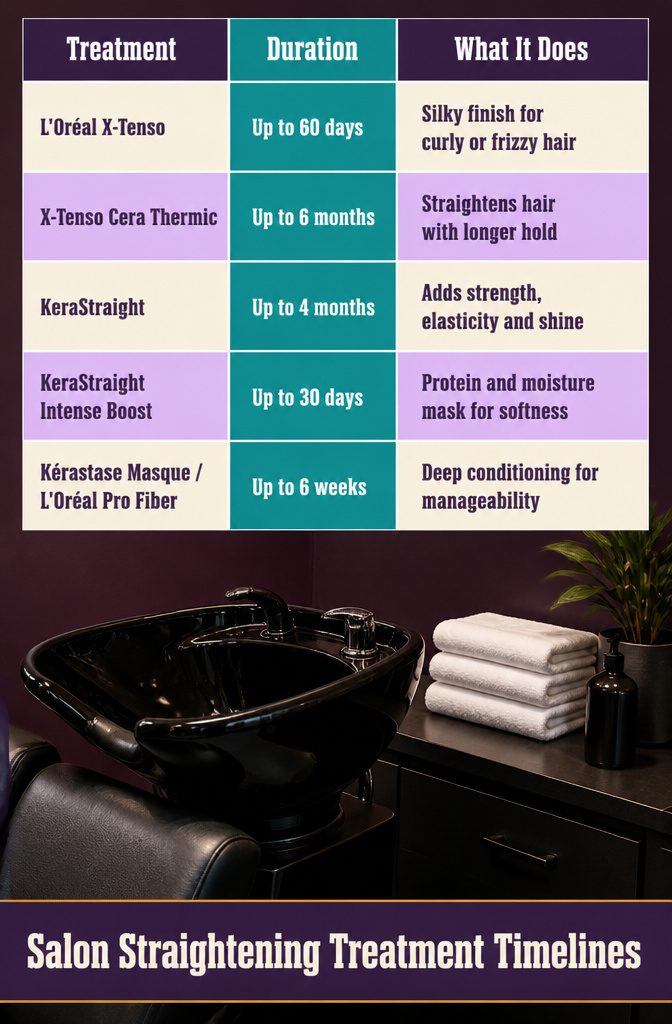
Thermal reconditioning, Japanese straightening and keratin smoothing treatments bypass the daily flat iron and hold for weeks to months.
The commitment varies. L’Oréal X-Tenso lasts up to 60 days, X-Tenso Cera Thermic holds for up to six months, and KeraStraight stretches to four months with improved elasticity and shine.
For shorter intervals, KeraStraight Intense Boost gives 30 days, while Kérastase Hair Masque and L’Oréal Pro Fiber conditioning treatments penetrate deeper than home products and stay manageable for up to six weeks.
| Treatment | Duration | What It Does |
|---|---|---|
| L’Oréal X-Tenso | Up to 60 days | Smooths curly or frizzy hair to silky finish |
| X-Tenso Cera Thermic | Up to 6 months | Straightens hair with longer hold |
| KeraStraight | Up to 4 months | Adds strength, elasticity and shine |
| KeraStraight Intense Boost | Up to 30 days | Protein and moisture mask for softness |
| Kérastase Masque / L’Oréal Pro Fiber | Up to 6 weeks | Deep conditioning for manageability |
Deep conditioning is recommended every 6–8 weeks between treatments to keep hair from drying out.
What to Look for in a Flat Iron
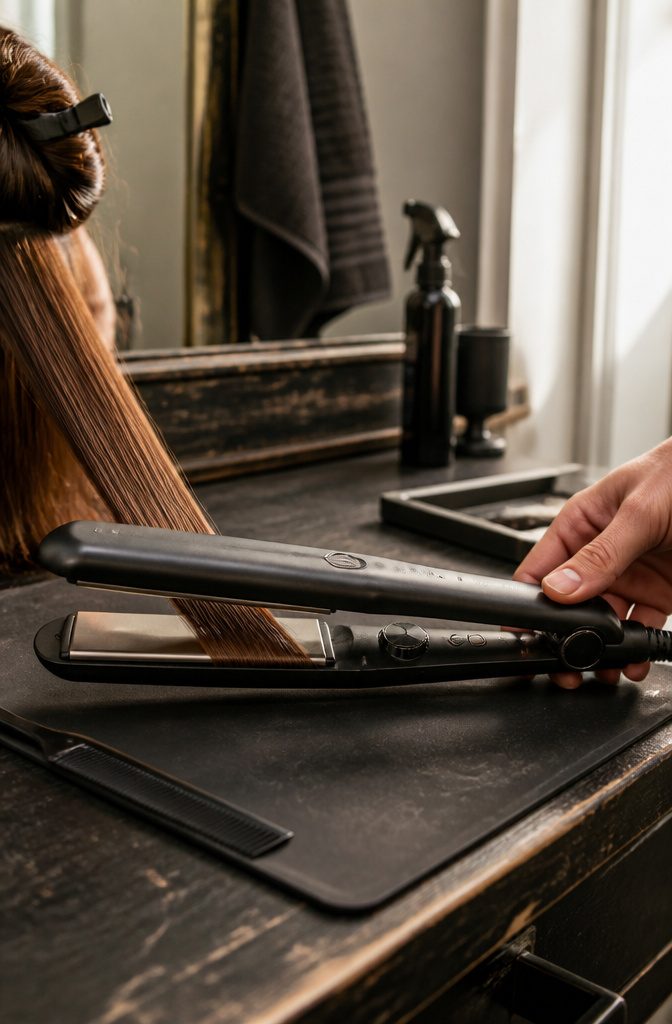
A flat iron is more than a heating element between two plates. The details below separate tools that straighten cleanly from ones that snag, scorch, or leave creases.
- Floating ceramic or titanium plates that shift slightly to grip hair evenly, rather than rigid plates that create pressure points and bend marks.
- Adjustable temperature from around 265°F to 450°F so you can match heat to your texture: fine hair straightens below 350°F, coarse or curly hair often needs 400°F or higher.
- Rounded outer edges that let you curve ends under or flip them out without a hard crease line.
- Ionic technology to seal the cuticle and cut static, though the plate material and temperature matter more for lasting smoothness.
- Dual voltage (100–240V) if you travel, and auto shut-off after an hour for peace of mind when you leave the house.
Products I Reach for by Hair Type
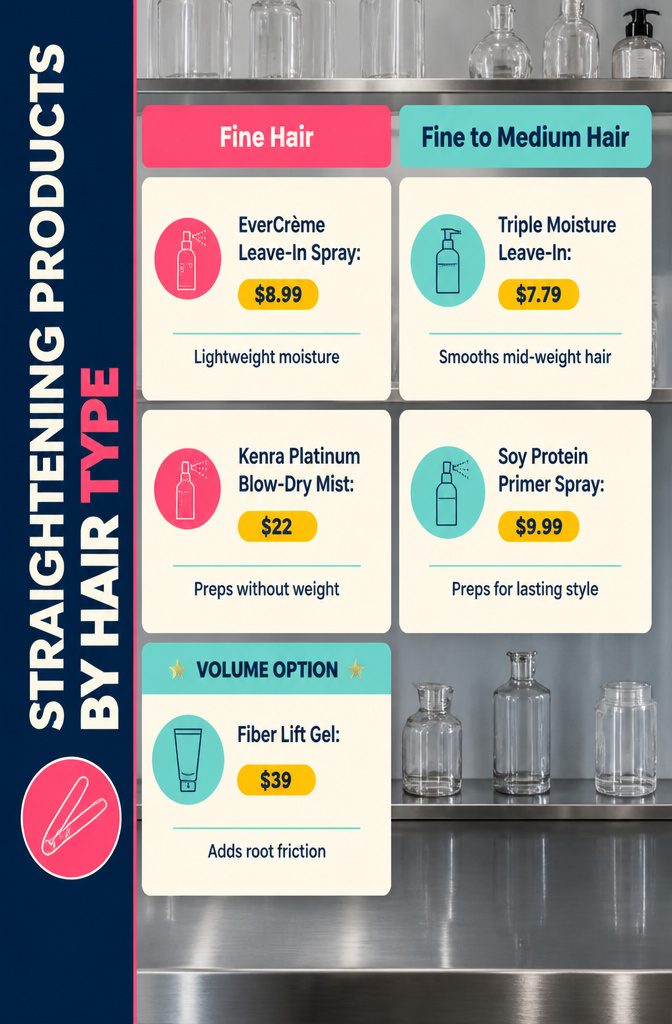
The product you need shifts with what your hair does under heat. Fine hair wants moisture that does not add weight, so I reach for L’Oréal EverCrème Leave-In Spray ($8.99) or Kenra Professional Platinum Blow-Dry Mist ($22) before the blow-dryer.
Both smooth without flattening the strand. If roots collapse by midday, Shu Uemura Fiber Lift Protective Volumizing Hair Gel ($39) builds friction at the scalp after drying and keeps lift through the evening.
| Hair Type | Product | Price | Why It Works |
|---|---|---|---|
| Fine | L’Oréal EverCrème Leave-In Spray | $8.99 | Lightweight moisture |
| Fine | Kenra Platinum Blow-Dry Mist | $22 | Preps without weight |
| Fine (volume) | Shu Uemura Fiber Lift Gel | $39 | Adds root friction |
| Fine to Medium | Neutrogena Triple Moisture Silk Touch Leave-In | $7.79 | Smooths mid-weight hair |
| Fine to Medium | Nuance Salma Hayek Soy Protein Primer Spray | $9.99 | Preps for lasting style |
For fine-to-medium density, Neutrogena Triple Moisture Silk Touch Leave-In Cream ($7.79) or Nuance Salma Hayek Soy Protein Primer Spray ($9.99) offer slightly more conditioning pull without dragging strands flat.
Damage Prevention While Straightening
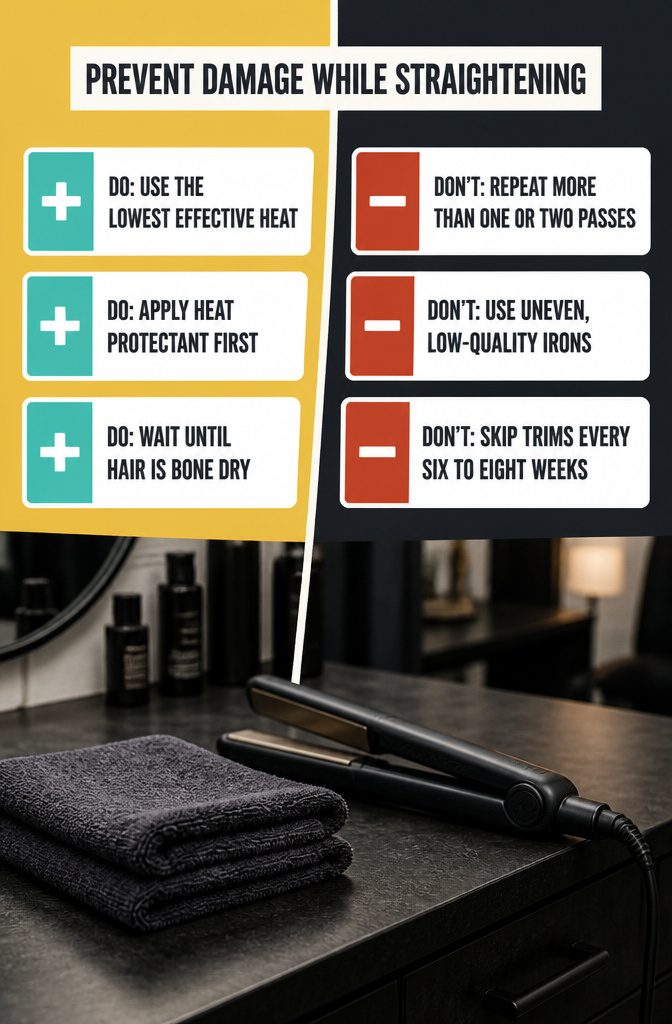
Heat ruins more straightening jobs than any other single mistake. The culprit is almost always one of three things: temperatures set too high, skipping heat protectant, or running the iron over hair that hasn’t dried completely.
- Excessive heat cracks the cuticle, letting moisture escape and weakening each strand. Lower the setting to the minimum that gets the job done in one or two passes.
- Skipping heat protectant leaves hair exposed to direct heat with no buffer. Apply it before you pick up the dryer or iron.
- Straightening damp or wet hair causes water inside the strand to expand rapidly, damaging hair from the inside out. Wait until hair is bone dry.
- Repeated passes over the same section compound the damage. One or two slow passes beat six quick ones.
- Low-quality flat irons heat unevenly and create hot spots that scorch without warning. Temperature control matters.
Split ends kill the sleek look, so book trims every six to eight weeks to keep ends clean.
How Hair Texture Changes the Approach
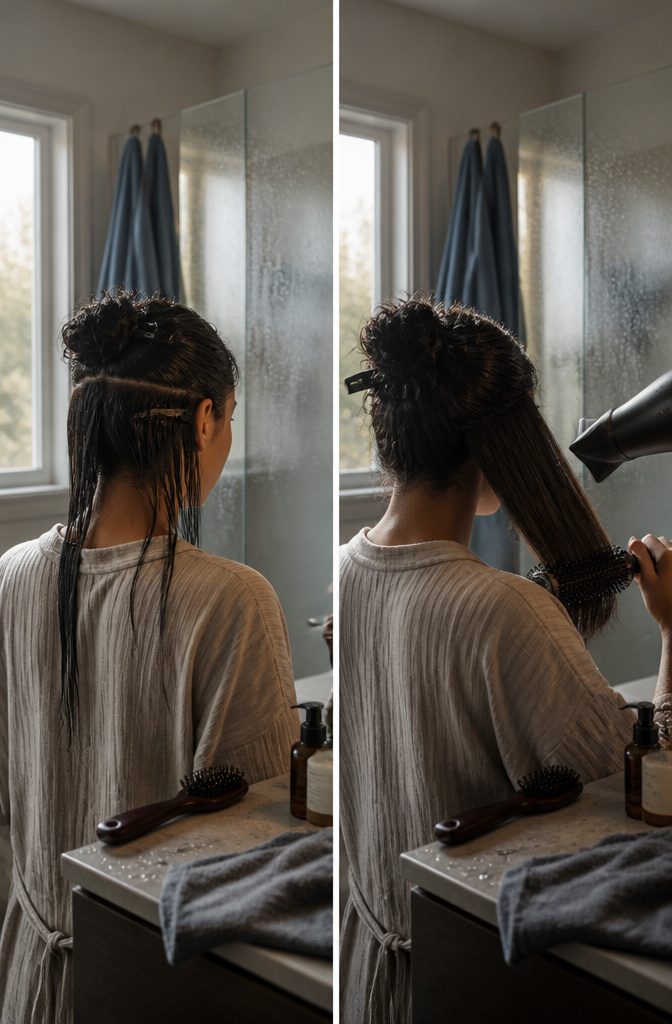
Fine hair can’t take as much heat as thick, coarse strands. If your hair is fine or color-treated, wet wrapping works well without risking damage.
Pin damp hair flat around your head, let it air-dry, and you get smoother results than you would with a hot tool cranked to four hundred degrees.
Wavy and curly textures respond better to wet wrapping than to dry wrapping because the moisture helps reset the pattern before you lock it in place.
Apply a smoothing leave-in before you wrap if frizz tends to show up halfway through the day.
Thick hair holds more water and takes longer to dry, so a blow dryer on a warm setting usually beats waiting hours for a wet wrap to finish. Coily hair benefits from tension during drying rather than heat alone.
Pull each section taut with a brush while you aim warm air down the shaft, and the combination of stretch and airflow flattens the cuticle without the concentrated heat a flat iron delivers.
Sleek Ponytails and Slicked-Back Styles
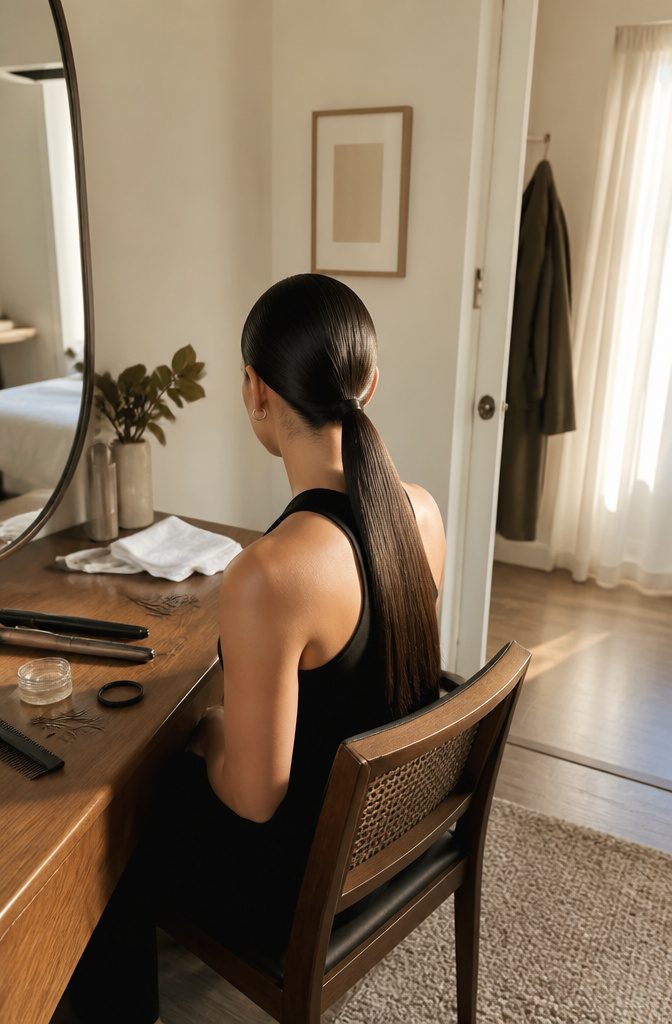
Once the hair is straight and smooth, you can push it all back from the face and slick it down for a wet-look finish or pull it into a low or side ponytail.
Both are trending right now and work well when it’s hot or you need something polished for work or evening.
For slicked-back hair, I brush through the straightened lengths one more time to make sure everything is smooth, then work gel through with a comb to coat each section evenly.
The gel gives that glossy, wet-look shine and holds the hair flat against the scalp without flyaways. It reads as deliberate rather than just tucked behind the ears.
Sleek ponytails sit at the nape or swept to one side, and the straightening step before you tie makes all the difference.
Hair that goes into the elastic already smooth stays that way, no fraying or kinking at the base. The look stays cool in summer and works whether you’re heading out or sitting through back-to-back meetings.
Frequently Asked Questions
What causes hair damage when straightening?
High heat cracks the cuticle and lets moisture escape, weakening each strand. Skipping heat protectant leaves hair exposed with no buffer, while straightening damp hair causes water inside the strand to expand and damage it from within.
Repeated passes over the same section and low-quality tools with uneven heating add to the problem.
Can you straighten hair without a flat iron?
Yes. Smoothing products, overnight wrapping, cool-air blow-drying, extra-large rollers, banding, and slicked-back buns all straighten hair through tension or slow drying instead of direct heat.
Fine or wavy hair responds well to wrapping methods, while thicker textures benefit from cool-air drying with a brush.
How do I maintain straight hair between styling sessions?
Avoid water and humidity, which pull strands back toward their natural wave pattern.
Skip tight ponytails that leave dents, sleep on silk or satin pillowcases to cut friction, and wrap your hair in a low bun before bed. Give hair occasional rest from repeated manipulation, even with heatless methods.
How often can I naturally straighten my hair?
Heatless straightening can be done as often as needed, but back-to-back sessions without a break will stress the strand over time. Hair benefits from occasional rest between styling sessions, regardless of the method.
How do I get long-lasting straight hair?
Salon treatments like keratin smoothing, Japanese straightening, and thermal reconditioning restructure hair for 6 weeks to several months, depending on the formula and your natural curl pattern.
L’Oréal X-Tenso lasts up to 60 days, X-Tenso Cera Thermic holds for up to 6 months, and KeraStraight stretches to 4 months.
Will hair straightening work with my hair type and texture?
The best method depends on your texture. Fine or wavy hair straightens well with wrapping or smoothing products, while coarse or tightly curled patterns need heat or professional treatments to break the hydrogen bonds that hold the wave.
Thick hair holds more water and responds better to blow-drying, while coily hair benefits from tension during drying rather than heat alone.