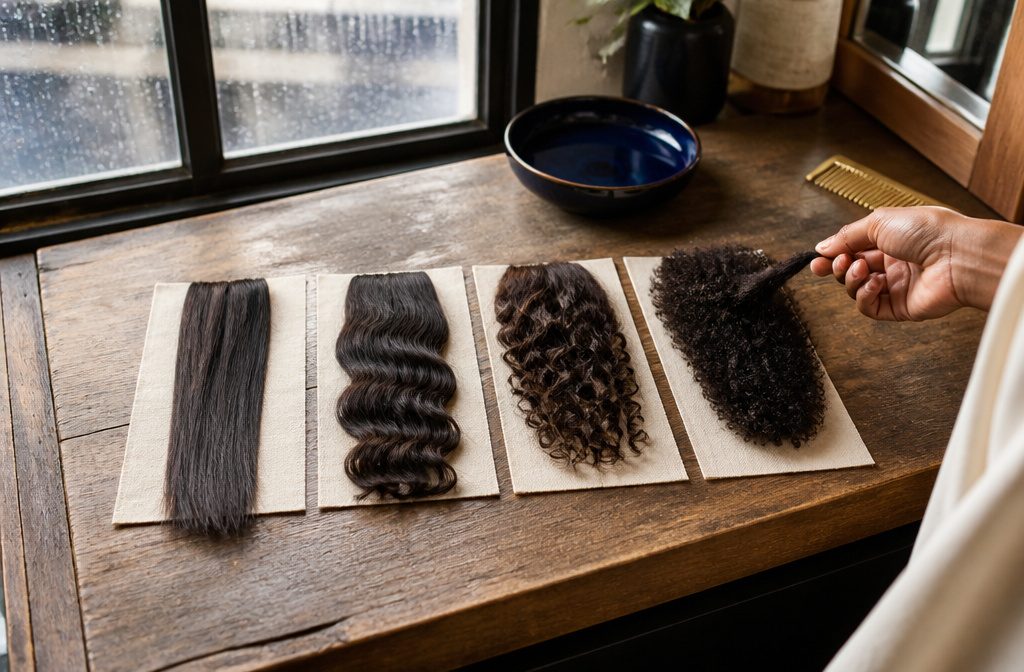
A hair texture chart maps hair into four numbered types based on curl pattern: Type 1 is straight, Type 2 wavy, Type 3 curly, Type 4 coily. Each type splits into A, B, and C subtypes that move from looser to tighter.
The system, developed by celebrity stylist Andre Walker in the 1990s, remains the most widely used framework for matching what you see in the mirror to products that actually work.
What Hair Texture and Hair Type Actually Mean
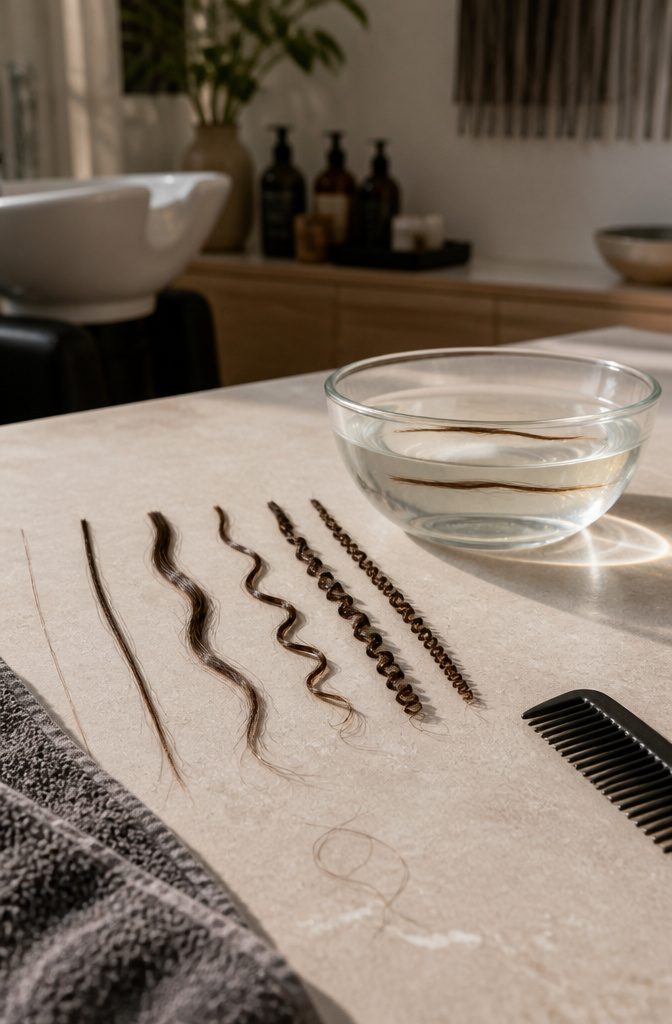
Hair texture and hair type name different things, though most people swap them freely.
Texture describes the diameter of each strand: fine, medium, or coarse. Hair type refers to curl pattern, numbered 1 through 4.
Type 1 is straight, Type 2 wavy, Type 3 curly, Type 4 coily. Within each type, subcategories A, B, and C further divide the pattern.
Porosity is separate again.
It measures how quickly your hair absorbs and releases moisture. Drop a clean strand in water: if it sinks fast, you have high porosity hair that takes in moisture quickly and loses it just as fast.
If it floats, you have low porosity hair that resists uptake. Porosity shifts which products work, regardless of curl type.
Density counts how many strands you have per square inch of scalp.
Fine texture can pair with high density, and coarse texture with low density. Knowing your texture and type gives you a foundation, but porosity and density fine-tune the products and techniques from there.
The Andre Walker System: Four Types, Twelve Categories
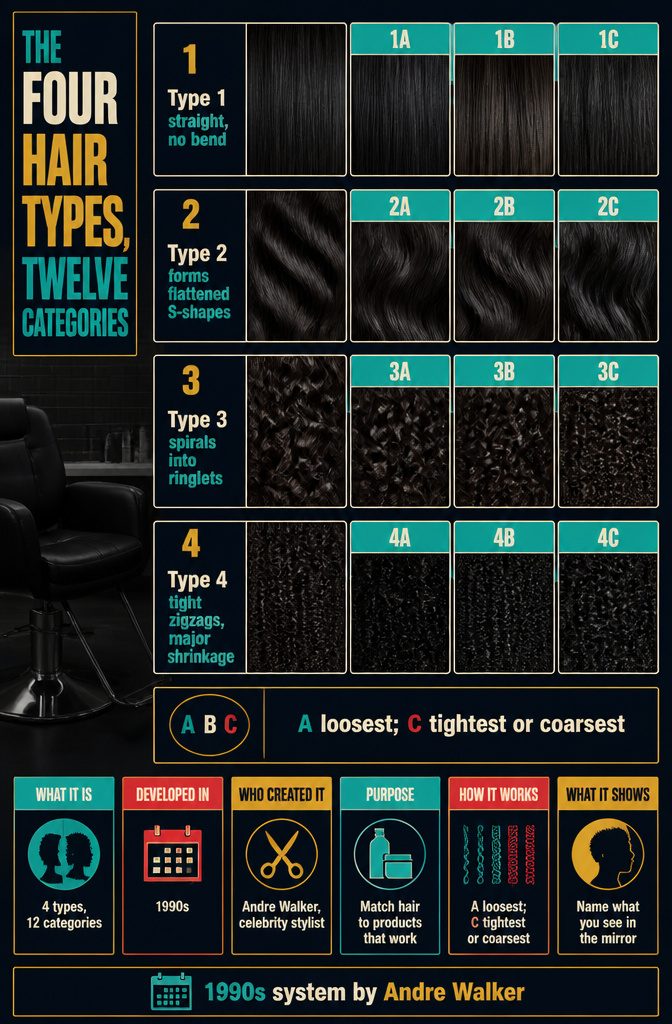
The classification most people reach for first divides hair into four numbered types based on curl pattern, with A, B, and C subtypes that move from looser or finer textures to tighter, more defined ones.
Andre Walker, a celebrity stylist, developed the system in the 1990s, and it remains the most widely used framework for naming what you see in the mirror and matching it to products that actually work.
Type 1 is straight, with no bend or wave.
Type 2 is wavy, forming S-shapes that flatten against the head. Type 3 is curly, spiraling into ringlets.
Type 4 is coily, with tight zigzags or corkscrews that shrink considerably when dry. Within each type, A is the loosest or finest, B sits in the middle, and C is the tightest or coarsest.
A 3A curl might measure an inch wide and bounce with shine, while 3C tightens to the width of a pencil and mixes curly and coily textures in the same head.
Type 1: Straight Hair With No Bend
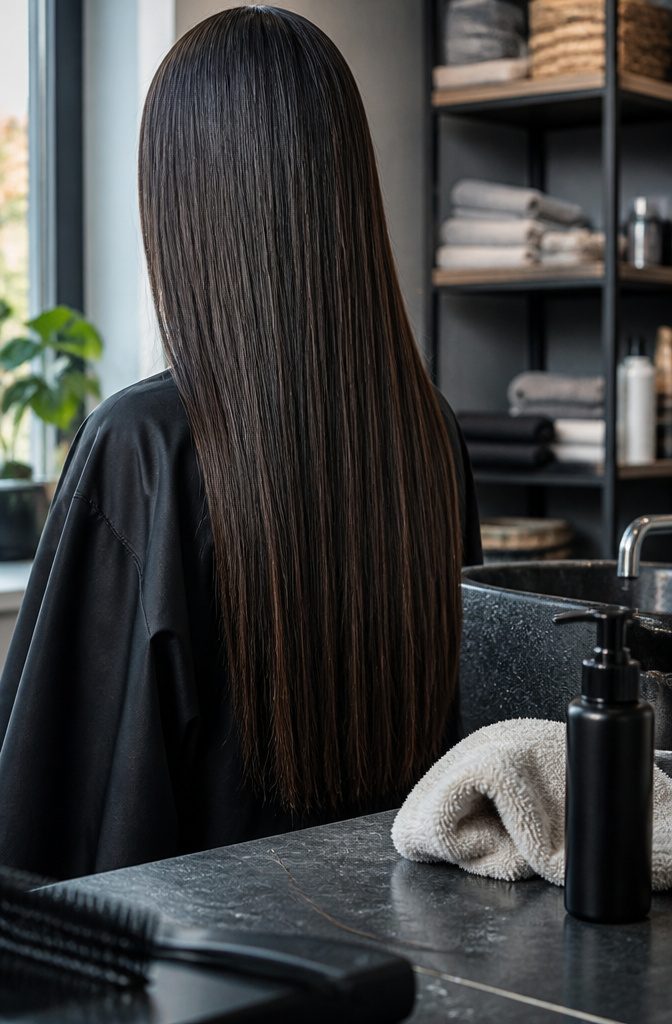
Type 1 hair grows with no bend at all, falling in a single plane from root to tip.
The three straight subtypes break down by strand thickness and body rather than curl. Type 1A is fine, thin, and pin-straight, reflecting the most light but tending to lie flat against the scalp.
Type 1B sits in the middle with more body and slightly thicker strands. Type 1C is the coarsest of the three, with thick straight strands that sometimes pick up a subtle bend near the ends but never form a wave.
The main challenge is oil. Scalp sebum travels down straight shafts faster than it can on textured hair, so Type 1 usually needs washing every 1–2 days to avoid looking greasy by midday.
Lightweight volumizing formulas work better here than anything heavy, which flattens fine hair and makes the oil problem worse. Dry shampoo stretches time between washes, but only by a day at most.
Straight hair takes shine and sleekness as its default. It holds curls poorly and often lacks the volume that textured types get from their pattern alone.
Type 2: Wavy Hair in S-Shaped Patterns
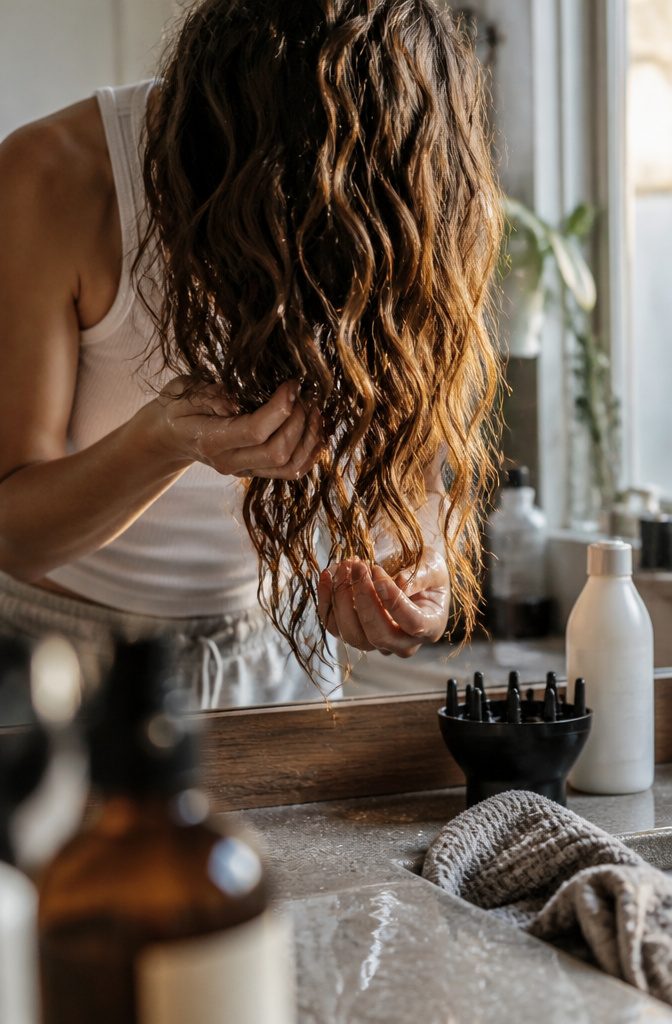
Type 2 hair sits between straight and curly, forming loose S-shaped waves rather than spirals or ringlets. The category runs from 2A through 2C, and the differences matter for how you wash and what you reach for in the morning.
2A hair shows the least wave of the group. Stylist Nika Pearl-Edwards describes the pattern as it actually shows up:
Type 2A hair will usually "not form a full curl, but appears more as a slight bend in the hair."
— NBC News
Most people with this texture think their hair is straight, and heavy oils or creams will flatten what wave exists. If you want definition, leave-in conditioner followed by a lightweight gel scrunched into damp hair will give hold without weight.
2B hair forms looser, beachier waves and starts to show frizz. 2C brings defined S-shaped waves that start closer to the root and can feel coarse to the touch.
Both need more moisture than 2A but will go limp under thick styling creams. Curl-enhancing mousse or light leave-in conditioner works better than oil-heavy serums, and scrunching product into damp hair rather than brushing when dry keeps the pattern intact.
Type 2 hair generally needs washing every 2–3 days, more often than curly types but less than straight.
Type 3: Curly Hair With Spirals and Ringlets
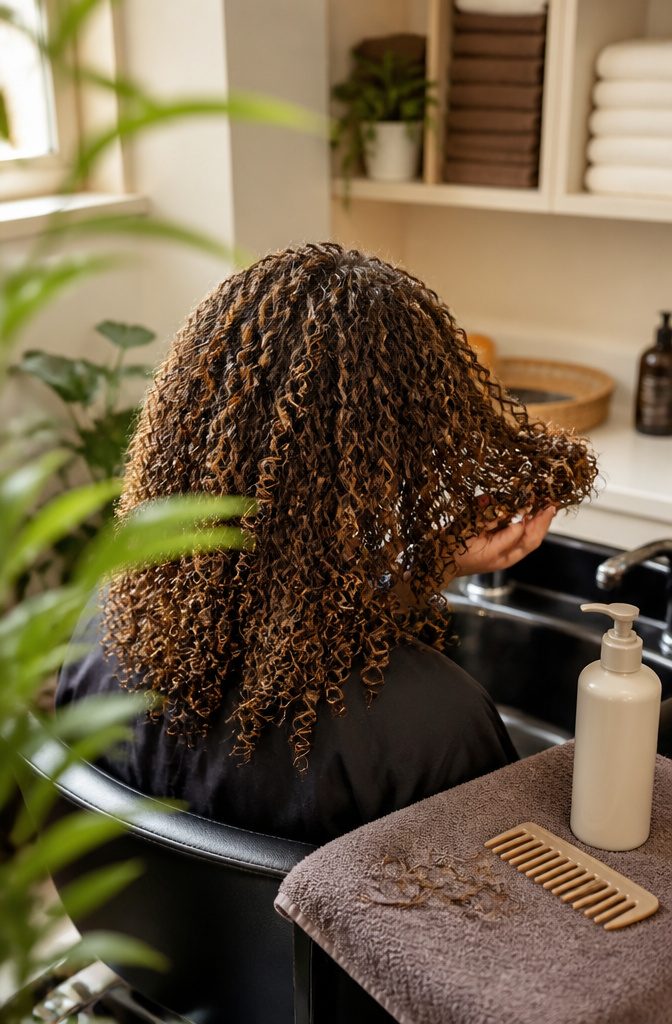
Type 3 hair forms spirals and ringlets that hold their shape wet or dry, with the curl size deciding which subcategory it lands in.
Type 3A curls run about 1 to 1½ inches in diameter, roughly the width of sidewalk chalk, and tend to be the loosest of the bunch. Type 3B tightens to spirals around ½ inch across, about the diameter of a marker.
Type 3C corkscrews measure ¼ inch and smaller, the width of a pencil or drinking straw, and often get left out of older curl systems even though plenty of people find it describes their hair better than any other category.
All three types lean toward dryness and frizz, and shrinkage is real.
Type 3B curls can shrink an inch or two from wet to dry, which matters when you’re gauging length. Fairy knots, those single-strand tangles that appear out of nowhere, show up more often as the curl tightens.
Washing every three to seven days keeps moisture in without weighing curls down, and sulfate-free shampoo helps since sulfates strip oil the hair already lacks.
Type 4: Coily Hair With the Tightest Patterns
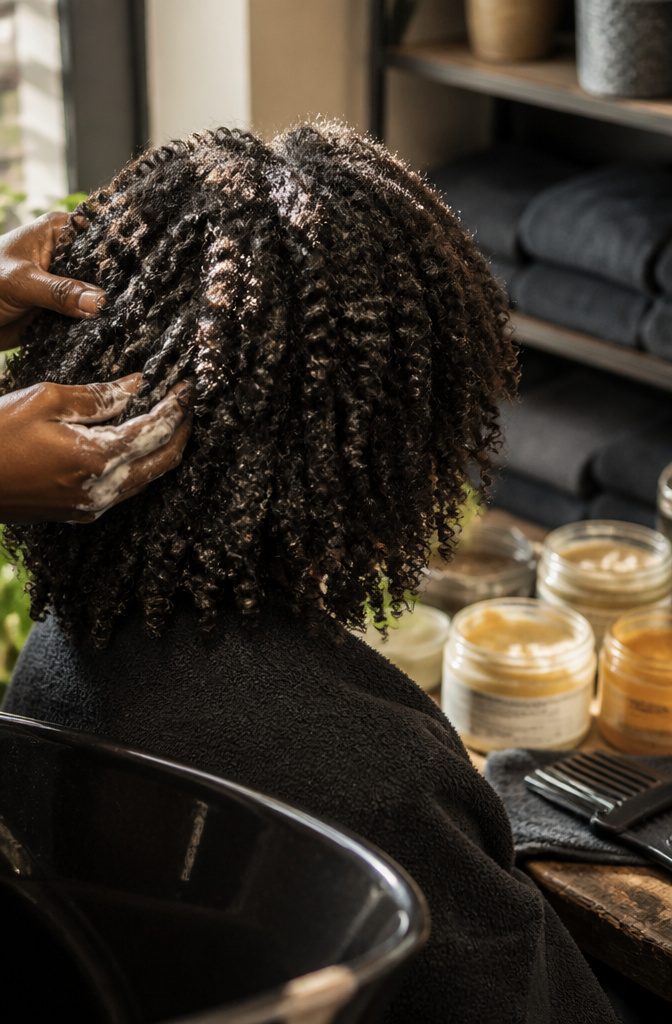
Type 4: Coily Hair With the Tightest Patterns
Type 4 is the most fragile of the four textures and needs the most moisture. The coil is so tight that natural oils from the scalp struggle to travel down the strand, leaving the hair prone to dryness and breakage.
Wash once a week or every 7–10 days to avoid stripping what little moisture remains, and detangle only when wet with conditioner in place.
The three subtypes differ by coil width and pattern definition. 4A forms a defined S-coil about the diameter of a crochet needle, visible and springy.
4B shifts to a Z-pattern with less definition, and 4C has the tightest coils with shrinkage up to 75 percent. That shrinkage means length disappears when dry, and the lack of visible curl definition makes 4C the most delicate to handle.
Deep conditioner, leave-in, oil, and cream layered in the LOC method keep moisture locked in. Protective styles reduce how often you touch the hair and help retain length between washes.
How to Identify Your Natural Pattern
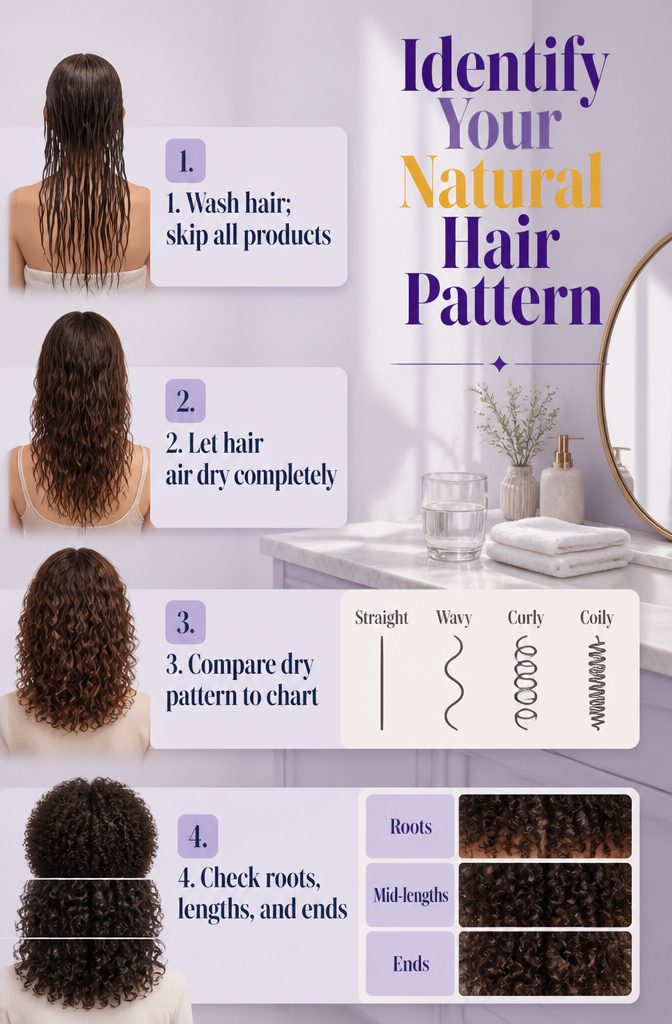
- Wash your hair and skip all products. No leave-in conditioner, no curl cream, no smoothing serum. You want to see what your hair does without anything shaping it.
- Let it air dry completely. No diffuser, no blow dryer, no towel scrunching. Just let it dry on its own and leave it alone while it does.
- Pull the chart up and compare. Look at the dry result and match it to the categories. Straight hair shows no bend or curve. Wavy hair forms an S-shape. Curly hair makes spirals or ringlets. Coily hair tightens into Z-patterns or dense coils.
- Check roots, mid-lengths, and ends separately. The hair along your hairline can be one type while the crown is another. Multiple patterns on one head are common, not a mistake in your reading.
Strand Thickness, Density, and Porosity Matter Too
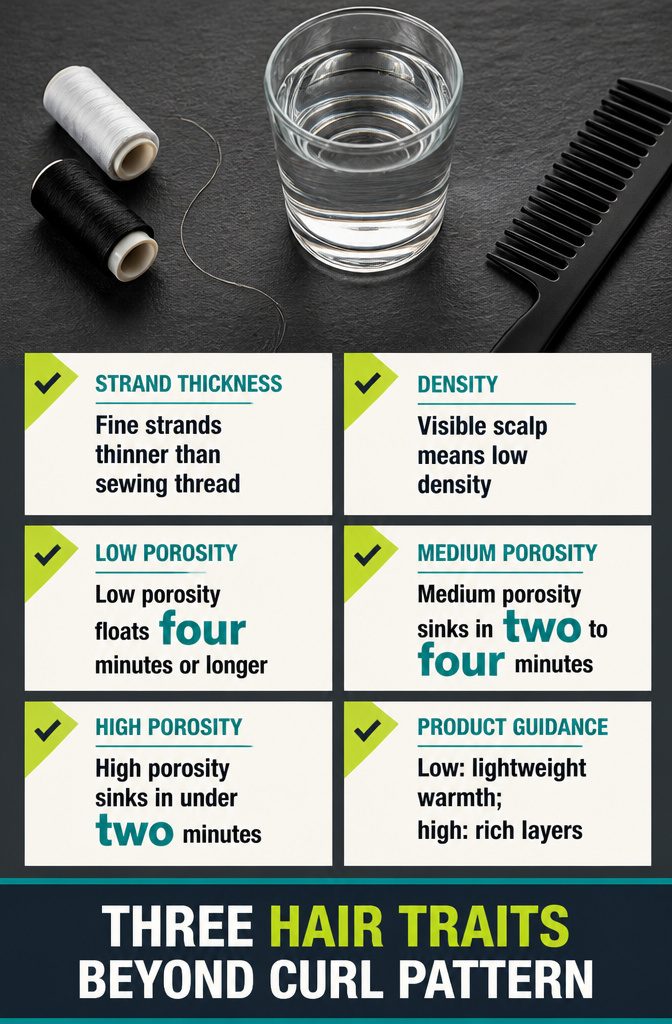
The chart stops at curl pattern, but strand thickness, density, and porosity shape how products perform and how long styling lasts.
Fine strands feel thinner than sewing thread when you roll one between your fingers, medium strands match thread thickness, and coarse strands feel noticeably thicker.
Density counts how many strands cover each square inch of scalp: part your hair cleanly in one spot, and if you barely see scalp through the hair, density runs high; visible scalp means low density.
Porosity decides how fast moisture moves in and out. Drop a clean strand in a glass of water.
Low porosity hair floats for four minutes or longer because the cuticle lies flat and keeps water out; medium porosity sinks between two and four minutes; high porosity sinks in under two minutes, absorbing water instantly but losing it just as fast.
Low porosity needs lightweight products on warm damp hair to coax the cuticle open, while high porosity responds to heavier butters and layered leave-ins that seal moisture before it evaporates.
What the Chart Tells You About Care and Products
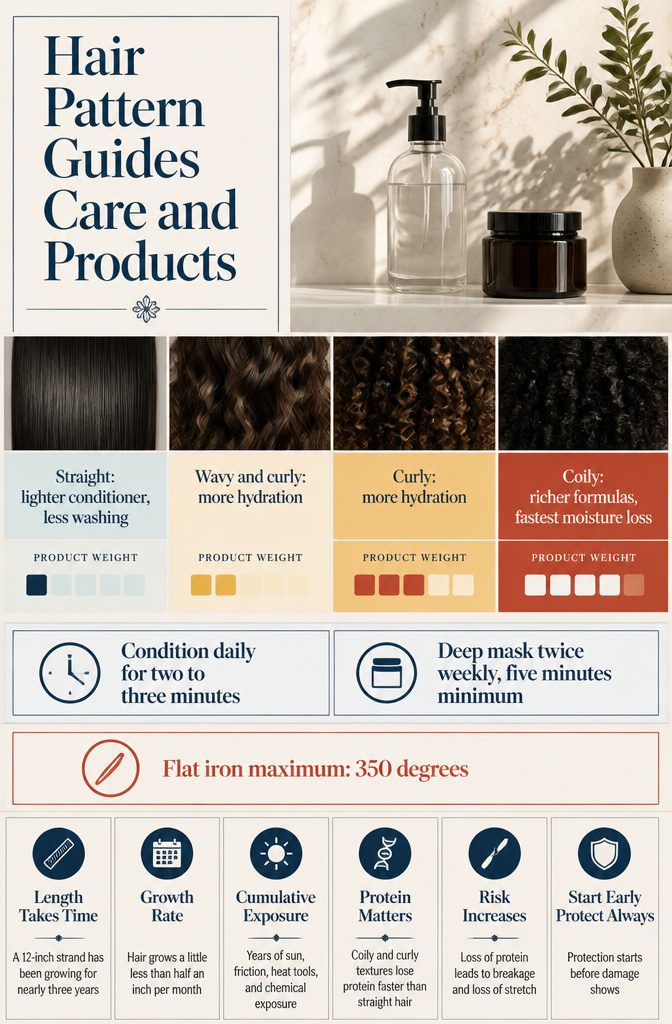
The categories point you toward product weight and how much moisture your hair can actually hold. Straight hair sits closer to the scalp and picks up oil faster, so lighter conditioners and less frequent washing work better.
Wavy and curly patterns lift away from the head and need more hydration to keep definition without frizz. Coily hair, with its tight spirals, loses moisture fastest and benefits from richer formulas.
Conditioning matters more than most people give it credit for.
Leave conditioner on for 2 to 3 minutes daily, and add a deep conditioning mask twice a week for at least 5 minutes. That time lets the product actually penetrate rather than just coat the surface.
If you flat iron, set the temperature no higher than 350 degrees.
Higher heat might smooth faster, but the damage compounds. A 12-inch strand has been growing for nearly three years, which means it has seen almost three years of sun, friction, heat tools, and chemical exposure.
Hair grows a little less than half an inch per month, so every inch past your shoulders carries months of wear.
Coily and curly textures lose protein faster than straight hair, leaving them prone to breakage and loss of stretch. Protection starts before damage shows.
Why the Chart Is a Starting Point, Not a Rule
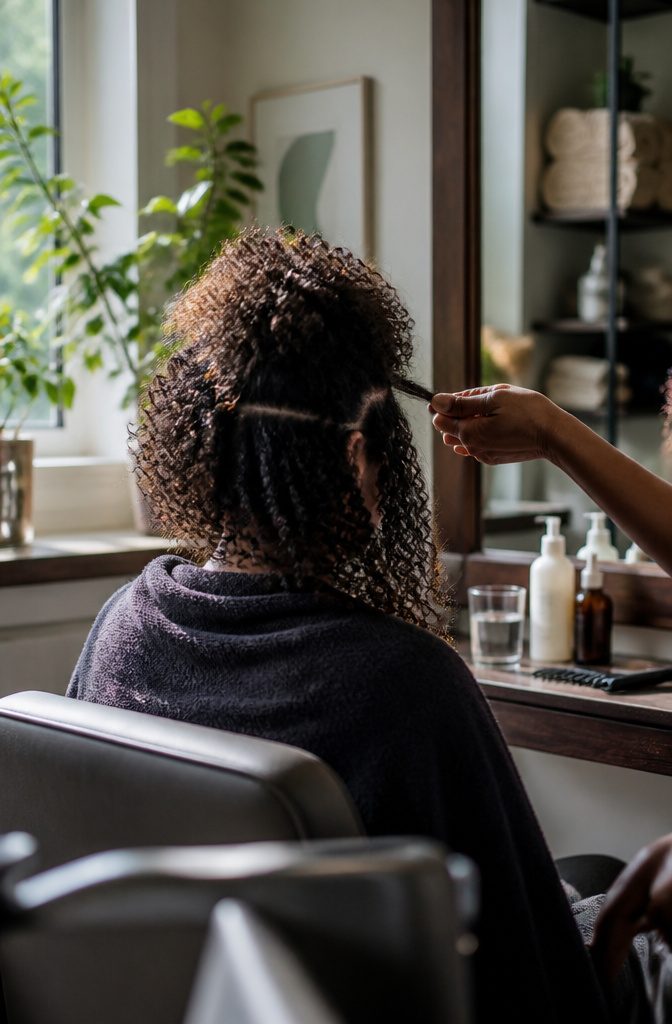
The chart gives you a starting point, but real hair doesn’t always fit neatly into one box. More than 75 genetic variants influence your texture, and people often have multiple patterns on the same head.
Someone might have 3A curls at the crown and 3B spirals underneath, or coils that shift between 4B and 4C depending on the section.
The letter and number tell you about curl pattern, but they don’t account for porosity, density, or strand thickness.
Those traits matter more when you’re choosing products or figuring out why a routine that works for another Type 3 falls flat on you.
Two people with 2C waves can need completely different approaches if one has fine, low-porosity hair and the other has thick, high-porosity strands.
Biology explains why the variation runs so deep. Follicle shape determines whether hair grows straight or coiled, disulfide bonds affect how tight the curl forms, and cortex asymmetry adds another layer of unpredictability.
Ethnic background plays a role, though there’s overlap across populations. The system is useful for learning what your hair does and finding others with similar patterns, but it’s a framework, not a diagnosis.
Frequently Asked Questions
What is a hair type chart?
A hair type chart is a visual classification system that organizes hair from straight through coily patterns, most commonly using the Andre Walker 1A–4C framework.
The numbered types (1 through 4) represent straight, wavy, curly, and coily textures, with A, B, and C subtypes that move from looser to tighter patterns within each category.
How do I find out my hair type?
Wash your hair and let it air dry completely without any products, heat tools, or styling.
Once fully dry, compare the natural pattern to the chart: straight hair shows no bend, wavy forms S-shapes, curly makes spirals or ringlets, and coily creates tight Z-patterns or dense coils.
Check roots, mid-lengths, and ends separately since multiple patterns on one head are common.
What is the difference between Type 4A and Type 4C hair?
Type 4A forms a defined S-coil about the diameter of a crochet needle, with visible and springy curls.
Type 4C has the tightest coils with the least visible definition and shrinkage up to 75%, making length disappear when dry and leaving it the most delicate to handle.
Can you have more than one hair type on your head?
Yes, different areas such as the crown, nape, temples, or hairline often show different patterns. Someone might have 3A curls at the crown and 3B spirals underneath, or coils that shift between 4B and 4C depending on the section.
Pull the chart up on a product-free wash day and examine several areas to see what you have.
What is high porosity hair and how do I know if I have it?
High porosity hair absorbs moisture quickly and loses it just as fast because the cuticle is raised or damaged.
Drop a clean strand in water: if it sinks in under 2 minutes, you have high porosity. It responds best to heavier butters and layered leave-ins that seal moisture before it evaporates.
What is the LOC method?
The LOC method stands for Liquid, Oil, Cream, applied in that order as a moisturizing layering technique.
It keeps moisture locked in by sealing each layer with the next, and works especially well for Type 4 coily hair that struggles with dryness.
Is Type 4C the most fragile hair type?
Yes, Type 4C is the most fragile because its tight coil structure creates more bends per inch, making it more prone to breakage from manipulation.
Natural oils from the scalp struggle to travel down the tightly coiled strand, leaving the hair prone to dryness and snapping when handled roughly.
What is the difference between wavy and curly hair?
Wavy Type 2 hair forms a flat S-shaped pattern that often flattens against the head, while curly Type 3 hair forms distinct three-dimensional spirals or ringlets that hold their shape wet or dry.
Wavy hair generally loses definition when dry without products, but curls keep their spring.
Does hair type change over time?
Texture may shift with hormones, pregnancy, medication, heat damage, aging, or health changes.
Your core curl pattern is set by follicle shape and more than 75 genetic variants, making it a stable baseline, but damage and life events can alter how it behaves day to day.
What is the Andre Walker hair typing system?
The Andre Walker system is a four-type classification framework based on curl pattern, with A, B, and C subtypes that move from looser or finer textures to tighter, more defined ones.
Type 1 is straight, Type 2 wavy, Type 3 curly, and Type 4 coily. It remains the most widely used framework for naming what you see in the mirror and matching it to products.
Why does my hair look frizzy even when I follow my hair type’s routine?
Frizz is influenced by more than curl pattern alone. Porosity, humidity, product buildup, water quality, and styling method all play roles, so adjusting your approach based on conditions often matters as much as the products you choose.
Two people with the same type can need completely different routines if one has low porosity and the other high.