A hair length chart maps hair measurements in inches to body landmarks like chin, shoulder, and waist, so you and your stylist mean the same thing when you ask for a cut.
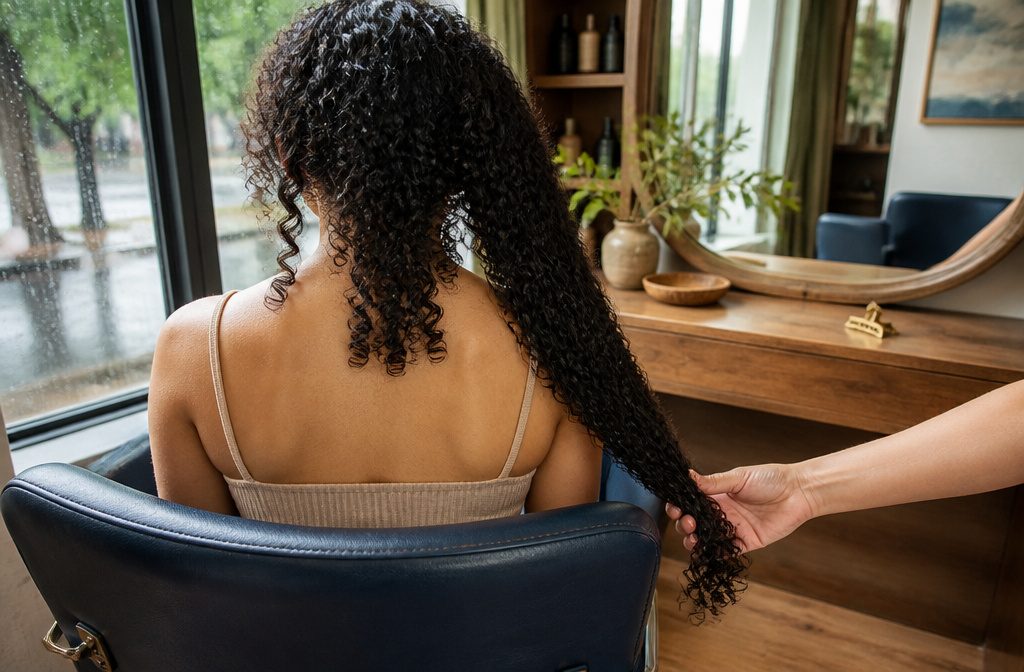
Texture changes everything: curly hair can shrink 30% to 75% from its stretched length, which means a twelve-inch curly strand might only reach your chin when dry.
What a Hair Length Chart Is and Why You Need One
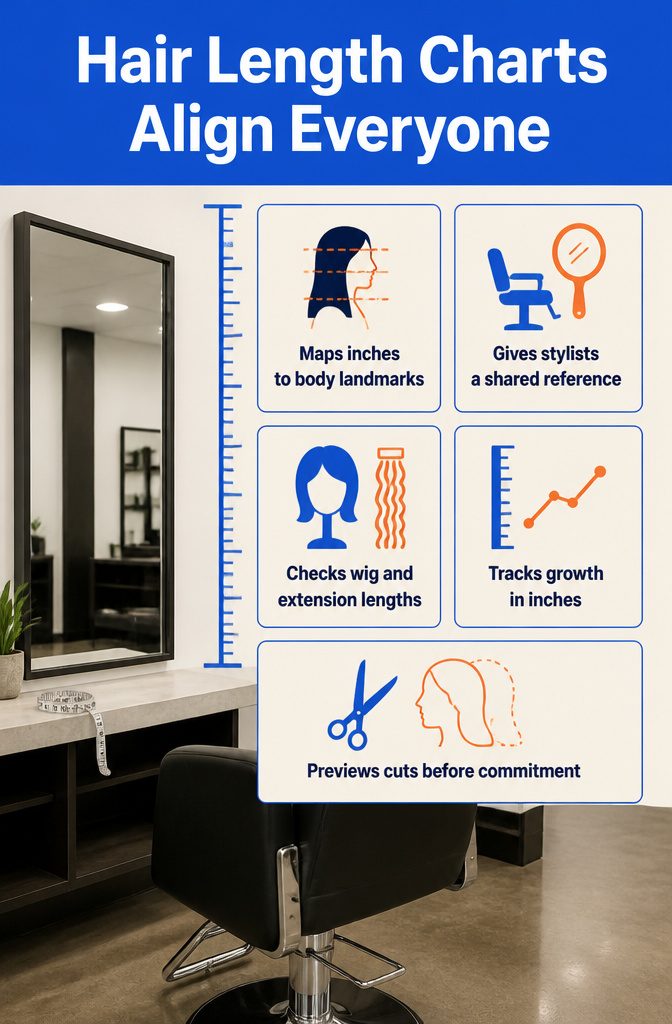
A hair length chart is a visual reference that maps measurements to body landmarks, so "shoulder-length" stops being a guess and starts meaning the same thing to you, your stylist, and anyone selling you a wig.
Instead of describing what you want in vague terms and hoping the person holding the scissors pictures the same cut, you point to chin, collarbone, mid-back, or waist and everyone sees it.
The chart works in four places. First, in the salon or barbershop, where it closes the gap between your idea and the stylist’s interpretation.
Second, when you’re shopping for wigs or extensions and need to know whether 16 inches will graze your shoulders or fall halfway down your back.
Third, when you’re tracking growth and want to see whether you’ve gained two inches or just convinced yourself you did.
Fourth, when you’re visualizing a cut before committing to it, texture and proportions change how length reads on your body, and the chart gives you a starting point that beats guessing.
How to Measure Your Hair Length Accurately
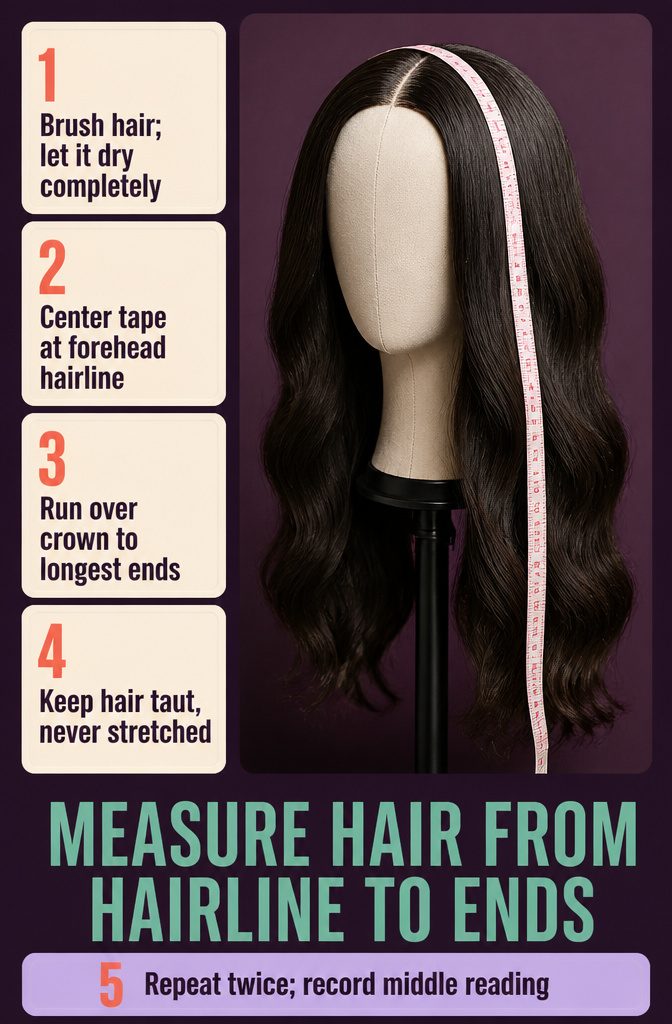
Use a soft tape measure from your hairline over the crown to the ends, holding the hair taut but not stretched.
Start at the center of your forehead where hair begins, run the tape up and over the curve of your head, then straight down to the tip of your longest strand.
That path mirrors how wig lengths are labeled, so your number translates directly when you shop.
- Brush your hair thoroughly and let it dry completely. Wet hair stretches and reads longer than it actually wears.
- Position the tape at your hairline, centered on your forehead.
- Follow the tape over your crown and down to the ends, keeping hair taut.
- Record the measurement, then repeat twice more for consistency. Hair rarely hangs perfectly even, so take the middle reading.
For curly hair, gently stretch a strand rather than pulling hard.
Curls can appear 2–4 inches shorter than their actual length, and forcing them straight skews the result. Some stylists measure from the crown instead of the hairline, so if you’re communicating with a salon, confirm their starting point.
Short Hair: 2–10 Inches from Scalp to Chin
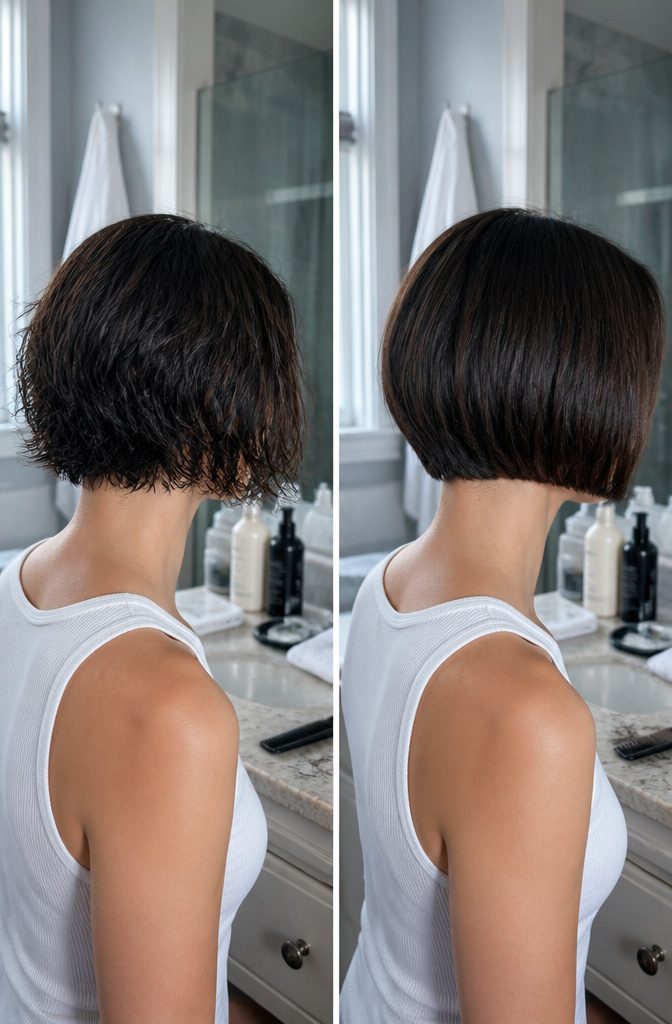
Short hair covers anything from a buzz cut shaved to under 1/4 inch through pixies at 4–6 inches and chin-length bobs at 6–8 inches. At 2 inches you’re still very close to the scalp, longer than a buzz but barely enough to style.
At 4 inches most people can cover the ears or the nape. At 6 inches you’ll likely touch the chin, and at 8 inches you’re squarely in bob territory.
I like this category for what it cuts out of the morning.
Short hair washes fast, dries in minutes, and needs almost no detangling. If you towel off in the shower and dress, it’s dry by the time you’re done.
The bob framing your jawline draws the eye to your cheekbones and away from your hairline, which is why short wigs and toppers appeal to women dealing with loss: less weight, cooler through the day, more secure.
You’ll need regular trims.
Shorter cuts need regular trims to hold their shape, and some need styling product to stay in place. If that applies, cleanse often enough that buildup doesn’t block your follicles.
Medium Hair: 12–15 Inches from Shoulder to Armpit
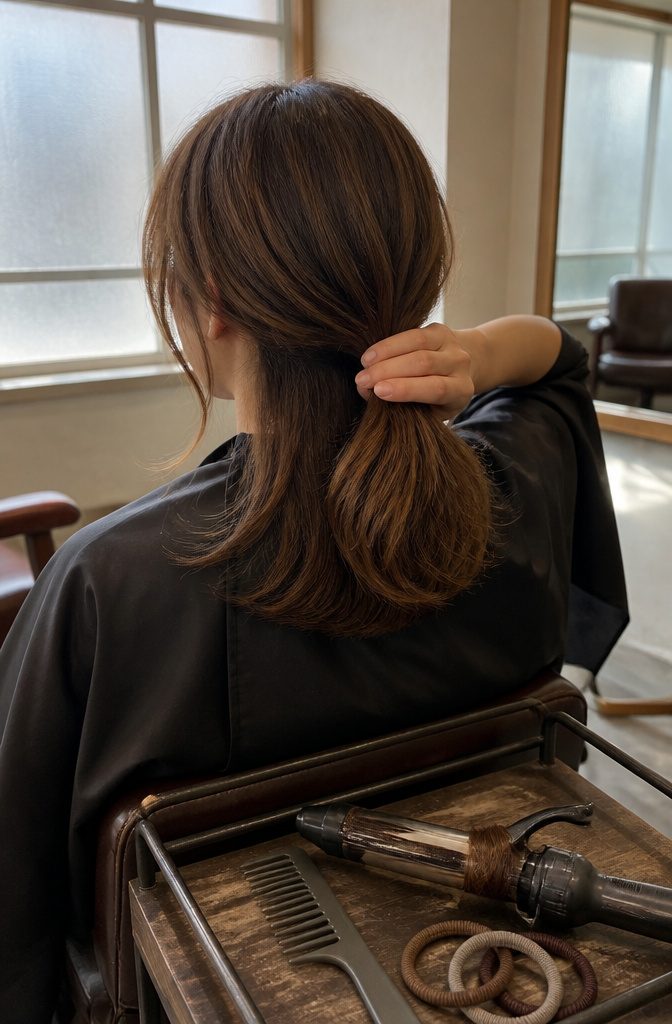
Medium lengths start at shoulder level, around twelve inches, where the ends rest on top of your shoulders, and extend to armpit length at roughly sixteen inches.
This is the most requested range in fittings because it gives you the widest styling menu without the weight, drying time, or detangling that longer hair demands.
You can wear it loose, pull it into a ponytail or bun, curl it, straighten it, or layer it heavily without losing the ability to tie it back when you need it off your face.
Shoulder length itself, that twelve-inch mark, sits at the start of the medium zone and works as a perfect transition if you’re growing out a bob or cutting down from longer hair.
The lob, layered shags, and soft face-framing cuts all live here.
Armpit length at sixteen inches gives you a bit more to work with for loose waves, curtain bangs, U-shaped perimeters, and longer layers that still photograph as effortless rather than styled.
Medium wins for versatility.
If you’re moving into wigs or toppers for the first time, this length reads as natural, gives you room to experiment, and lets you decide whether you want to go shorter or longer once you know what suits your routine.
Long Hair: 16–26 Inches from Mid-Back to Hip

Long hair starts at 16 inches, falling mid-back around your shoulder blades, and runs through waist at roughly 24 inches to hip at 26 inches or more.
At 20 inches you clear the middle of the back. At 26 inches the ends sit right at your hips, past the waistband of your pants.
This is the range that opens up braids, sleek ponytails, romantic updos, and loose cascading waves.
You have enough length to experiment with deep V-cut layers, heavy texturizing at the tips, or a completely blunt cut for maximum drama. Half-up, half-down styling adds dimension when you want movement without losing the length.
The commitment is real. Hair this long is older and more exposed than shorter cuts, so it needs regular brushing, detangling, hydration, and protection from breakage and split ends.
Drying takes longer. Styling takes longer.
Growing from shoulder to waist naturally can take two years or more, since scalp hair grows about six inches per year. That timing explains why many women skip the wait and choose a long wig or topper instead.
Extra-Long Hair: Past the Waist Toward Tailbone and Beyond
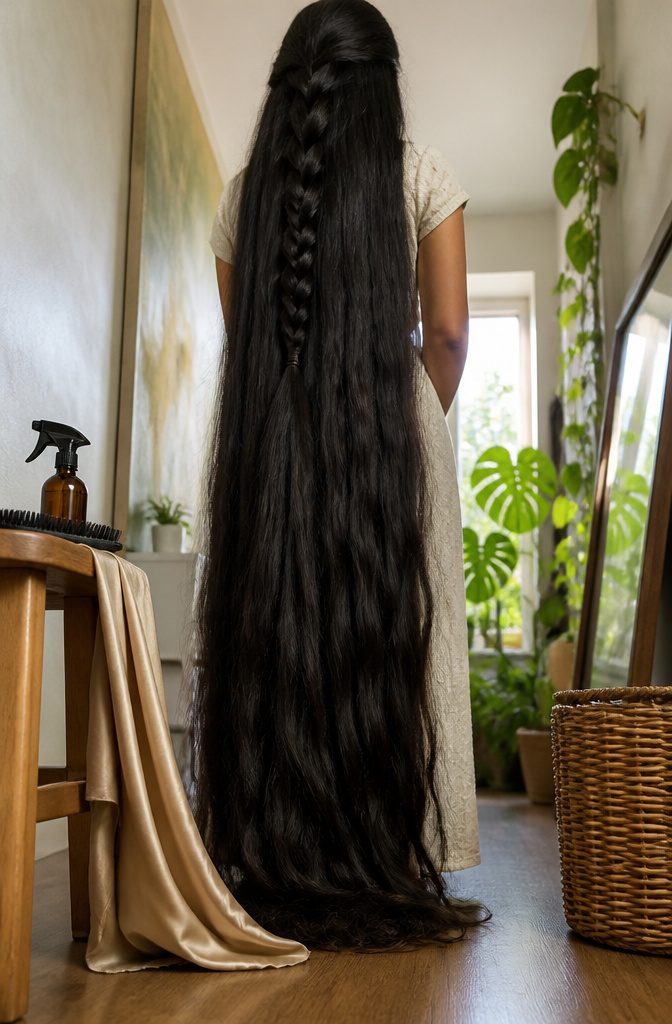
Extra-long hair starts at 22 to 26 inches or more, past your waist and into territory that commands attention the moment you walk into a room.
Tailbone length sits at 31 to 35 inches, and from there the landmarks keep going: mid-thigh, knee, calf, ankle. Each one is a deliberate choice, because hair this long carries real weight and asks for real time.
Washing takes longer.
Drying takes longer. Detangling is not optional, and neither is protecting the ends from snagging on zippers, car doors, and bag straps.
Women who choose extra-long hair rarely regret it, but they choose it for a reason: a signature look, a special occasion, or the sheer creative range that comes with having this much length to work with.
Intricate braids, free-flowing waves, blunt dramatic ends. The styling possibilities are the widest of any category, and so is the maintenance commitment.
How Texture Changes What You See
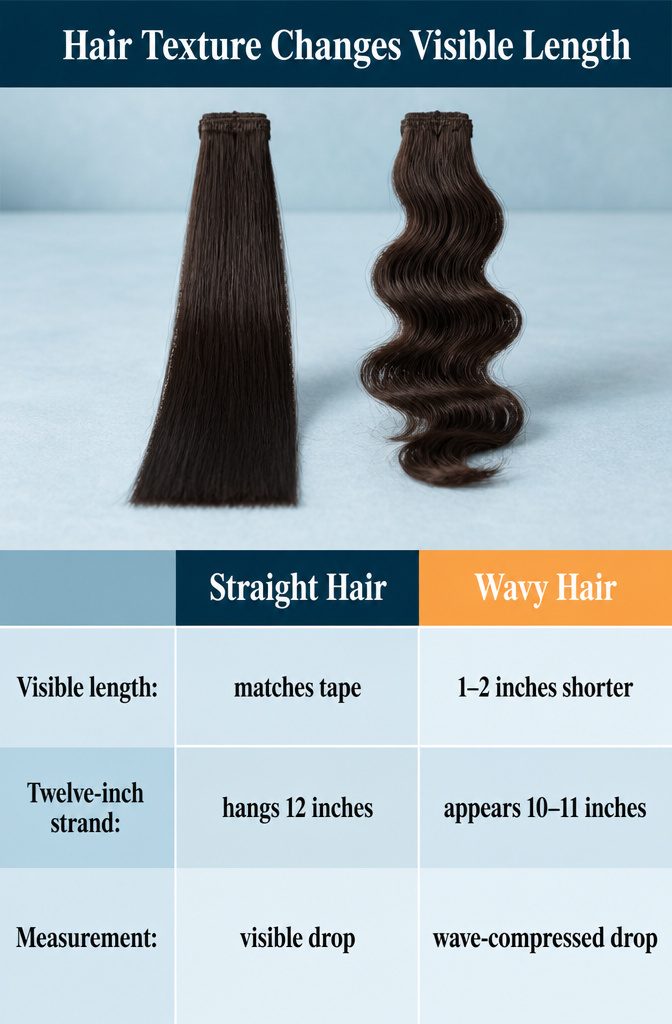
Straight hair shows its measured length.
When you measure twelve inches on straight strands, you see twelve inches hanging. Wavy hair looks 1–2 inches shorter than the tape says, because the wave pattern compresses the visible drop.
Curly and coily hair can shrink anywhere from 30% to 75%, depending on how tight the curl. That means a curly strand measuring twelve inches stretched might sit at chin length when it dries in its natural pattern.
If you consult a curly hair length chart, you will see that a strand measuring twelve inches might only look like it is chin-length when dry.
The distinction matters when you shop for wigs, extensions, or set a growth goal.
Reputable sellers measure curly pieces stretched, so a sixteen-inch curly wig will wear closer to shoulder length. If you measure your own curls, gently stretch a strand to its full length before you mark it.
That stretched measurement is what matches the chart and what the stylist or wig maker needs. The length you see dry is real, but it is not the number that communicates your goal.
Face Shape, Density, Proportions, and Lifestyle
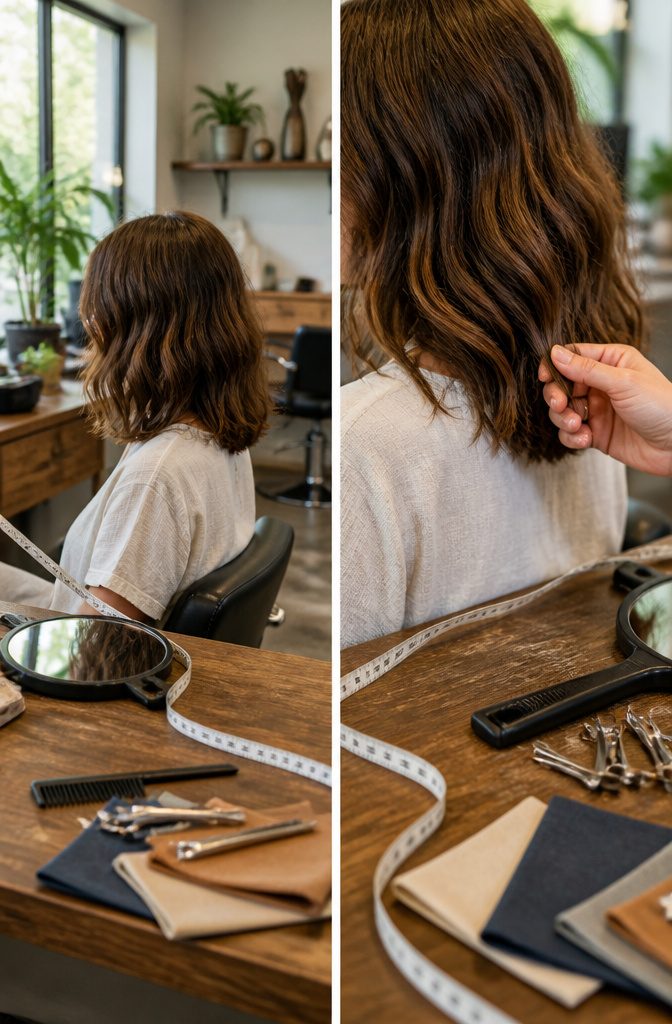
The same length reads differently depending on your height, torso length, and neck proportions. Shoulder-length hair on someone five-foot-two might fall where armpit-length does on someone five-nine.
What the chart calls long can look short if your hairline starts high or your posture tilts your head forward. The measurements matter, but the landmarks shift.
Oval faces suit almost any length, which makes the chart easier to use. Round faces tend to look longer with straight styles past the shoulders.
Square faces soften with textured lobs. Heart-shaped faces balance with chin-length bobs that add fullness at the jaw.
Long faces do better with chin-to-shoulder cuts that don’t stretch the proportions further. No single length flatters everyone, and the same cut that opens up one face can close down another.
Density decides whether a length holds its shape. Fine hair loses body past a certain point.
Thick, coarse hair holds volume and shape better at medium lengths. Very long hair works best on thicker hair, since anything sparse at 26–30 inches can look thin.
Curly and wavy hair benefits from medium length because the texture has room to move without getting weighed down or requiring constant trims to stay off the face.
Lifestyle tolerance matters as much as face shape.
Active routines and hot climates favor lengths that tie back or stay out of the way without clips. Shoulder-length hair at 14 inches is easy to maintain and suits most schedules.
Anything shorter needs frequent trims to keep its shape. Anything longer takes more time to wash, dry, and detangle, though some find it simpler overall once it reaches a length that holds itself in place.
Using the Chart for Haircuts, Wigs, Extensions, and Growth Goals
Using the Chart for Haircuts, Wigs, Extensions, and Growth Goals
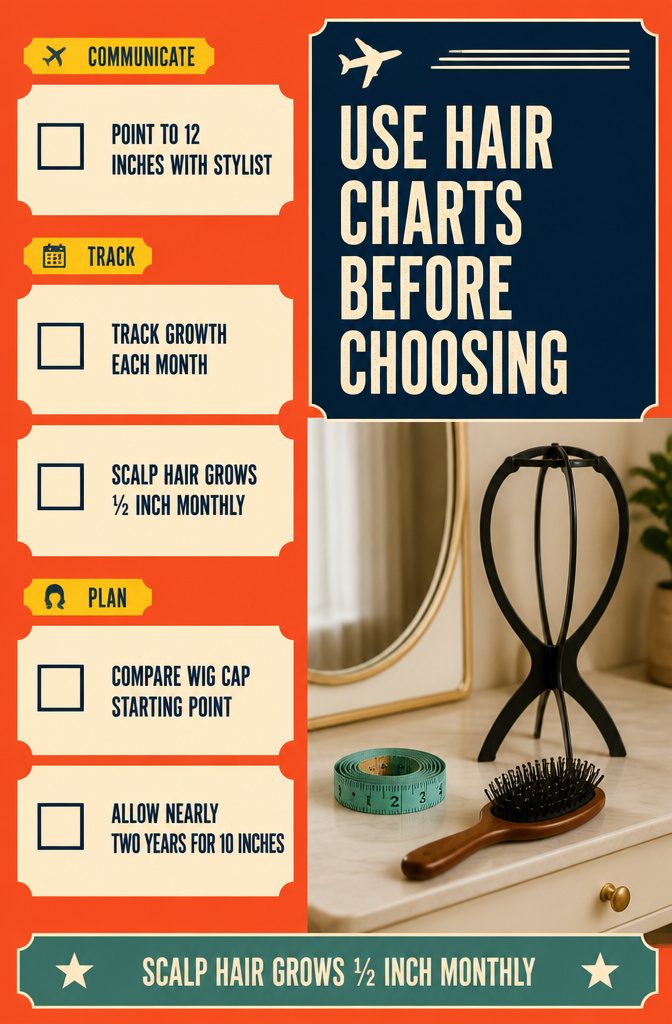
A hair length chart maps inches to body landmarks before you book the appointment or order online. Here’s how to apply it:
- Use it to communicate with your stylist. Saying "shoulder length" can mean anything from collarbone to armpit depending on who’s listening. Pointing to 12 inches on the chart gives you both a shared reference point.
- Track growth milestones month by month. Scalp hair grows about half an inch per month, which means shoulder to waist takes roughly two years. Measuring from the crown to the ends of stretched strands shows where you are against where you want to be.
- Account for starting point on wigs and extensions. Wig measurements run from the crown of the cap to the tip, so a 16-inch wig falls slightly longer on your body than 16 inches of natural growth from the root. Body placement matters alongside the inch figure when you’re comparing options online.
- Set realistic timelines. If you’re 10 inches short of your goal, you’re looking at close to two years of growth or the decision to wear a long wig instead of waiting.
Growth Rates and Landmark-to-Landmark Timing
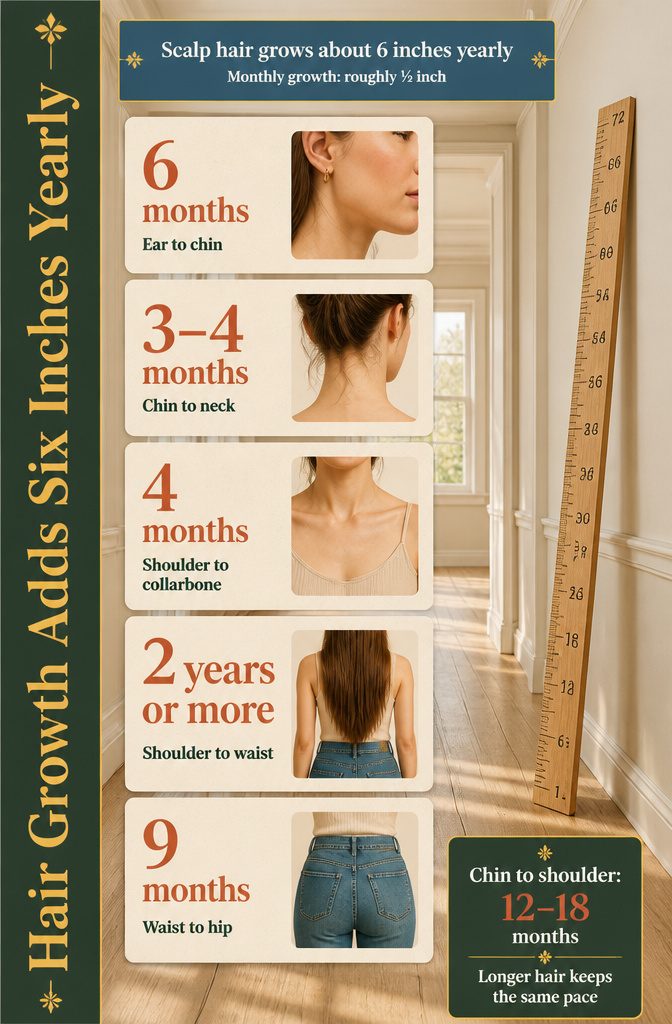
Scalp hair grows about six inches per year, or roughly half an inch per month.
That rate holds whether you’re at pixie length or already past your shoulders, though short hair appears to move faster because every quarter inch is more visible around the face.
Working from those numbers, Hairfinder gives landmark-to-landmark timing based on a woman who stands five feet seven inches: ear to chin takes six months, chin to neck another three to four months, neck to shoulder three to four more.
Shoulder to collarbone runs four months, collarbone to bra straps twelve months, bra straps to mid-back six months, mid-back to waist eight months, waist to hip nine months, hip to tailbone five.
Growing from shoulder to waist covers ten to twelve inches and typically takes two years or more. Reaching shoulder length from a chin-length starting point runs twelve to eighteen months.
The constancy surprises people. Hair doesn’t accelerate or slow as it gets longer; every month adds the same half inch whether you’re cutting a bob or braiding past your waist.
Men’s Short, Medium, and Long Categories
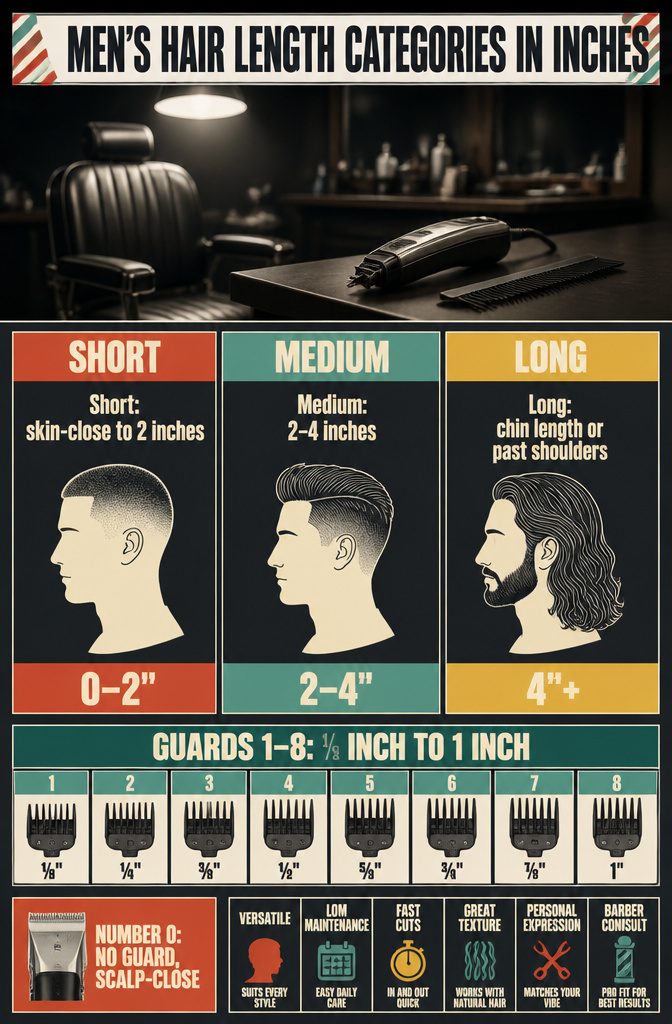
Men measure short hair differently than women do, and the categories reflect that. Short hair for men runs from skin-close to 2 inches, covering buzz cuts, crew cuts, Caesar cuts, textured crops, and taper fades.
Medium sits at 2 to 4 inches, the zone where mullets, undercuts, pompadours, and comb-overs live. Long is anything that reaches the chin or hangs past the shoulders, enough length for a man bun, braids, slicked-back styles, or waves.
Barbers work in clipper guards, numbered 1 through 8. Guard 1 leaves 1/8 inch, guard 8 leaves a full inch.
Guards 1 and 2 handle buzz cuts. Guard 3 gives the versatility most fades need.
Guard 4 gets you close to a crew cut or brush cut. Guards 5 and 6 suit longer, groomed styles meant to be brushed into place.
Guards 7 and 8 leave enough hair for crew cuts with extra length or a classic slicked-back look. A barber who hears "number 0" skips the guard entirely and takes the hair down to the scalp.
Testing a Length Before You Cut
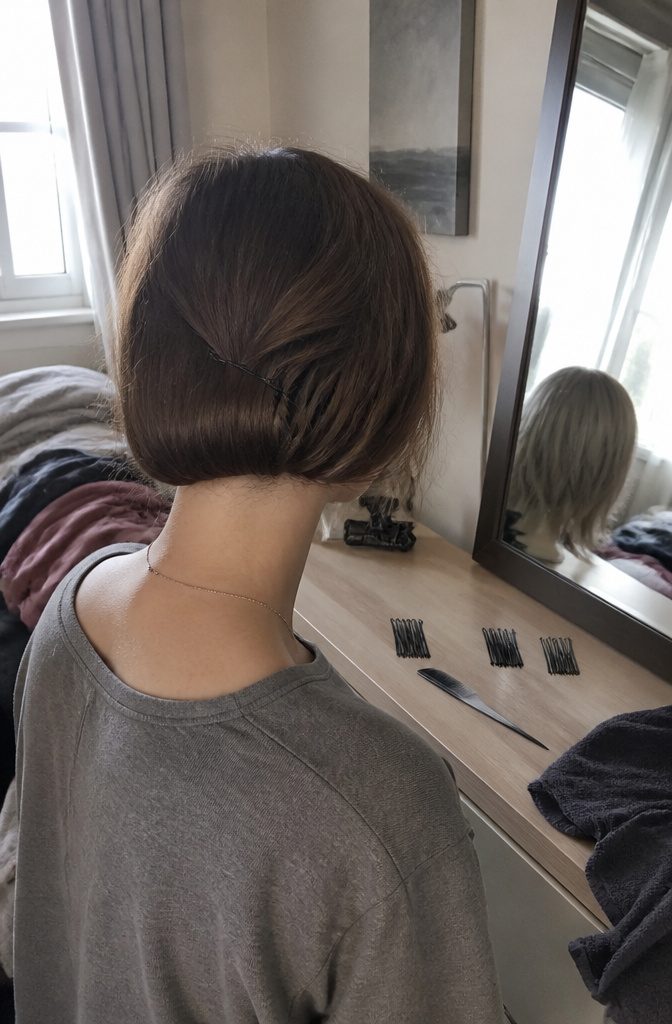
Before you book the appointment, a few ways exist to see whether a length actually works the way you pictured it.
Virtual try-on tools, wigs, or pinning your hair into a faux bob let you preview how a particular length sits against your neckline and shoulders without committing to the shears.
The faux bob is the fastest test: gather hair at the nape, fold it under, pin it flat, and check the mirror from the front and both sides.
A wig gives you the texture and movement, not just the line. Virtual tools handle the basics if you want to compare three lengths in five minutes, though they miss density and the way your actual hair falls.
Any of them beats walking out of the salon wishing you had gone two inches longer.
Frequently Asked Questions
What is a hair length chart?
A hair length chart is a visual reference that maps measurements to body landmarks like chin, shoulder, and waist so everyone sees the same thing when you describe a cut.
It closes the gap between your idea and what the stylist pictures, helps you shop for wigs and extensions by matching inches to where they’ll fall on your body, and gives you a way to track growth without guessing.
How do you measure hair length accurately?
Use a soft tape measure from your hairline over the crown to the ends, holding the hair taut but not stretched.
Start at the center of your forehead where hair begins, run the tape up and over the curve of your head, then straight down to the tip of your longest strand.
For curly hair, gently stretch a strand rather than pulling hard, since curls can appear 2–4 inches shorter than their actual length.
How does hair texture affect length charts?
Straight hair shows its measured length, wavy hair looks 1–2 inches shorter than the tape says, and curly and coily hair can shrink anywhere from 30% to 75% depending on how tight the curl.
The distinction matters when you shop for wigs or set a growth goal, since reputable sellers measure curly pieces stretched so a 16-inch curly wig will wear closer to shoulder length.
Does curly hair measure the same as straight hair?
No. Curly hair should be measured stretched because the curl pattern compresses the visible drop, so a curly strand measuring 12 inches stretched might sit at chin length when it dries in its natural pattern.
The stretched measurement is what matches the chart and what the stylist or wig maker needs.
How long does hair grow in a month?
Scalp hair grows about half an inch per month, or roughly 6 inches per year.
That rate holds whether you’re at pixie length or already past your shoulders, though short hair appears to move faster because every quarter inch is more visible around the face.
What hair length is considered long?
Long hair starts at 16 inches, falling mid-back around your shoulder blades, and runs through waist at roughly 24 inches to hip at 26 inches or more. This is the range that opens up braids, sleek ponytails, romantic updos, and loose cascading waves.
What length suits different face shapes?
Oval faces suit almost any length, round faces tend to look longer with straight styles past the shoulders, square faces soften with textured lobs, heart-shaped faces balance with chin-length bobs that add fullness at the jaw, and long faces do better with chin-to-shoulder cuts that don’t stretch the proportions further.
No single length flatters everyone, and the same cut that opens up one face can close down another.
What is considered short hair for men?
Short hair for men runs from skin-close to 2 inches, covering buzz cuts, crew cuts, Caesar cuts, textured crops, and taper fades. This range handles everything from guard 1 at 1/8 inch through guard 8 at a full inch.
What is considered medium hair for men?
Medium sits at 2 to 4 inches, the zone where mullets, undercuts, pompadours, and comb-overs live. Without tools, a good way to tell if you have medium hair is to check if it covers your ears.
What is considered long hair for men?
Long is anything that reaches the chin or hangs past the shoulders, enough length for a man bun, braids, slicked-back styles, or waves. It can take a couple of years to grow hair to this length for most men.
Should you test a hair length before cutting?
Yes. Virtual try-on tools, wigs, or pinning your hair into a faux bob let you preview how a particular length sits against your neckline and shoulders without committing to the shears.
Any of them beats walking out of the salon wishing you had gone 2 inches longer.