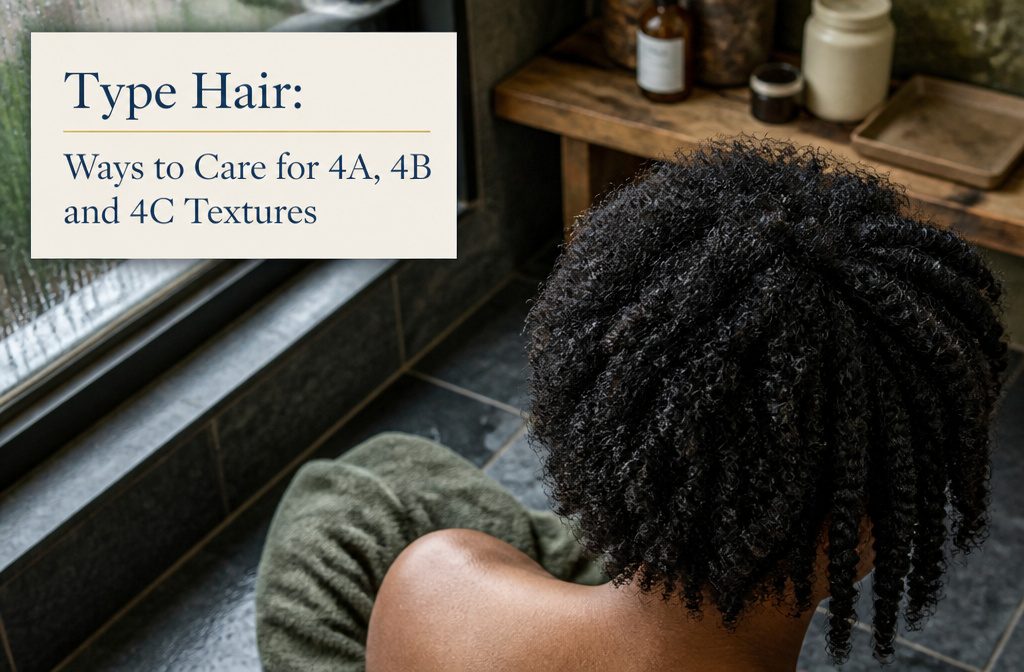
Type 4 hair needs more moisture than any other texture because its tight coils prevent natural oils from traveling down the hair shaft, leaving ends dry and fragile.
The tighter the coil, the worse the problem: 4C hair can shrink 75 to 80 percent when it dries, hiding length and losing hydration faster than you can replace it without a layered routine.
What Type 4 Hair Is
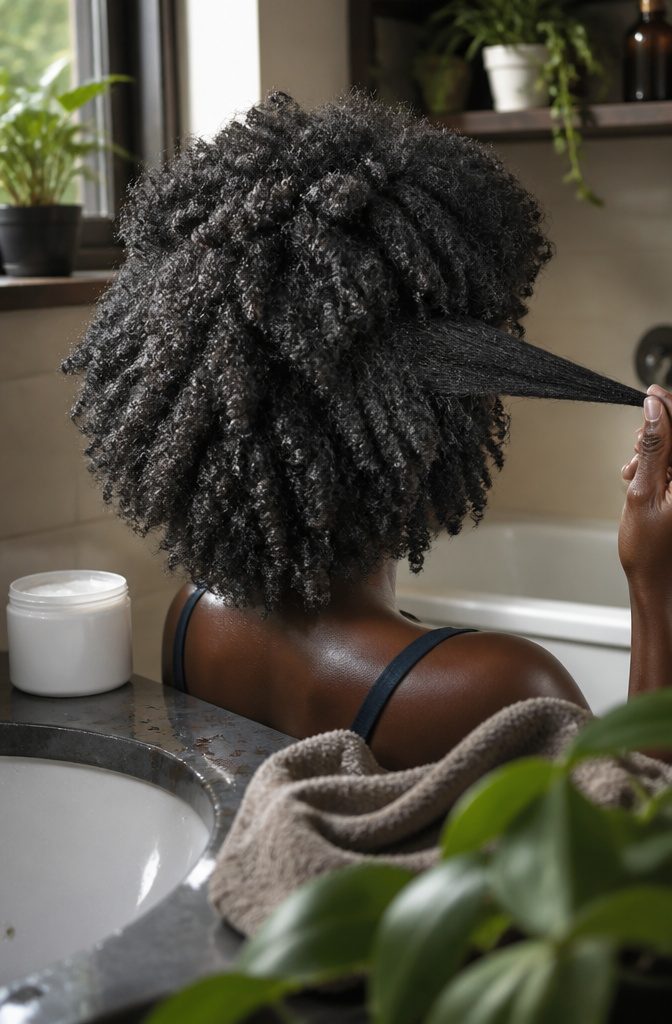
Type 4 hair is tightly coiled or kinky hair, the category with the tightest curl pattern in the system stylist Andre Walker created in the 1990s.
It breaks down into three subtypes: 4A, 4B, and 4C, each distinct in how those coils form and behave.
The texture is densely packed, which gives it serious volume, and it shrinks considerably when it dries. A strand you pull to full length in the shower can spring back to half that or less once the water is gone.
The tight coils make it harder for natural oils to travel from scalp to ends, so dryness is common.
The strands themselves are often fine with fewer cuticle layers, which makes this the most fragile hair type despite how thick and strong it looks.
1. 4A Hair
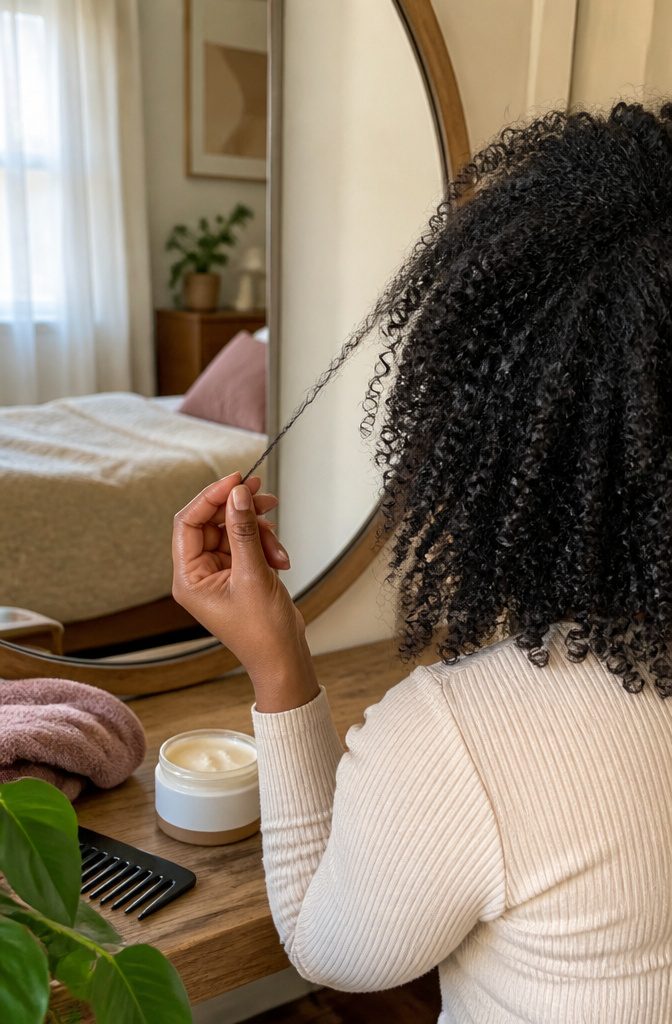
4A hair forms springy, S-shaped coils that range from the width of a toothpick to a crochet needle.
The curl pattern is well-defined, making it the easiest of the type 4 subtypes to recognize. When you stretch a coil and let it spring back, you get a clear S rather than a zigzag or a tight cloud.
Shrinkage sits around 50–60%, which is real but less dramatic than what 4B or 4C hair does.
The coils hold their shape without much coaxing, and when moisturized properly, 4A hair looks shiny. The texture feels soft rather than coarse, though density makes it look darker and thicker than it actually is.
Some people carry more than one curl type across their head, so you might find 4A mixed with 4B or 4C depending on the section.
2. 4B Hair
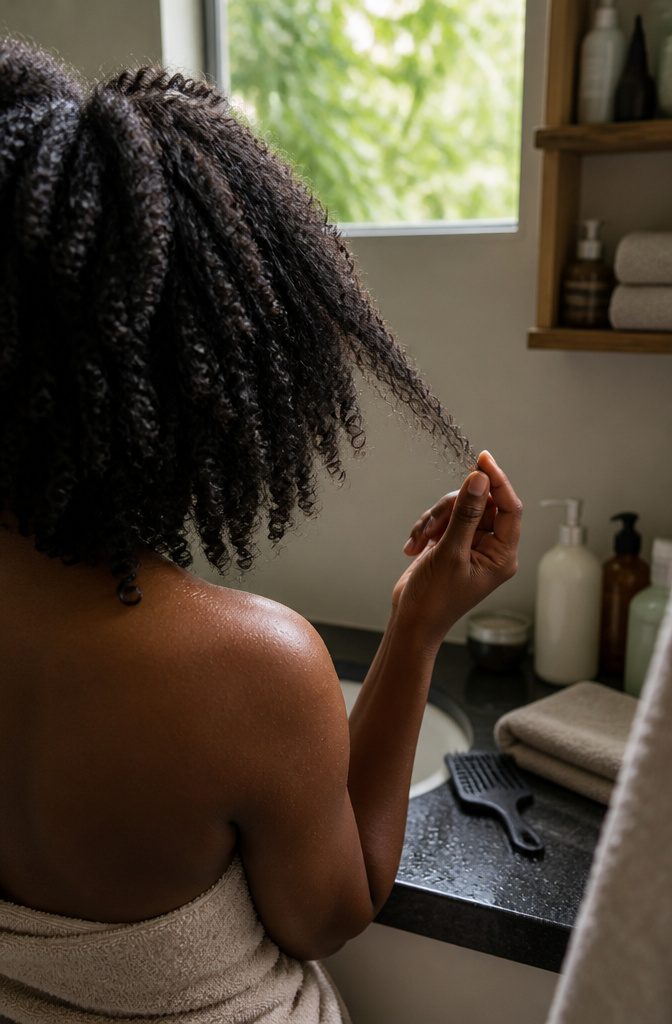
4B hair forms sharp, angular Z-shaped coils rather than the S-shaped springs of 4A.
The bends are tight enough that the curl pattern looks less defined, though you can usually still see some coiling, especially at the ends. Where 4A holds a visible curl easily, 4B reads fluffier and softer, almost wool-like in texture.
The most defining characteristic of 4B hair is its tightly-packed Z-shaped curl pattern. Because the Z pattern creates very sharp angles in the hair, 4B hair can take on a wiry appearance and be prone to breakage.
— Hair.com
That angularity means 4B shrinks more than 4A, often up to 70 percent.
Three inches of wet hair can look closer to an inch when dry. The texture falls between 4A and 4C: more visible pattern than 4C, less obvious definition than 4A.
All three are kinky-coily, but 4B sits in the middle of that spectrum, with enough structure to see coils under the right light but not enough to hold definition without product or styling.
3. 4C Hair

4C hair has the tightest coil pattern of all, with curls so densely packed they often look like a soft cloud rather than visible spirals or s-curves.
The coils are microscopically small, and without defining products or styles like twist-outs, the curl pattern itself can disappear entirely into the density. What you see is volume, not shape.
Shrinkage here reaches 75 to 80 percent, so hair that stretches well past your shoulders may sit at ear length when dry.
The growth expands outward before it falls down, which gives 4C hair its signature halo but hides every inch of length you gain.
Dryness is the defining challenge. The tight zigzag structure makes it hard for natural oils to travel from root to tip, and the strands themselves are fragile.
Breakage, tangling, and frizz all follow when moisture drops, which it does quickly. I find 4C responds best to routines built entirely around hydration: sulfate-free washes, heavy conditioners, and styles that minimize manipulation.
How to Tell Which Subtype You Have
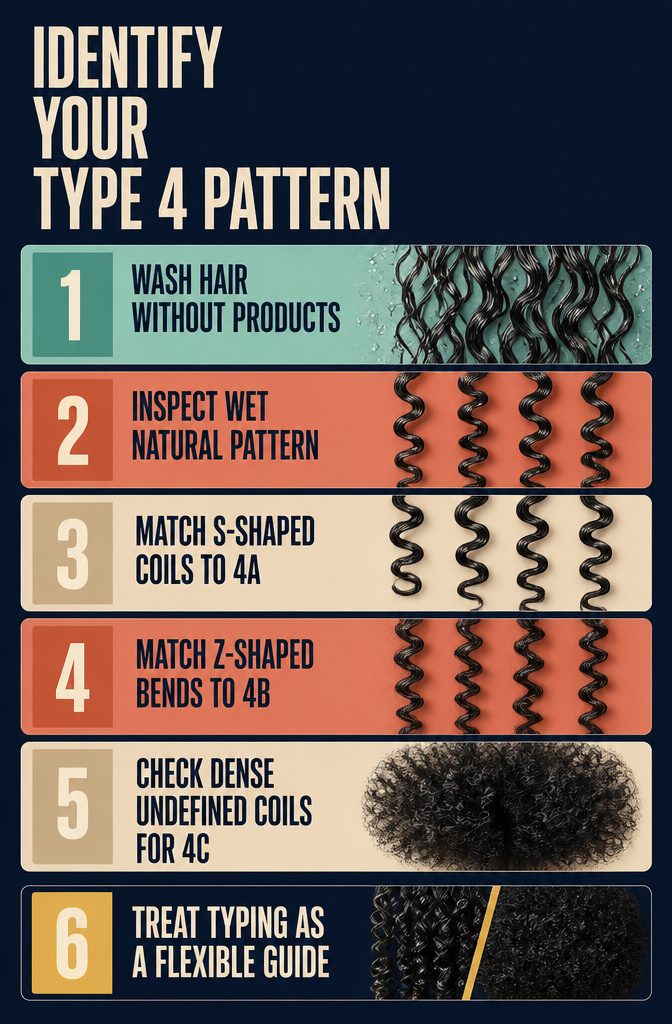
Start by looking at clean, product-free hair after washing.
The shape and definition you see then are what tell you which subtype you have. Wet hair shows the natural pattern best, before shrinkage and styling get in the way.
4A forms tight S-shaped coils about the width of a crochet needle. The curls are well-defined and springy, with visible loops even when dry.
4B takes on a sharper Z-shape, bending at angles rather than curling smoothly. It looks fluffy and soft, with less obvious definition unless you twist or braid it first.
4C is the tightest, with densely packed coils that may show no clear pattern at all without manipulation. It often looks like a soft cloud or halo rather than individual curls.
Most people have more than one pattern across their head, and typing charts are guides rather than exact standards.
What matters more than the label is noticing how much definition you start with and how your hair responds to moisture and styling.
Why Type 4 Hair Gets Dry
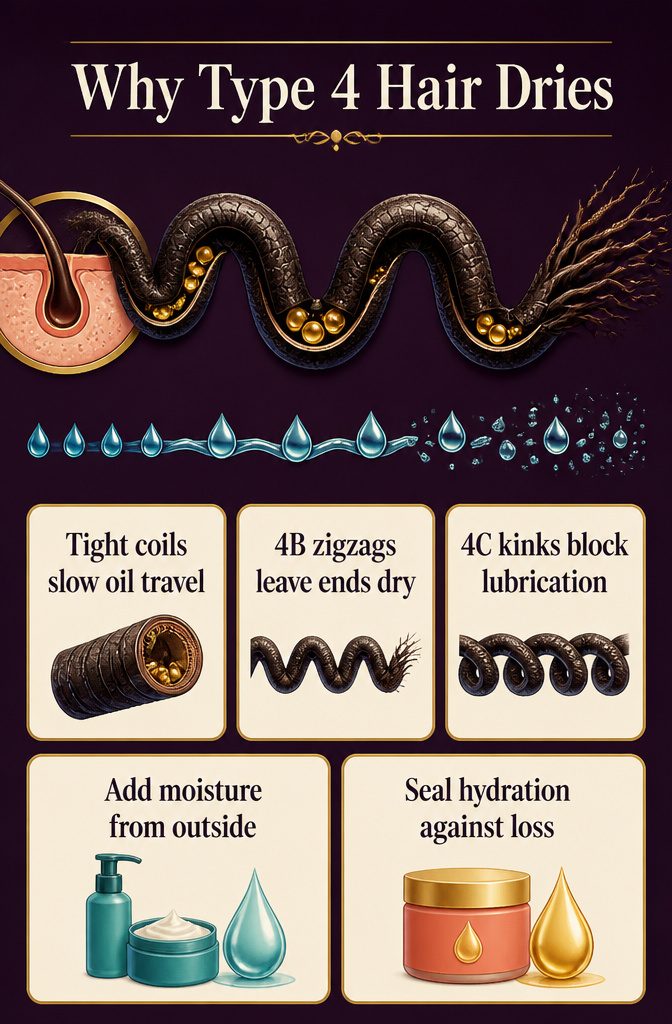
The tight coils that define type 4 hair create a structural problem: natural oils struggle to travel from the scalp down the hair shaft.
In 4B hair, the zigzag pattern sends sebum on a wild ride it rarely completes, leaving ends dry.
The corkscrew kinks in 4C strands make the path even harder. Without those oils reaching their destination, the hair dries out faster than looser curl patterns and turns fragile.
That dryness explains why moisture-focused care matters here.
If your hair cannot self-lubricate effectively, you need to add moisture from the outside and then seal it in. High porosity adds another layer: the hair may absorb hydrating products quickly, but it loses that moisture just as fast.
You hydrate, and hours later it feels parched again. Balancing absorption and retention becomes the task, not just piling on product.
4. Wash and Condition Without Stripping Moisture
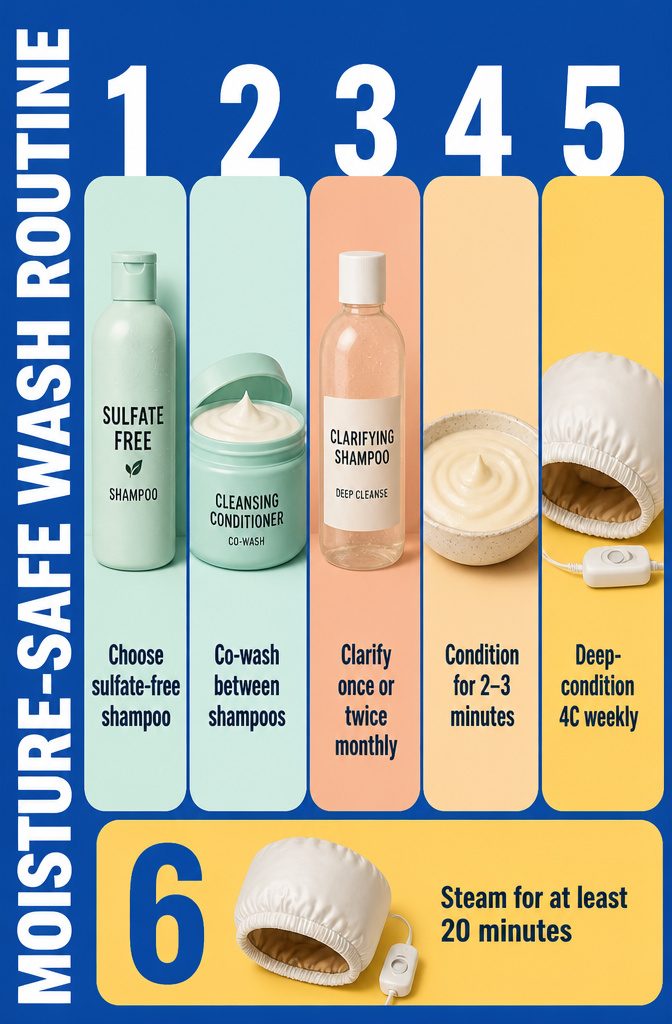
Sulfate-free shampoo is the baseline for type 4 hair.
Sulfates strip natural oils your scalp already produces too little of, leaving strands brittle and prone to breakage. Between shampoos, co-washing with a cleansing conditioner removes buildup without pulling moisture out.
How often you shampoo depends on how quickly product accumulates.
Some people stretch to 2, 3, or even 4 weeks between full washes. Others need a clarifying shampoo once or twice a month to cut through the leave-in conditioners and oils that pile up when you’re constantly adding moisture back.
The disagreement on co-wash frequency comes down to your own scalp: oily buildup argues for more clarifying, dryness argues for less shampoo.
Deep conditioning matters more than the wash itself. Leave regular conditioner in for at least 2–3 minutes.
For 4C in particular, weekly deep conditioning under a steamer for at least 20 minutes keeps coils elastic instead of fragile. Without it, the dryness wins.
5. Detangle Gently to Reduce Breakage
Detangle Gently to Reduce Breakage
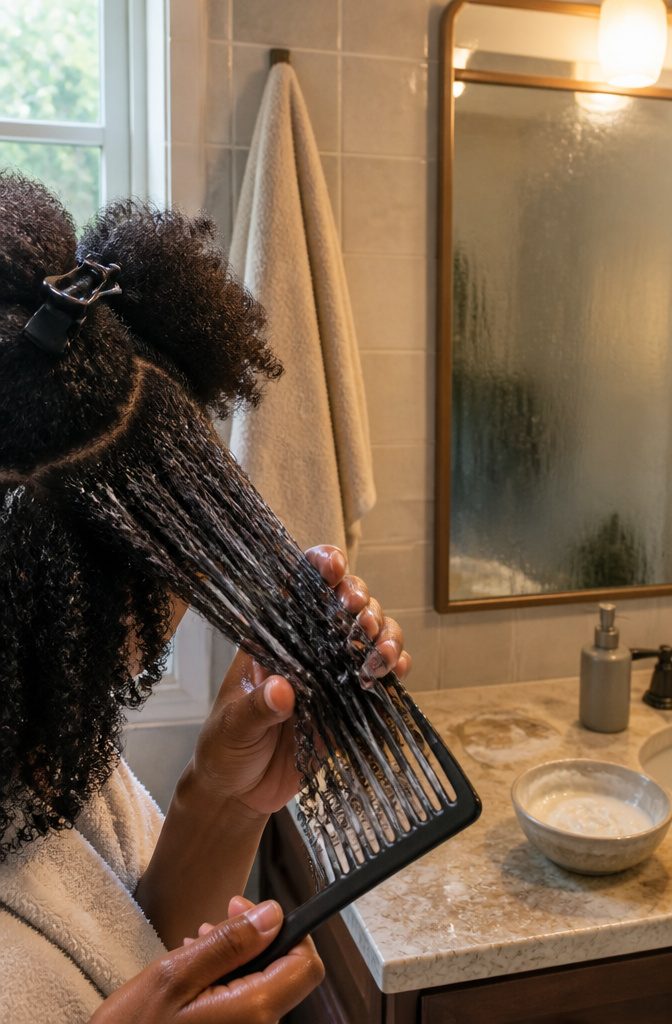
The tight coil pattern means adjacent strands wrap around each other easily, turning a day’s wear into knots that snap if you pull.
I detangle in sections using fingers or a wide-tooth comb, starting at the ends and working up toward the roots. A paddle brush works faster than fingers if the bristles flex, but skip anything with rigid teeth.
Timing splits depending on who you ask.
Some people detangle dry before washing because water and product can encourage more tangling. Others wait until hair is wet with conditioner on for slip, which lets the comb glide without dragging.
Both camps agree on patience: when you hit a knot, use your fingers to tease hairs out one at a time instead of yanking the whole section through.
Sectioning makes the job manageable and keeps detangled hair from recoiling into neighboring pieces while you work the next one.
6. Lock In Moisture With the LOC Method
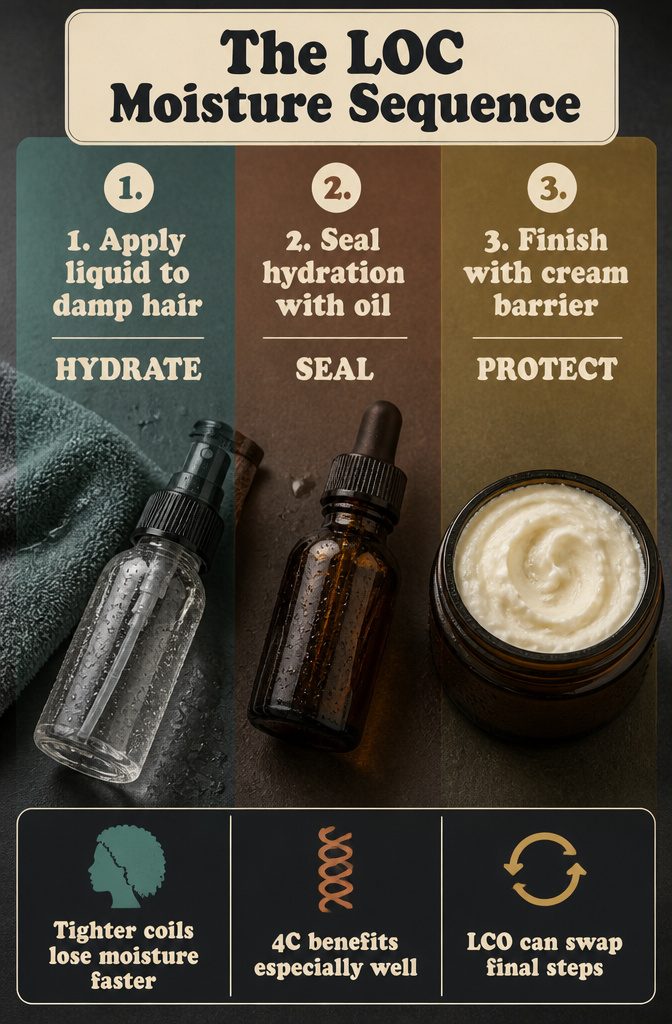
The LOC method layers three products in order: liquid to hydrate, oil to seal it in, and cream to prevent moisture loss. Water-based leave-in conditioner or plain water goes on first while hair is still damp.
Oil comes next, locking that hydration against the strand. A cream or butter finishes the sequence, adding a final barrier so moisture stays where you put it.
This layering works particularly well for Type 4 hair because the tighter the coil, the faster moisture escapes.
4C especially benefits from the method since its dense zigzag pattern loses hydration quicker than looser textures. The sequence matters: liquid first gives the hair something to hold, oil seals before it evaporates, and cream reinforces the whole setup.
Some people flip the last two steps and run LCO instead, putting cream before oil depending on how their hair responds, but the liquid always leads.
7. Use Protective Styles to Reduce Manipulation
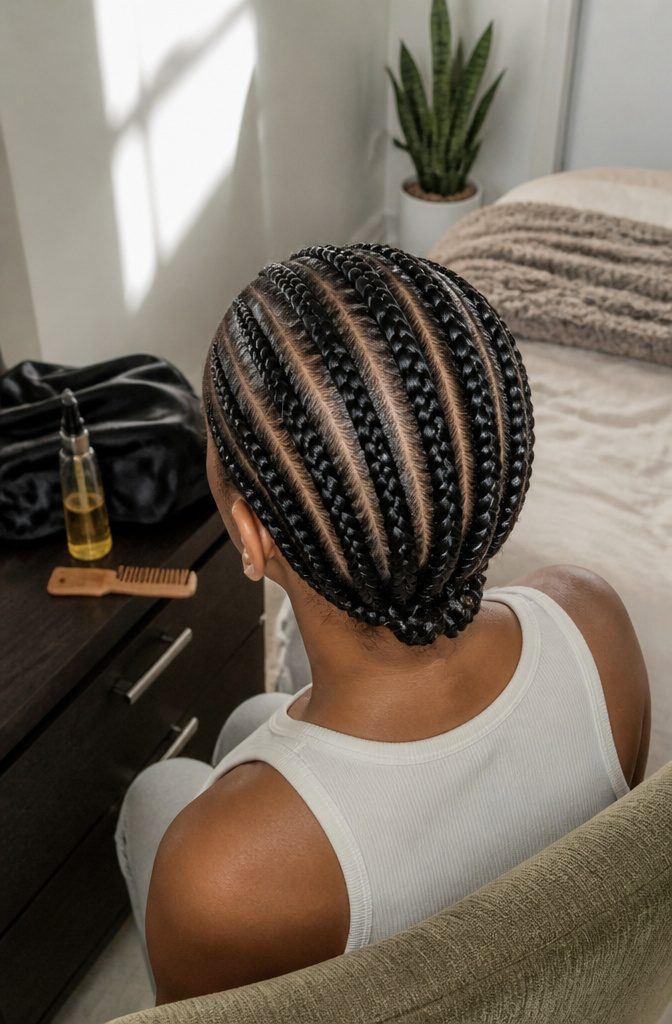
Protective styling keeps your hands out of your hair, which directly cuts down on breakage.
When you braid or twist type 4 hair into cornrows, Bantu knots, Fulani braids, or twists, you lock in moisture and reduce the daily combing, smoothing, and restyling that can snap fragile strands.
Most protective styles hold up for 6–8 weeks, which makes them a solid choice if you want to simplify your routine.
Wearing a style past eight weeks invites buildup from product and natural oils, and as your new growth pushes through, the tension at the roots can stress edges and lead to matting.
I check my scalp weekly and take styles down before they start to feel tight. A style that protects when it is fresh can damage if you leave it in too long.
8. Trim Every 8–12 Weeks
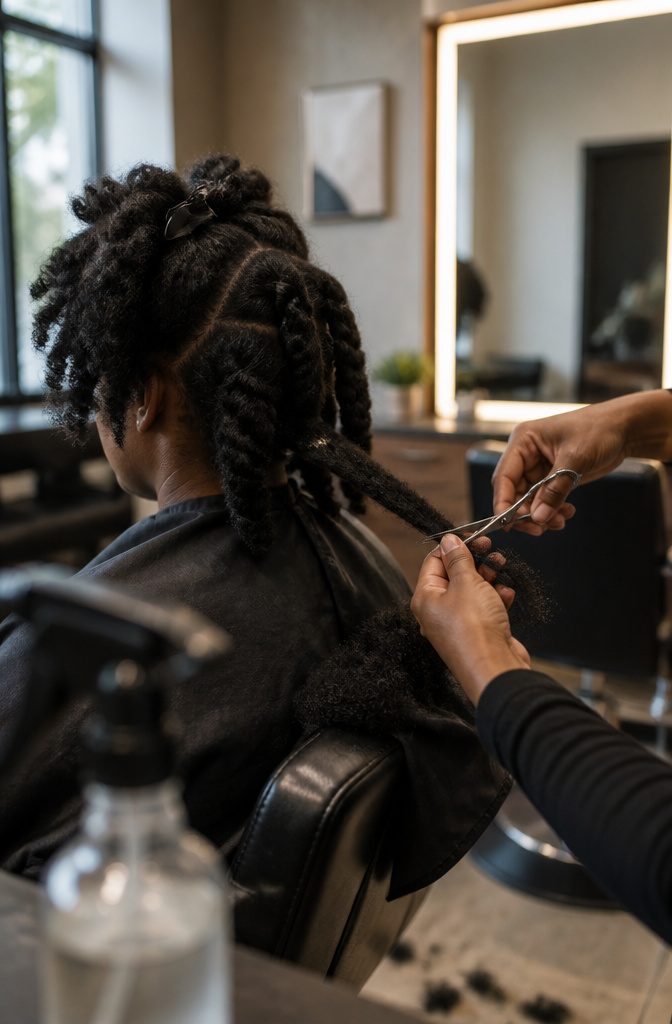
Regular trims keep type 4 hair healthy by removing split ends before they travel up the strand and cause breakage. Split ends can’t be repaired with product, so cutting them off is the only fix that works.
Trim every 8–12 weeks to catch damage early and maintain the shape of your cut, whether you wear your hair in a wash-and-go, twist-out, or protective style.
I know it feels counterintuitive when you’re trying to grow your hair longer, but skipping trims lets damaged ends snap off unpredictably instead of being removed on your own schedule. You lose more length that way.
The time frame also depends on how much heat you use and how often you manipulate your hair; someone who stretches between trims can usually tell when ends start to feel rough or tangle more easily than they did a month earlier.
9. Sleep on Satin or Silk

Cotton pillowcases absorb the moisture you worked to lock into type 4 hair, leaving it dry by morning. Satin or silk pillowcases reduce friction and hold hydration in overnight, which matters when your coils already lean toward dryness.
The smoother surface keeps strands from tangling as you move in your sleep, so you wake up to less breakage and a style that holds closer to what you set the night before.
A bonnet or scarf wrapped around your hair does the job better than swapping the pillowcase alone.
It covers all the hair rather than just the side you happen to sleep on, so protection stays consistent no matter how much you shift.
If you skip the bonnet, a silk or satin case still beats cotton by a wide margin.
Balance Protein and Moisture
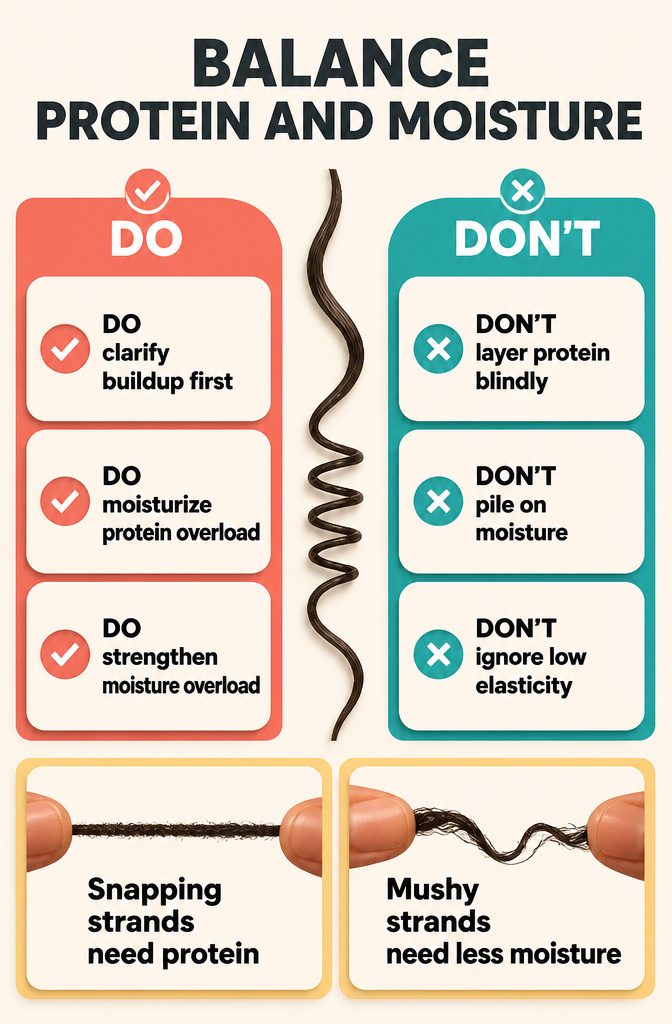
Getting the protein-moisture balance wrong shows up fast in type 4 hair. Too much protein leaves coils brittle and dull, while too much moisture makes them limp and shapeless.
Both problems start the same way: clarifying shampoo to strip what built up. What comes next is where they split.
Protein overload calls for an intensely moisturizing treatment to soften the hair back into shape. Moisture overload needs a strengthening product rich in protein to restore structure.
Which imbalance you face depends partly on porosity and elasticity. High porosity hair drinks up moisture but loses it through gaps in the cuticle, so it needs protein more often to patch those gaps.
Low porosity hair resists moisture but holds onto it once it gets through, which makes protein overload more likely if you layer too many strengthening treatments.
Stretch a wet strand: if it snaps or stays stretched instead of bouncing back, elasticity is low and protein is the fix. If it feels mushy, cut the moisture layers.
Shrinkage Hides Length, Not Growth
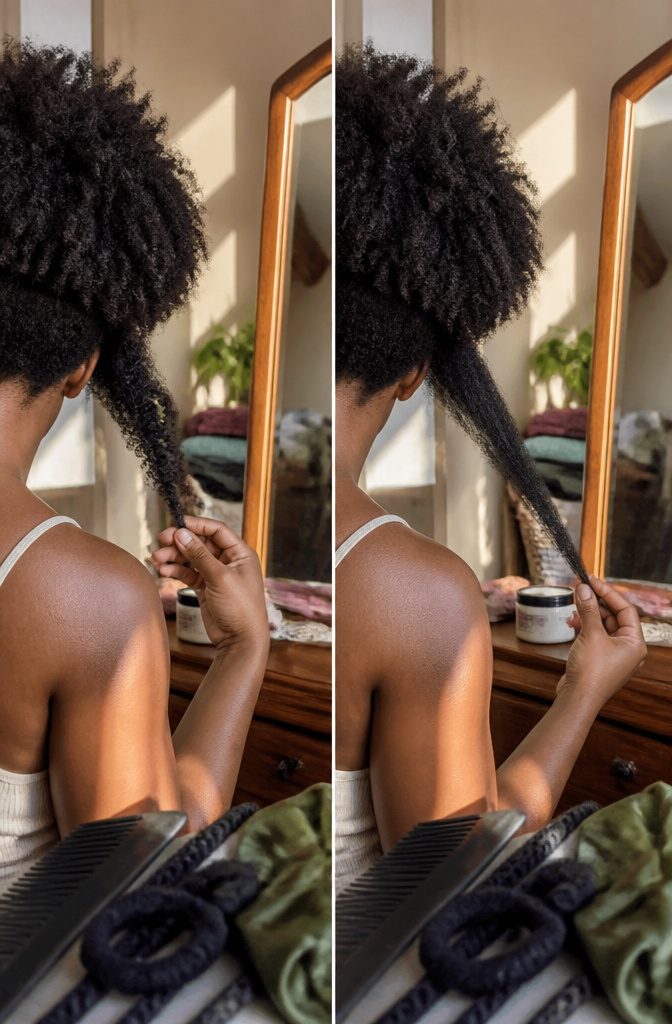
Shrinkage happens because the coils naturally contract and spring back.
4A shrinks around 50–60%, 4B around 70%, and 4C up to 75–80%. That means three inches of actual length can look like less than an inch before you stretch it.
Type 4 hair grows about half an inch per month, the same rate as other textures, but the coils compress that growth the moment it appears.
People ask whether 4C hair can grow long.
Yes. Shrinkage makes the growth harder to see, and because 4C is fragile, breakage can erase length faster than you gain it.
If you protect the ends and keep the hair moisturized, the length is there when you stretch it out with twists, braids, or banding.
Shrinkage isn’t stalled growth. It just hides what you already have.
Frequently Asked Questions
What is type 4 hair?
Type 4 hair is tightly coiled or kinky hair, the category with the tightest curl pattern in common hair typing systems.
It breaks down into 3 subtypes: 4A, 4B, and 4C, each differing in how the coils form, their definition, and how much they shrink. The texture is densely packed, giving serious volume, and it shrinks considerably when it dries.
What is the difference between 4A, 4B, and 4C hair?
4A forms springy S-shaped coils with visible definition and shrinks around 50–60%.
4B has sharp Z-shaped coils that look fluffier with less definition and shrinks up to 70%. 4C has the tightest coils with minimal visible pattern, shrinking 75–80%, and often looks like a soft cloud rather than individual curls.
How do I know if I have type 4 hair?
Look at clean, product-free hair after washing to see your natural pattern. Type 4 hair forms tight coils that shrink considerably when dry, with dense texture and serious volume.
The specific subtype depends on whether your coils are S-shaped (4A), Z-shaped (4B), or so tight they form a cloud with no clear pattern (4C).
How do I know if my hair is 4B or 4C?
4B takes on a sharp Z-shape with bends at angles rather than smooth curls, looking fluffy with some visible coiling.
4C has densely packed coils so tight they often show no clear pattern at all without manipulation, appearing as a soft halo instead of individual spirals. 4C also shrinks more, reaching 75–80% compared to 4B’s 70%.
Can 4C hair grow long?
Yes, 4C hair grows at the same rate as other textures, about half an inch per month. Shrinkage makes the growth harder to see, compressing 3 inches of length into less than an inch when dry.
If you protect the ends and keep the hair moisturized, the length is there when you stretch it out with twists, braids, or banding.
What is type 1, 2, 3, and 4 hair?
Type 1 is straight hair with no curl. Type 2 is wavy hair that forms loose S-shaped waves.
Type 3 is curly hair with defined spirals and loops. Type 4 is coily or kinky hair with tight coils ranging from corkscrew curls to dense zig-zag patterns.
Is 4C the rarest hair type?
No, 4C is not the rarest hair type.
It is common among people of African descent, though type 4 hair occurs across populations. Rarity depends on geography and ancestry rather than the hair typing system itself.





