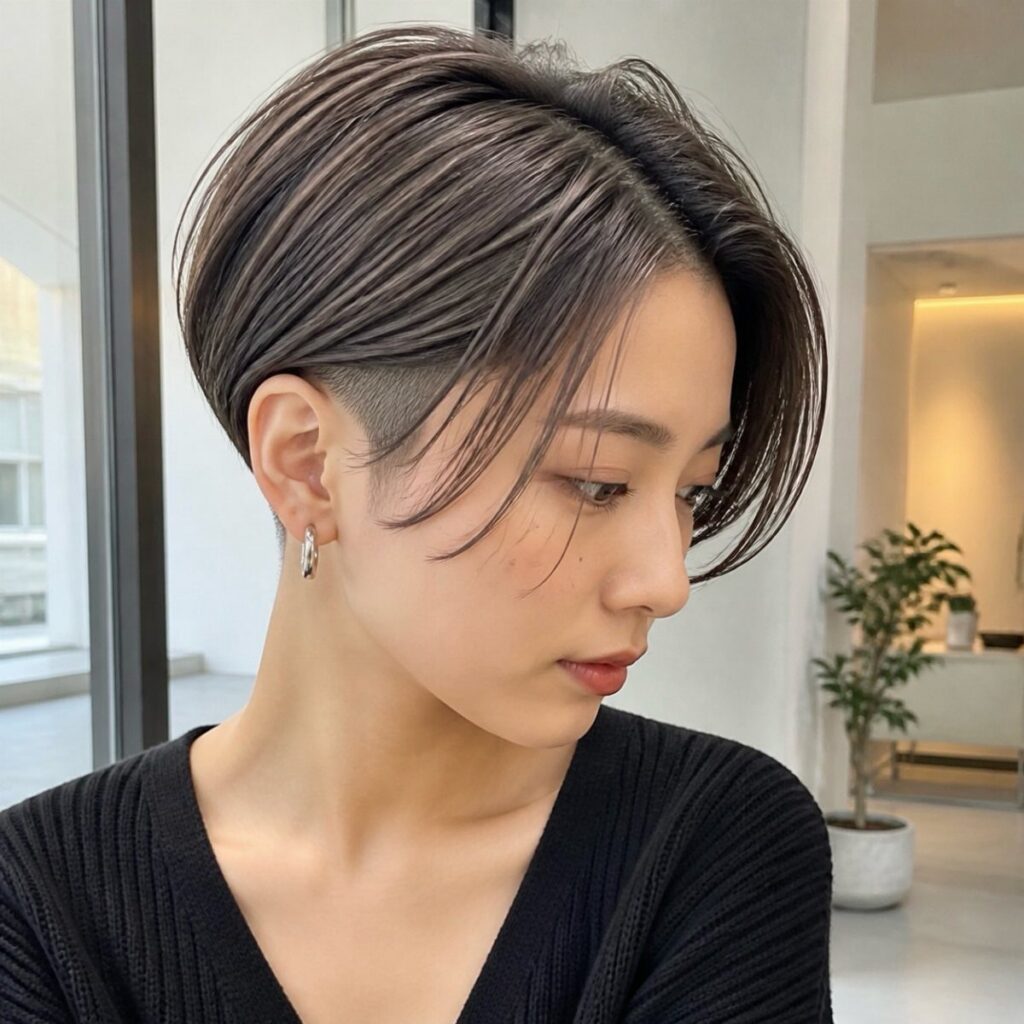
The two-block cut keeps 3–7 inches of length on top while the sides and back are cropped short, and the transition between those zones can be graduated into a fade or disconnected with a hard line.
If you want the option to hide the undercut, the long-hair version or hidden back undercut let you wear the contrast only when you pull the hair up or tuck it behind your ear.
Choppy layers forgive longer intervals between cuts, and a top cropped to 3 inches or less holds its shape without styling and air-dries fast.
1. Choppy-Layered Two Block
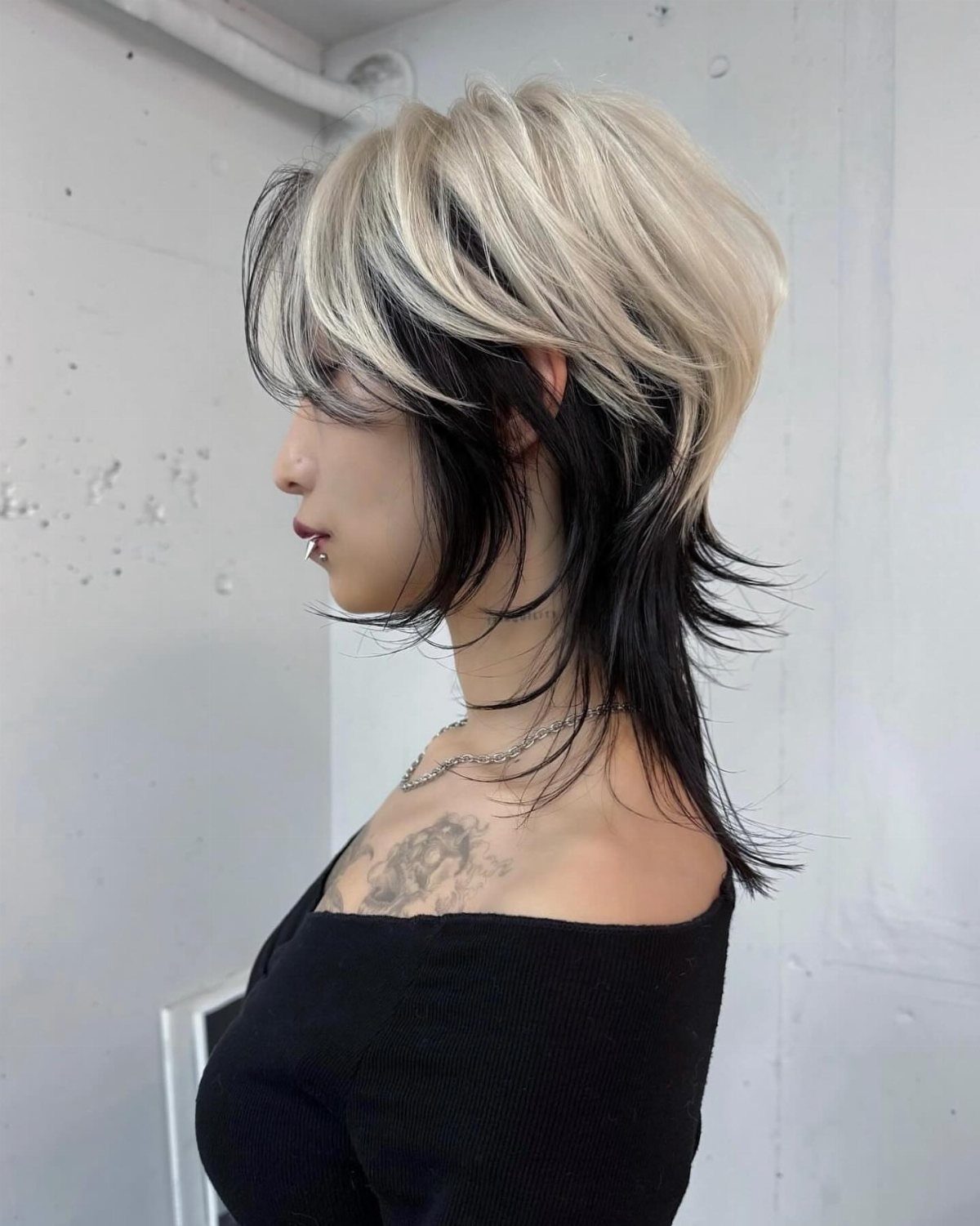
Choppy layers through the top section soften the two-block silhouette and give the cut texture that moves. The choppier the cut, the more movement you get when air hits it or when you run your hands through it.
Ask for point-cutting or razor work through the top to break up any blunt line.
The layers can sit close together for subtle texture or be spaced wider for a shaggy finish. Fine hair reads fuller with this treatment; thick hair loses some weight and sits looser.
The style grows out forgiving. Layers blur the line between fresh and overdue.
2. Short Two Block
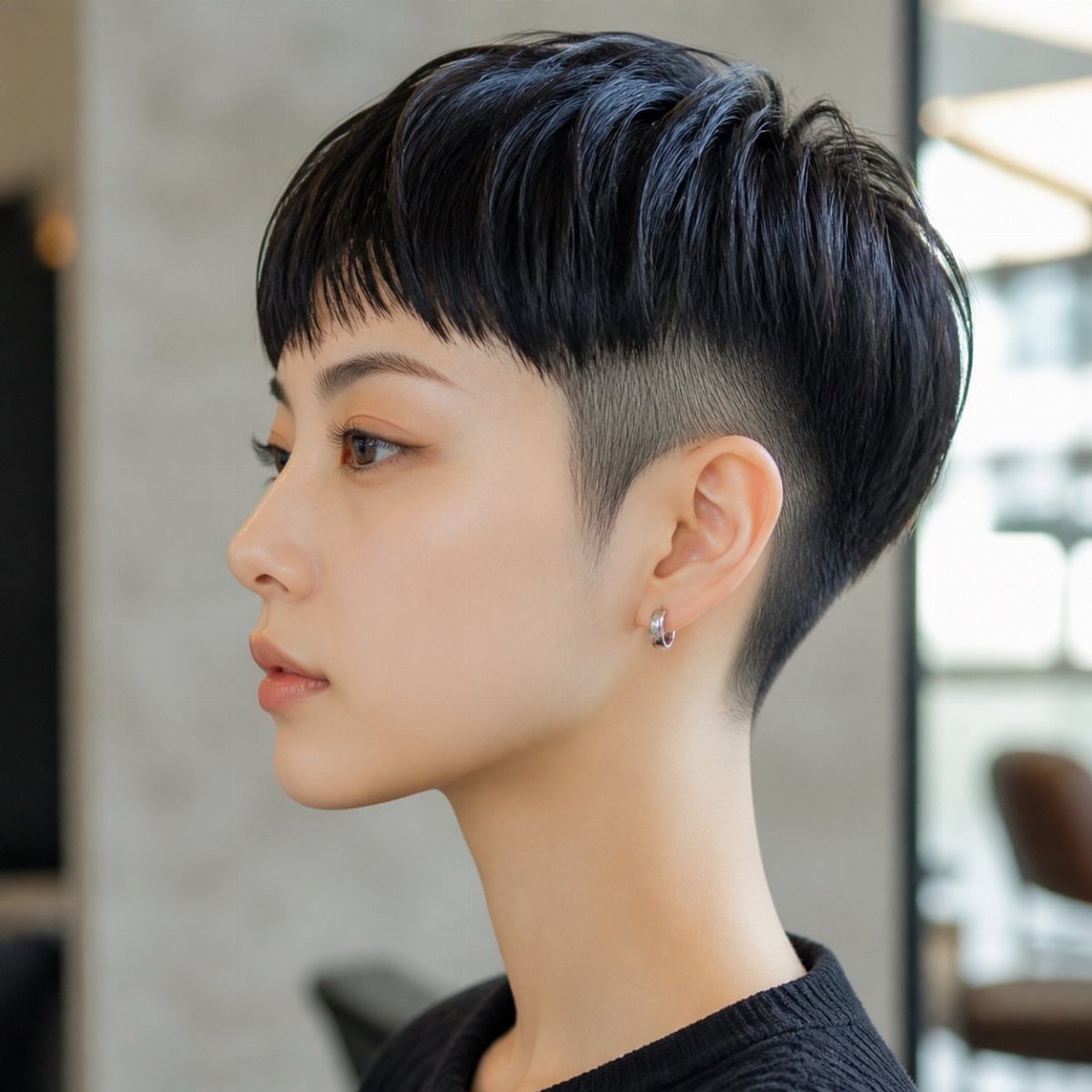
A shorter top keeps the two-block principle but drops the styling time. The top here is cropped close enough that it holds shape without product and dries in minutes.
This version suits fine or thin hair that struggles to hold volume when longer. The shorter length also works if the contrast is what you want but the upkeep of a longer top is more than you’re after.
Growth shows faster at this length, so plan for regular trims to hold the proportions.
3. Two Block Mullet
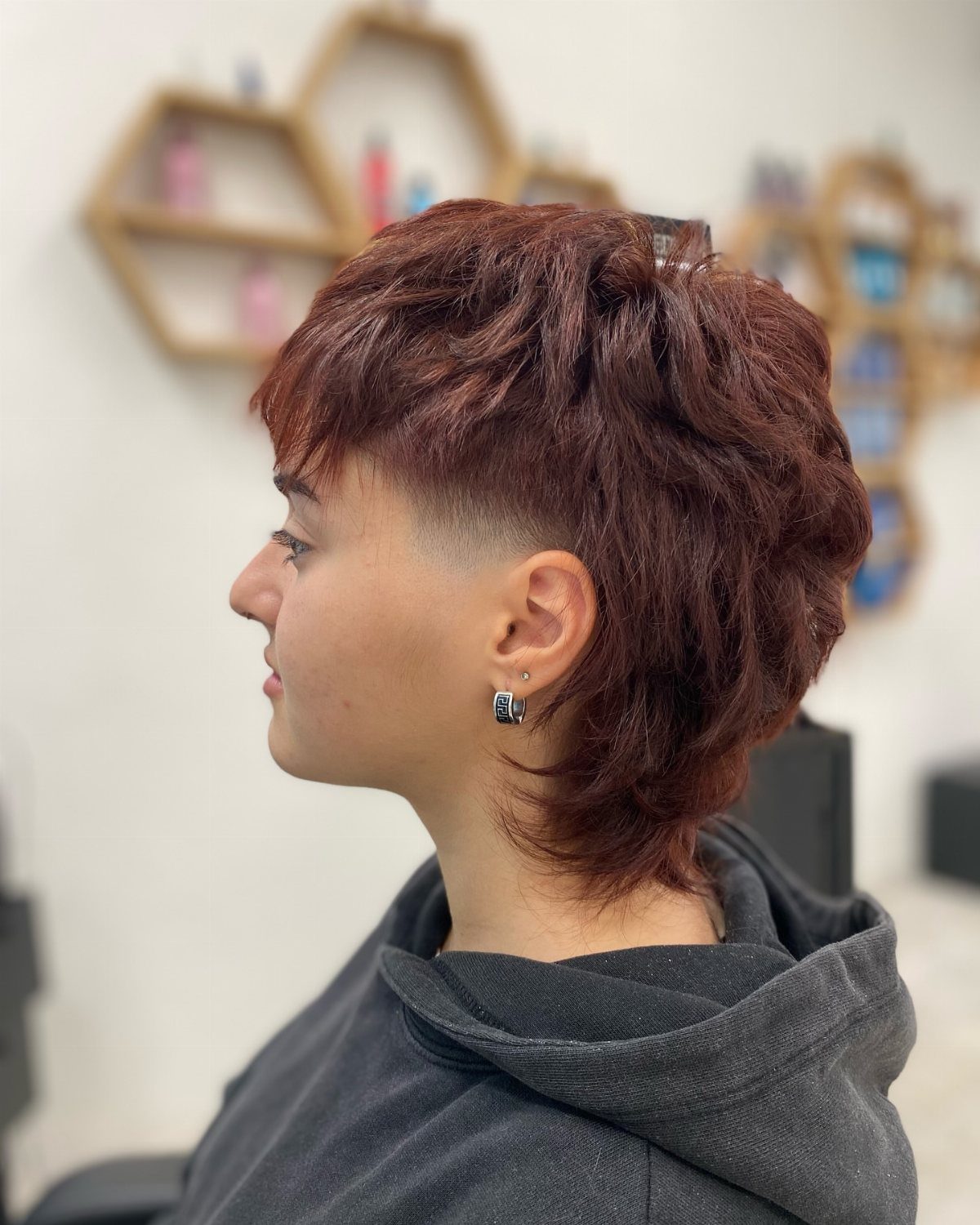
The contrast is in 3 directions: clipped sides, length on top, and a tail that runs past the nape.
The mullet portion can sit just past the collar or drop several inches lower depending on how much contrast you want between the cropped sides and the back.
Styling the top and leaving the tail alone gives the cleanest look. If the back has natural wave or curl, it adds movement without effort.
This cut telegraphs intention. It either suits you or it doesn’t, and there’s not much middle ground.
4. Curly Two Block
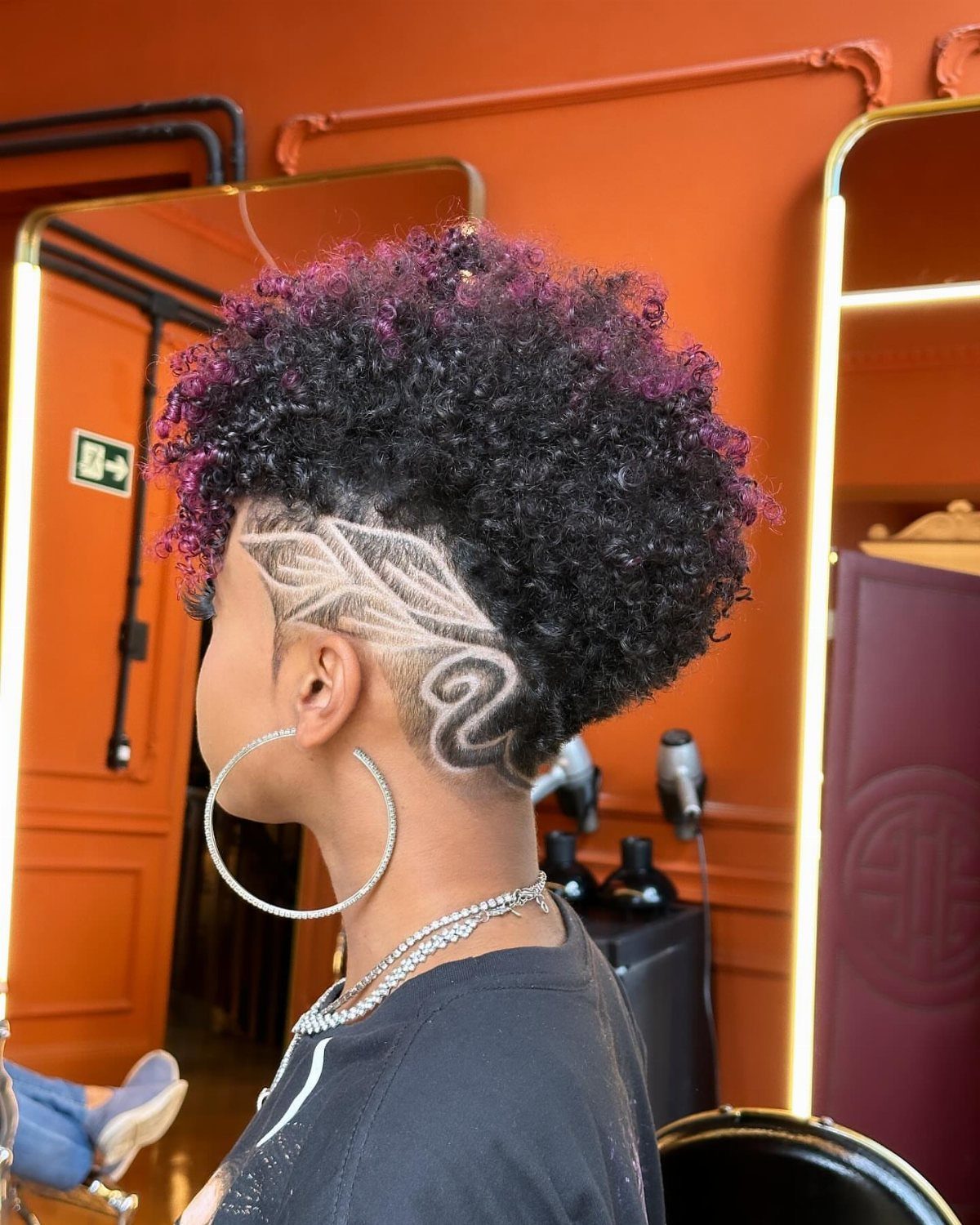
Dense curls sit high on top while the sides are shaved close, and curved designs are cut into the fade.
The height comes from the curl itself, not from length alone, so this works best with coil or tight spiral texture.
The designs add detail that’s visible from the side and can be refreshed or changed each time the sides are shaved. Maintenance means keeping the sides clippered regularly while the top grows freely or is shaped to control the silhouette.
Moisture and curl definition products keep the top from frizzing. The higher the curl sits, the more the contrast reads.
5. Long-Hair Undercut
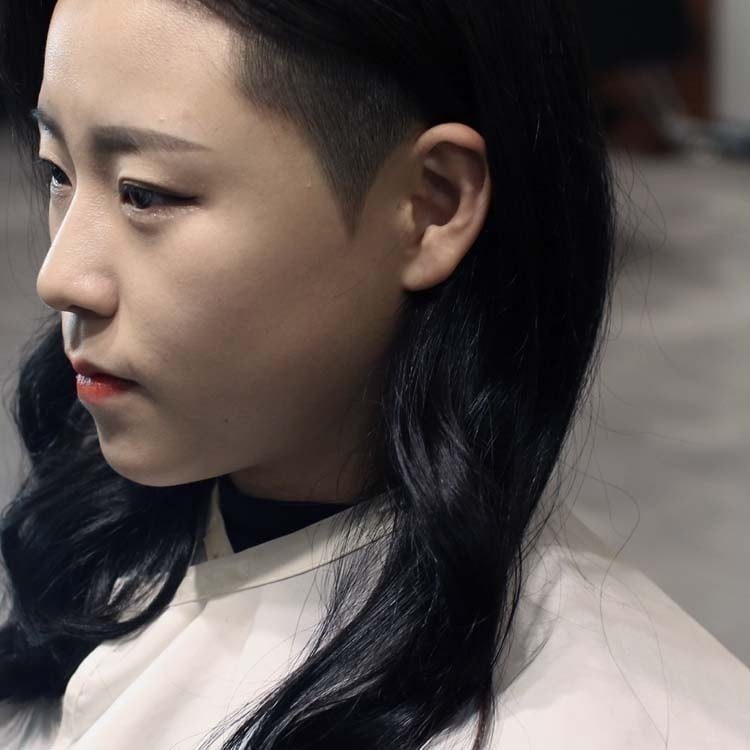
Long hair covers a section shaved close above the ear. When the hair is worn down, the undercut stays hidden; pulled back or tucked, it shows.
This gives the option of contrast without committing to a visible short section all the time. The undercut can extend from temple to behind the ear or stay small and isolated to one spot.
Regrowth is slower to look untidy because the long hair hides it. Shaving the section yourself with clippers is manageable once you’ve done it a few times.
6. Hidden Back Undercut
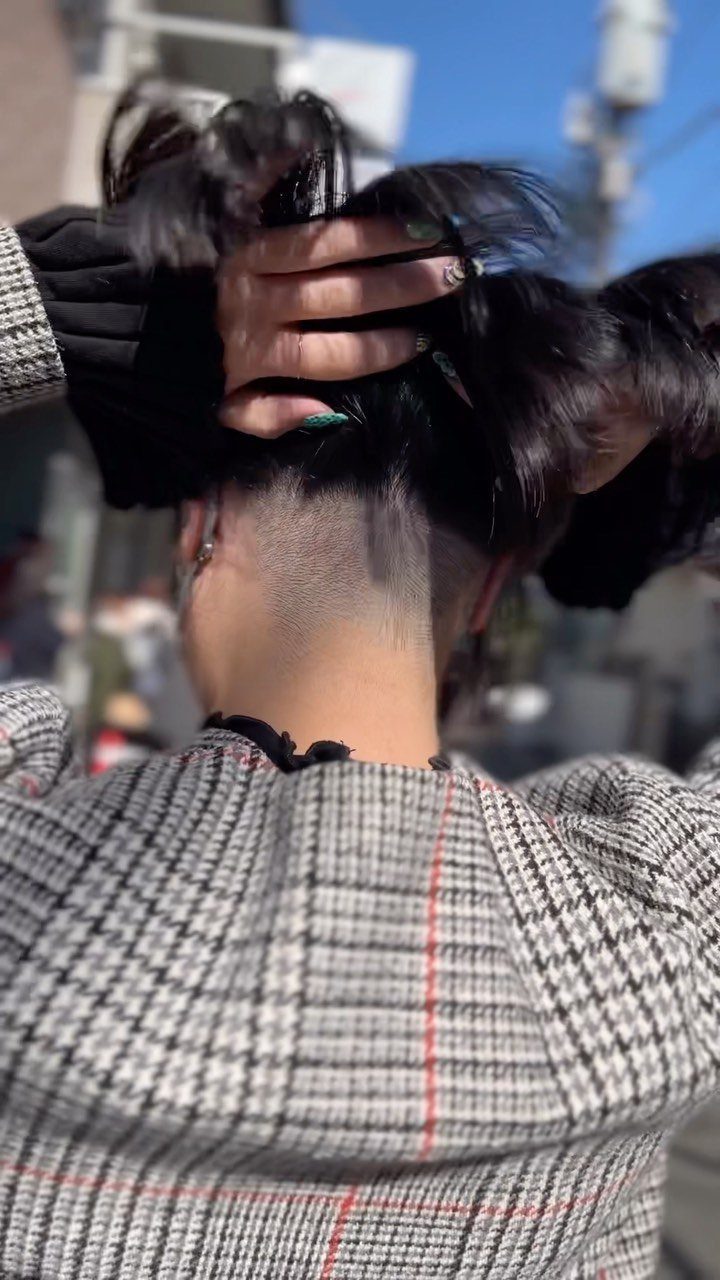
The back is shaved close beneath the length, and the long hair falls over it until lifted or tied. This keeps the undercut invisible in everyday wear and reveals it only when you choose.
The shaved section can sit low at the nape or climb higher toward the crown. A higher undercut removes more weight and keeps the neck cooler; a lower one is easier to grow out if you change your mind.
Clippering the back yourself is harder to see and control than the sides, so most people have someone else do it or use a hand mirror setup.
7. Rounded Bob Two Block
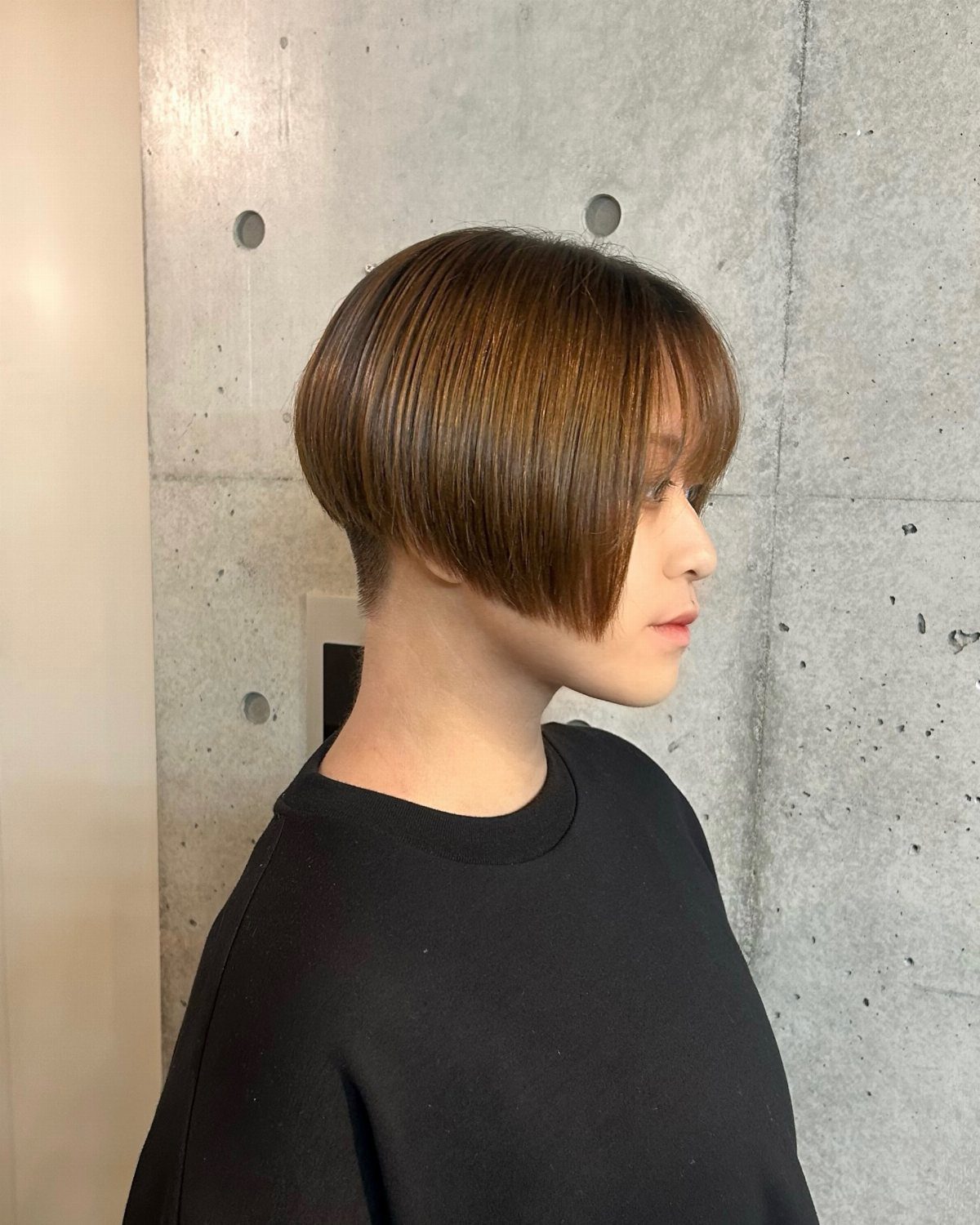
The top is cut into a rounded curve that sweeps over sides and nape clipped close. The shape holds its curve without much styling because the weight distribution is built into the cut itself.
This reads cleaner than a choppy layered version and suits straight or slightly wavy hair that can hold the rounded line.
Fine hair benefits from the rounded silhouette because the curve gives the appearance of fullness without needing volume at the root.
The sides need regular maintenance to keep the contrast visible. The rounded top grows out slower to look messy than a blunt line would.
8. Long Fringe Two Block
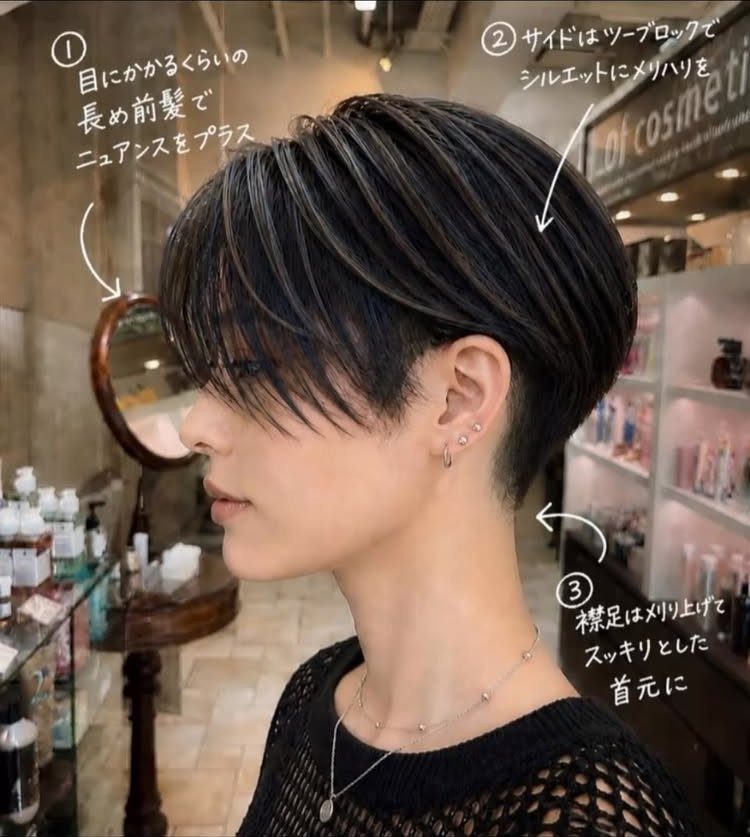
Length is concentrated at the front, with the fringe falling well past the eyebrows while the crown is layered shorter and the nape stays clipped tight.
The long fringe can be swept to one side, parted down the middle, or left to fall forward.
Styling depends on where the fringe sits.
If it covers the eyes, you’ll push it aside or pin it back during the day. If it’s cut to skim the brow line, it stays in place.
The fringe needs trimming between cuts if you want it to stay out of your eyes.
9. Tied-Back Two Block
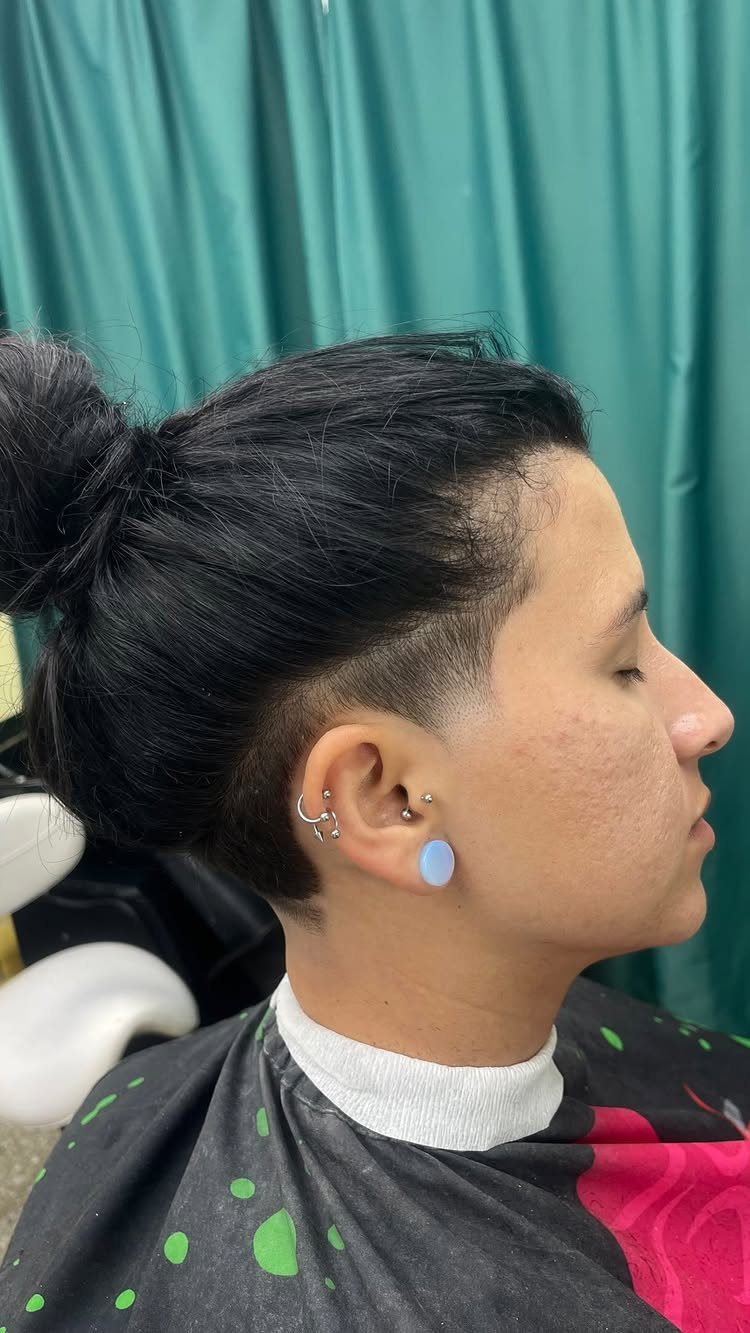
Pulling the long top into a bun or ponytail leaves the shaved sides fully visible and clears the neck. The length on top needs to be long enough to gather without shorter pieces falling out.
This works if you want the option of covering the undercut when the hair is down and showing it when tied.
The bun can sit high at the crown or low at the nape depending on how much lift you want.
Regrowth on the sides shows quickly, so keeping the look sharp means clippering every few weeks.
What Defines the Two-Block Cut
The two-block cut keeps 3–7 inches of length on top while the sides and back are cropped short.
The transition between the 2 zones can be graduated and soft, or it can be disconnected with a visible line where the long hair meets the clippered section.
A graduated blend gives you something closer to a fade, where the hair tapers smoothly from long to short. A disconnected undercut puts a hard line between the 2 lengths and reads sharper.
The fade version tapers continuously from the top down to skin or near-skin at the bottom.
The low taper starts the fade lower on the head and keeps more weight through the sides. Both options pair the longer textured top with sides that stay neat, and both work with straight or wavy hair.
Styling the Longer Top
Towel off after washing but leave the hair on top a little wet. Blow-dry the top in the direction you want it to sit, lifting at the roots with your fingers if you’re after volume.
Run the product through the top section, concentrating on the front where texture shows.
A mist of sea salt or texturizing spray before drying gives the hair grip and makes it easier to shape. Hairspray holds the finished style in place through the day.





