
Increasing hair density takes six to twelve months of consistent scalp care, nutrient-dense eating, and damage reduction. Most people skip the scalp itself and focus only on the hair they can see, which leaves follicles blocked or starved of circulation.
Minoxidil, the FDA-approved topical treatment sold as Rogaine, takes up to sixteen weeks to show visible results when applied twice daily.
1. Support Scalp Health and Remove Buildup
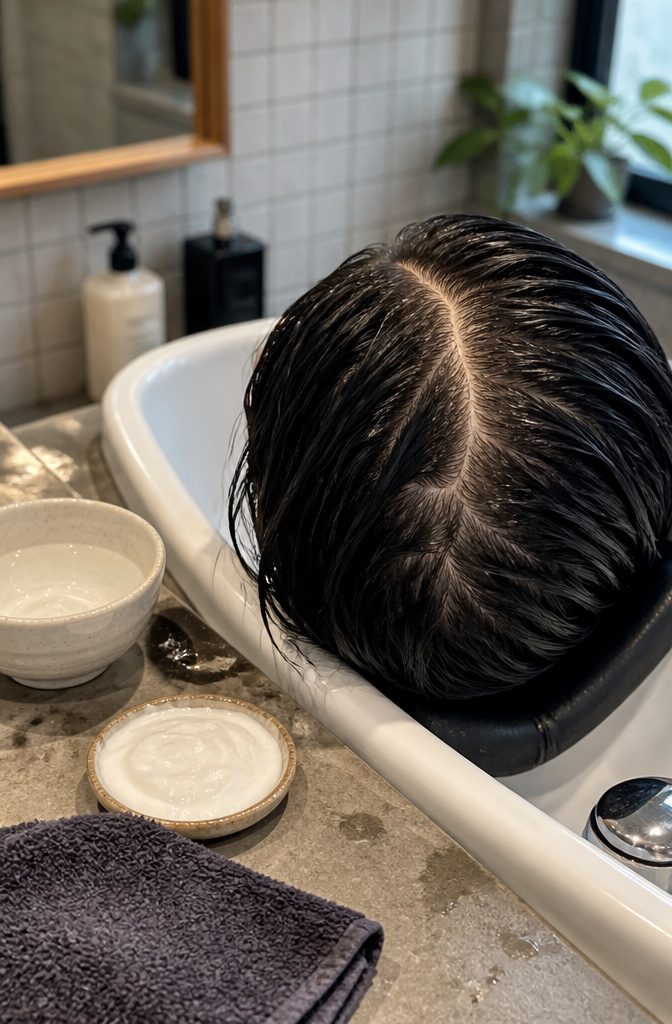
The scalp is where growth happens, and follicles blocked by product residue, sebum, or sweat can struggle to produce healthy strands. Buildup reduces oxygen flow to the root and creates an environment that discourages density over time.
Wash based on your scalp’s oil level, not a fixed schedule. For oily scalps, every two days keeps follicles clear.
Dry scalps may do better every three to four days. Remove what blocks the follicle without stripping the skin.
If you use a lot of styling products, a detox shampoo lifts residue without drying out the scalp.
I reach for one when leave-in products or dry shampoo start to feel heavy at the root. Between those deeper cleanses, a mild sulfate-free formula keeps the skin balanced without irritation.
2. Eat a Balanced Diet With Hair-Supporting Nutrients

What goes onto your plate shows up in how hair grows.
Hair is made of keratin, a structural protein, and without enough dietary protein the body diverts what little it has to organs that matter more. Hair loses out first.
Eggs, beans, and nuts cover the protein piece. Iron carries oxygen to the roots, so leafy greens, dates, and iron-rich pulses help strands stay strong and hold on longer.
Zinc, vitamin C, B vitamins, and omega-3 fats all support growth and resilience.
Bell peppers and dark greens bring vitamin C, wild salmon and hemp seeds deliver omega-3s. I think of it as building from the inside rather than patching from the outside.
A balanced diet built around whole foods, mostly plant-based, with enough fruit and vegetables gives hair what it needs without having to track every nutrient separately.
3. Massage the Scalp
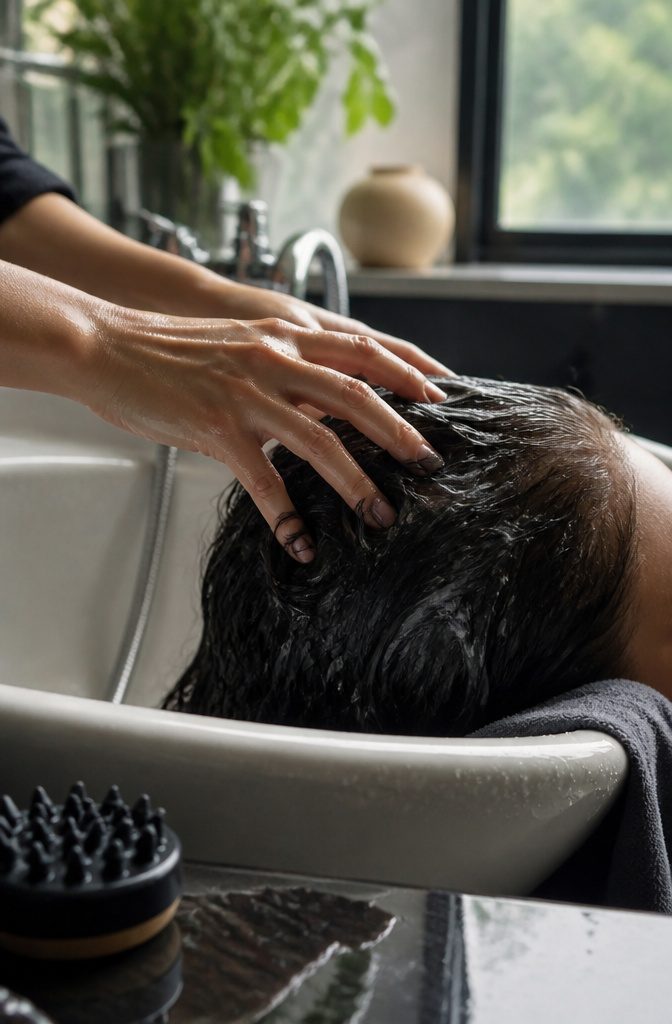
Scalp massage stimulates blood flow to the follicle, which means more oxygen, iron, and protein reaching the root. The hair grows from that supply, so improving circulation supports the growth process without products or cost.
The method is simple: light circular pressure with your fingertips for five minutes daily. You can work on dry hair or use it as part of an oiling routine.
Either way, the pressure stays gentle. You want circulation, not scrubbing.
I prefer doing this while shampooing, since the motion fits naturally into washing and the slippery surface makes it easier to move without pulling. Some people use a dedicated scalp brush for the same effect.
Both work. Consistency matters more than the tool you choose.
4. Reduce Heat and Chemical Damage
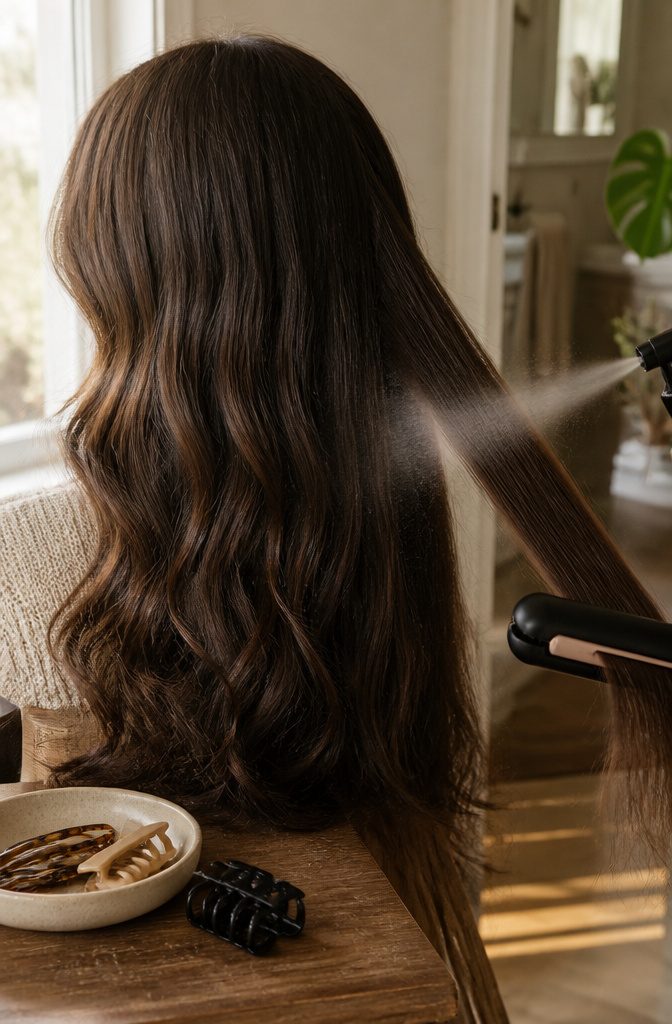
Heat styling and chemical treatments both dry hair and weaken the structure of each strand, which over time cracks the cuticle and leads to breakage.
Breakage thins the overall appearance faster than almost anything else, because you lose length you have already grown.
Reducing heat by even 50 percent can reduce strand loss from breakage.
Air-dry whenever you can manage it. When you do need heat, keep the tool on the lowest setting that works for your texture and always apply a heat protectant spray first.
Chemical color, especially permanent dye and bleach, creates the same environment for damage, so spacing out sessions and asking your stylist not to overlap color helps preserve what is already there.
If you are using hot tools daily, the volume they create in the short term costs you density over months.
Diffusing, blow-drying with a round brush, and straightening all make hair look fuller immediately, but daily use tips the balance the wrong direction.
5. Handle Hair Gently and Avoid Tension
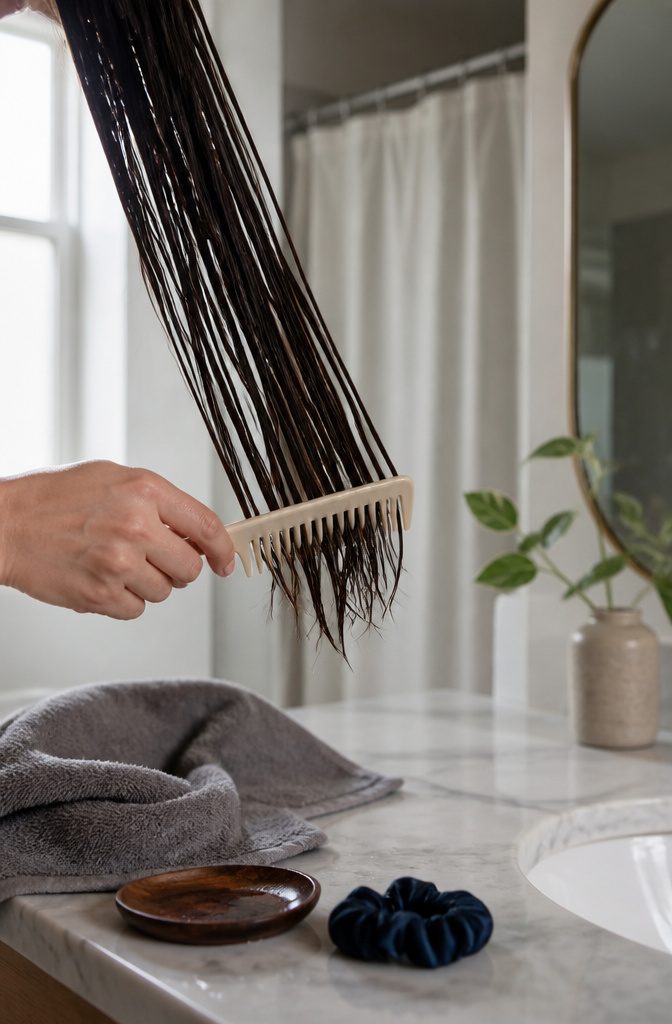
The way you handle hair wet matters more than most people expect.
Wet strands stretch and snap more easily than dry ones, and brushing through tangles at that stage can pull hair out at the root or break it midway down.
Either way, you lose visible density. I start detangling from the ends and work upward in sections, using a wide-tooth comb or a detangling brush designed not to rip through knots.
The same caution applies to pulling hair back while it is still damp. Tension on wet hair weakens the cuticle and, over time, thins the hairline and temples where ponytails sit.
Tight hairstyles stress the follicle itself. A high ponytail in the same spot every day, braids pulled taut, or elastic bands yanked out without loosening them first all create mechanical stress that can cause gradual thinning.
Switching to looser styles, silk scrunchies, and varying the position of your ponytail reduces that constant pull and protects the areas most prone to it.
6. Choose Products to Add Volume or Protect Hair
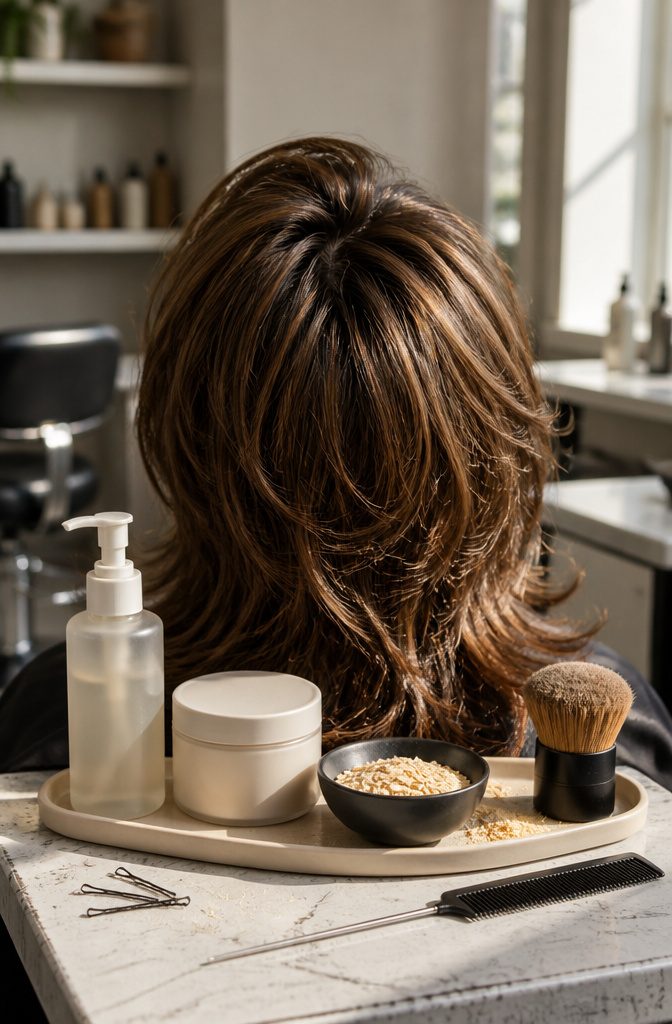
Thickening shampoos and conditioners work two ways: some coat individual strands to make them appear fatter, others lift at the root to create space and volume.
Both deliver the look of fuller hair, though the mechanics differ. I reach for products that do the work without stripping moisture, since dry hair lays flat and shows scalp more readily.
Ingredients matter more than marketing. Avoid drying alcohols such as ethanol, SD alcohol, propyl alcohol, and isopropyl alcohol, which can swell the cuticle temporarily but leave hair brittle over time.
Better volumizing formulas rely on hydrolyzed oat protein and fatty alcohols like cetyl or cetaryl to plump strands without the damage. Skip products with man-made silicones; they weigh hair down and flatten any volume you gain at the root.
After shampooing, layer in styling products built for texture: volume sprays on damp roots before blow-drying, powders massaged into dry roots for lift that lasts, or dry shampoo used as a styling product rather than a refresh.
Each one adds structure where hair needs it most.
7. Wash Hair in a Way That Suits the Scalp and Hair

The right washing frequency depends on how much oil your scalp produces. If you have an oily scalp, washing every two days keeps follicles clear without stripping the skin.
Dry scalps can often go three to four days between washes, which gives natural oils time to move down the hair shaft and protect it.
Fine hair typically does well with two to three washes a week, since overwashing can flatten it and make density problems more visible.
I adjust based on how the scalp feels rather than sticking to a fixed schedule.
If there’s buildup or itching between washes, that’s a sign to wash more often. If hair feels dry or the scalp is tight after washing, stretching another day or two usually helps.
8. Manage Stress and Support Sleep

Chronic stress pushes more hair follicles out of their growth phase and into rest and shedding, which shows up as visible thinning over time.
Cortisol, the hormone released during stress, disrupts the hair growth cycle by shifting follicles through anagen, catagen, telogen, and exogen at the wrong speed. The result is volume loss you can see.
Poor sleep compounds the problem.
Anxiety, overwork, and sleep deprivation all affect hormone balance, and follicles respond to that imbalance by slowing down or shutting off growth. Sleep supports the repair work your body does at night, hair included.
Basic changes help.
Set a bedtime and stick to it. Keep screens away an hour before sleep.
Breathe slower when lying down. Stress cannot be eliminated, but managing it steadies the hormone swings that thin hair, and sleep gives follicles the recovery window they need to stay in growth longer.
9. Consider Supplements or Medical Treatment With Professional Guidance
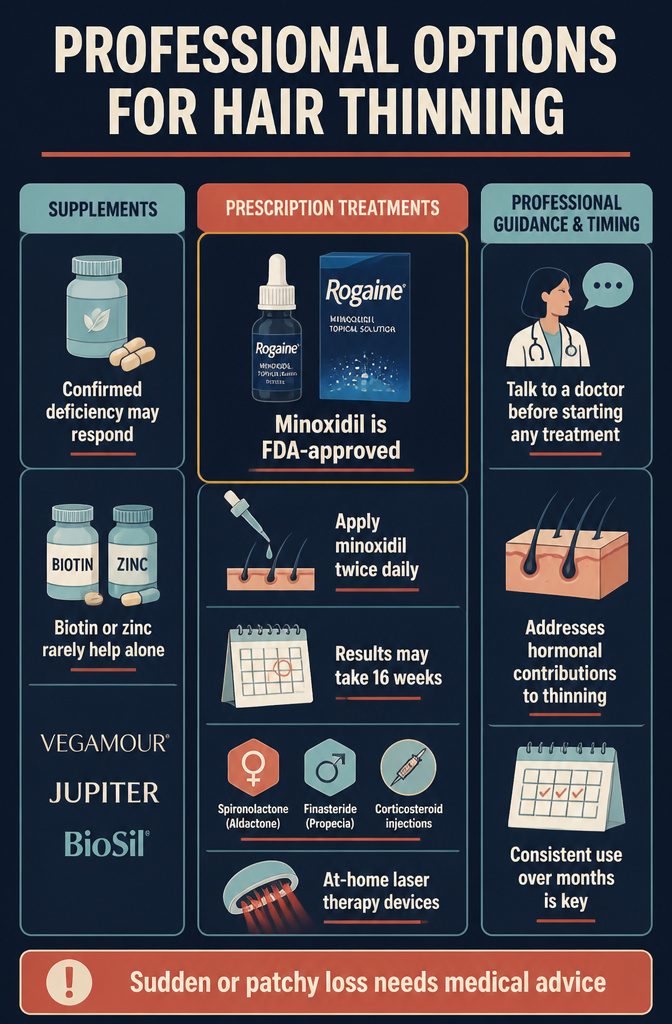
Supplements may help if hair density has dropped because of a specific deficiency, but taking biotin or zinc without a confirmed gap rarely changes anything on its own.
Some brands position themselves as hair-focused, among them Vegamour and Jupiter, while BioSil contains ch-OSA, a form of silicon that some users add to their routine.
I’d talk to a doctor before starting any of these, especially if thinning has been sudden or patchy.
Prescription treatments carry more evidence.
Minoxidil, sold as Rogaine, is FDA-approved and applied twice daily to the scalp; visible results typically take up to 16 weeks. Spironolactone (Aldactone) and finasteride (Propecia) address hormonal contributions to thinning, though finasteride is used primarily in men.
Corticosteroid injections, given every four to six weeks, can treat localized loss when inflammation is the cause. At-home laser therapy devices exist as well, though they require consistent use over months.
10. Use Oils or Other Scalp Treatments
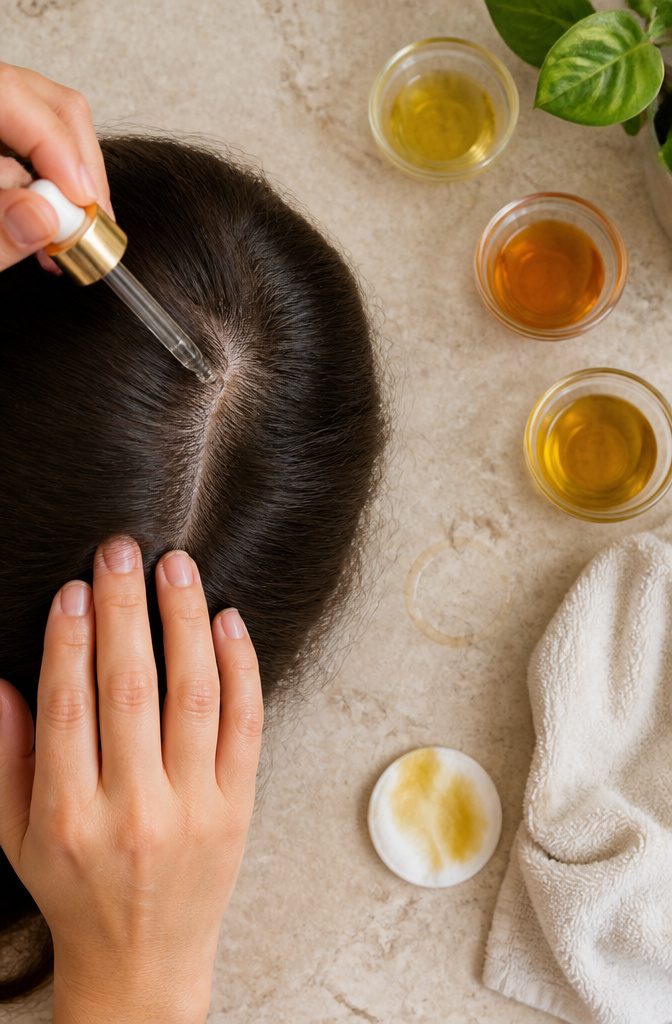
Rosemary oil has drawn attention for its ability to stimulate follicles and improve circulation, but it works best when you match the oil to what your scalp actually needs.
Heavy oils can clog pores or trap heat, so lighter options that absorb quickly tend to suit more people.
Black seed oil reduces irritation, almond oil softens without buildup, and rosemary remains the most versatile because it is thinner than olive or castor oil and less likely to cause congestion.
Apply a small amount to the scalp, massage gently, and wash off within four to six hours. Leaving oil on longer invites buildup.
Before using any new oil, do a patch test and wait 24 hours to check for a reaction. The FDA does not regulate the purity of essential oils, so choosing a reliable brand matters as much as choosing the right ingredient.
11. Trim Damaged or Split Ends
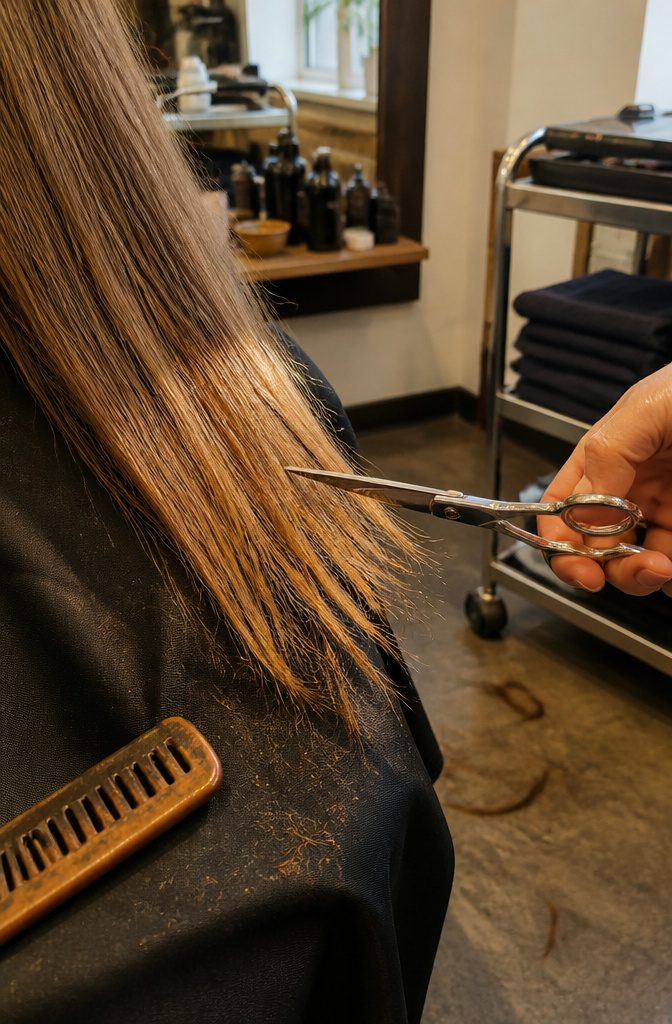
Cutting hair sounds backwards when you want length, but trimming off damaged ends stops breakage from eating into healthy growth.
Hair that splits at the tip can work its way higher up the shaft, and if you wait too long between cuts, you end up losing more length than you would have by cutting sooner.
The damage shows up as thinning at the ends even when the roots are fine.
Cutting roughly every three months and about an inch above the break addresses most damage before it travels.
If your hair is in decent shape and you want to preserve length, a dusting takes off just an eighth of an inch and clears split ends without visible length loss.
Most stylists recommend at least three dustings a year to keep hair healthy without sacrificing the growth you worked for. You barely see hair on the floor, but the difference in how the ends look is immediate.
12. Set Realistic Expectations and Seek Help for Concerning Loss
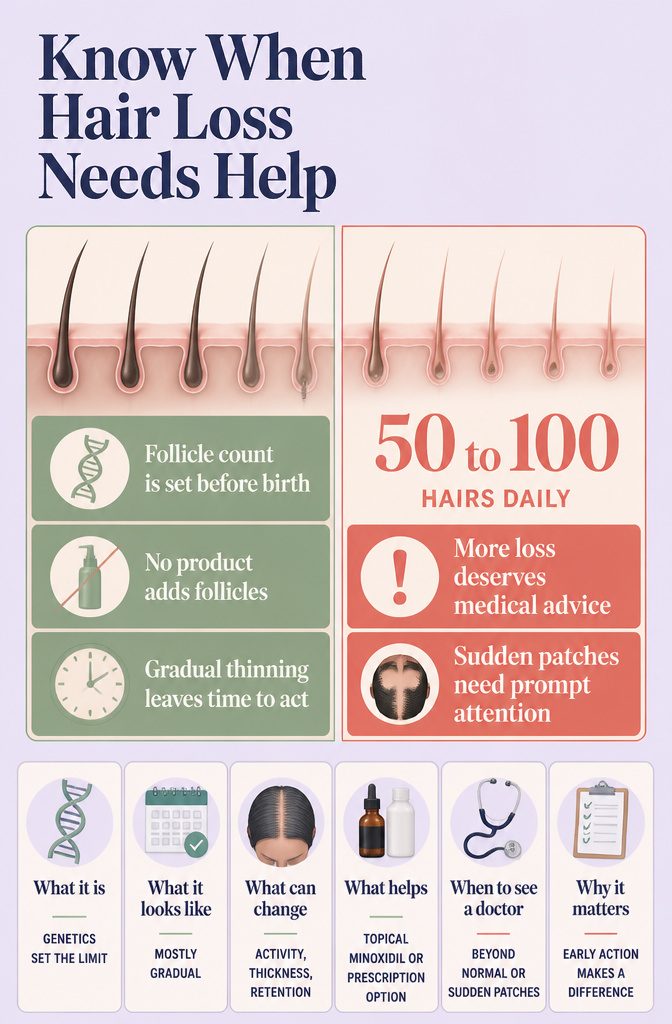
You can do everything on the list and still see thinner hair than you want if that is what your genetics gave you. The number of follicles you have is set before you are born, and no product adds more.
What can change is whether the follicles you have stay active, how thick each strand grows, and how much you hang on to before it sheds.
It is normal to lose 50 to 100 hairs per day. If you are losing more than that, or if you notice sudden patches of thinning, that is worth a conversation with a doctor.
Treatment depends on what is causing it: a hormonal shift, stress, something medical that needs addressing first, or straightforward pattern thinning that responds to topical minoxidil or a prescription option.
Thinning happens gradually most of the time, which means you have a window to figure out the cause and act on it before it progresses.
Distinguishing Fine Hair From Low Density
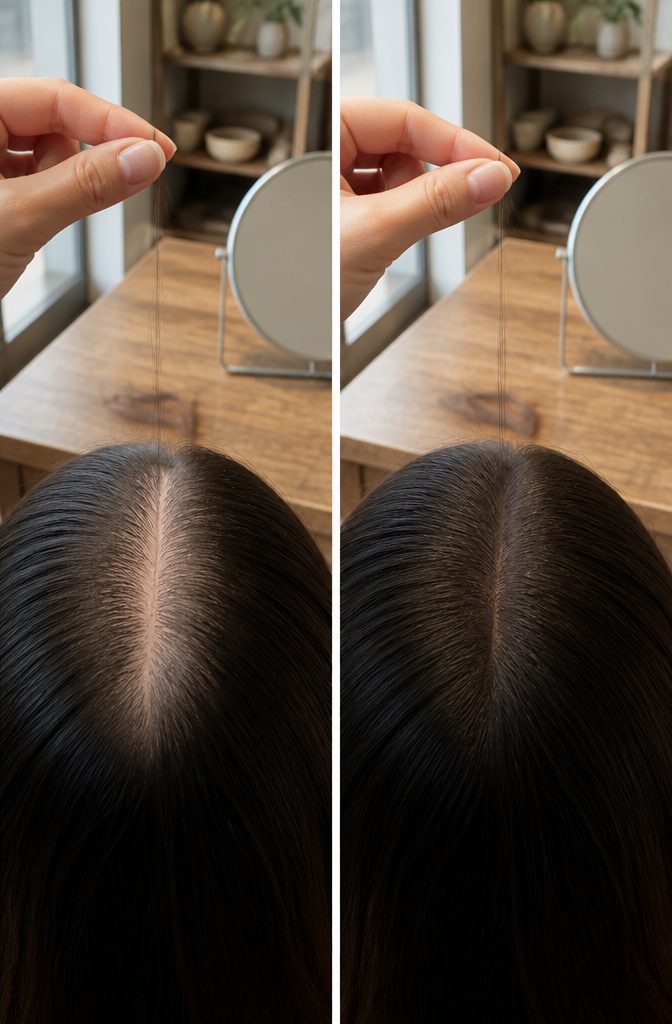
Fine describes the diameter of each strand, while thin describes how many strands you actually have. You can have fine hair that still covers the scalp densely, the kind a stylist calls "fine, but a lot of it."
The strands themselves feel soft and slip through your fingers easily, and if you pull one between your thumb and forefinger, you barely register the texture.
Thin hair is about follicle count per square inch of scalp. A widening part line or more visible scalp at the crown signals lower density, even if the strands themselves are thick.
The two often get confused because both can make hair look less full, but the fix for one won’t necessarily help the other.
Hair-Growth Stages and Timing
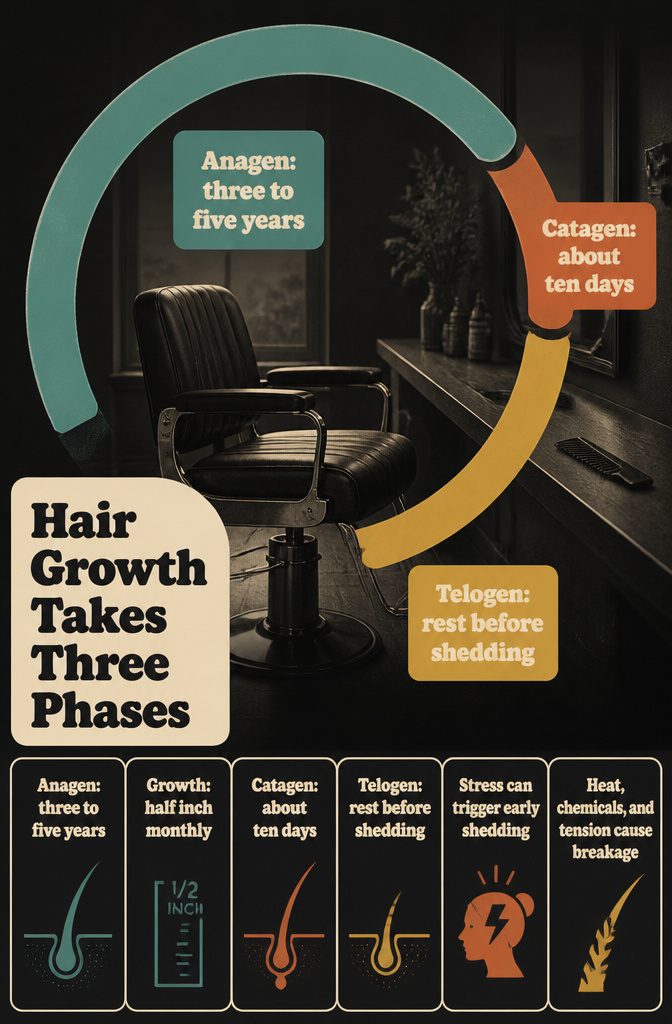
Hair growth happens in three distinct phases, and understanding them explains why density changes take months to notice.
During the anagen phase, each strand actively grows for three to five years on average, adding around half an inch per month or six inches per year.
The follicle then shifts into catagen, a brief transitional period lasting about ten days, before entering telogen, where the strand rests and eventually sheds to make room for the next cycle.
Each strand can spend three to five years in this phase on average, with hair growing around half an inch per month.
— Vogue
That growth rate holds across hair types, but what actually reaches your shoulders depends on more than time. Genetics set how long each follicle stays in anagen.
Chronic stress can push more follicles into rest and shedding phases early, thinning what you see. Nutrition gaps, hormonal shifts, and scalp health all affect whether strands grow normally or fall out sooner than they should.
Retention matters too: hair growing steadily at the scalp can still break from heat, chemicals, or tension before it adds visible length.
Hairstyles That Create the Appearance of Volume
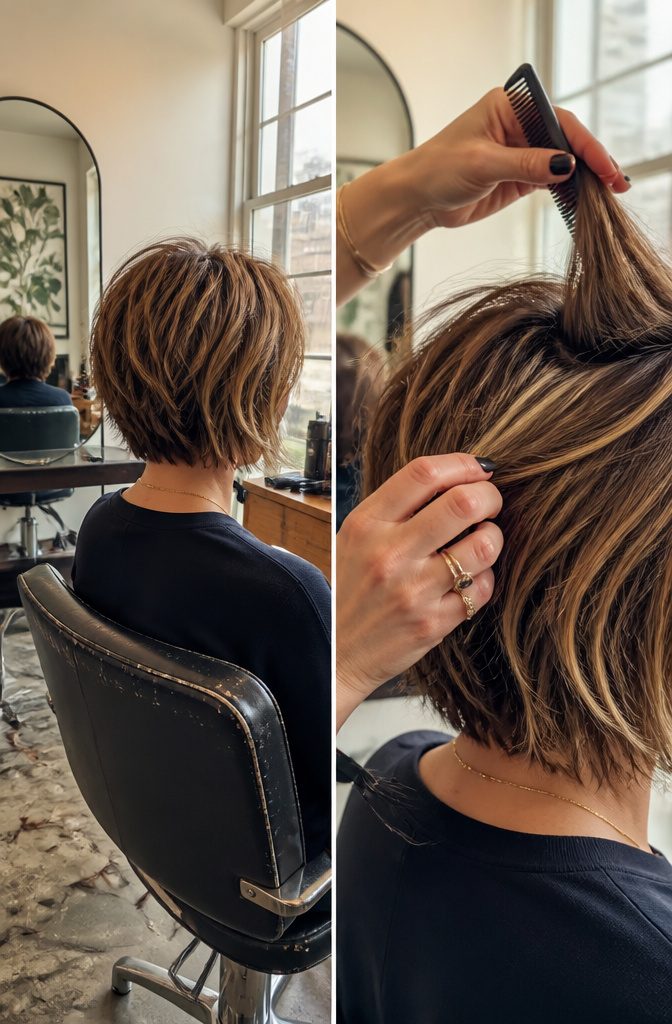
The right cut can make fine or thinning hair look twice as full, even when density itself has not changed. Layers, texture, and root lift give the illusion of volume where blunt edges would fall flat.
Styles that work best:
- Choppy bob: Well-placed layers add definition and movement. The choppy edge breaks up the line and keeps hair from looking sparse at the ends.
- Graduated bob: A straight edge with length that tapers toward the back creates clean dimension. Works for shoulder-length hair and above.
- Pixie cut: Short, textured crops add both body and easy styling. Less hair to weigh itself down means more lift at the root.
- Choppy lob: A longer bob with structured layers adds bounce without losing length. A root lifter keeps the base from going flat.
- Stacked bob: Precisely cut layers build a rounded shape, shortest at the nape and gradually longer toward the face. The stacking adds visible fullness.
Frequently Asked Questions
What causes hair to thin?
Lifestyle factors, genetics, life events, and medical conditions can all cause thinning.
Common triggers include stress, nutrient shortfalls, wearing hair too tightly, immune system deficiencies, and hormonal shifts. If you notice sudden or patchy loss, talk to a doctor to rule out an underlying condition.
Can hair grow back from thinning?
It depends on what caused the thinning.
Hair lost to stress, nutrient gaps, or pregnancy may regrow once the trigger resolves. Pattern thinning tied to genetics responds to treatment like minoxidil, but the follicle count itself stays fixed.
How do you fix thinning hair?
Treatment depends on the cause.
Address any nutrient deficiency or underlying health issue first, then consider topical minoxidil or prescription options like spironolactone or finasteride. Reducing heat damage, eating enough protein, and managing stress all support what you already have.
What vitamin deficiency causes hair loss?
Iron, folic acid, and zinc are the most common deficiencies linked to loss.
A balanced diet with leafy greens, beans, nuts, and protein-rich foods covers most people’s needs. If thinning is sudden, a doctor can test levels and recommend supplements if needed.
Can thin hair become thick again?
The number of follicles you have is set before birth and cannot be changed.
What can improve is how thick each strand grows, how long it stays in the growth phase, and how much you keep before it breaks. Better care can make hair look fuller, but it won’t add follicles.
What’s the difference between fine and thin hair?
Fine describes the diameter of each strand, while thin describes how many strands you have per square inch. You can have fine hair that still covers the scalp densely, or thick strands that grow sparsely and show more scalp.
Do I have fine or thin hair?
Pull a single strand and roll it between your fingers.
If you barely feel it, the hair is fine. If your part line is widening or you see more scalp at the crown, that signals low density or thin hair.
Does hair oil help thicken hair?
Oil improves circulation and reduces irritation, which supports the follicles you already have.
Rosemary oil stimulates growth, black seed oil calms the scalp, and almond oil softens without buildup. Apply to the scalp, massage gently, and wash off within 4 to 6 hours to avoid clogging pores.
What vitamins help thicken hair?
Protein, iron, zinc, vitamin C, B vitamins, and omega-3 fats all support growth and strand strength.
Eggs, beans, leafy greens, bell peppers, and wild salmon provide what hair needs. A balanced diet built around whole foods usually covers it without tracking every nutrient separately.
How to style thin hair for a female?
Layers, texture, and root lift create the appearance of volume without adding actual density.
A choppy bob, graduated bob, pixie cut, choppy lob, or stacked bob all work well because they break up blunt edges and keep hair from weighing itself down.