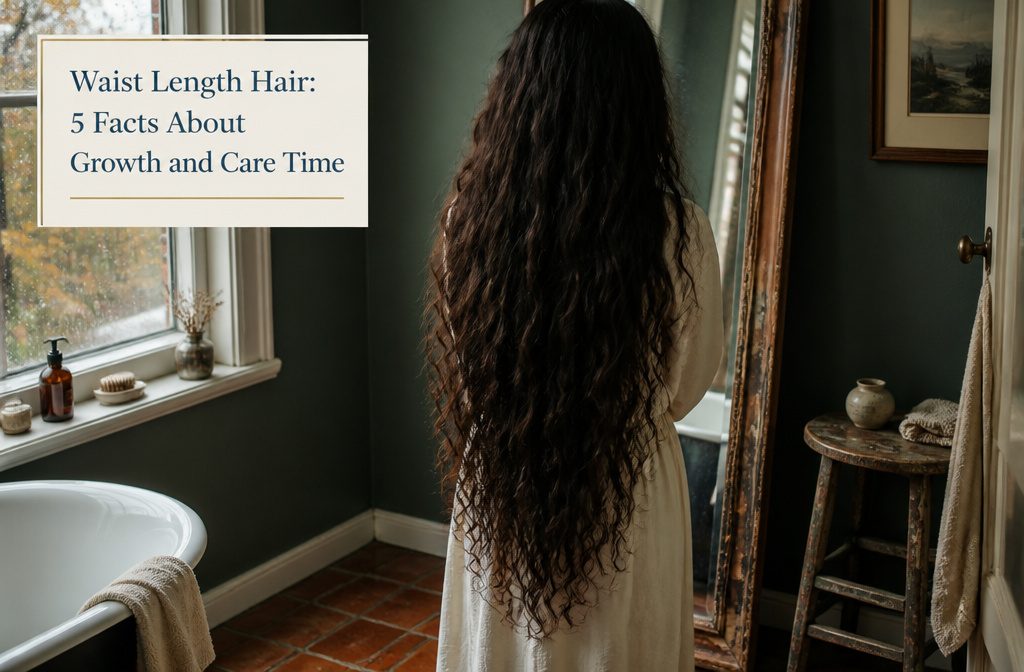
Waist length hair measures 16 to 20 inches from hairline to tips and sits at the natural waistline, but curly textures shrink 30 to 75 percent as they dry, so the same measured length can look completely different depending on curl pattern.
Growing from shoulder to waist takes 2 years or more at the typical half-inch monthly rate, and care time runs 4 to 11 hours per week once you add washing, detangling and drying.
Waist Length Is 16 to 20 Inches, Mid-Back to Waist
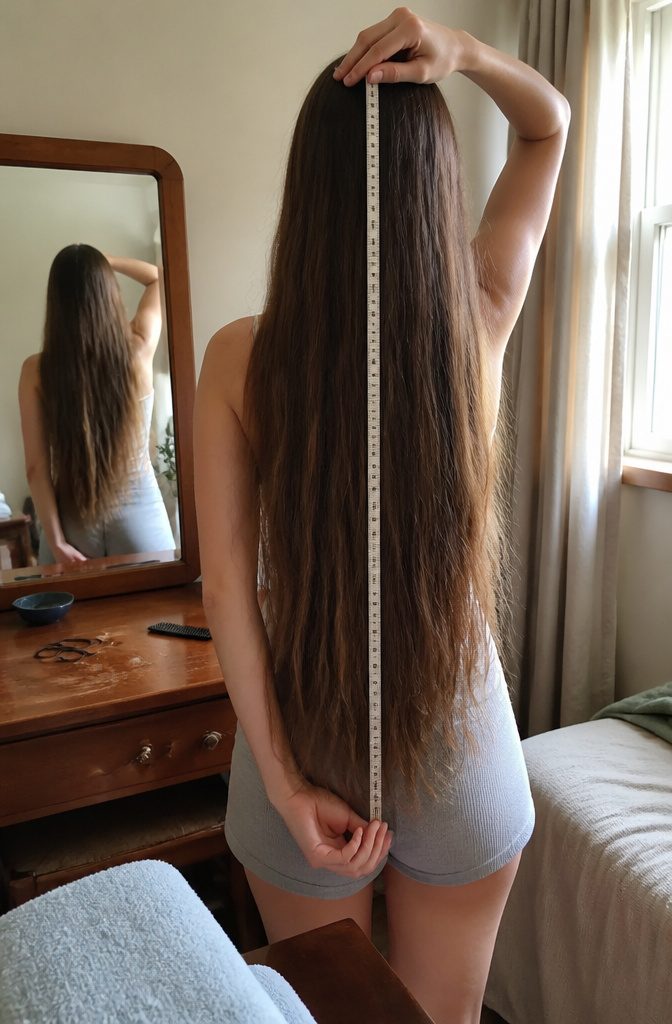
Waist length spans 16 to 20 inches and sits between mid-back and the natural waistline, one landmark further down the progression than mid-back itself. Extra-long starts at 22 inches and extends past the waist.
The inch range looks precise, but waist length depends on where you start measuring, whether at the crown, the nape, or the hairline, and on how long your torso is, so no single number fits everyone.
One person’s 18 inches might hit mid-back, another’s might brush the waist, depending on torso length and where the tape started.
The landmark itself stays constant: waist length is hair that reaches the waist, and that usually falls somewhere in the 16 to 20 inch range when measured over the crown from hairline to tips.
Measure From Hairline Over Crown to Strand Tips
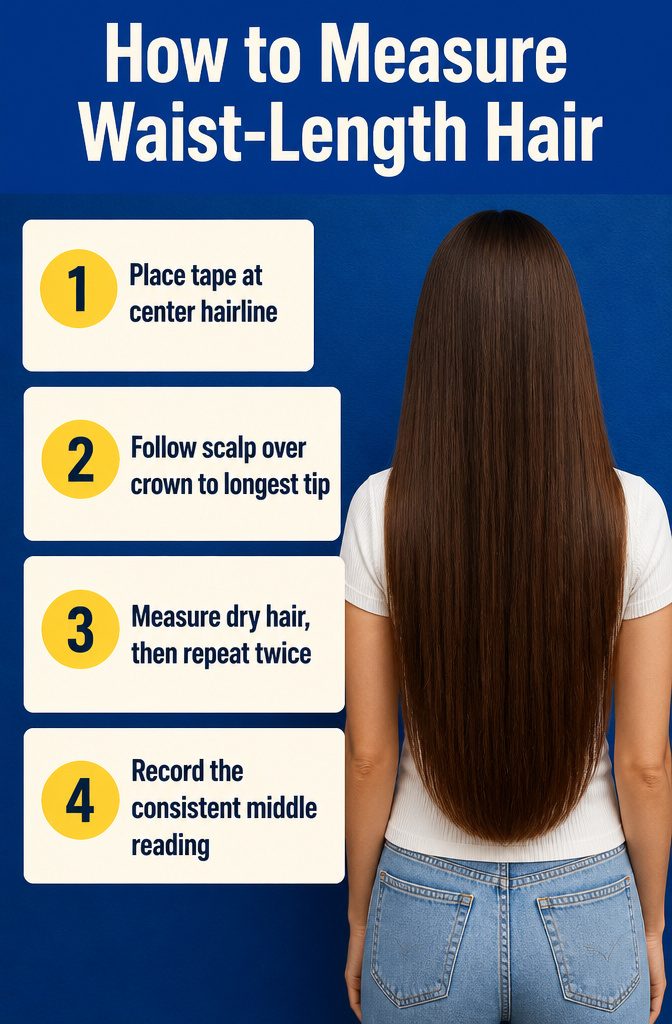
Measure From Hairline Over Crown to Strand Tips
- Position a flexible tape at the center of your hairline, where your forehead meets your hair. A soft sewing tape follows the curve of your head far better than a rigid ruler.
- Run the tape up and over your crown, following your scalp, then straight down to the tip of your longest strand.
- Record the number, then measure twice more. Hair rarely hangs perfectly evenly, so take the consistent middle reading.
- Measure on dry hair. Wet hair stretches and reads longer than it actually wears.
- Start from the same spot each time if you track changes over months, which matters for monitoring thinning or regrowth with a dermatologist.
The whole process takes under two minutes. One small detail to know: wig measurements start from the crown while natural-hair charts may start at the root, so a 16-inch wig often falls slightly longer than 16 inches of natural growth.
Curls Shrink 30 to 75 Percent as They Dry
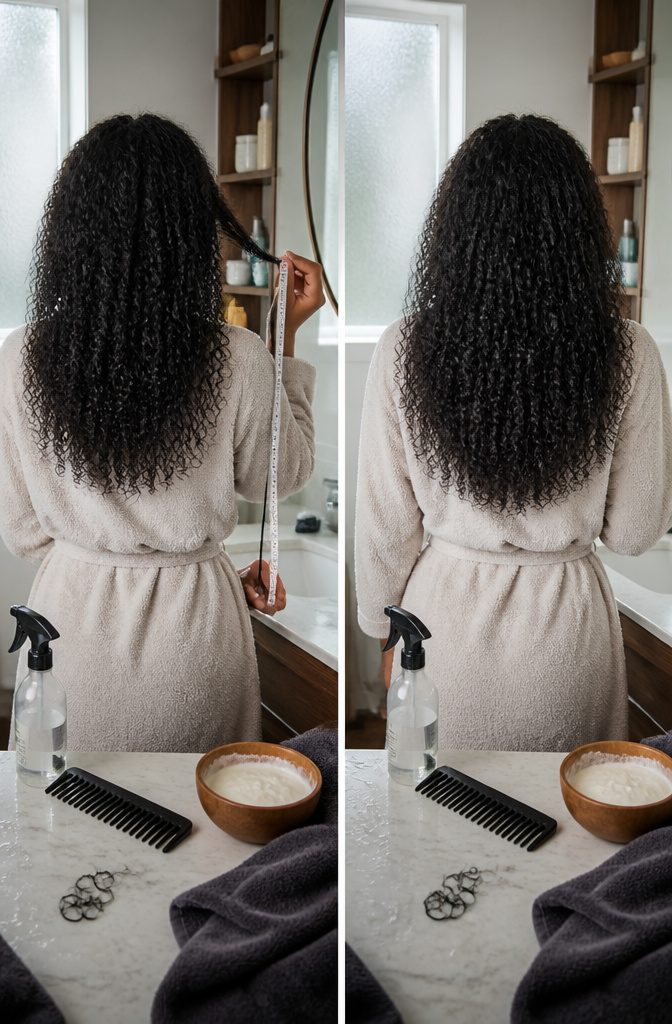
Texture changes how long hair looks, not how long it actually is.
Shrinkage can hide 30 to 75 percent of visible length as curly hair dries, depending on curl pattern. Straight hair measures true.
What the tape says is what the mirror shows. For curly and coily hair, those numbers split apart.
That gap matters when you measure.
I stretch a curly strand gently before laying the tape along it, never forcing, just extended to its full length. The stretched reading is the accurate one.
The styled length you see in the mirror sits shorter, sometimes dramatically so. Two women with identical 16-inch measurements can appear to have completely different lengths depending on texture.
Hair at 11 inches wears like medium. Hair at 21 inches wears like extra-long once styled.
Shrinkage is not damage. It is a sign of healthy elasticity, but it shifts where landmarks fall and how growth looks over time.
Shoulder to Waist Takes Two Years or More
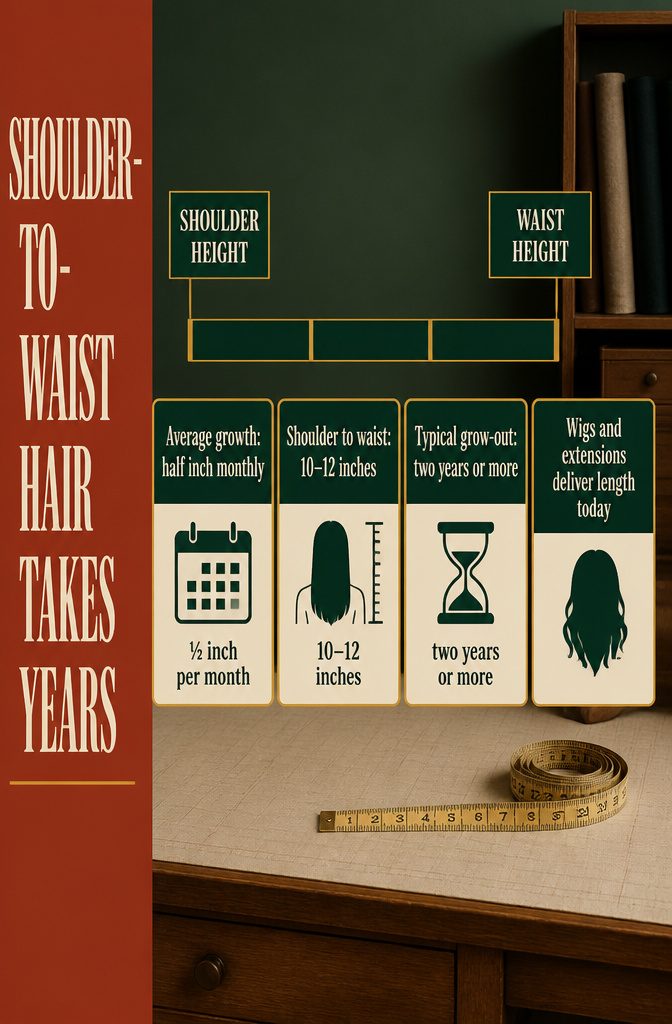
Hair grows at about half an inch per month on average, which translates to roughly six inches per year.
From shoulder to waist, you need 10 to 12 inches of new growth, so the timeline lands at two years or more for most people.
That waiting period explains why long wigs and extensions are so popular: you get the length today instead of committing to a years-long grow-out.
The rate holds steady regardless of length, though it feels faster when hair is short.
Every quarter inch shows more obviously around the face than it does once strands pass your shoulders. Mid-back to waist, for instance, takes about eight months, assuming average growth and a woman five feet seven inches tall.
Individual rates do vary, so your own timeline might run shorter or longer, but the half-inch monthly benchmark gives you a reasonable frame for planning.
Growth From One Landmark to the Next
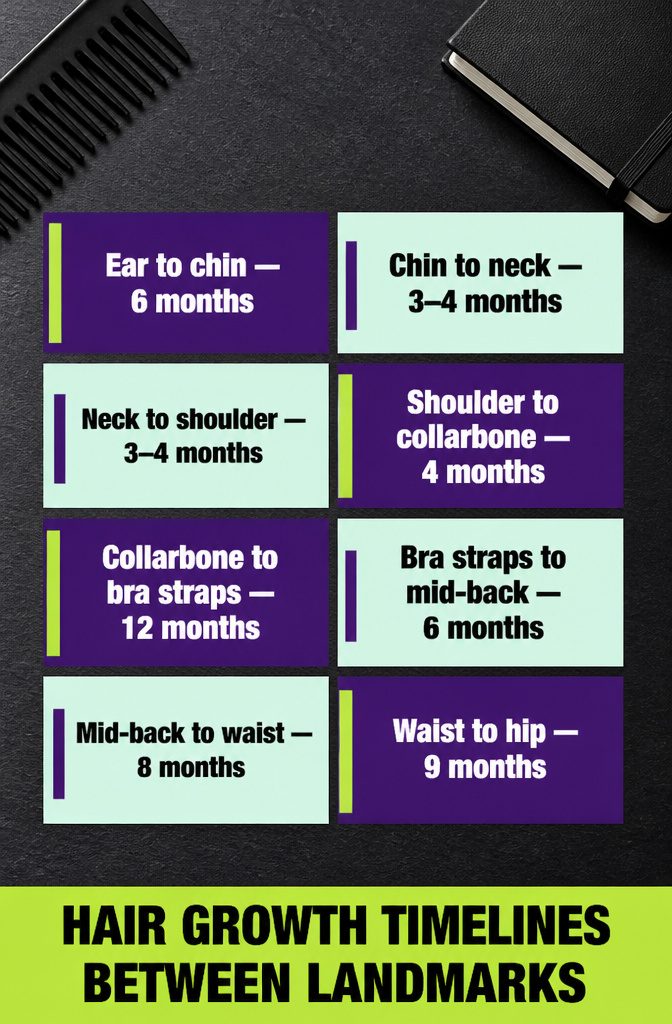
The table below assumes a starting height of 5 feet 7 inches and a growth rate of 0.5 inch per month. These are the timelines from one landmark to the next:
- Ear to chin: 6 months
- Chin to neck: 3–4 months
- Neck to shoulder: 3–4 months
- Shoulder to collarbone: 4 months
- Collarbone to bra straps: 12 months
- Bra straps to mid-back: 6 months
- Mid-back to waist: 8 months
- Waist to hip: 9 months
Short hair appears to grow faster because each quarter inch is more visible around the face.
The rate stays the same per month whether the hair is short or long. Between collarbone and mid-back, progress can feel slow even though the hair is adding the same half inch every four weeks.
Polished Straight Hair or Loose Waves Avoid the Princess Look
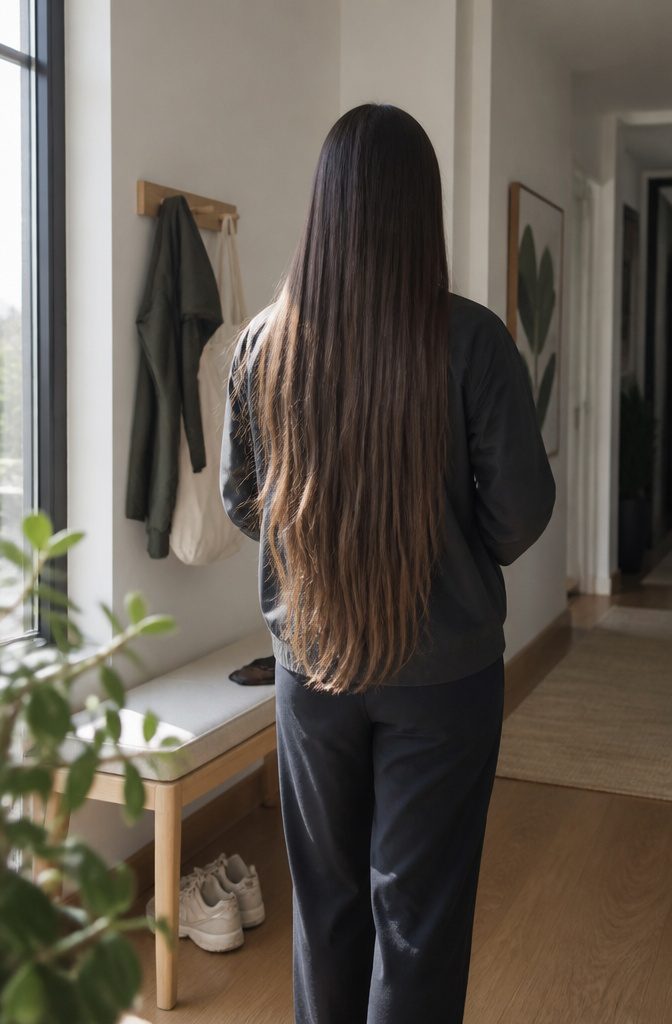
Waist-length hair worn down and untouched can read as costume or overly young, particularly when it falls in one unbroken sheet.
Polished straight hair with a slightly wispy finish works better than pin-straight perfection, and beach-like waves break up the length without looking like you spent an hour on it.
Long layers help as well, giving the hair movement instead of that single-piece princess effect. A center or side part keeps things current, and braids turn the length into something intentional rather than just long for the sake of it.
Slicked-back styles amplify the hair statement in the wrong direction, and heavily styled looks or big 1980s volume push waist-length hair past wearable.
The hair already does a lot of visual work, so pairing it with athletic or minimal clothing balances the overall look. Sleek hair reads as deliberate when the rest of the outfit stays quiet.
Waist-Length Care Takes 4 to 11 Hours a Week
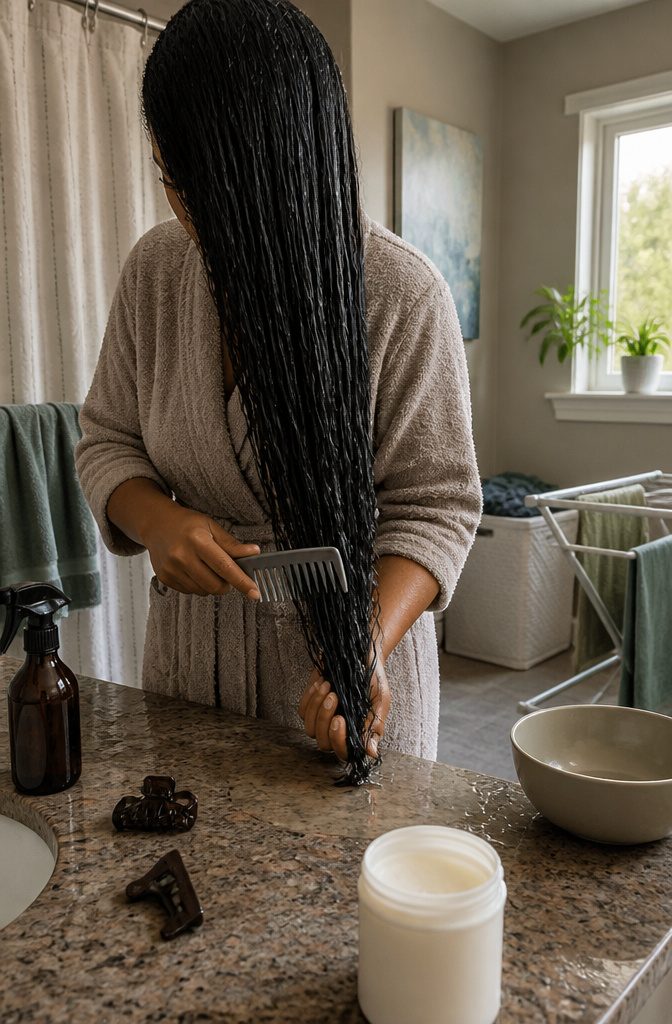
The passage that names the figure says long natural hair can require 4–11 hours of care weekly, and I believe that range once you add in washing, detangling, drying and any styling that follows.
Wash and detangling sessions stretch longer at waist length because there is more surface for knots to form and more length to work through from roots to tips.
Dryness becomes more common as natural oils from the scalp take longer to travel down the strand, and that dryness makes tangles worse.
An active person who works out regularly may need to co-wash after every session to get rid of sweat and buildup, and keeping that routine under 40 minutes becomes the practical ceiling.
Protective styling can limit how often you handle the hair during the week, but installing a braid or twist-out still takes time up front and may involve heat to stretch the hair before styling.
Long hair that felt manageable at one stage of life can become hard to keep up with after lifestyle changes such as having children or taking on a more active schedule, and many people who reach waist length eventually find that shorter cuts at shoulder or bra-strap length offer easier wash days and faster detangling without the same weekly time cost.
Extra-Long Pieces Need More Detangling and Care Time
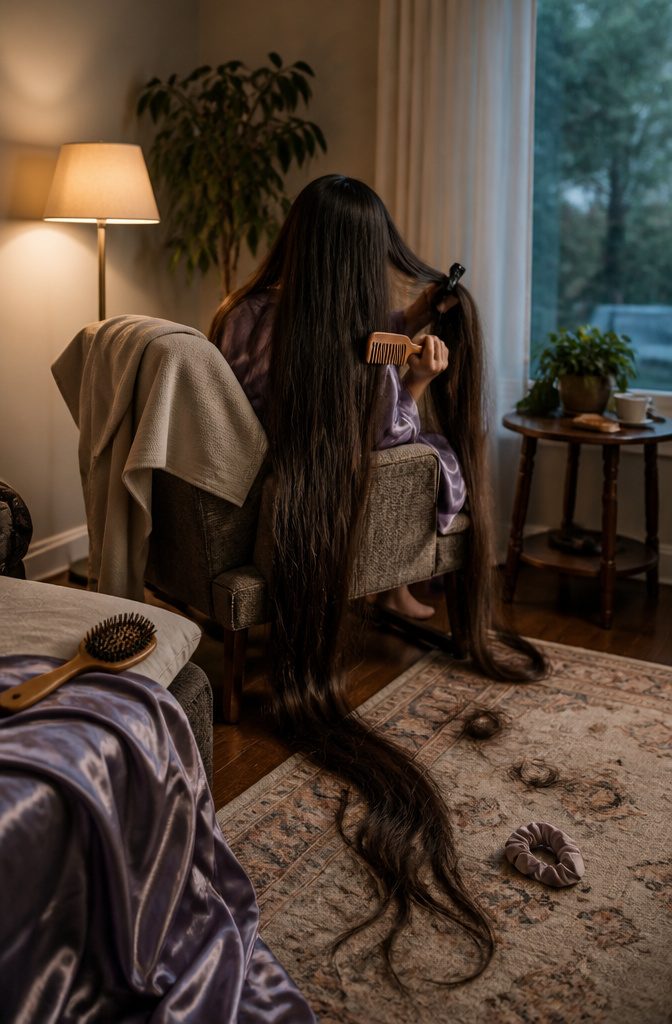
Extra-long hair tangles more, period. Knots form faster and work through more slowly when you have inches of length rubbing against collars, seat backs, and your own shoulders all day.
Where shoulder-length pieces might take two passes with a wide-tooth comb, waist-length strands can need four or five, plus careful sectioning to keep from snapping ends.
Dryness compounds the problem. The farther a strand sits from your scalp, the less sebum reaches it, so tips crack and catch on each other.
Protective styling helps, but braiding or wrapping that much hair takes time too, and leaving it down means detangling sessions stretch from minutes into serious blocks of time.
Keeping everything nourished and supple cuts breakage, but the routine itself grows heavier as length does.
That length also narrows your styling freedom in a counterintuitive way: you spend so much time preserving what you grew that quick, experimental cuts or heat styles start to feel like risks you cannot afford.
Frequently Asked Questions
How many inches is waist length hair?
Waist length hair is 16 to 20 inches when measured from the hairline over the crown to the strand tips.
The range accounts for differences in torso length and where the measurement starts, but the landmark stays the same: hair that reaches your natural waistline.
How do I measure my hair length?
Place a flexible tape at the center of your hairline, run it over your crown following your scalp, then straight down to the tip of your longest strand.
Measure on dry hair and repeat twice more to get a consistent reading.
Why does my curly hair measure longer than it looks?
Shrinkage hides 30 to 75 percent of visible length as curly hair dries. The stretched measurement is accurate; what you see in the mirror after styling is shorter because of the curl pattern contracting the hair.
How long does it take to grow hair from shoulder to waist?
Two years or more for most people. Hair grows about half an inch per month, so the 10 to 12 inches of new growth needed from shoulder to waist takes at least 24 months at average rates.
Are wig lengths the same as natural hair lengths?
The inch count is the same, but the starting point differs.
Wig measurements start from the crown of the cap while natural hair charts measure from the root, so a 16-inch wig often falls slightly longer than 16 inches of natural growth.
How to wear waist length hair?
Polished straight hair with a wispy finish or loose waves works better than pin-straight perfection. Layers add movement, braids make the length look intentional, and pairing the hair with athletic or minimal clothing balances the overall look.