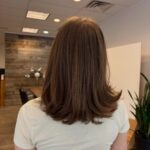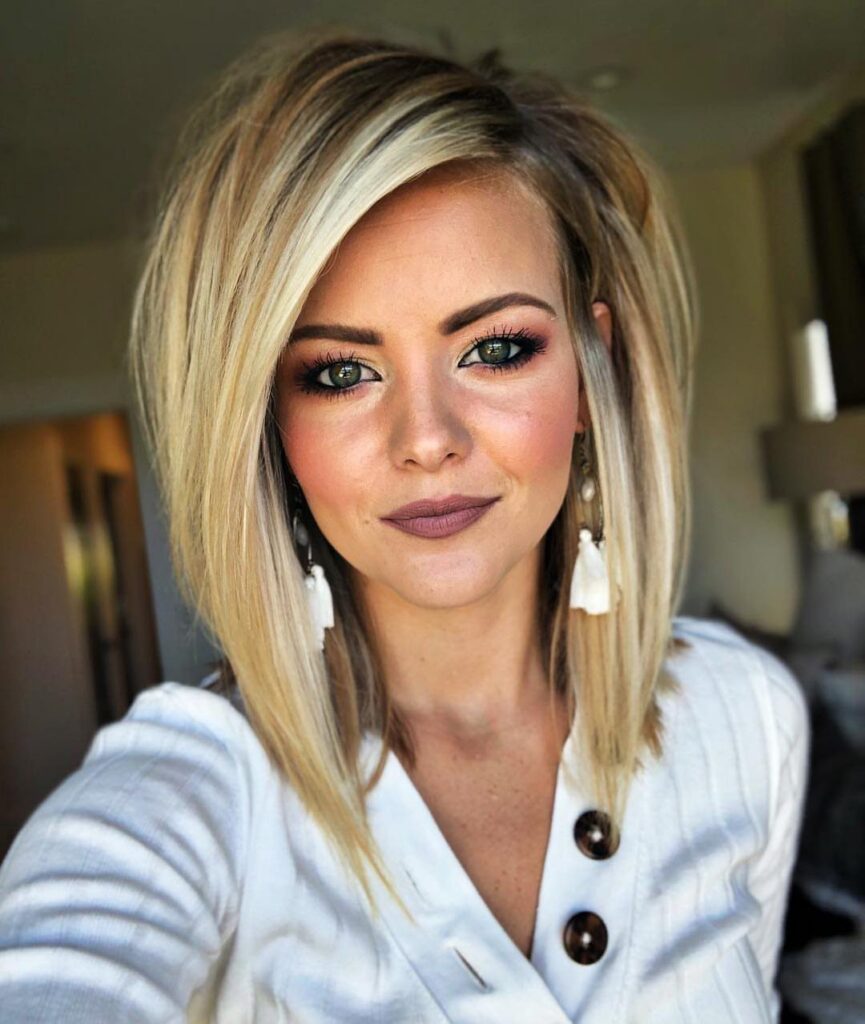
Straight hair holds structure cleanly, which means a blunt bob or lob stays sharp at one length while curtain bangs or side-swept bangs keep their sweep without curling back.
1. Half-Up Twist
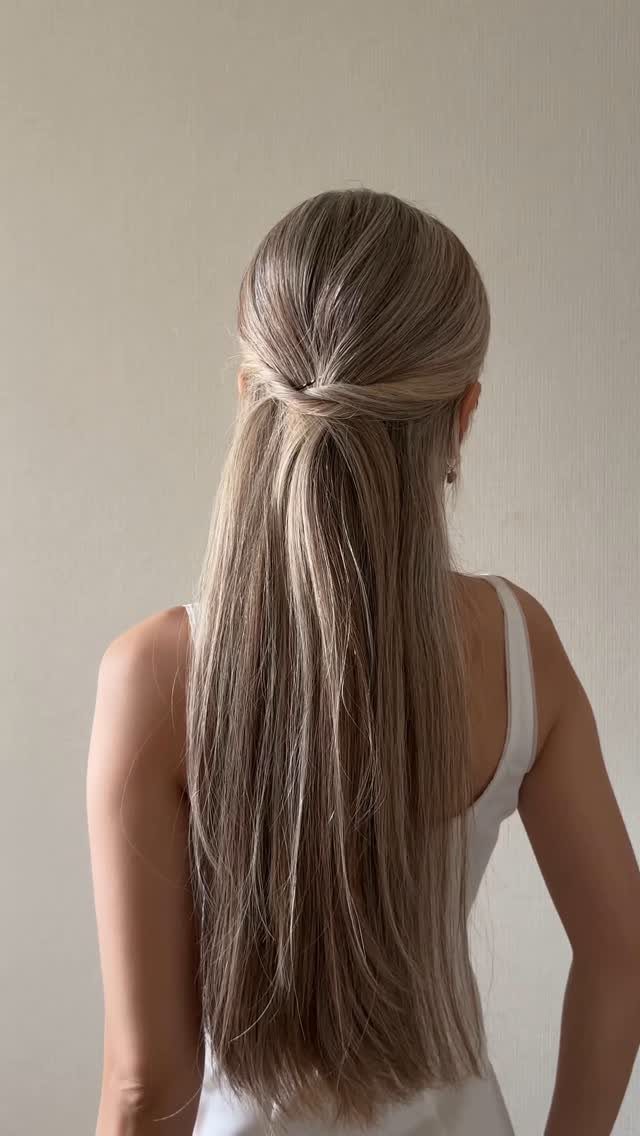
The top section twists or knots back while the rest flows down, which gives you the polish of an updo without hiding length. Straight hair holds the twist cleanly and reflects light down the loose part.
Gather a section from each temple, twist them together or tie a simple knot at the back, and pin or elastic the join.
The twist sits flat against the crown, so fine hair needs a light texturizing spray to keep it from slipping out by midday.
2. Glass Hair
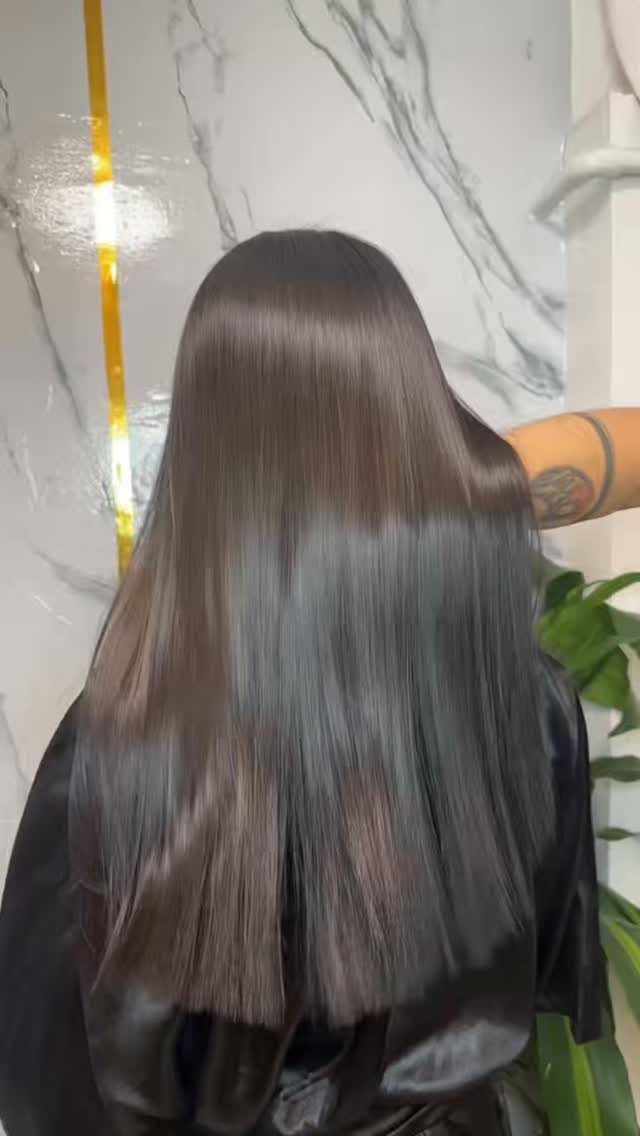
Glass hair is straight hair taken to a mirror finish, no texture or movement, just pure shine. Wet-looking gloss is the target, and straight hair gets there faster because you’re not fighting wave or kink.
Blow dry smooth with a paddle brush, then flat iron in thin sections at moderate heat.
Finish with a silicone serum or gloss spray on the mid-lengths and ends. The look lasts a day at most, longer if you skip conditioner that morning and wash the night before instead.
3. Sleek Center Part
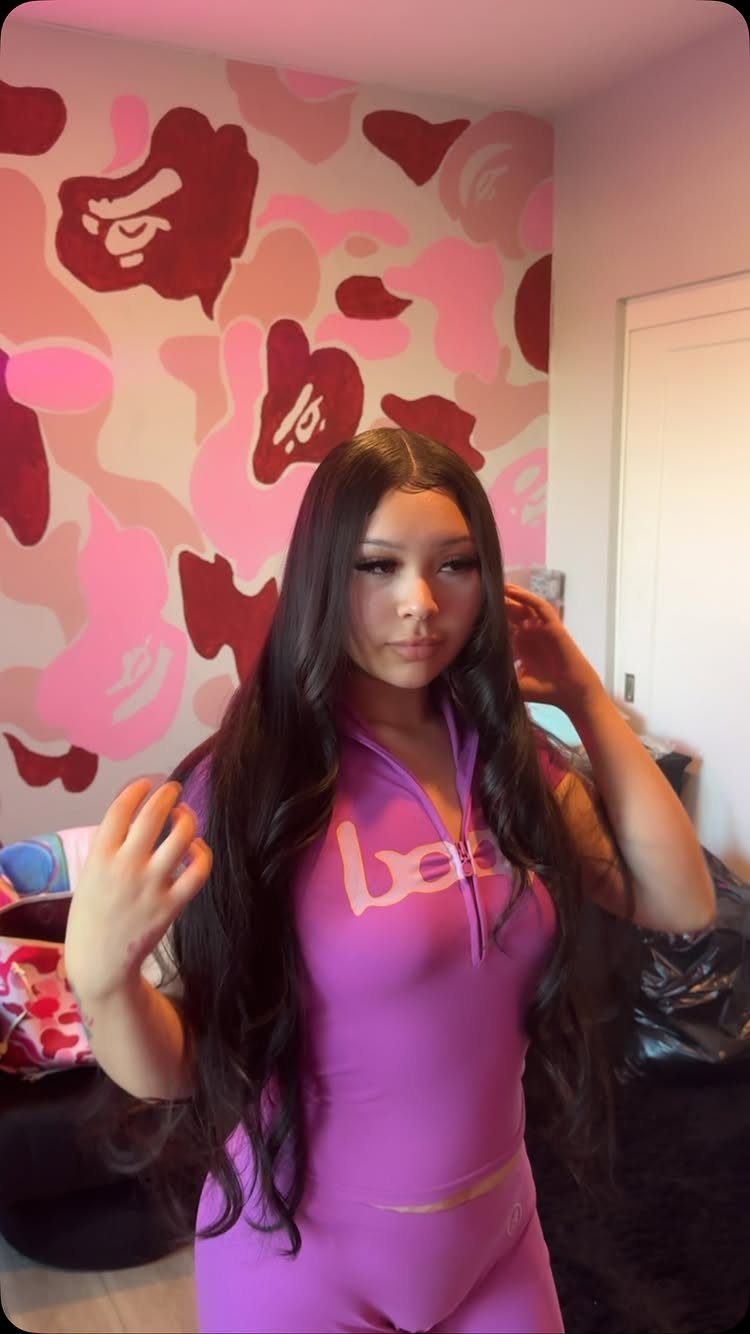
Hair splits evenly down a center part and falls smooth on both sides, no volume or curl to soften the line. Straight hair makes the part look intentional where wavy hair would blur it.
Comb wet hair straight back, then draw the part with the tail of a rat-tail comb and blow dry each side forward over your shoulders.
A flat iron cleans up any bend at the roots. The part can sit dead center or an inch off, whichever balances your face better.
4. Flipped Ends
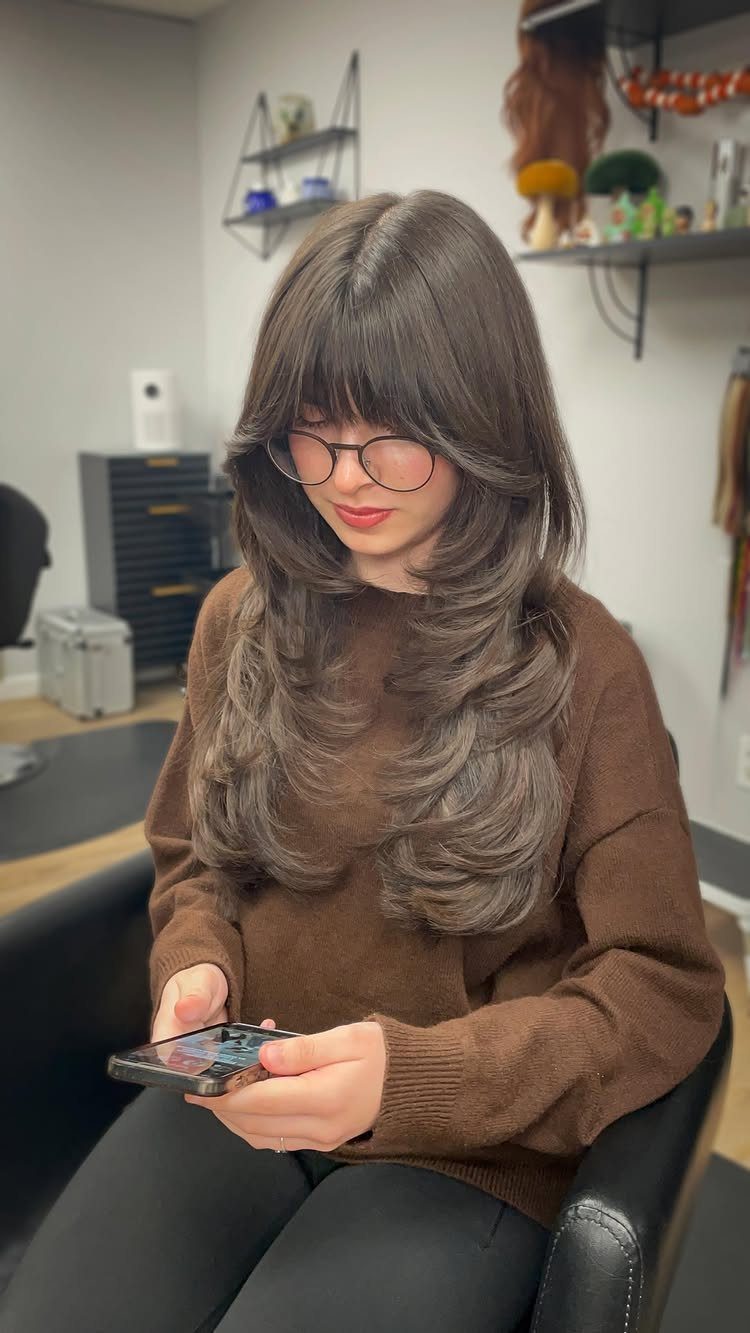
The ends flip out instead of under, which adds width at the shoulders and nods to ’60s flips and ’90s layers.
Straight hair holds the curve without frizz, and the shape works on long layers or a one-length cut.
Blow dry with a round brush and flip the brush out at the ends, or use a flat iron and turn your wrist out as you reach the last inch.
The flip relaxes into a soft bend by afternoon, so touch it up with a curling iron if you need it sharp all day.
Intentionally styling an undone, messy look on straight hair can be tricky.
— ELLE
5. Low Ponytail
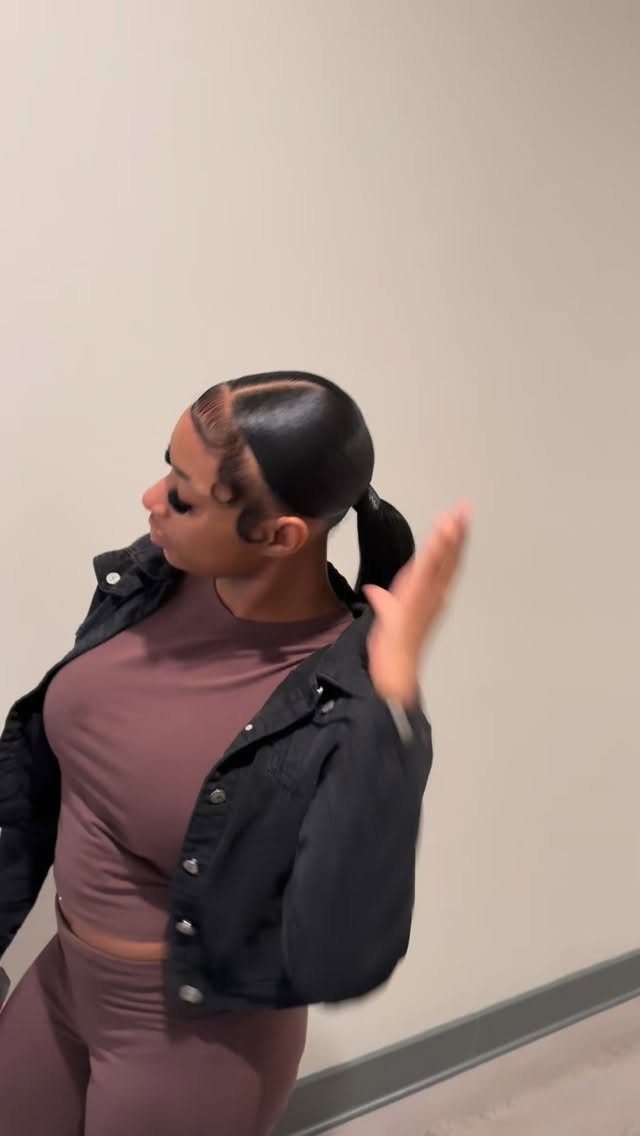
A low ponytail gathers hair at the nape, sleek or textured depending on how you smooth it back. Straight hair lies flat without bumps, and the style is fast.
Brush or finger-comb back, secure with an elastic at the nape, and wrap a small section of hair around the elastic if you want the tie hidden.
Leave it smooth for work or tease the crown first for more shape. The elastic can sit right at the hairline or an inch above.
6. Low Bun
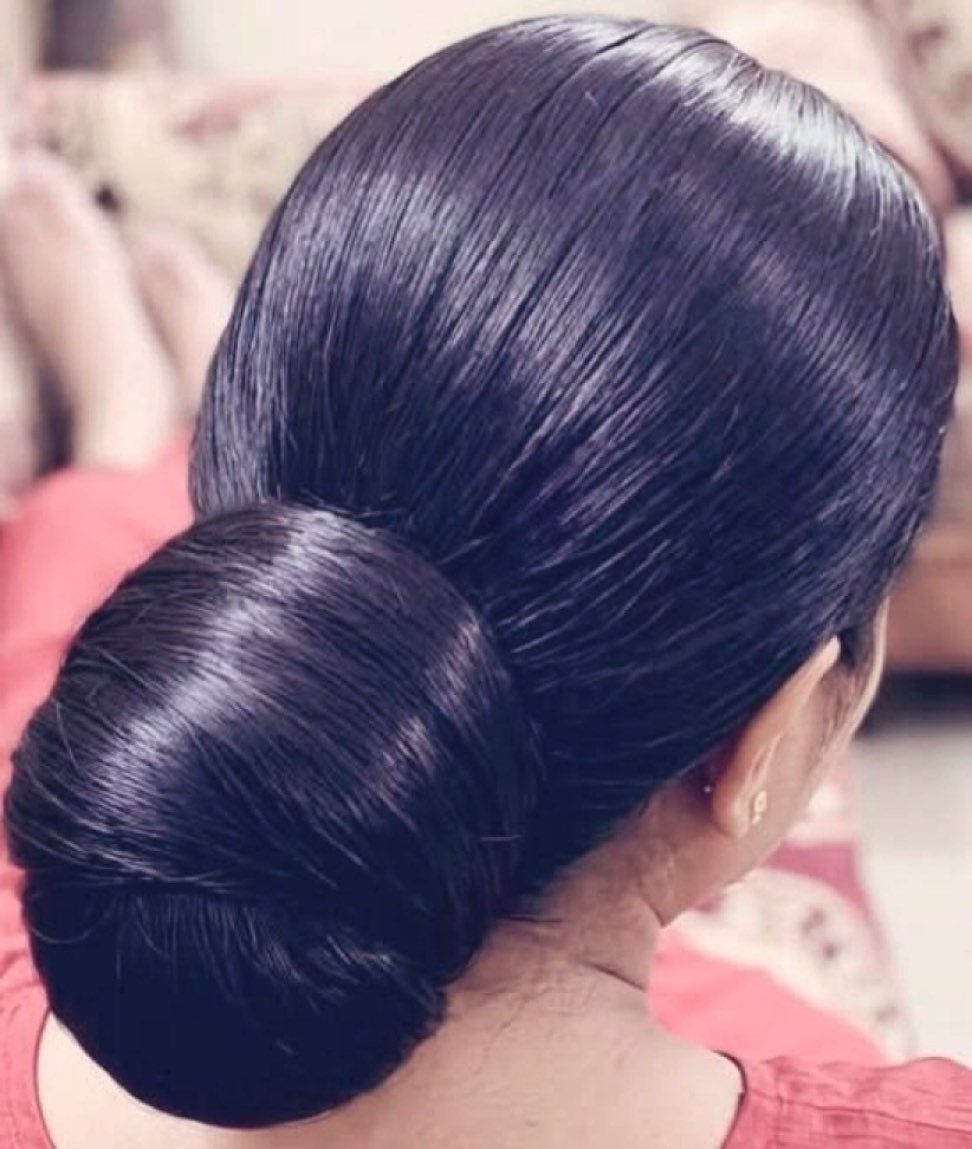
A low bun sits at the nape, twisted or wrapped into a knot that feels formal without height.
Straight hair winds tight and stays put, and the bun can be small and tight or soft and loose depending on how much hair you’re working with.
Smooth hair into a low ponytail, twist the length, and wrap it around the base in a spiral. Tuck the end under and pin through the coil.
For a softer version, skip the twist and fold the ponytail in half, then pin the loop. Straight hair needs fewer pins than wavy hair because it doesn’t spring back.
7. Straight Bob with Warm Highlights
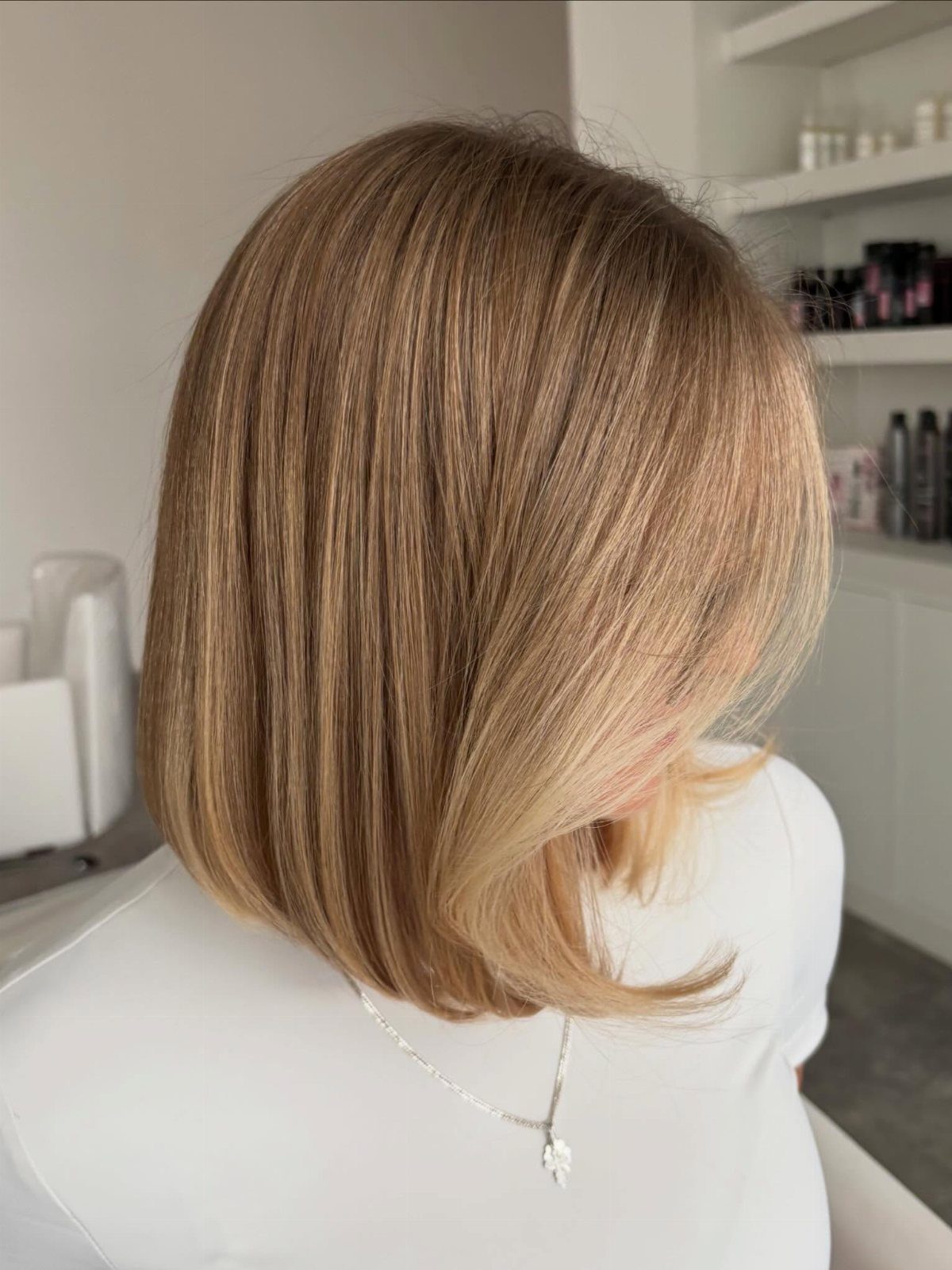
A straight bob cut to chin or jaw length with warm caramel, honey, or golden highlights woven through gives dimension that one flat color can’t.
Straight hair shows each highlight stripe clearly, and the warm tones lift the cut without adding actual texture.
Ask for balayage or foil highlights a few shades lighter than your base, concentrated around the face.
The bob itself can sit blunt or slightly angled. Highlights need a toner refresh every 8 weeks to keep the warmth from turning brassy.
8. Bouncy Blowout
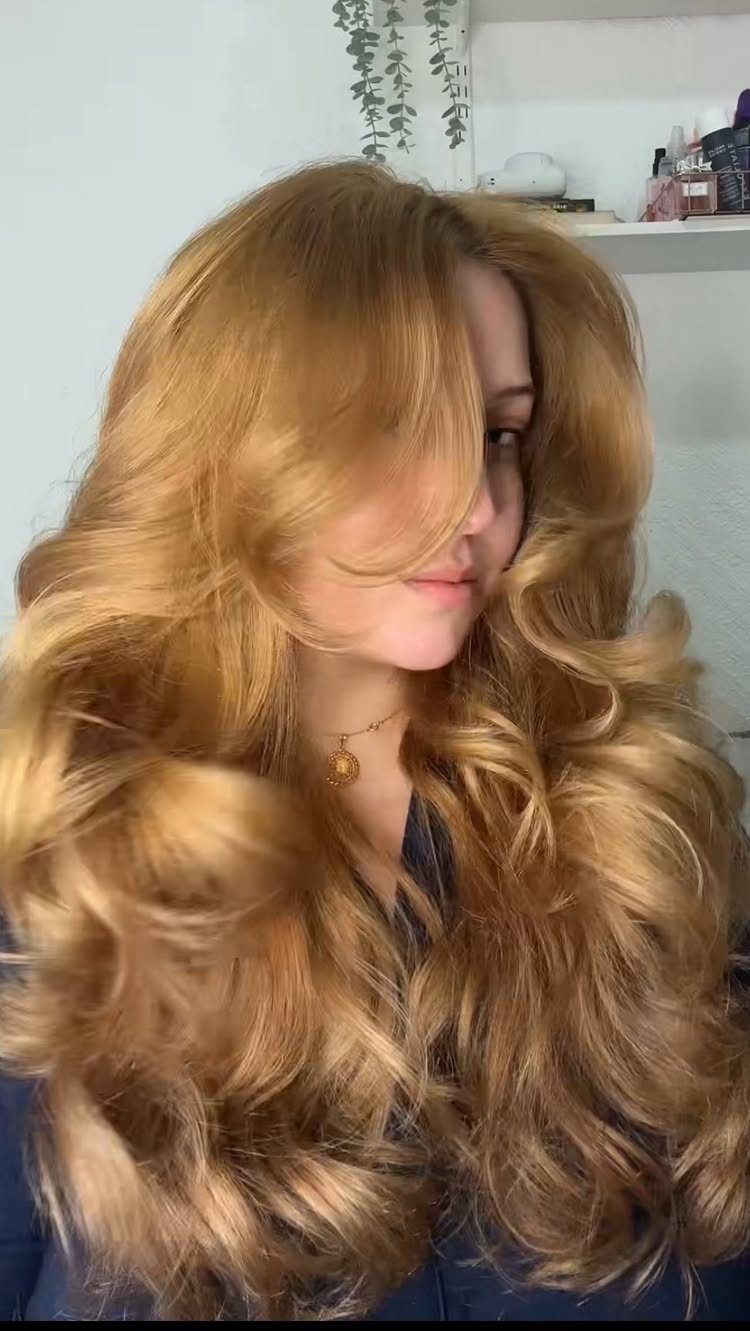
Straight hair blown out with a round brush gains lift at the roots and a soft bend through the lengths, turning flat texture into something that moves.
The shape holds until you wash again, sometimes 2 days if you use dry shampoo at the roots.
Work through damp hair in sections, rolling each one over a large round brush as you dry and letting the brush curve under at the ends. Finish with a light hairspray.
9. Long Layered Hair with Curled Ends
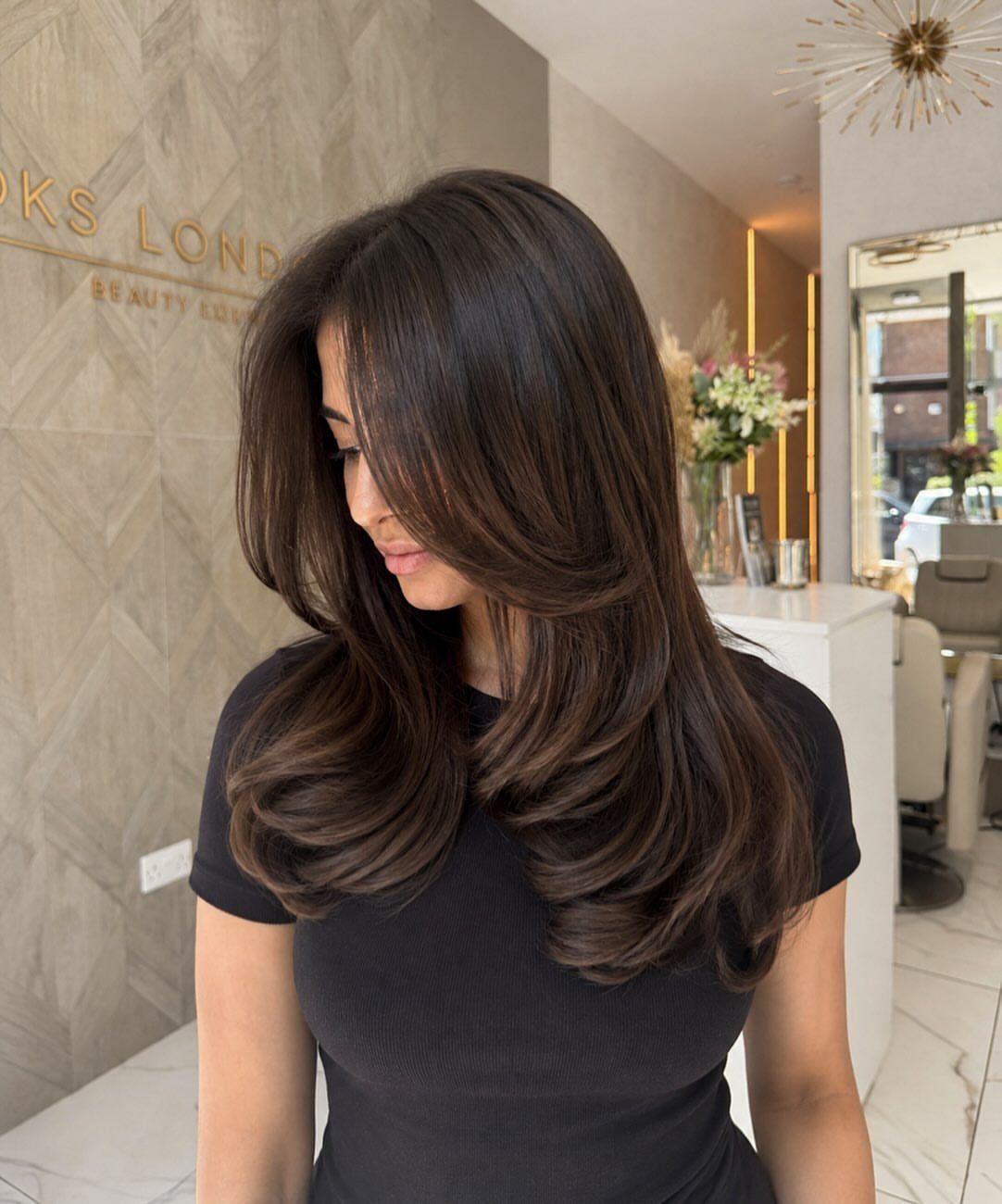
Layers cut through long straight hair give it shape, and curling just the ends adds a finished look without committing to full curls. The rest stays smooth, so the style reads polished rather than textured.
Curl just the ends, wrapping each section away from your face and releasing before the curl sets tight.
Let the curl cool in your hand, then shake it loose so it softens into a bend. Layers make the curls sit at different lengths, which keeps them from looking stacked.
10. Straight High Ponytail
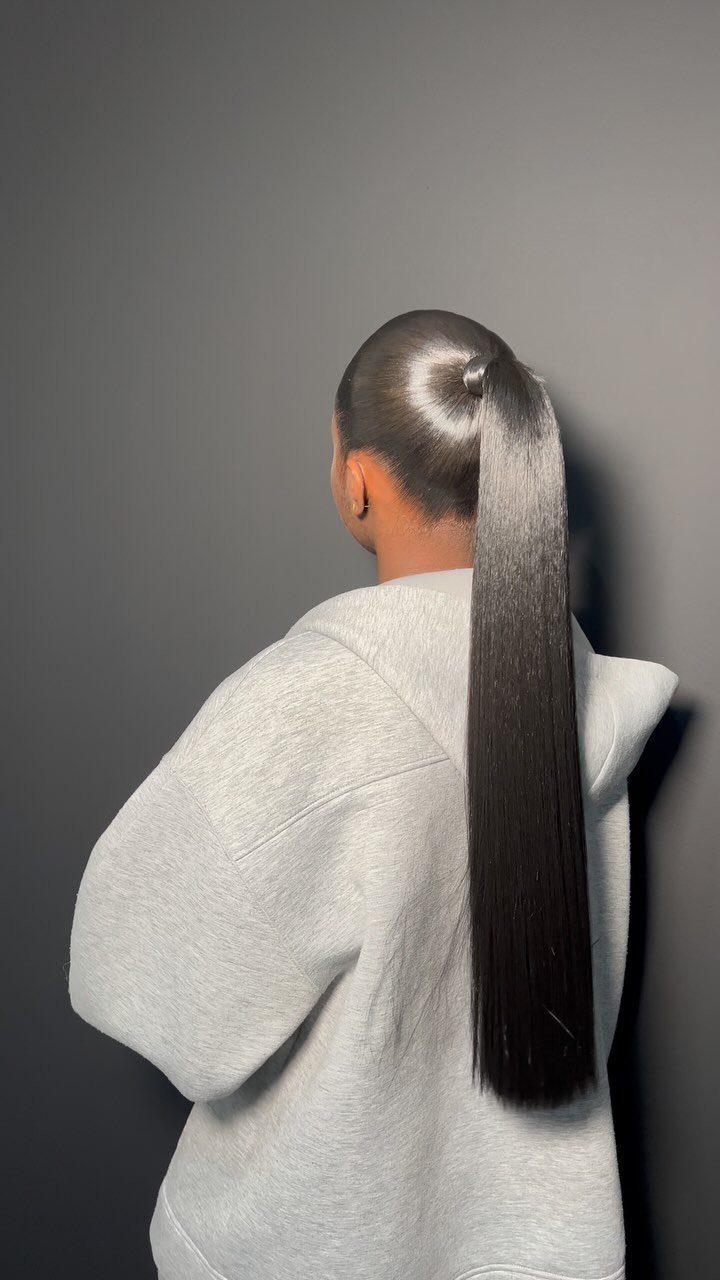
Hair pulled straight back into a high ponytail at the crown keeps it completely off your face and shows length. Straight hair lies flat from root to elastic, so there’s no bulk or frizz at the base.
Brush everything up toward the crown, tilt your head back slightly while you gather it, and secure with a snag-free elastic.
Take a thin piece of hair and wind it around the elastic until the band disappears. The height makes it work for the gym or going out, and it takes under a minute.
11. Long Straight Hair with Highlights
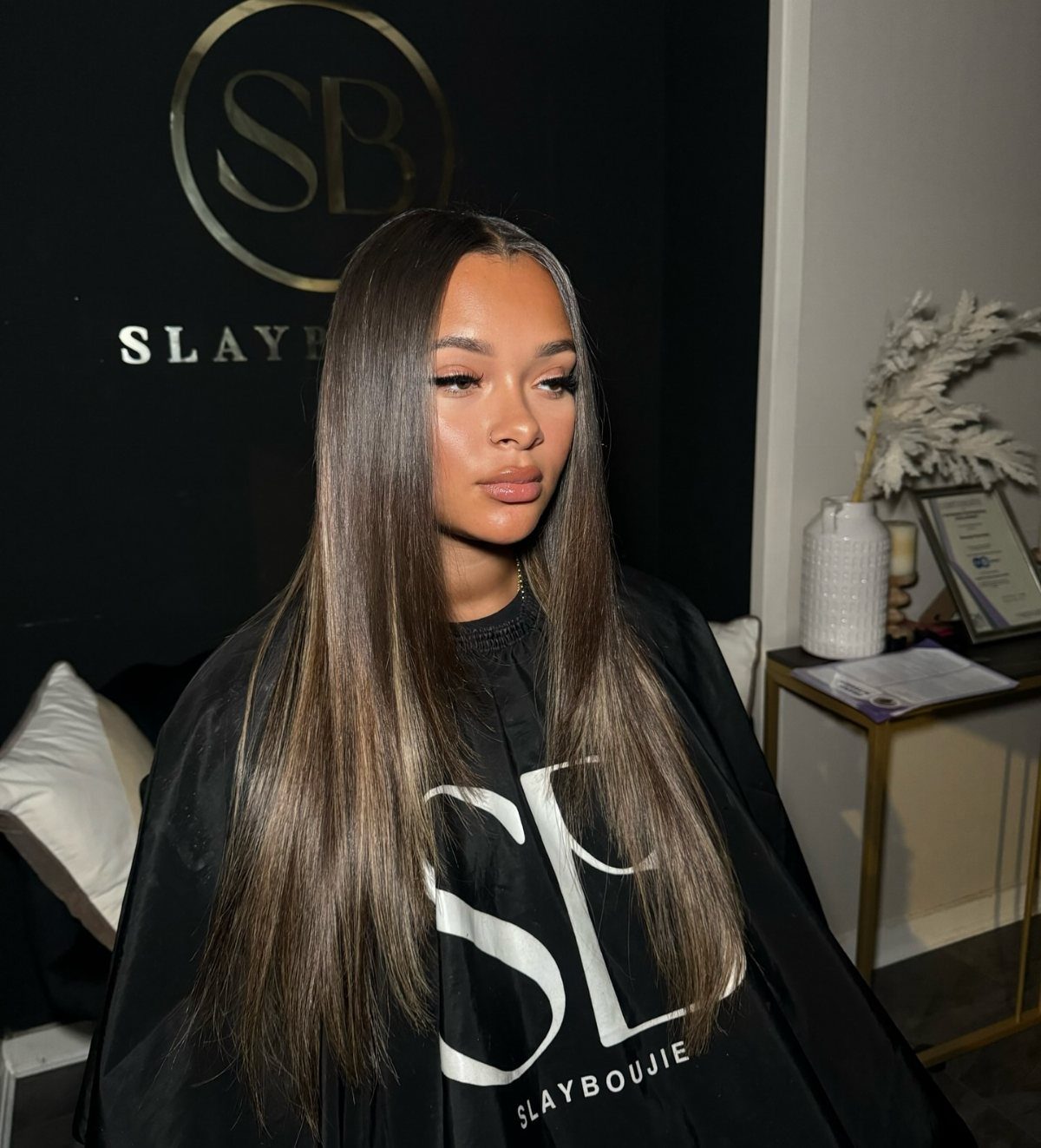
Lighter pieces woven through the lengths catch the light and give straight hair dimension without adding wave or curl. The highlights break up one solid color and make the hair look fuller.
Balayage or foil highlights applied a few inches from the roots blend naturally as they grow out.
Straight hair shows the color transition more sharply than wavy hair, so ask for softer placement if you want it subtle. A gloss treatment between color appointments keeps the tone from fading.
12. Side-Swept Pixie
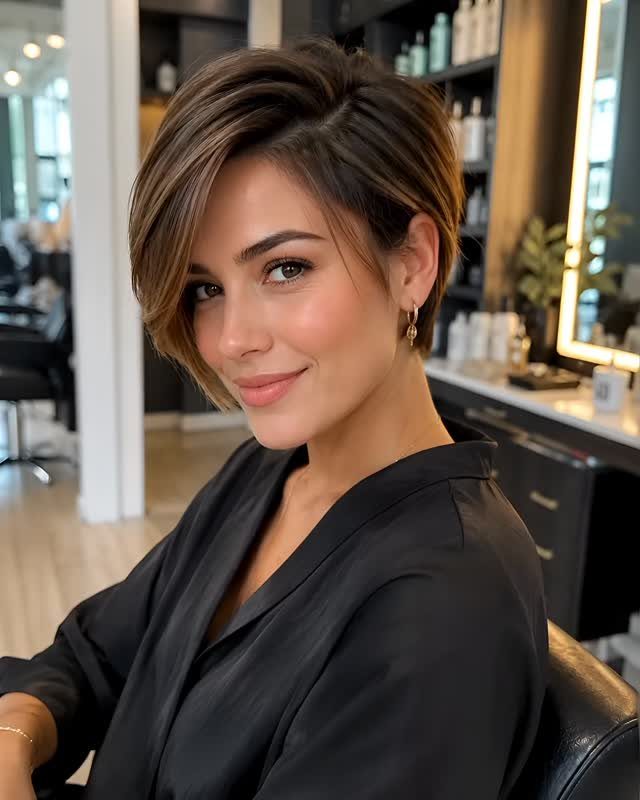
Short hair cut close at the back and sides with longer pieces at the front sweeps across the forehead in a deep side part. Straight hair holds the sweep flat and sharp.
The fringe sits long enough to tuck behind your ear or leave forward, and the side part determines which way it falls.
Dry the front section forward over a small round brush to get it smooth and keep it in place. Pixies grow out quickly, so book regular trims to keep the shape from softening.
13. Face-Framing Layers
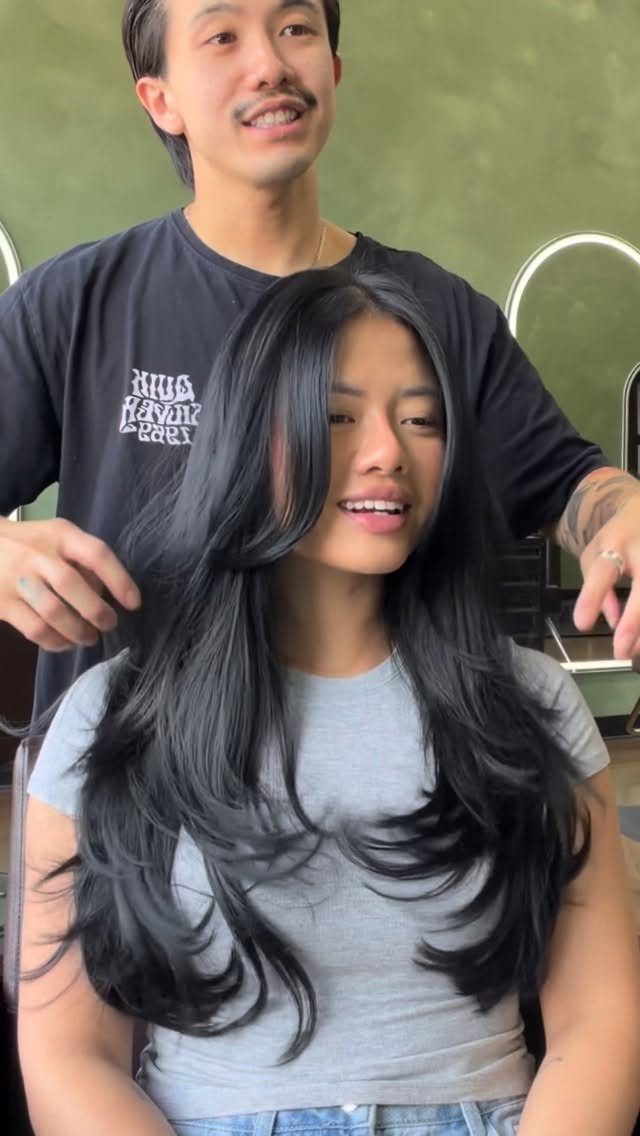
Shorter layers cut around the face while the rest stays longer, which adds dimension without cutting length everywhere. Straight hair shows the layering cleanly, and the pieces around your face can frame a round face or soften a square jaw.
Ask for layers that start at cheekbone or chin level and blend into the longer lengths. The shortest pieces can sit at your cheekbones or a few inches below, depending on where you want the frame to hit.
Blow dry the face-framing pieces forward with a round brush to keep them smooth, or bend them out with a flat iron for more shape.
14. Blunt Bob
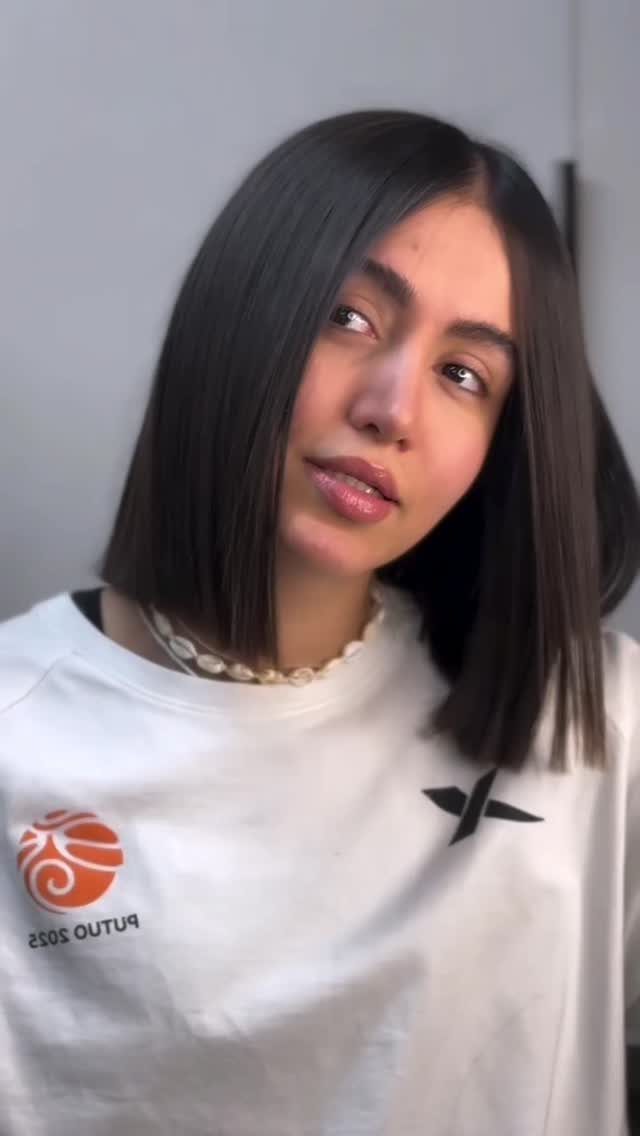
A bob cut to one length with no layering or graduation, so every hair ends at the same line. Straight hair holds the blunt edge sharp, and the weight keeps it from flipping out.
The cut can sit anywhere from chin to jaw, and the line reads strongest on thick or medium hair.
A center or side part changes the balance, and straight hair needs nothing more than a blow dry to keep the edge clean.
15. Blunt Lob
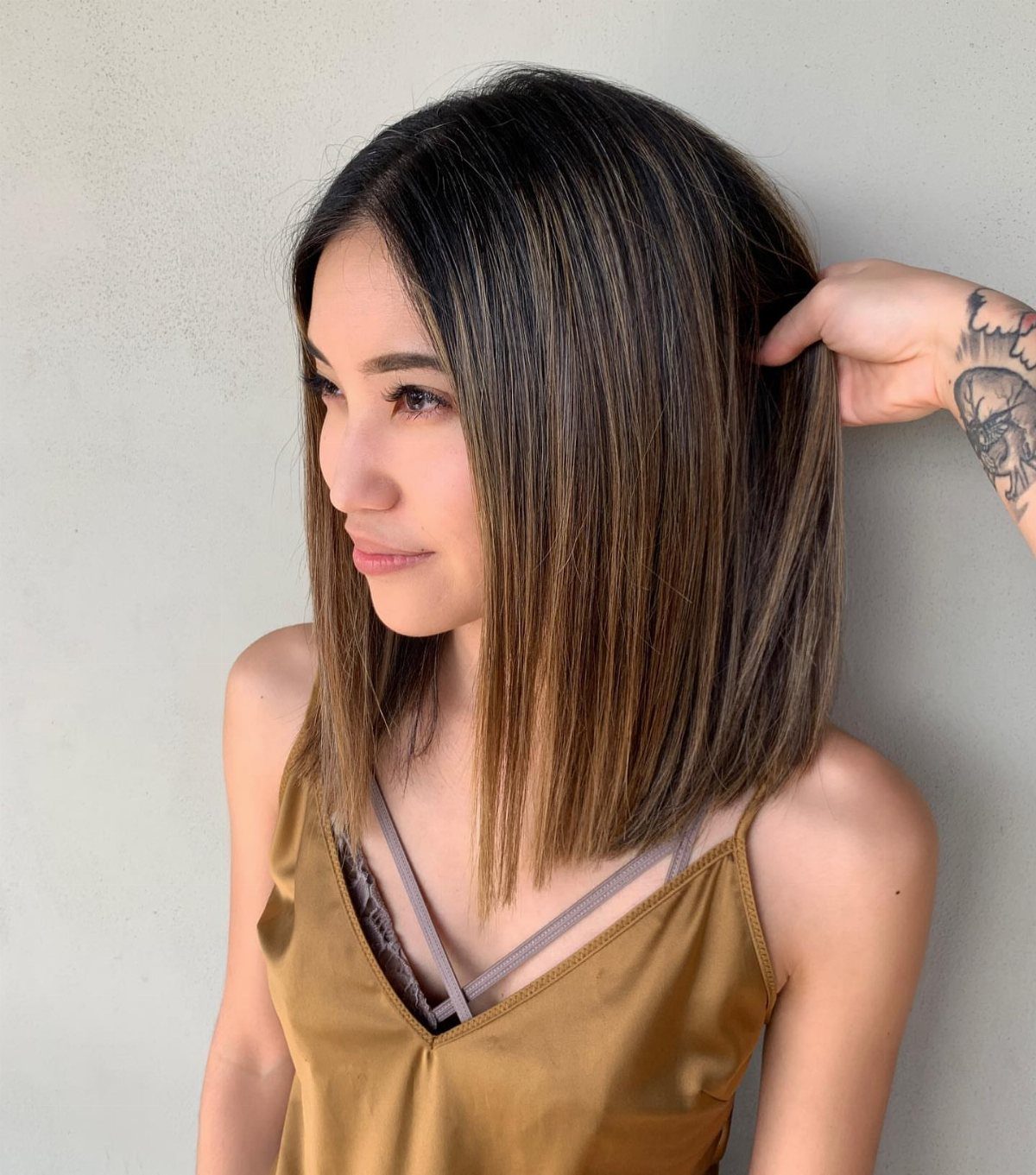
The lob lands anywhere from chin to collarbone and stops with a straight-across edge. Straight hair keeps the line defined, and the length is long enough to tuck behind your ears or pull into a low ponytail.
The cut can graze your collarbone or sit an inch above, and a slight angle from back to front makes it feel less heavy.
Minimal layering means the ends stay thick, which suits fine hair that needs weight. A paddle brush and one pass with the dryer are enough, and the cut stays put between washes.
16. Curtain Bangs
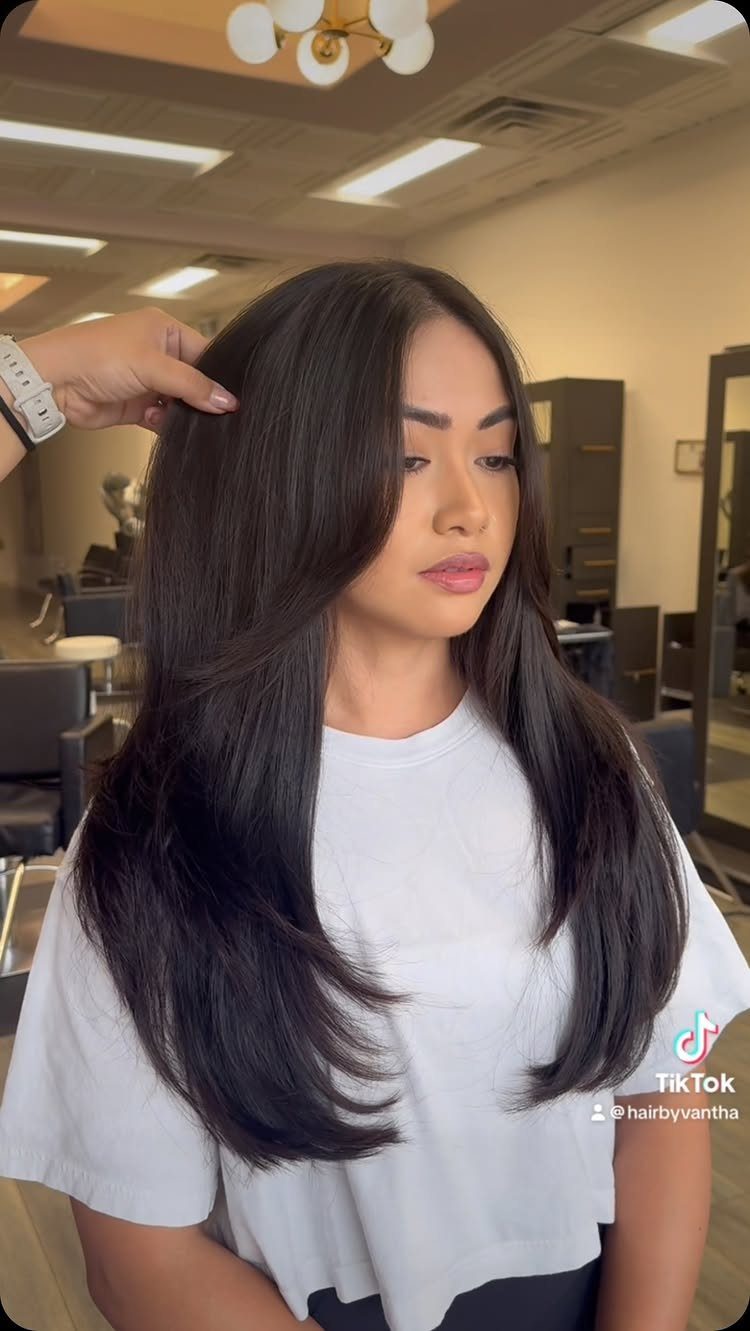
Bangs parted down the center or slightly off and swept to each side, longer at the outer edges and shortest at the bridge of your nose. Straight hair holds the part and the sweep without curling back.
The shortest pieces hit your cheekbones or brow, and they blend into the hair beside your face so there’s no hard line where the bangs end.
Use a round brush to blow them forward, then flip the ends gently outward so they frame your face instead of falling into your eyes.
They blend into the rest of your hair as they grow, so you can go longer between trims.
17. Side-Swept Bangs
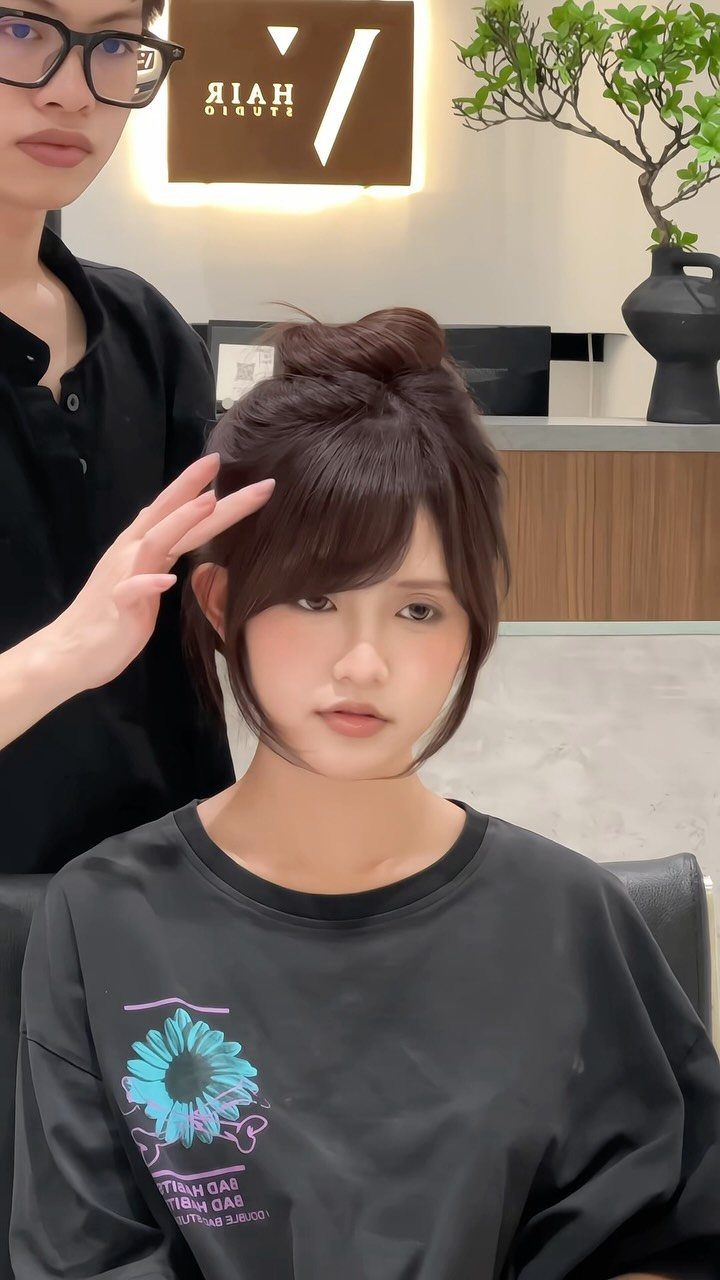
Bangs cut to sweep across your forehead from a side part, shorter on one side and longer on the other.
Straight hair lies flat along the angle, and the sweep can be soft or dramatic depending on how deep the part sits.
Make a deep side part, then smooth the bangs across your forehead with a round brush while you dry.
The shortest pieces can start at your brow and the longest can reach your cheekbone, or keep them all brow-length for a blunt sweep.
Pin them back once they start falling into your line of sight, and trim when they get too long.
Straight Hair Texture Differences
Fine straight hair goes flat and oily faster because oil travels down the shaft without waves to slow it.
Medium-density straight hair holds body better and can support more styles without going limp. Coarse straight hair resists curl and often fights a round brush, so heat styling takes longer or doesn’t hold.
Straight strands show every uneven cut.
A poorly blended layer or choppy end stands out where wavy hair would hide it, so the trim needs to be clean and the layers diffused through the lengths instead of stopping in one hard line.
If your hair sits limp by midday, dry shampoo at the roots buys time between washes. If it won’t hold a curl, accept the texture and lean into sleek styles instead of fighting it with heat.
Frequently Asked Questions
What to do with straight hair for women?
Pull it into a low or high ponytail, twist the top half back, blow it out with a round brush for lift, or wear it down with a center part and silicone serum for shine.
Straight hair also takes to sleek buns, flipped ends with a round brush, and styles with highlights that add dimension without texture.
What are the 2026 haircut trends for straight hair?
Blunt bobs and lobs, curtain bangs, face-framing layers, and side-swept pixies are holding strong. Straight hair shows clean lines and blunt edges sharply, so cuts with minimal layering and intentional shape are getting the most use right now.
What are the best haircuts for long straight hair?
Face-framing layers, curtain bangs, and blunt ends work well because they add shape without cutting length everywhere.
Long straight hair benefits most from face-framing layers that begin somewhere between the cheekbone and the chin, then taper gradually into the length below.
Are layers good for straight hair?
Layers add movement and keep straight hair from looking flat, but they need to blend softly instead of stopping in a hard line.
Face-framing layers or invisible layers cut through the interior work better than choppy, shaggy layers, which can make fine straight hair look stringy.
What is the difference between texturizing and layering hair?
Layers carve out shape and remove bulk, texturizing thins the ends so the cut doesn’t look blocky. Texturizing also removes bulk between the mid-shaft and ends, which helps straight hair blend better and extends the time between trims.
What are the best styling products for straight layered haircuts?
A heat protectant and a hydrating serum cover most needs, since layered straight hair gets styled with hot tools more often than one-length cuts.
A hot tool with an oval brush attachment adds volume and fullness at the roots while smoothing the lengths.
How often should you trim straight hair to prevent split ends?
Every 6 to 8 weeks keeps ends clean and the shape intact. Straight hair shows every uneven cut and split end more clearly than wavy hair, so regular trims prevent the ends from looking scraggly or the layers from losing their intention.
How do you add volume to straight hair?
I blow dry upside down or wrap sections around a round brush at the roots, set them with Velcro rollers until they cool, then pull the rollers out and work through the hair with my fingers and a light texture spray.
Straight hair goes flat easily, so the cooling step locks in whatever lift you create.