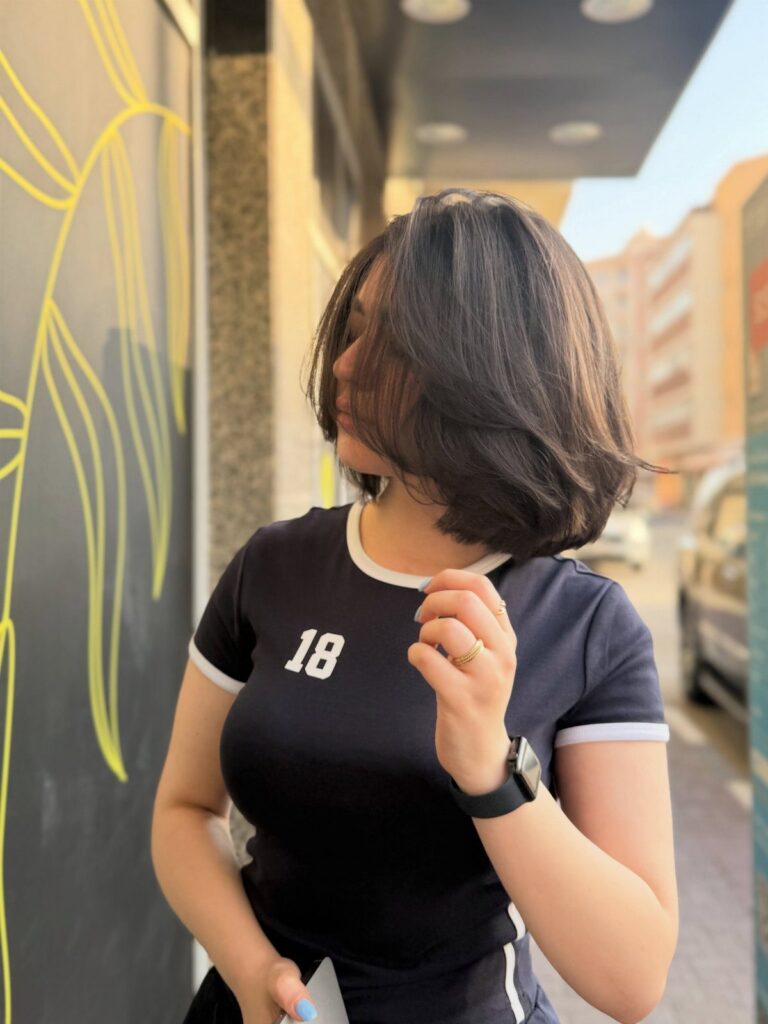
A shoulder-length bob can be cut blunt, layered for movement, angled front-to-back, shaggy with choppy texture, or rounded, and the range runs from styles that air-dry in minutes to finishes that need a flat iron or round brush most mornings.
The cut that works depends on how much time you’re willing to spend styling and whether your hair is straight, wavy or curly when you let it dry on its own.
Inverted and A-line bobs require the most frequent trims to hold their shape, since the shorter back loses its line quickly, while blunt, layered and shaggy bobs can go longer between appointments without the cut looking grown out.
1. Blunt Bob
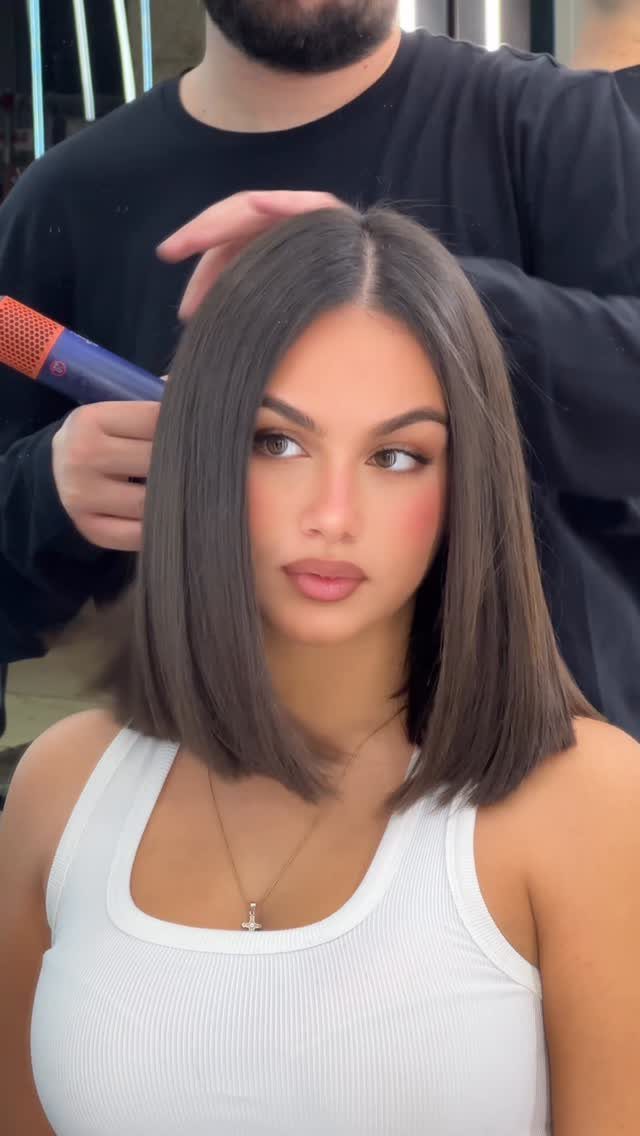
A bob cut to one length across the bottom, with no layers or taper at the ends. The finish feels crisp and geometric, and the weight sits at the perimeter instead of being broken up through the length.
Blunt ends tend to make fine hair look thicker, since all the strands stack together at the hemline. On thicker hair, the same cut can feel heavier and swing less unless the stylist removes some bulk from the interior.
The cut holds its shape longer than a layered bob because there are fewer ends to split or lose their line, though regular trims keep the edge clean.
2. Layered Bob
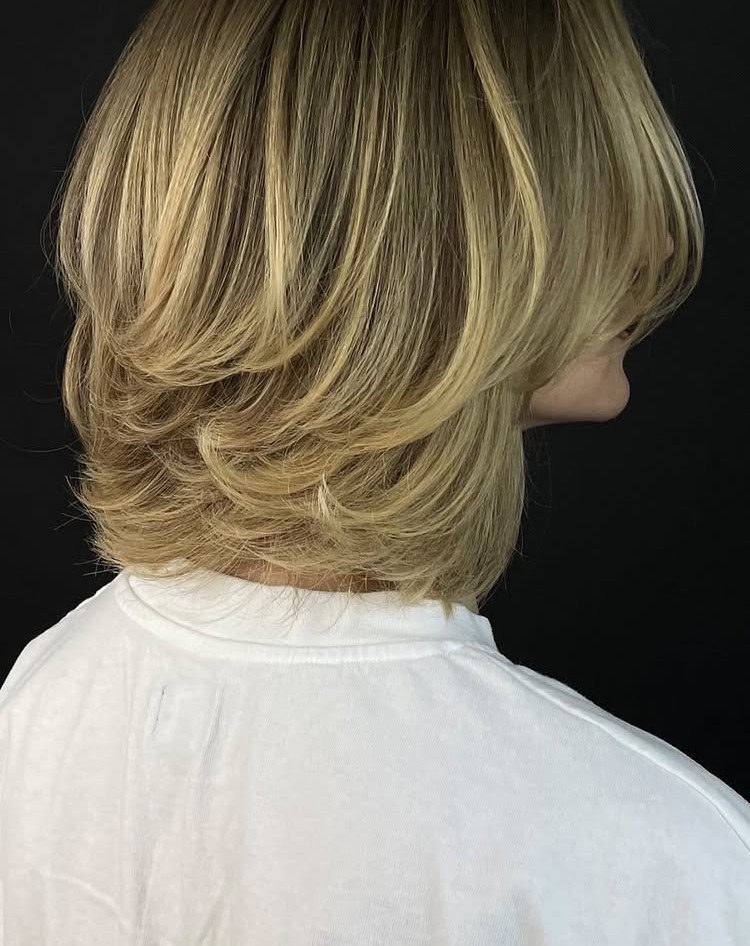
Layers cut through the length break up the weight and let the ends move independently. The result is more texture and dimension than a one-length bob, with shorter pieces near the crown lifting the silhouette.
How much movement you get depends on how short the layers start and how far apart they sit.
Shorter layers near the face add lift and frame the cheekbones; longer, more subtle layers keep the shape close to blunt but add a bit of swing at the ends.
Layered bobs need more frequent trims to prevent the shortest pieces from growing out of proportion. Blow drying with a round brush brings out the separation between layers.
3. Curly Bob
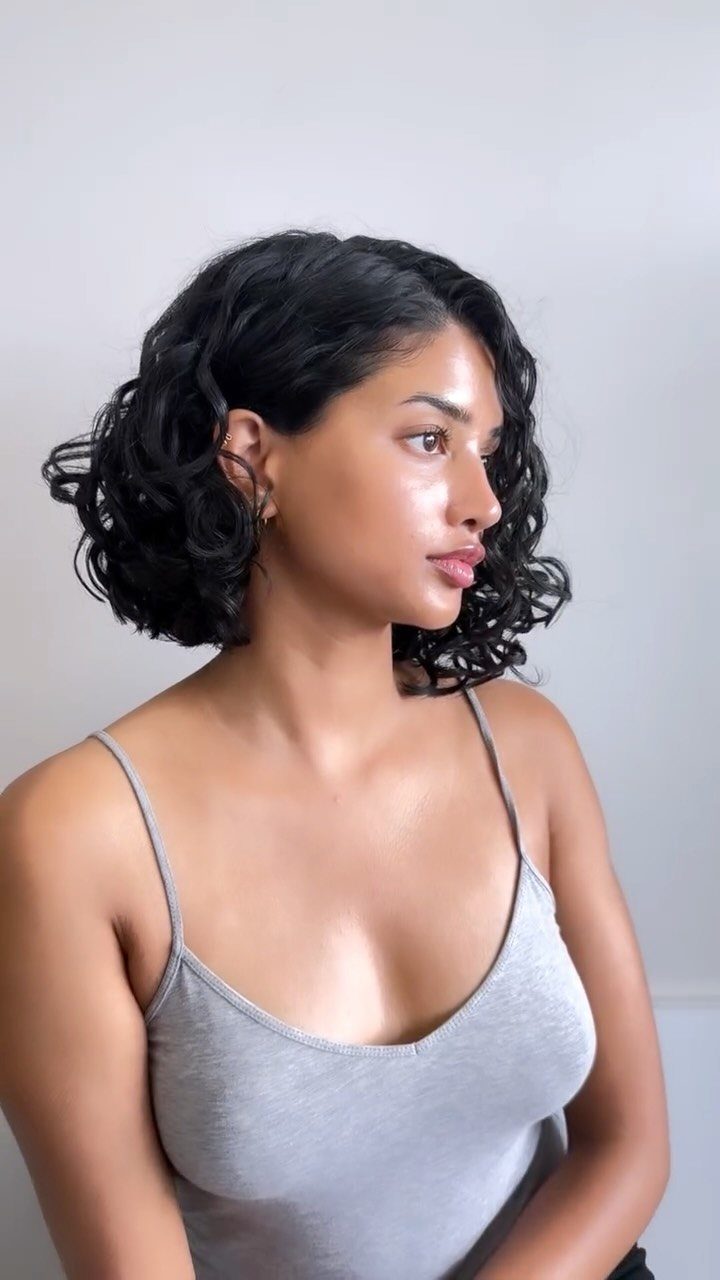
A shoulder-length bob worn with natural curl keeps the length while letting the texture do the shaping.
Curls usually sit shorter when dry than the cut length, so a bob that grazes the shoulders when wet may spring up to chin or jaw level once it dries.
The cut itself can be one length or layered, depending on curl density. Tighter curls often benefit from layers that reduce bulk and let each curl coil separately, while looser waves can handle more weight.
Curly bobs air-dry well with a leave-in conditioner or curl cream worked through damp hair. A diffuser attachment speeds up drying without disrupting the curl pattern, and the style resets with a light mist of water on day two.
With naturally curly hair, you don’t need layers for texture and definition. You might need your stylist to thin your cut a bit if you’re going shoulder length or shorter.
— AOL
4. Bob with Bangs
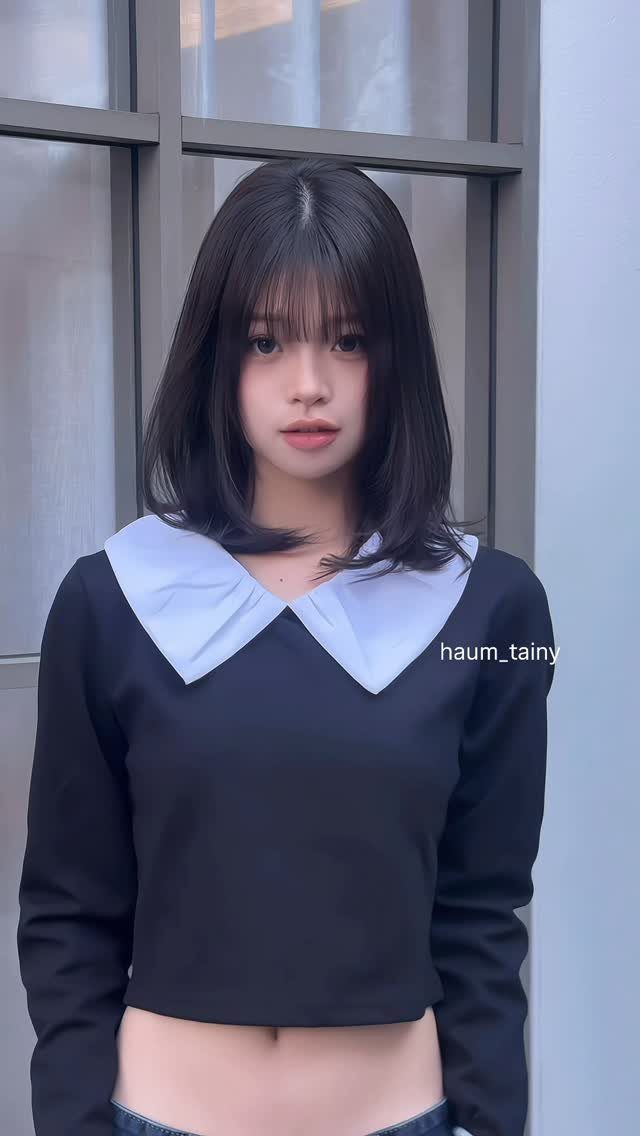
Adding bangs to a shoulder-length bob brings the focus up toward the eyes and changes the proportions of the face.
The bangs can be blunt, wispy, side-swept, or curtained, depending on how much forehead you want to cover and how much styling you are willing to do.
Wispy or textured bangs blend more easily into the rest of the cut and need less precision when you style them.
Blunt bangs make a stronger statement but show every bit of frizz or unevenness, so they need a flat iron or a round brush most mornings.
Bangs grow out faster than the rest of the bob, so they need more frequent trims if you want to keep the length consistent.
5. Inverted Bob
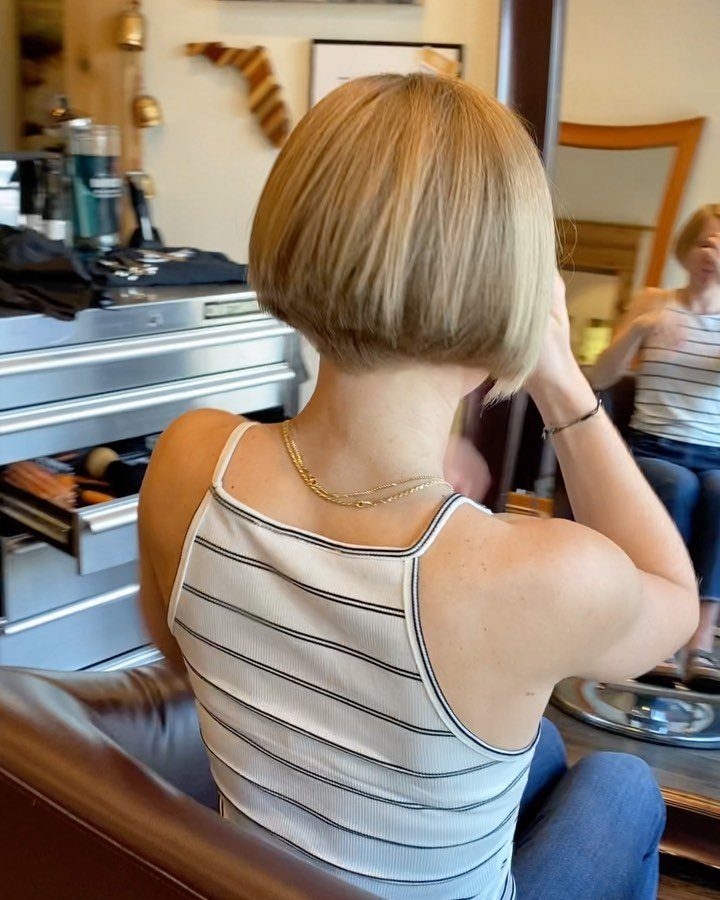
The back is cut shorter and often stacked in layers, while the front extends longer, sometimes past the chin. The difference in length creates an angled silhouette that lifts at the nape and elongates toward the face.
Inverted bobs suit round or square face shapes because the longer front pieces draw the eye downward and add vertical length. The stacked back adds volume at the crown, which can help balance a fuller jawline.
This cut requires the most frequent maintenance of any bob, since the short back loses its shape quickly as it grows. Regular trims preserve the stacked layers and the angle from back to front.
6. Shaggy Bob
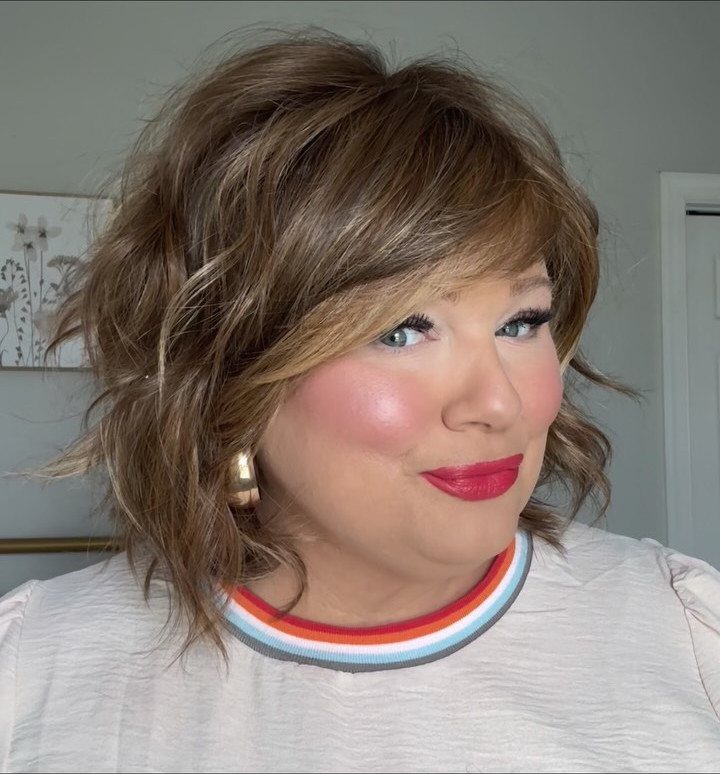
Shaggy layers cut at varying lengths create a deliberately undone look, with more texture and separation than a classic layered bob. The layers are often choppy or point-cut rather than blended smoothly, which gives the ends a feathered, piecey finish.
The shaggy bob works well on straight or wavy hair, where the texture shows clearly. On very curly hair, the layers can get lost inside the curl pattern unless they are cut quite short near the crown.
Styling is minimal: a texturizing spray or sea salt spray worked through damp hair and air-dried, or a quick blow-dry with your hands rather than a brush.
The cut is meant to look a little messy, so precise styling undercuts the effect.
7. Straight Bob
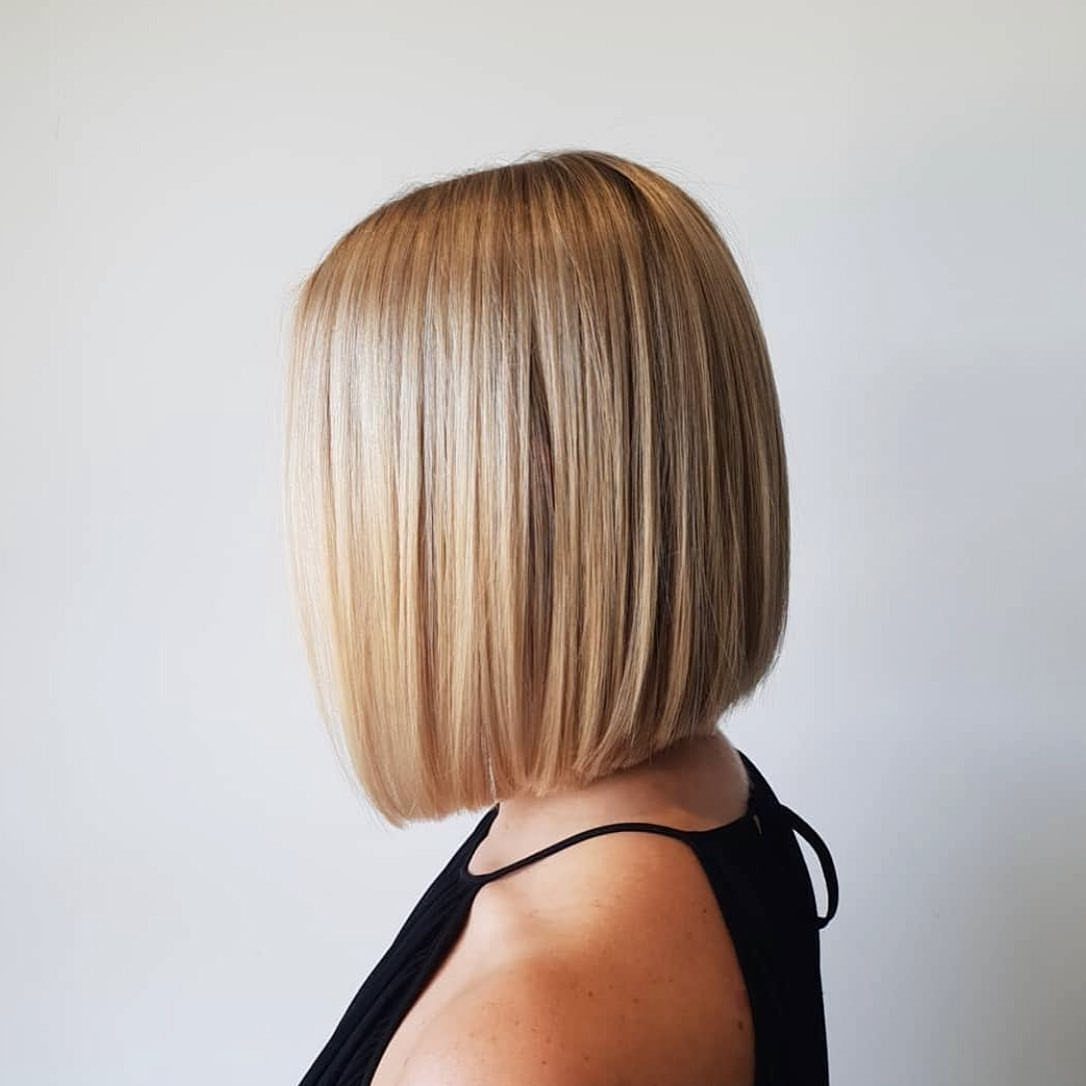
Smooth hair worn without curl or wave, cut to sit somewhere between the jaw and collarbone.
The look depends on the hair lying flat and catching light along the surface, which means blow drying with tension or running a flat iron through after it dries.
Fine hair holds this shape well once it is set.
Thicker or textured hair may need more heat or product to keep it from lifting or bending at the ends. A smoothing serum or light oil applied before heat styling helps lock in the finish and adds shine.
8. Feathered Bob
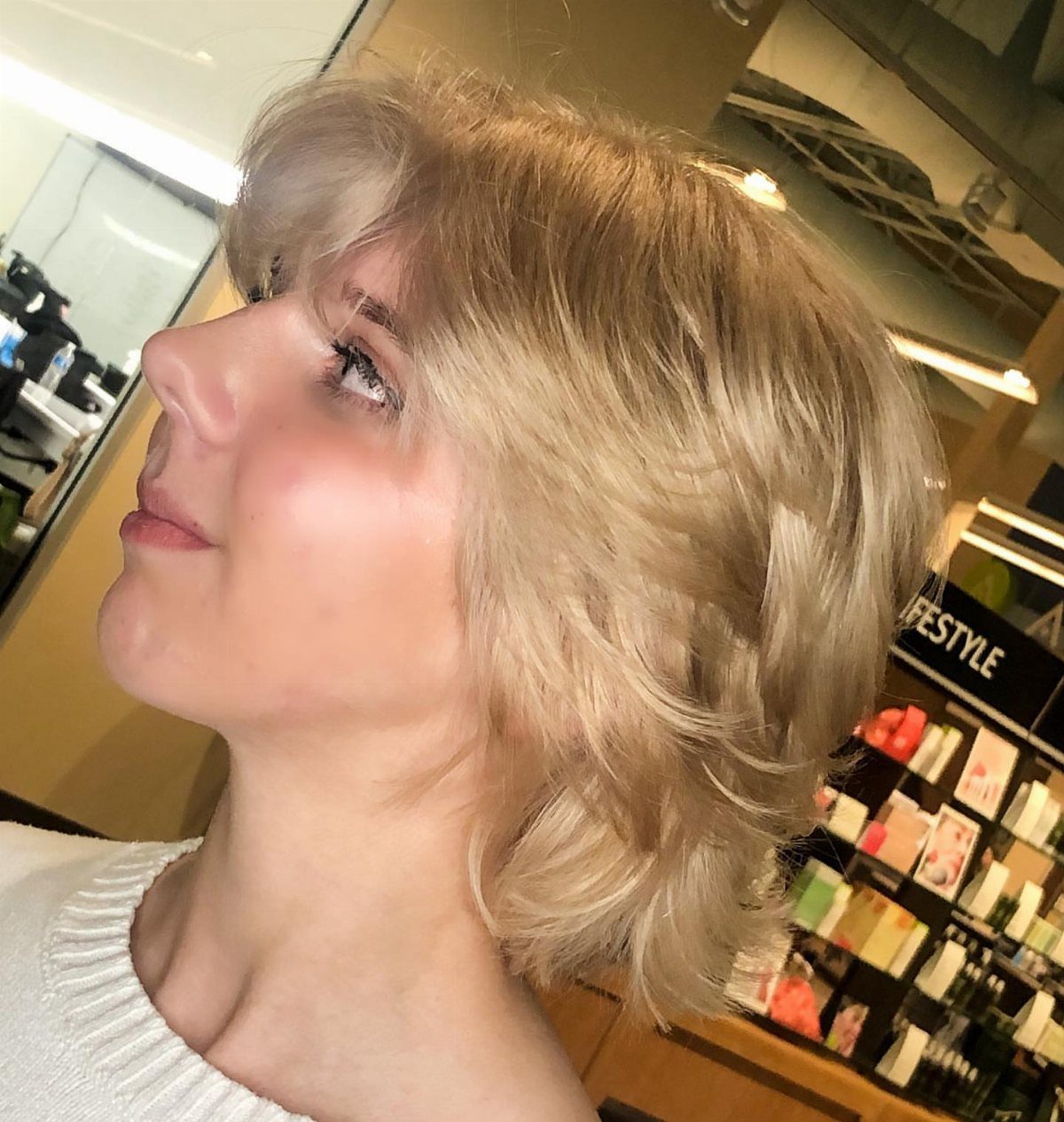
Layers cut with a razor or point-cut scissors create soft, tapered ends that flip slightly outward or separate into wispy pieces.
The feathering sits mostly at the perimeter, so the cut keeps its overall shape while the ends look lighter and more textured.
Blow dry with a round brush, rolling the ends outward as you work through each section. The style works without much product, though a light mousse at the roots adds volume if the hair sits flat.
9. Shoulder-Length Bob
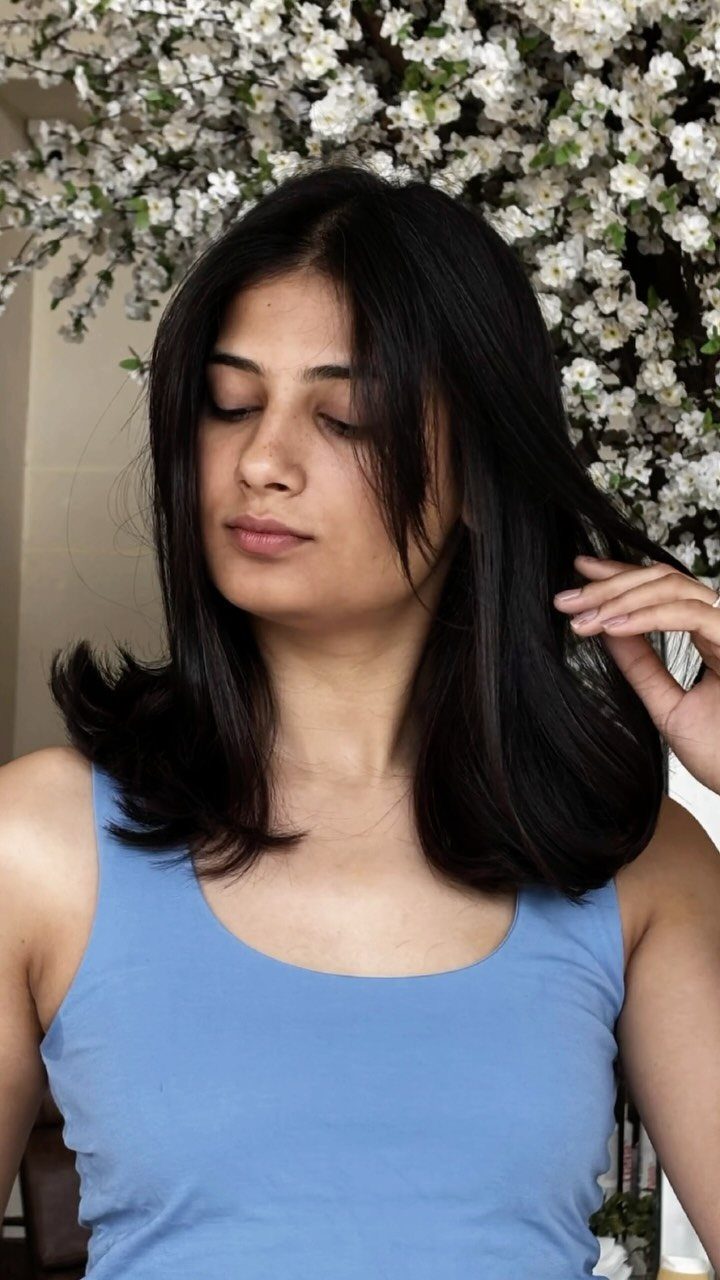
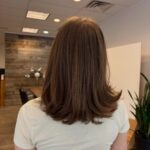
A bob that grazes the shoulders or falls just above them splits the difference between a classic short bob and longer hair.
The length allows more styling options: worn straight, tucked behind the ears, or pulled into a low ponytail or half-up style when you need it off your face.
This length is easier to grow out than a chin-length bob, since the transition to longer hair is less abrupt.
It also hides more of the neck, which some prefer in cooler weather. You’ll spend a few more minutes drying than you would with a chin-length bob, but the routine stays simple.
10. Straight Black Angled Bob
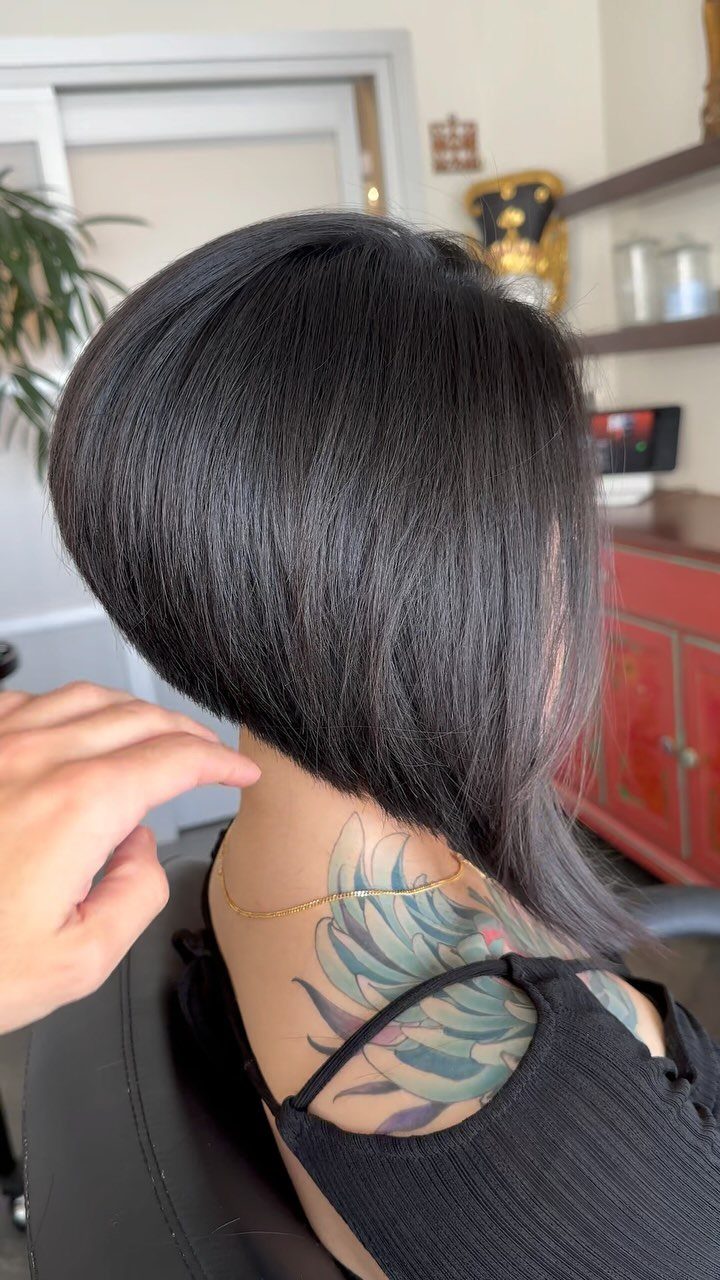
The front falls longer than the back, creating a diagonal line from the nape to the chin or just past it.
The angle is cut into the shape rather than styled in, so the silhouette holds even when the hair is wet or unstyled.
Angled bobs work on straight hair and most face shapes, though the longer front pieces are especially flattering on round faces because they add length along the sides.
The back is usually cut blunt or with minimal layers to keep the line sharp. Regular trims keep the angle intact as the hair grows.
11. Wavy Bob
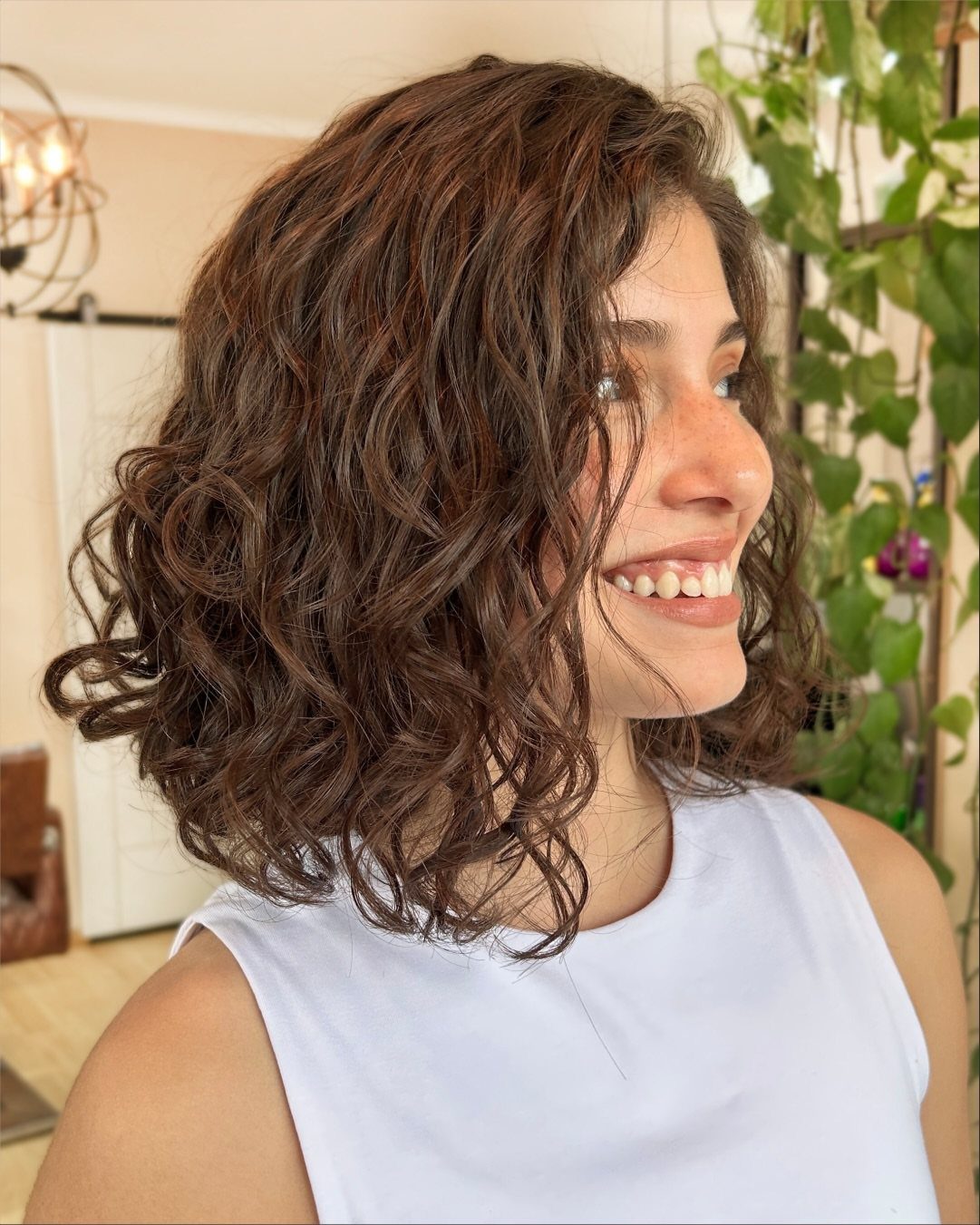
A bob styled with bends or curves rather than worn straight or curly.
The waves can be loose and beachy, created with a curling wand or braid, or tighter and more uniform if set with a flat iron twisted as it moves through the hair.
Scrunch texturizing spray or mousse into damp hair, then let it air dry or use a diffuser.
Straight hair holds heat-styled waves better if you spray each section lightly before curling and let it cool completely before touching it. The waves soften the edges of the bob and add width at the sides.
12. A-Line Bob
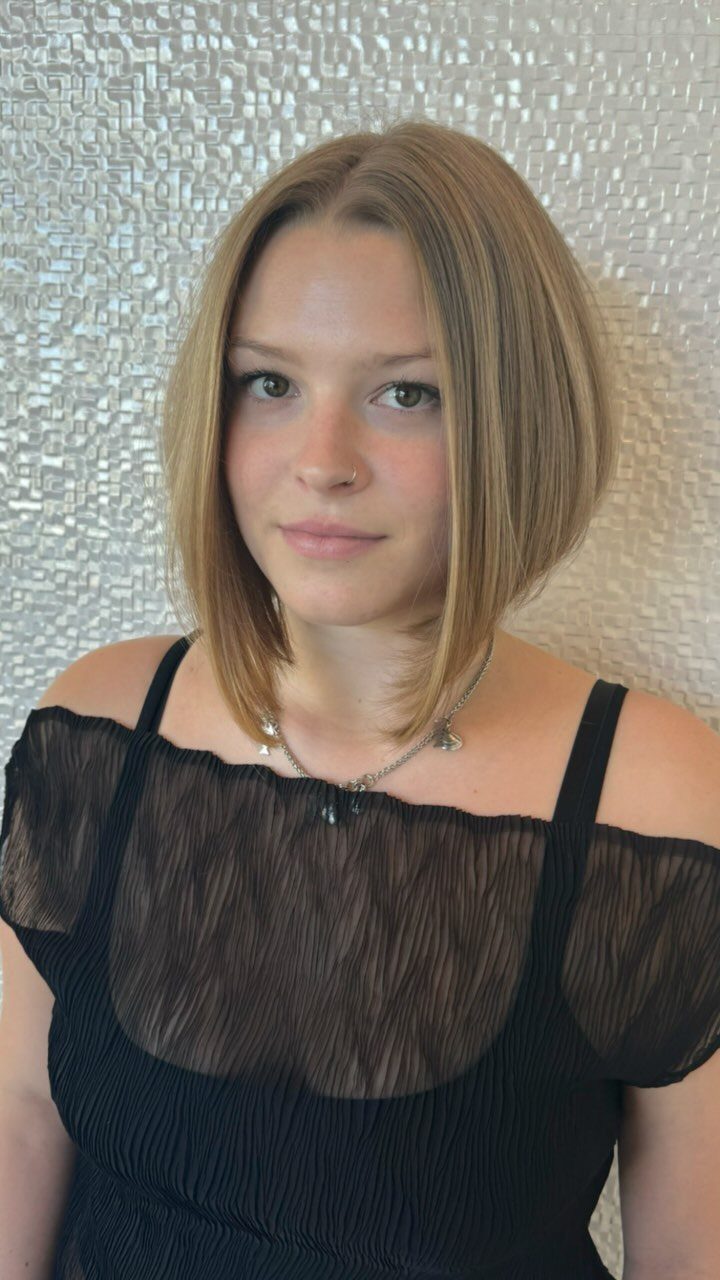
The hair is cut shorter at the back and gradually longer toward the front, forming a clean diagonal line when viewed from the side.
The shape is similar to an inverted bob but usually less dramatic, with a gentler slope and less stacking at the nape.
A-line bobs suit most face shapes and hair textures. The longer front frames the face without covering too much, and the shorter back keeps the neck visible and prevents the cut from feeling heavy.
Blow drying straight brings out the angle most clearly, though the shape holds with waves or texture as well.
13. Bob with Face-Framing
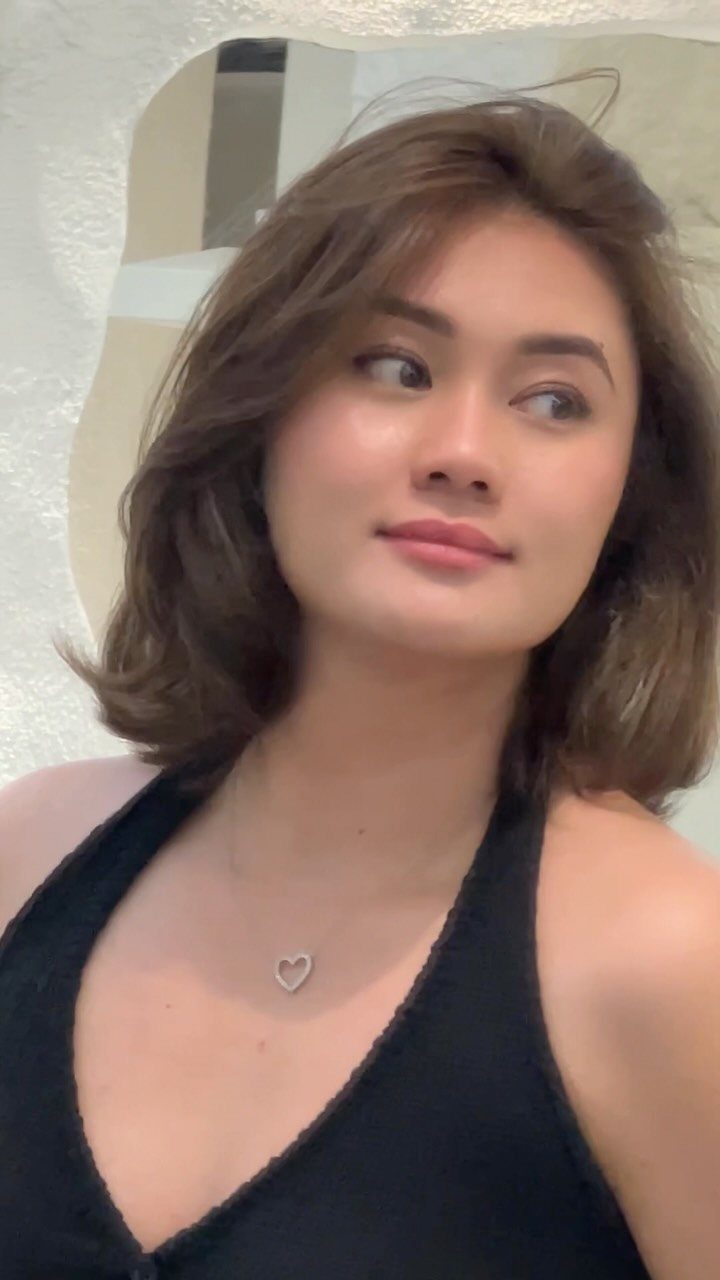
Shorter pieces cut to fall along the cheekbones or jawline, while the rest of the bob stays longer.
The layers frame the face without removing much length from the back or sides, so the cut keeps most of its weight and shape.
Face-framing pieces soften a square or angular jawline and draw attention toward the eyes.
They can be styled straight with a flat iron or bent slightly outward with a round brush. The shorter pieces need trims more often than the rest of the bob to keep the framing effect clean.
14. Tousled Middle-Parted Mob
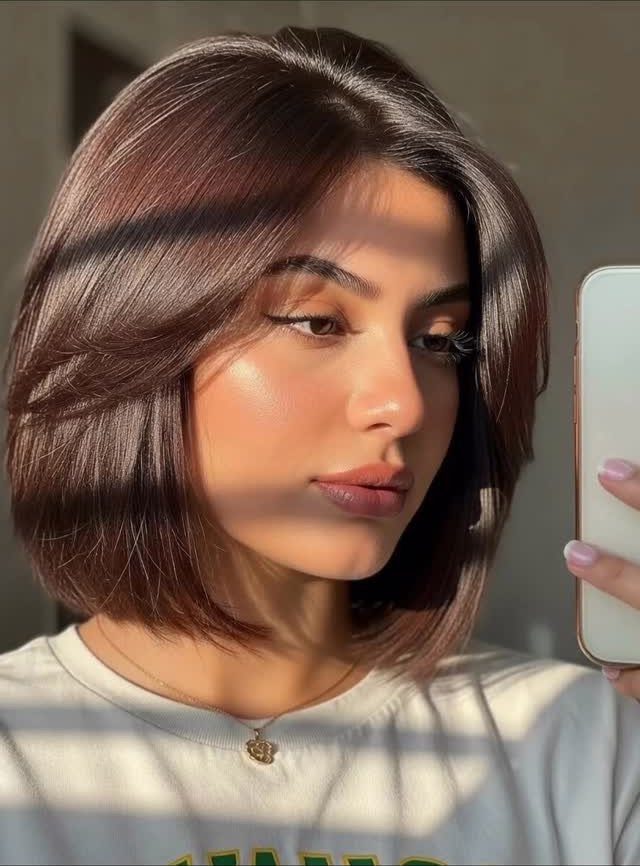
A middle part divides the bob evenly and lets the hair fall forward on both sides, while tousled texture keeps the finish loose rather than polished.
The look sits somewhere between styled and undone, with enough separation in the strands to show movement without looking messy.
The middle part suits most face shapes and grows out without losing its balance, since both sides lengthen at the same rate.
15. Rounded Bob
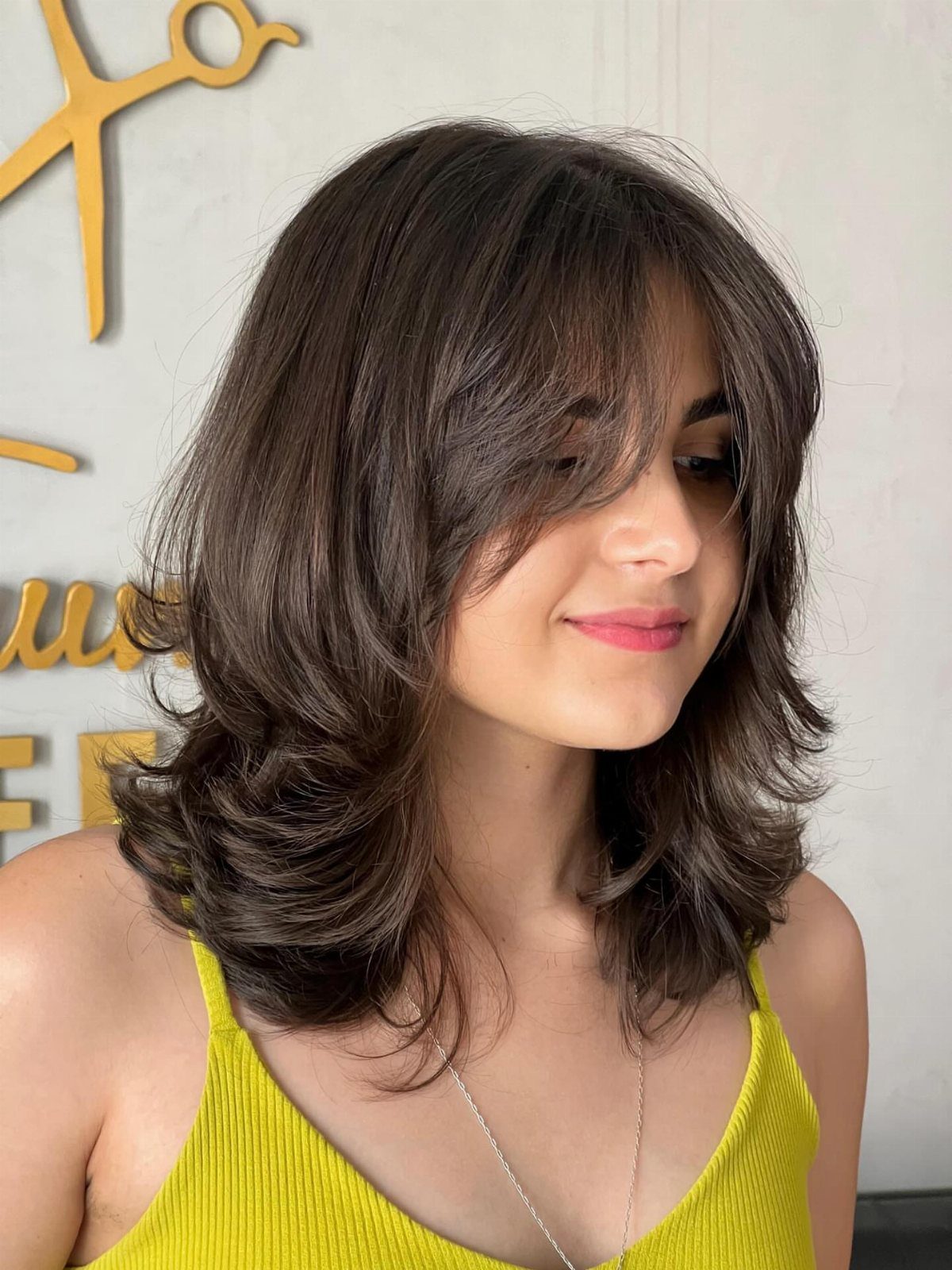
The perimeter is cut to follow a curved line rather than sitting straight across, so the silhouette bends inward at the ends and hugs the jawline.
The shape reads as softer and more polished than a blunt bob, with the curve adding dimension even when the hair is worn smooth.
The rounded edge suits oval and heart-shaped faces, and the curve stays visible whether the bob is worn straight or with slight wave.
16. Highlighted Bob
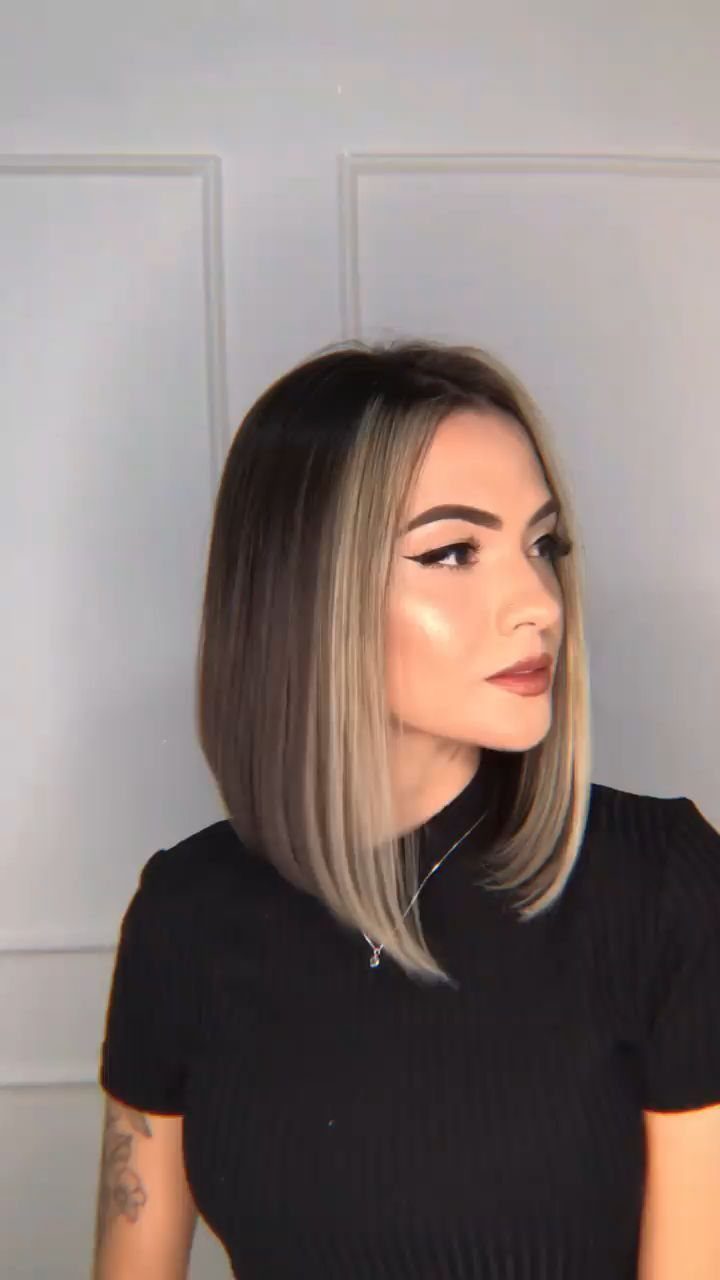
Lighter pieces worked through a shoulder-length bob, usually concentrated near the face or scattered through the top layers. The highlights add contrast and dimension without changing the cut, and they catch more light than solid color.
Balayage or foil highlights both work, depending on how much contrast you want.
Lighter pieces around the face brighten the complexion and soften the edges of the bob. The color needs touch-ups as roots grow in, though balayage grows out more gradually than foil.
17. Curled-Ends Bob
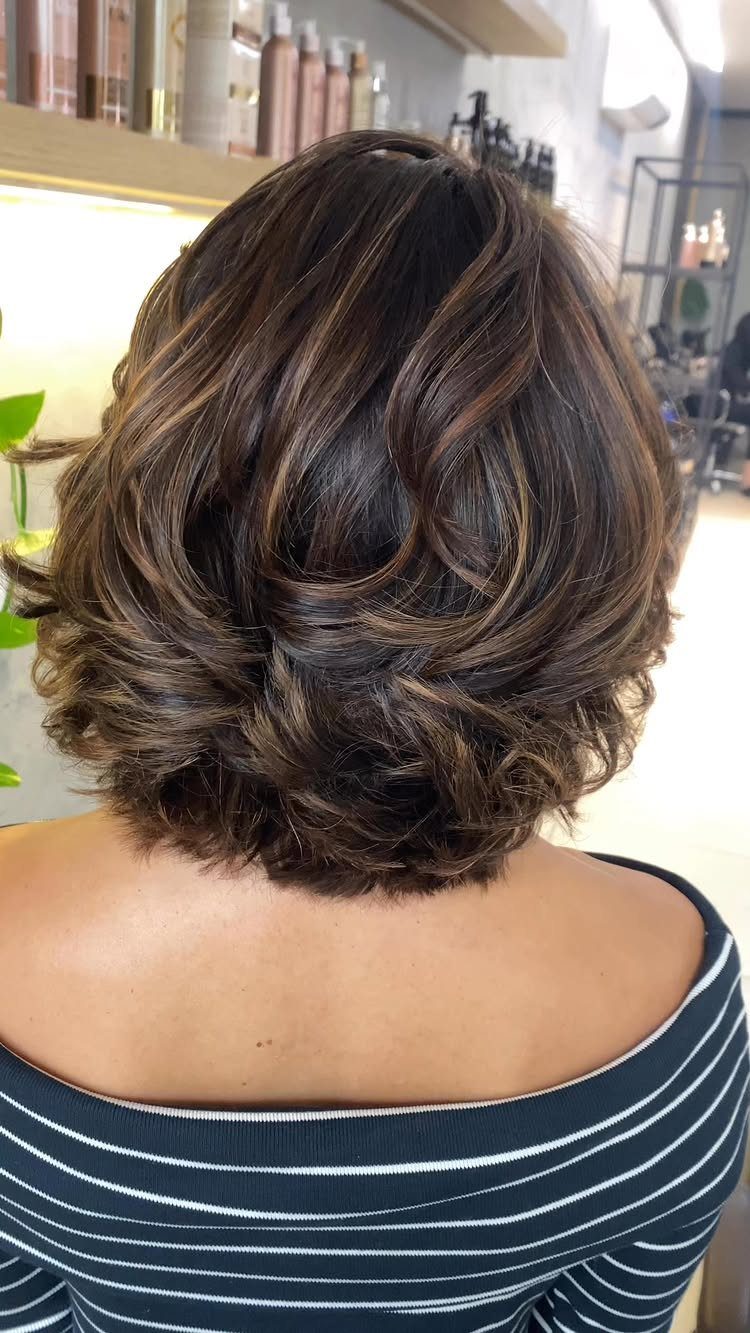
The ends are curled under or flipped outward with a curling iron or round brush, giving the bob a finished look that holds its shape through the day.
The curl sits at the perimeter rather than through the length, so the style keeps the bob’s structure while adding polish at the bottom.
Use a medium-barrel curling iron or blow dry with tension on a round brush, holding each section at the ends for a few seconds before releasing.
A light hairspray keeps the curl from dropping. The style suits straight or slightly wavy hair and works well when you need the bob to look intentional rather than casual.
Choosing Length for Face Shape
Shoulder-length bobs sit close to universally flattering because the length interacts with most face shapes without demanding much adjustment.
The hemline falls where it elongates a rounded chin, draws the eye toward the collarbone, and softens the line of prominent cheekbones.
Round faces gain length from any bob that ends below the jaw, since the vertical line counteracts width.
Oval faces handle nearly any length or finish within the shoulder-length range, since the proportions already balance.
Heart-shaped faces, wider at the forehead and narrower at the chin, do well with volume or texture that starts near the jawline and fills out the lower half.
The length itself does most of the work. Adjustments to layer placement or texture refine the effect but rarely override it.
Frequently Asked Questions
How to choose the right bob length?
Most bob lengths flatter most faces, but shoulder length specifically counters roundness by adding vertical line, pulls the eye to the collarbone, and offsets width at the cheeks.
Round faces benefit from length that extends past the jawline, while heart-shaped faces look fuller when the cut adds width or texture right at the jaw. Oval faces handle any length in this range without much adjustment.
What face shapes are best suited for shoulder-length bobs?
Shoulder-length bobs suit nearly all face shapes because the length falls where it elongates, softens, and balances most facial proportions.
The cut adds length to round faces, frames heart-shaped faces without overwhelming the chin, and works with oval faces without any tweaking. Only very specific proportions need adjustment beyond choosing a finish or layer placement.
Can shoulder-length bobs work with different hair textures?
Straight, wavy, and curly hair all work at shoulder length, though each texture changes how the bob sits and moves.
Curly bobs spring shorter when dry and often need layers to reduce bulk, while straight hair shows the cut’s line most clearly and holds smooth finishes with heat styling.
Wavy hair adds width at the sides and softens the edges without much effort.
How often should I trim my shoulder-length bob to maintain its shape?
Most shoulder-length bobs stay sharp with a trim every 6 to 8 weeks, though inverted and stacked styles lose their shape faster and need more frequent cuts.
Blunt bobs hold their line longer than layered ones because there are fewer ends to split or grow uneven. Shorter layers around the face and any bangs reach awkward lengths faster than the baseline and pull the calendar forward.
What is the most flattering bob length for an older woman?
Shoulder length or just above reads flattering across age groups because that endpoint lifts rather than drags and sends focus to the collarbone instead of settling at the jaw.
Feathered layers lighten the ends and add movement without shortening the cut drastically, and highlights near the face brighten the complexion while blending gray. The length still feels long enough to style or pull back when needed.