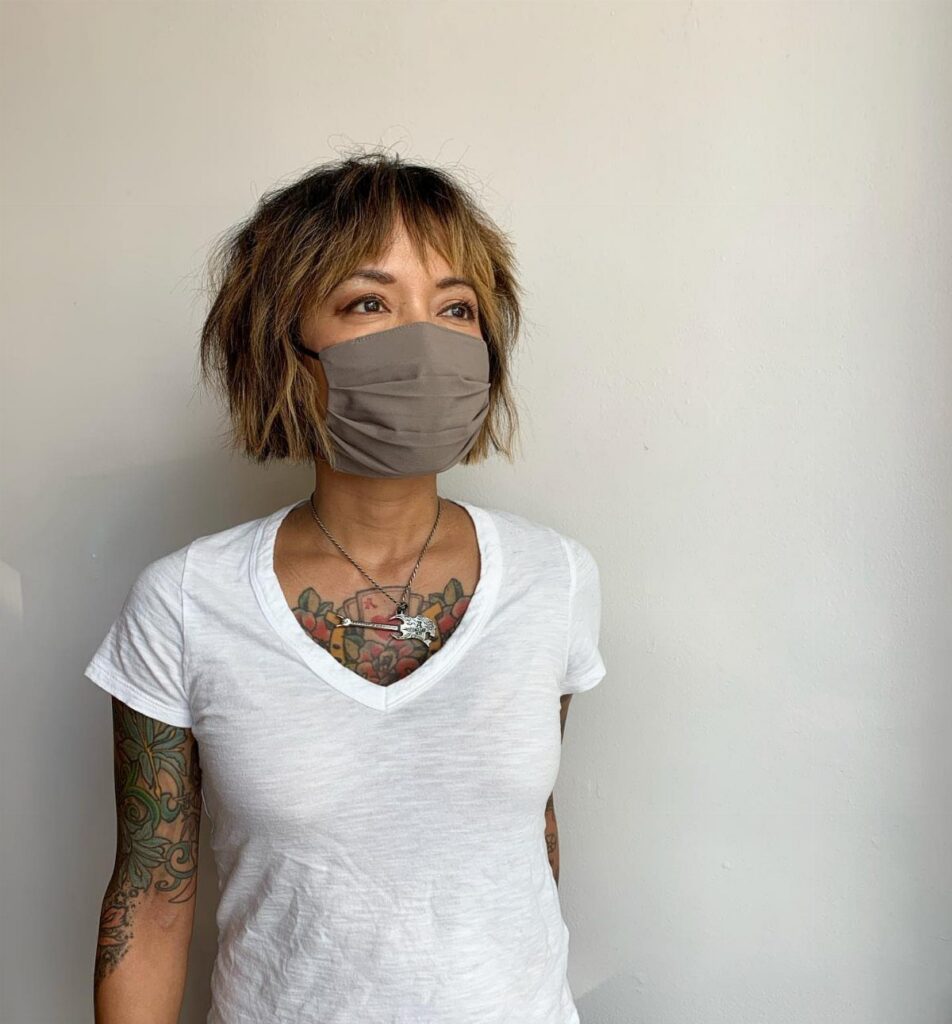
Hair texture decides which of these cuts is yours, and I would sort by it before length: straight to slightly wavy hair suits a shaggy bob, while curls do better in a jaw-length bob or a short shag cut dry, since curls shorten as they dry.
The cuts here range from jaw-length bobs to cropped pixies and mullets with buzzed undercuts. Removing bulk from underneath lets the outer hair swing and catch light rather than sit still.
1. Shaggy Bob
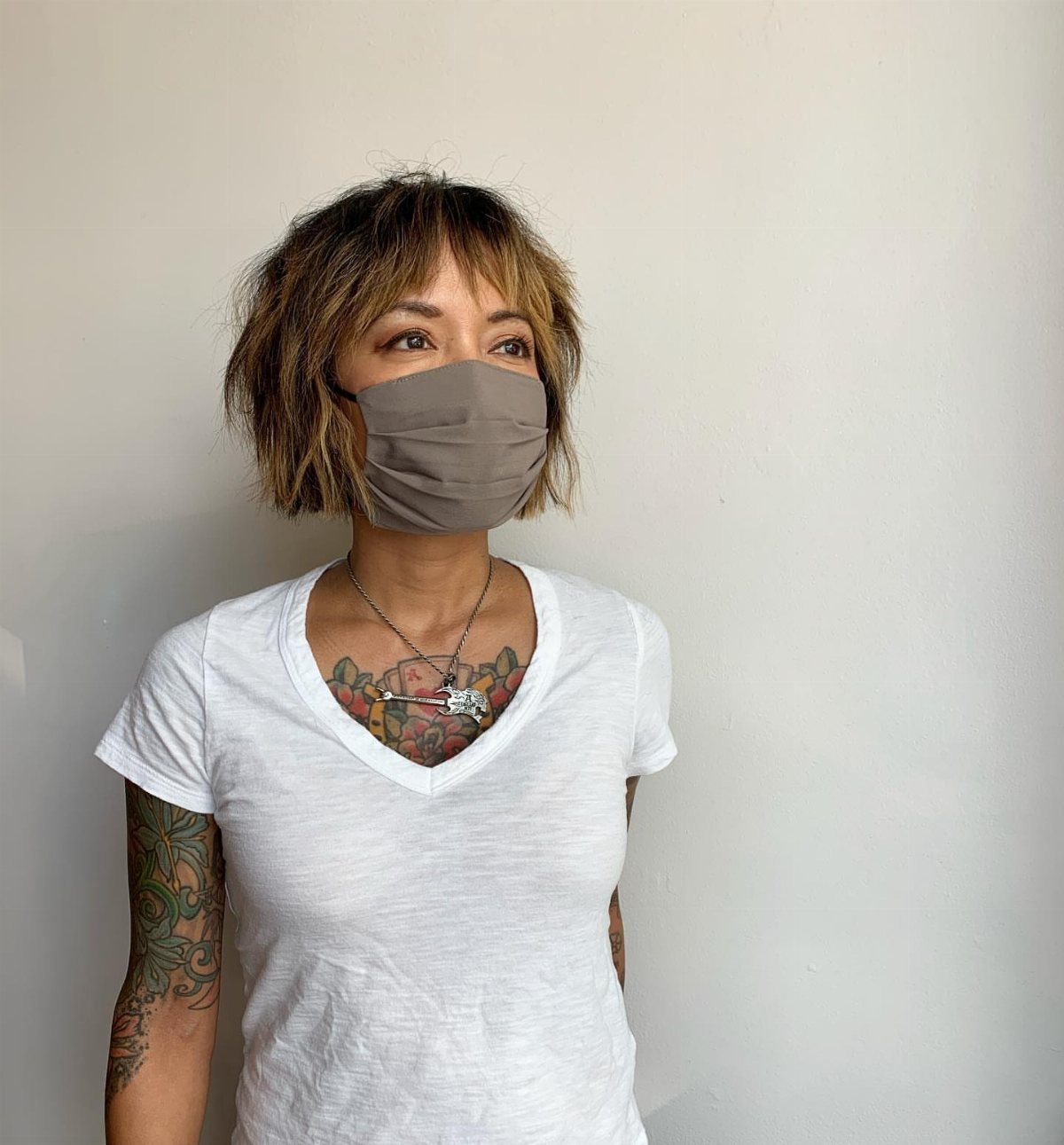
This cut layers the perimeter and interior at uneven lengths to break up the line and pull texture forward. Choppy ends and disconnected pieces give it the lived-in, slightly unkempt look that defines the style.
It works best on straight to slightly wavy hair. Fine hair gets volume from the layering, thick hair loses some weight without flattening at the ends.
Ask for a blunt bob first, then point-cut or razor the ends to rough them up. Leave longer pieces near the face if you want something to tuck behind your ear.
2. Curly French Bob
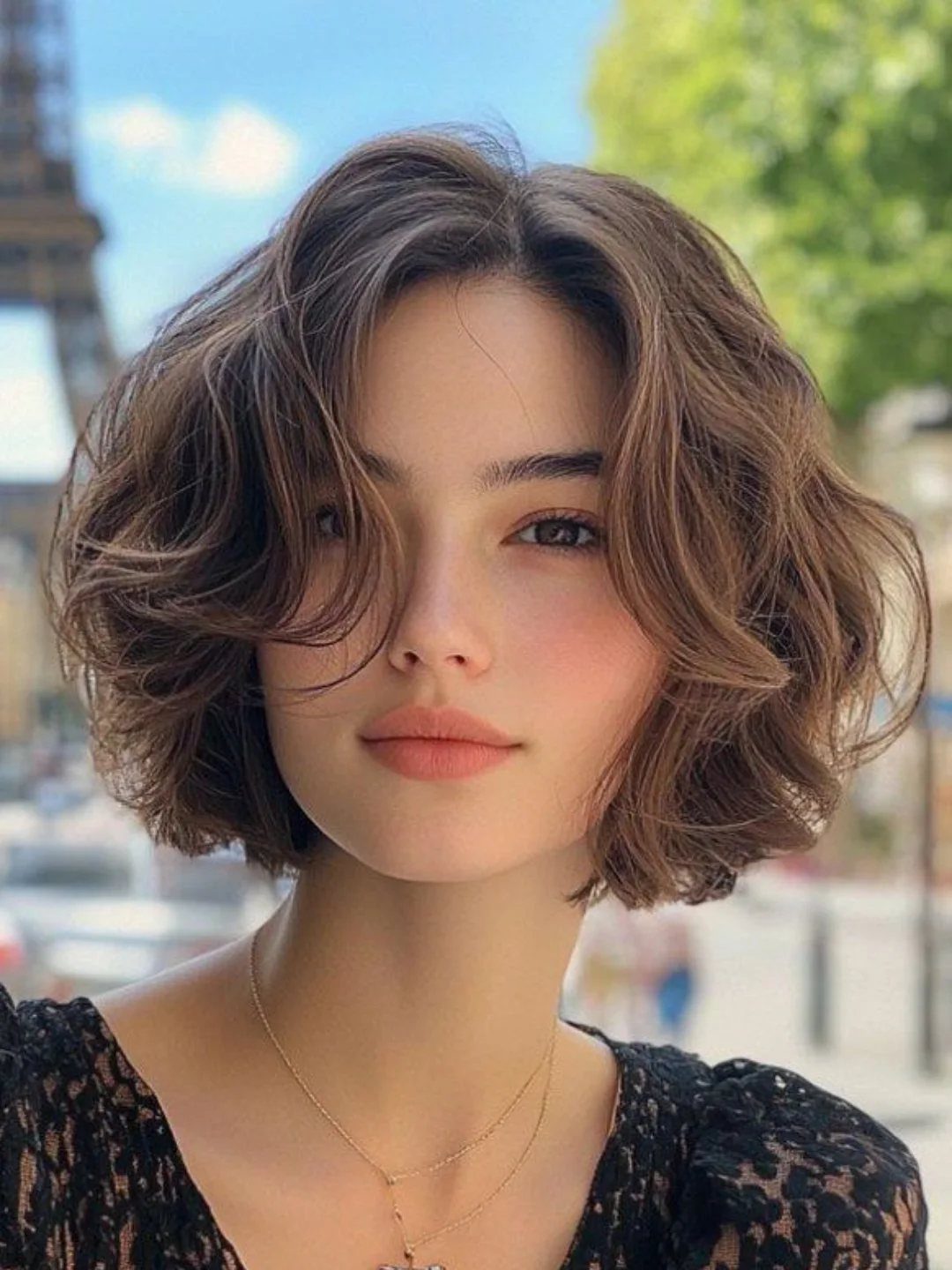
Jaw-length and one length at the perimeter, this bob keeps weight low enough that curls form their own rounded shape instead of lifting up and out.
The bangs sit long and loose, blending into the sides rather than forming a hard line.
Curls need the length to settle down. Too short and the bob balloons; at the jaw, the curl pattern holds itself in place.
Ask for a blunt cut at the jawline with soft fringe that starts at the brow and feathers into the length. Dry-cut adjustments let the stylist see how each curl sits.
3. Beachy Layered Lob
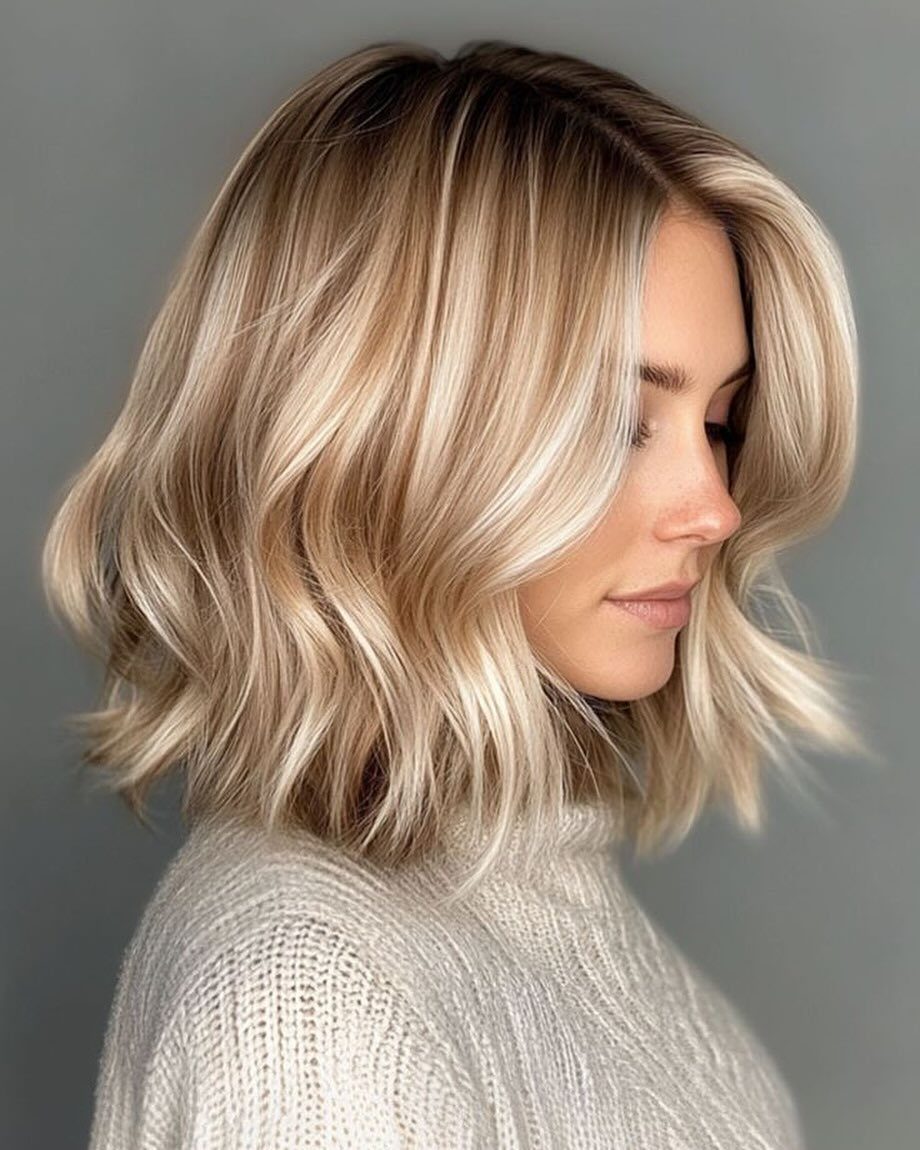
Collarbone length with layers that start at the chin, this lob keeps the weight line but removes enough bulk that the ends flip and bend instead of hanging flat. Waves add the movement the layers create space for.
The layers should be subtle. Too much and the lob loses its shape; just enough and you get bendable ends that turn under or out depending on how you dry it.
A curling iron or a round brush while blow-drying will give you the wave, and a loose, alternating direction on each section keeps it looking beachy instead of set. Salt spray on damp hair before drying adds grit and separation.
4. Short Curly Shag
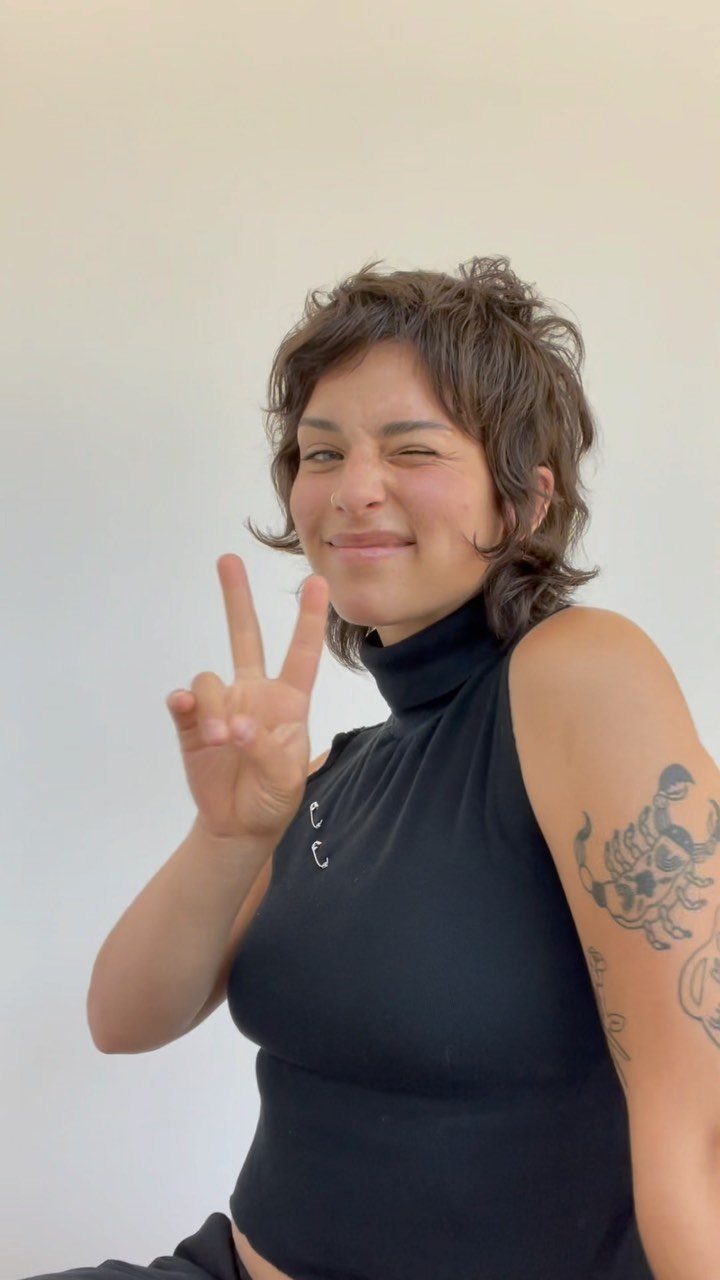
Choppy layers all over, shortest at the crown and longer at the front, give curls room to spring up and out without forming a uniform shape. The fringe and face-framing pieces stay longer to balance the volume on top.
This cut works because curls shorten as they dry. The layers are cut longer than they appear, and the stylist works dry to see the true length.
Ask for a dry cut with interior layers to lift the crown and longer perimeter pieces to frame the face.
5. Butterfly Bob
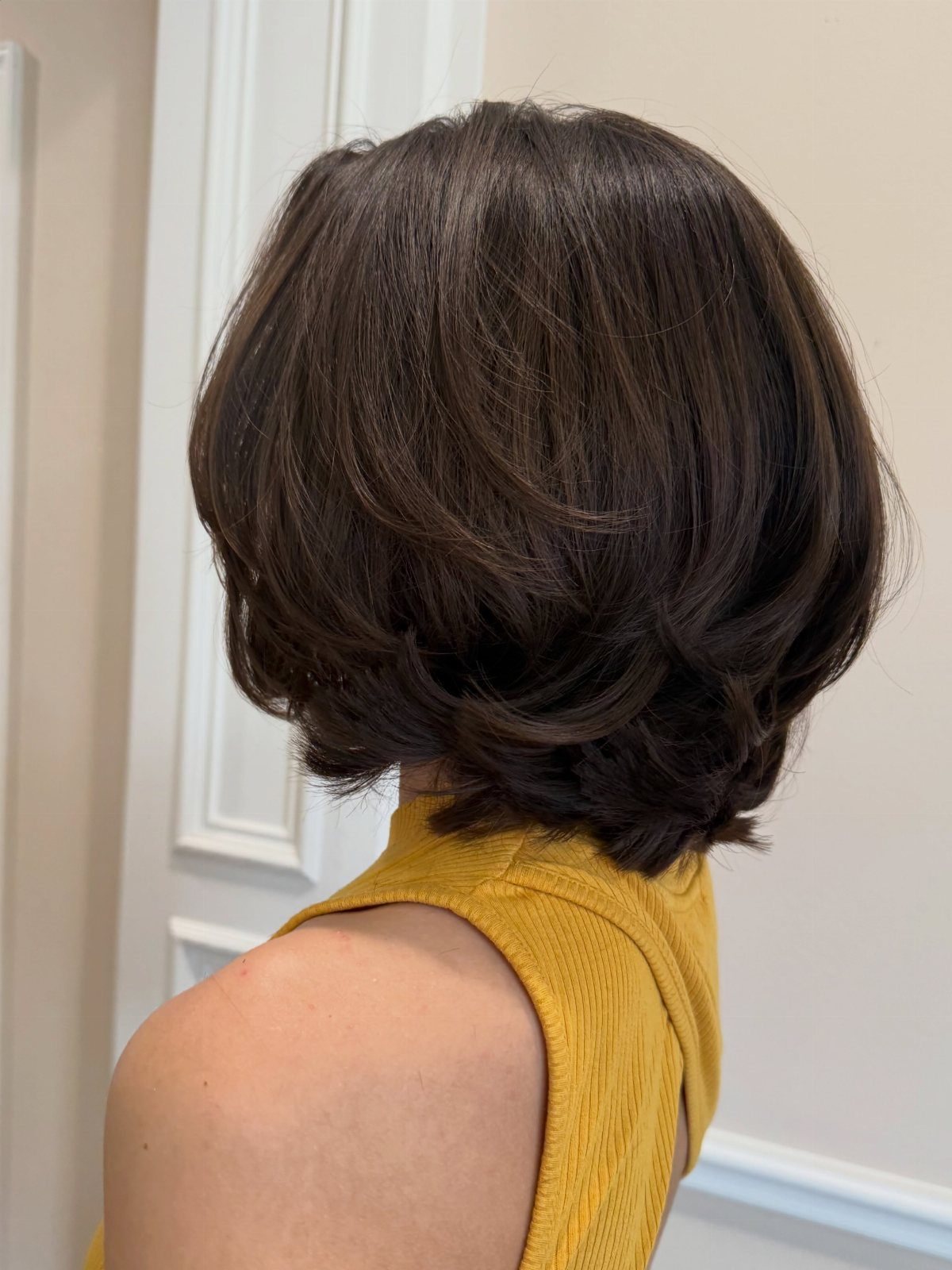
Shorter than a classic Rachel, this bob layers the back in tiers that stack and flip outward, with longer face-framing pieces that curve inward. The contrast between the rounded back and the sleek front gives it the butterfly shape.
The layering has to be precise. The back is cut shorter and beveled to create lift, while the sides stay longer and angle toward the chin.
Ask for a stacked bob with internal layering at the back and longer, angled pieces at the front. A round brush and blow-dryer will flip the ends out in back and under in front.
By allowing shorter layers at the cheekbones and jaw to blend gradually into longer layers beneath, the signature ‘butterfly’ effect is achieved.
6. Wispy Bangs Layered Cut
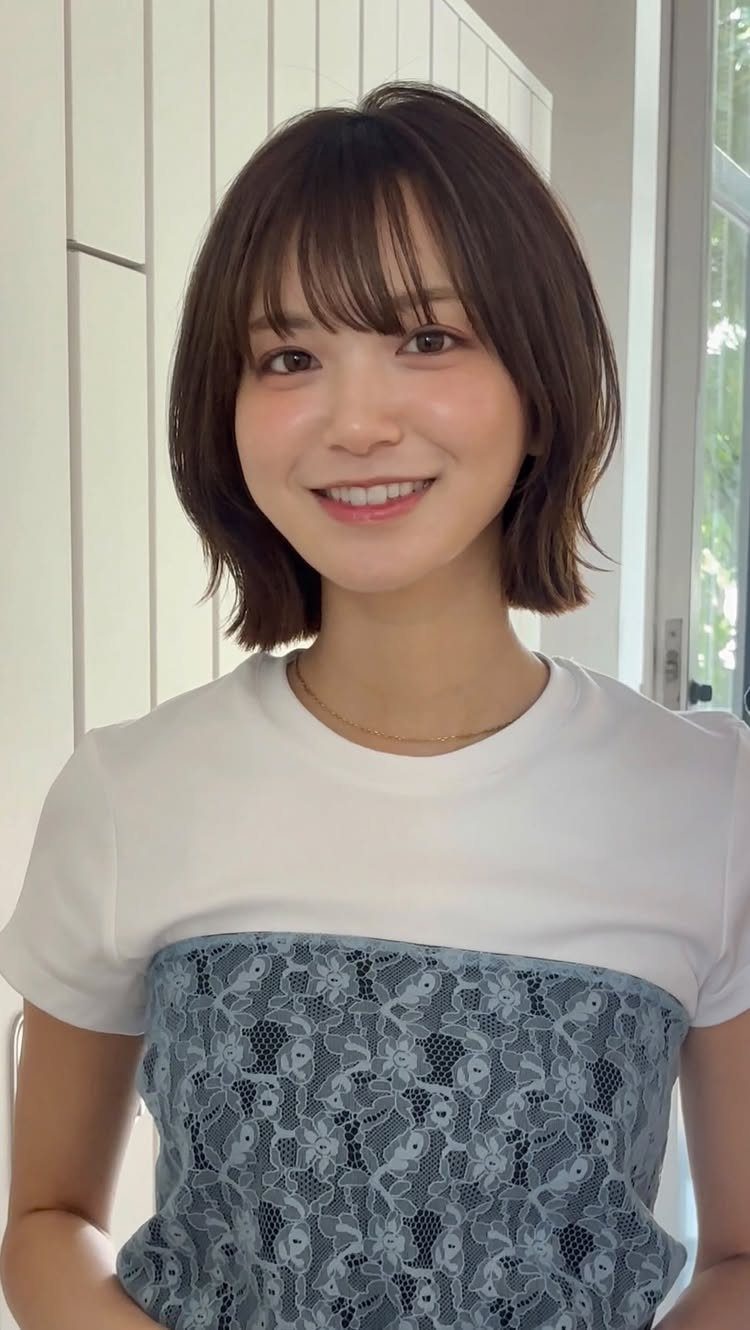
Layers cut throughout remove weight and let the ends flip outward, while the bangs are sliced thin and left long enough to separate into individual pieces.
The texture comes from both the layering and the technique used to cut the ends.
Wispy bangs only work if they are cut with a razor or point-cut with shears. Blunt-cut bangs will sit too heavy and lose the feathered look.
Ask for long layers with razored or textured ends, and bangs that start at the brow and taper at the tips. Styling takes a round brush to flip the ends and a light hold spray to keep the bangs separated.
7. Long Pixie Choppy Bangs
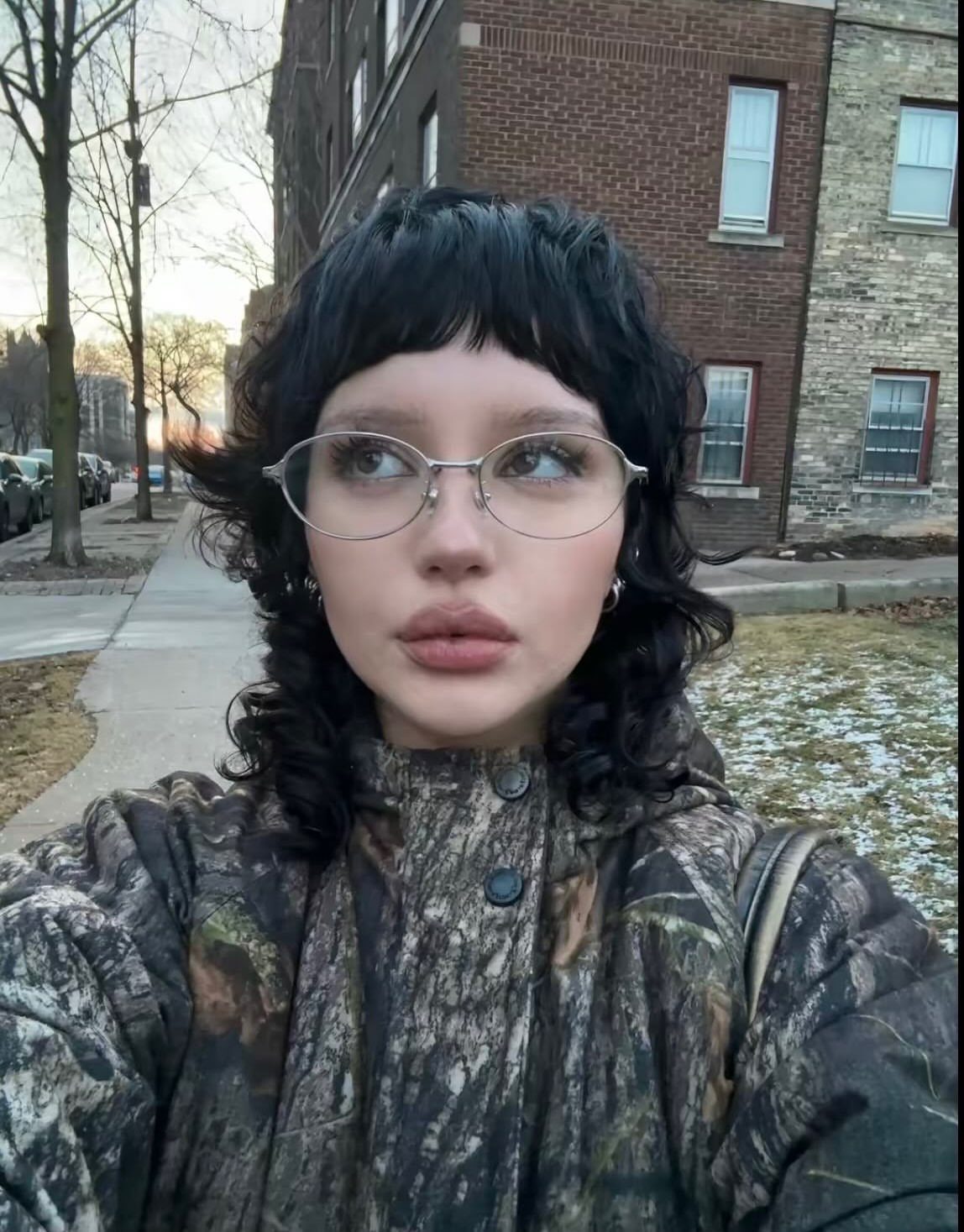
Forehead-skimming bangs do a lot of the work in this long pixie. They sit short enough to read as a deliberate fringe, and the piecey layers around them keep the top from looking flat or helmeted.
Curly or coily texture suits it well, since the layers give each curl room to sit separately.
Ask for the sides and back kept close while the top stays long enough to twist and separate with your fingers. Glasses sit neatly against the short sides, and the bangs frame the frames.
Trim the fringe often, because once it passes the brow it starts to change the whole shape.
8. Boyish Wavy Crop
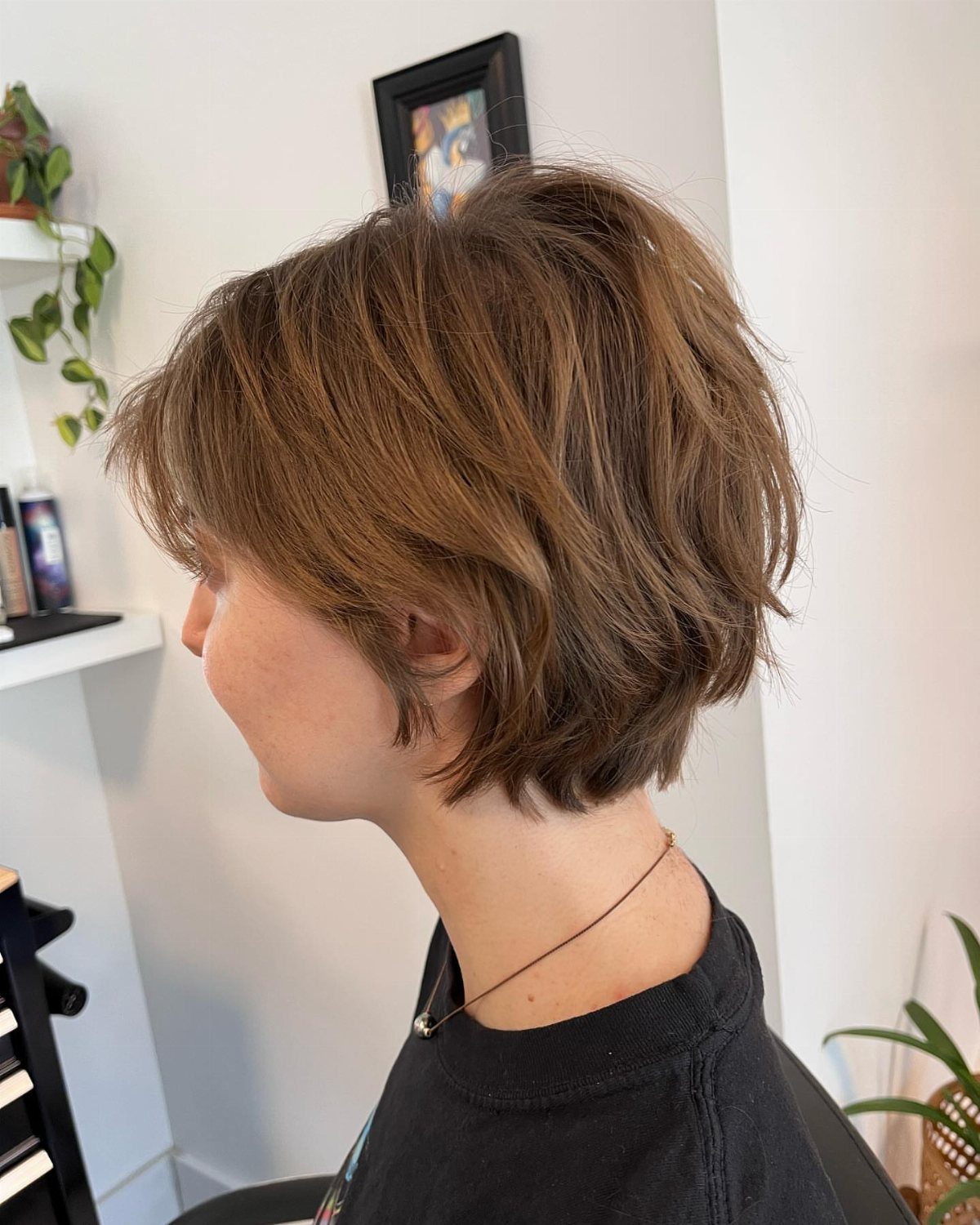
A crop that stops at the nape, with wispy layers through the crown, is the easiest short cut I can picture for wavy hair.
The layers take out just enough weight for the waves to loosen and lift instead of puffing sideways.
Ask the stylist to keep the crown pieces light and uneven, not cut to one length.
A dab of cream or a small pump of mousse, raked through damp hair with your fingers, is all this crop asks for before you leave it to air dry.
If your hair is straight, expect the same cut to fall flatter. It leans on natural wave to give it shape.
9. Textured Pixie Cut
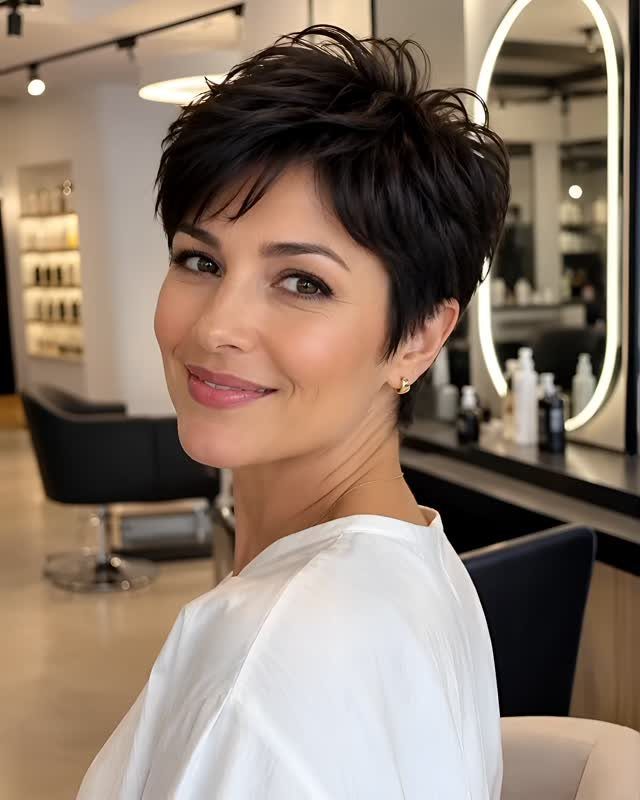
V-shaped sideburns are the detail I would point to first. They sharpen the cropped sides of this pixie and give the longer crown layers something clean to contrast against.
The top stays longer so it can be tousled with a bit of paste or wax, and the side-swept bangs should be airy, not dense.
Ask for them to be texturized so they move instead of sitting in a solid sheet.
Dark hair shows the cut’s shape clearly, which makes it forgiving of a slightly uneven grow-out. Plan on regular trims, though; the sides lose their edge fast.
10. Wispy Blond Shag
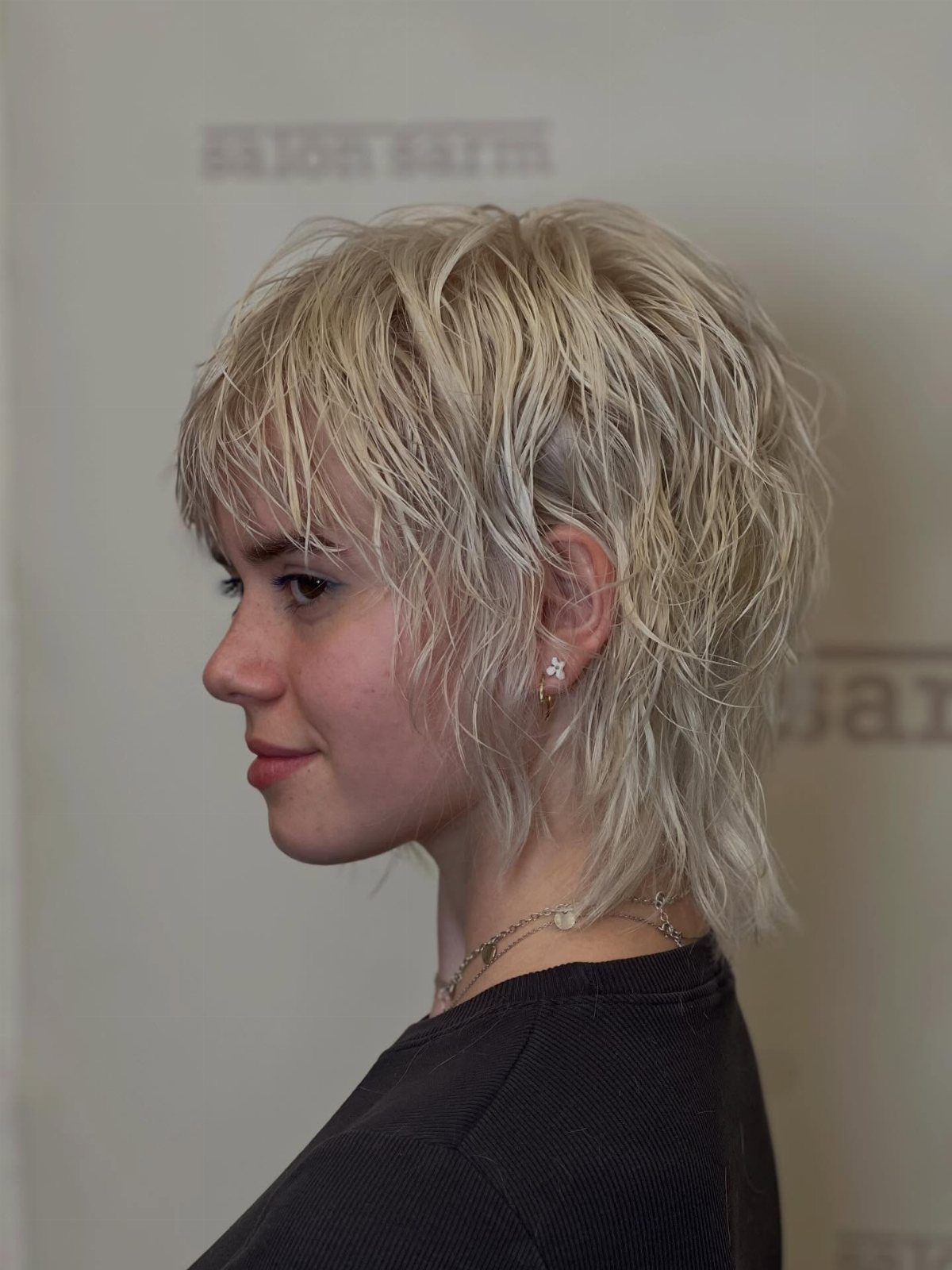
Wispy ends and blond color work together here, and I would choose them as a pair. Light hair makes the layers look softer and more feathered, so the shag reads airy instead of heavy.
Ask for a short layered shag with plenty of texture through the ends, cut with a razor or point-cut for that fine, broken-up edge. A texturizing spray on dry hair adds grip so the layers separate.
Blond usually means lightener, and that can leave hair drier, which makes wispy ends frizz more easily. Ask your colorist about a gloss or conditioning treatment.
11. Voluminous Crop Cut
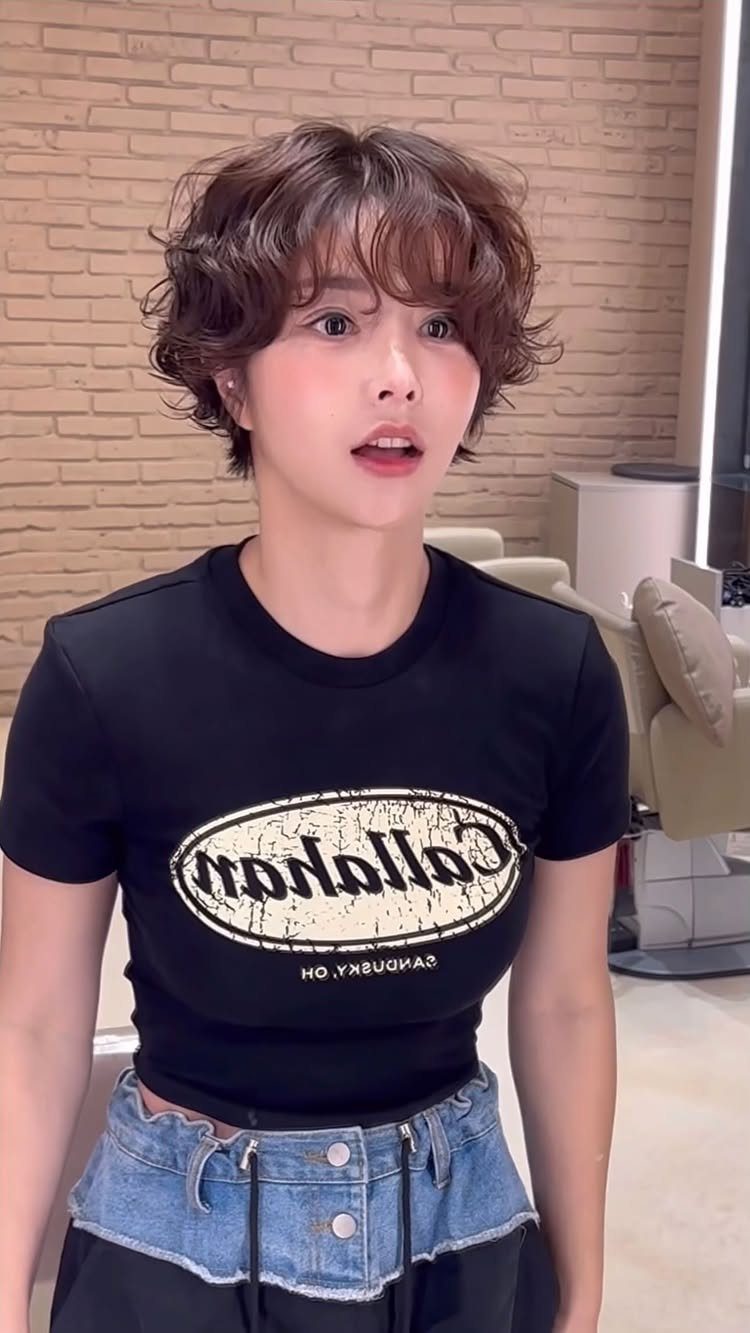
Volume in a crop comes from where the layers sit, and for this one they build height at the crown with side-swept bangs falling across the forehead.
Short layers lift the top, and the curve of the bangs keeps the shape from looking too round.
It suits wavy to curly hair best, since the texture gives lift without much effort. Blow-dry the roots upward with your fingers, then finish with a light mousse.
Fine, straight hair can still do it, but expect to use more product and a round brush to hold the height.
12. Feminine Curly Mullet
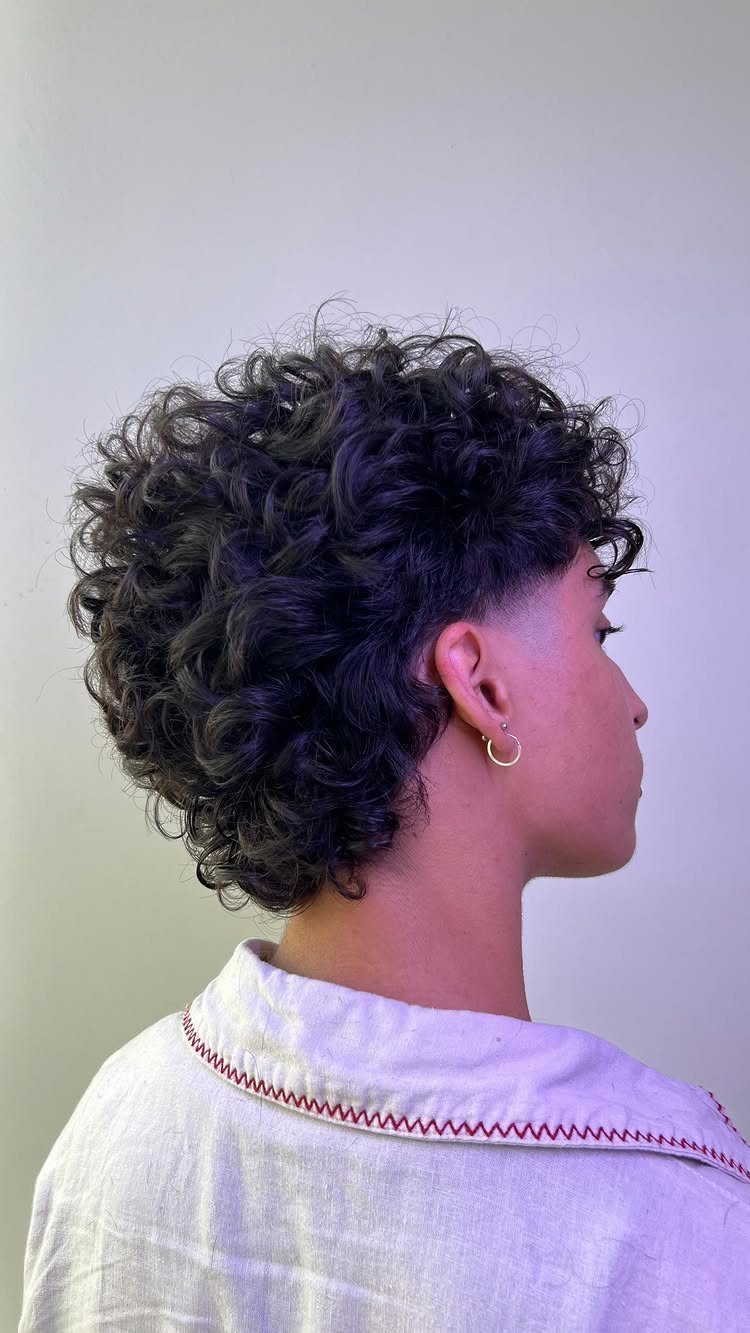
Short sides with longer, textured curls at the nape: that is the whole mullet, and curls make it look soft where straight hair would look severe. The contrast between close sides and a loose back is the point.
I would keep the texture lived-in, with curls left to spring rather than being tightly defined.
Ask your stylist to cut the sides short but keep the nape long enough to curl freely, and have them work on dry hair so they can see the true shape.
Define the curls with a curl cream, then scrunch and air-dry. Skip heavy gel; it stiffens exactly the softness this cut depends on.
13. Layered Wavy Bob
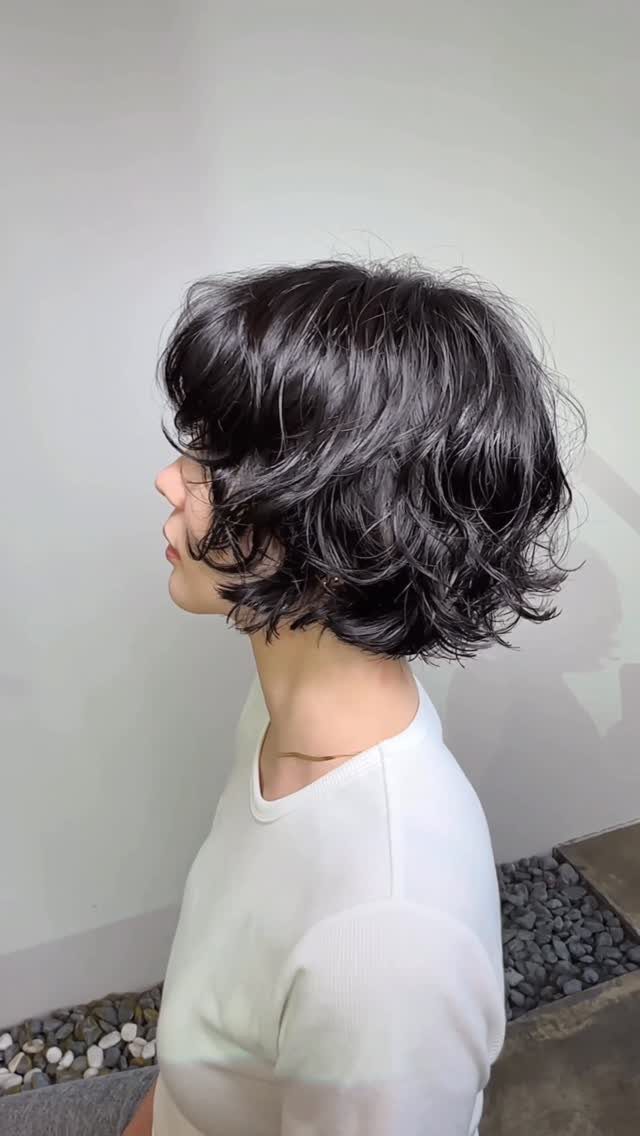
Brow-grazing bangs are what make this wavy bob feel finished. They tie into the layered sides, so the waves read as one shape instead of a bob with a fringe stuck on the front.
Ask for layers through the sides and ends to keep the waves from stacking into a triangle, and have the bangs cut long enough to blend with the cheek-side pieces. Dark hair shows that layering clearly.
I would air-dry it with a little cream and leave the bangs alone until they dry.
14. Italian Bob
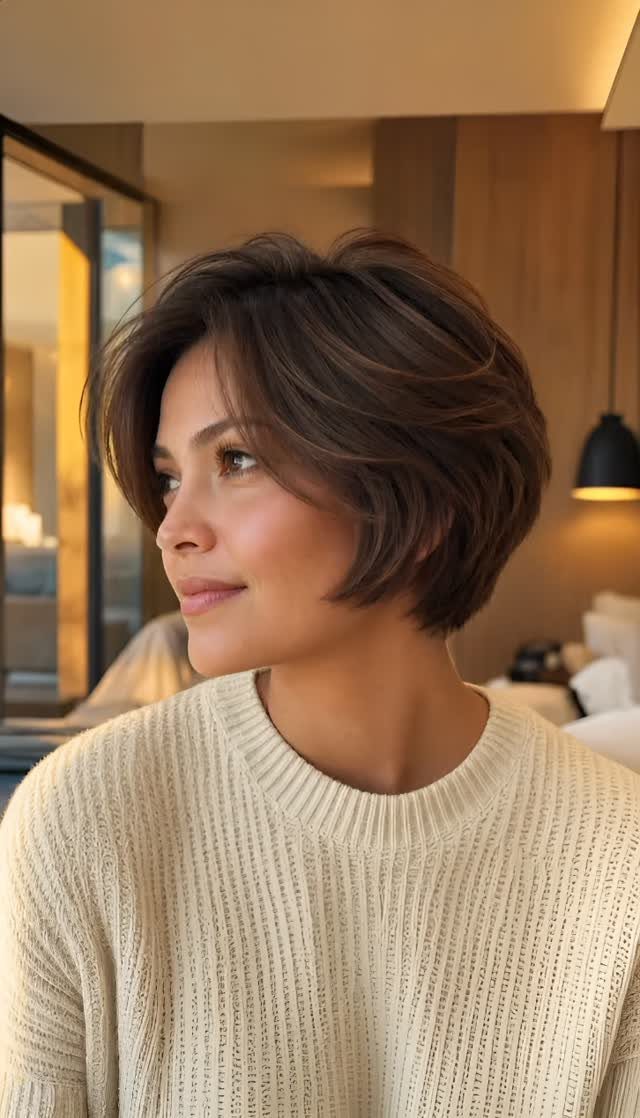
Soft edges separate this Italian bob from a blunt one: the ends are textured and the perimeter is kept from turning into a hard line. A long, sweeping side fringe finishes the shape, feathering into the sides.
Ask for layers that stay short and light, with the bangs cut to sweep across instead of sitting straight. A blow-dryer and a round brush will give the ends a gentle bend.
I would choose it for anyone who wants a bob that looks styled without looking stiff.
15. Airy Bixie
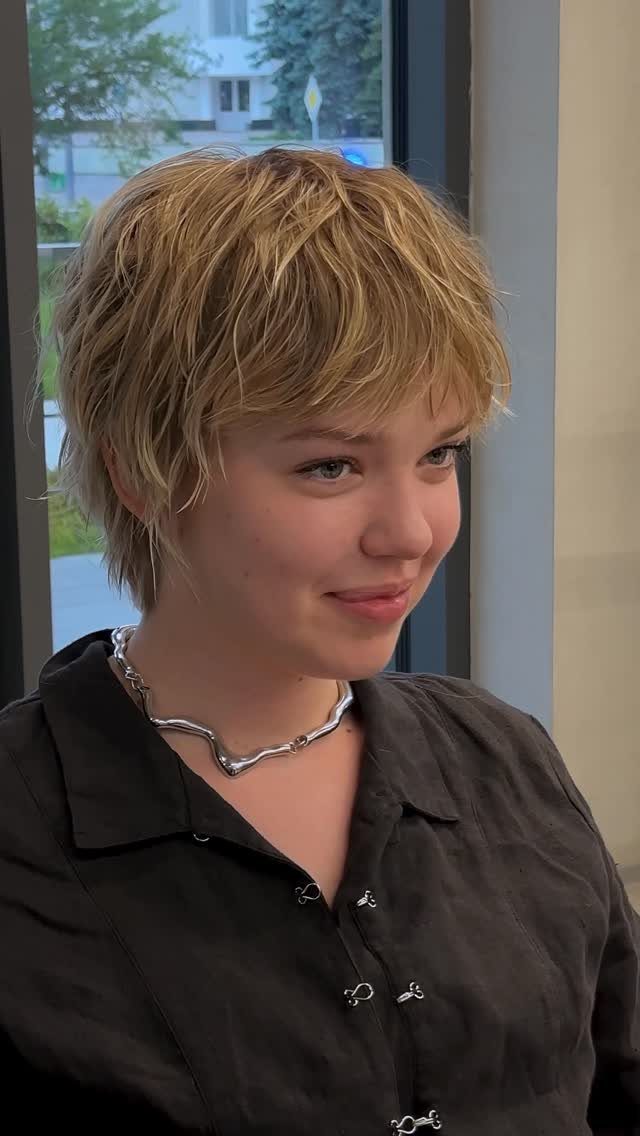
A bixie sits between a bob and a pixie: short feathered layers on the crown, with longer pieces left around the face.
That mix makes it a good first step for anyone who wants short hair but isn’t ready to lose everything.
Ask for the crown layers to be cut airy and feathered, and the face-framing pieces to stay long enough to tuck behind your ear. Blond hair shows those light layers well.
Layering Benefits by Hair Type
The weight comes off through the interior, so the perimeter stays intact while the ends move more freely.
The separation between the shorter and longer layers makes a short layered cut look fuller from the side, and the shorter pieces near the face lift away from the scalp instead of clinging.
Curly and wavy hair shortens as it dries, and longer styles need more time to detangle and dry completely.
A shorter layered cut keeps enough length for the curl pattern to form, but the reduced weight means less time spent on each wash day and fewer products needed to define the texture.
Short Hair Maintenance
Short layered cuts take less time to wash and dry than longer styles, and several of the cuts in the list can be left to air-dry without looking unfinished.
A crop or a shag with texture built into the cut will settle into shape on its own, and wavy or curly hair benefits from the shorter length since it dries faster and holds its pattern without added weight pulling it down.
A blow-dryer and round brush will give you a polished finish on a bob or lob, but it is not required every day.
Most of these cuts look intentional even when you skip the styling, which is the reason I would choose a layered cut over a one-length style that needs to be set each morning.
Frequently Asked Questions
What is a layer cut hairstyle?
Layers remove bulk from the inside of the cut while leaving length at the perimeter, so the hair moves without losing its outline. On fine hair it adds fullness, and on thick hair it removes bulk without flattening the ends.
On short hair, the lifted pieces at the crown and sides create separation from the scalp, which reads as volume when you look at the profile.
Which haircut for short hair?
It depends on your texture.
Wavy hair does well in a cropped cut with light, uneven crown layers, curly hair in a jaw-length French bob or a short shag, and straight to slightly wavy hair in a shaggy bob with roughed-up ends.
If you aren’t ready to lose much length, a bixie pairs feathered crown layers with longer face-framing pieces you can still tuck behind your ear.
Fine hair gains dimension from a textured pixie, because the layered pieces don’t all fall in the same plane.
How to cut women’s hair short with layers?
Ask your stylist for the shape by name and say where the layers go, since placement is what sets one short cut apart from another.
Ask for a blunt perimeter cut to the chin or jaw, then have the stylist use a razor or point-cutting technique along the ends to break up the line.
Dry cutting lets the stylist see the true length of curls, which shorten as they dry.
What is the most low-maintenance layered haircut?
A short curly shag or a textured pixie.
Both have the texture built into the cut, so they settle into shape and can air-dry without looking unfinished, and the pixie works as a wake-up-and-go style with a little gel run through the layers for definition.
Short sides and nape grow out visibly within 3 weeks, so a pixie asks for salon visits every 4 to 6 weeks to hold its shape.