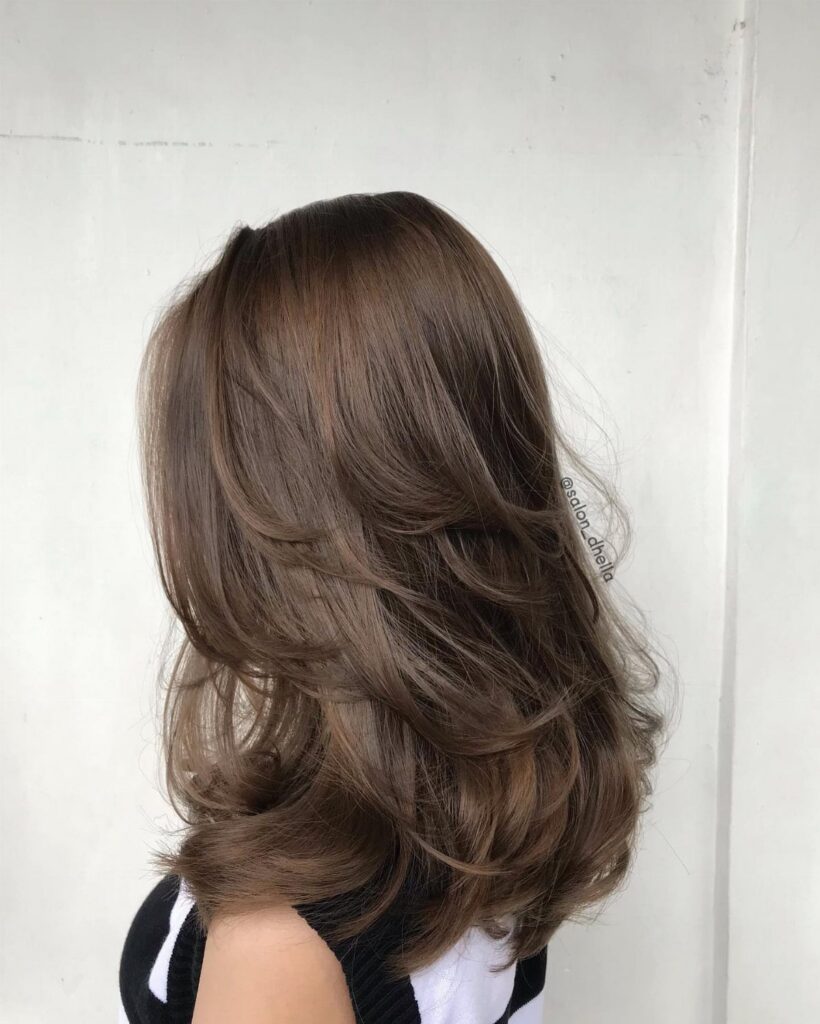
Texture, more than length or color, sets the limits here: fine strands have little weight to give up, so they do best with light layering, while thick or curly hair has the bulk to carry deeper cuts.
The list runs from soft, long layers that grow out gracefully to shaggy, high-contrast shapes and choppy bangs that need a trim sooner.
Whichever you pick, plan on a trim every 2 to 3 months, and sooner if there are bangs or face-framing pieces.
1. Curly Layers and Bangs
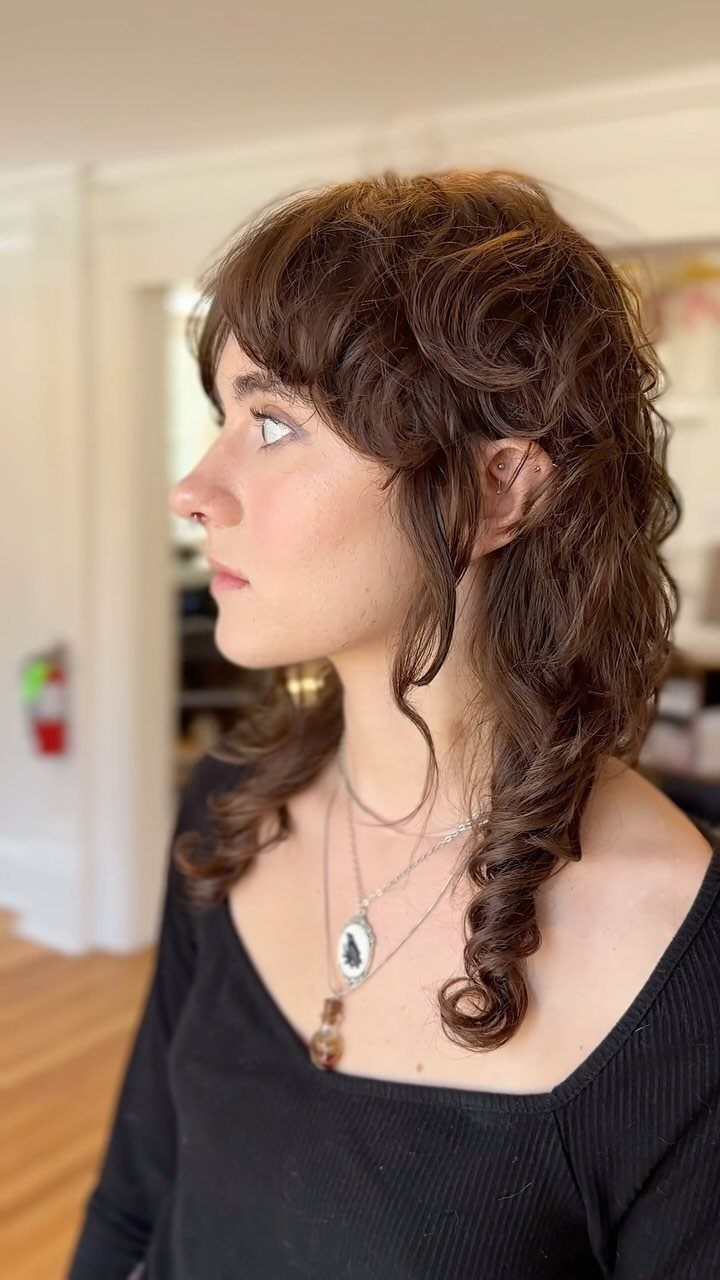
Curls at medium length take layering well because the layers follow the curl pattern rather than fighting it.
The bangs here sit short enough to frame the eyes while the rest falls just past the shoulders, which keeps weight distributed without pulling the curl loose.
If you have natural texture, ask for dry cutting so the stylist can see where each curl actually lands.
Wet curls stretch longer and bounce back shorter once dry, and a cut done wet on curly hair often surprises you the wrong way.
For curly hair types, he explains that, rather than cutting to a formula, it’s important to work with the curl pattern and often cut dry, so the shape works with the hair’s natural movement and avoids unwanted shrinkage.
2. Shaggy Midi
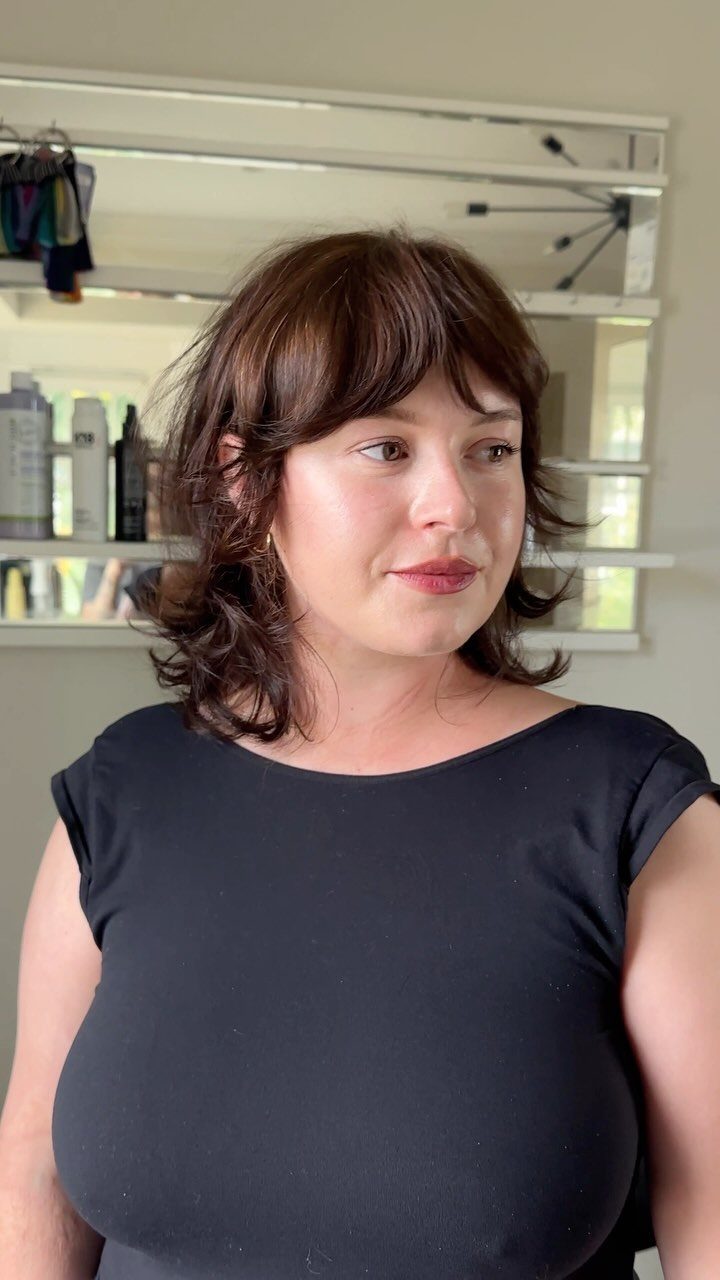
The shaggy midi brings back the feathered, heavily layered look that sat everywhere in the ’70s.
Layers start high, usually around the crown, and continue all the way through the ends, which gives you that soft, piecey finish when the hair moves.
Styling takes a round brush and a blow dryer if you want the ends to flip out the way they do here.
Without heat styling, the cut still works but reads more tousled than feathered. Plan on regular trims because the shape depends on those wispy ends, and once they grow past a certain point the whole thing looks less deliberate.
3. Textured Shoulder-Length Bob
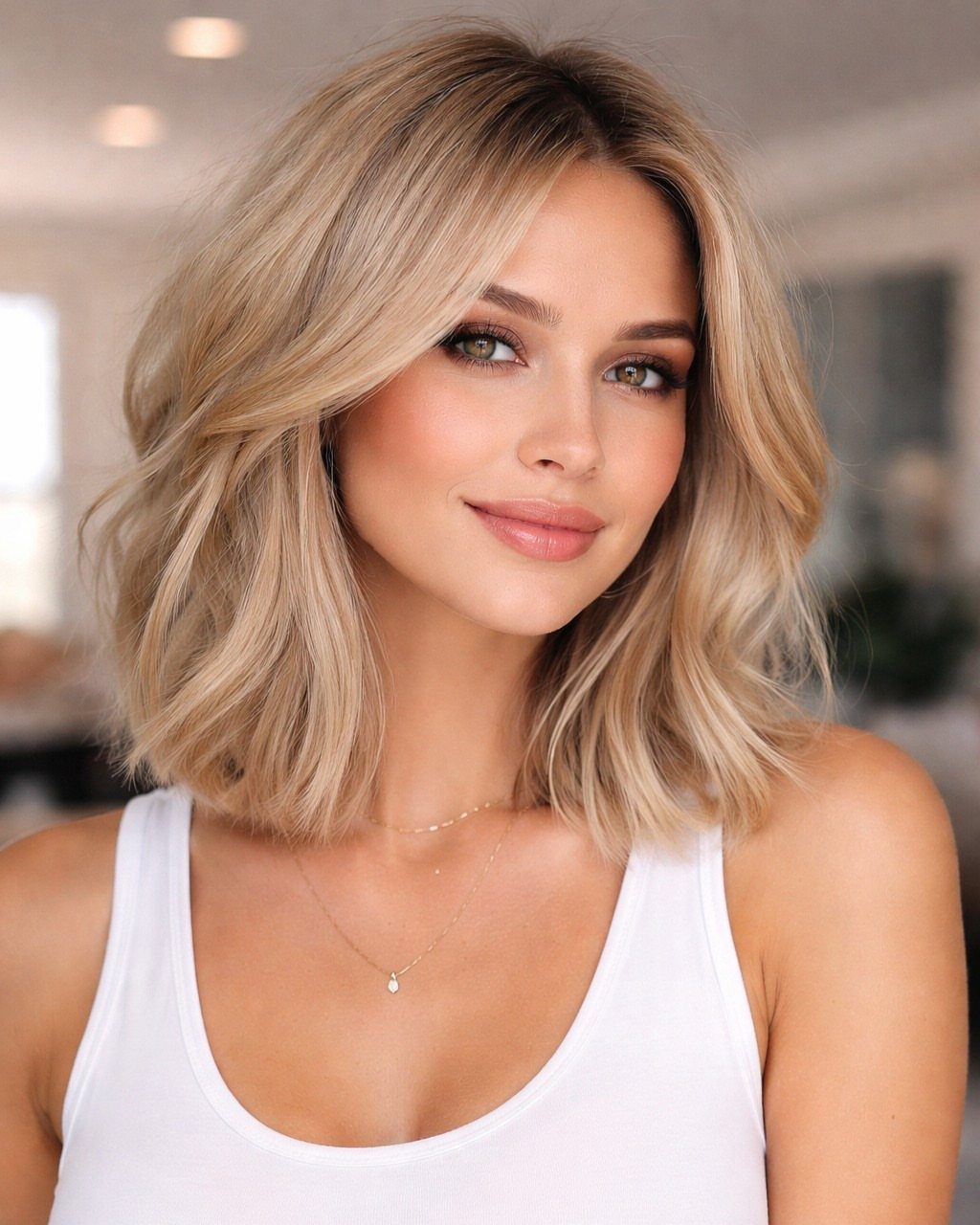
A bob that ends right at the shoulders gets more interesting when you add internal layers.
The layers create movement without shortening the overall length, which is useful if you want texture but still need enough length to pull the hair back.
The color here lifts the texture further because the lighter pieces catch more light, but the cut works on any base color.
If your hair is fine, this does a better job of adding volume than a one-length bob because the layers remove some weight.
4. Long Curly Shag

A shag cut on curly hair gives you layers that start well above the shoulders and continue down to collarbone length.
The layering pulls volume up toward the crown and lets the curls spiral out instead of hanging heavy, which is why this cut shows up so often on people whose curls go limp when left long and one-length.
A side-swept fringe stays long enough to blend into the shortest layers around the face.
If you have tighter curls, ask the stylist to cut dry so they can see the actual shape of each curl before deciding where to layer.
5. Shaggy Bob Thin Bangs
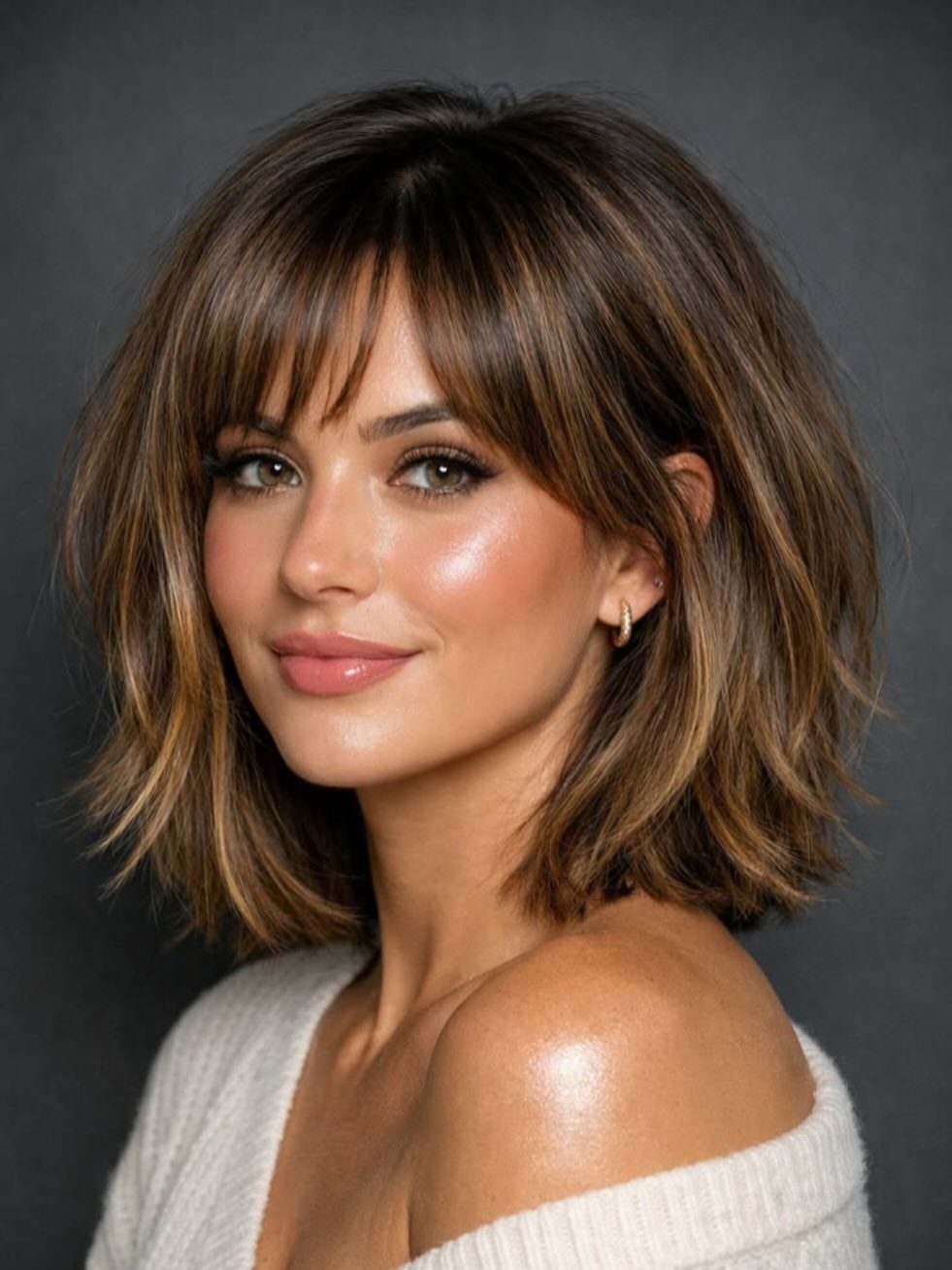
This version pairs a shaggy bob with bangs cut thin and piecey rather than blunt.
The bangs sit wispy enough that they do not form a heavy line across the forehead, which softens the whole look and makes it easier to grow out if you change your mind.
The bob itself layers throughout, so the ends are not one straight line but instead fall in a soft, broken shape.
Styling is faster than with a blunt bob because the layers give you built-in texture, but the bangs need regular trims to stay out of your eyes without getting too short.
6. Layered Italian Bob
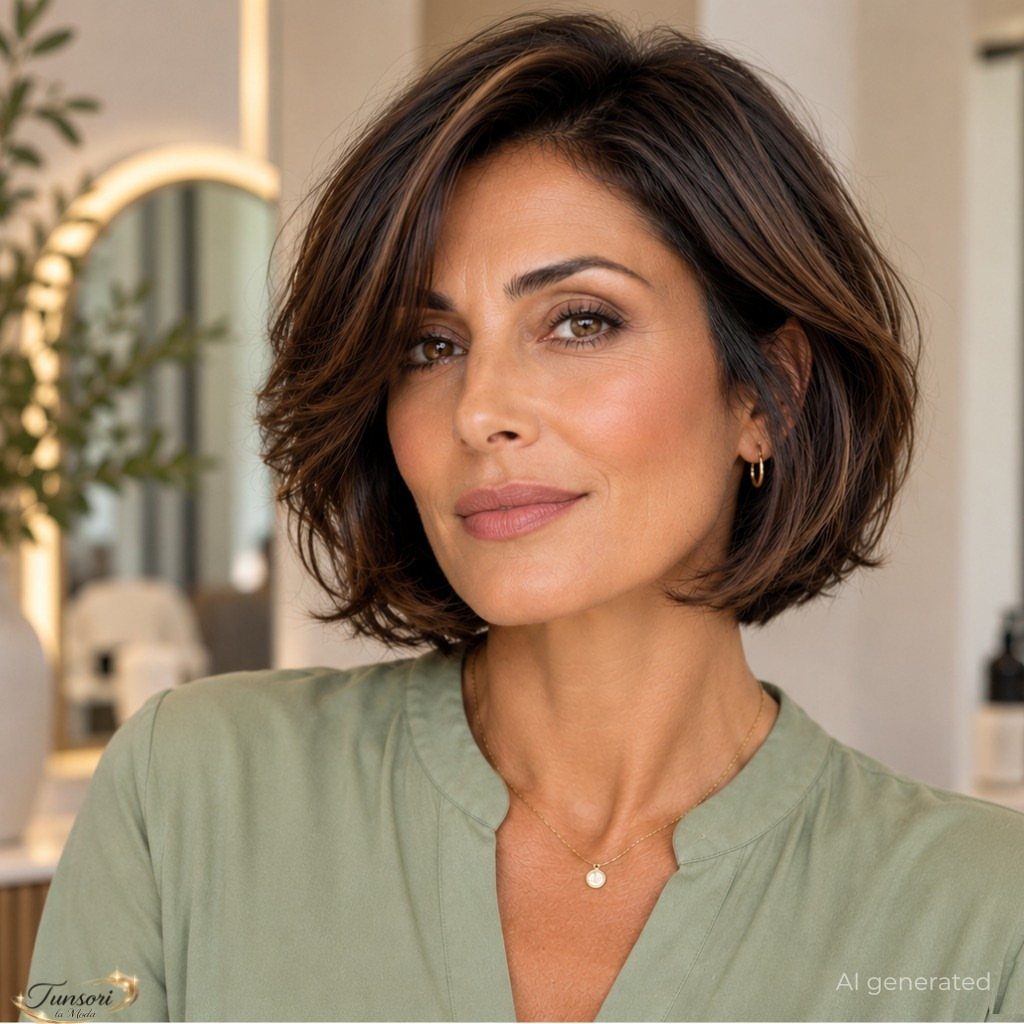
The Italian bob keeps more length in the front, where the pieces frame your face, and layers the back shorter.
The result is a bob that moves when you turn your head because the front sections swing forward while the back stays close to the nape.
If you have a round or square face, the longer front pieces help balance the proportions by drawing the eye down.
The layers here are soft rather than choppy, so the cut suits straight or wavy hair better than tight curls.
You can style it smooth with a flat iron or let it air-dry with a bit of texture cream, depending on how much time you have.
7. Curtain Bangs
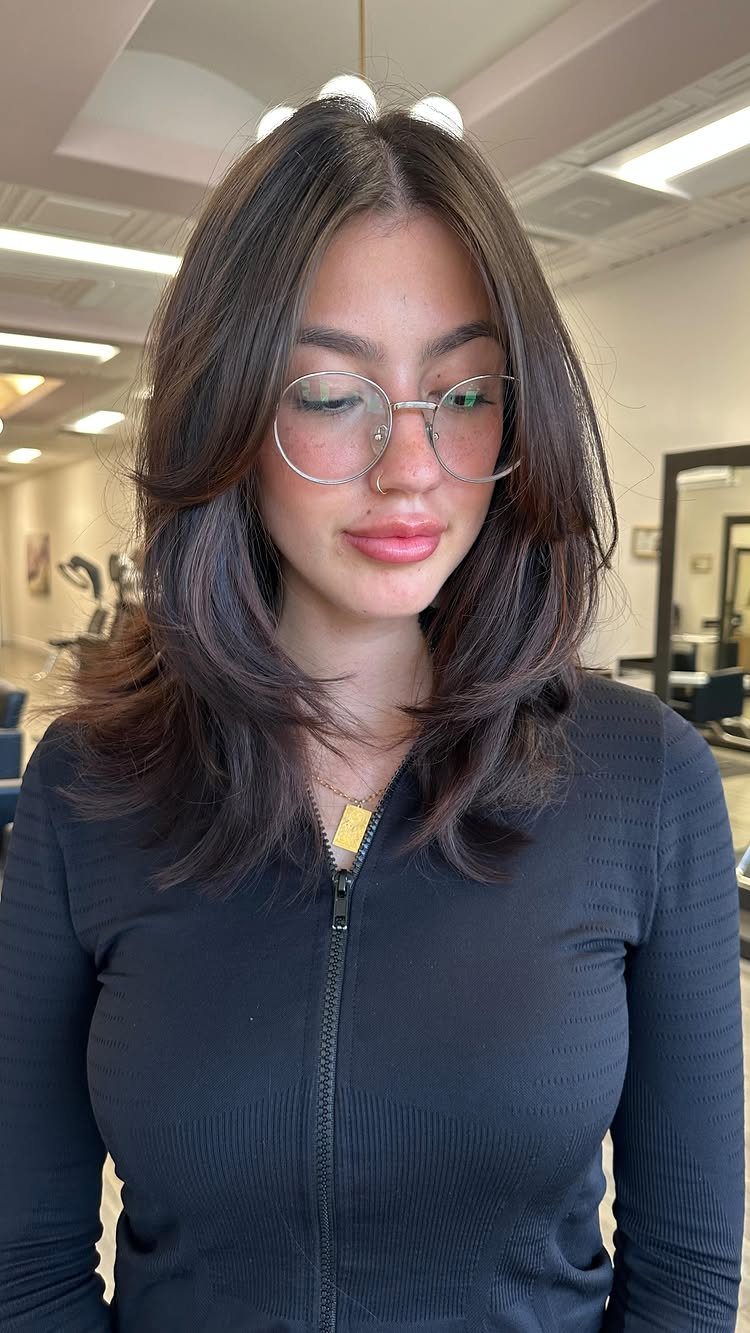
Curtain bangs part down the middle and sweep to each side, landing around cheekbone level where they soften the lines of your face.
The cut works with medium-length layers because the bangs blend into the shorter pieces around your face instead of sitting as a separate block.
If you wear glasses, keep the bangs long enough that they fall below the frames rather than getting caught behind them.
The length also makes growing them out easier since they reach past your eyes within a few weeks and can tuck behind your ears while you wait.
8. Flipped Ends
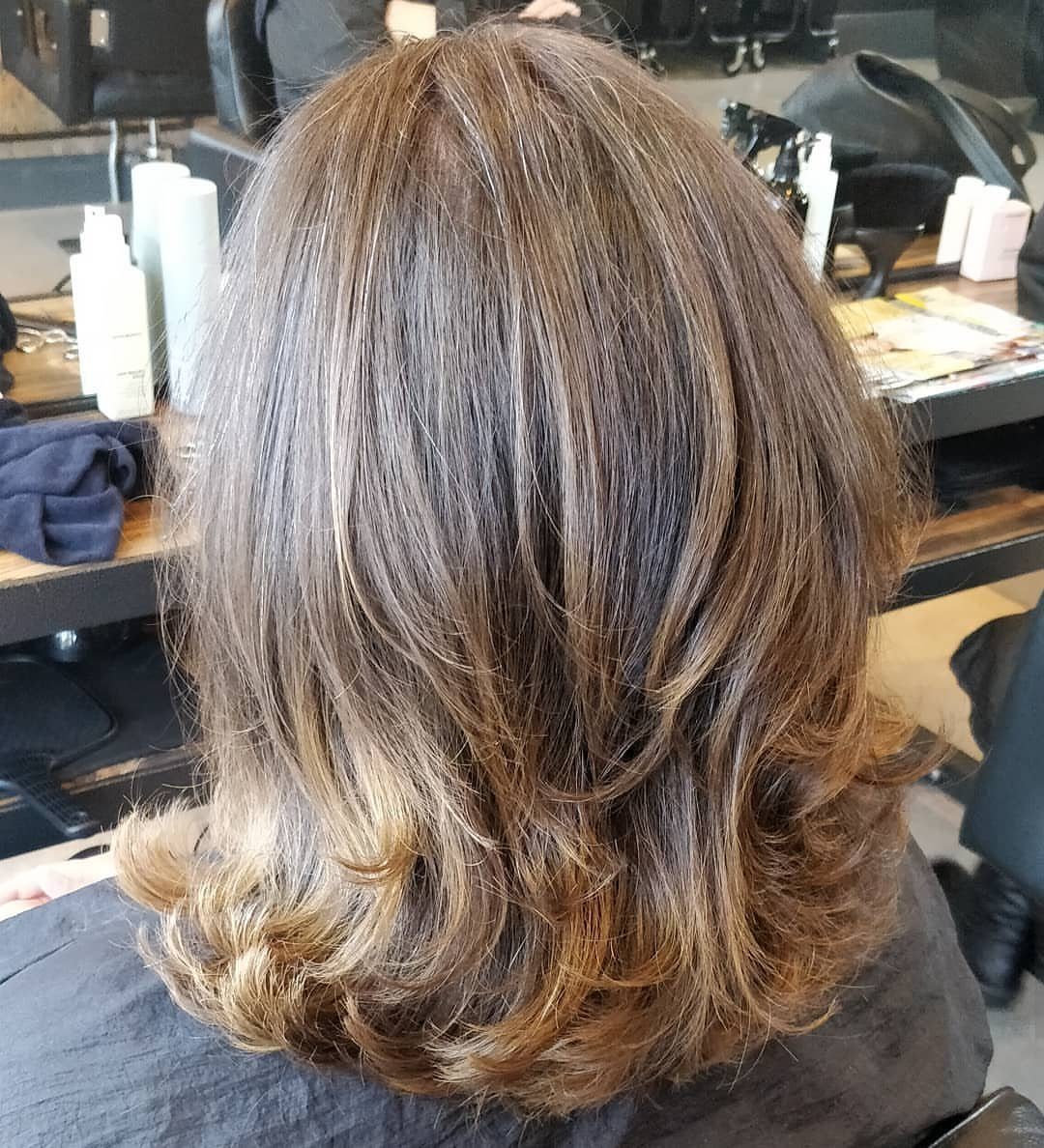
Ends turned out rather than under give shoulder-length hair a finished look without needing a lot of product.
The shape holds better on layered hair because the shorter pieces in back can lift away from the neck while the longer front sections still turn out at the same angle.
9. Feathered Layers
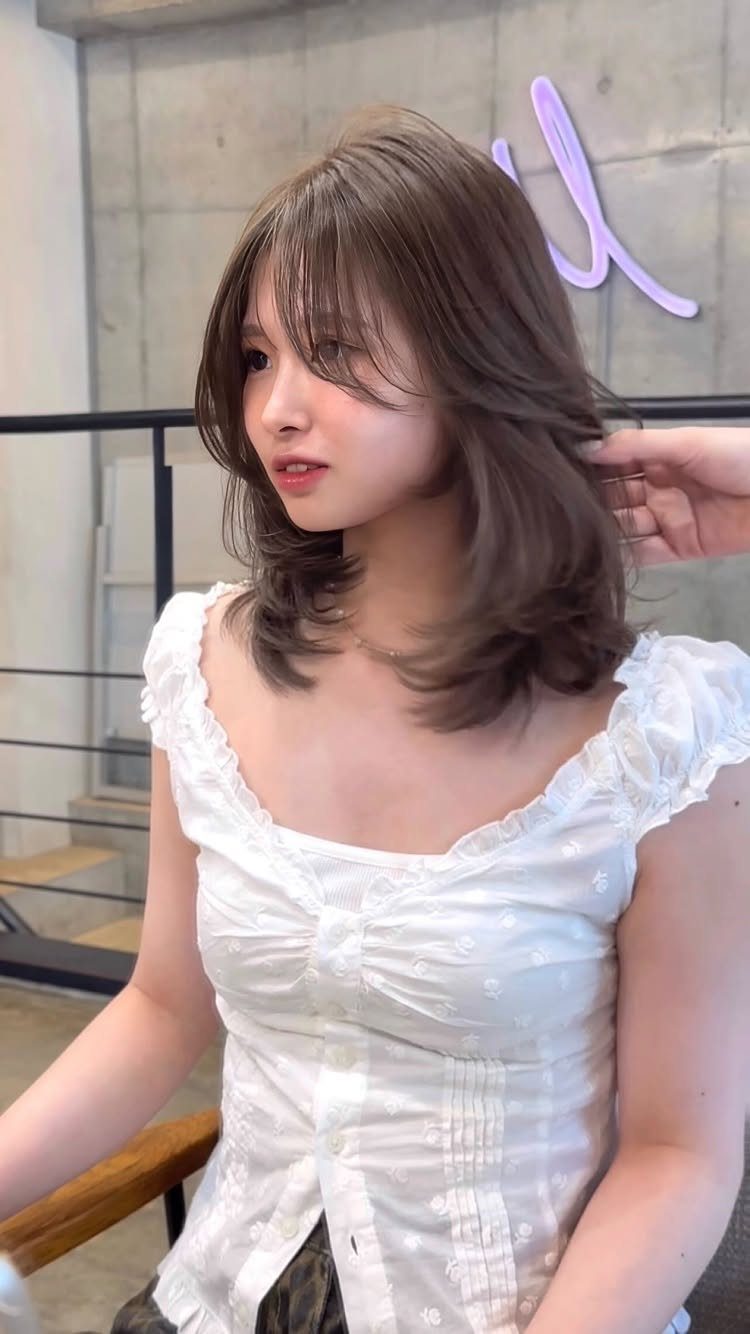
Feathering cuts the layers so the ends taper to fine points instead of ending blunt, which is how you get that soft, piecey look when the hair moves.
The technique works best on straight or wavy hair because the feathered ends show up more clearly than they would on tight curls.
Volume comes from the way the shorter layers sit on top of the longer ones, so if your hair is fine this adds lift without needing much product.
A blow dryer with a round brush will give you more definition, but the layers still show texture if you air-dry.
10. Blonde Highlights
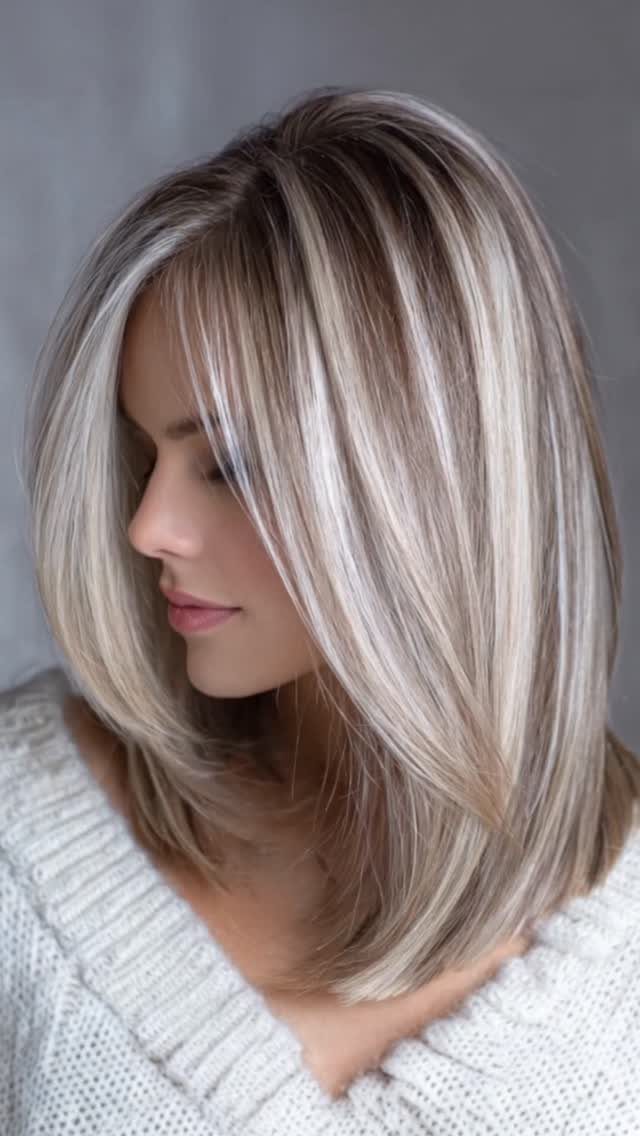
Highlights lift a medium-length cut by adding contrast, especially if you go several shades lighter than your base color.
The placement matters more than the color itself: face-framing pieces brighten your complexion, while highlights scattered throughout the layers make the cut look fuller.
If your hair is naturally dark, expect to spend time at the salon because getting to blonde takes multiple sessions. Maintenance includes toning every few weeks to keep the highlights from turning brassy, and a purple shampoo between appointments.
11. Choppy Bangs

Bangs cut short and choppy sit above the eyebrows and create a broken line across the forehead rather than one straight edge.
The uneven lengths give you texture without needing to style them, which is useful if you do not want to spend time on your bangs every morning.
Pairing them with wavy layers at medium length keeps the overall look balanced because the movement matches the piecey feel of the bangs.
If you have straight hair, the bangs will sit more defined, and you may need to trim them yourself between salon visits to keep them out of your eyes.
12. Wispy Fringe Lob
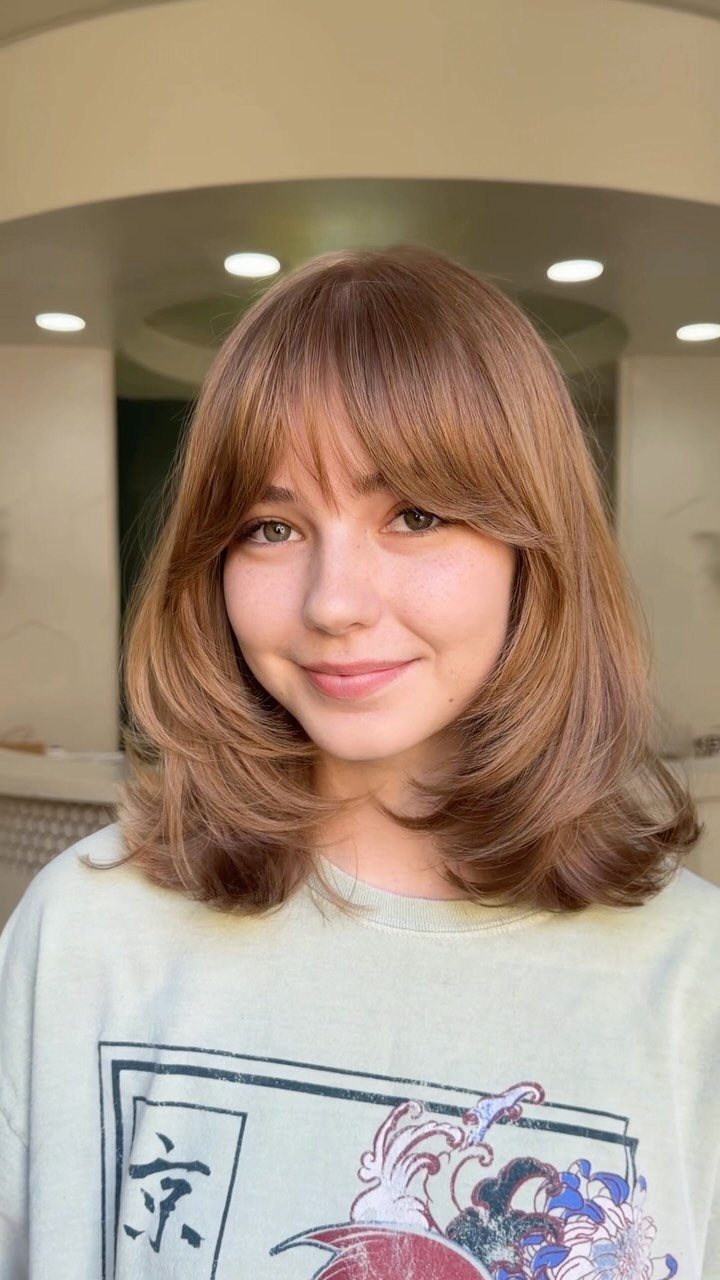
A lob with a wispy fringe keeps the bangs thin and soft rather than thick and heavy, so they sit across your forehead without covering it completely.
The fringe blends into the longer layers on the sides, which makes the whole cut feel connected instead of like 2 separate pieces.
Red tones show dimension in layered hair better than darker colors because the layers catch more light.
If you curl the ends under, the lob reads more polished, but it also works worn straight or with a slight wave depending on how much time you have.
13. Face-Framing Layers and Bangs

Layers that start at cheekbone level and graduate longer draw the eye downward, which lengthens a round face by creating vertical lines where the cut frames your jaw.
The bangs here sit choppy and uneven, which keeps the top half from looking too heavy.
If your face is fuller through the cheeks, ask for the shortest layers to land just below the cheekbone rather than above it. That placement pulls attention down past the widest part of your face instead of stopping there.
14. Feathered Layers Straight Bangs
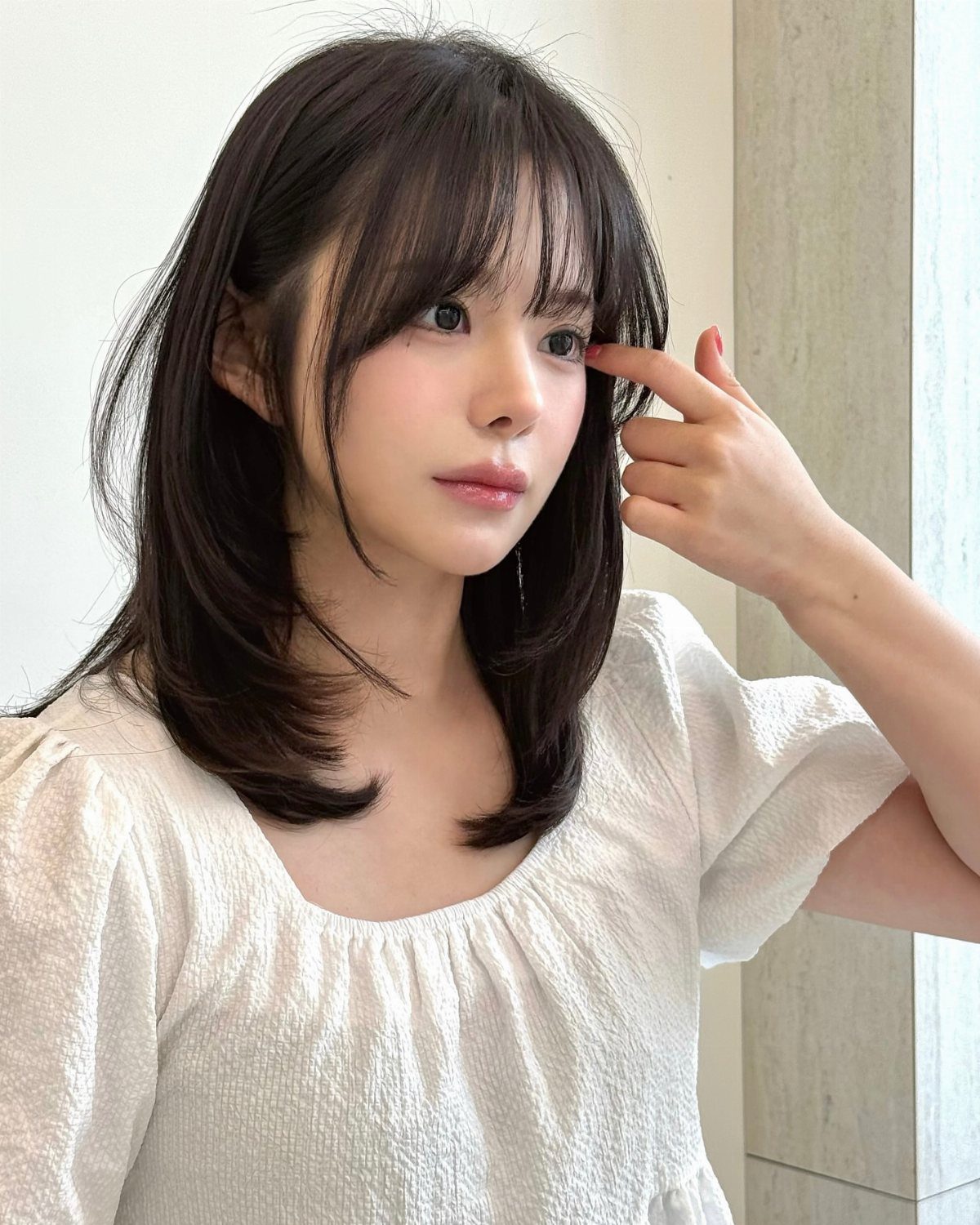
Straight bangs paired with feathered layers at shoulder length give you two different textures in one cut.
The bangs form a soft horizontal line across your forehead while the layers taper to fine ends, so the overall shape reads clean but not severe.
Feathering removes weight from the ends without shortening the length, which is why this works on fine hair that needs volume.
The straight bangs need more frequent trims than the layers because even an extra quarter inch will put them in your eyes.
15. Wavy Mid-Length Layers
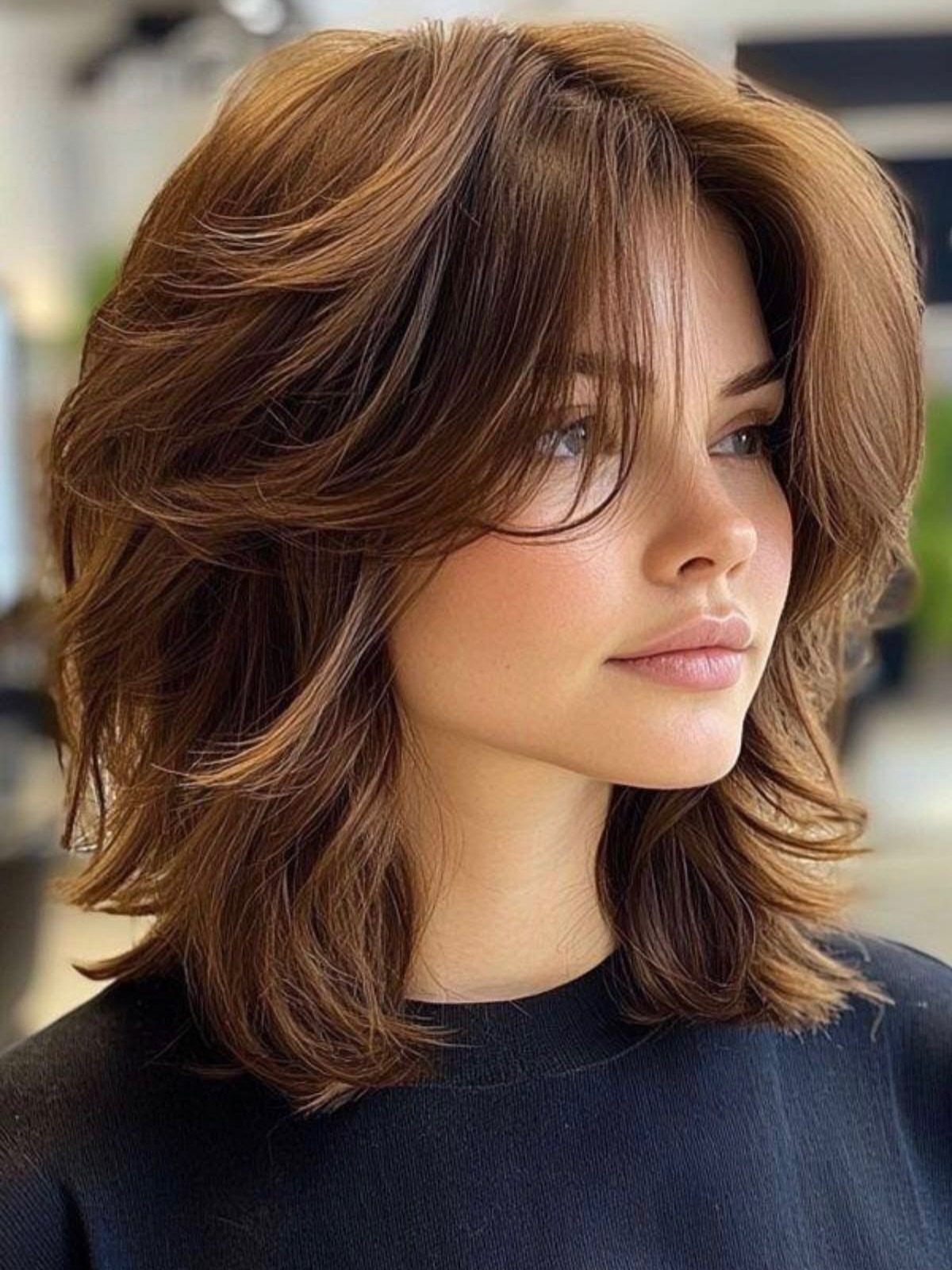
Layers on wavy hair lift the curl pattern without shortening the overall length, which is how you get volume at the crown while the ends still fall past your shoulders.
Waves show the layering better than straight hair would because each layer bends and catches light differently. If your hair air-dries with natural texture, this cut amplifies it without needing heat tools every morning.
16. Shoulder-Length Lob
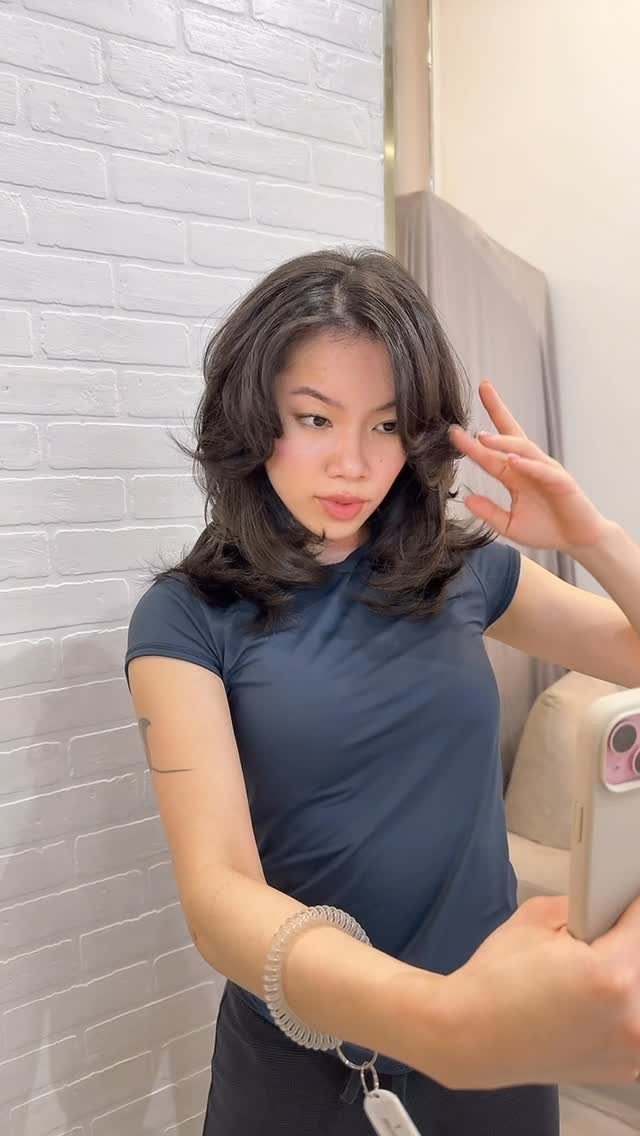
A lob with angled sections keeps more length in the front and layers the back shorter, so the hair frames your face and moves when you turn your head.
The shoulder length makes it long enough to tie back but short enough that drying time stays under 10 minutes.
If you have thick hair, the layers remove weight without making the cut look choppy. The angled front pieces suit oval and heart-shaped faces because they draw the eye down along your jawline.
17. Grown-Out Shoulder Cut
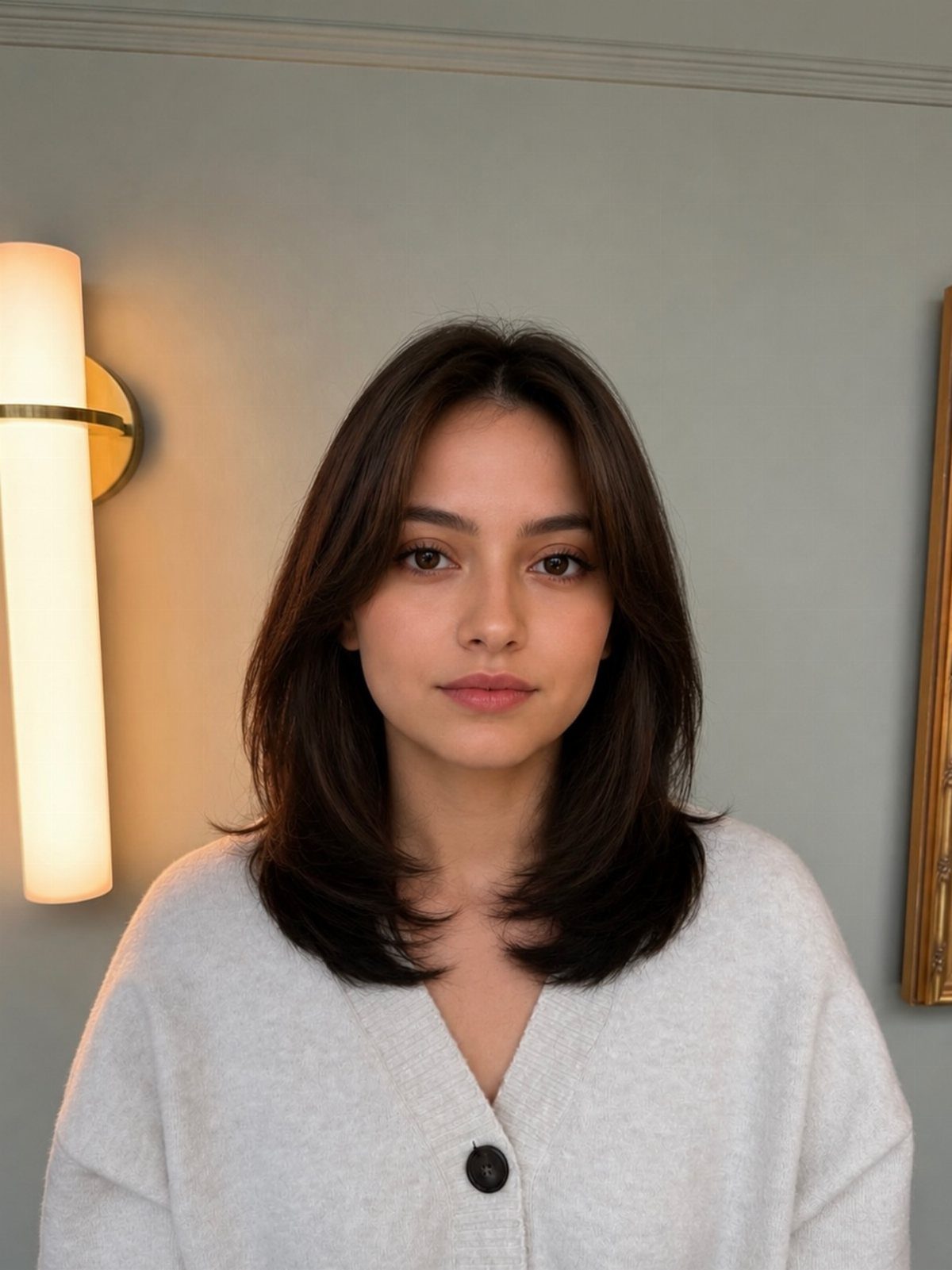
Hair grown past the shoulders and layered throughout lands in that in-between length where it still feels medium but can almost pass for long.
The layers keep the ends from sitting blunt, which makes the cut look intentional rather than like you simply let it grow.
This length suits you if you want the option to pull your hair up but prefer wearing it down most days.
The ends here curl under slightly, which takes a round brush or a flat iron but holds better on layered hair than on a one-length cut.
18. Fringed Shoulder Cut

Bangs that sit wispy and soft across your forehead balance a shoulder-length cut by adding texture at the top without weighing down your face. The hair here falls straight with subtle layers that keep the ends from looking too heavy.
If you have straight hair, this cut sits polished with minimal styling because the layers give you built-in movement.
The bangs need regular trimming to stay at eyebrow level, which you can do yourself with thinning shears if you do not want to visit the salon between cuts.
Choosing Layers for Hair
Feathered ends soften a square jaw because the tapered texture blurs hard angles rather than emphasizing them.
Oval faces work with almost any layered style because the proportions already sit balanced.
Fine hair needs minimal layering.
Too much removes weight the hair cannot spare, and the cut ends up looking thin instead of fuller. Thick or curly hair handles deeper layers because the extra texture has mass to work with.
Layers cut into the natural shape of your hair add structure without forcing the hair into something it cannot hold.
Thinning the ends around the face softens the look but does not add volume. Movement and thickness are not the same thing.
Layer Upkeep and Salon Trims
Long, subtle layers grow out without losing their shape, so you can stretch the time between trims if your routine does not include frequent salon visits.
Shaggy, high-contrast layers grow out of shape faster than soft ones, since the shorter pieces have to stay clearly shorter than the rest or the cut turns into a blunt, heavy block.
Styling time goes up with layering if you want the cut to look the way it did when you left the chair. Air-drying works but reads softer and less finished.
Trim every 2 to 3 months to keep the layers from blending together as they grow. If the cut has bangs or face-framing pieces, those will need attention sooner because even a small amount of extra length changes where they sit.
Frequently Asked Questions
What is a layer cut hairstyle?
A layer cut trims hair to different lengths so the pieces stack on top of each other instead of ending in one line.
The result is movement, texture and volume, especially at the crown. Layers follow the hair’s natural shape, so the same cut looks different on straight, wavy and curly hair.
What are layered haircuts for medium length hair?
They are shoulder-length cuts with shorter pieces built in, which adds lift at the top and softness at the ends.
Layers can remove weight from thick hair and add the look of fullness to fine hair without shortening the overall length. Shags, shaggy bobs, feathered cuts and long curly layers all count.
How do I style medium layered haircuts with fringe?
A round brush and a blow-dryer give fringe and layers a smooth, bent-under shape in about 10 minutes, while a dab of texture cream or sea salt spray on damp hair lets you skip the dryer and keep the ends looser.
Wispy or curtain bangs blend into the layers around your face with very little effort. Bangs need trimming more often than the rest of the cut, since even a quarter inch changes where they sit.
How often should you trim a medium layered cut?
Trim every 2 to 3 months so the layers don’t blend together as they grow.
Bangs and face-framing pieces need attention sooner. Soft, long layers grow out more gracefully than shaggy, high-contrast ones, which lose their shape faster.