A long pixie sits between a classic crop and a bob, with enough length on top to style or sweep to the side but short enough at the nape to keep the cut light and off the neck.
The right version depends on your hair texture: curls and waves add volume without effort, while straight or fine hair needs crown layers or a side part to keep the shape from lying flat.
Options range from blunt-bang pixies that need frequent trims to textured, tousled cuts that grow out well and stretch time between appointments.
1. Curly Long Pixie
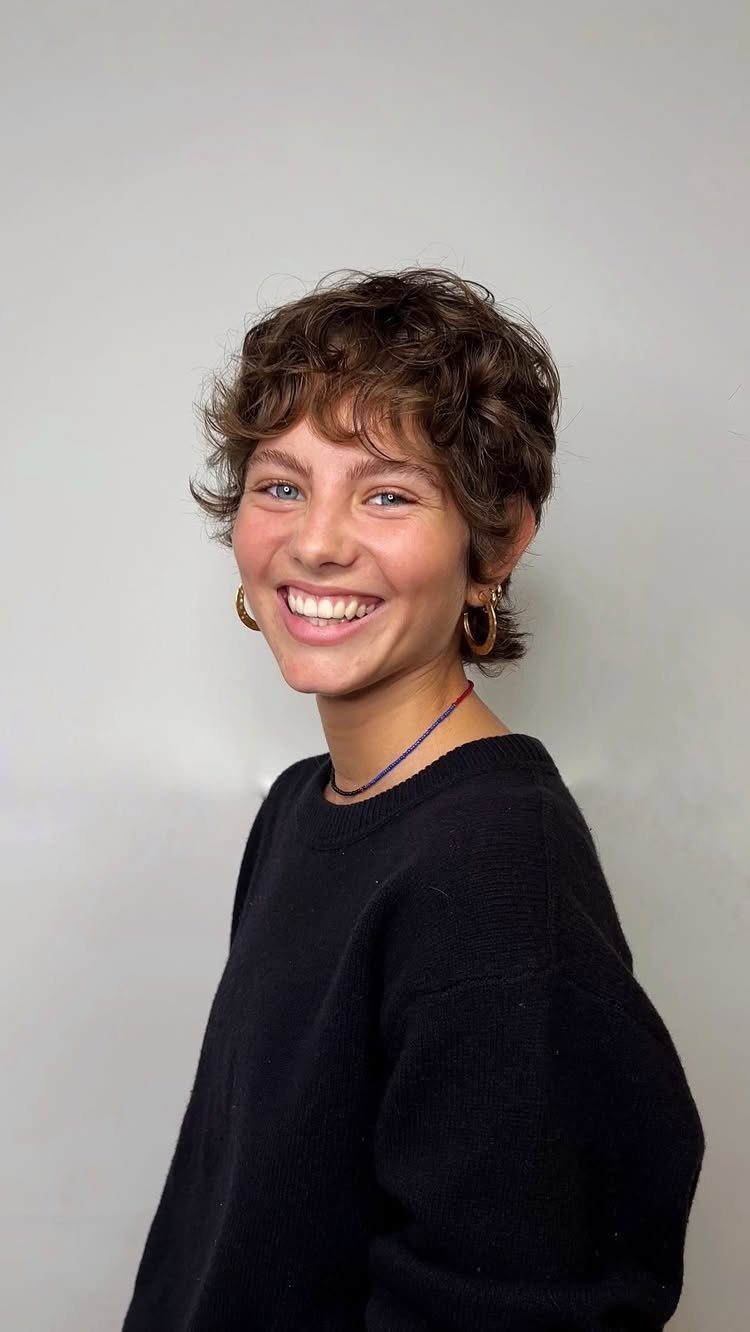
Curls give a long pixie more volume and movement without any styling effort.
The length sits somewhere between a classic pixie and a crop, long enough to let the curl pattern show without the cut looking rounded or tight to the head.
Ask for longer crown layers if your curls are tight, since they’ll spring up shorter than straight hair cut to the same length.
A curl cream or lightweight gel will define the texture, but the shape holds on its own once dry.
2. Long Pixie with Wispy Bangs
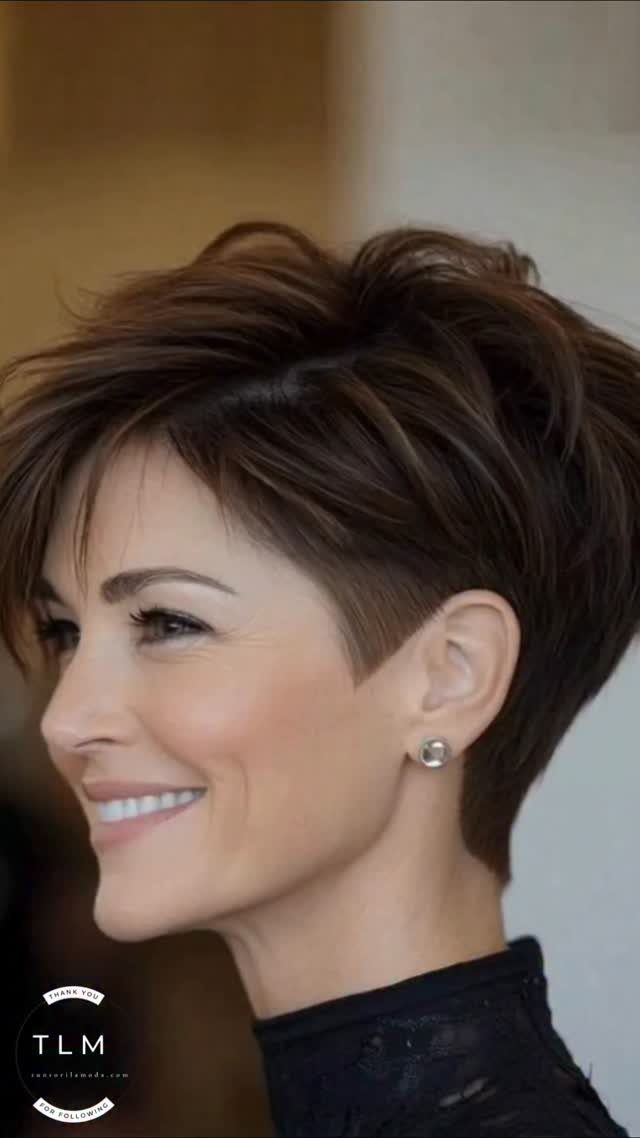
Wispy bangs soften the front of a long pixie and break up the forehead without adding weight.
The fringe sits just above or at the brow and tapers at the ends, so it blends into the rest of the cut instead of forming a hard line.
This works well if you want some coverage but don’t want to commit to thick, blunt bangs.
The lightness means less styling, though you’ll need to run a round brush through them or pin them back on humid days when they separate.
3. Shaggy Bangs
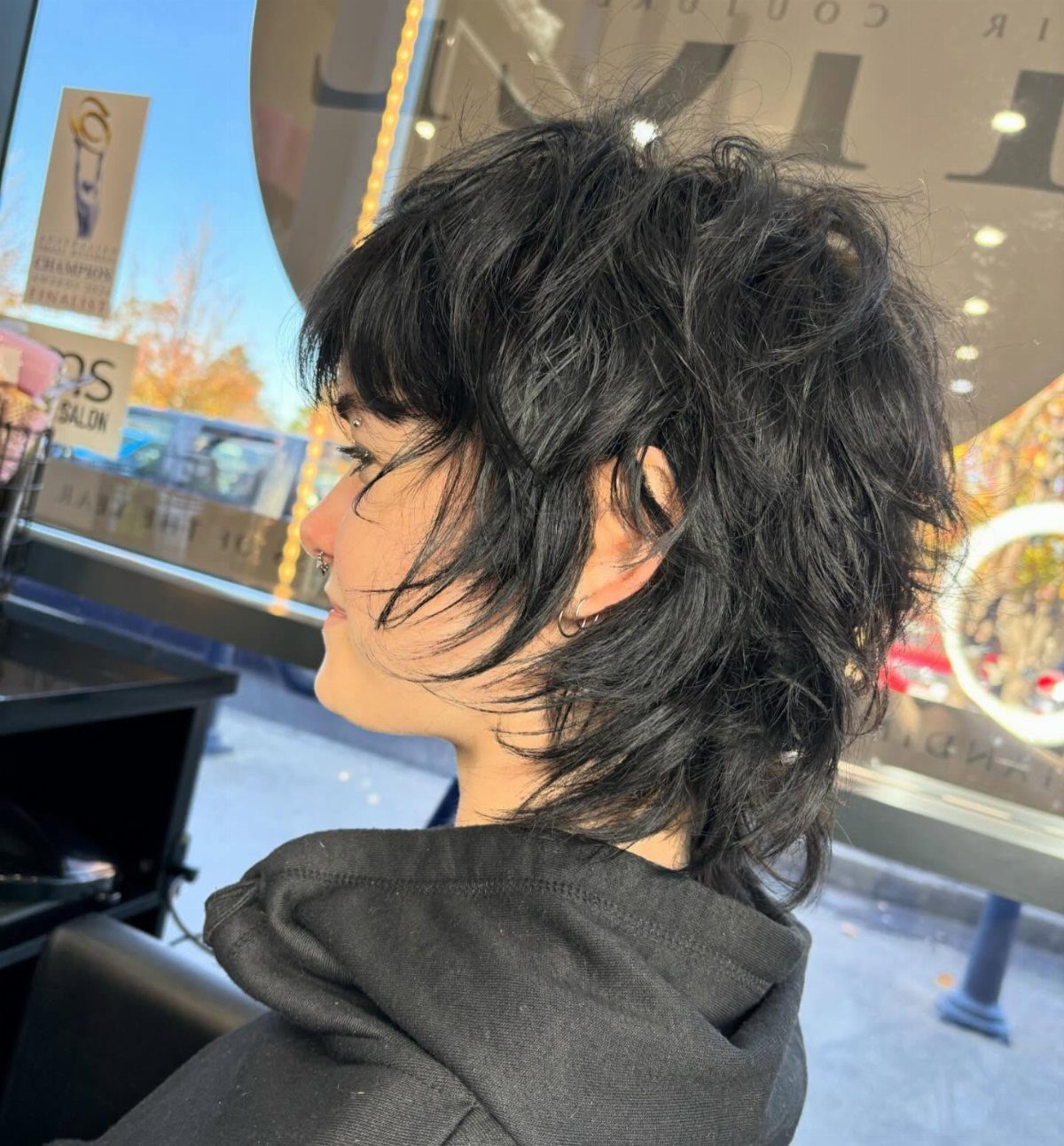
Shaggy layers and choppy ends give a long pixie an intentionally messy look that reads more rocker than polished. The texture comes from point-cutting or razor work, which leaves the ends uneven and piecey.
Styling is minimal: a small amount of texturizing paste or sea salt spray adds separation, and your hands do the rest.
The cut grows out well because it’s already meant to look a little undone, so you can stretch trims if you’re fine with more length.
4. Long Pixie with Crown Layers
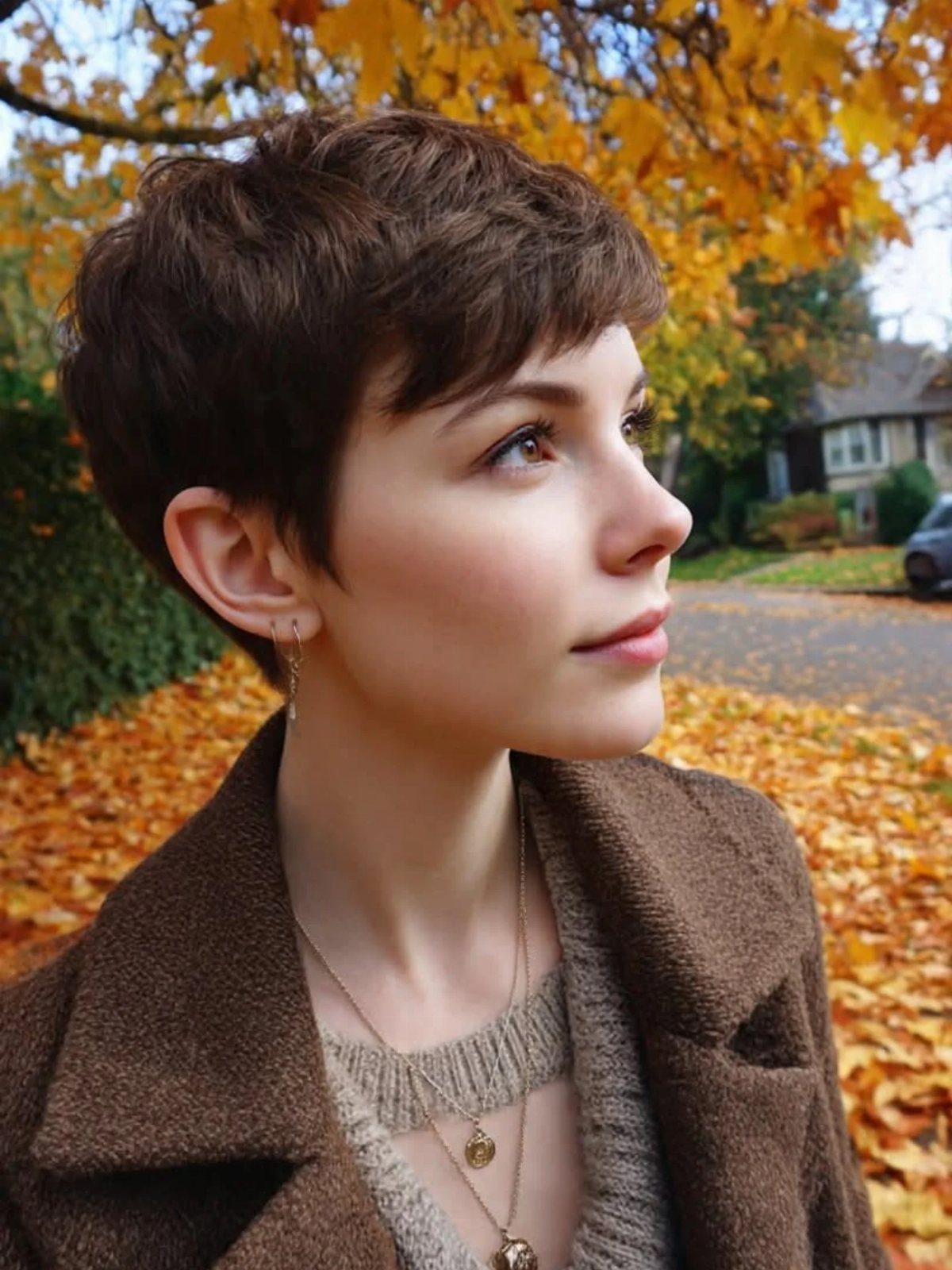
Crown layers add height and shape when fine hair tends to lie flat. The stylist cuts shorter pieces on top that lift away from the scalp, while the sides stay closer to the head, so the silhouette has more dimension.
A volumizing mousse applied to damp roots will hold the lift longer, and a quick blow-dry with your fingers or a small round brush sets the shape.
The layering also means less weight pulling the hair down, which makes a difference if your hair is naturally limp.
5. Long Pixie for Thick Hair
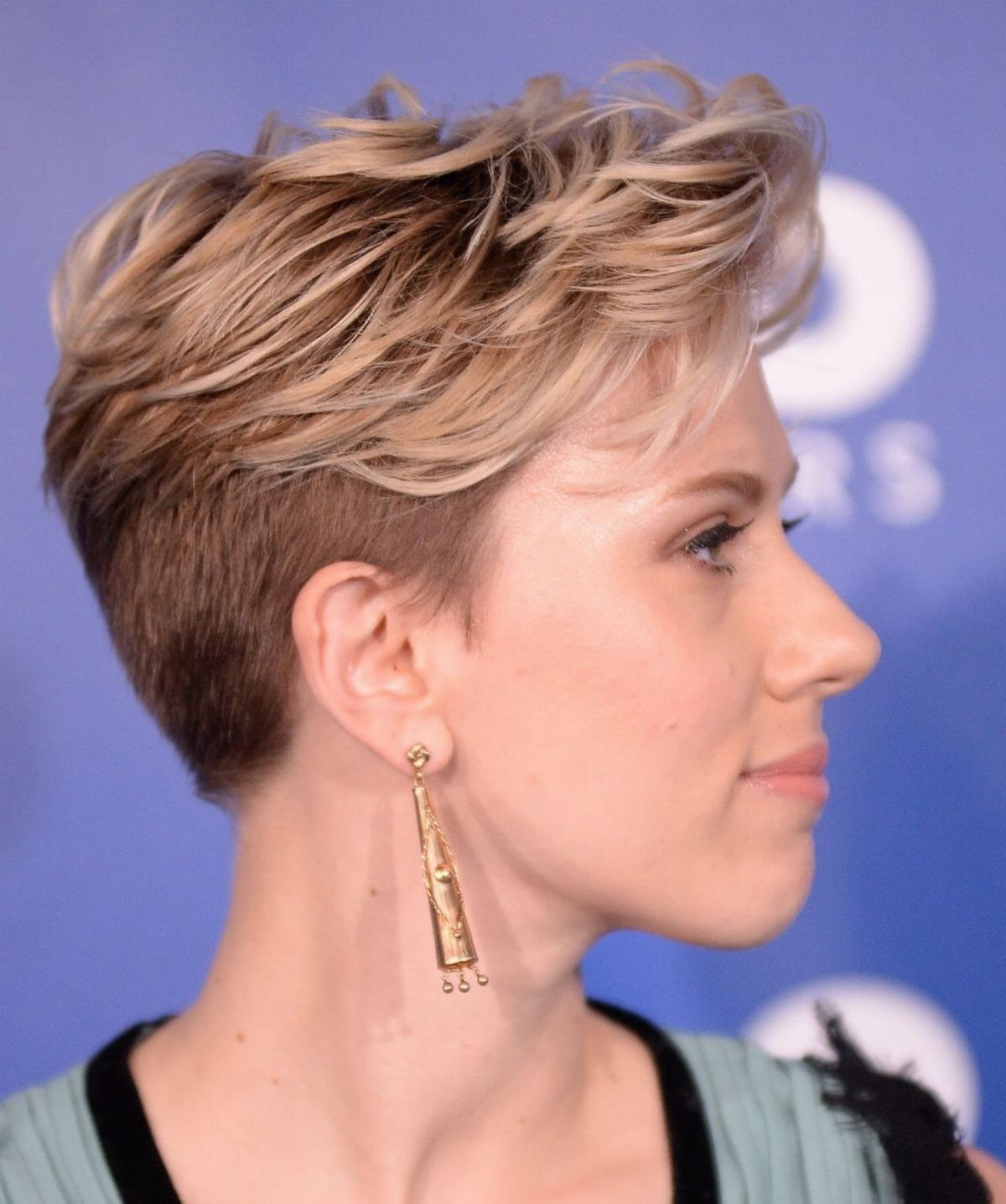
Thick hair needs internal layering to keep a long pixie from looking boxy or bottom-heavy.
The stylist removes bulk through the interior while leaving enough length on top to maintain shape, so the cut feels lighter without losing density where you want it.
The tapered sides keep the silhouette clean, and the layers let the hair move instead of sitting in one solid mass.
Blow-drying takes less time because there’s less hair to work through, and the cut holds its shape before it starts to puff out again.
6. Side-Swept Long Pixie
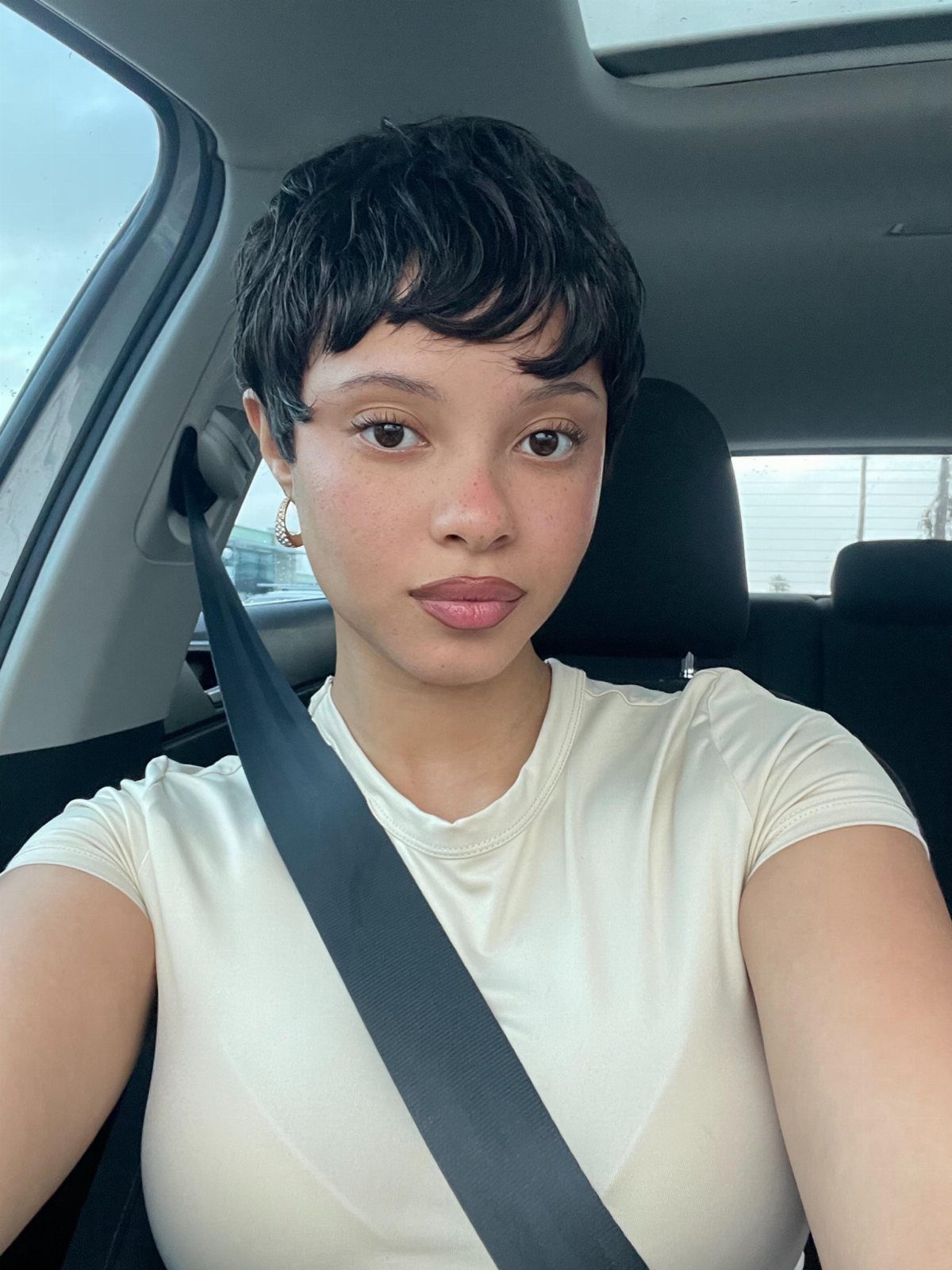
A side part and longer front pieces swept across the forehead give the cut a softer, more directional look. The length on top is long enough to comb over and hold the shape without needing much product.
If your hair has any natural wave, it will fall into place on its own once dry.
Straight hair may need a light styling cream and a few seconds with a blow-dryer to set the sweep, but the cut does most of the work.
7. Long Pixie with Fuller Bangs
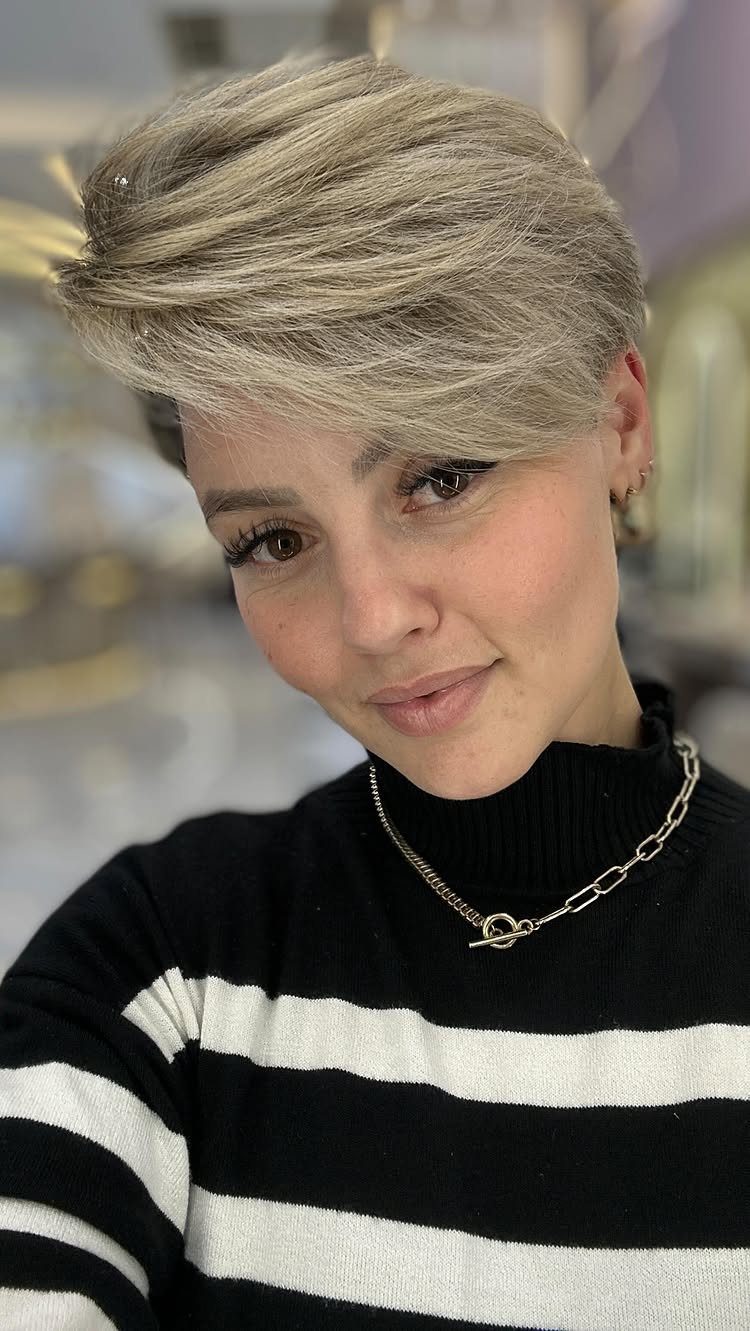
Fuller bangs balance a narrow or pointed chin by adding width across the forehead. The fringe sits heavier and more solid than wispy bangs, usually cut straight across or slightly angled, and covers most of the forehead.
Styling takes a round brush and a minute with the dryer to smooth the bangs forward.
They’ll need a trim to stay out of your eyes, and if they get oily faster than the rest of your hair, a bit of dry shampoo at the roots keeps them from looking flat by midday.
8. Bixie
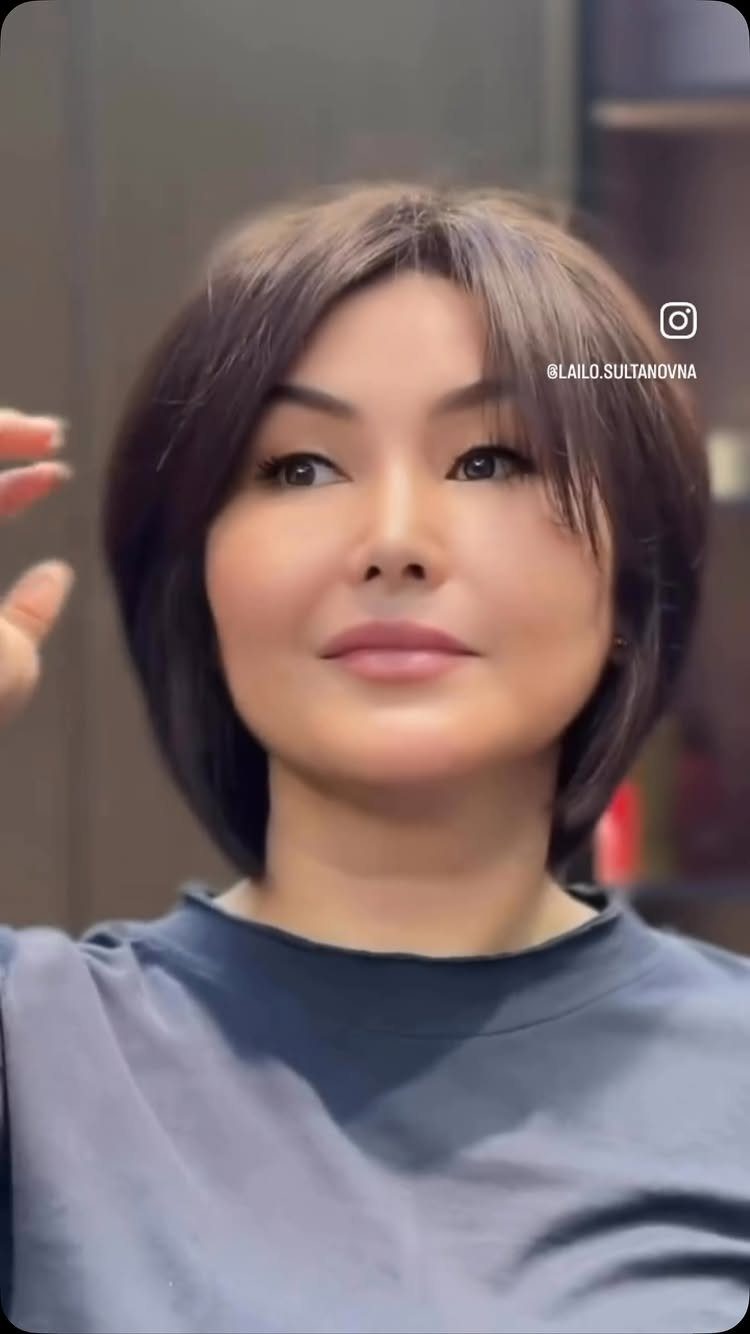
The bixie splits the difference between a pixie and a bob, keeping the nape short and cropped while the front pieces fall longer around the jawline.
That extra length gives you more styling options without the maintenance of a full bob.
You can tuck one side behind your ear for asymmetry or blow-dry the front forward for a sleeker look.
The contrast between the short back and longer front works best when the layers are intentional, so ask your stylist to keep the transition gradual rather than choppy.
9. Wavy Long Pixie
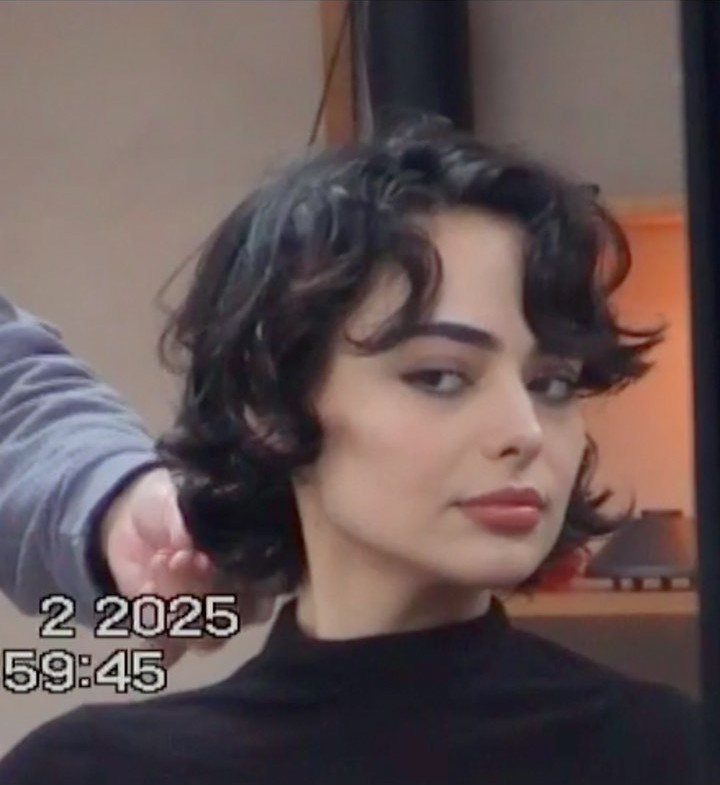
Natural waves give a long pixie more body and a looser, less structured shape. The movement shows best when the top and sides are long enough for the wave to form.
A light mousse or curl cream applied to damp hair will hold the wave pattern without weighing it down.
Air-drying works fine, or you can diffuse on low heat if you want more definition. The texture means you can skip the flat iron and still have a finished look.
10. Long Pixie with Face-Framing Layers
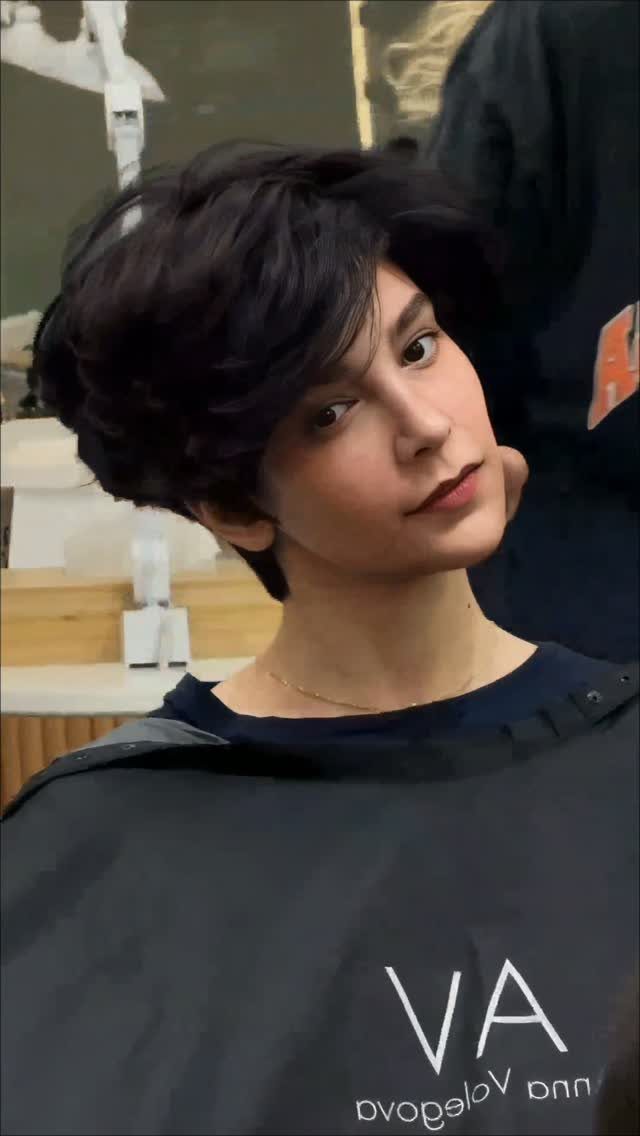
Longer pieces around the face soften the jawline and give the cut more shape when the rest is cropped close. The layers angle down from the crown toward the cheekbones, so they frame without falling forward into your eyes.
This works particularly well if you have a square or angular jaw, since the angled pieces create a softer outline.
The layering also lets you tuck one side back or pin it flat when you want the cut to look more asymmetrical.
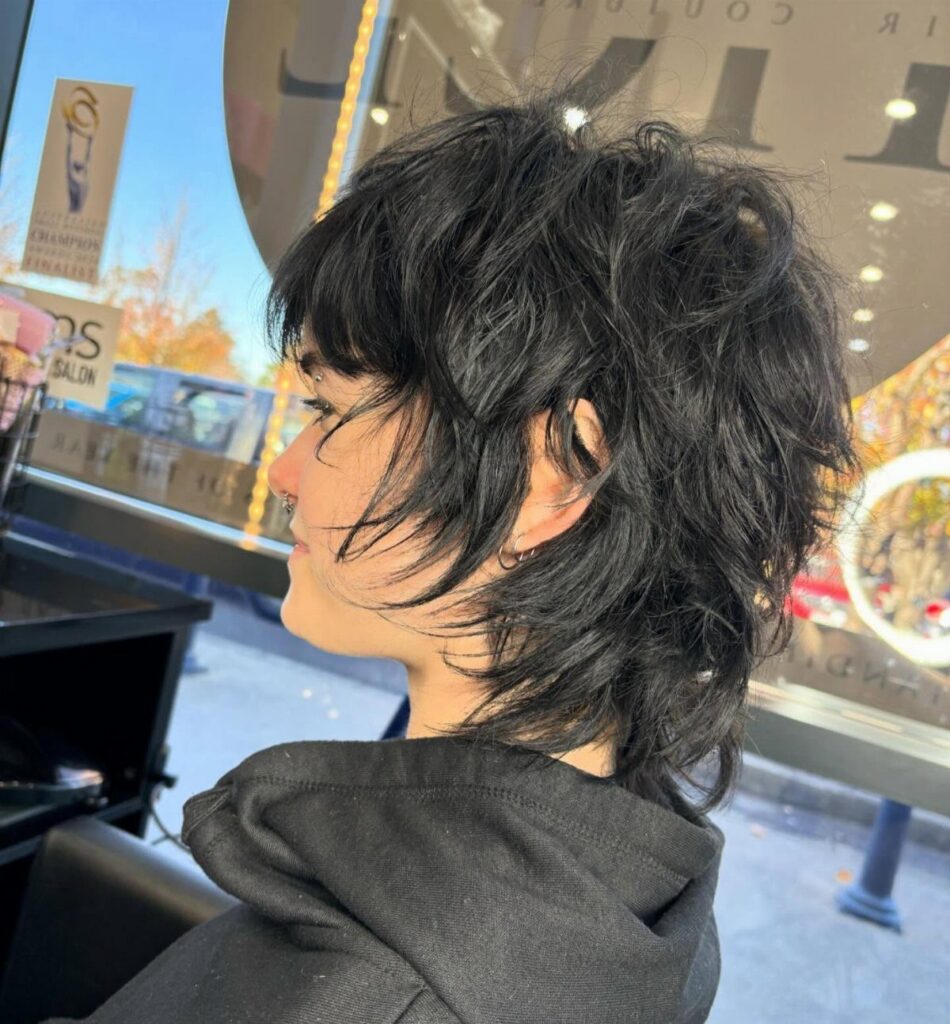
11. Long Pixie Mullet
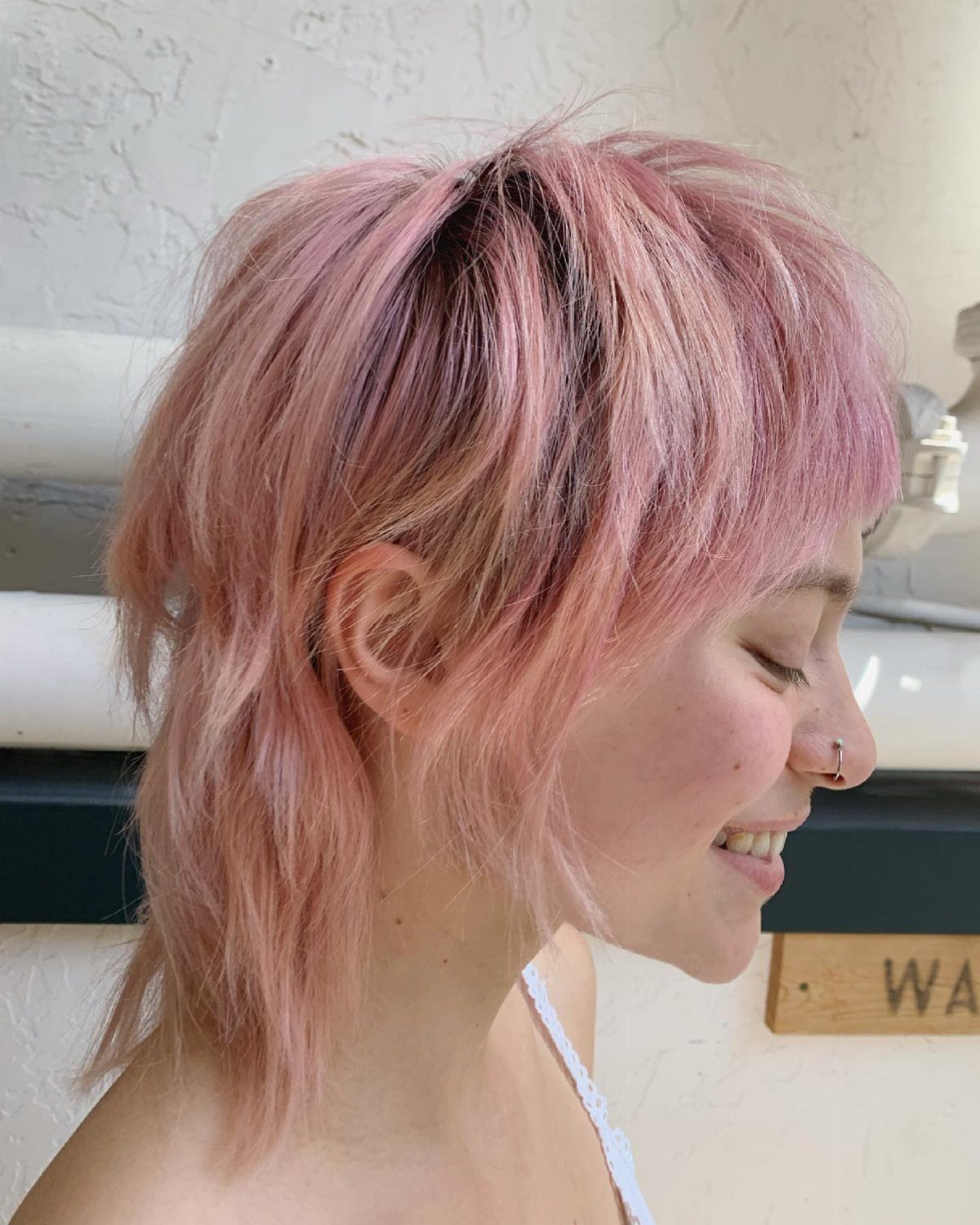
A pixie mullet keeps the sides and top short while leaving length at the nape, so the back extends past the ears or even to the collar.
The shape has a deliberate contrast that reads more intentional than a standard grow-out.
Styling depends on how much length you keep in back: shorter versions sit flat and need almost nothing, while longer ones benefit from a bit of texturizing spray to add separation.
The cut grows out in stages, and the back will need trimming more often than the top if you want to hold the shape.
12. Textured Long Pixie
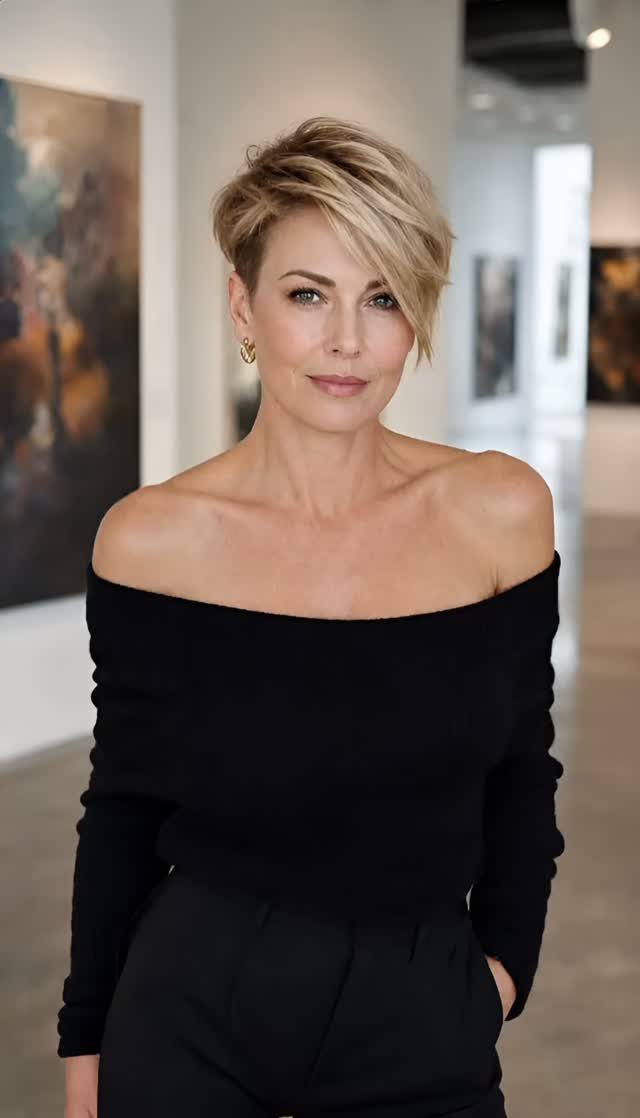
Point-cutting or razor work at the ends creates a choppy, separated finish that keeps the cut from looking too polished or smooth.
The texture comes from the way the hair is cut, not from curling or product, though a small amount of paste or cream will emphasize the piecey ends.
The downside is that textured ends can look scraggly if the cut grows out too long, so plan on regular trims to keep the shape clean.
13. Inverted Pixie Bob
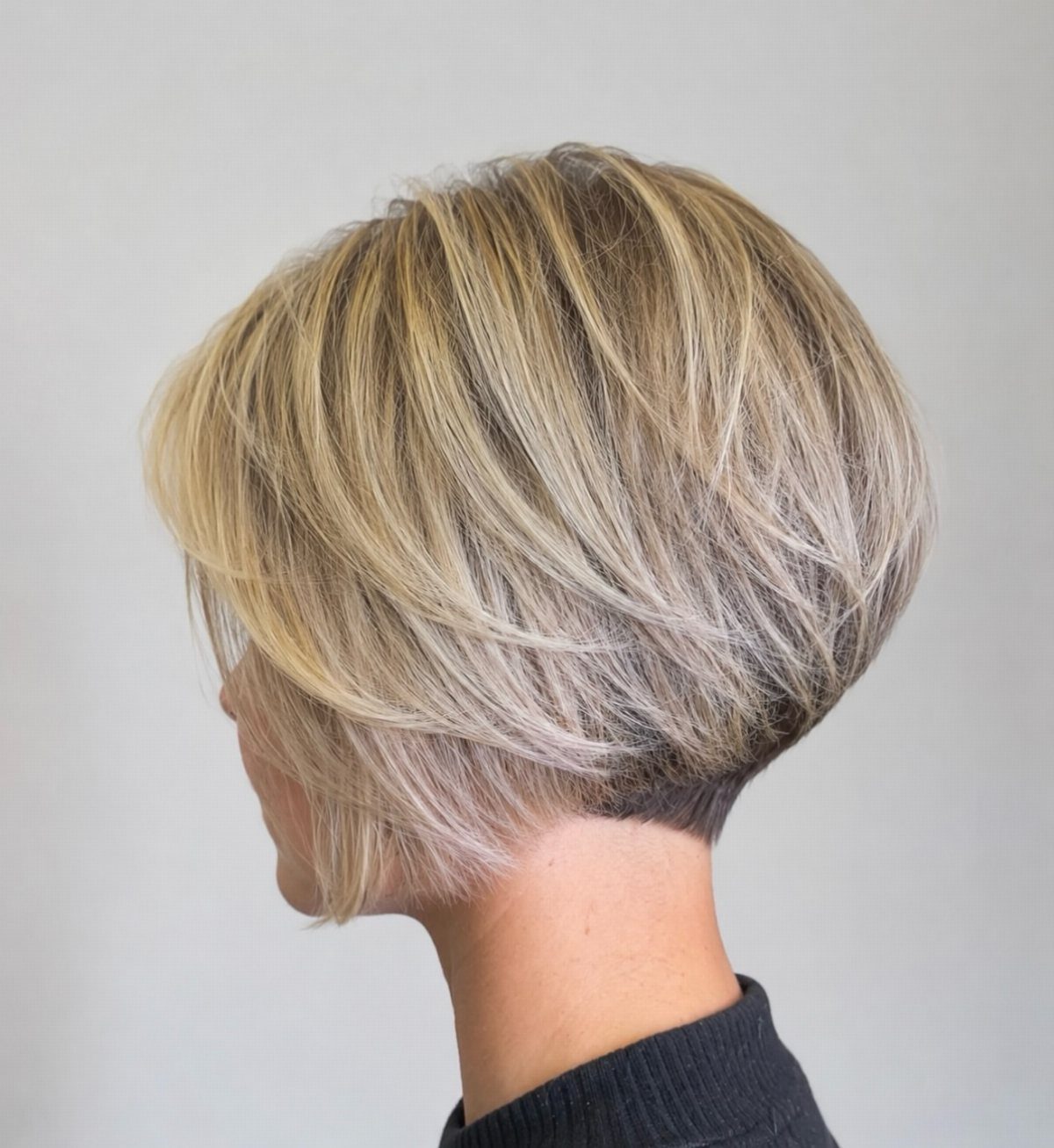
An inverted pixie bob stacks the back for volume and rounds out at the crown, then tapers short at the nape.
The shape works when you want the dimension of a stacked bob without giving up the clean neckline of a pixie.
The length difference between the crown and nape is what gives the cut its lift, so it holds the silhouette without teasing or backcombing.
Blow-drying with a round brush at the crown will emphasize the rounded shape, but the stacking does most of the work. The tapered nape keeps it cooler and lighter than a full bob.
14. Long Pixie with Wispy Ends
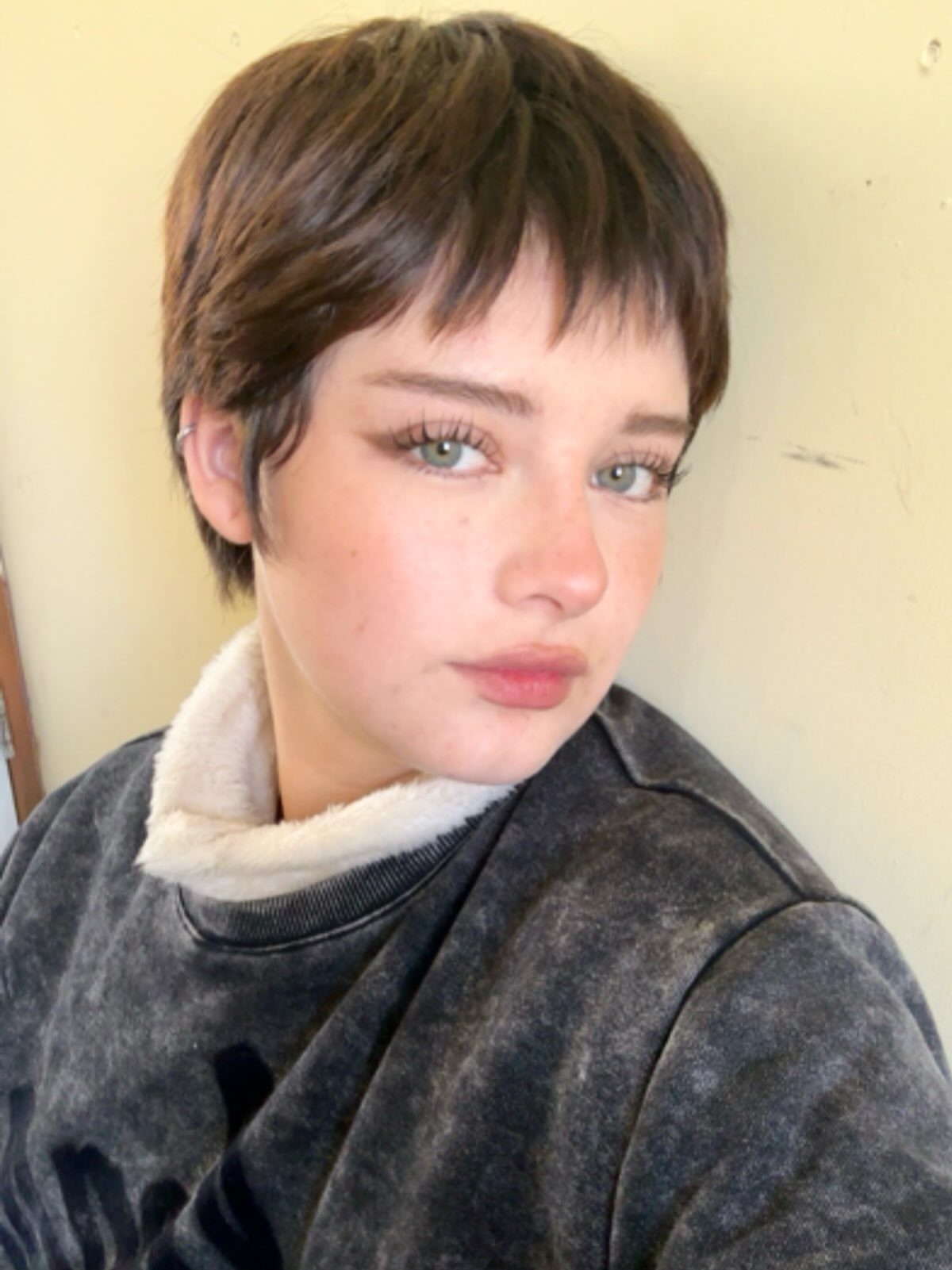
Tapered, wispy ends keep a longer pixie from looking blunt or heavy at the tips. The stylist thins the ends with a razor or point-cutting, so they separate instead of forming a solid line.
The result is a softer finish that works well if you’re growing a pixie out and want to avoid the in-between stage where everything looks bulky.
Styling is straightforward: a small amount of cream smoothed through damp hair will hold the texture, and the cut air-dries without looking unfinished.
15. Undercut Pixie with Statement Waves
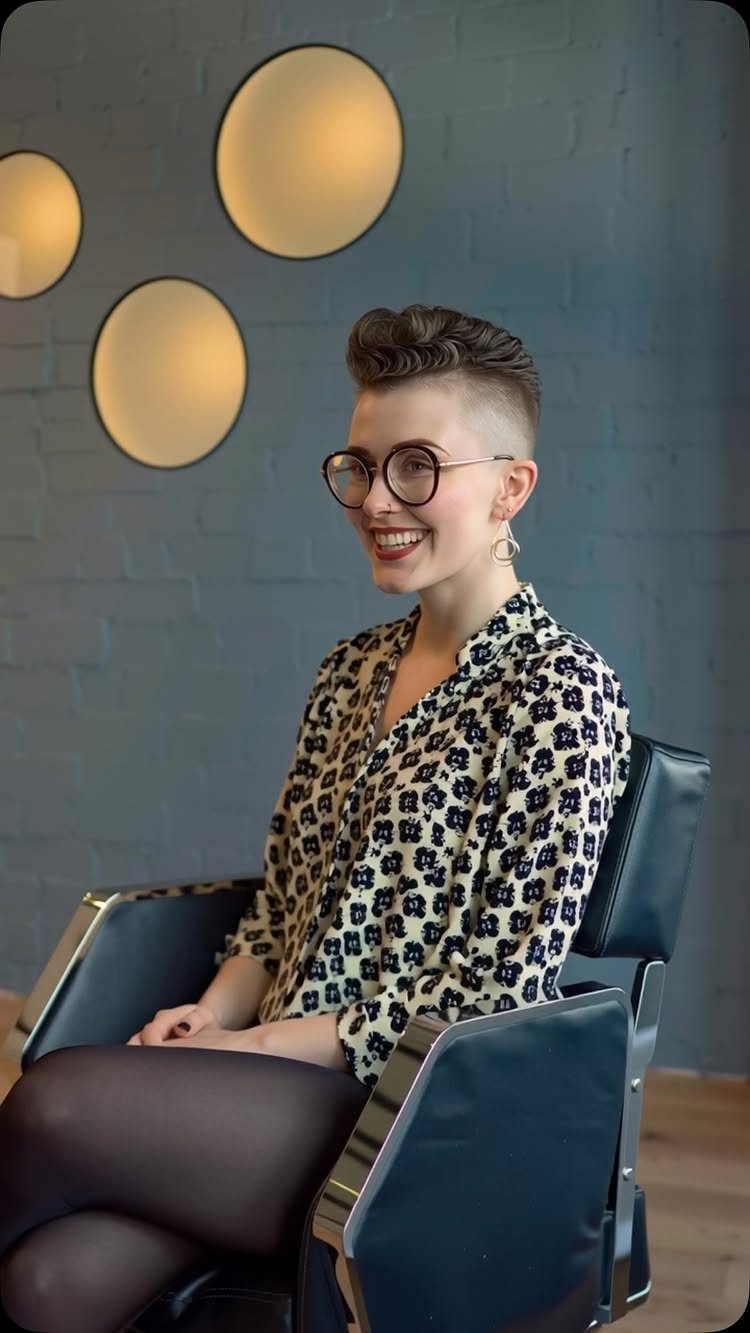
Longer waves on top contrast with close-clipped or shaved sides, so the cut has two completely different textures.
The undercut keeps the sides cool and low-maintenance, while the length on top gives you room to style or leave the waves alone.
A curl cream or mousse will define the wave without flattening it, and you can pin one side back to show more of the undercut when you want the contrast visible.
The shaved portion grows in faster than the top, so touch-ups every few weeks keep the shape clean.
16. Asymmetrical Pixie
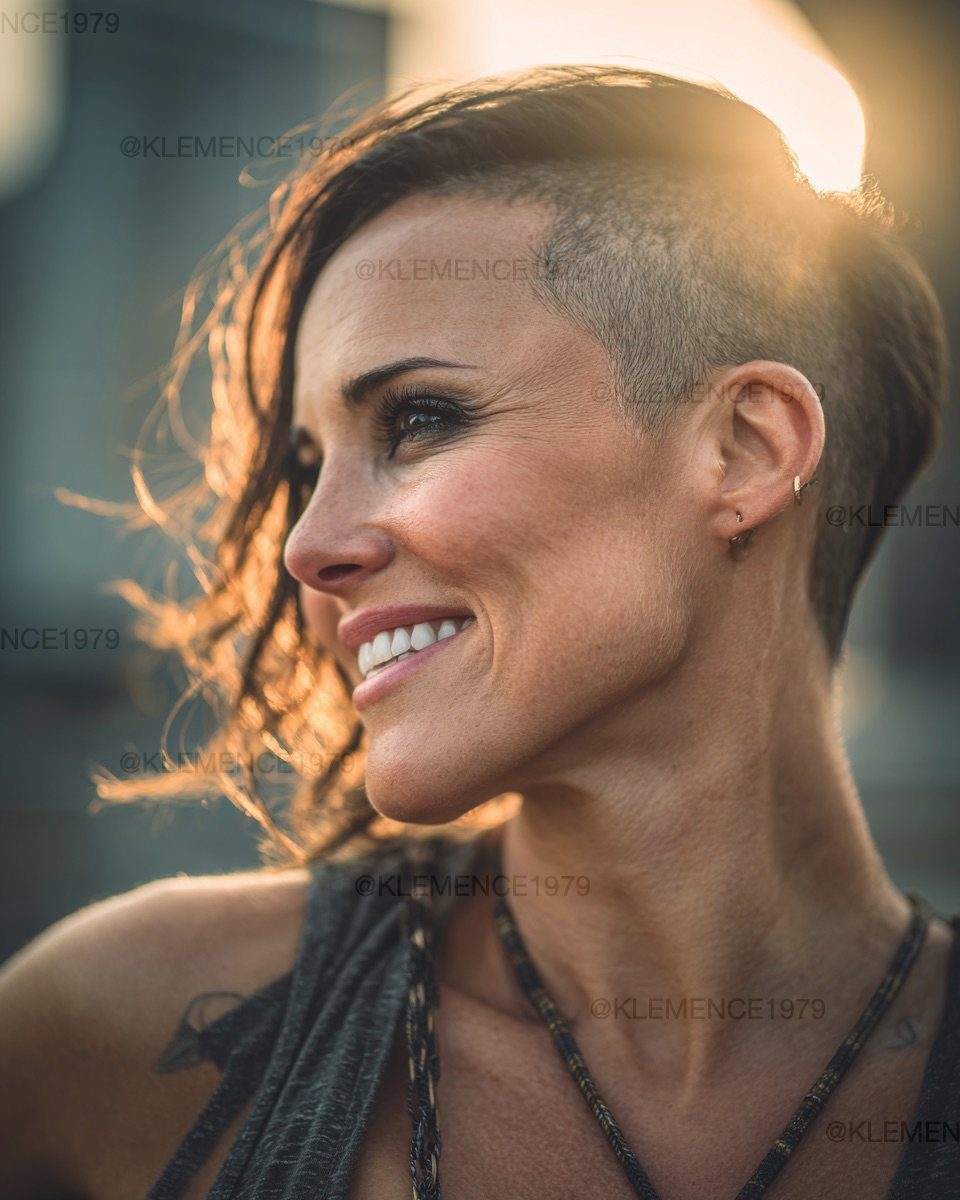
One side is cut longer than the other, so the silhouette is deliberately uneven.
The asymmetry reads clearest when one side is tucked behind the ear and the other falls forward, which also keeps the longer side from blocking your face.
The imbalance means you’ll notice the grow-out sooner on the shorter side, so regular trims matter if you want to hold the shape.
Styling is simple: the cut does the work, and a bit of texturizing paste on the longer side will add separation if you want more definition.
17. Choppy Pixie
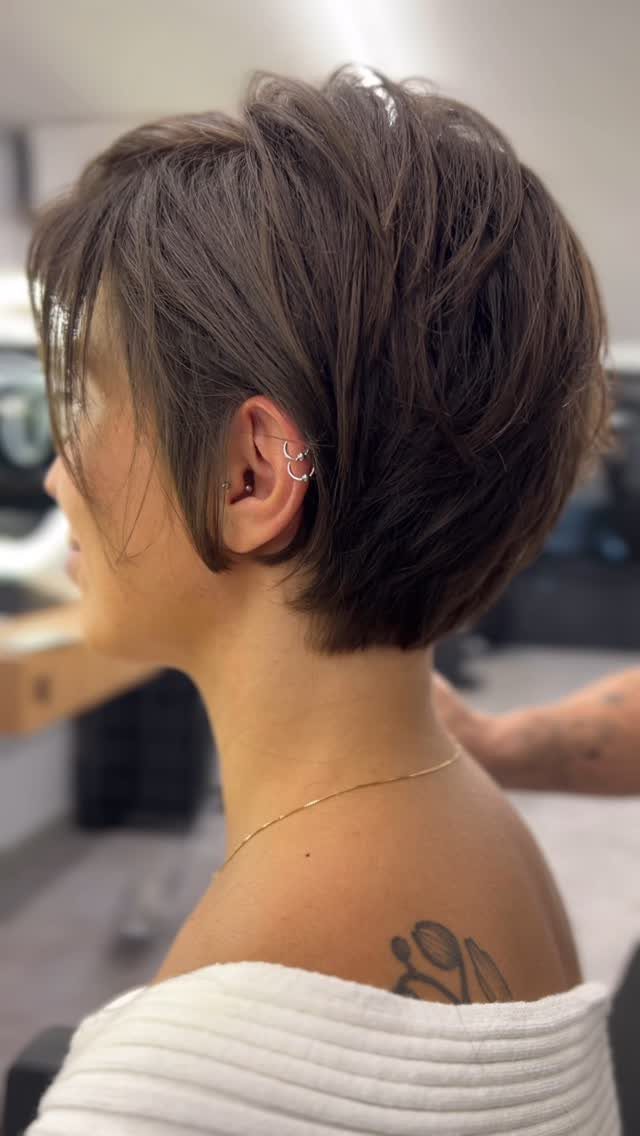
Choppy layers cut into the ends give the style a separated, broken-up texture that reads more undone than smooth. A razor or point-cutting method leaves the ends textured rather than blunt.
A texturizing spray or light paste worked through dry hair will emphasize the separation, but the cut holds the piecey shape on its own.
The layers mean less styling time because the texture is built in, though the ends will need a trim when they start to look ragged instead of intentionally choppy.
18. Blonde Long Pixie
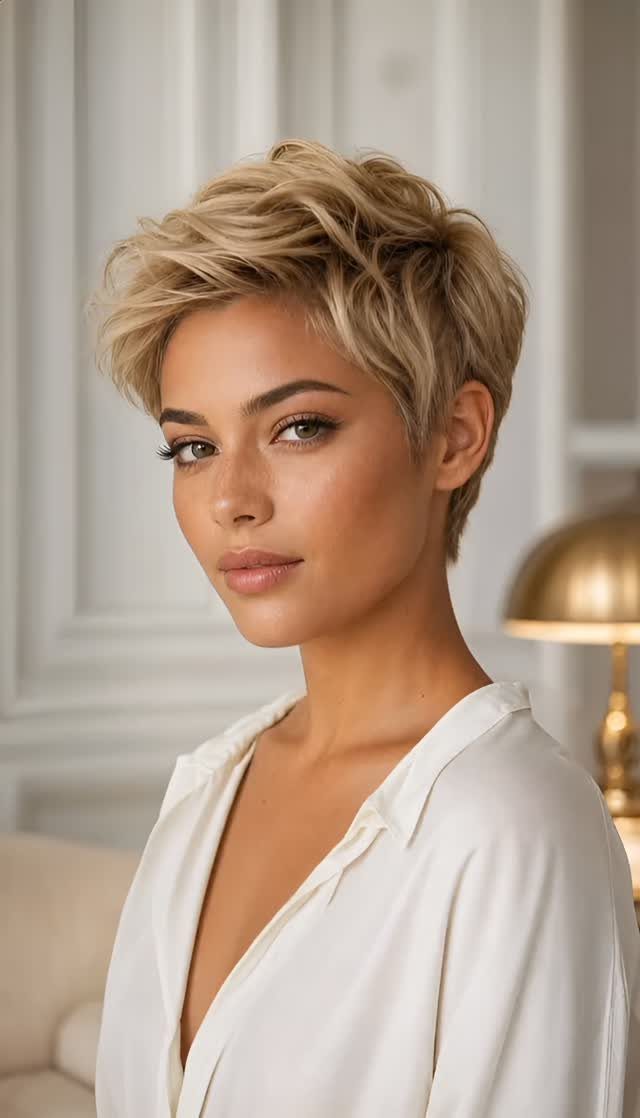
Blonde tones lighten the whole cut and make the layers more visible, especially if the color has dimension from highlights or a mix of shades.
The cut itself can be any pixie length, but the blonde draws more attention to the shape and texture.
Maintenance depends on how far your natural color is from the blonde: roots will show faster on darker hair, and toning appointments keep the color from turning brassy.
A purple shampoo between salon visits helps maintain the tone, though it won’t replace a full toner.
19. Long Pixie with Highlights
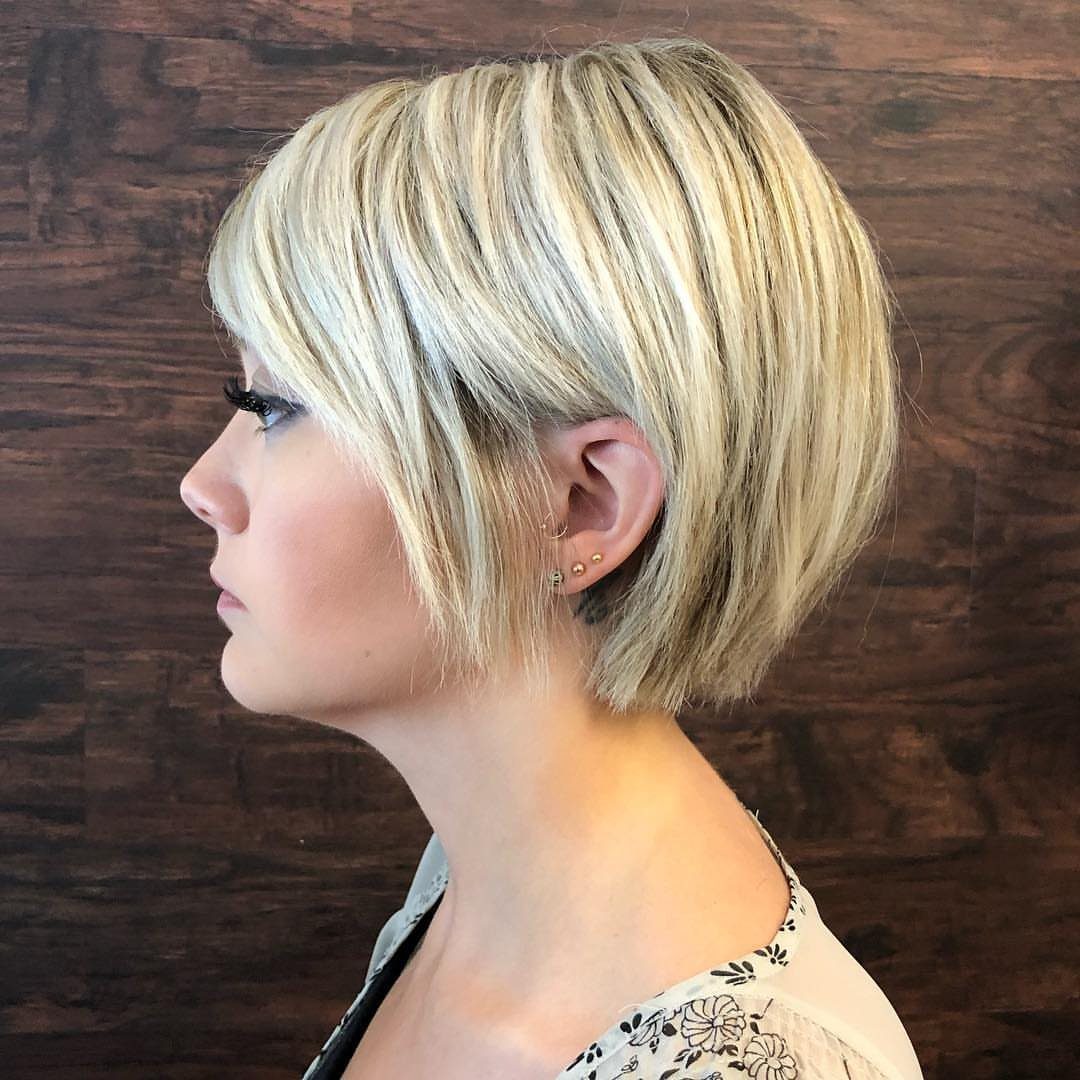
Highlights break up a single shade and add depth that makes the cut easier to read from a distance. The lighter pieces catch light differently than the base color, so the layers show more clearly.
Placement matters: highlights through the top and around the face bring attention forward, while scattered pieces throughout give a more blended look. Frequent trims mean the faded ends don’t stick around long enough to look dull.
20. Long Pixie for Round Faces
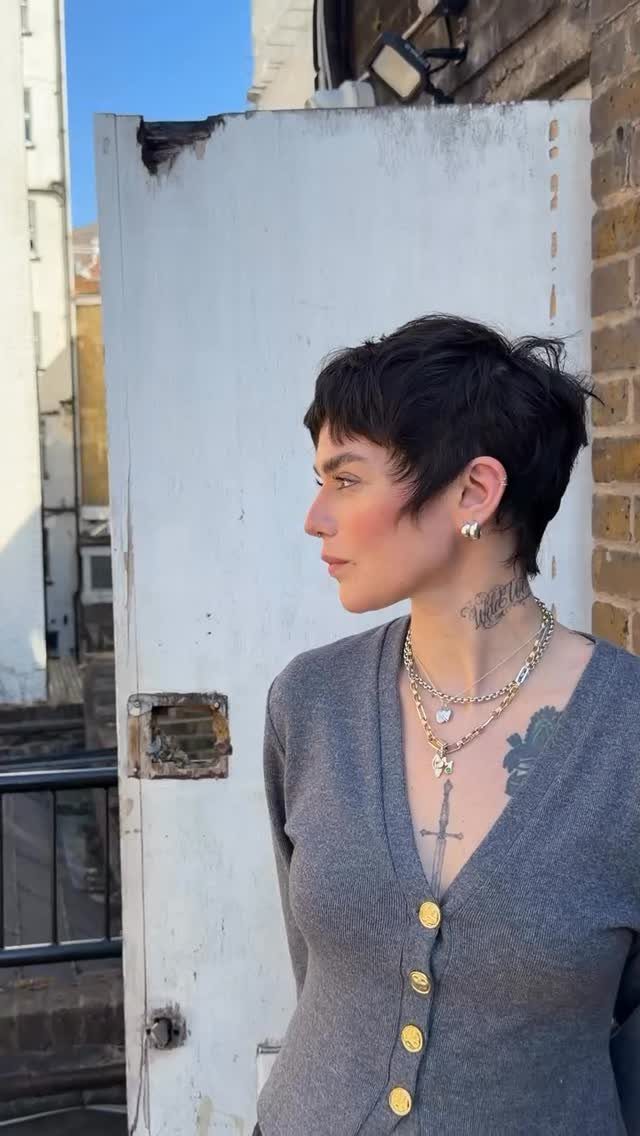
Height at the crown and longer pieces angled toward the chin create vertical lines that balance a rounder face.
The lift at the top draws the eye up, and the forward fringe or side pieces break up the width across the cheeks.
Avoid cutting the sides too short or rounded, since that can make the face look wider.
A side part also helps by creating asymmetry instead of centering everything. If your hair is fine, a bit of mousse at the roots will hold the lift longer.
21. Long Pixie for Straight Hair
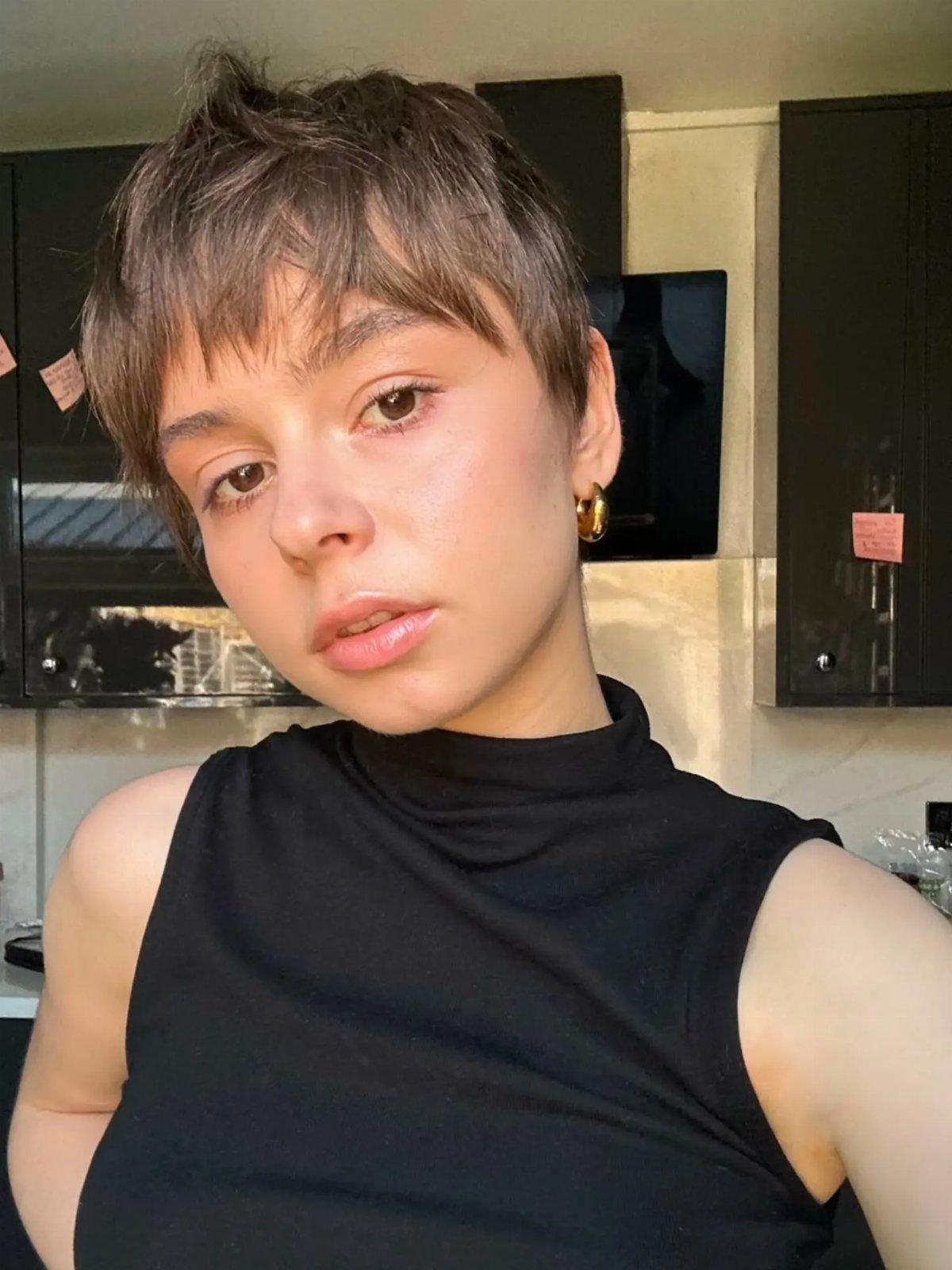
Straight hair shows every line of the cut, so the shape has to be precise or it will look unfinished.
The benefit is that the cut holds its silhouette without fighting natural texture, and styling is faster because you’re not trying to straighten waves or add body where there isn’t any.
A smoothing cream worked through damp hair will keep the ends from flipping out, and a flat iron on low heat can sharpen the lines if you want them cleaner.
The downside is that any unevenness or grown-out sections are more visible than they would be on textured hair.
22. Silver Long Pixie
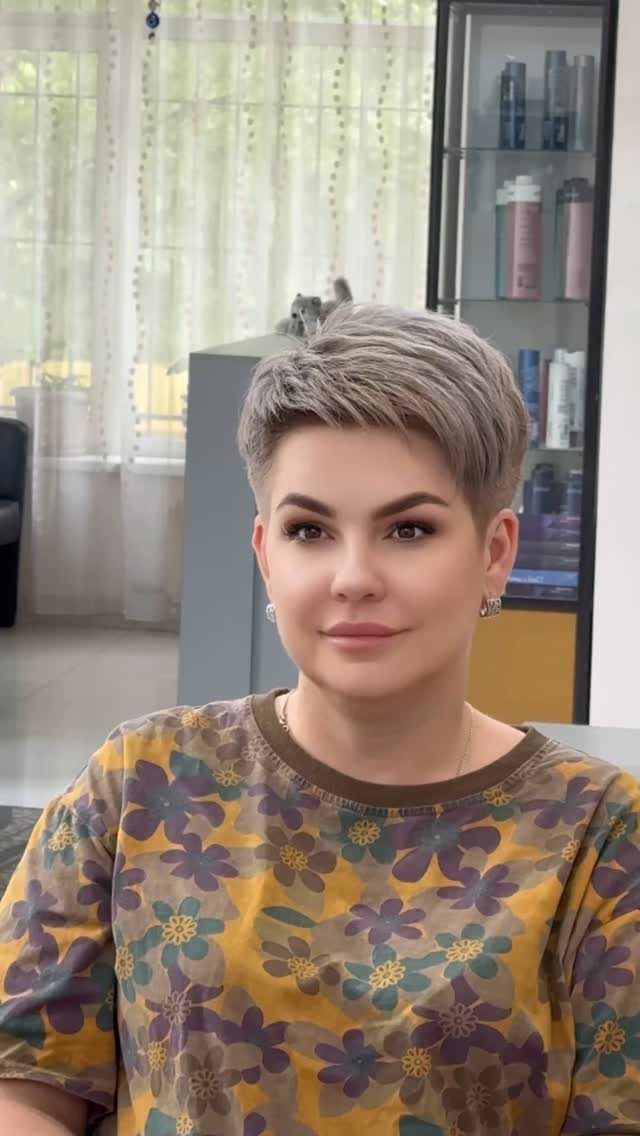
Silver tones give the cut a cooler, more dramatic finish that stands out against most skin tones.
The color works on gray hair that’s fully transitioned or as a dyed shade on darker hair, though getting there from dark brown or black usually takes more than one session.
Maintenance involves a purple or blue shampoo to keep the silver from yellowing, and regular toning appointments if the color starts to shift warm.
The short length means you’re cutting off faded ends more often, which helps the color stay truer longer than it would on a longer style.
23. Bold Red Pixie with Bangs
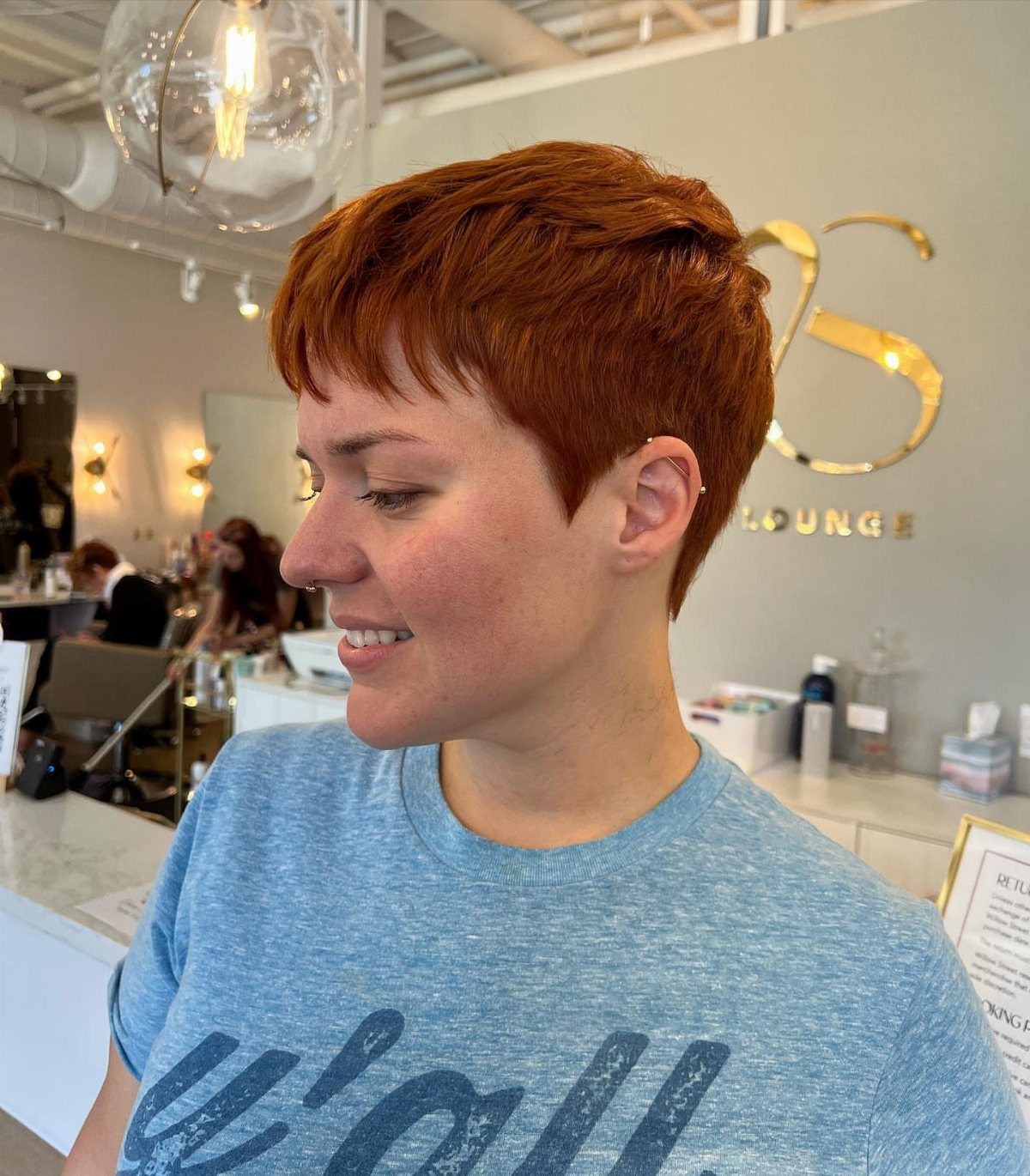
A saturated red gives the cut presence and makes the shape more visible, especially if your natural color is close to your skin tone.
The shade can lean copper, auburn, or true red depending on your base color and how warm or cool the dye pulls.
Red fades faster than most colors, so plan on touch-ups and a color-depositing shampoo between salon visits to keep the tone from going dull.
The bangs frame the color around your face, which means they’ll also show fading first if you skip maintenance.
24. Champagne Blonde Pixie
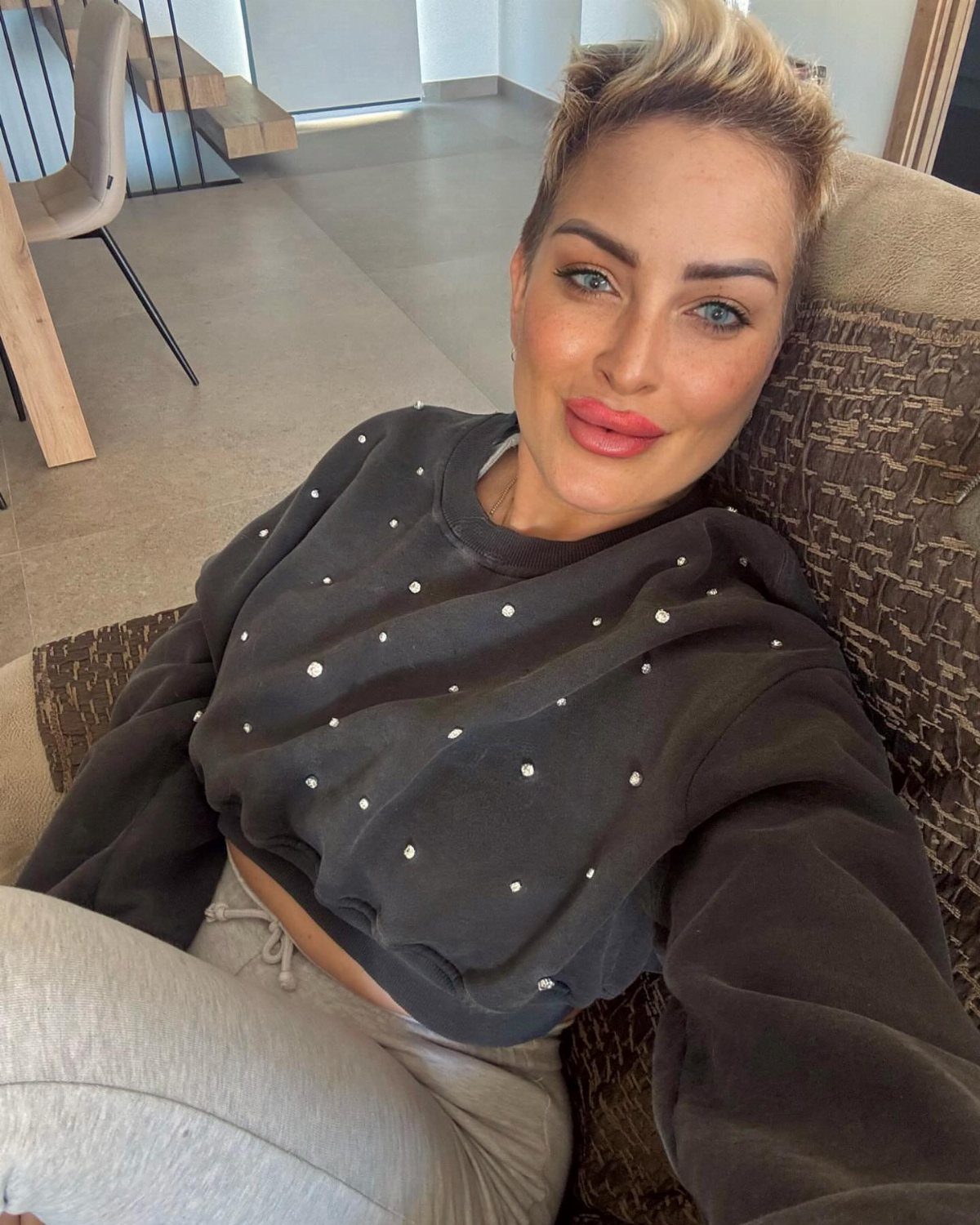
Champagne blonde sits between beige and gold, so it reads warmer than platinum but cooler than butter yellow. The tone works well if you want a blonde that doesn’t skew too icy or too brassy.
Getting there from darker hair takes lightening, and the maintenance is similar to other blondes: regular toning to keep the color from shifting too warm, and a purple shampoo to manage any yellow that creeps in.
25. Piecey Lixie
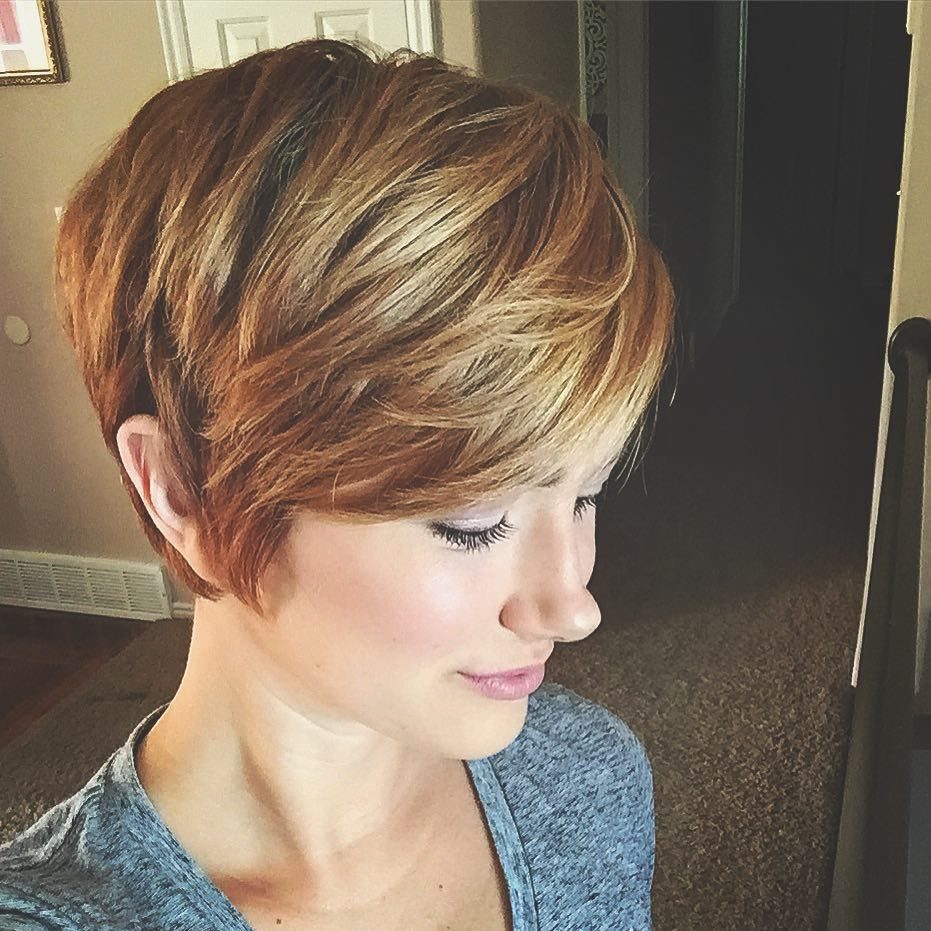
Separation at the ends and longer sideburns give this cut a choppy, broken-up finish that frames the face without softening it. The texture comes from point-cutting or razoring through the layers, so the pieces fan out instead of lying flat.
A fingertip of paste on dry strands pulls the pieces apart and stops them sticking back together.
The sideburns add length at the temples that balances the shorter crown, and they grow out faster than the rest, so trim them between cuts if you want to keep the shape consistent.
26. Long Androgynous Pixie
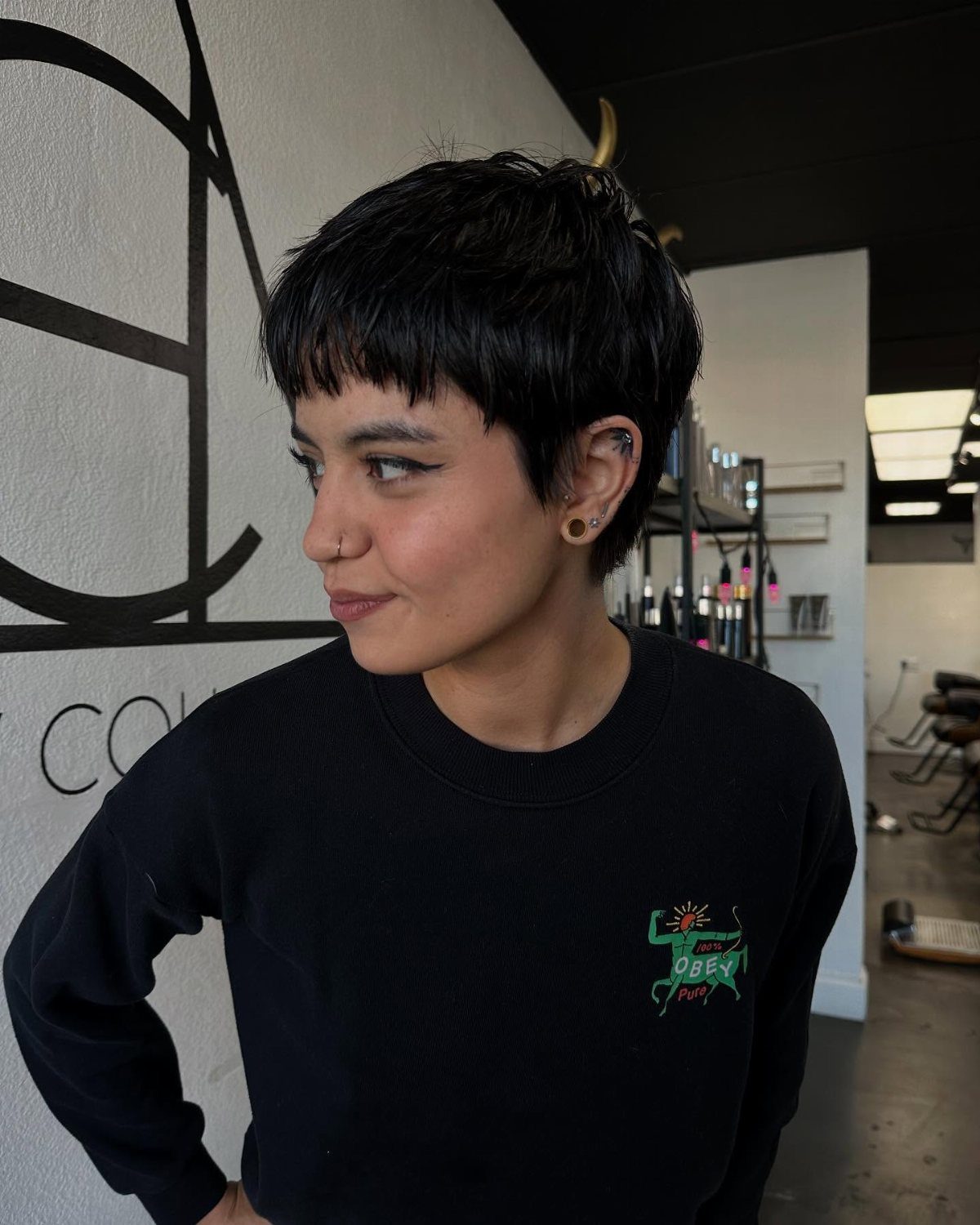
Short, textured layers and a cropped fringe create a pixie that reads more neutral than feminine. The cut keeps the nape close and the top slightly longer for a shape that works without relying on softness or volume.
Run a dime-sized amount through towel-dried hair and let it finish on its own. The short fringe keeps hair off your forehead, and the overall length means morning styling takes seconds.
27. Vintage-Style Coif
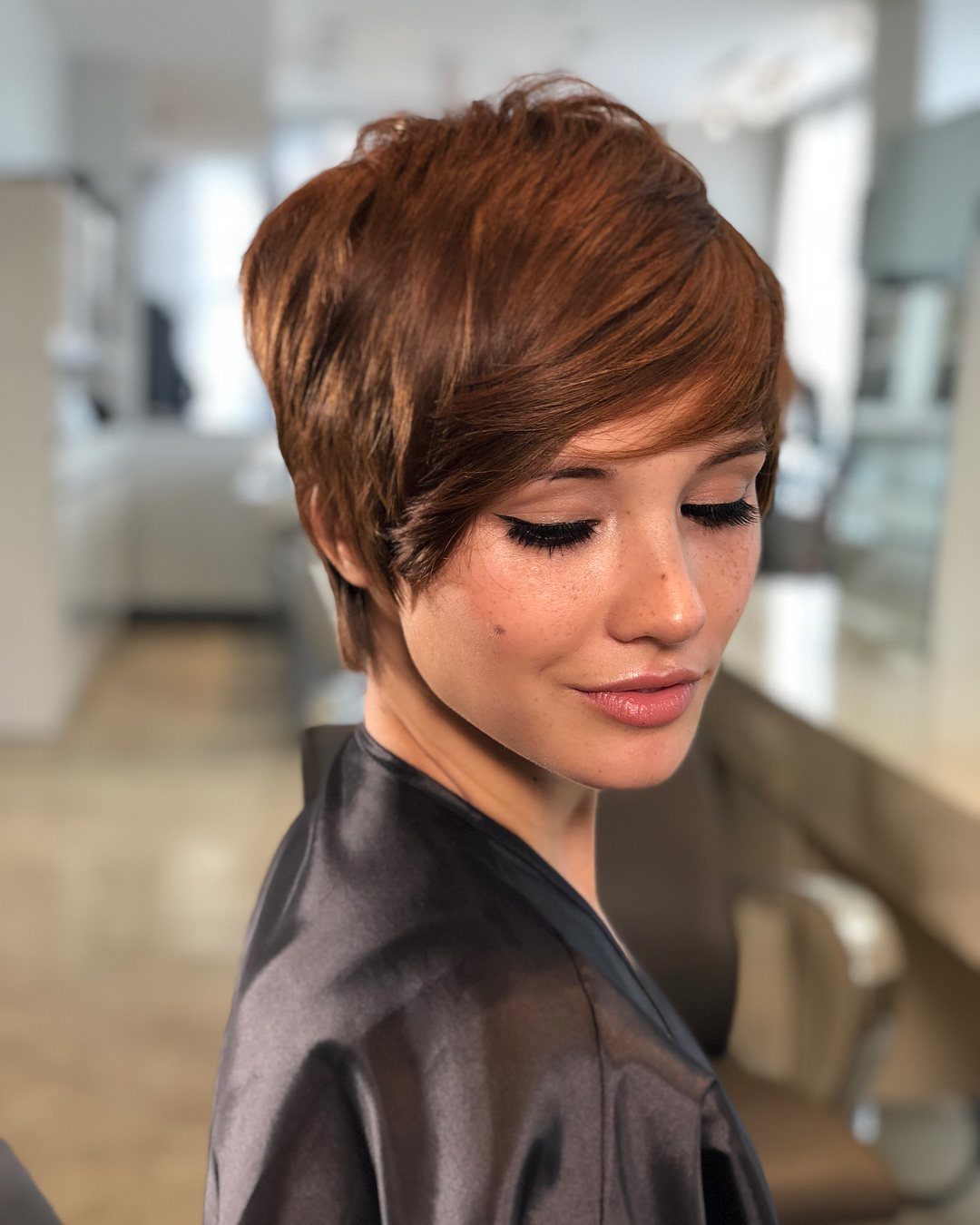
A deep side part and voluminous sweep give the cut a polished, old-Hollywood shape that sits high at the crown and curves smoothly to one side.
The styling takes more time than most pixies, but the result is formal enough for evening without looking overdone.
Blow-dry with a round brush to build lift at the roots, then smooth the top layer toward the side and set it with a light-hold spray.
The shape holds best on hair with some natural body, since fine hair may need backcombing or a volumizing mousse to keep the height.
28. Deep-Part Curly Pixie
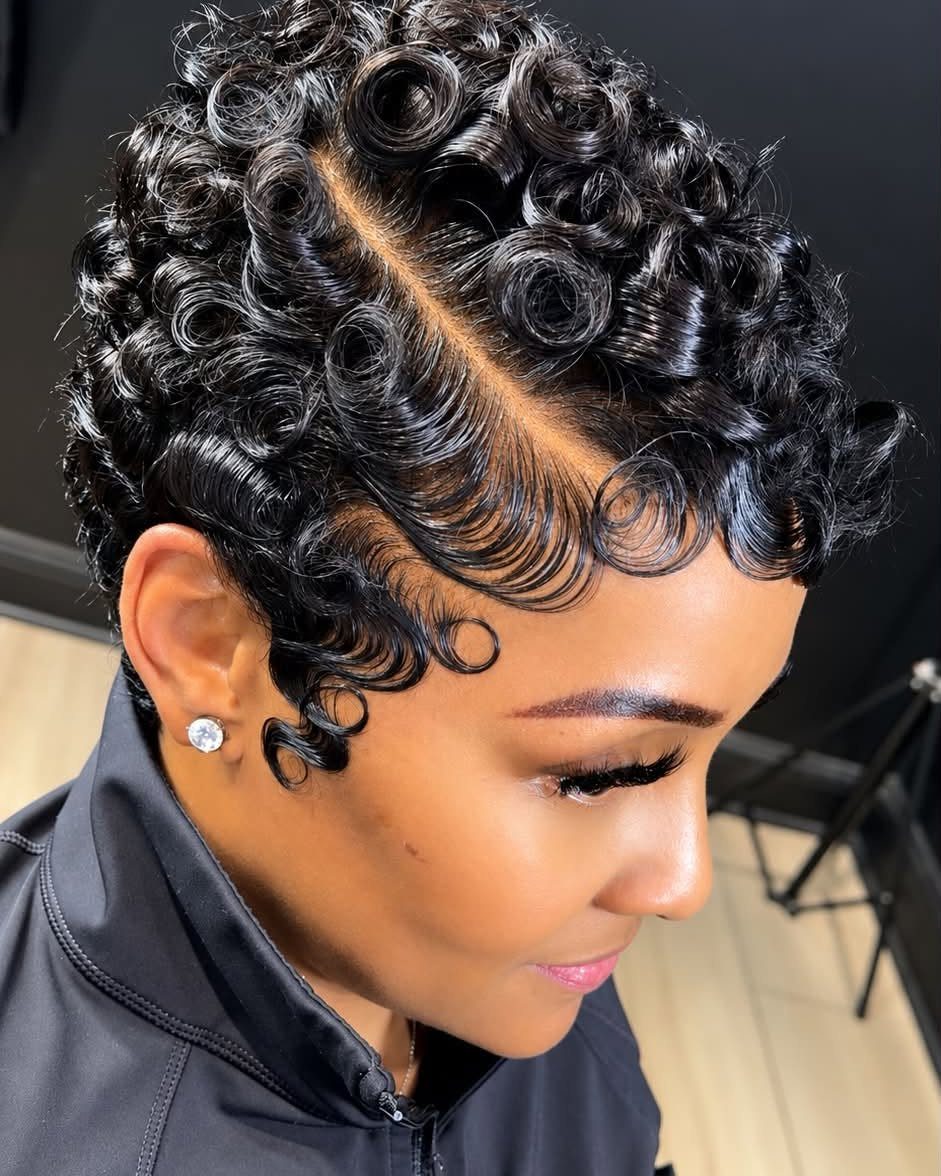
Defined curls parted far to one side create a dramatic, asymmetrical shape that works when the curls are tight enough to hold their pattern without frizzing.
The deep part adds volume on the heavier side and keeps the cut from looking centered or balanced.
A curl cream applied to soaking-wet hair will hold the definition, and finger-coiling individual curls at the part gives a more polished finish.
The curls need moisture to stay glossy, so a leave-in conditioner or oil helps prevent dryness between washes.
29. Blunt-Bang Pixie
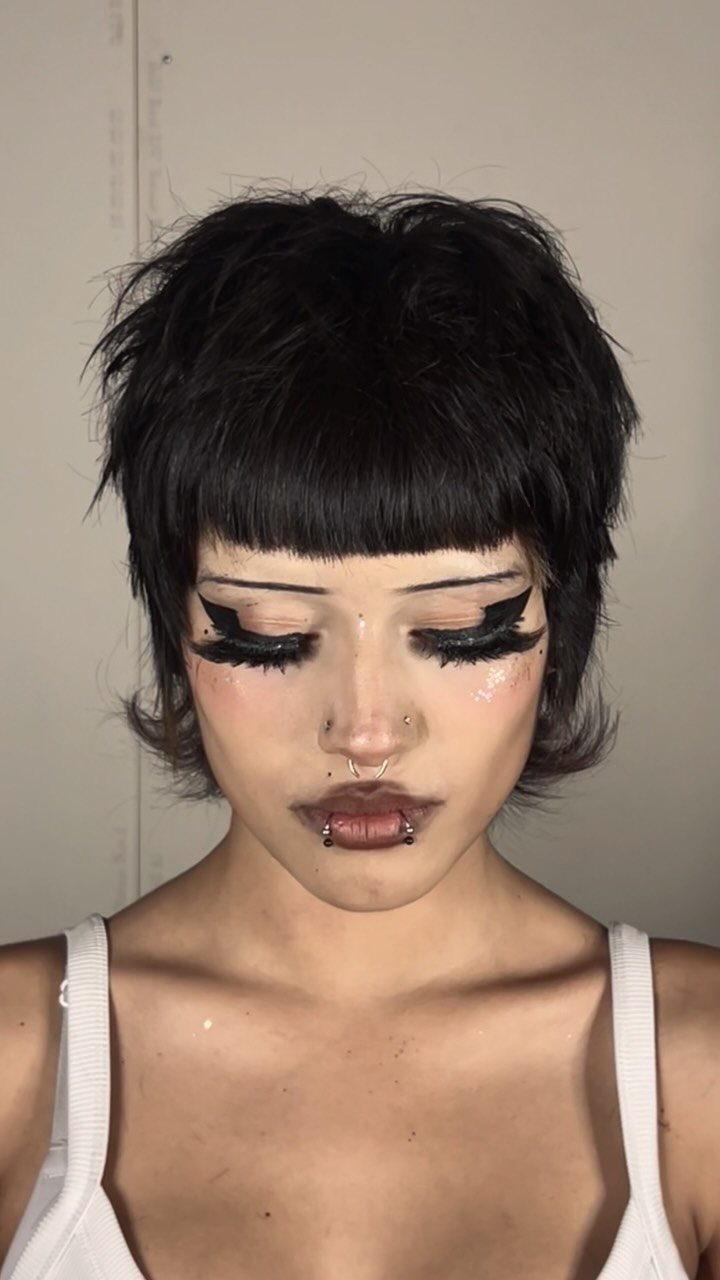
Blunt bangs cut straight across the forehead contrast with tousled, longer sides for a pixie that mixes structure with texture. The bangs sit heavy and graphic, while the rest of the cut keeps a looser, more undone shape.
The blunt line shows every bit of growth, so you’ll need frequent trims to keep the bangs from looking ragged or uneven.
A light texturizing spray on the sides and crown will add separation without disturbing the clean line of the fringe.
30. Long-Bang Brown Pixie
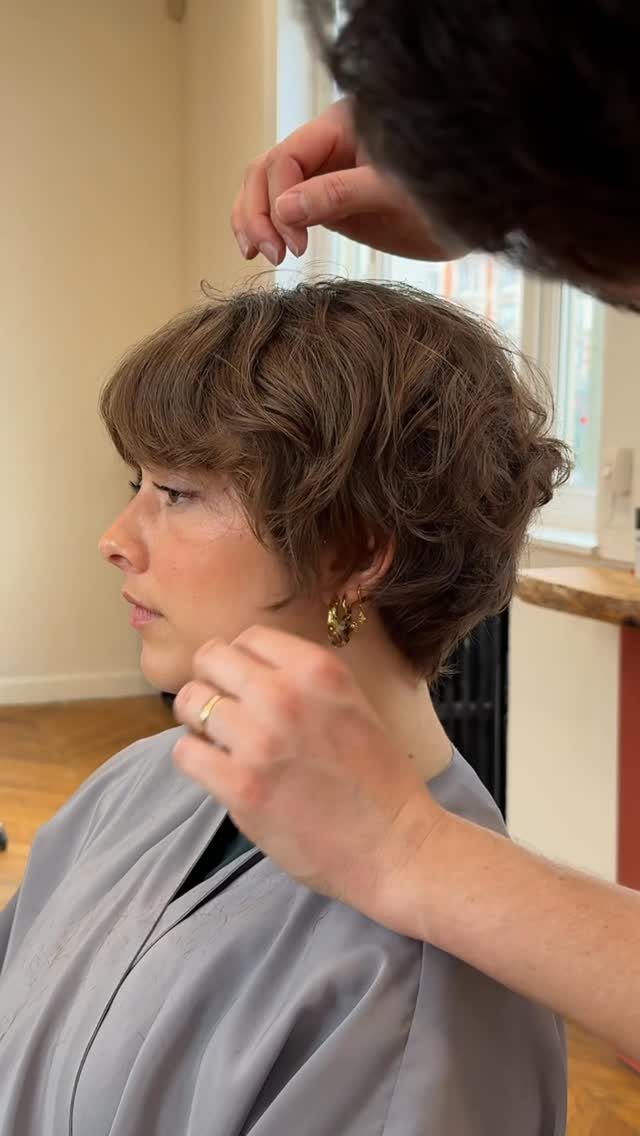
Bangs that extend past the eyebrows and sweep forward from the crown give this pixie more coverage at the front while keeping the sides and back short.
The length difference between the fringe and the rest of the cut creates a deliberate imbalance that frames the face without blocking it.
You can blow-dry the bangs forward for a smoother look or leave them alone for a more natural finish.
The long fringe will need trimming more often than the rest of the cut, so ask your stylist to shape just the front if you want to hold the proportions.
31. Tousled Pixie with Lift
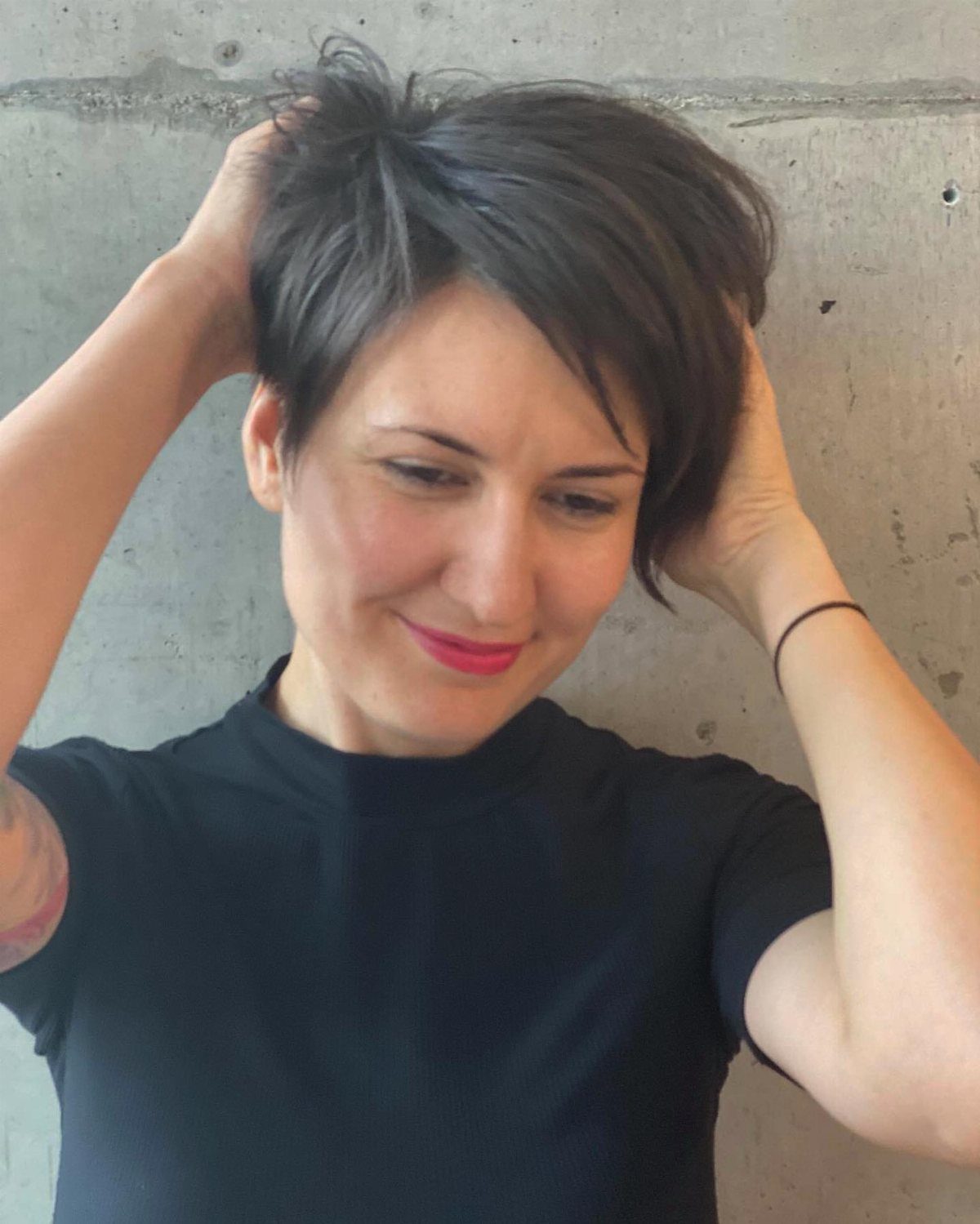
Lift at the roots and tousled texture through the top give this pixie visible movement without making it look deliberately styled. The dark color shows the shape clearly, and the tousled finish keeps it from reading too neat or flat.
A small amount of volumizing mousse worked through damp hair at the crown will hold the lift once it dries, or you can blow-dry with your fingers lifting sections away from the scalp.
The texture breaks up the silhouette so the cut doesn’t sit close to the head, which also makes fine hair look fuller.
32. Tapered Tousled Pixie
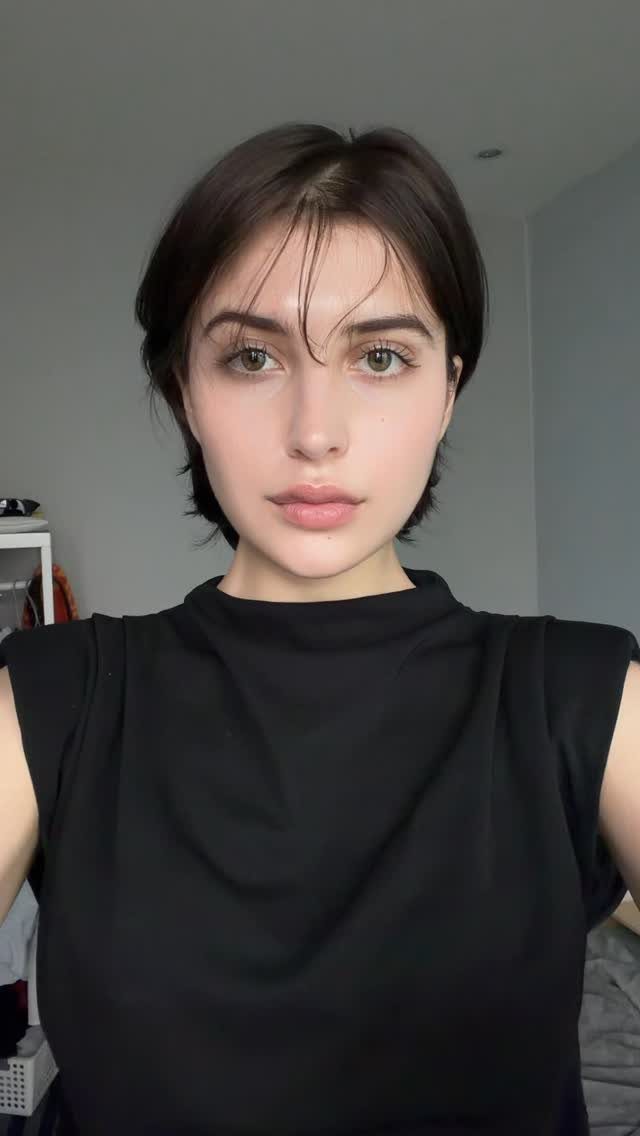
The top and fringe are left longer and textured, while the back and sides taper close to create a compact outline that keeps the pixie from spreading wide.
The taper shortens the hair gradually instead of cutting a hard line, so the shape grows out without looking blocky.
The longer top gives you room to add texture with a paste or cream, while the tapered sides stay close enough that they don’t need daily styling.
The fringe can be worn forward or pushed to the side depending on how much forehead coverage you want.
Styling Products and Routine
If you want more volume, a lightweight mousse worked through damp hair lifts the roots as it dries.
Curls with more weight hold shape best when you layer a styling cream under a gel. A leave-in worked through dripping hair catches frizz early, before the cuticle lifts during drying.
“The less you do, the better,” warns Wilkes. Creating that effortless, non-uniform effect “requires a good texturizing spray and a smoothing cream to help add volume and separation while air drying your hair,” he notes.
— ELLE
Choosing a Face-shape Fit
Talk through the length, texture, and your face shape with the stylist, and bring photos that show the exact shape you’re after.
Round faces often need height at the crown or longer layers in front to add length visually.
A rectangle needs volume at the sides rather than stacked height, which rules out the shortest crops. Oval faces can handle any variation.
If you have curls, a round face can carry a deep side part, and a heart-shaped face looks better with a fuller curly fringe that softens a narrow chin.
Salon Cutting Approach
Razor cutting creates texture and helps shape the cut in one pass.
Frequently Asked Questions
What is a long pixie cut?
A long pixie keeps the back and sides cropped short but leaves 2–4 inches of length through the crown, bridging the gap between a close-cropped cut and a chin-length bob.
The cut works with your natural hair texture rather than fighting it, so styling stays straightforward.
Who does a long pixie cut suit?
A long pixie can work for any face shape with the right modifications: round faces need height at the crown and angled front pieces, while square or angular jaws benefit from softer, face-framing layers.
The cut handles straight, wavy, or curly hair and adapts to fine or thick textures through layering and thinning. Match the proportions to your face rather than copying one version exactly.
How do you pick the right pixie cut for each face shape?
Oval faces work with nearly any proportion; round faces need lift at the crown or an off-center part to stretch the silhouette.
Square faces soften with piece-y texture that breaks the line of the jaw, and heart-shaped faces balance better with a fuller fringe and slightly longer proportions at the chin.
Rectangle faces need width more than height, so ask for volume through the sides and a flatter crown instead of stacked layers that add vertical length.
Are pixie cuts in for 2026?
Long pixies remain popular through 2026, with more women choosing the cut for its versatility and low daily styling time. Variations like the bixie, textured layers, and undercut styles keep the cut current.