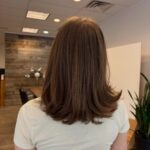
Placement matters more than inches: what works is the point where the line meets your own jaw and neck.
Where you draw the part changes how width reads: center works when proportion is already balanced, side or angle when you want to slim what the eye sees first.
The color can range from caramel highlights on brunette to platinum blonde or burgundy tones that emphasize the cut’s geometry.
1. Wavy Lob
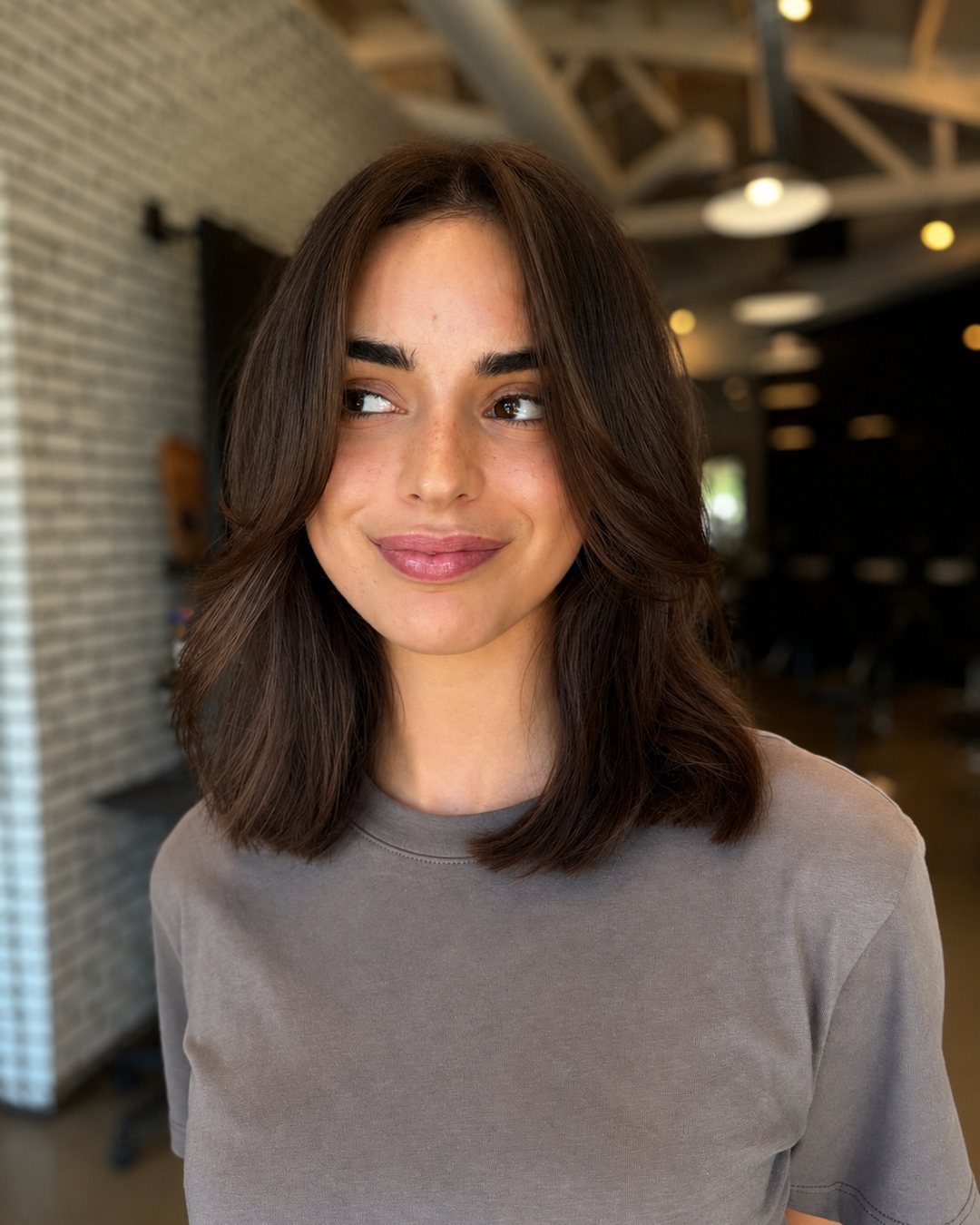
A wavy lob lands somewhere between polished and undone, with loose bends that add width through the mid-lengths without the curl pattern you need to protect and define every wash day.
Most people reach for a curling iron or a flat iron twisted as you pull it through.
The wave sits differently depending on where your hair parts. A center part keeps both sides balanced; shift it off to one side and the volume follows.
This texture hides the blunt line if you want softness at the ends, and it grows out without looking intentional in reverse.
2. Side-Part Lob
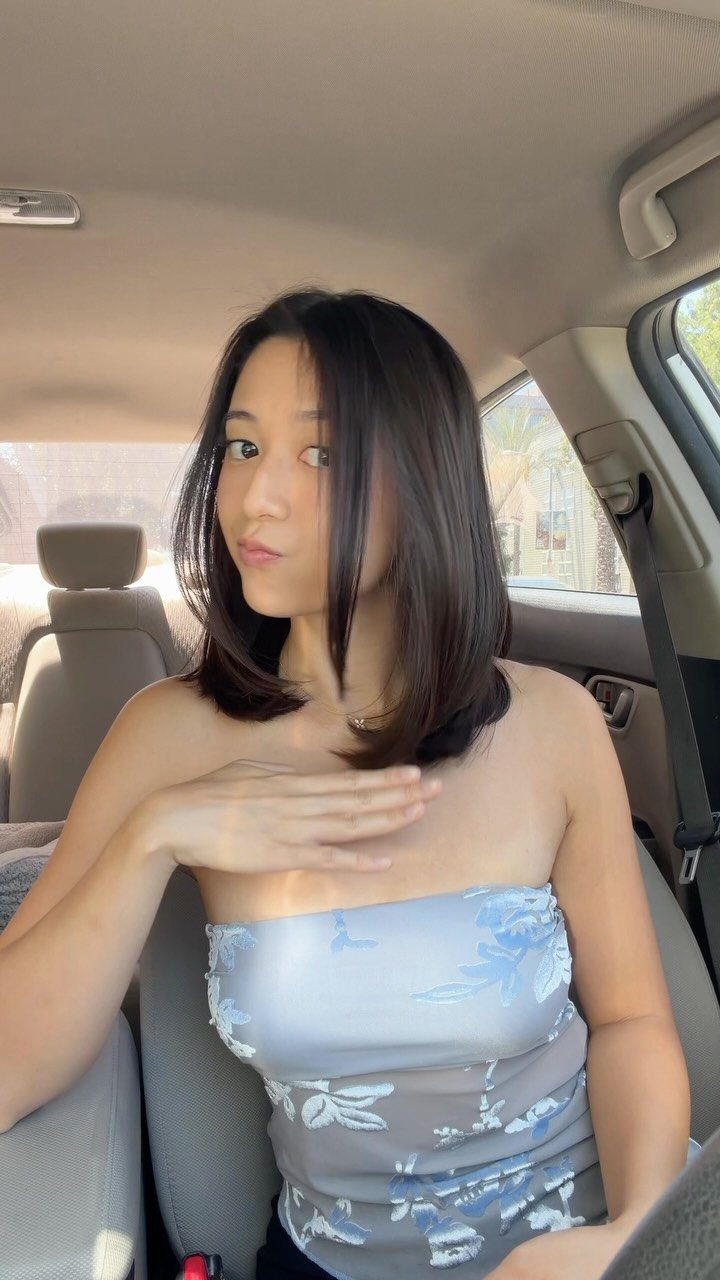
Shifting the part to one side changes how much hair falls across the forehead and temple, which can balance a round face or soften a strong jawline.
The heavier side gets volume at the root when you blow-dry into the part.
A deep side part, where the line sits an inch or more from center, gives the most lift. A subtle side part keeps the lob looking clean without adding drama.
The part itself holds better on straight or wavy hair. Curly hair often prefers where it wants to divide, and fighting it means resetting the part every morning.
3. A-Line Lob
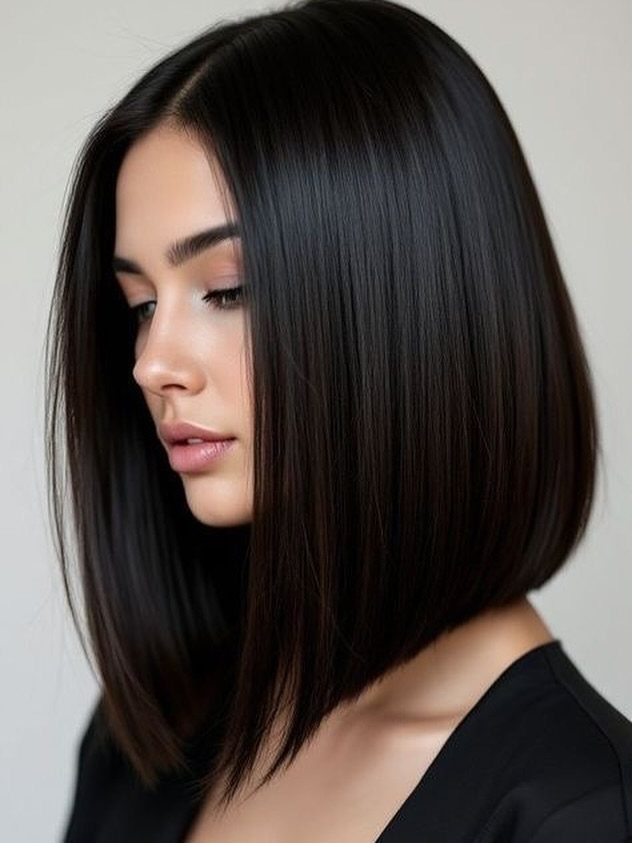
The A-line lob stacks shorter at the nape and extends toward the front, so the longest pieces frame your face and the back stays off your neck.
The angle can be subtle, just an inch of difference, or steep enough that the front hits collarbone and the back clears the hairline.
This cut works on most textures, though the line reads sharpest on straight hair. Curls and waves will soften the angle, which can look intentional or make the shape harder to see depending on how much curl you have.
The shorter back grows faster than it looks, so plan on regular trims if you want to keep the angle clean.
4. Curly Lob
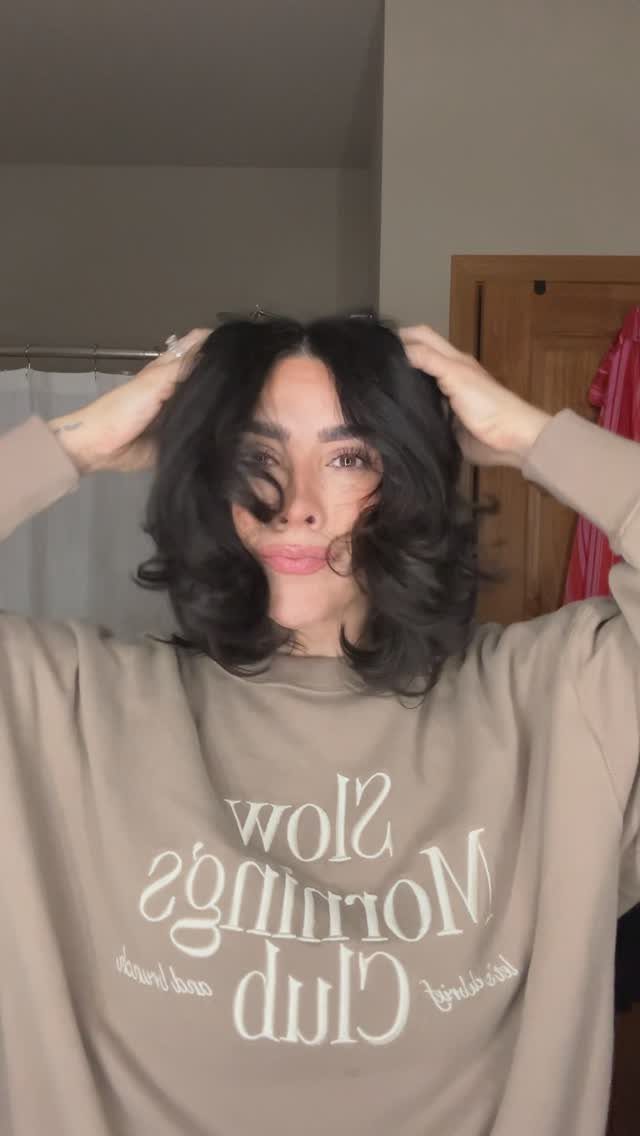
A lob cut for curls uses layers to remove bulk where the curl pattern stacks and to shape the silhouette without shortening the stretched length too much. You want a rounded shape that doesn’t triangle out at the ends.
Dry cutting, where the stylist shapes curls in their natural state, gives a more accurate result than cutting wet and waiting to see where the curl springs back. Ask for it if your stylist offers it.
This length lets curls move without the weight that pulls longer hair straighter at the root.
It also shortens drying time and cuts back on product compared to hip-length curls, though you still need leave-in conditioner and a curl cream or gel to define the pattern.
5. Curtain Bangs Lob
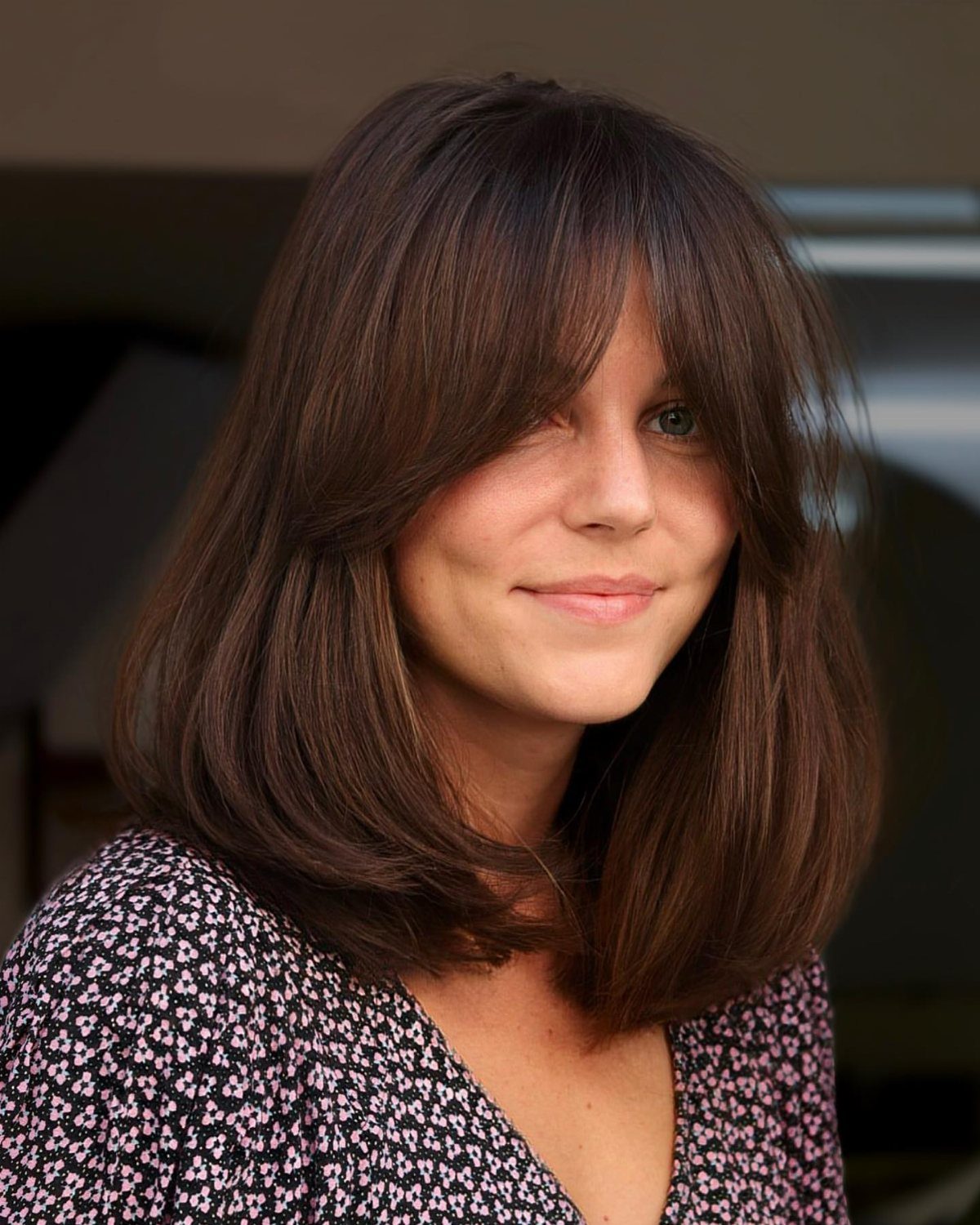
Curtain bangs start shorter at the center, usually around the bridge of the nose or just below, and angle longer toward the temples where they blend into the lob’s length.
The result frames your cheekbones and shortens the appearance of a long face.
The blend between bangs and sides matters. Too much length between them and you get a gap that reads awkward; a smooth transition keeps the whole cut looking intentional.
You can style these bangs with a round brush or let them air-dry if your hair has enough natural wave to bend away from your face. Straight hair benefits from a quick blow-dry with the brush rolling under.
6. Shaggy Lob
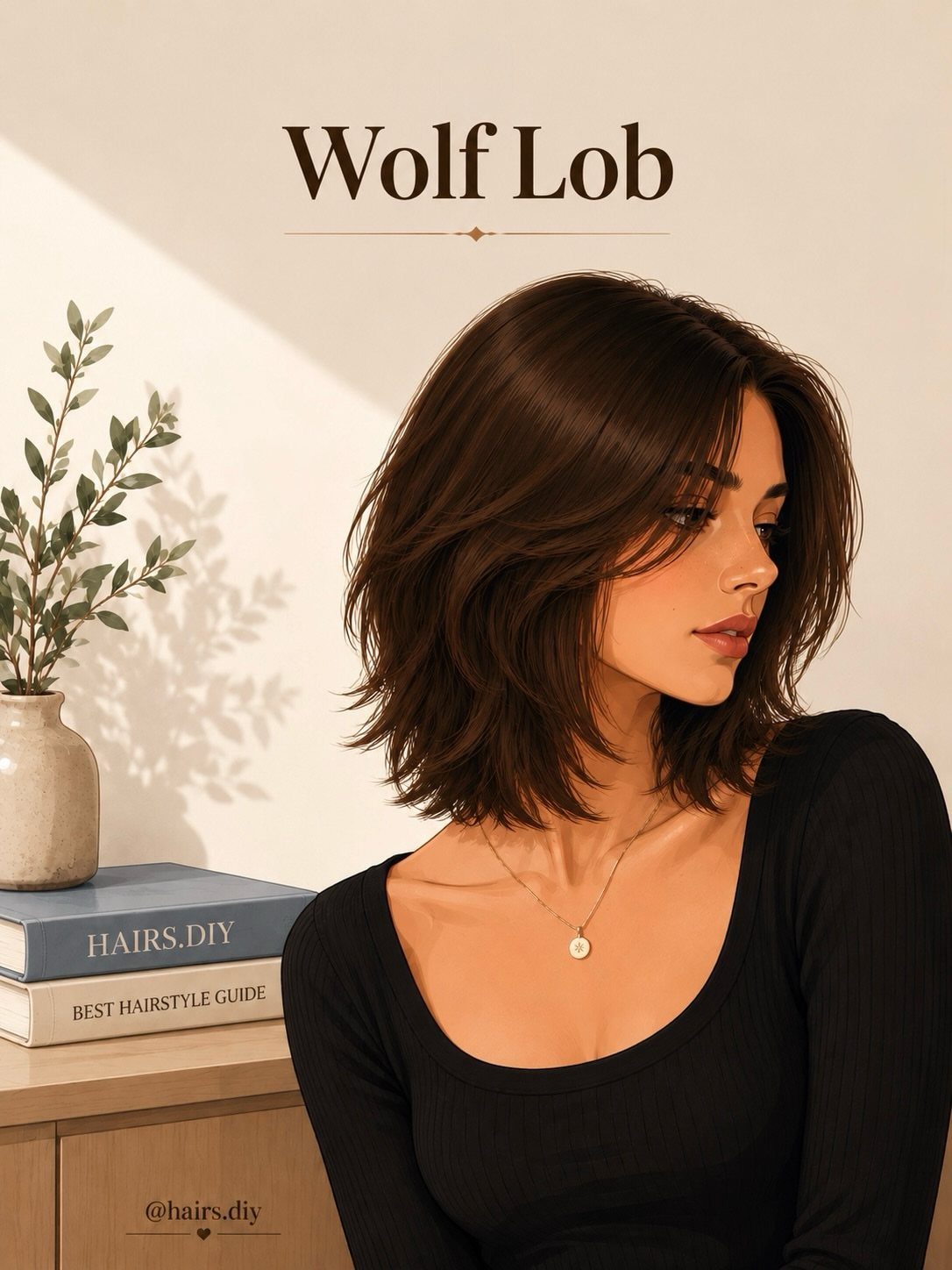
A shaggy lob layers heavily through the crown and sides, with shorter pieces lifting away from longer ones to create separation and movement. The texture is choppy rather than blended, which gives it that lived-in look without much styling.
This cut suits hair with some natural texture, wavy or straight. Fine hair gets more volume from the layers; thick hair loses weight and moves more easily.
The shag grows out well because the layers were never meant to look precise. You can stretch trims and it still reads as intentional, though the shape will soften as the shortest pieces catch up to the rest.
7. Blunt Bangs Lob
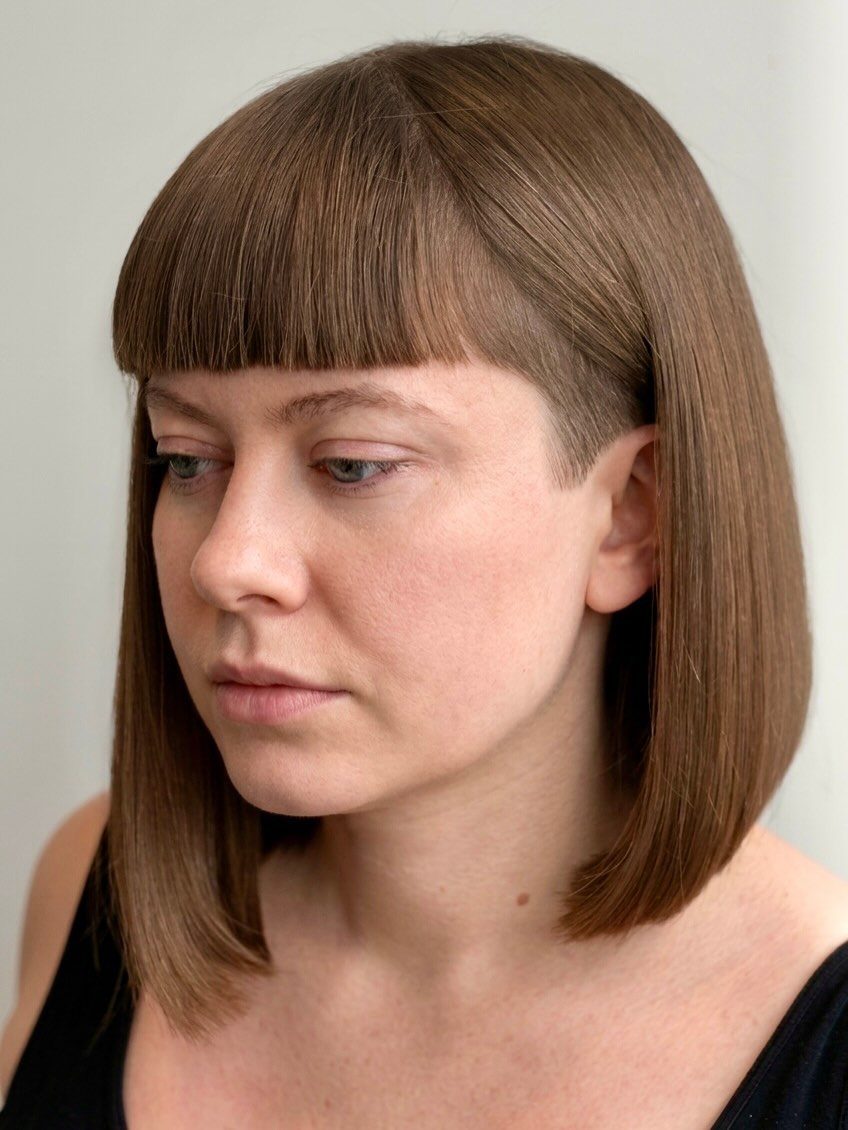
Bangs cut in a straight line across the forehead frame the face and sharpen the whole shape, especially when they land right at the brow or just above it.
The weight of a full fringe changes the proportions: your face reads shorter, and attention moves to your eyes.
This style needs regular trims to keep the line clean. Bangs grow fast, and once they pass your lashes, they either need cutting or pinning back.
Straight hair holds the blunt line best. Wavy or curly hair will soften or separate the fringe depending on your pattern, which can look intentional if you prefer texture over precision.
8. Caramel Highlights Lob
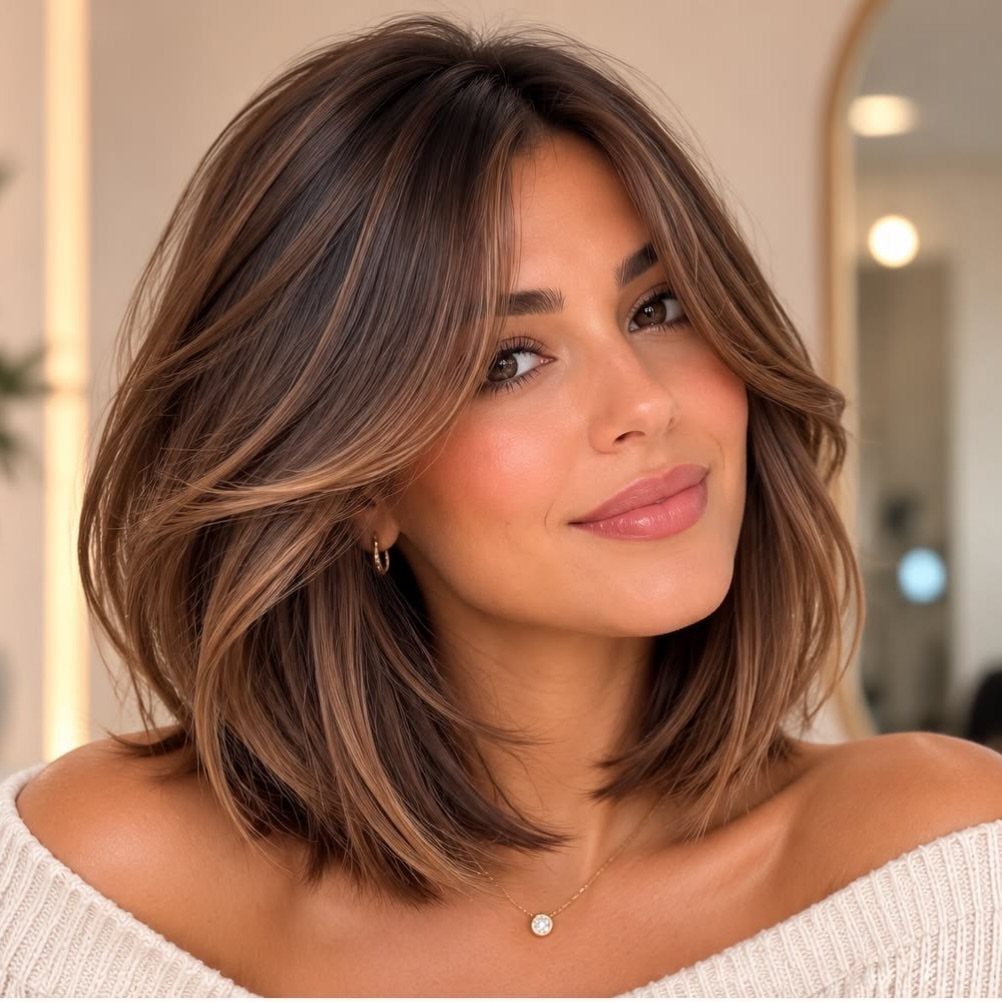
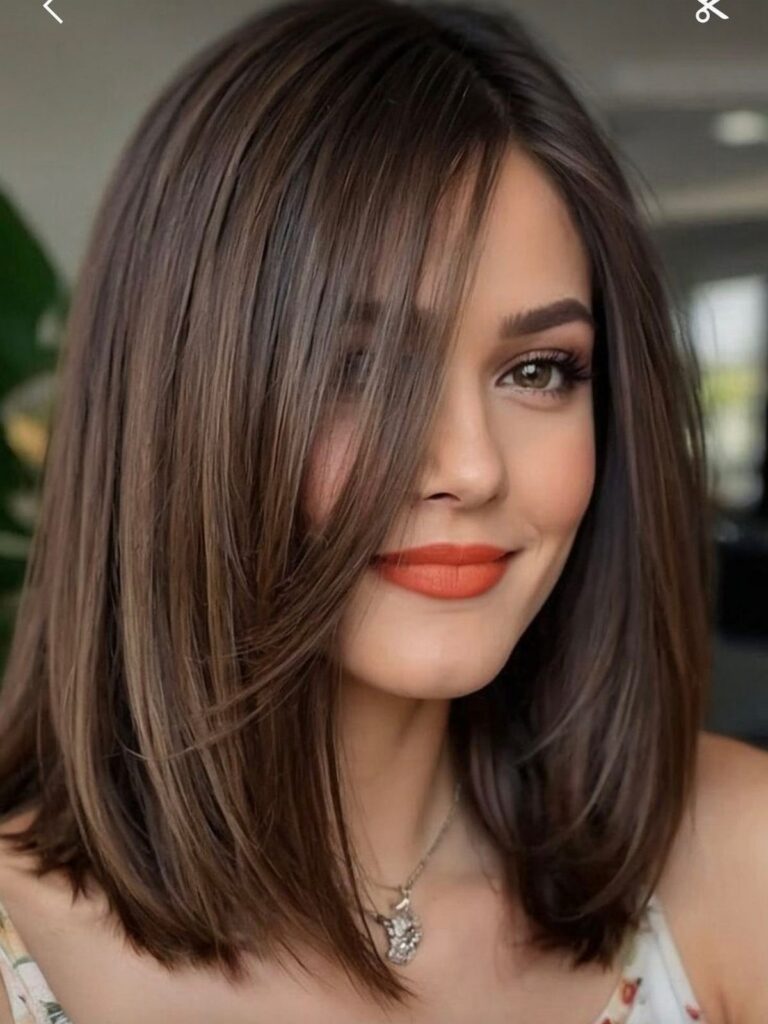
Caramel tones painted through a brunette lob add depth without the contrast of blonde. The color sits a few shades lighter than the base, warm enough to catch light but close enough to blend as it grows.
Balayage or foil highlights both work. Balayage gives a softer, hand-painted result; foils create more lift and separation if you want the color to read clearly.
This combination warms up cool-toned brunettes and adds dimension to flat color. The upkeep depends on how much contrast you start with, but caramel tones tend to fade warmer rather than brassy.
9. Wispy Bangs Lob

Wispy bangs are cut shorter at the center and thinned out with a razor or point-cutting, so the fringe stays light and breaks up rather than sitting heavy across the forehead. The texture keeps them from looking blunt or severe.
Air-drying works if your hair bends away from your face naturally. Otherwise, a round brush and a quick pass with the dryer will shape them without much effort.
This fringe suits fine or medium hair better than thick hair, which tends to bulk up even when thinned. It grows out less noticeably than a blunt fringe, so trims can stretch a bit longer.
10. Burgundy Angled Lob
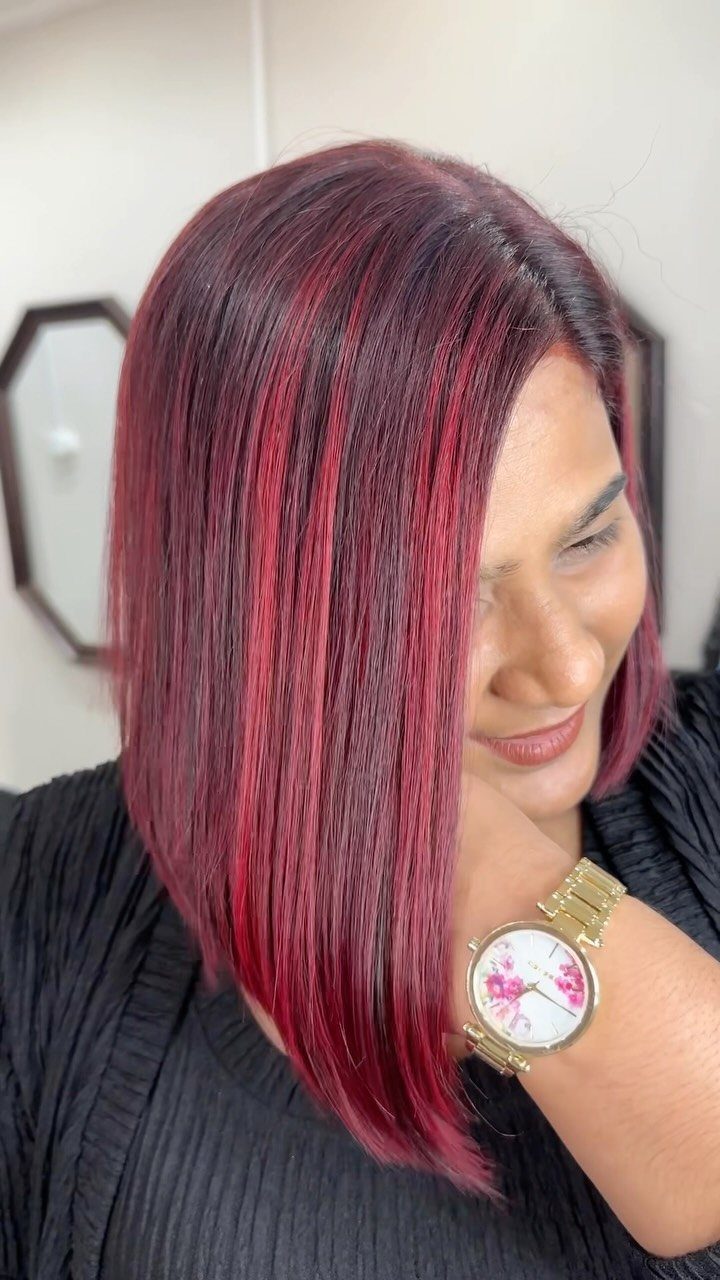
Burgundy brings red and purple tones together in a shade that reads darker than auburn but warmer than plum.
On an angled lob, where the front pieces fall longer and the back stacks short, the color emphasizes the geometry of the cut.
This shade works best on medium to dark hair, where it lifts to a rich tone without needing heavy bleach. On lighter bases, the color may pull brighter or fade faster.
The angled cut and the bold color both need upkeep. The angle needs regular trims to stay crisp, and the color will fade toward red unless you maintain it with a depositing conditioner or gloss between salon appointments.
11. Feathered Side Bangs
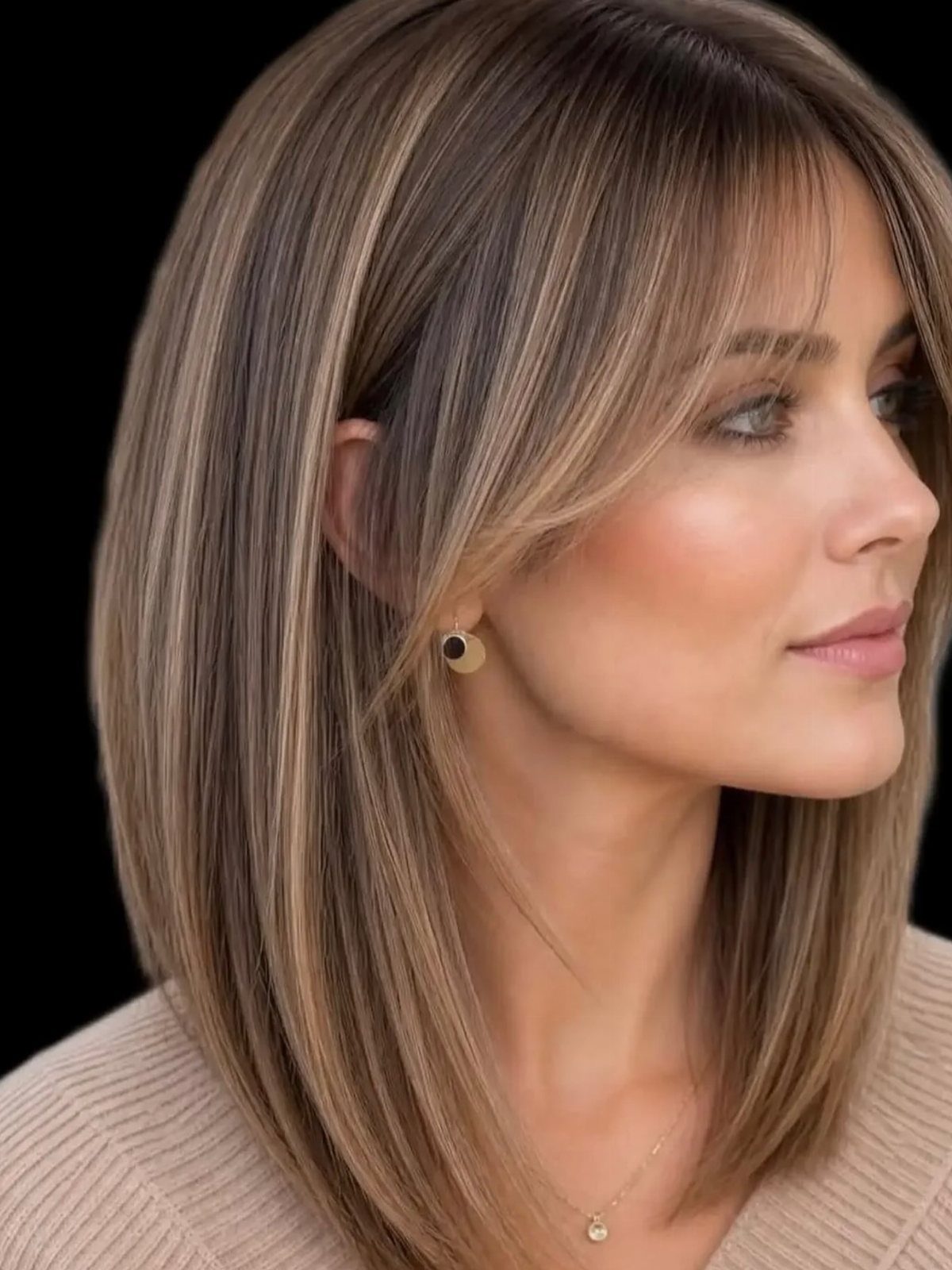
Feathered side bangs are layered and texturized so the ends separate and taper rather than sitting blunt. They sweep to one side and blend into the longer pieces, usually starting around cheekbone length and angling down.
The feathering softens the transition between bangs and the rest of the lob, so nothing looks abrupt.
A flat iron or round brush bent at an angle will shape the sweep; most textures hold this without spray if the cut is right.
This style keeps the forehead mostly open, which lengthens a round face. It grows out more gracefully than full bangs because the layers were already varied to begin with.
12. Highlighted Lob
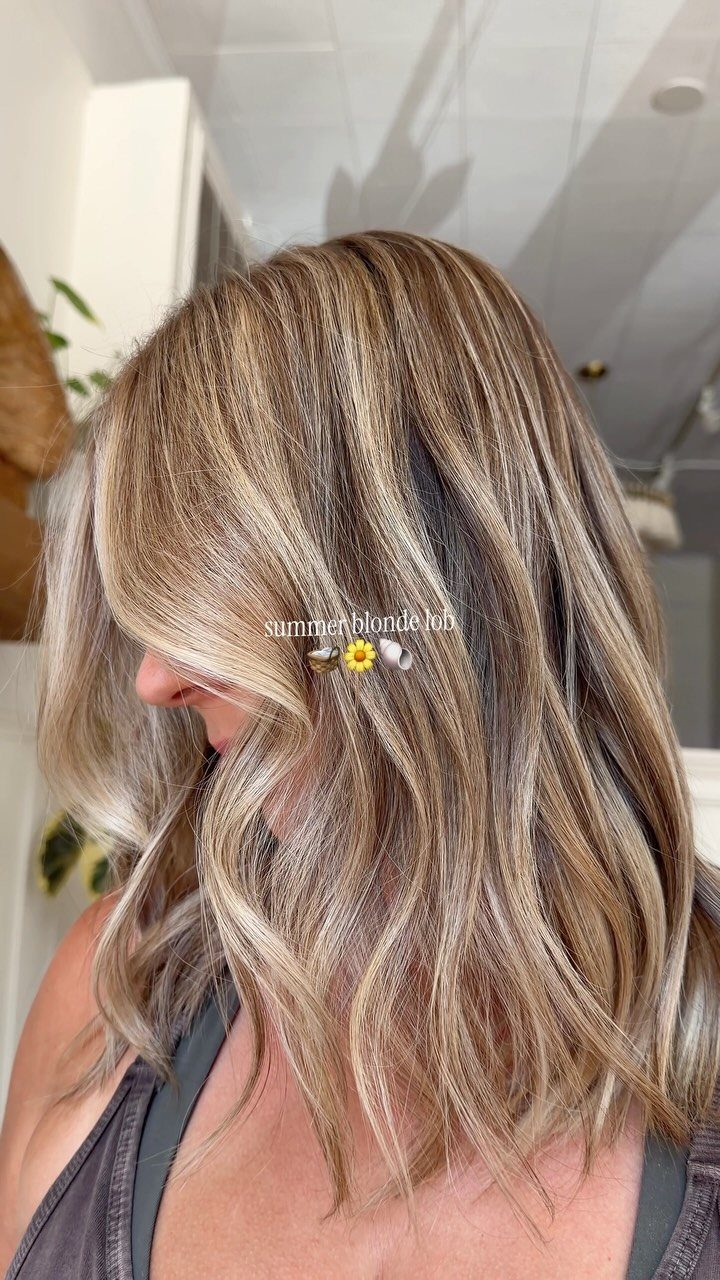
Highlights woven through a lob lift the overall tone and create contrast between the base and the lighter pieces. Placement matters: face-framing highlights brighten your complexion, while all-over highlights add dimension from root to ends.
Foil highlights give precise, even results.
Balayage sweeps color on by hand for a softer blend. Both fade over time, but balayage grows out less noticeably because the color starts midshaft rather than at the root.
Foils grow out faster and need attention sooner, balayage buys you more time between appointments. Toning keeps the highlights from turning brassy, especially on hair that lifts warm.
13. Choppy Lob
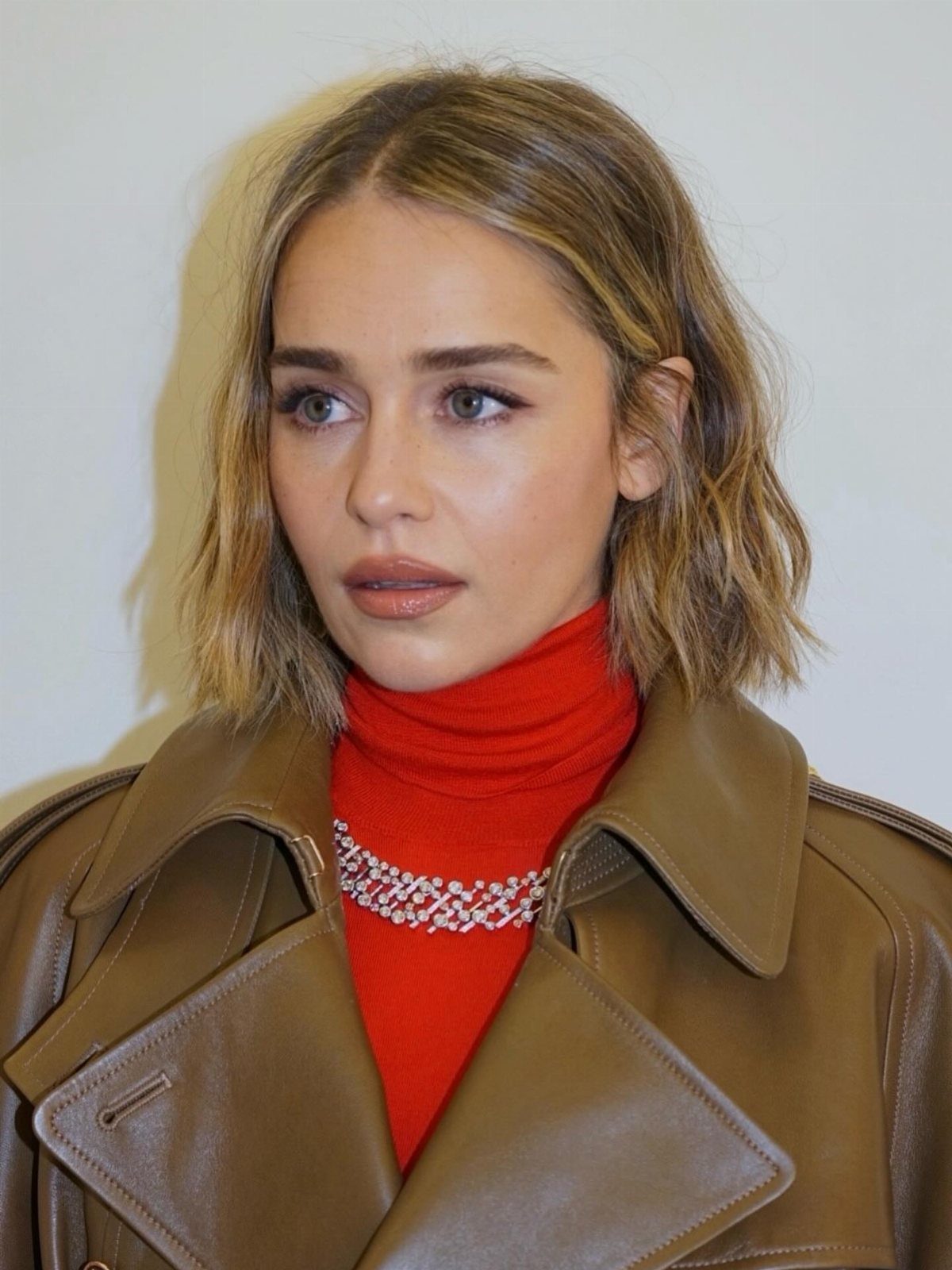
The layers here are cut at different lengths and separated with point-cutting or a razor, so the ends don’t stack evenly. Instead of a smooth blend, you get pieces that lift away from each other.
This texture works on most hair types, though fine hair shows the separation more clearly than thick hair. Straight or wavy hair holds the choppy line; curls will soften it into something less distinct.
A bit of texturizing spray or light pomade on dry hair will pull the pieces apart further if you want more definition.
14. Money Piece Lob
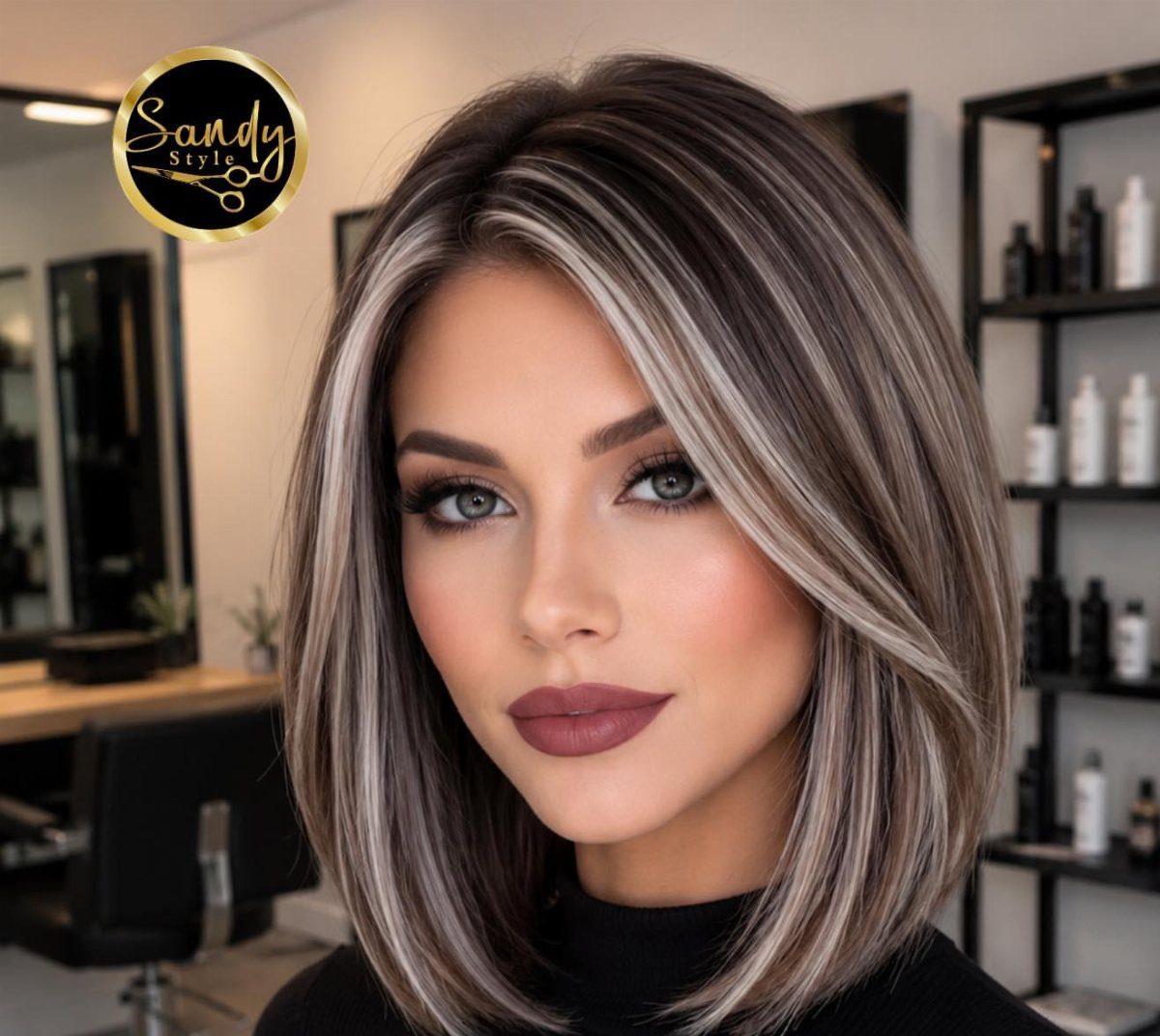
2 bright sections frame the face, starting at the part and running through the front pieces on either side. The contrast between the base and the highlights defines the shape.
The placement brightens your face and draws attention inward. It works on most base colors, though the lift needed to reach blonde depends on how dark you start.
Upkeep is lighter than full highlights because only the front sections need attention. The color will fade warmer over time, so plan on toning if you want it to stay cool or ashy.
15. Voluminous Long Bob
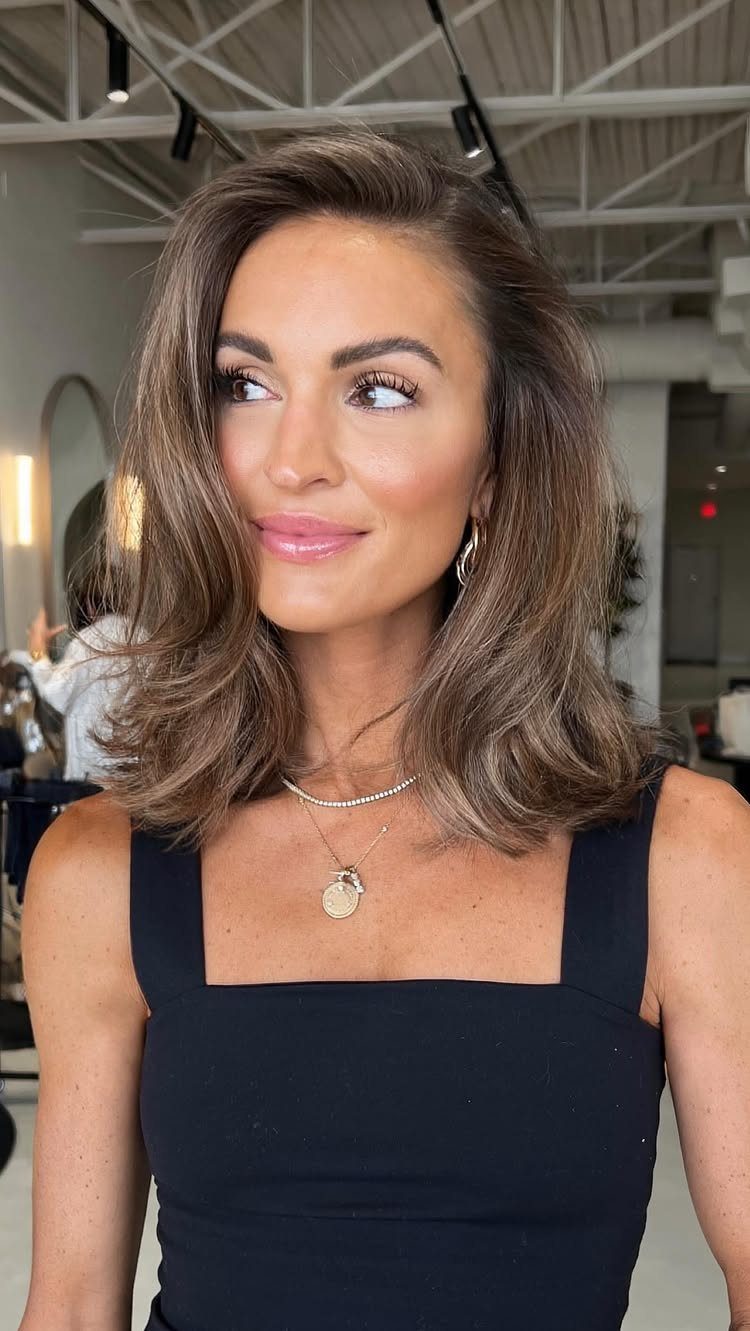
This lob is styled with lift at the root and fullness through the body, either blown in with a round brush or set with rollers. The volume changes the proportions of the cut and adds width at cheek level.
If your face is narrow or long, the added width balances it.
Petite faces can be overwhelmed by too much volume, so scale it back or keep the lift closer to the crown rather than pushing it outward at the sides.
Mousse at the root before blow-drying gives the most hold. Fine hair takes volume easily; thick hair may need a lighter hand to avoid looking heavy.
16. Layered Lob
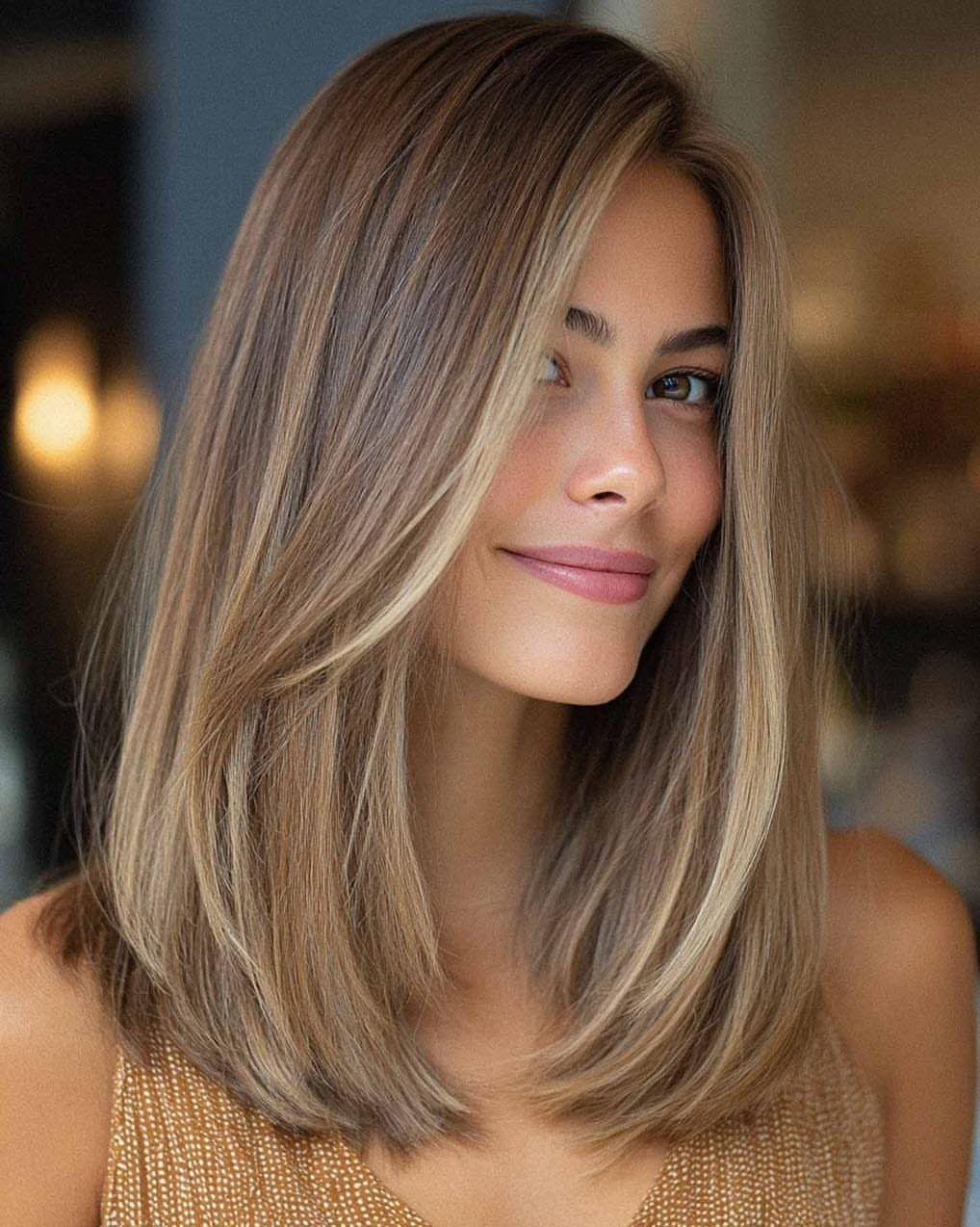
Layers cut through the lob at varying lengths create separation and keep the ends from sitting flat. Subtle layers preserve most of the weight and give just enough movement; longer layers remove bulk without shortening the silhouette too much.
This cut suits thick hair that needs weight taken out and fine hair that wants more shape. The layers also help wavy or curly hair form a rounded shape instead of triangling at the bottom.
Styling is straightforward.
You can blow it smooth with a round brush or skip the dryer and let the layers fall where they want. The layers grow out gradually and blend back into the length without a hard line.
17. Sleek Straight Lob
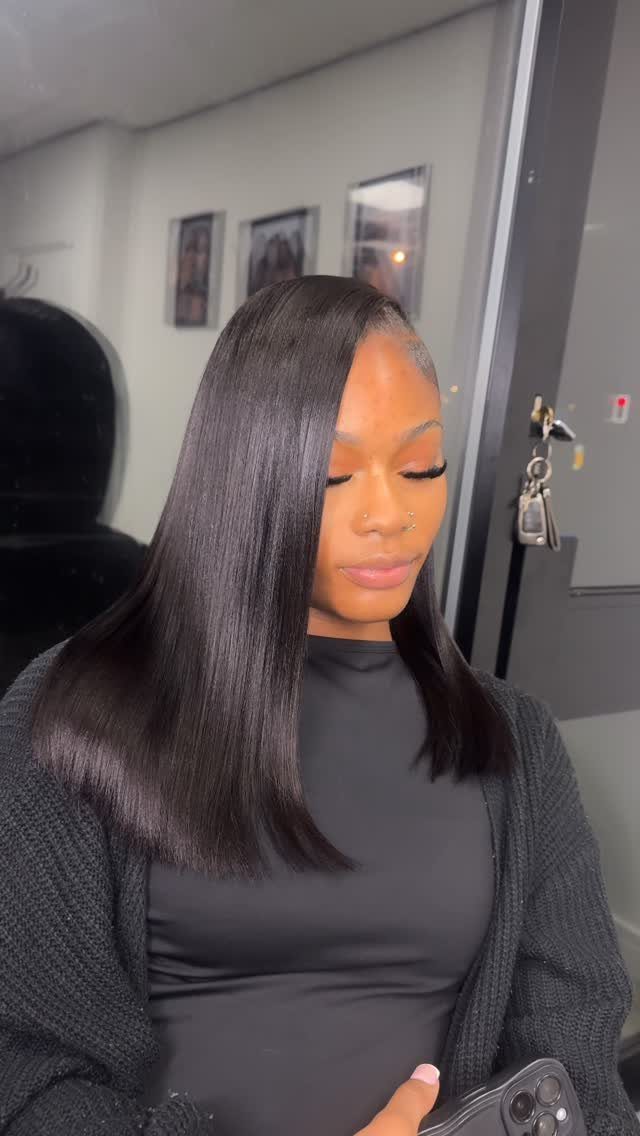
Straight hair blown smooth or flat-ironed emphasizes the lob’s outline and makes the ends look sharp and intentional. The finish is polished, with no bends or separation to soften the shape.
This style reads most cleanly on naturally straight or slightly wavy hair. Curly or coarse hair needs more time and heat to get the same result, plus a smoothing serum or cream to control frizz.
A flat iron run through sections from root to ends will straighten and smooth in one pass. The look lasts until the next wash if your hair holds straight, less if it tends to revert in humidity.
18. Asymmetrical Lob
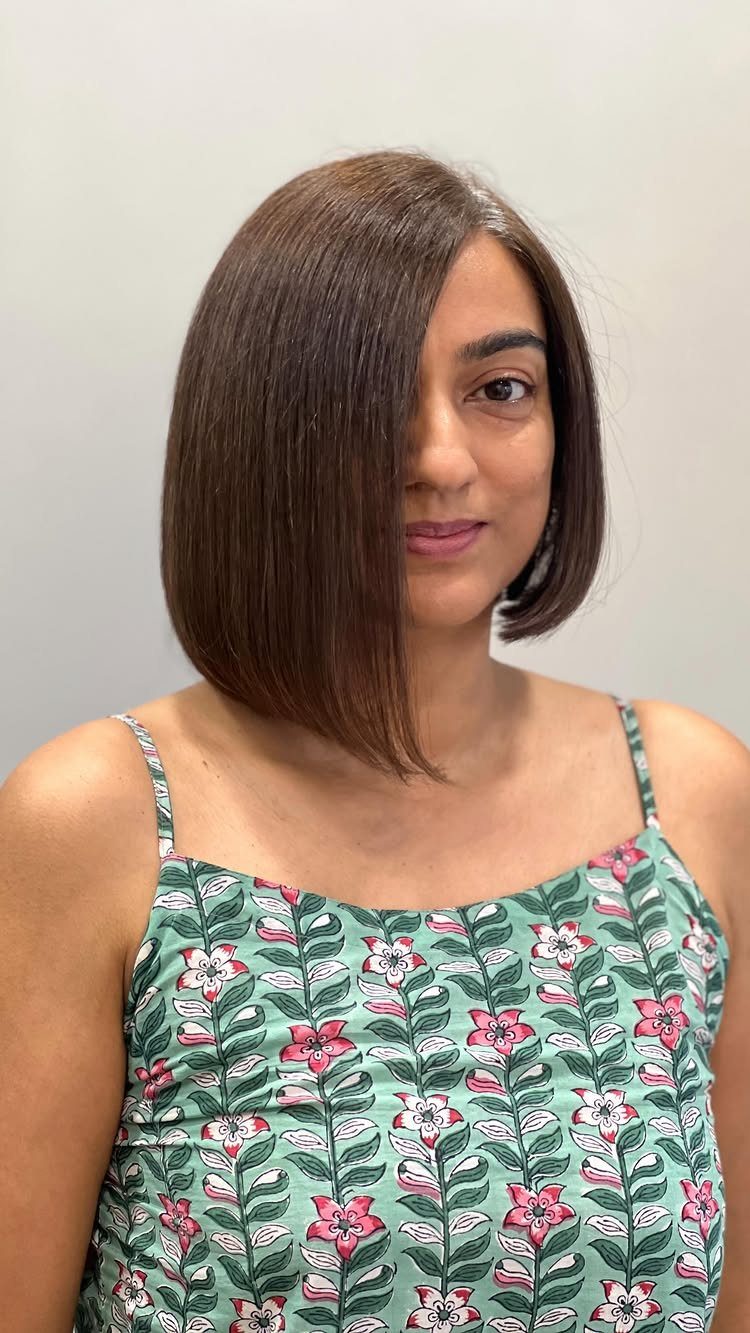
One side is cut longer than the other, with the difference visible when the hair hangs straight.
The longer side usually sits at or past the collarbone; the shorter side can land anywhere from jawline to an inch or two below.
The asymmetry shifts the visual weight and can balance a face that’s not symmetrical or add interest to a simple cut. Straight hair shows the uneven line most clearly; waves and curls soften it.
Maintaining the shape means trimming both sides at different intervals.
19. Face-Framing Layers
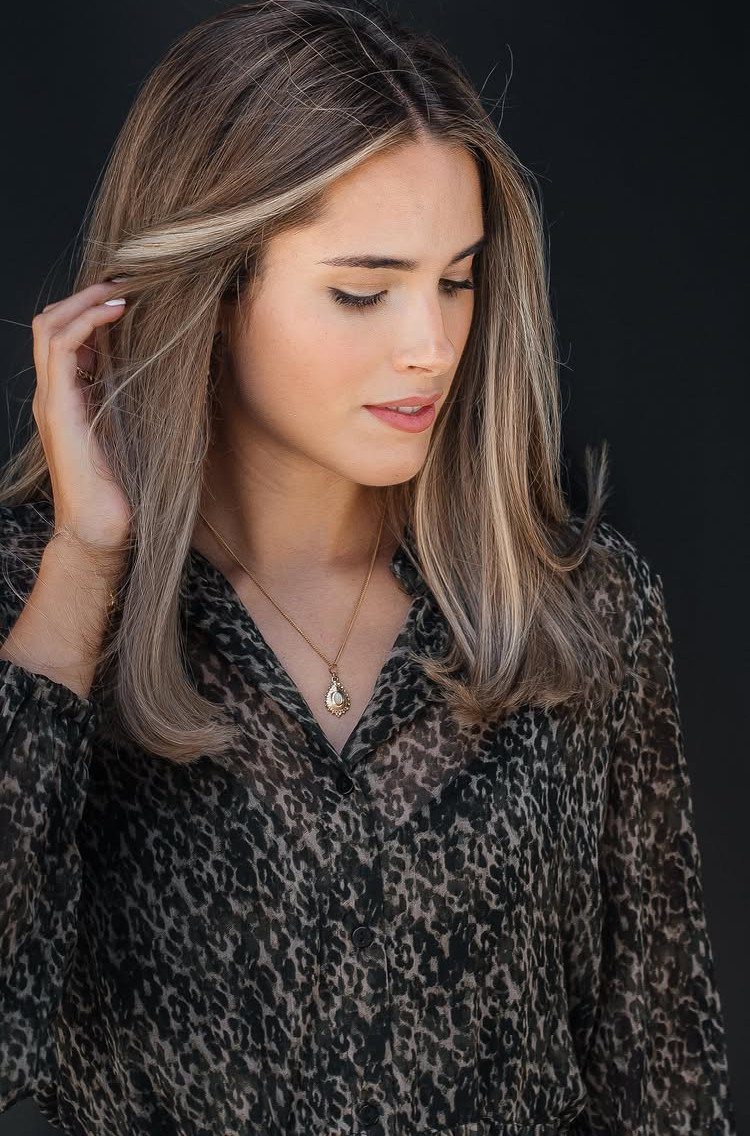
Shorter pieces cut around the face start anywhere from cheekbone to chin and graduate into the lob’s length at the sides and back. The layering softens the perimeter and brings attention to your cheekbones and jawline.
The transition from the shortest layers to the rest of the length looks planned, not accidental. A gap that’s too wide reads disconnected; a smooth transition holds the shape together.
Styling takes little effort if your hair has natural wave or bend. Straight hair benefits from a quick pass with a flat iron angled away from the face to guide the shorter pieces outward.
20. Feathered Lob
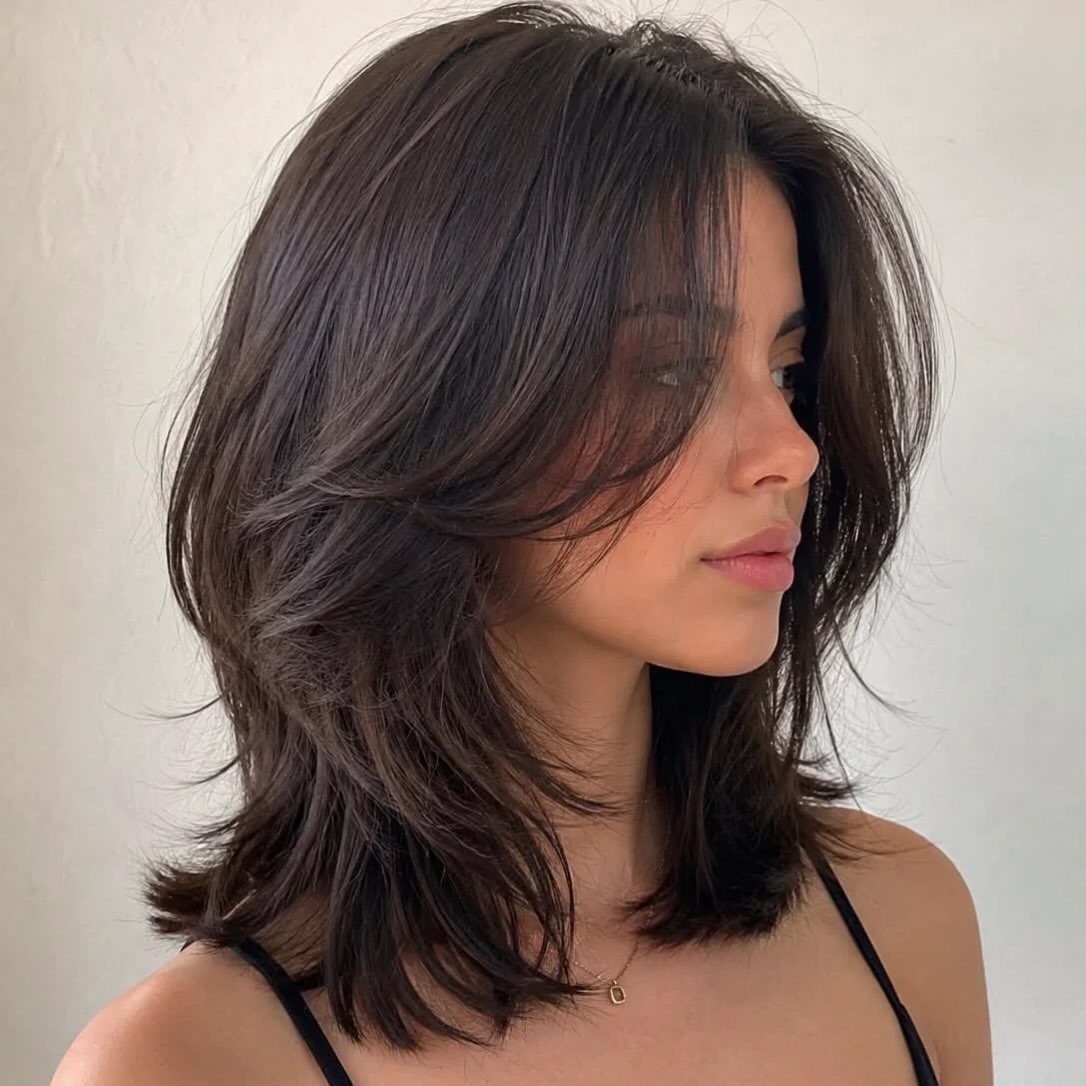
Feathering textures the ends so they separate and taper instead of sitting blunt. The result is soft and light, with pieces that break apart rather than holding a clean line.
Thick hair may need more thinning to get the same effect.
Point-cutting or a razor creates the tapered ends. The feathered ends grow out gradually and lose their definition before they need cutting again.
21. Ombre Lob
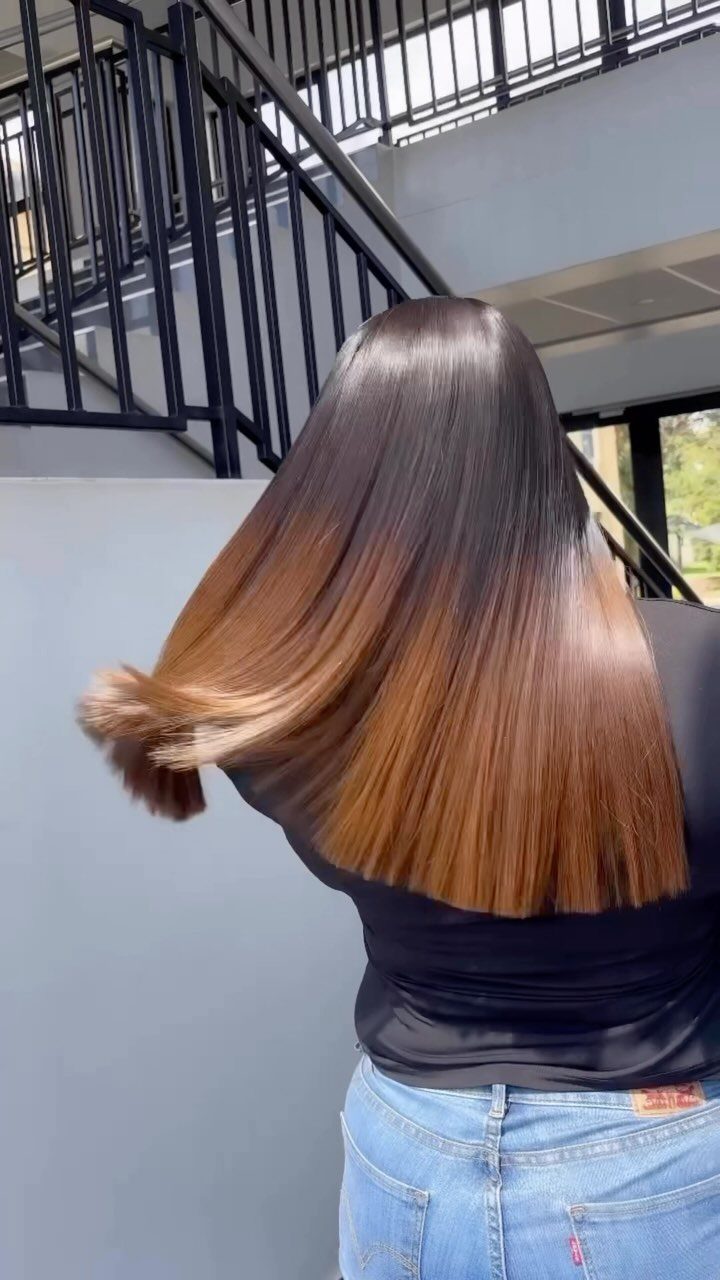
The color shifts from a darker root to lighter midshafts and ends, with the gradient blending through the length rather than sitting in distinct bands.
The transition can be subtle or high-contrast depending on how many shades apart the root and ends sit.
This works best when the lighter tone starts around ear level or lower, so the grow-out stays soft. The color fades over time, and the lighter ends may turn warmer or brassy without toning.
Less contrast means fewer touch-ups; more contrast shows the line as it grows and may need a refresh sooner.
22. Classic Lob
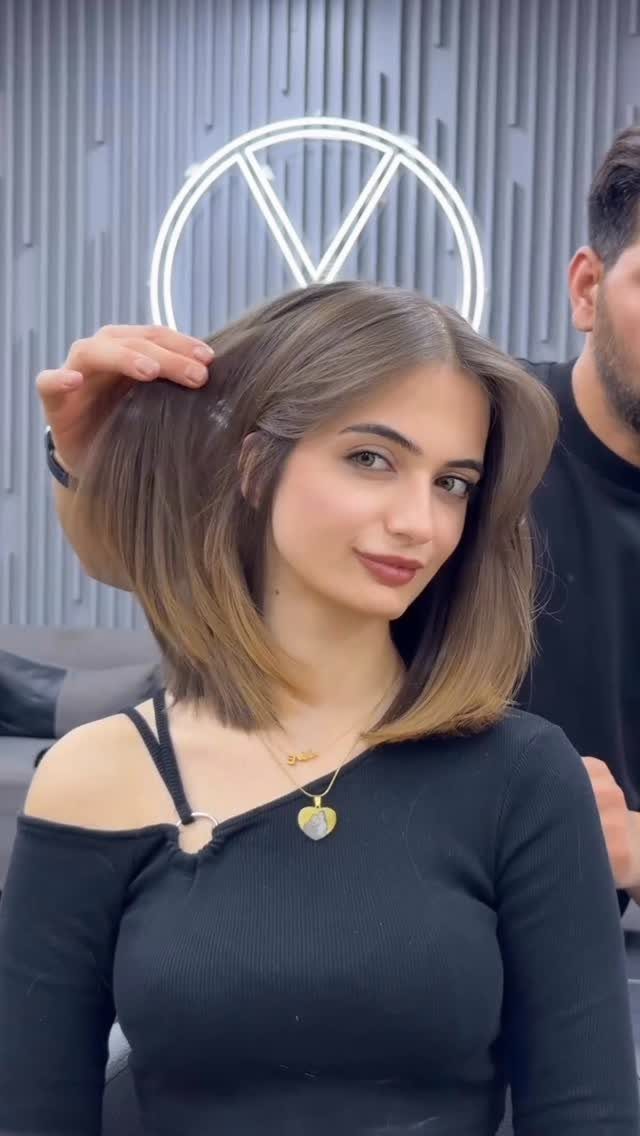
A clean-cut lob with little to no layering keeps most of the weight at the ends and emphasizes the perimeter rather than internal texture. The shape is simple and reads polished without much styling.
This cut suits straight or slightly wavy hair, which holds the clean line best. Curly hair will soften the shape and may not show the precision as clearly.
Blow-drying smooth with a paddle brush or air-drying both work.
The lack of layers means less movement, but the shape stays consistent and grows out evenly. Trims keep the line sharp, though you can stretch them if you’re willing to let the ends soften.
23. Bouncy Lob
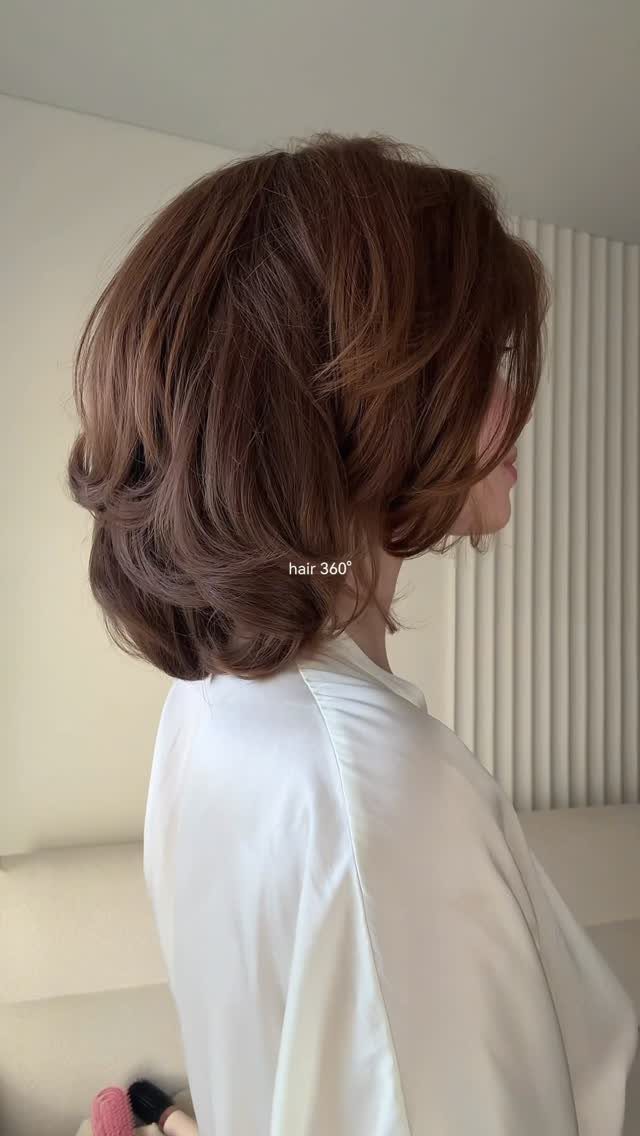
Curl or wave styled into the lob with a round brush, curling iron, or rollers gives the hair lift and movement through the body.
The ends are usually bent under or curled inward, which rounds out the shape and adds volume.
Fine hair takes this style easily and holds the curl longer. Thick hair may need more heat or product to set the bend, and the result tends to look fuller.
Mousse or a light styling cream applied before drying adds hold. The bounce softens as the day goes on, but the shape will last until the next wash if your hair holds curl naturally.
24. Selena Gomez
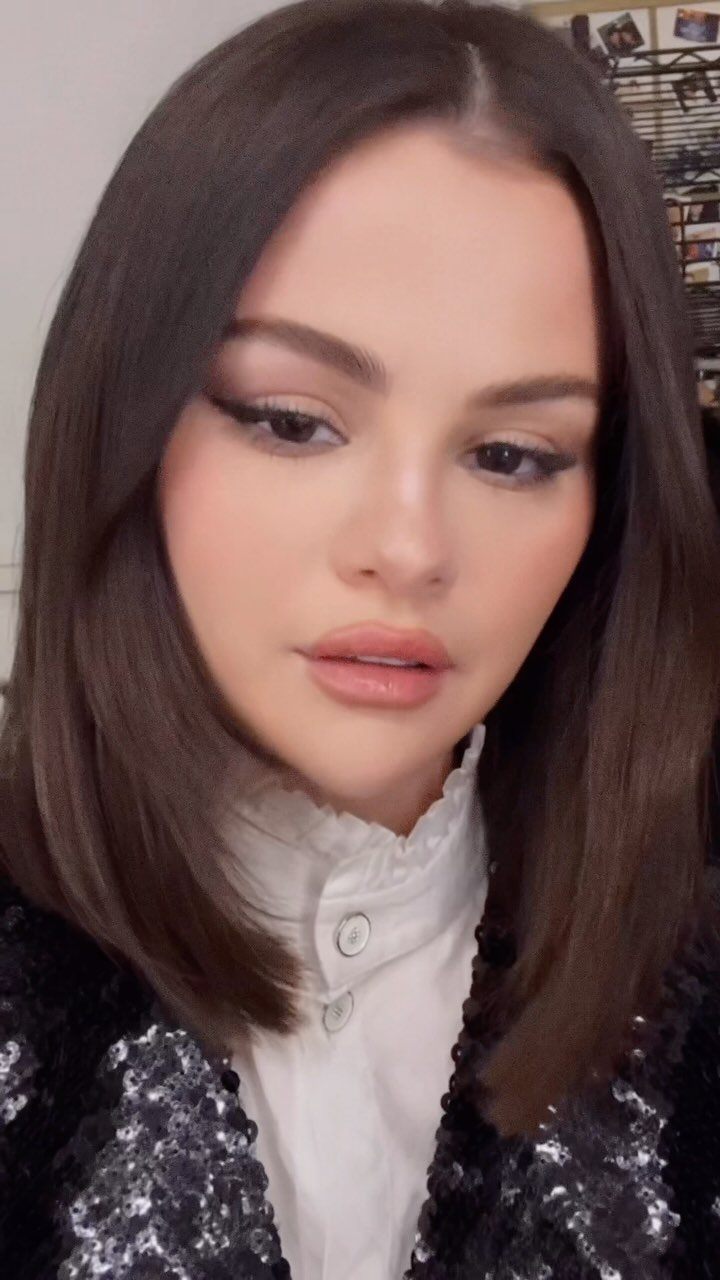
A blunt cut with minimal layering and a smooth, straight finish creates a sleek, polished look that emphasizes the lob’s outline. The ends are cut in a clean line without much texture or separation.
This style requires hair that can hold straight without frizzing or bending.
The blunt line sharpens your jawline and sits heavier than a layered lob. Trims are needed regularly to keep the edge clean, and the cut reads severe if your face is angular.
25. Middle-Part Lob
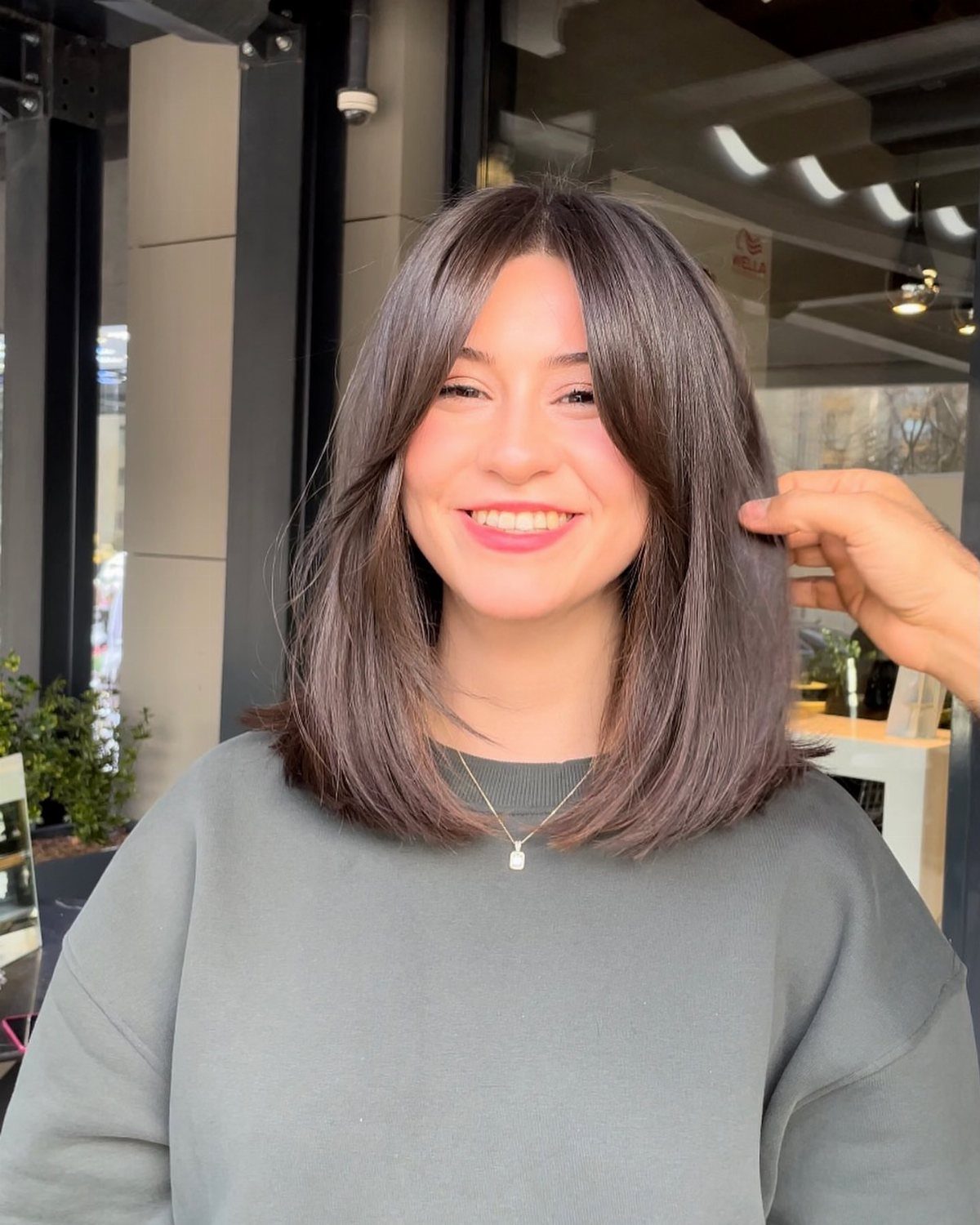
A center part divides the lob evenly down the middle, letting both sides fall forward at the same length. The symmetry suits oval and heart-shaped faces, where balance flatters your proportions.
If your face is round, the center part can emphasize width. A slight off-center part or angled layers will narrow the silhouette without giving up the modern look.
This works on most textures. Straight hair shows the clean line; wavy hair softens it without losing the shape.
26. Inward-Curled Lob
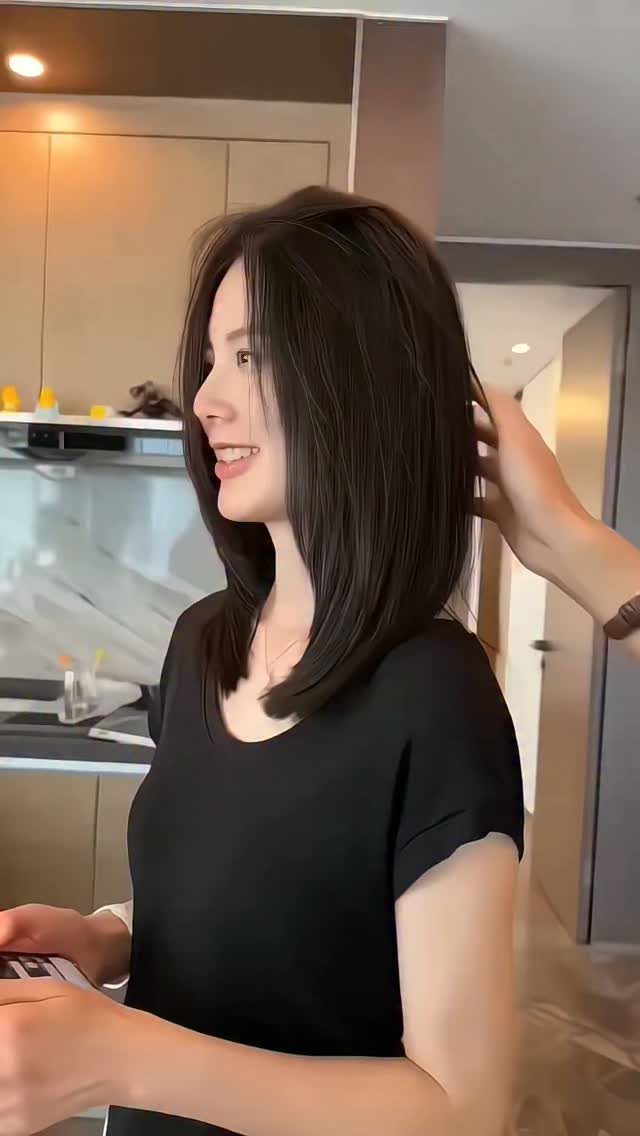
The ends bend inward toward your neck and jawline, creating a rounded shape that follows the curve of your head. A round brush or curling iron bent under at the ends sets the curve.
This shape adds softness and keeps the hair from flipping outward, which works if your hair tends to kick out at the shoulders.
The inward curl also shortens the visual length slightly, so the lob reads closer to chin level than collarbone.
The curl loosens through the day but holds its general direction if your hair takes a bend.
27. Blonde Lob
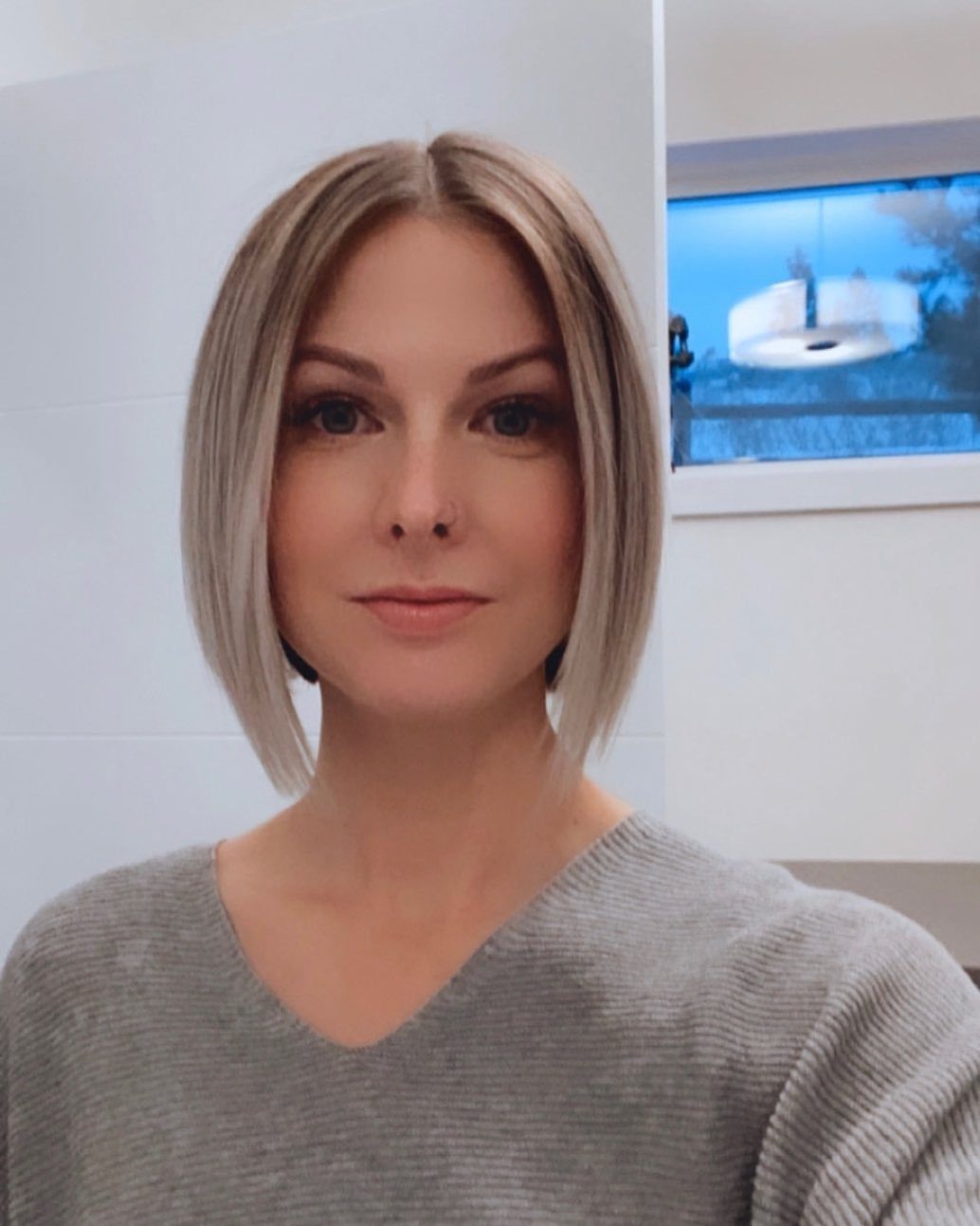
Blonde lifts the lob’s tone and changes how light hits the hair. The shade can range from pale platinum to warm honey, depending on your base color and how much lift the bleach provides.
Darker hair needs more sessions to reach blonde without damage. Lighter hair may get there in one appointment but still needs toning to control warmth.
Blonde fades and grows out visibly, so plan on regular toning and root touch-ups. Purple shampoo between salon visits keeps the color from turning brassy.
Choosing Length and Face Shape
The lob falls somewhere between chin and collarbone or shoulders, but the right spot depends on where it lands on your face and neck rather than a fixed measurement.
Face shape, neck length, and texture all change how the length reads.
A longer front can stretch the appearance of a round face.
Soft layers or waves balance angular features on square faces. Oval faces carry most lob variations without adjustment.
Where the cut sits matters more than the number you measure. Hair resting at collarbone or shoulder level adds length to a round shape and moves it closer to oval.
Lob Upkeep and Versatility
The lob sits between short and long, which gives you more time between trims than a chin-length bob without giving up the option to pull it back or switch between sleek and textured.
A chin-length bob is too short to pull back, but a lob gives you the option of a low ponytail or half-up styles.
Short bobs need frequent cuts to hold their shape.
The lob’s longer length lets you stretch appointments and still look intentional. You can wear it straight, wavy, or pulled off your face, and the cut adapts to each without much effort.
Salon Consultation and Dry Length
Bring pictures that show the length and shape you want, and point to where you want the cut to sit when your hair is dry.
Hair shrinks as it dries, so the wet length your stylist sees won’t match what you take home.
I ask for enough length that the cut works whether I wear it sleek, with a wave, or fully curled.
For curly hair, choose a stylist who works with curls regularly and can account for shrinkage. The stylist needs to account for shrinkage and spring, cutting for how the curl sits when dry rather than how it hangs wet.
Frequently Asked Questions
What is a long bob haircut?
The lob lands somewhere between your chin and collarbone, a few inches longer than the classic bob that stops at your jawline.
You can wear it blunt across the bottom for a clean edge, or ask for layers and texture when you want the hair to move.
It suits most hair textures and can be styled sleek, wavy, or with added volume depending on preference.
What face shape suits a lob?
Most face shapes can wear a lob with the right adjustments. Oval faces handle any lob variation easily since the proportions work without modification.
What are the best ways to style a lob?
Blow it smooth with a round brush, wrap sections around a one-inch iron for loose waves, or pull a flat iron through to show off the line.
Texturizing spray on air-dried hair gives an undone finish, and half-up styles work when you want the hair off your face.
What should you ask your hairdresser for when getting a long bob?
Point to the exact spot on dry hair where you want the ends to fall, because wet hair looks longer and will spring up as it dries.
Leave enough length that the cut still works when you wear it straight one day and add waves the next. Bring reference photos to make the shape and texture clear.
Should you get layers in a long bob?
Layers add movement and remove bulk, which helps thick hair sit better and gives wavy or curly hair a rounded shape instead of a triangle at the ends.
Fine or thin hair looks thicker with a blunt cut that keeps most of the weight at the perimeter. Bring pictures instead of saying the word layers, since one stylist’s version can look nothing like another’s.
Which long bob is best for your hair type?
Fine hair benefits from a blunt lob that preserves weight and makes the hair look fuller, while thick hair needs layers to remove bulk and add movement.
Curly hair works best with dry cutting to shape the curl pattern accurately, and straight hair shows the cleanest lines on blunt or A-line cuts. Wavy hair handles most lob variations and can go textured or smooth depending on styling.
How do you keep a long bob looking fresh?
The longer length lets you stretch trims compared to a short bob, though how often you need a cut depends on how precise you want the shape to stay.
Condition the ends every wash and keep heat tools and color appointments spaced out so the hair doesn’t fray. If the ends feel rough, a trim will restore the clean line.