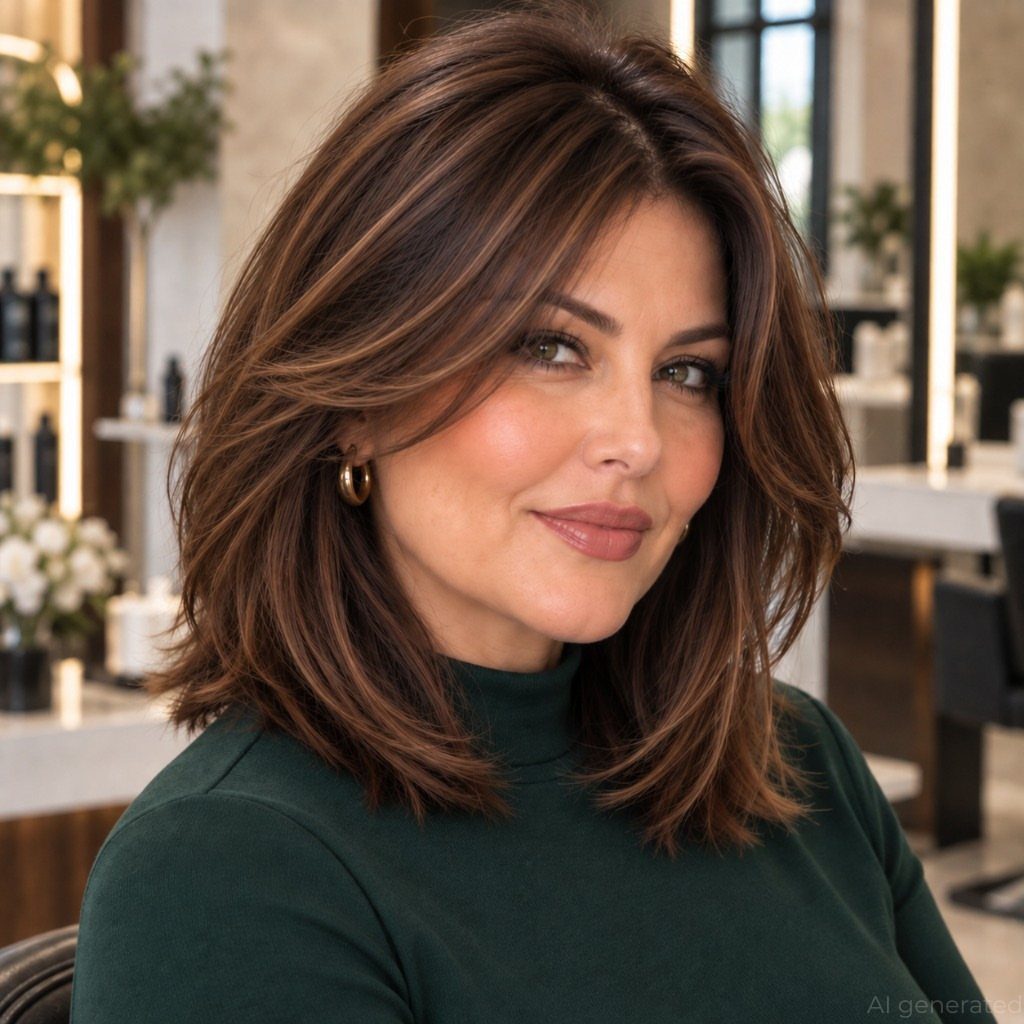
Medium layered cuts range from the polished lob and angled bob to shaggy styles with curtain bangs, face-framing pieces, and feathered ends.
How much you layer and where decides the morning routine: gradual blended cuts air-dry, while piecey or disconnected styles need heat and a round brush.
1. Layered Lob
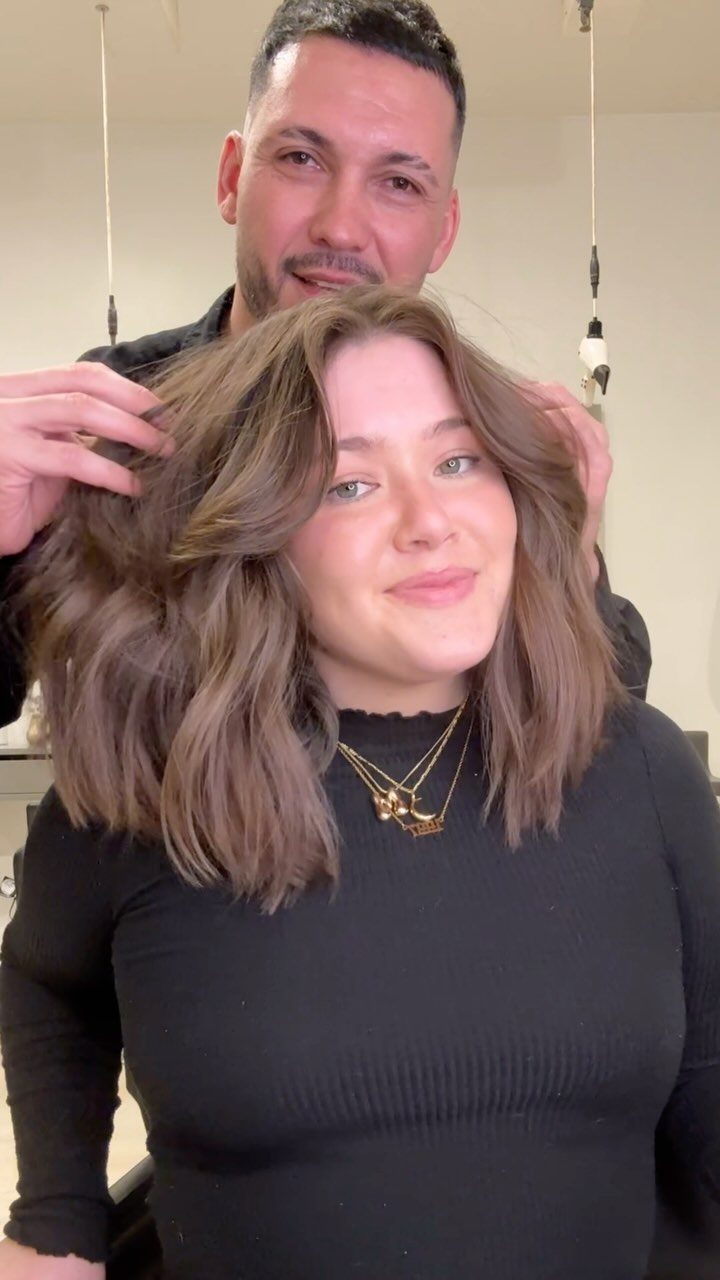
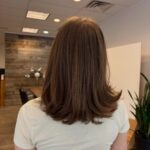
The lob lands between the jawline and collarbone, and layers cut through its length keep it from sitting flat. Medium to fine hair gains body without teasing or product, while thicker hair loses some of its weight at the ends.
Ask for a lob with internal layers starting an inch or two below the jawline.
The layers blend through the length rather than creating distinct shelves, so the cut still tucks behind the ear and looks polished even when it grows out a month past the trim.
2. Angled Lob
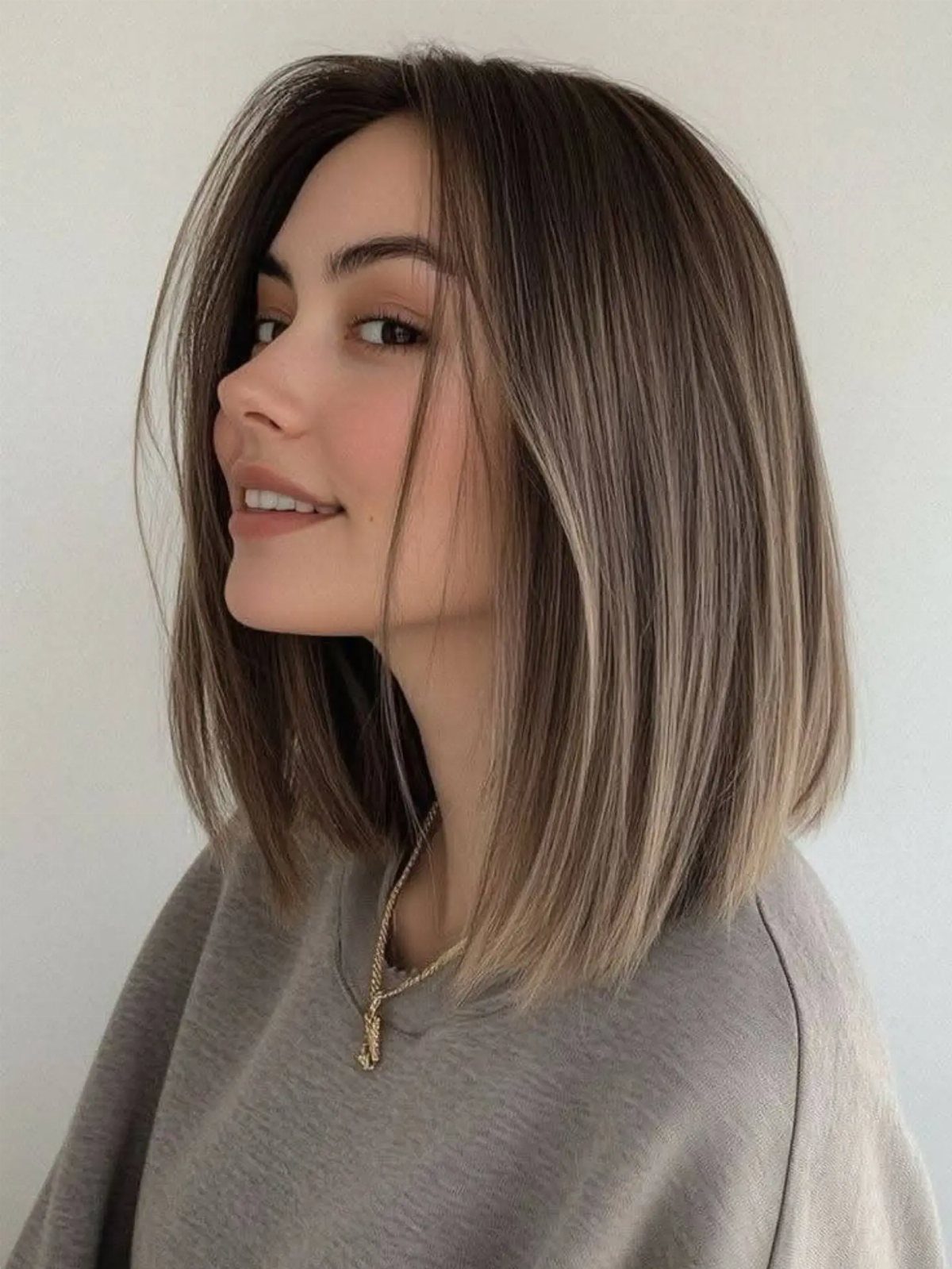
An angled lob is shorter at the nape and longer toward the front, with the difference subtle enough that the cut still reads as one length from the front.
Layers inside lift hair that would otherwise lie heavy against the neck.
The angle works well on thick, straight hair that needs dimension without losing density.
Fine hair can take this cut too, but the layering has to stay light or the ends thin out too much. Ask for an A-line lob with soft internal layers, not stacked layers in back.
3. Curtain Bangs
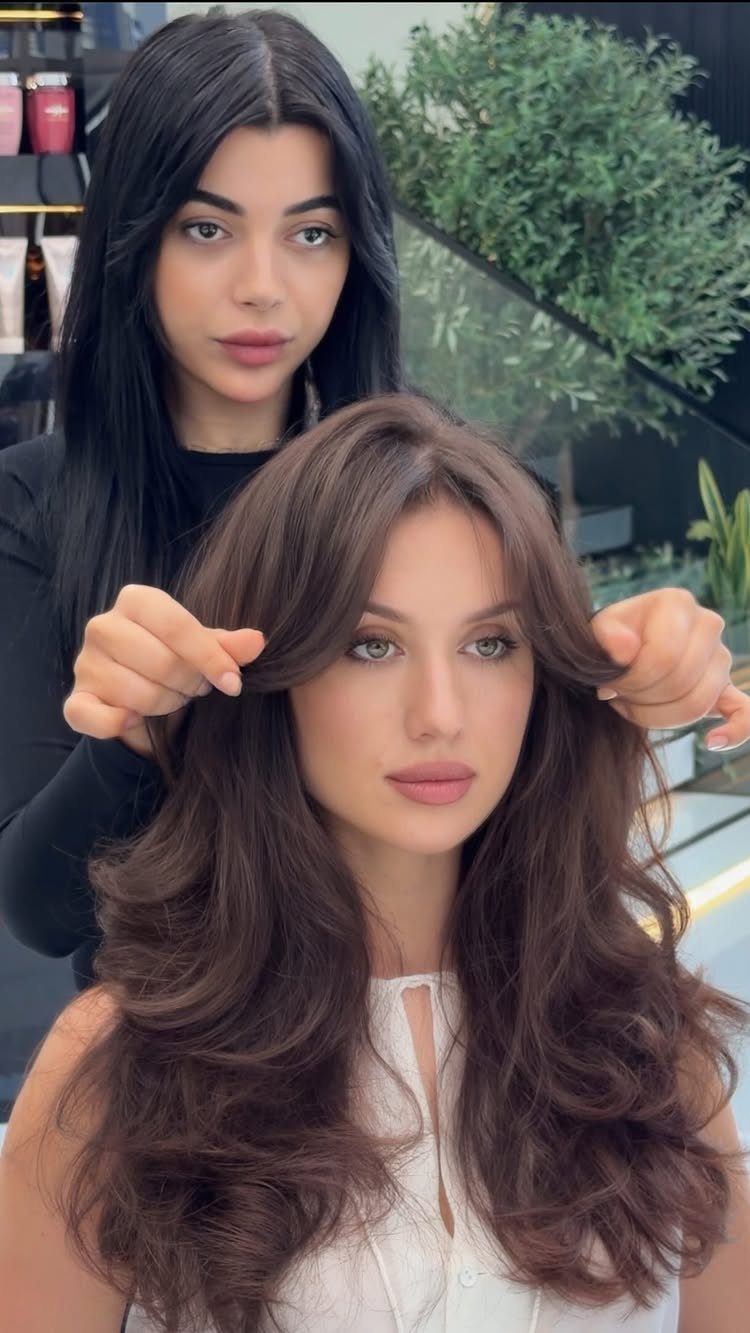
Curtain bangs part down the middle and sweep toward the cheekbones, framing the face without covering the forehead entirely.
They sit inside a medium layered cut and blend into the length at the sides, so the transition looks intentional rather than grown-out.
Ask for bangs that start at the bridge of the nose and angle down to the cheekbone.
They need a trim to hold the shape, but they can be pinned back or tucked behind the ear on days when the fringe feels like too much.
4. Long Layers
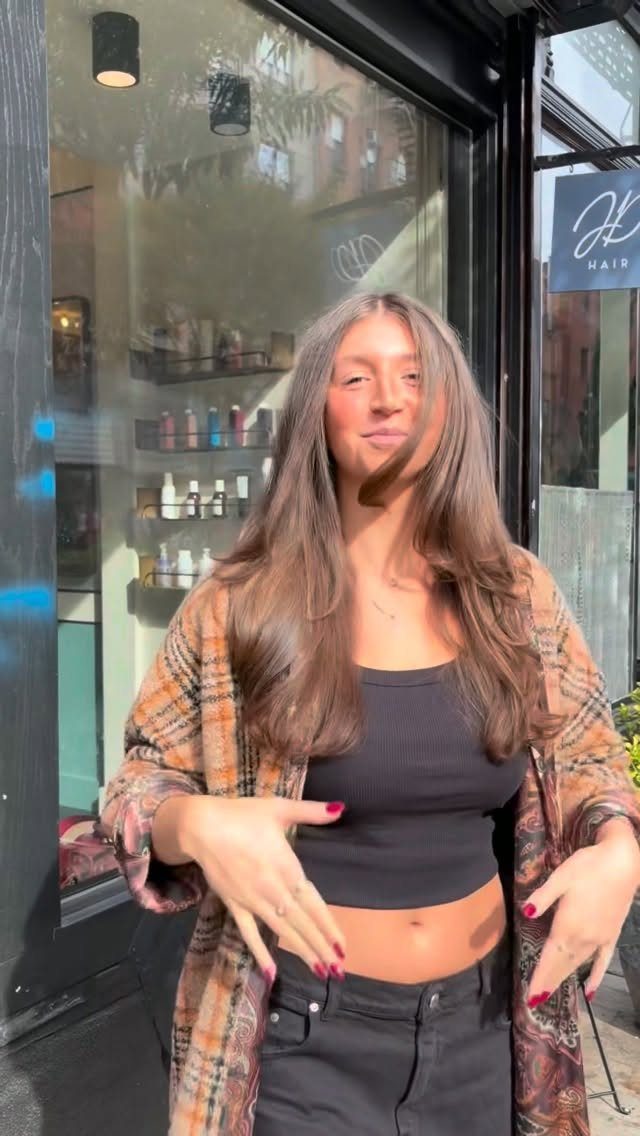
Long layers are cut into hair that already falls past the shoulders, with the shortest pieces starting around the collarbone and the longest at the ends.
The blend between layers is gradual, so the cut adds movement without looking choppy or disconnected.
This suits thick hair that needs to lose weight without losing length, and fine hair that wants the illusion of fullness at the ends. The layers grow out evenly, so trims can wait longer if the ends stay healthy.
“Many clients are nervous about layers because they remember over-thinned cuts or harsh layering from years ago, but modern layering is really about creating shape, softness, and movement rather than removing bulk.”
5. Curly Layered Cut
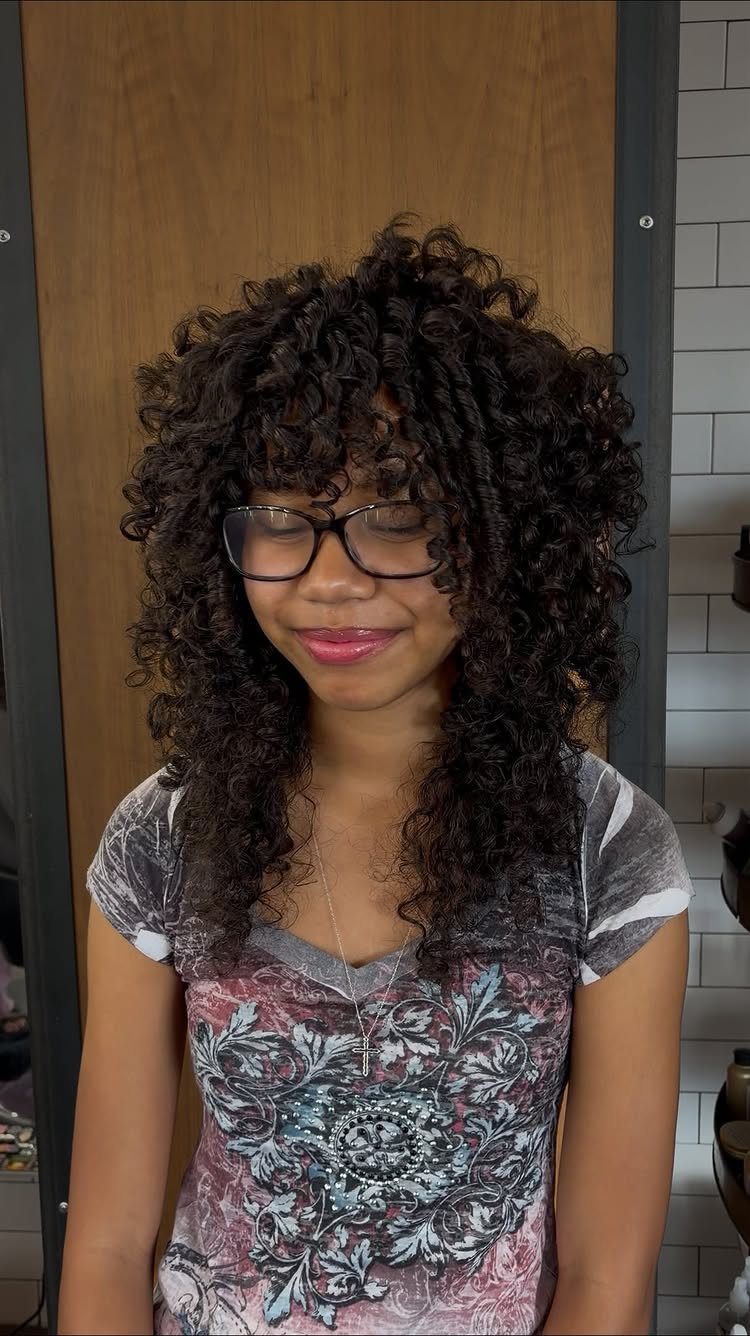
Curls need layers cut while the hair is dry, with each layer following the natural curl pattern rather than fighting it.
The cut removes weight where it pulls the curl down and adds shape where the curl wants to spring up.
Ask for a dry cut with layers adapted to your curl type.
Tighter curls often need fewer, longer layers to avoid a pyramid shape, while looser curls can take more layering for volume and separation. The cut should look finished without a blow-dryer or flat iron.
6. Piecey Long Layers
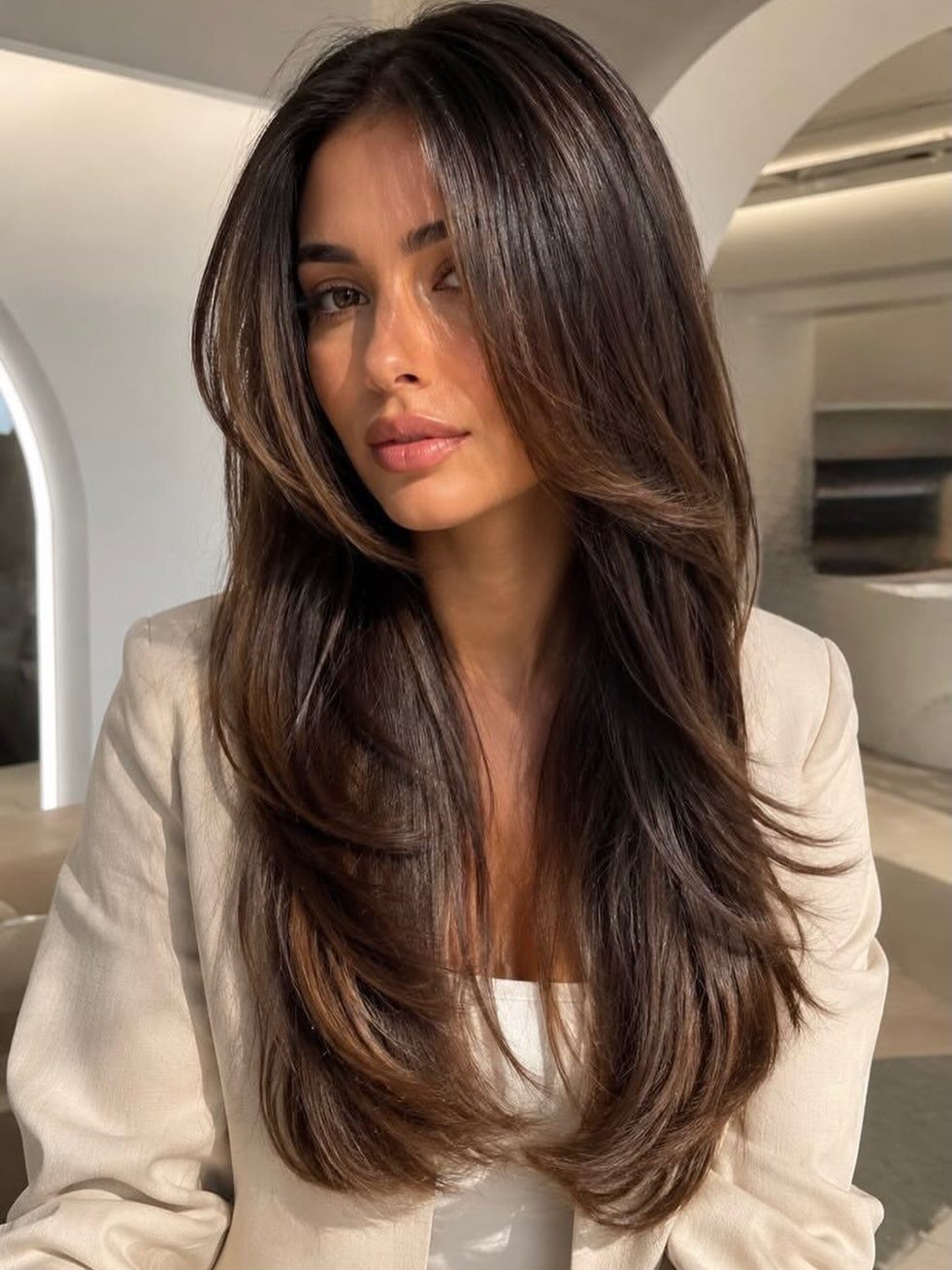
Piecey layers are cut long and left slightly separated at the ends, creating texture that reads as individual strands rather than a blunt edge. The layers frame the face without requiring a choppy, heavily textured cut.
Ask for long face-framing layers with point-cutting at the ends to soften the line.
A texturizing spray or light styling cream helps define the pieces, but the cut holds its shape air-dried. The separated ends make thin hair look fuller and thick hair look less heavy.
7. Long Curly Shag
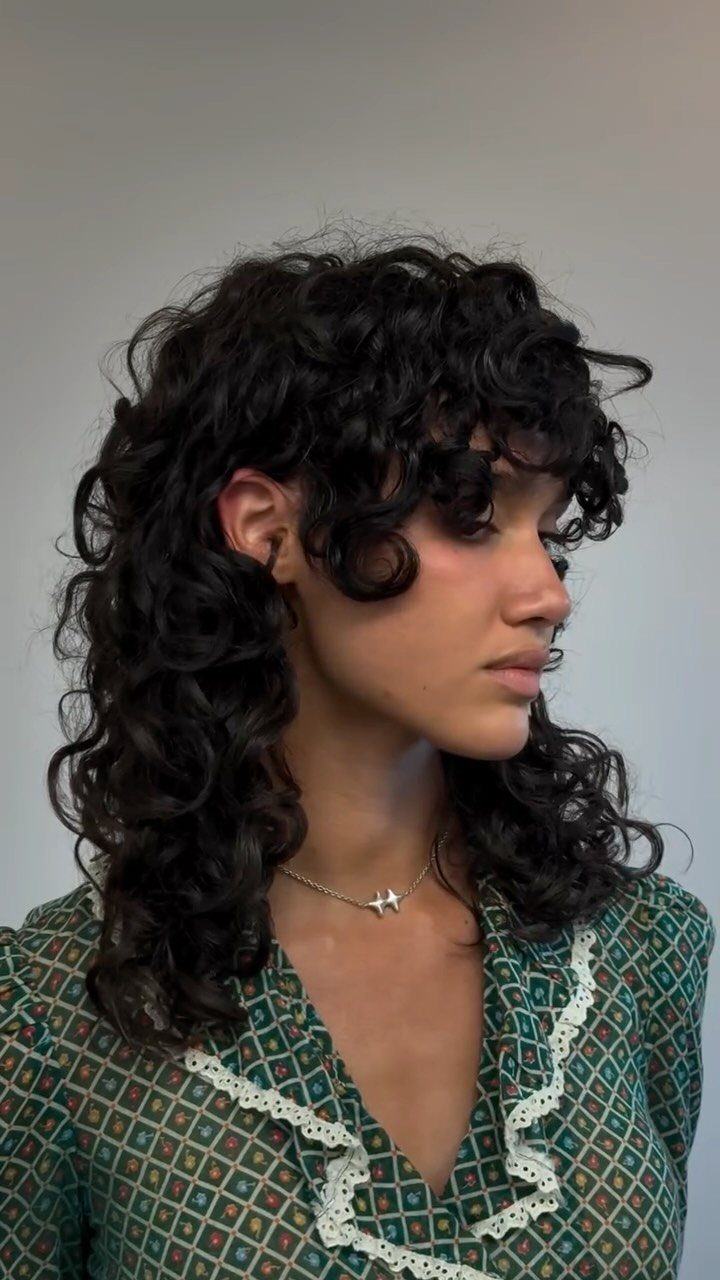
A shag cut to collarbone length lets curls build the shape without a blow-dryer. Layers start higher than they would in a straight shag, with the shortest pieces around the crown and longer lengths falling toward the shoulders.
Curls form natural volume and texture, so the cut works best when styled air-dried or diffused. Thick, curly hair gains movement, while fine curls get fullness from the layering at the top.
8. Chocolate Shag Layers
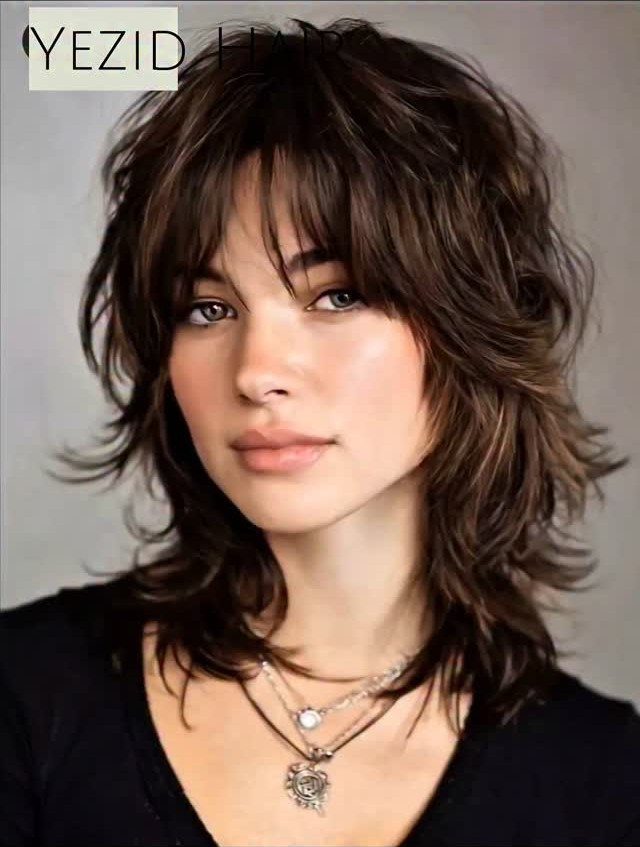
A medium shag pairs choppy layers with wispy bangs, and a rich chocolate brown adds depth without needing highlights. The layers frame the face and create separation through the ends, so the cut looks textured rather than heavy.
Ask for a shag with face-framing pieces that start near the chin and blend into the length. The color stays solid and flatters most skin tones without extra toning appointments.
9. Face-Framing Layers
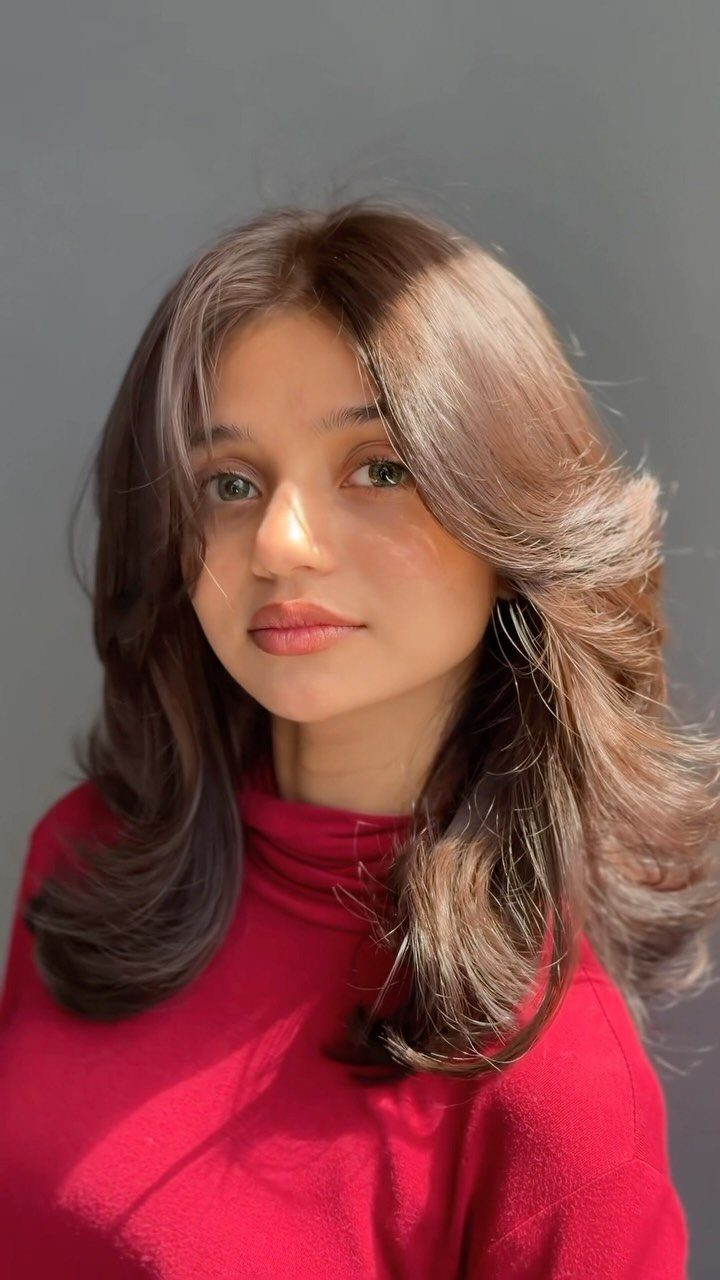
Shorter pieces near the face take weight off the cheekbones and jawline and give medium hair a finished look.
They can start at the chin, the cheekbone, or just below the jawline, depending on face shape and how much contrast the cut needs.
The rest of the hair can stay longer and blunt or take additional layers through the length. They read most clearly when styled with a round brush or curling iron, which separates them from the rest of the length.
10. Modern Mullet
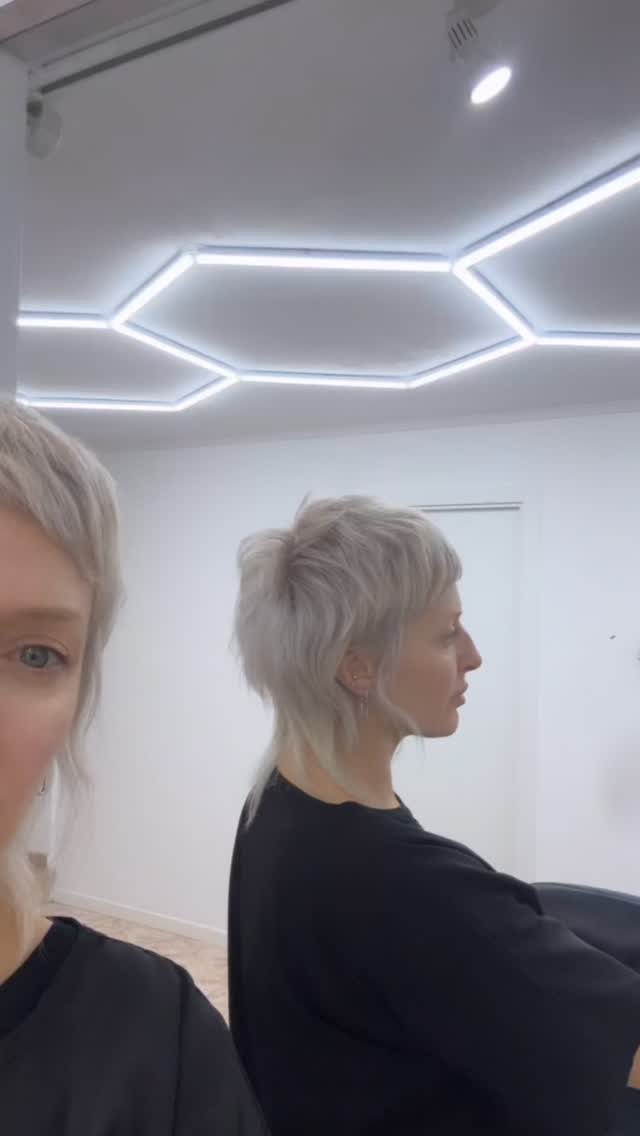
A modern mullet keeps length in back while cutting layers shorter through the crown and sides, creating a shape that looks bold from every angle.
The contrast between the short top and longer back defines the cut, and the style works best on straight or wavy hair that holds volume without spray.
Ask for a mullet with disconnected layers rather than a graduated blend. The cut needs regular trims to hold its shape, and styling takes a round brush or flat iron to keep the top smooth and lifted.
11. Feathered Layers
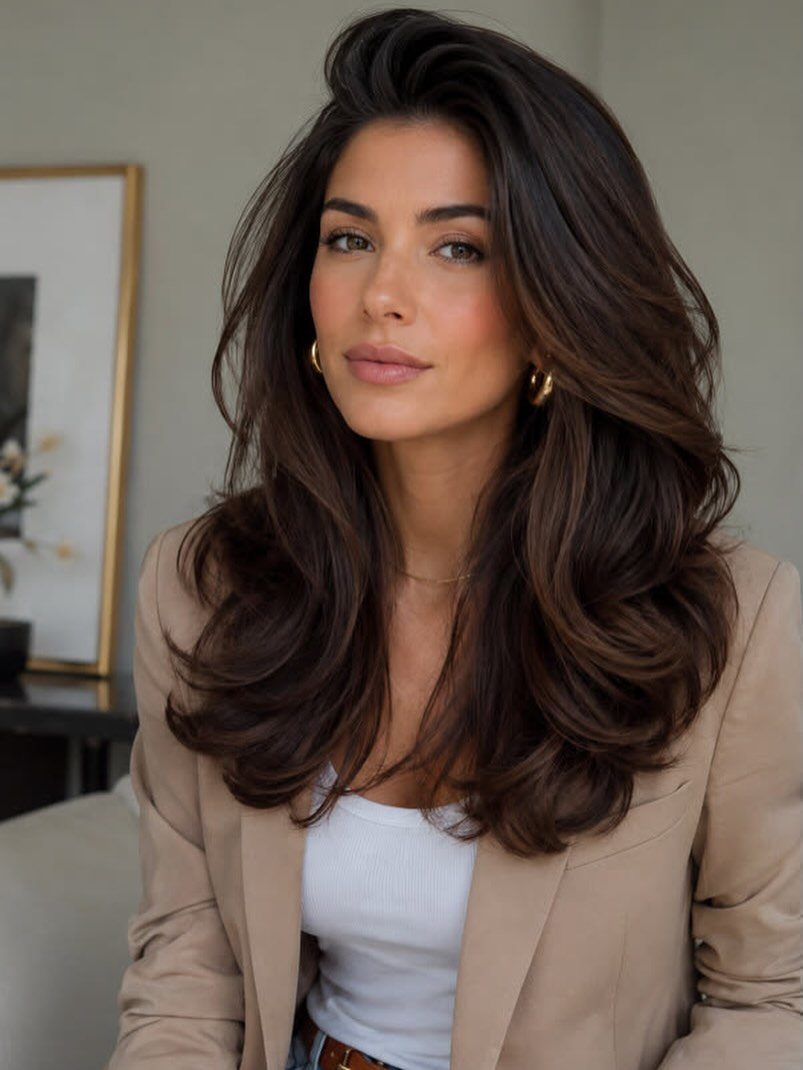
Feathered layers are cut with a razor or shears held at an angle, so the ends taper and lift away from the head instead of falling blunt.
The technique creates soft, airy movement through medium to long hair, and the layers can start as high as the chin or as low as the collarbone.
This suits fine to medium hair that wants volume without backcombing.
Thick hair can take feathering at the ends only, or the cut gets too thin. A round brush and a blow-dryer help the feathered pieces curve away from the face.
12. Shoulder-Length Waves
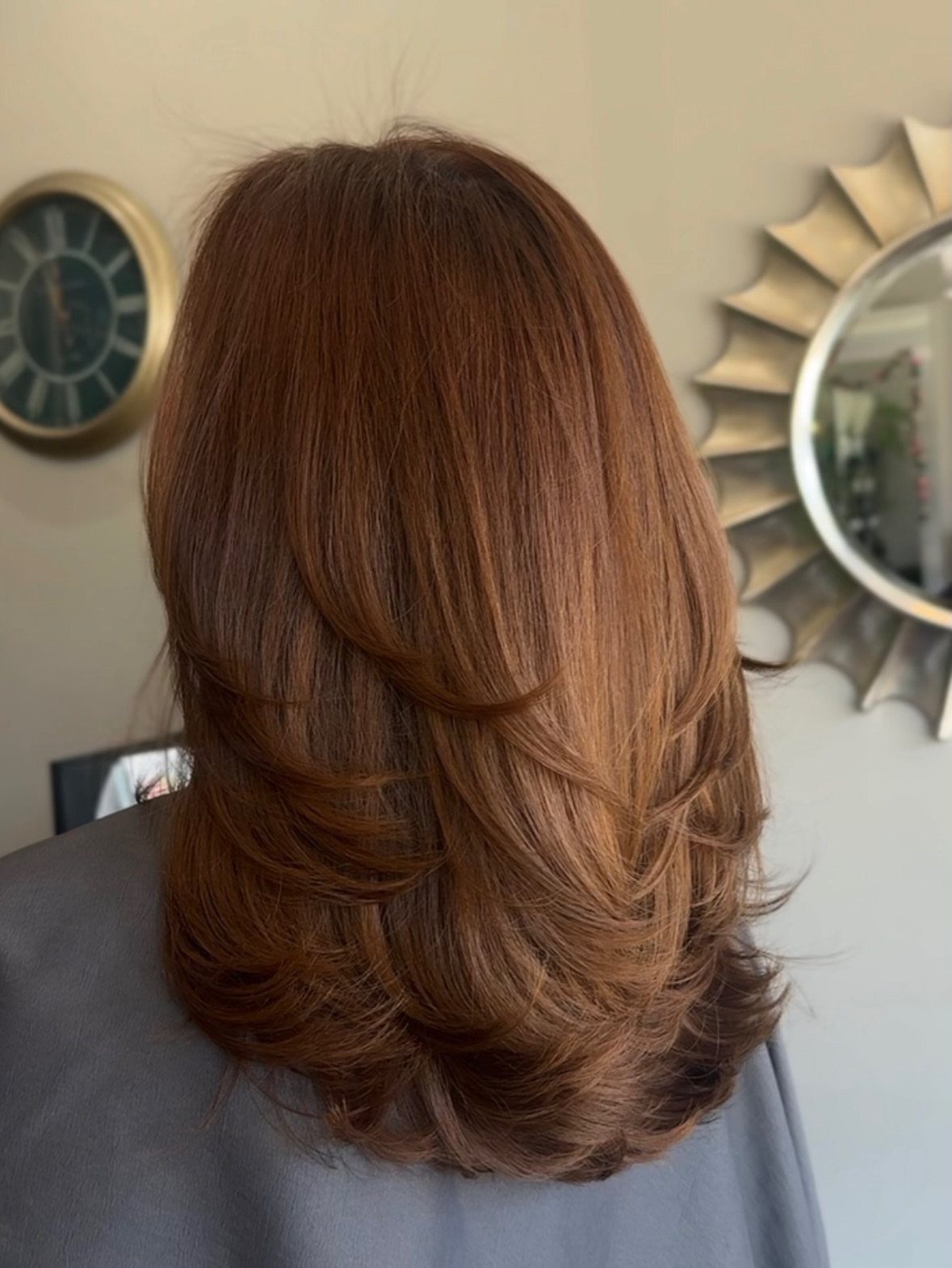
Shoulder-length hair with layers takes a wave or curl at the ends and looks finished with minimal styling. The layers remove weight so natural texture shows, and the cut works whether hair is air-dried or curled with a wand.
Fine hair gains body from the shorter pieces, and thick hair moves instead of sitting flat. Regular trims keep the ends clean and the layers visible.
13. Tousled Shoulder Hair
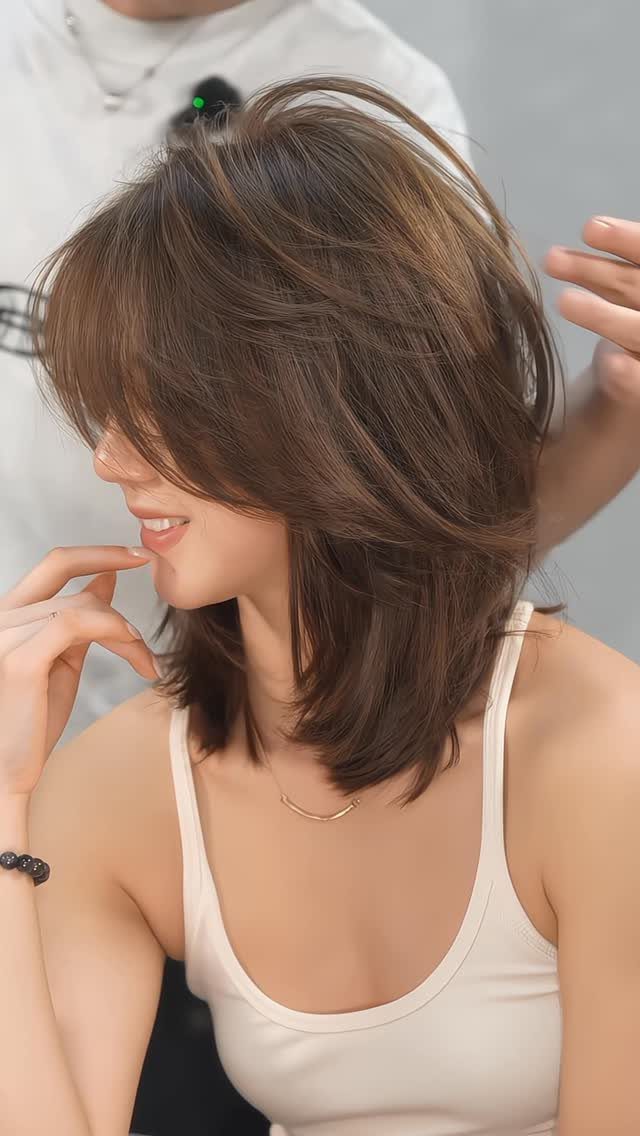
Tousled shoulder-length hair looks deliberately undone, with layers cut to separate at the ends and sit slightly uneven. The texture comes from the layering itself, which leaves pieces at different lengths that fall naturally away from each other.
Fine to medium hair holds this look better than thick hair, which can read heavy instead of messy.
The pieces should look tousled when you let them air-dry, though texturizing spray or sea salt spray can sharpen the separation if you want it. Fingers work better than a brush for this one.
14. Thick Beachy Waves
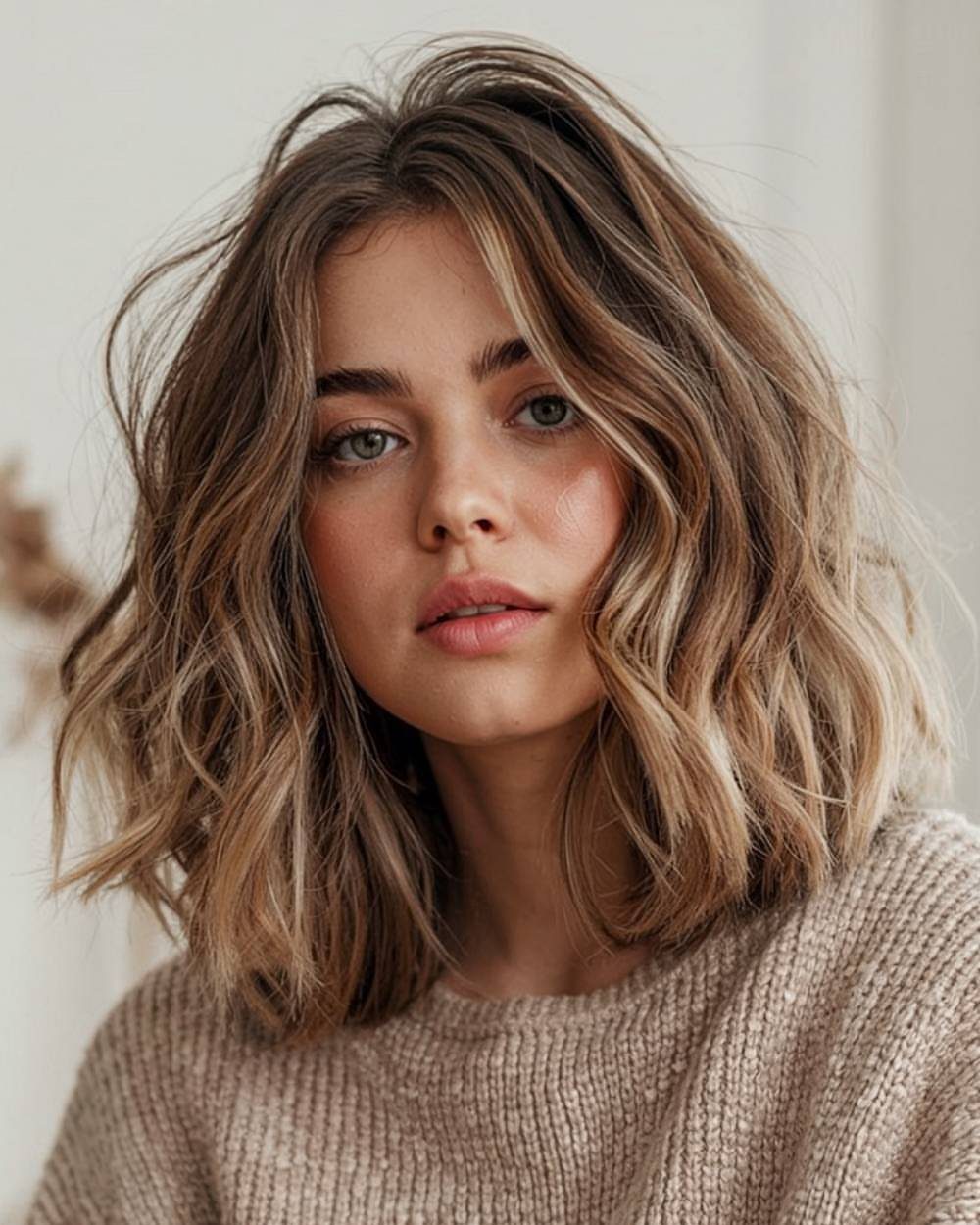
Thick hair cut to collarbone length can take a loose wave without losing its density. The layers remove enough weight for the wave to form, but leave enough hair at the ends to keep them from thinning out.
A curling iron or wand set to medium heat creates the wave, or thick hair can take a larger barrel roller on damp hair and air-dry. The wave should look soft and lived-in rather than tight or defined.
15. Chestnut Waves

Layered waves in a golden chestnut brown add warmth without highlights or balayage. The color sits flat and rich, and the layers give the wave something to move through.
Medium layers cut into hair that already holds a natural wave make the texture more visible. The chestnut tone works on most skin tones and needs less maintenance than lighter or multi-toned color.
16. Sandy Blonde Layers
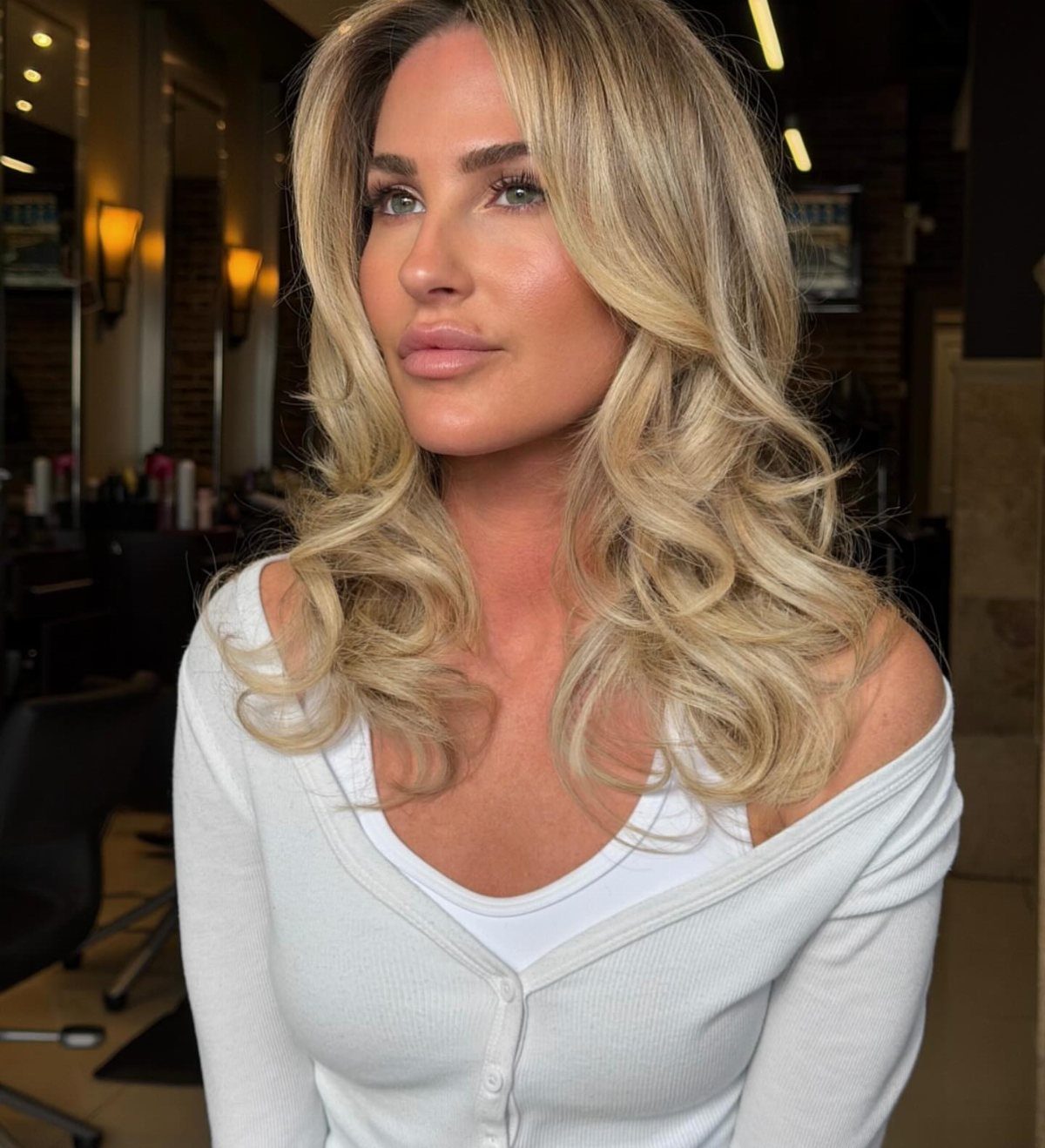
Feathered layers cut into sandy blonde hair create an airy, beachy texture that moves without looking heavy. The stylist tapers the ends with shears or a razor so each piece lifts away from the head rather than sitting blunt.
Fine to medium hair gains volume and movement from this approach. Blow-drying with a round brush curves the feathered pieces outward.
17. 90s Supermodel Flips
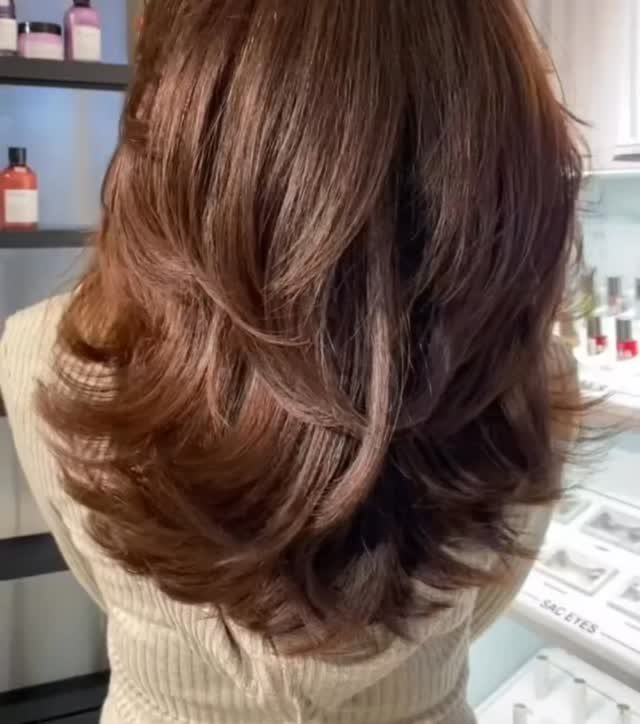
Medium layers curled under at the ends create the polished flip that supermodels wore in the 90s.
The ends are blow-dried with a round brush or set with a curling iron, turning the hair under rather than away from the face.
This works best on straight to slightly wavy hair that holds a curl.
The flipped ends read most clearly on hair cut to one length or with long layers, where the curled-under shape stays visible rather than blending into shorter pieces.
18. French-Girl Fringe
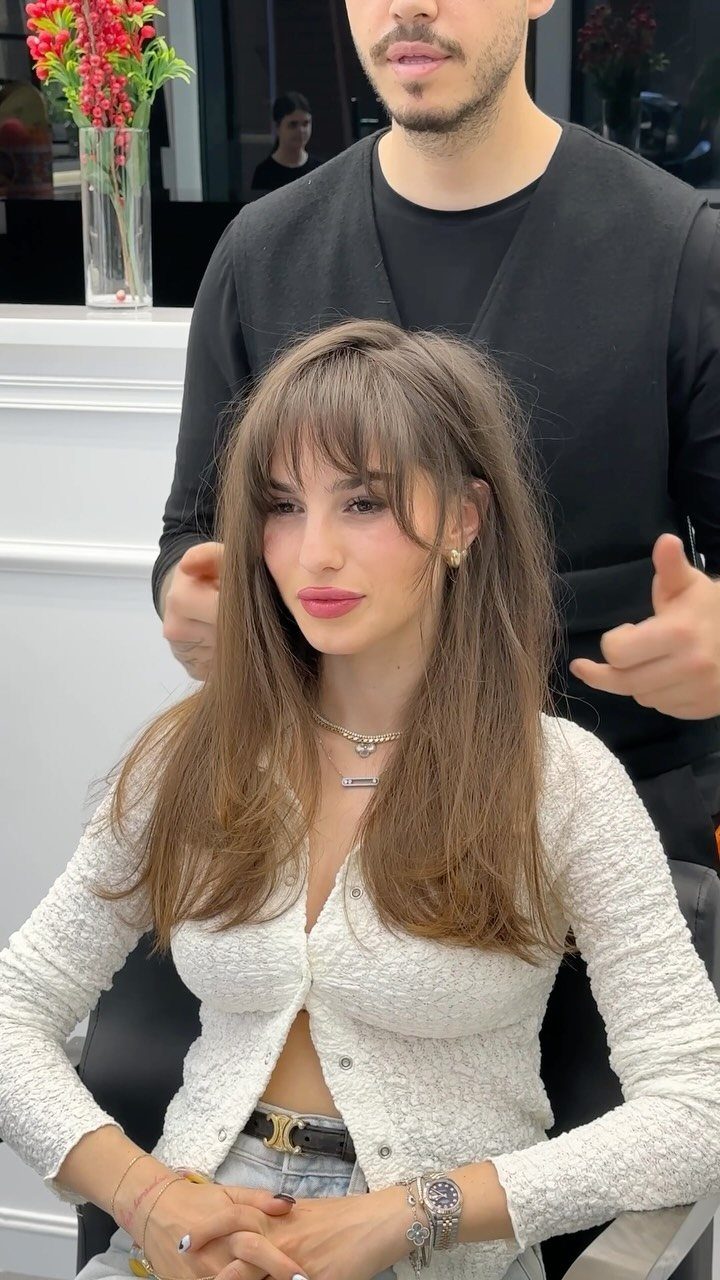
A full or tousled fringe paired with medium layered hair reads as effortlessly French. The fringe can sit blunt across the forehead or fall in separated, piecey strands, depending on how much upkeep the cut allows.
Ask for a fringe that grazes the brow line and blends into face-framing layers at the sides.
The fringe needs a trim every few weeks to hold its shape, but it can be swept to the side or pinned back when it grows out.
19. Blonde Highlights
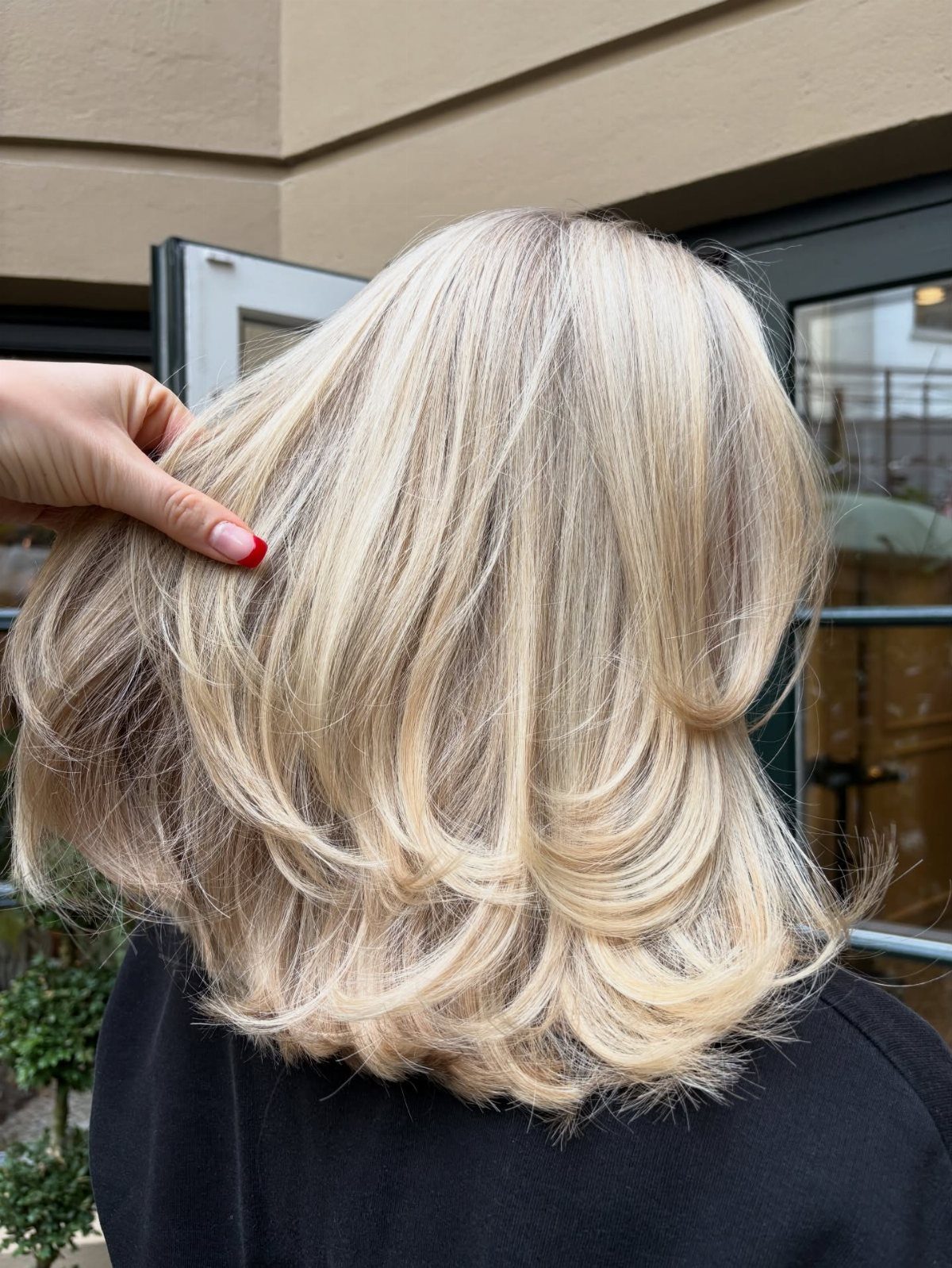
Highlights cut through a medium layered cut and make each layer more visible. The contrast between light and darker blonde tones gives the hair dimension, so the layering reads clearly even when the cut sits straight or only slightly waved.
Ask for highlights that follow the natural pattern of sun-lightened hair, with the lightest pieces framing the face and through the top layers.
Balayage or foil highlights both work. The feathered, flipped ends catch the light and separate from each other, so the texture shows whether the hair is styled smooth or left tousled.
Choosing by Hair Type
Fine hair does better with softer, less aggressive layering.
Layers that end at the collarbone lift and move without much coaxing, and cutting them closer to the shoulder gives you more of a gliding weight.
Hair texture and where it lands together determine how much layering the cut can hold.
Styling and Upkeep
Medium hair can be worn braided, wavy, textured, sleek, shaggy, up, or down. High-contrast, choppy cuts demand more styling in the morning and trims every 6 to 8 weeks to hold their shape.
Medium length is short enough to avoid heaviness but long enough to put up without pins slipping out.
Medium length takes fewer pumps of serum or mousse than hair past your shoulders, and you can still pin it back, tuck it behind your ears, or wear it down without locking yourself into one silhouette.
Lightweight products keep layered medium hair from looking greasy or weighed down. A shake-and-go routine works with softer layers, while sharper cuts need a blow-dryer or curling iron.
Salon Consultation Advice
Bring an inspiration photo to the appointment, and wear hair the way it normally sits. A stylist needs to see how hair falls air-dried or styled the usual way, not blown out for the occasion.
Tell the stylist how much time styling takes each week and what tools get used.
A cut that assumes daily blow-drying will not work if the routine is air-dry only, and a cut meant to be worn straight will look different on someone who curls it most days.
Medium hair flatters all face shapes and uses less product than long hair. The consultation should cover how much upkeep the cut requires and how it grows out between trims.
Frequently Asked Questions
What are some types of medium-length haircuts?
Medium-length haircuts include lobs, angled lobs, shags, curtain bangs, long layers, feathered layers, face-framing layers, and modern mullets.
Each offers different textures and styling options, from polished one-length cuts to choppy, separated ends. The type of layering changes how much volume and movement the cut creates.
How do I choose the right layered haircut medium length?
Start with your hair type: fine hair needs softer, less aggressive layering to avoid thinning at the ends, while thick hair can take more layers to remove weight.
Factor in your morning routine: choppy layers demand heat tools and frequent trims, softer cuts can skip both. Show up with a reference image and your hair worn as usual so your stylist sees what they’re working with.
How to style medium layered haircuts with fringe?
Style the fringe with a round brush while blow-drying to curve it away from the forehead, or let it air-dry and separate the pieces with texturizing spray for a tousled look.
Curtain bangs can be parted down the middle and swept toward the cheekbones, or pinned back and tucked behind the ear when they feel like too much.
Plan on trimming it every 3 to 4 weeks or it grows past the point where it frames anything.