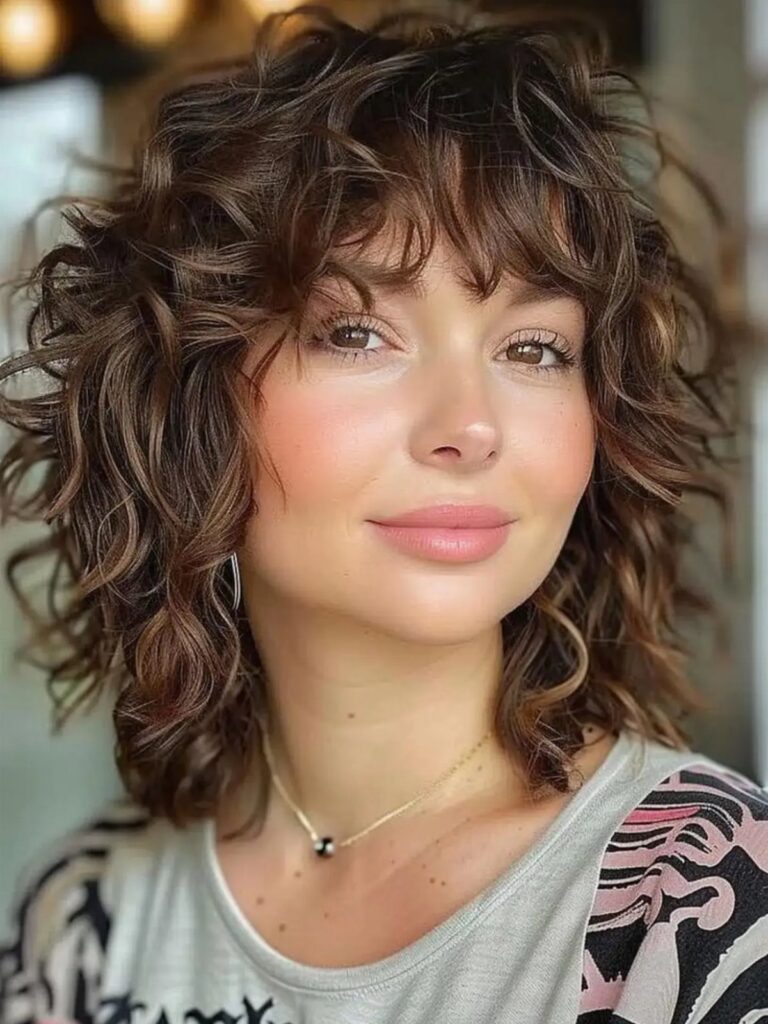
A layered bob can sit anywhere from pixie-short at the nape to chin-length all around, and the cut changes how thick hair behaves, how fast fine hair falls flat, and whether you’re working with a round brush every morning or letting it air-dry.
Balayage, highlights, copper and cherry cola show off the layers more than a single flat tone does because the color shifts where the cut turns.
1. Textured Bob

Layers cut through the ends keep the bob from sitting flat, and a round brush or texturizing spray works that separation into something that looks tousled without much fuss.
Most of the shape comes from how it’s cut, not from what you do in the morning.
For hair that needs some help holding shape, a light mousse on damp hair before drying adds grip. Fine hair gets lift; thick hair loses some of the weight that pulls it straight.
This grows out well. The layers soften as they lengthen, and the shape stays recognizable between trims.
2. Curly Layered Bob
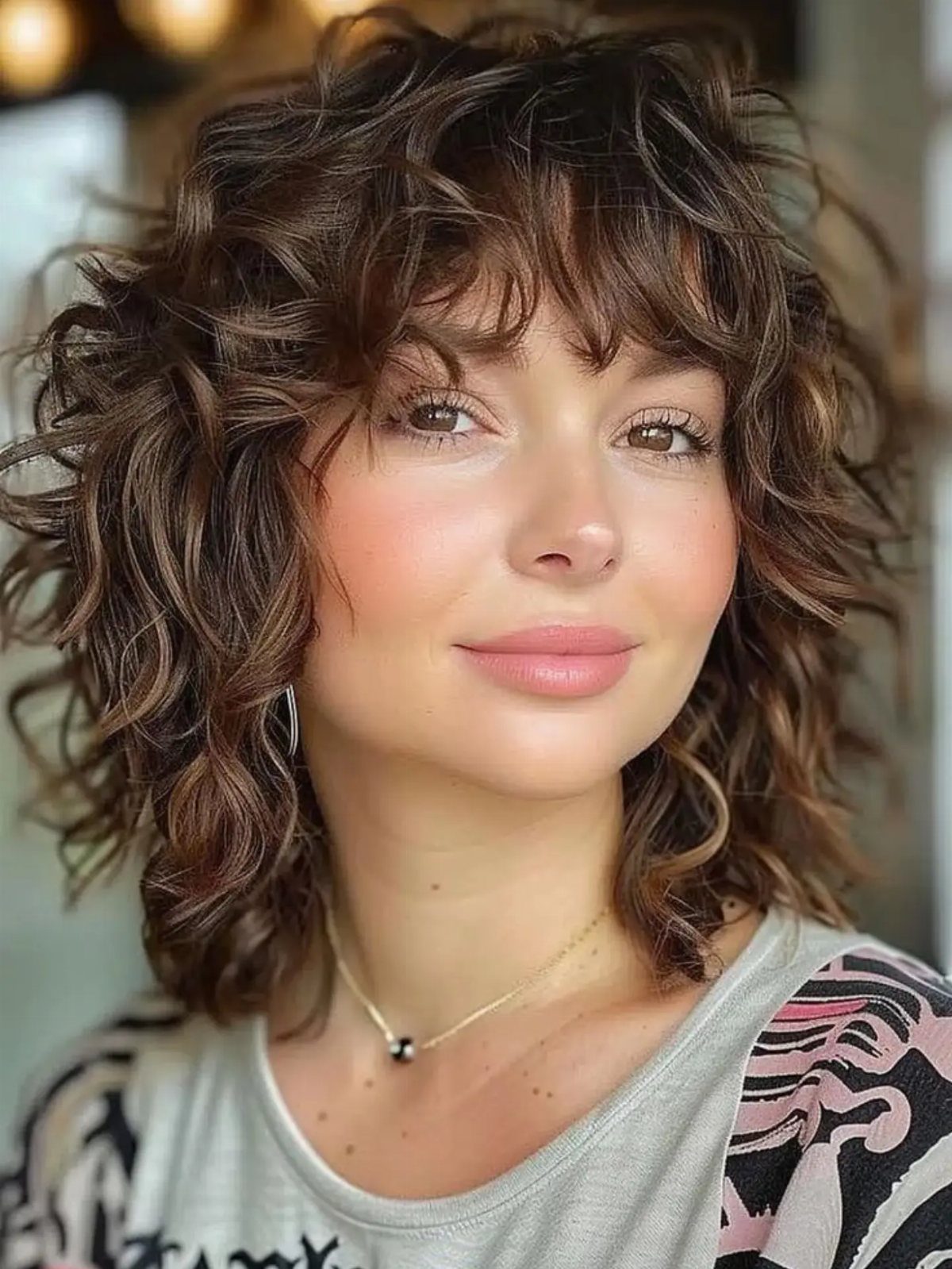
Curls need a shape that follows their volume instead of fighting it, and layers placed through the interior let the curl pattern bounce without expanding sideways. The cut removes bulk where it builds and keeps length where curls pull up.
Ask for layers that start at the crown and taper toward the ends, not blunt stacking that shortens the back too much. A rounded silhouette needs enough length in the front to balance the fullness behind it.
Air-drying works if the layers are placed right. Diffusing speeds things up and tightens the curl.
3. Bob for Thick Hair
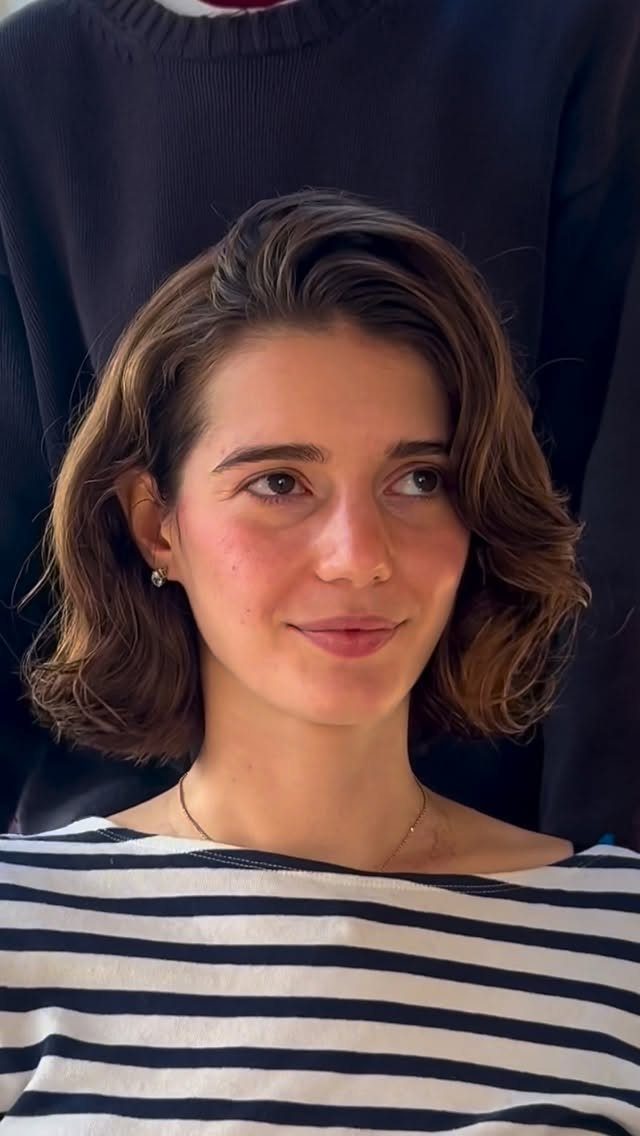
Thick hair in a bob can feel heavy at the perimeter, and internal layers thin the bulk without shortening the outline. The weight stays balanced, and the cut moves instead of sitting like a helmet.
Layers cut into the interior, not just around the face, remove density where it builds. A stylist working with thick hair will often thin the underneath sections and leave the surface smooth so the finish looks polished instead of choppy.
The cut holds its shape between trims, then the ends start to thicken again. If you style at home, a paddle brush and tension while drying keep it sleek.
4. Stacked Layered Bob
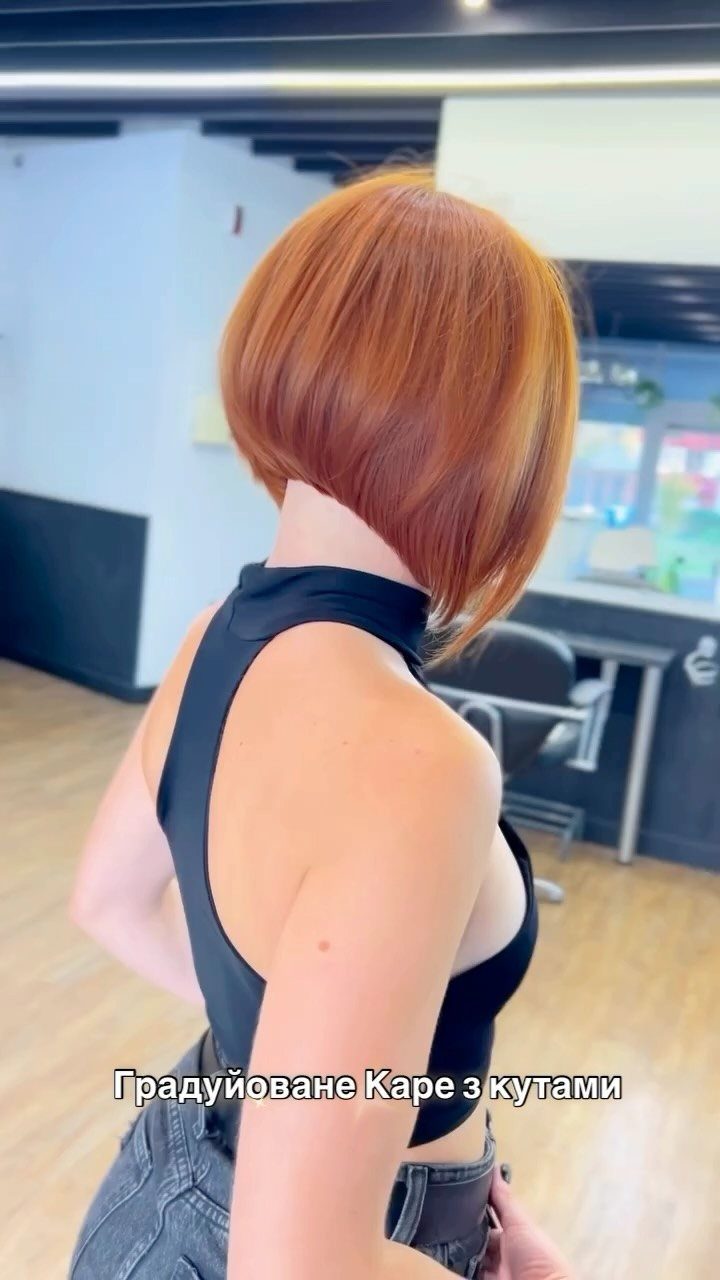
Short layers stacked at the back create height and fullness through the crown, and the front stays longer to frame the face.
The graduation builds volume where the head curves, and the longer front keeps the cut from reading too short.
Blow-drying with a round brush at the crown lifts the stacked layers and holds the shape.
The back grows out faster than the front, so if you want the stacked shape to hold, regular trims matter. Once it grows past the nape, the cut softens into a standard layered bob.
5. Chin-Length Bob
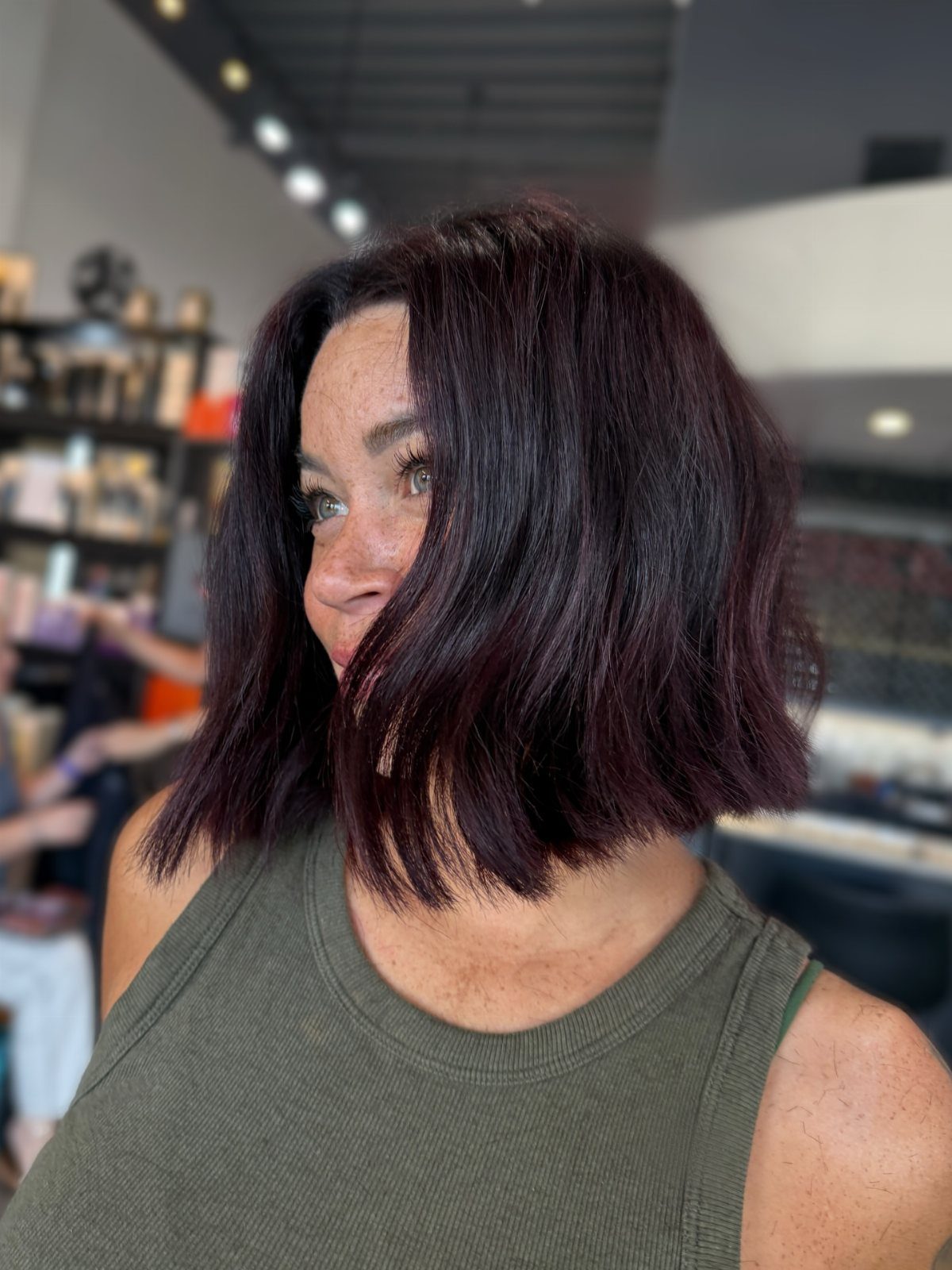
A bob that ends at the chin sits at a length that works with most face shapes, and soft layers keep it from looking too blunt or too structured.
The line stays clean, and the layers add enough movement that it doesn’t need much styling.
This length tucks behind the ears without falling out and stays long enough to pull into a short ponytail if needed. Styling goes fast with a blow-dryer and a round brush.
If you let it grow, the shape transitions into a longer bob without an awkward in-between stage.
6. French Bob
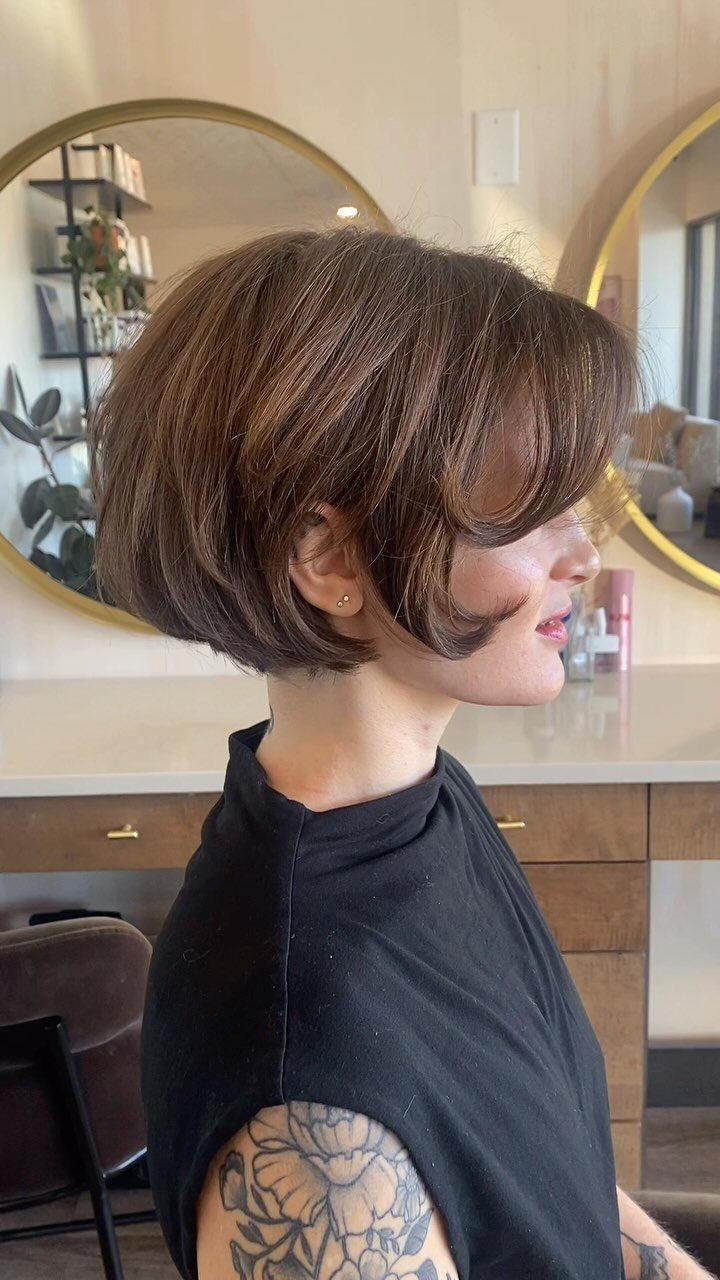
A French bob sits just above or at the jawline, and soft layers update the classic blunt cut with movement that keeps it from looking too severe.
The fringe usually falls somewhere between the brows and the lashes, and the layers add enough texture that the whole thing doesn’t need to be perfectly smooth.
This cut suits straight or wavy hair. Curly hair can work, but the shorter length and the fringe both shrink as they curl, so the result may sit higher than expected.
Styling takes a round brush and 5 minutes if the hair is cooperative. The fringe needs more frequent trims than the rest of the cut.
7. Short Choppy Bob
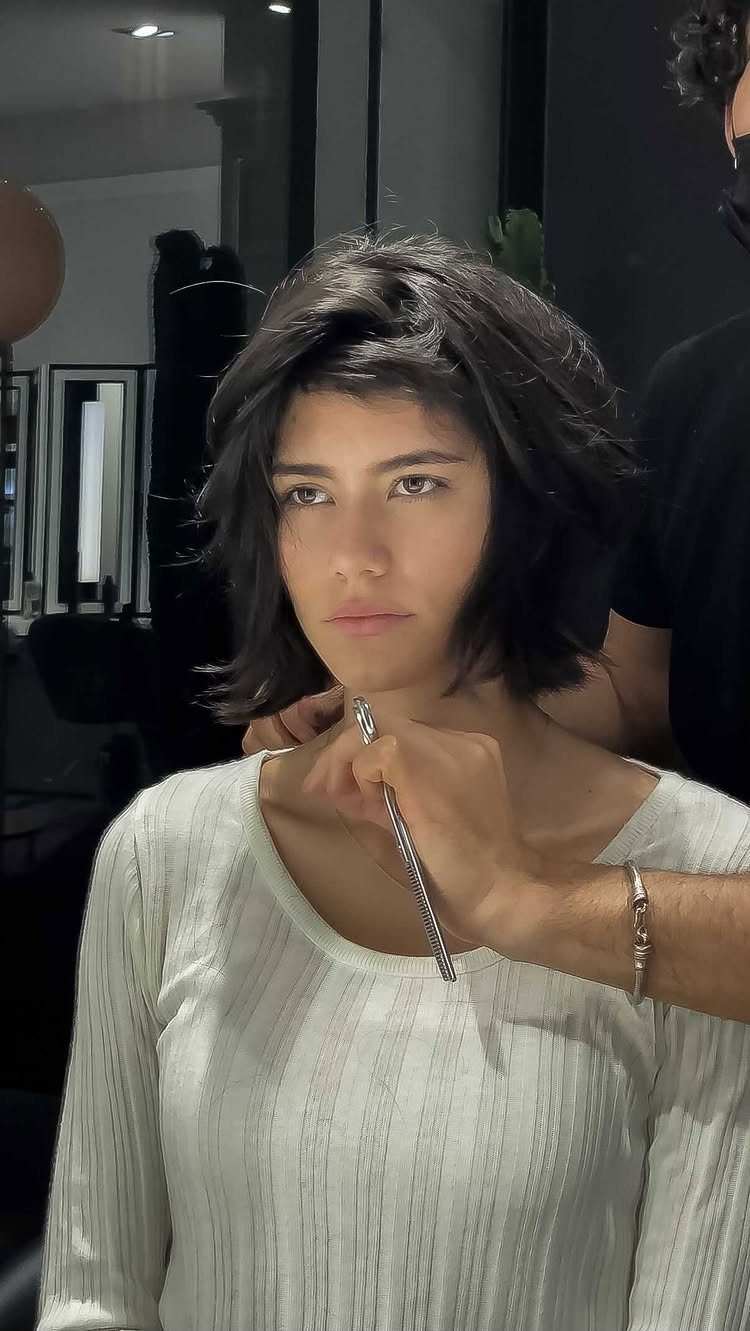
Choppy layers cut at different lengths through the ends give the bob an uneven, piecey finish that looks intentionally rough.
The texture comes from the cut itself, not from styling products, though a texturizing spray or light paste can separate the pieces more.
Curly hair hides the choppy effect because the curl pattern takes over.
Styling takes little time if you’re after the undone look. A flat iron through the ends adds definition to the chop.
8. Blunt Layered Bob
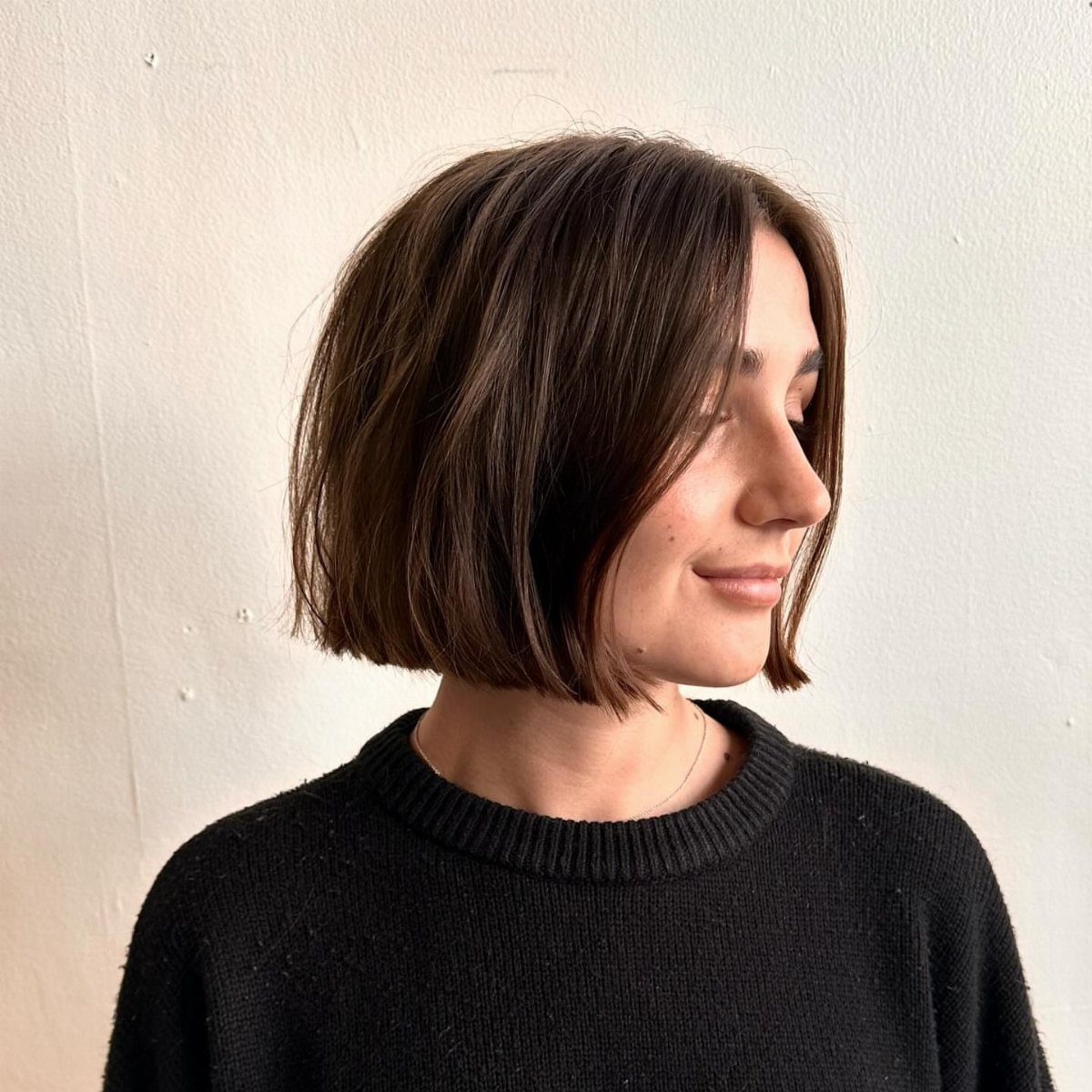
The perimeter stays blunt and heavy, but subtle layers cut just inside the line soften the weight without breaking up the edge. The shape reads clean from a distance, and the layering keeps it from looking too blocky up close.
Fine hair gets more body from the layering; thick hair loses some bulk but keeps the solid outline.
Blow-drying with a paddle brush keeps the blunt line sharp.
9. Pixie Bob
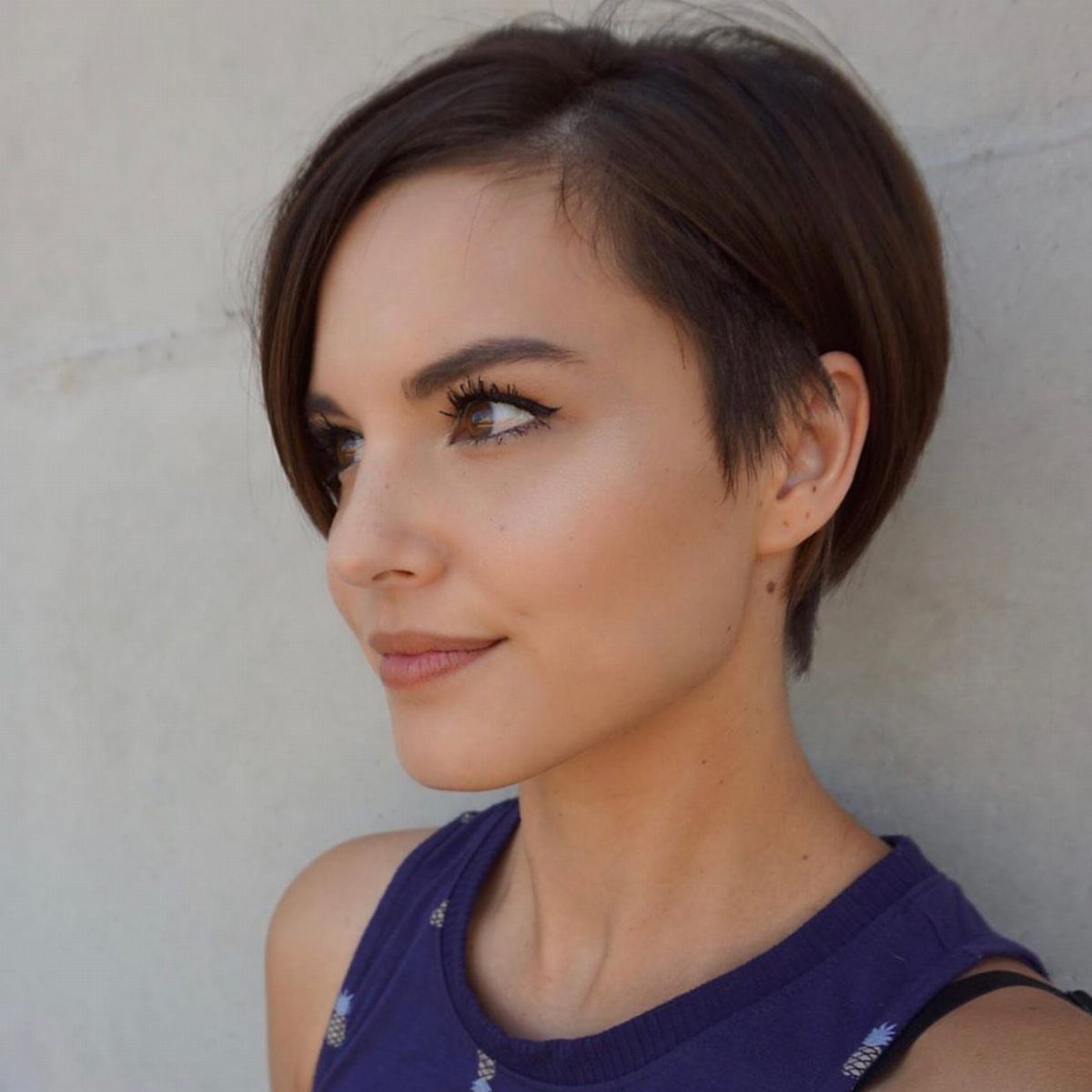
This sits somewhere between a pixie and a bob, short enough to clear the nape but long enough to keep a bob’s silhouette around the face.
The length usually falls just above the ears or at the jawline in front, and the back tapers close.
Styling goes fast because there isn’t much hair to work with. A bit of texture cream or pomade defines the ends without making them stiff.
The cut grows out quickly, so frequent trims keep the shape tight.
10. Angled Bob
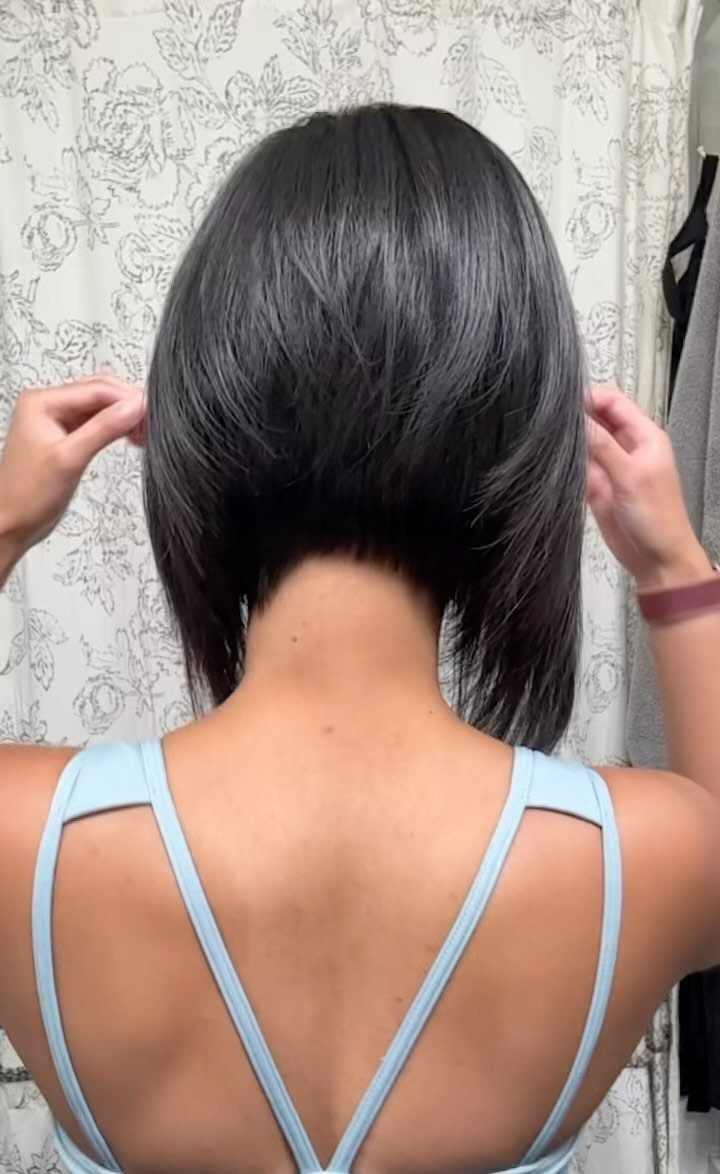
Longer in front and shorter in back, the angled bob creates a sloped line that adds height at the crown and frames the face with the longer front pieces.
The graduation can be subtle or dramatic depending on how much length difference the cut builds in.
This works on most hair types. Straight hair shows the angle cleanest; wavy hair softens the line but keeps the shape.
The front pieces can be straightened or left with some wave.
11. Face-framing Bob
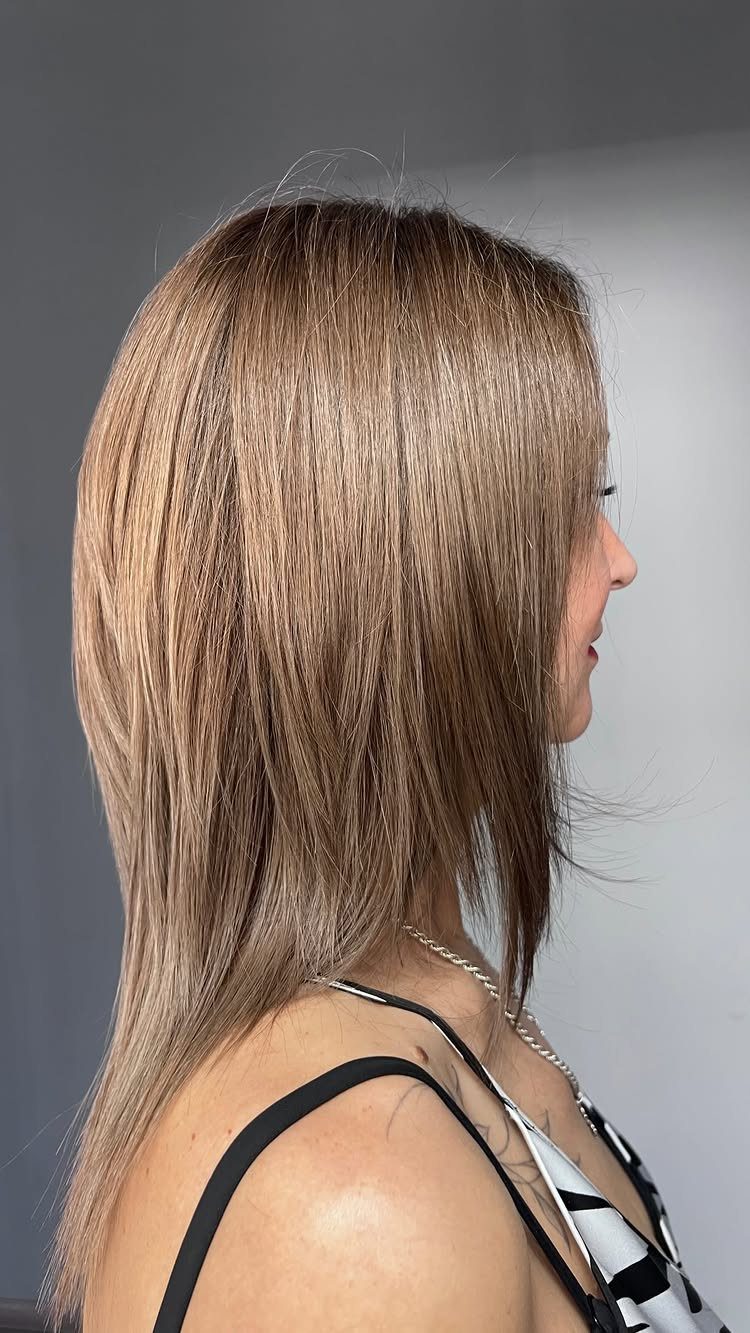
Shorter pieces cut around the face highlight the cheekbones and jaw, leaving the back and sides longer and fuller.
This softens a strong jawline and works well with center or side parts.
A round brush or flat iron through the front pieces sharpens the look. The rest of the bob can stay simple.
12. Sleek Layered Bob
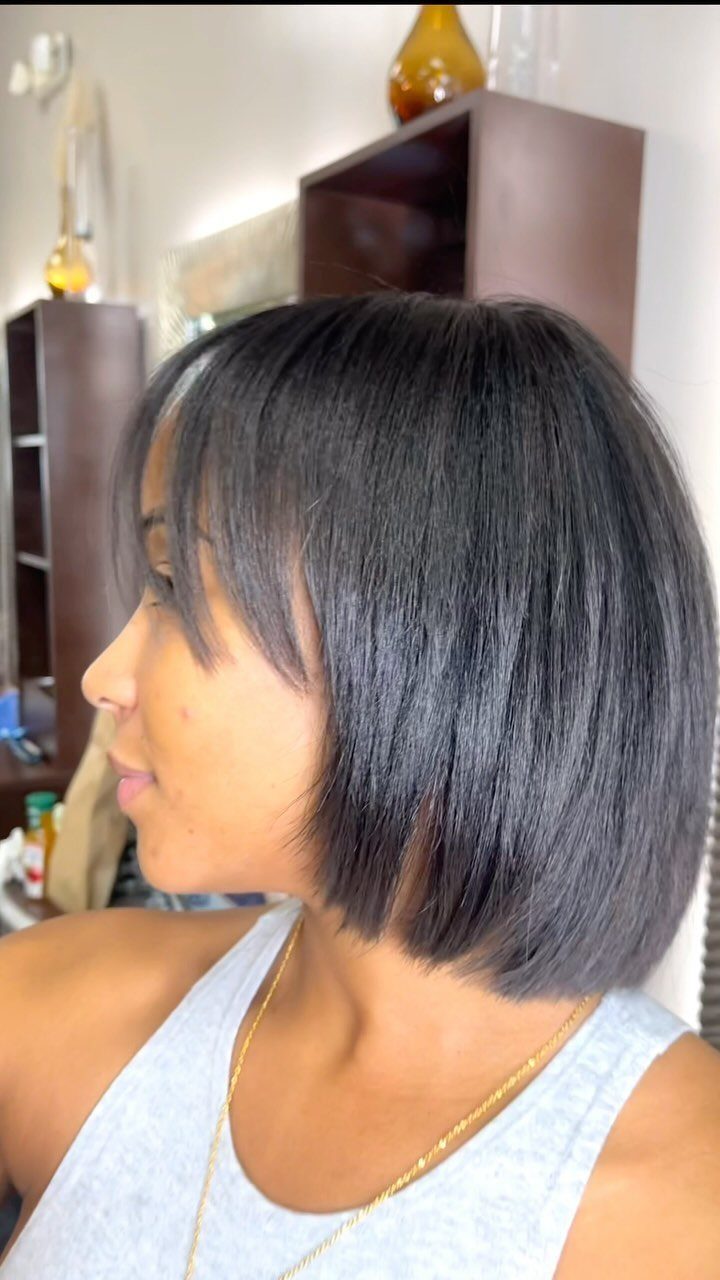
Smooth, polished layers keep the bob structured and neat, with little visible texture or separation at the ends. The shape comes from precise cutting and controlled styling, and the finish looks intentional rather than casual.
A flat iron or round brush work keeps the surface sleek, and a finishing serum or light oil adds shine without weight.
The look requires more styling time than a messy bob, but it holds up well through the day once it’s set.
13. Messy Layered Bob
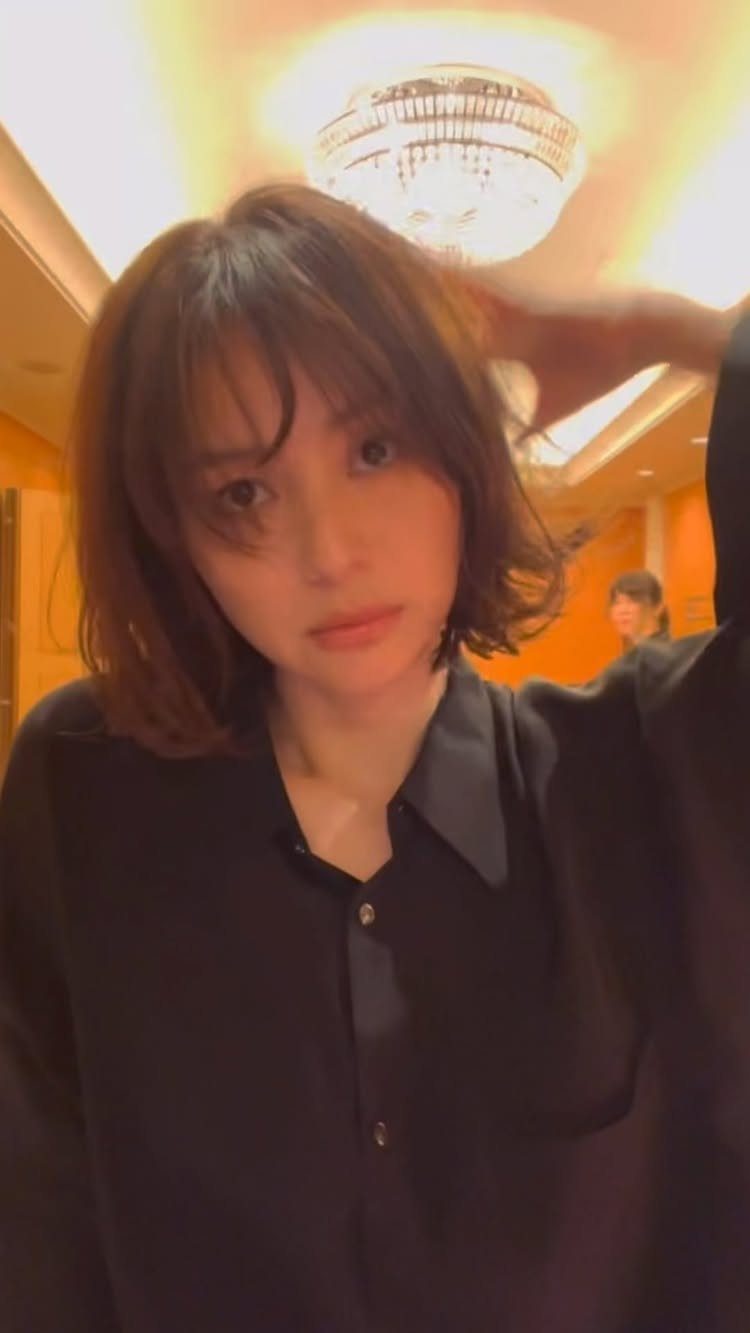
Layers cut at different lengths and angles keep the bob from looking too tidy, and the finish works best when you let it sit loose instead of smoothing it down.
A texturizing spray or sea salt mist adds grip and separation without stiffness.
This suits hair with some natural wave or enough thickness to hold shape without falling flat. Fine, straight hair may need more product to get the same tousled effect.
Air-drying after scrunching in a styling cream often gives enough texture. If the layers are cut right, the messy look holds without much work.
A bob with layers creates a messy, textured look that suits all hair types and textures,’ says Kamila Pruszek, Co-Owner of Blue Tit Portobello.
— ELLE
14. Bob for Fine Hair
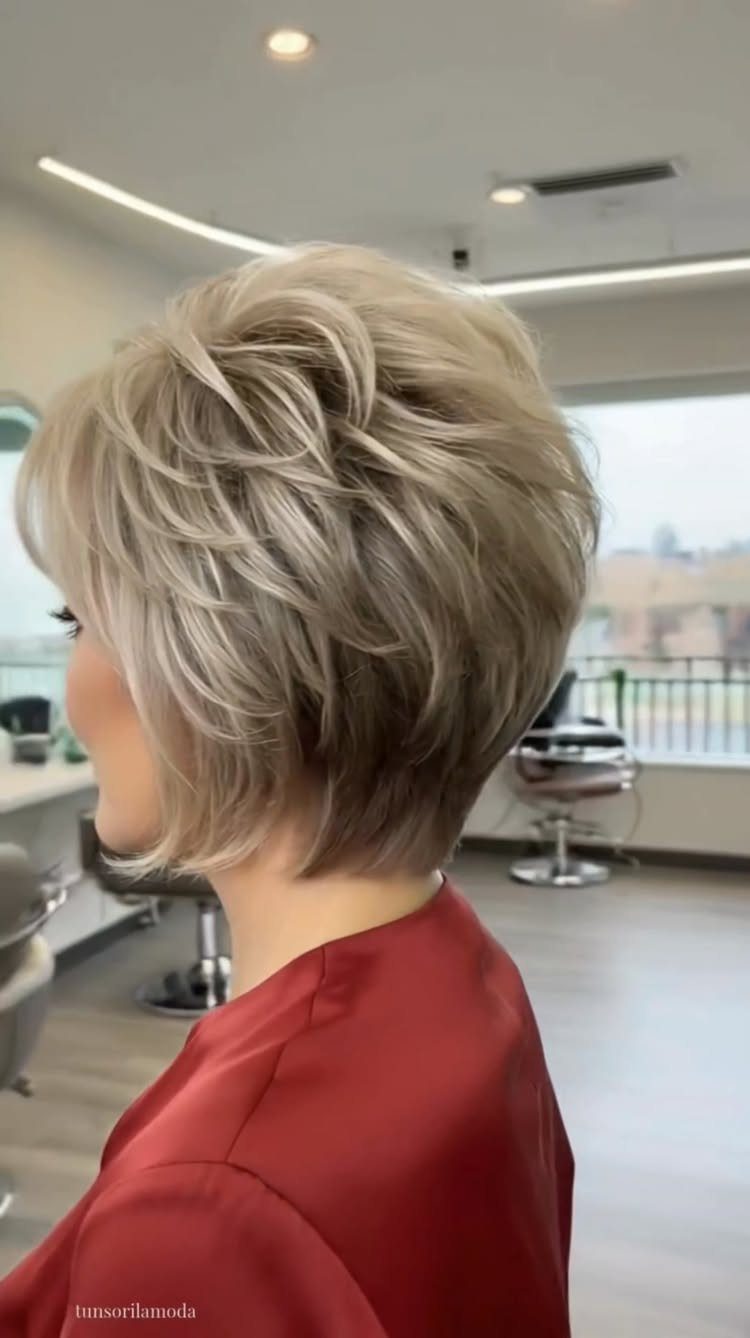
Fine hair loses body when too many layers cut through it, so I add shape by keeping the interior weight intact and texturing only the surface.
Layers placed around the face and through the surface give movement where it shows, and the interior weight stays intact so the perimeter looks full.
A volumizing mousse or root lift spray on damp hair before blow-drying adds hold. A round brush at the roots creates lift that lasts.
The blunt-ish perimeter makes the cut look thicker than it is, and the subtle layering keeps it from sitting flat.
15. Curtain Bangs
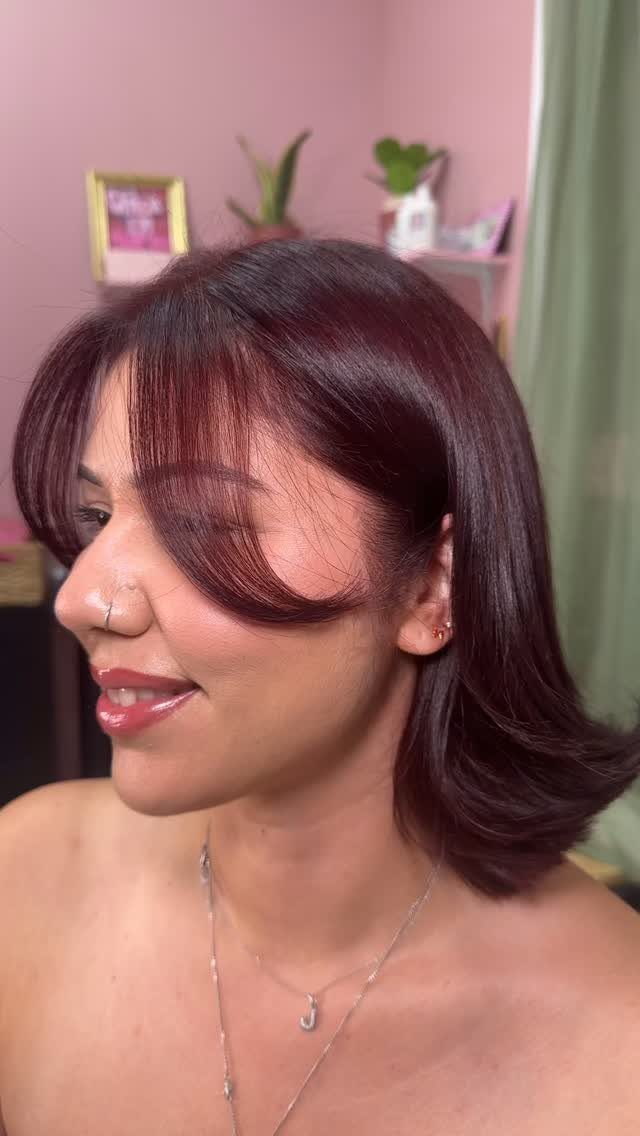
The fringe parts in the middle and sweeps to each side, blending into the layers that frame the face. The shape softens a strong forehead and highlights the cheekbones without the commitment of full bangs.
This works with most bob lengths and textures. Straight hair shows the clean part; wavy hair gives it more movement.
The bangs grow out gracefully because they’re already longer at the sides.
16. Feathered Bob
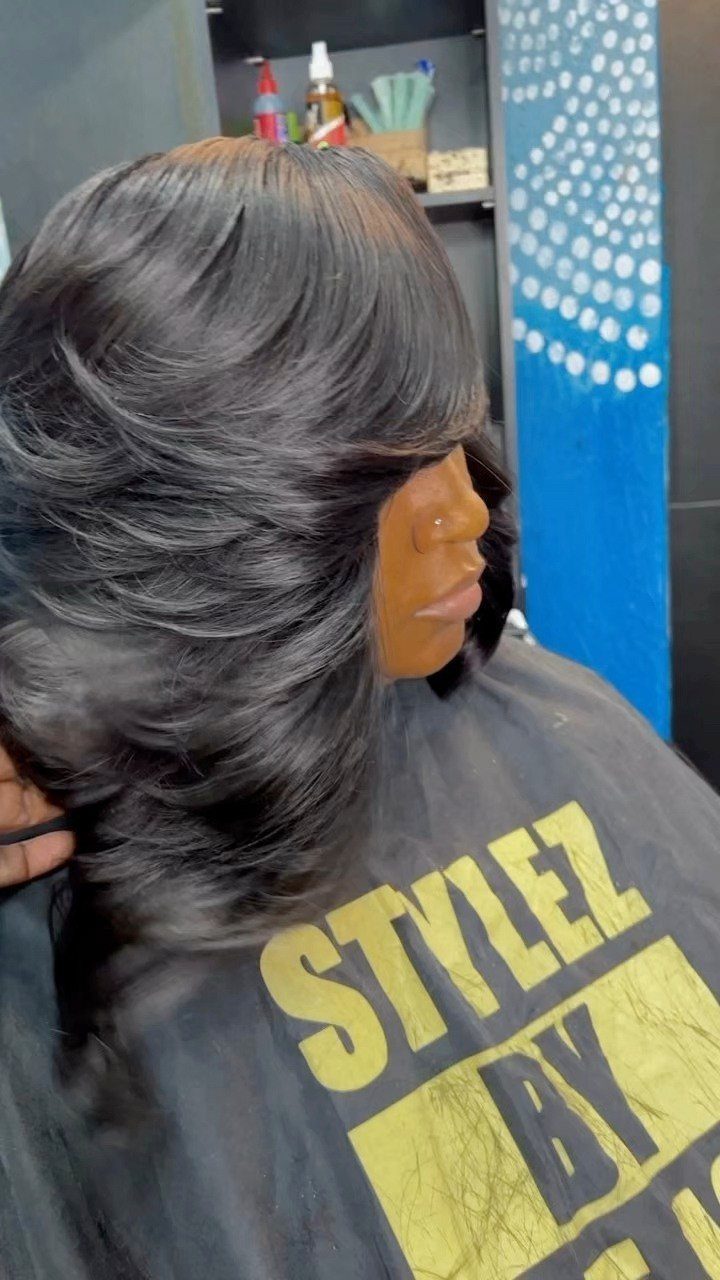
The ends are cut with a razor or point-cutting technique so they taper and separate instead of landing blunt. The feathered finish lightens the perimeter and gives the bob an airy, retro look that moves easily.
This works best on fine to medium texture. Thick hair can look feathered, but the density fights the lightness the technique usually creates.
A round brush while blow-drying pulls the feathered ends under and keeps them smooth. Minimal product lets the movement show.
17. Wispy Bangs
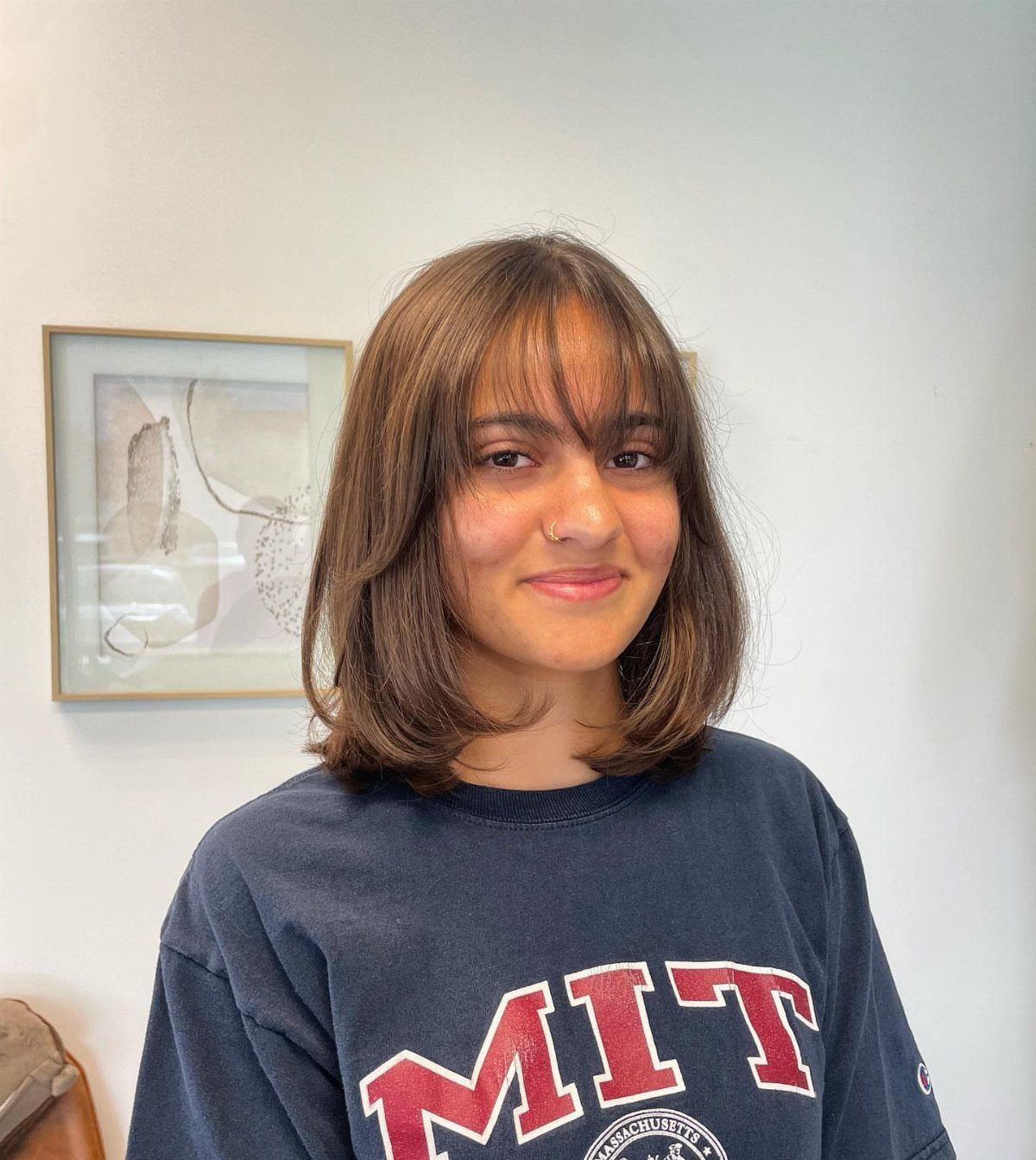
Wispy bangs sit lighter and thinner than a full fringe, often cut in fine sections that blend into the layered bob without a hard line. The effect softens the forehead without blocking it.
Fine hair holds wispy bangs well because the texture suits the light finish. Thick hair needs more thinning at the fringe to get the same airy look.
The bangs grow quickly but blend into the face-framing layers as they lengthen, so the grow-out stage is short.
18. Undercut Bob
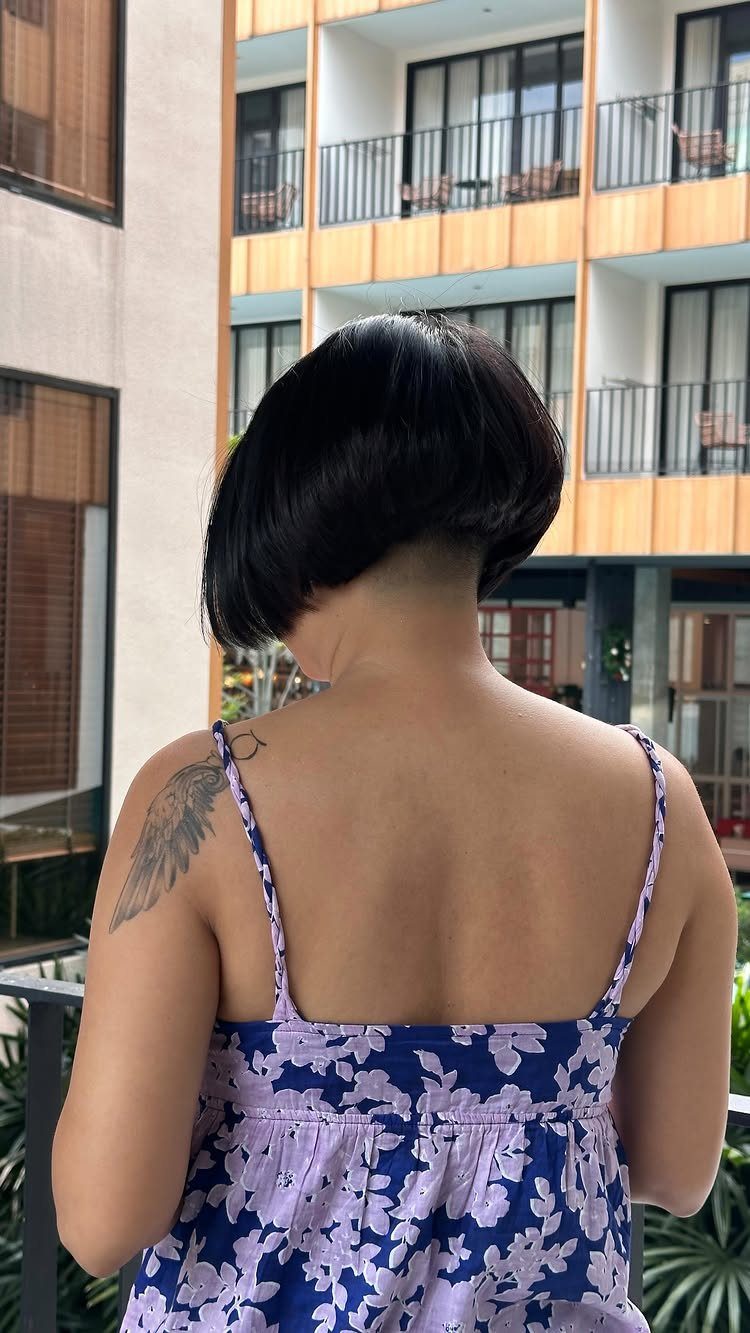
The undercut removes weight and bulk where it builds and cools the back of the neck in warm weather.
This works well for thick hair that feels heavy at the nape. The hidden undercut means the bob looks standard when styled down.
19. Shaggy Bob
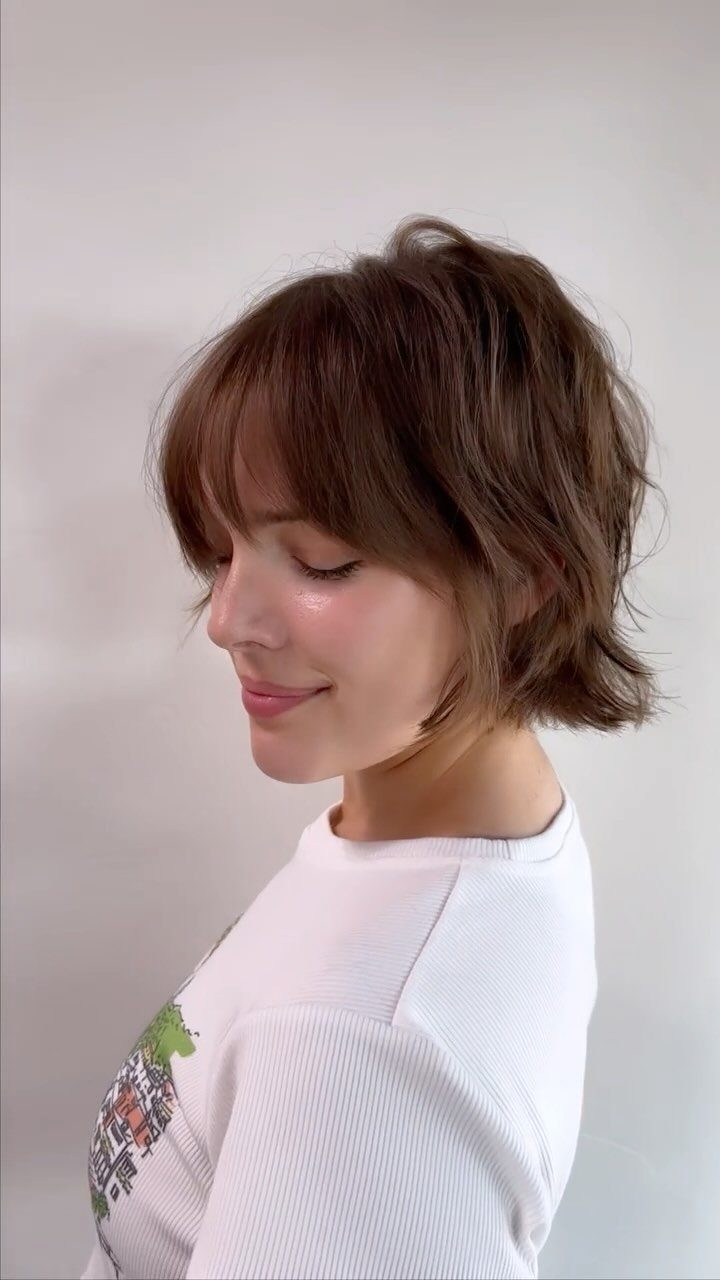
Choppy layers cut through the crown add volume and movement that makes the bob look full without styling it into place. The wispy fringe softens the forehead and blends into the texture instead of sitting as a separate piece.
This works best on hair with some natural body or wave. Straight hair can hold the shape with a texturizing spray and some scrunching while it dries.
Starting the dryer at the roots while your head is tipped forward gets air under the top layer and keeps the crown from falling flat. The messier it looks, the better it reads.
20. Curly Bob with Wispy Bangs
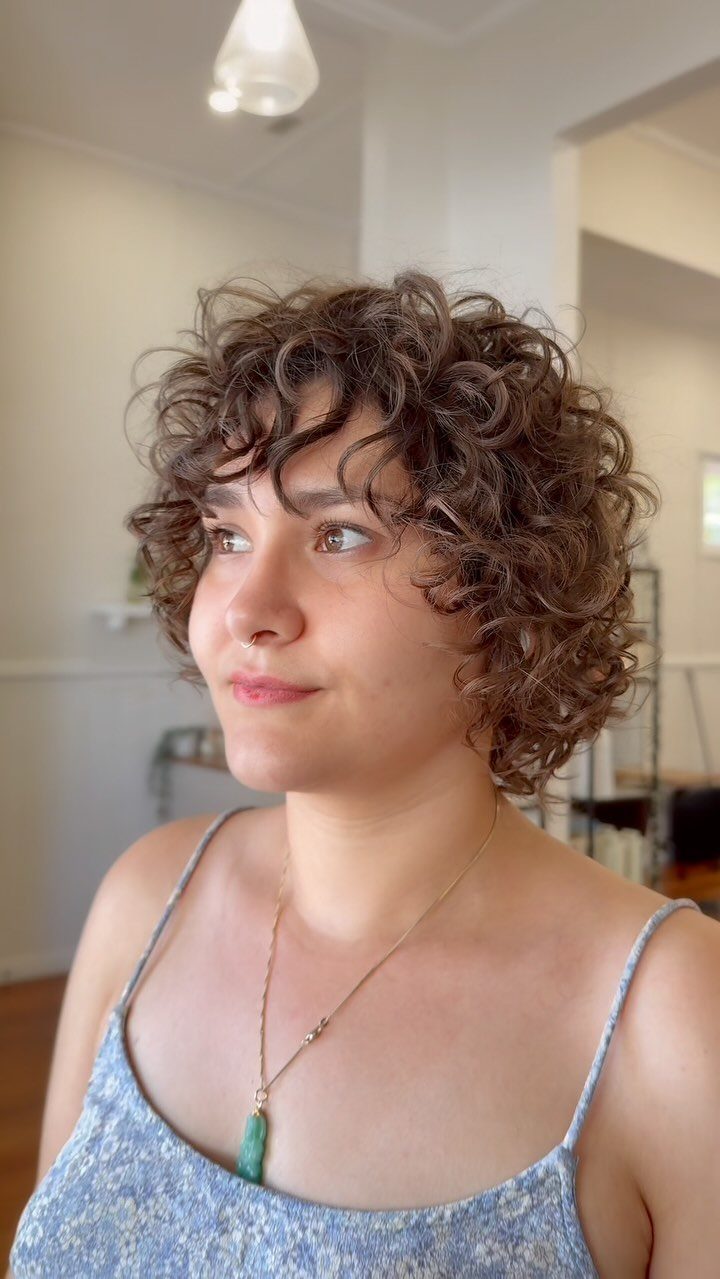
A few thin pieces across the forehead sit against curls without fighting them the way a blunt fringe does. Layers through the bob keep the curl pattern from expanding too wide, and the fringe frames the face without blocking it.
Fine, wispy bangs work with curls because they move with the texture rather than fighting it. Thick, blunt bangs would sit separate and need constant smoothing.
Air-drying or diffusing both work. The fringe grows into the face-framing layers without an awkward stage.
21. Balayage Layered Bob
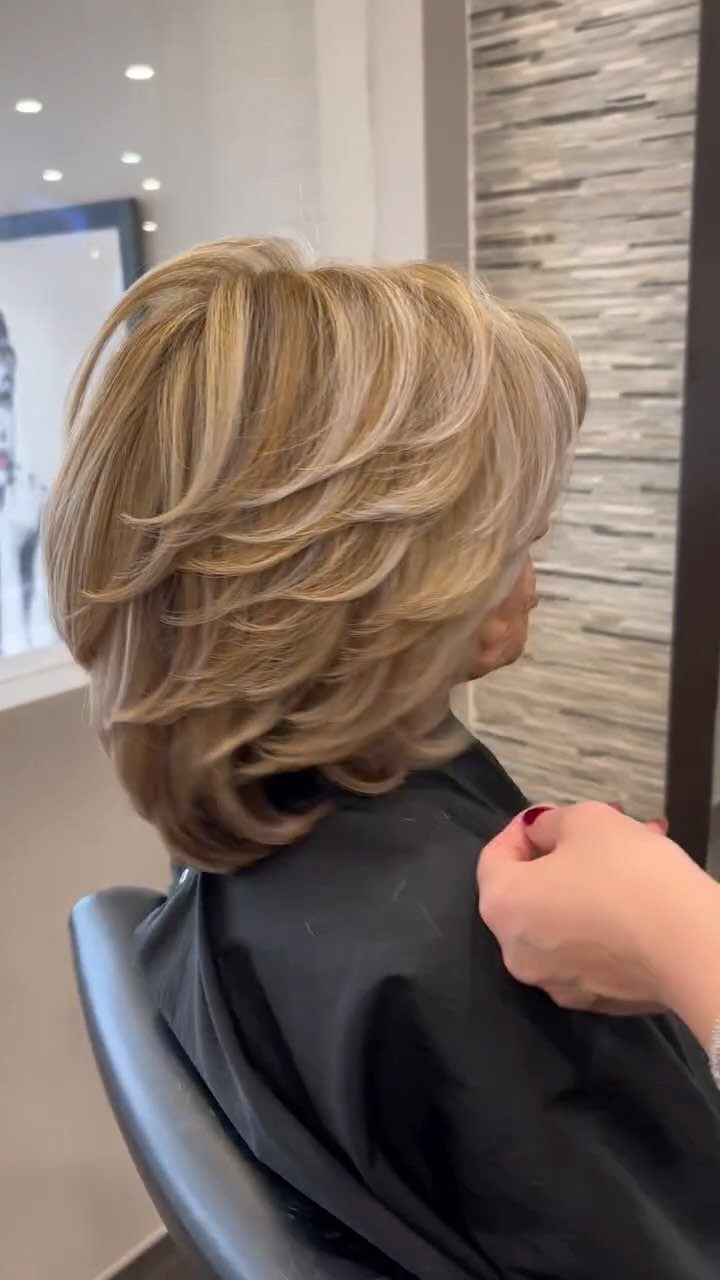
Balayage painted through layered sections makes each layer look separate and catches light where the cut turns. The hand-painted color sits on the surface and through the ends, so the dimension shows when the hair moves.
Straight hair shows the painted sections cleanest. The wave softens where one color ends and another starts, so you see the movement more than the line.
The grow-out stays gradual because balayage doesn’t start at the root. A toning gloss between color appointments keeps the brightness from fading warm.
22. Layered Bob with Highlights
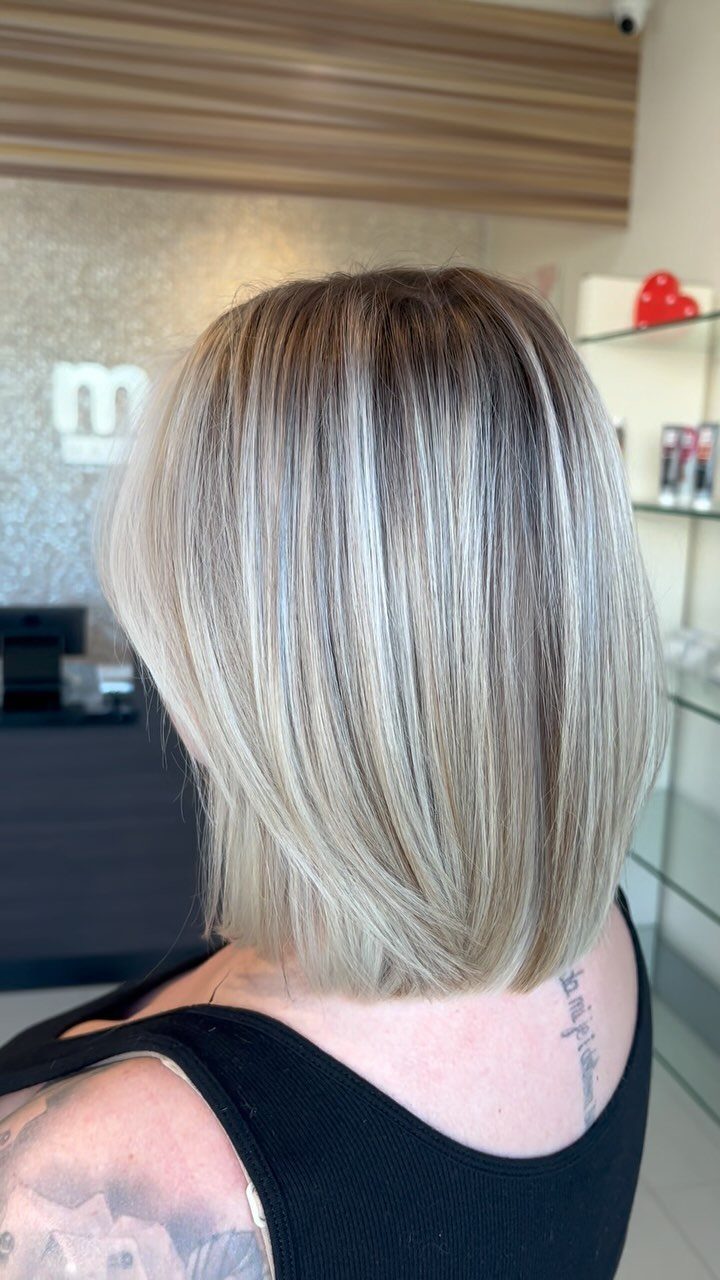
Fine highlights woven through layered sections add depth so the layers stand out instead of blending together. The lighter pieces catch light and make the cut look fuller than a solid color would.
This suits hair with enough texture or wave to show the dimension. Straight hair can work, but the highlights show more as streaks than as depth.
Darker color at the root means you can push your salon appointment back a few weeks without a visible grown-out stripe. A purple-toning shampoo keeps blonde highlights from turning brassy between salon visits.
23. Copper Layered Bob
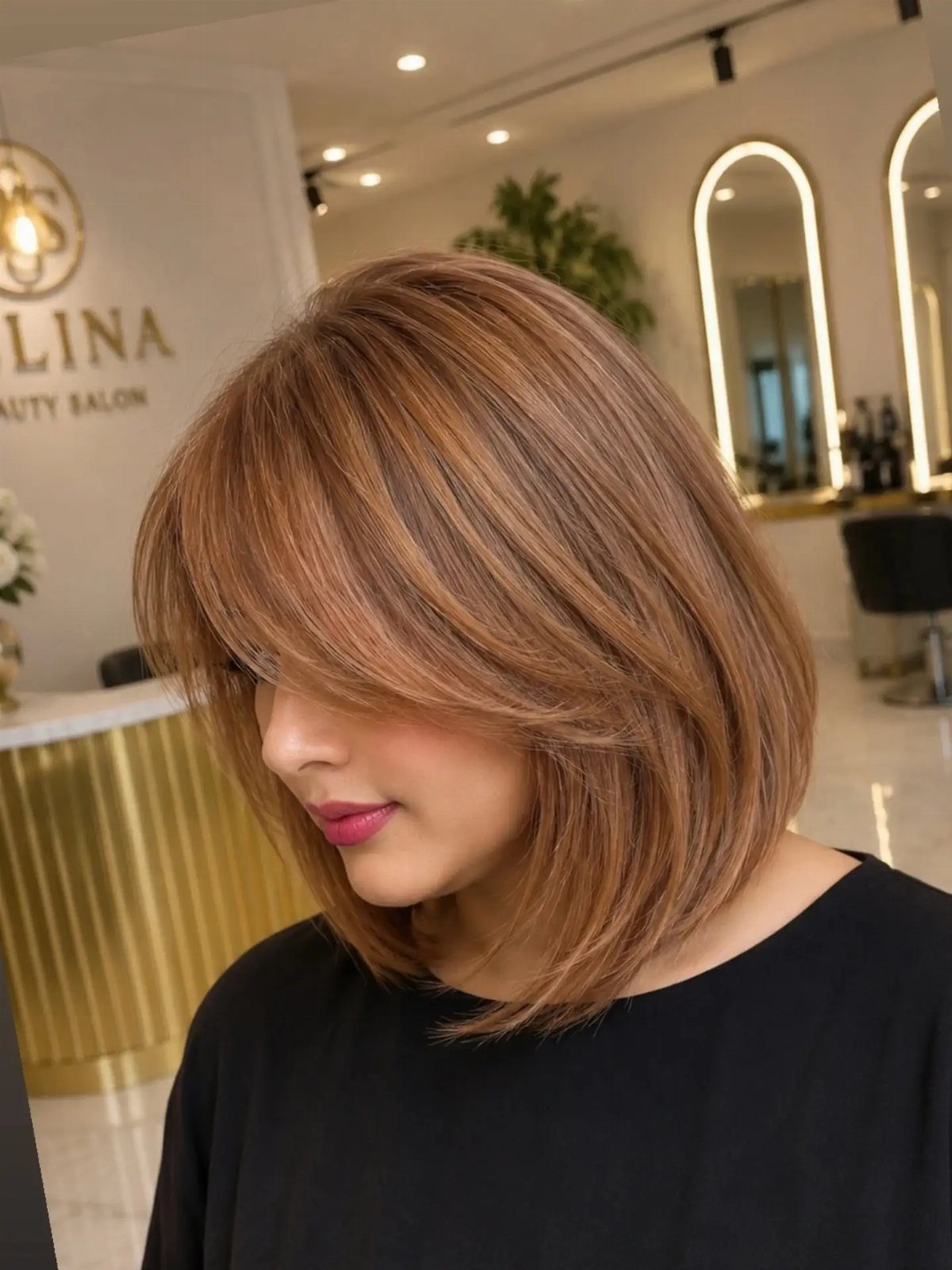
Warm copper reflects light off every layer and makes the cut’s shape visible in a way that flat color doesn’t. The tone adds dimension without needing highlights, and the layered ends look fuller because the color shifts as they turn.
Copper fades faster than cooler tones, so a color-depositing conditioner between salon visits keeps the warmth from pulling orange or brassy.
Side-swept bangs blend into the layers and grow out without a hard line.
24. Cherry Cola Bob
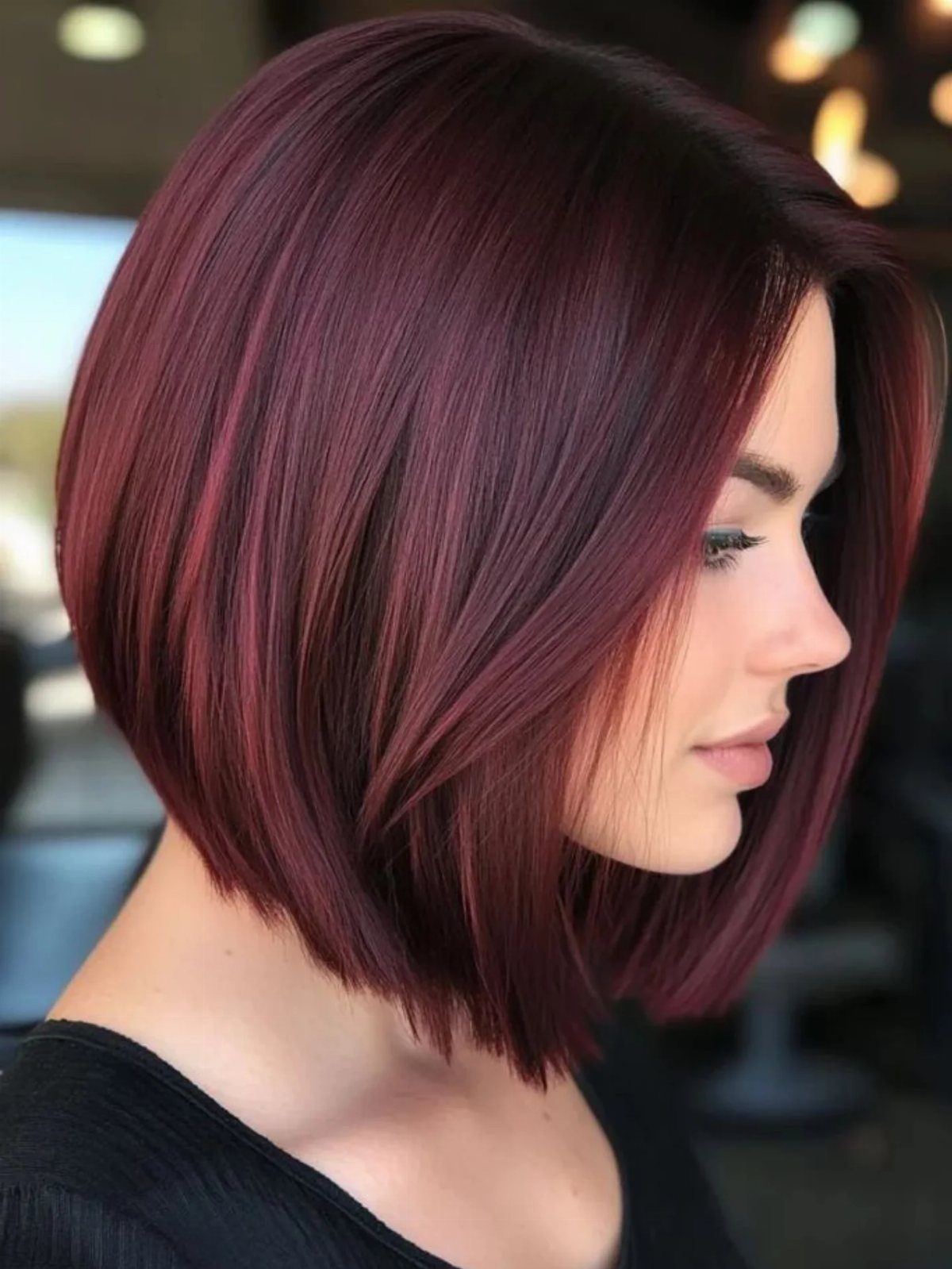
The cola-brown lowlights sit under the cherry-red and follow the shortest pieces at the front, so the layering shows more clearly.
The darker tones sit underneath and at the roots, so the red looks richer and the dimension holds as the color fades.
This color needs more upkeep than natural tones. A sulfate-free shampoo and a color-depositing treatment keep the red from washing out too fast.
The chin-length layers frame the jawline and cheekbones without shortening the back too much.
25. Lived-in Textured Bob
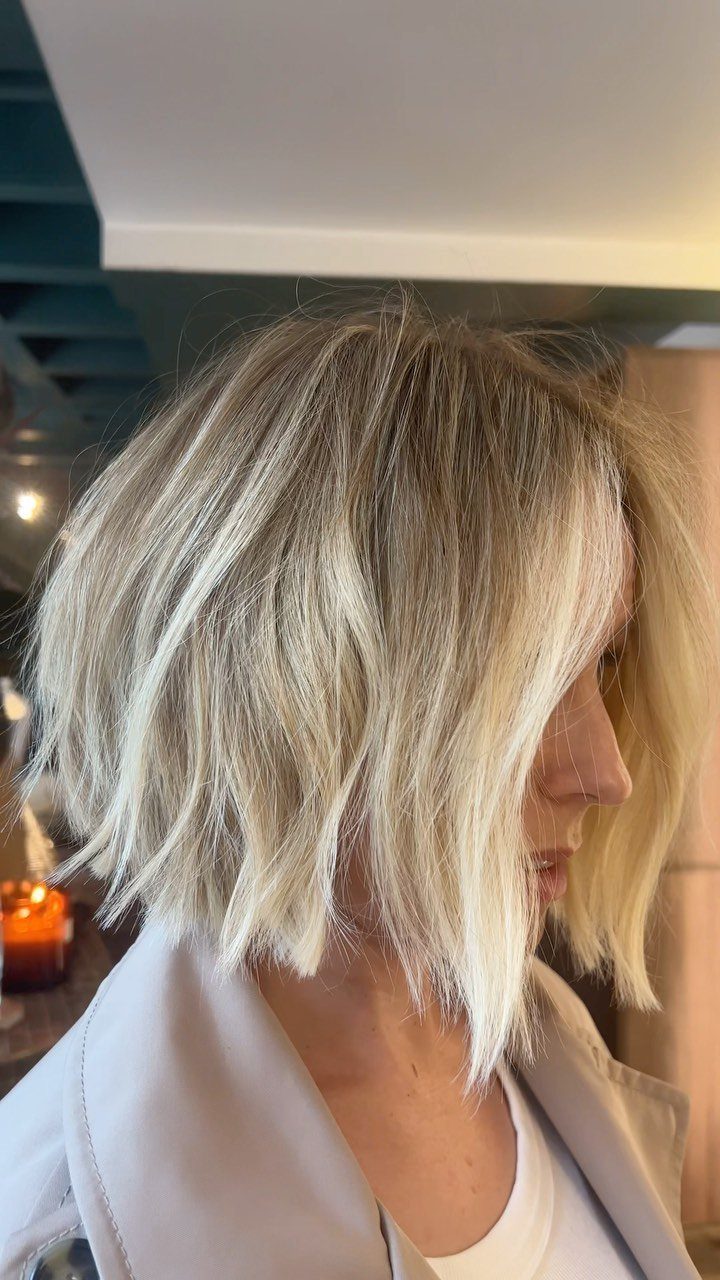
Piecey layers cut at uneven lengths give the bob built-in separation that looks like hair on its third day, even straight out of the salon. The fringe sits soft across the forehead instead of forming a blunt line.
A texturizing spray or light styling cream on damp hair before air-drying adds grip without making the ends stiff. The finish works when it looks a little undone.
Fine hair holds the piecey texture well because the layers don’t need much thickness to show separation. Thick hair reads messier because there’s more weight behind each piece.
26. Side-part Layered Bob
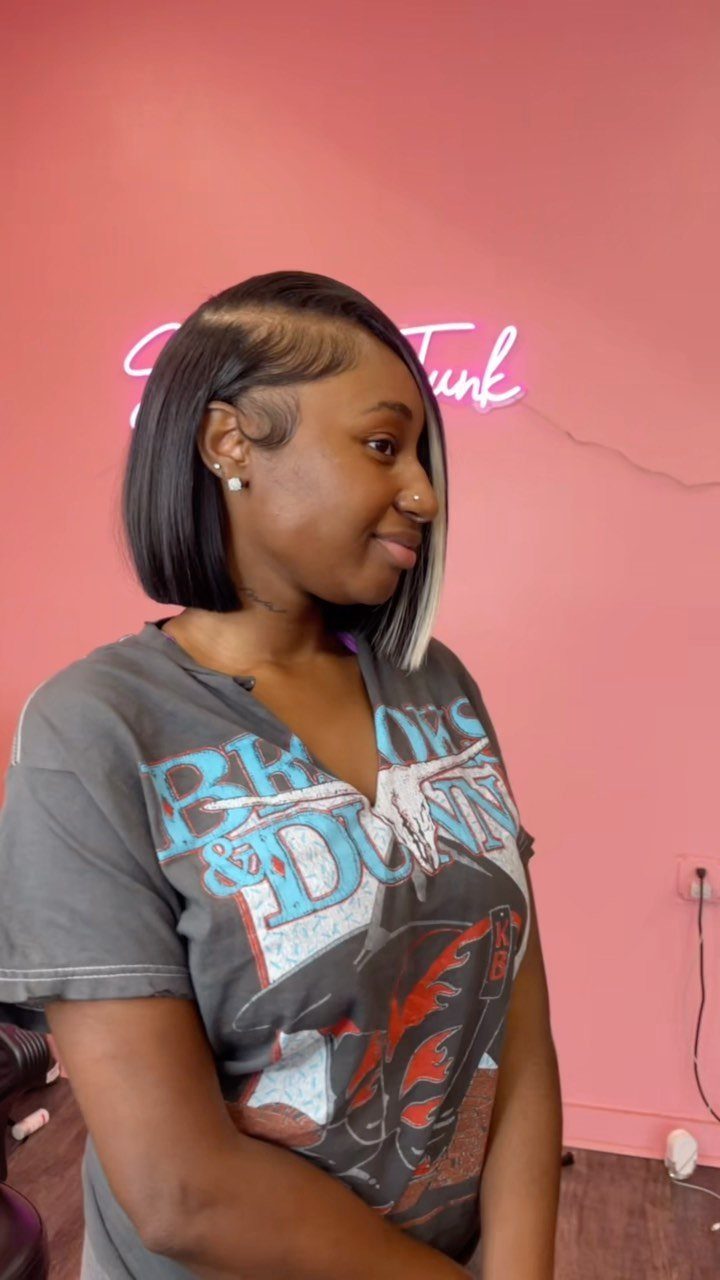
A deep side part shifts the volume to one side and gives the bob a polished, asymmetric finish that shows more of the face on the lighter side.
The layers fall across the forehead and frame the cheek on the heavier side.
Straight hair holds the part cleanest and keeps the sleek look sharp. Wave loosens the angle without losing the shift in weight.
Tension at the root with either tool holds the direction visible. The heavier side can be tucked behind the ear to open up the face.
27. Rounded Nape Bob
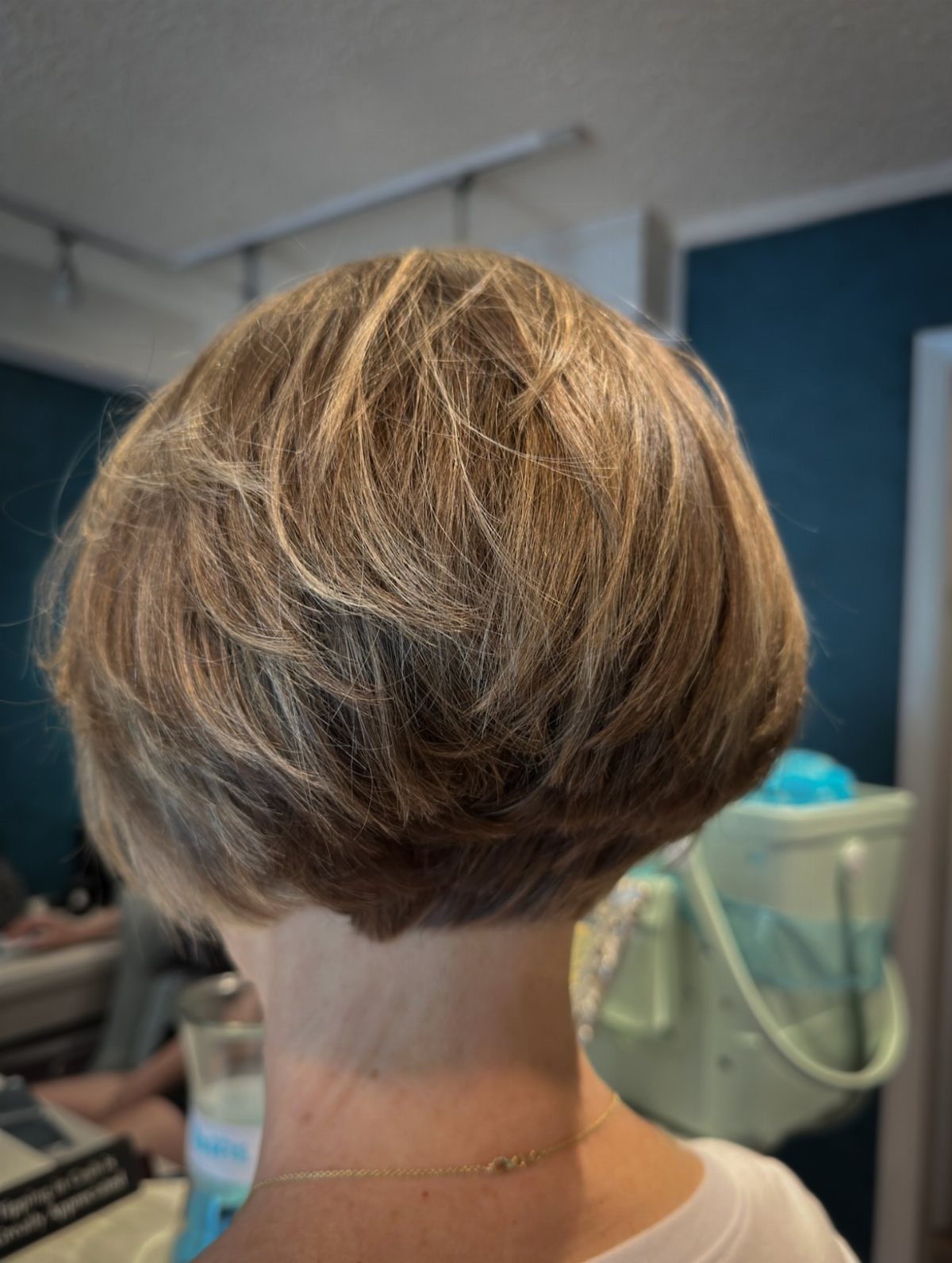
The nape rounds inward instead of tapering to a point, giving the back a compact, sculpted shape that hugs the head. The curve adds softness to the profile and keeps the cut from looking too sharp at the neck.
This works well on hair that grows dense at the nape. The rounded shape needs regular trims to keep the curve tight as the hair grows out.
Lift at the root and tension around the barrel bring the rounded shape forward. The finish looks intentional rather than grown out.
28. Air-dried Textured Bob
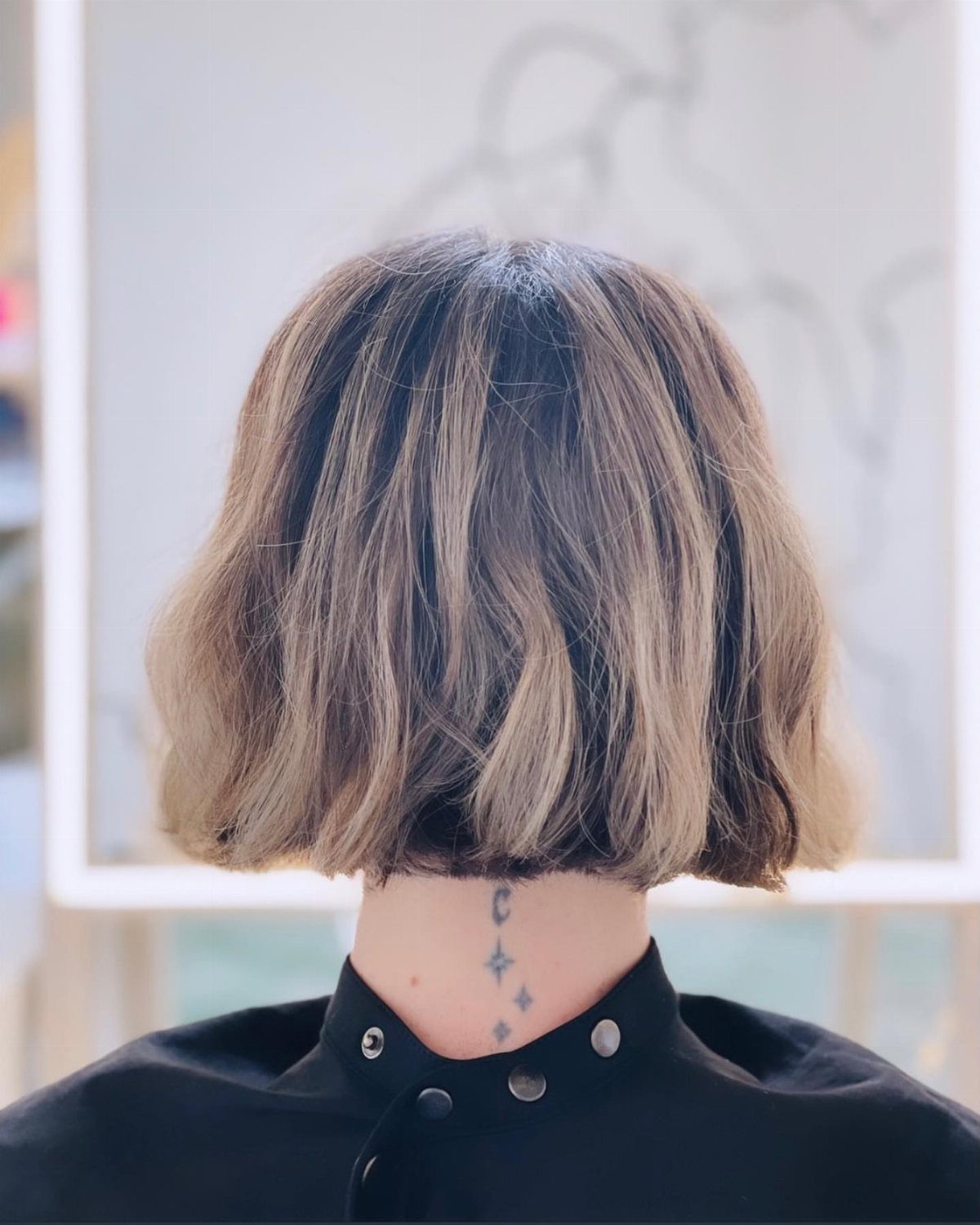
Cutting into the wave pattern means the hair falls where it wants to without a dryer.
The finish looks lived-in because the hair moves the way it wants to, and the layering keeps it from expanding too wide as it dries.
A styling cream or mousse scrunched into damp hair adds definition to the wave without weighing it down. The hair dries faster when left loose rather than clipped or pinned.
Straight hair won’t hold much texture when air-dried unless it has enough thickness to create body on its own.
Styling Short Layered Bobs
For hair that needs more shape, a diffuser works with natural volume instead of smoothing it down.
A small curling iron creates loose bends that add movement without looking set.
A volumizer applied close to the scalp adds height to fine hair if the formula stays light.
Too much cream or oil flattens layers and makes the cut sit heavy, while skipping product entirely can let volume drop faster than you’d like.
Dry shampoo between washes adds grip and keeps the layers from looking limp. Finger-tousling while the hair dries gives a soft, undone finish that works when you don’t want the cut to look too worked over.
Choosing Layers for Hair Density
A razor thins the ends and makes fine hair look sparse. Point-cutting or shear work leaves a cleaner edge that reads fuller.
Feathering the ends lightens the perimeter and keeps the cut from sitting too heavy or expanding into a triangle.
Choppy layers work on thick or medium-density hair but can look sparse on fine hair because the broken ends need enough density behind them to hold the shape.
Explaining the Cut to Stylists
Tell your stylist where you want the length to sit, whether that’s chin-length or slightly longer.
Say if you want bangs or face-framing pieces, and how much time you’re willing to spend styling each morning. A bob that looks polished needs more daily work than one that’s meant to sit loose.
Reference photos close the gap between what you’re picturing and what the stylist hears. Small differences in layer placement or graduation change the shape enough that a photo keeps you both working toward the same cut.
Point-cutting and razor cutting produce different finishes, so if you’ve had a cut you didn’t like, mention the technique so your stylist knows what to avoid.
Frequently Asked Questions
How to cut women’s hair short with layers?
The layers concentrate near the face and crown, leaving enough weight at the perimeter so the ends stay even instead of wispy.
Curly bangs should be cut dry so you can see where each piece actually sits after it springs up. A stylist trained in layered bobs will know how to place the layers so the shape holds between trims.
Should a short bob have layers?
Layers add movement and reduce bulk where it builds, making the bob easier to style and less likely to sit flat or heavy.
Fine hair benefits from subtle internal layering that preserves density at the perimeter, while thick hair needs more aggressive thinning through the interior to keep the cut from looking like a helmet.
Strategic placement matters more than the number of layers.
Is bob cut short hair?
A bob typically sits near chin length, jaw length, or just above, though some variations like the French bob or pixie bob go shorter and clear the nape entirely.
The length varies depending on the specific style, but most bobs fall somewhere between lip length and collarbone. Shorter bobs read as cropped; longer ones approach lob territory.
Are short layered bob haircuts easy to maintain?
Blended layers create built-in shape that holds without extensive daily styling, so air-drying or a quick blow-dry with your fingers often works. Hair with natural wave or texture needs even less effort because the layers follow the movement already there.
Is a layered bob good for fine hair?
Fine hair works well in a layered bob when the layers stay subtle and the perimeter keeps enough density to look full, with most of the texturing placed at the surface and around the face.
Too many layers cut through the interior remove the thickness fine hair needs to hold shape.
What face shape suits a short layered bob?
The front length and the point where layers begin can be moved to suit nearly any face shape.
Longer layers work better for rounder faces or sharper jawlines because they soften the angles without shortening the line too much. Face-framing pieces and curtain bangs highlight cheekbones and balance the proportions on heart, square, and oval faces.
Can I get a short layered bob with bangs?
Curtain bangs blend naturally into the layers and grow out gracefully because they’re already longer at the sides, while wispy bangs sit lighter and work well with curly or wavy bobs.
Side-swept bangs frame the face without the commitment of a full fringe. Blunt bangs can work but need more frequent trims and suit straight or slightly wavy hair best.





