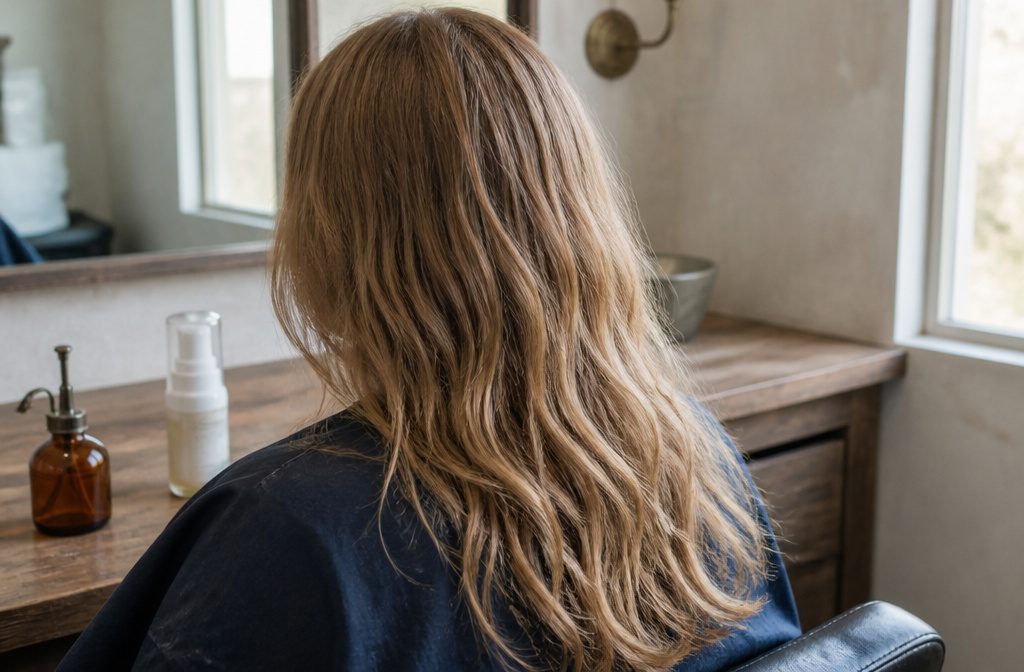
Type 2A hair is the loosest wavy texture, fine-stranded and prone to falling flat at the roots while forming gentle S-bends through the mid-lengths and ends.
The wave rarely holds without help, and heavy products designed for tighter curls flatten it fast. Lightweight mousses like Bed Head Curls Rock Amplifier and air-drying or low-heat diffusing keep the pattern intact without weighing it down.
What Type 2A Hair Looks Like
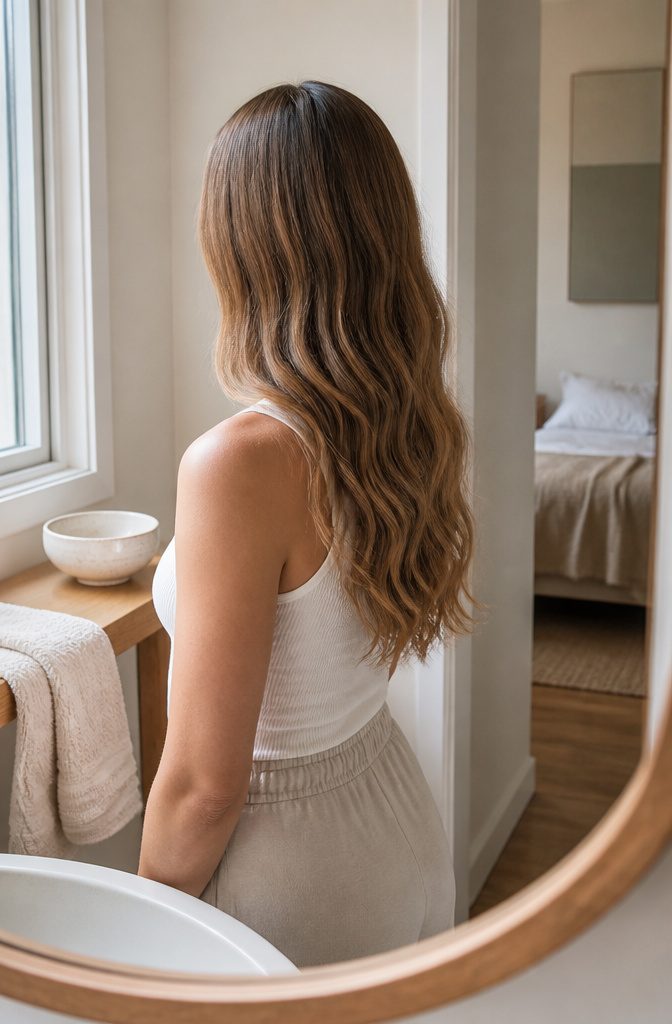
Type 2A sits at the loosest end of the wavy spectrum.
Roots tend to fall flat or nearly straight, then a gentle S-shape appears through the mid-lengths and ends. The pattern is subtle enough that plenty of people mistake it for straight hair that just won’t behave.
Strands are fine or fine-to-medium, silky to the touch, and the wave rarely holds for long without help.
Heavy products flatten it fast. Type 2 hair overall describes wavy textures, and within that group you get three subcategories: 2A is the softest, 2B adds more defined S-waves, and 2C leans closer to loose curls.
The texture lands somewhere between straight and curly, which means it needs a different approach than either.
I find that recognizing the fine strand diameter and the way the wave starts partway down explains most of what works and what weighs it down.
1. Why 2A Hair Looks Flat and Gets Frizzy
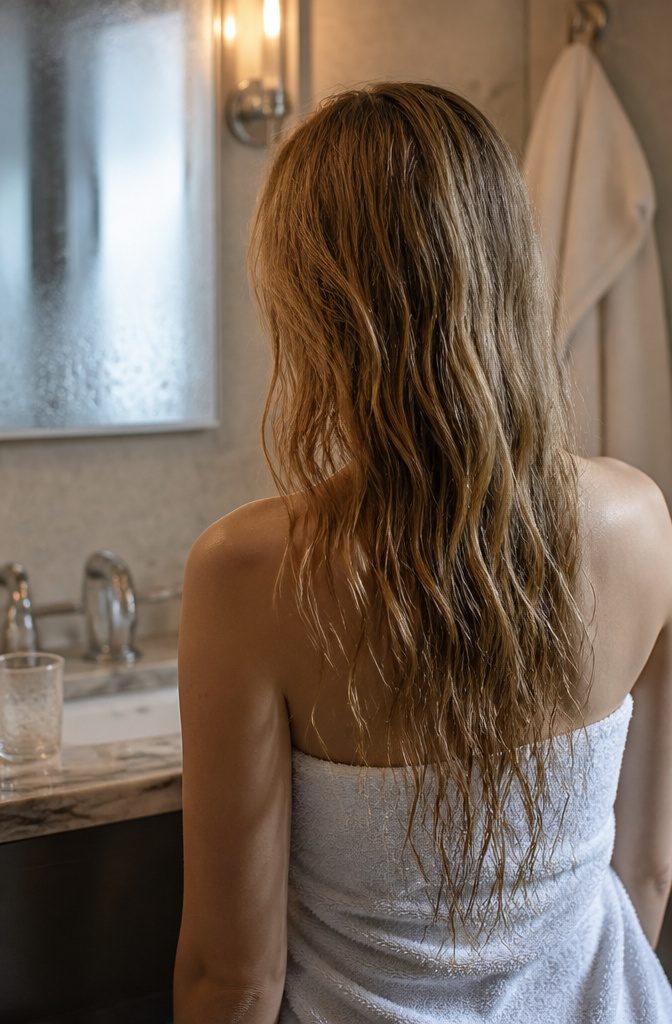
The fine, silky texture that makes 2A hair so easy to brush also means it collapses under its own weight.
The wave pattern is subtle from the start: loose S-bends through the mid-lengths and ends, often with straight roots that refuse to lift.
Heavy products, humidity, or even sleeping on damp hair can pull those waves completely flat, leaving strands that read as limp rather than wavy.
Frizz creeps in because the cuticle is naturally finer and more reactive to moisture in the air. The same loose shape that won’t hold a curl also won’t hold definition without help, so individual strands separate and catch light differently.
I find the worst combination is when the roots go flat and the ends frizz out at the same time, which happens when you layer too much product or skip a light hold entirely.
The wave wants to form, but it needs support without weight.
2. Pick Lightweight Shampoo and Conditioner
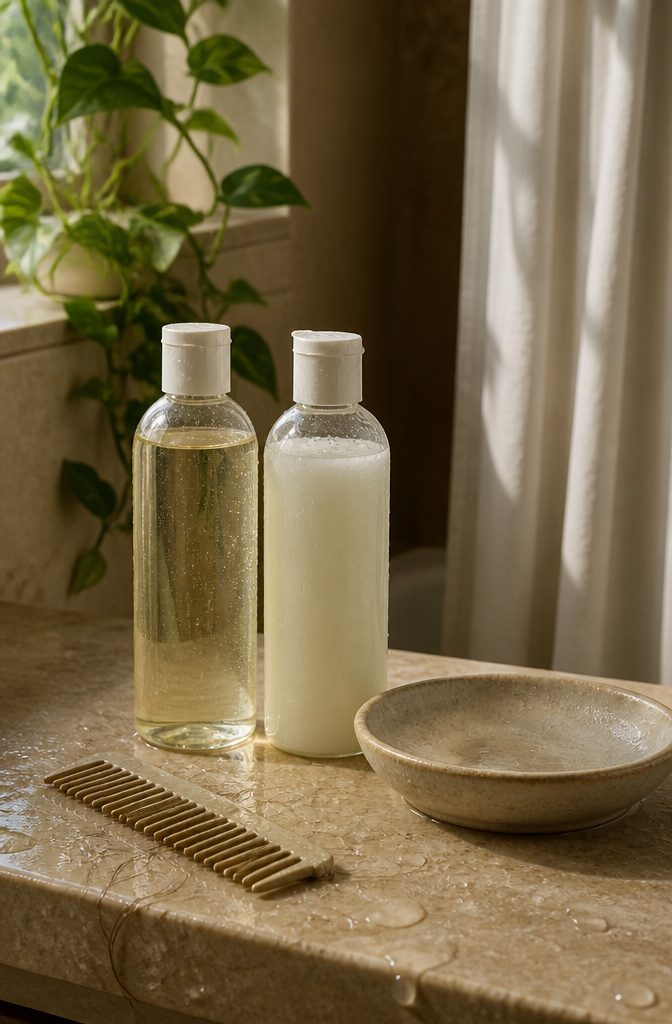
The shampoo you choose decides whether your waves stay light or collapse by lunchtime.
Sulfate-free formulas that clean without stripping keep 2A hair from looking flat or greasy. Heavy moisture shampoos marketed for curls add weight that fine, wavy hair can’t carry, and the bounce disappears.
Lightweight cleansers prep the wave pattern without flattening it. BIOTOP Professional 911 Quinoa Shampoo runs $37 and fits the brief: enough moisture to balance the strand, clarifying enough to keep the scalp clean, and no residue sitting on the hair afterward.
Products labeled "heavy moisture" or "curl-restoring" belong on thicker textures. On 2A, they make hair look unwashed instead of bouncy.
Conditioner follows the same rule.
A hydrating formula that rinses clean works better than anything that clings. You want soft fiber that still moves, not coated strands that lie limp against the head.
3. Add Moisture Without Weighing Down the Wave
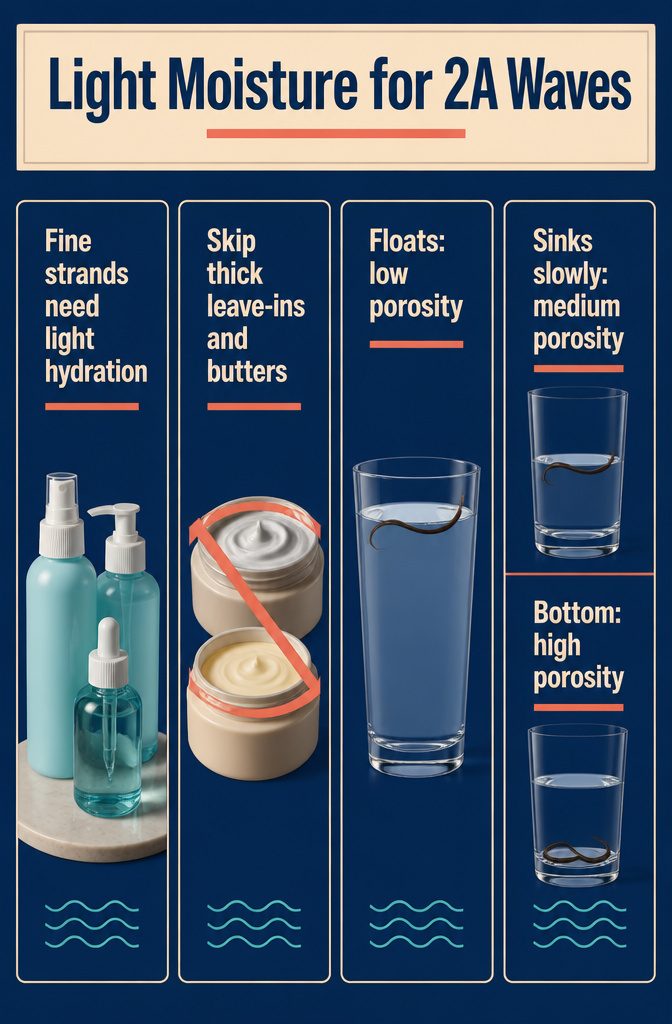
Wavy hair needs hydration, but fine 2A strands flatten the moment you reach for the heavy creams and oils that work on tighter curl patterns.
The balance sits between adding enough moisture to keep ends from drying out and keeping the formula light enough that the wave doesn’t collapse.
Skip thick leave-ins and butters — they sit on the hair rather than sinking in, and the weight pulls the S-shape straight by midday.
Porosity decides how your hair absorbs moisture in the first place.
High-porosity hair has open cuticles that let water in easily but also let it escape, so it dries out fast. Low-porosity hair holds tightly closed cuticles that resist moisture altogether.
Medium porosity keeps a balance and holds hydration without constant reapplication. You can check yours with a strand test: drop a clean strand of hair into a glass of water.
If it floats, porosity is low. If it sinks slowly, it’s medium.
If it drops straight to the bottom, it’s high. That result tells you whether you need formulas that penetrate or ones that seal.
4. Scrunch, Air-Dry, or Diffuse on Low Heat
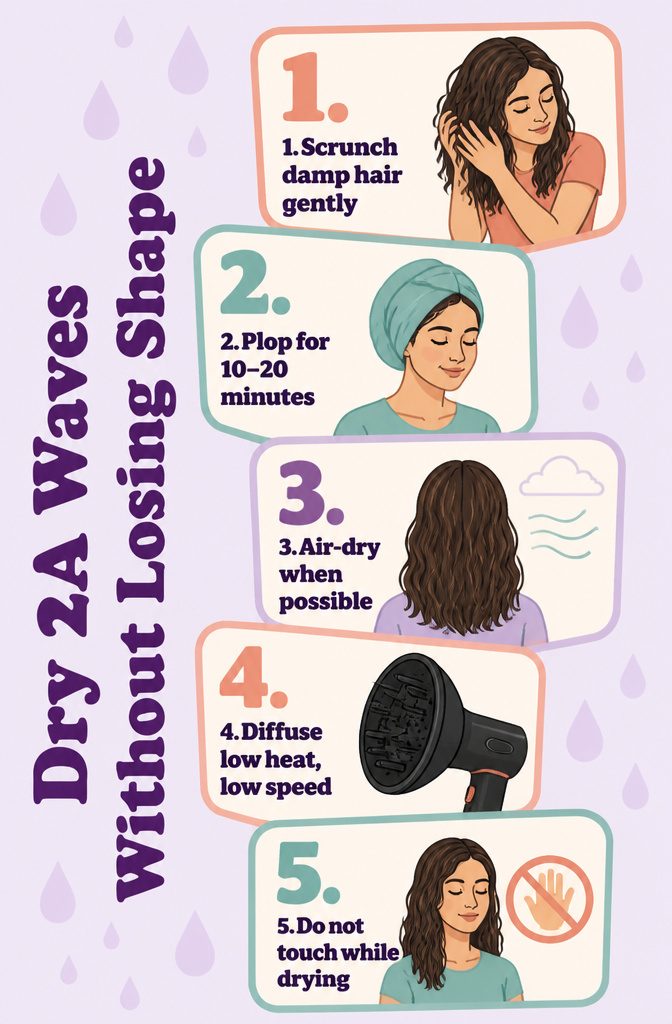
The wave you have after washing can vanish if you handle your hair too much while it dries. Scrunch damp hair gently to encourage the wave pattern, then step back and let it set.
Air-drying preserves the texture better than heat, but if you need speed, a diffuser on low heat and low speed keeps waves intact without blowing them straight.
Plopping helps if your waves need more definition. Once you’ve scrunched in a light mousse or gel, wrap your hair in a cotton T-shirt or microfiber towel for 10 to 20 minutes.
The fabric holds the waves close to your scalp and absorbs excess water without roughing up the cuticle. When you unwrap, the pattern should look more pronounced.
Resist touching or brushing while your hair dries.
Each time you run your fingers through or pull a brush across damp waves, you stretch them out and invite frizz. Let the wave form on its own.
5. What Flattens 2A Hair and How to Avoid It
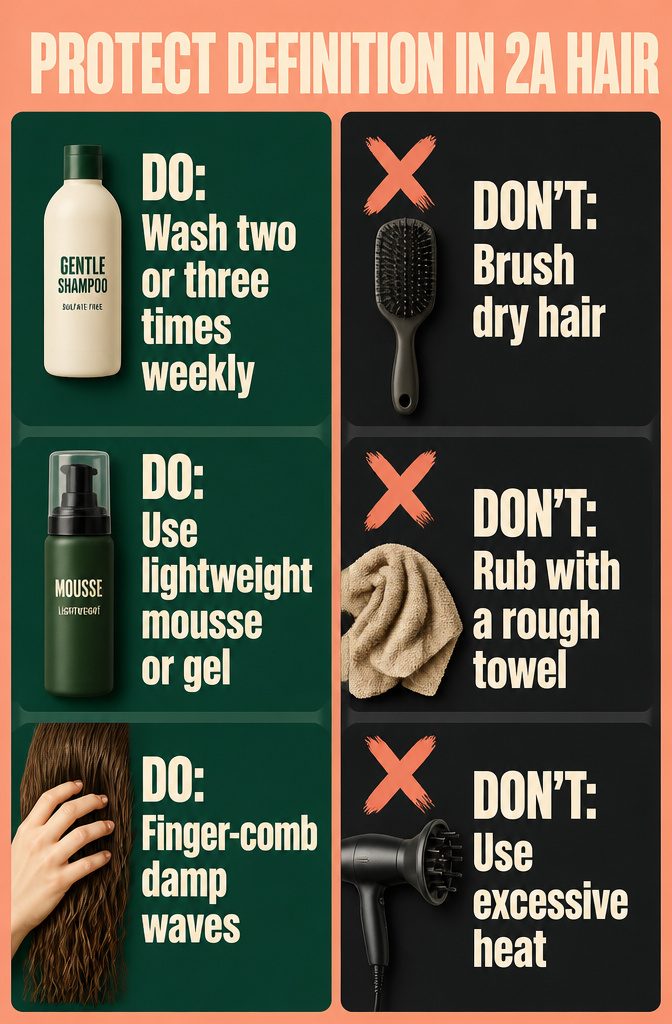
Six Ways 2A Hair Loses Definition
Fine, wavy hair flattens and frizzes faster than almost any other texture. The pattern is there, but a few common habits erase it by noon.
- Daily washing strips the natural oils that keep waves springy and defined. Without those oils, the hair dries out, frizzes, and loses bounce. Wash two or three times a week instead, letting moisture build between washes.
- Heavy products weigh down fine strands, leaving hair looking flat and greasy rather than wavy. Lightweight mousses and gels hold the pattern without collapsing it at the root.
- Brushing dry hair breaks up the wave and invites frizz. Finger-comb damp hair into shape, or use a wide-tooth comb in the shower with conditioner still in.
- Towel rubbing roughens the cuticle and turns smooth waves into a frizzy mess. Scrunch gently with a microfiber towel or an old t-shirt instead.
- Touching hair while it dries disrupts the wave as it sets. Let it air-dry or diffuse without running your hands through it every few minutes.
- Excessive heat from flat irons and blow dryers dries out fine hair fast, leaving it limp and prone to frizz. If you must use heat, keep the diffuser on low and stop while hair is still slightly damp.
6. Cuts That Add Movement and Body
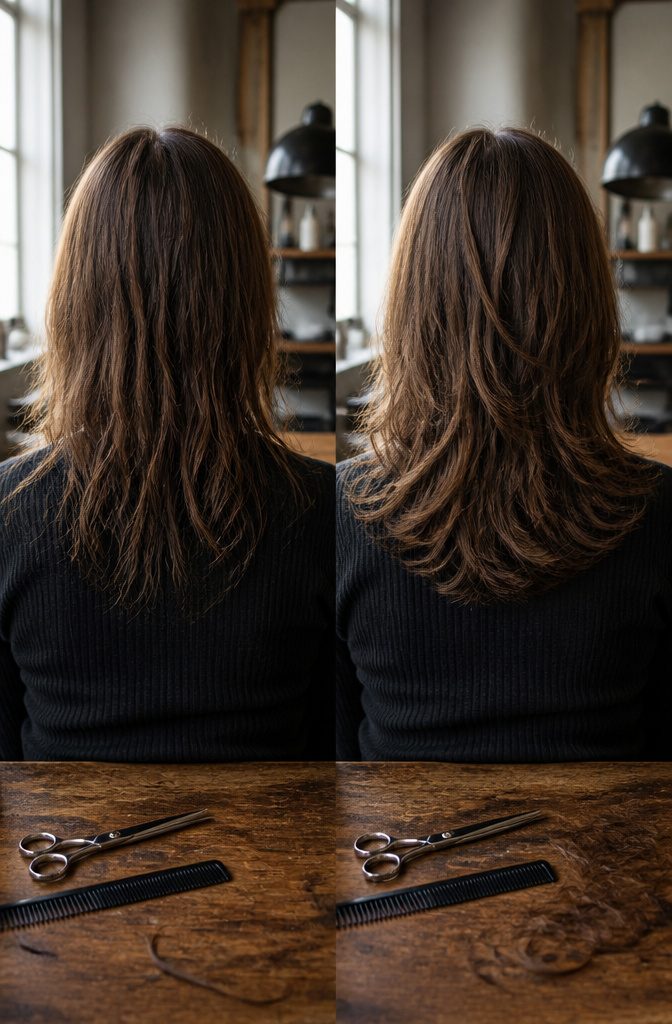
Cuts That Add Movement and Body
A long layered cut keeps weight from dragging the wave flat and lets the natural bend show through, especially at the ends.
Layering adds dimension and stops 2A hair from looking limp past a certain length. If you prefer something shorter, a shoulder-length shag or a layered bob gives you the same volume lift without the weight problem.
For those who like their hair cropped, a long shaggy pixie with tousled layers works well. Skip super graphic lines and harsh parts; texture and movement matter more than precision with this hair type.
Shoulder length or a little longer works well.
Go much past that and the hair can start looking stringy. Trim every 10 to 12 weeks to keep ends clean and the shape intact.
This isn’t just about split ends; it’s about maintaining the wave pattern itself. Let it go too long and the cut loses the structure that was doing the work.
7. Products for Volume, Definition, and Frizz Control
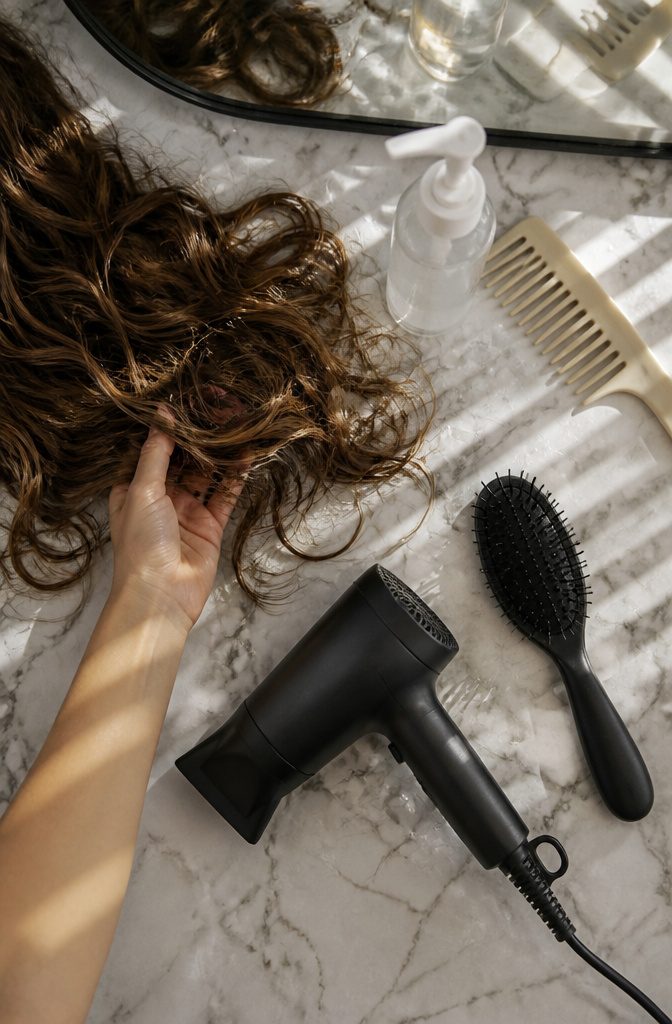
Lightweight mousse and light gel give 2A waves the structure they need without the weight. Mousse works best applied to damp hair and scrunched upward to lift the root and define the S pattern.
Bed Head Curls Rock Amplifier adds both volume and hold, and hairstylist Marcela Hernandez uses Bed Head After Party to smooth without flattening.
For frizz control, anti-frizz serums and creams keep the texture smooth. Mizani Miracle Cream delivers moisture, and Joico’s Luster Lock adds shine and softness.
Detangling matters because fine 2A hair tangles easily. Owners on Reddit mention brushing dry waves causes frizz but skipping it leads to knots.
One user brushes with conditioner in the shower, then scrunches with JVN air dry cream and re-defines waves with water on dry hair. The Wet Brush Original Detangler ($13) or a wide-tooth comb work without snagging.
For lightweight moisture that does not weigh down waves, Allyoos Juice Drench ($30, 99.4% plant- and water-based) hydrates without buildup. The Laifen Swift Special hair dryer ($117.29, reduced from $169.99) uses ionic technology and smart heat to dry waves quickly without encouraging frizz.
Overnight Braiding and Oil Masks
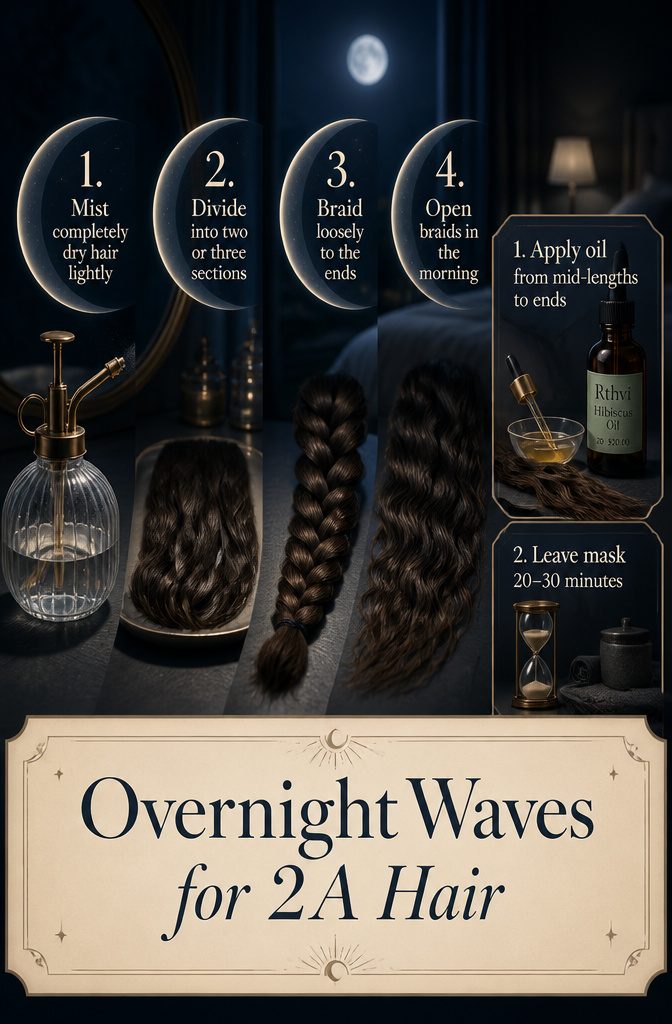
Braiding slightly damp hair before bed is the simplest way to wake up with stronger, more defined waves without heat.
I mist my hair lightly if it has dried completely, divide it into two or three sections, and braid loosely down to the ends.
The moisture sets the wave pattern overnight, and opening the braids in the morning gives 2A hair more texture and hold than it would show on its own.
Oil masks help add softness and shine without the heaviness that comes from leave-in products.
Coconut, argan, olive, jojoba, or almond oil works well when applied from mid-length to ends and left for twenty to thirty minutes, though some people leave the oil in for four to six hours or overnight if their hair feels especially dry.
I use these masks once or twice a week, depending on how the ends are behaving.
Rthvi Hibiscus Oil runs about twenty dollars and layers in protein along with the moisture, which can be useful if the hair feels limp between washes.
Refresh Between Washes Without Rewetting
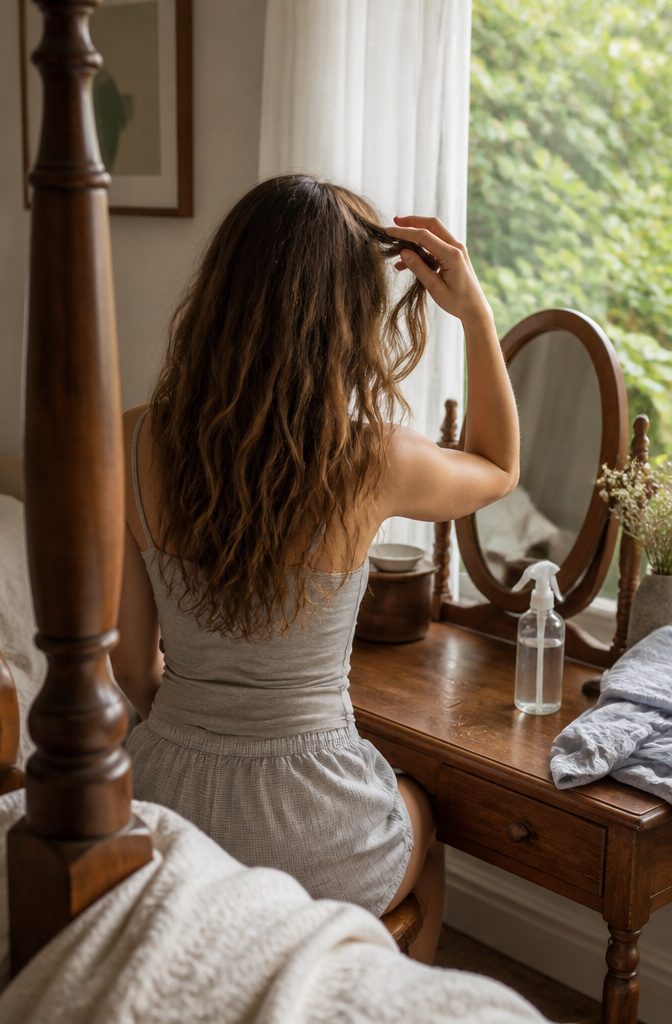
On day two or three, mist sections lightly with water or a wave-refresh spray rather than going back to the sink. You want to reactivate the wave pattern without soaking the hair and starting the whole drying routine over again.
I scrunch gently after misting, sometimes twisting a few pieces to reshape anything that flattened overnight. That brings back definition without the weight and handling that come with a full rewash.
Type 2A sits in an odd middle ground: it does not get as greasy as straight hair or as dry as tighter curl patterns, so it mostly just needs a nudge to remember its shape.
Rewetting fully strips whatever natural texture built up since the last wash and adds unnecessary friction.
A light refresh keeps the wave intact and cuts down on daily manipulation, which matters when the hair is already fine and prone to flattening.
Frequently Asked Questions
What is 2A hair?
2A hair is the loosest wavy texture, sitting at the softer end of type-2 patterns. Roots grow in nearly straight or flat, then a gentle S-shape appears through the mid-lengths and ends.
Strands are fine or fine-to-medium and silky, with a wave pattern subtle enough that many people think their hair is just misbehaving straight hair.
How do I know I have wavy hair?
Look for roots that stay straight while ends bend into soft S-shapes, frizz that appears in humidity without forming coils, and waves that show up after scrunching or braiding damp hair.
If your hair dries with texture but flattens easily, you likely have a wavy pattern rather than straight or curly.
How can I enhance the definition of my wavy hair?
Apply a lightweight mousse or gel to damp hair and scrunch upward to shape the wave pattern.
Let it air-dry or diffuse on low heat without touching it while it sets. Brushing dry wavy hair stretches out the pattern and invites frizz, so finger-comb only when conditioner is still in.
My wavy hair is frizzy. What can I do to control it?
Use a sulfate-free shampoo and lightweight conditioner that rinses clean, then apply an anti-frizz serum or cream to damp hair.
Stop touching your hair while it dries, since each pass disrupts the cuticle and separates strands. Weekly oil masks from mid-length to ends add softness without the weight of leave-in products.
How can I add volume to my wavy hair?
Scrunch lightweight mousse into damp hair at the roots and diffuse upside down on low heat to lift the wave pattern.
Skip heavy creams, butters, and thick leave-ins that collapse fine strands by midday. Layered cuts also remove weight and let the natural bend show through instead of dragging flat.
What are the best hairstyles for men with wavy hair?
A textured crop, loose quiff, or messy medium-length flow work well because wavy hair adds natural shape when the cut stays relaxed. Avoid overly controlled styles that fight the wave pattern instead of using it.
What are the best women’s wavy hairstyles?
Long layers keep weight from flattening the wave and add dimension, while a shoulder-length shag or layered bob gives volume without the stringy look that comes with extra length.
A blunt lob also works, and curtain bangs frame the face without fighting the texture.
Are layered wavy hair flattering?
Yes, layers bring out the wave pattern and stop 2A hair from looking limp or weighed down. Layering adds movement and stops the hair from collapsing past a certain length, which matters when strands are fine and prone to flattening.
Can I perm wavy hair?
A soft perm might boost definition, but wavy hair already has texture, so the decision should be made carefully. Work with a stylist who understands wave patterns rather than treating it like straight hair that needs fullcurl structure.
Which length looks beautiful for wavy hair?
Shoulder length or slightly longer gives waves room to flow without dragging flat or looking stringy. Mid-length to long hair lets the pattern show, though a wavy bob can also work if it’s layered to keep volume.
Can type 2A hair be thick?
2A hair typically has fine or fine-to-medium strands, so true thickness is rare in this texture. The wave pattern itself is loose and silky, characteristics that align with finer strand diameter rather than coarse or densely packed hair.
What shampoo is good for 2A hair?
A sulfate-free formula that cleans without stripping works best, keeping waves light instead of flat or greasy. Avoid heavy moisture shampoos marketed for curls, since they add weight that fine, wavy hair can’t carry and the bounce disappears by midday.
What is a good 2A hair routine for men?
Wash 2 or 3 times a week with a lightweight sulfate-free shampoo and conditioner, scrunch in a light mousse or gel on damp hair, then air-dry or diffuse on low heat.
Skip heavy products and brushing dry hair, and consider a textured crop or loose quiff that lets the wave add natural shape.





