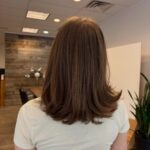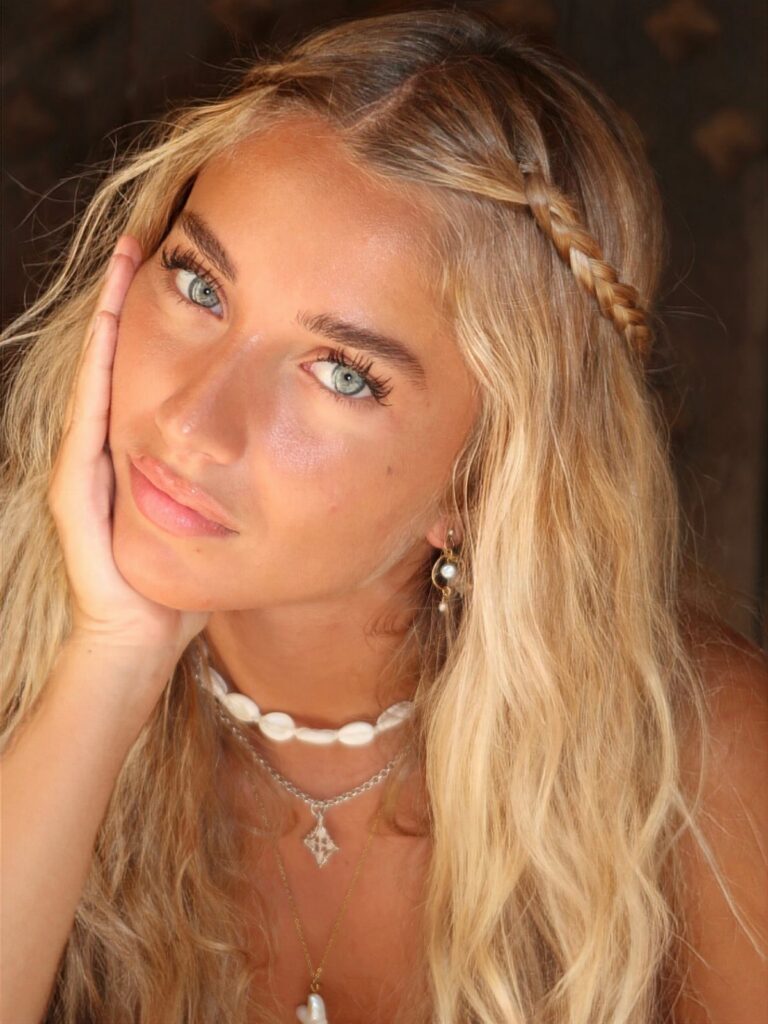
Long hair holds a wider range of design than short cuts can reach because the length itself becomes material to work with.
Beachy waves, sleek center parts, tight curls and half-up styles all need length to show their shape, and that reach decides more than face shape when you’re picking which one fits your routine.
Fine hair holds a blunt cut or light layers that stop the ends looking wispy, thick hair takes extensions, bangs and heavier layers without losing movement.
Trims sit every 2–4 months to keep split ends from traveling up the strand, and a weekly mask replaces moisture the hair loses with age.
1. Beachy Waves
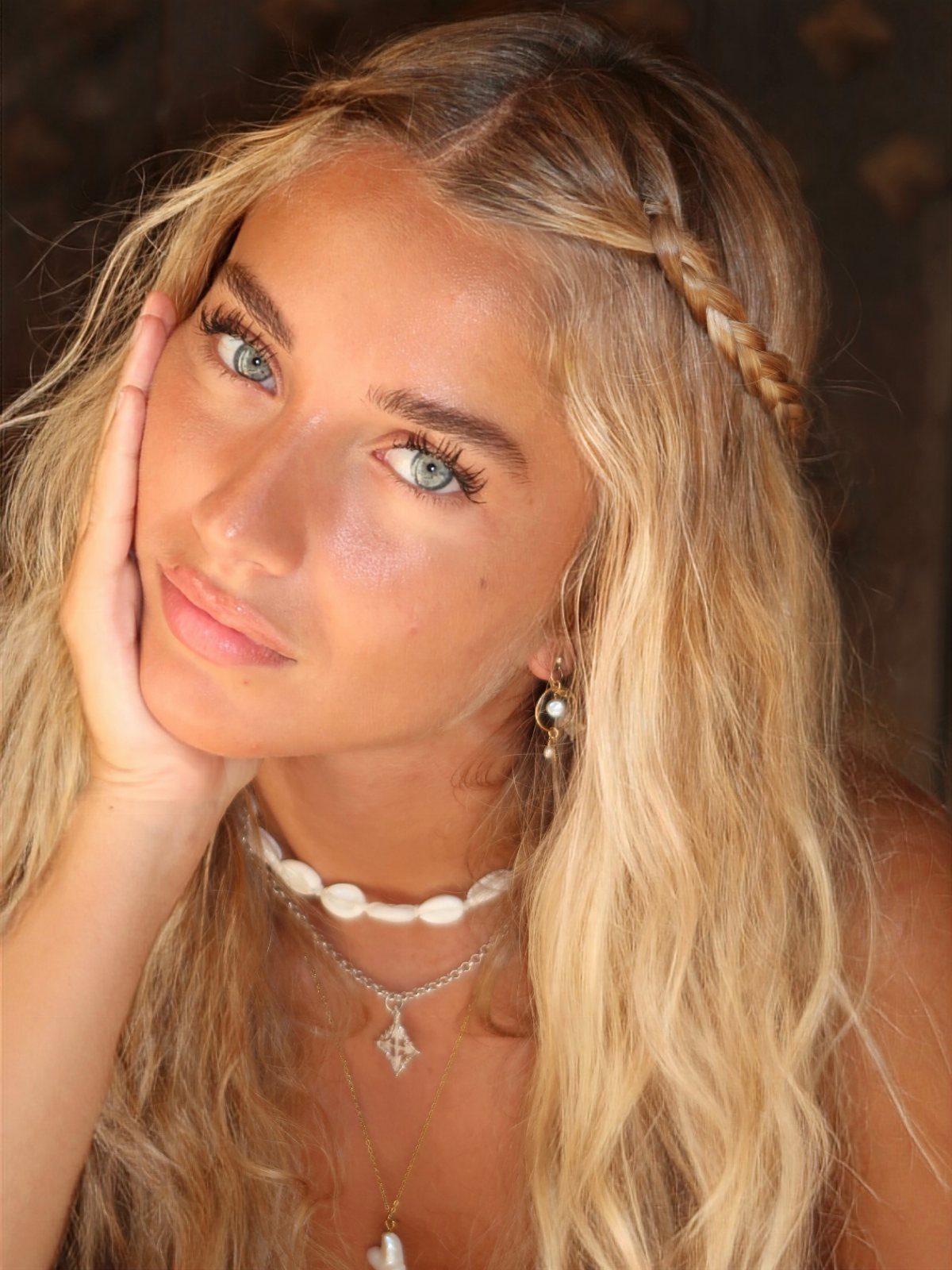
Long hair tonged or wanded in loose sections, then brushed through for a softer shape. The braid across the crown is optional and works best if you braid it before waving the rest, so the plait holds its definition.
This look suits most hair types. Thick hair needs more sections and a higher heat setting; fine hair can skip the brush-through if you want more hold.
It reads as relaxed without looking like you rolled out of bed, and grows out clean since there’s no cut line to maintain.
2. Wavy Ponytail
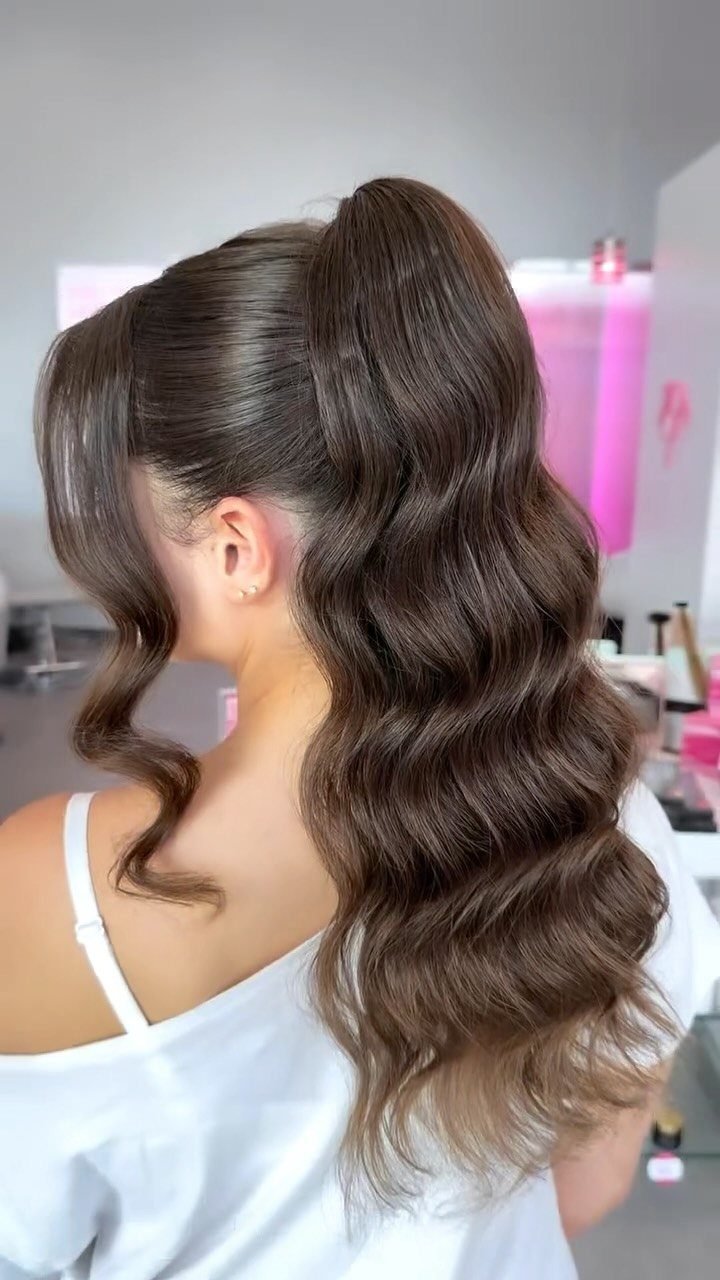
Tie the hair high, then wave the ponytail in sections with a curling iron or wand. The height keeps the waves visible from the front, and the length shows off the movement.
If your hair is thick, split the ponytail into smaller sections and wave each one on its own so the heat reaches all the way through. Fine hair can get away with 2 or 3.
A ponytail this high holds better with a second elastic wrapped an inch below the first. The waves last longer if you let each curled section cool in your hand before dropping it.
3. Undone Waves
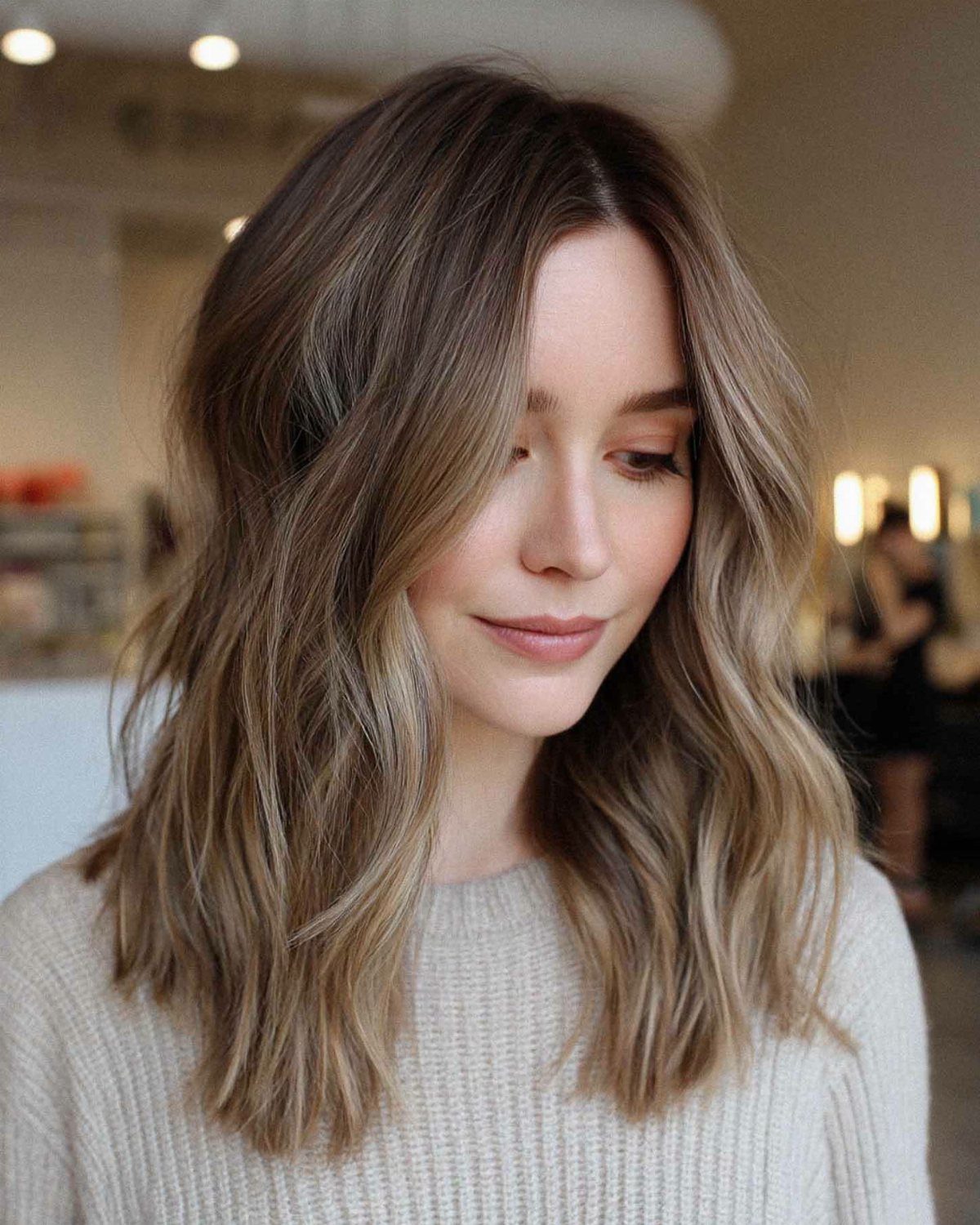
Keep the waves loose and relaxed from the mid-lengths down, then curl a couple of the pieces at the front a little more firmly so they frame your face. The rest stays soft and barely styled.
This look works well if your hair already has some natural wave or texture. Straight hair needs a light texturizing spray or mousse to hold the shape without looking set.
Tong the front pieces away from your face, then rake through the rest with your fingers instead of a brush. The contrast between the framing pieces and the softer body gives it structure without looking formal.
4. Sleek and Straight
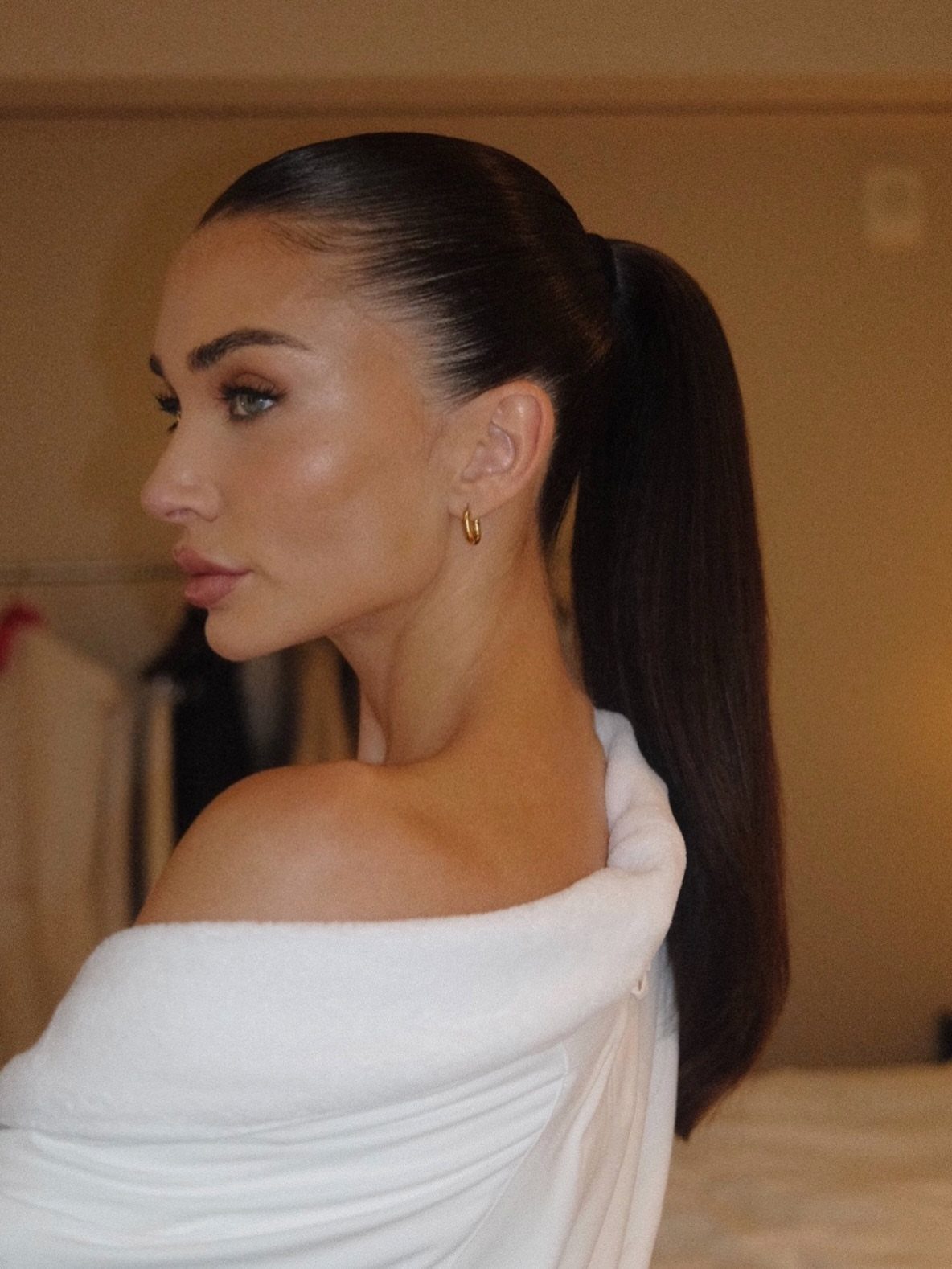
Flat-ironed hair pulled into a high ponytail with no bumps or texture. The finish is smooth and tight, and the length stays straight without any bend at the elastic.
This style shows every uneven section, so iron carefully and use a paddle brush to pull the hair taut as you tie it. A shine spray or light serum keeps flyaways down and gives the surface a polished look.
Hair tied this high can pull at the roots if worn daily. Alternate the height or wear it down between wears to avoid thinning at the hairline.
5. Tight Bouncy Waves
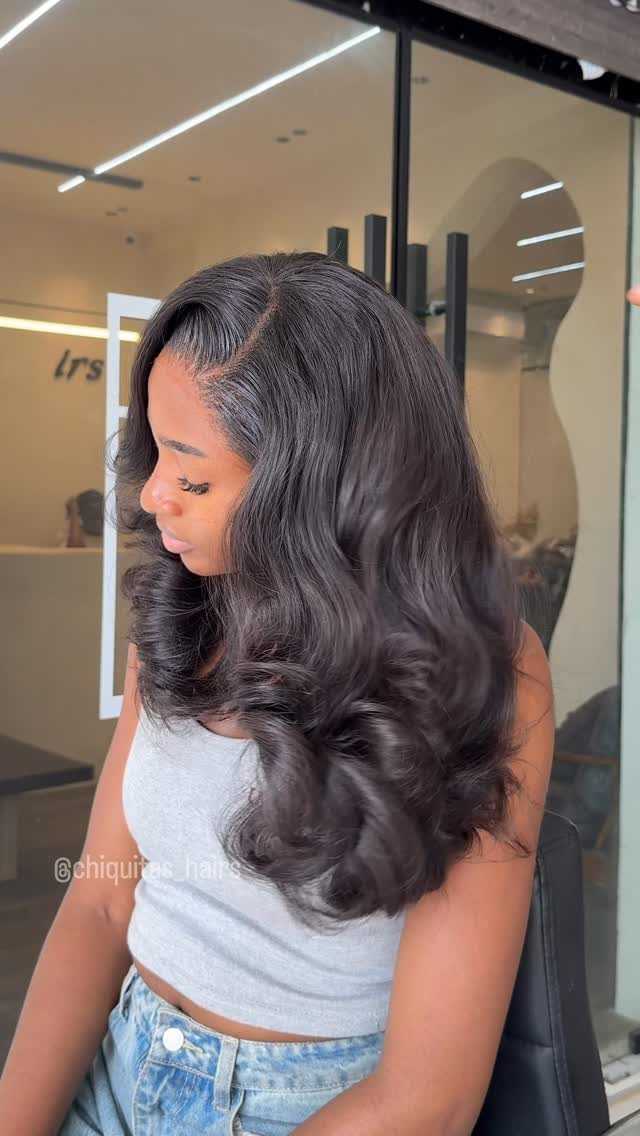
Curled in small sections with a narrow barrel, then left to set without brushing. The waves stay tight and bounce when you move, and the volume sits through the lengths rather than just at the roots.
Pick a small-barrel curling iron for this look, and wrap each section away from your face so the curls open up instead of closing in. Hold each curl in your palm until it cools, then release it without combing through.
This look holds best on medium to thick hair. Fine hair can get the shape but may need a strong-hold spray to keep the bounce past a few hours.
6. Beautiful Braids
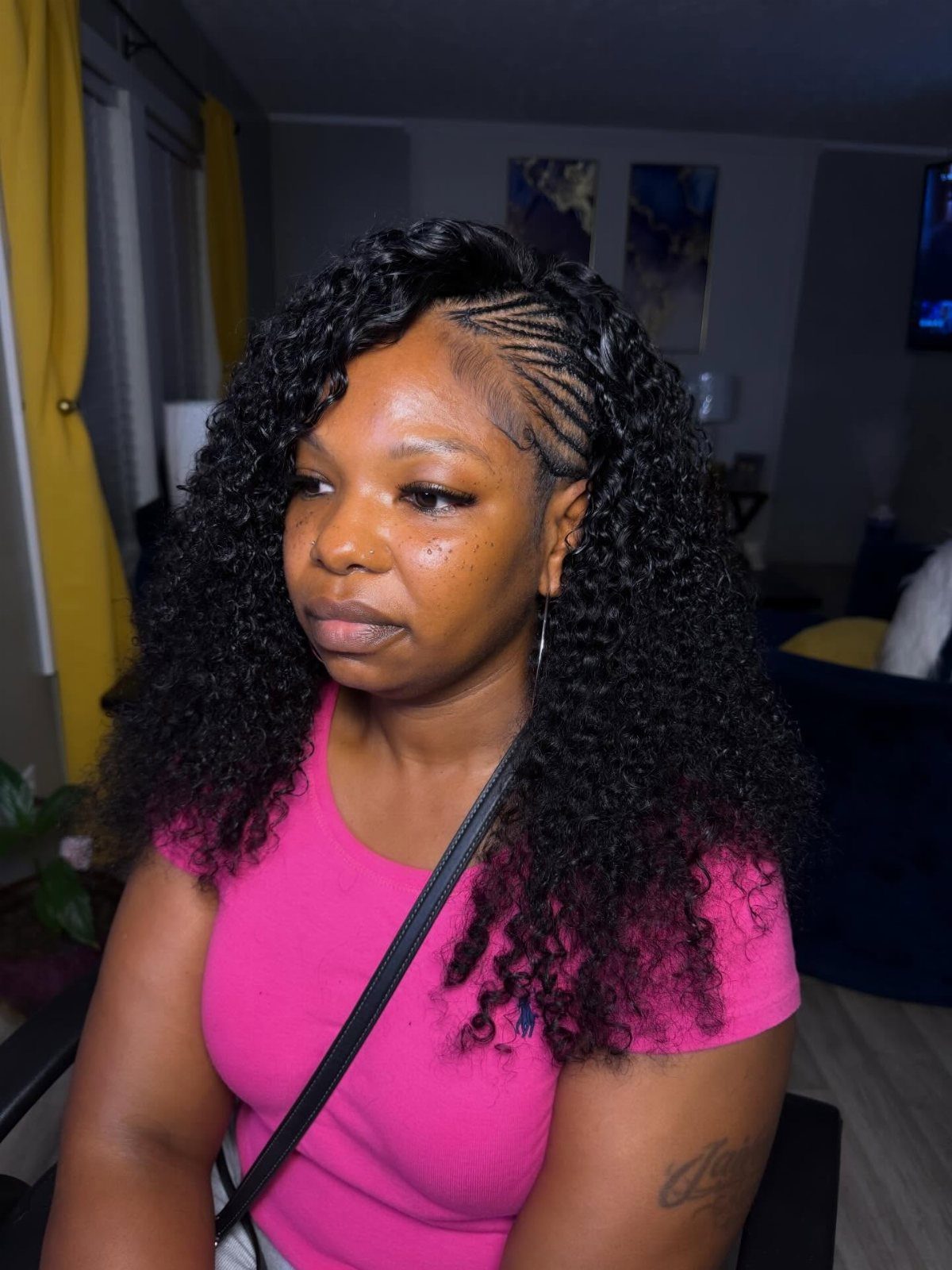
Curls worn loose with 2 small braids along the sides, pulled back from the face. The braids sit above the ears and blend into the curly lengths.
Braid each side first, then secure them with a small elastic or pin them together at the back. Leave the rest of the curls down so the braids frame the face without dividing the volume.
This works best on naturally curly hair where the braids match the texture of the rest. Straight or wavy hair can be curled first, but the contrast between the smooth braids and the curled lengths is more visible.
7. Curtain Bangs
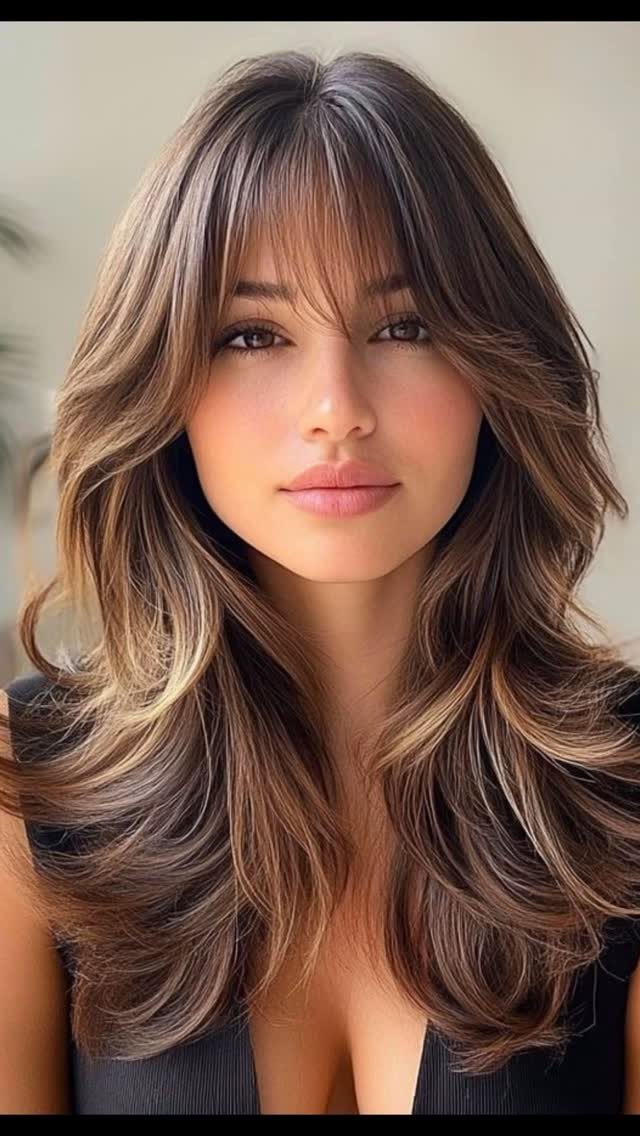
Curtain bangs split at the center and sweep out to each side, which makes them one of the easier ways to add shape to long hair without losing length.
They blend into layers and waves instead of ending in a hard line.
Blow-dry them over a round brush, rolling away from the part, and let them cool before you move them. Hair that is very straight may need a little texturizing spray to keep the sweep.
I would ask for them longer rather than shorter at first. They can always be trimmed up.
8. Long Layers
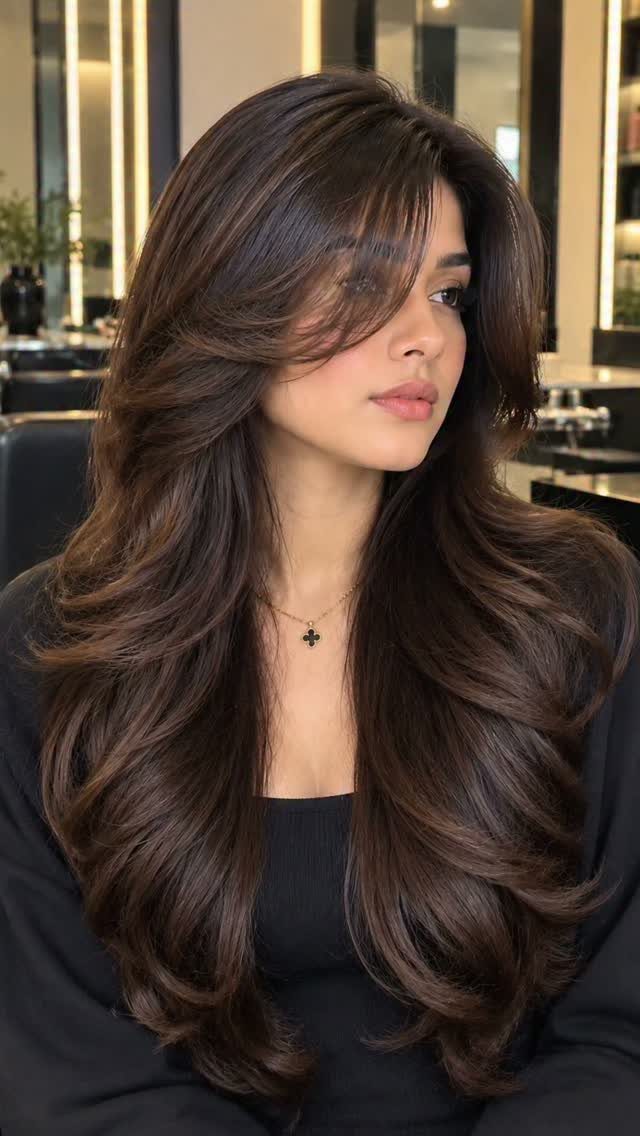
Layers are what keep long hair from hanging as one heavy panel. Cut through the lengths, they add movement and a little fullness, and they help relaxed waves hold a shape.
Ask for long layers by name, and say how much length you want to keep. If your hair is fine, ask for fewer, softer layers so the ends don’t thin out.
Bangs can sit on top of long layers, but they are an add-on and not part of the layering itself, so ask for them as a separate step and decide on them separately.
9. Long Curls
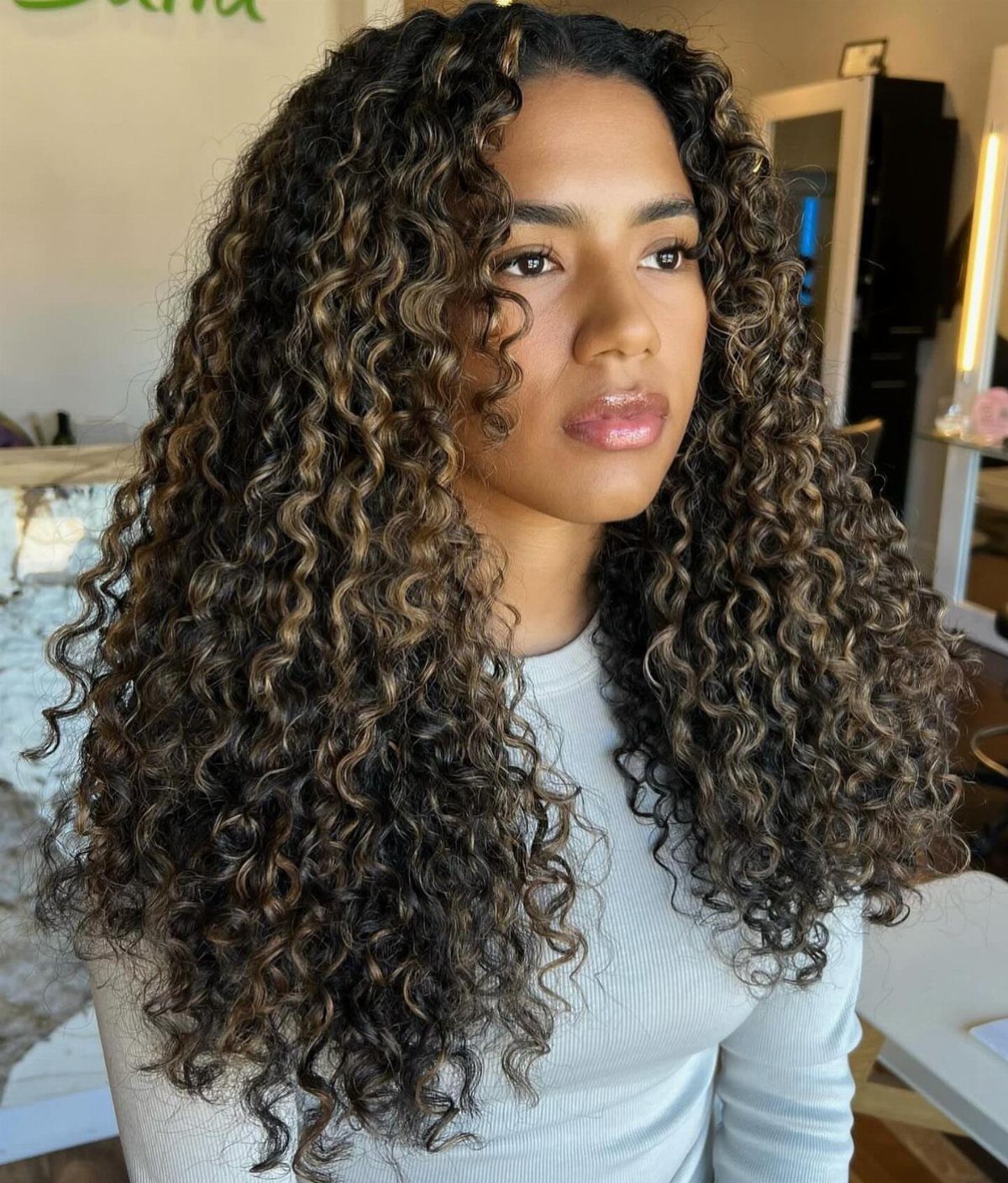
Big, full curls on long hair give you volume and movement that straight styles can’t copy. Worn down and left loose, they look glamorous with very little arranging.
Curl in sections and let each one cool before you touch it. Then separate the curls with your fingers instead of a brush, since brushing turns them into a puff.
Highlights, like the ones here, make the curl pattern easier to see, but they are optional.
10. Long Curls with Side Bang
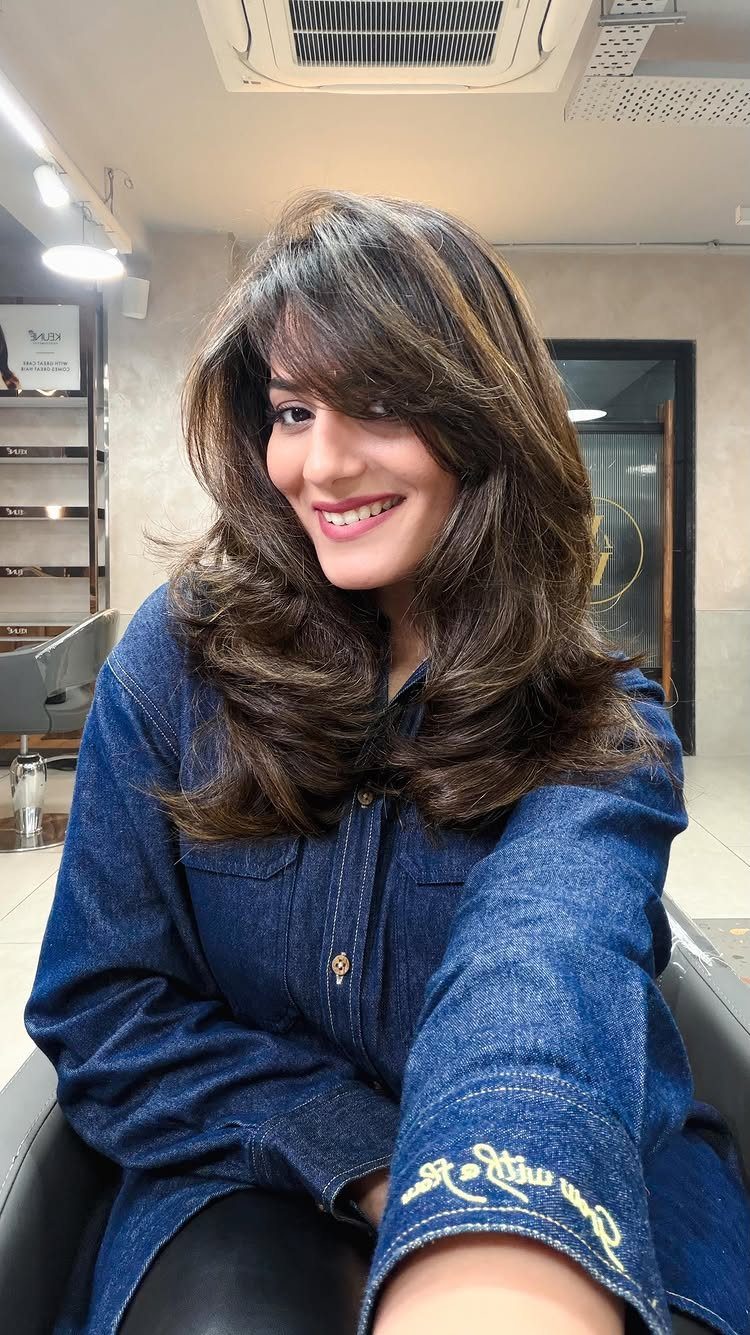
A side-swept bang breaks up the length of long curls and puts a soft line across the face. It works with curls because the sweep to one side looks relaxed instead of cut straight across.
Curl the bang away from your face and keep it looser than the rest, so it blends in. Skipping the brush keeps the shape intact.
If you are unsure about bangs, I would start with this one. It grows out into the curls without a visible gap.
11. Deep Side-Part Waves
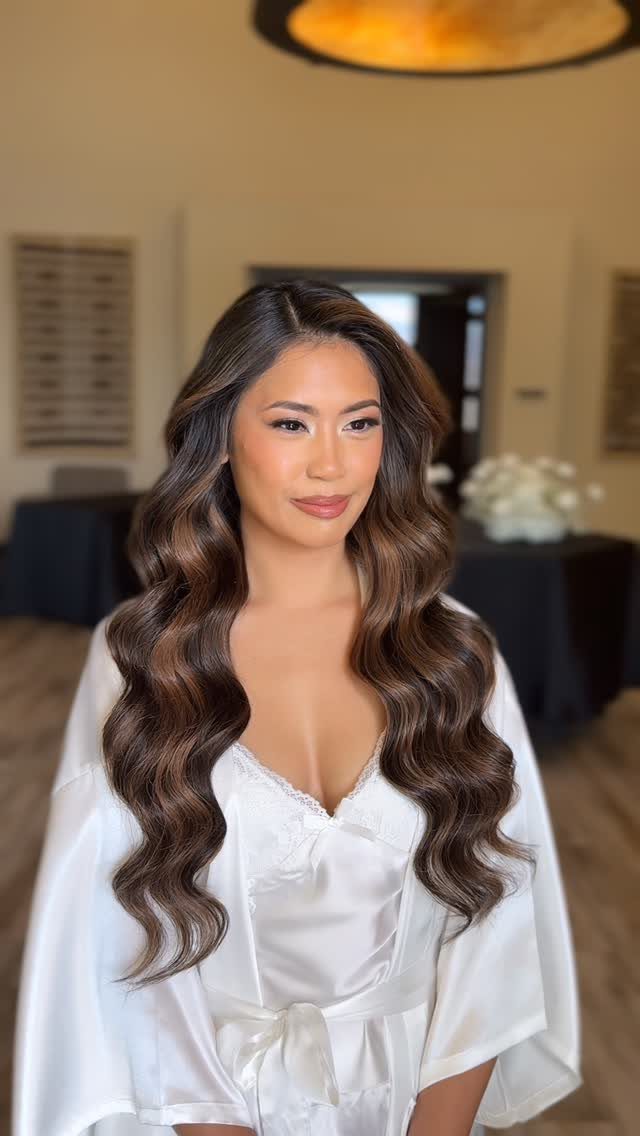
A part set far to one side throws the hair into a heavy sweep across the forehead, and deep waves make that sweep look dramatic. The creases in the waves are what give the style its polish.
Part the hair while it is still dry, before you curl, so the roots lie the right way. Wave in sections and brush through lightly to blend the creases together.
I like this on days when a center part feels flat. It also hides less of the face than bangs do.
12. Curly Ombré
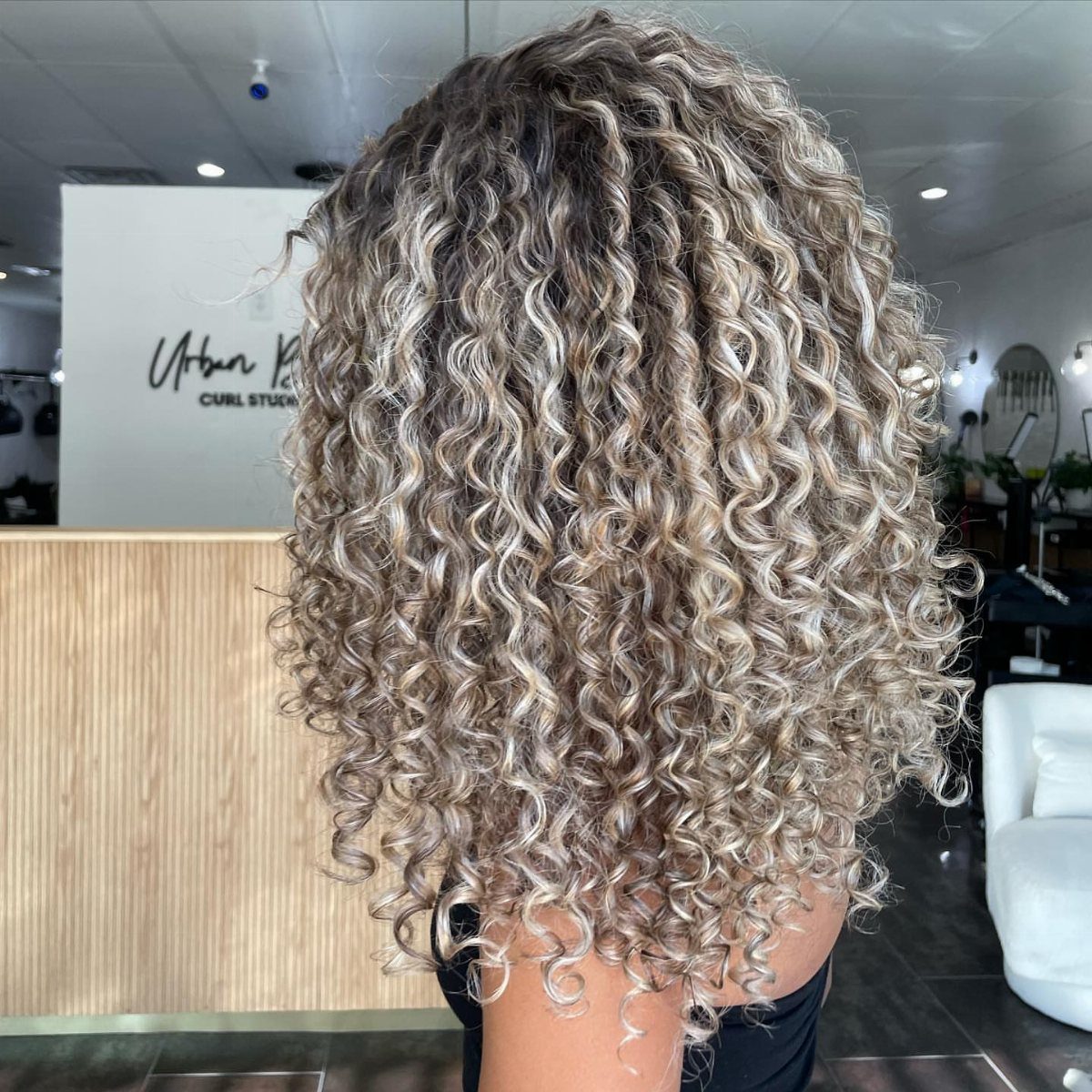
Ombré on curls keeps the roots darker and moves to lighter ends, so the curl pattern shows depth without a harsh color line. The effect is more forgiving here than on straight hair.
Ask your colorist for a gradual blend instead of a sharp break. Lightening takes a toll on curls, so use a deep conditioner and skip extra heat.
Because the roots stay dark, regrowth barely shows. That makes it easy to keep up between salon visits.
13. Pin Straight Hair
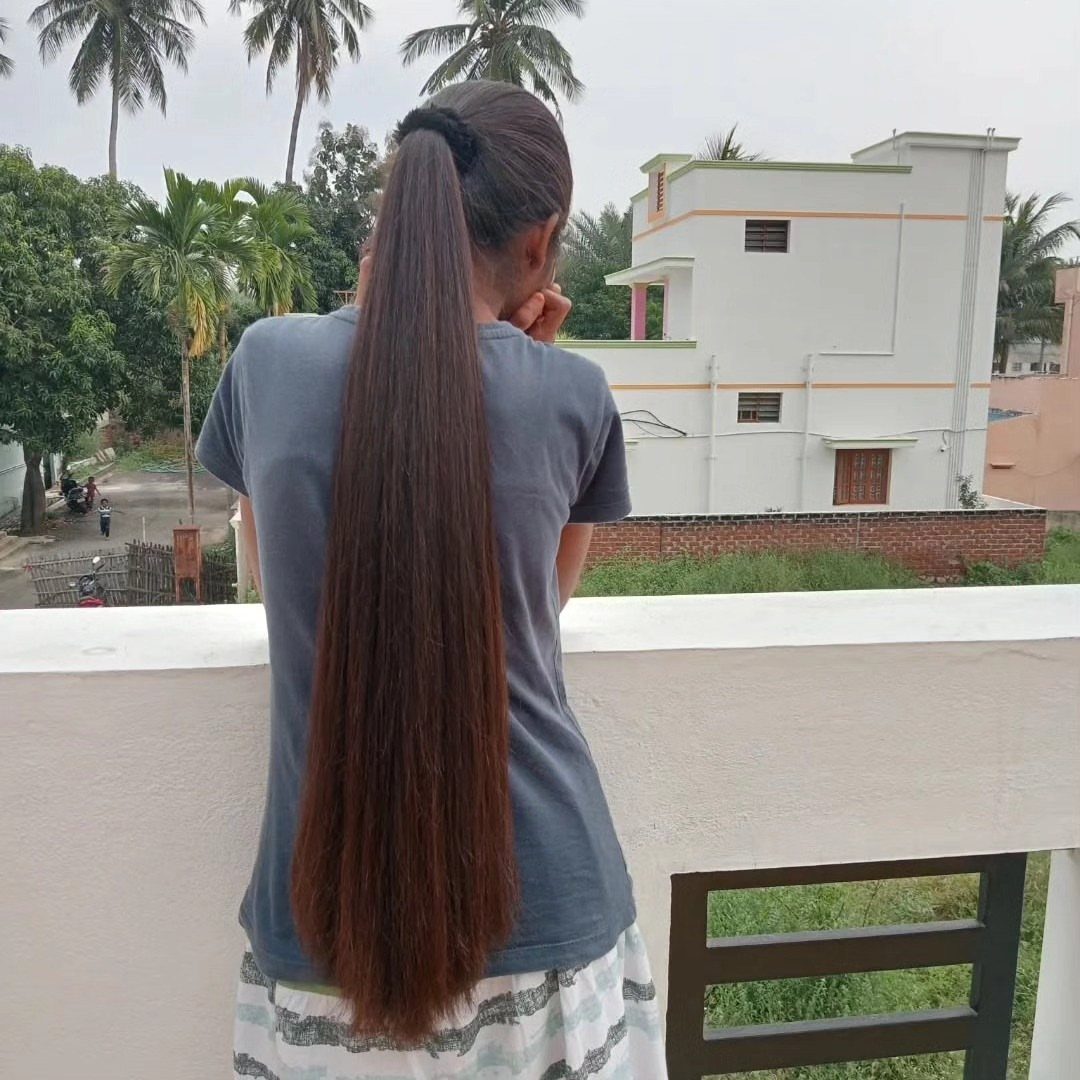
A flat iron and a paddle brush do most of the work here, and the finish depends on how evenly you section. Work in thin panels from the nape up, and let each one cool before you move on.
Straight hair this long shows every kink, so a light serum on the ends keeps them from looking dry. I like it left down or tied high, since a smooth ponytail shows off the length.
Heat every day wears hair out, so save this one for a few days a week.
14. Curly Updo
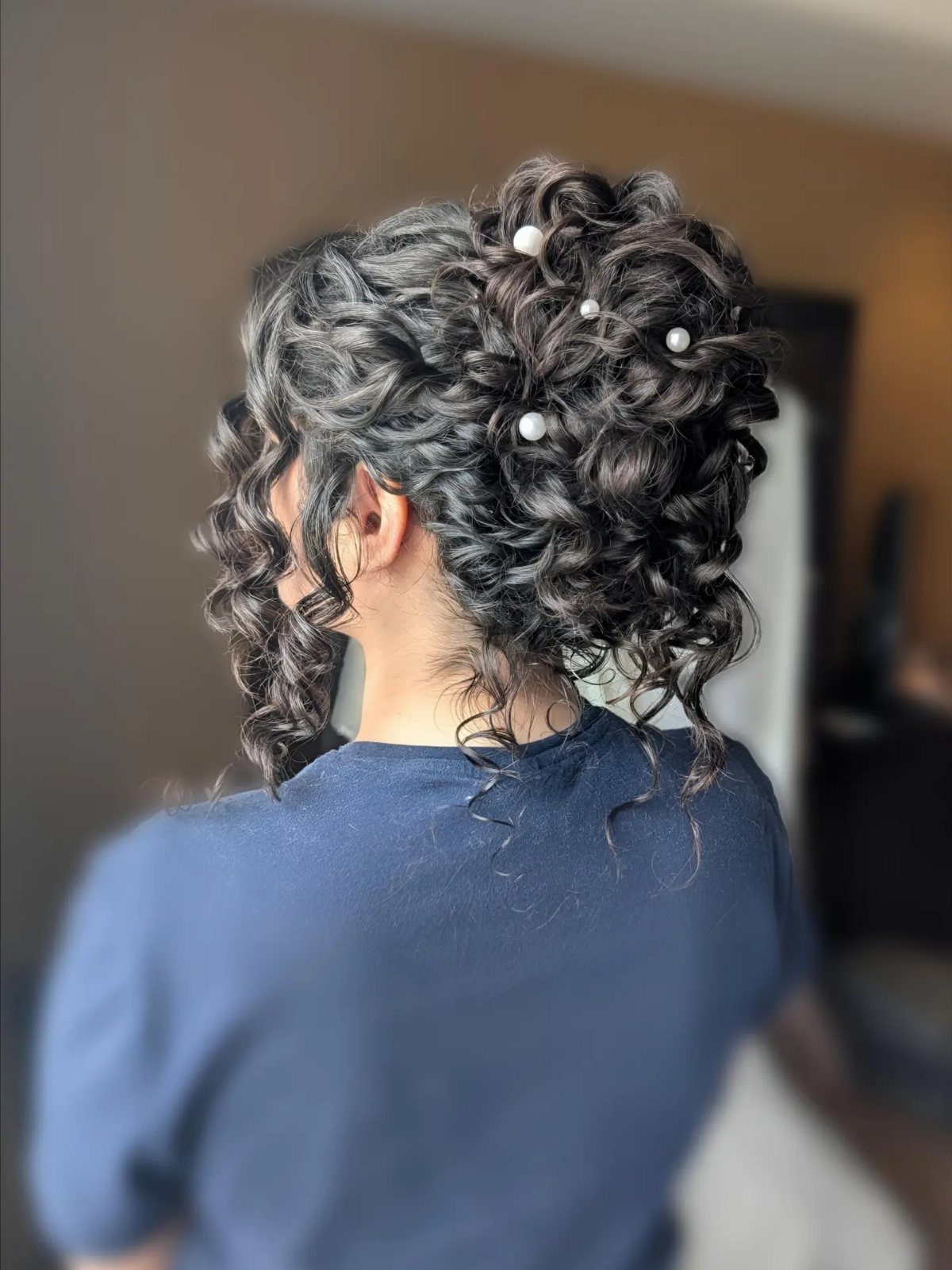
Pinned-up curls with a few strands left out in front look polished without the stiffness of a smooth bun. Gather the curls loosely at the crown first, then pin them in place with pearl pins or plain bobby pins.
Pull out the face-framing pieces last, and leave them looser than the rest so they read as soft instead of accidental.
I would build this on curls that are already dry. Touching wet curls while you pin pulls the pattern apart and leaves frizz.
15. Half-Up Half-Down
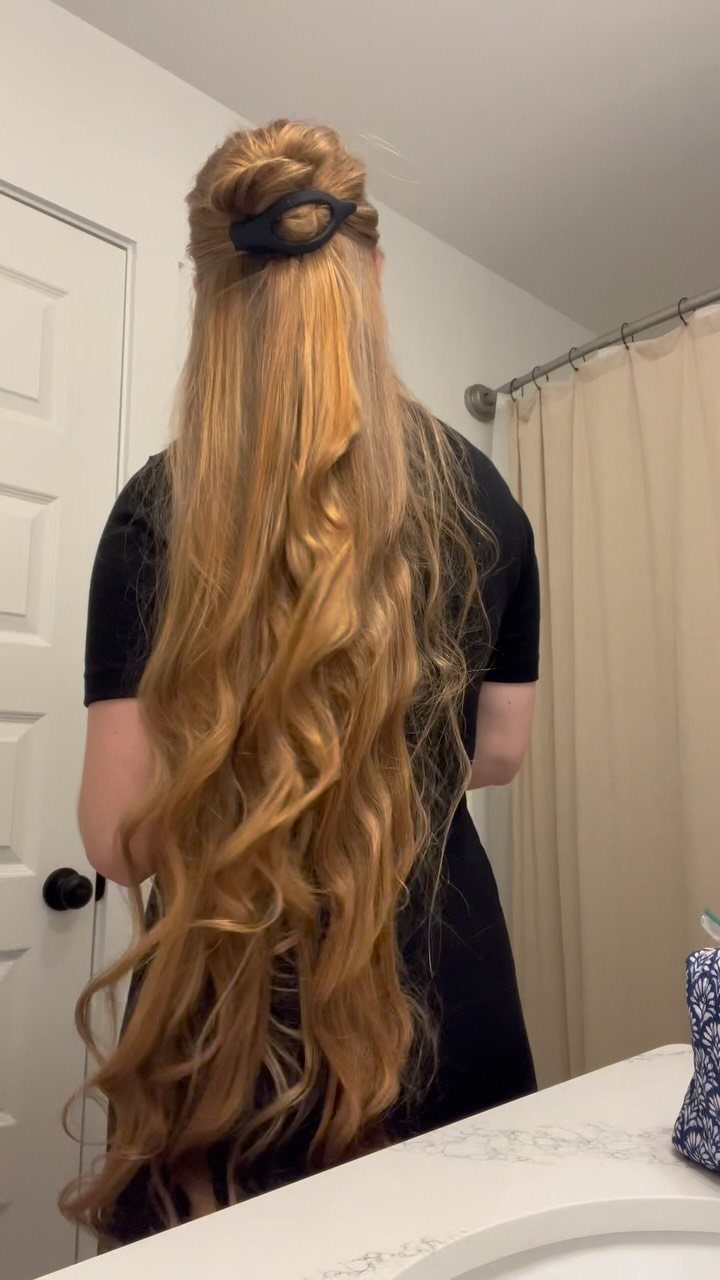
Gather the top section from temple to temple, twist it once, and fasten it with a clip at the back.
It takes about a minute, which is why it works for mornings when the rest of your hair is already waves or curls.
A claw or barrette clip holds thick hair better than a small pin. Fine hair may slide out, so tease the section lightly at the base before clipping.
I prefer it on second-day hair, when the texture grips the clip.
16. Bubble Ponytail
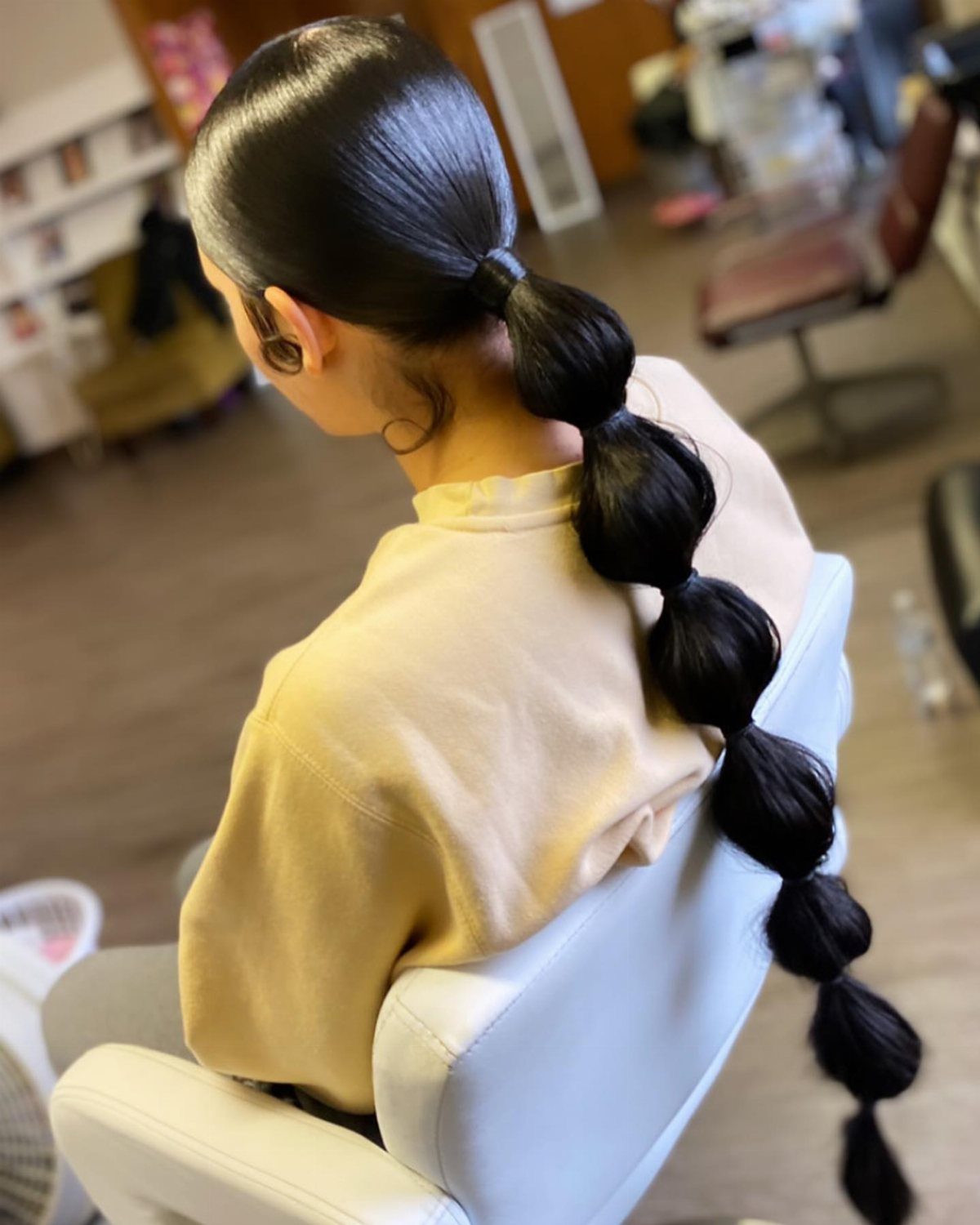
A bubble ponytail is one ponytail tied off with elastics at even spaces down the length, then gently pulled apart between each pair so the sections puff into rounds. Clear elastics disappear against dark hair, and they cut off easily.
Start with a smooth, high ponytail, then space the elastics evenly so the bubbles match in size. Fluff each section sideways with your fingers.
Long hair gives you more bubbles to work with, so I would start with fewer elastics and add more once the spacing feels easy. Remove them with scissors made for the job, never by pulling.
17. Long Natural Curls
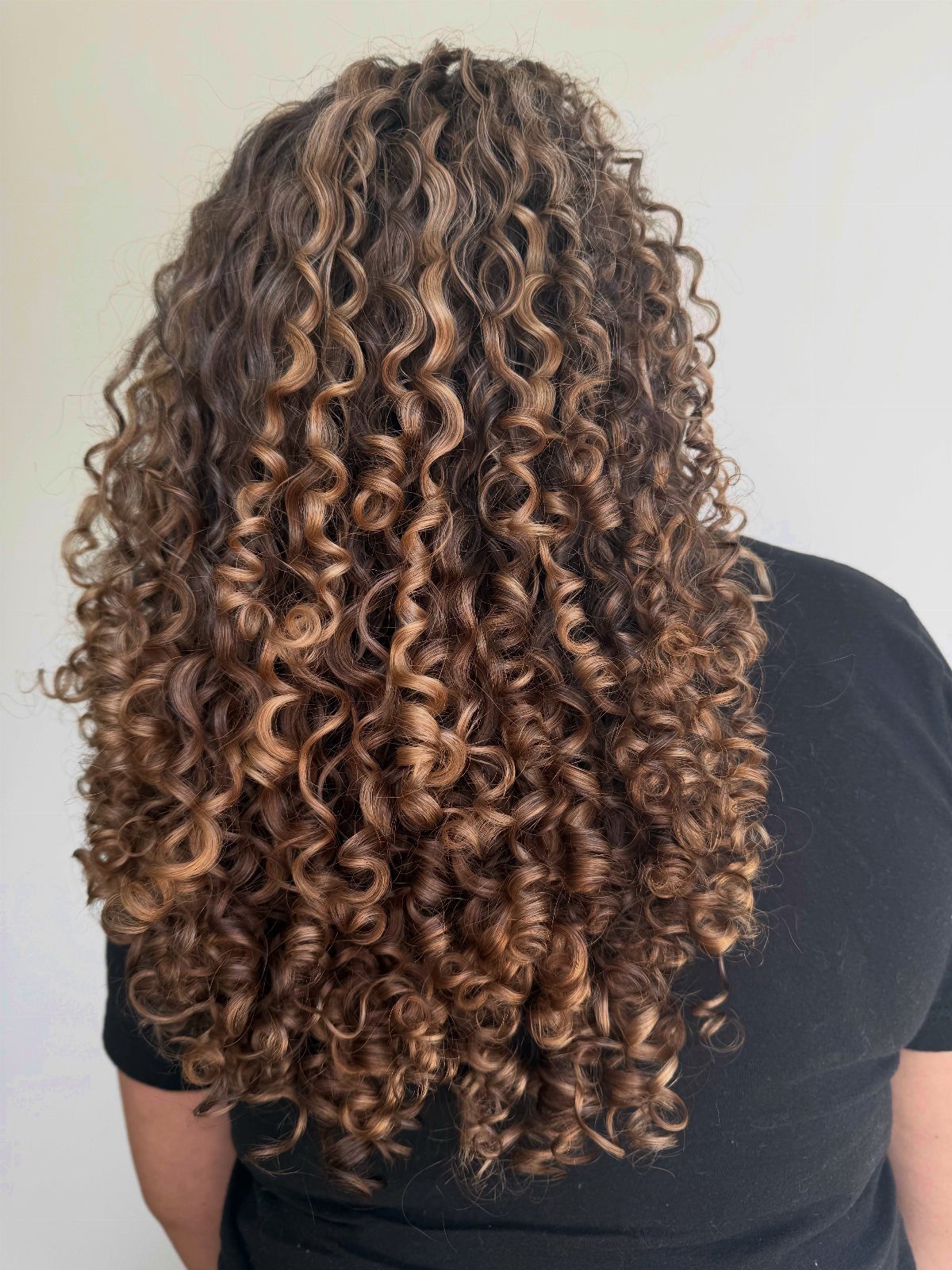
Natural curls on long hair need patience more than tools. Detangle while the hair is wet and coated in conditioner, then let it air-dry so the pattern stays intact.
Brushing dry curls turns them into a puff, so use your fingers instead. Length also pulls curls longer, which means your hair will look looser when it is dry than it did wet.
I would keep trims regular, since split ends make the curl pattern look uneven. A style like this asks for almost no morning work.
18. French Braided Space Buns
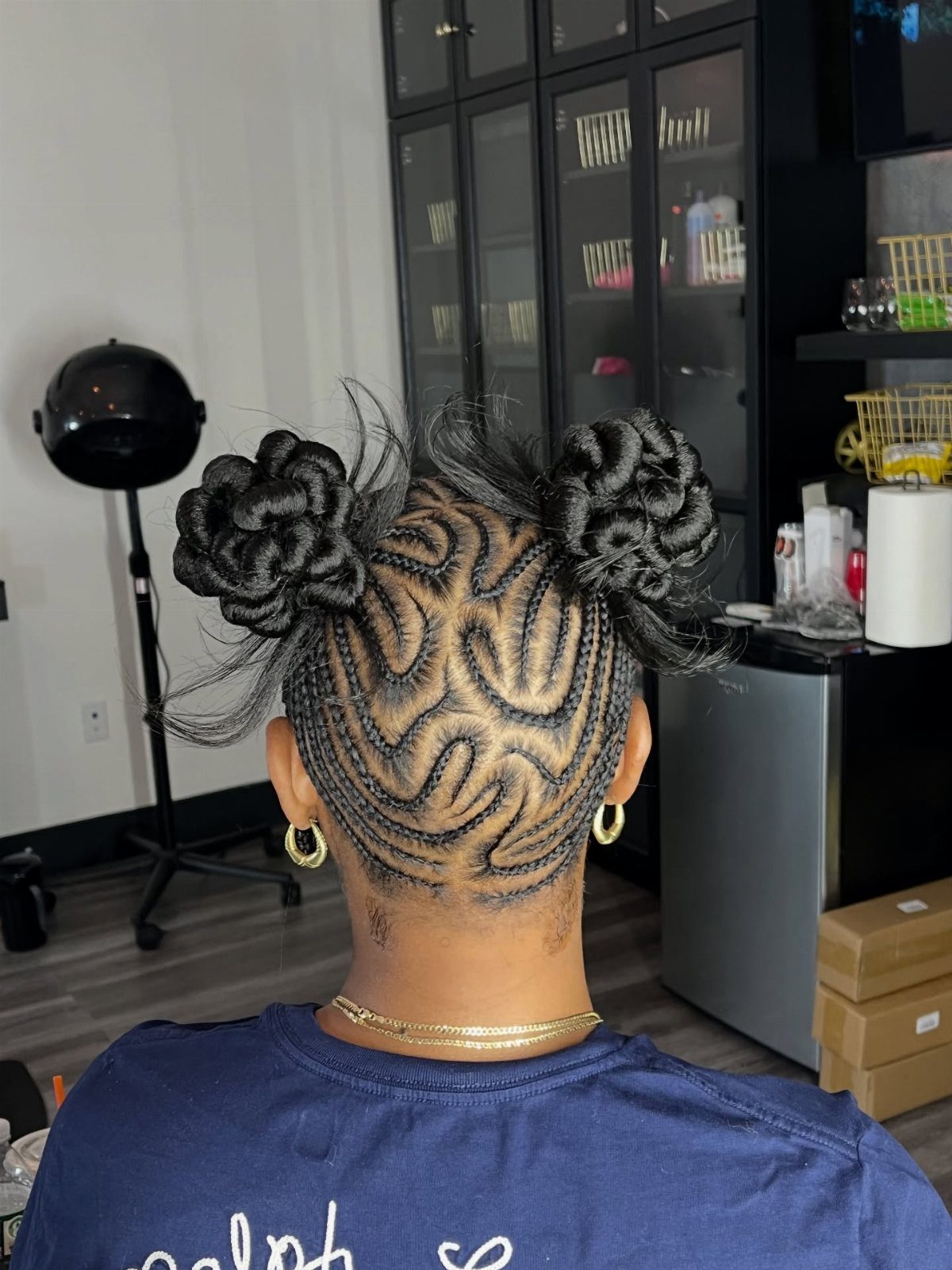
Space buns built on French braids hold up far better than loose ones, because the braids keep every strand tucked in. Part the hair down the center, then braid each side from the front hairline toward the crown.
Twist each braid’s tail into a bun and pin it flat. Keep both braids at the same tension, or the buns will sit crooked.
This takes practice, and braiding your own hair behind your head is harder than it looks. I would try it on clean hair with a bit of texture, which grips better than completely smooth strands.
19. Long Waves with Highlights
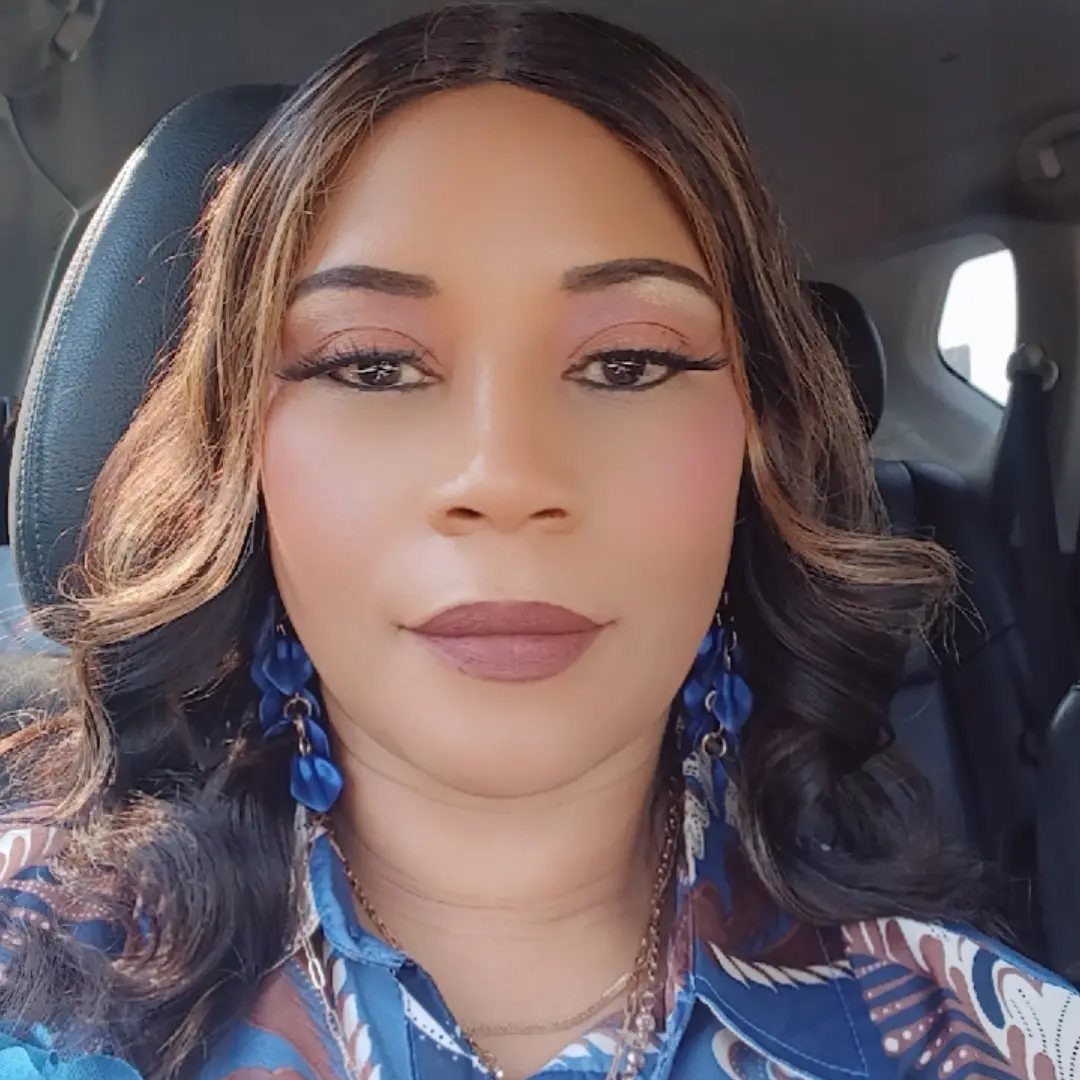
Highlights through long waves lift the color and make the wave pattern easier to read. The lighter pieces catch more light, so the movement shows up even when the waves are soft.
I tell stylists to start the color a few inches down from the root. Waves break up a solid color line, so you can stretch the time between touch-ups without a visible grow-out.
I like this on hair that already has some natural texture. Straight hair can be waved, but the highlights do more work when the shape is already there.
20. Undercut
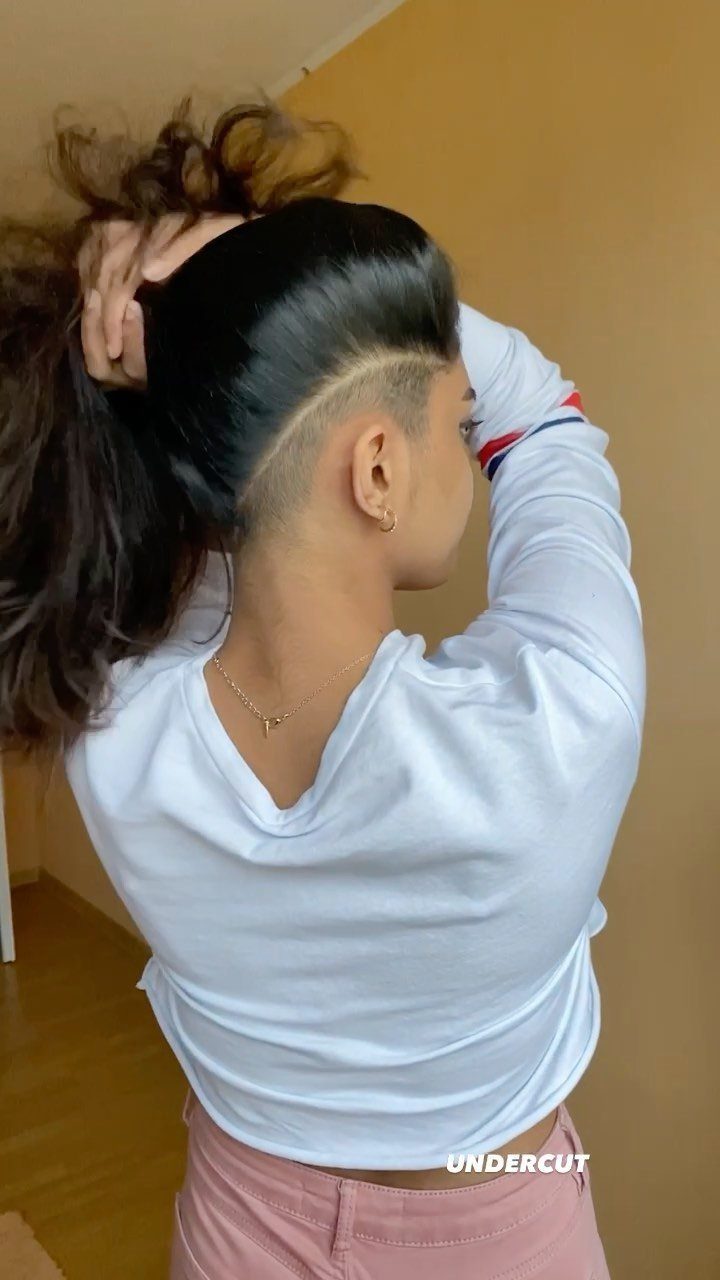
An undercut sits hidden under the top layers until you lift or tie the hair. It gives you a second look without changing the length, and it cuts down on weight if your hair is thick.
The shaved section grows in fast, so count on touch-ups to keep the contrast. Some people buzz it themselves at home, others go back to the stylist.
Long hair hides it completely when worn down, so this is one of the few ways to go bold without committing to a visible cut.
21. Flipped-Out Ends
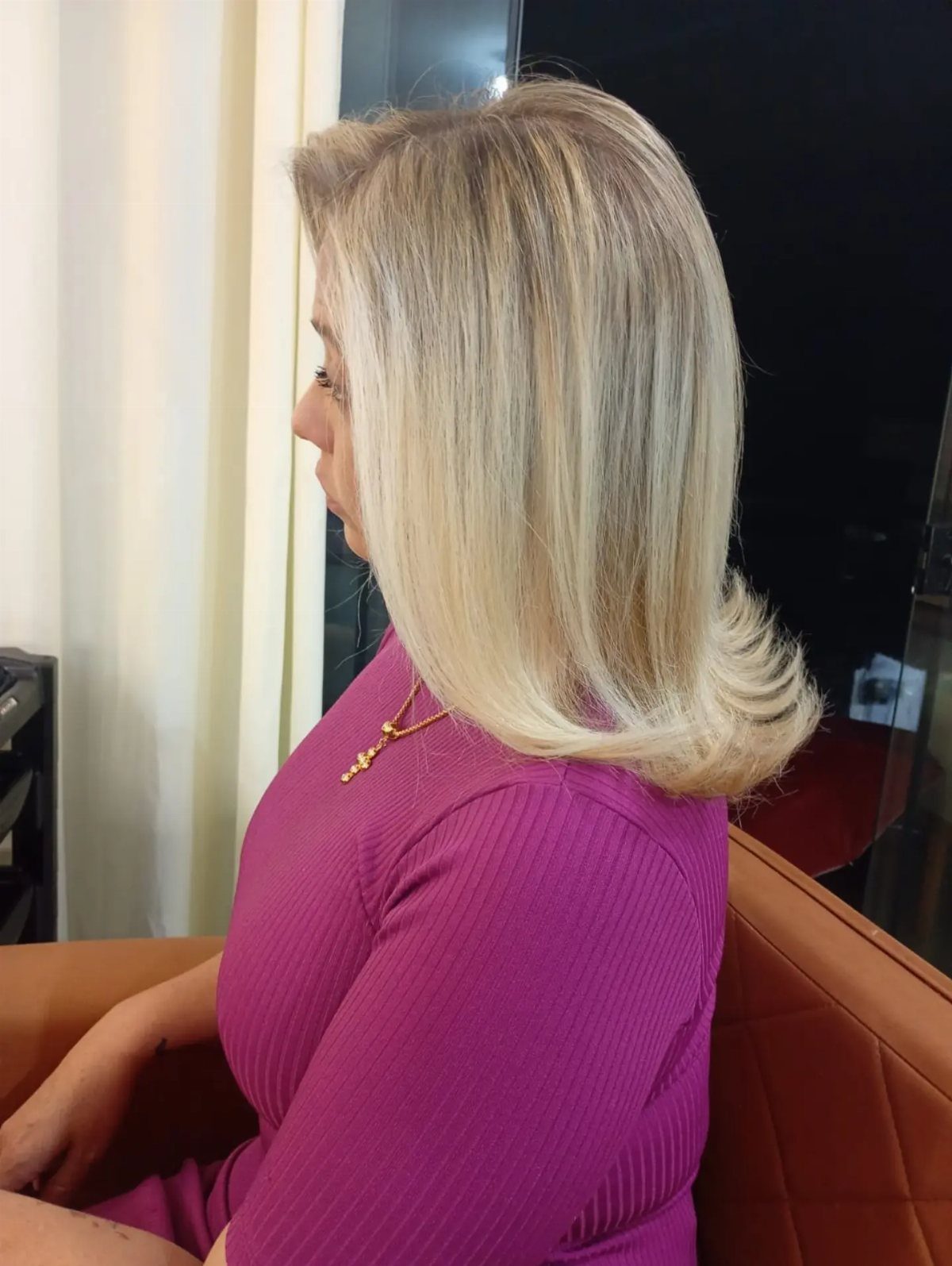
The flip gives long hair a lifted finish without volume through the rest.
This works best on hair that is straight or only slightly wavy. Curly hair fights the shape, and fine hair may need a light spray to hold the bend past an hour.
I like the flip on days when a smooth blowout feels too flat. It adds shape without shortening the look.
22. Glam Curls
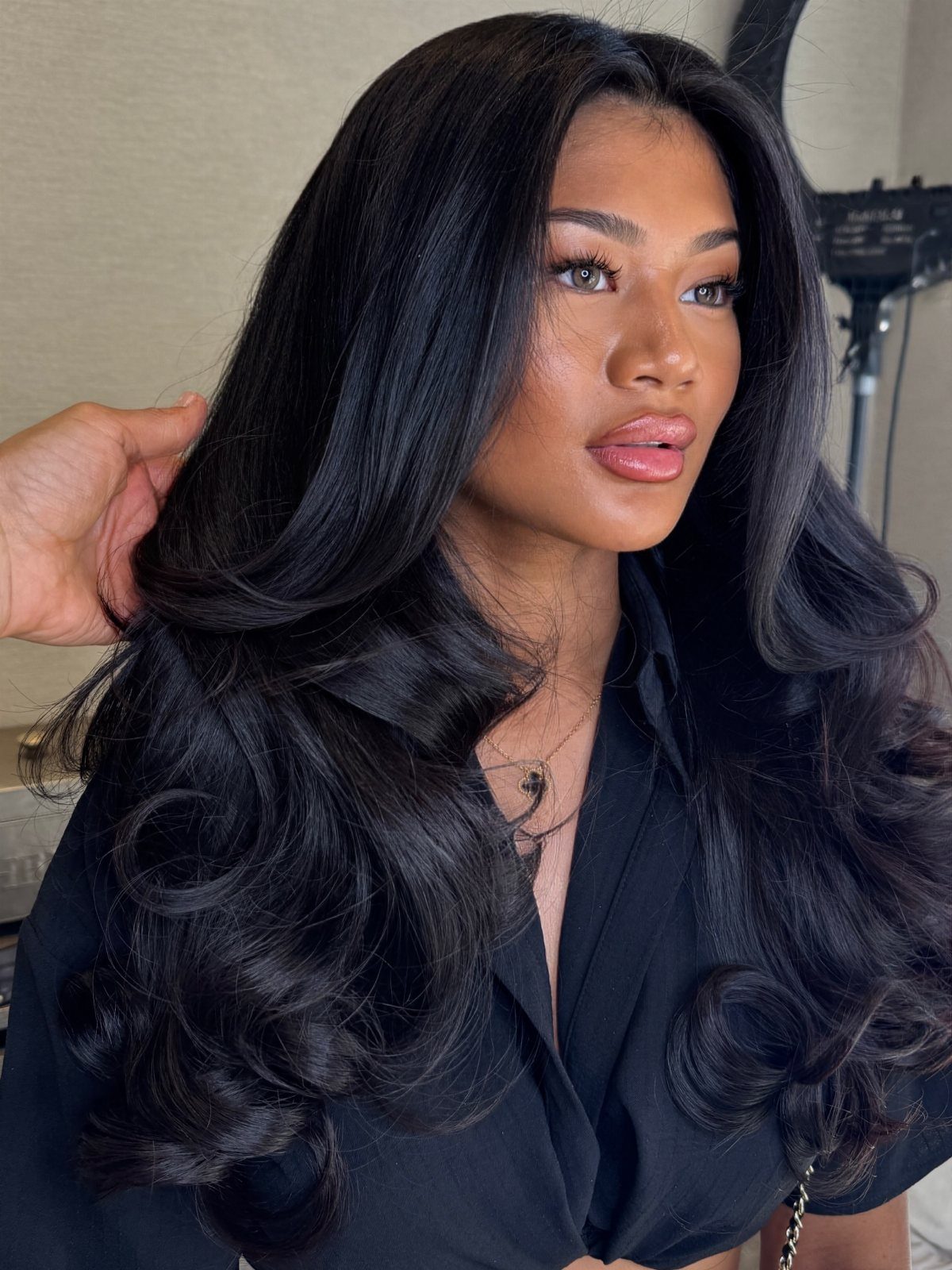
Curl long hair in large sections with a wide-barrel iron, then separate each curl with your fingers to build volume.
The shine comes from a light serum worked through before you start, and the bounce stays if you let each section cool before touching it.
Thick hair holds this shape longer than fine hair does.
I would save this for special occasions. The curl and the product both take time, and daily heat wears hair out.
23. Old Hollywood Glam
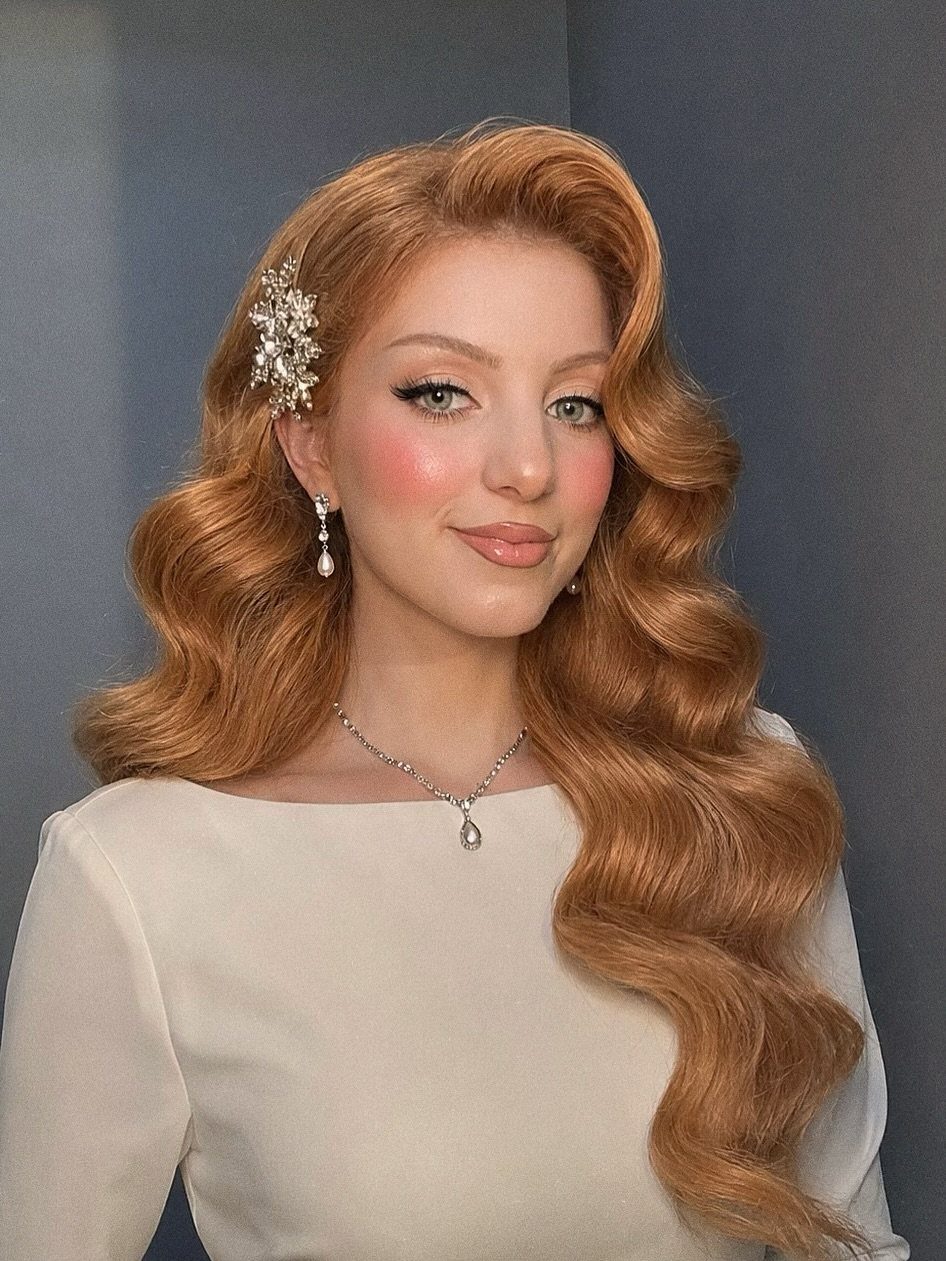
Set long hair in large rollers or wave it in big sections, then brush through with a paddle brush to flatten the curls into smooth, glossy waves. The finish is polished and structured, not loose.
Pin one side back with a decorative clip to keep the waves off your face. The clip also holds the shape in place and adds to the formal look.
This style works on most hair types but shows best on thick or medium hair. Fine hair can be waved the same way but may need backcombing at the crown to fill out the shape.
24. Cool-Girl Texture
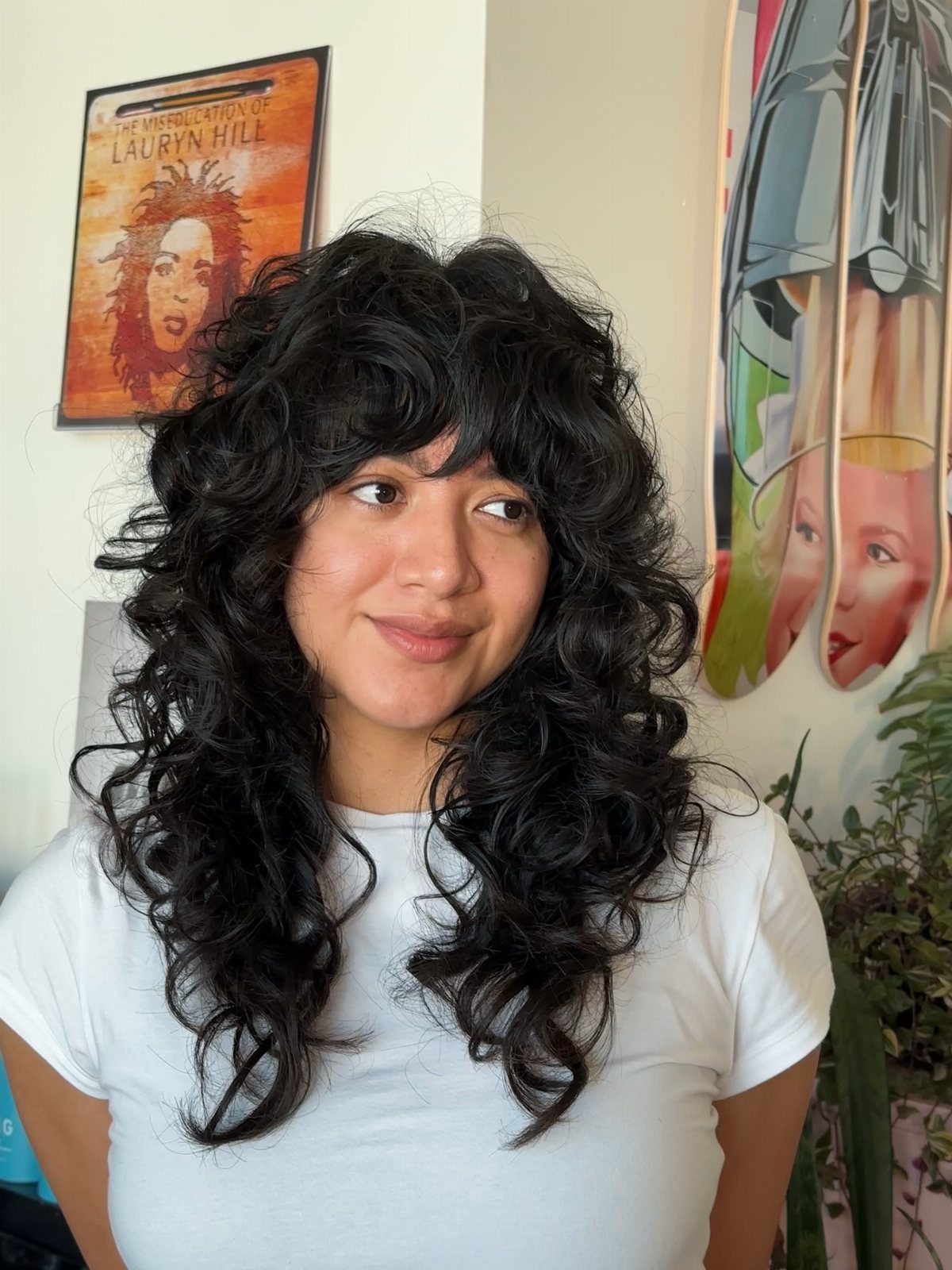
Tousle the curls with your fingers and leave the texture uneven, with some pieces tighter and others looser. Bangs or face-framing strands add to the undone look, and the whole thing reads as lived-in rather than set.
Skip the brush and let the curls dry on their own, or scrunch them with a light mousse while they are still damp. You’re after lived-in texture, not matching spirals.
I like this on naturally curly hair where the pattern is already there.
25. Long Hairstyle with Gentle Curls
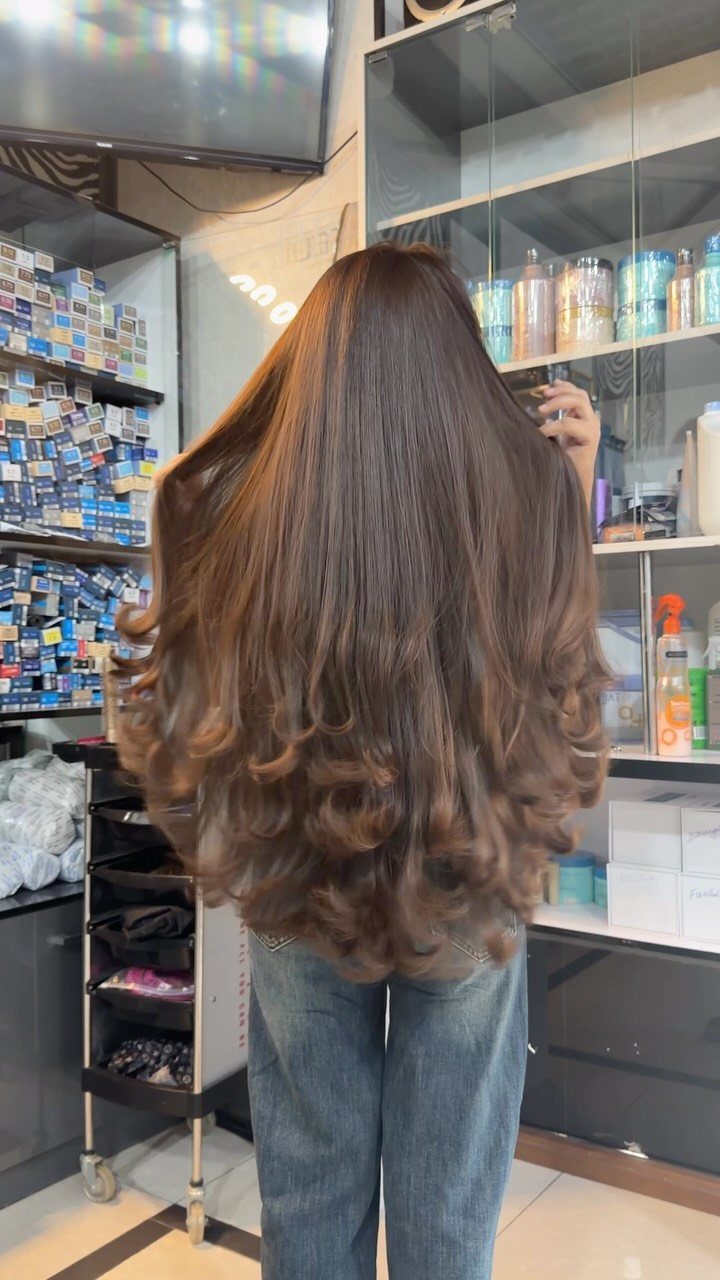
Gentle curls are the easiest curl to live in: loose enough to look soft, defined enough to read as styled. Long brown hair shows them well, since the glossy finish catches every bend.
Handle them lightly after styling. Skip the brush, and if your hair is chemically treated or naturally fragile, go easy on heat and rough towel-drying.
I would pick this over tighter curls if your hair breaks easily, because it asks for so little tugging.
26. Fishtail Braid
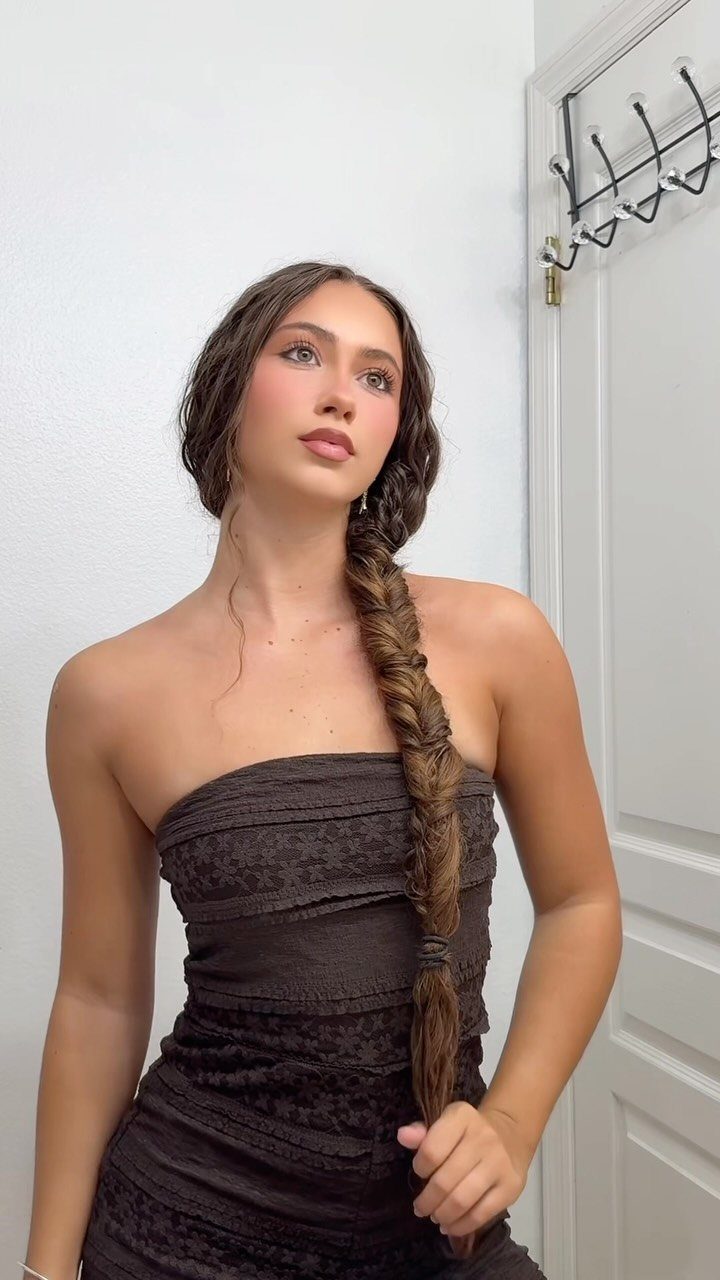
A fishtail braid weaves two sections instead of three, crossing thin strands from the outside of each half to the inside of the other. The result looks like a fish skeleton, and it shows up best on long hair.
Small strands give a tighter, more detailed pattern.
Larger ones give a looser braid. A clear elastic at the end disappears into the braid, so nothing interrupts the weave.
I like it pulled over one shoulder, where the length can be seen. It takes more patience than a basic braid, so practice on dry, lightly textured hair.
27. Cornrows with Ponytail
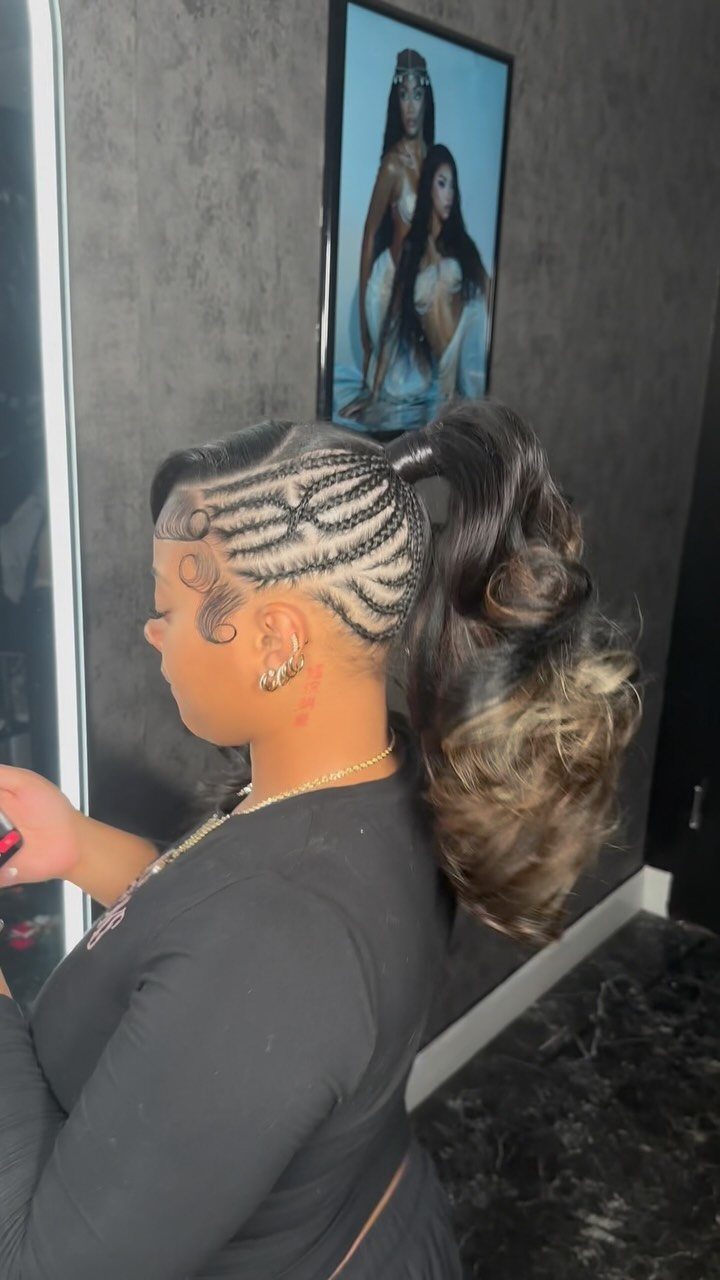
Cornrows run flat against the scalp and gather into a high ponytail, which leaves the length free to swing or curl. Extensions are optional, but they add volume if you want a fuller ponytail.
Ask your braider for the ponytail’s height before you sit down, since the braid direction depends on where it ends up.
I would choose this for a style that stays neat for days with little morning work. A satin scarf at night helps it last.
28. Box Braids Bun
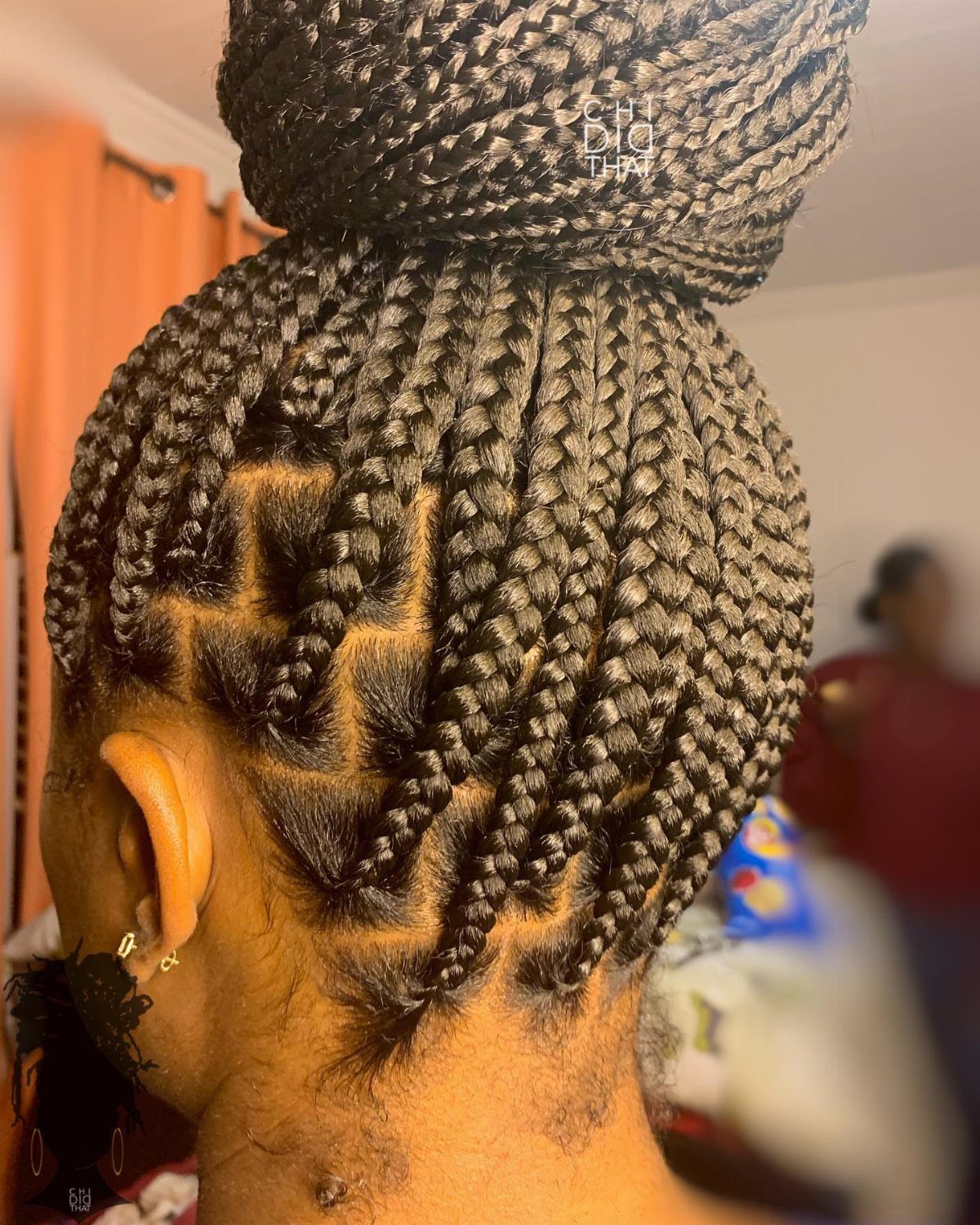
Extra-long box braids wrapped into a beehive bun turn all that length into one tall, sculpted shape.
Gather the braids high, then coil them around the base in a spiral, pinning each loop as you go. Wrap in one direction so the bun stays even.
Piling the braids up into a bun lifts all that length off your neck, which matters on a hot day. Long braids are heavy, so pin firmly.
29. Chunky Cornrows
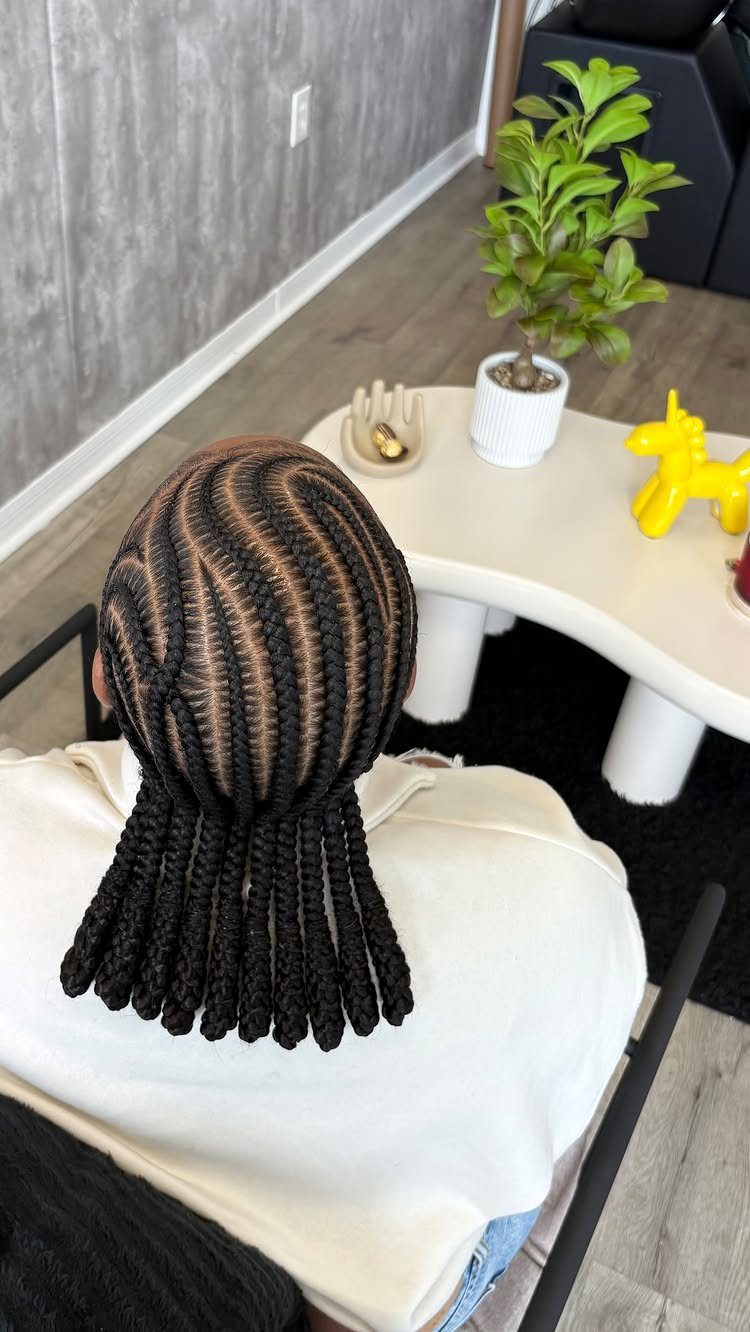
Thick cornrows can carry curves, designs or a few smaller braids, which makes each head of hair a custom pattern. The bigger sections look bold from far away and finish into long braids.
Bring a reference photo and ask your braider how the pattern will sit. Curved lines need more planning than straight ones.
I would pick chunky over thin cornrows if you want impact without a long appointment. Fewer, larger parts usually mean less time in the chair.
30. Long Box Braids
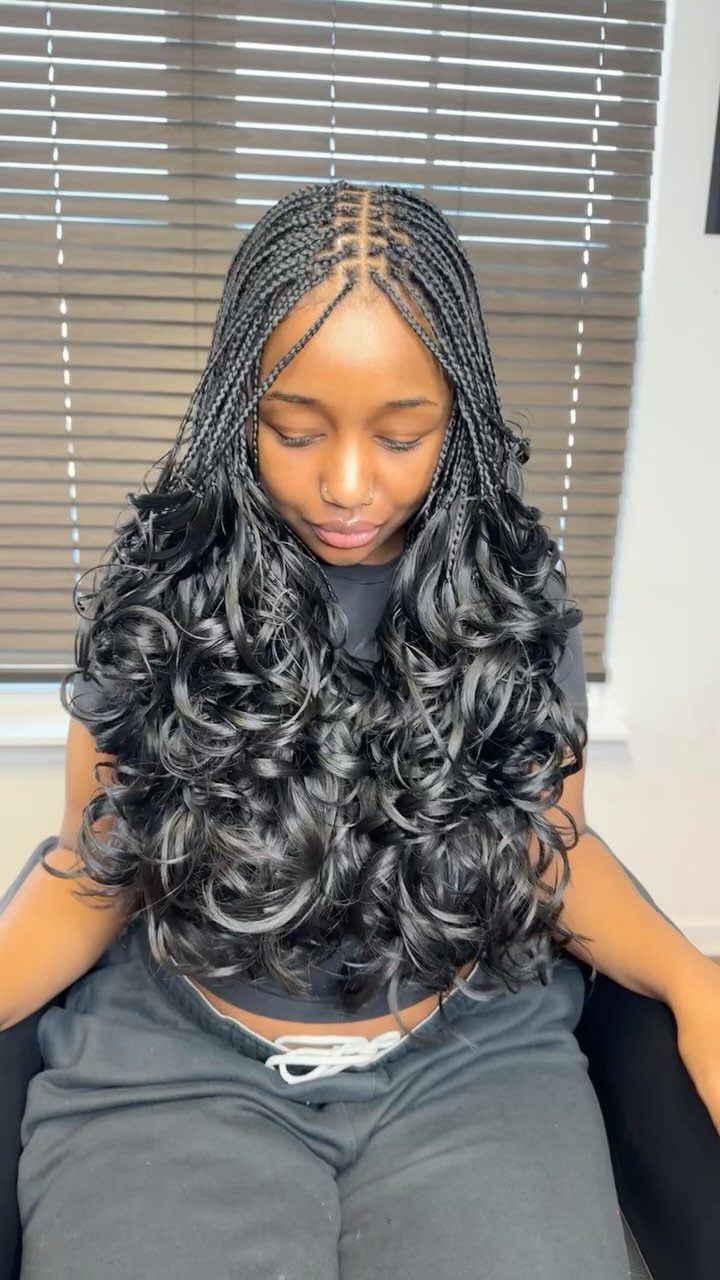
Long box braids can end in loose curls, which gives you a smooth center part on top and a full, bouncy finish at the bottom. Without the curl, they hang straight and sleek.
Ask for the braids at the length you want, and decide on the curled ends in advance, since they change how the style hangs.
I like the curly ends for softness. They also make the braids look less rigid when worn down.
Long Hair Care and Upkeep
Healthy ends matter more than any style on long hair, and the base routine is simple: a moisturizing conditioner, a heat protectant before any iron or wand, and a mask once a week.
Hair loses moisture as it gets older, so a weekly mask matters more with age.
Brush wet hair gently. Wet strands stretch and snap easily, so use a wide-tooth comb or a detangling brush and start at the ends, working up.
Trims are the part people resist while growing out length, but they keep split ends from traveling up the strand.
Expect a trim every 2–4 months for long hair, adjusted for how fast yours grows and how hard you are on it with heat.
Shaggy bangs run on a faster clock. Plan on trims every 4–6 weeks to keep them from drifting into your eyes.
According to celebrity hairstylist and L’Oreal Paris hair care and color ambassador Dimitris Giannetos, hair gets thinner, drier, and duller with age. When choosing long hairstyles, you’ll want to wear a style that is not only healthy but also something that you feel confident in.
— Vogue
Choosing Cuts for Hair Type
Start with thickness, since it settles more than any other factor. Thick hair is the easy case: it carries layers, sleek lengths, and bangs without much fuss.
Fine hair has plenty of good options too. I lean toward light layers or a blunt cut here, because heavy layering can leave the ends looking thin.
Then weigh texture. Curly hair does well with layers that give the curls room to stack, while straight hair looks best with polished, clean-lined cuts.
2 more questions are worth answering honestly before you book: how quickly your roots get greasy, and how often you will realistically come back for trims.
Hair that gets oily fast usually looks better with a bit of movement than with a flat, heavy fall. A cut that needs a trim every 6 weeks is a poor match if you only visit twice a year.
Match Styling Time to Routine
Be honest about your mornings before you pick a cut. Long hair that is naturally wavy can fall into shape on its own, while waves made with heat take more time and more product.
If you have 5 minutes, choose a cut that works with what your hair already does. If you enjoy 20 minutes with a wand, structured looks become realistic.
Bangs and sharply shaped cuts ask for extra care every day, so factor that in. A style that looks good styled and unstyled is the better bet for most weekday routines, and layers cut well can give you that.
Frequently Asked Questions
What are the trends for long hair in 2026?
Soft waves, curtain bangs and long layers remain the most popular picks, along with half-up styles and braided looks like fishtails and cornrows.
Texture wins over stiff polish, and styles that grow out without a visible cut line get more requests. Long hair now gets styled in ways that keep morning work low, from loose waves to protective braids.
Which hair style is best for long hair?
Long layers work best across most hair types, since they add movement and keep thick hair from hanging heavy while giving fine hair fullness that lasts.
Curly hair holds shape better with layers, straight hair suits sleek ponytails and smooth blowouts, and wavy hair can take on nearly any style. Pick by texture first, then by how much time you want to spend each morning.
Does long hair make you look older?
Length alone does not age you. The cut and the condition decide how long hair reads, so a modern shape and healthy strands keep the look fresh.
Styled well, long hair suits any age, but hair that is dry, damaged or stuck in an outdated cut does you no favors.
How to care for long hair if you’re over 50?
Cut every 8 to 12 weeks and rely on a conditioning mask once or twice a week, because graying hair holds less moisture and roughens up.
Add omega-3 if your diet runs low, and eat leafy greens to support hair health from the inside. Regular maintenance keeps long hair looking polished instead of brittle.
How to add volume to long hair?
Layers cut through the lengths lift long hair without shortening it, and bond-building treatments improve the strength and body of each strand.
Curl or wave the hair to build volume through the mid-lengths, or blow-dry with a round brush at the roots. Professional treatments paired with home aftercare keep volume from falling flat by the afternoon.
What hairstyles suit a woman over 50?
Talk through your face shape and the best length with your stylist, since the right cut flatters your features instead of hiding them.
Soft bangs and layers draw attention to your eyes and cheekbones, and updating your usual cut keeps you out of a rut.
Long hair suits plenty of women over 50, so pick by what feels confident rather than following outdated rules about age and length.
How to Choose the Best Long Haircut for You?
Start with your hair type and thickness, then consider how often you want to style it and how quickly it gets greasy or weighed down.
Fine hair does better with fewer, softer layers so the ends stay full, while thick hair needs more layers to keep it from hanging heavy.
Match the cut to the amount of morning work you want to do and how often you plan to trim.
How Often Should You Cut Long Hair?
Book a trim every 8 to 16 weeks so splits don’t travel higher and snap off what you worked to grow.
Regular trims seem like they slow growth, but they keep the ends healthy enough to hold onto length instead of snapping off. Skip them and you lose more hair to breakage than you would to scissors.