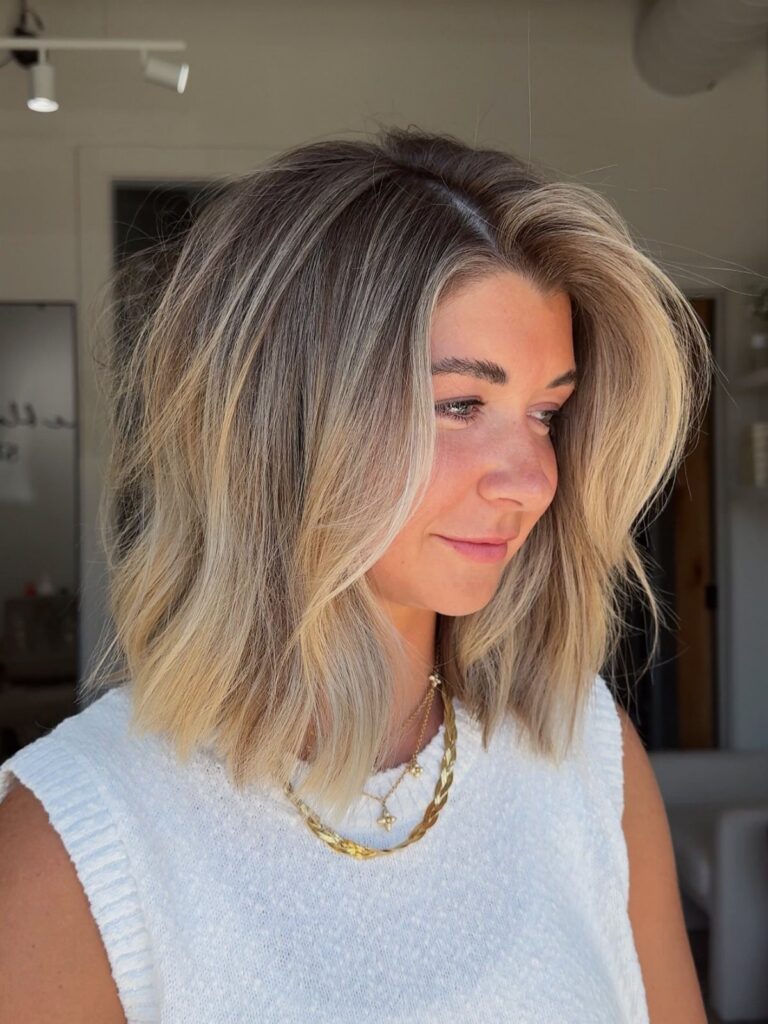
A round face reads wider at the cheeks and softer at the jawline, so the cuts that work best create vertical lines or angles that offset that width.
Cheekbone-level layers, off-center parts, and shoulder-grazing length all guide attention vertically rather than widening the silhouette.
A collarbone lob offers tie-back flexibility without the weight that flattens volume, and a chin-length bob paired with a side part keeps edges clean and structure controlled.
1. Textured Lob
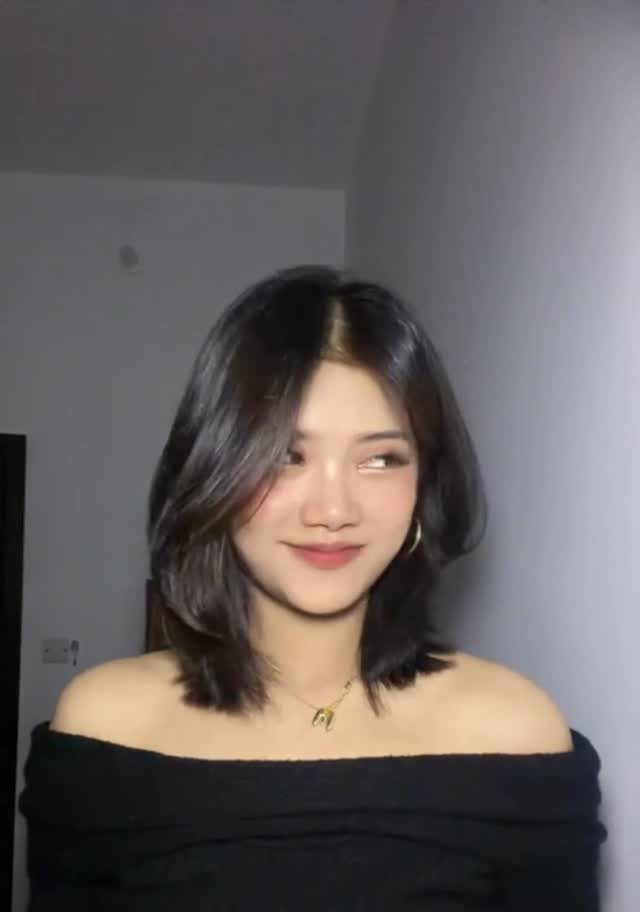
A lob sits at the collarbone, long enough to tie back when you need it off your face but short enough that it stops pulling flat.
Soft waves or loose curls add movement through the lengths, so the shape reads rounded rather than blunt.
Straight hair gets texture from a curling iron or sea salt spray worked through damp strands. Wavy or curly textures can air-dry with a mousse worked through damp hair.
That collarbone length creates a diagonal that leads the eye vertically instead of widening at the cheeks.
2. Shag Cut
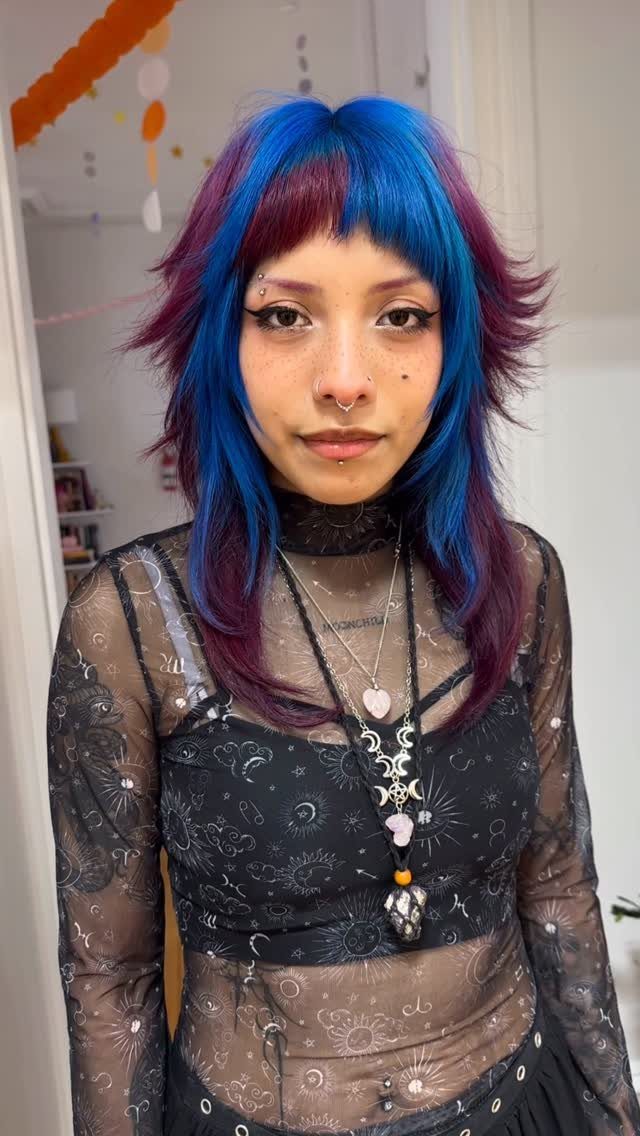
Choppy layers cut throughout the hair create volume at the crown and movement around the face, which offsets a wider appearance. The pieces fall at different lengths, so the overall silhouette reads less round.
Shags work well on wavy or curly hair because the texture holds the layers without much effort. Straight hair needs a bit more styling, usually a texturizing spray or a quick pass with a flat iron to add bends.
Fringe helps when you want more framing, but the style works without it if you prefer to keep your forehead clear.
3. Textured Bob
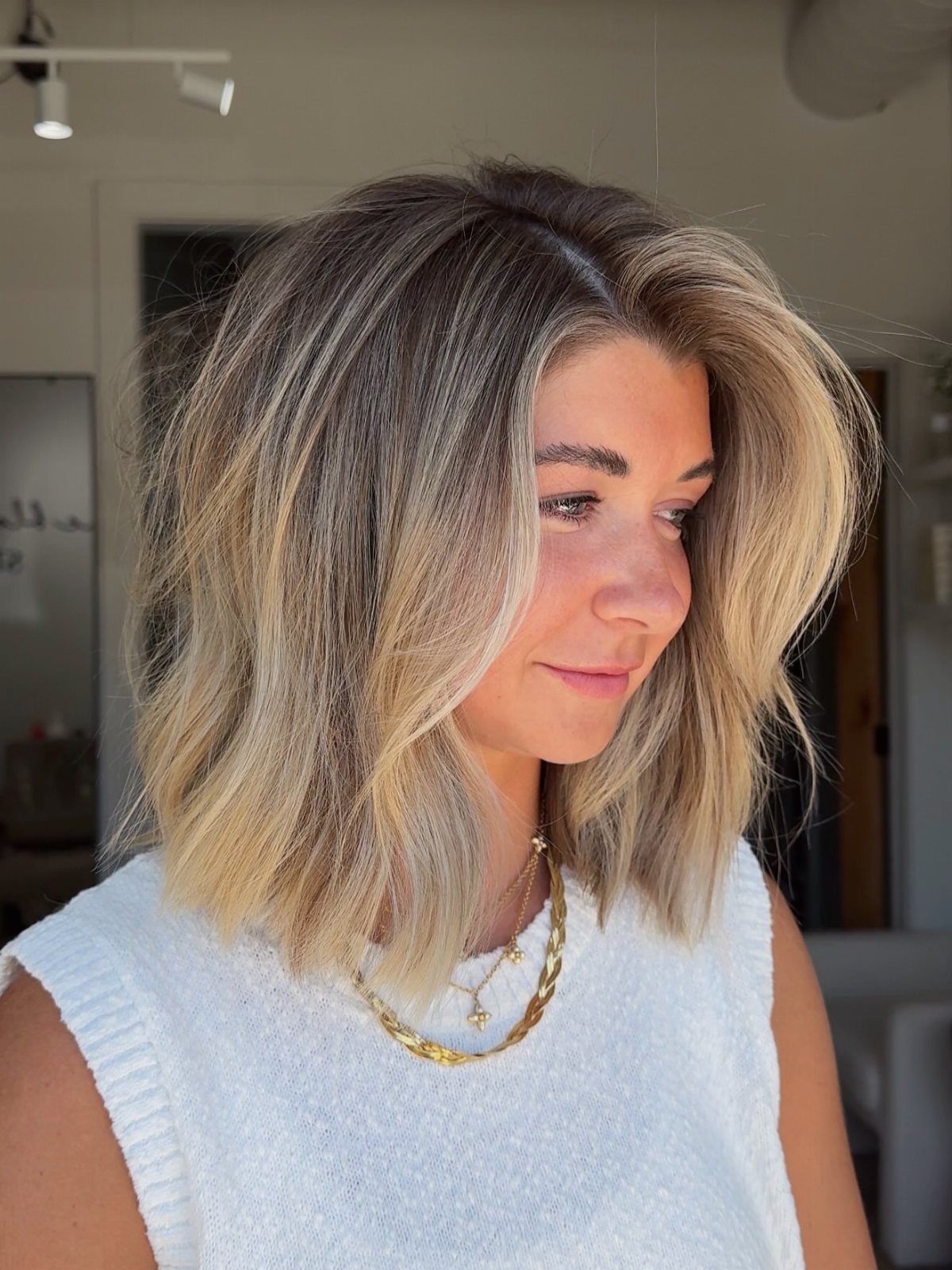
Choppy ends and soft waves keep a bob from sitting too heavy or too uniform, which can emphasize roundness. The texture breaks up the line and adds dimension, so the shape feels looser and less structured.
A texturizing spray or dry shampoo worked into the roots will give you lift at the crown. Straight hair takes wave from a curling iron run through the lower half, bending the ends without tight curl.
The length hits right at the shoulders, which creates a vertical line that lengthens the face.
4. Long Layers
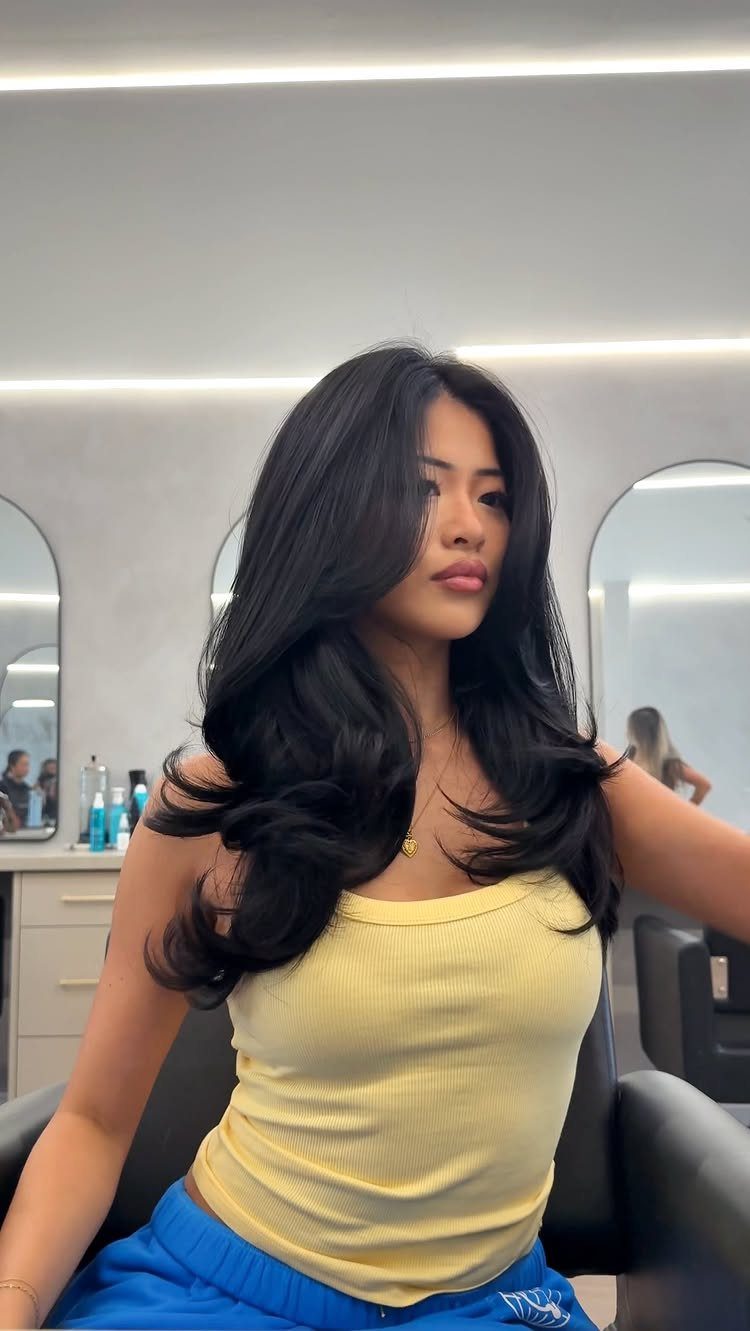
Layers that start mid-length and graduate down to the ends add movement and create length, which helps counteract width. The face reads longer when the hair falls past the shoulders and the layers draw the eye downward.
Ask for layers that begin below the cheekbones so the shortest pieces still frame the face without adding bulk at the sides.
Long layers grow out without obvious lines, so trims can wait when you’re trying to add length.
5. Face-Framing Layers
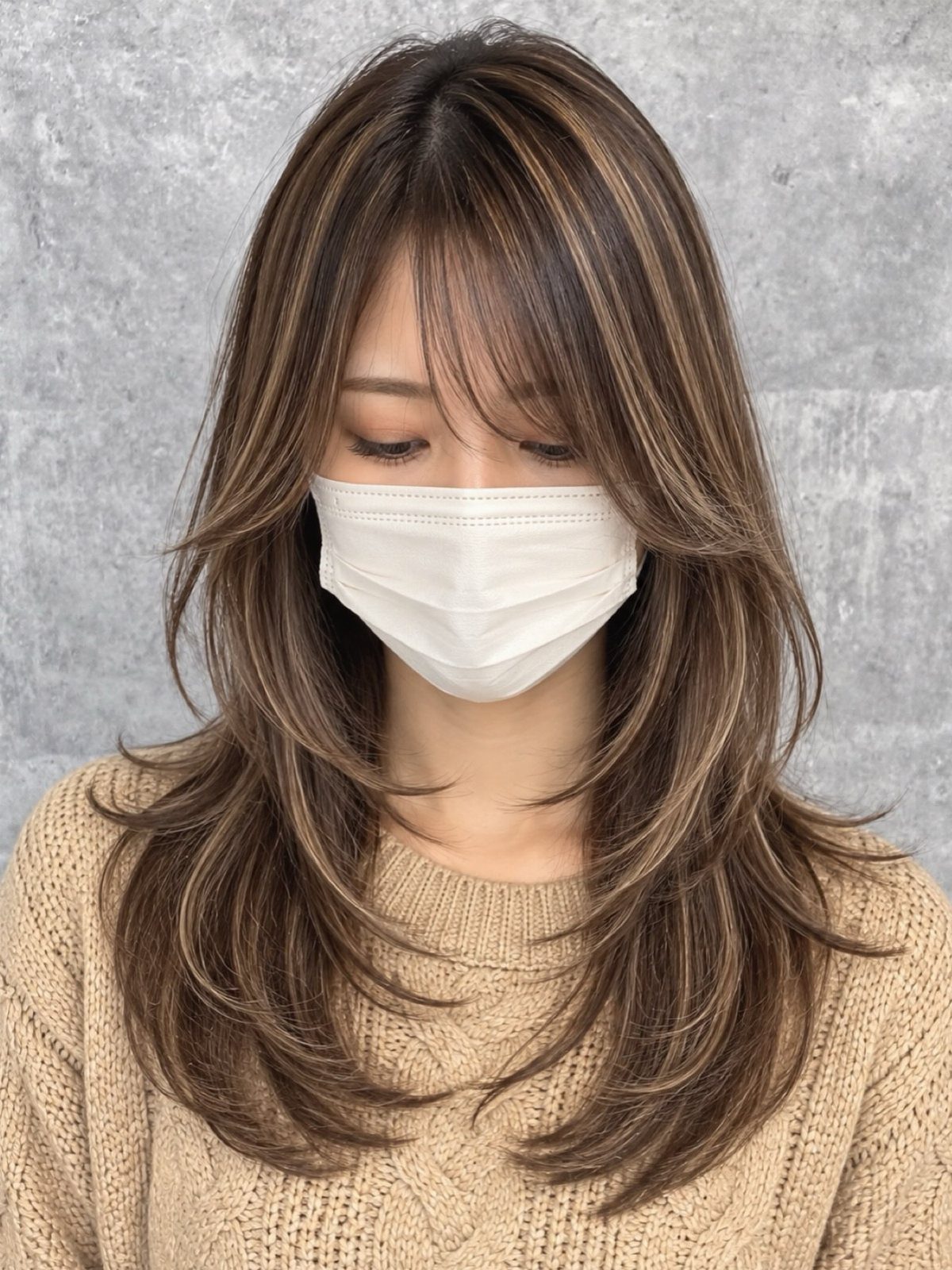
Shorter pieces cut around the face create angles and movement that break up a rounded silhouette. The layers start near the cheekbones and blend into longer lengths, so the eye follows a diagonal line rather than a circle.
Blow-drying the front sections with a round brush will give you lift and a slight bend. If your hair holds a curl, wrapping just the face-framing pieces around a 1-inch iron adds soft shaping without committing to a full blowout.
The rest of the hair can stay one length or carry long layers, depending on how much movement you want overall.
6. Face-Framing Bangs
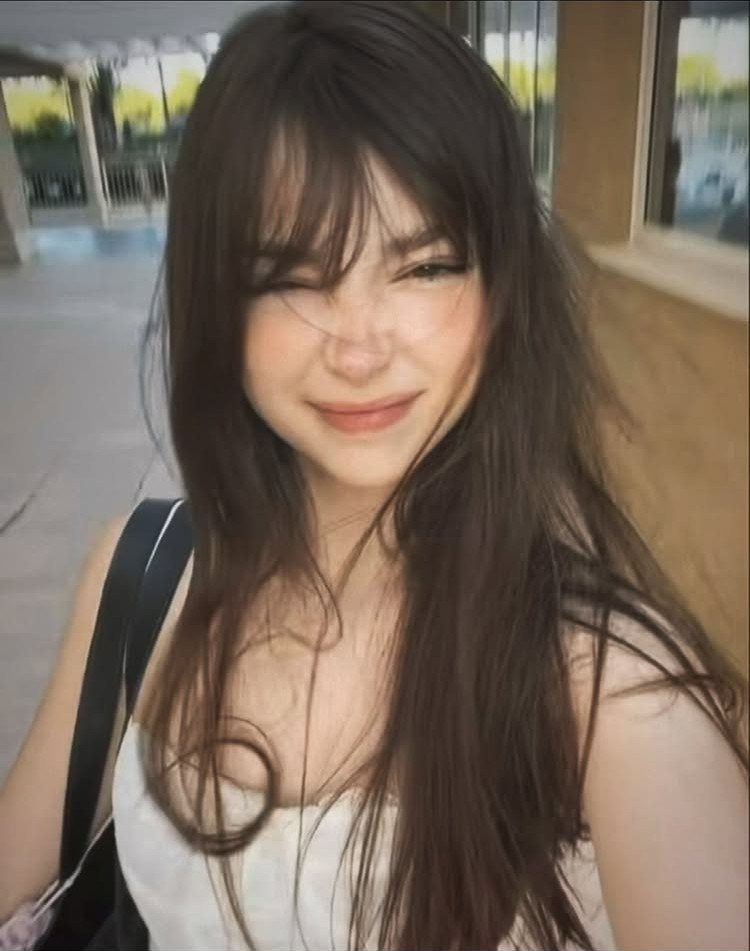
Wispy fringe and longer pieces that taper toward the jawline frame the face and create angles, which offset roundness. The bangs sit off to the side rather than straight across, so they add shaping without shortening the face.
Curtain bangs or side-swept fringe work here because they open up the center and draw attention vertically.
Blunt, straight-across bangs can make a round face look shorter, so most stylists will cut fringe with some texture and angle it toward the temples.
The fringe grows fast, so keeping the shape means regular trims.
7. Sleek Layers
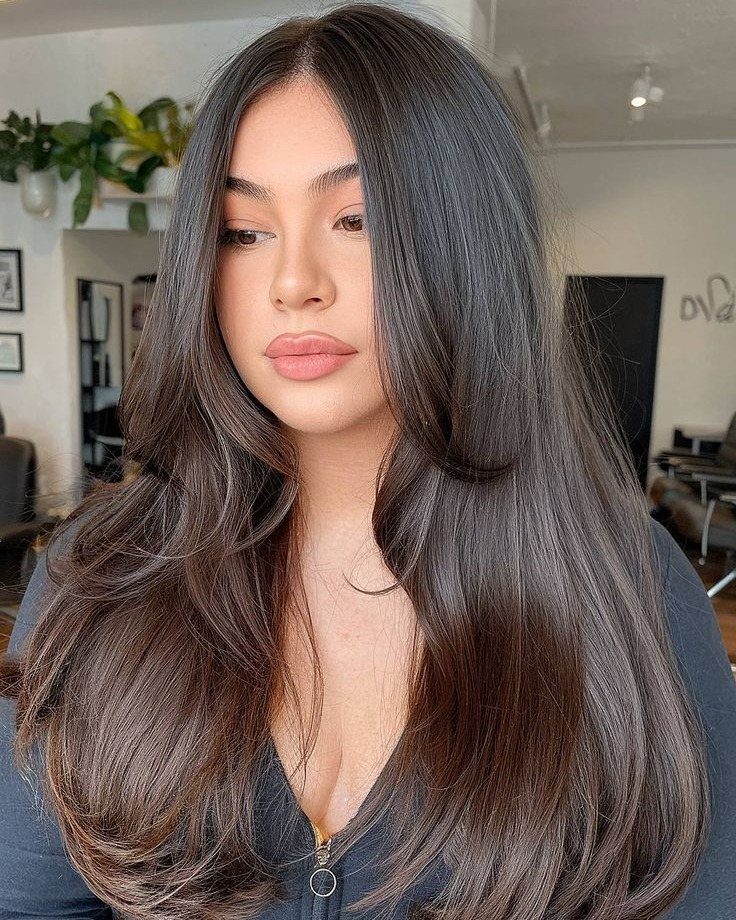
Straight hair cut with layers that start at the cheekbones and taper toward the ends keeps length while adding angles around the face. The smooth finish and downward line counteract width without adding volume.
A blow-dry with a paddle brush keeps the surface sleek, and a flat iron smooths any flyaways. The layers need less precision than a blunt cut, so they grow out without looking unfinished.
This cut works when you want framing without texture or wave.
8. Long Face-Framing Curls
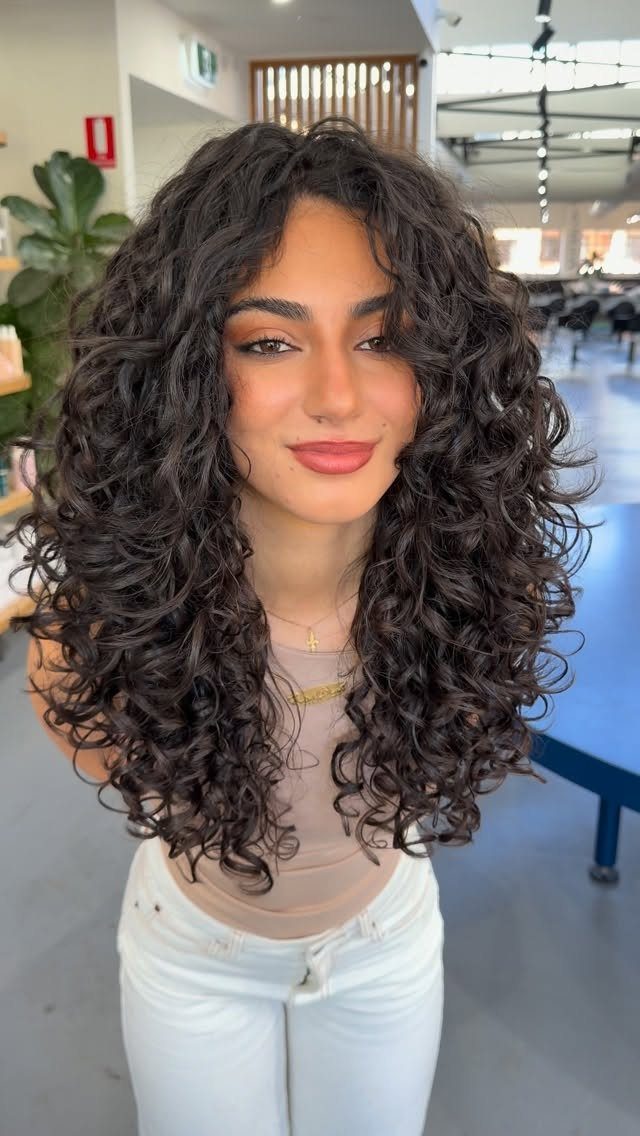
Curls that fall past the shoulders and frame the face create vertical movement, which offsets roundness. The length pulls the eye down, and the curl pattern adds dimension without widening at the sides.
A curl cream or mousse worked through damp hair helps define the pattern. Scrunching while air-drying or diffusing on low heat keeps the curls soft and the volume controlled.
The longest pieces can be pulled back when you need the hair off your face, and the front stays framing.
9. Textured Lob with Bangs
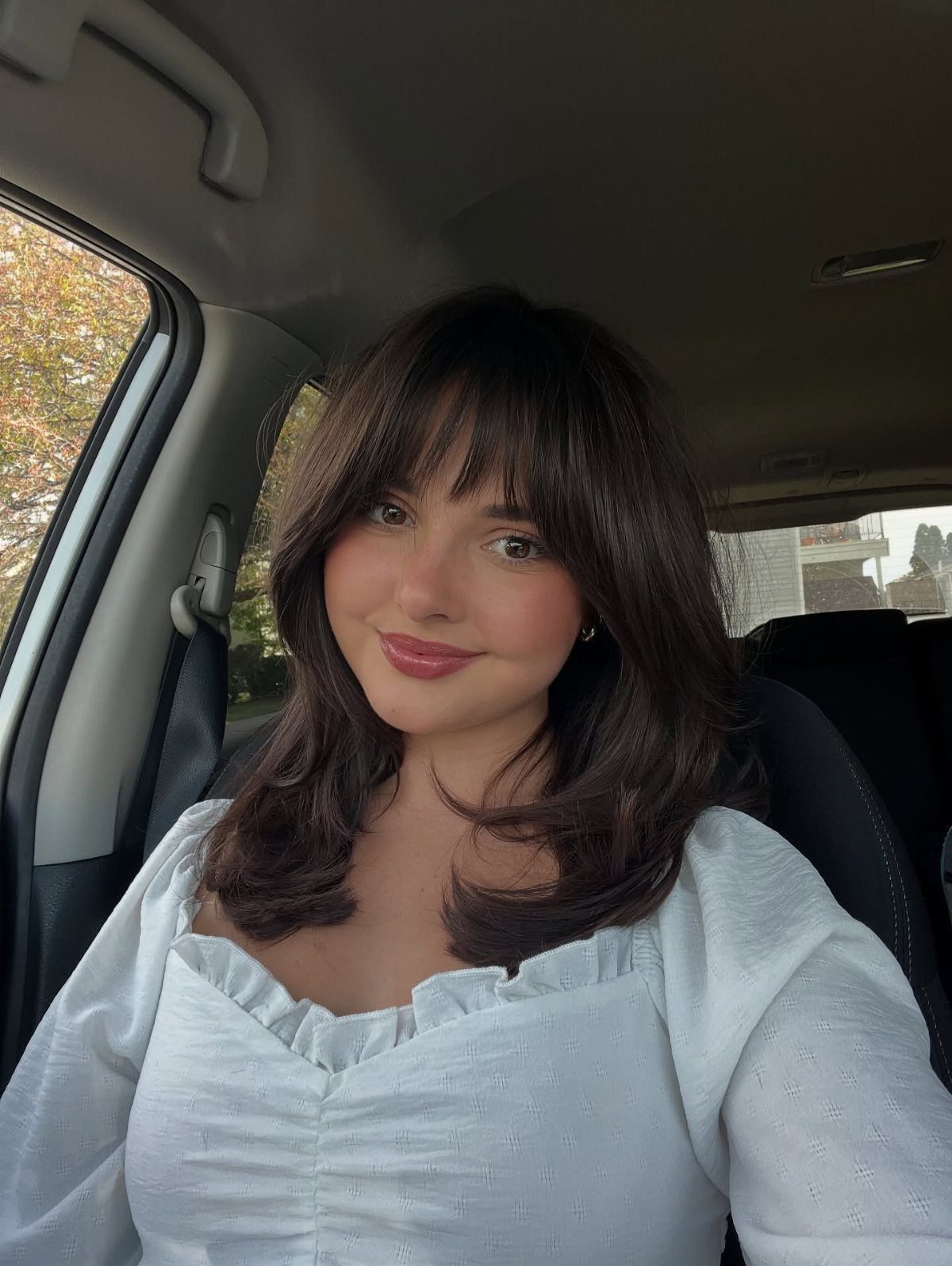
A lob paired with fringe adds both length and framing. The bangs sit off to the side or part in the center, and the textured ends keep the overall shape from reading too blunt.
Wispy or curtain bangs work better here than straight-across fringe, which can shorten a round face. The texture comes from a curling iron run through the ends or a texturizing spray worked into damp hair before air-drying.
Bangs grow into your sightline quickly, so expect to book a trim whenever they start brushing your lashes.
10. Curly Shag
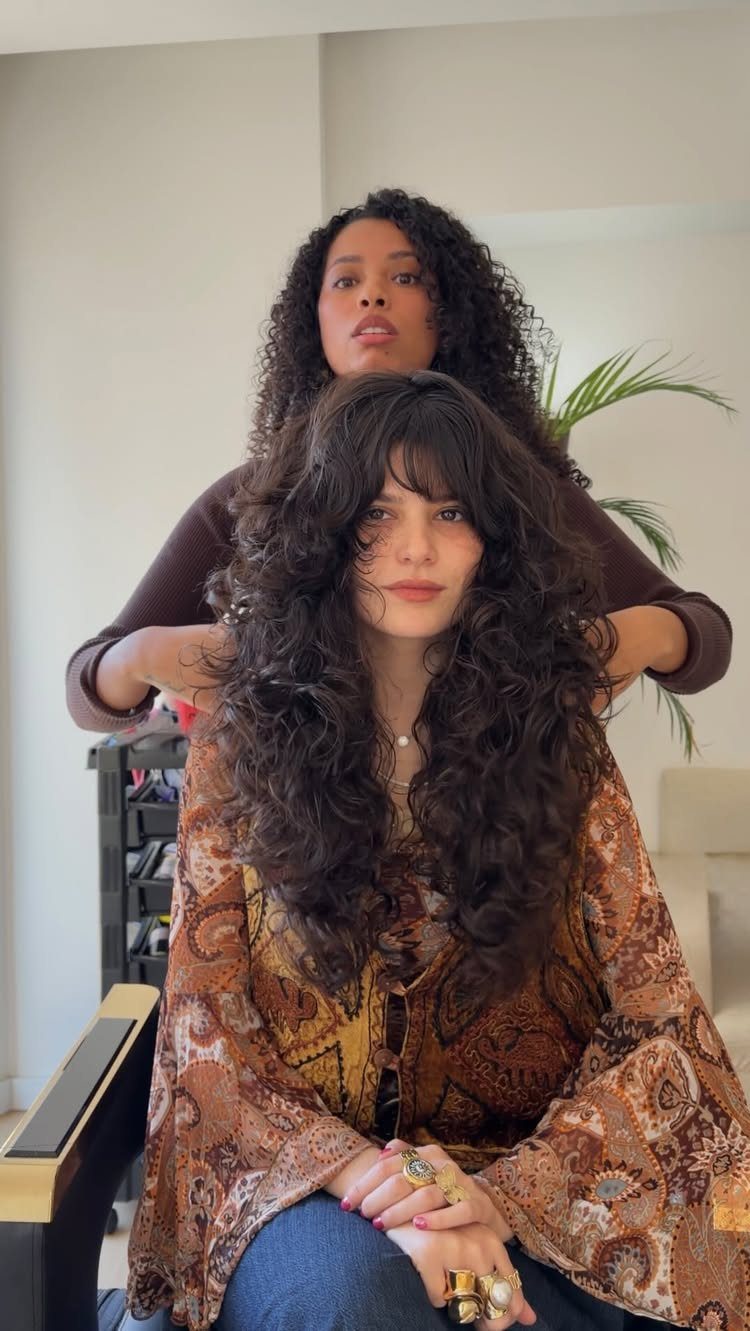
Curls hold the layers without much styling.
The fringe can be cut into the shag or left out, depending on how much framing you want around your forehead.
11. Side-Parted Shoulder Cut

Shifting the part far to one side gives you uneven sections that angle across the face instead of mirroring it. One side carries most of the hair, the other stays lighter, and that slant pulls attention down instead of widening.
Smooth styling with a round brush or flat iron keeps the shape clean. The part can sit anywhere from just off-center to near the temple, depending on how much contrast you want.
This cut grows out without a hard line, so you can let it go longer without losing the shape.
12. Tapered Shoulder Bob
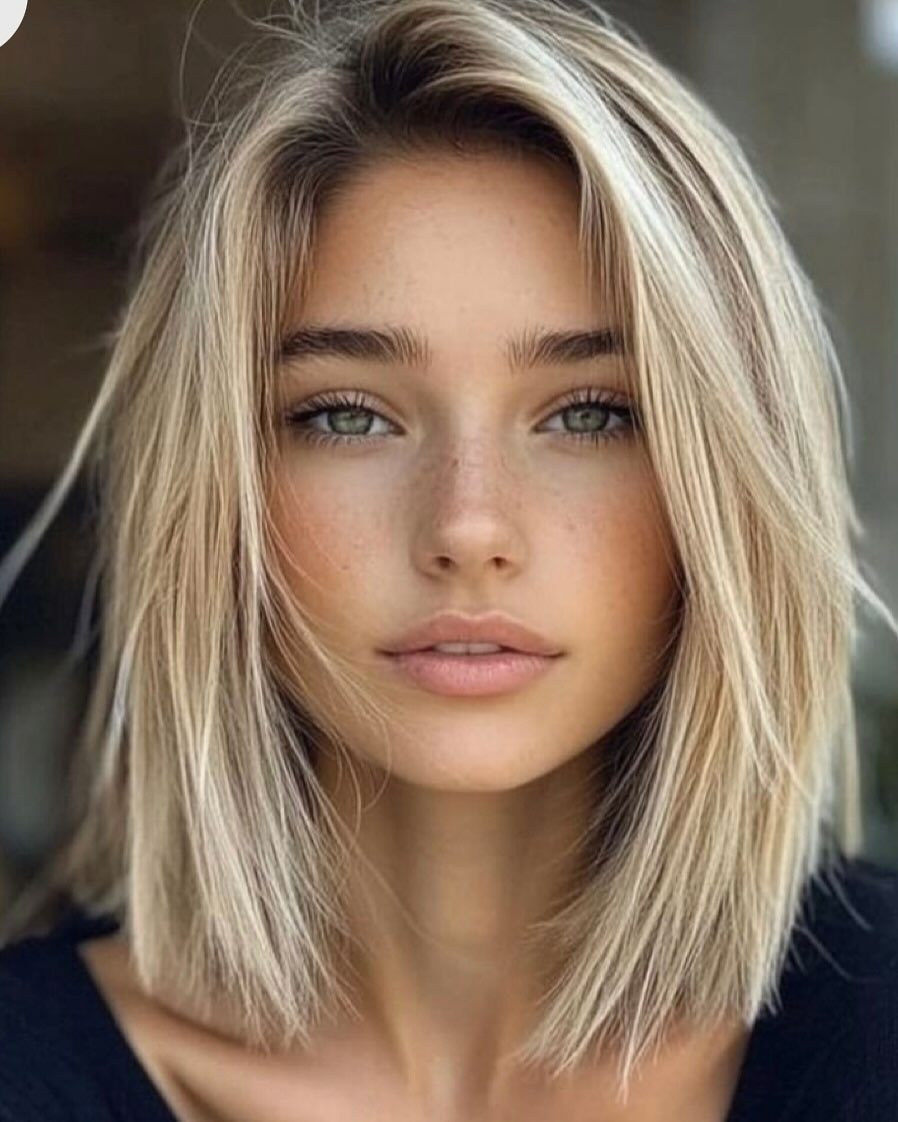
A center-parted bob that tapers at the ends creates a narrow silhouette and keeps the sides from adding width. The length hits the shoulders, and the taper makes the hair look lighter and more elongated than a blunt cut.
A round brush bent through the ends while blow-drying gives movement, or you can flat-iron it smooth if you want something sleeker.
The center part keeps the framing balanced, though a slight off-center part works too if you want a softer look.
The taper grows out gradually, so trims can wait longer than they would with a sharp line.
13. Side-Parted Chin Bob
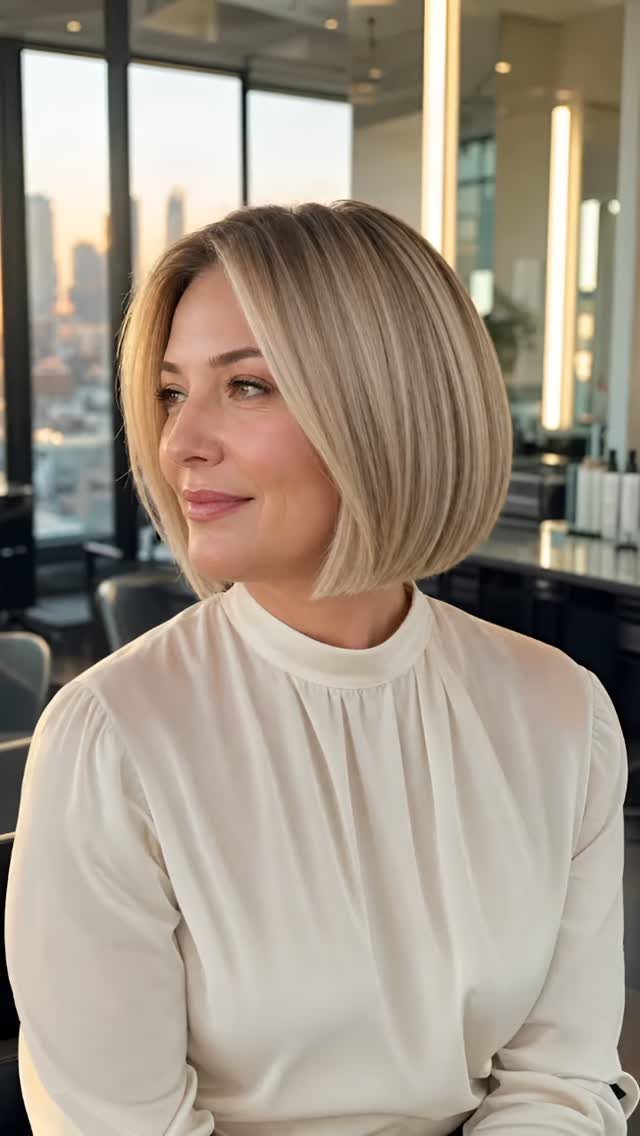
A chin-length bob with a side part keeps the line smooth and the shape tailored. Stopping right at the chin pulls attention downward instead of across.
A round brush during blow-drying smooths most of the work, then a flat iron cleans up whatever still needs it. The side part adds asymmetry, which breaks up roundness without texture or wave.
This cut holds its shape between trims, though the blunt line will start to look uneven as it grows past the chin.
14. Updo with Long Strands
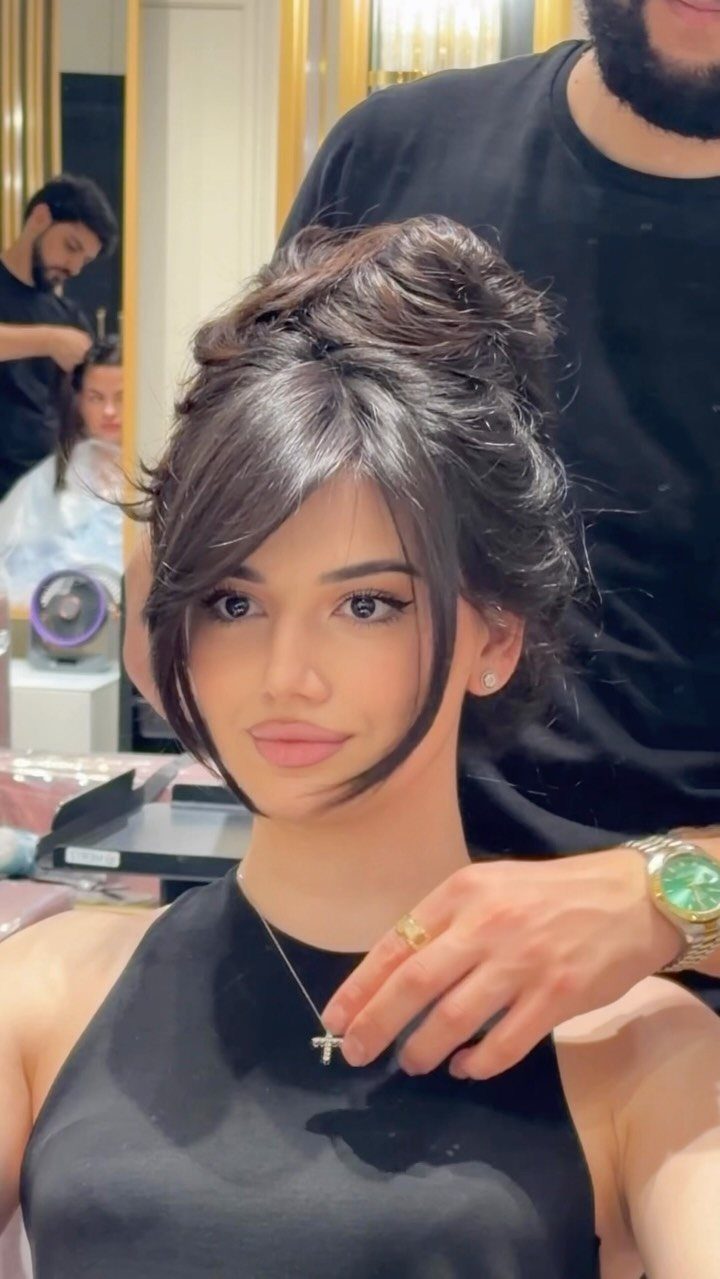
Pulling most of the hair into an updo while leaving long, straight pieces loose around the face gives you the clean neckline of a pinned style with the vertical framing of loose hair.
The strands sit beside the cheeks and taper toward the jawline, so they lengthen the face while the rest stays off your neck.
The updo can be a low bun, a twist, or pinned sections, depending on how formal you want it. The face-framing pieces need to be long enough to fall past the chin, or they’ll stick out rather than hang.
Consultation and Personal Fit
Face shape matters, but it won’t tell you everything about which cut will work. Hair texture, density, growth patterns, lifestyle, and personal style also matter when you’re choosing a cut.
Bring photos that show what you want, and be just as clear about what you’re trying to avoid.
If you already spend time on styling and like how your hair looks fresh from the salon, an angled lob or a butterfly cut with volume through the crown can be worth the effort.
Tell your stylist how often you’ll come back, whether you’ll use a flat iron or curling wand daily, and if you want any short pieces near your face.
Mention your texture, because fine hair, thick hair, curls, and straight strands each need different decisions inside the same cut.
Ask how long the face-framing pieces will be, since that length changes how often you’ll need a trim and how much time you’ll spend each morning.
“A great hairstylist will be able to find a way to make your desired style work with your unique features, as there’s so much more to keep in mind than just face shape.”
— Glamour
Frequently Asked Questions
Do bangs look good on round faces?
Side-swept or curtain bangs work well because they angle toward the temples and create vertical lines rather than cutting straight across. Textured, piecey fringe reads narrower than a heavy blunt line that chops the face in half.
What is my face shape?
Look at the widest part of your face and compare your face length to its width. Width and length measure close to equal, cheeks stay full, and the jaw curves instead of angling.
How to choose the right haircut for your face shape?
Face shape tells you what to balance, texture and growth pattern tell you what the cut can actually do.
Bring photos to your stylist and explain how much time you’ll spend styling, since the same cut requires different approaches for fine, thick, curly, or straight hair.
How to ask your stylist for the right cut?
Bring a reference photo and explain your hair texture, how much time you’ll spend styling each day, and how the face-framing pieces should sit.
Ask how long the shortest layers will be and how the cut will look after several days, since those details change how often you’ll need trims and how much the cut lengthens your face.
How often should you get a trim to maintain a flattering shape for a round face?
Every 6 to 8 weeks keeps layers sharp and stops the cut from growing into a rounder, heavier shape.
Can hair color alone make a round face look slimmer?
Vertical color, whether it’s ribbons of highlight or a face-framing money piece, pulls the eye along a longer line. Placement matters more than shade: light that runs vertically lengthens, light that sits wide at the temples does the opposite.
Is it better to go to a specialist stylist for round face cuts?
A good stylist can handle any of these cuts as long as you’re specific about which angles you want framed and which you want softened.
The conversation about texture, styling time, and layer placement matters more than finding someone who specializes in a single face shape.





