Shoulder-length cuts span from one-length bobs that show every split end to layered shags that stretch months between trims, and the right one depends on how much time you’ll spend with heat tools each morning.
Blunt perimeters need daily flat-ironing to keep the line sharp, while soft shags and tousled waves air-dry into shape on hair with natural texture.
Curtain bangs cut shorter at the center and angled longer toward the cheekbones add symmetry without covering the forehead, and side-swept bangs tuck behind one ear when they grow past the chin.
1. Soft Long Layers
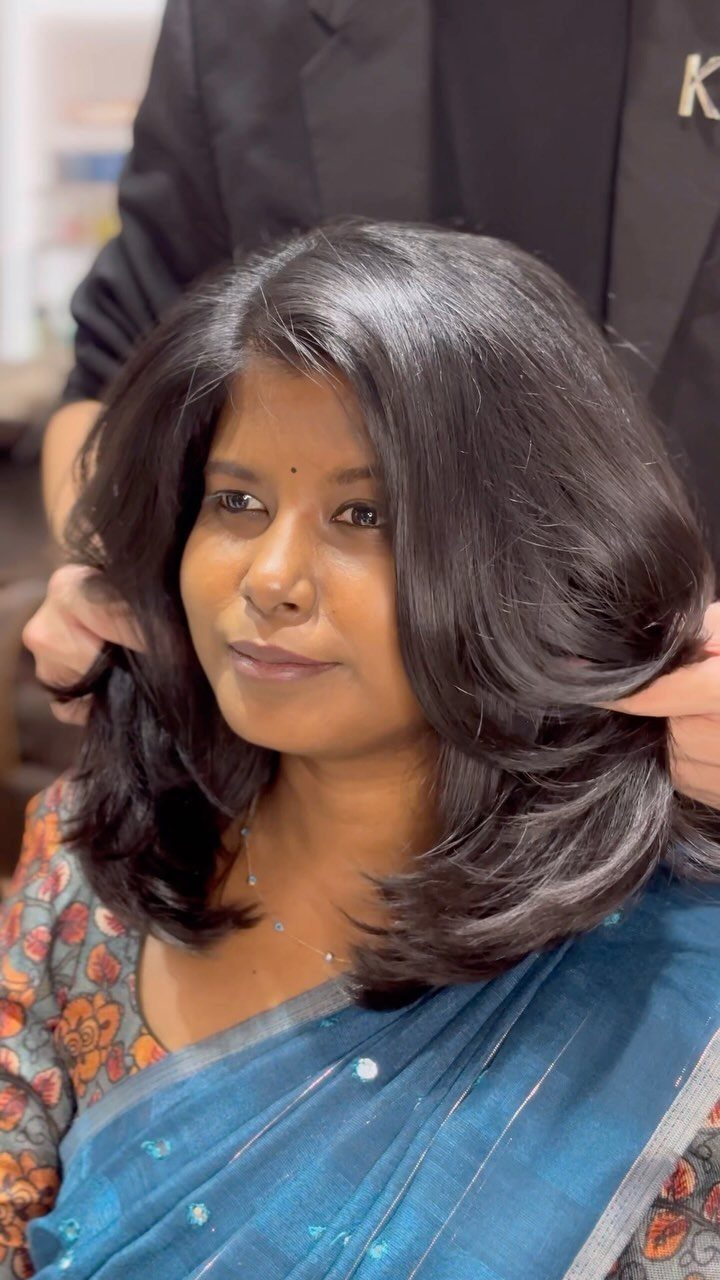
Layers that start below the chin and taper gradually toward the ends keep the weight up high while letting the lengths move.
The shape works across textures, from straight hair that wants lift at the crown to wavy hair that needs definition without losing body.
Ask for long layers with minimal graduation if you want the hair to hold length at the front.
For more volume, request layers that begin higher, around cheekbone level. The longer the layer, the softer it grows out.
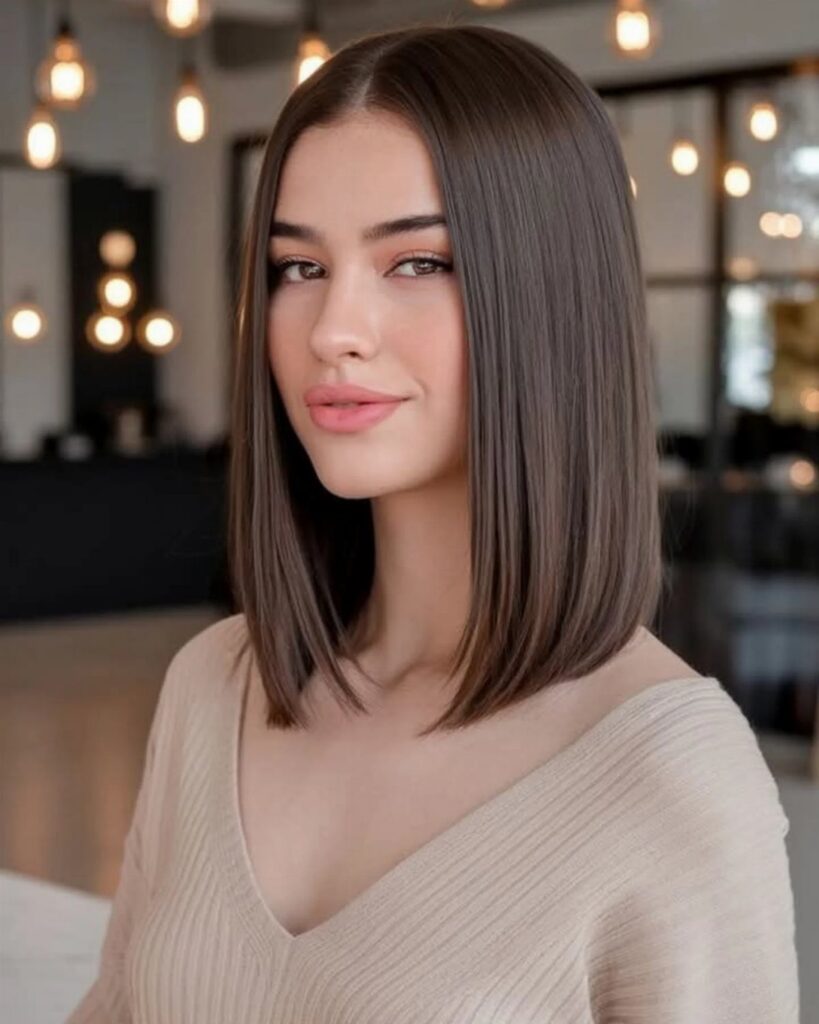
2. Sleek Blunt Bob
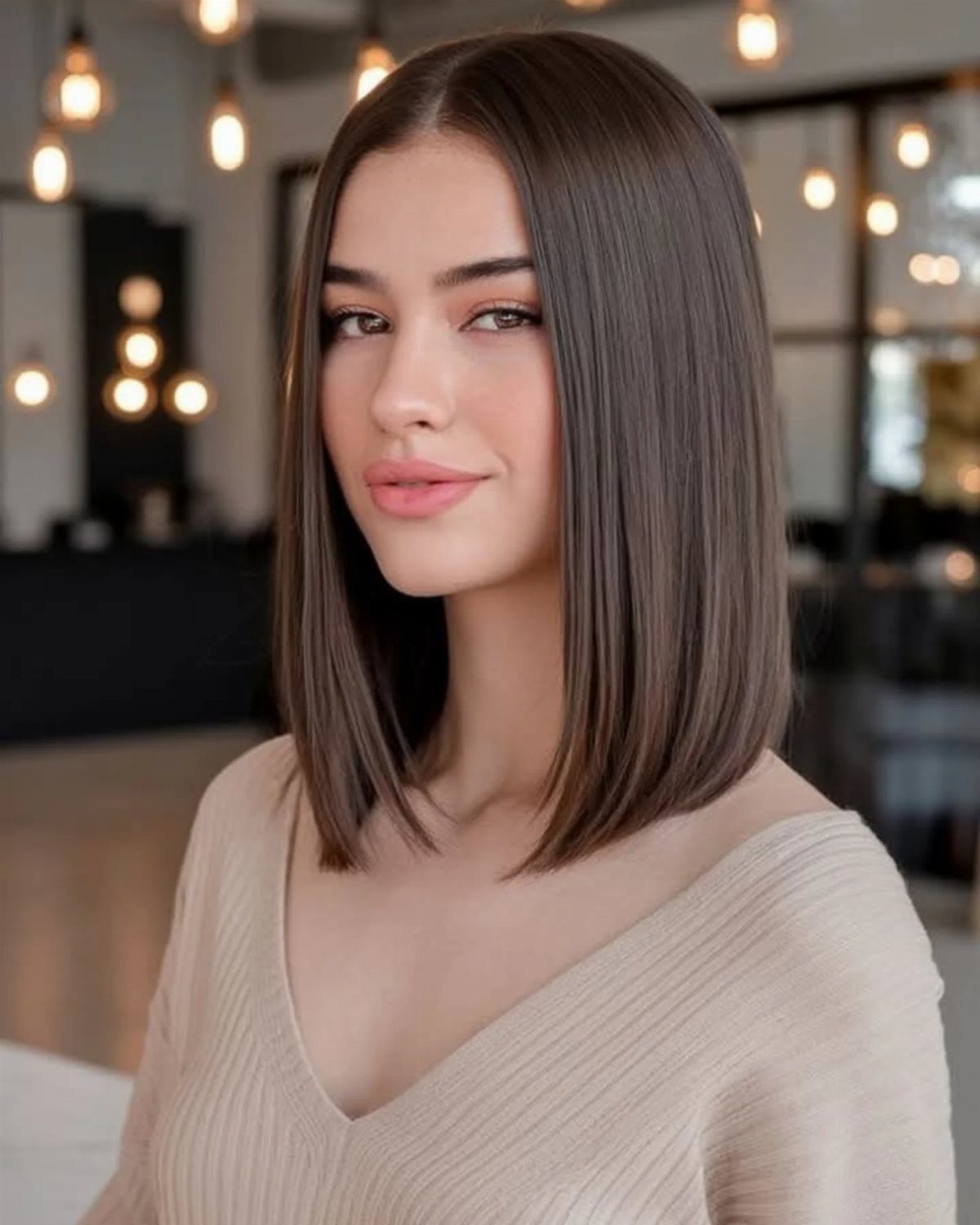
A one-length cut at the shoulders, trimmed straight across with no internal layering, gives the sharpest edge. The blunt line reads clean when the hair is straight and healthy enough to reflect light evenly.
This cut shows split ends immediately, so plan to trim often.
Fine hair gains density at the perimeter; thick hair can feel heavy without face-framing pieces to break up the line. Flat-iron or blow-dry smooth to keep the edge crisp.
3. Tousled Waves
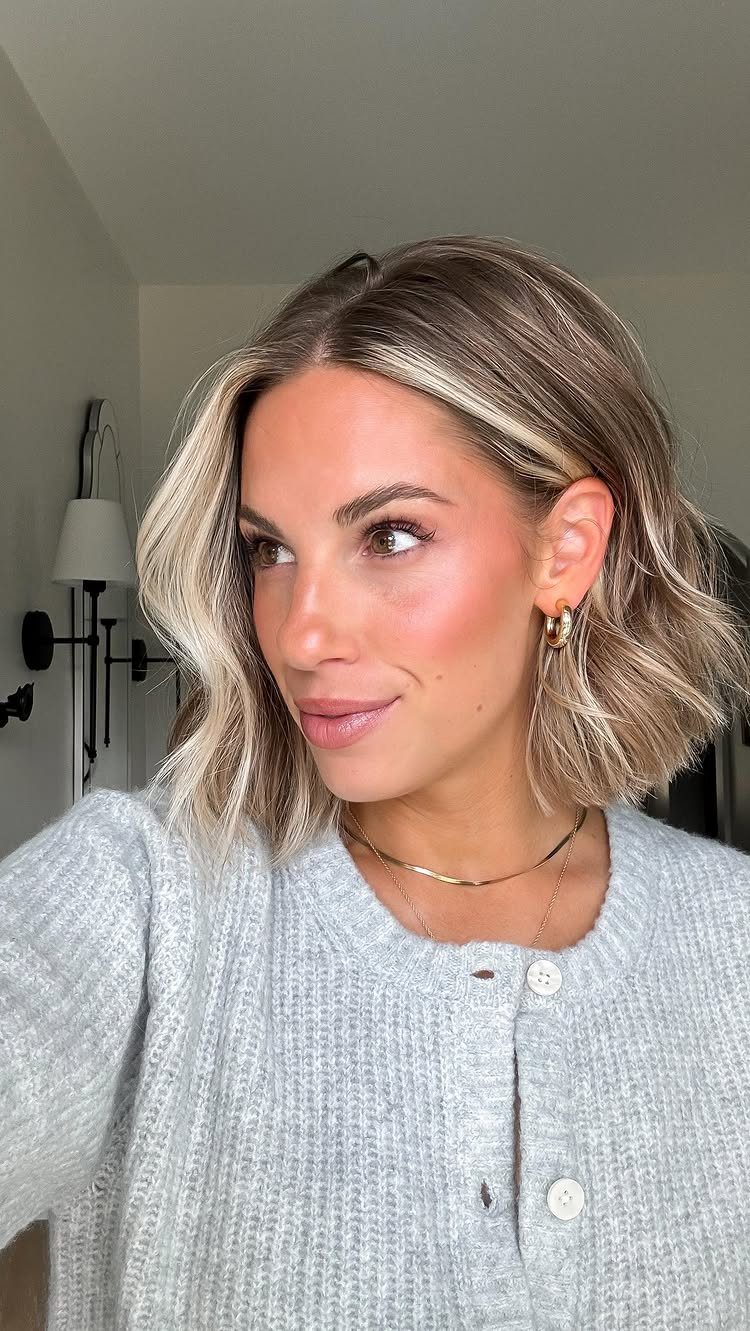
Waves bent loosely through the midlengths and ends, with enough texture to look lived-in, sit well on a lob or any cut that lands between the collarbone and shoulders. The shape holds without tight curls or a polished finish.
Use a curling iron or wand, wrap sections away from the face, and leave the last inch straight.
Scrunch with sea salt spray while the waves cool. The looser the wave, the less it shrinks length.
4. Sleek Straight Hair
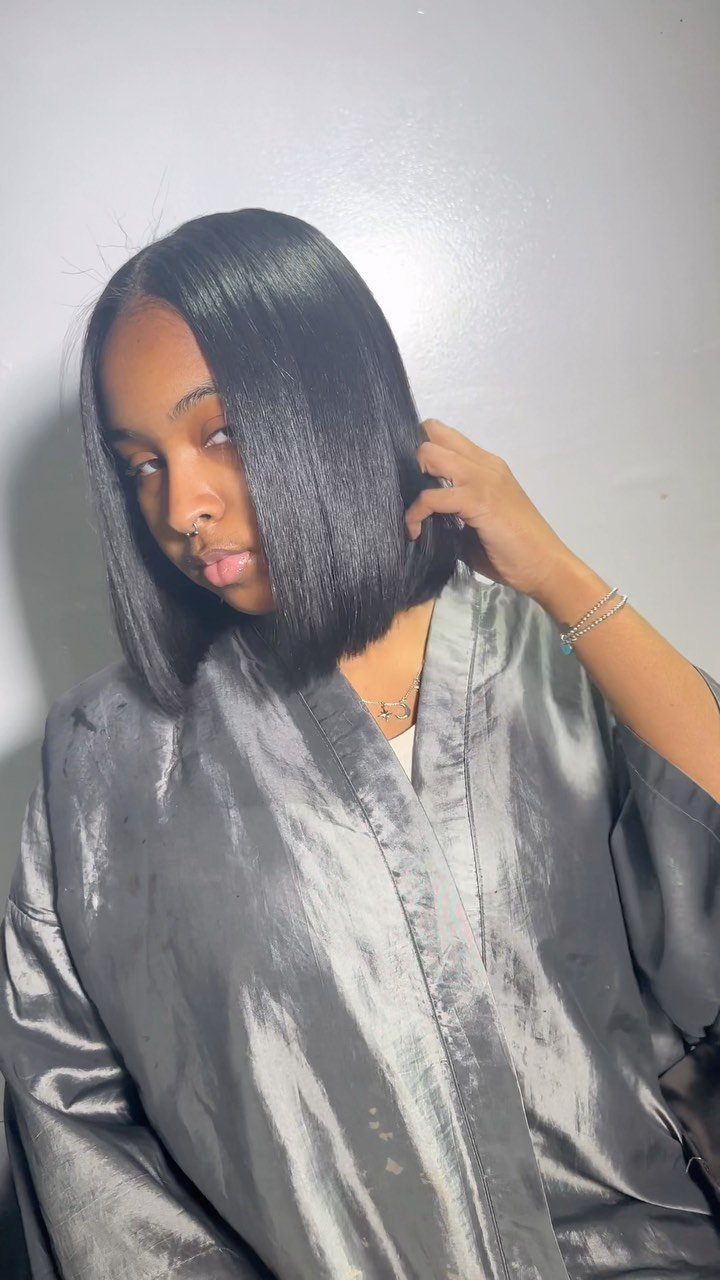
Flat-ironed lengths with no wave or bend give a minimal, high-shine look that works when the hair is healthy enough to lie smooth on its own. The style suits naturally straight or slightly wavy textures that respond well to heat.
Blow-dry with a paddle brush to stretch the hair first, then flat-iron in small sections at moderate heat.
A smoothing serum before heat and a light oil after keeps the surface glossy. Touch up the front sections daily if they wave overnight.
5. Layered Lob
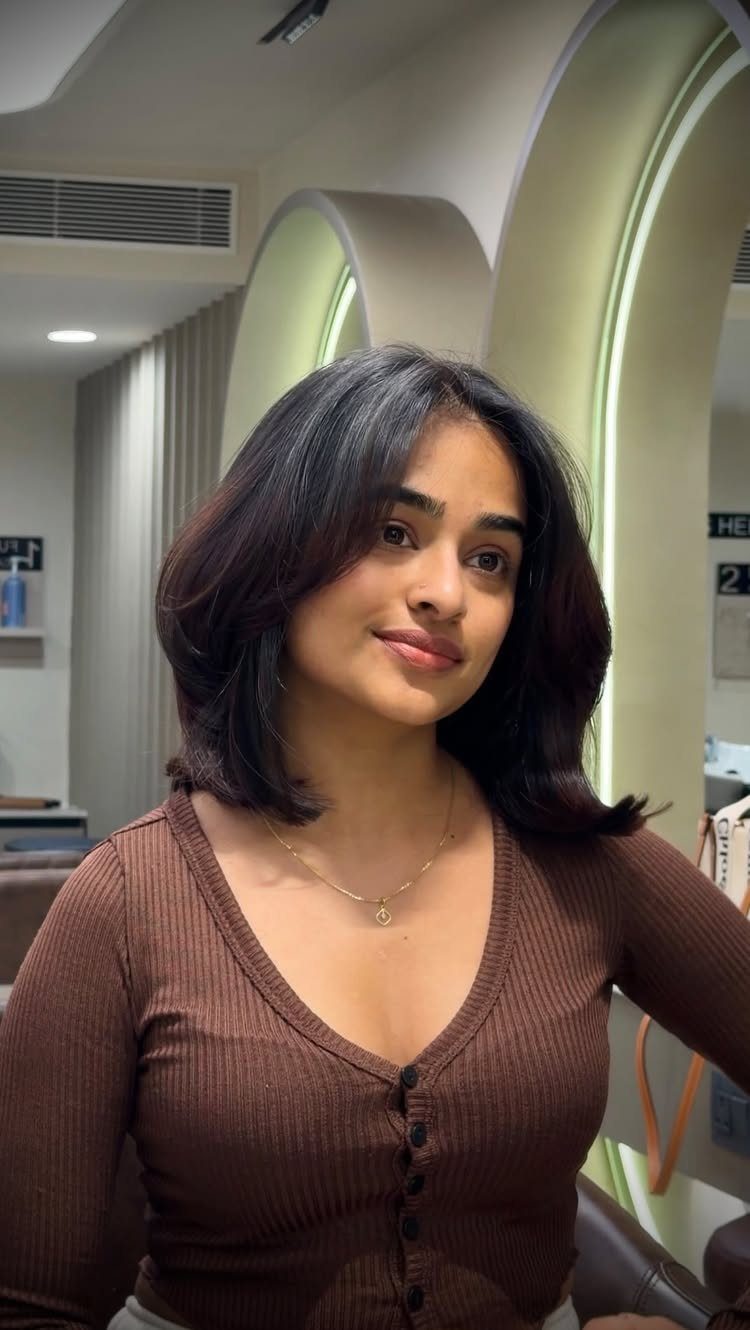
A long bob cut with layers through the crown and ends creates movement without shortening the overall length past the shoulders. The layers can be subtle or chunky depending on how much texture the hair needs.
Request shorter layers starting at the cheekbones if the hair is thick or heavy; ask for longer, blended layers if it’s fine and needs to keep fullness.
The cut air-dries well on wavy hair and holds a soft bend when styled with a round brush.
6. Blunt Perimeter
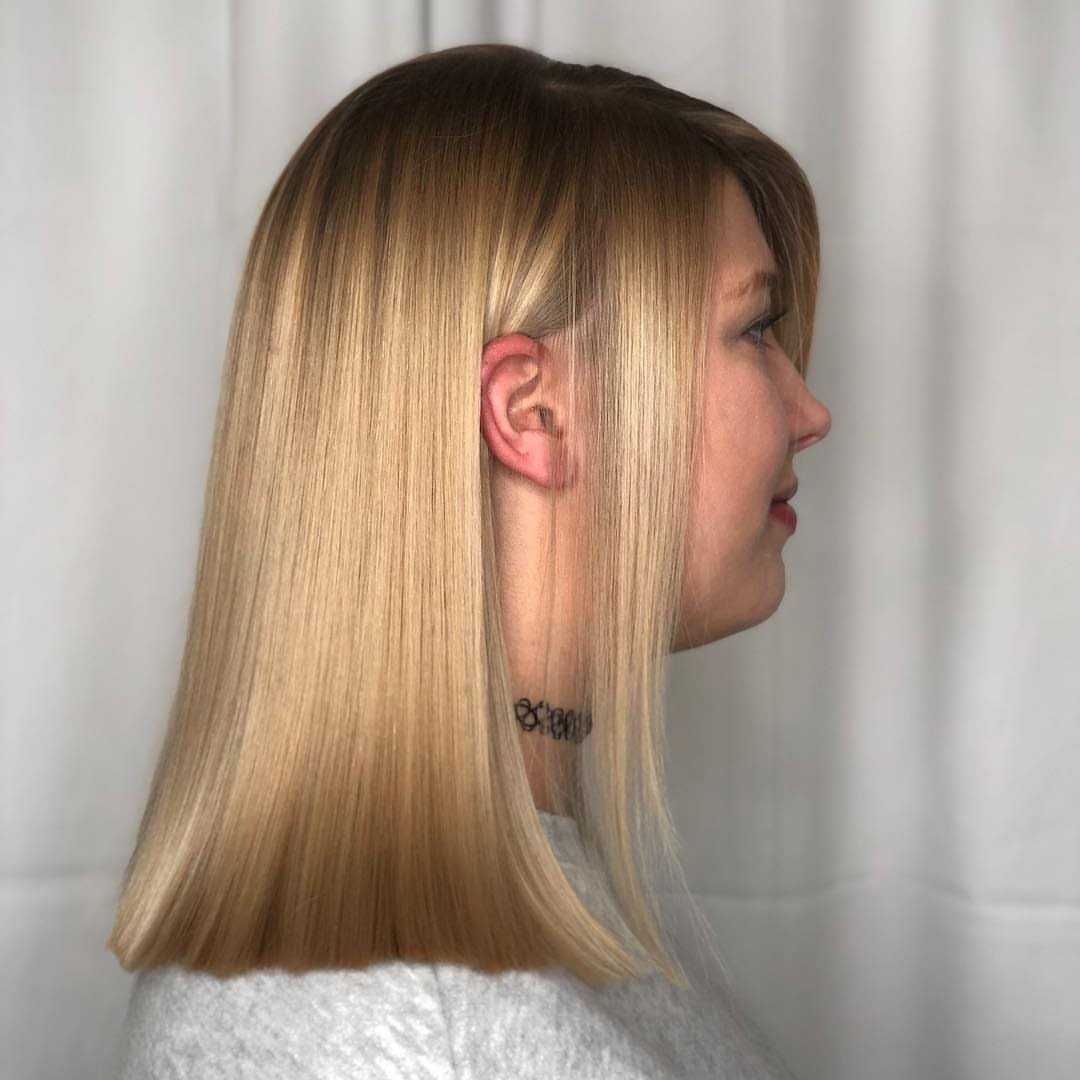
A cut with little to no internal layering, trimmed to one length at the shoulders, gives a strong horizontal line that reads modern and deliberate.
The perimeter stays blunt, with the bulk of the hair kept even from root to tip.
This shape shows every imperfection in the ends, so regular trims matter.
It suits hair that is naturally straight or easy to flat-iron smooth. For slightly wavy textures, blow-dry with tension on a paddle brush to keep the line sharp.
7. Soft Shag
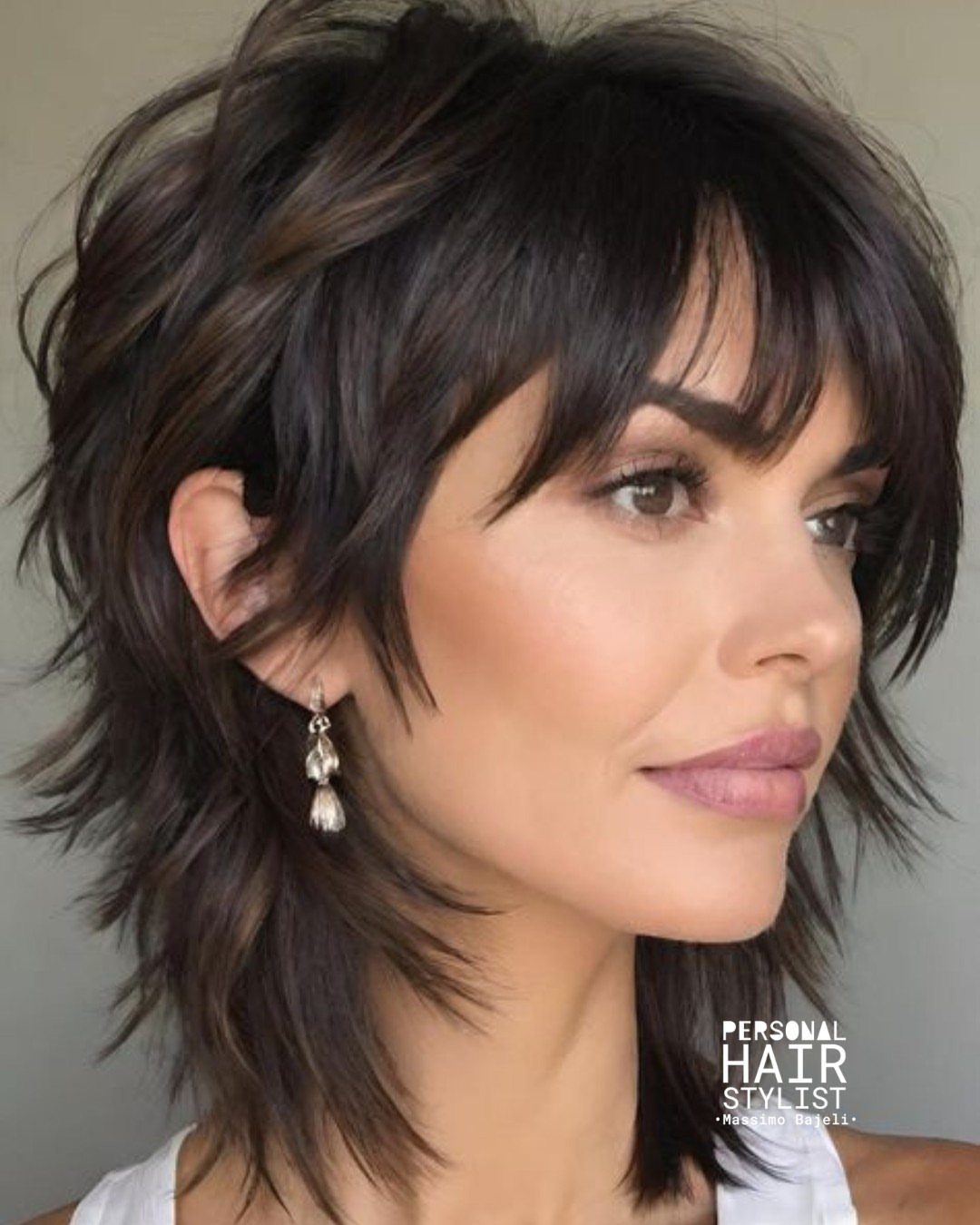
Choppy layers cut through the crown and ends, with shorter pieces left soft rather than razored to ribbons, give a shag that moves without looking carved.
The style suits hair with some natural texture or wave that can hold the layers apart.
Ask for feathered ends and layers that start at the cheekbones, longer if the hair is fine. Straight hair needs a curling iron or texturizing spray to keep the layers from collapsing flat.
8. Wavy Ends
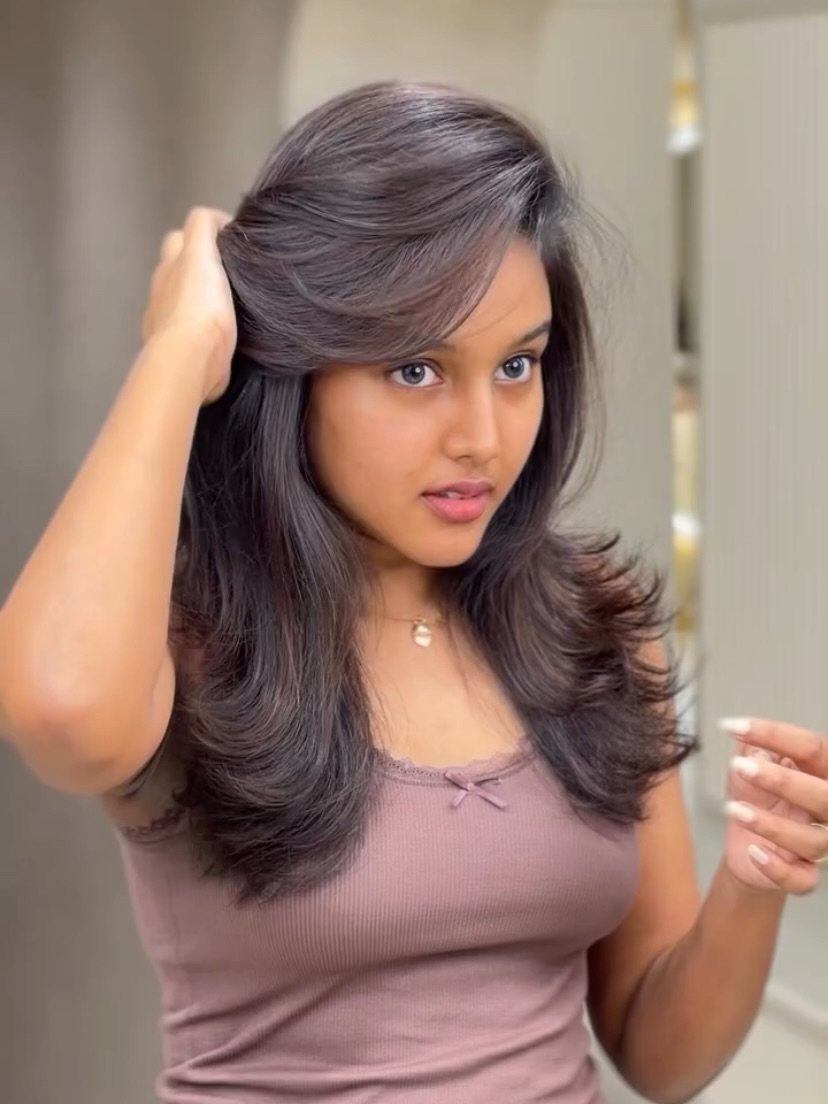
Curl or wave only the bottom section, leaving the roots and midlengths smooth, to add body at the ends without shortening the overall length. The shape works when the hair is one length or lightly layered.
Wrap sections around a curling iron starting halfway down, or use a flat iron and turn the wrist at the last pass.
Let the curl cool, then brush through once to soften the bend. Fine hair holds the wave longer with a light hold spray before heat.
9. Shoulder Shag with Face-Framing Layers
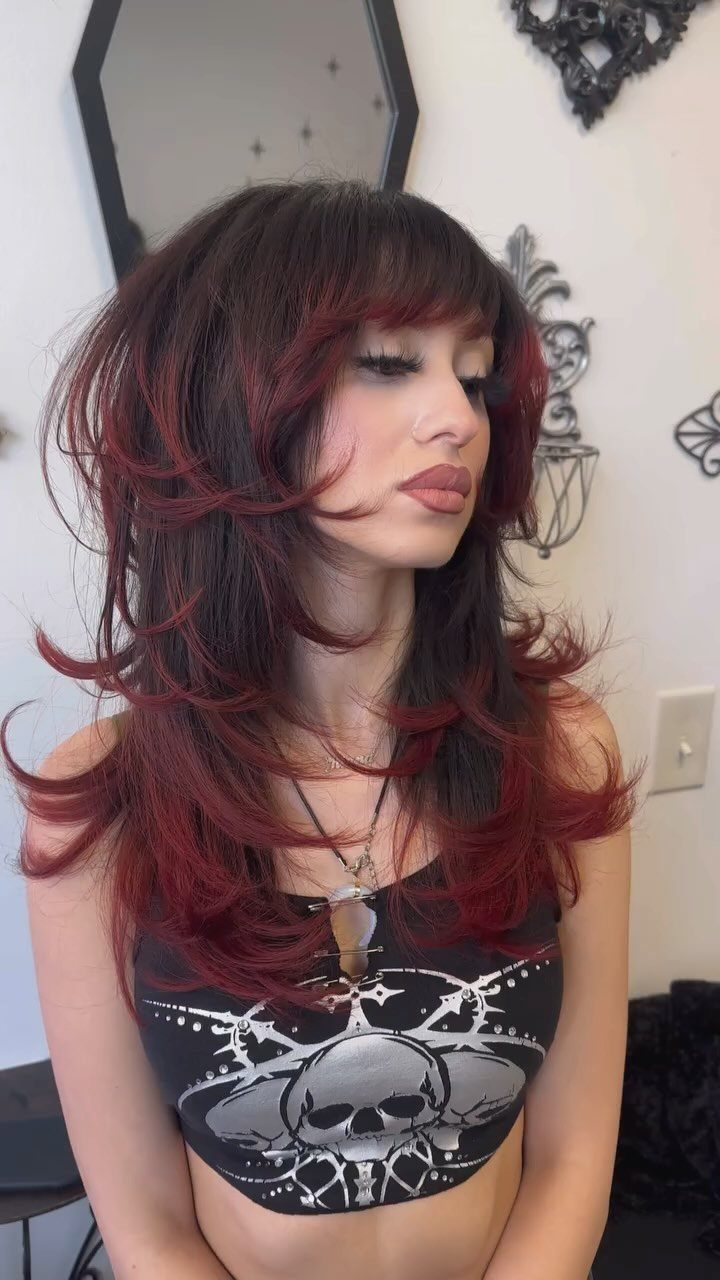
Layers that start short at the front and grow longer toward the back, combined with bangs that fall past the eyebrows, frame the face and add movement through a shag.
The cut works on straight or wavy textures that can hold the layered shape.
Request the shortest layers to hit at or just below the cheekbones, with the longest pieces reaching the shoulders.
The bangs can be wispy or blunt depending on preference. Plan to trim the bangs regularly to keep them out of the eyes.
10. Angled Lob
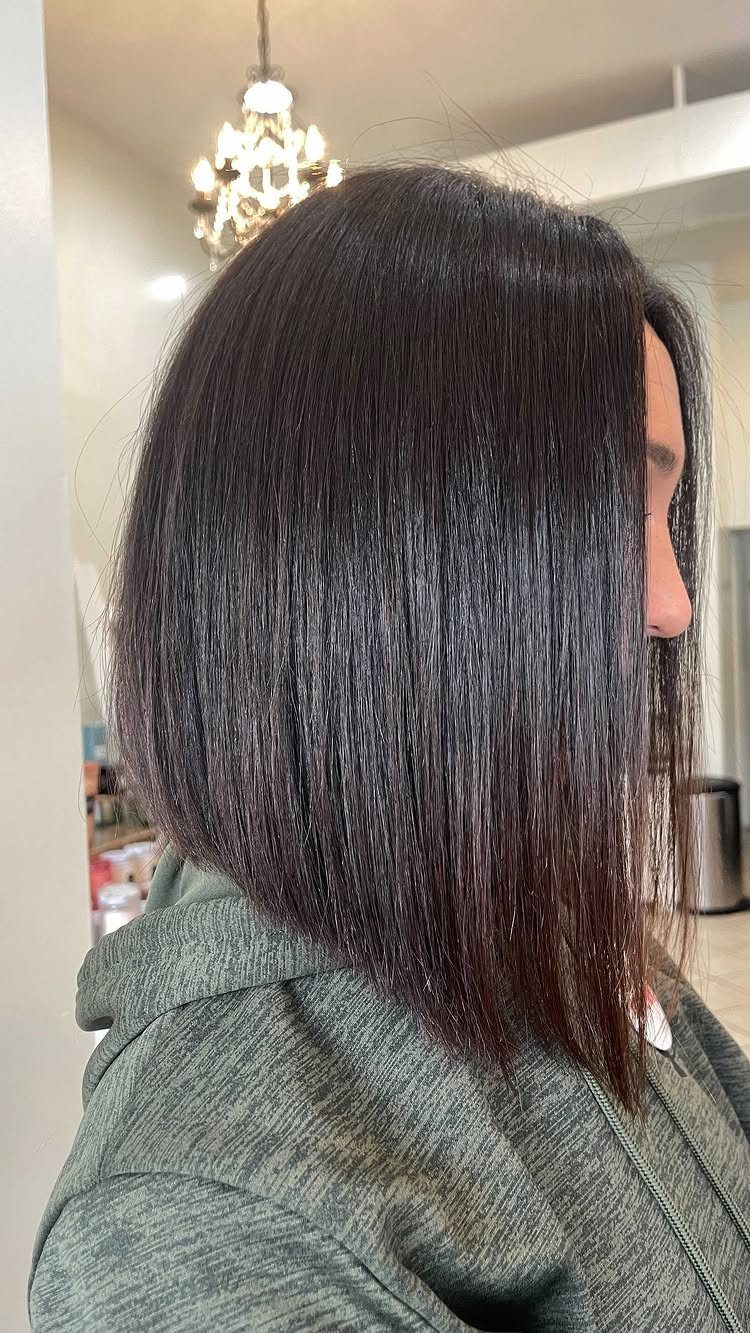
The front pieces fall longer than the back, creating a forward tilt that opens the neckline and adds weight around the face. The angle reads strongest on straight hair or hair blown smooth.
Ask for the back to sit at or above the shoulders, with the front grazing the collarbone.
The steeper the angle, the more dramatic the shape. The cut grows out evenly if trimmed regularly, or the angle softens as the back catches up.
11. Curly Shag
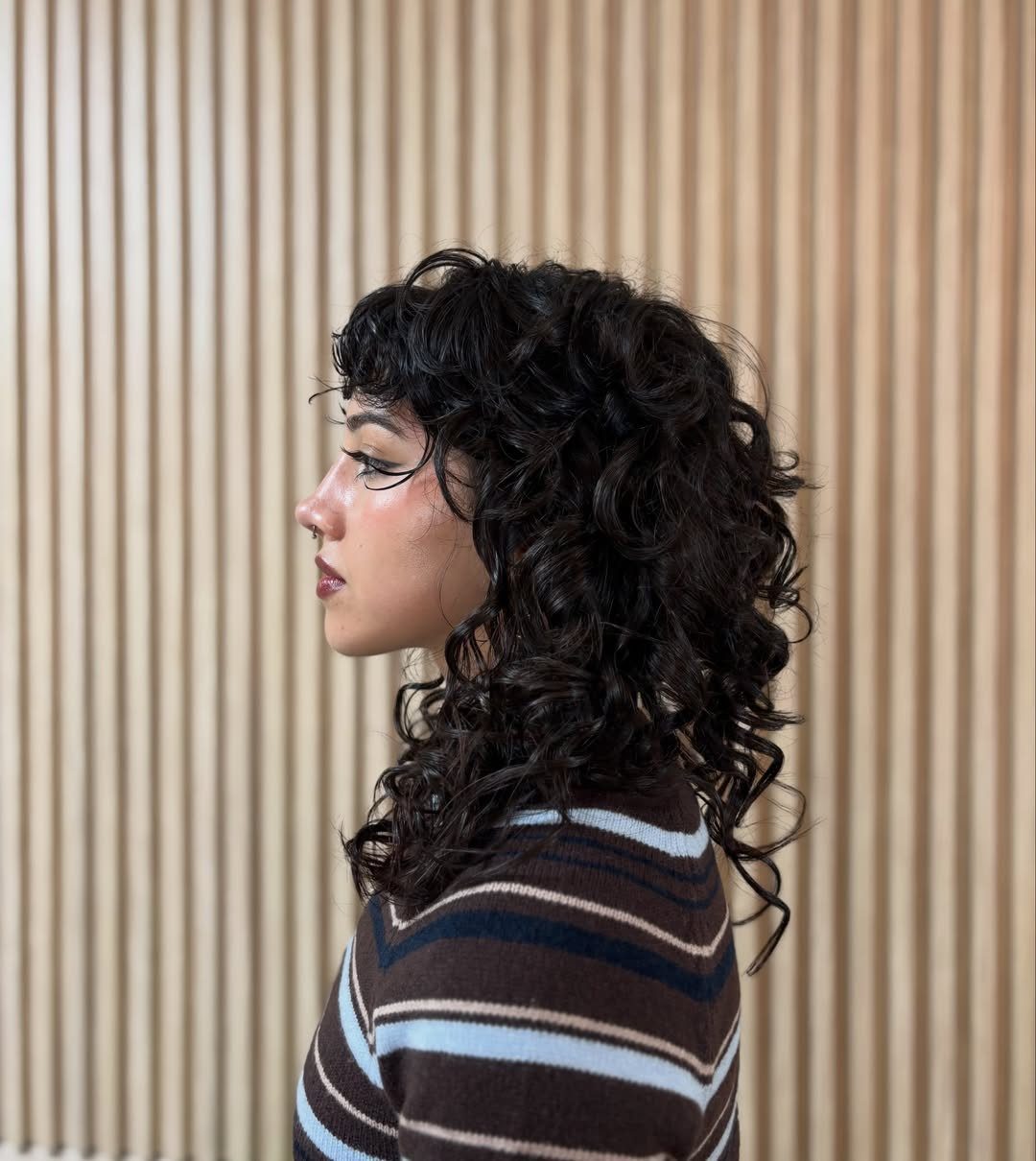
Short, choppy layers through the top and sides let curls stack and separate rather than forming one mass. The cut suits natural curl patterns from loose waves to tight coils that benefit from reduced weight.
Request layers that start at the crown, with the shortest pieces determined by how tight the curls spring.
Dry-cut or cut the hair dry so the stylist can see how each layer will sit once it shrinks. The shag shape holds definition with a curl cream and minimal handling.
12. Layered Midi with Face-Framing Layers
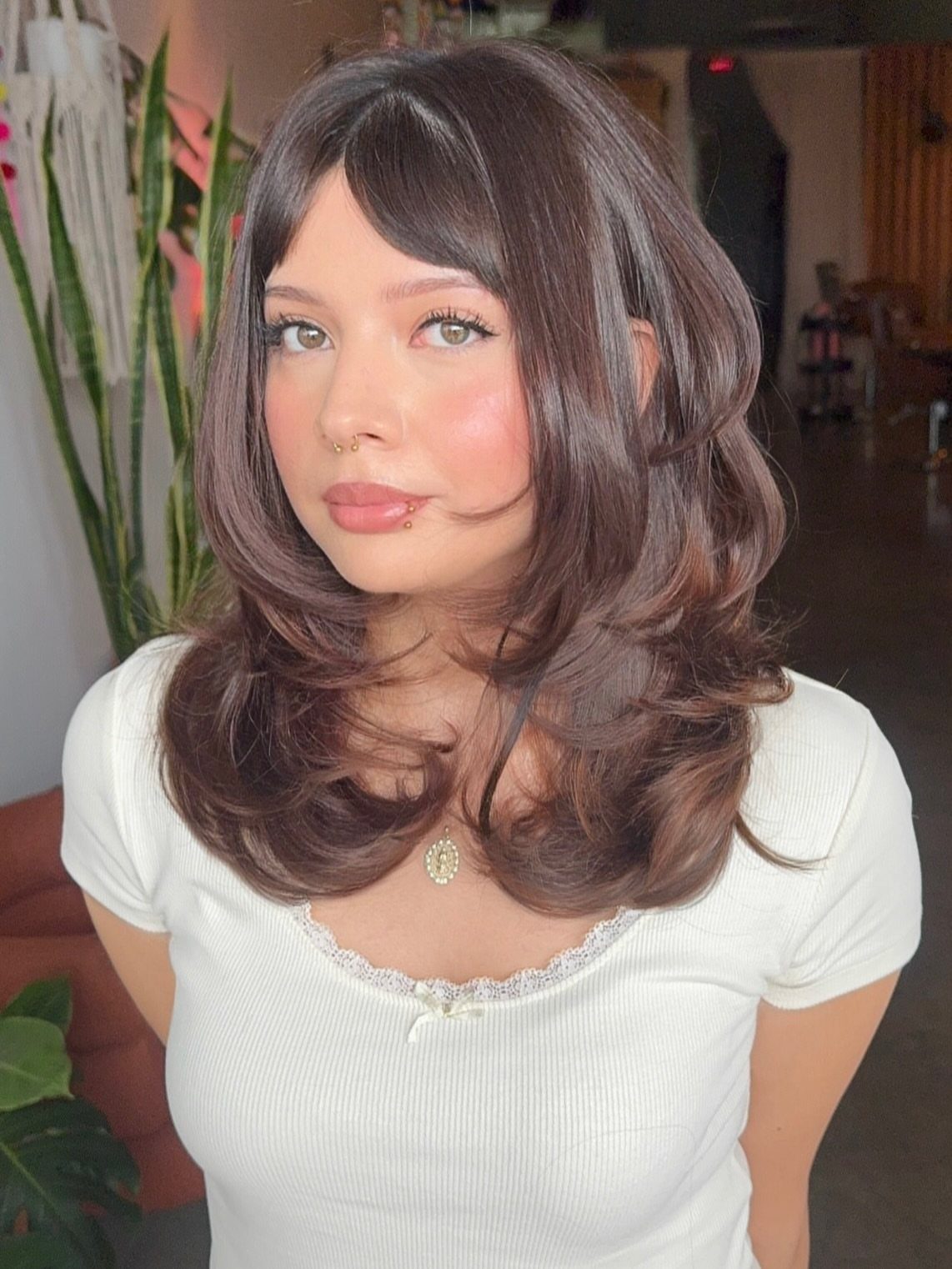
Layers that begin at the jawline or chin and graduate toward the ends, paired with bangs or shorter pieces framing the face, add dimension without losing much length. The cut suits hair that falls between the collarbone and shoulders.
A side part opens the face more than a center part. The layers work on straight or wavy textures and air-dry well with minimal styling.
13. Lob with Full Bangs
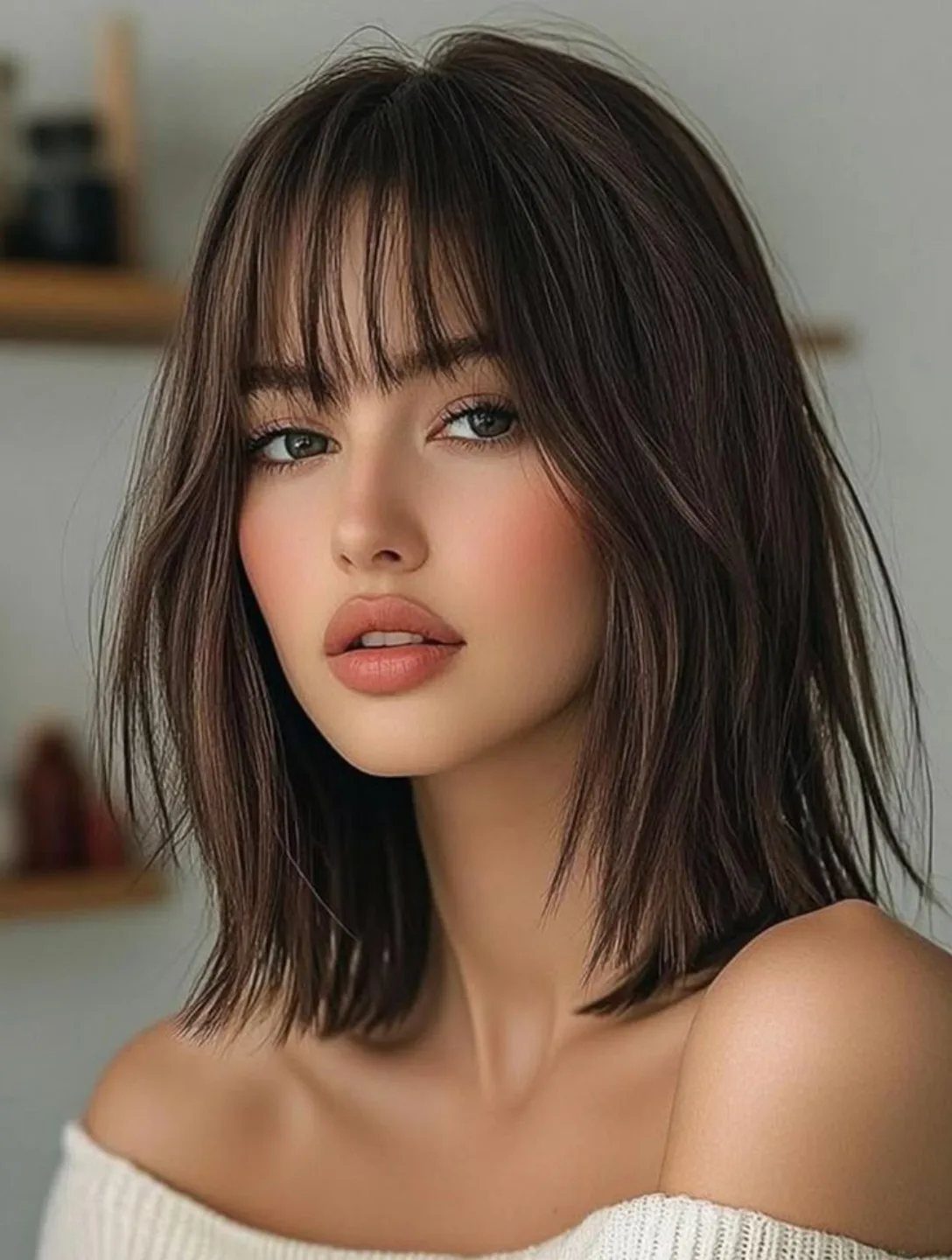
A lob cut to shoulder length and paired with a full, straight fringe that covers the forehead creates a clean, graphic shape. Blunt bangs cut straight across shorten the face and pull focus to the eyes.
The fringe needs regular trimming to stay out of the lashes.
Blow-dry the bangs forward with a round brush to keep them from splitting in the middle. Fine hair holds the blunt line well; thick hair may need thinning at the roots to lie flat.
14. Face-Framing Bangs
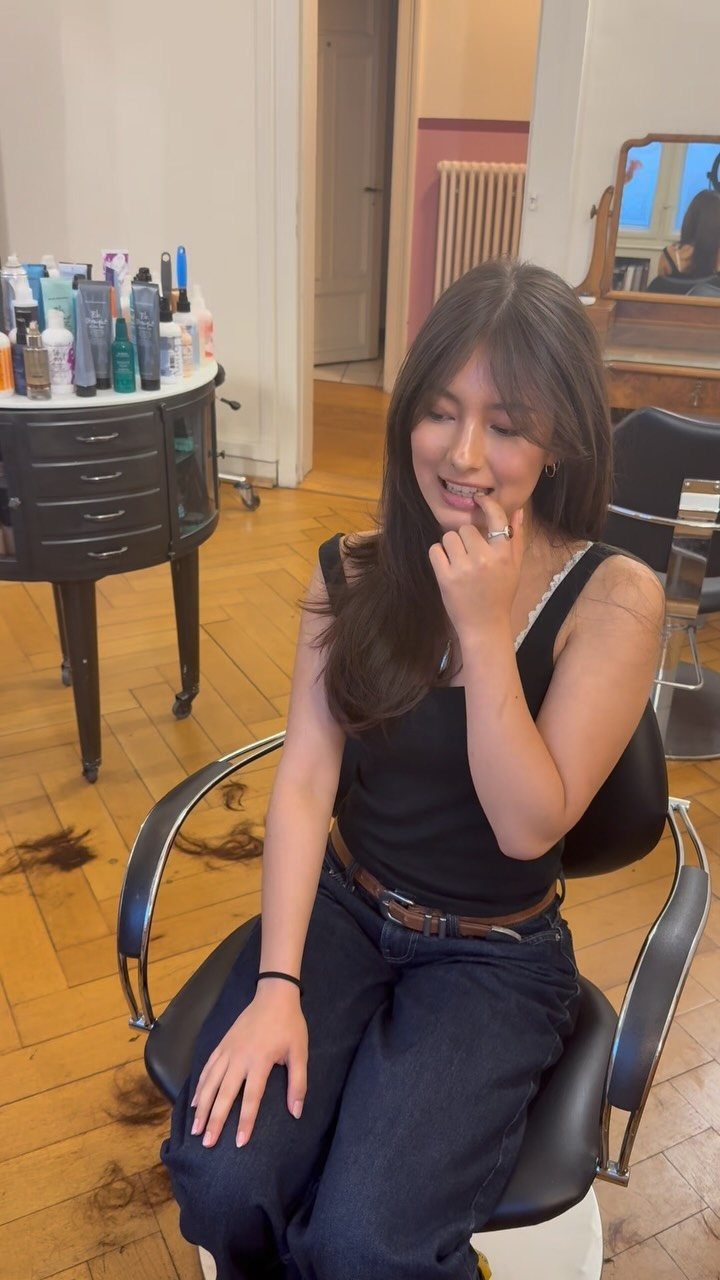
Wispy bangs cut to fall just past the cheekbones, longer at the sides than the center, frame the face without covering the forehead. The pieces blend into the rest of the hair rather than forming a distinct fringe.
The bangs grow out quickly and can be pinned back or tucked behind the ears once they reach chin length. They work on most textures and need less frequent trimming than a full fringe.
15. Pin-Up Curls with Full Fringe
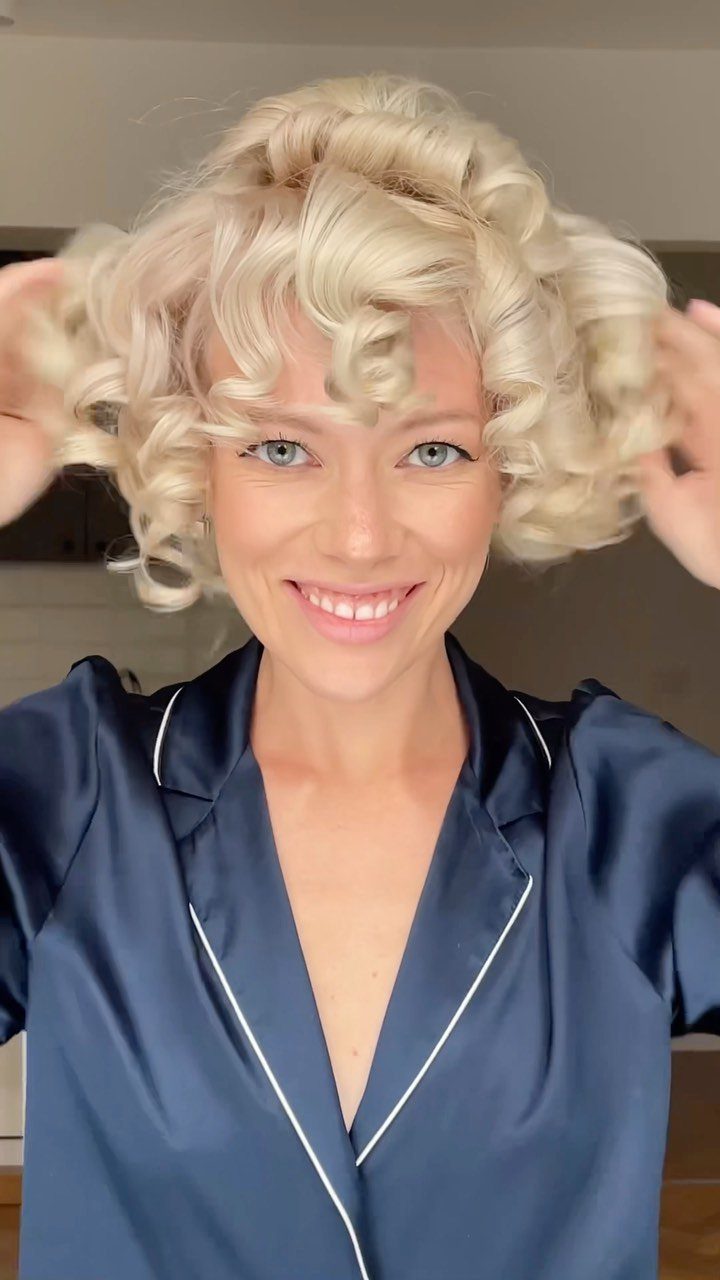
Tight curls set with a small-barrel wand and combed through lightly give the voluminous, lifted shape of pin-up styling. The full fringe, curled under or rolled forward, finishes the look.
Wrap small sections around the wand, hold for several seconds, and pin each curl while it cools.
Once all the curls are set and cooled, remove the pins and brush through with a paddle brush to soften the ringlets into waves. Finish with a medium-hold hairspray to keep the volume through the day.
16. Soft Waves and Ringlet-Like Curls
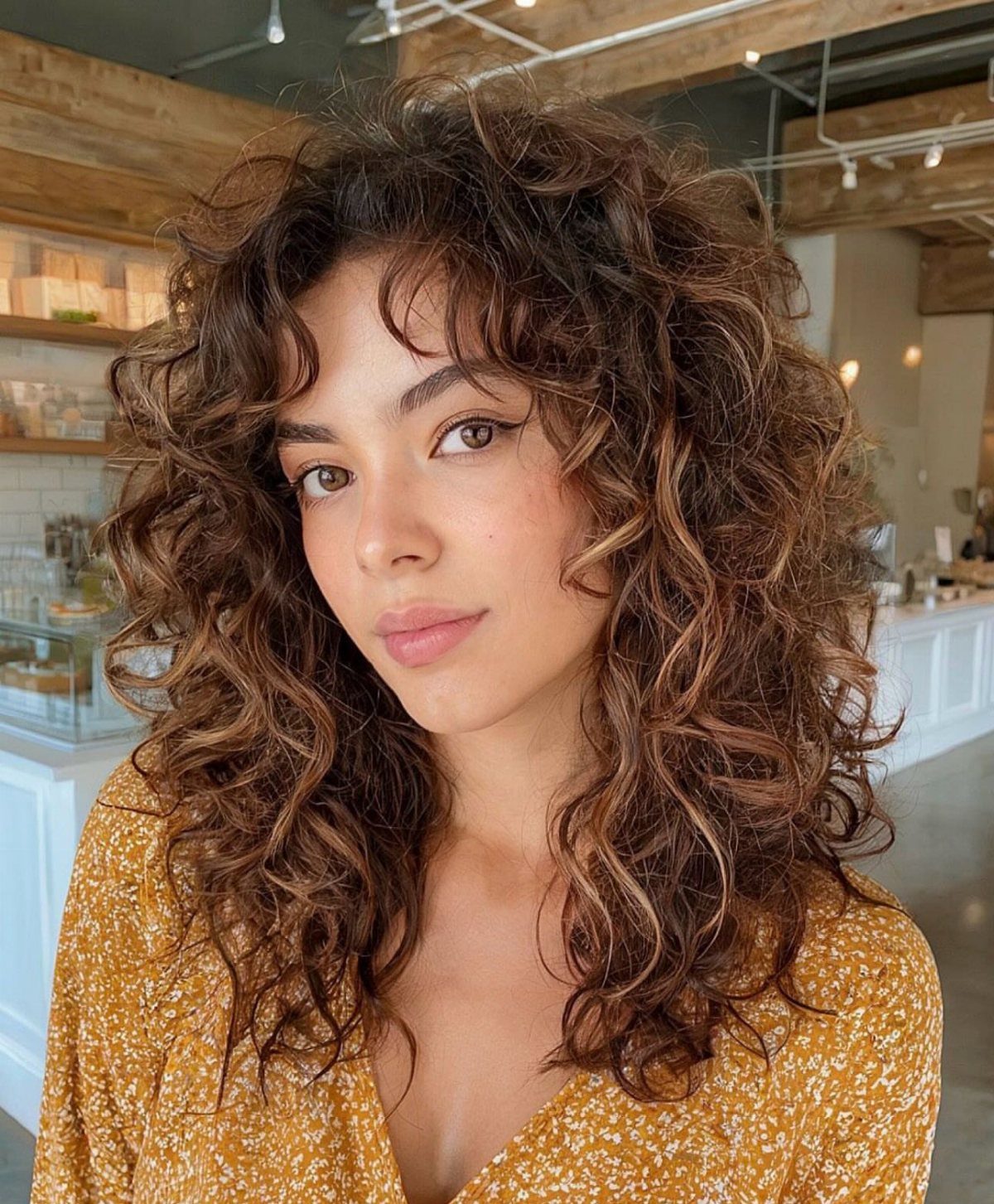
Loose waves near the crown transition to tighter, more defined curls at the ends, giving varied texture through one cut. The mix works on naturally wavy or lightly curled hair that can hold both shapes without heat.
Scrunch a curl cream through damp hair and diffuse, or wrap random sections around a curling iron in different sizes to create the contrast.
The looser pieces add width at the top, while the ringlets keep the ends from looking thin.
17. Full Afro
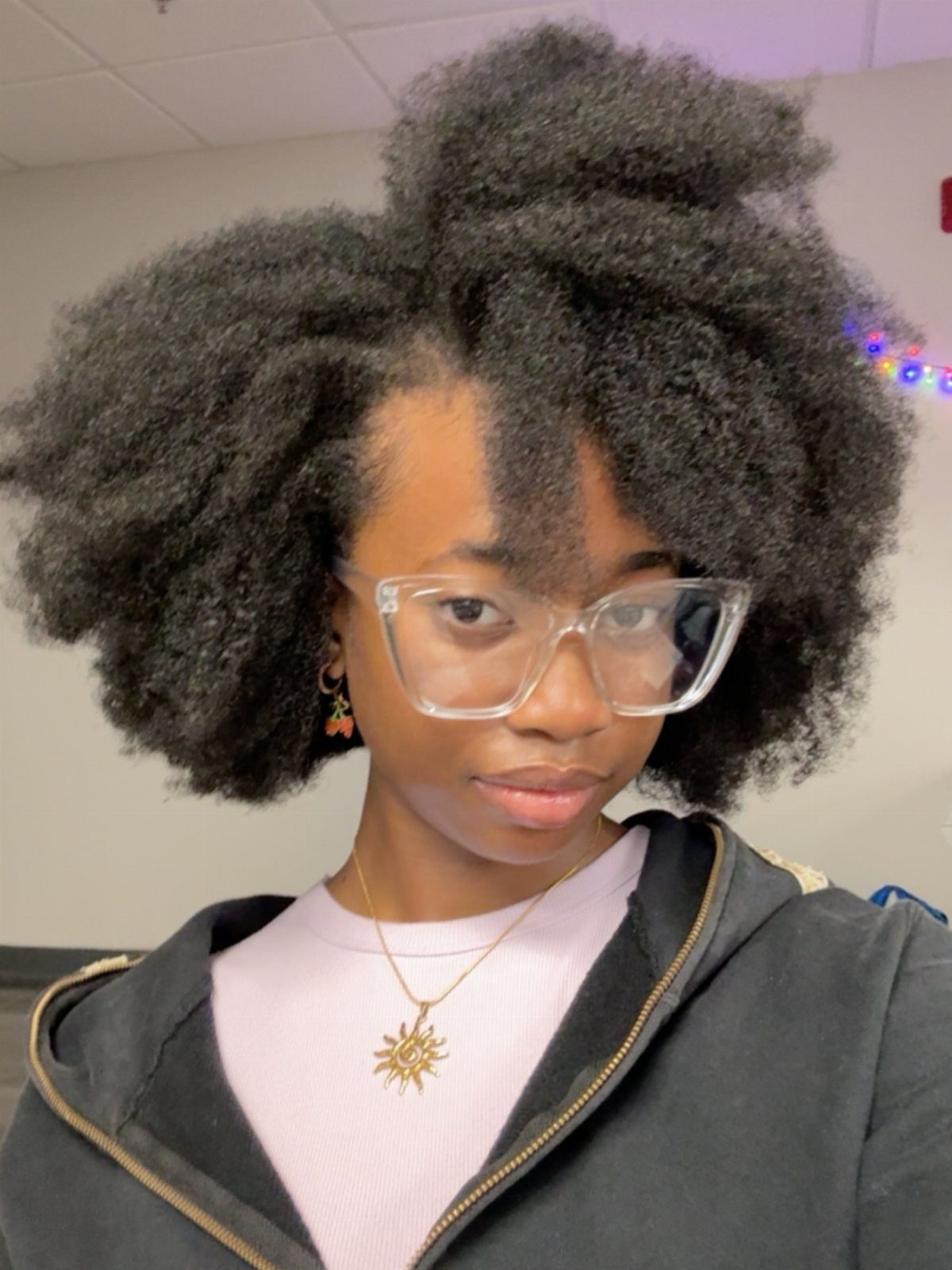
Natural curls and coils worn out in a full, rounded shape that sits at or above shoulder length create volume and frame the face evenly on all sides.
The style suits coily and kinky textures left to shrink to their natural length.
Pick the roots to lift the hair away from the scalp and shape the silhouette.
A leave-in conditioner or curl cream keeps the coils defined without weighing them down. Trim regularly to remove split ends and maintain the round shape as the hair grows.
18. Bouncy Blowout
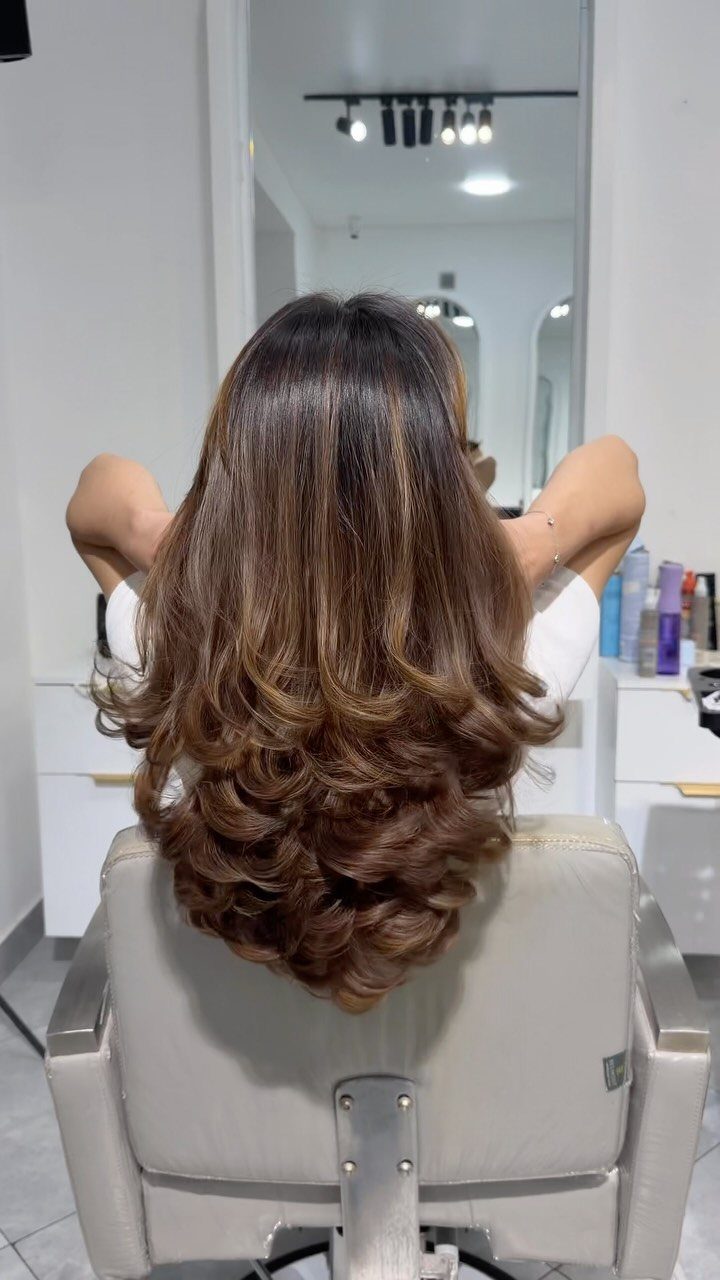
Blow-drying with a round brush to lift the roots and curl the ends under adds body and bounce, particularly on fine or flat hair that needs help holding volume. The style smooths the surface while keeping movement through the lengths.
Work in sections, wrapping each around a large round brush and directing heat from the dryer at the brush as you pull it through.
Finish with a blast of cool air to set the shape. The blowout lasts several days with dry shampoo at the roots between washes.
19. Polished Waves
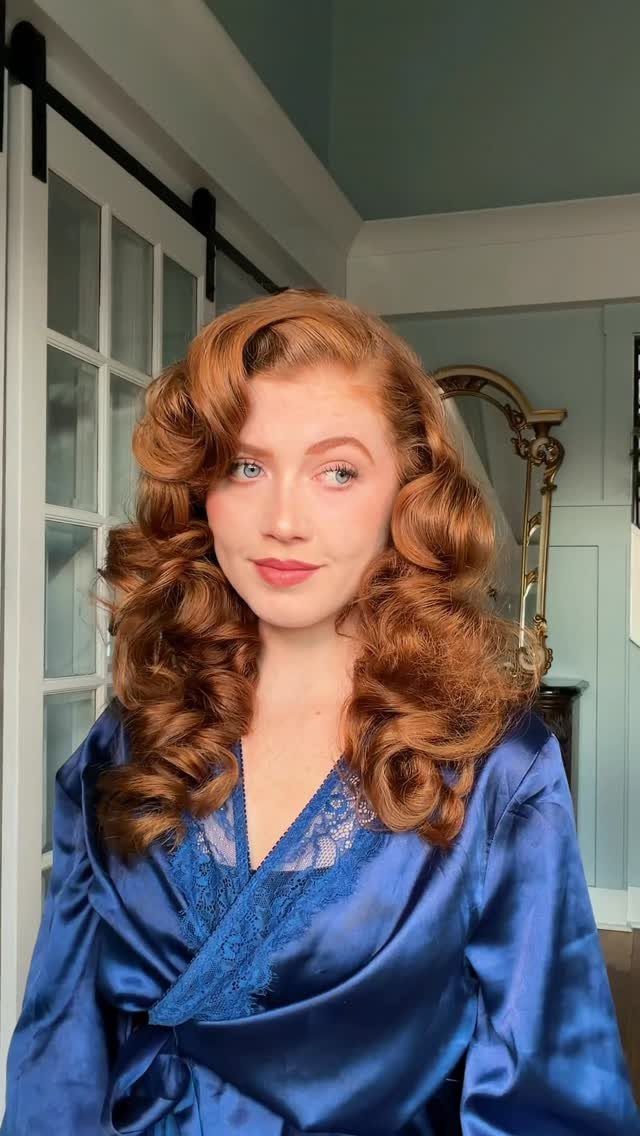
Waves set with heat and brushed smooth at the surface give a groomed, event-ready finish rather than a beachy texture. The style suits hair that holds a curl and can be pinned or clipped back on one side.
Curl sections with a medium-barrel iron, let each cool, then brush through with a paddle brush to merge the waves into one continuous shape.
A light-hold spray keeps the waves from falling flat. Pin one side back with a decorative clip if the hair tends to fall forward.
20. Braid Along a Deep Side Part
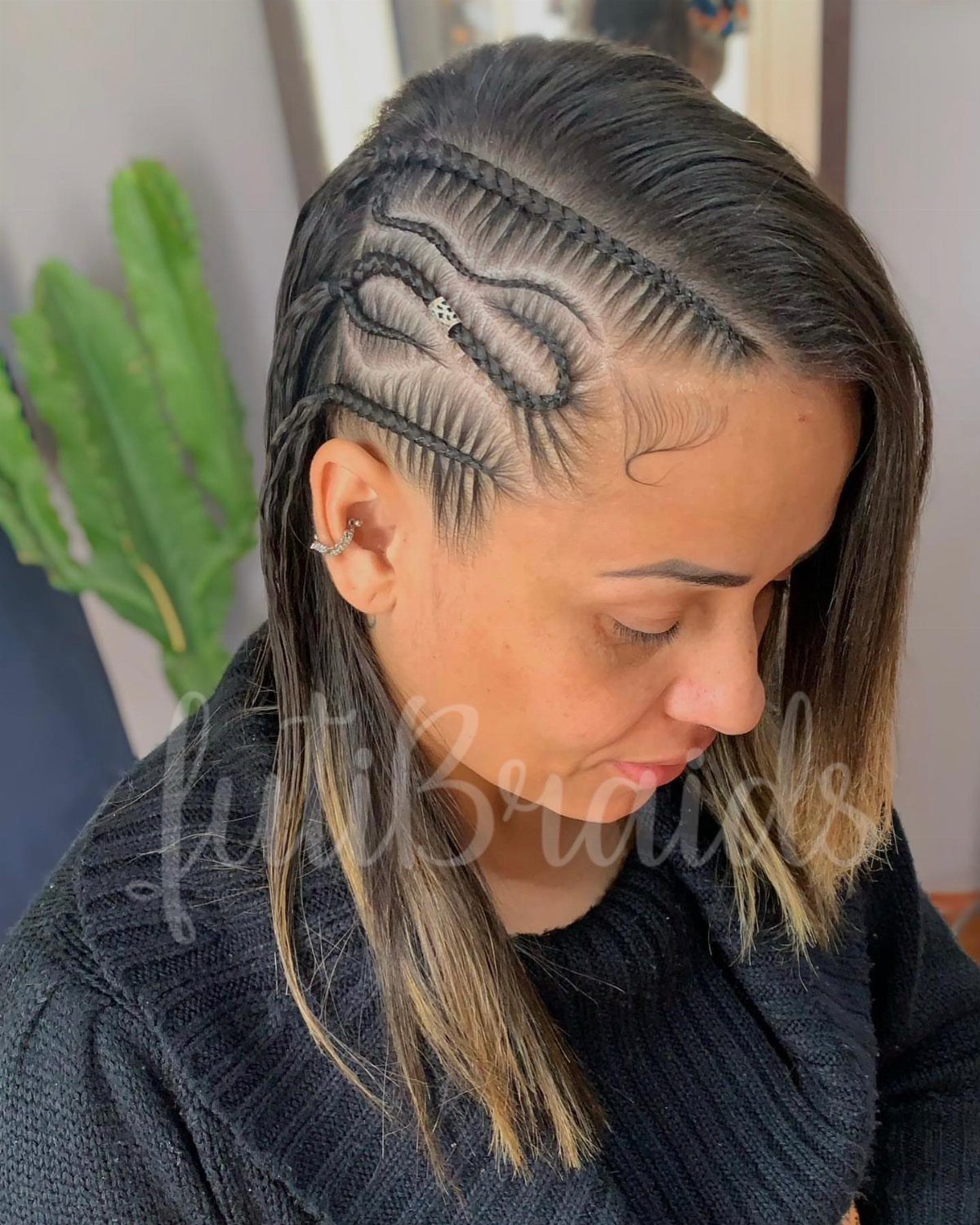
A side part placed far off-center, paired with a small braid or two running parallel to the part line, adds detail without changing the cut. The braids can be left tight or loosened for width.
Part the hair deeply to one side, then section a slim piece along the part and braid it close to the scalp.
Secure the end with a clear elastic or tuck it behind the ear. A second braid placed just below the first adds symmetry.
21. Shoulder Bob with Feathery Fringe
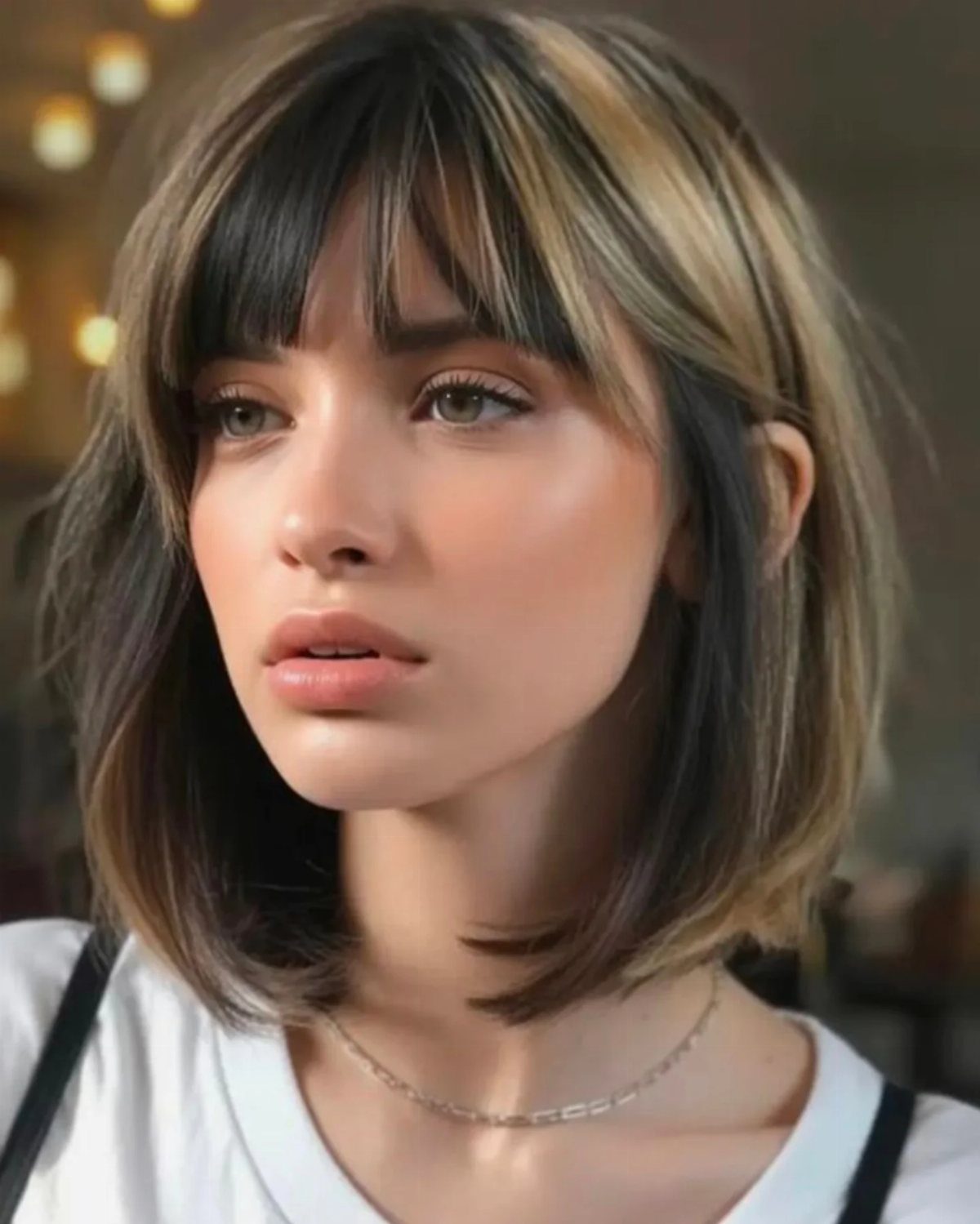
A bob that sits at the shoulders, paired with bangs cut in wispy, separated pieces rather than a solid line, keeps the shape soft and approachable.
Thinner hair holds the separation better than coarse or very thick strands that tend to clump together.
Request bangs that are point-cut or razored at the tips to create separation.
Aim the airflow at an angle so the fringe sweeps rather than drops flat across the forehead. The bob itself can be blunt or lightly layered depending on the hair’s thickness.
22. Layered Cut with Side Bangs
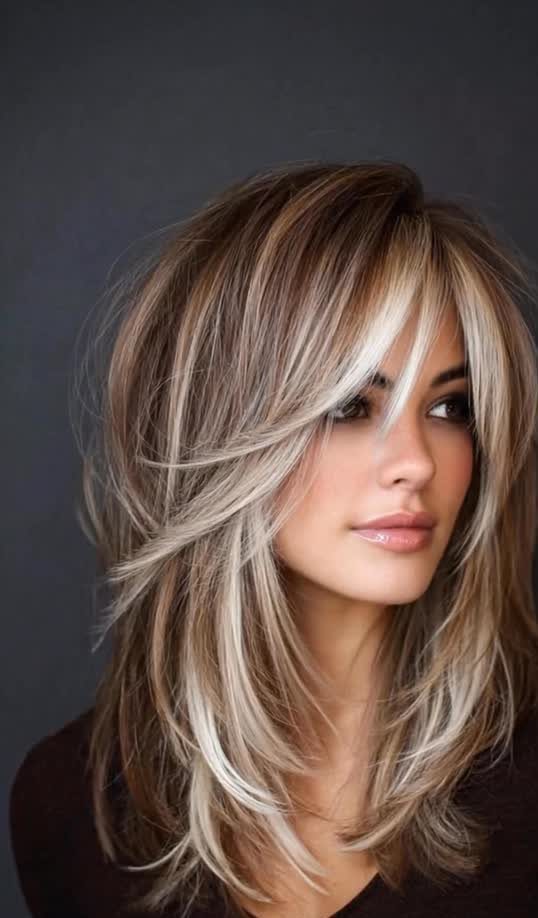
Side-swept bangs that fall across the forehead and tuck behind one ear pair well with layers cut through shoulder-length hair. The bangs add asymmetry without the commitment of a full fringe.
Ask for the bangs to be cut longest at one side, tapering shorter toward the opposite brow.
Ask for the first layer to sit somewhere between the chin and collarbone, adjusted for whether the hair needs help moving or already has body.
Train them with heat and tension in one direction each time you dry, and they’ll start to fall that way on their own.
23. Layered Cut with Curtain Bangs
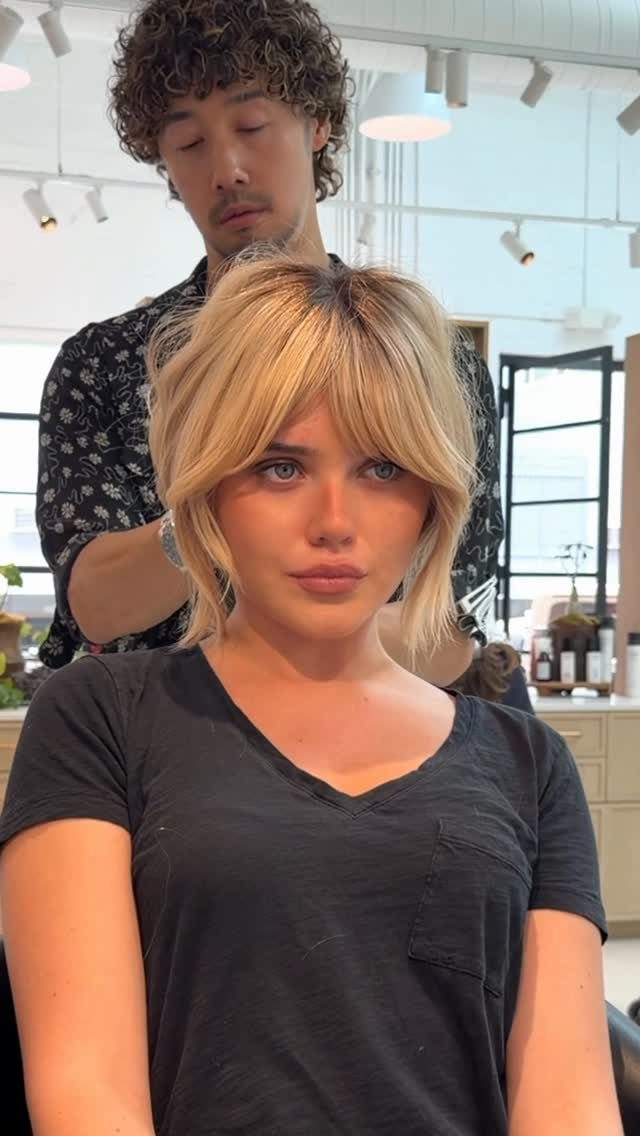
The center part keeps them symmetrical, and starting the layers lower down means the bangs stay the focus.
Once they pass the chin, you can tuck them behind an ear or clip them while you decide whether to trim or keep growing.
Request the bangs to start shorter at the center and angle longer toward the cheekbones. Dry them toward the nose first to build volume at the root, then use the brush to pull each half away from the part.
A quick pass with a flat iron bent under at the tips gives the curtain its curve without a full curl.
Versatility and Grow-out
The distance between the collarbone and mid-back covers enough range that most of these cuts can be pulled into a low ponytail or twisted up without pins, but not so much length that the hair takes over the morning routine or weighs itself flat.
Growth between trims reads as a longer version of the same shape rather than a failed short cut.
Styles that depend on a specific length or precise angle need adjustment sooner, but cuts with gradual layers or soft texture stretch the time between appointments without looking neglected.
Many think that a medium-length haircut is a safe option for anybody who isn’t interested in taking a beauty risk. But just because something is “mid” doesn’t mean it is boring.
— Vogue
Frequently Asked Questions
What are the best haircuts for women with medium-length hair?
Soft long layers, a sleek blunt bob, layered lobs, angled lobs, and soft shags all work well at shoulder length.
Long layers suit most textures and move without losing body, while blunt cuts give a sharp, modern edge. Shags add movement on wavy or textured hair, and angled lobs open the neckline while keeping weight around the face.
What exactly are medium-length haircuts with bangs?
Medium cuts with bangs fall between the collarbone and shoulders and pair with full, wispy, curtain, or side-swept bangs to frame the face.
The length allows for layering and varied textures while the bangs add dimension without requiring a drastic cut. Styles range from blunt lobs with full fringes to layered mids with face-framing pieces that taper from the jawline down.
How do you like the idea of having stunningly textured hair without intricate styling or maintenance?
Layered cuts with bangs create texture that air-dries well with minimal effort. Soft shags with feathered ends and wavy or curly textures hold their shape with a leave-in conditioner and light scrunching, no heat required.
The layers separate naturally on hair with some wave or curl, so the style looks lived-in from the start.