A bob cut anywhere from chin to shoulder length changes character completely when you add bangs, and the fringe you choose decides whether the cut reads soft or sharp.
The bob itself can be blunt, layered, feathered, choppy, rounded or tapered, and each technique changes how much time you’ll spend styling and how the cut behaves as it grows.
1. Curtain Bangs Bob
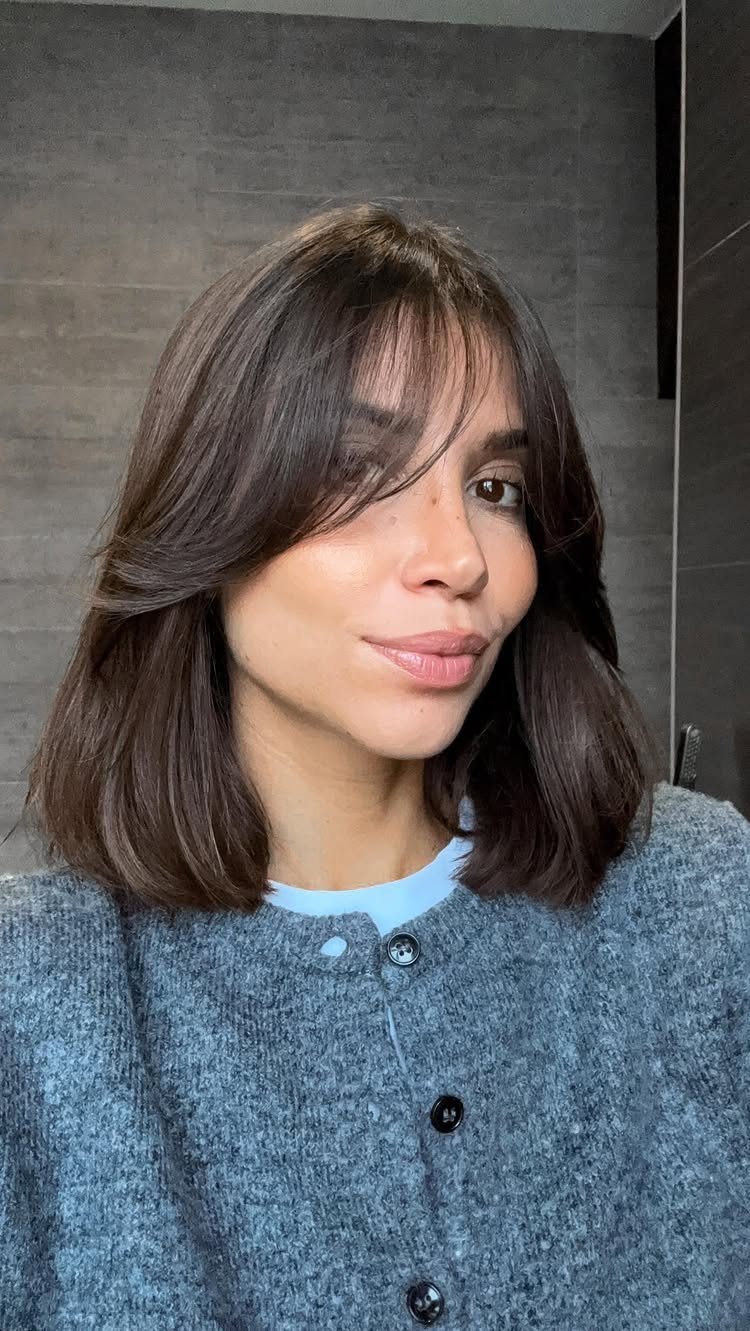
The curtain bangs part down the center and sweep to each side, softening the face while the bob keeps length somewhere between chin and shoulder.
It’s one of the more forgiving combinations for someone growing out a fringe, because the parted sweep gives you options as length changes.
Hair this length stays manageable without clips, and the bangs frame without blocking. Straight or slightly wavy hair shows the cleanest line; curly or coily textures can pull this off but may need more product to control the sweep direction.
2. Feathered Bob
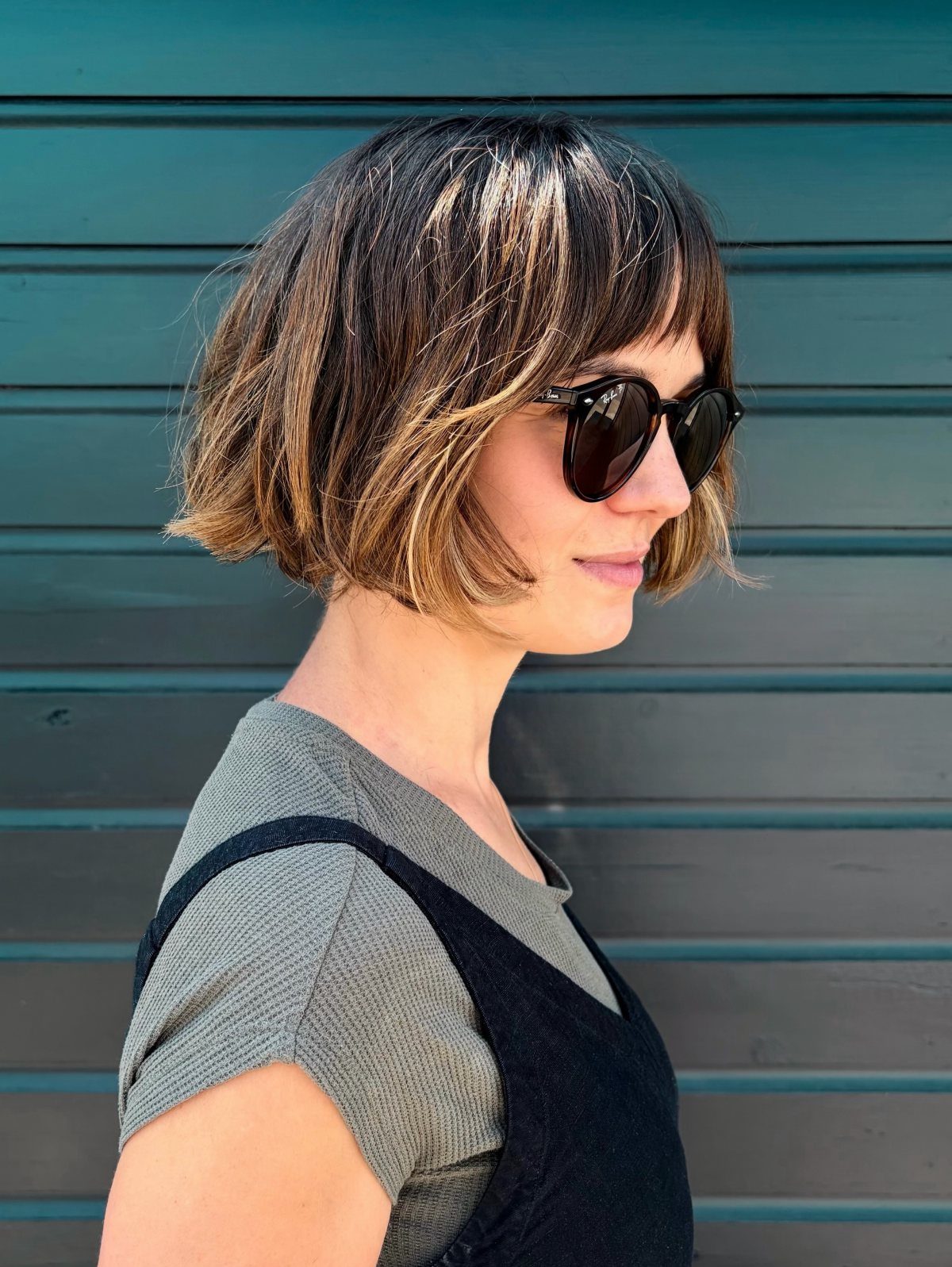
Feathered layers lift at the ends instead of sitting flat, giving a short bob dimension without adding much styling time. The technique works well on fine or medium hair that tends to look heavy when cut blunt.
Ask for point-cutting or razor work at the ends so they taper rather than form a hard line.
The bangs here follow the same feathered approach, keeping the whole cut light. If your hair is thick, feathering alone may not be enough to prevent bulk; you’ll want some internal layering as well.
3. Choppy Bob
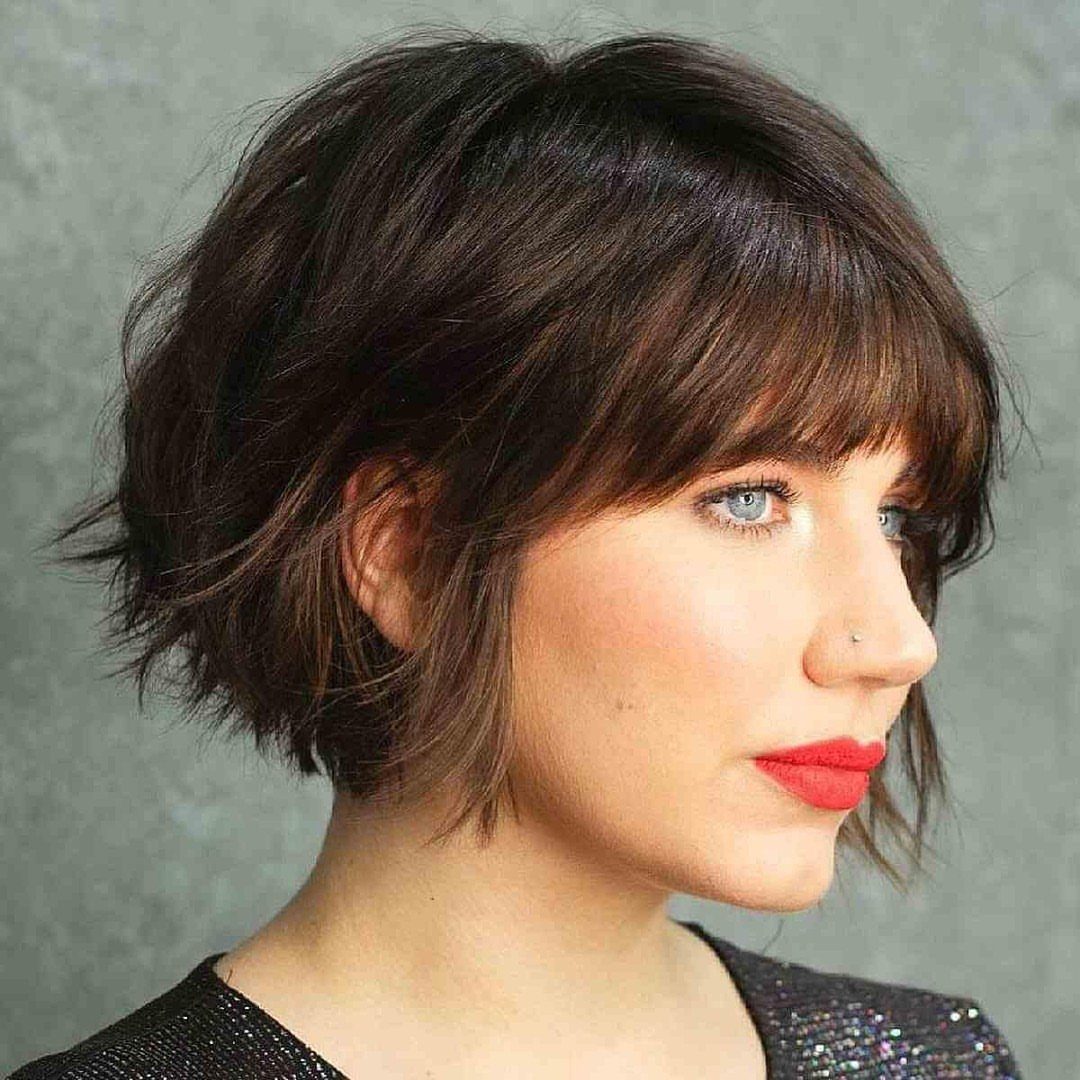
Choppy layers are cut at varied lengths, creating intentional unevenness that reads as texture rather than bluntness. The result moves more naturally and hides the line where a bob would otherwise sit.
This cut suits someone who wants a low-maintenance finish, because the irregular layers disguise grow-out and don’t require precision styling. Straight or wavy hair shows the chop most clearly.
On curly hair, the effect is subtler but still adds shape. A texturizing spray or light paste makes the separation more visible if you want it.
4. Layered Bob with Bangs

Layers cut into an above-shoulder bob add volume and movement, and the bangs complete the frame. The layers can be subtle or pronounced depending on how much lift you want.
If your hair is fine, shorter layers near the crown build volume without weighing down the ends.
Thicker hair benefits from longer, softer layers that reduce bulk. The bangs in this version sweep to the side, which works well with a layered cut because the same graduation carries through the fringe.
Blowdry with a round brush to emphasize the shape, or let it air-dry for a softer finish.
5. Wavy Bob with Bangs
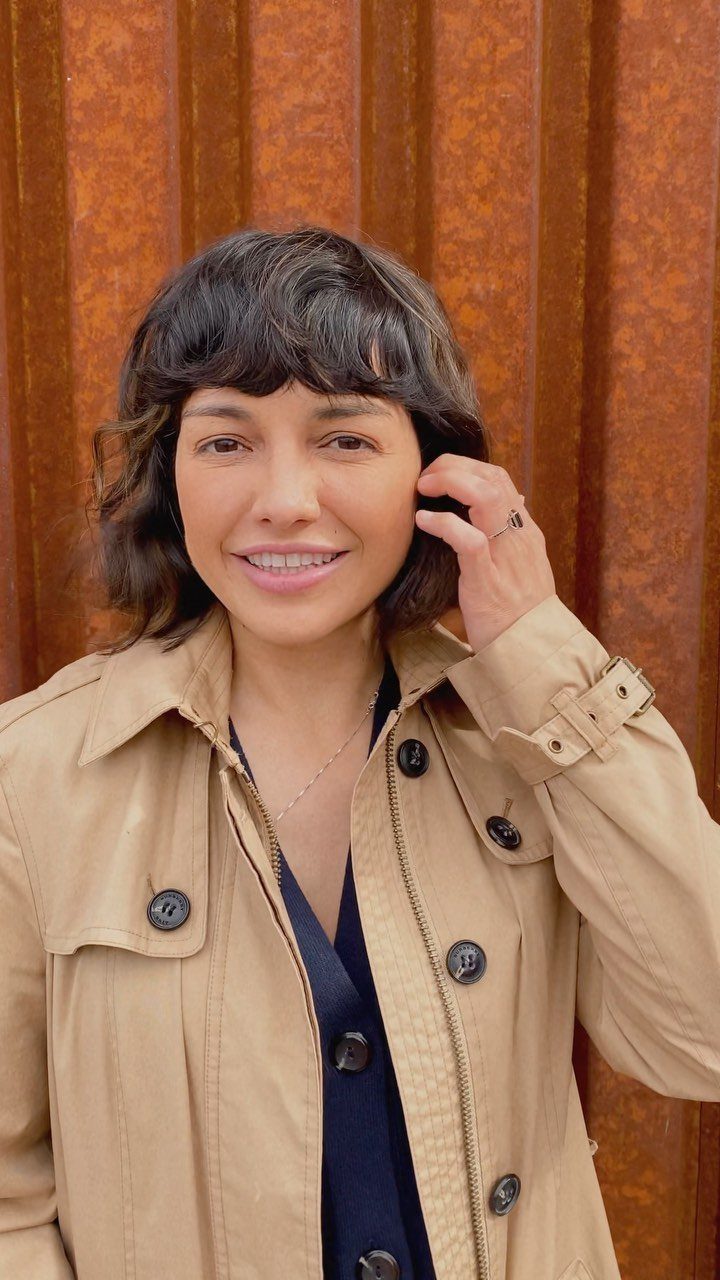
Natural or styled waves give a bob texture that moves without effort, and the bangs add softness to the forehead.
This combination works well on hair that already has some wave, because the cut enhances what’s there rather than fighting it.
A diffuser keeps waves intact while drying, or you can braid damp hair and let it air-dry for looser bends.
If your hair is straight, a curling iron or flat iron twisted as you pull through will give similar movement. The bangs can be waved along with the rest or left straighter for contrast.
6. French Bob with Bangs
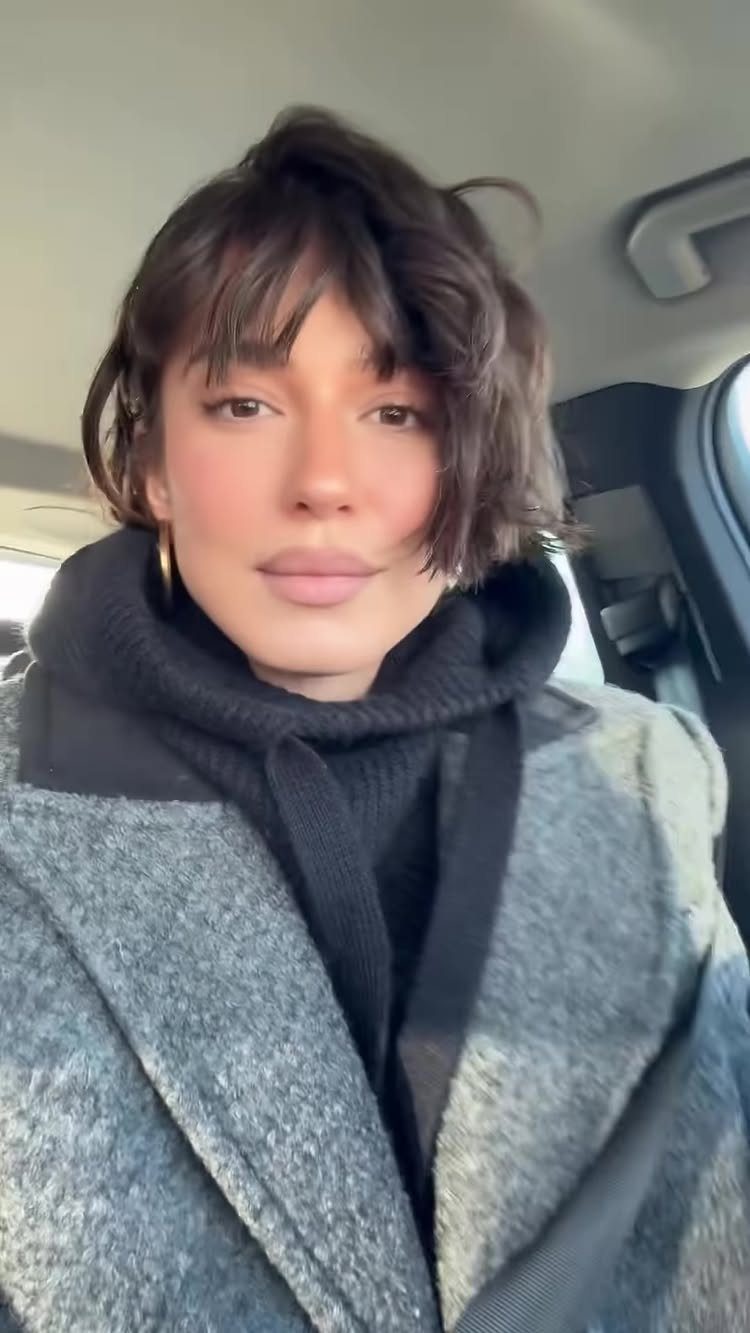
A French bob sits shorter, usually between the jaw and the earlobe, with a light, airy texture that keeps it from looking severe. The bangs are wispy rather than heavy, matching the overall softness of the cut.
This style suits someone comfortable with frequent trims, because the short length grows out quickly and loses its shape.
Fine or medium hair holds the texture best; thick hair may need thinning to avoid a blocky silhouette. Styling is minimal, a quick blowdry or a pass with a flat iron smooths it, and the texture does the rest.
7. Short Bob with Micro Bangs
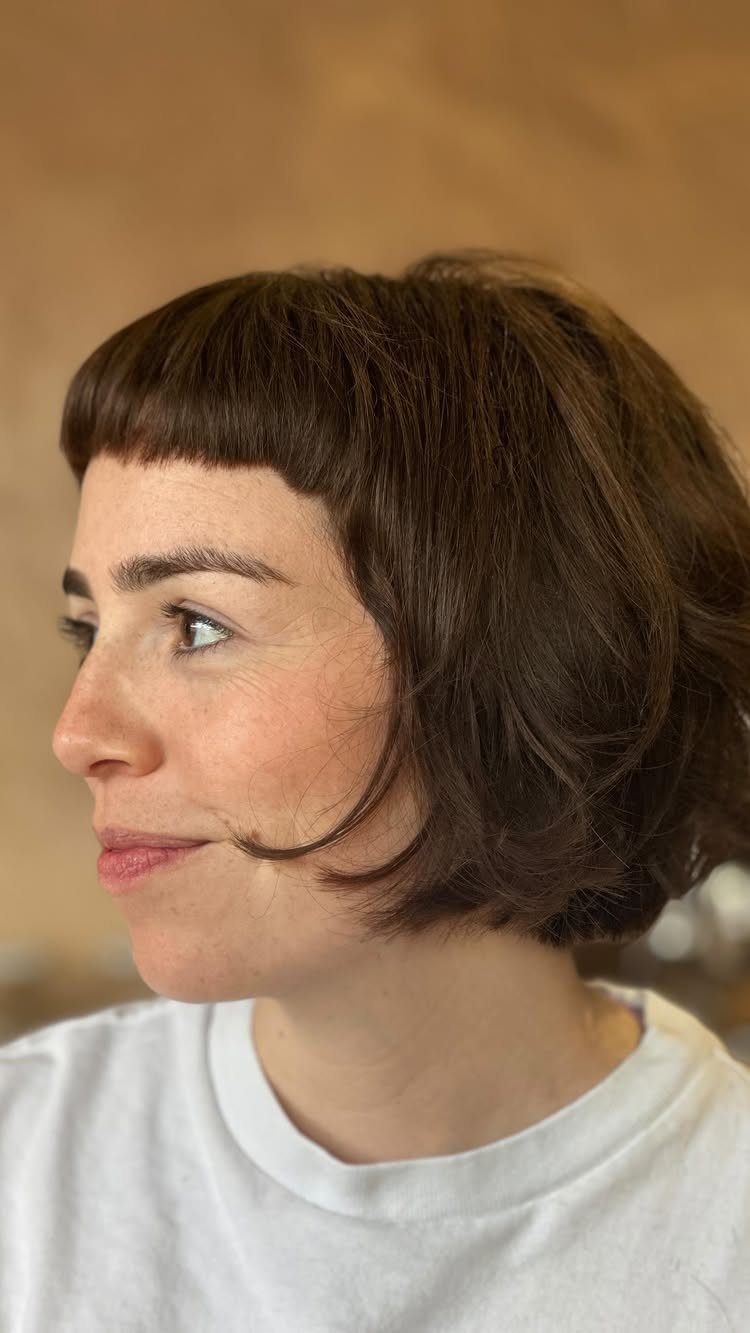
Micro bangs cut well above the eyebrows shift the whole face into sharper focus, and paired with a short bob the effect reads as deliberate rather than accidental.
This is a high-commitment choice, because the fringe won’t blend or grow out quietly.
The bob length keeps the cut from feeling too severe, but the micro fringe will attract attention. If you’re uncertain, try clip-in bangs first to see how the proportion sits on your face before cutting.
8. Experimental Colored Bob
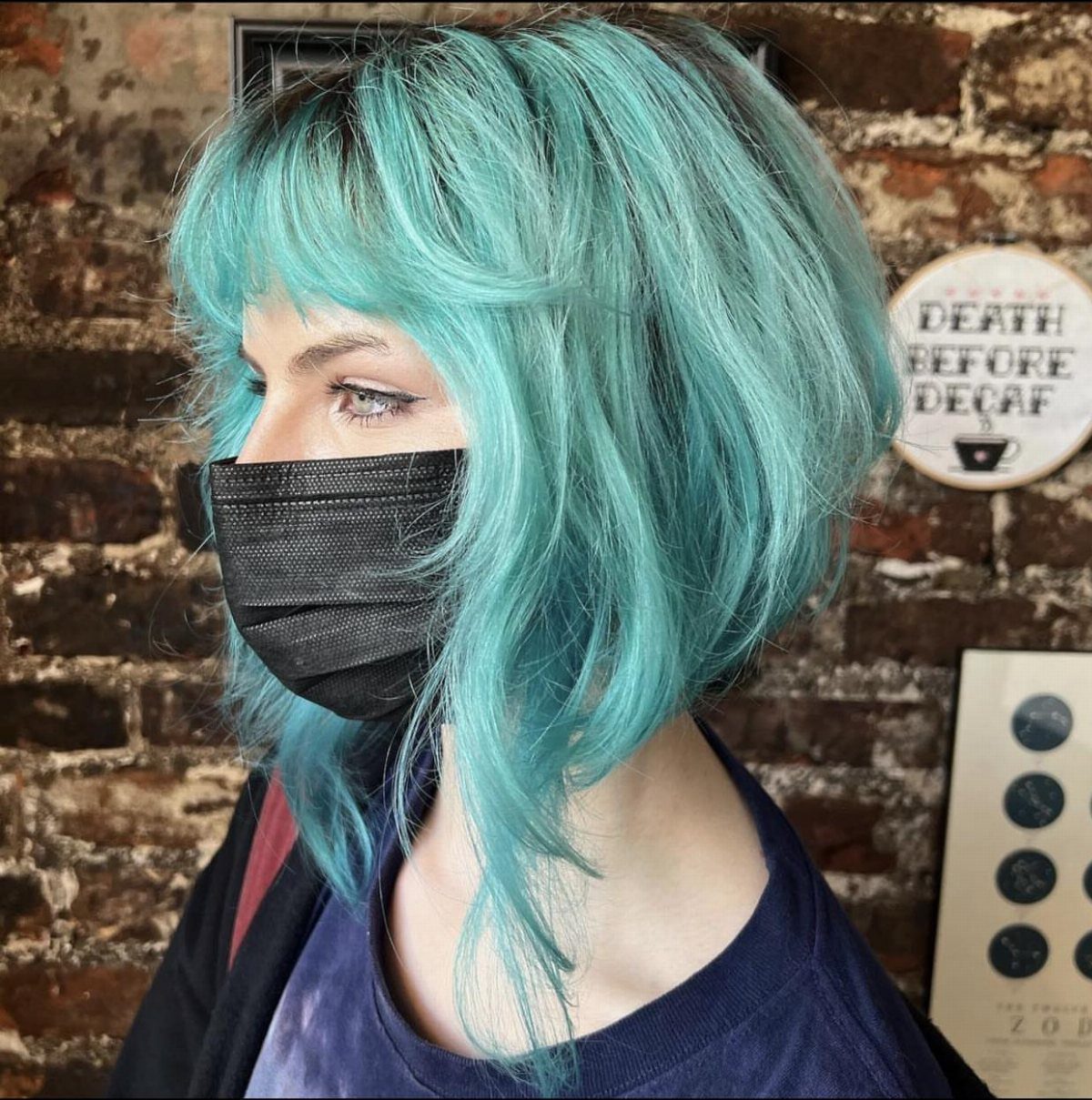
A bold color like teal, lavender, or coral turns a simple bob into something that registers from across a room. The color does most of the work, so the cut itself can stay straightforward.
Bright, unnatural tones fade faster than natural shades and require more frequent touch-ups to stay vivid.
If your hair is dark, you’ll need to bleach it first, which adds time and cost. Toning shampoo between salon visits helps maintain the intensity.
9. Deep Side Part Bob
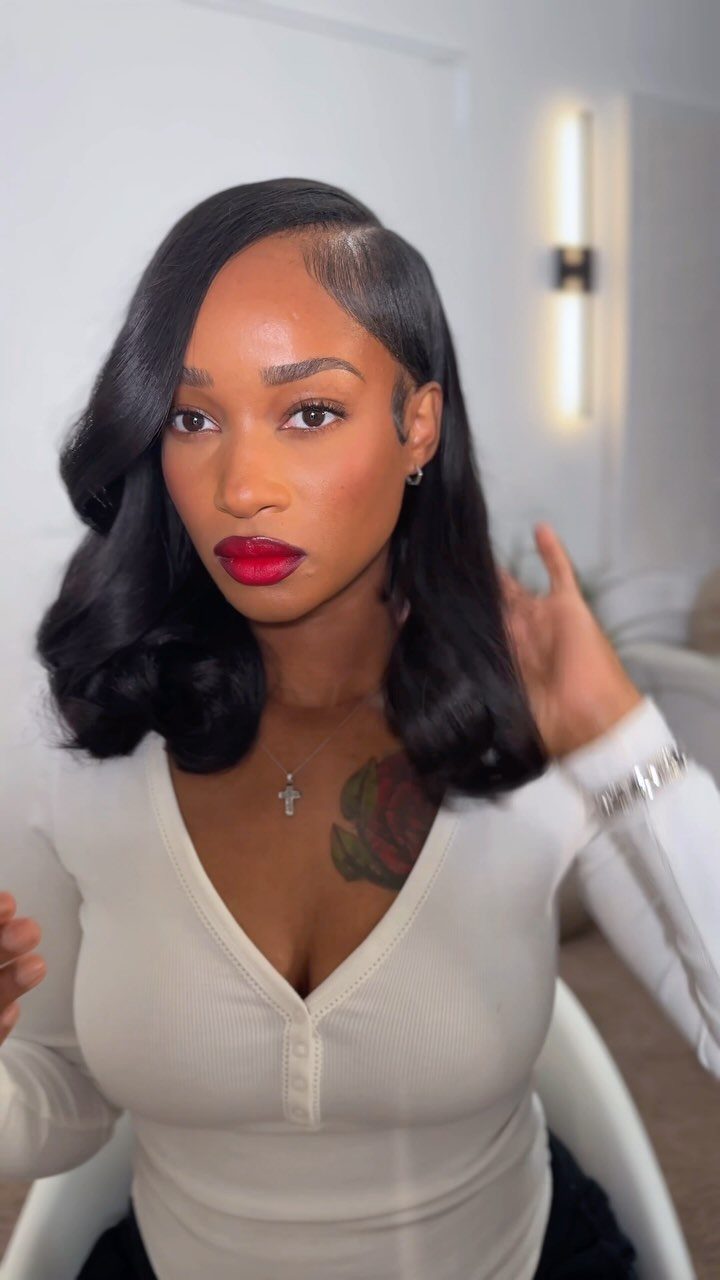
Shifting the part far to one side creates asymmetry that adds volume on the heavier side and elongates the face.
The bangs move to one side rather than dropping straight down, leaving most of the forehead visible while breaking up its width.
This works well if your hair has enough body to hold the shape; fine hair may need a texturizing spray or mousse at the roots to keep the volume from collapsing.
The part can shift back toward center as you sleep, so expect to reset it each morning.
10. Wavy Bottleneck Bob
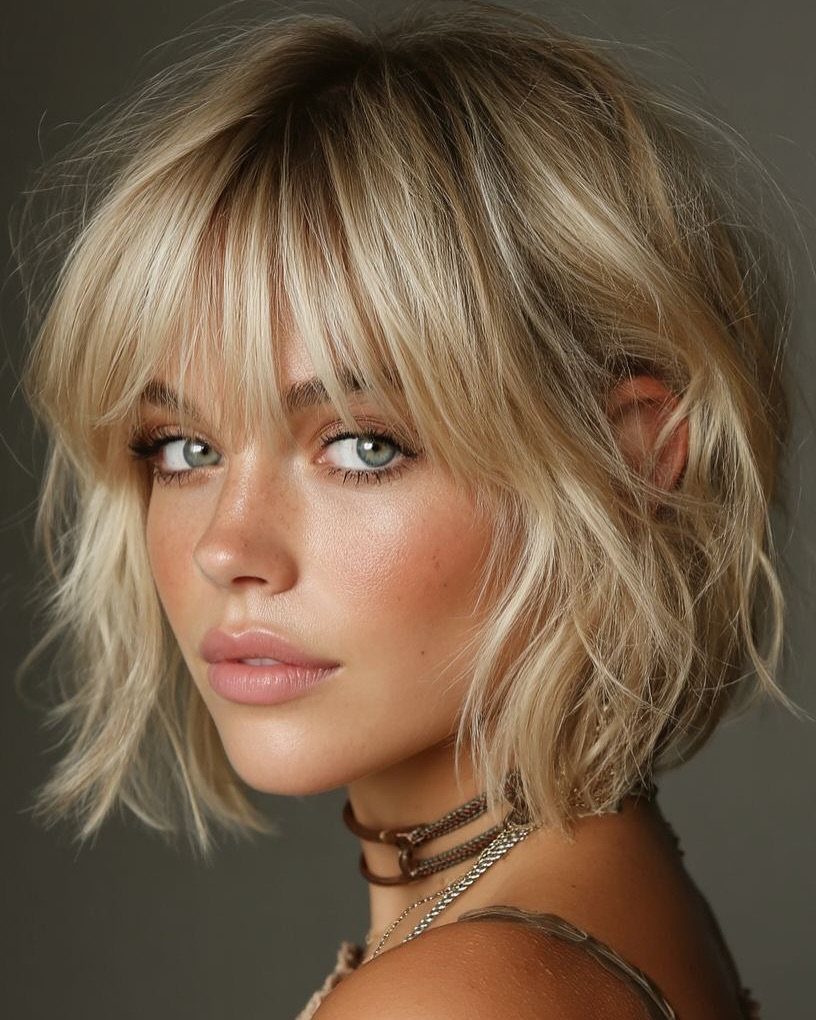
Bottleneck bangs taper outward from a narrow forehead width to frame the cheekbones, and when the bob is wavy the whole cut takes on a loose, undone texture. The waves keep it from looking too precise.
Scrunch damp hair with sea salt spray or mousse and let it air-dry for the messiest finish, or use a diffuser if you want more control.
The bangs follow the same wave pattern as the rest, so styling is one step rather than two.
11. Mid-length Shaggy Bob
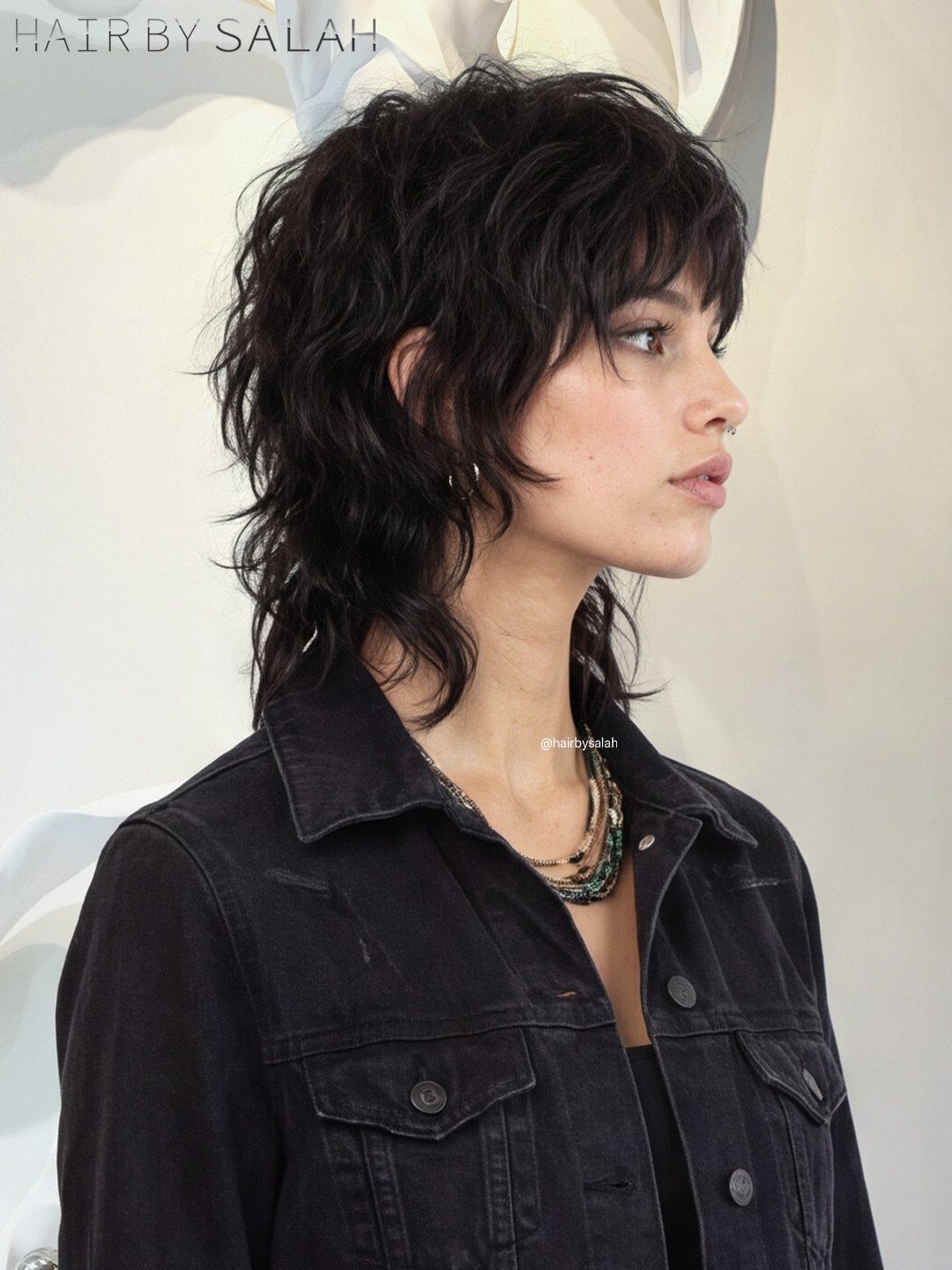
Shoulder-length bobs can be styled sleek or left to air-dry into a shag, depending on how much time you have. The shaggy version relies on layers cut at different lengths to create texture without heat tools.
If you straighten it, the layers still add movement but the overall shape reads cleaner.
If you air-dry, the layers separate and the cut looks more lived-in. Either way, the length gives you enough to pull back when you need it off your face.
12. Bottleneck Bob
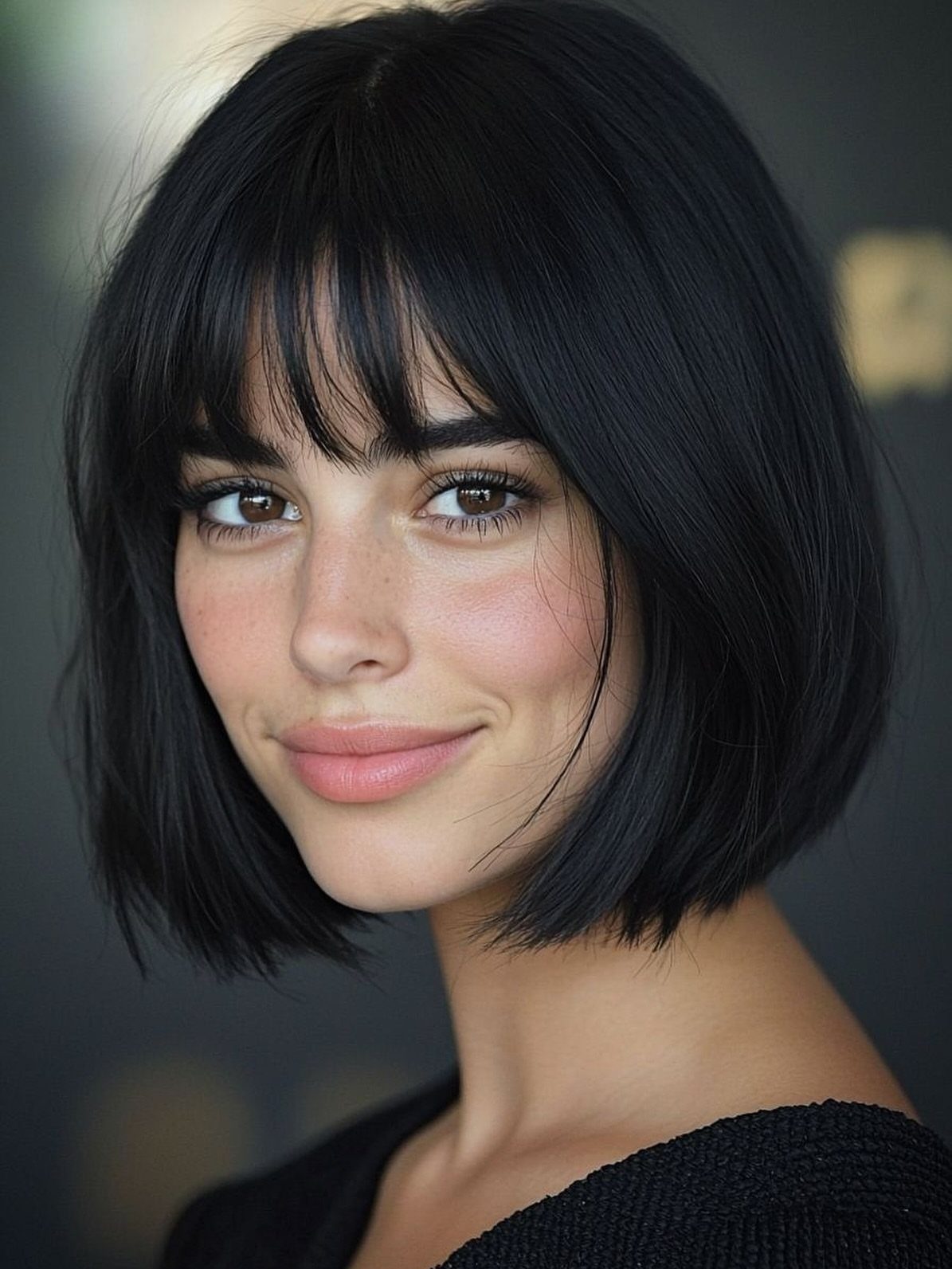
The A-line shape angles shorter at the back and longer toward the front, and the bottleneck bangs narrow at the top before widening at the cheekbones. The 2 techniques together create a tapered silhouette that draws the eye inward.
This cut suits oval or heart-shaped faces, where the narrow fringe and angled length balance the proportions.
Round faces may find the inward taper too emphasizing. The bangs need trimming often enough to hold the bottleneck shape.
13. Curly Bob with Bangs
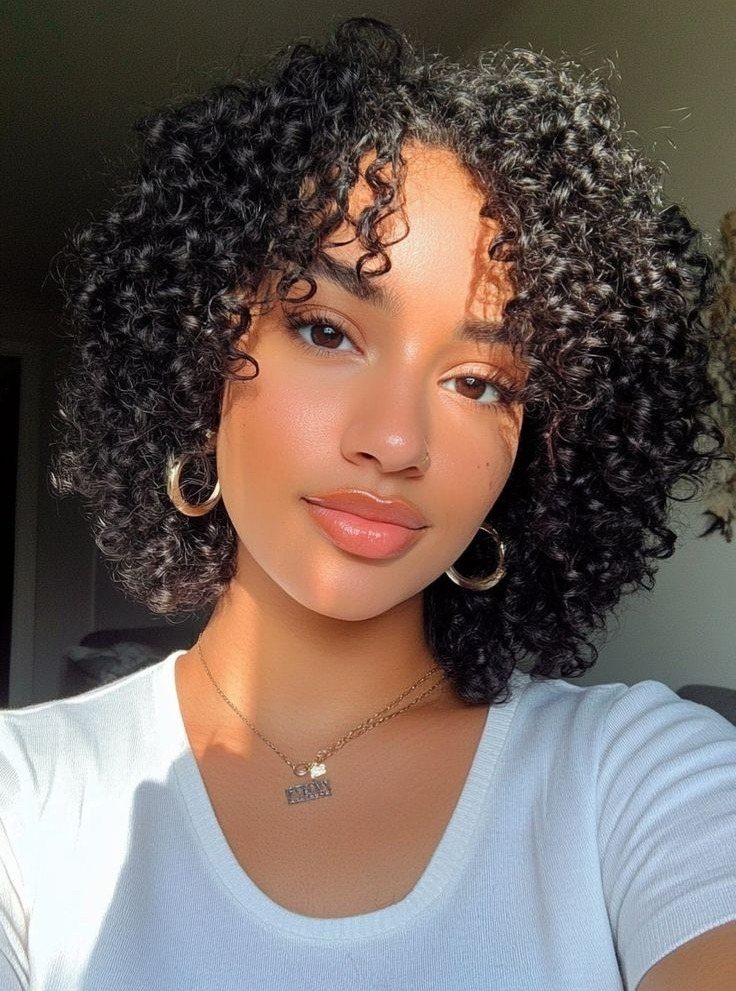
Curls give a bob natural volume and movement, and when the bangs are curly too the whole cut stays consistent.
The length sits shorter to account for shrinkage, so what looks chin-length wet may sit closer to the jawline when dry.
Define curls with a leave-in conditioner or curl cream while the hair is still damp, then either diffuse or air-dry.
The bangs will spring up shorter than they appear when wet, so factor that in when you cut or trim them yourself.
14. Wispy Bangs Bob
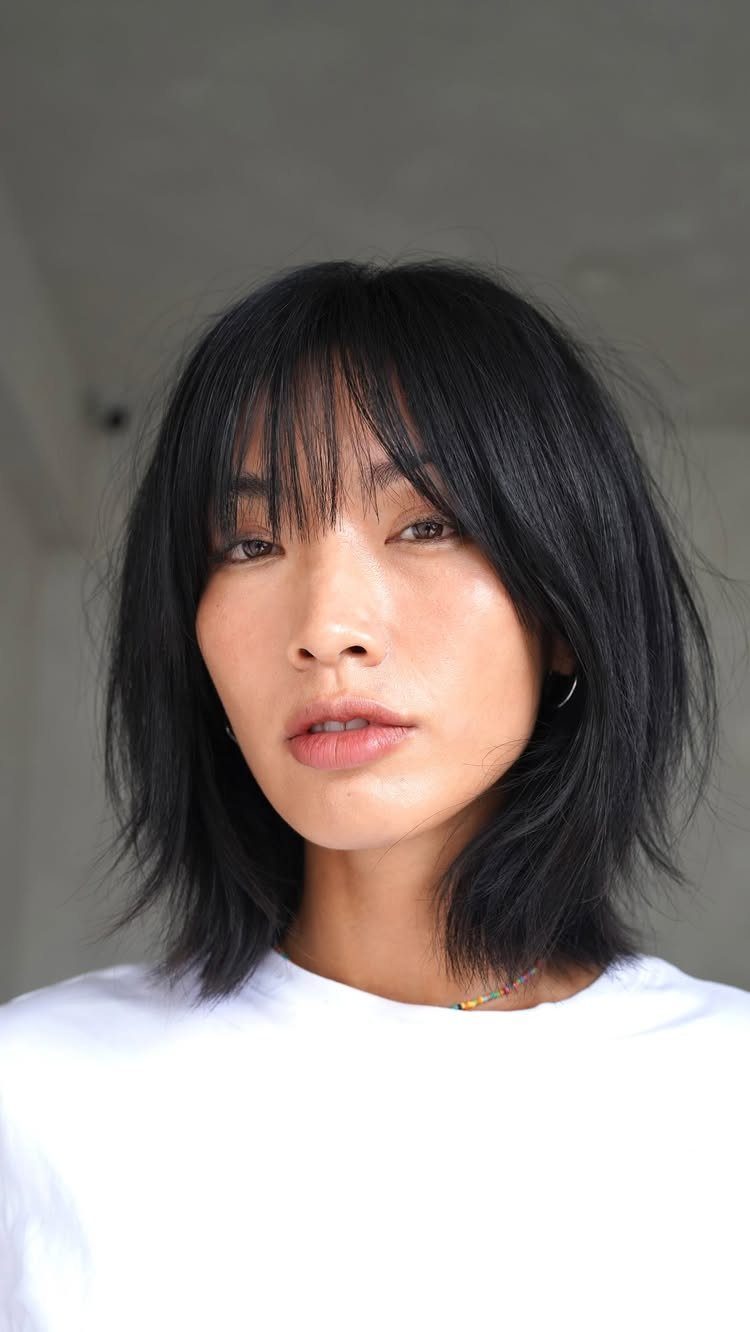
Wispy bangs cut thin and slightly uneven soften the forehead without the weight of a full fringe. They work well if you want bangs but find a solid curtain too heavy or hot.
Point-cutting or razor work creates the feathered ends that keep the bangs from sitting as one block. Work a small amount of styling cream or serum through the ends to keep fine pieces separate instead of stuck together.
15. Side-swept Bangs Bob
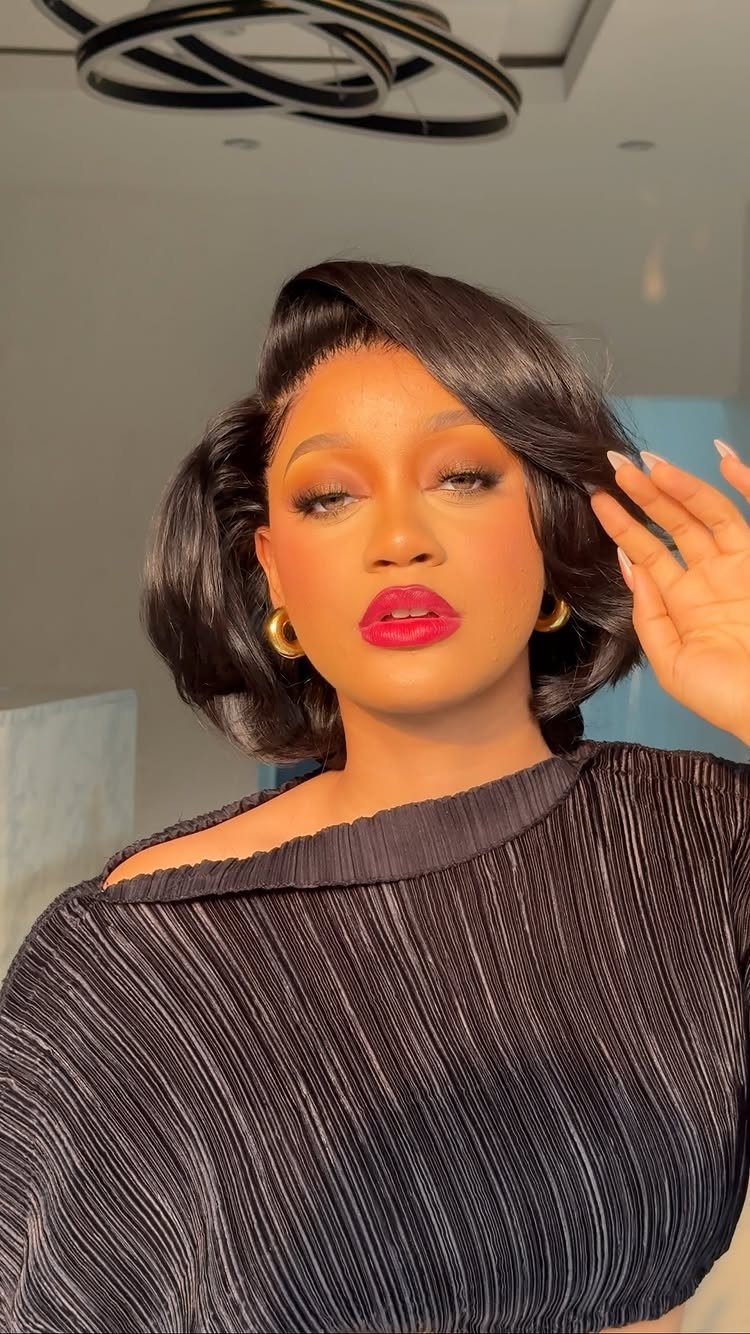
Sweeping the bangs to one side opens up the forehead while still framing the face, and the bob length keeps the overall shape clean.
This version suits someone who wants a fringe without committing to a center part or a straight-across line.
The sweep can be styled in with a round brush and blowdryer, or it will settle to one side on its own if your hair has a natural part there.
If it keeps sliding back, a small amount of pomade or gel at the roots holds the direction.
16. Blunt Bangs Bob
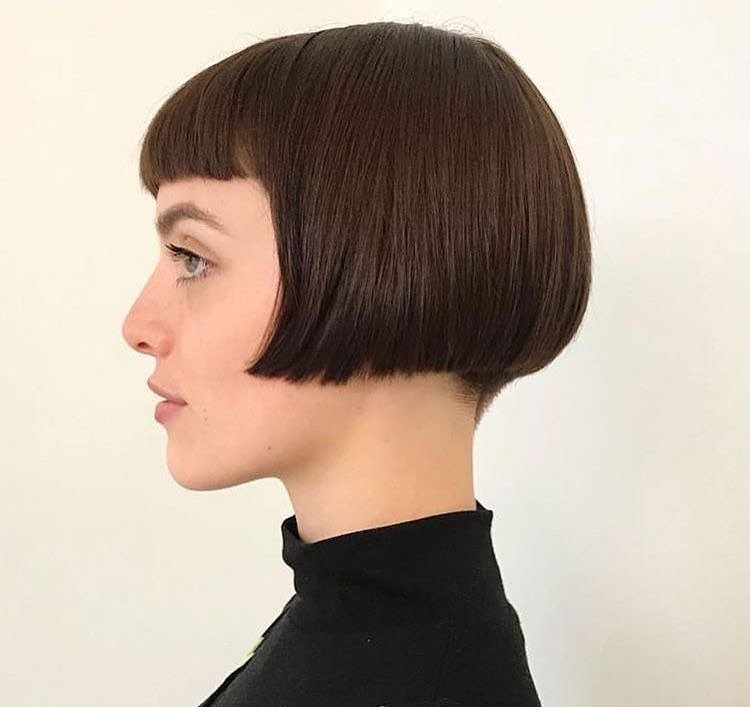
A blunt fringe cut straight across at or just above the eyebrows pairs with a chin-length bob for a clean, geometric look.
The straight lines make this one of the more high-maintenance combinations, because any unevenness in the cut or the grow-out shows immediately.
Frequent trims keep the edges sharp.
Flat-ironing smooths the bangs and the bob into the sleek finish this style depends on. If your hair has texture, expect to straighten it each time you wash.
Short bobs and bangs go hand in hand like macaroni and cheese, or Barbie and Ken.
17. Rounded Bob with Sweeping Bangs
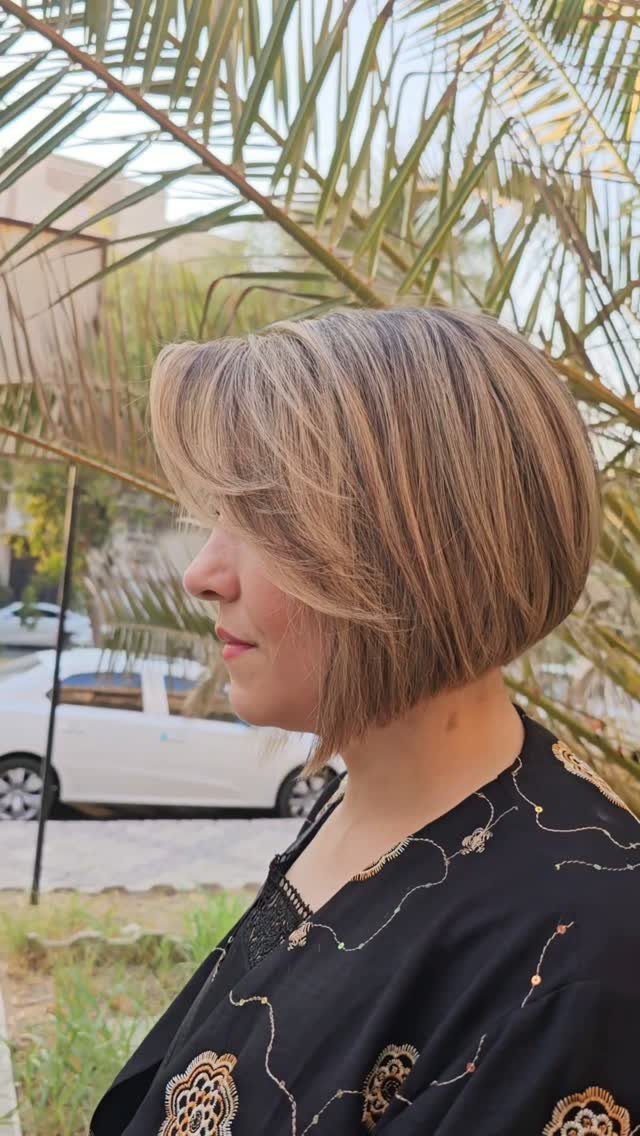
Layers cut to curve around the head give a bob a rounded silhouette, and bangs that sweep across the forehead add softness without a hard line. The rounded shape suits someone who wants volume and movement without sharp angles.
A round brush lifts the layers while blowdrying to emphasize the curve.
If your hair is fine, the layers build fullness; if it’s thick, they reduce bulk and keep the shape from looking heavy. The sweeping bangs blend into the layers rather than sitting as a separate section.
18. Tapered Bob with Bangs
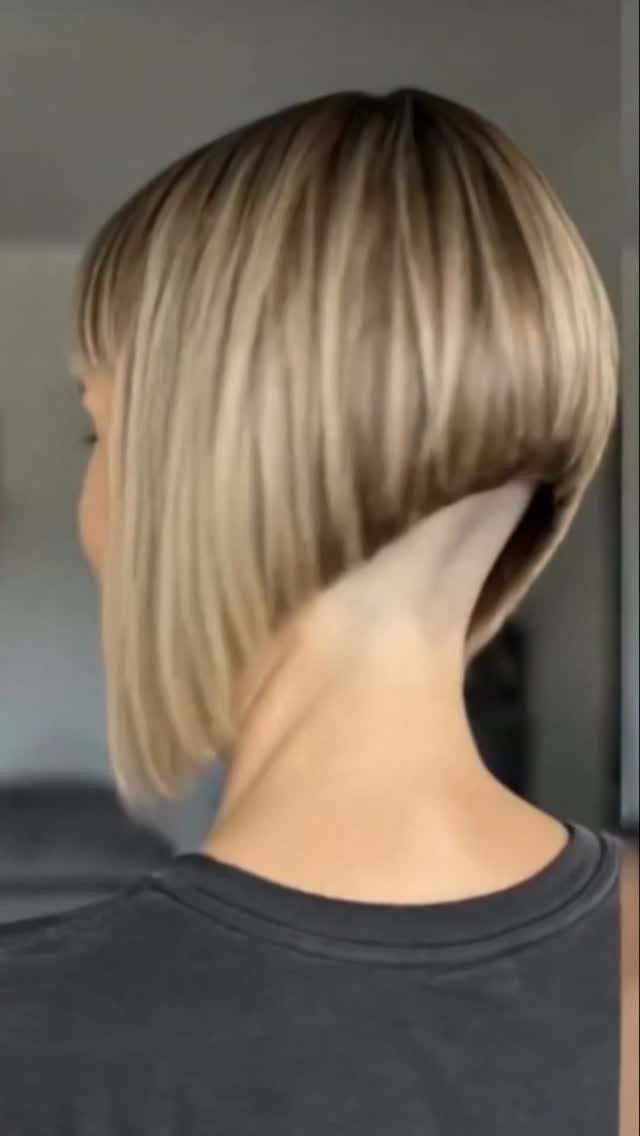
Short and smooth, this bob tapers close to the nape and pairs with a straight fringe that sits above the eyebrows.
The taper stacks weight toward the jawline and takes volume out through the back, leaving the crown close to the head.
This style requires regular trims to maintain the taper and the blunt edge of the bangs.
A flat iron keeps both the bob and the fringe smooth. Fast-growing hair will need regular trims to keep the taper from turning into a triangle.
Hair-type Customization
Thick hair needs internal thinning to prevent the bob from sitting heavy or bulky.
Soft layers on top add movement without making the cut feel like it’s fighting its own weight. A fringe with some texture stops the bob from sitting too heavy and flat.
Curly hair already has volume and texture built in, so a blunter shape works better than aggressive layering, which can create frizz or unwanted bulk.
Curly bobs need to be cut dry so you see how much length disappears once the curl springs back. Straight hair can handle chopped, textured ends to add dimension and prevent flatness.
Bang Upkeep and Styling
Bangs sit against your forehead and collect oil faster than the rest of your hair, so you may need to wash them daily or refresh them between washes.
For a curtain fringe, point the dryer from the left, then the right, then the center to control where the bangs fall and keep them from sticking straight down. This method gives the fringe natural movement without overworking it.
The rest of the bob needs less attention.
Enhance whatever texture is already there rather than forcing it into a different shape. A little styling cream or texture spray keeps the finish soft and real, not stiff.
Natural Texture Styling
Straight hair takes a round brush and blow-dryer pointed downward to tuck the ends under and hold the line of the cut. The technique is quick and maintains the shape without adding styling steps.
Wavy or curly hair benefits from twisting sections while damp to define the curl pattern, then letting it air-dry or diffuse before shaking it out for volume and movement. The twist sets the shape without heat.
Curly or coily hair needs more moisture than other textures, so prioritize hydrating products to keep the curl defined and prevent frizz.
Frequently Asked Questions
What kinds of bob haircuts are there?
Bobs range from chin-length curtain bangs styles to short French cuts, with options for feathered, choppy, layered, or blunt finishes.
Texture varies from sleek and straight to wavy, curly, or shaggy depending on how much movement you want. Fringe types include wispy, micro, side-swept, or blunt bangs, each changing how the face reads.
What hairstyles look best with bangs?
Bobs pair well with bangs because the shorter length frames the face while the fringe adds structure to the forehead.
Curtain, side-swept, and wispy bangs soften features, while blunt or micro bangs create sharper lines. The cut works across face shapes when you adjust bang style and bob length to balance proportions.
What is the trend for bob haircuts in 2026?
Curtain bangs with bobs remain popular in 2026, building on momentum from recent years. The combination suits straight, wavy, and curly hair, and the parted sweep makes grow-out easier than a straight-across fringe.
How to style a straight bob?
Blow-dry each section with a round brush, rolling the ends under as you pull tension through to the tips. A flat iron smooths bangs and bob together for a sleek finish if you want sharper edges.
How do you customize a layered bob with fringe?
Fine hair holds its shape better with a blunt perimeter and light layering through the crown, while thick hair needs thinning through the interior so the surface stays smooth.
Curly hair should stay blunter since curls create texture and volume on their own. Straight texture shows every line, so ask for piece-y ends or point-cutting if you want texture instead of a solid edge.
How do you wear bangs with a bob?
Style them straight across for a blunt look or sweep them to one side to open up the forehead.
Shorter bangs can be curled or pinned back with a clip, while longer bangs sweep to the side or pull back into a low tie.
Point the dryer from left, right, then center for a curtain fringe that moves naturally instead of sticking straight down.