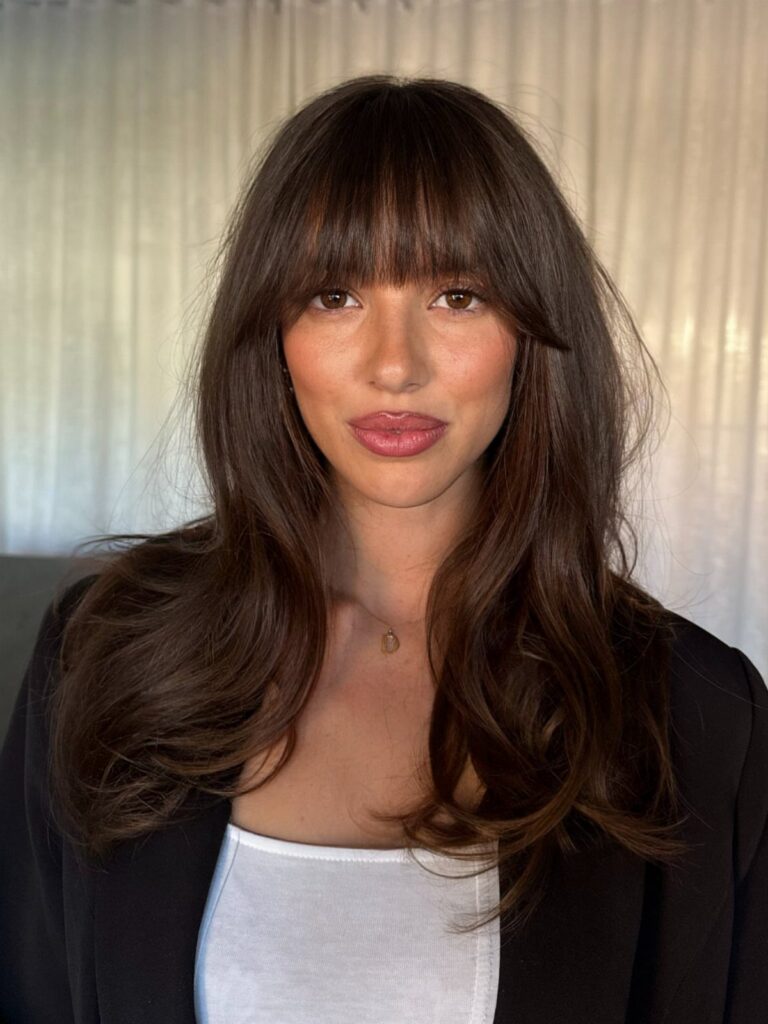
Bangs paired with long hair shift the proportions of your face without changing the length you’ve committed to keeping.
Face shape decides whether a style flatters or fights you: oval proportions suit most fringe shapes, but round or square faces need a diagonal line or parted curtain to avoid emphasizing width.
1. Wavy Hair
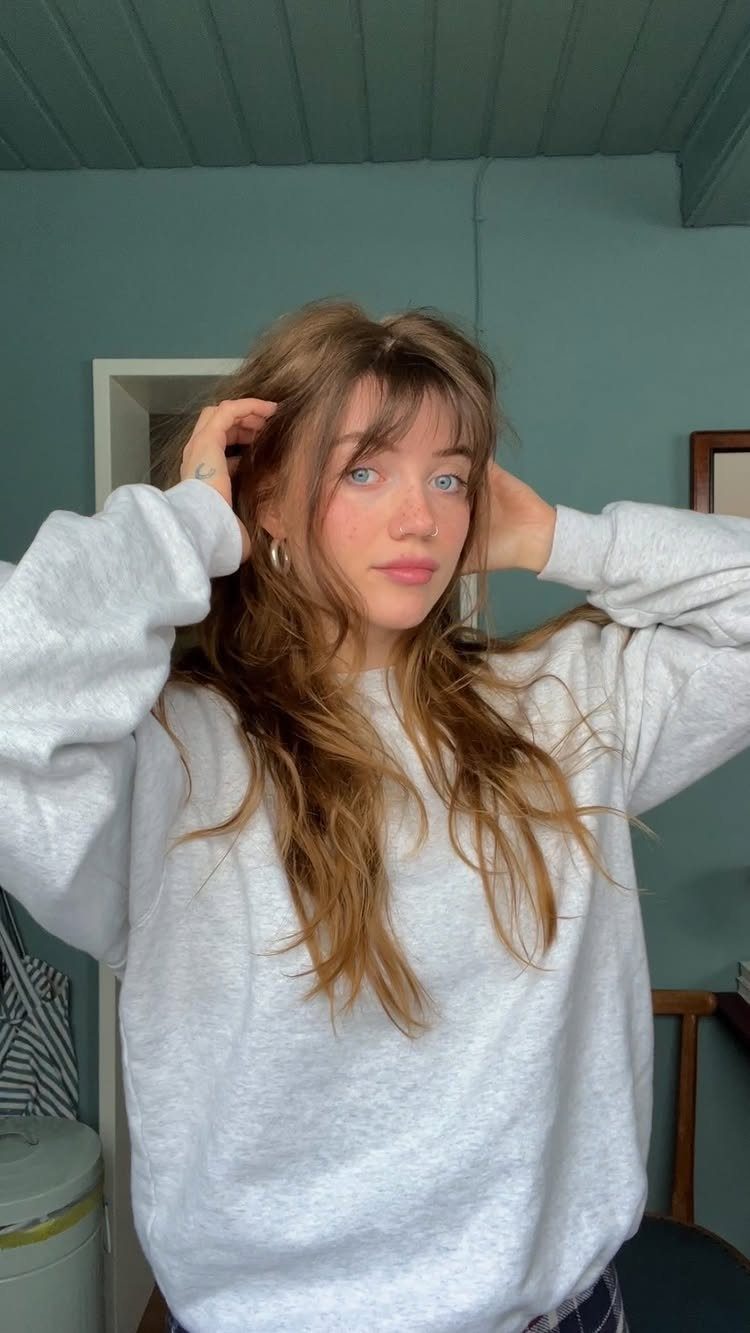
Bangs cut to work with the hair’s texture instead of fighting it means less time with heat tools each morning.
The fringe picks up the same movement as the rest of the hair, which keeps the whole cut looking intentional rather than half-styled.
If your hair has any wave at all, ask for point-cutting through the ends of the bangs so they soften instead of sitting in a stiff line. The wave will do the shaping work for you.
2. Curtain Bangs
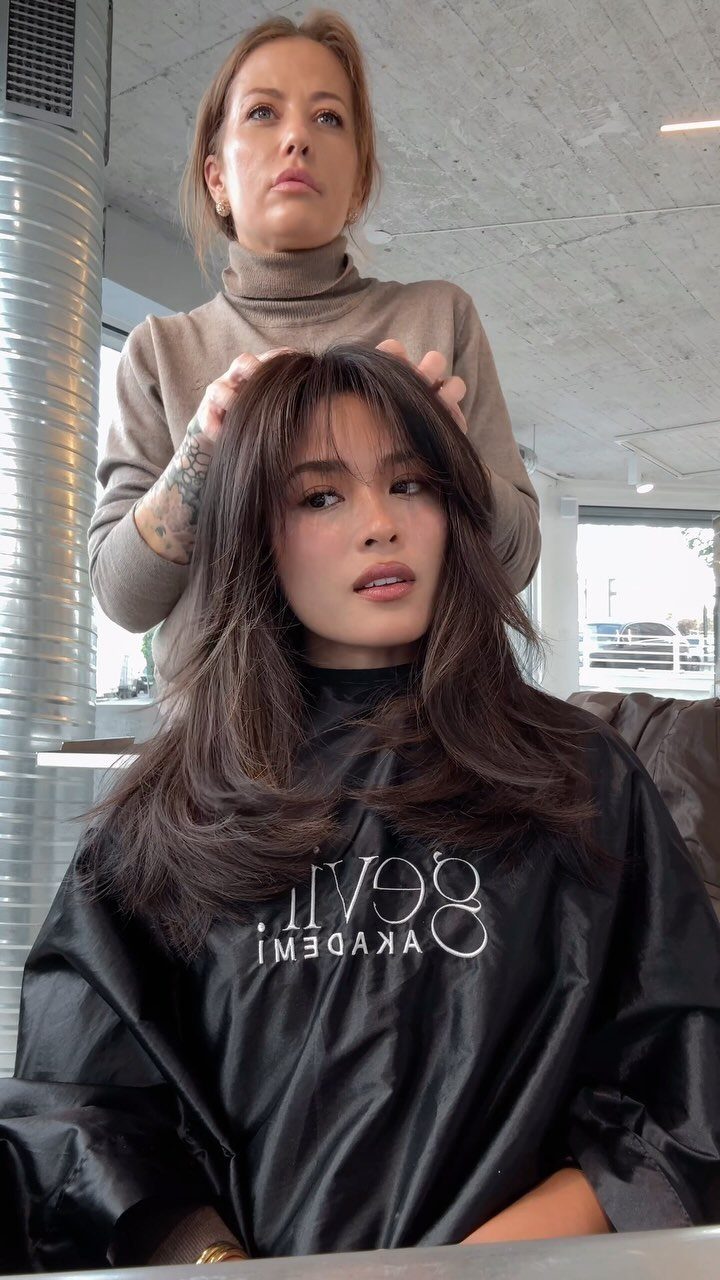
The fringe parts at the center and feathers out toward the temples, which opens up the face without giving up coverage.
Longer pieces at the sides blend into the rest of the hair, so there’s no hard line where bangs stop.
Growth is forgiving. As the bangs get longer, they just shift further into the curtain shape, which buys you more time between trims.
Curtain bangs suit most face shapes because the parted shape mimics a natural frame rather than cutting straight across.
3. Straight Hair
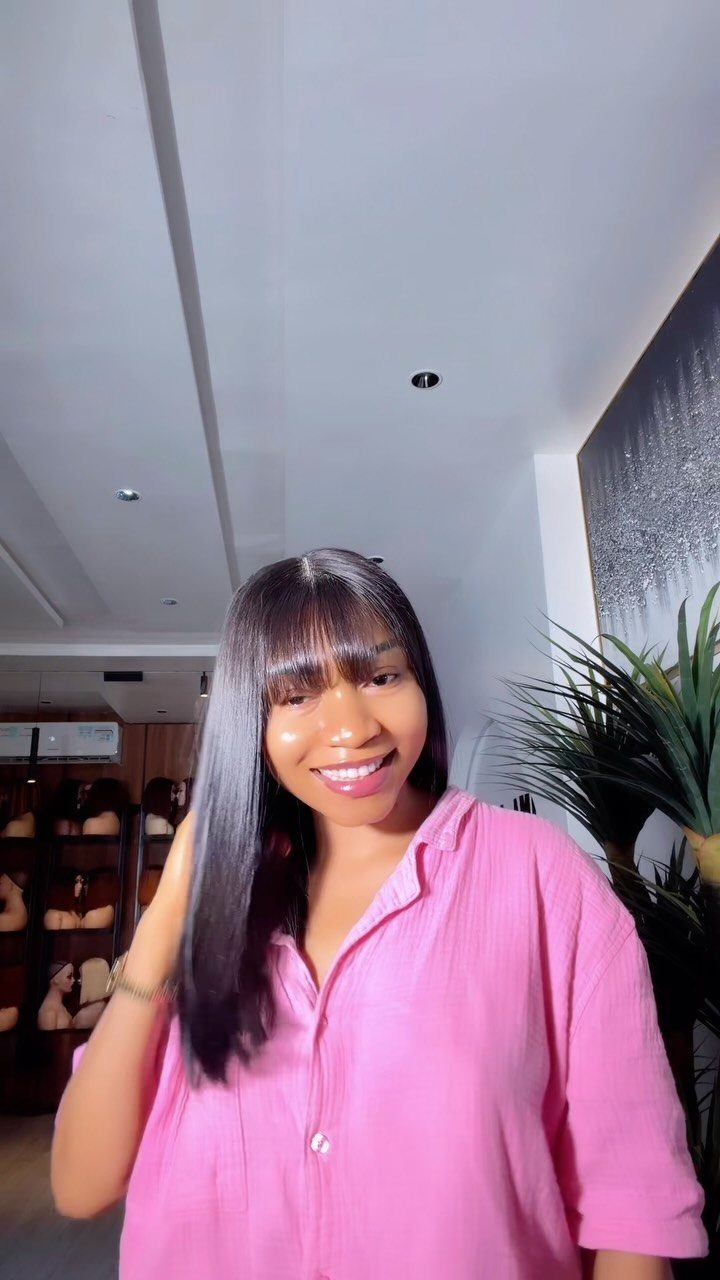
Straight hair shows every scissor mark, so precision matters more here than in textured cuts.
A blunt line across the forehead looks clean and graphic, but only if the bottom edge sits level and the density stays even from root to tip.
If your hair is fine, a full fringe can look sparse. Ask for the section to start further back on the crown so there’s enough hair to make a solid line.
Straight bangs grow out faster visually because there’s no wave to disguise the added length. Blunt edges show every bit of growth, so the calendar fills up fast.
4. Wispy Bangs
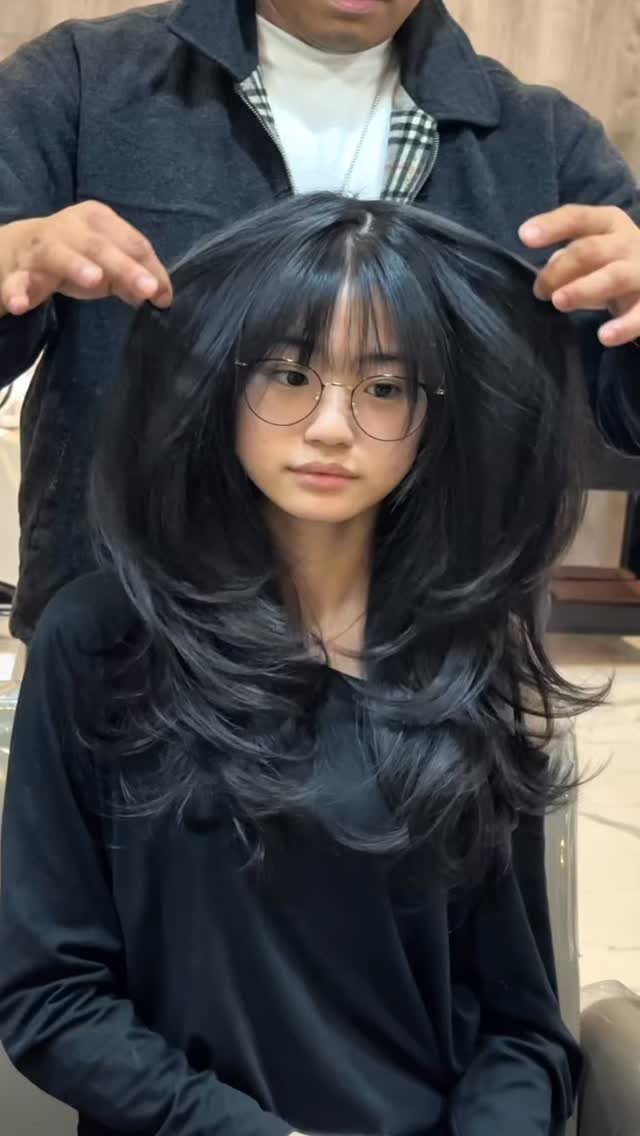
Sparse, textured bangs let patches of forehead show through, which softens the whole frame. The fringe is cut in sections with varying lengths, so it sits light instead of heavy.
Wispy bangs suit fine or thin hair better than a full blunt fringe because they don’t demand as much density to look intentional. They also work if your hairline is uneven, since the gaps are part of the design.
The styling time is minimal. Most of the shape comes from the cut itself, so you can let them air-dry or give them a quick pass with a round brush.
5. Blunt Bangs
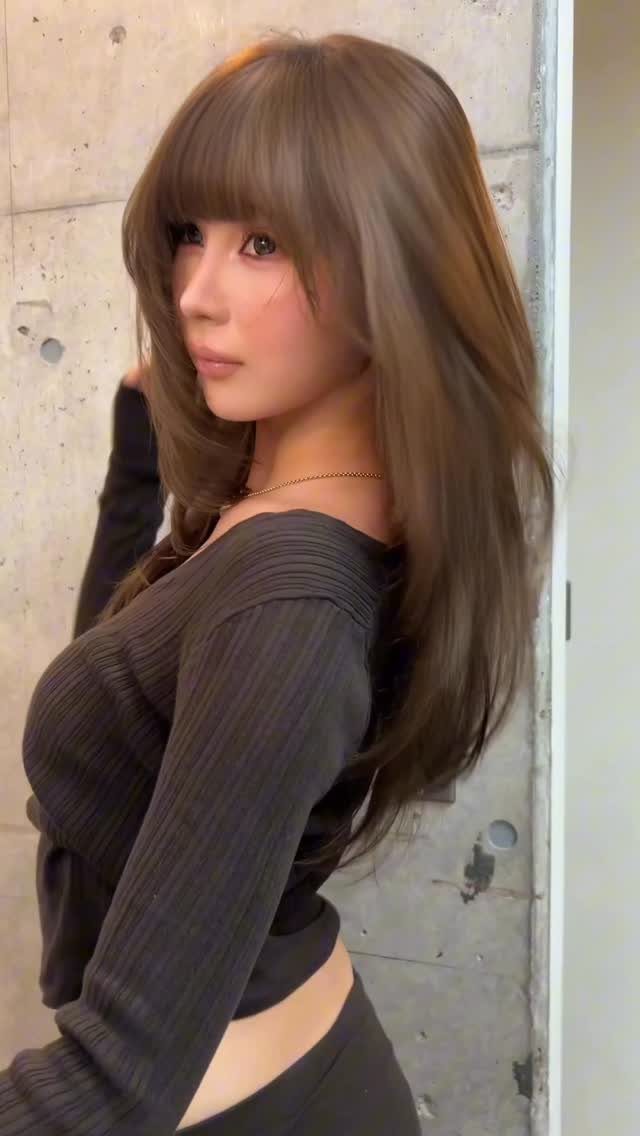
A full, straight-across fringe cut to one length makes a strong line that changes the proportions of the face. The cut sits heavy and dense, which suits thick hair better than fine.
Blunt bangs work best on oval and heart-shaped faces because they shorten the forehead and balance a wider upper face. If your face is round or square, the horizontal line can make it look wider.
Daily styling takes a flat iron or round brush to keep the line smooth. Without it, the bangs can flip or separate, which breaks the clean edge.
“Bangs are one of the fastest ways to change your entire look without sacrificing length,” says celebrity hairstylist Clayton Hawkins. “They can soften the face, highlight the eyes, and balance proportions.”
— Vogue
6. Side-swept Bangs
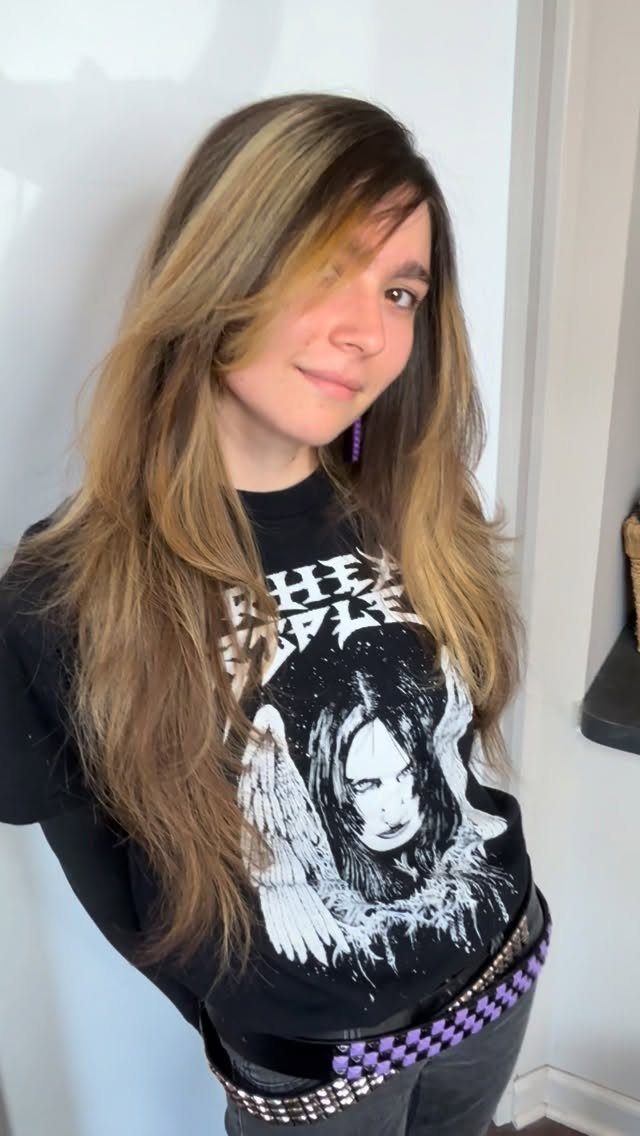
The fringe is cut longer on one side and angled across the forehead, which gives some asymmetry without committing to a full blunt line. The sweep suits round or square faces because the diagonal breaks up width.
Styling takes a round brush to set the direction. If you skip it, the bangs will dry wherever they fall, which usually means straight down instead of swept.
Side-swept bangs grow out more gracefully than blunt ones because the length gradient means you can tuck them behind your ear once they pass your cheekbone.
7. Curly Bangs
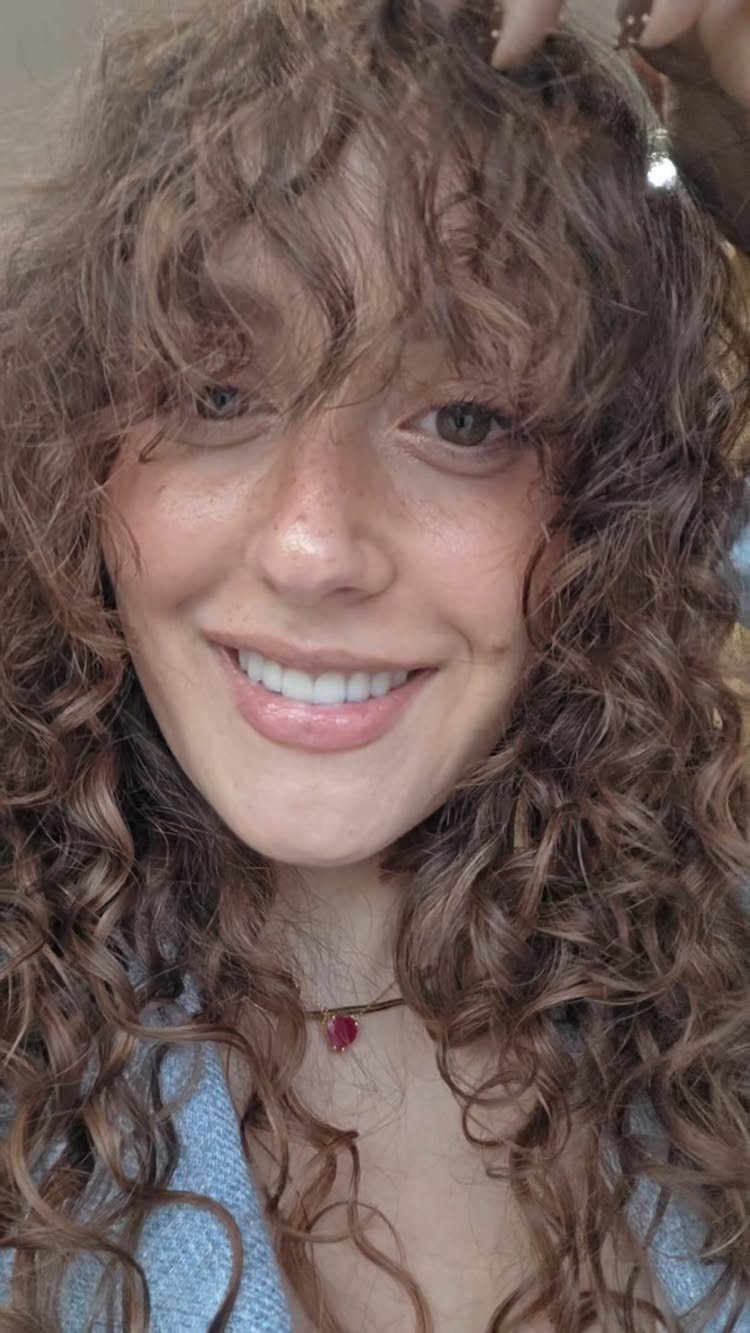
Curls need extra length to account for shrinkage, so the fringe is cut longer than it looks when dry. If you cut it to sit at your eyebrows when stretched, it will spring up to mid-forehead once it dries.
Ask for dry cutting if the stylist offers it. Cutting curls wet means guessing where they’ll land, and the guess is often short.
The fringe follows the same curl pattern as the rest of your hair, so styling means defining the curls, not straightening them. A leave-in conditioner and finger-coiling work better than a brush.
8. Curly Hair
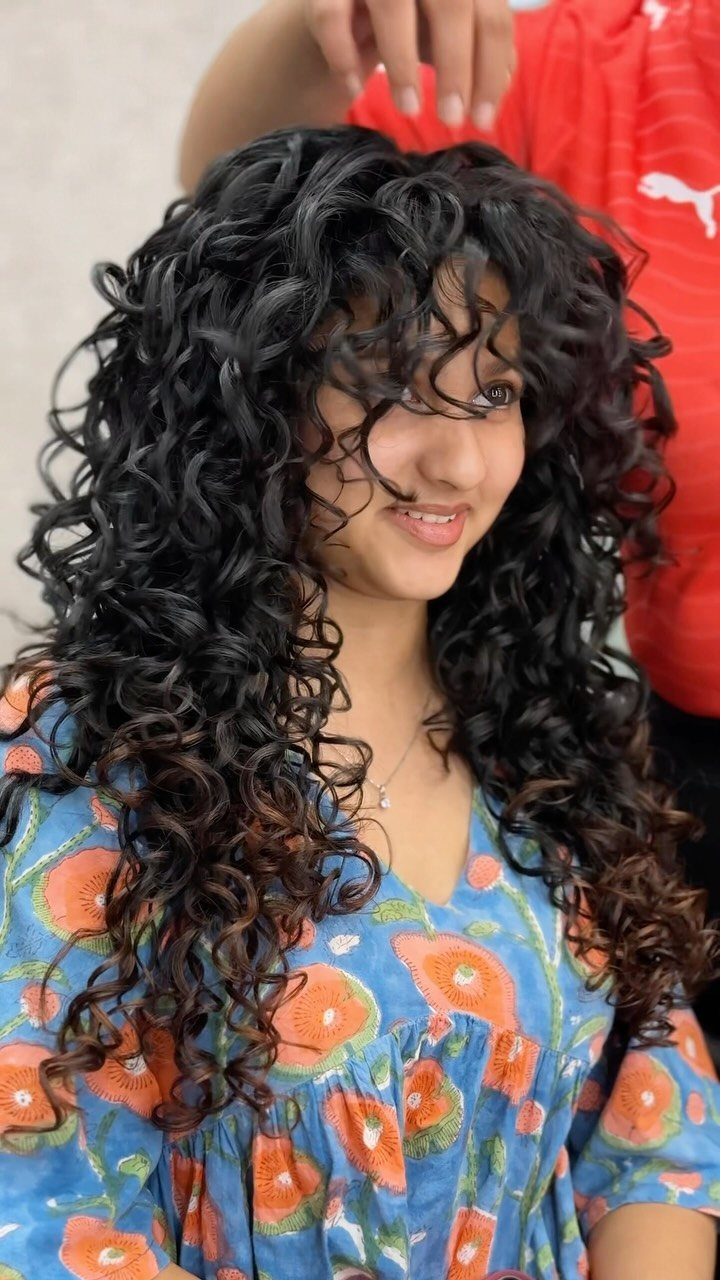
Long curls with a fringe that can shift to the side or stay across the forehead give flexibility without a second cut.
The bangs are left long enough to tuck behind your ear or pin back when you want them out of the way.
The shaggy layers keep the length from pulling the curls straight under their own weight, which means more volume at the crown.
9. Rounded Feathered Layers
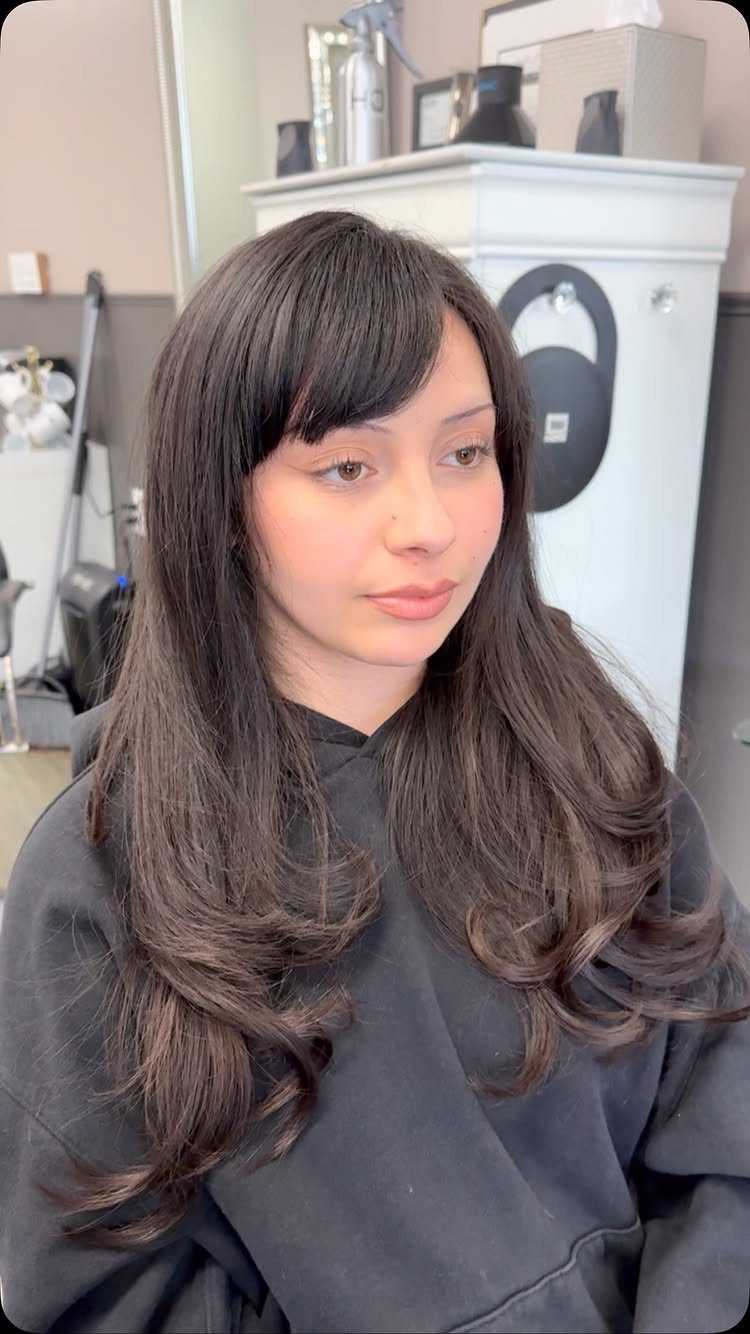
Layers cut to curve around the face rather than fall straight soften the angles and add movement without shortening the length much. The bangs blend into the layers instead of stopping at a hard line.
Feathering at the ends keeps the layers from sitting blunt, which suits fine or medium hair that needs texture but not bulk removed.
10. Long Shag
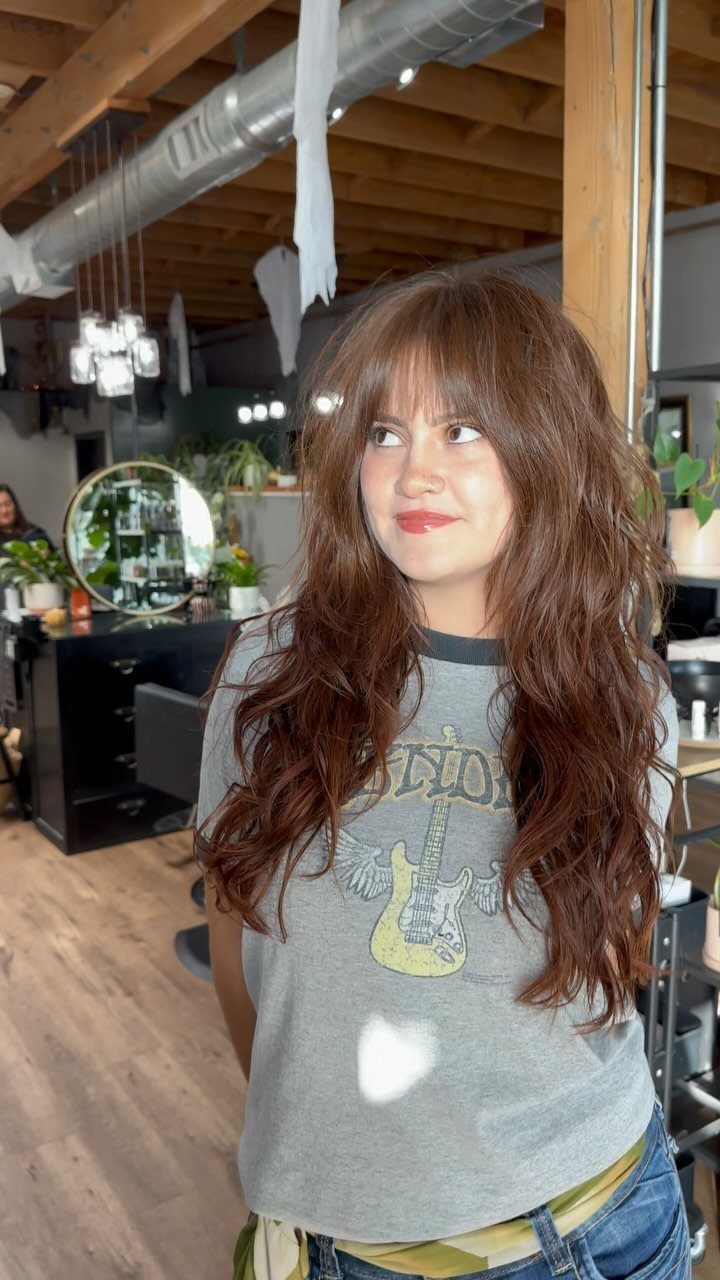
The shag cuts shorter pieces through the crown and gradually lengthens toward the ends, which gives the hair lift at the roots without losing length. The fringe sits light and textured, not heavy.
Wispy bangs pair well with the shag because both rely on varied lengths rather than precision edges. The upkeep is low if you can handle a slightly undone look between trims.
11. Birkin Bangs
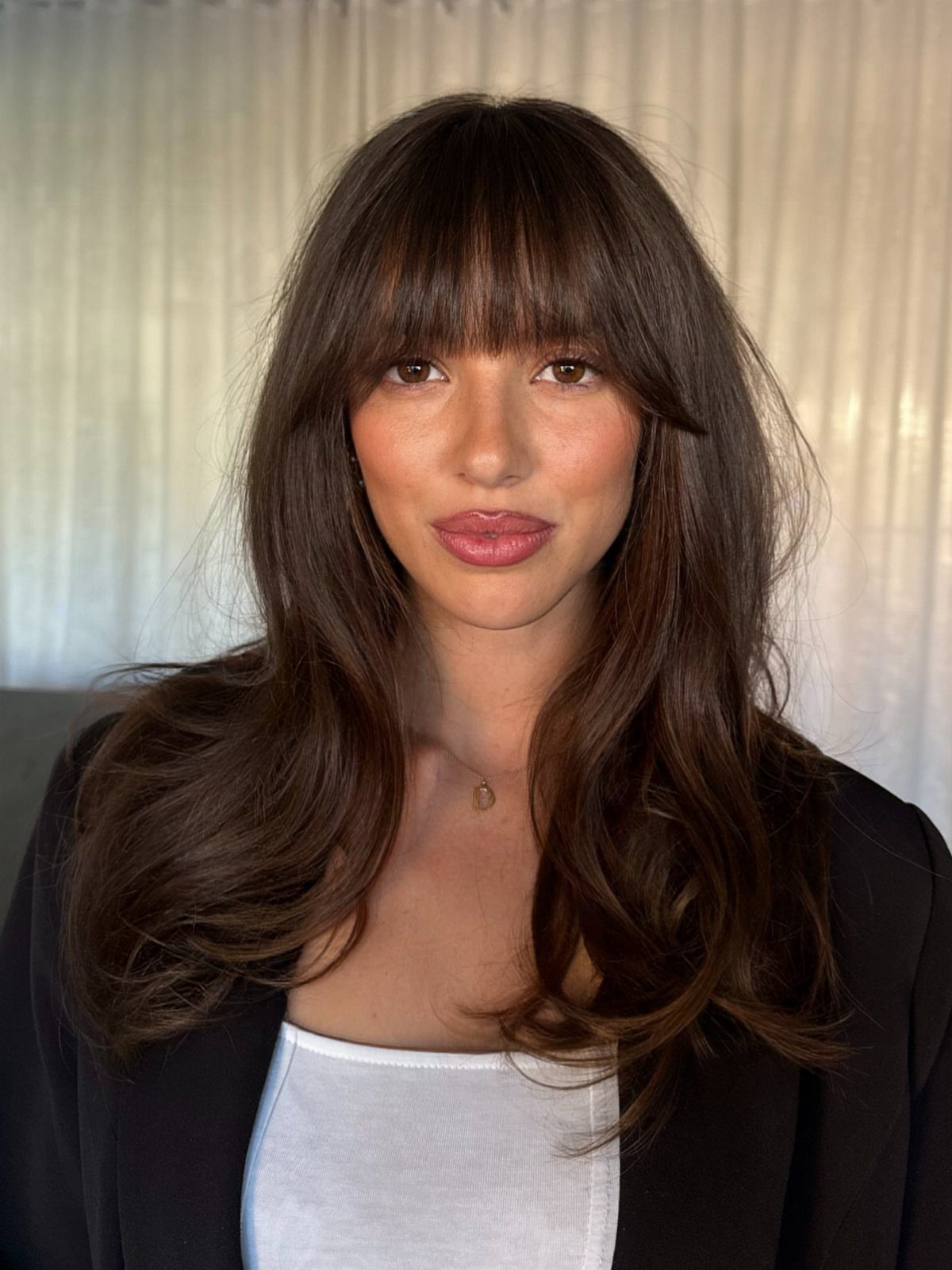
A soft, full fringe that skims the eyebrows or sits just above them, named after the way Jane Birkin wore hers in the 70s. The bangs are cut with some internal layering so they don’t hang as one heavy block.
Birkin bangs suit thick hair because the cut needs enough density to look full without being styled into submission. Fine hair can work if the fringe section is taken deeper into the crown.
12. Sleek Long Hair
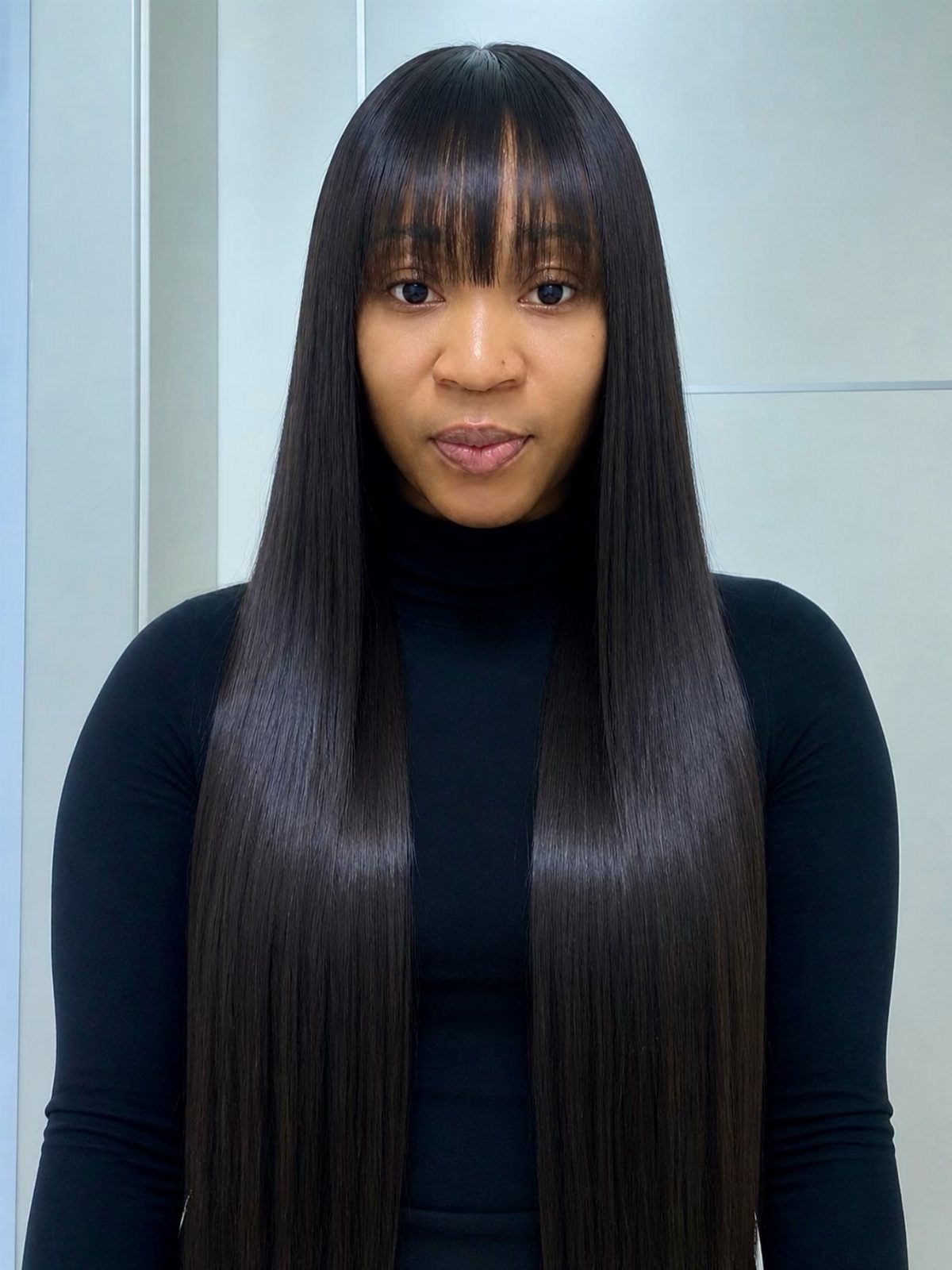
Smooth, straight hair worn long with a full fringe makes the most of a blunt line because there’s no wave to interrupt it. The cut is simple, but keeping it sleek takes daily heat styling or a naturally straight texture.
If your hair holds any bend, a flat iron becomes part of the morning routine.
13. Blowout with Bangs
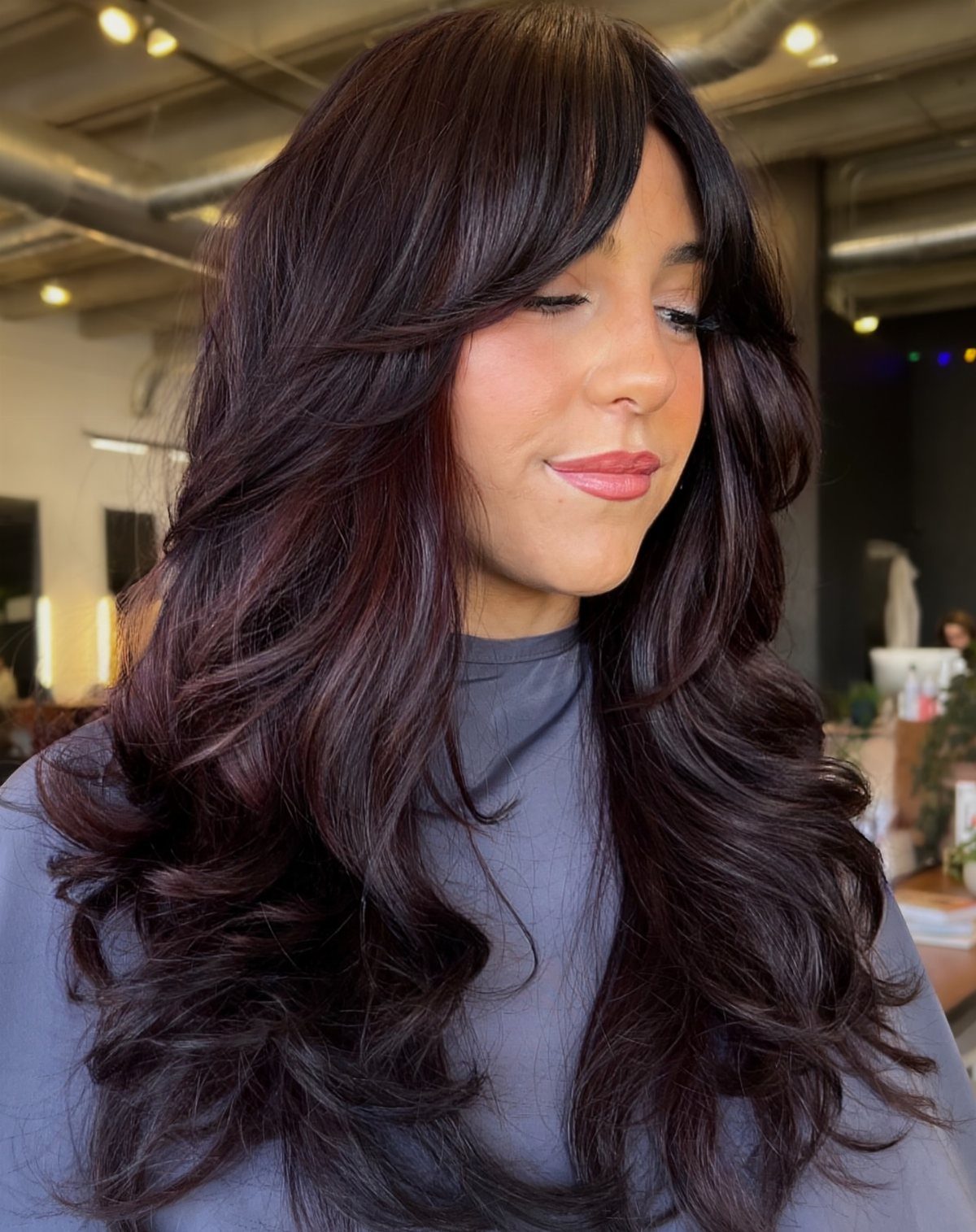
A blown-out finish with enough body to lift the bangs off the forehead takes a round brush and a few minutes of directed heat.
The fringe curves slightly under or sweeps to the side as part of the same shaping pass, so the bangs don’t sit flat against your face.
The volume softens a heavier fringe and suits thick hair that would otherwise weigh itself down.
Fine hair can get the same lift with a smaller brush and tension at the roots, though the hold won’t last as long without product.
14. Bangs with Balayage
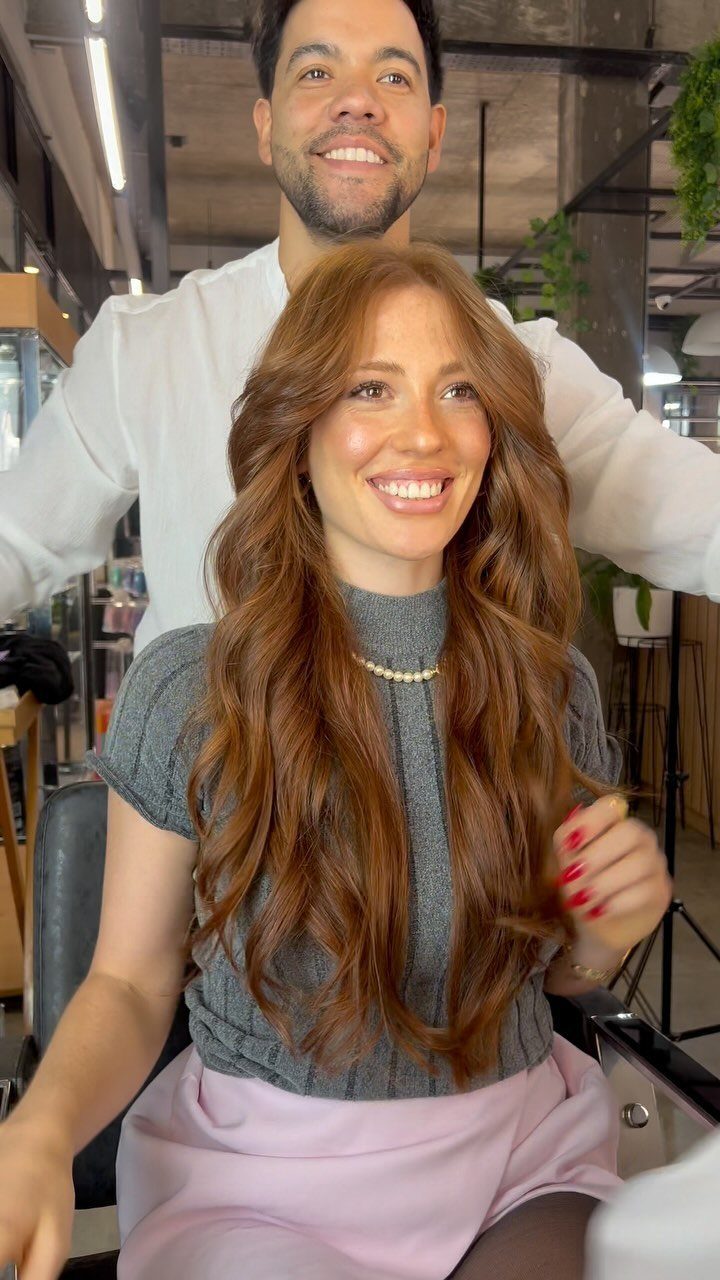
Lighter pieces through the lengths and around the face add dimension without changing the cut.
Balayage works well with bangs because the fringe stays one solid tone while the painted sections start an inch or two below, which keeps the frame clear.
If your base color is dark, the contrast shows more. On lighter hair, the shift is subtle enough that regrowth blends without a hard line.
15. Choppy Bangs
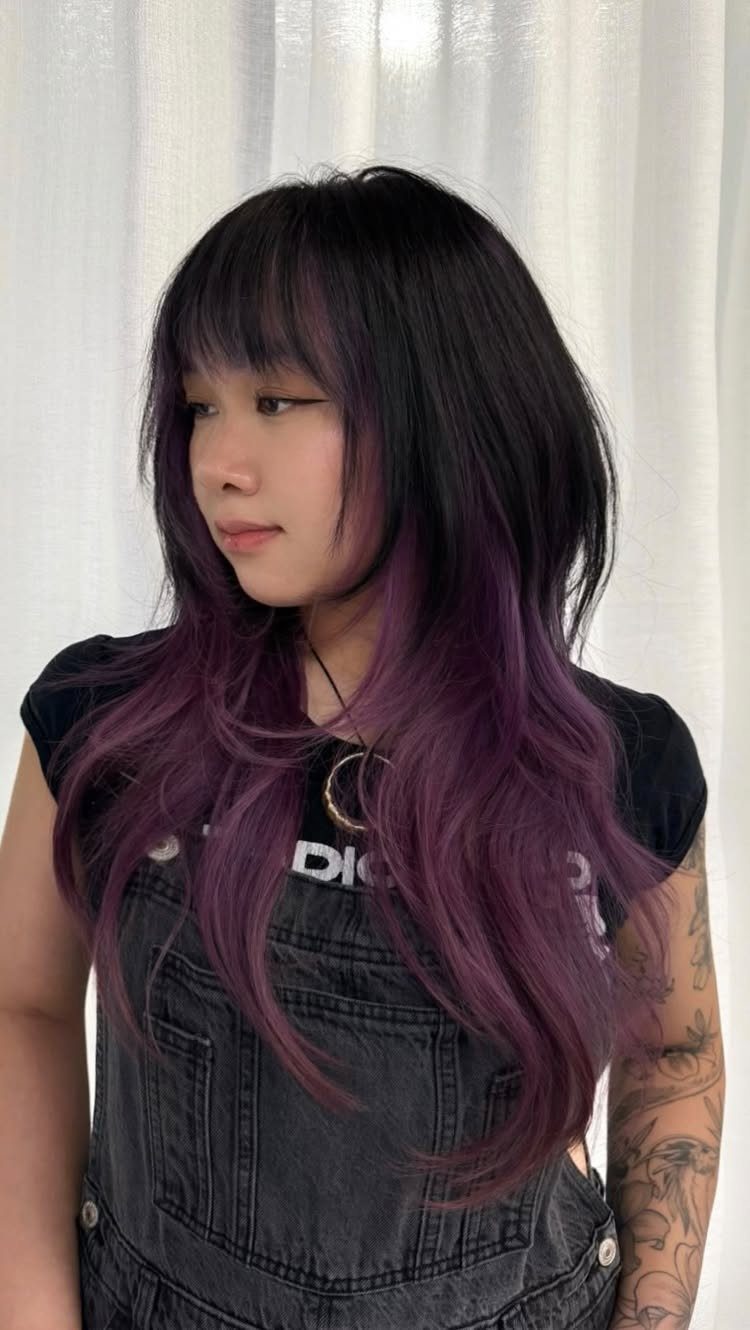
The ends are cut at different lengths and separated into distinct pieces instead of blending into one smooth line. Point-cutting or razoring through the fringe gives the uneven finish, which reads as intentional texture rather than a grow-out.
Choppy bangs suit hair with some natural texture or thickness because the separated pieces need enough body to hold their shape. On very fine hair, the gaps can look sparse instead of piecey.
Styling is faster than a blunt fringe because the cut doesn’t demand a perfectly straight edge.
16. Swoopy Bangs
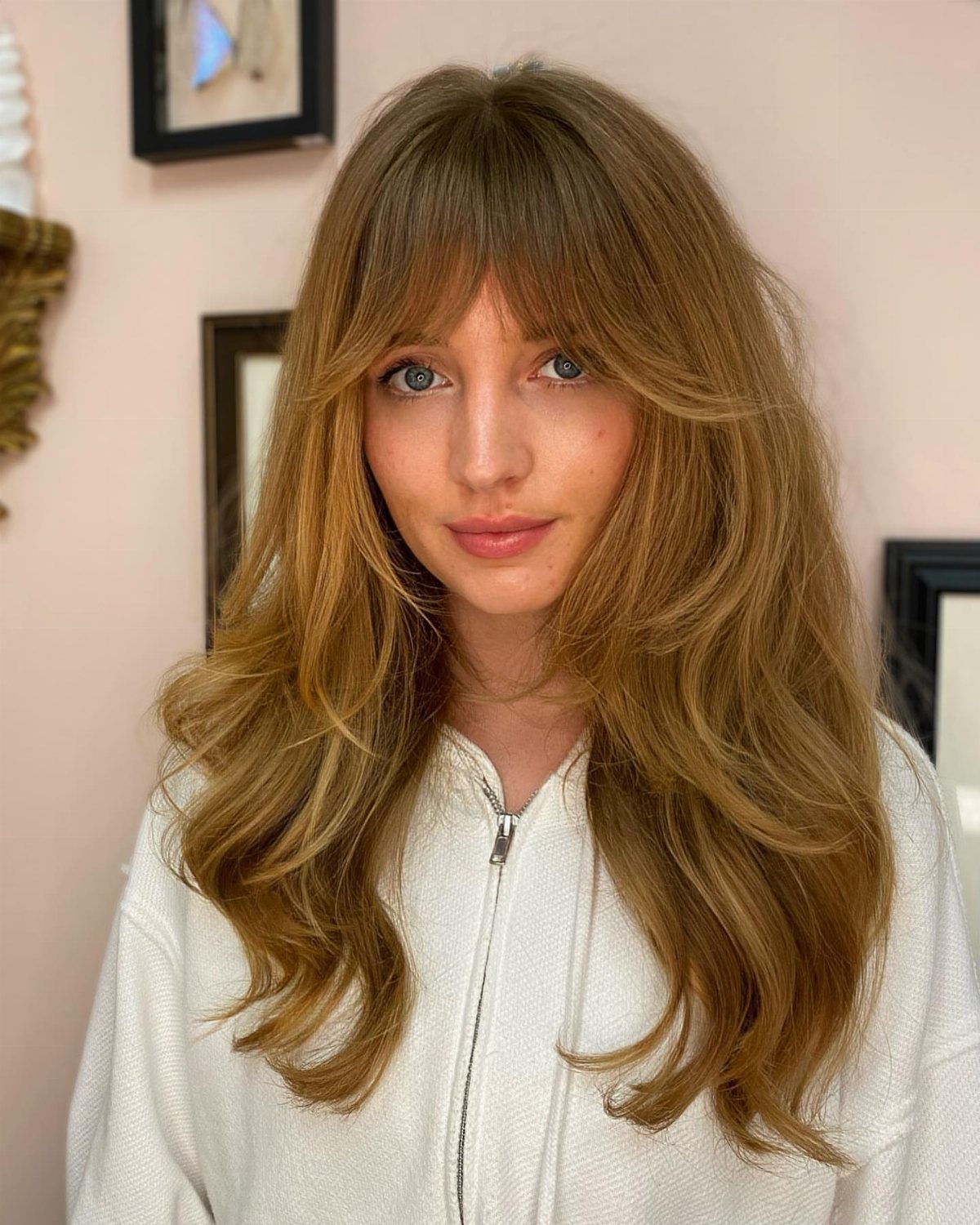
The bangs are left long enough to curve across the forehead in an arc rather than falling straight down.
A round brush pulled at an angle sets the swoop, which directs the hair to one side or keeps it centered with a soft bend.
Length gives the bangs enough weight to hold the curve without flipping up at the ends. If they’re cut too short, the swoop flattens out by midday.
Swoopy bangs suit oval and heart-shaped faces because the curve follows the natural width of the forehead.
17. Eyebrow-grazing Bangs
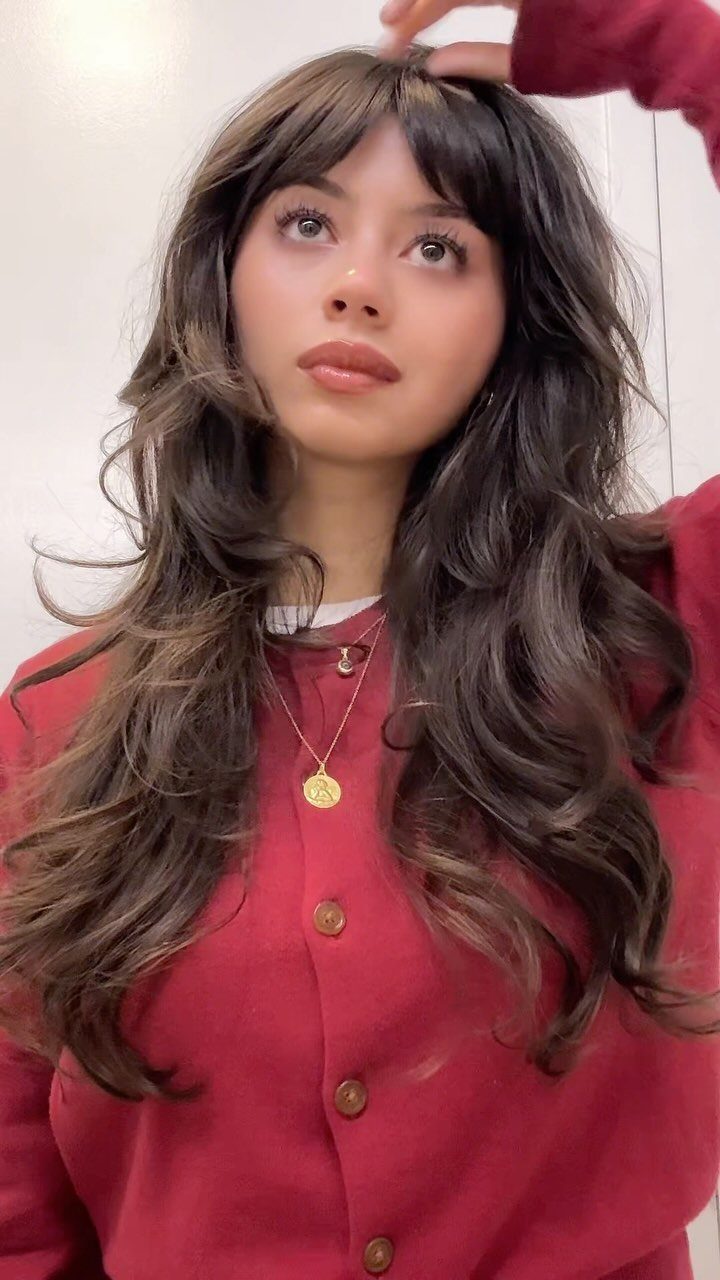
The fringe ends right at the brow line or sits just below it, which keeps your eyes visible without giving up the coverage bangs provide.
Eyebrow-grazing bangs suit most face shapes because the length doesn’t crowd your eyes or cut your forehead in half the way shorter blunt bangs can.
Growth is slow to show. An extra week or two doesn’t push them past a workable length.
18. Thin Blended Bangs
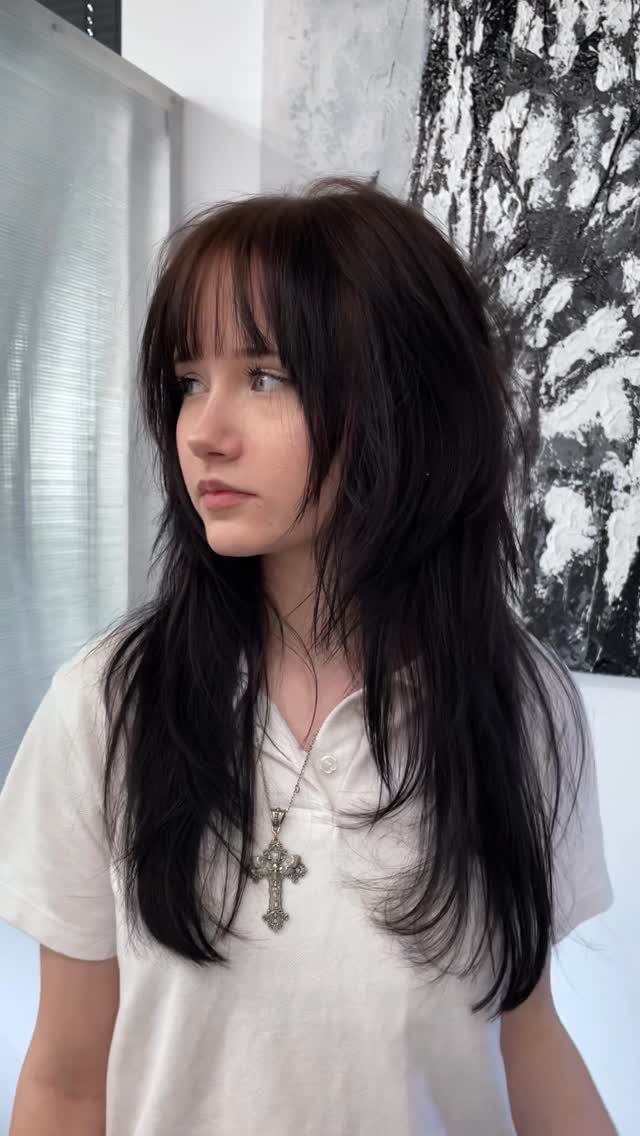
A sparse, finely textured fringe that blends into the rest of the hair without a visible line where the bangs stop. The section is cut shallow, so there’s less hair in the fringe itself, which keeps it light.
The blended edges also work if your hair is layered, since the bangs fade into the shortest layers around your face.
Styling takes little effort. Most mornings, a quick brush-through is enough.
19. French-girl Fringe
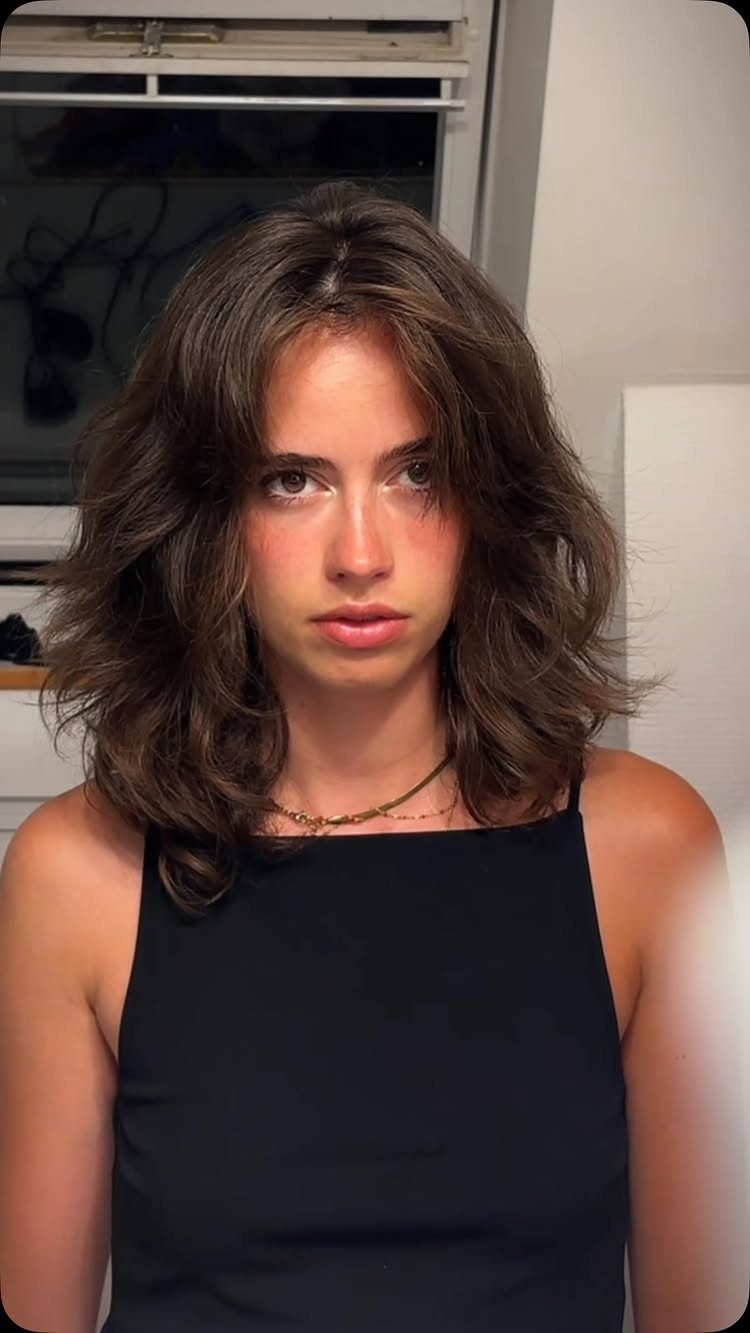
Soft, piecey bangs cut with enough texture that they fall naturally instead of needing a round brush every morning. The fringe sits loose and slightly separated, which keeps it from looking too polished or heavy.
The texture comes from point-cutting through the ends, so the bangs don’t hang as one solid block. If your hair has any wave, the fringe will pick it up and look more lived-in without extra effort.
French-girl bangs suit fine to medium hair because the lighter, broken-up line doesn’t demand much density. They also grow out without looking unkempt, since the uneven ends blur the line between trimmed and overdue.
Match Fringe to Hair Density
Natural hair fall and density affect how a reference fringe looks when you ask for it. A section cut too wide or taken too far back can poof or sit disconnected from the rest of the cut.
Thick hair needs the opposite. A shallow section leaves too much hair behind the fringe, which pushes it forward and makes it poof.
If your hair is thick, the fringe section should start further back to pull enough hair into the bangs without creating a shelf.
Connect Bangs to Long Lengths
A fringe can look separate from long hair if there is no transition between the short front and long lengths.
Long hair carries weight, so it drops straight from the root. Without anything between those two points, the outline turns into a frame: one flat line across the forehead, two long panels down the sides.
Request a few connector pieces that begin at the outer edge of the fringe and graduate in steps to cheekbone length, then jaw, before they reach the full length.
Layered long hair rarely needs added connectors because the top layer already bridges the gap.
Choose for Face Shape
Face shape determines whether a fringe style suits you or works against you.
Oval proportions allow more options because the dimensions already sit in balance. When your face is oval, texture and density matter more than shape.
Round faces look best with bangs that add length. Skip straight-across bangs that end at the brow, they emphasize horizontal width.
Frequently Asked Questions
What bangs look best with long hair?
Curtain bangs are the most flexible first choice because they part at the center, open up the face, and grow out without looking unkempt.
Blunt bangs work if you have thick hair and want a strong graphic line, wispy bangs suit fine hair or uneven hairlines, and side-swept bangs add asymmetry that flatters round or square faces.
Curly and Birkin bangs each need enough density to hold their shape.
Do bangs make an older woman look younger or older?
They cover forehead lines, frame the eyes, and shift the face’s proportions in ways that read as fresher without touching length.
What is a long layered haircut with bangs?
The layers are cut at different heights to create texture and remove weight, and the fringe falls across the forehead to frame the face.
The layers keep long hair from pulling flat under its own weight and give the bangs somewhere to blend into, so the fringe looks like part of the cut instead of something added on.
Should I get bangs?
Pick curtain bangs if this is your first fringe, since they part at the center, grow out forgivingly, and suit most face shapes.
Blunt bangs need an oval or long face and signal commitment, but side-swept or wispy styles grow out without drama if you regret them.
Ask your stylist to leave the outer edges longer so they taper into the layers around your face instead of stopping abruptly.
Are bangs in or out for 2026?
Curtain bangs, Bardot-inspired cuts, and face-framing layers paired with long lengths are trending in 2026.