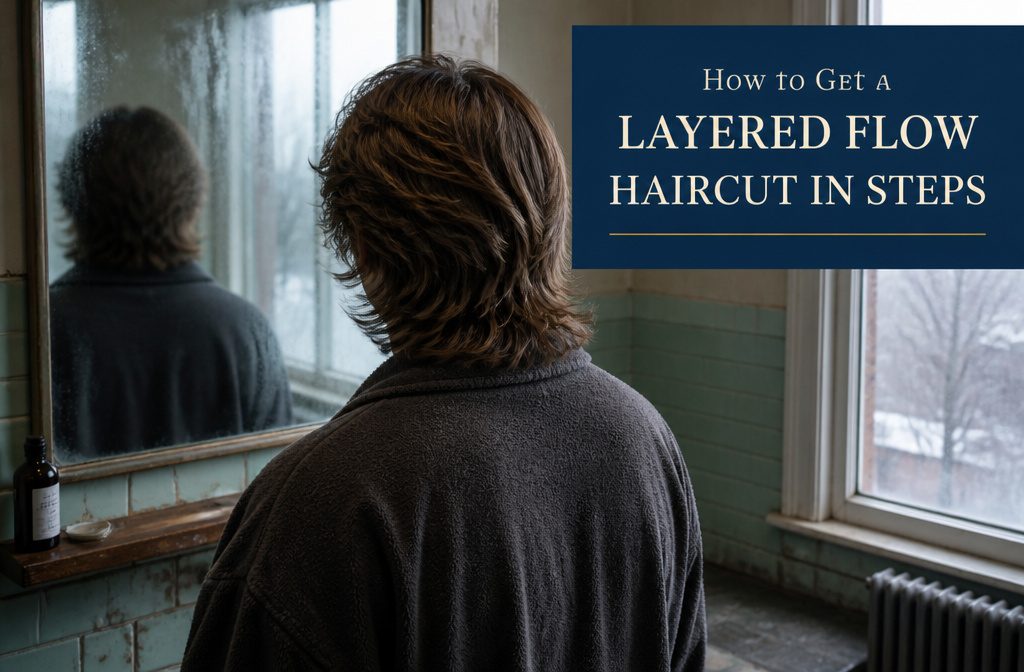
A layered flow haircut gives you swept-back, feathered movement instead of one blunt length, but the shape takes months to reach and collapses if you cut it back during the awkward middle stage.
Most people trim too soon: the top needs to hit 3 inches before you stop buzzing the sides, then everything grows together until the longest layers reach your ears.
1. Grow the Length
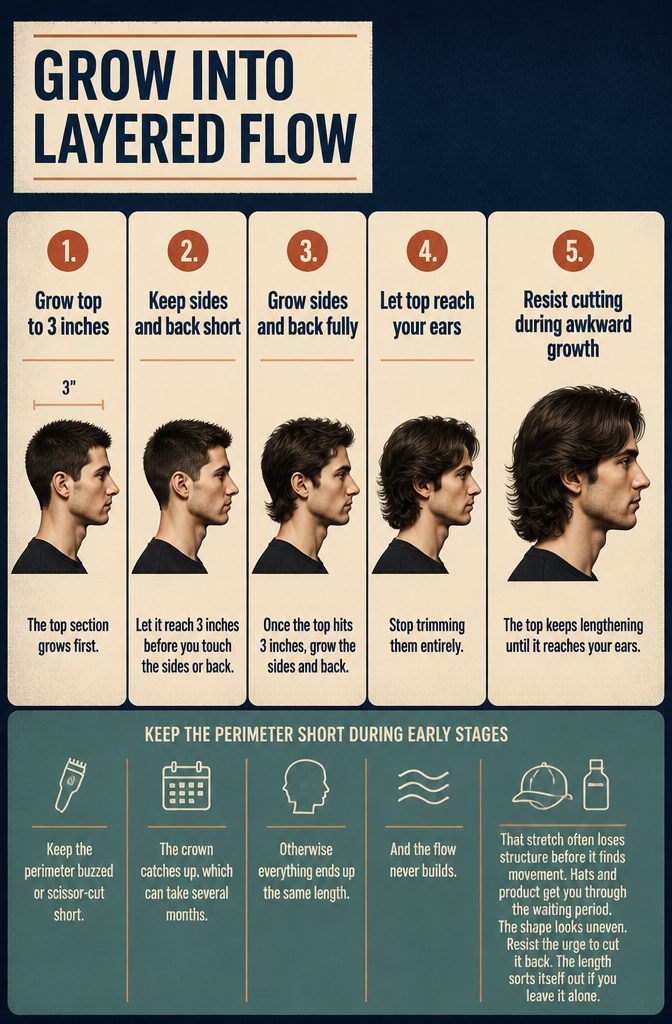
The top section grows first. Let it reach 3 inches before you touch the sides or back, otherwise everything ends up the same length and the flow never builds.
Keep the perimeter buzzed or scissor-cut short while the crown catches up, which can take several months depending on where you’re starting.
Once the top hits 3 inches, grow the sides and back. Stop trimming them entirely at that point.
The top keeps lengthening until it reaches your ears, the threshold where flow actually reads as flow rather than an awkward middle stage. That stretch often loses structure before it finds movement, and the shape looks uneven.
Resist the urge to cut it back. Hats and product get you through the waiting period, and the length sorts itself out if you leave it alone.
2. Choose the Layer Shape
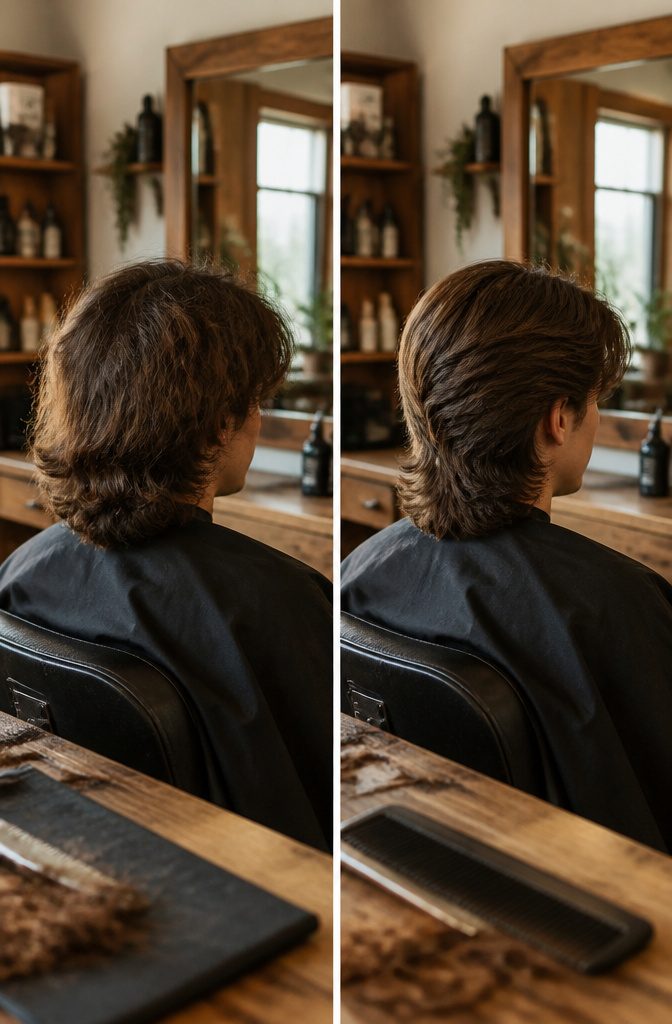
A layered flow haircut works because the barber layers the top, sides and back instead of cutting everything to one blunt length.
That removes weight, which is what keeps the cut from looking heavy or shapeless, and it leaves you with pieces that sweep back and look feathered.
Soft layers do this without costing much length, so they suit anyone who wants movement but not a big chop.
Then pick a finish. Choppy, undone layers give the messier flow; blended layers give the sleeker, more sculpted one.
For most people I’d start with blended, since it’s easier to rough up with texture later than to smooth out a cut that was left choppy.
You’ll also see this cut called European flow or hockey hair. Search either name and you’ll find short, medium, long, curly and wavy versions to save.
3. Tell the Stylist What to Keep
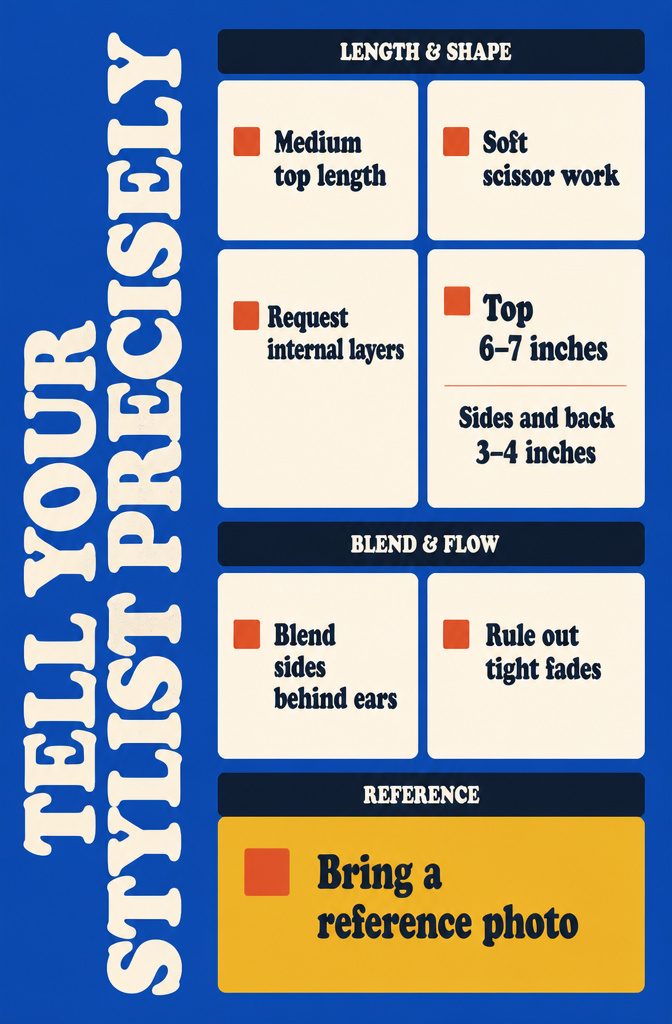
Bring these points to the chair, in this order:
- Ask for medium length on top with soft scissor work, so the weight stays and the layers move.
- Request internal layers. They add movement without chopping the shape into steps.
- Give numbers: top about 6–7 inches, sides and back about 3–4 inches. Seven inches is roughly long enough to reach the end of your nose when you pull a lock straight down.
- Say you want the sides blended into the longer top layers, and long enough to tuck behind your ears.
- Rule out tight fades and disconnected sides. Either one breaks the line that makes this cut look cohesive.
- Bring a reference photo. Words like "layered" mean different things to different people, and a picture settles it.
4. Style for Natural Movement
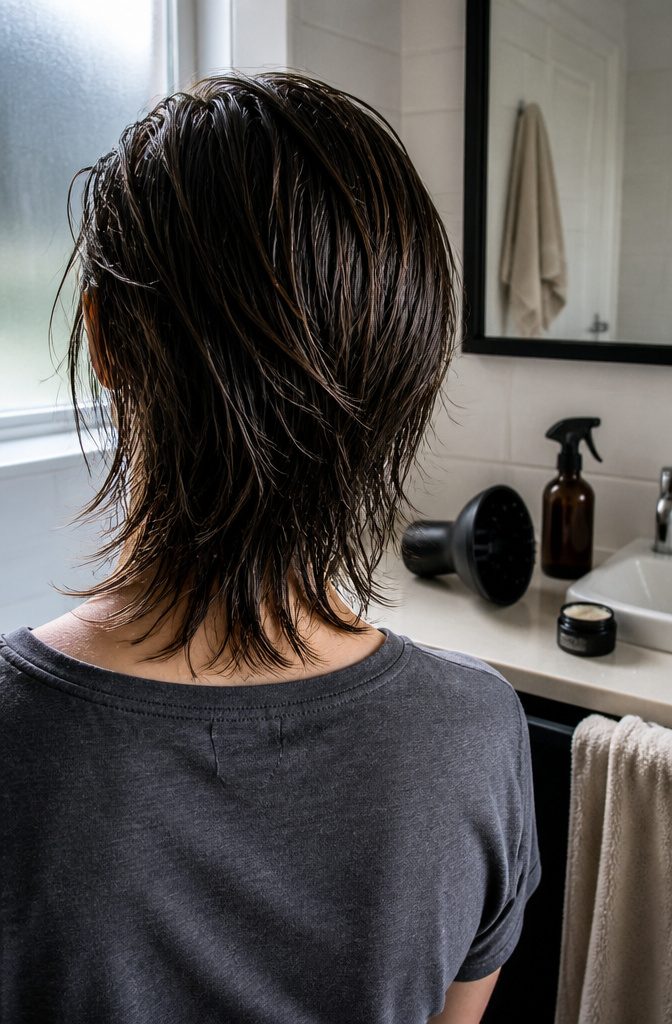
Work with damp hair straight out of the shower, brushing or combing it back and off your face to encourage the natural direction the cut already wants to take.
You can use your hands instead of a brush if you prefer a looser finish. Let it air-dry if time allows, or use a diffuser on low heat to keep the movement without flattening the layers.
For polish and soft control, a forming cream like Daimon Barber’s Forming Cream gives shape without stiffness.
If you want a more lived-in look, reach for a texturizing spray or sea salt spray instead. Daimon Barber’s Texture Tonic adds grit and separation on damp or dry hair, keeping the ends from clumping.
A hat worn while the hair is still damp will flip the ends out into subtle wings if that’s the look you’re after.
5. Maintain the Shape
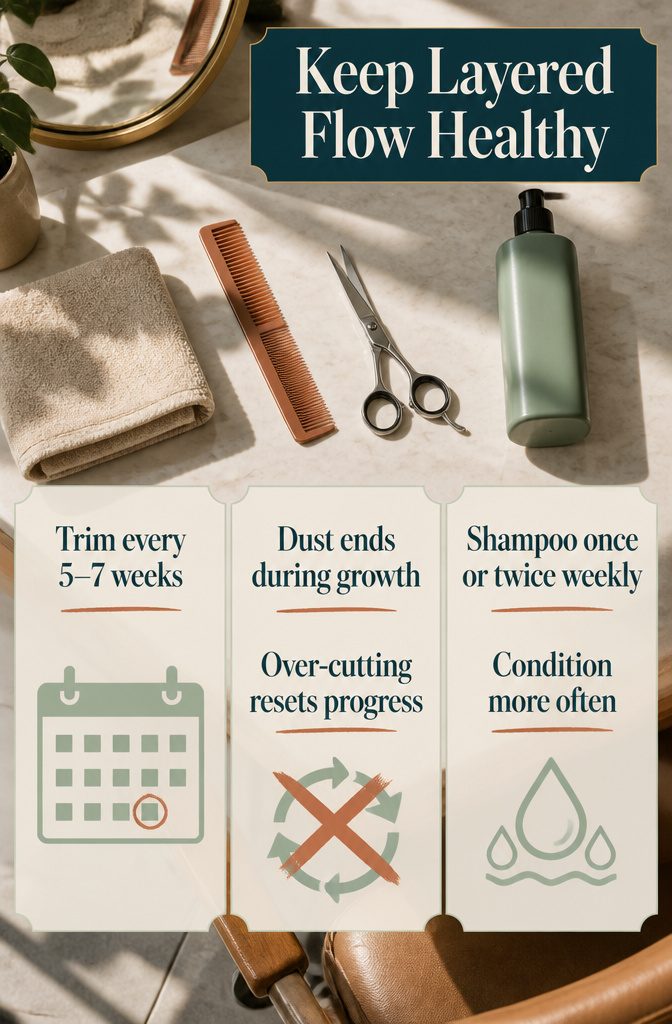
Book a trim every 5–7 weeks. That is the interval for medium layers, and it’s the one I’d pick because it’s tight enough to hold the shape and loose enough that you aren’t in the chair every month.
Shorter lengths want 3–5 weeks, and long hair can stretch to 6–10. A deliberately messy cut can go longer; a structured one can’t.
Growing out is different.
Once the hair hits medium length it loses structure before it finds flow, and over-cutting in that awkward stage is the mistake that resets everything. Ask for a light dusting of the ends only.
Shampoo once or twice a week, condition more often. Healthy hair moves better and takes shaping more easily.
Layers and Natural Texture

Layers cut at different lengths to create movement, texture and shape, and the flow cut leans on that to look relaxed and naturally moving rather than styled.
Stylists describe layering as weight removal, which is why the hair can sweep back in feathered pieces instead of sitting as one heavy block.
Length decides the version. A short flow runs about 2–3 inches on top, a medium flow about 3–5 inches, and a long flow has its longest layers below the chin or down to the shoulders.
In every version the top stays longer than the back and sides.
I’d start with medium if you’re unsure: it moves more than short and asks for less patience than long. Wavy hair gets the most from it, since the texture does half the work.
Hair Type and Face Shape
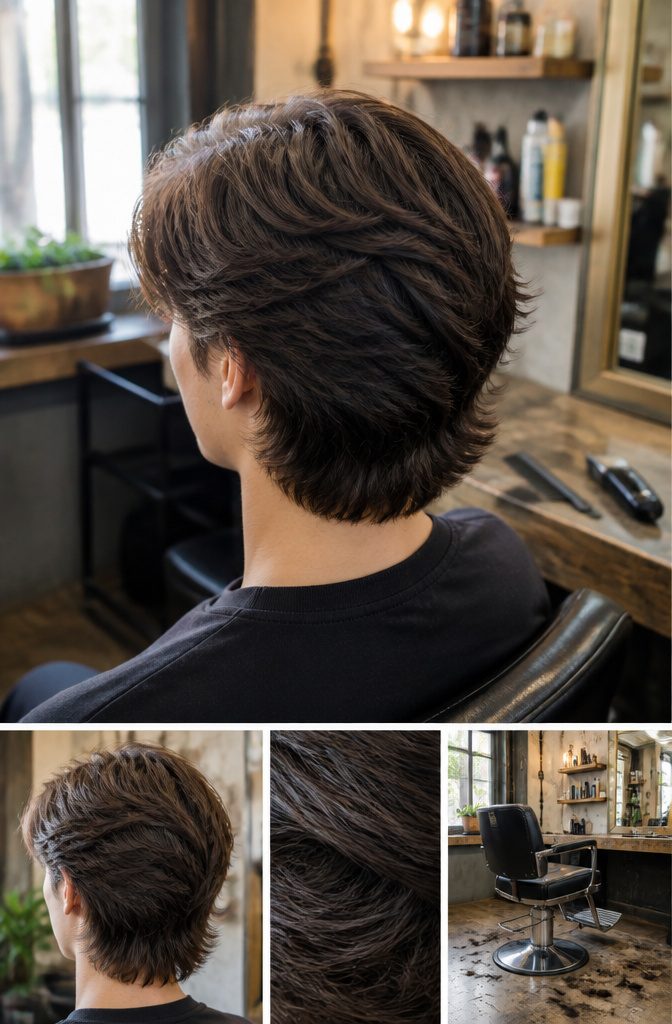
Wavy hair gives the strongest version of this cut. Go slightly longer with the layers so the waves can form on their own and fall away from the face.
Straight hair needs the opposite push: soft, layered ends, shaping around the jawline, and a texturizing product or hairspray for hold, or it reads flat.
Fine hair wants lightweight products and layers that add movement, not weight, because too many layers make it look thinner. Thick hair is where layers earn their keep, since removing weight makes it manageable, but heavy thinning wrecks the shape.
Oval and square faces suit the cut most naturally. Round, diamond and heart faces can wear it too; the layers just need adjusting.
Variations Worth Saving
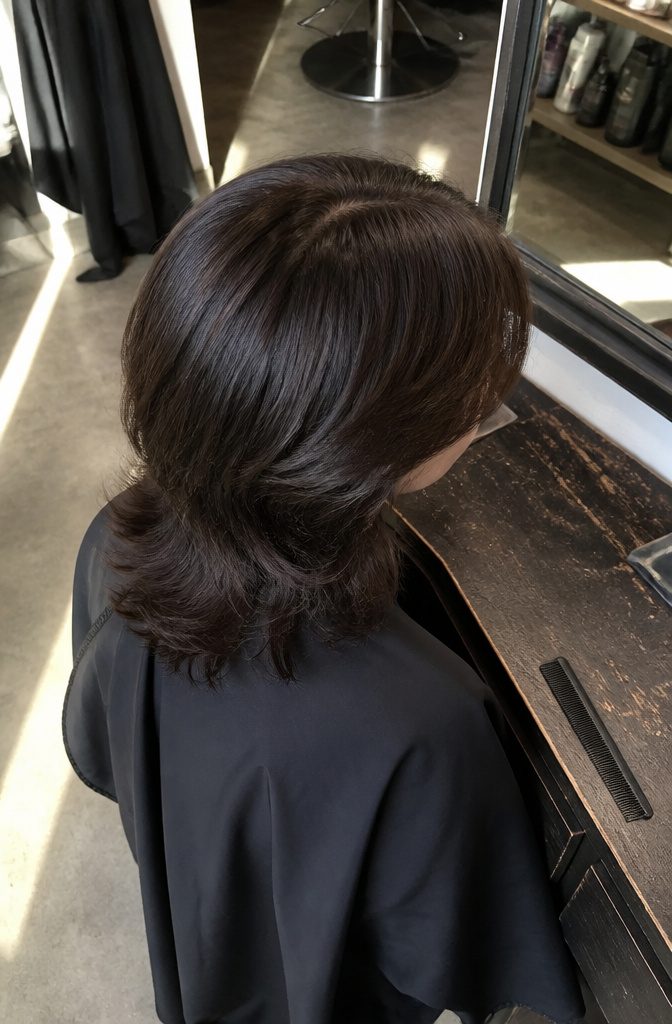
Pick the version by length and finish, then save the photo that matches.
- Short: the top runs only 2–3 inches, still layered and blended. Good if you want the movement without committing.
- Medium and long: medium is 4–5 inches on top; long means layers past the chin or down to the shoulders.
- Wavy: I’d call it the easiest start, since natural waves do the tousled work for you.
- Curly: volume comes built in, so keep the neckline and sides tapered for structure.
- Curtain (parted): a middle part lets face-framing layers fall like curtains.
- Messy: looser structure, built for casual styling.
- Tapered: cleaner sides and neckline, a polished look instead of a relaxed one.
- Low-maintenance: simple layers and a relaxed finish, kept up with regular trims.
- Athletic: medium length that stays manageable on active days.
Frequently Asked Questions
What is a layered flow haircut?
A layered flow haircut is a men’s style cut at different lengths to create movement and texture, with the top staying longer than the sides and back.
The layers remove weight so the hair sweeps back in feathered pieces instead of sitting as one heavy block. It works across hair types when the layers and styling are adapted to the texture.
How do I ask my barber for a layered flow haircut?
Ask for medium length on top with soft scissor work and internal layers, giving specific numbers: top about 6–7 inches, sides and back about 3–4 inches.
Request blended sides long enough to tuck behind your ears, and bring a reference photo since words like "layered" mean different things to different people.
What does layered hair look like for men?
Layered hair for men shows different lengths cut throughout to create movement, shape and texture rather than one blunt length.
In a flow cut the layers fall backward in feathered pieces, with the top longer than the sides and back. The cut looks relaxed and naturally moving instead of heavily styled.
What are the best hair products for a flow hairstyle?
Forming cream like Daimon Barber’s Forming Cream gives shape without stiffness for polish and soft control.
For a more lived-in look, use texturizing spray or sea salt spray like Daimon Barber’s Texture Tonic to add grit and separation on damp or dry hair.





