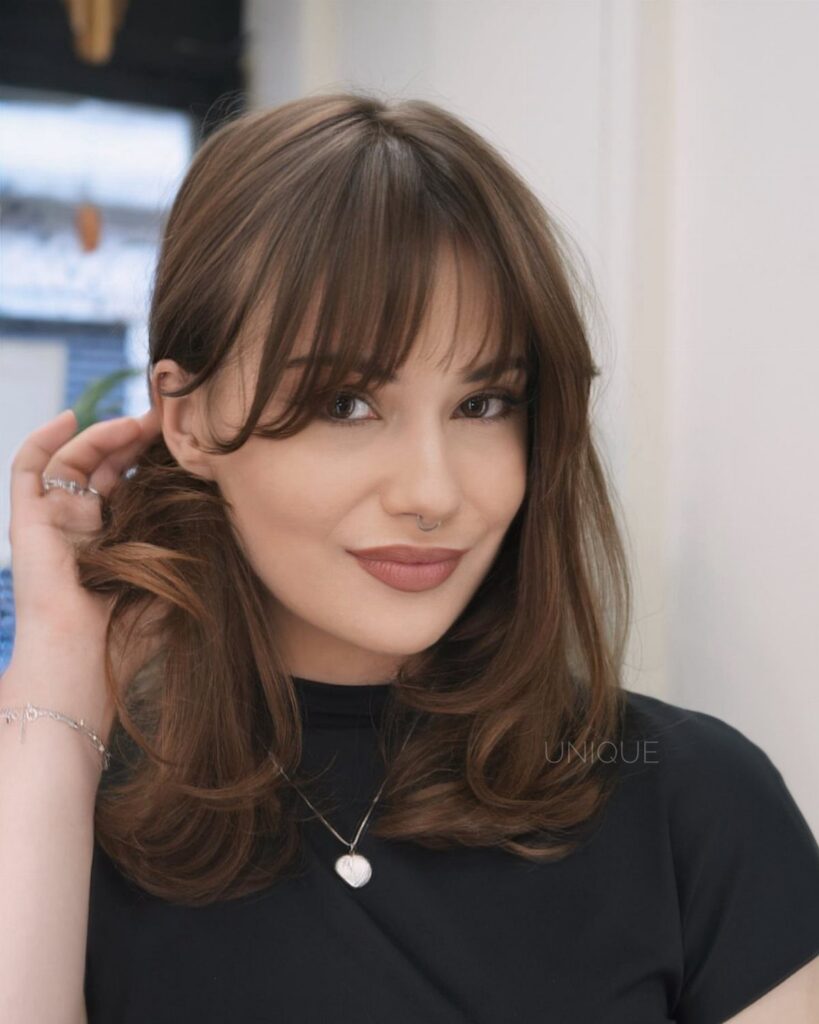
The bang you pick depends mostly on how much daily styling and trimming you will actually put up with, because the range runs from curtain bangs that blend into longer hair as they grow out to blunt fringes that show every inch of growth.
V-shaped bangs and short fringes sit at the demanding end, while side-swept and middle-parted long styles forgive a slow grow-out.
1. Short Bangs
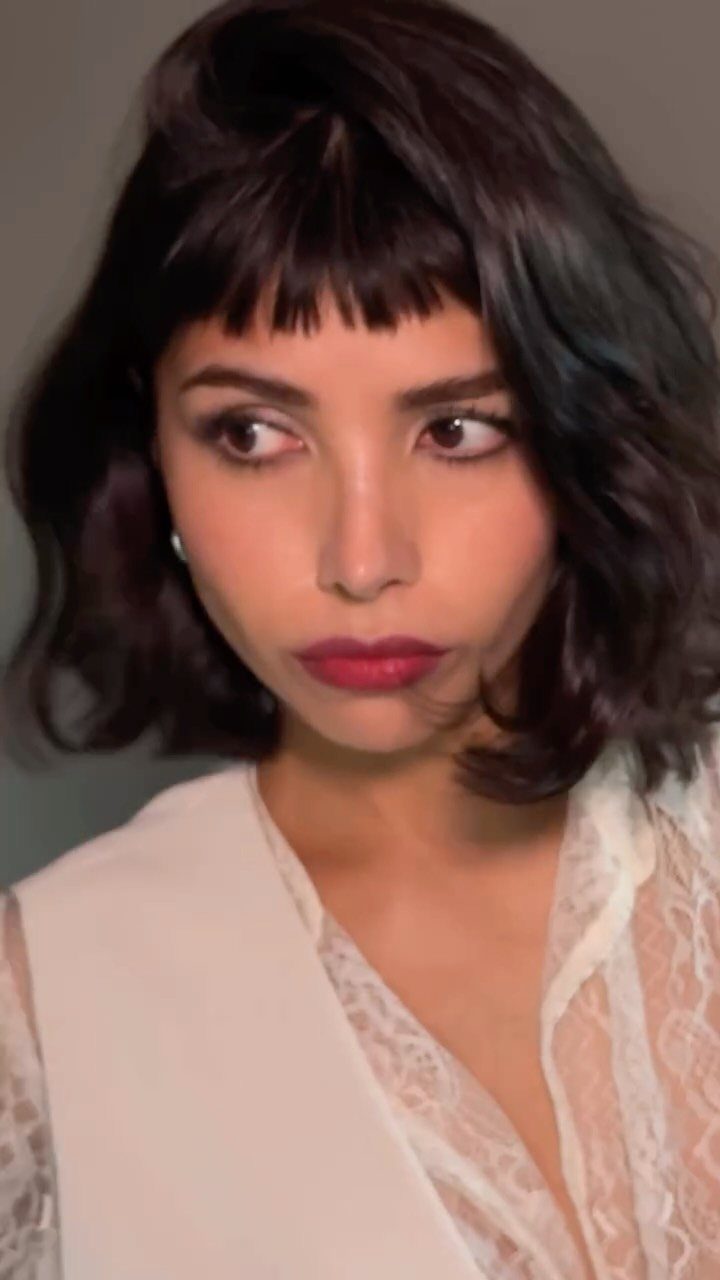
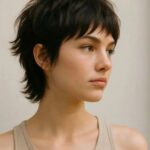
Ending well above the eyebrows, short bangs sit closer to a statement than a softener. Straight and tidy reads severe, so I like the messy version: texture and a little unevenness make the length feel chosen.
Cut this short, they leave no room for error. Go to a stylist for the first one, and ask for the length by pointing to a spot on your forehead.
Wavy hair shrinks as it dries, so ask for the cut on dry hair, or leave extra length.
“You can rough-dry with a hairdryer (no nozzle) and, using your hands, stretch the right side diagonally toward the left eyebrow and the left side toward the right eyebrow—this will enhance the shape of the bangs.”
— ELLE
2. Curtain Bangs
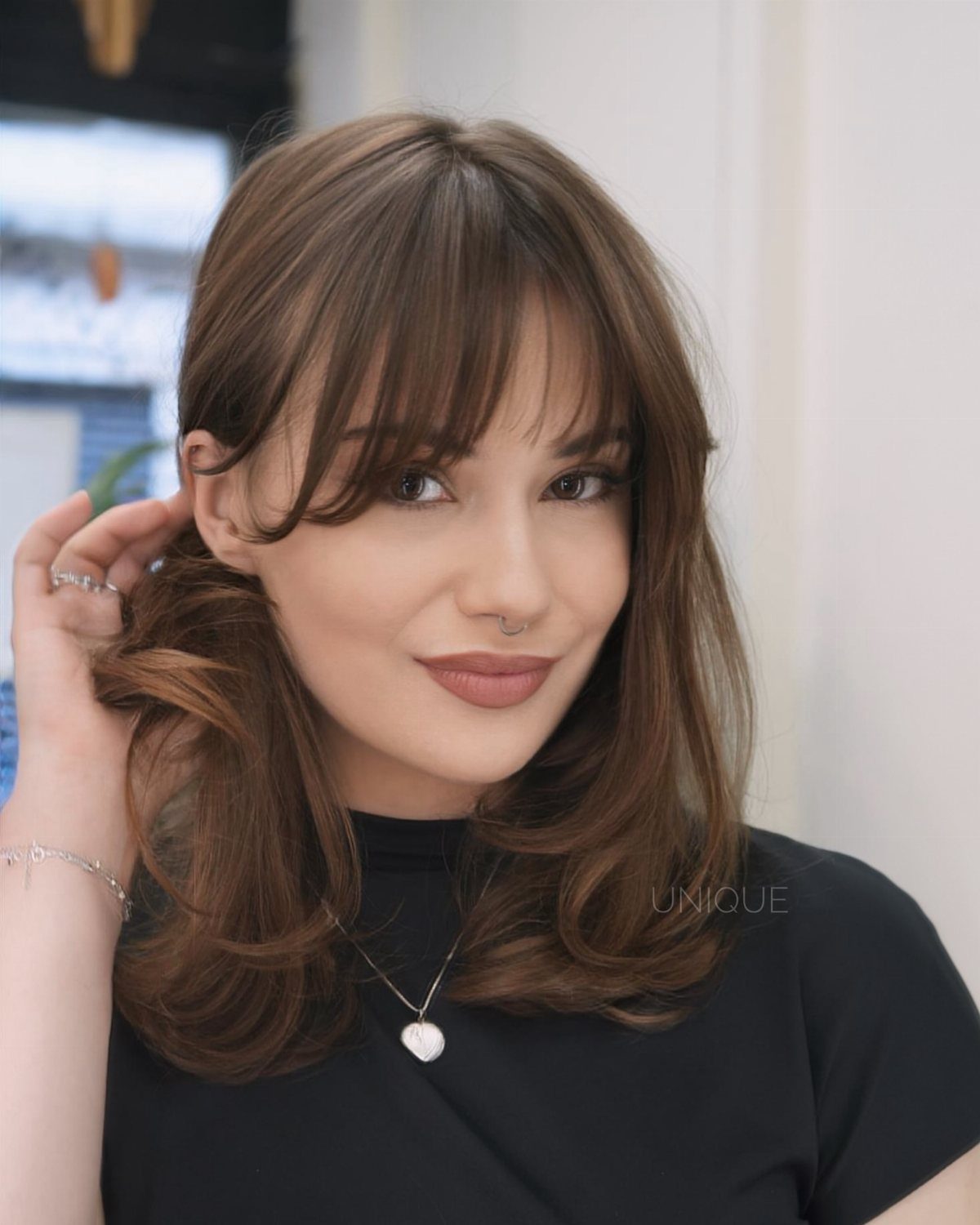
A center or slightly off-center part is the whole design here: the fringe splits and falls away to each side, leaving soft edges around the face.
Curtain bangs are the easiest bangs to grow out, since the sides blend into the longer hair instead of leaving a hard line. On long hair it is my first pick for a first fringe.
Ask for the part to be cut in at the middle, then style it with a round brush as it dries.
3. Side-Swept Bangs
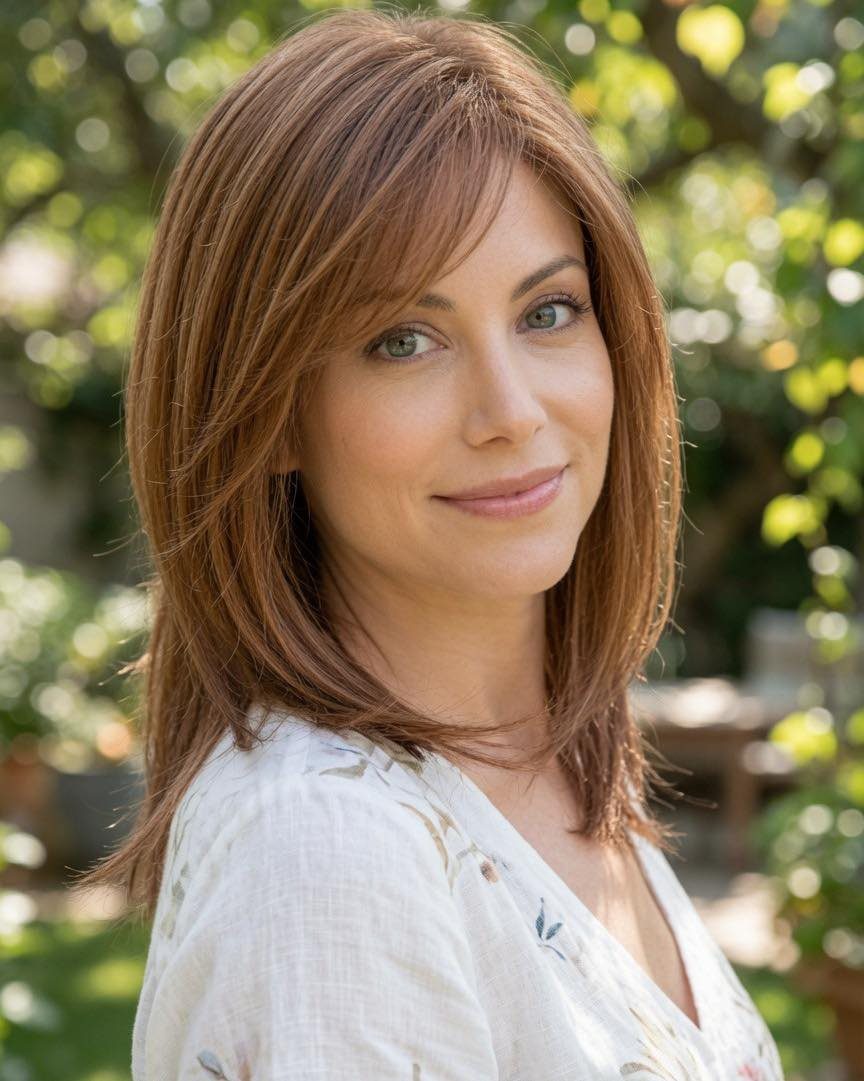
Angled and brushed across to one side, side-swept bangs skip the straight line altogether. That makes them forgiving, since nothing has to sit perfectly level.
I would choose this if you want bangs but dread the daily upkeep of a heavy fringe. The long end tucks behind the ear when it gets annoying, and that is a real advantage during grow-out.
Part your hair on the side you want the fringe to fall toward, and the cut will follow.
4. Wispy Bangs
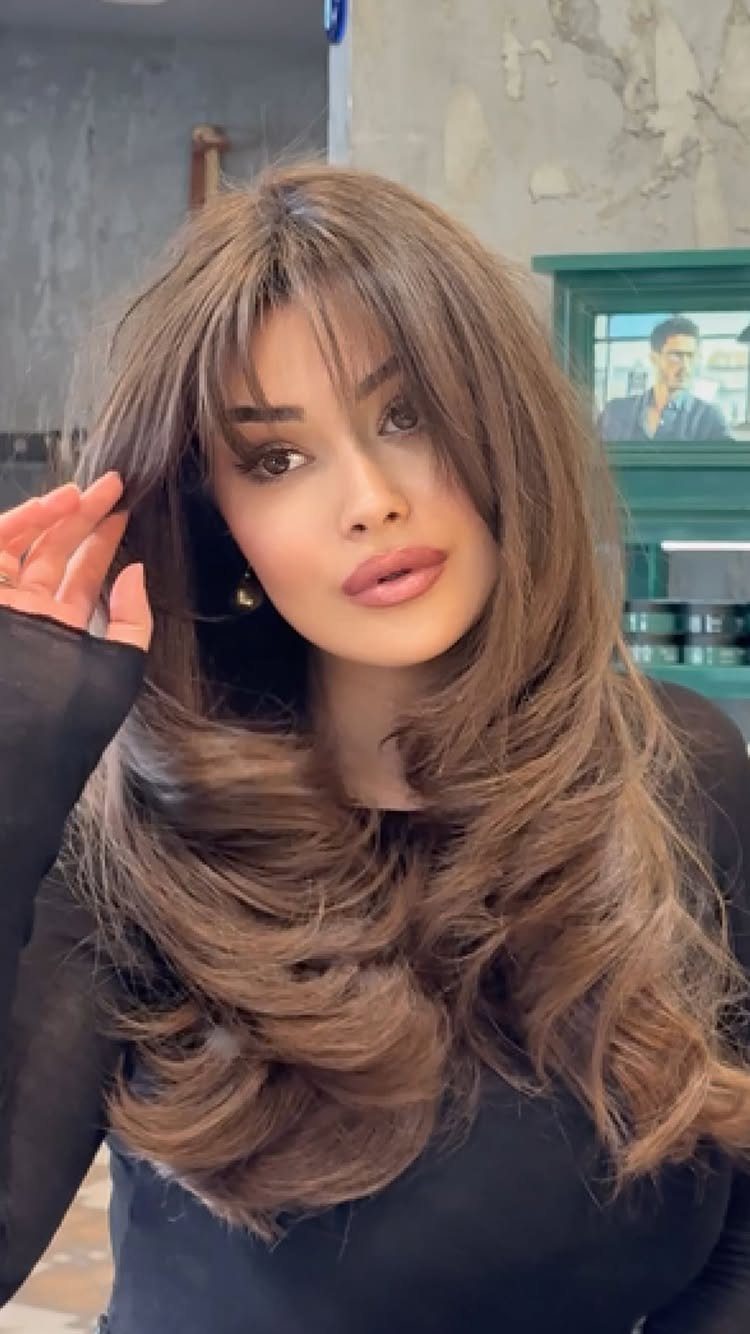
Wispy bangs are thinned out on purpose, so strands separate and skin shows through. The result is light and a little see-through, never a solid curtain of hair.
This suits anyone who wants a fringe without the weight of one. Wispy bangs sit well over long layers, where the shorter pieces fall into the length around them.
The trade-off: a fringe this fine shows oil quickly, and I would rather wash just the bangs in the sink than the whole head. Ask your stylist to texturize rather than cut thick.
5. Blunt Bangs
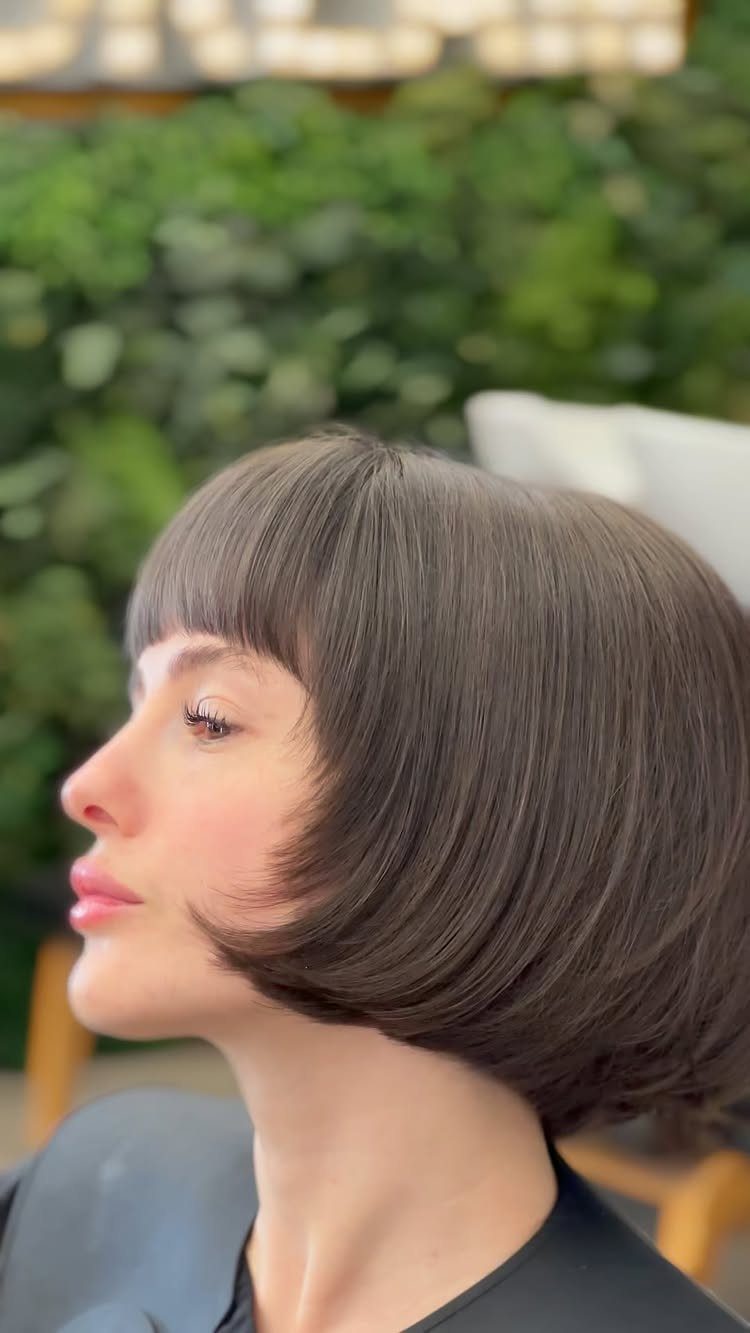
Dense and cut straight across, blunt bangs make the boldest line of any fringe. Paired with a bob, as here, the effect is graphic and sharp.
I love the look, but it demands honesty about upkeep. A hard edge shows every inch of growth, so plan on frequent trims to keep it crisp.
Straight hair wears it best. Blow-dry with a small round brush, pulling the bangs down, to keep them smooth and flat.
6. Curly Bangs
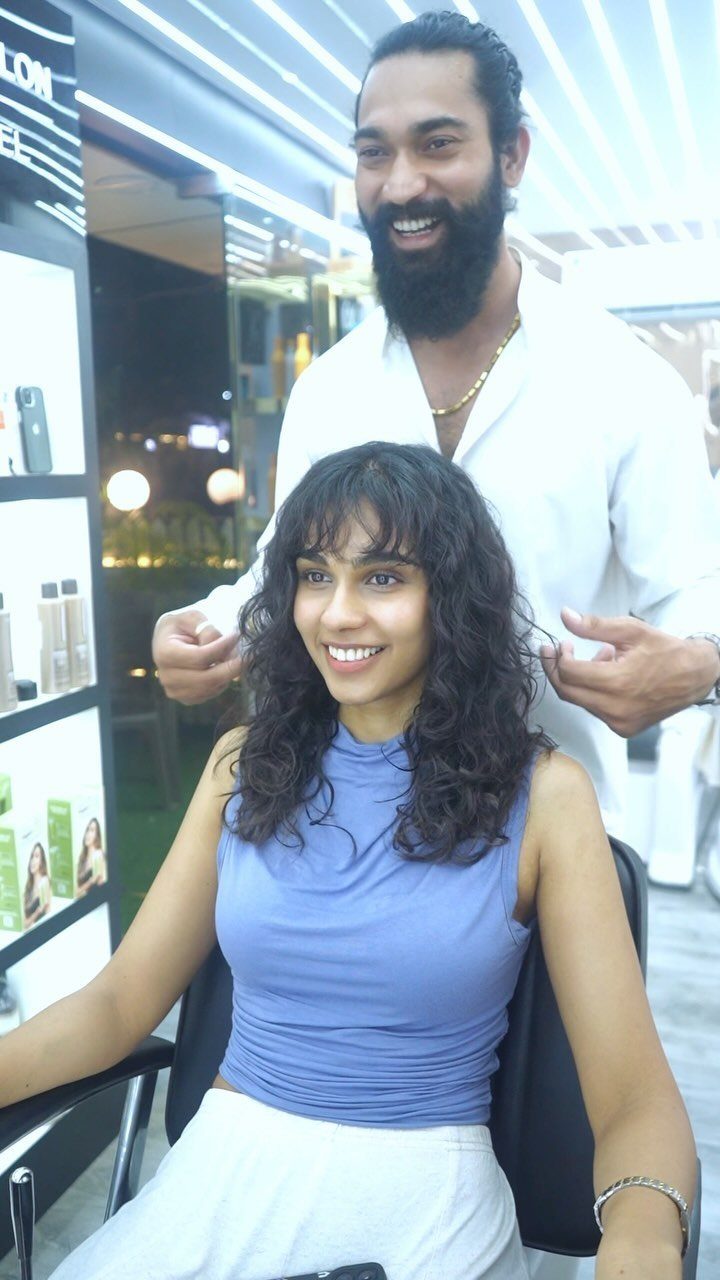
Cut to work with the curl rather than flatten it, curly bangs keep the natural pattern front and center. Spirals bounce up as they dry, so the fringe sits shorter than it did in the chair.
My advice is to have it cut dry, curl by curl, and to leave the length generous. Let the bangs air-dry or diffuse, and avoid touching them while they set, or frizz follows.
A fringe that follows the natural curl pattern of the rest of the hair almost always looks best.
7. Long Bangs
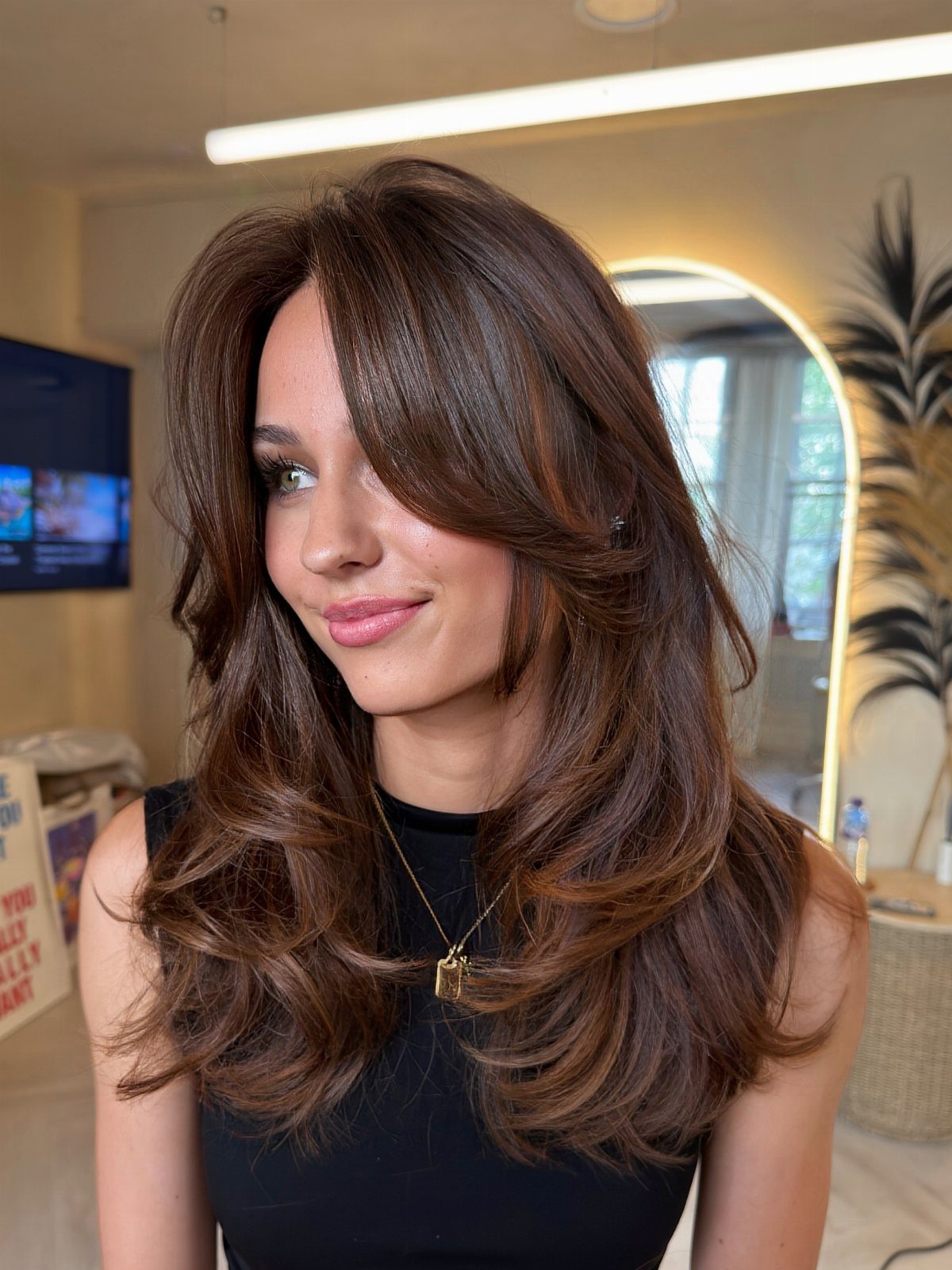
Long bangs reach past the cheekbones, which means they never have to stay in the front. Tucked back, they join a ponytail or an updo, and a few loose pieces around the face stay soft instead of looking stranded.
If commitment scares you off, this gives you the look without the risk of an extended awkward phase. Ask for the length to land around the cheekbone, then adjust it later.
Wear them down on busy mornings, pinned up on others.
8. Feathered Bangs
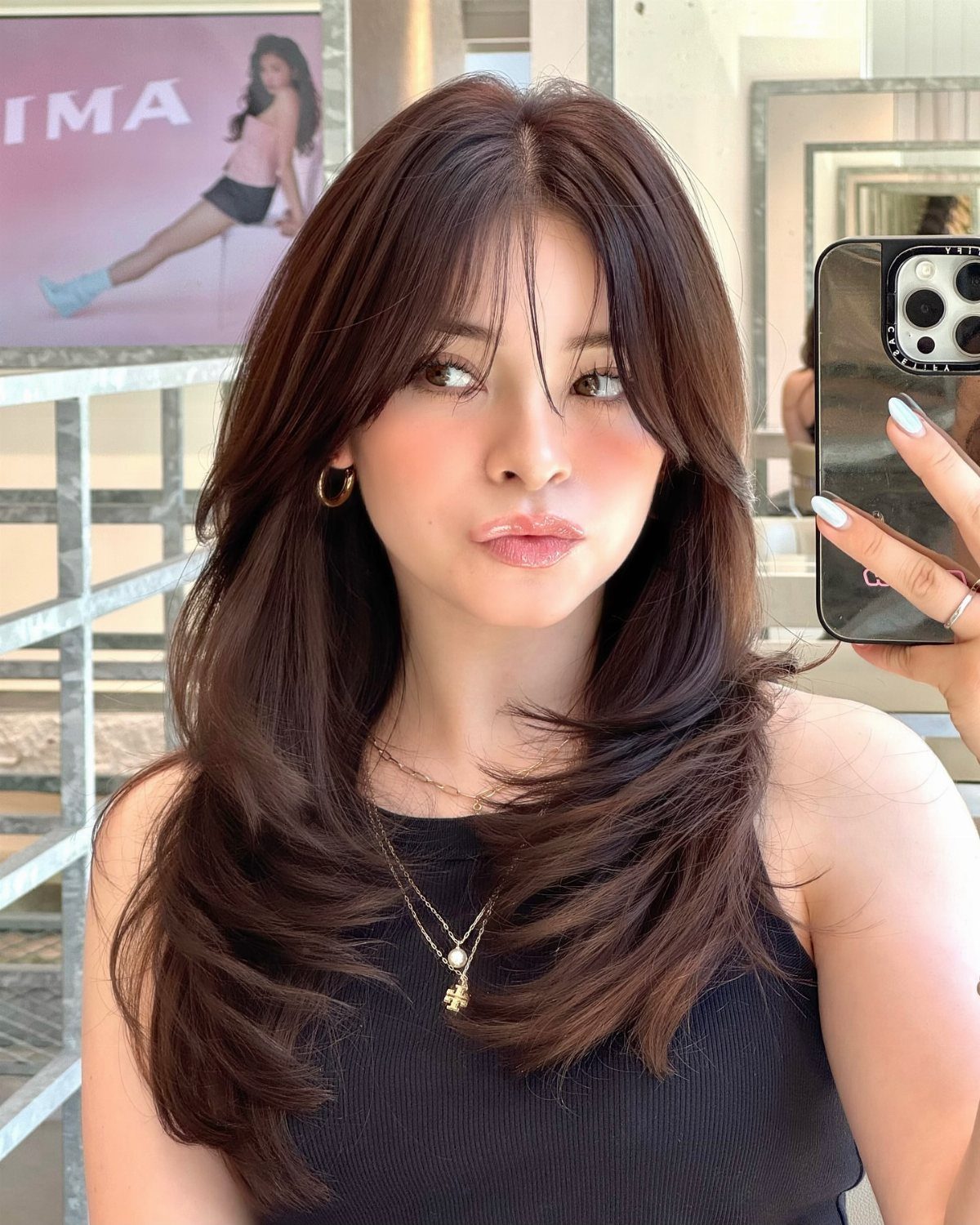
Feathered bangs taper at the ends, so the fringe finishes in thin, piecey tips instead of one hard edge. On long hair this reads soft and a little retro.
The taper matters: longer ends that thin gradually instead of stopping short and blunt. You’ll need a round brush and a dryer, flipping the ends out slightly as you roll through each section.
I prefer them with layers through the rest of the length, so the fringe doesn’t look like a separate piece.
9. Bob with Bangs
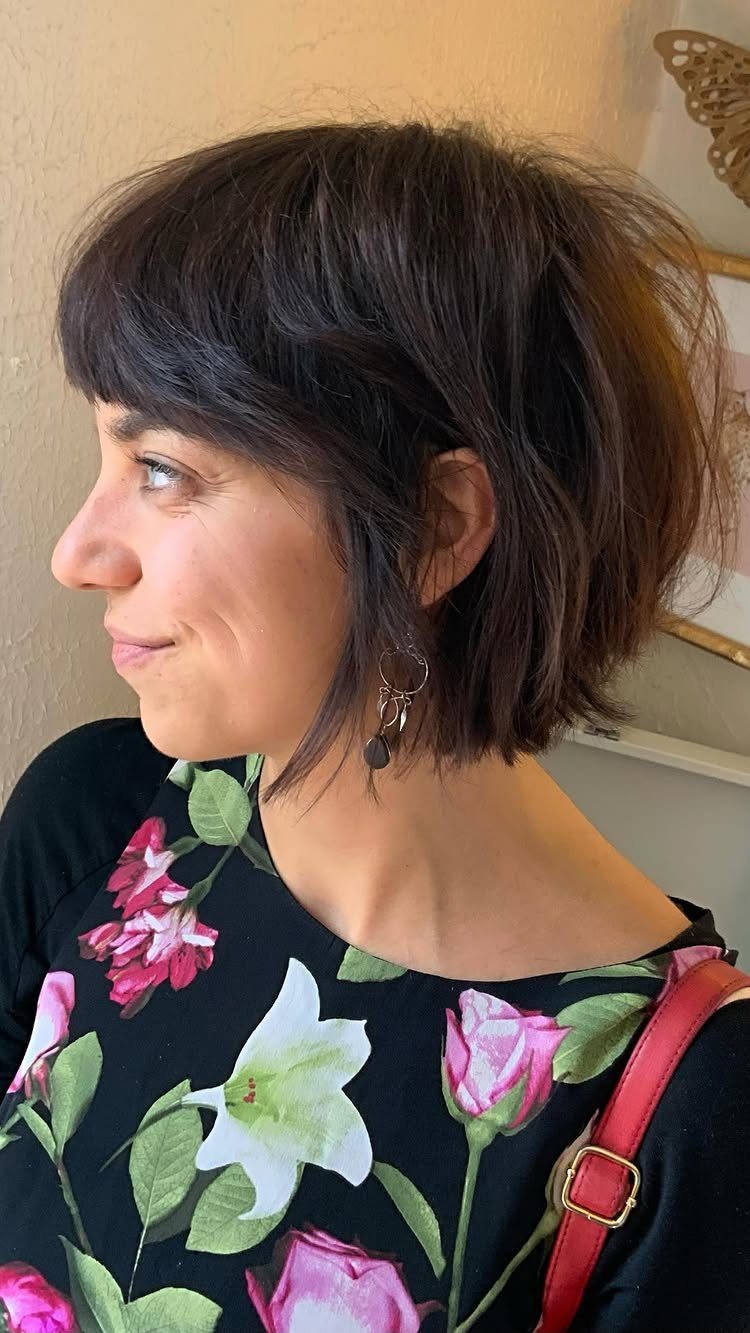
A bob with bangs is a pairing, and the fringe you pick changes the whole mood. Blunt looks sharp, wispy looks lighter, and a face-framing version blends into the sides.
For a chin-length cut like this one, I would choose a full fringe if your hair is dense and straight enough to hold it. Tell your stylist which of the three you want before the first snip.
Both pieces need regular trims to keep the shape.
10. Layered Bangs
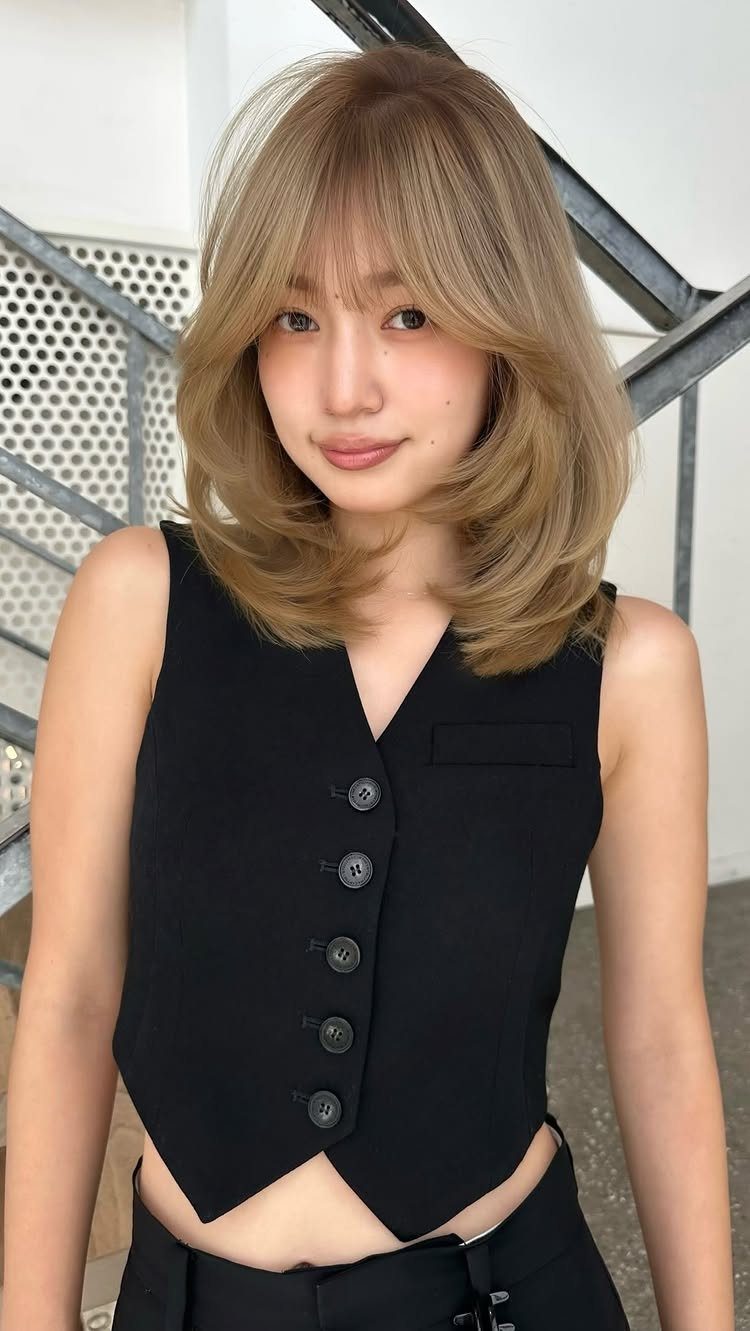
Layered bangs mix several lengths within the fringe itself, so the front has texture and shape instead of one flat line. The shorter pieces open up the face while the longer ones sweep toward the sides.
Ask for the fringe to be layered into the face-framing pieces, not cut separately. Layers at shoulder length depend on that gradual transition from fringe to the longest pieces.
I like this on fine hair, since the varied lengths add movement without extra weight.
11. Shaggy Bangs
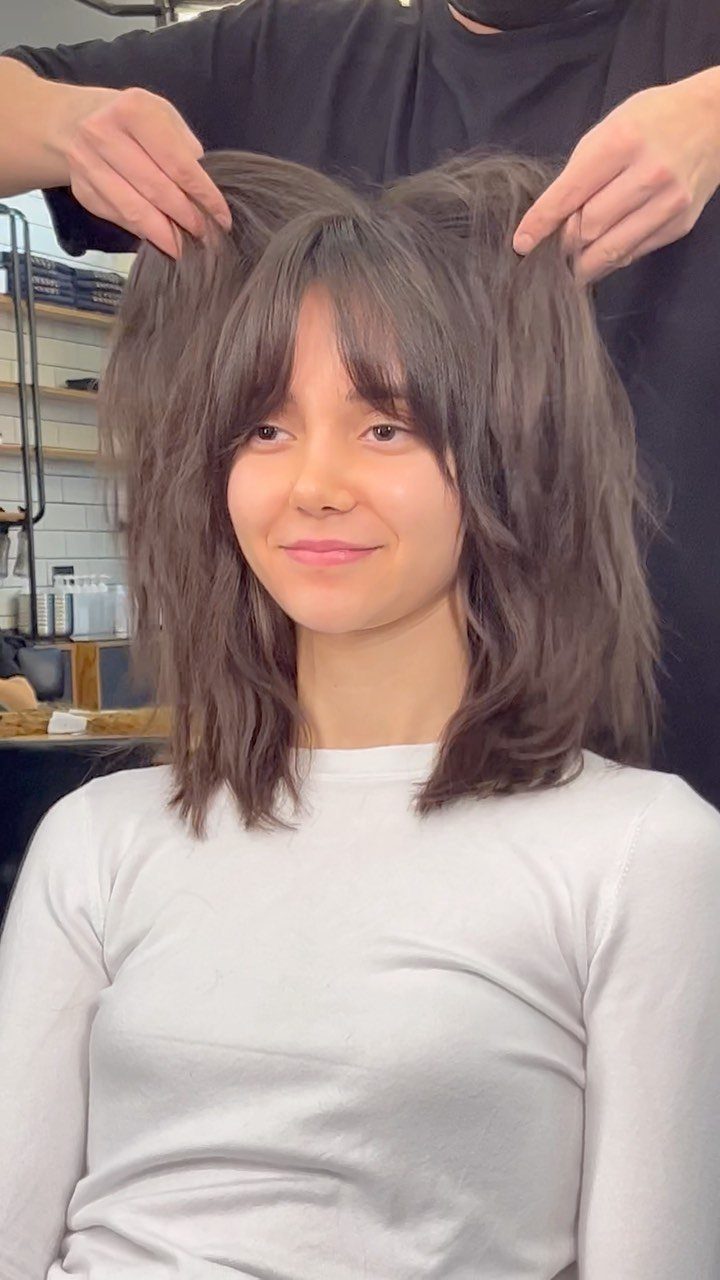
Messy on purpose, shaggy bangs use uneven lengths and texture to give a relaxed fringe that looks slept-in. Perfect neatness works against it.
Ask your stylist to cut it with texture, not a straight line, and to blend it into the shag layers. Skip the brush and work through with your fingers and a dime-size amount of paste or cream.
I would pick this if you dislike fussing: a rumpled morning is the whole look.
12. V-Shaped Bangs
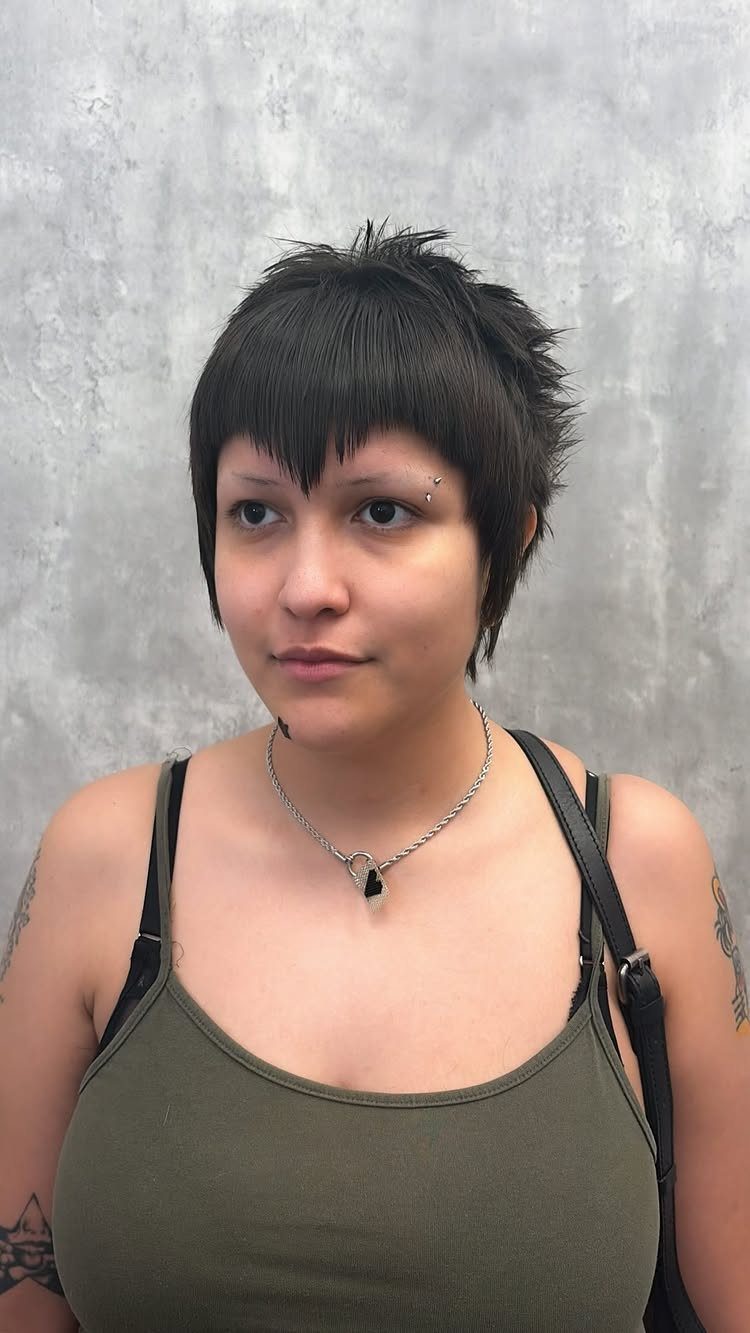
V-shaped bangs come to a point at the center, with the sides sweeping up and away. On short dark hair the shape reads graphic and deliberate.
This is a cut for a stylist, since the point has to sit centered on your face. Bring a photo and ask where the tip will land.
The pointed center grows out in a noticeable way, so I would book frequent trims to keep the V from going soft.
13. Bowl-Cut Bangs
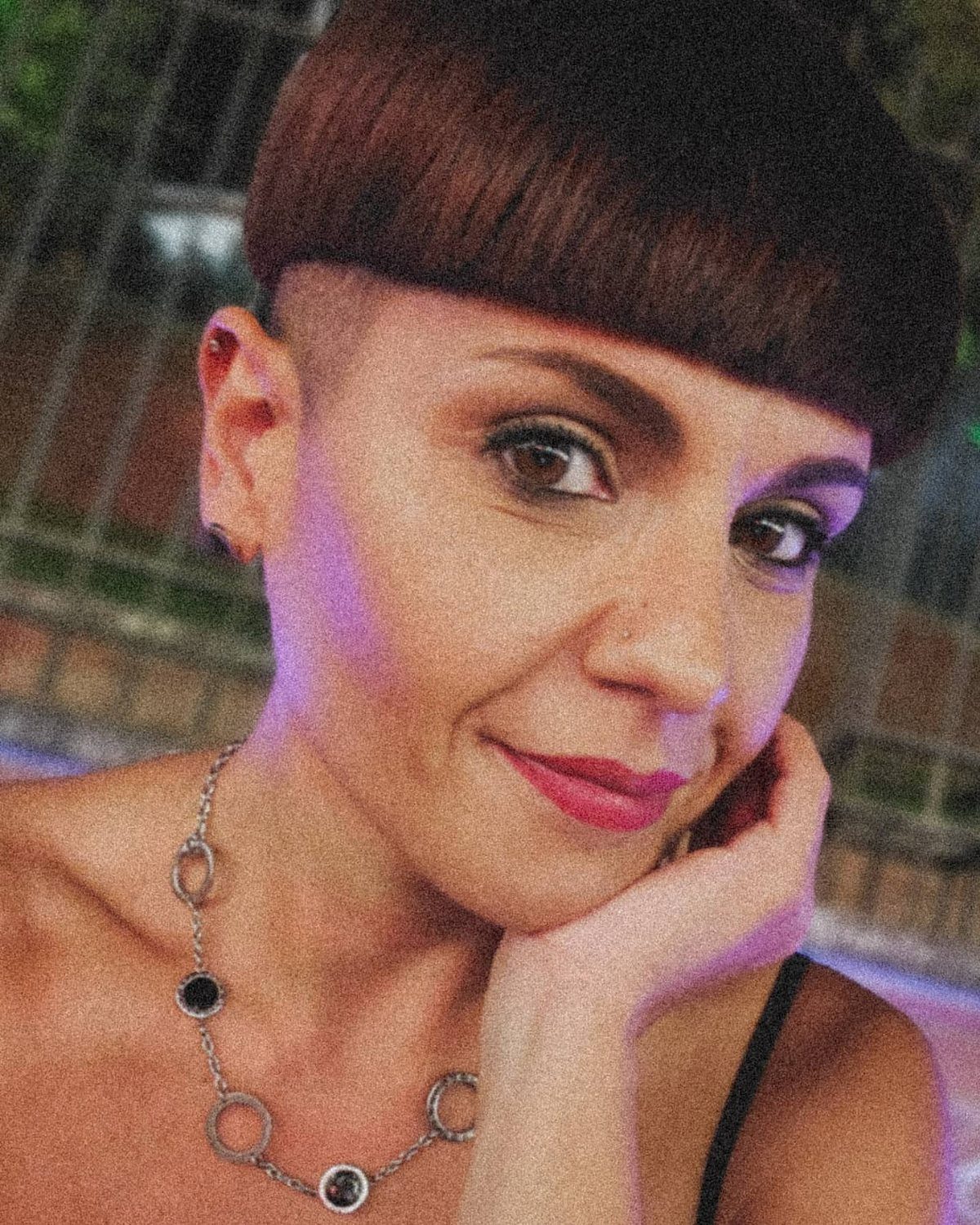
Rounded edges are what separate bowl-cut bangs from the blunt kind: the fringe curves slightly at the corners instead of ending in a hard, flat line. It looks softer and a little more playful.
Straight hair shows the shape best, and I would choose it for that reason. Ask your stylist for a curved edge, not a ruler-straight one, and bring a photo so the roundness is clear.
14. Middle-Parted Long Side Fringe
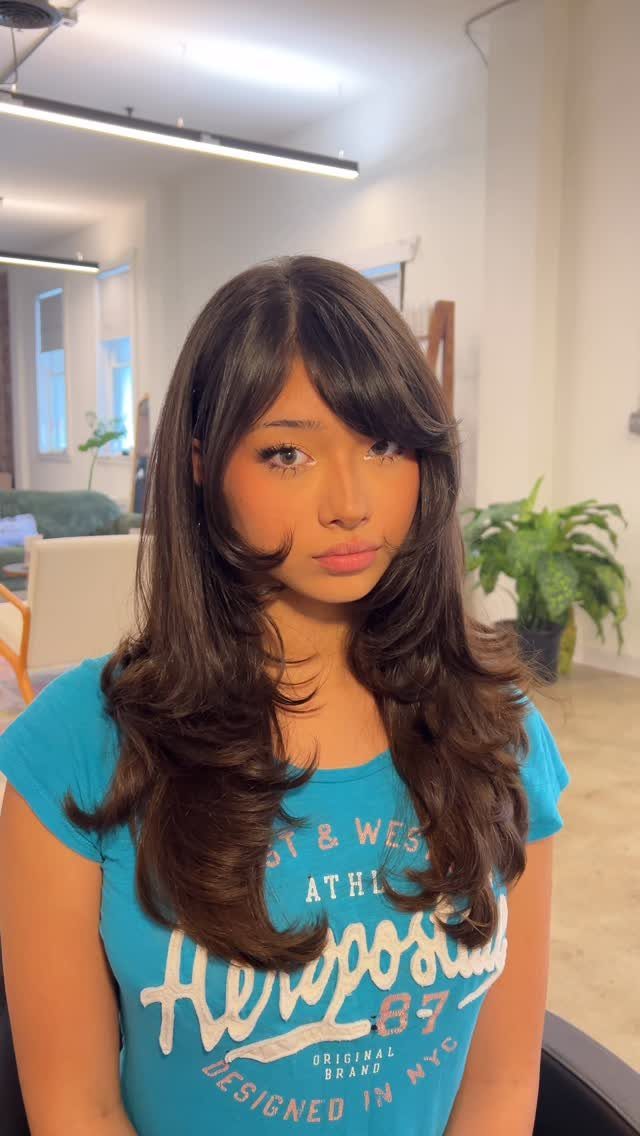
Long pieces fall from a middle part and sweep to each side, so the fringe works as face-framing instead of a separate section. That blend is why it suits anyone nervous about a full bang.
On long, layered hair, I would ask for the fringe to be cut into the layers so it melts into the length.
Part it in the center and let the ends fall naturally. Grow-out is gentle, since nothing ever stops at a hard line.
15. Medium-Length Hair with Bangs
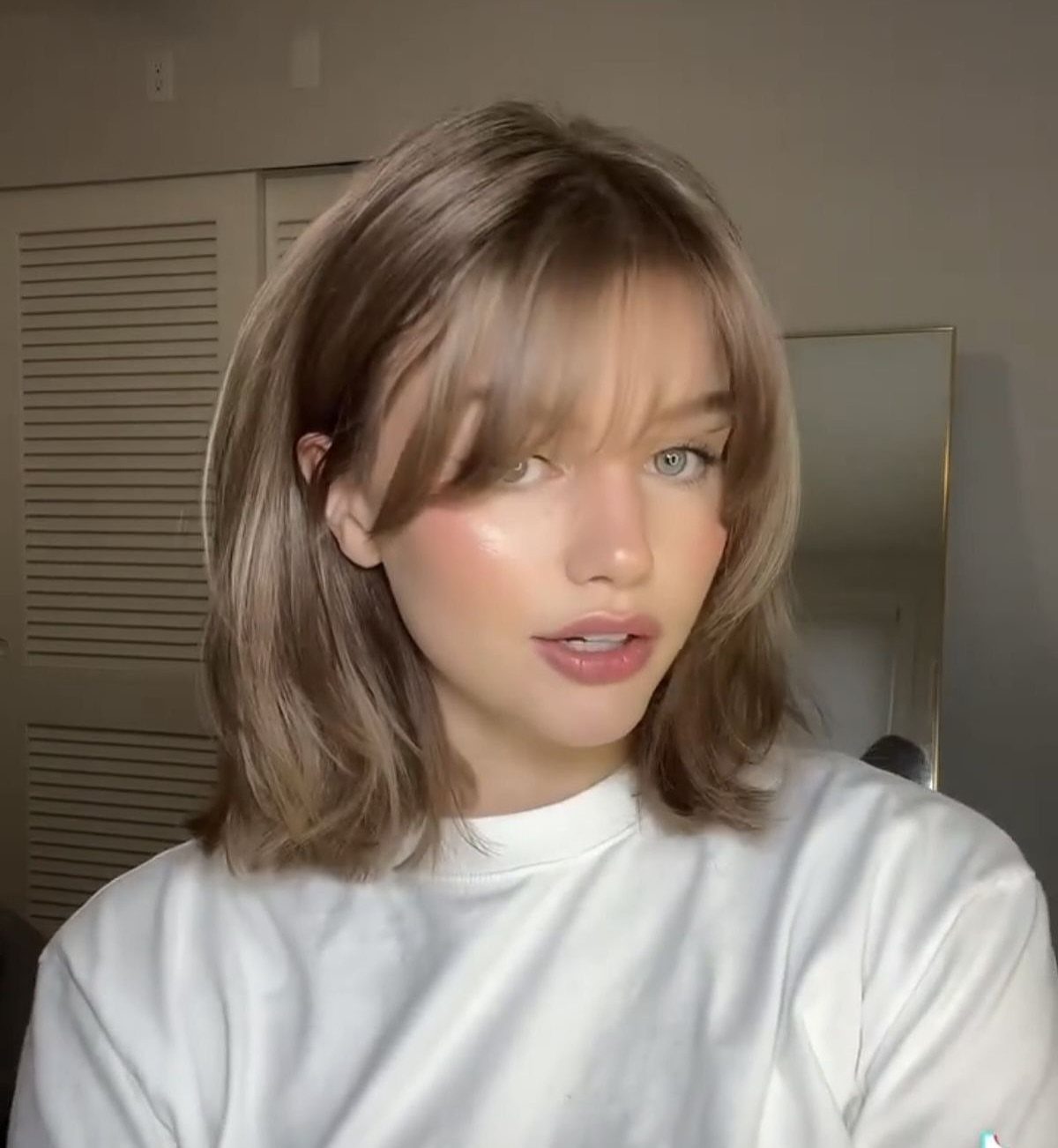
Shoulder length gives bangs more room to change than almost any other length. Wispy, side-swept or curtain versions all sit well here, and each one reads differently.
On medium hair, I’d choose a wispy fringe with soft layers behind it, because the short front pieces blend into the longer lengths instead of sitting apart.
Decide how much daily styling you will tolerate before you choose; a lighter fringe takes less work than a heavy one.
16. Bottleneck Bangs
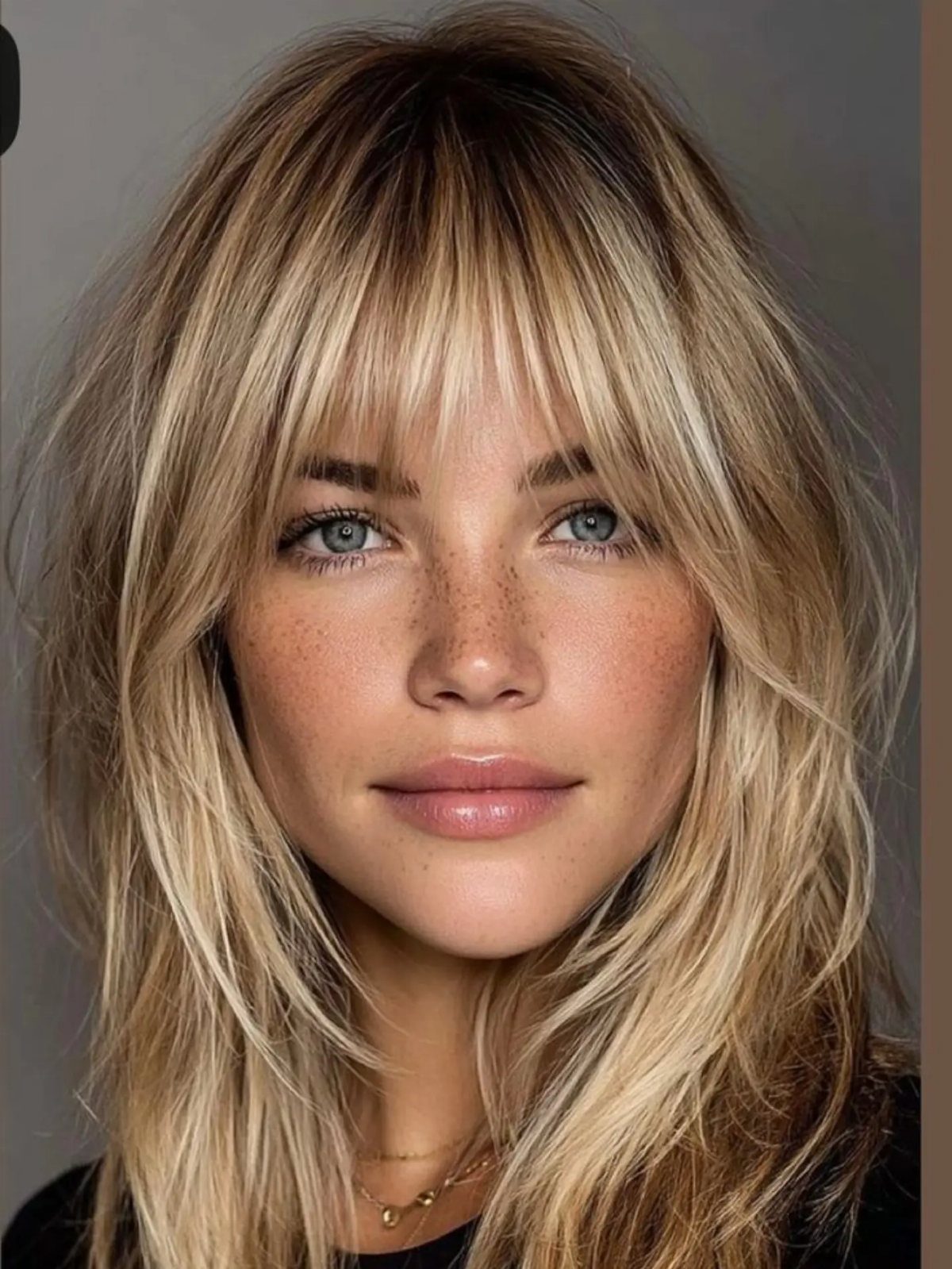
Narrow and short at the center, then widening toward the temples: that shape gives bottleneck bangs their name, and it opens up the middle of the face while the sides stay full.
It pairs well with long, layered hair, where the wider sides blend into the face-framing pieces. Show your stylist exactly where the fringe should widen, because the shape depends on that placement.
I like it as a gentler step up from a full fringe.
17. Arched Bangs
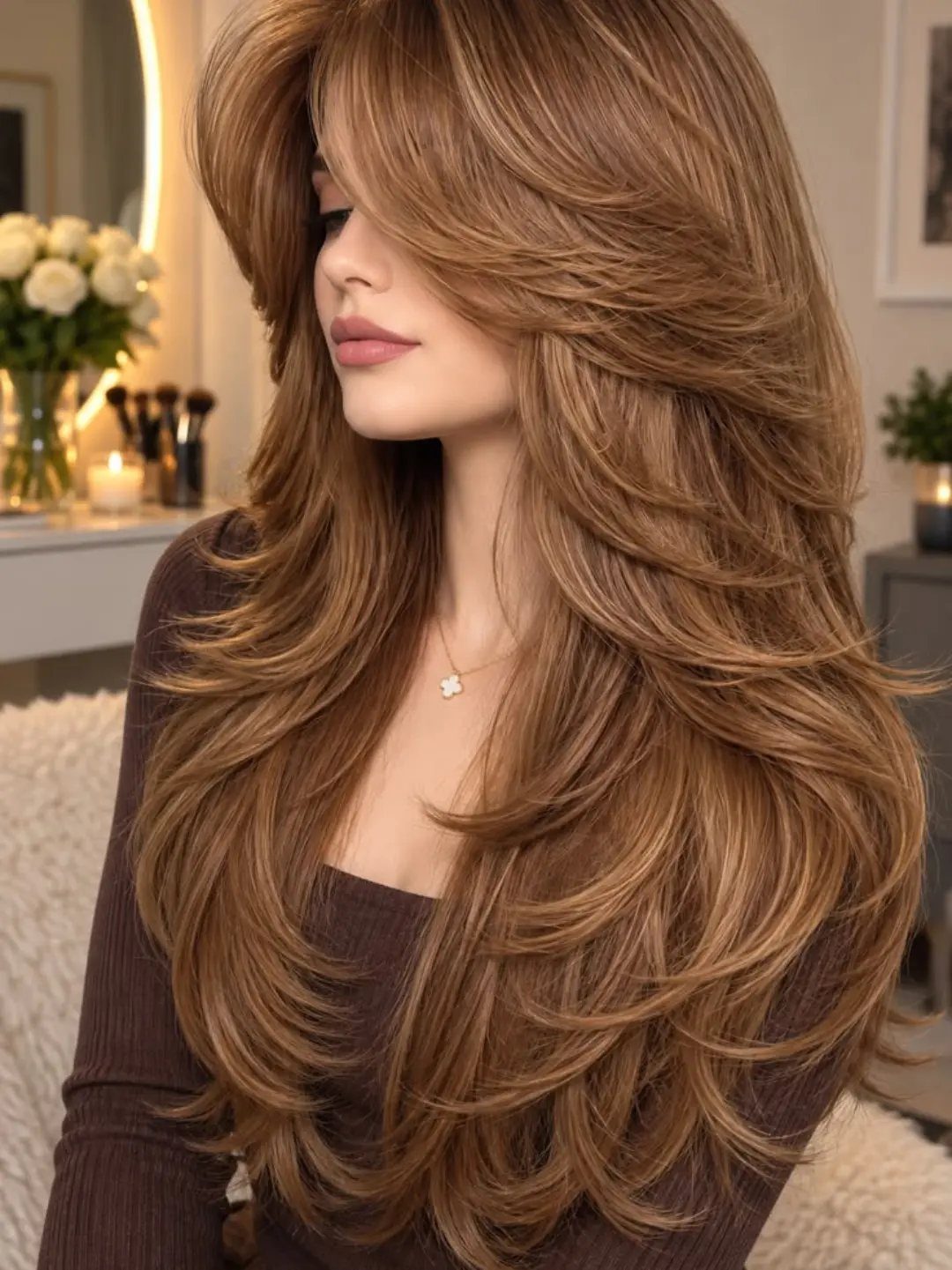
A curved fringe makes an arch across the forehead, higher in the middle and lower toward the sides, so it frames the face the way an eyebrow does.
Long, layered hair gives it the most to work with.
A stylist should soften the ends of an arched fringe as they cut, and at home a round brush with a little heat will bend it into that curve while it dries.
The shape fades fast as it grows, so I would plan on regular trims.
18. Butterfly Bangs
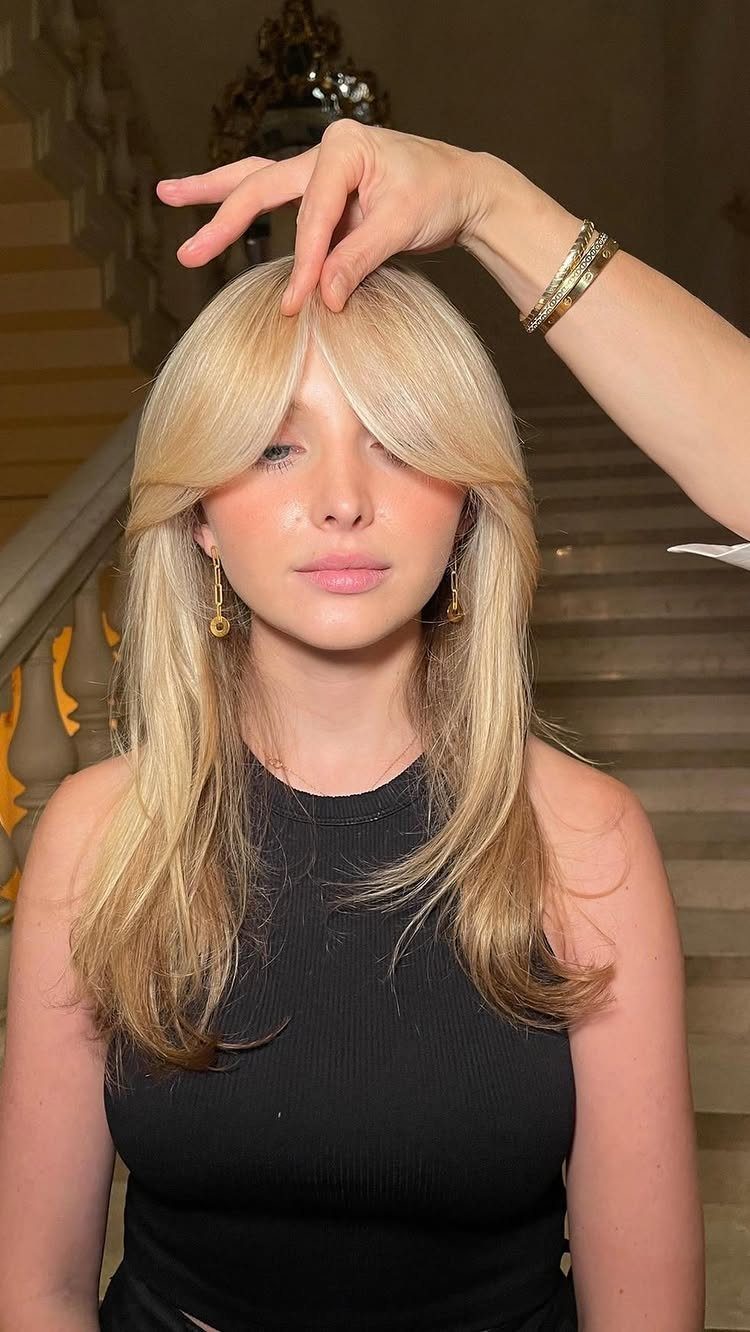
Butterfly bangs are light and parted in the middle, with the tips turning outward. Over long layers, the fringe and the face-framing pieces together make a winged shape.
Style it with a round brush, rolling the ends away from the face as you dry.
I would choose this if you want movement more than coverage; it is airy instead of dense. Ask for the layers to start at the fringe so the two connect.
19. Eye Skimming Bangs
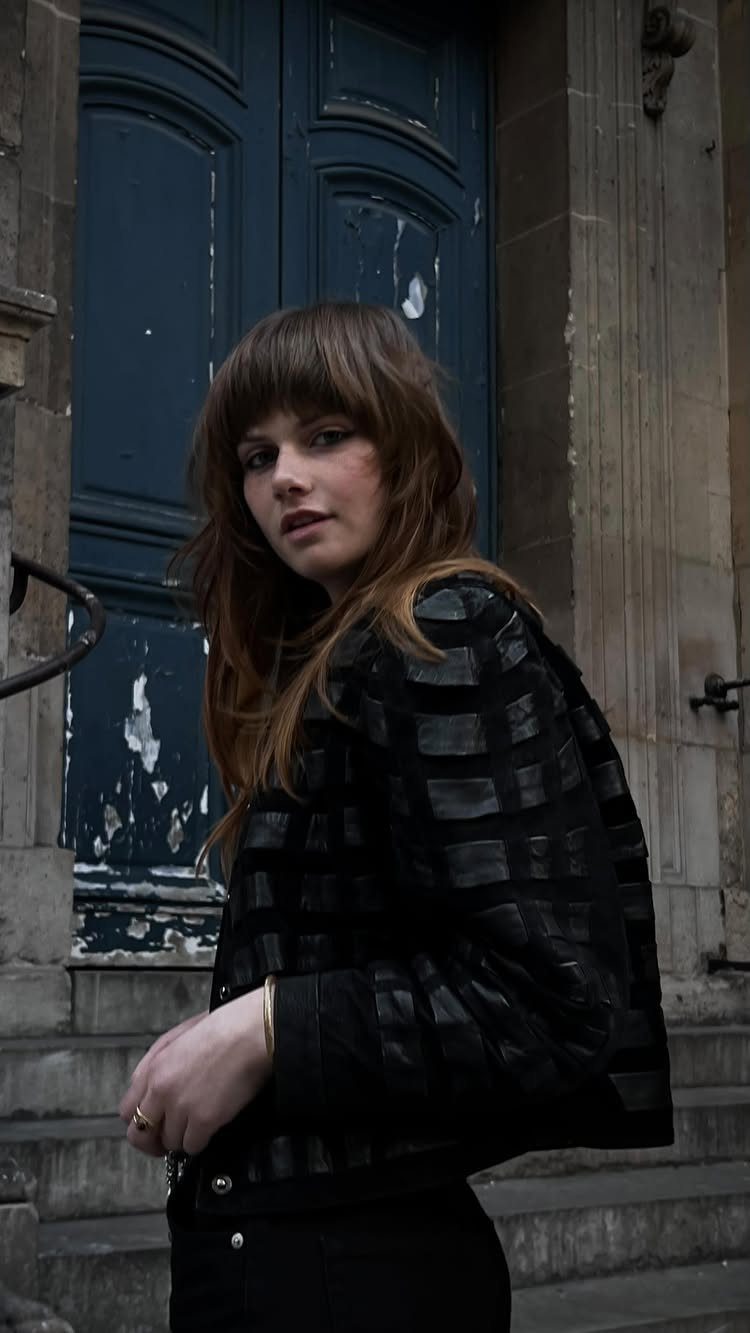
Eye skimming bangs stop right at the brows, or just grazing the lashes, and that extra length gives the fringe a heavier, sultry feel. Over long hair it frames the eyes without hiding them.
Ask your stylist to cut the length so it brushes the eyebrows, not past them. I would check it with your head level, since the fringe rises a little when you tilt up.
Because the ends sit so close to your eyes, they need a trim sooner than shorter bangs do.
20. French Bangs
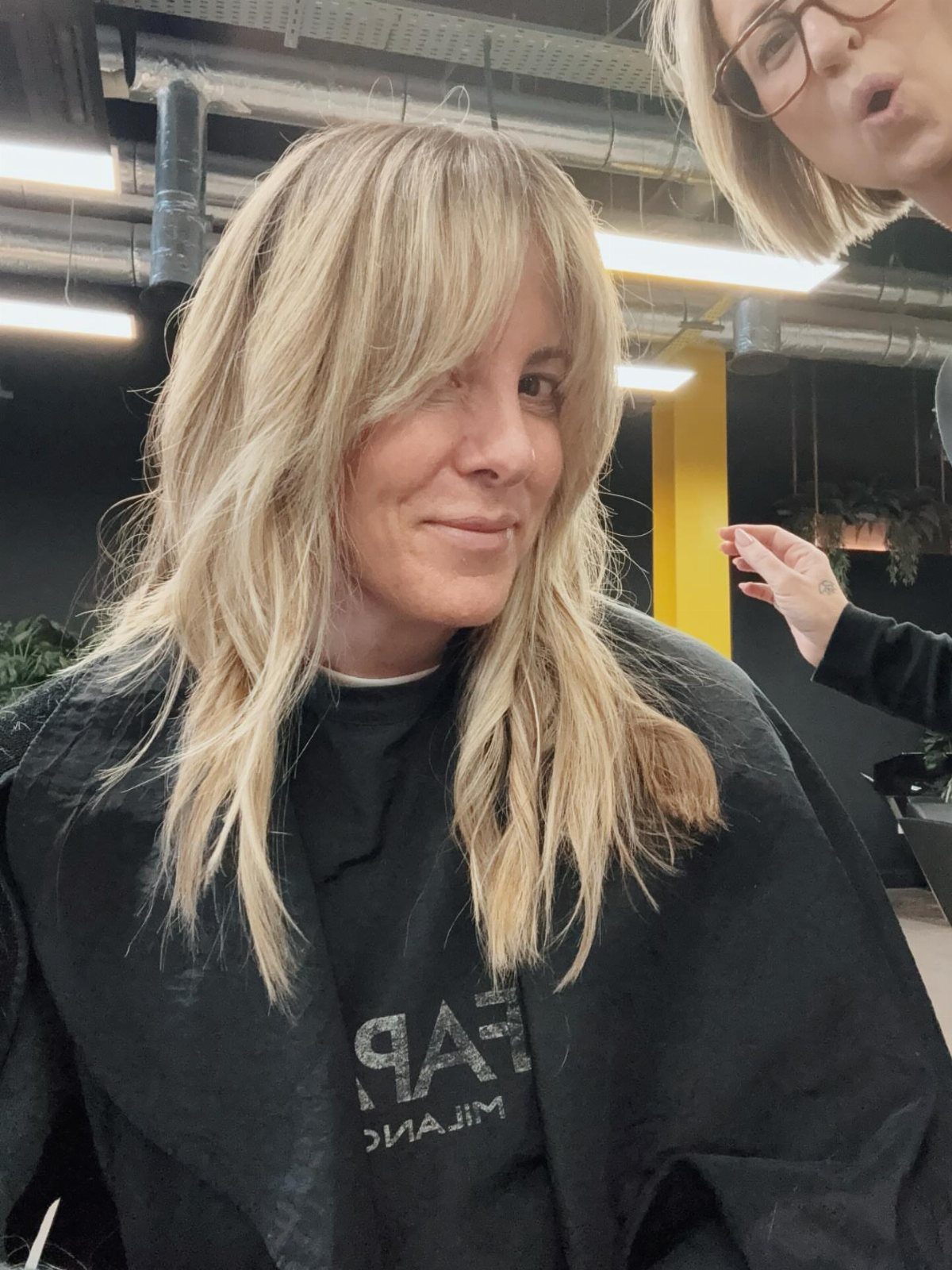
A slight curve across the forehead, with the center cut a touch shorter than the sides, is what makes French bangs look so effortless. The shape frames the face softly instead of drawing a straight line across it.
For layered blonde hair like this, I would ask for the curve to be cut a little loose, so the ends don’t look stiff. Bring a photo to the chair and point out how short the center should go.
At home, a round brush dried under low heat helps the curve hold.
21. Birkin Bangs

Birkin bangs part softly at the center, with the middle cut shorter and the sides left longer. That gives a fringe that opens the face without a hard edge.
On long, wavy hair I prefer the sides to blend into the length, so grow-out stays gentle. Ask your stylist for a shorter center and longer, wispy sides, and mention that you want the part to fall naturally.
Finger-style it while it dries instead of brushing it flat; waves look better when the fringe keeps a little movement.
22. Bardot Bangs
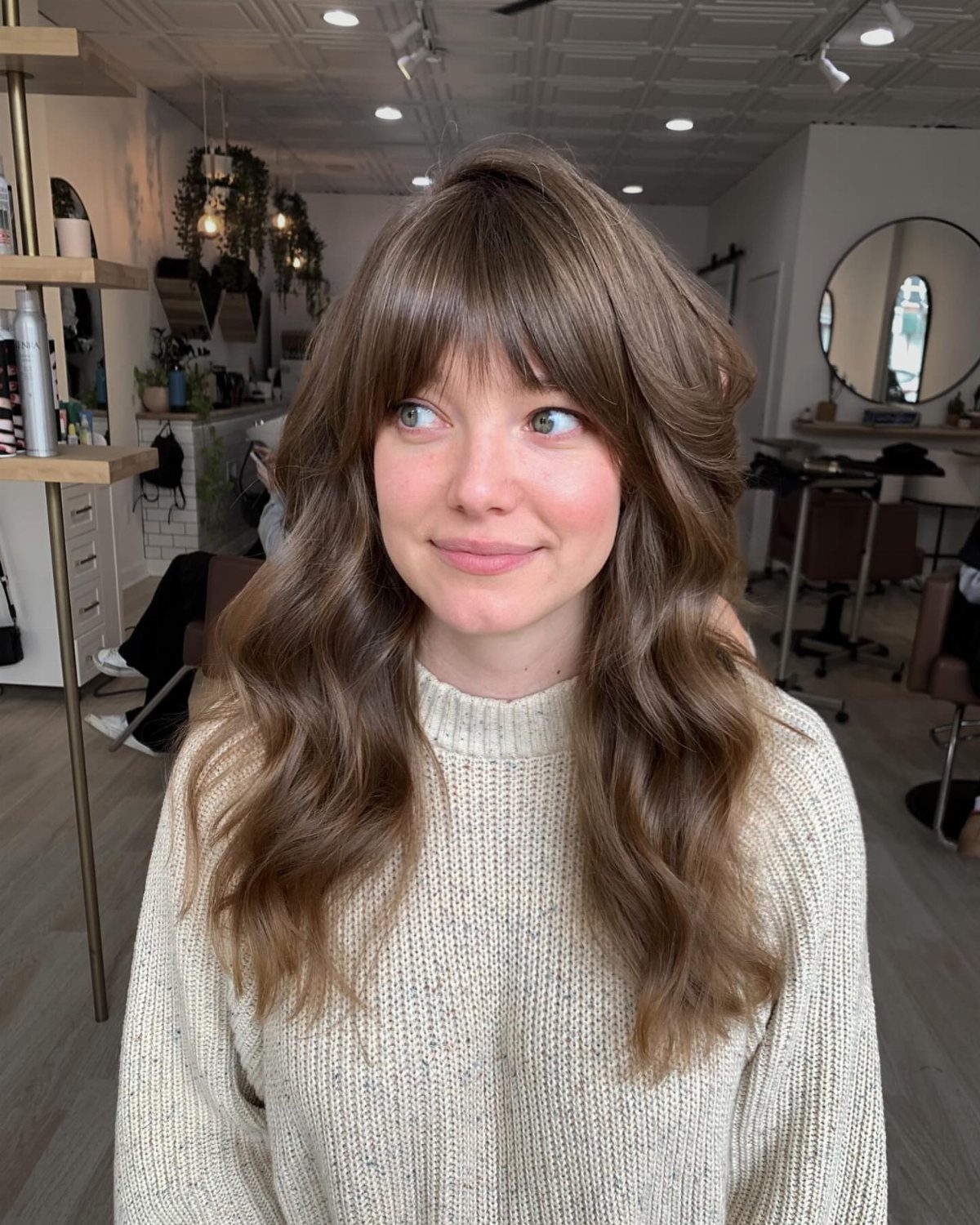
Bardot bangs are wispy and center-parted, built to sit above big, voluminous waves. The light fringe keeps all that volume from feeling heavy around the face.
I would pick this for long hair with plenty of body, since the airy front needs fullness behind it to look balanced. Ask for the bangs to be cut thin and soft, not dense.
To style, blow-dry the fringe first, then add volume through the rest. A wavy finish pairs best with the parted front.
23. Feathered Shag with Bangs
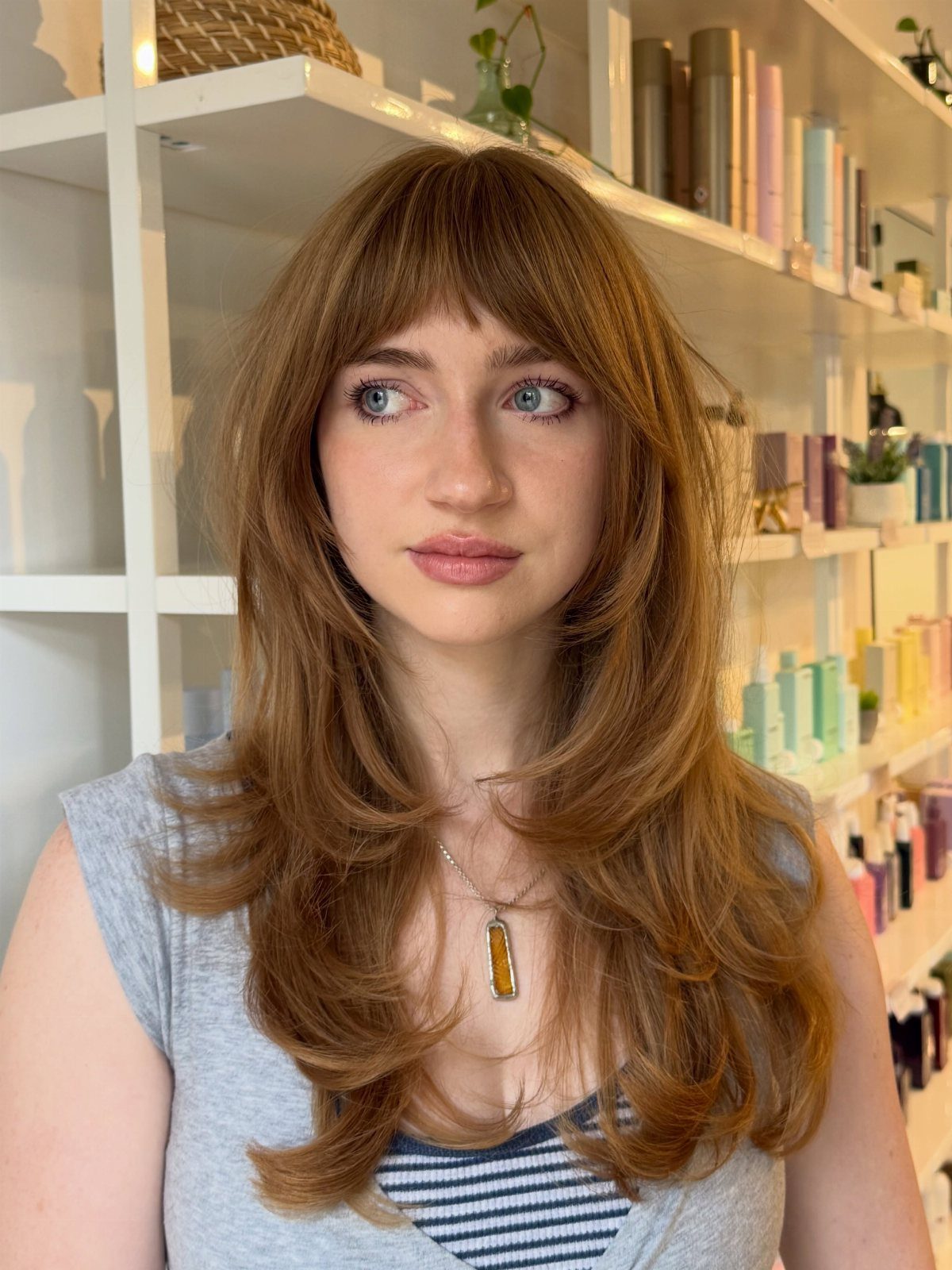
A feathered shag pairs choppy, playful layers with tapered ends, and bangs finish the shape instead of sitting apart from it. Straight bangs, as here, add a clean contrast to all that texture.
Ask your stylist to blend the fringe into the top layers so the whole cut moves as one. I would keep the bangs fairly straight and let the length carry the feathering.
A small flick outward with a round brush at the very ends keeps the feathering light instead of limp. Expect regular trims, since the layers lose their shape as they grow.
24. Brushed-Forward Pixie
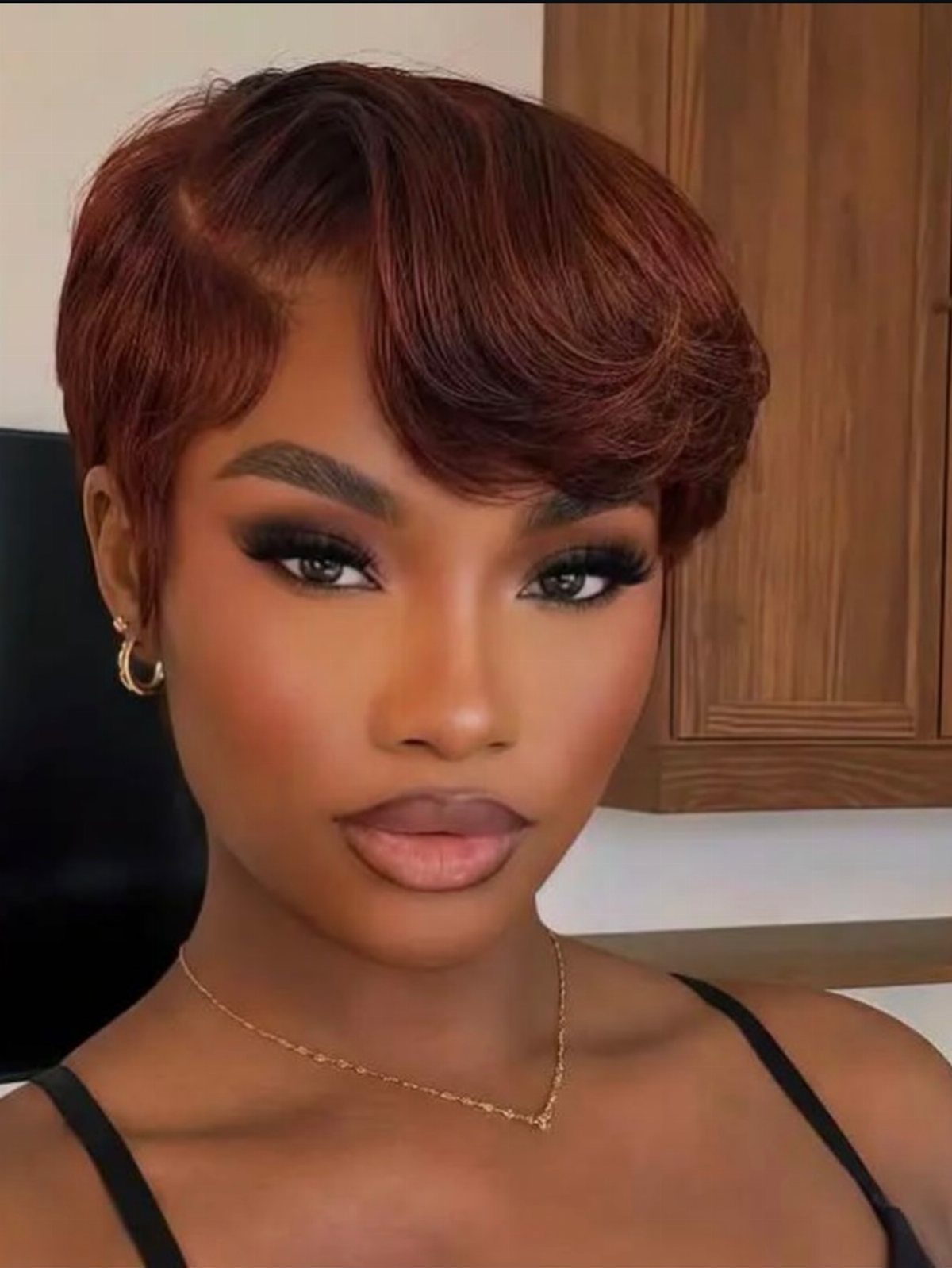
Brushing a pixie’s fringe forward turns the attention to the eyes and cheekbones, since the short sides and back leave the face fully open. The swept-forward line is the whole style.
Work a small amount of cream through the fringe and comb it forward and slightly across. I would choose this if you want a cut that takes only a couple of minutes each morning.
Ask your stylist to leave the front longer than the rest, so there is enough length to sweep. Pixies need frequent trims to keep the shape.
25. Bixie with Side-Swept Bangs
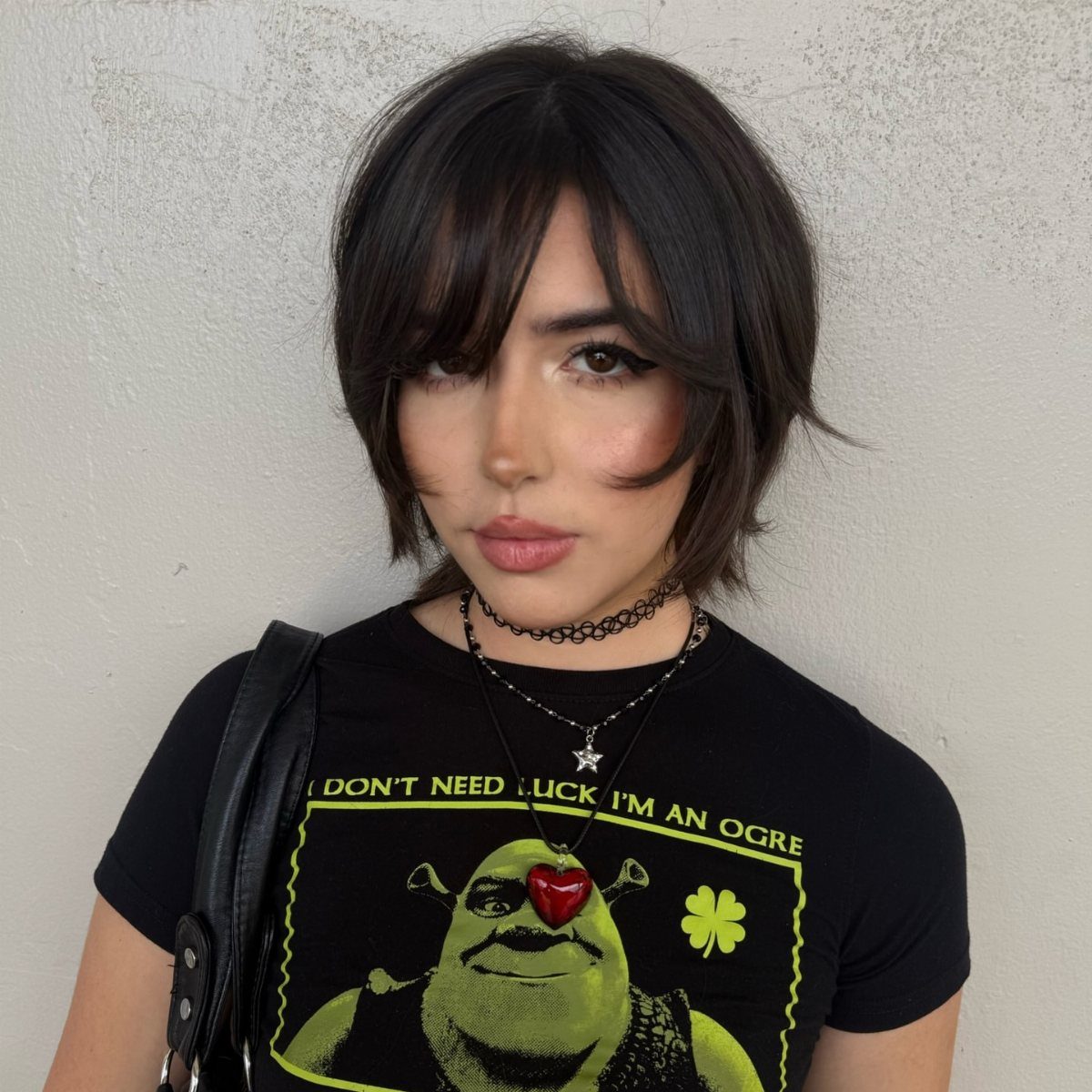
A bixie sits between a pixie and a bob: short enough to feel bold, with enough length on top to carry layers and a side sweep. Dark hair shows that texture well.
Ask your stylist for layers that build volume through the crown, then a fringe cut long enough to sweep across to one side. I would choose it if a full pixie feels like too big a jump.
A little texturizing cream worked through with your fingers keeps the layers separate. Expect trims often, since the shape goes shapeless fast at this length.
26. Long Shag with Face-Framing Bangs
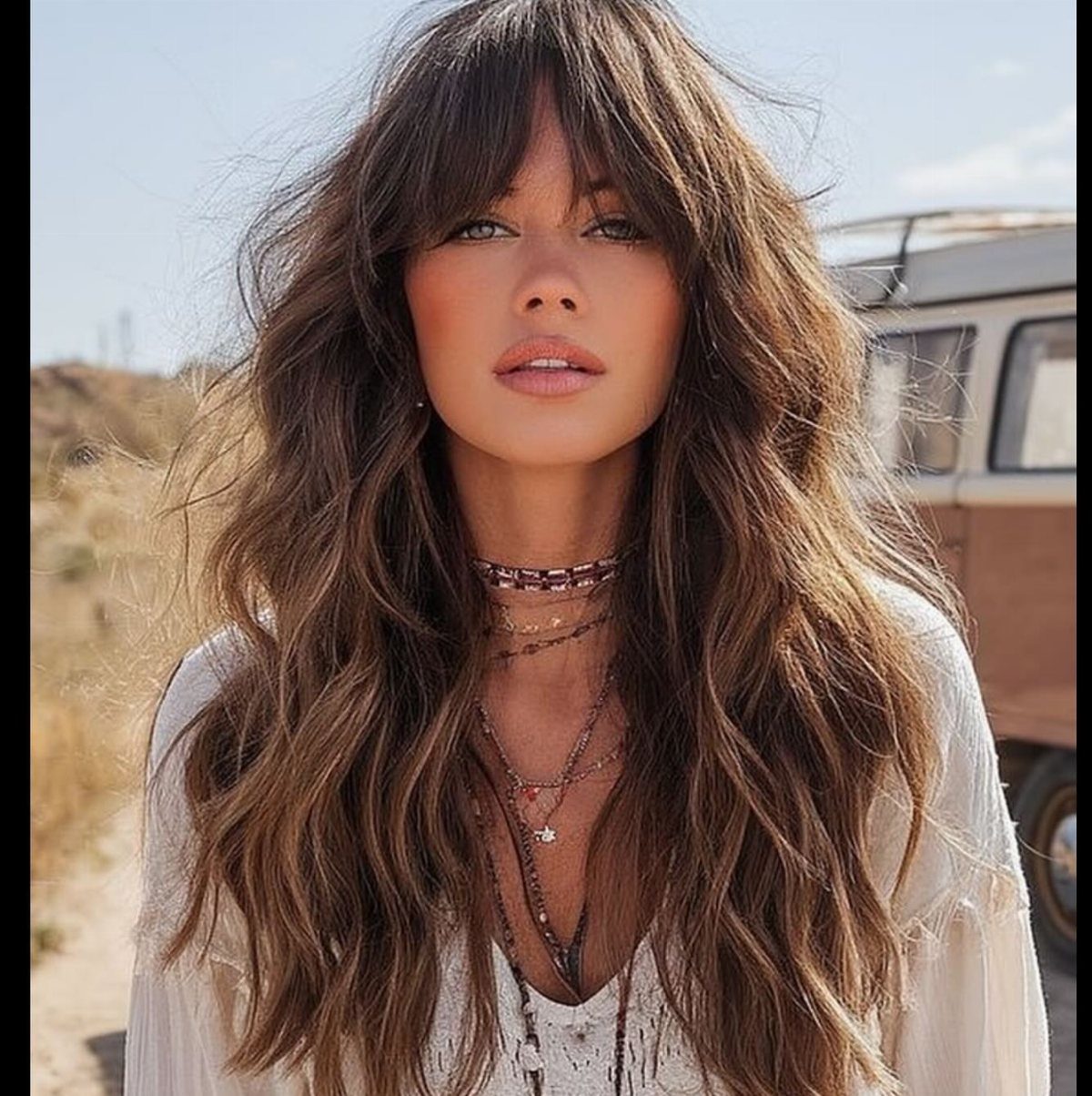
Face-framing bangs are what keep a long shag from reading as plain long hair. They add dimension right where the eye lands, and the layers behind them carry that texture down the length.
Ask for the bangs to be cut into the shag layers, not as a separate panel. Brown hair shows the layering clearly, so I would keep the ends choppy and the finish loose.
Dry it rough with your fingers and a light spray. A shag looks best a little undone, and a perfectly smoothed finish flattens the texture that makes it work.
27. Long Layered Hair with Bangs
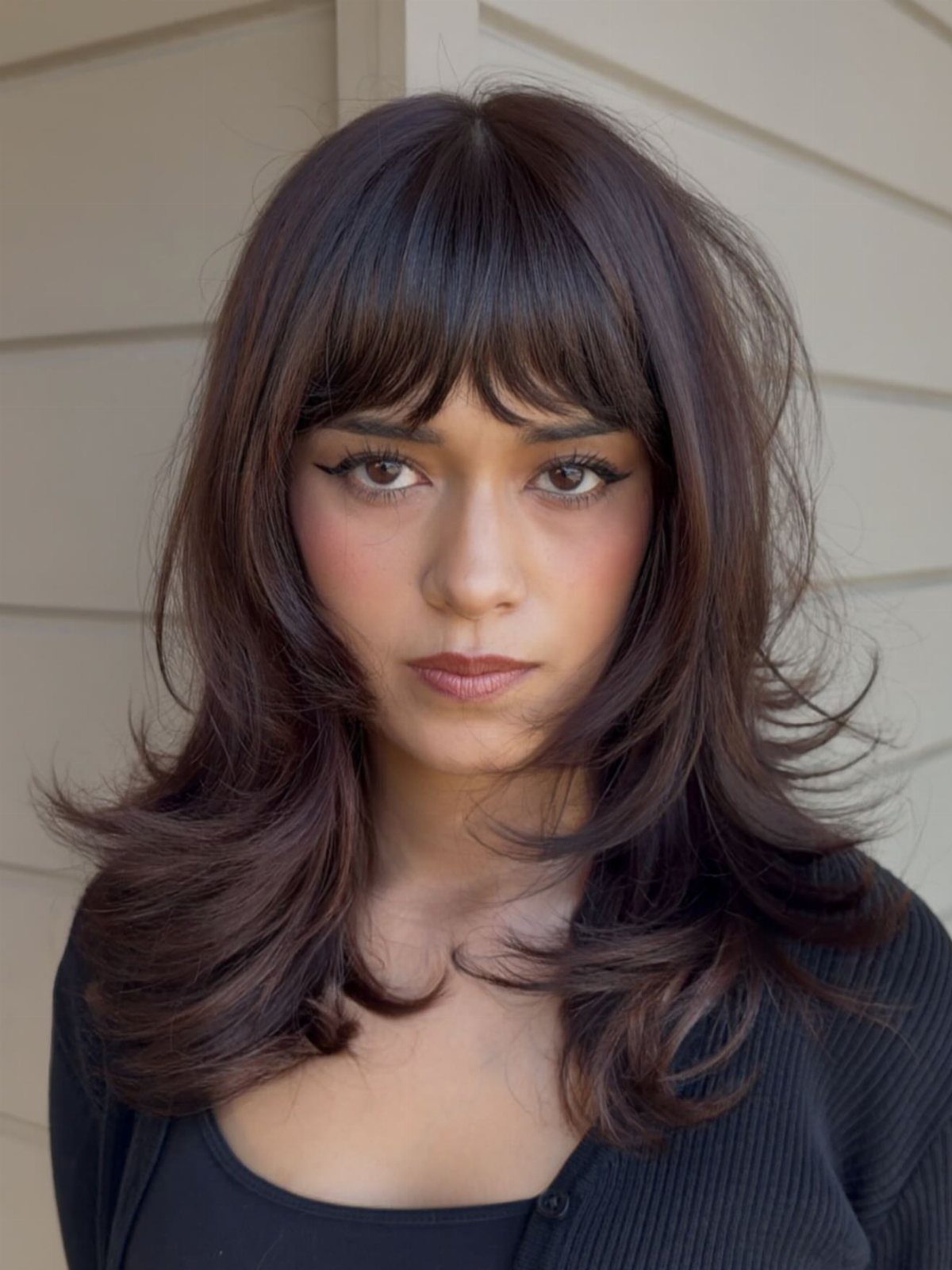
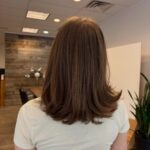
Of every pairing I’d suggest, full bangs over long layers are the softest, because the weight at the front is balanced by lightness through the length.
Layers keep long hair moving instead of hanging in one heavy sheet, while a full fringe draws attention to the eyes and gives the face a gentle, slightly romantic outline.
I would choose it for dark hair, where a full fringe has real presence. Ask for layers that begin around the chin so the bangs connect to the rest and do not sit alone.
A round brush and a few minutes of heat on the fringe will keep it smooth. A full fringe needs trims more often than the length behind it does.
28. Tousled Layered Shag
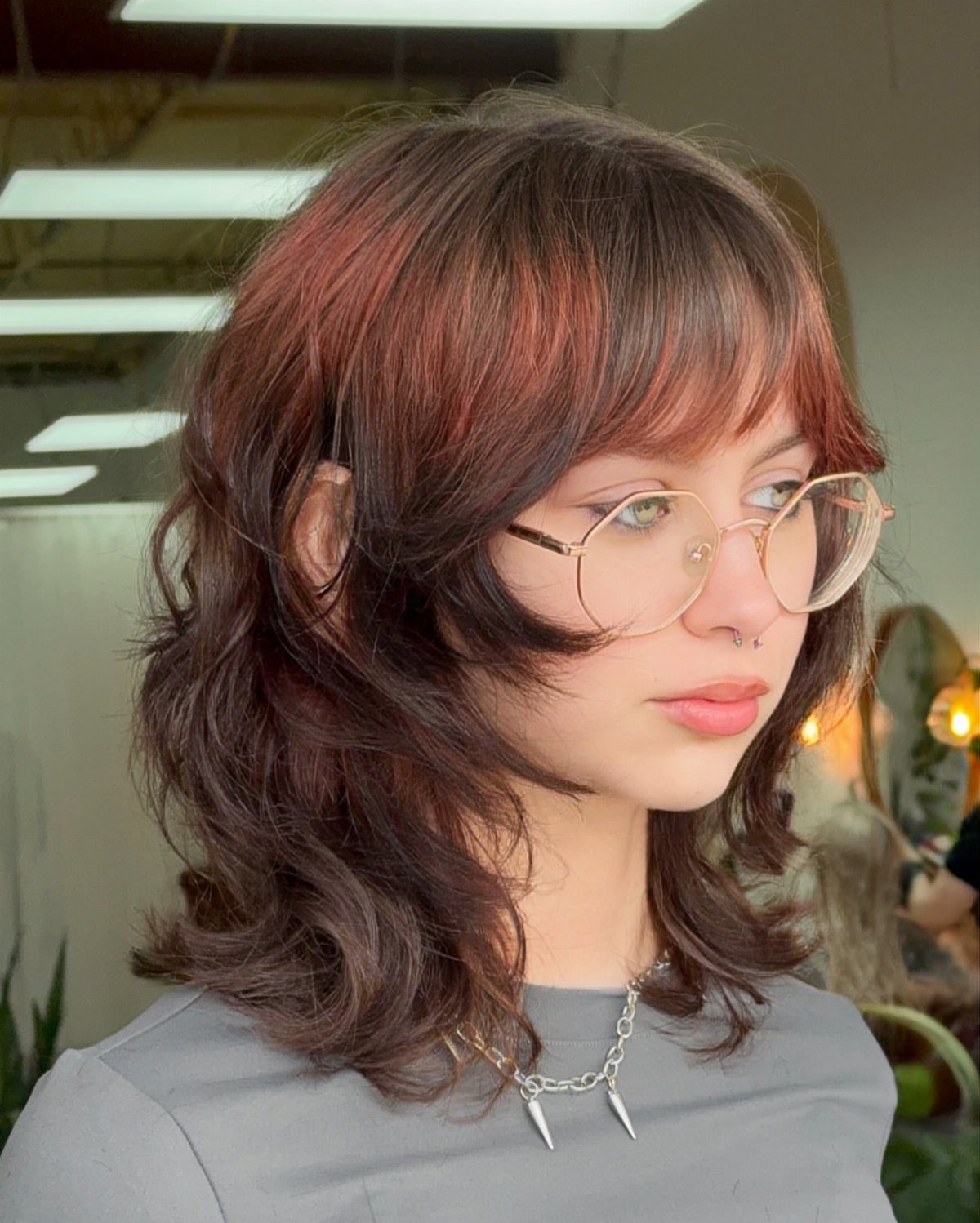
Strategic layers are what make a tousled shag look fuller: the shorter pieces lift at the crown while the long bangs blend into the sides. Reddish highlights, as here, make those layers easier to see.
I would keep the styling minimal: scrunch in a little cream and let it air-dry.
The cut grows out well, since the layers hide uneven length.
Choose by Face Shape
Face shape changes which bangs flatter you, and the pairings below are a good starting map.
A square jaw tends to read sharper under a heavy, blunt fringe, so I’d steer toward light, feathery bangs that let some forehead show through and soften those corners.
Long faces are the one case where I would go heavier: thick or full bangs balance the proportions.
With an oval face, almost any bang shape works, which means your hair texture and how much daily styling you’ll tolerate should make the call.
Think about upkeep before you commit. Some fringes need regular trims, while others forgive a long grow-out, and that should weigh as much as face shape does.
If your face sits between 2 shapes, pick the bang that matches the effort you will actually put in each morning.
Frequently Asked Questions
What hairstyles look best with bangs?
Short hair suits side-swept bangs because they grow out cleanly, while long layers pair better with full or curtain bangs that blend into the rest of the cut.
Medium-length hair gives you room to choose: wispy, side-swept, or curtain styles each read differently at shoulder length.
What are some good bangs options for women over 50 with thin hair?
Wispy bangs add movement without extra weight, since the strands are thinned out on purpose and sit lightly across the forehead.
Bowl-cut bangs with their rounded, softer edges read modern and elegant on longer hair, and a long side fringe parted in the middle blends into the length for versatility in updos or worn down.
All three give you coverage or face-framing without demanding density you may not have.
What type of bangs should I choose?
Face shape is a starting point: square jaws suit light, feathery bangs that soften the corners, long faces balance with thick or full bangs, and oval faces work with almost any style.
After that, your hair texture and upkeep preference should make the call.
How to style curtain bangs?
Part the bangs down the center and blow-dry each side with a round brush for smooth edges, or skip the nozzle and use your fingers to stretch each side diagonally toward the opposite eyebrow as you rough-dry.
Wavy or curly hair can air-dry or diffuse to keep the natural texture, and no-crease clips set the bangs while they cool. The center part is the whole design, so style it in place first.