
The ideas here range from smooth, shoulder-length lobs with blended layers to piecey pixies short enough to show the nape.
Layers cut choppy rather than smooth give the hair its shaggy finish, and those layers need point-cutting or razor work at the ends to keep the texture soft and separated.
If your hair is fine, the layers stay light to suggest body without removing the weight that keeps thin ends full.
1. Short Curly Shag
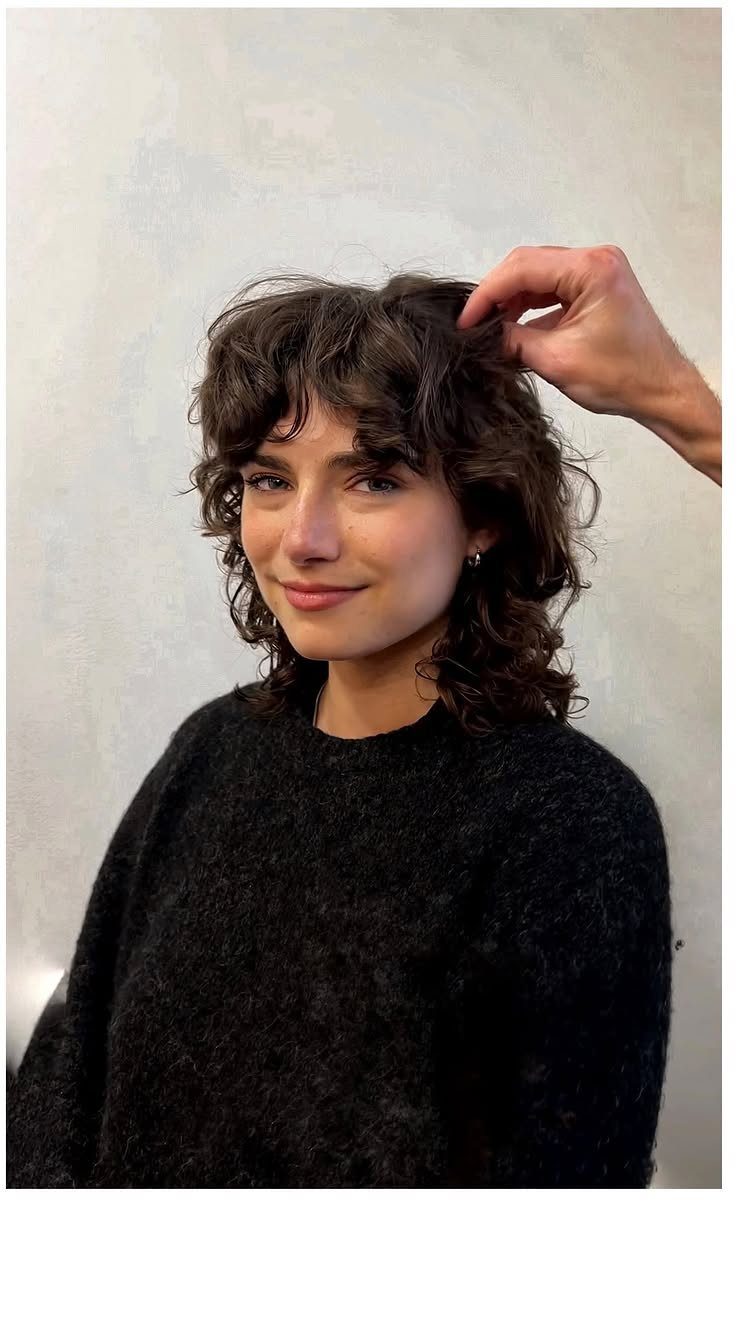
Layers start at the crown and work down, keeping the top light while curls hold their shape without dragging. The shortest pieces sit high enough to lift the roots, and longer sections fall just past the ears.
Ask for graduated layers through the crown and sides, with length left at the nape.
Curls need moisture after the cut; a leave-in cream or gel defines the texture without weighing it down. Drying with a diffuser on low heat keeps the volume at the top.
2. Cropped Fringe Shag
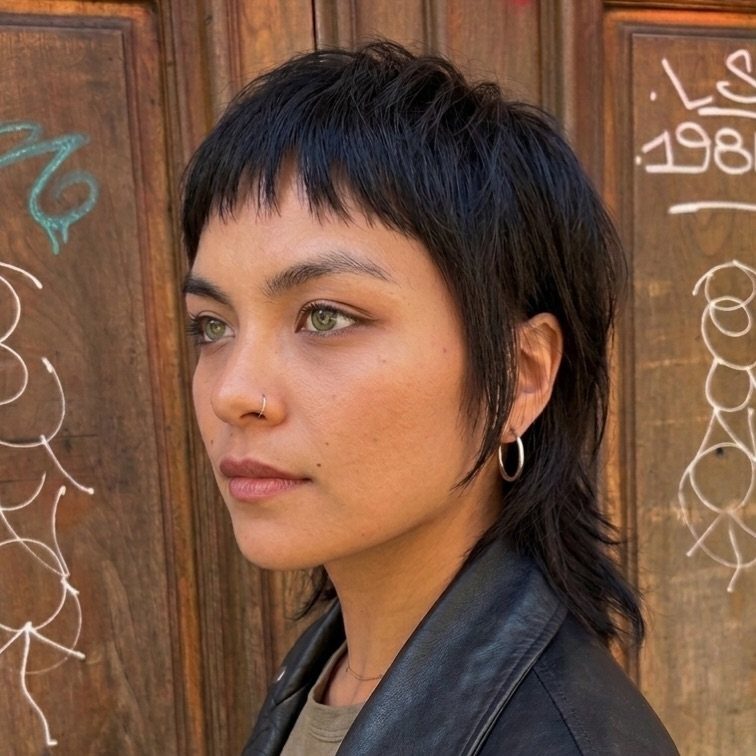
A short fringe sits above the eyebrows, cut straight or slightly choppy, while the rest of the hair follows a shag’s usual layered perimeter. The fringe anchors the face, and the layers behind it taper toward the nape.
Straight or slightly wavy hair holds the fringe cleanest. A round brush and a few seconds with a blow-dryer smooth the fringe forward; the back air-dries or gets tousled with your fingers.
A cropped fringe starts poking into your eyes fast, so it needs regular trims to stay where you want it.
3. Feathered Shag

Layers taper and flip outward at the ends, lifting away from the face instead of falling flat.
The tips are cut with a razor or point-cut with shears to soften the edge, so the hair moves when you turn your head.
Fine to medium hair takes the shape best. A round brush rolled outward while blow-drying bends the ends into a flick, and a light texturizing spray holds the shape without stiffness.
Growing this cut out is forgiving, since the feathered ends melt into the longer lengths instead of leaving a hard line.
4. Shag with Bangs
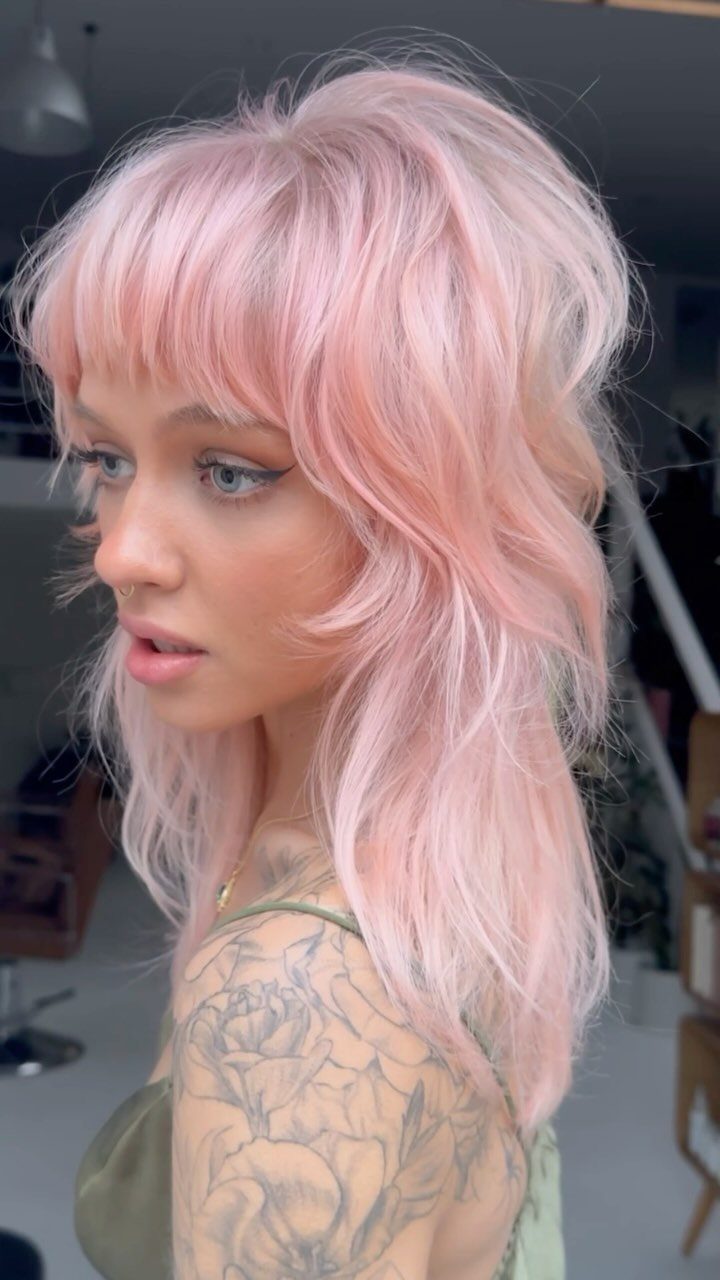
Bangs sit at the brow or just above it, cut blunt or textured depending on how much forehead you want to show.
Layers through the rest of the hair start shorter at the crown and lengthen toward the ends, framing the cheeks and jawline.
Thick hair benefits most; the layers remove weight without losing fullness.
Smooth bangs depend on a quick pass with a paddle brush and the dryer. If your hair is wavy, the fringe will need more attention each morning than the shag itself.
5. Short Shag for Round Face

Height at the crown and layers that angle forward draw the eye up and in, countering the width of a round face.
The shortest pieces sit just above the ears, and the longest graze the jawline or fall slightly below it, depending on how much length you start with.
After coloring, a bond treatment keeps the cuticle smooth and cuts down on frizz; the stylist who cut this one pairs it with a hydrating bond boost similar to K18 or Olaplex.
For lift at the crown, work a little volumizing mousse into the roots before you reach for the dryer.
6. Soft Wispy Shag
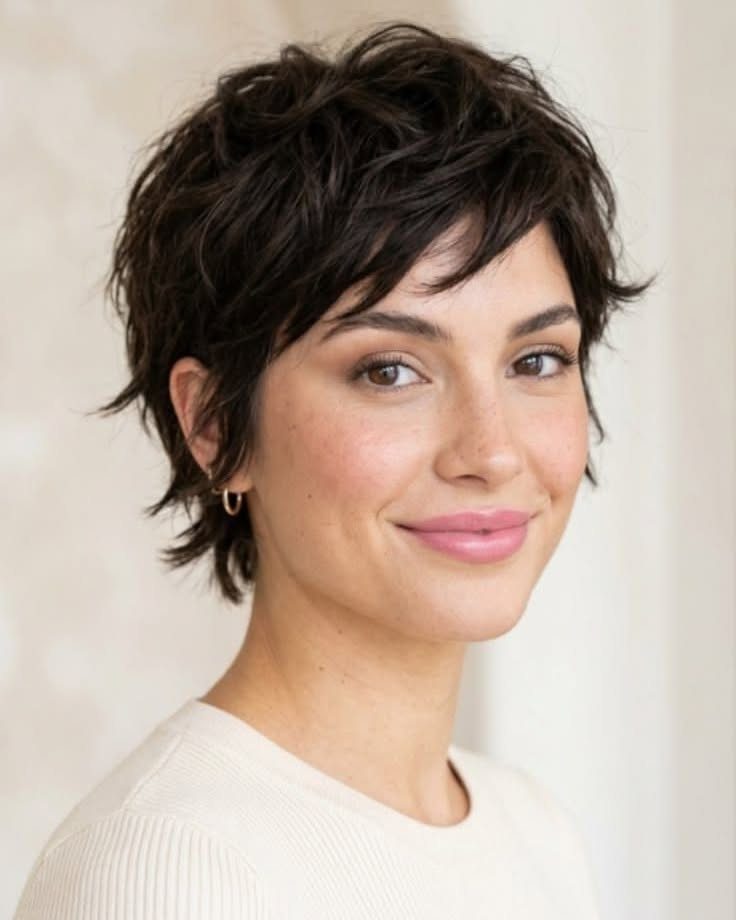
Layers blend into each other with no hard lines, and the perimeter tapers to fine, scattered ends that soften the shape. The bangs sweep to the side, cut long enough to tuck behind the ear or left loose.
A blow-dryer with a concentrator nozzle smooths the top while leaving the ends loose, and a light texturizing cream separates the pieces without adding weight. The cut needs minimal styling; finger-combing after washing is usually enough.
7. Shaggy Bob with Bangs
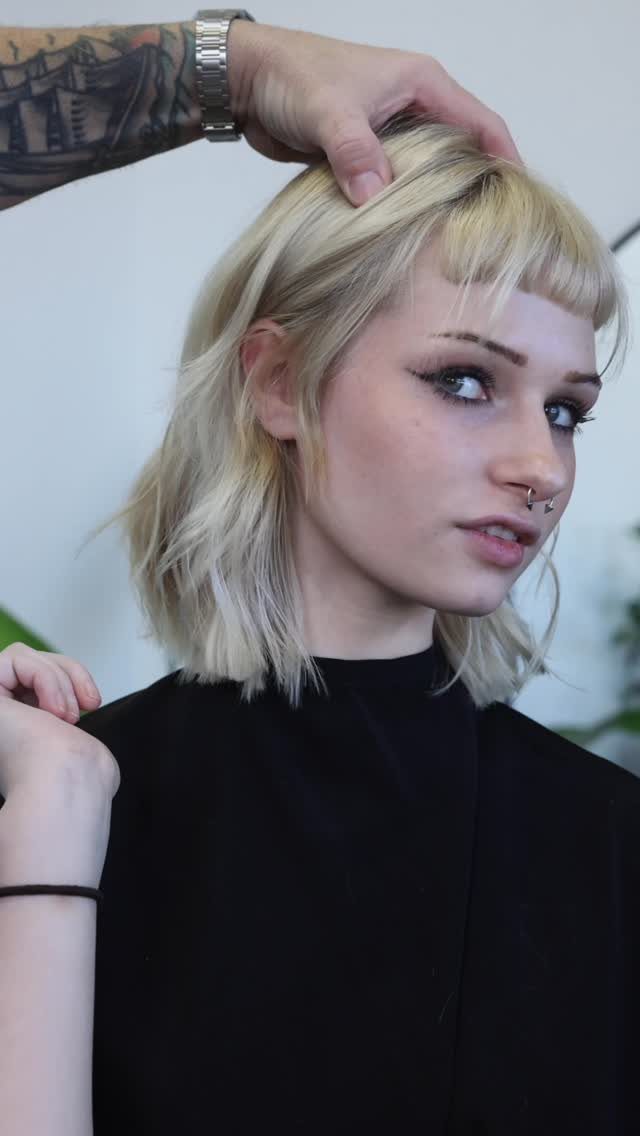
Chin length is where a shag and a bob overlap, and the choppy layers are what keep it from reading as a plain blunt cut.
Short bangs finish the shape, so decide how much forehead you want showing before the first snip.
Ask for the layers to be cut choppy rather than smooth, and for the bangs to be cut last so they match the length of the rest. A texturizing spray worked through the ends keeps the pieces separate.
8. Shaggy Crop with Textured Tips
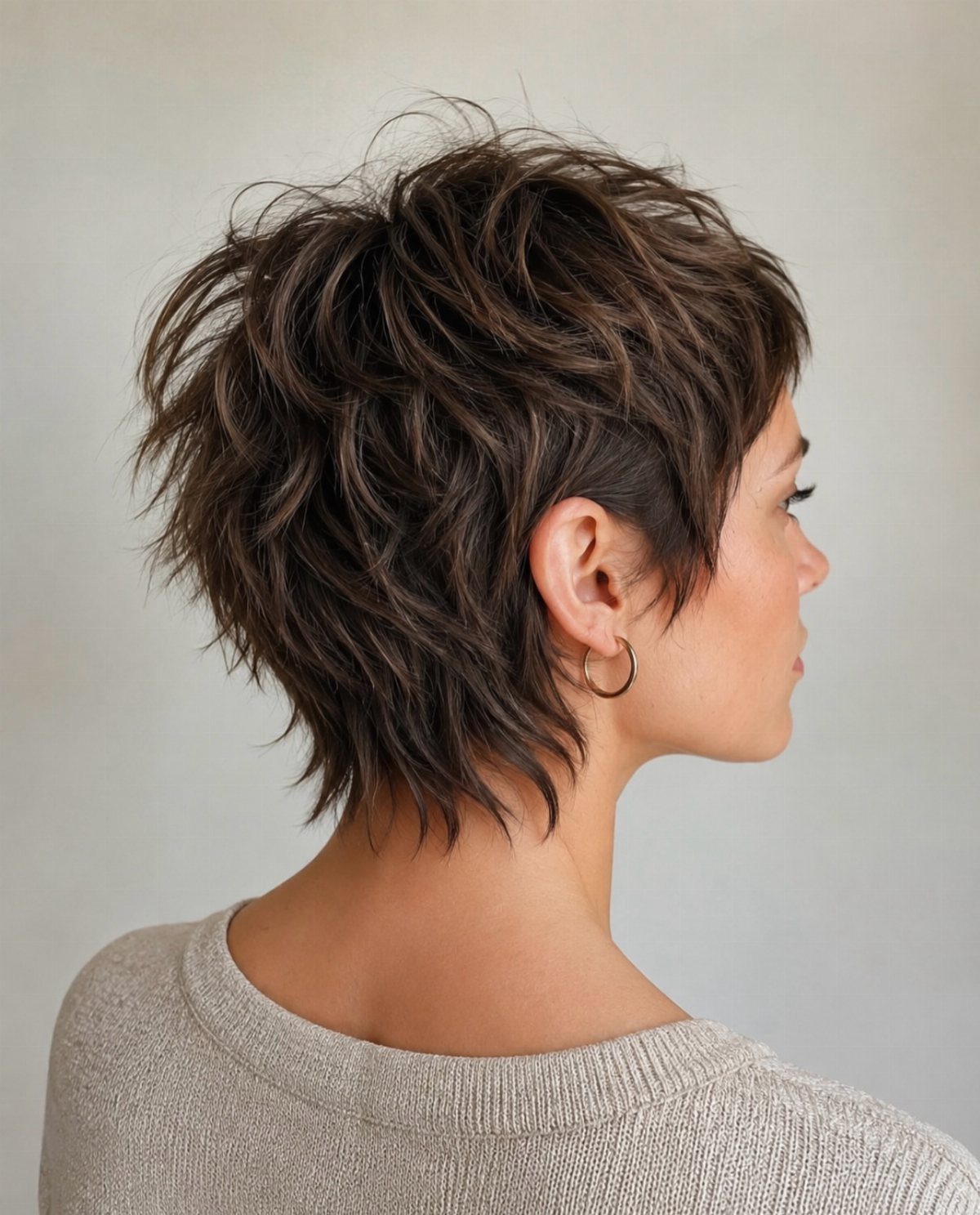
Short enough to show the neck, this crop gets all its movement from the tips. Choppy, textured ends and tousled layers do the work that length usually does.
I would ask for the ends to be point-cut instead of cut straight across, since that is what creates the broken, lived-in edge.
At home, rub a little paste or cream between your palms and push it through the tips; the layers take over from there.
9. Short Shag with Natural Waves
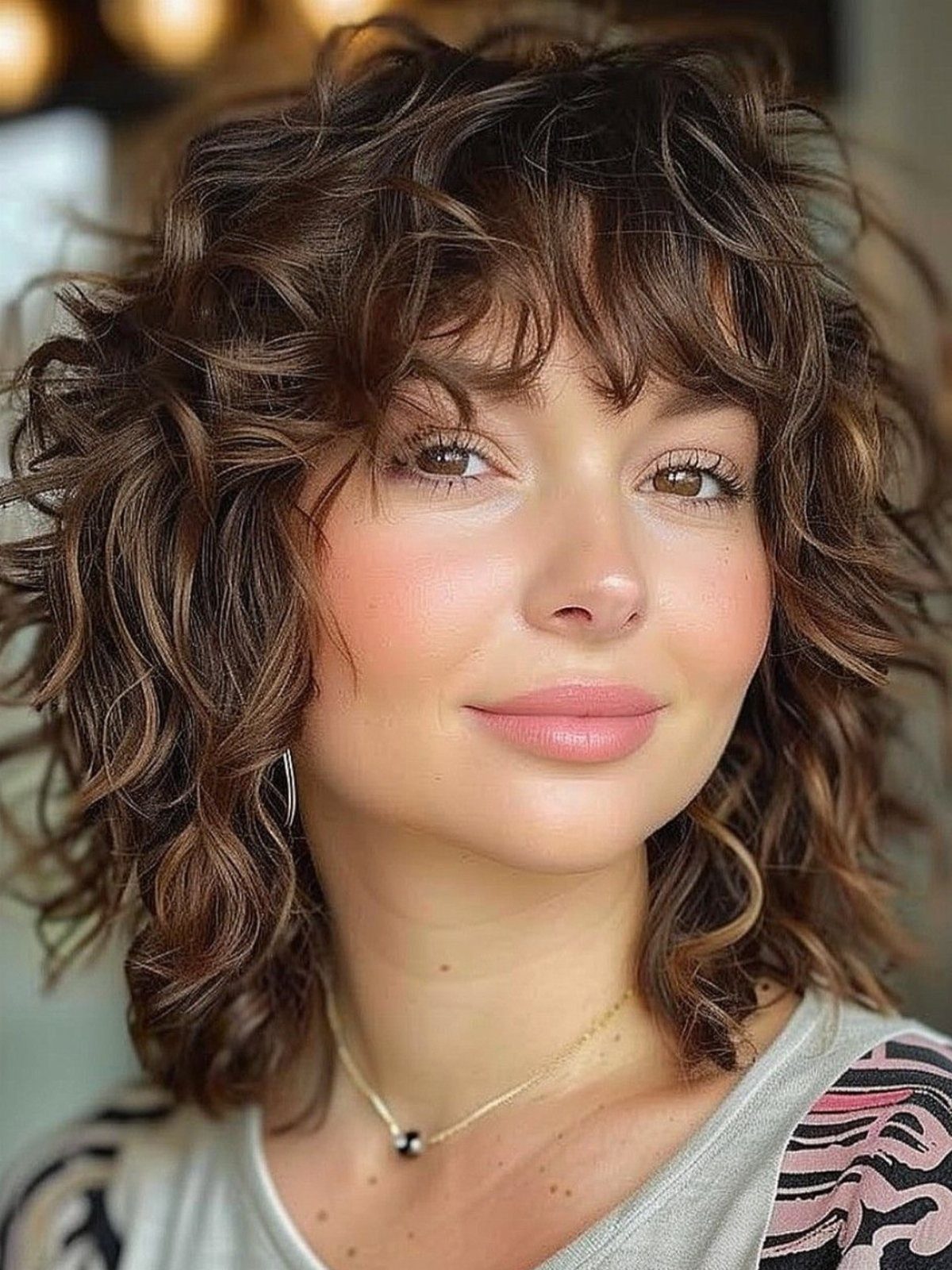
Natural waves make the best shag material because the layers have something to build on. Wispy bangs and short layers let the wave pattern show instead of fighting it.
Let your hair air-dry most of the way and scrunch in a light cream while it is damp.
Skip the flat iron; smoothing the waves out removes the very texture this cut is built around. Waves can shrink when cut short, so tell your stylist how your hair behaves dry.
10. Fine Hair Shag
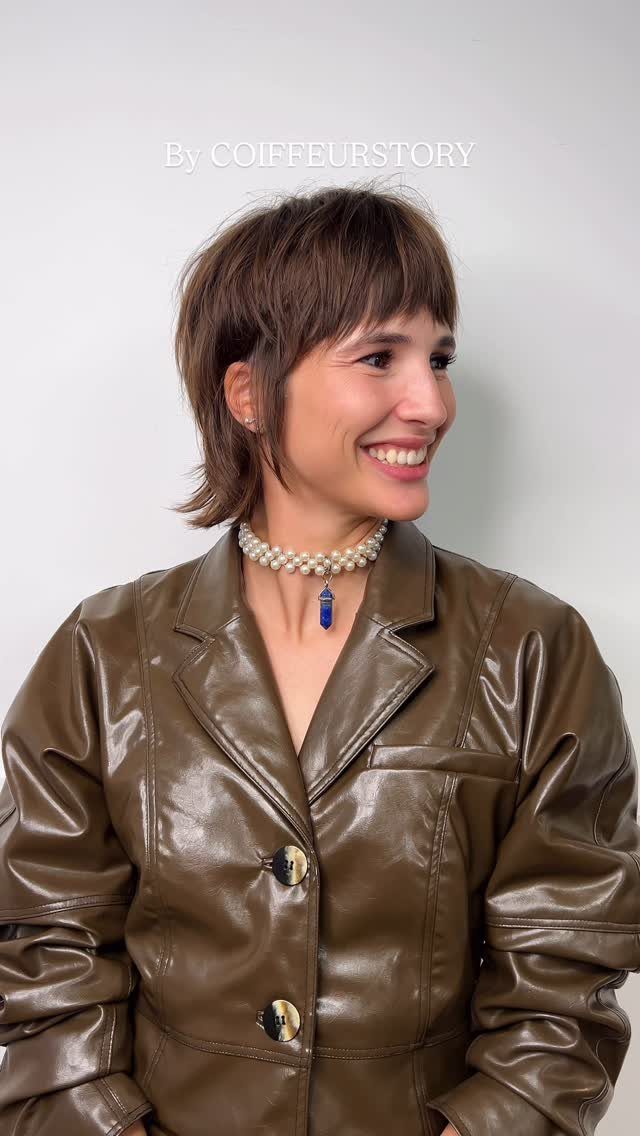
Fine hair loses when layers are cut too heavy, so the layers here stay light and textured to suggest body. The fringe adds density at the front, which is where fullness shows most.
Fine hair looks fuller with soft, shorter layers, since the cut removes weight that drags fine strands flat and creates separation that makes the hair read as thicker.
For lift that won’t weigh the hair down, work a small amount of mousse into damp roots, then blow-dry with your head flipped over. I would skip rich oils, since they flatten fine strands within hours.
11. Shag Mullet
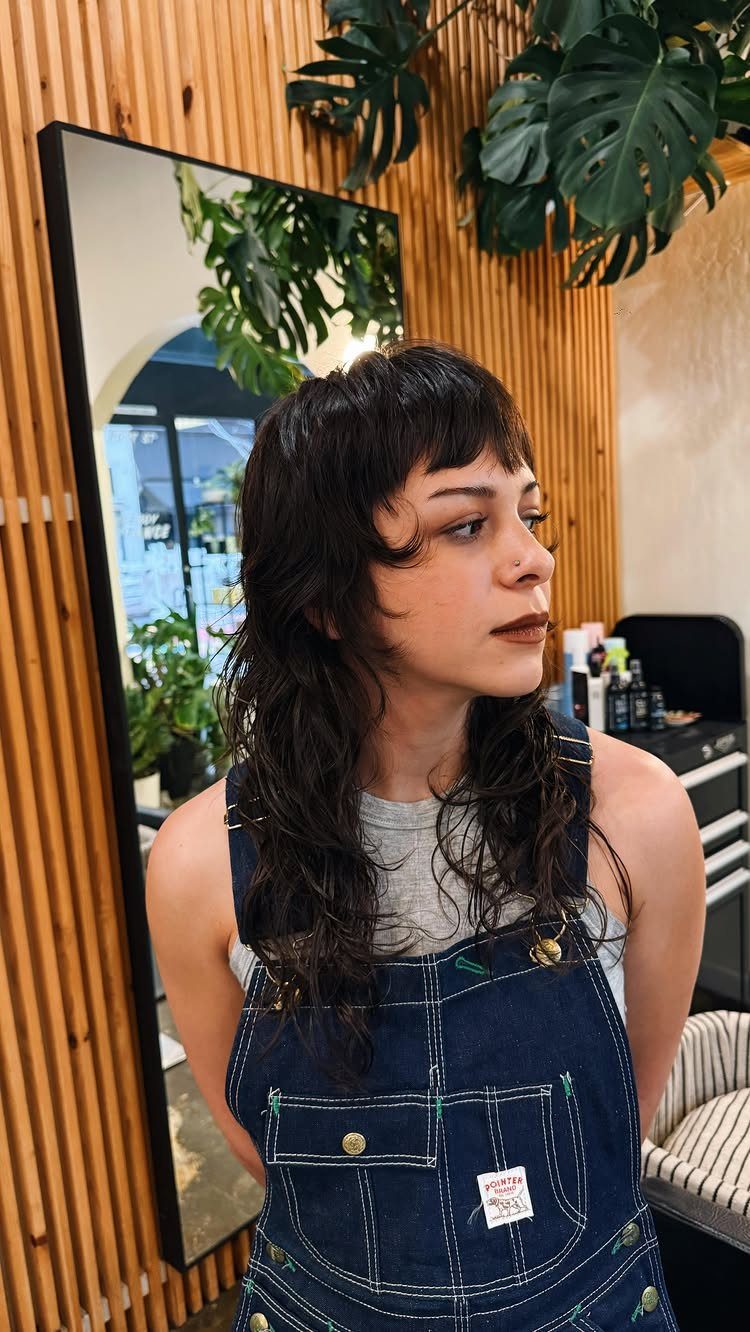
Short at the front and top, longer at the back: that proportion defines the shag mullet, and the layering keeps it soft instead of stark.
A short fringe sits over the forehead while the back falls well past the shorter sections.
Dark hair shows the shape clearly, which helps in photos for a stylist.
Expect regular trims to keep the front from blurring into the back. Styling is mostly tousling with your fingers and a little texture spray.
12. Choppy Layered Shag
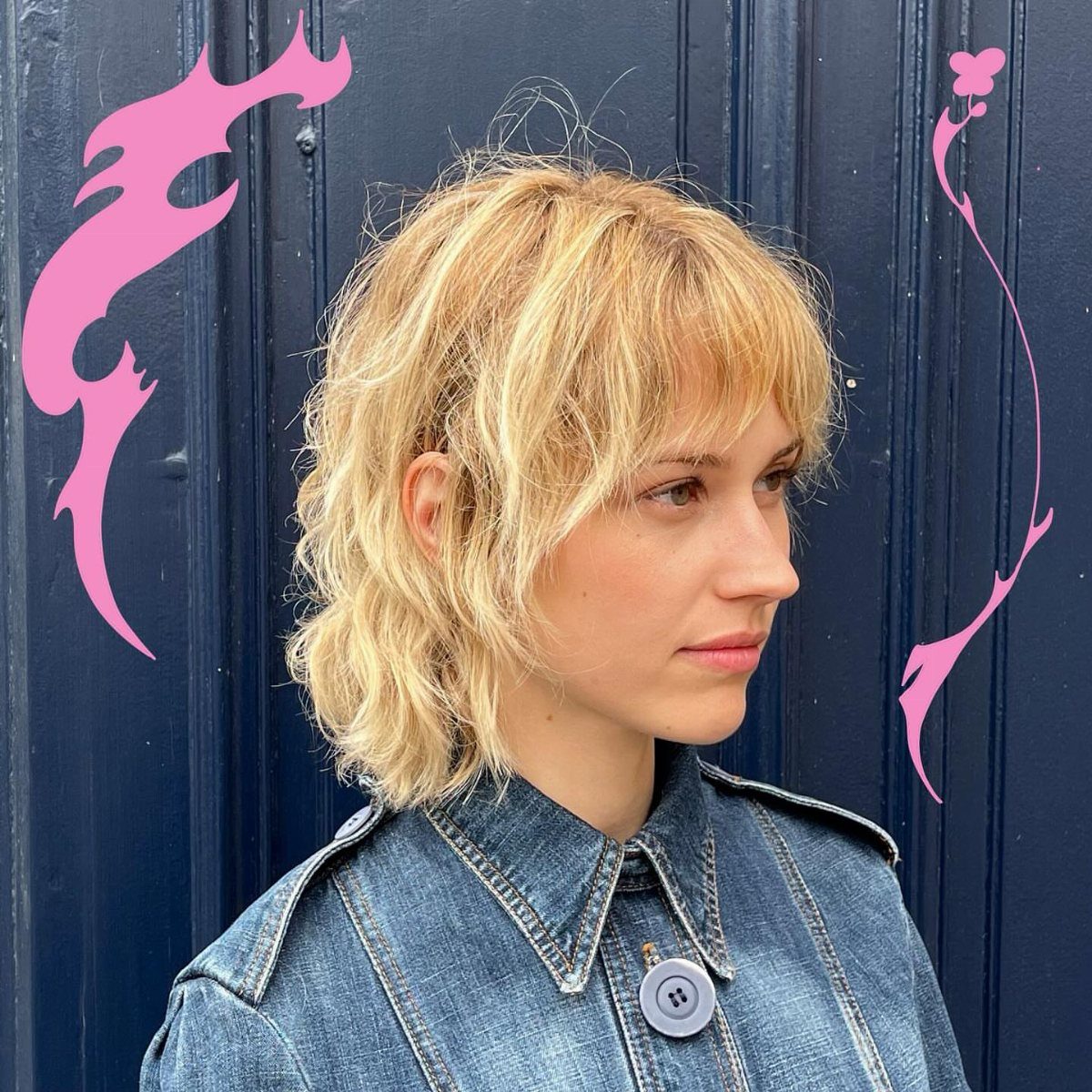
Uneven is the whole idea here: the layers are cut at visibly different lengths so the shag looks deliberately rough. Wispy bangs sit lightly over the forehead instead of forming a solid line.
Blonde shows the choppiness well, but a razor or point-cutting gives the same effect on any shade.
Choppy layers are cut with visible steps and a bit of disconnection, so say "choppy" and "piecey" to your stylist and skip the word "blended."
13. Tousled Shag

The layers sit close enough to mix when you tousle them, not separate into tiers. That mussed finish is built in, not added later, so the cut works with hair that bends or waves.
After washing, scrunch in a texturizing spray while the hair is still damp, then let it air-dry or hit it with the diffuser for a few minutes.
The more you touch it, the messier it looks. If your hair dries flat, flip your head forward and shake the roots loose before you walk out the door.
14. Chin-Length Layered Shag

Layers start above the chin and taper down, so the perimeter sits at chin level while the shortest pieces lift near the crown. The length is long enough to tuck behind your ears, short enough to dry fast.
Bangs land somewhere between the brow and the lash line, cut with enough texture that they blend into the layers on either side.
A round brush smooths the bangs forward in one quick pass; the rest gets finger-combed and left alone.
15. Piecey Pixie Shag

Short through the back and sides, longer and textured at the top: the pieces separate instead of lying flat, which is what makes this a shag instead of a plain pixie.
The fringe breaks into thin, uneven strands that fall over the forehead.
Rub a small amount of paste or wax between your hands, then work it through the top and the fringe, pulling the pieces apart as you go.
The color shows every separation, so silver and platinum make the texture read clearly from across the room.
16. Low-Maintenance Shag for Women Over 60
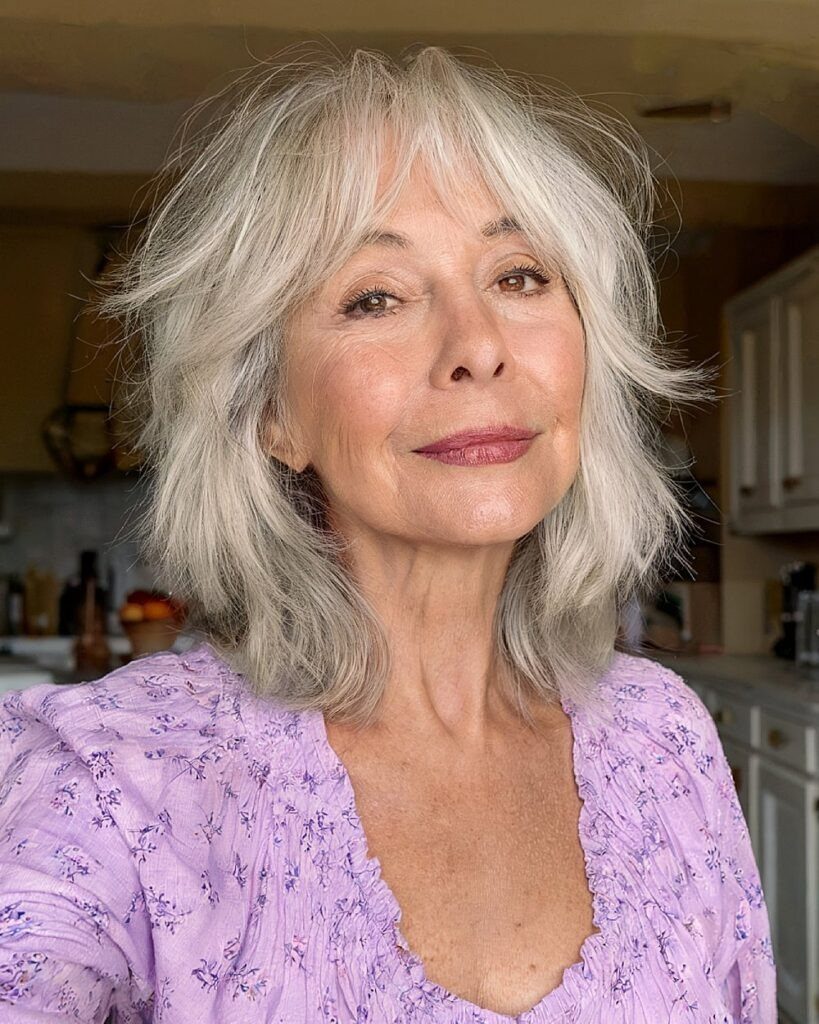
Short layers add movement without requiring heat tools or complicated styling. The bangs sit lightly across the forehead, and the rest of the cut falls into place after washing.
Silver hair often runs coarser than it did before, so a weekly mask keeps the texture soft.
The cut grows out gradually, which means you can stretch appointments if you trim the bangs yourself between visits. A texturizing spray gives a little grip if the hair feels too slippery.
17. Shaggy Bob with Curtain Bangs

Curtain bangs part in the middle and curve away from the face on both sides, which opens up the forehead and balances a wider jawline.
The bob sits just below the chin, layered enough to move but not so short that it loses weight.
Blow-dry the bangs with a round brush, rolling each side away from the center part. The rest of the bob can air-dry or get a quick pass with the dryer and a paddle brush.
Curtain bangs need regular trims to keep the curve clean, and they are the first part of this cut to look off when they get too long.
18. Edgy Shag with Undercut
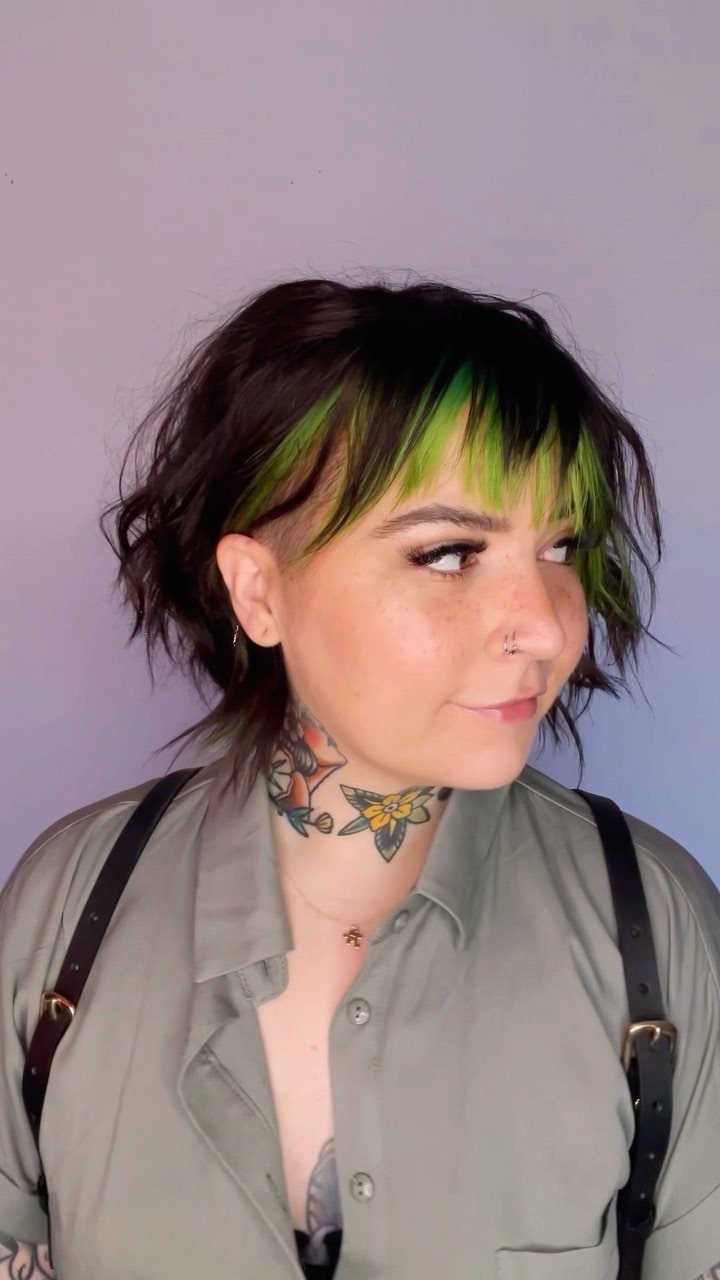
The undercut sits at the temple or behind the ear, trimmed close with clippers, while the top keeps its length and layers.
That contrast is the whole reason for the cut, so the shaved section has to stay short or it blurs into the rest.
Ask for the undercut to be taken down to a 1 or 2 guard, then let the stylist layer the top so it falls over the shaved side when you want to hide it.
The undercut needs frequent clipper touch-ups to stay crisp, but the shag on top can go longer between trims.
19. Shaggy Pixie with Volume
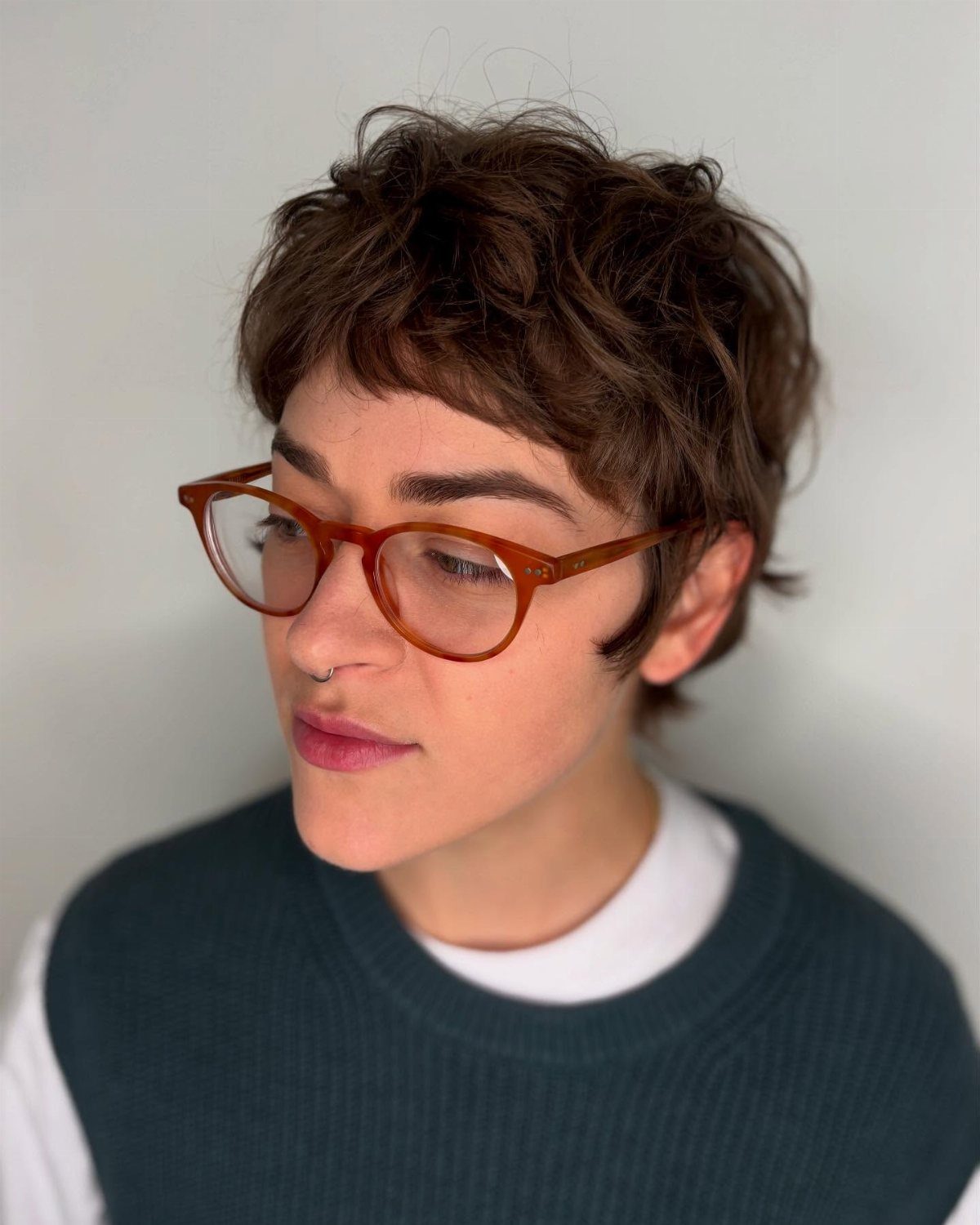
Height is the point of this cut: choppy layers on top stand up and out, so a pixie that could lie flat reads full and rounded instead. The sides stay short, which pushes the eye toward the crown.
Work a little mousse into damp roots, blow-dry with your fingers lifting the hair upward, then break the pieces apart with a dab of paste. I like it with glasses, since the volume balances the frames.
20. Bob with Piecey Layers

Rounded through the silhouette, with layers cut piecey so the ends separate instead of curling under in one smooth line: that is what keeps this bob from looking neat and flat. Wispy bangs soften the front.
Ask for point-cutting through the ends and say "piecey" out loud.
At home, scrunch a texturizing spray through damp hair and rough-dry it. A smooth bob sits still; this one looks better the more you mess with it.
21. Fluffy Curly Pixie
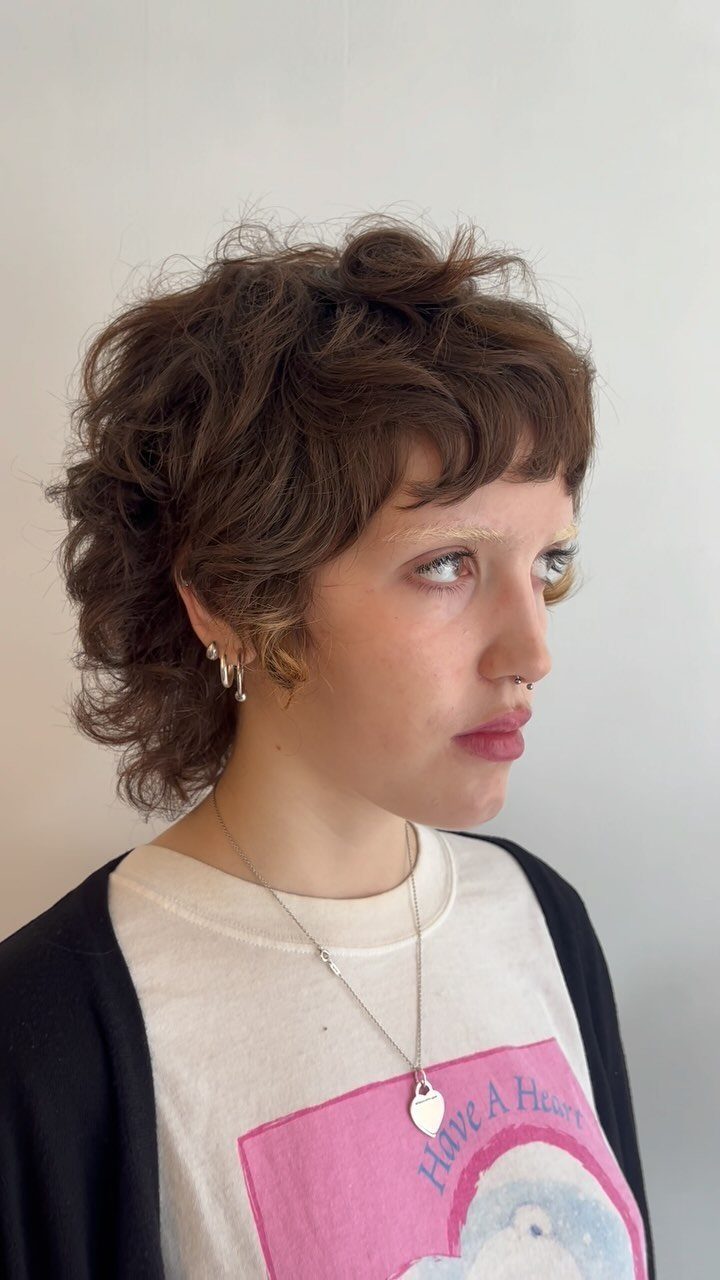
Curls do the work here. A short crop with enough length on top lets the curl spring up into a soft, fluffy cloud instead of lying against the head, and the shaggy layers keep that cloud from going triangular.
Cut it dry, or ask the stylist to check each curl’s bounce before trimming, since curls shrink when short.
Style with a light curl cream scrunched into damp hair, then fluff the roots with a pick. Skip heavy gels; they weigh the fluff down.
22. Silver-White Shaggy Hair
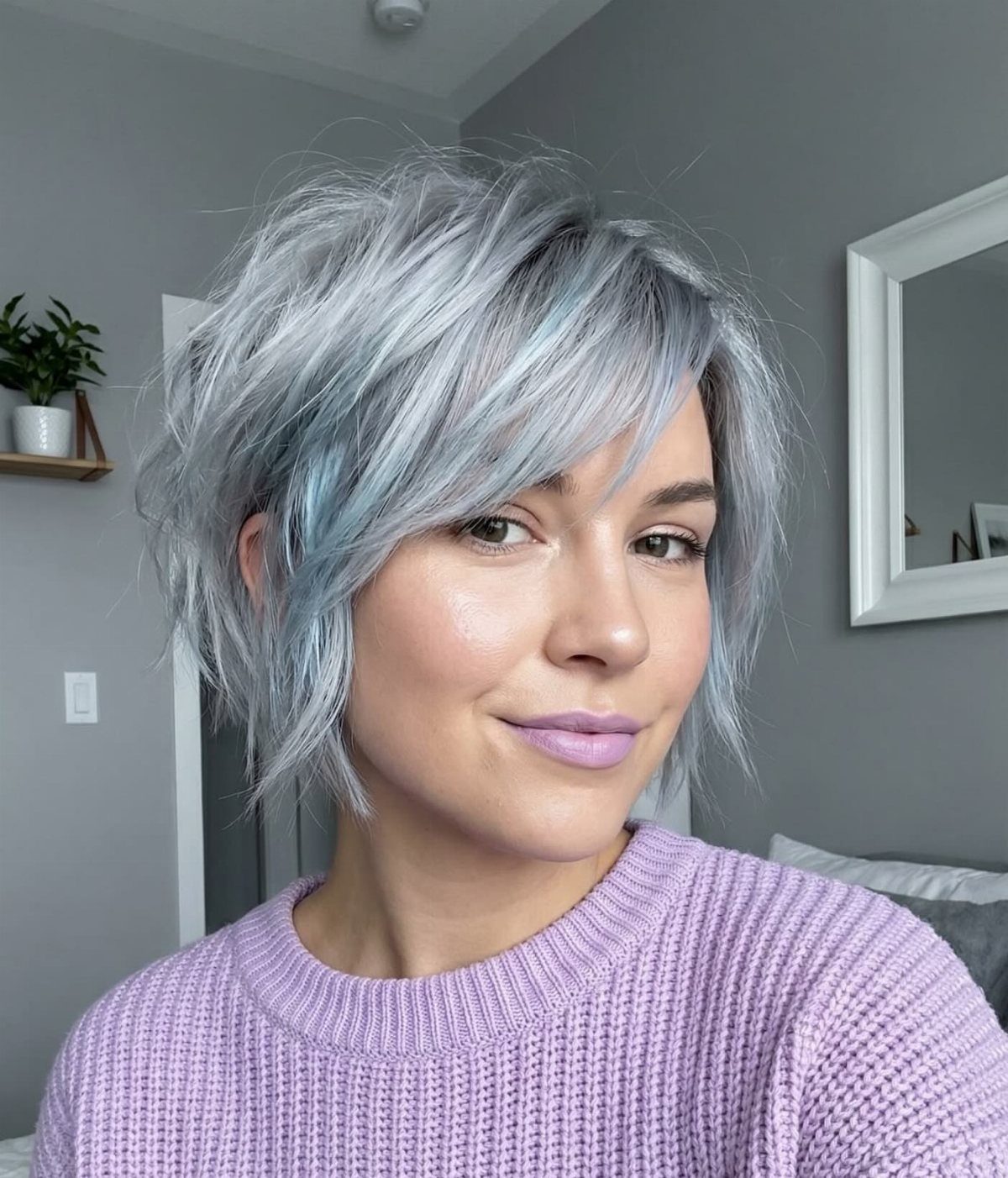
Silver-white shows every layer, so the shag does not need much cutting to look dimensional. Side-swept bangs blend into short, feathery layers around the face.
Light shades like this tend to look dull or yellow without care, so a purple shampoo used once a week keeps the tone clean.
I would pair it with a smoothing cream on the ends, since bleached or pale hair dries out first. Expect regular trims to keep the shape crisp.
23. Asymmetrical Shaggy Pixie for Straight Hair
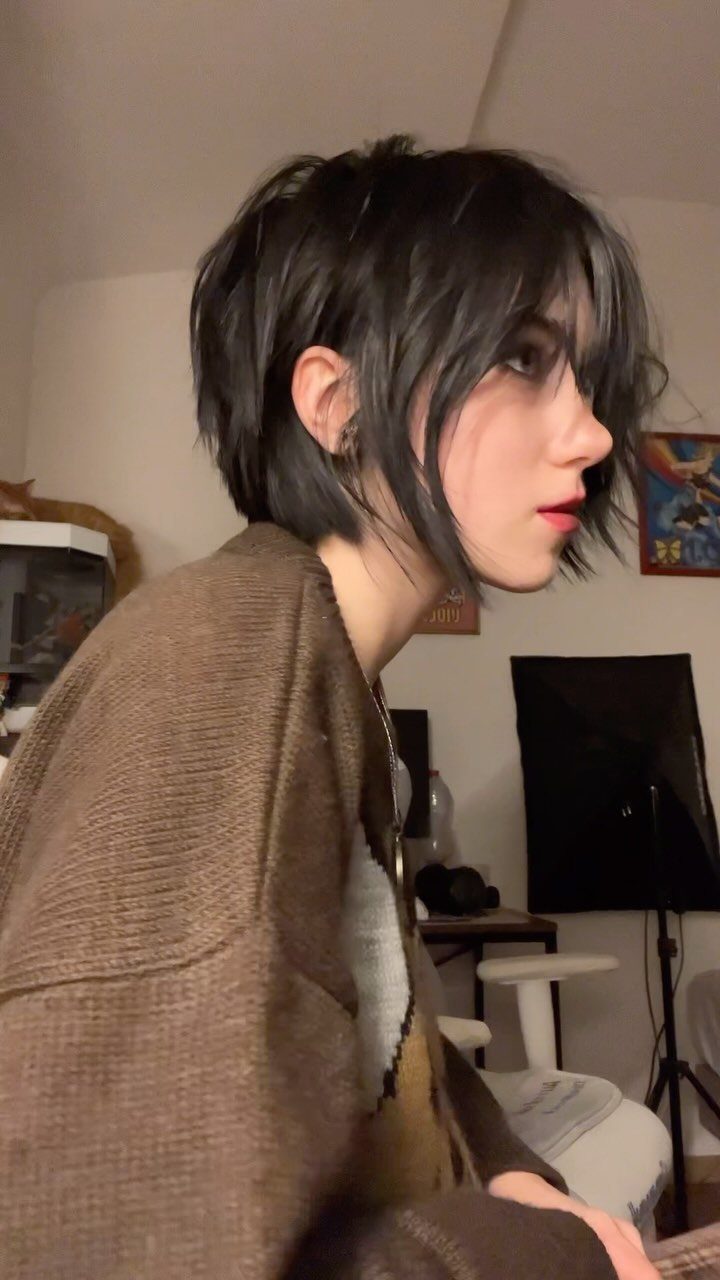
Straight hair holds a hard line better than any other texture, which is why an asymmetrical cut suits it. One side stays short and close; the other carries a long, side-swept fringe that falls across the face.
Decide which side you want shown before you sit down, and part your hair there.
A flat iron or a quick blow-dry with a paddle brush keeps the long side sleek, and a pea-sized bit of paste roughs up the short side. The long fringe needs trimming often.
24. Pixie Shag with Bangs
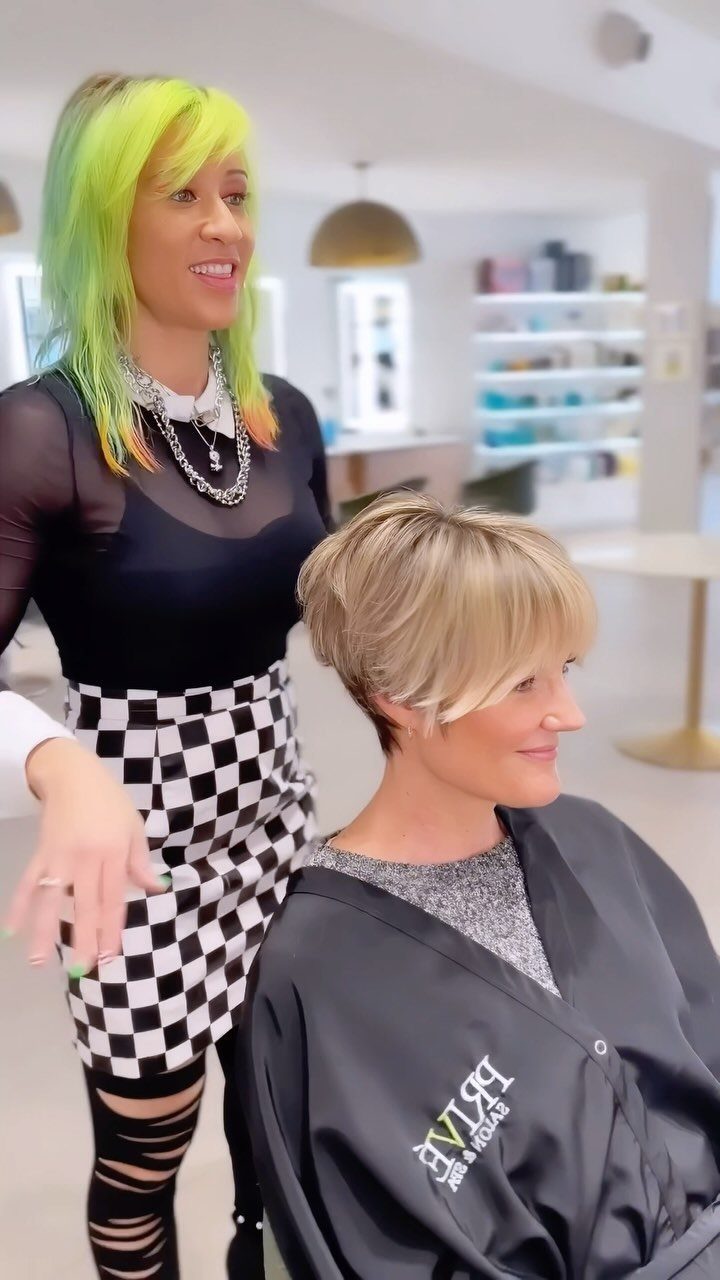
Fringe is what separates this from a plain pixie shag: the front pieces are cut long enough to sweep to the side, while the crown and back stay short and textured.
Ask for the bangs to blend into the side layers instead of ending in a hard line.
Blow-dry them to the side with a small round brush, then rub a little wax between your fingers and pinch the ends into pieces.
I would keep the bangs slightly longer than you think you need; they can always be trimmed shorter.
25. Masculine Short Shag
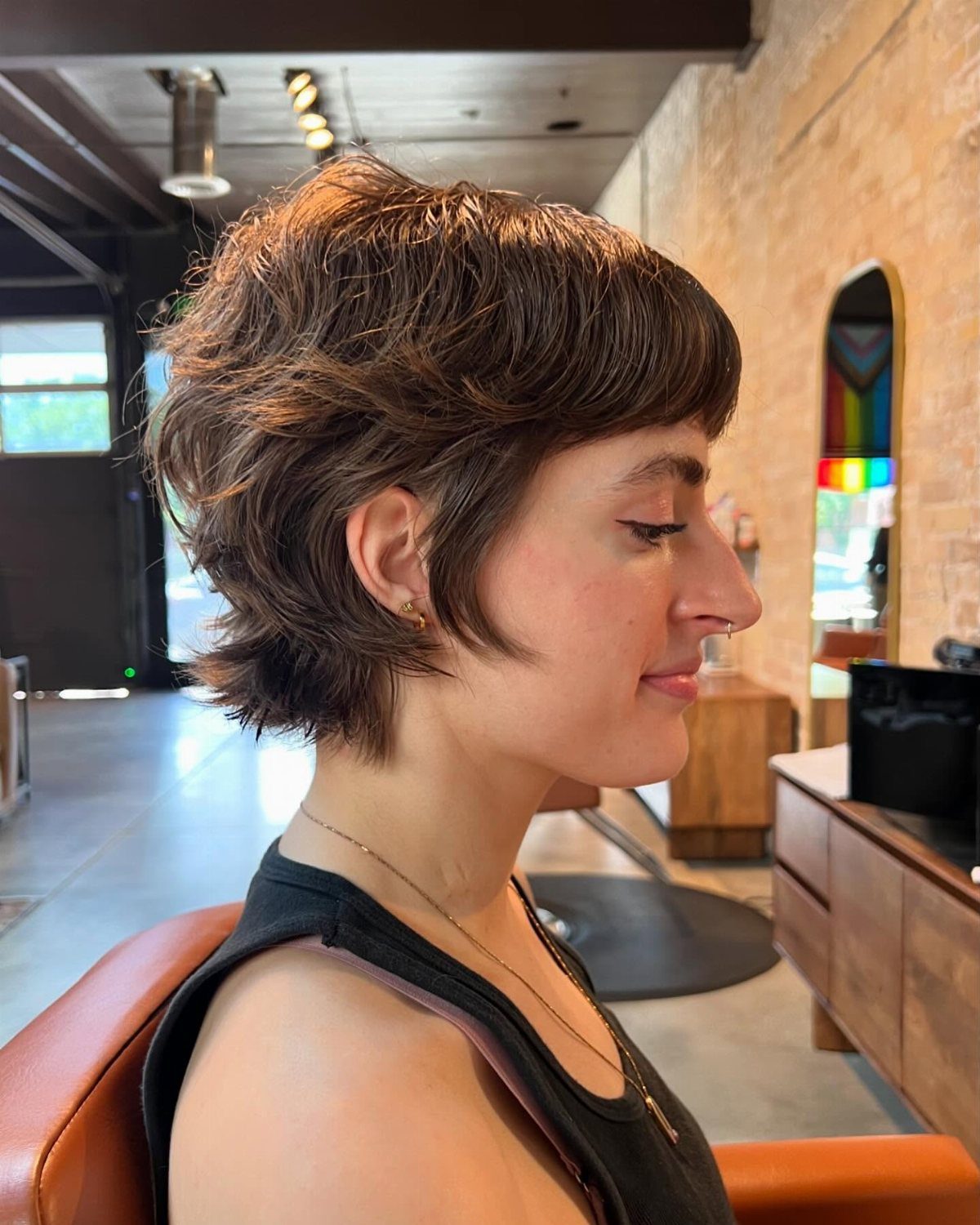
A short shag can lean masculine when the layers stay cropped and the long fringe is left to fall loose, with no softening curls or wisps. The shape reads as a cut first and a style second.
Ask for the sides and back to stay close, with the fringe cut long and uneven on top.
A dab of matte paste rubbed through dry hair keeps the finish rough instead of glossy. I would skip the round brush; this one looks best when it is just pushed around with your fingers.
26. Short Shag with Face-Framing Layers
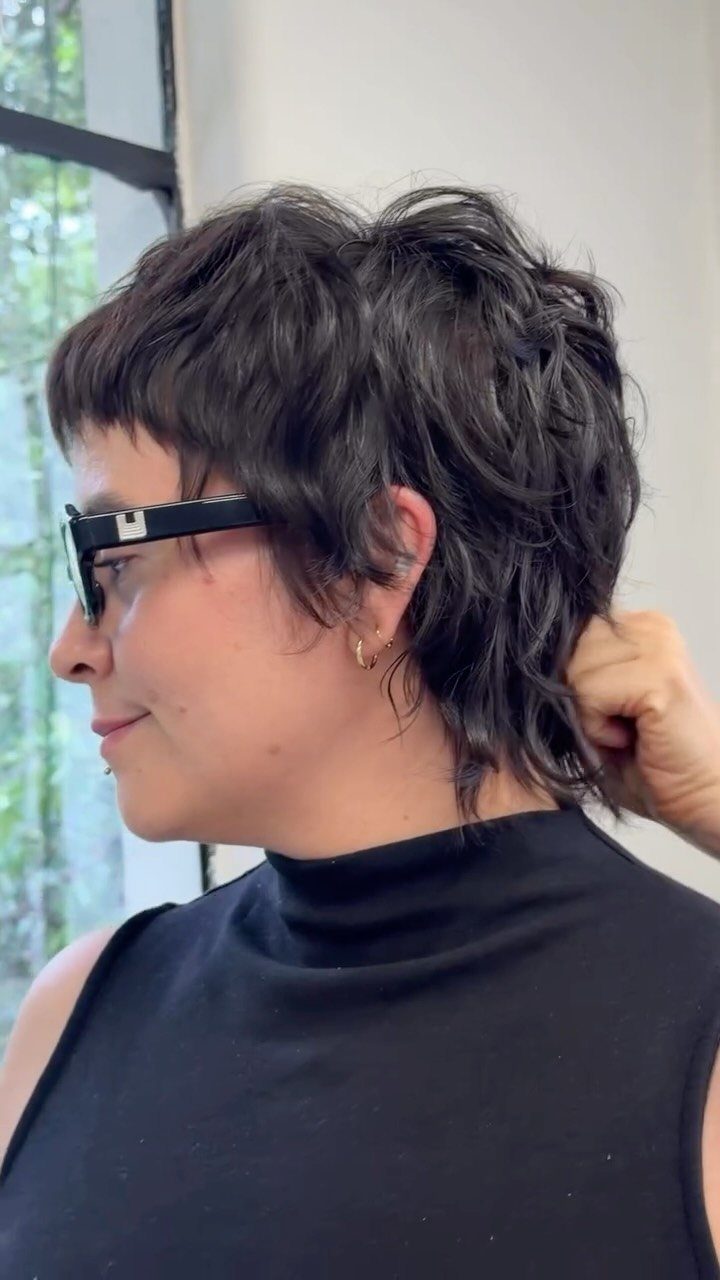
Layers cut around the face are what make this shag work for glasses wearers. They stop at the cheekbones and jaw, so the shorter pieces sit near the frames instead of getting tangled in them.
Ask for wispy bangs and face-framing layers cut shorter than the rest, then point out which feature you want to show.
Dark hair makes the layers easy to read. Tuck the front pieces behind one ear if they brush the lenses, and keep the nape layers loose with your fingers.
27. Smooth Shaggy Lob
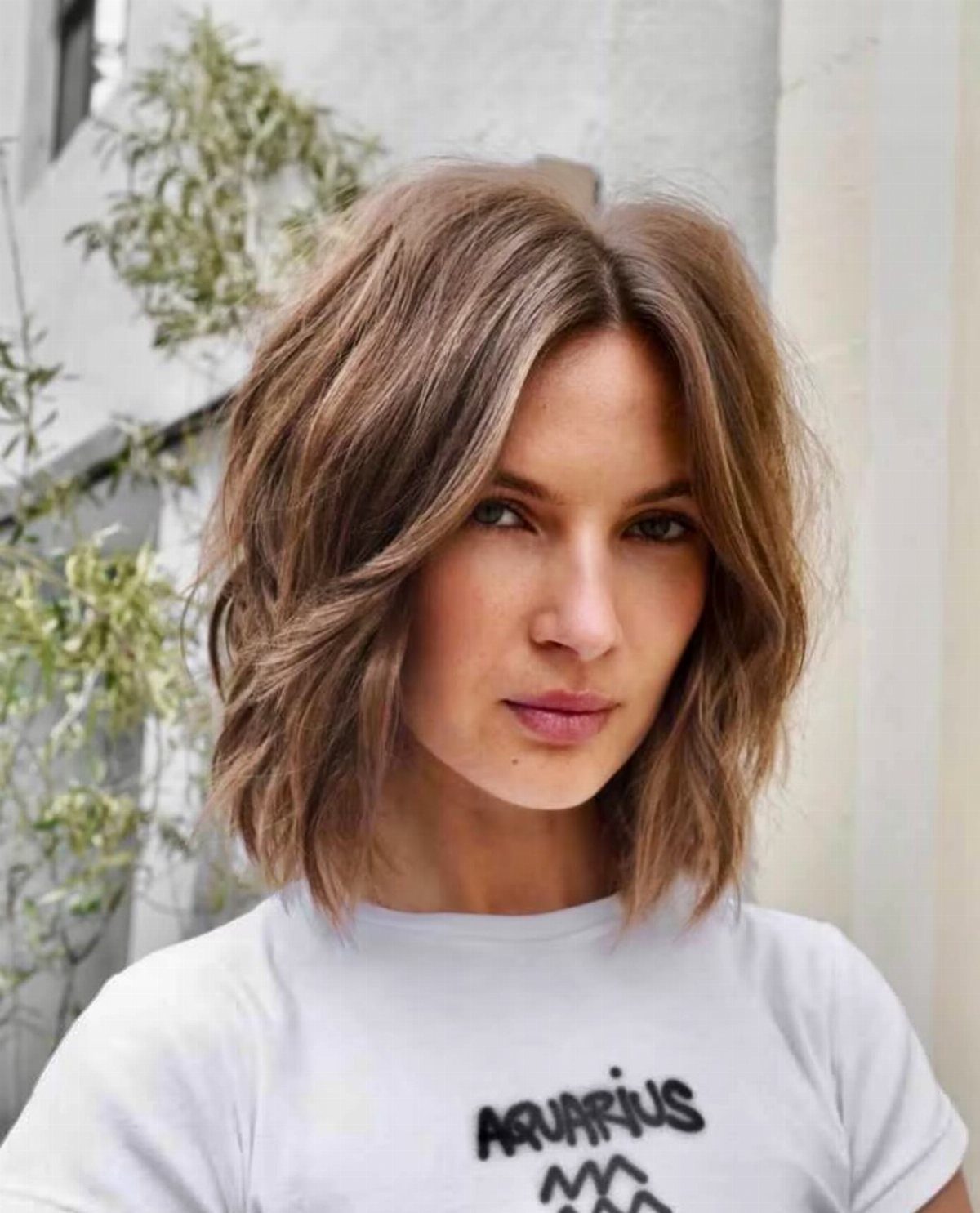
Shoulder length is what separates this from the choppier shags: the layers are soft and blended, so the lob keeps a smooth, finished line. A center part gives it a clean, balanced frame.
I would ask for long, gradual layers instead of short, steep ones, which keeps the polish.
Blow-dry with a paddle brush, then smooth the ends with a little cream. It costs more morning time than a tousled shag, but less than a blunt lob that has to stay perfect.
28. Short Shag with Highlights
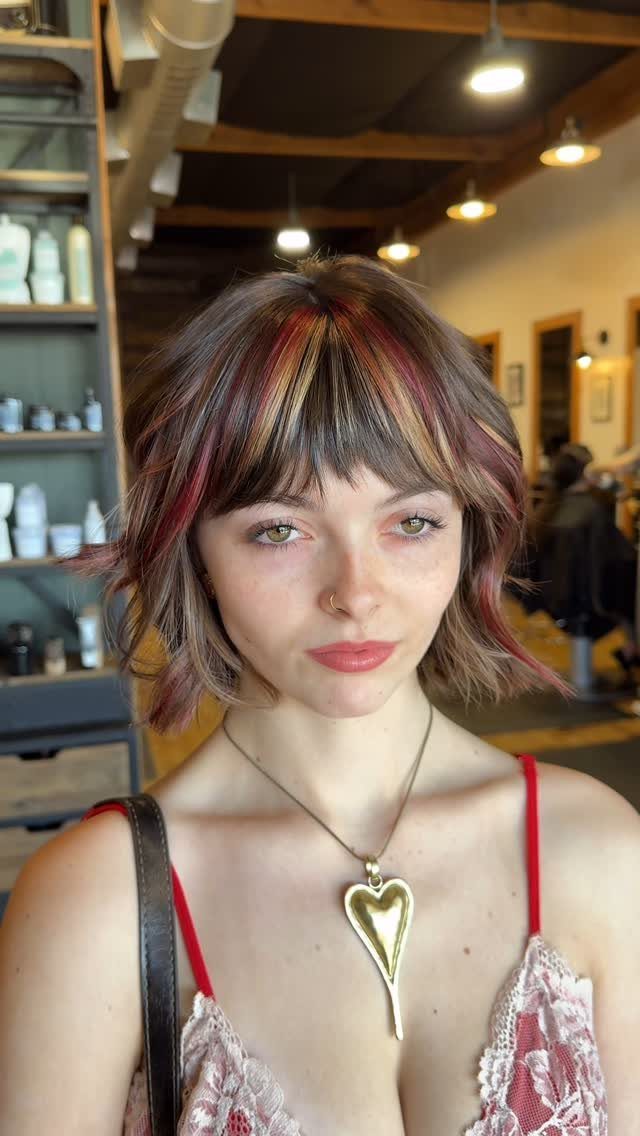
Highlights in red and blonde give a short shag its depth, because the color sits in the layers and lets each piece show against the next. Subtle is the right call here; heavy stripes flatten the cut.
Bring a photo to the salon and say you want soft, blended highlights placed through the layers and the bangs.
I like warm tones on a brown base. Short hair grows out fast, so expect to refresh the shape before the color needs attention.
29. Shag with Blunt Bangs
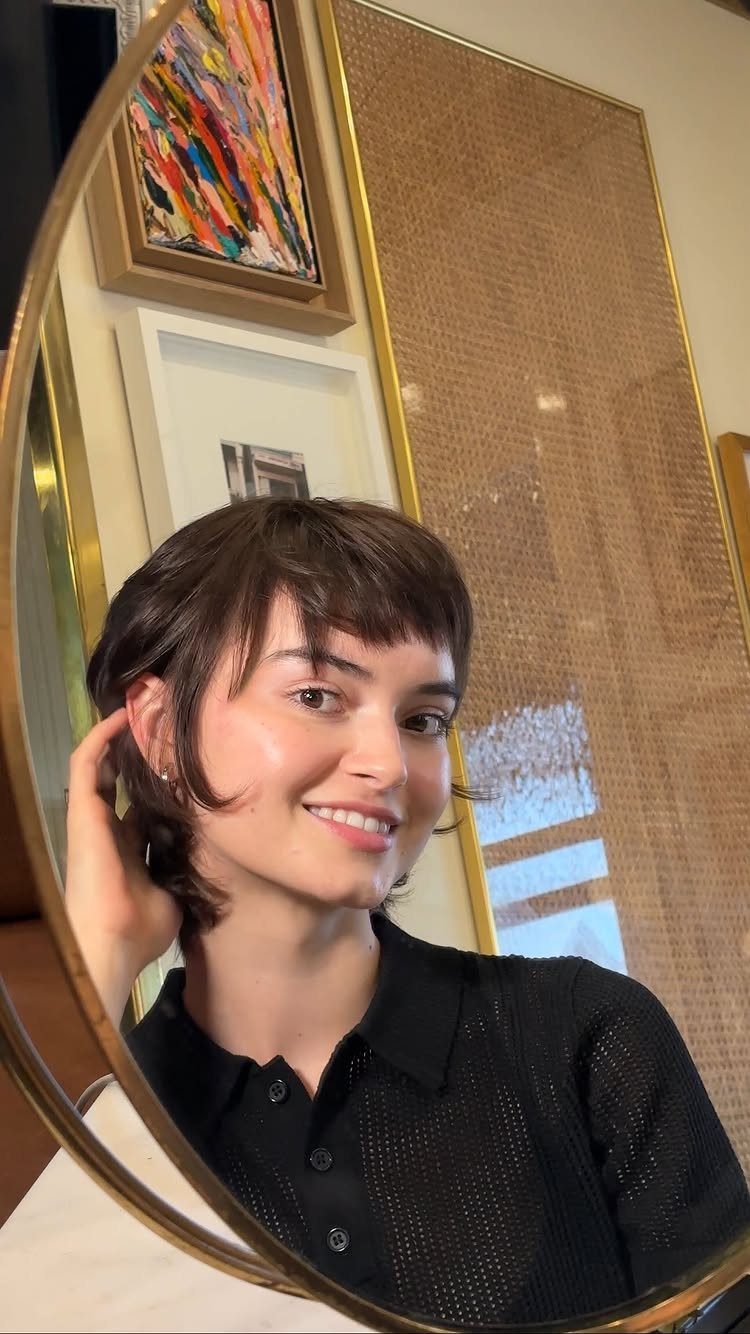
Blunt bangs give a shag one straight edge to push against, and the choppy layers behind them keep the whole cut from looking severe. The contrast is the appeal.
Ask for the bangs to be cut straight across, with the rest of the shag layered and rough.
Straight, fine-to-medium hair holds the line best. Blunt bangs show every inch of growth, so plan on frequent trims, and a quick pass with a flat iron keeps them from kinking.
30. Shag with Center Part
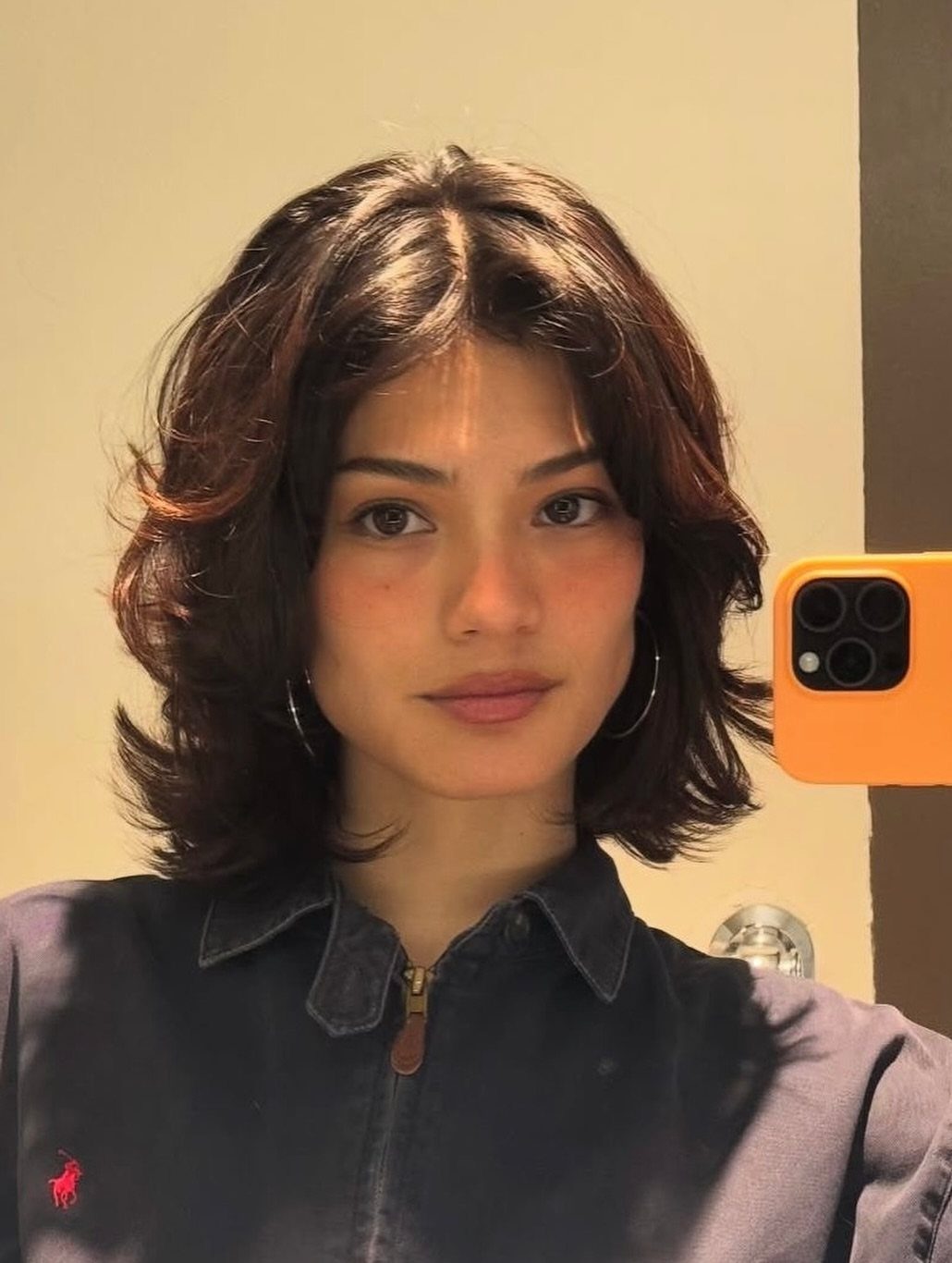
A center part splits a shoulder-length shag evenly and lets the face-framing layers fall the same on both sides. It suits symmetrical faces well, and it makes the layers look intentional instead of messy.
Part it in the mirror with a comb while the hair is damp, then let it dry in place so the part holds.
A side part would break the balance, so train the roots by parting the same way each day. Finger-comb the ends and leave them loose.
31. Messy Shag with Layered Bangs
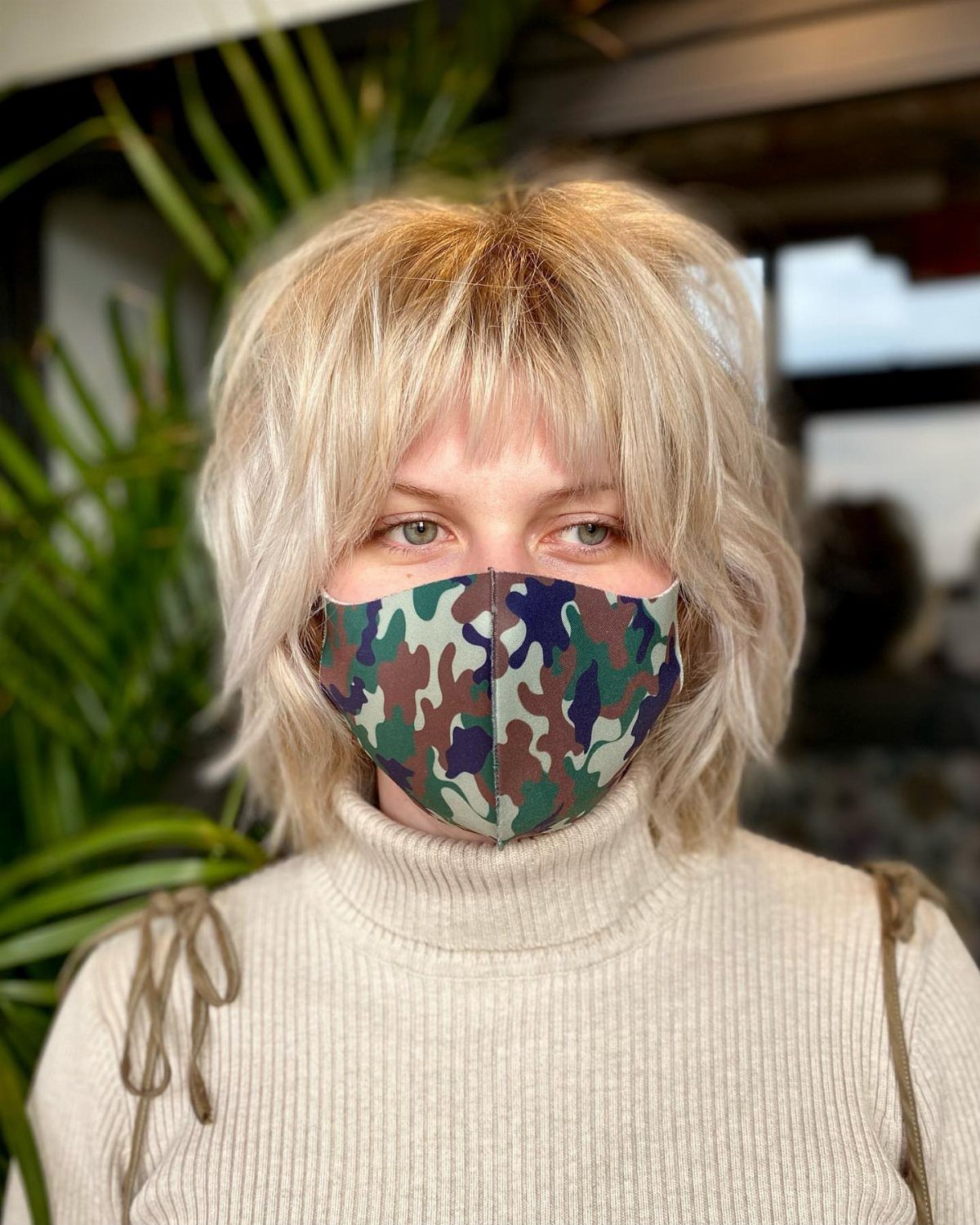
Layered bangs break into uneven pieces that fall across the forehead and blend into the choppy layers around them, so nothing stays in one neat line.
The mess looks intentional because the cut is built that way, not tossed around after.
The bangs need regular trims to keep the layers from blending too far back into the shag.
32. Textured Pixie Shag
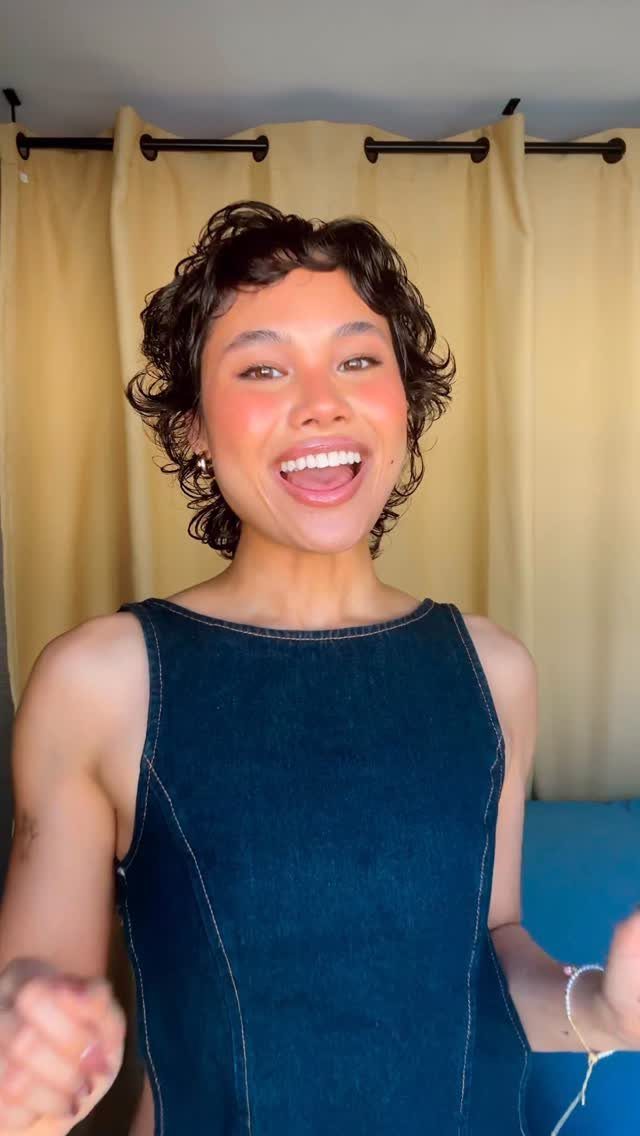
Choppy layers feathered through the crown lift the curl up and out instead of letting it sit flat against the head, which is how a pixie stays textured instead of tight.
The cropped back and sides keep the focus on the crown.
Cut it dry so each curl’s spring stays true to length. Fine curls benefit most from the layering; thick curls need less cutting to get the same lift.
Styling Products and Techniques
Sea salt spray is the one product the list never mentions, and it suits this cut well. A light mist on damp or dry hair builds a tousled look, but use it sparingly because salt dries out the strands.
Dry shampoo earns a spot on the shelf too. Work it into the roots on non-wash days to soak up oil and bring back lift at the crown.
A lightweight oil belongs on the ends only, a drop or two to smooth dry tips and tame frizz. Anything heavy flattens the layers, so I stick to mousses and light sprays.
For hold, a flexible cream or paste defines layers and fringe without crunch. Wavy and curly hair does best with a curl enhancer or light gel on damp hair only.
My short kit: mousse, texturizing spray, dry shampoo, and one flexible-hold cream or paste.
Cut Customization and Upkeep
Short shags lose their shape fastest around the crown and fringe, so book trims every 6–8 weeks. Stretching past that is possible with a looser shag, but the top layers will blur first.
I refresh mine mid-week with texturizing spray or a fingertip of styling cream worked through the ends. A tiny amount of serum smooths the tips without weighing them down, so the cut reads choppy instead of frizzy.
Sleep matters more than most people expect. I clip it loosely on top before bed, or switch to a silk case, and the shape lasts through morning.
Before the appointment, think about 3 things: your hair texture, your face shape, and how many minutes you actually give your hair each morning.
Layer placement and length should follow those, not just the photo. If the routine is short, ask for layers that fall into place with finger-combing.
Frequently Asked Questions
What does a short shaggy haircut look like?
A short shag has choppy, textured layers cut at varying lengths to create movement and separation. The ends are either point-cut or razored so they fall unevenly, giving the cut a lived-in, tousled finish instead of a smooth line.
Bangs or fringe often sit lightly over the forehead, and the overall shape reads as deliberately rough rather than polished.
What is the difference between layered and shaggy hair?
Layered hair is cut in graduated tiers but can still look smooth and blended, while shaggy hair takes those layers and chops them into uneven, textured pieces.
A shag shows visible separation between the lengths and relies on that rough, piecey finish. Standard layers can sit neatly; shag layers are cut to look deliberately messy.
Are shags still in style in 2026?
Short shags are trending in 2026, built around natural texture and movement instead of stiff styling.
The cut works with how hair dries on its own, grows out without hard lines, and looks finished without heat tools. That low-effort appeal is why it keeps showing up.
Are shags good for fine hair over 50?
A shag adds lift and the appearance of fullness to fine hair, especially when layers start at the crown and taper lightly toward the ends.
The cut removes weight that drags fine strands flat and creates separation that makes the hair read as thicker. Short layers near the face and a light fringe give density where it shows most.
How do I maintain a short shag between cuts?
Book a trim every 6 to 8 weeks to keep the layers from blurring together, and trim the bangs yourself if they start poking your eyes before your next appointment.
A dry texturizing spray brings back lift and separation when you need it between shampoos. A silk pillowcase cuts down on frizz while you sleep, so the shape holds longer.
How do I customize a shaggy cut for my face shape?
Longer layers angled forward around the chin counter a round face by drawing the eye down, while shorter layers that sit high at the crown add height for balance.
A square jaw softens with feathered or wispy ends near the jawline, and a heart-shaped face benefits from volume placed low, near the cheeks, instead of at the crown.
Tell your stylist which feature you want framed or minimized before the first cut.





