Upkeep decides which short pixie cut is yours: a buzzcut pixie is nearly instant in the morning, while a finger-wave pixie or a two-tone pixie asks for a styling session or two sets of touch-ups.
The list runs from a dab of paste and trims every 3 weeks for blunt fringe to a grown-out shape you only trim every 6 to 8 weeks.
Pick by how many minutes you’ll spend each morning and how often you’ll sit in the stylist’s chair, then check the hair type and face shape sections to adjust the details.
1. Textured Pixie
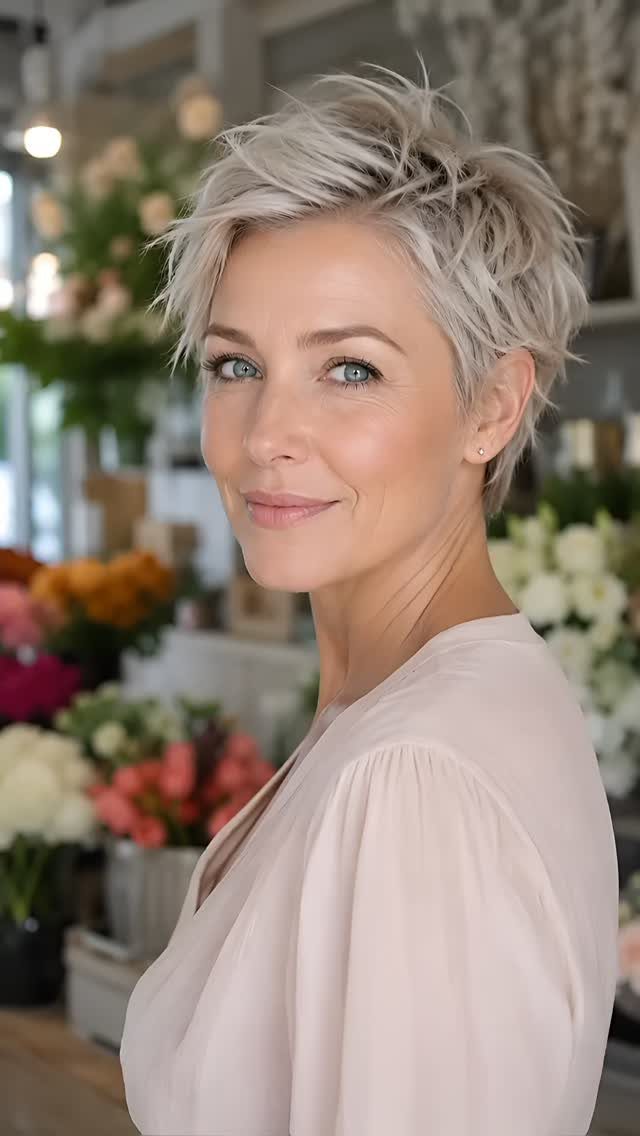
Layers cut through the crown and sides give this pixie its movement, and the feathery ends are what keep silver-blonde from looking flat.
Ask for point cutting or razored layers so the ends separate instead of sitting in one solid block.
A little matte paste worked through with your fingertips is enough. I prefer it to wax on fine hair, which gets heavy fast.
2. Side-Parted Pixie
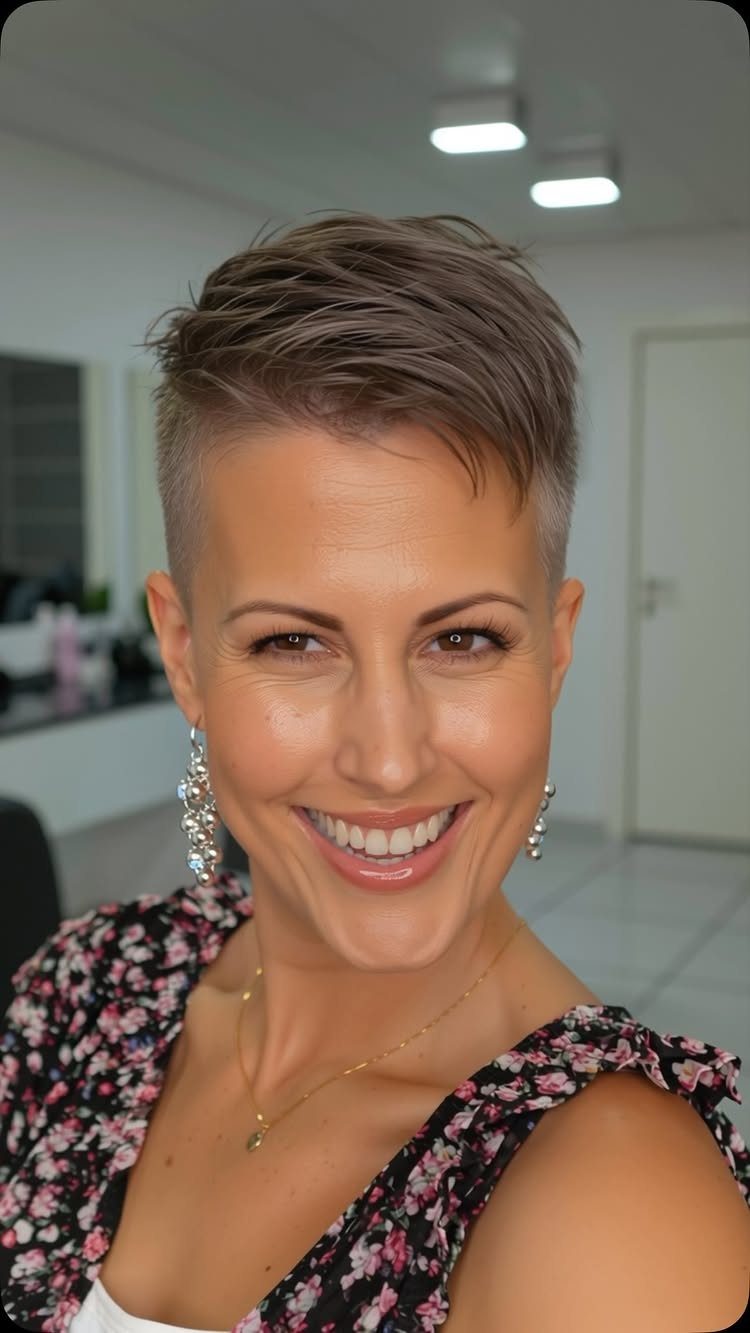
Moving the part deep to one side changes a pixie’s whole shape: it adds lift at the crown and sweeps the longer top layer across the forehead.
It shifts the weight to one side and gives the top a clean sweep, which reads polished on brown hair.
Part it where the hair falls naturally, then push it deeper for drama. A comb and a light-hold pomade will set the line, and a quick blast of the dryer, brushing the hair across, helps it stay.
3. Micro Bangs Pixie
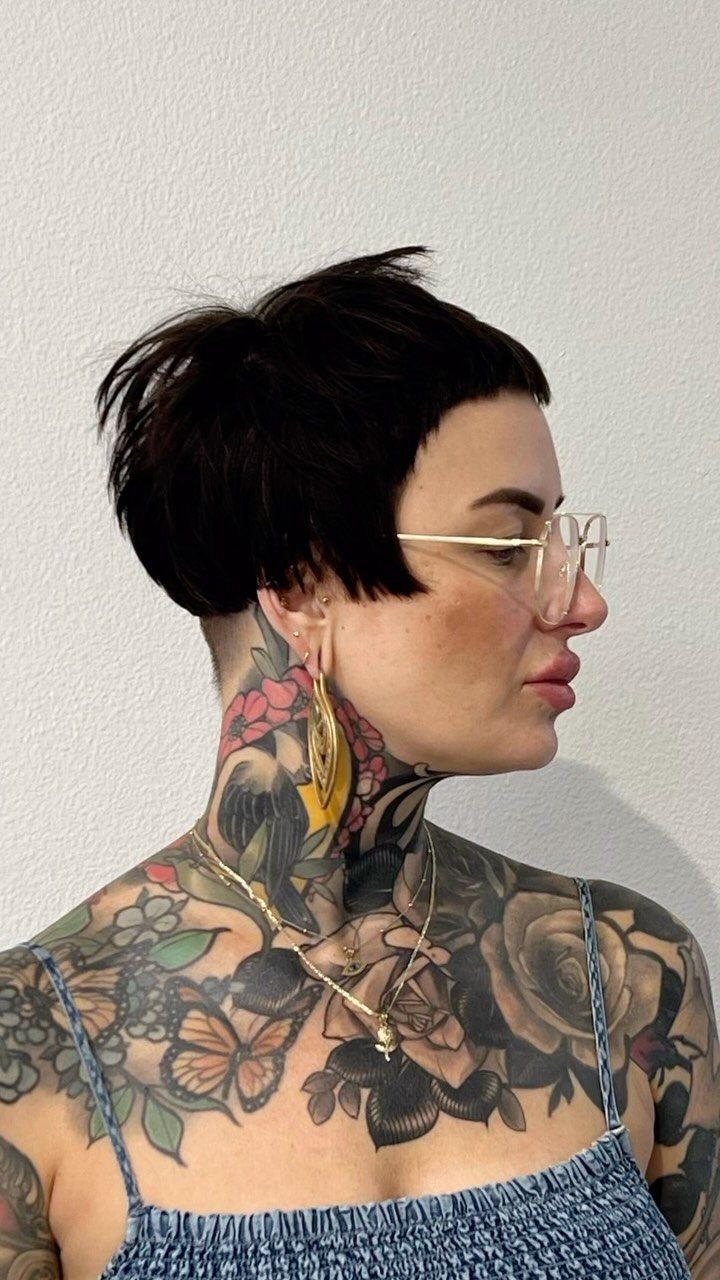
Bangs cut well above the brows make the face the main feature. On a dark pixie like this, the short, graphic line looks sharp, and it pairs nicely with glasses.
Expect to book trims often, because micro bangs lose their shape fast.
Micro bangs should be cut dry. Wet hair stretches and then shrinks as it dries, so you can’t judge the length until it dries, and a dry cut shows exactly where the fringe will land before the stylist commits.
4. Pixie with Fringe
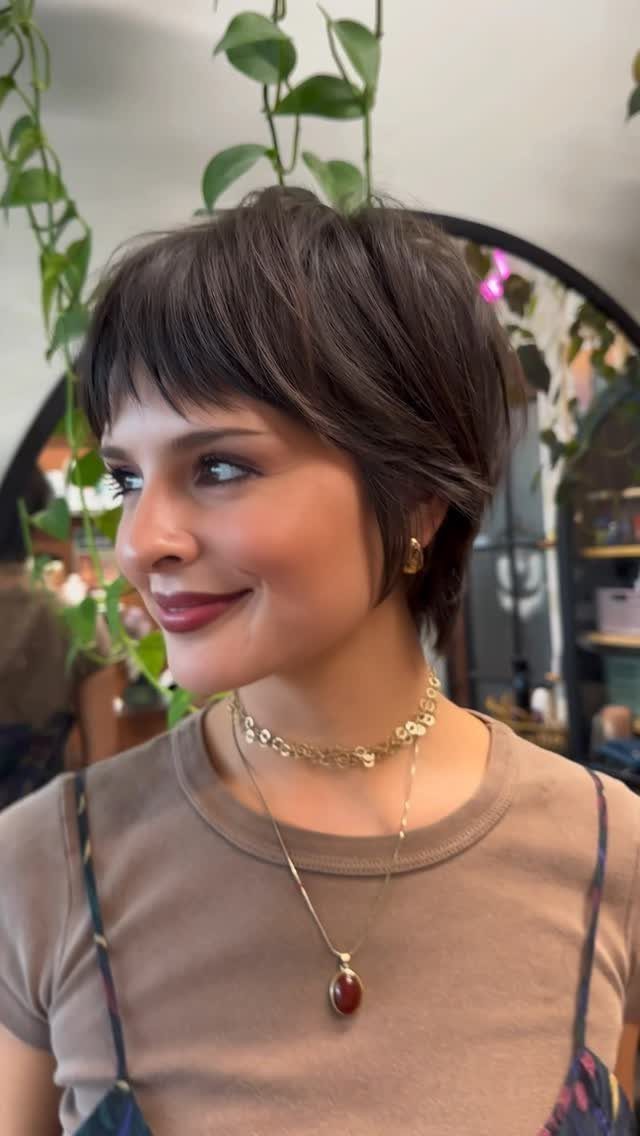
Fringe is what lets a pixie change moods. Side-swept feels soft, blunt feels bold, wispy feels light, and choppy feels edgy, so decide which one you will actually style each morning before sitting down.
On a dark brown cut, I would go choppy or side-swept. Bring a photo and ask for the fringe to be cut slightly longer, since you can always shorten it later.
5. Afro Pixie
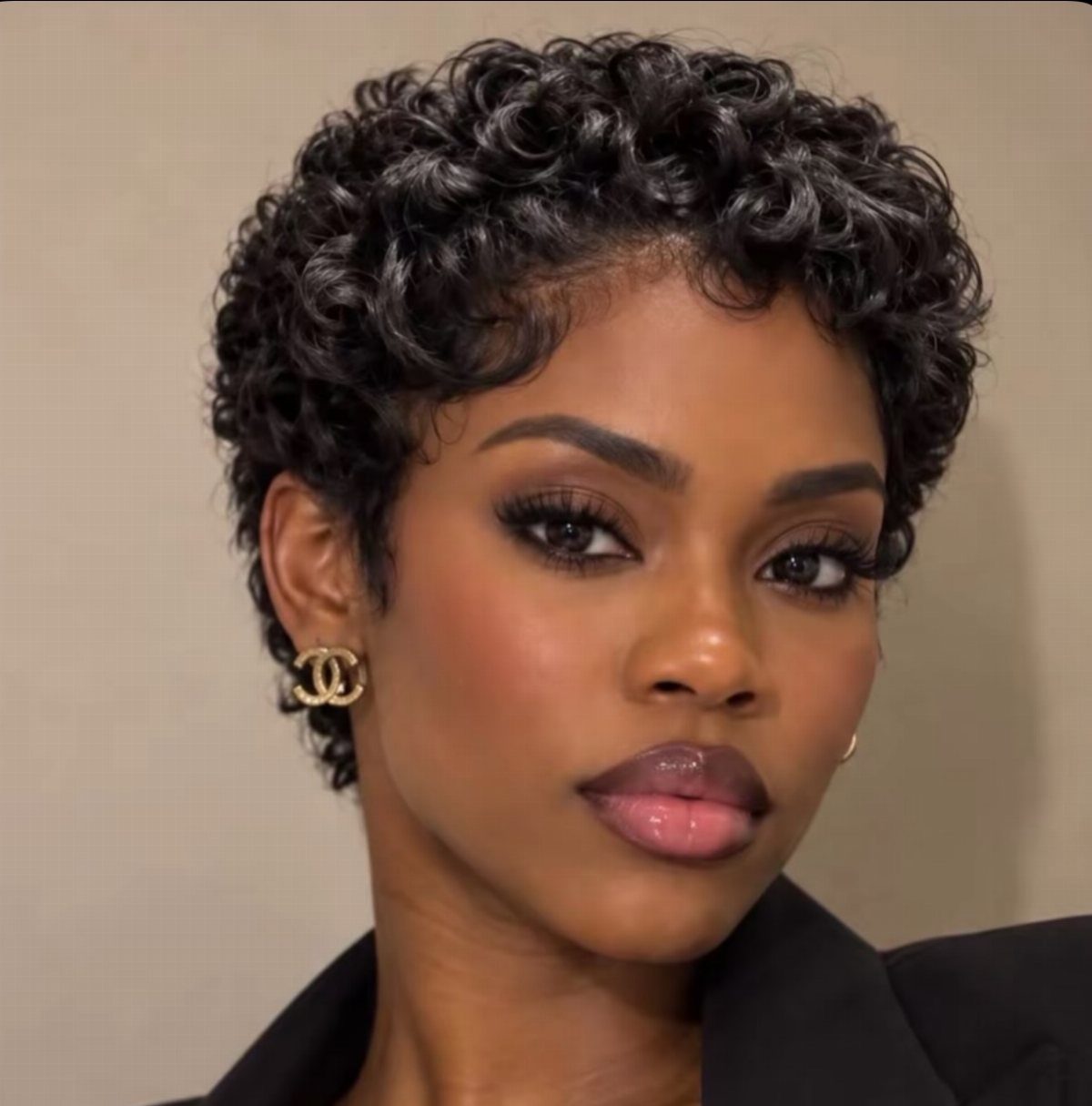
Curls and coils already hold a pixie shape without much help, which is why the Afro pixie works so well. The cut rounds out the natural volume and keeps the silhouette even.
A stylist who shapes curly hair dry will see the true outline. Moisturize regularly and fluff with a pick; with gold earrings and a strong blazer, the whole look needs little else.
6. New Wave Pixie
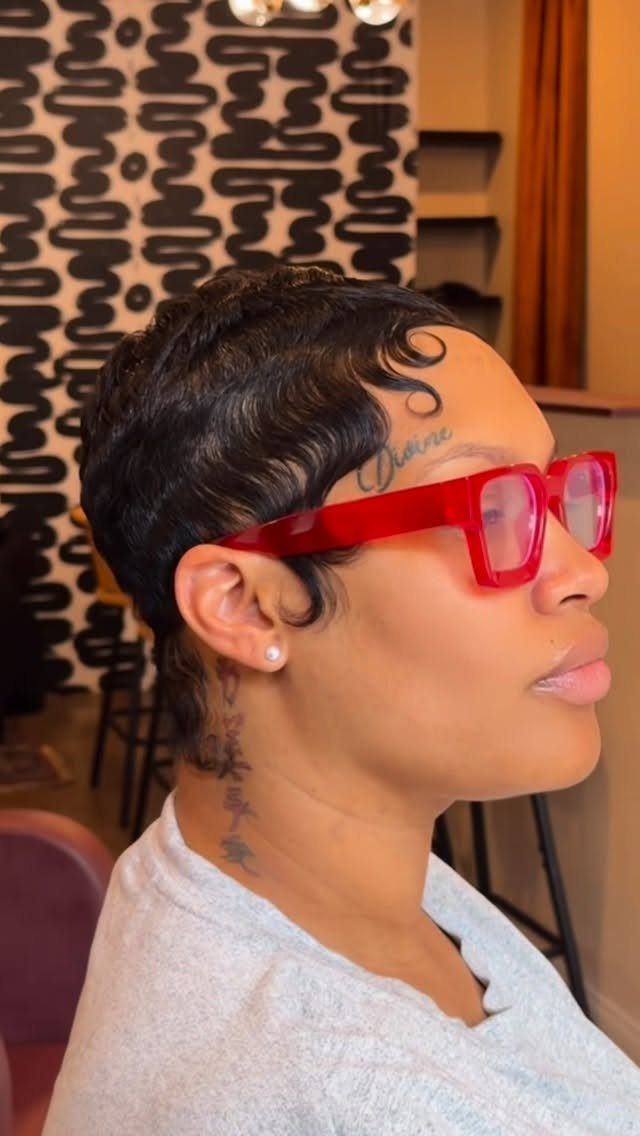
For a New Wave pixie on dark hair, leave the hairline a little longer and shape the curls there with a light-hold gel or pomade so they stay defined and sculpted.
The waves are set into the hair, not left loose, so the cut looks styled and deliberate.
Ask for enough length on top to mold. A setting lotion and a comb, plus a gel or mousse for hold, shape the curls, and a pair of bold glasses suits it well.
7. Zoë Kravitz’s Neat-Sided Pixie
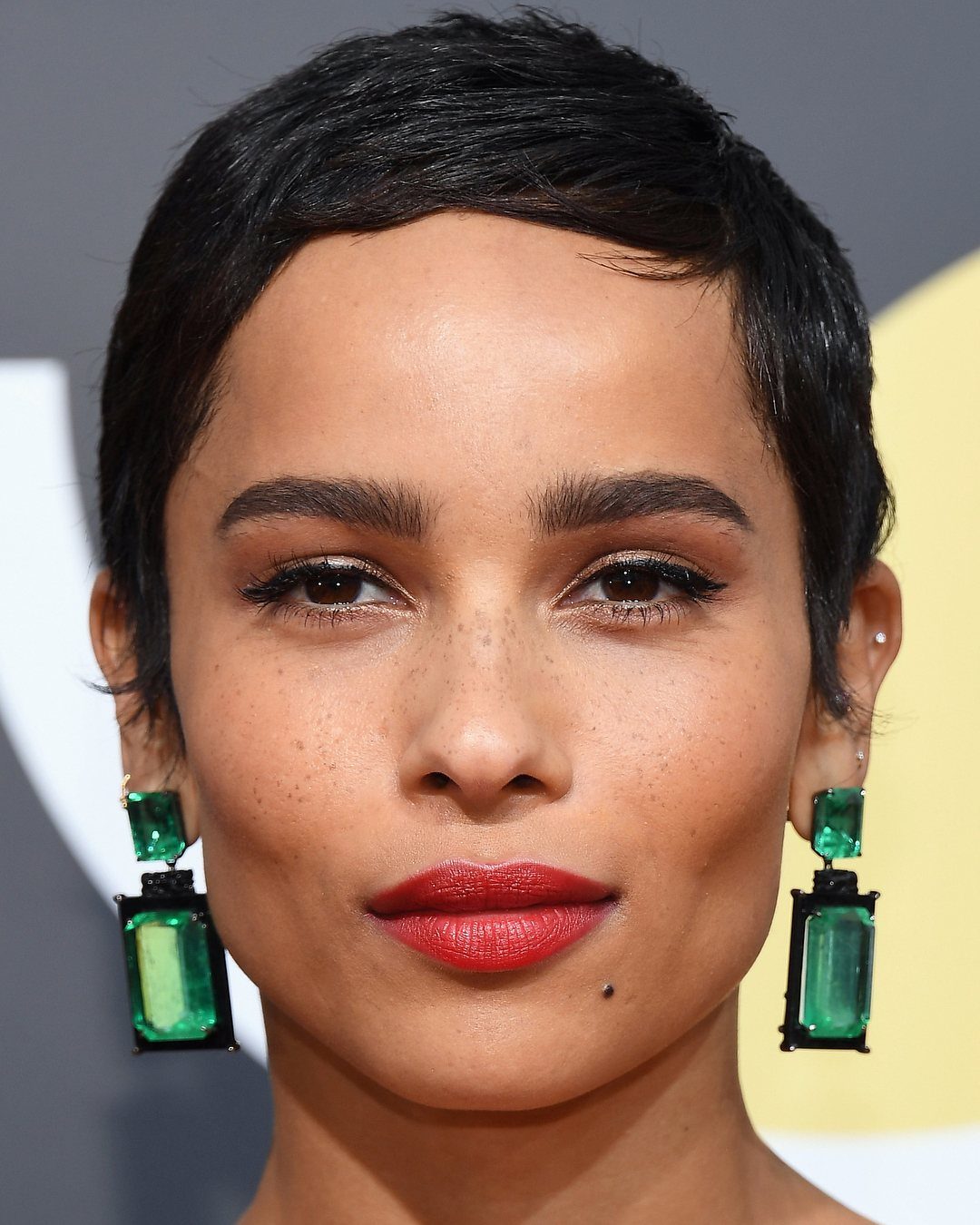
Clean sides decide this cut. Taken close and kept tidy around the ears and nape, they let the longer black top read as deliberate, and large earrings like these green ones have room to show.
Expect frequent trims, since the neatness disappears as soon as the sides grow. A stylist who can keep the line crisp is worth finding.
8. Sculpted Curls Pixie
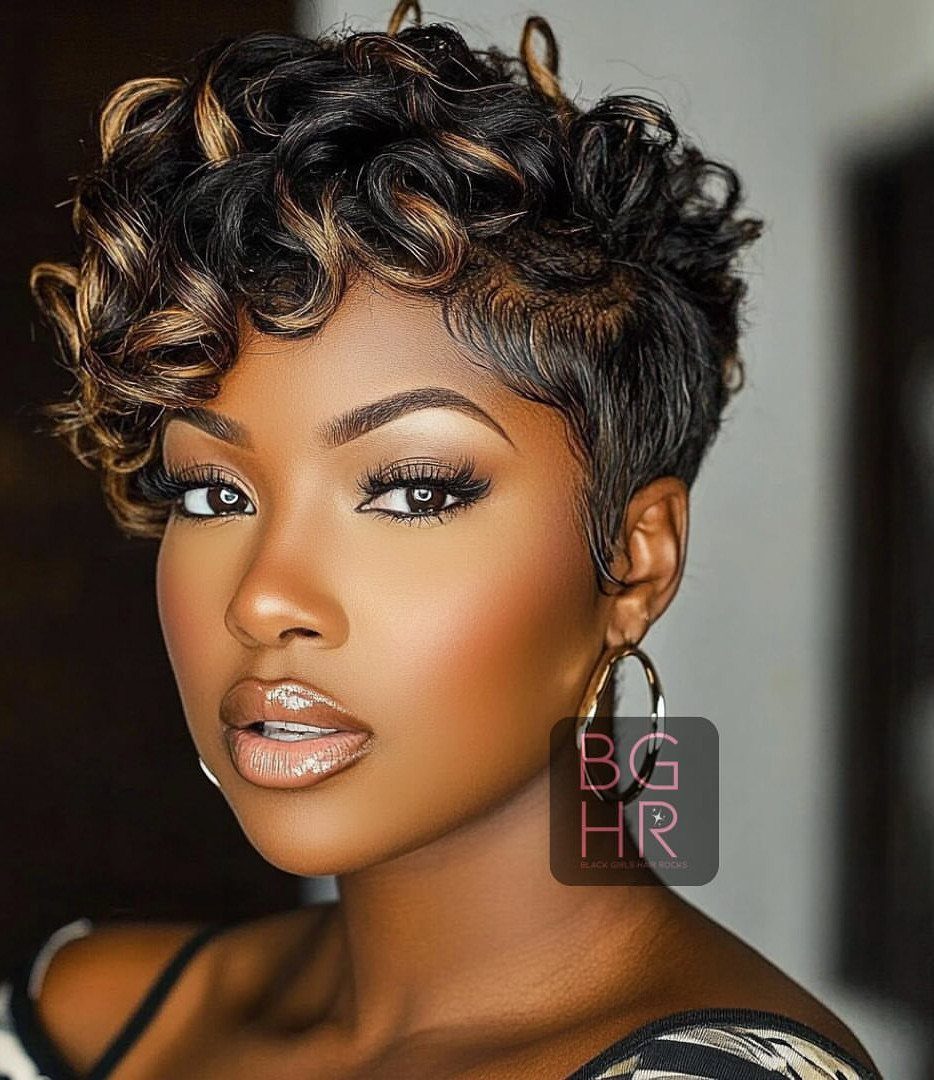
Cutting layers in the direction the curls already spiral gives a short pixie its volume, and the curls stack instead of fighting each other. Caramel highlights make each layer easier to see.
Ask the stylist to cut the hair dry, curl by curl, so the shape follows your pattern.
A curl cream scrunched in while the hair is damp, then left to air-dry, keeps the definition. I would skip brushing once it dries.
9. Sleek Pixie
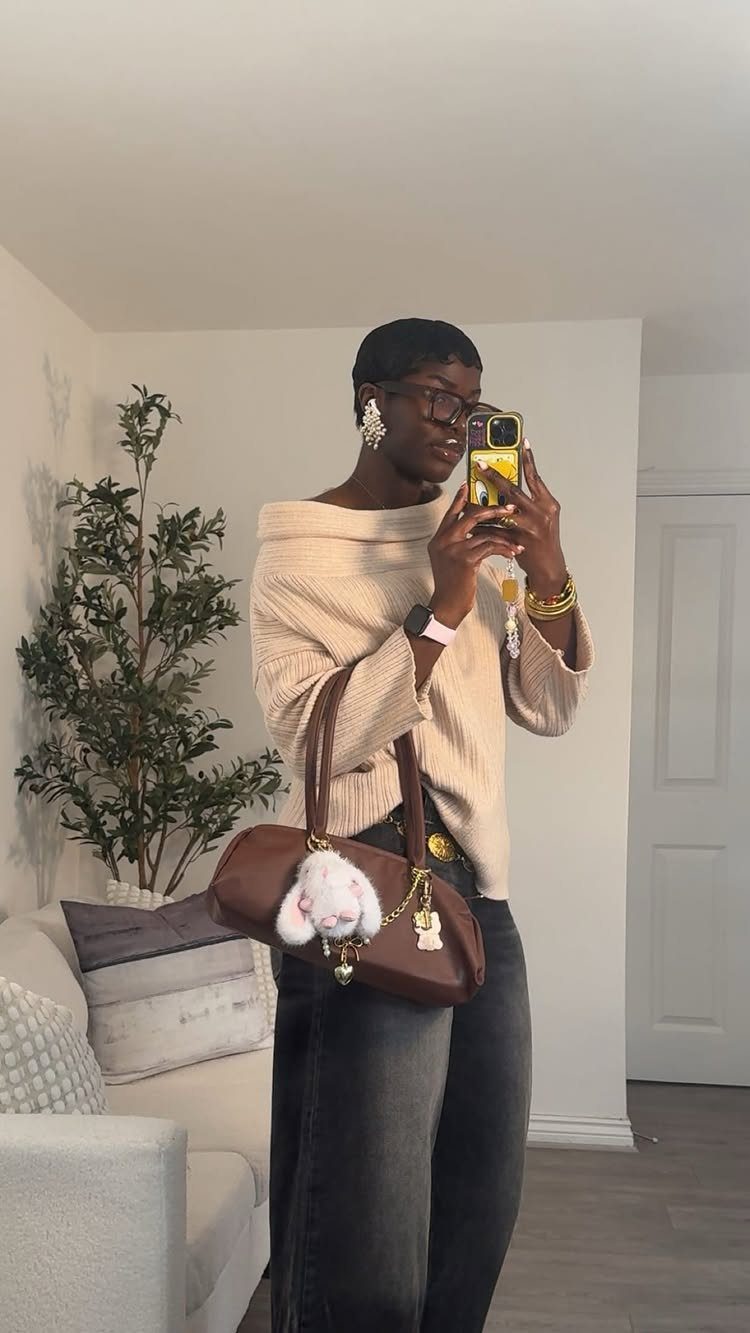
Shine does the work in a sleek pixie. The hair lies close to the head, with no texture to hide behind, so a precise cut matters more than any product.
A smoothing serum on damp hair and a quick pass with a small brush while drying keep the surface flat.
Fine hair stays polished with very little; thicker hair may need a light pomade to calm flyaways. Mornings are fast, but trims come often.
10. Tousled Pixie
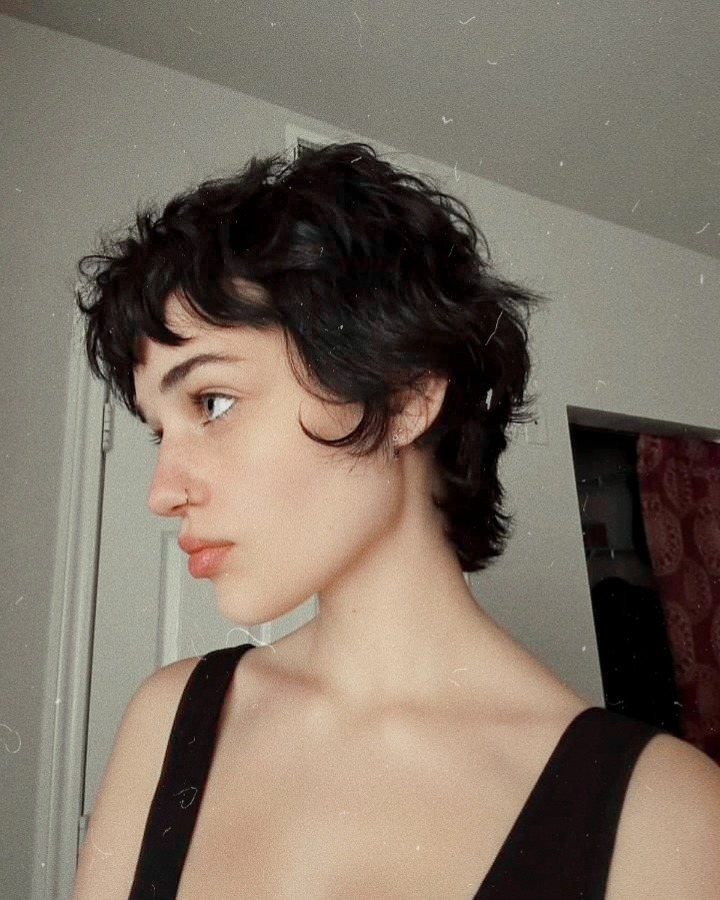
Rake your fingers through dry hair and the cut does the rest. Short bangs fall wherever they land, and a few waves make that messiness look intentional on dark hair.
A dab of texture paste or sea salt spray, scrunched in from the roots, is plenty.
Of all the pixies, I find this one the most forgiving to style at home, since a misplaced piece just reads as part of the look. Ask for choppy layers on top.
11. Blonde Pixie
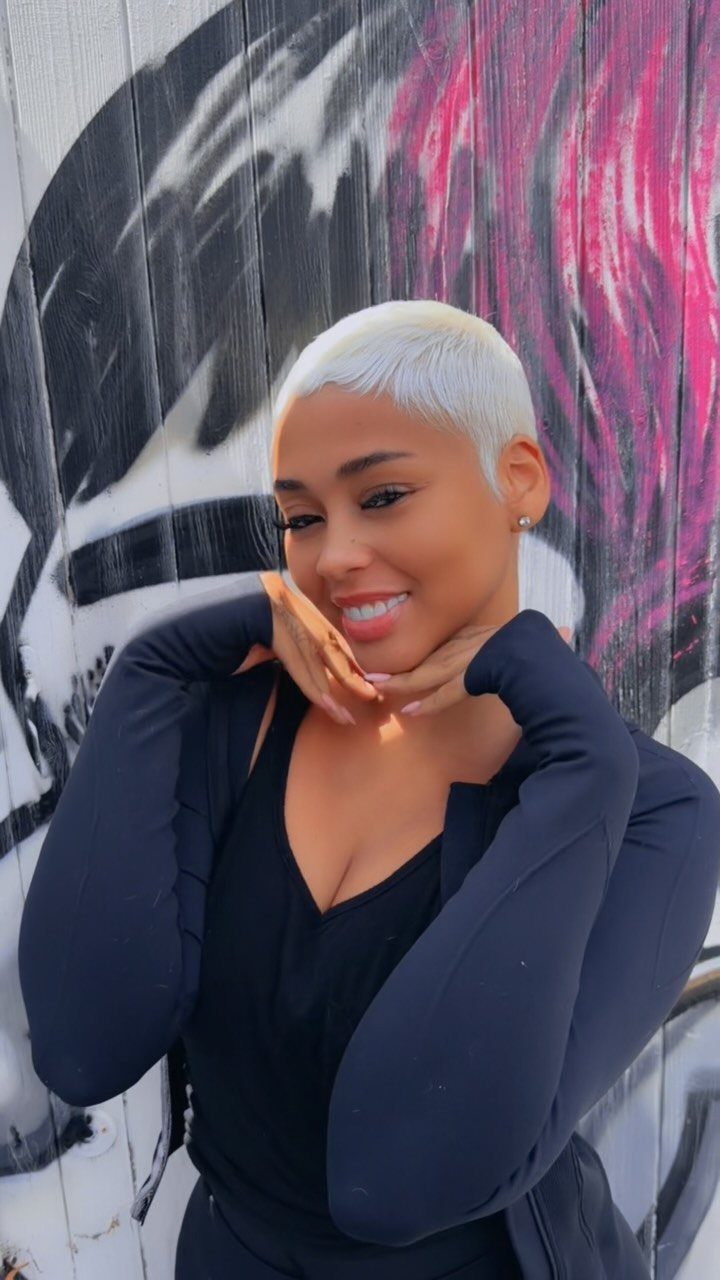
Platinum makes a pixie look like a decision. Against a black blazer, the pale color is the whole statement, and a short cut means less hair to lighten.
Bleaching to this level takes a colorist, and the roots show quickly, so plan on regular touch-ups.
Purple shampoo helps keep brassiness away. Honestly, I would book the color and the cut as one appointment so the shape and shade work together.
12. Wavy Pixie
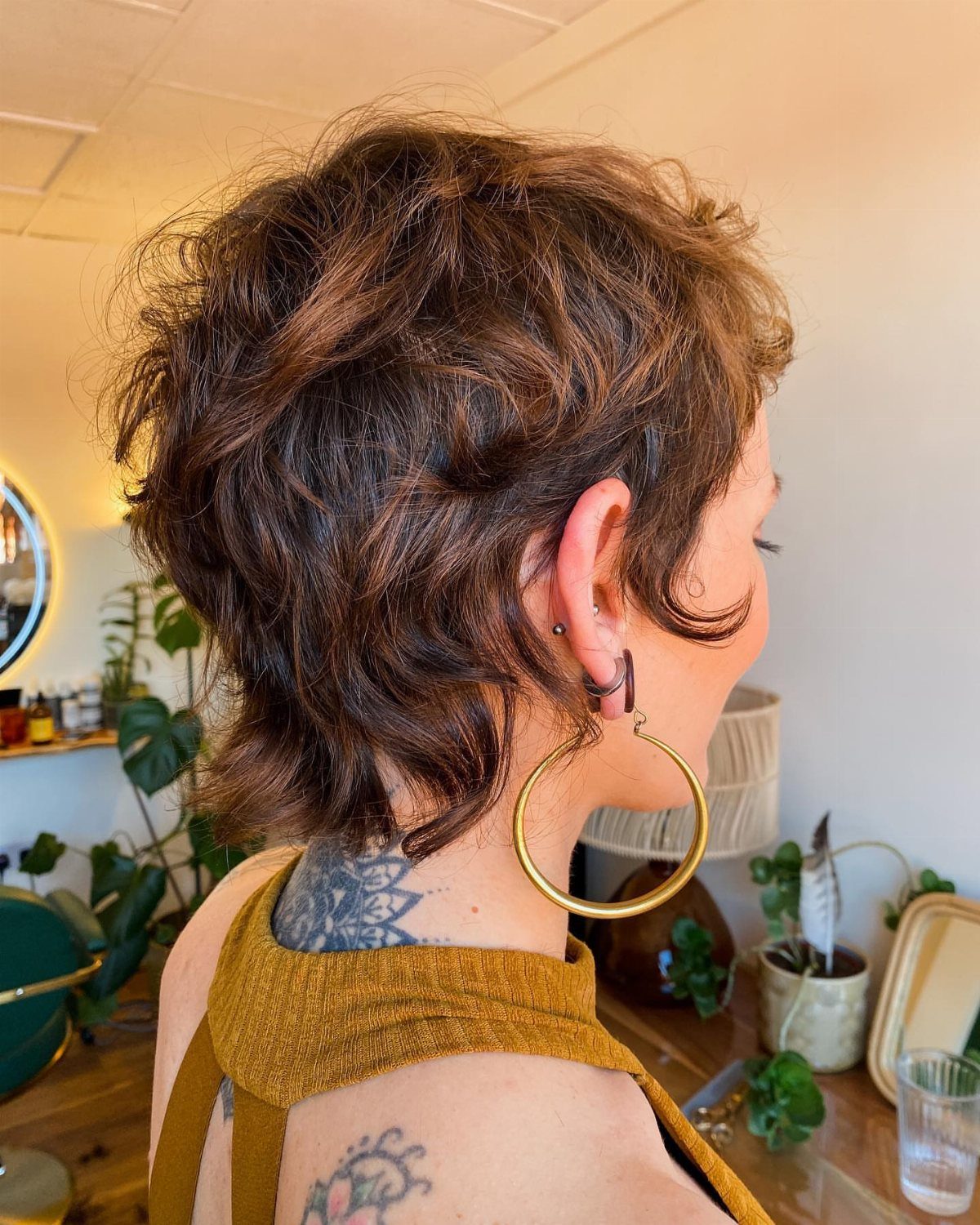
Wave pattern leads here: the cut is shaped to show the bends, not hide them. Leave enough length that the waves can form, because cut too close they flatten into a puff.
Ask for the hair to be cut dry or while the waves are set. A light mousse or curl cream, scrunched in and air-dried, is all it needs.
A diffuser speeds things up on busy mornings. This is a low-effort pixie, and a gold hoop suits it.
13. Choppy Pixie
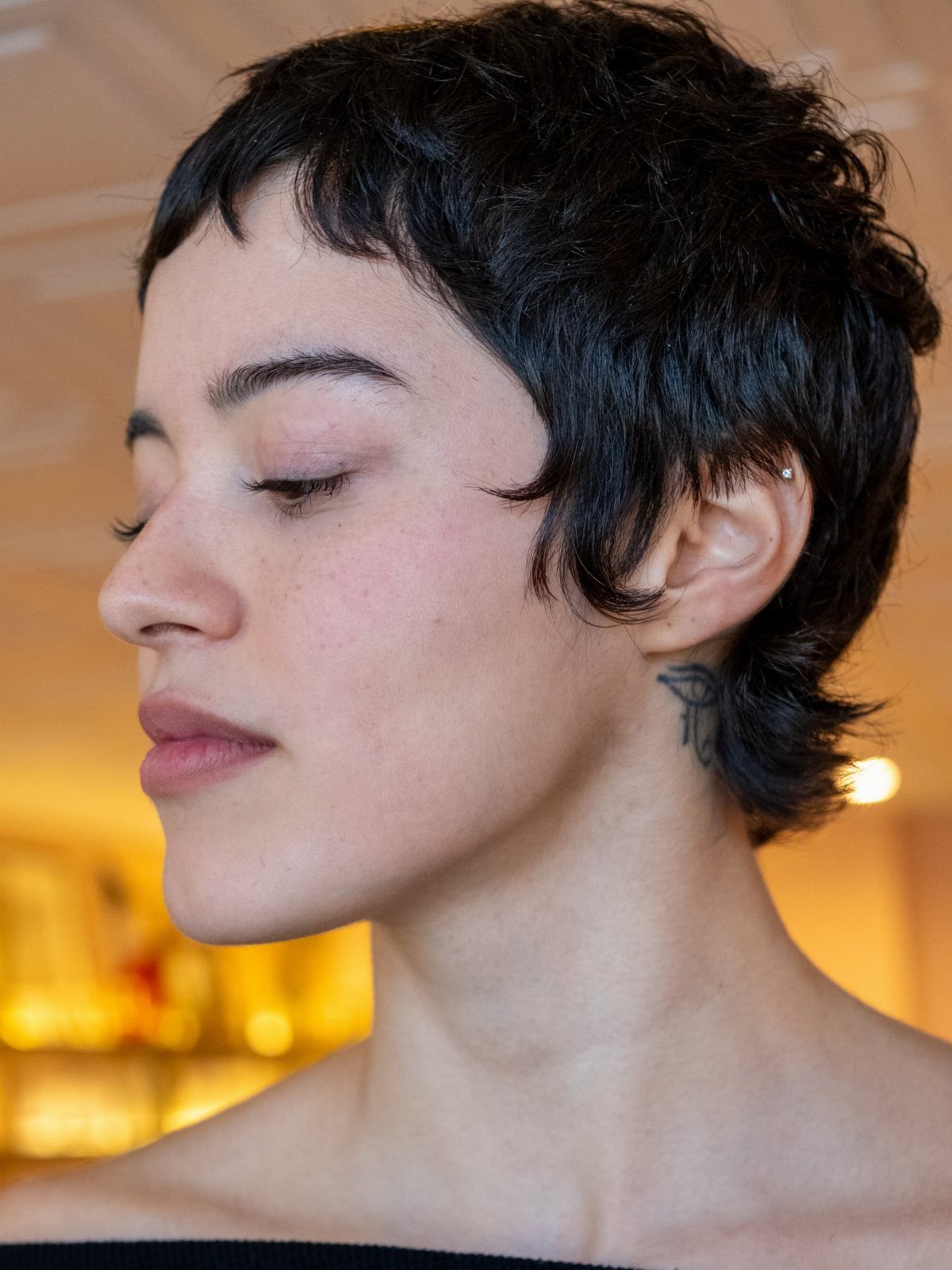
A choppy pixie depends on uneven edges; if the ends look too tidy, the cut has missed.
Each layer ends at a different length, so the black hair breaks into pieces instead of lying in one smooth sheet, and the textured fringe follows suit.
A razor or point cutting on the ends gives that broken, feathered finish.
A little paste or clay, pinched and twisted through the top, defines the pieces. Dark hair shows this kind of detail well.
14. Spiky Pixie
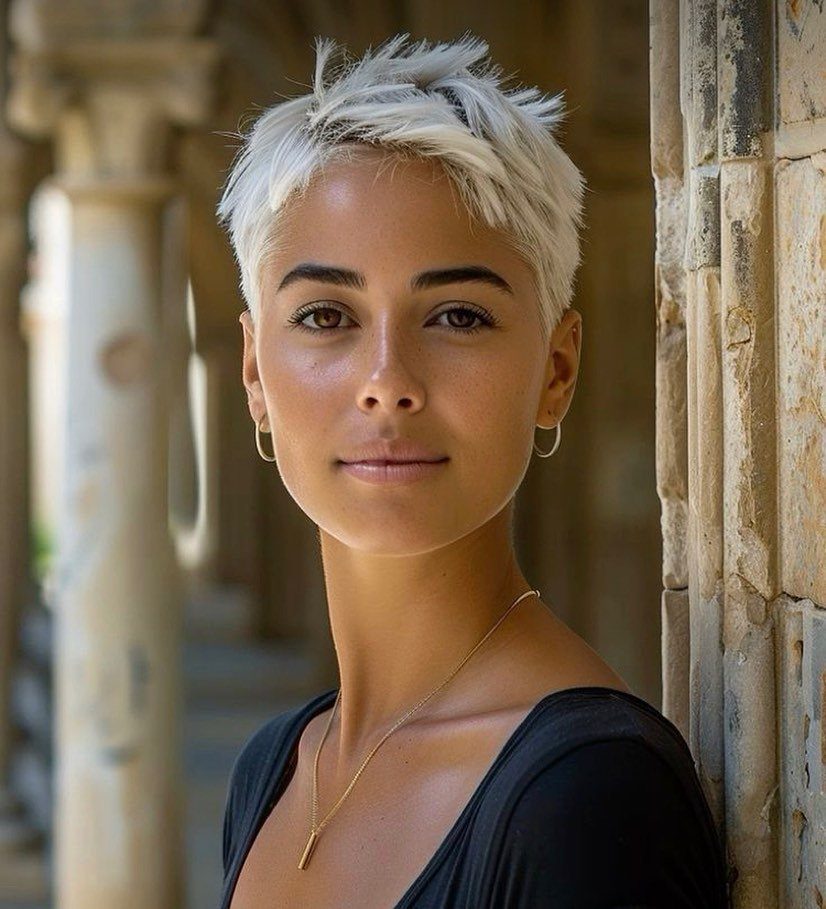
Short spikes on platinum hair catch light in a way a smooth cut never does. Each piece is styled upward or outward, so the finish looks deliberate and a bit rebellious.
A firm clay or gel works better than a soft paste here.
Rub it between your palms, then pinch small sections and push them up from the root. Bleached hair runs dry, so I would use product sparingly and skip heavy waxes that are hard to wash out.
15. Layered Pixie
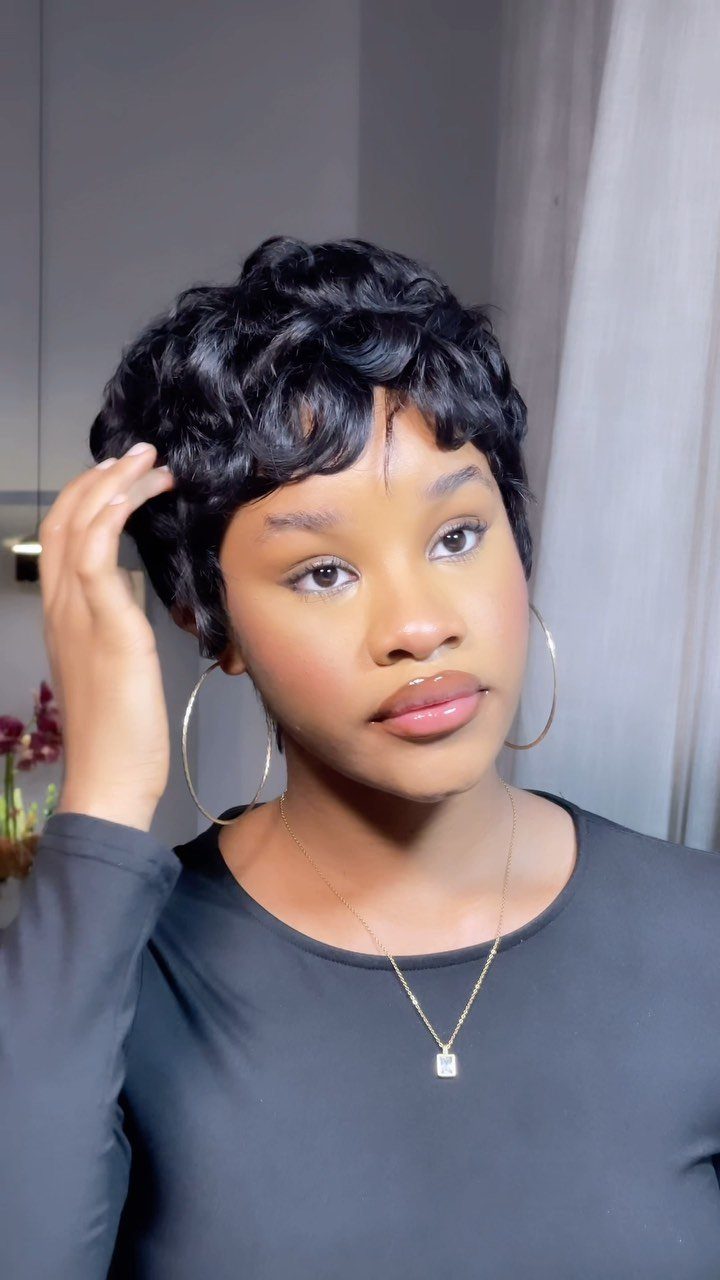
Layers are what give a short curly pixie its shape. Cut at several lengths, the curls stack and bounce instead of collapsing into one flat mass, and a wavy side-swept fringe softens the front.
Ask for the layers to be cut with your curl pattern in mind. Hoop earrings suit the rounded outline.
16. Classic Pixie
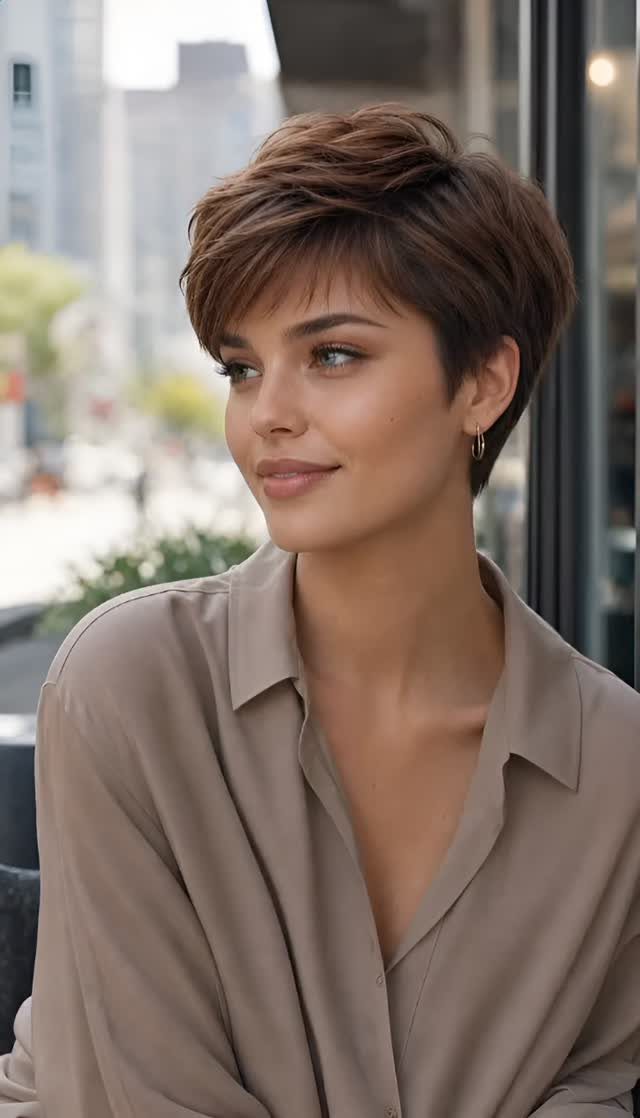
A classic pixie is simply short sides and back with a bit more length on top, and that contrast defines it. The top can be swept to one side or pushed up for texture.
Ask the stylist to keep the top long enough to move.
A dab of paste adds the textured, swept finish. Mornings are quick, but the sides lose their shape as they grow, so trims come often.
17. Wispy Bangs Pixie
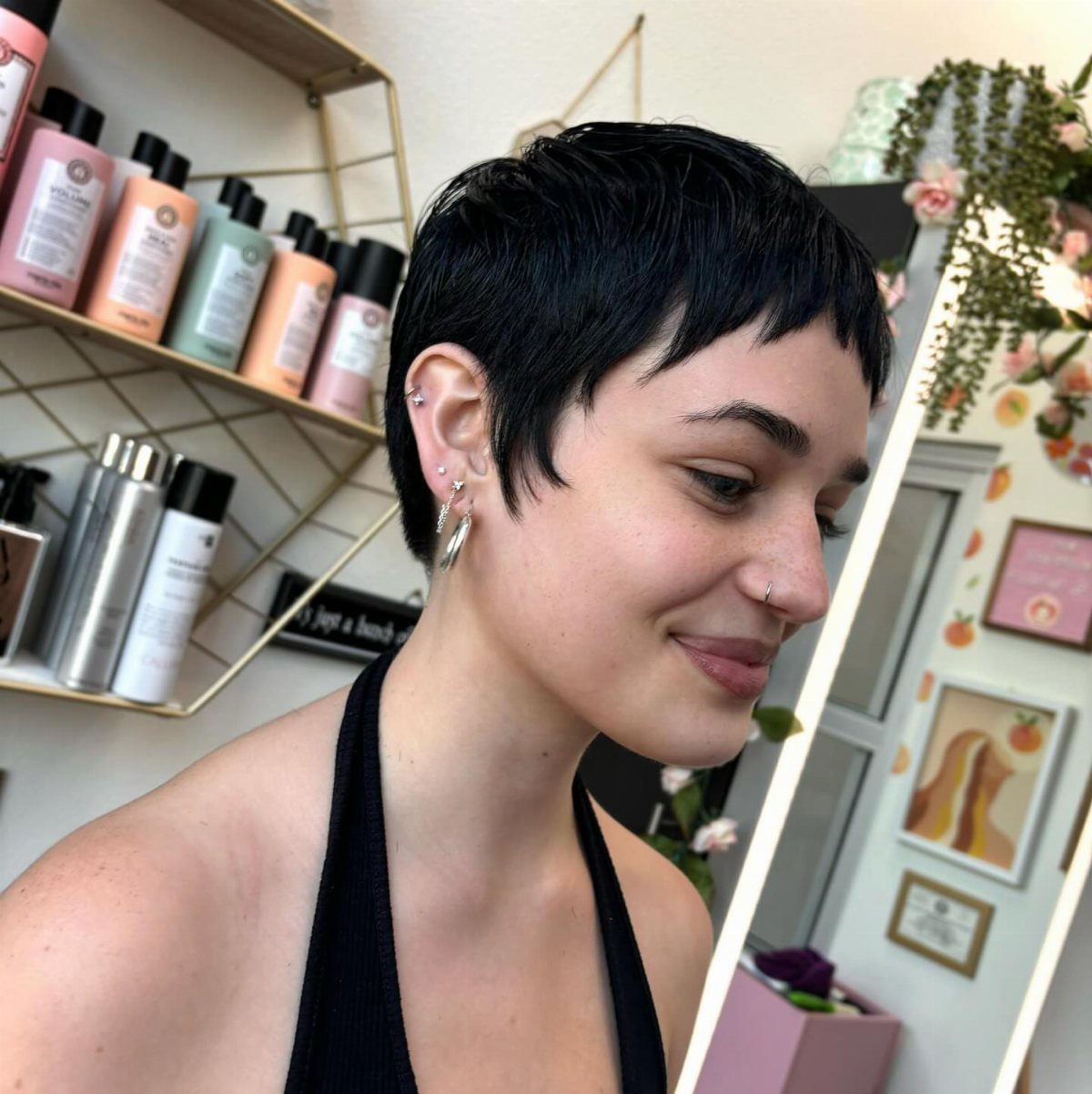
Wispy bangs soften a cropped cut. Thin, see-through pieces fall across the forehead, so a black pixie feels lighter and more playful than it would with a heavy, blunt fringe.
Ask for the bangs to be cut with a lot of texture and not too thick.
A small round brush and a quick pass of the dryer keep them airy. Skip heavy products, which clump wisps into strands.
18. Grown-Out Pixie
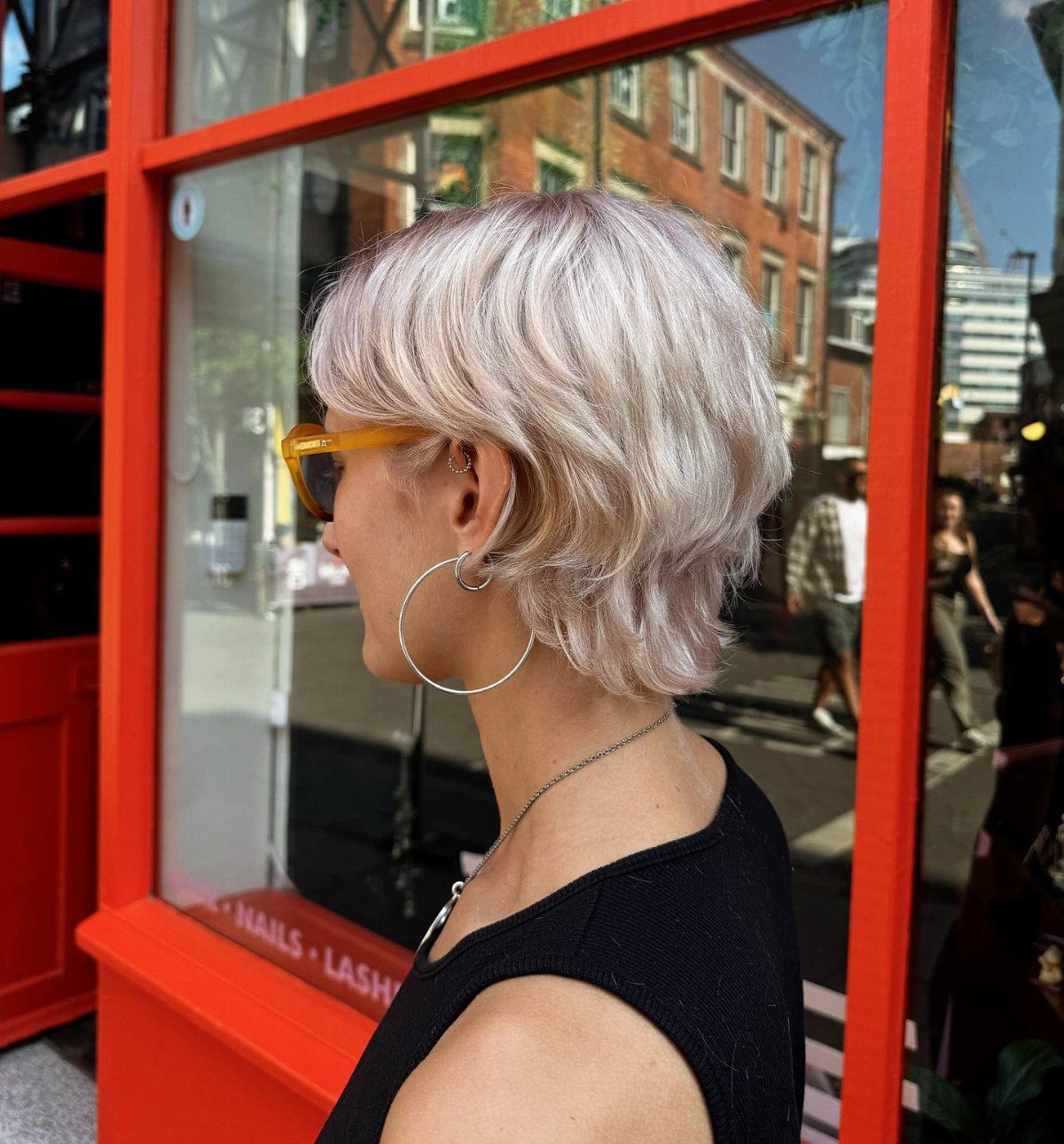
A grown-out pixie sits between pixie and bob, and I would style it rather than rush to cut it. The silver-blonde length and wispy bangs here still look intentional because the shape stays tidy.
Keep up small trims around the ears and nape so the outline doesn’t turn shaggy.
A light texture spray or a bit of paste gives the in-between length some structure. Hoops and sunglasses help it look planned.
19. Colored Pixie
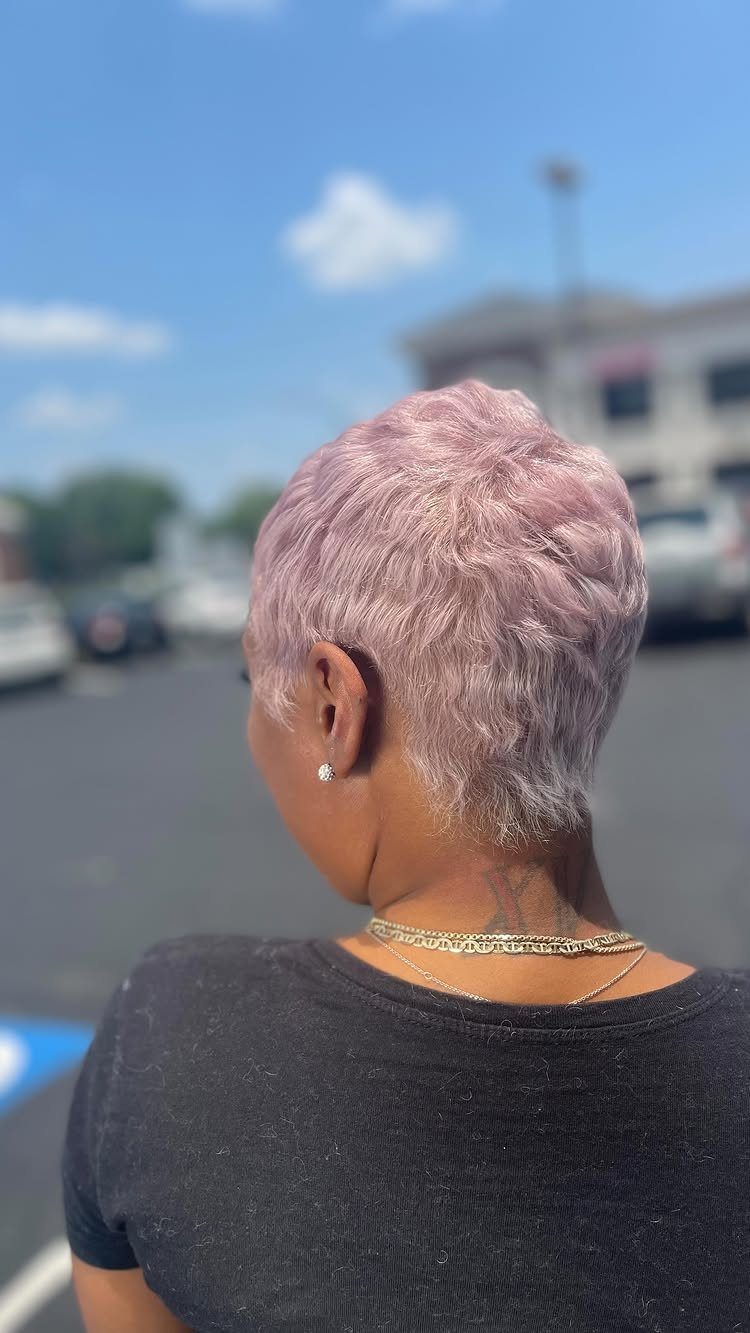
Pastel shades like pink show up best against a tapered nape, and on a short cut the color does a lot of the styling work.
Textured layers catch the shade at different depths, so the pink looks dimensional instead of flat.
Pastels need a colorist and regular touch-ups, because they fade faster than natural shades.
A color-safe shampoo helps. Booking the cut and the color in one visit lets the stylist match the shape to the shade.
20. Voluminous Pixie
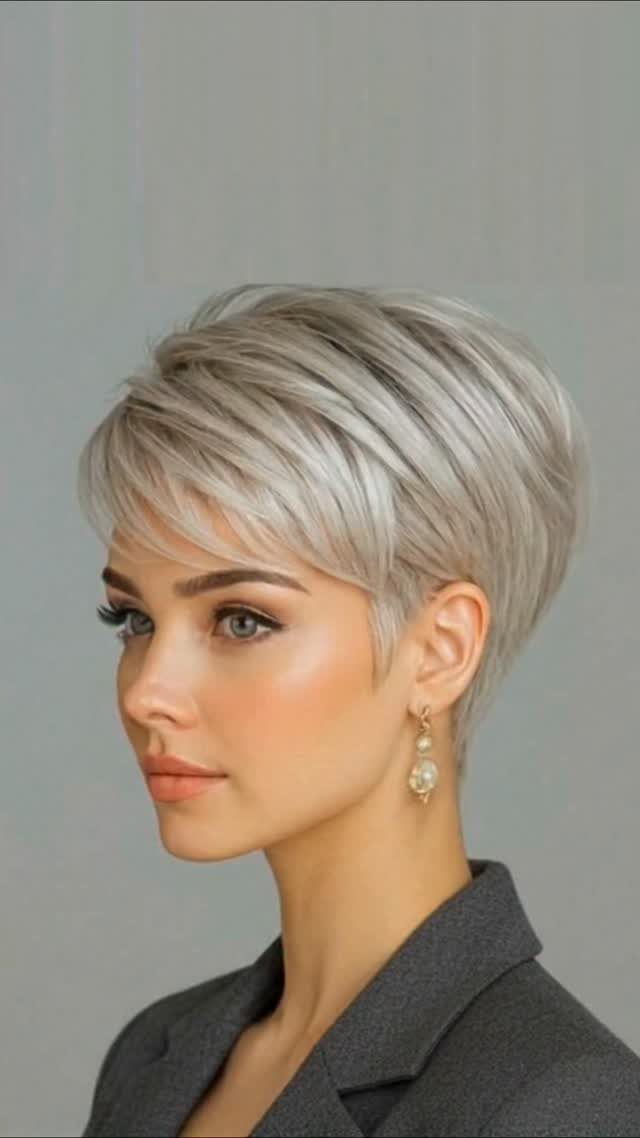
Height at the crown and extra length on top give this platinum pixie its fuller outline, and the sweep across the forehead keeps it from looking stiff.
Blow-dry the roots upward with a round brush, then sweep the front across.
A light mousse adds lift without weight. Fine hair gets the most from this cut, though heavy products will flatten it.
21. Zendaya’s Super-Short Pixie
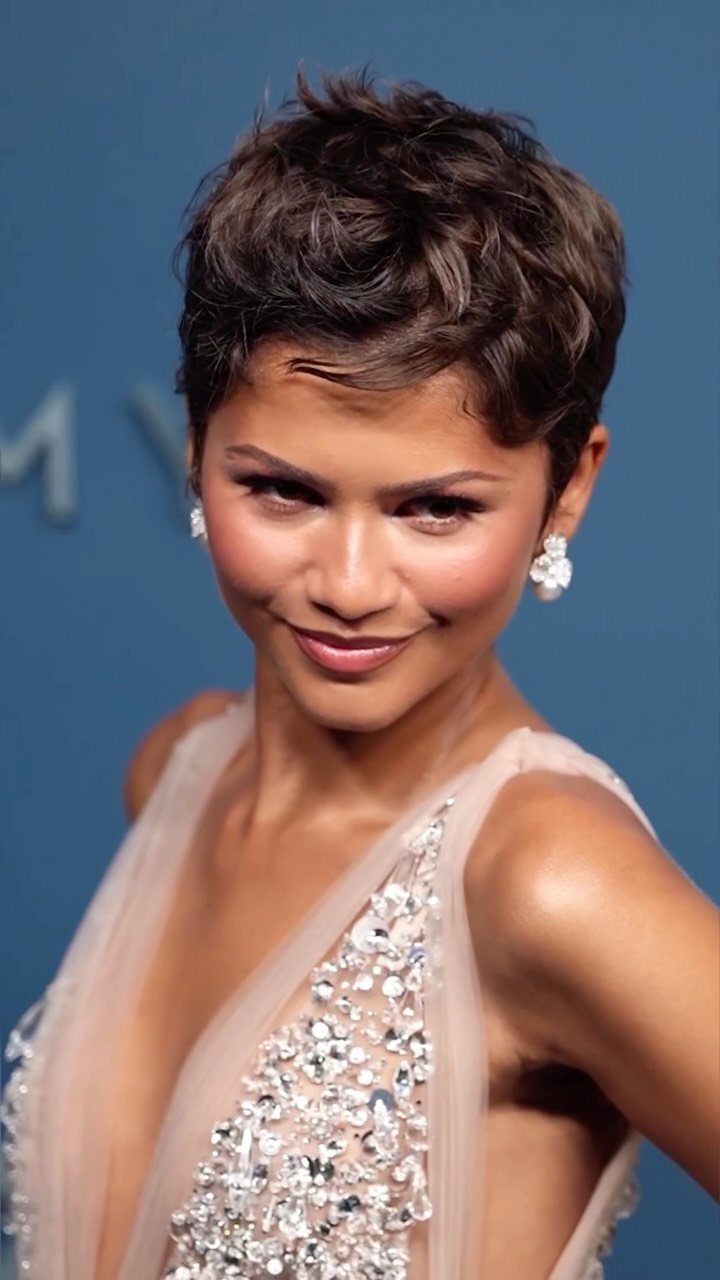
Super-short is the version where the cut itself does everything. With so little hair, the tousled finish depends on a precise shape around the ears and nape, so the choice of stylist counts for more than any product.
A small dab of paste, rubbed warm and pushed through with your fingers, is all this needs.
Trims come often, since a cut this close loses its outline fast. I would ask for the top a touch longer than you think you want.
22. Florence Pugh’s Pixie
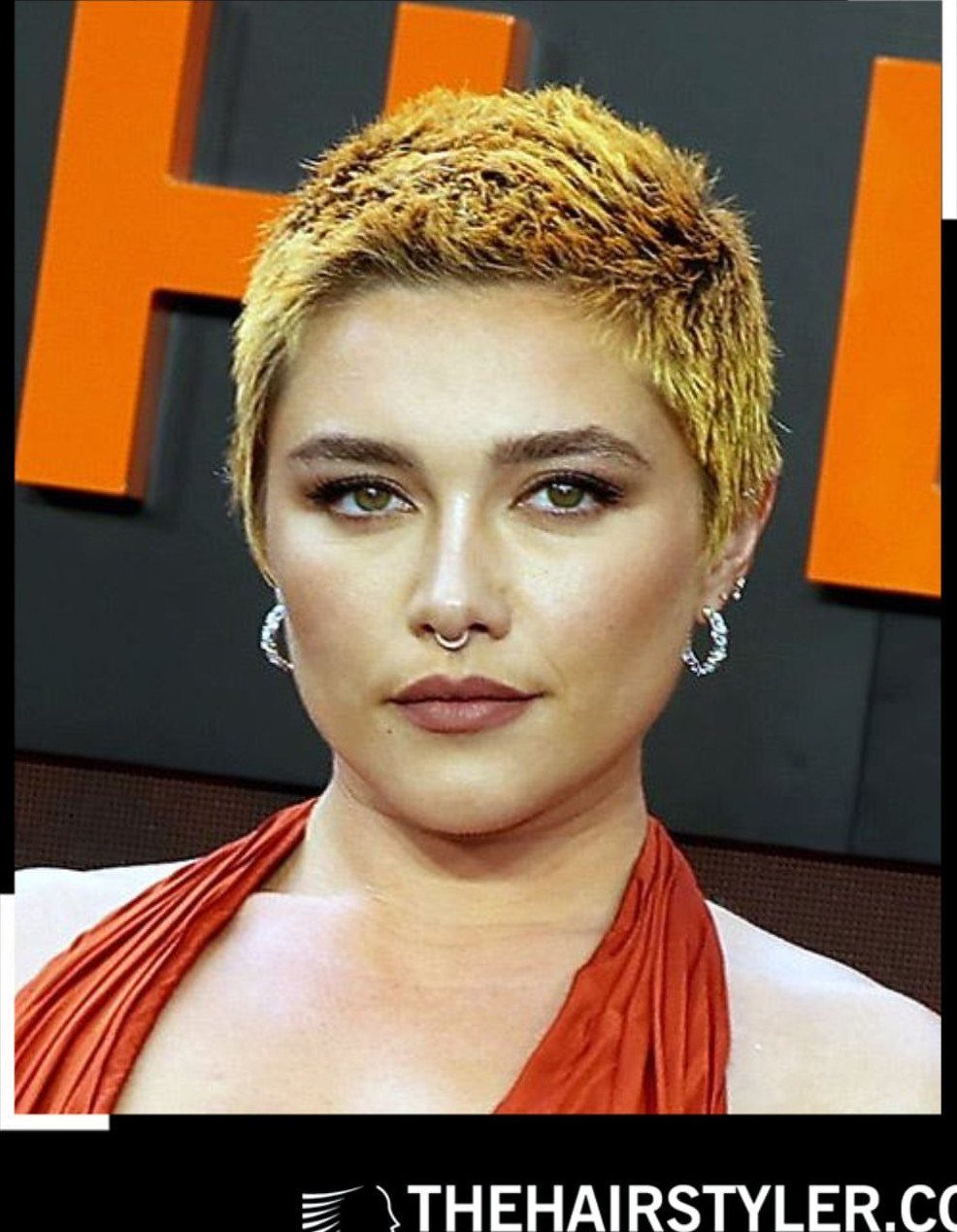
Movement is the reason to choose this cut. Short, textured layers can be pushed up, swept sideways or left messy, so one cut gives you several mornings.
Ask for texture through the top and a shape that works with your natural fall.
A light paste or texture spray is enough to switch looks. On blonde hair, I would keep product minimal, since heavy formulas weigh the layers down and dull the pieces.
23. Asymmetrical Pixie
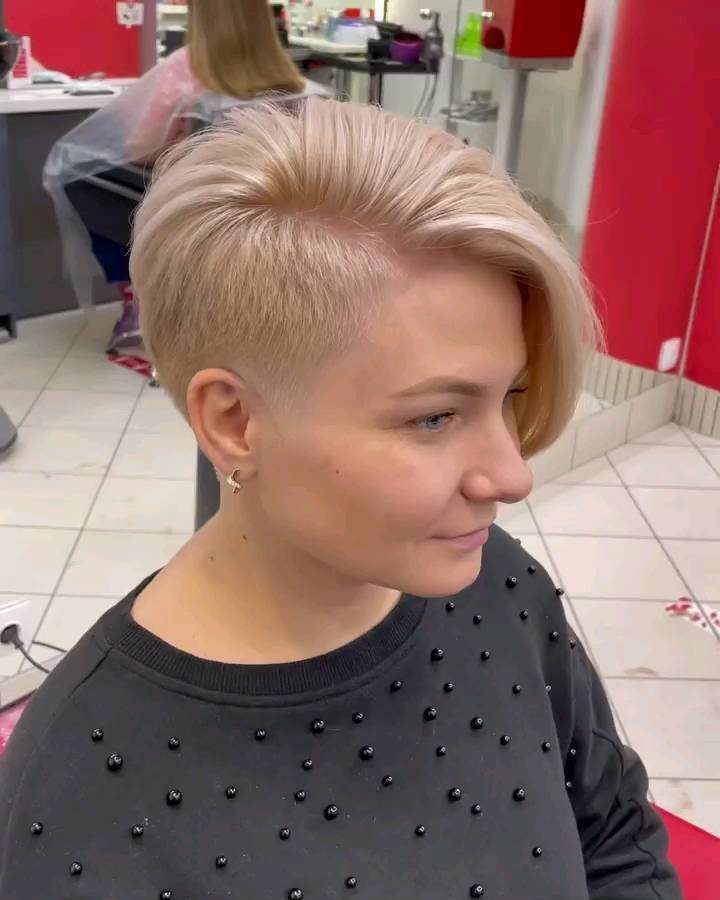
Long on top and closely cropped at the sides, this pixie gets its drama from the imbalance. The swept length falls to one side while the short side stays bare, and that contrast is the whole look.
Bring a photo and tell the stylist which side should carry the length. The cropped side needs frequent trims, or the sharp contrast softens within weeks.
24. Feathered Pixie
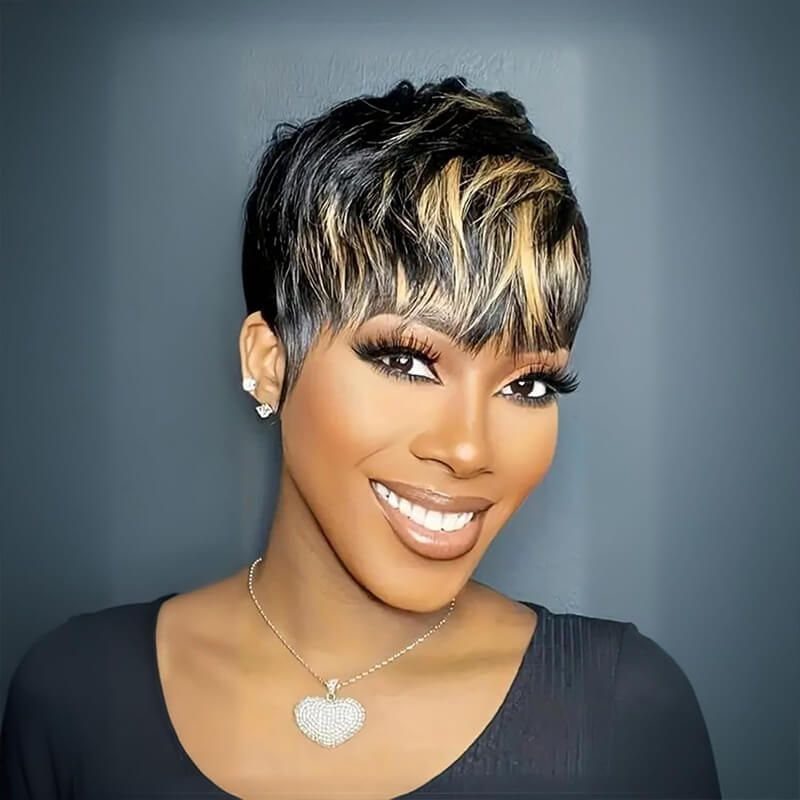
Feathered layers keep a short cut from feeling heavy. Fine, wispy ends on the top and the bangs move with every turn of the head, and blonde streaks make each layer easier to see.
Point cutting or a razor gives the ends a soft taper, so name one of those when you book. A light texture spray and your fingertips do the rest.
Heavy waxes are the one product I’d skip, since they glue the feathered layers into stiff clumps. Mornings take only minutes.
25. Undercut Pixie
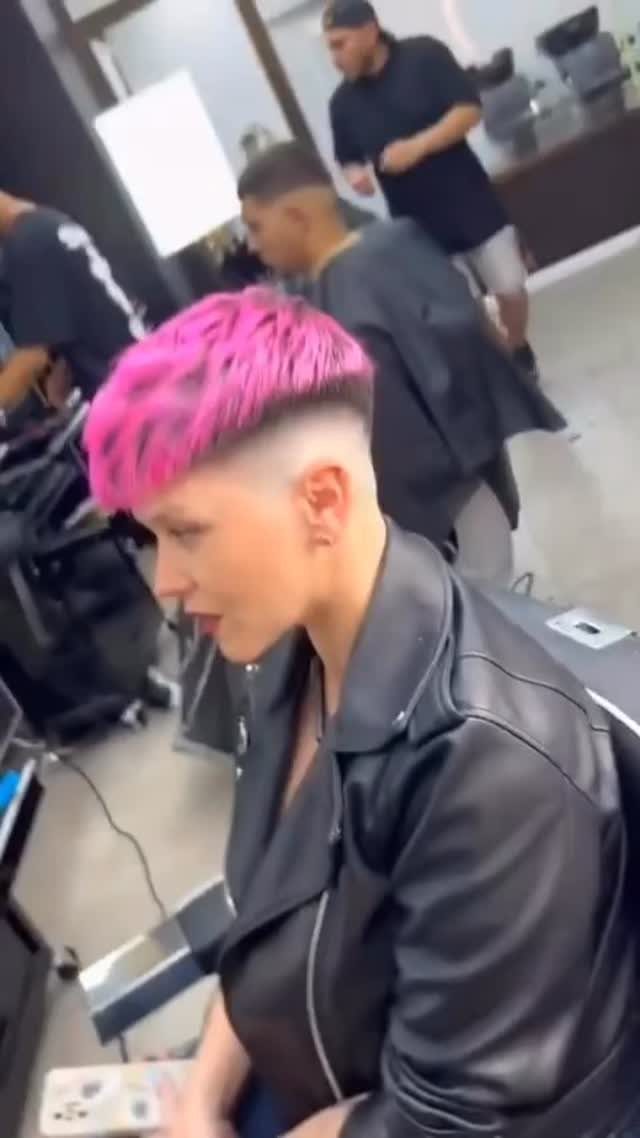
Shaved sides turn a pixie into something with an edge, and they make the top easier to style, since the longer hair has a clear contrast to work against.
Bright pink on top reads even louder against the closely cut sides.
Ask the stylist exactly how short to take the sides, and bring a photo. Expect frequent trims, because the shaved area loses its crispness as it grows in.
Popularized in the 1950s by actors Audrey Hepburn and Jean Seberg as part of a visual rejection of the long hair of their bombshell counterparts—and a want of European sophistication—pixie cuts have remained a symbol of nonconformity.
— Vogue
26. Buzzcut Pixie
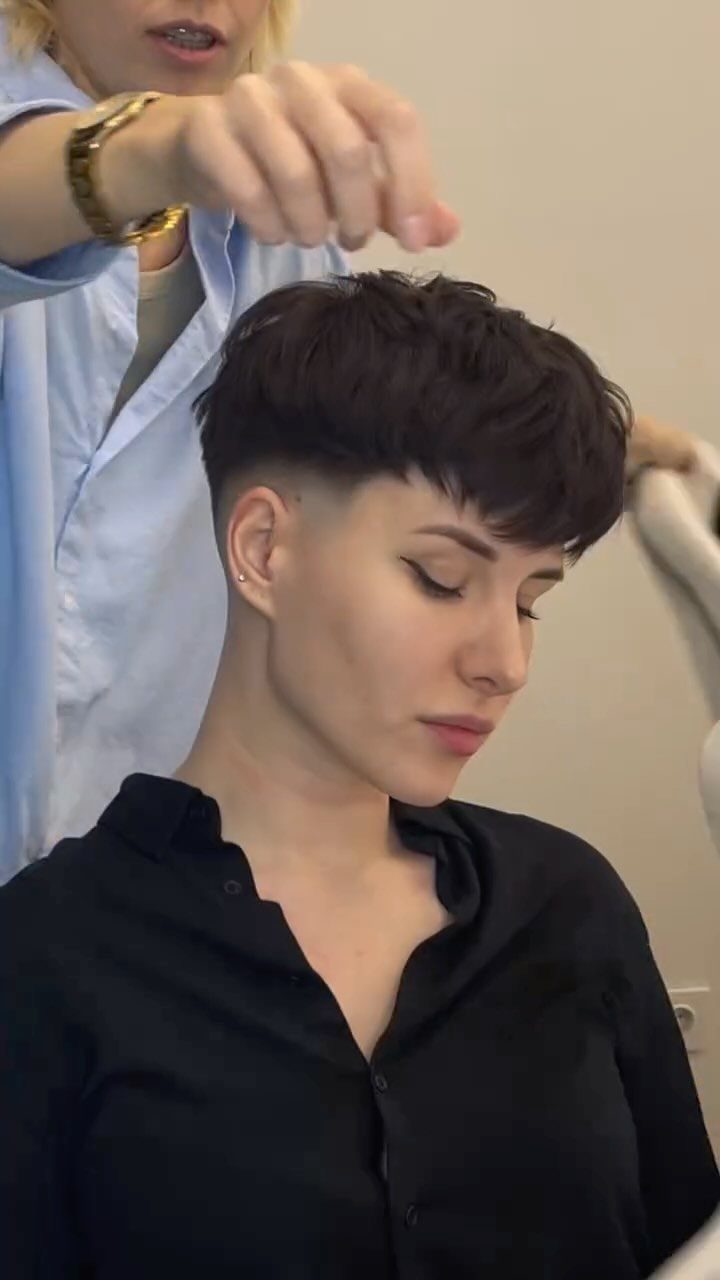
Closely shaved sides with just enough length left on top for texture make up the buzzcut pixie, the shortest cut you can ask for here. The dark top still has room for a little piece-y definition.
A dab of paste is all it takes, so mornings are nearly instant.
I would ask the stylist to leave the top longer than the sides, because you can always go shorter next visit. Trims come often to keep the outline clean.
27. Shaggy Pixie
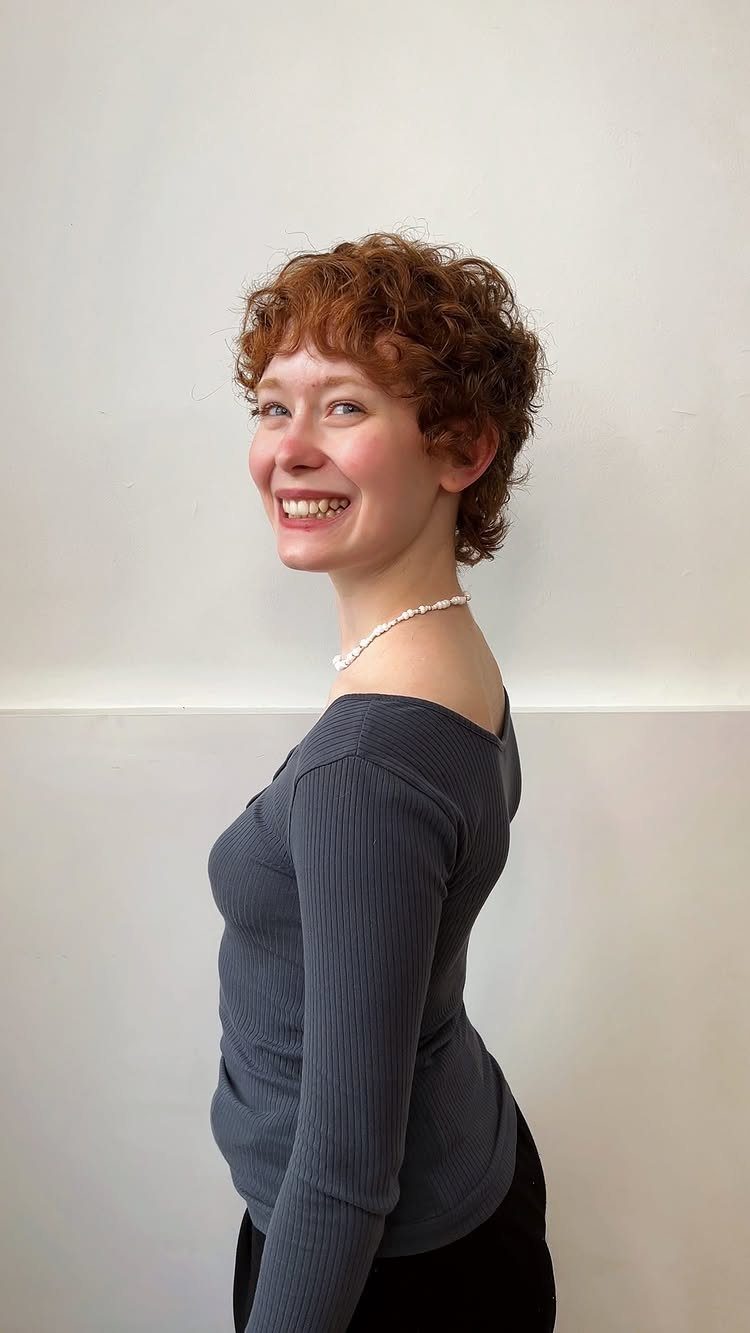
Shag-style layers give a short pixie a rumpled, lived-in shape, and curls like these make it even looser. The layers keep the cut from sitting flat, so it moves instead of sitting in one block.
Skip heavy products, since they weigh the curls down.
28. Wet-Look Pixie
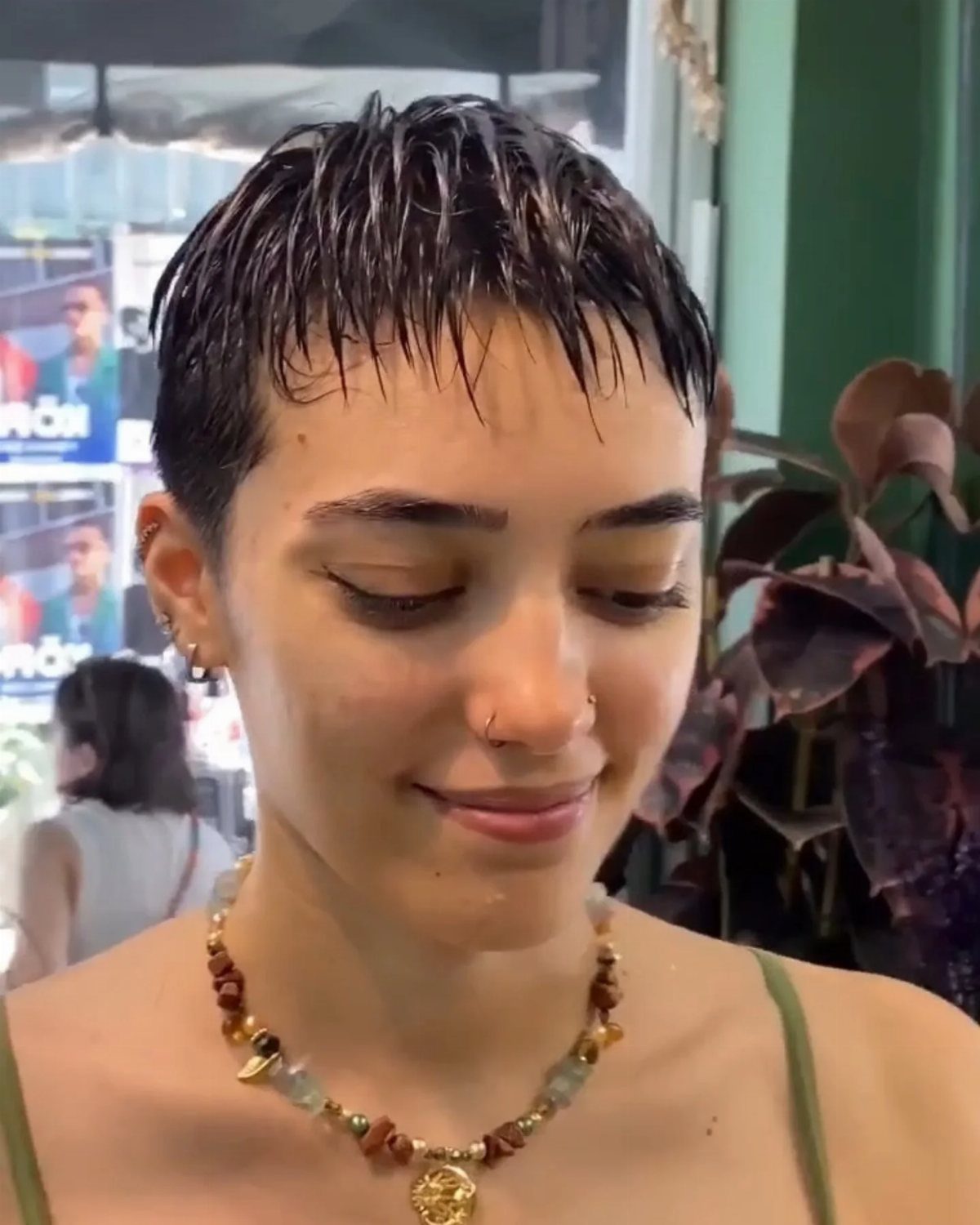
Gel is the whole method here. Worked through damp hair, it leaves glossy, separated strands that look slick and deliberate, and short bangs keep the finish from feeling heavy.
Use a small amount and comb it through, then let the pieces fall where they want.
A wet look is one I’d save for dark hair, where the shine shows best. Washing it out takes a proper shampoo, because gel builds up.
29. Finger-Wave Pixie
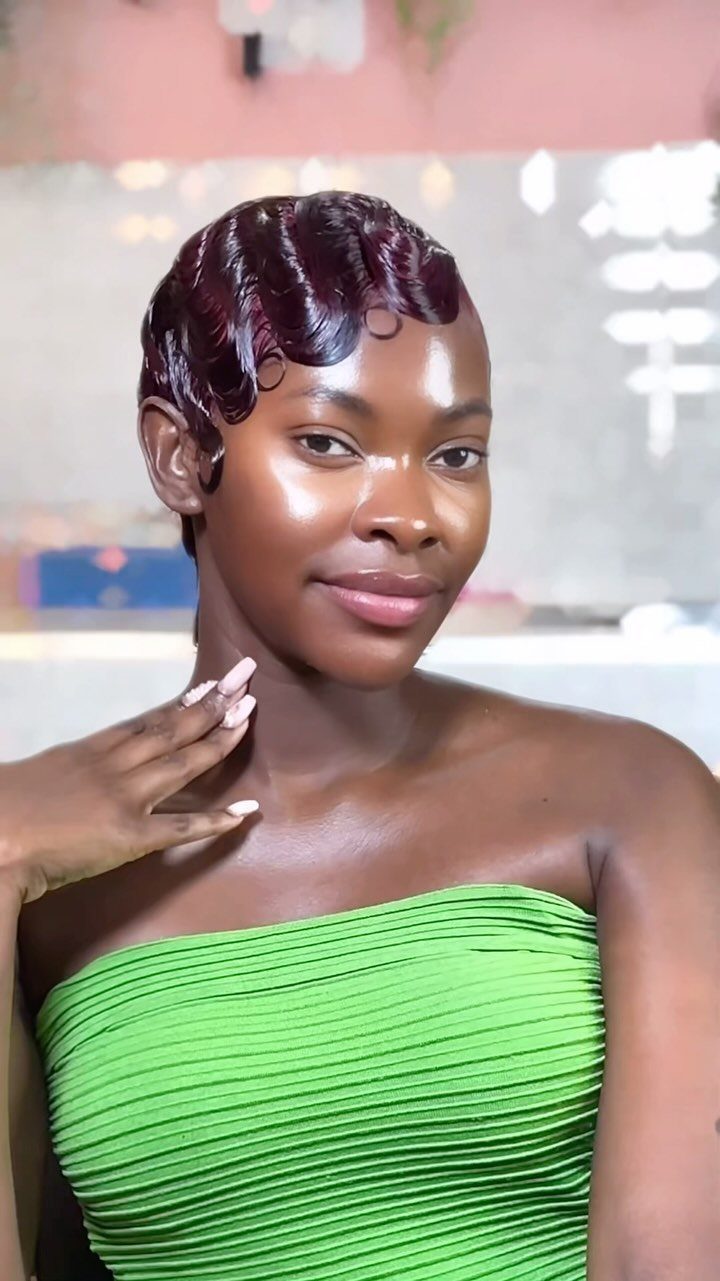
Finger waves give a short cut a sculpted, Old Hollywood finish, with each wave pressed into place and set glossy against the head. The cut needs enough length on top to hold the pattern.
Work a setting gel or lotion through damp hair, then shape each wave with a comb and your fingers.
Let it dry fully before touching it. This is a styling-heavy pixie, so I would save it for evenings out.
30. Long-On-Top Pixie
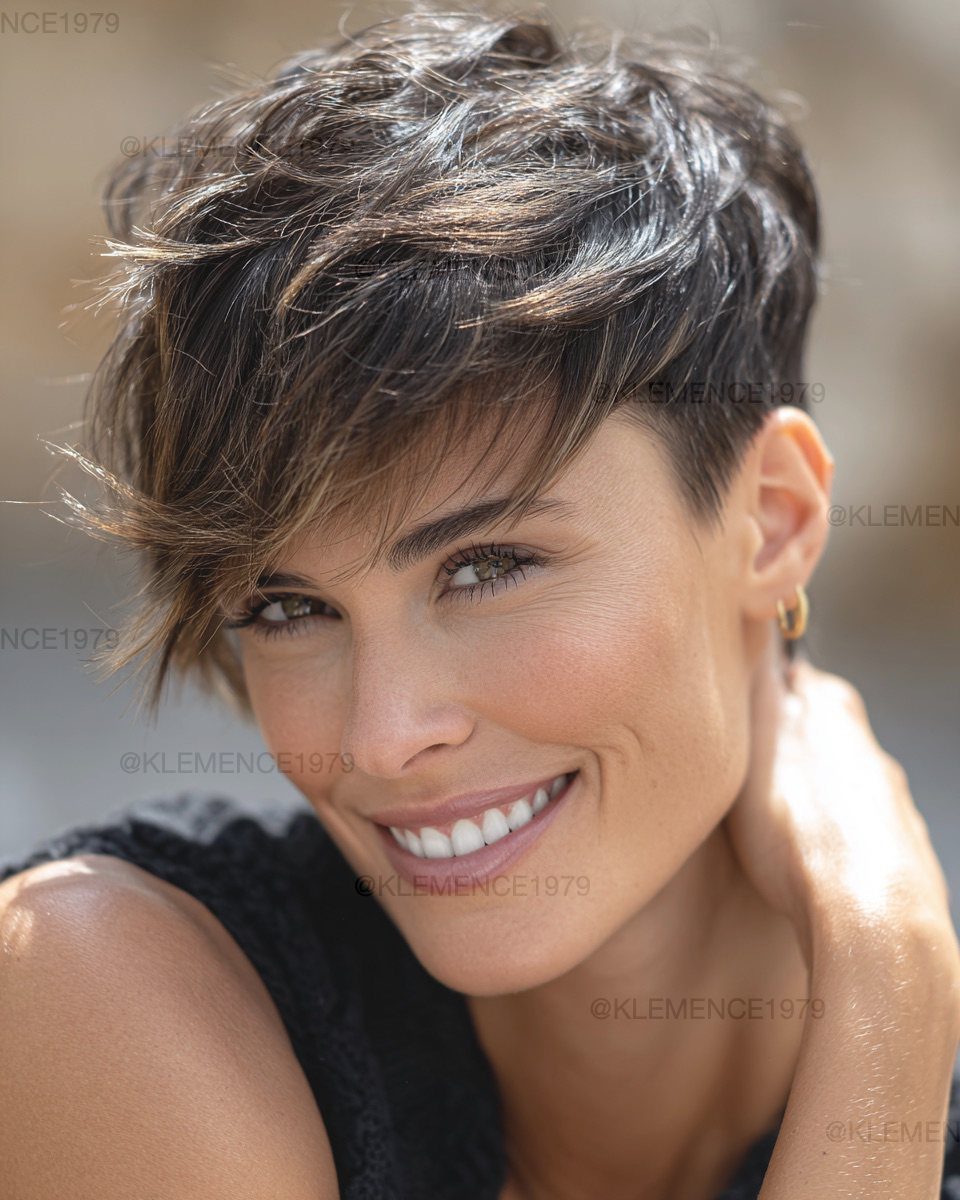
Length on top is what sets this cut apart. The sides and back stay closely cropped, so the longer top can be tousled, swept or pushed up, and a smile looks good under all of them.
Texture paste gives the messy finish with little effort. Keep the sides cropped on a schedule, since the contrast softens as they grow.
31. Mullet Pixie
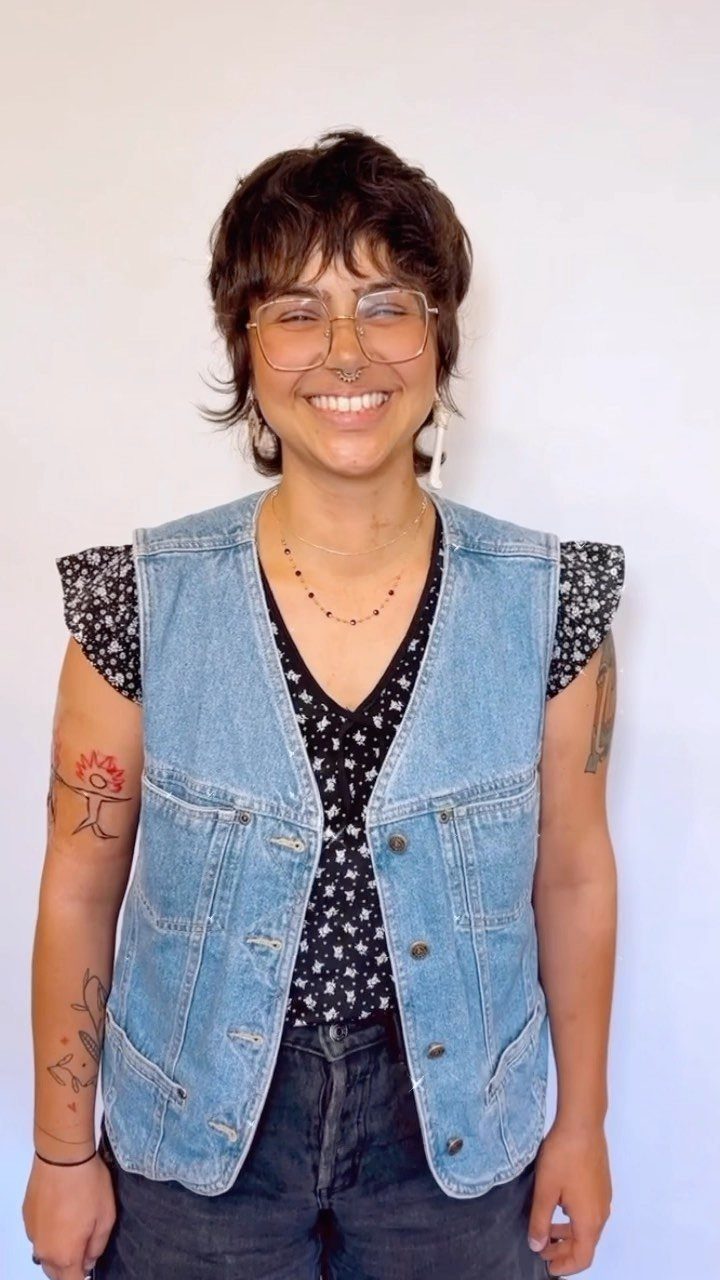
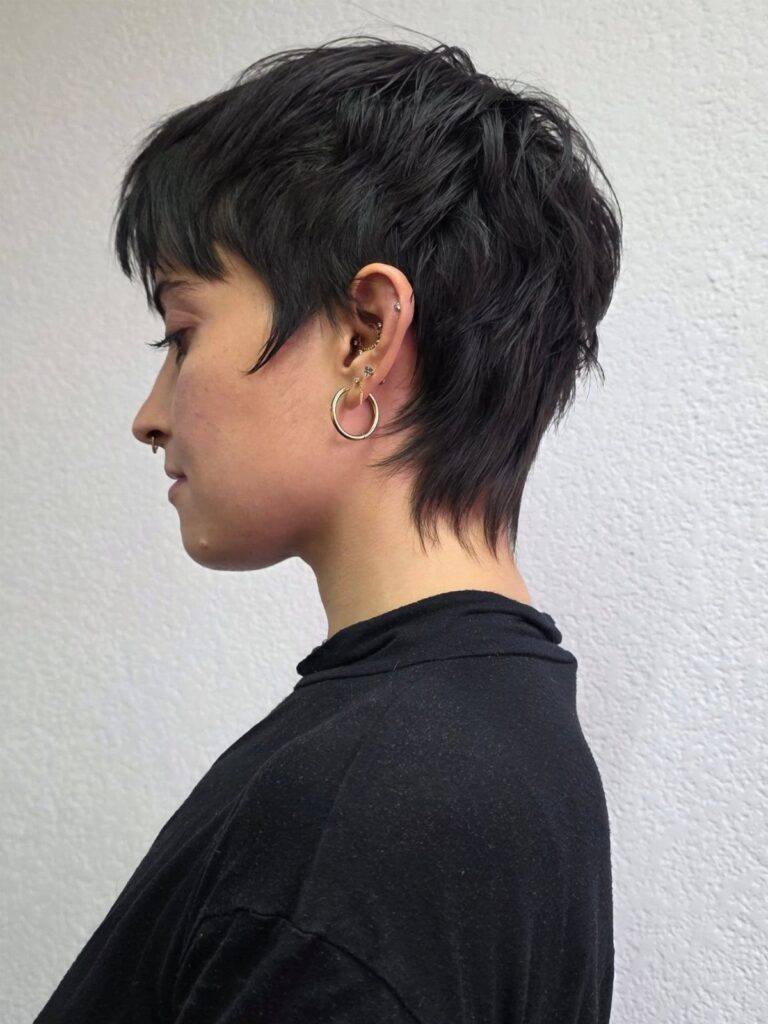
Baby bangs up front and longer pieces at the nape give this pixie its mullet streak, and the contrast between the 2 is what makes the shape read at a glance.
Ask the stylist to keep the nape pieces separated from the crown instead of blended. A little texture paste worked through the top keeps the bangs tousled.
Glasses frame the short fringe well. Because the back is longer than the rest, I would plan trims to keep that length looking chosen rather than forgotten.
32. Pink Pixie
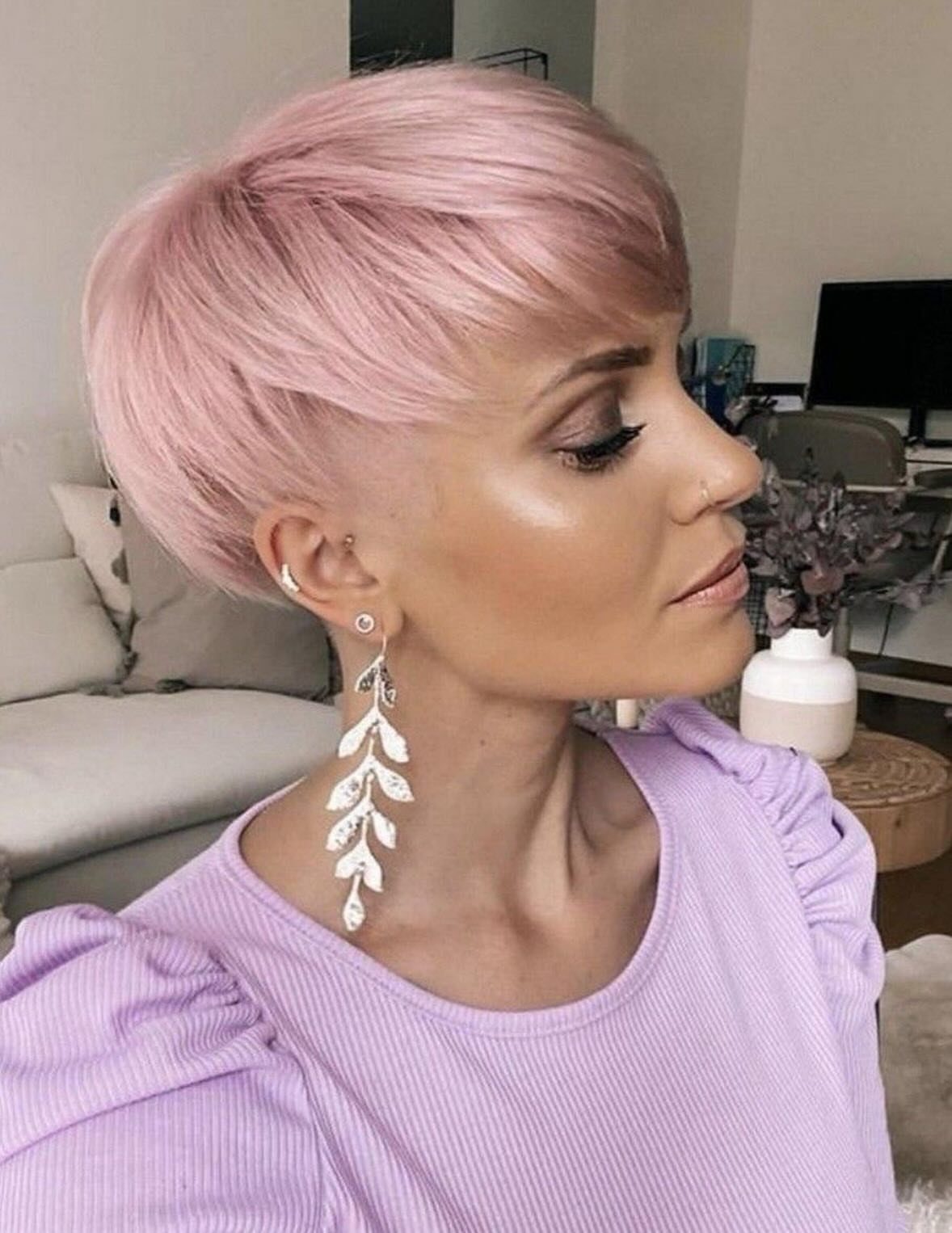
Pale pink on a side-swept pixie reads soft instead of loud, and the short length keeps the color looking playful.
Pink this light usually means lifting the hair first, so book a colorist and expect regular touch-ups as the shade fades.
I would keep styling light: a little spray and a sweep of the bangs to one side is enough. Wispy or sleek, the shape stays simple so the color gets the attention.
33. Two-Tone Pixie
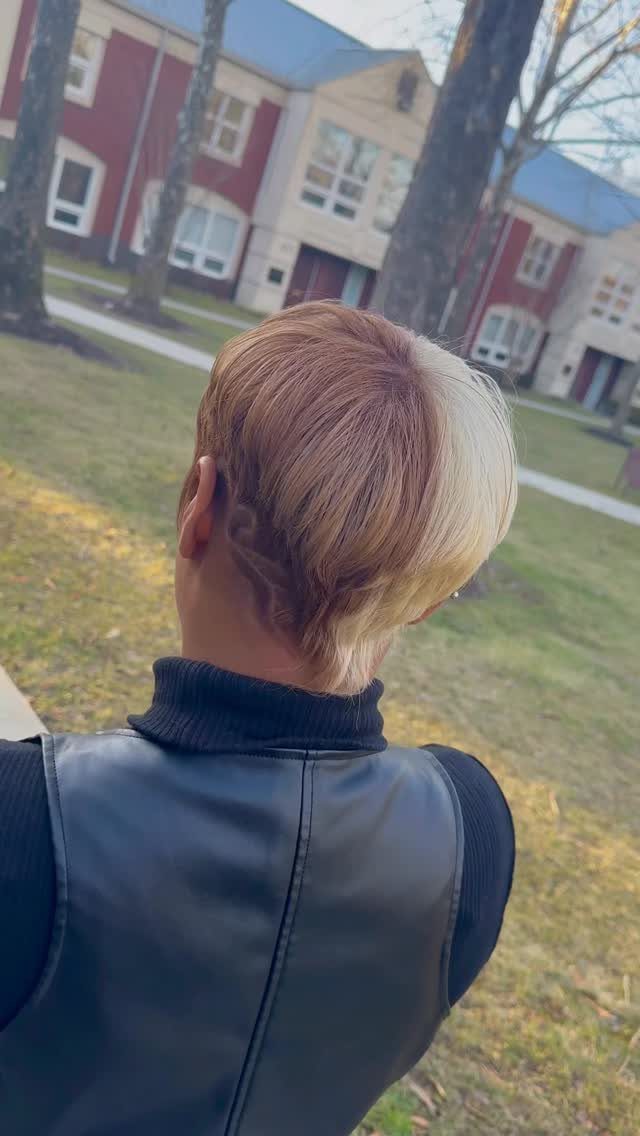
2 colors split across a cropped cut turn the back view into a design of its own. Contrast between tones does most of the work when a cut sits this close to the scalp.
Bring a photo and tell the colorist exactly where one shade ends and the other begins.
Short hair means less to color, but two shades need two sets of touch-ups, so I would budget for the upkeep. Book the cut and color together so the sections follow the shape.
Hair Type Considerations
Fine hair gets more lift from a pixie than from most other cuts, since shorter lengths stand away from the scalp instead of collapsing under their own weight. Layered styles add dimension where fine strands tend to look flat.
Thick hair needs thinning and textured layers to keep a pixie from turning into a bulky helmet. Bulk should come out through the interior, not just at the ends, so tell the stylist exactly how much weight you want gone.
Straight, wavy, curly, coily, natural and relaxed textures all work, but the cut has to follow your pattern. Damp hair stretches, so a cut made on wet strands ends up shorter than planned once it dries and springs back.
Trims and Grow-out
Blunt fringe needs shaping every 3 weeks to stay graphic. Fine hair that depends on a precise shape for its volume will need trims every 4 to 5 weeks.
Some styles can go 5 weeks before the outline softens.
If you’re growing a pixie out, book trims every 6 to 8 weeks to shape the hair and remove split ends while keeping length. Tell the stylist what you’re doing so they cut damaged ends without shortening the overall outline.
At roughly 1/2 inch of growth a month, a pixie needs 6 months or more before it reaches bob length.
Choosing Face Shape
Oval faces suit classic through textured pixies without much adjustment. On a round face, I’d build height at the crown and add a side-swept fringe, which draws the face longer instead of making it look wider.
A square face does well with soft, wispy layers, since they blur the strong line of the jaw. A heart-shaped face carries more width at the forehead, so extra volume around the jaw evens out the proportions.
Most face shapes work once you adjust the length and placement.
Leave more hair on top, at the sides or in the fringe depending on what your features need. Angular features can take softer layers, while rounder faces can carry a sharper, more blunt cut.
Frequently Asked Questions
What’s a pixie cut?
The sides and back stay close to the head, the top keeps enough length to move, and a fringe sits just above the brow or shorter. That contrast between the cropped sides and the longer top is what defines it.
What face shape looks best with a pixie cut?
Angular faces are the classic match, but oval, round and heart-shaped faces work too, and most face shapes can carry a pixie once it’s customized.
A round face gets sharper angles from height at the crown and fringe that falls across the forehead at an angle instead of straight down.
Square faces soften with wispy layers and textured fringes, and heart-shaped faces with extra volume around the jawline.
What should you consider before getting a pixie cut?
Before you book it, match the cut to your face shape, know what your hair texture will do at this length, and count the minutes you’re willing to spend styling it each morning.
Bring photo references to the stylist, and if you’re unsure, start longer and go shorter over time. Also expect frequent trims, because the sides lose their shape as they grow.
How do you style a pixie cut?
Use very little product, matched to the finish you want.
Work a fingertip of matte paste through the top and separate the pieces with your fingers to pull out texture. Heavy products flatten short hair and make it look greasy.
How is a pixie cut different from a traditional men’s back and sides?
A traditional men’s cut usually has uniform clippered sides, squared sideburns and a squared neckline.
A pixie is more rounded and generally scissor-cut. Both blend the sides into the top, but the pixie’s overall shape is softer.