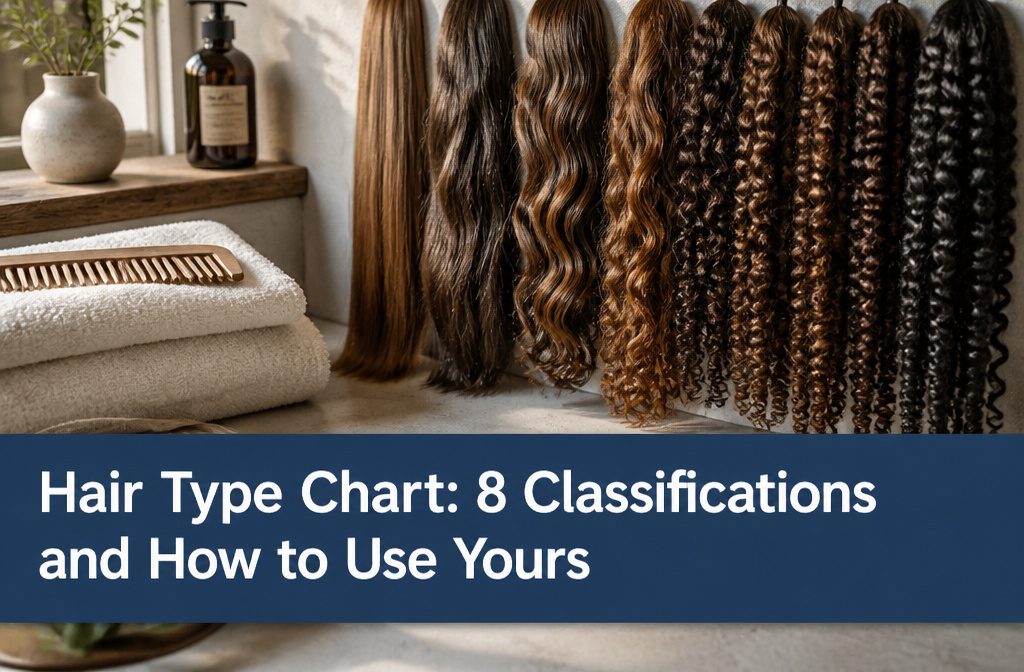
A hair type chart classifies hair into 4 numbered families by curl pattern: Type 1 straight, Type 2 wavy, Type 3 curly, and Type 4 coily, with A, B, and C subtypes marking loose to tight within each group.
Most heads carry 2 or 3 patterns at once, so the chart becomes a starting point rather than a fixed diagnosis.
Type 4C can shrink up to 75 percent when dry, which is why someone with 12 inches of stretched hair may see only 3 inches at rest.
What a Hair Type Chart Measures
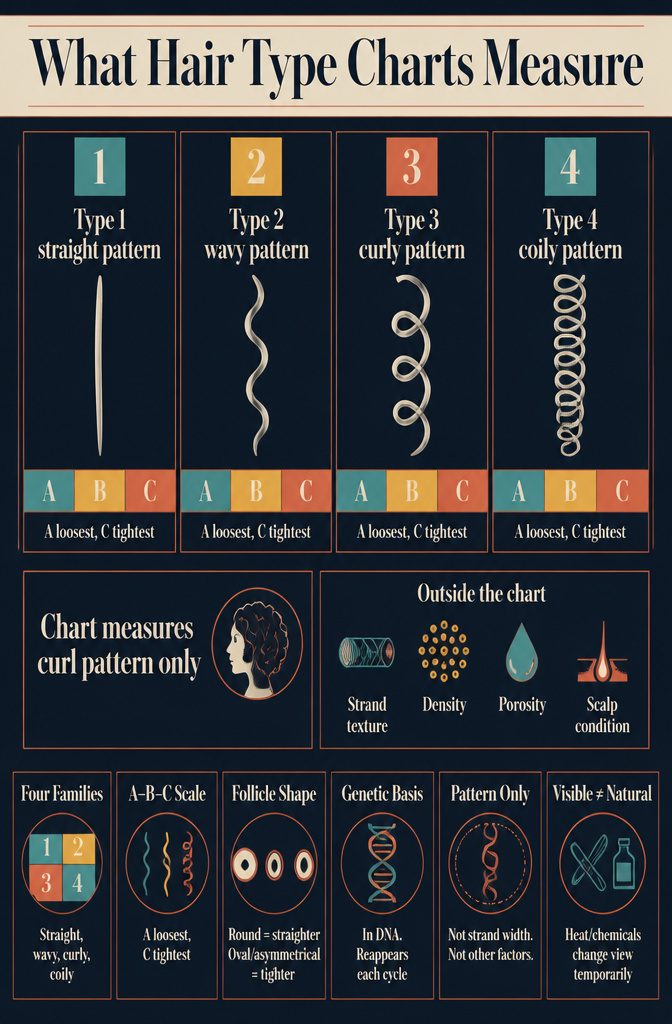
The chart Andre Walker created sorts hair into four numbered families based on curl pattern: Type 1 is straight, Type 2 wavy, Type 3 curly, and Type 4 coily.
Each type splits into A, B, and C subtypes that show how loose or tight the pattern runs within that family.
A represents the loosest version, B sits in the middle, and C marks the tightest or most defined curl in that group.
Curl pattern comes down to follicle shape. The rounder your follicle, the straighter your hair grows.
The more oval or asymmetrical it is, the tighter the curl. That shape is genetic, so while heat or chemicals can change what you see temporarily, your natural pattern stays written in your DNA and reappears with each growth cycle.
The chart measures curl pattern only. It does not track strand texture, which is the width of individual hairs.
It does not measure density, porosity, or scalp condition. Those are separate systems, and a person with Type 4C coils can have fine strands just as easily as someone with Type 1B straight hair can have coarse ones.
Type 1: Straight Hair
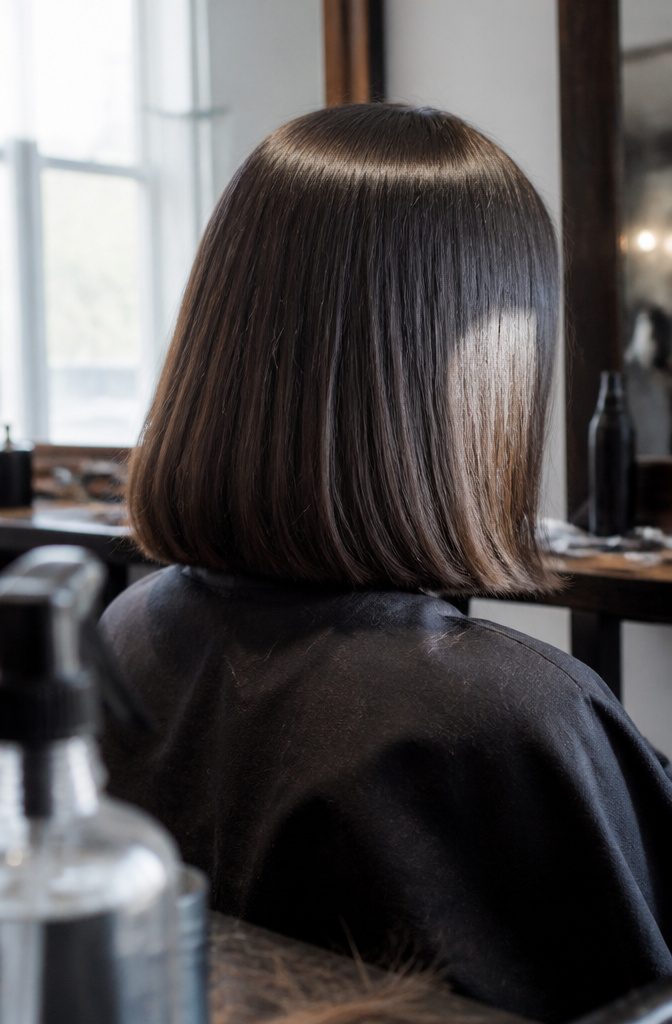
Type 1 hair sits straight from root to tip with no visible wave or curl. The individual strands may be fine or coarse, thick or thin, but they all fall without bending.
Because the hair shaft is straight, scalp oil travels down the full length faster than it does on wavy or curly types, which is why this category gets oily and shows buildup quickly.
The subtypes break down by body and texture. Type 1A is ultra-fine, pin-straight, and nearly impossible to add volume to.
Type 1B has slightly more volume and medium texture, and it can hold a curl briefly before it drops. Type 1C is the coarsest straight subtype, with soft bends near the ends and added fullness.
Straight hair reflects light easily and looks glossy without much effort, but it also gets weighed down by heavy products. I’d skip serums and butters and reach for lightweight texture sprays or dry shampoos instead.
Washing too often can push your scalp to overproduce oil, so dry shampoo becomes useful between washes. A chin-length blunt cut works particularly well with this type because the hair sits clean and even without fighting any natural bend.
Type 2: Wavy Hair
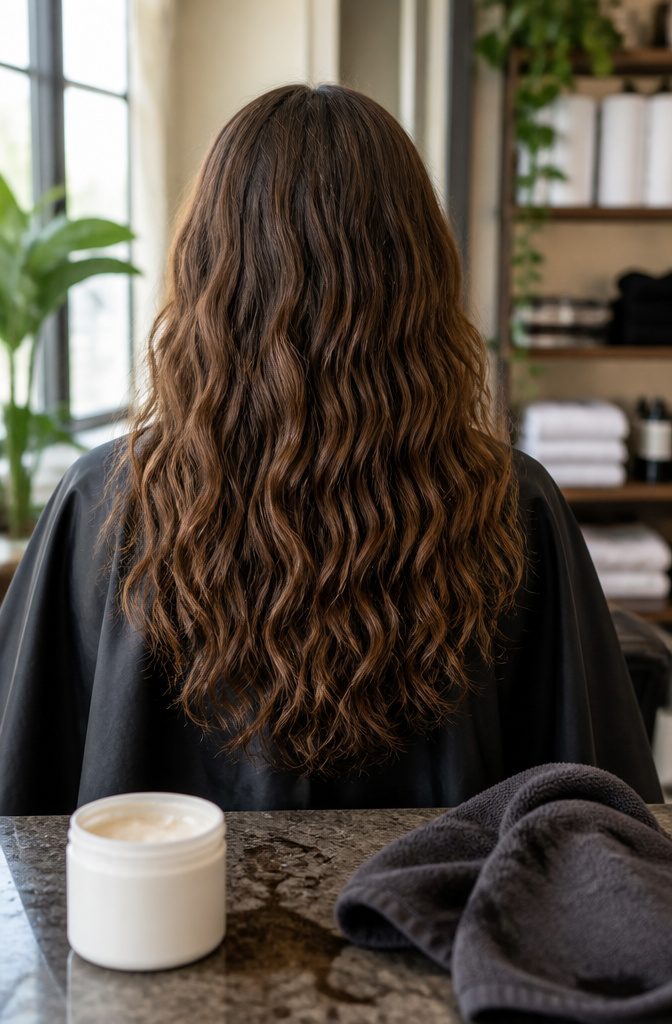
Type 2 hair forms S-shaped waves that range from loose bends to nearly curly. Where straight hair lies flat and curls spring into tight spirals, waves sit in the middle with movement but less coil.
2A waves are the loosest, fine in texture and close to straight near the roots.
They flatten easily under heavy products or too much oil. 2B has more definition, visible S-curves that hold through the day and a tendency toward frizz.
2C sits at the boundary with curly hair, with deeper waves that start closer to the scalp and coarser strands that can mix in a few actual curls.
Frizz control matters more as you move from 2A to 2C. Lightweight creams and mousses work better than gels, which tend to weigh waves down and flatten the pattern.
I shampoo 2A and 2B every two to three days, 2C every three to five. A mask about twice a month keeps 2B and 2C from drying out without leaving buildup.
Type 3: Curly Hair
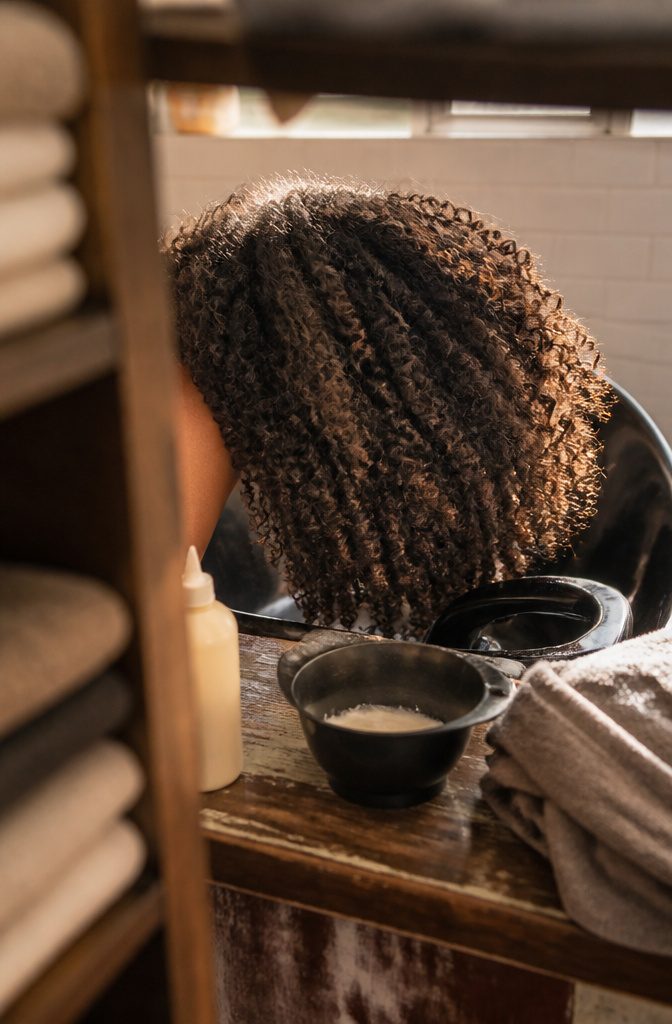
Type 3 hair grows in spirals that range from loose ringlets to tight corkscrews, and the width of your curl decides where you fall.
3A curls measure about 1 to 1½ inches wide, loose enough to fit around a permanent marker, with shine and natural bounce.
3B curls tighten to about half an inch, matching the diameter of a Sharpie barrel, and spring from the roots with more volume.
3C curls are the tightest in the category, coiling at a quarter inch or smaller around a drinking straw, with the most shrinkage when dry.
Hardges warns that shampooing too frequently is not good for your hair (since it can dry your curls out), and that you should aim to shampoo every five to seven days for healthier-looking curls.
— Glamour
That schedule keeps your scalp oils from getting stripped, which matters because natural oils move slowly along curved strands.
The mid-lengths and ends dry out faster than straight or wavy types, so moisture is the common thread across all three subtypes.
Deep condition every one to two weeks, and when you detangle, use a leave-in conditioner and rake through wet hair with your fingertips instead of a comb to avoid frizz and breakage.
Type 4: Coily Hair
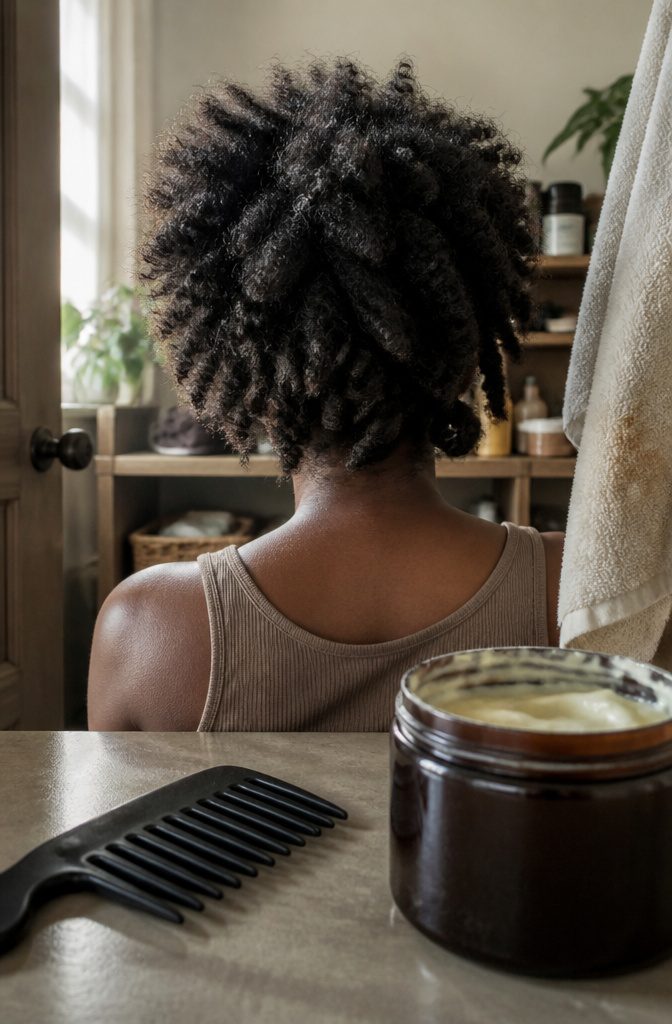
Type 4 coily hair includes S-shaped coils, Z-shaped bends, and tightly packed micro-coils that start right at the scalp.
The subtypes separate by how that pattern sits. Type 4A forms springy S-coils you could wrap around a chopstick or fit a toothpick through, with visible definition.
Type 4B bends in sharp zigzags with softer curl boundaries. Type 4C wraps around itself in the tightest coils of any subtype, often showing minimal pattern without stretching.
Shrinkage hits hardest here. Type 4C can shrink up to 75 percent, so a 12-inch strand stretched may rest at only 3 inches.
The tight bends also block natural oils from traveling past the first few centimeters, leaving the rest of the strand dry and prone to breakage. Gentle handling and consistent moisture matter more than in any other category.
Shampoo no more than once a week, sometimes stretching to every two or three weeks.
Deep condition every one to two weeks. Protective styles like braids and twists give fragile ends a break, but some long-worn styles worsen dryness and breakage when moisture cannot reach the hair for weeks at a time.
How to Identify Your Type
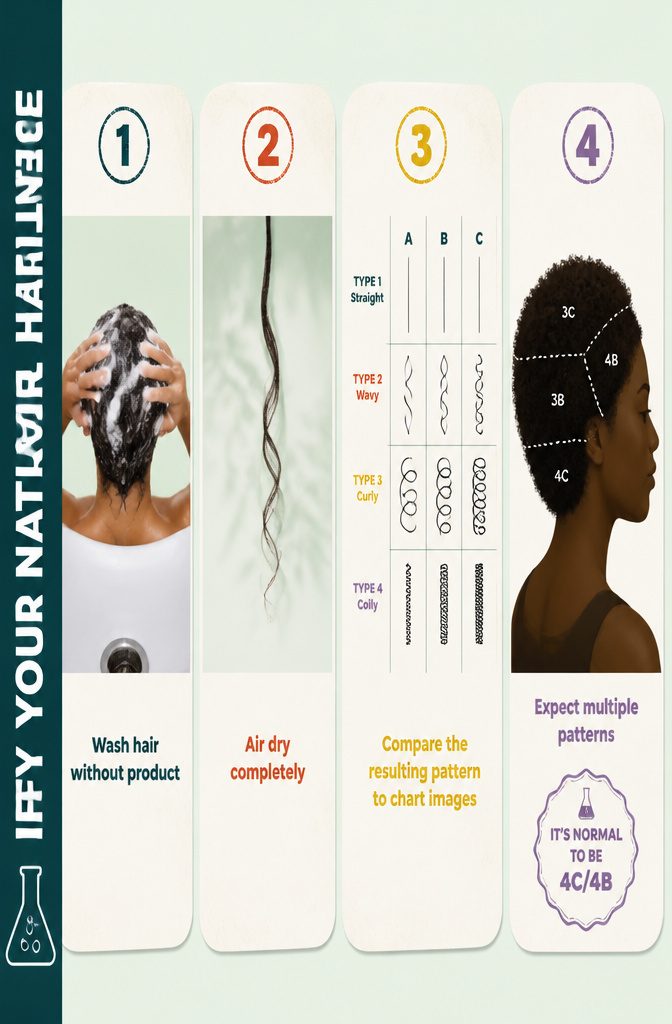
How to Identify Your Type
- Wash your hair and remove any product. Start with clean hair so styling products, oils, or heat damage do not mask the natural pattern.
- Let it air dry completely. Skip the blow dryer, diffuser, or towel scrunching. Watch what your hair does on its own as it dries.
- Compare the resulting pattern to chart images. Look at individual strands and match their shape to the closest letter-and-number combination. Type 1 is straight, Type 2 is wavy, Type 3 is curly, and Type 4 is coily, with subcategories A through C reflecting tighter curls as the letter advances.
- Expect multiple patterns on one head. Hair along the hairline, crown, and nape can vary. Focus on the pattern covering the larger portion of your scalp, or on the most delicate or demanding area if dryness or frizz concentrates there. If most of your hair reads 4C but the front sits closer to 4B, you can call yourself 4C/4B and adjust your routine accordingly.
Strand Texture, Density, and Porosity
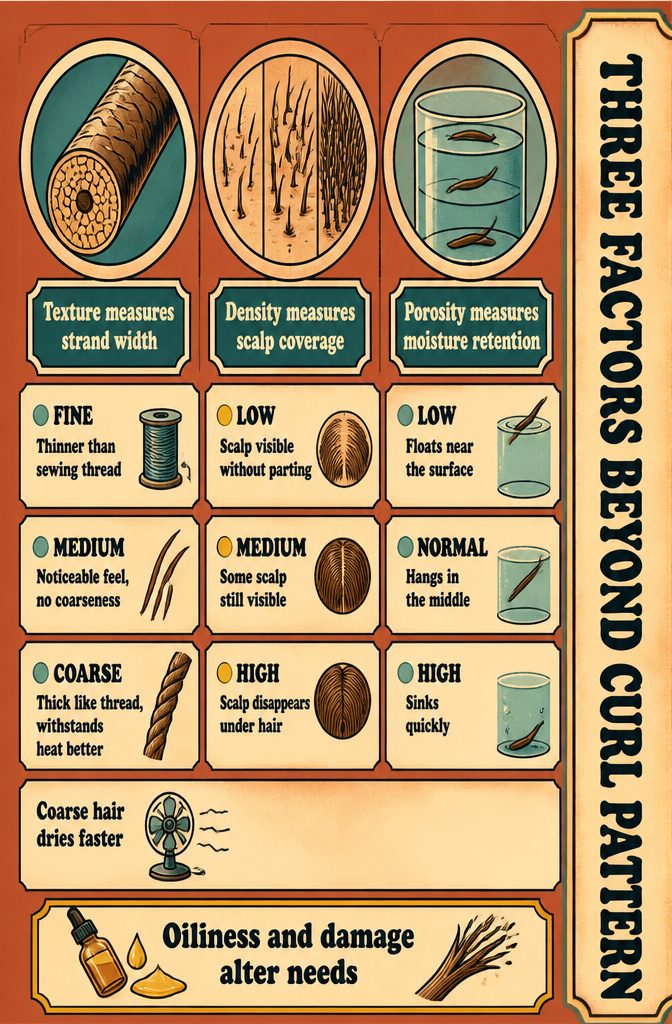
The chart stops at curl pattern, but three other factors decide which products work and how the cut behaves: strand texture, density, and porosity. Strand texture describes the diameter of a single strand, not the number of them.
Fine hair feels barely there between your fingertips, thinner than sewing thread. Medium hair has a noticeable feel but no coarseness.
Coarse hair feels thick, like thread itself, and withstands heat better than the other two but dries out faster because natural oils move more slowly down a wider shaft. Density is the amount of hair per square inch of scalp.
If you can see your scalp without parting, density is low. If the scalp disappears under hair, density is high.
Porosity measures how easily moisture enters and stays in the strand. Drop a clean, dry strand in water: it sinks quickly if porosity is high, floats near the surface if low, and hangs in the middle if normal.
Scalp oiliness and damage layer on top of all five and shift what your hair needs.
Using Your Type to Choose Products and Routines
Using Your Type to Choose Products and Routines
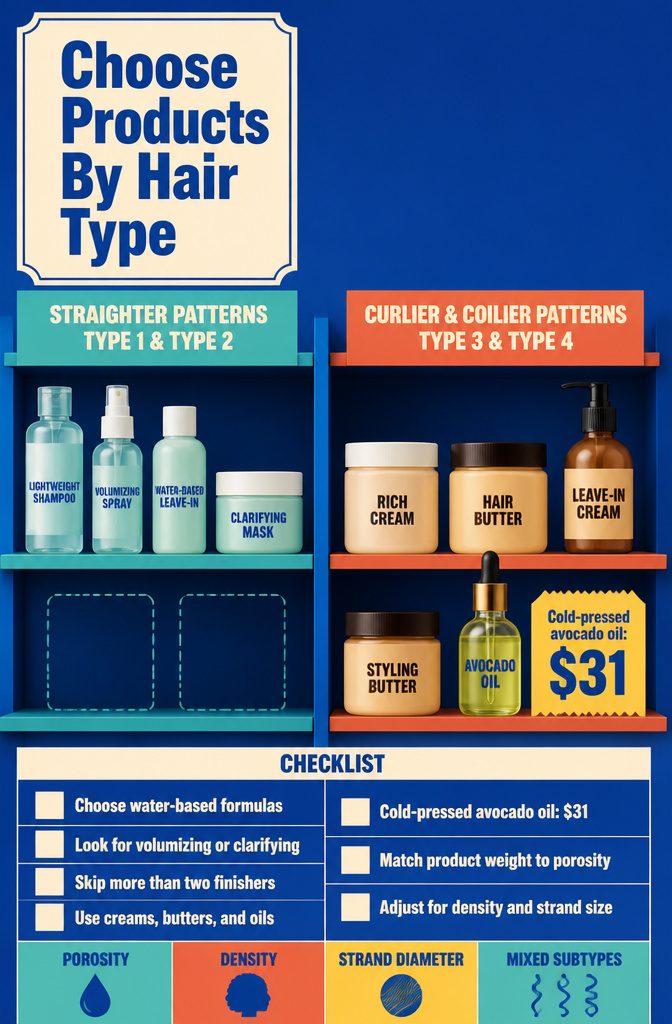
Straighter hair runs oily faster because sebum slides down the shaft without curls to slow it, so lightweight, water-based formulas prevent buildup and keep volume.
Type 1 and most Type 2 hair flatten under heavy creams. I look for products labeled "volumizing" or "clarifying" rather than "moisturizing," and skip layering more than two finishing products at once.
Curlier and coilier patterns need more moisture.
Type 3 and Type 4 hair holds less water naturally, so thicker creams, butters, and oils lock hydration in without weighing curls down the way they would on straight hair. A cold-pressed avocado oil runs around $31 and seals moisture after washing.
The chart gives you a starting zone, not a prescription. Porosity changes how fast your hair absorbs product regardless of curl pattern.
Drop a clean strand in water: if it floats, reach for heavier creams that push through resistance; if it sinks, lighter lotions absorb faster. Density and strand diameter shift the routine too.
Fine Type 4C hair needs less product than coarse Type 1B, and most heads carry two or three subtypes at once, so the larger portion decides your baseline and you adjust from there.
Why Hair Type Changes Over Time
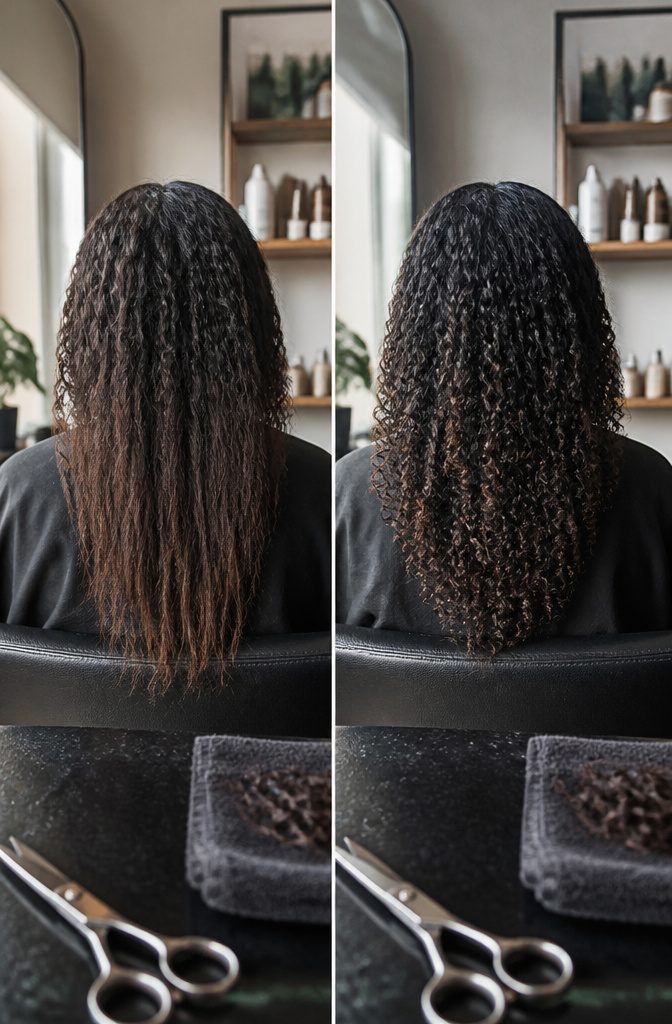
Hair can shift because of heat damage, chemical treatments, hormones, aging, and how you care for it. Someone who flat-irons every day may see looser waves than their natural pattern would show.
Pregnancy, menopause, and medication can all change texture. Even the local climate plays a role: humidity and hard water affect how hair behaves.
Damaged ends often mask the real curl pattern.
If your last few inches are fried from bleach or heat, they may hang limp while roots come in wavy or coily. The chart becomes more useful once you trim off the damage and let healthier hair grow.
Most people carry two or three patterns on one head.
You might have 3A curls at the crown and 2C waves underneath, or tighter coils at the nape and looser ones up top. The follicle shape determines curl, and those shapes vary across your scalp.
No chart accounts for every curl because no two heads match exactly. Treat the classification as a starting point, not a final diagnosis.
Porosity Testing and What It Means for Care
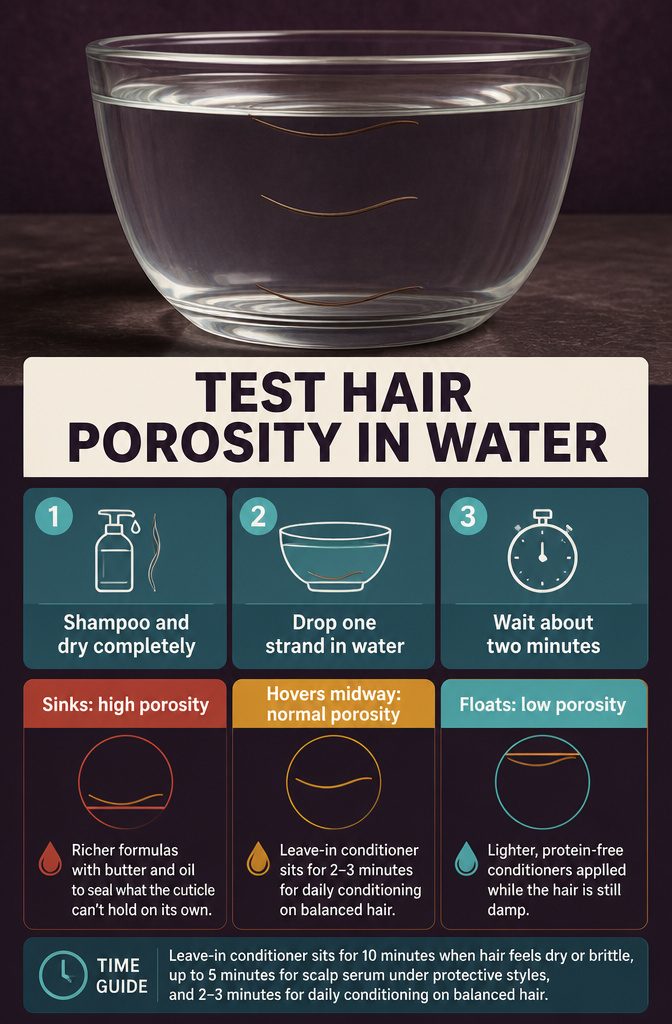
Porosity measures how readily your hair soaks up and holds onto moisture, and the float-or-sink test gives you the answer in about two minutes.
Shampoo and dry your hair completely, pull a single strand, and drop it in a bowl of room-temperature water.
Hair that sinks straight to the bottom is highly porous: the cuticle is lifted or damaged, moisture rushes in fast and evaporates just as quickly, leaving the strand dry and prone to breakage.
Hair that floats near the surface for several minutes is low-porosity, meaning the cuticle lies flat and resists both water and product. A strand that hovers midway has normal porosity and balanced absorption.
The care split follows directly from that result.
Low-porosity hair needs lighter, protein-free conditioners applied while the hair is still damp so the product can slip past the closed cuticle before it dries and locks out everything you just smoothed on.
High-porosity hair pulls for richer formulas with butter and oil to seal what the cuticle can’t hold on its own.
Leave-in conditioner sits for 10 minutes when hair feels dry or brittle, up to 5 minutes for scalp serum under protective styles, and 2–3 minutes for daily conditioning on balanced hair.
Working With Mixed Patterns
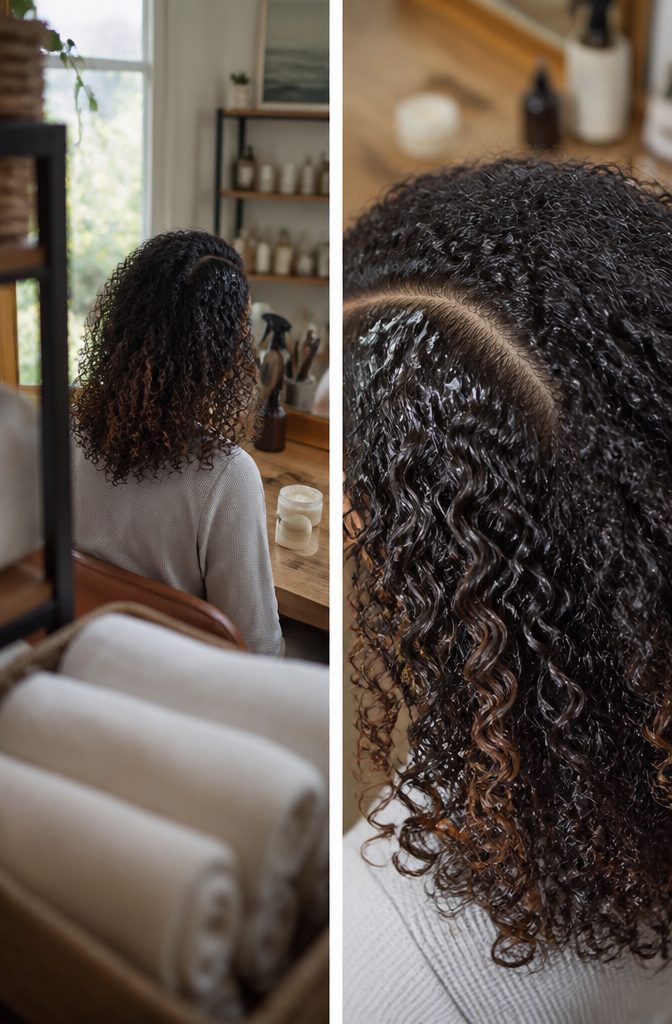
One person can have different curl patterns across their scalp, and that happens more often than most charts let on.
The crown might sit at 4C while the temples lean closer to 4A, or waves could appear through the front sections and curls take over at the back.
Genetics, growth patterns, and even how you’ve styled particular areas over time all play into the mix.
Treat the chart as a starting point, not a fixed identity.
If you’ve matched your hair to a single type and a product still underperforms in certain zones, look at those areas again. The drier crown might need heavier cream while the front handles a lighter leave-in without weighing down.
Adjusting care by section gives better results than forcing one routine everywhere, and it’s faster than wondering why half your head cooperates and the other half doesn’t.
When Neighboring Subtypes Look the Same
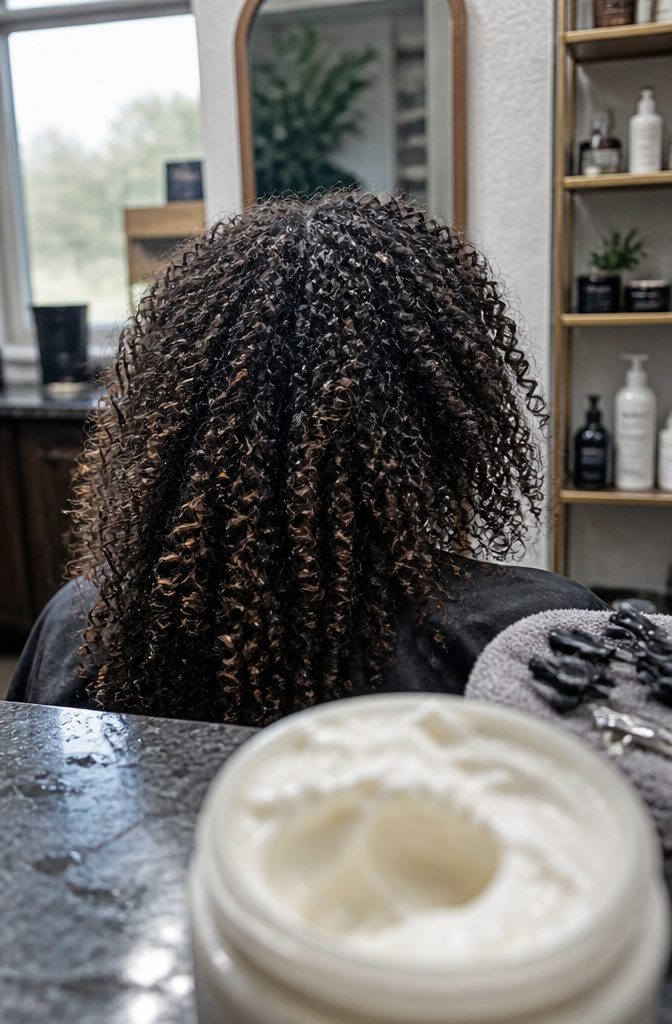
Deciding between 2B and 2C, or 3C and 4A, is where the chart stops being helpful and starts feeling like a test you can fail.
The strand that sits between descriptions does not need a single label. Many heads carry two or three subtypes at once, with tighter coils at the crown and looser waves underneath, or finer texture at the hairline.
Comparing your own hair against photos of each neighboring subtype usually clarifies which pattern dominates, but if both look equally close, the answer is both. Accept the mixed match rather than forcing a choice.
The chart exists to narrow down what works, not to assign a permanent type. A 3B routine that pulls from 3C advice when shrinkage runs high will serve better than waiting to land on the perfect single letter.
Frequently Asked Questions
What is a hair type chart?
A hair type chart classifies hair into 4 numbered families based on curl pattern: Type 1 is straight, Type 2 wavy, Type 3 curly, and Type 4 coily.
Each family divides into A, B, and C subtypes that show how loose or tight the curl runs within that group. The system was created by Andre Walker and measures curl pattern only, not strand width, density, or porosity.
How do I figure out my hair type?
Wash your hair to remove all product, let it air dry completely without heat or styling, then compare the resulting pattern to chart images. Type 1 is straight, Type 2 forms S-shaped waves, Type 3 grows in spirals, and Type 4 coils tightly.
Most heads carry 2 or 3 patterns at once, so focus on the pattern covering the larger portion of your scalp or the area that needs the most care.
What does hair type mean?
Hair type describes your curl pattern, which is determined by the shape of your hair follicle. The rounder your follicle, the straighter your hair grows; the more oval or asymmetrical it is, the tighter the curl.
That shape is genetic, so while heat or chemicals can change what you see temporarily, your natural pattern stays in your DNA and reappears with each growth cycle.
What’s the difference between hair texture and hair type?
Hair texture is the diameter of a single strand (fine, medium, or coarse), while hair type is the curl pattern (straight, wavy, curly, or coily).
Someone with Type 4C coils can have fine strands just as easily as someone with Type 1B straight hair can have coarse ones. The chart measures curl pattern only and does not track strand width.
If you have more than one hair type, which should you focus on?
Focus on the pattern covering the larger portion of your scalp, or on the most delicate or demanding area if dryness or frizz concentrates there.
If most of your hair reads 4C but the front sits closer to 4B, you can call yourself 4C/4B and adjust your routine accordingly.
Treating the chart as a starting point rather than a fixed identity gives better results than forcing one routine everywhere.
Can your hair type change over time?
Hair can shift because of heat damage, chemical treatments, hormones, aging, and how you care for it.
Pregnancy, menopause, and medication can all change texture, and even local climate plays a role. Damaged ends often mask the real curl pattern, so the chart becomes more useful once you trim off the damage and let healthier hair grow.
Why does knowing your curl type matter?
It gives you a starting zone for choosing products and routines that match your hair’s natural behavior. Straighter hair runs oily faster and needs lightweight formulas, while curlier and coilier patterns need more moisture because they hold less water naturally.
Porosity, density, and strand diameter shift the routine too, so the chart is a starting point rather than a prescription.
What are the 4 types of hair?
The 4 main types are straight (Type 1), wavy (Type 2), curly (Type 3), and coily (Type 4).
Each type splits into A, B, and C subtypes that show how loose or tight the pattern runs within that family, with A representing the loosest version and C marking the tightest.
What are the 12 different hair types?
The 12 types come from dividing the 4 main families into 3 subtypes each: 1A, 1B, 1C (straight), 2A, 2B, 2C (wavy), 3A, 3B, 3C (curly), and 4A, 4B, 4C (coily).
The letter within each family reflects how loose or tight the curl is, with A being the loosest and C the tightest.
How do I know my hair type and texture?
Wash your hair and let it air dry without product to see your natural curl pattern (Type 1 through 4), then check strand diameter by feeling a single strand between your fingertips.
Fine hair feels barely there, medium has a noticeable feel but no coarseness, and coarse hair feels thick like thread. Most heads carry multiple patterns and textures at once.
What does type 2 hair look like?
Type 2 hair forms S-shaped waves that range from loose bends to nearly curly.
2A is the loosest with fine texture and waves close to straight near the roots, 2B has more definition with visible S-curves, and 2C sits at the boundary with curly hair with deeper waves that start closer to the scalp and coarser strands.