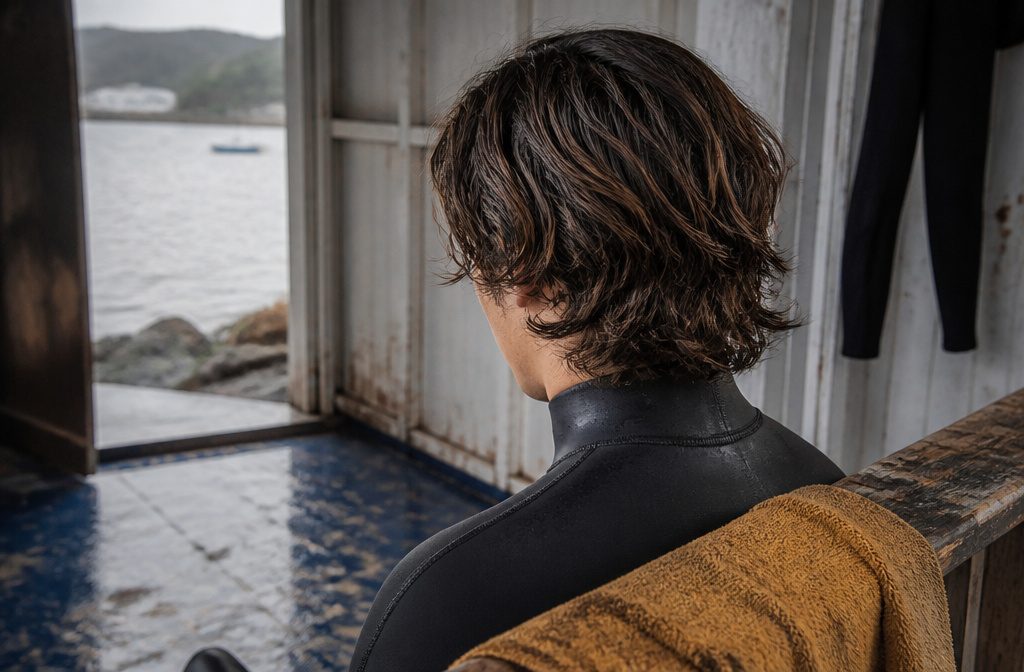
A surf curtains haircut is longer, layered hair parted down the middle so it hangs on both sides of the face like curtains.
The center part is what makes it surf curtains rather than just long hair, but it only works when you have enough length to frame your face without bunching at the temples.
Surfers like Kolohe Andino and John John Florence wear cleaner versions of the cut, while wavy and curly hair types get the beachy movement straight hair has to fake with sea salt spray.
1. What Surf Curtains Are
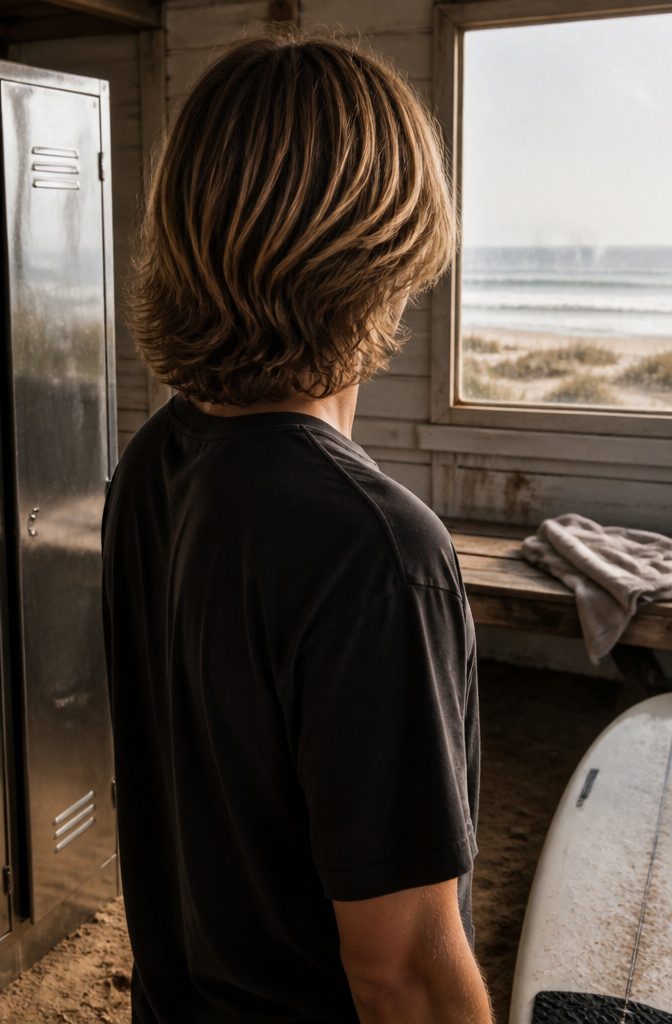
Surf curtains are longer, layered hair on top and sides, usually parted down the middle, with hair hanging on both sides of the face like curtains.
The name comes from exactly that curtain effect: the way the hair frames your face on either side of the center part.
Hair is generally longer on top and tapers toward the sides and back, which gives the style its flowing, natural look.
The middle part is what makes it surf curtains rather than just long layered hair. It adds symmetry and locks in the surfer aesthetic.
The style works across different hair types because length and texture can shift without losing the basic shape. You still get that beachy, laid-back vibe whether your hair sits flat or catches waves on its own.
2. Where the Style Came From
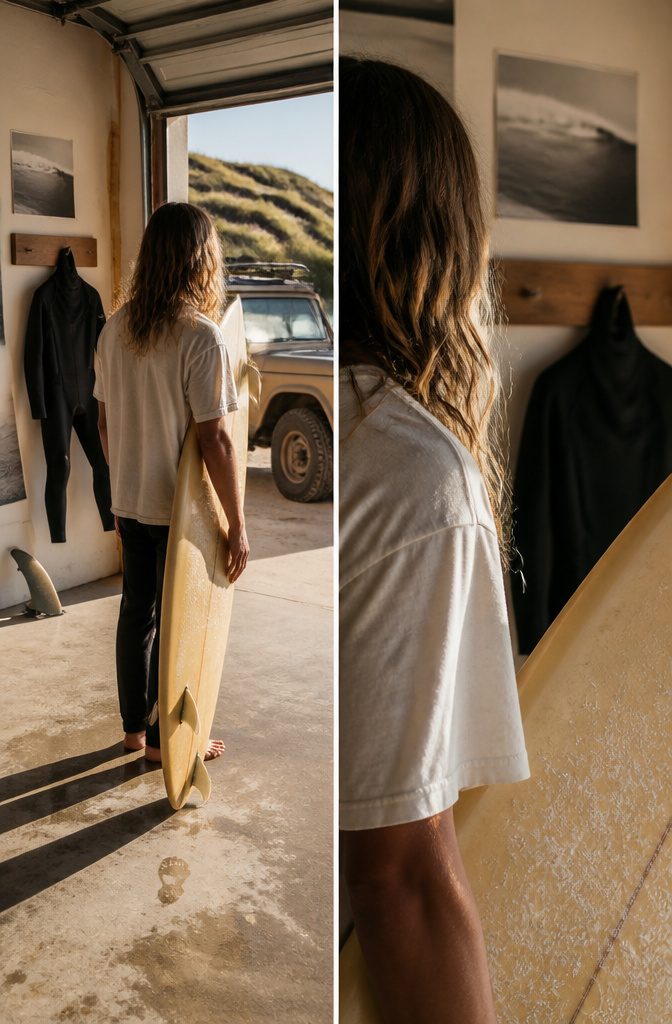
The look started with surfers in the 1970s, when long hair parted in the middle and falling around the face became part of the wave-riding image.
Laird Hamilton and Kelly Slater wore it that way, and the cut matched the lifestyle: low effort, windblown, practical enough to handle saltwater and sun without falling apart.
The center part and the way the hair moved gave it the name.
By the 1990s it jumped to film.
Leonardo DiCaprio in Titanic and Brad Pitt in The Beach brought surf curtains to audiences who had never touched a board, and the style went from beach culture to something men asked for in cities nowhere near the ocean.
The beachy look held even when the wearer had no ties to surfing at all.
Modern versions keep the parted front but add texture through layering, taper the sides with fades, and run anywhere from chin length to shoulder length depending on how much weight the wearer wants to manage.
3. How to Choose the Cut
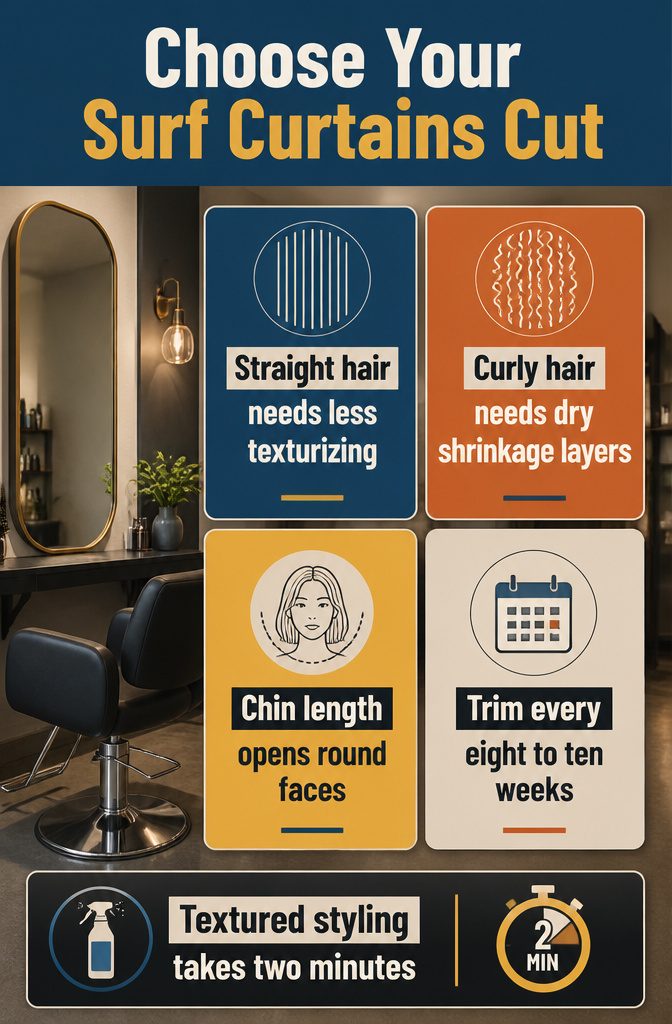
The first thing a stylist worth trusting will ask is what your hair does on its own. Straight hair needs less texturizing to hold the curtain shape but can look flat without point-cutting or razoring through the ends.
Wavy hair gives you the beachy movement surf curtains are built for, and most cuts lean into that texture rather than fighting it.
Curly hair works if you’re willing to let the curtain sit looser and wider, closer to a shag, and the stylist knows how to layer for shrinkage when dry.
Face shape matters less than most guides suggest, but it does set the starting point for length.
Chin-length curtains open up a round or square face by breaking the horizontal line. Shoulder-length suits most shapes and gives you enough hair to tuck behind your ears when you need it out of the way.
The center part is standard, but if your hairline fights it, a slight off-center split keeps the same vibe without a cowlick lifting one side.
Maintenance is where most people underestimate the cut.
Surf curtains grow out well if the layering was done right, but you’ll need a trim every eight to ten weeks to keep the fringe from dragging past your eyes or bunching at the temples.
Discuss how much time you’re willing to spend each morning.
A textured cut with more definition takes two minutes with salt spray. A sleeker version needs a round brush and a dryer, which doubles the time.
4. How to Style It
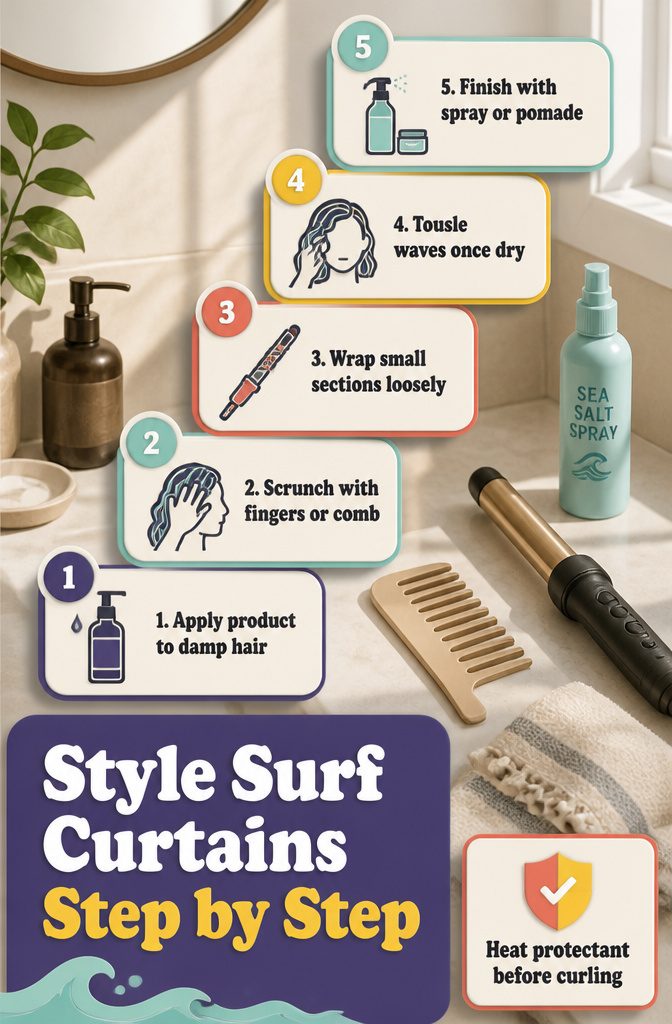
- Apply a texturizing product to damp hair right after washing. This gives you the volume and tousled base the cut needs.
- Use your fingers or a wide-tooth comb to scrunch the hair and encourage natural waves to form. Don’t comb it straight.
- If your texture needs help or you want more defined waves, wrap small sections around a curling iron or wave wand. Hold a few seconds, then release. Keep the curls loose.
- Once dry, use your fingers to tousle and separate the waves. You want it relaxed, not uniform.
- Finish with a sea salt spray or texturizing spray for extra volume and hold, or work a small amount of matte pomade or wax through the ends to define waves and control flyaways.
Skip high heat settings on any tool you use. Always apply a heat protectant spray first if you need the curling iron.
5. How to Maintain It
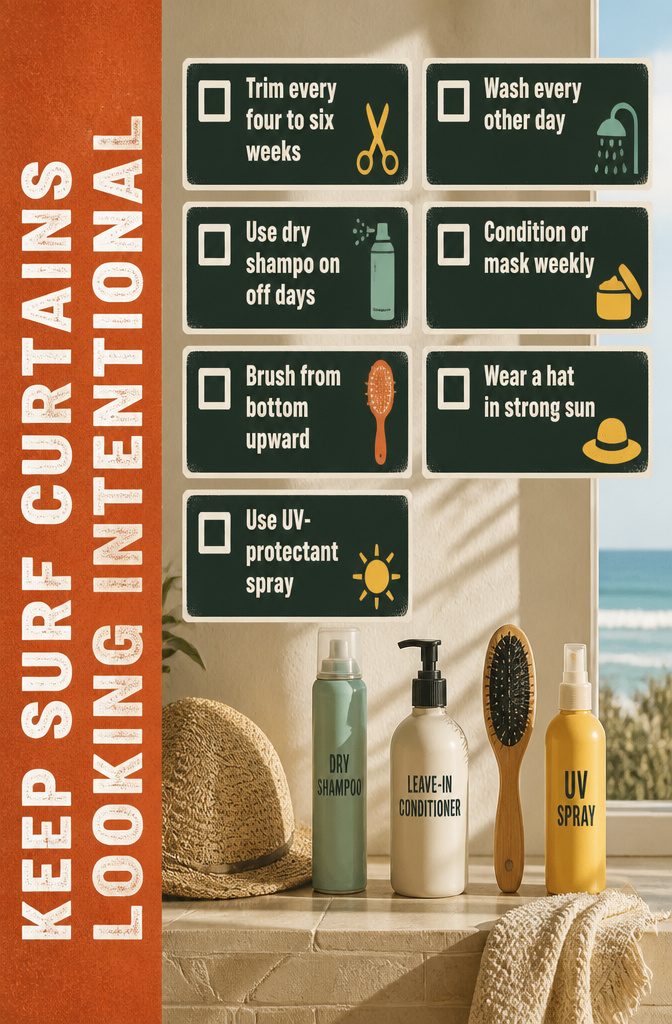
Surf curtains need consistent upkeep to keep the texture and movement that make the cut work.
Trim every 4–6 weeks to hold the shape. The fringe grows fast, and once it pushes past your nose it stops looking intentional.
- Wash every other day or every two days. Overwashing strips the natural oils that give the hair its slightly lived-in texture. Use dry shampoo on the off days to absorb oil and add volume.
- Apply a leave-in conditioner or hair mask once a week to keep the ends from drying out.
- Brush carefully from the bottom upward to avoid snapping the hair mid-strand, especially if it tends to tangle.
- Protect from sun exposure with a hat or UV-protectant spray. The sun fades color and dries out the hair, which kills the soft movement the style depends on.
6. How It Works With Straight Hair
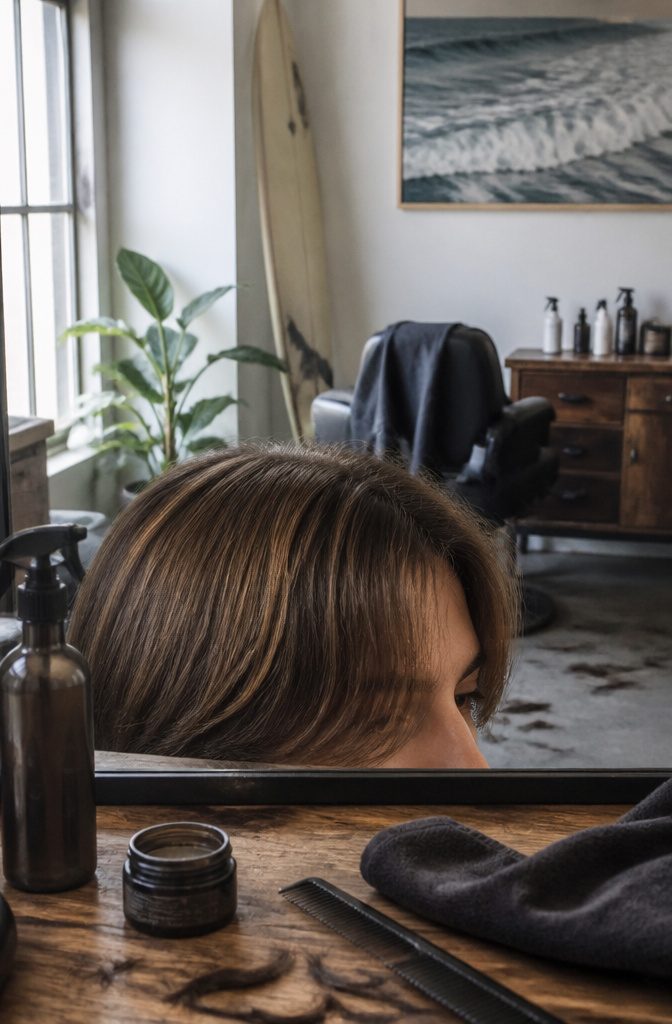
Straight hair needs layers cut around the face to build the curtain shape, because the texture that wavy and curly types get for free has to be added here.
The layers give the hair somewhere to fall that reads as deliberate rather than flat.
Once the cut is in, texturizing spray or sea salt spray puts grip and separation into the strands, mimicking what salt water does to hair at the beach.
I finish with a matte pomade to hold the shape without adding shine. The pomade keeps the curtains from collapsing back into a center part by midday, which straight hair will do on its own.
Each product compensates for a lack: the spray replaces natural wave, the pomade replaces the hold that textured hair builds through friction.
Skip either one and the style reads more as a middle part with long bangs than as surf curtains.
7. How It Works With Wavy Hair
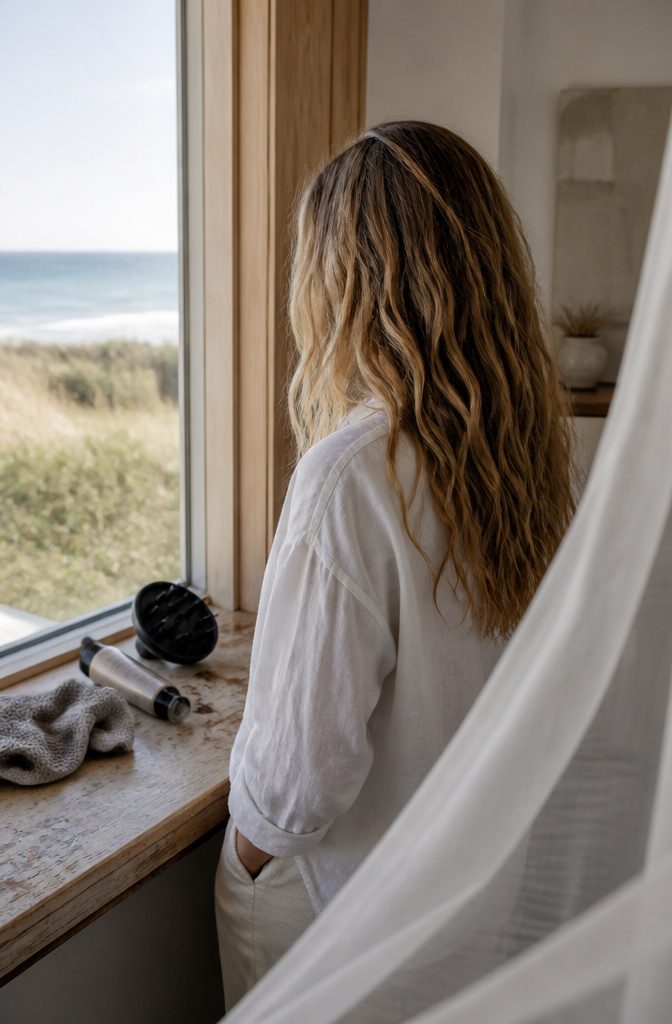
Wavy hair handles surf curtains better than almost any other texture. The natural movement does half the work, so you skip the fight to add shape where none exists.
Ask for slightly longer layers that follow the wave pattern rather than cutting across it. Shorter layers can shorten the wave and make the whole thing look triangular.
A curl-enhancing mousse or cream worked through damp hair brings out definition without weighing the waves flat.
Air-drying gives the loosest result. A diffuser on low heat keeps more volume at the root and dries faster without disturbing the texture.
For more separation, a small amount of texturizing paste or wax twisted through the ends creates that piecey finish surfers get from salt water.
Wavy hair grows out cleanly in this cut because the layers move with the texture instead of cutting against it.
8. How It Works With Curly Hair
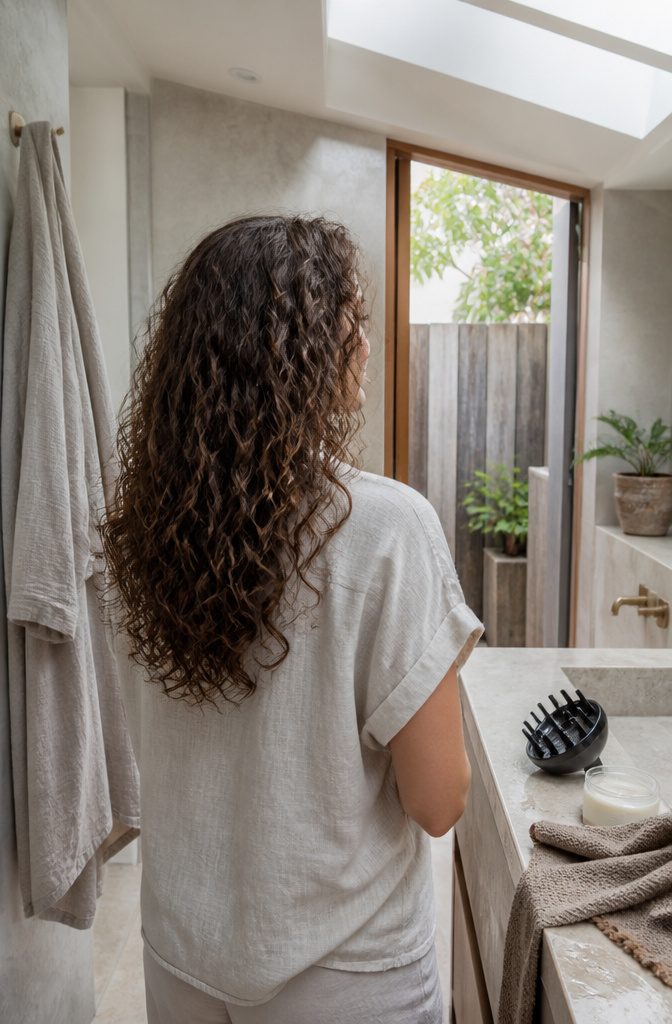
Curly hair works beautifully with surf curtains when you keep the cut longer with layers to manage volume without fighting the curl pattern.
The layers let curls fall naturally while still holding the center-part curtain shape. After washing and conditioning, apply a curl-defining cream or gel to damp hair and scrunch upward to encourage the curl rather than flatten it.
Air drying gives the softest result, but if you need speed, use a diffuser on low heat so the curls set without frizz. Finish with a lightweight spray to hold the shape without weighing the curls down.
The whole approach hinges on letting the texture do the work instead of forcing it straight, which is what makes the style sit right on curly hair in the first place.
How to Vary the Look
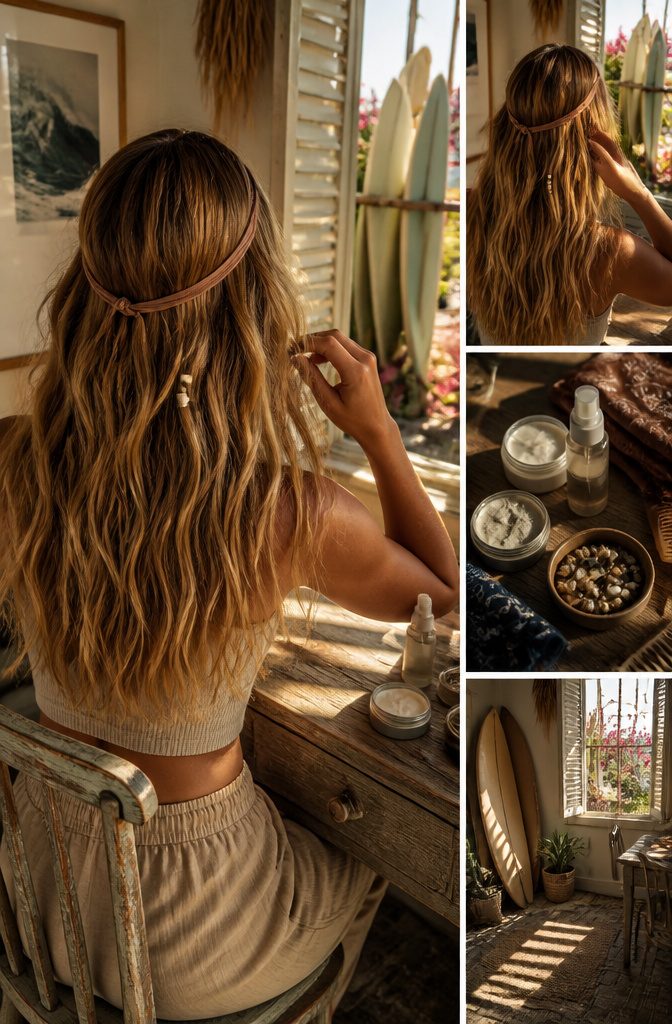
The cut itself sets the structure, but a handful of small shifts change how the whole thing reads.
Highlights in lighter shades fake that sun-bleached look and add dimension without touching the length. Opt for shades that mimic natural sun exposure rather than anything that reads as a deliberate streak.
Headbands and bandanas keep hair out of your face and lean into the surf culture the cut already references. They also solve the practical problem of wind or sweat without needing product.
Hair jewelry such as beads or small charms gives you a bohemian angle. The accents are small but they shift the whole vibe.
Product choice does most of the heavy lifting:
- Sea salt spray or texturizing cream delivers the tousled, beachy texture the style is named for
- Matte pomade or clay pulls the look toward structure and definition, trading volume for control
Each option changes what someone sees first.
The jewelry and accessories are about personality. The product is about whether the curtains look loose or held.
Surfers Who Wear It
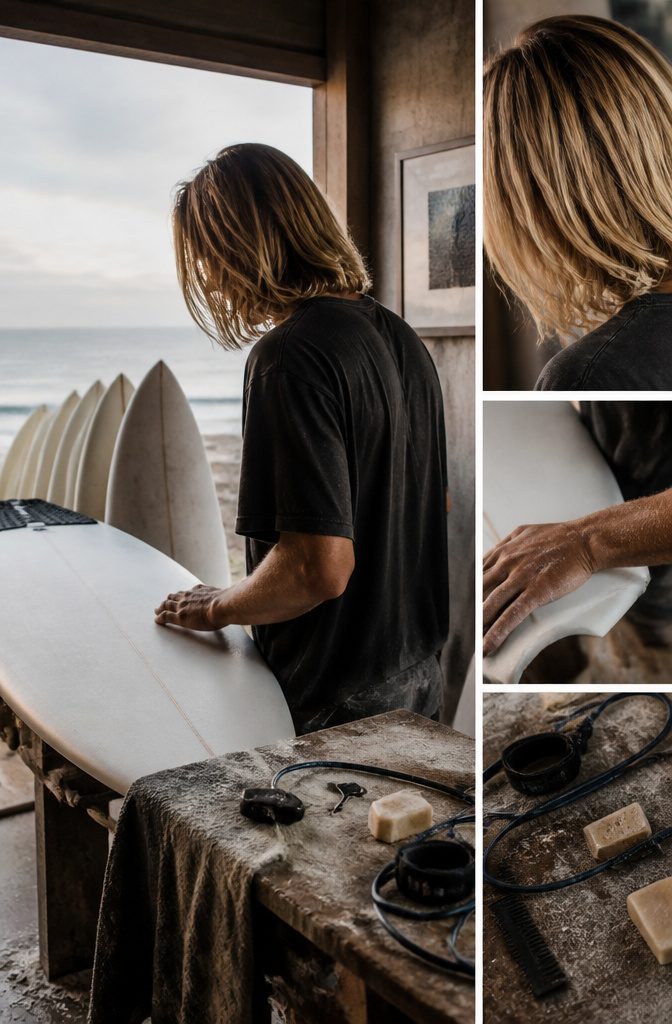
Kolohe Andino brings polish to the cut. His version runs sleek, with enough length to frame the face but styled deliberately rather than left wild.
The part holds, the curtain sits clean, and the whole thing reads refined. If the appeal is looking like you put in five minutes rather than rolling out of the ocean, Andino’s approach is the template.
Mason Ho wears it looser. His hair moves, the texture shows, and the vibe skews casual in a way that works for someone who spends actual time in saltwater.
The cut is similar in structure but the styling pulls back, which makes it feel more approachable for daily wear.
John John Florence splits the difference. His hair has length and movement but stays groomed enough to photograph well.
This version translates cleanest when you want a cut that holds up outside the lineup, and it’s what most people mean when they say they want surf curtains without the mess.
Where the Style Fits Into Daily Life
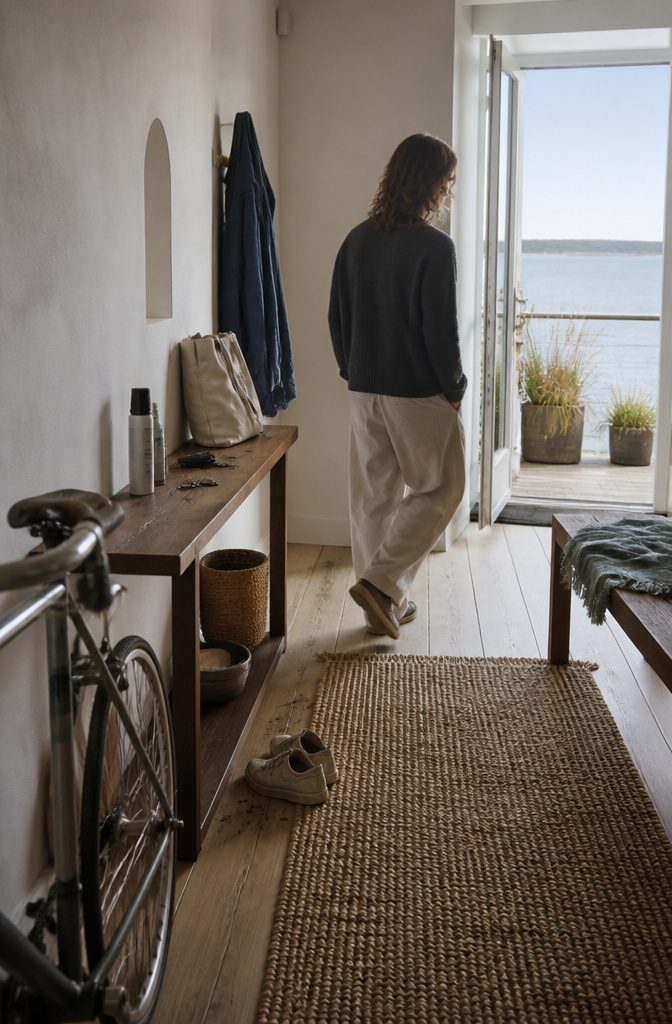
Surf curtains need medium to long hair to fall the way they should. Anything chin-length or longer gives you enough weight and movement to pull off the center part and the fringe that frames your face.
The cut suits oval, square, and heart-shaped faces because the curtain softens angles without hiding structure, and it works across hair textures from straight to wavy to curly with small adjustments in how the stylist layers the fringe.
I like that it asks very little of you in the morning. Most people run a lightweight mousse or sea salt spray through damp hair, push it off to the sides, and let it air-dry.
The volume comes from the cut itself rather than from heat styling or product buildup. You can wear it to class, out with friends, or to a party without reworking it, and it still reads as intentional rather than forgotten.
The same cut that handles a casual day adapts to something more formal when you add a bit of texture spray and shape the fringe with your fingers.
Frequently Asked Questions
What is the surf curtains hairstyle?
Surf curtains are longer, layered hair parted down the middle with hair falling on both sides of the face like curtains.
The center part and the way the hair frames your face give the style its name. It works across different hair types and delivers a beachy, laid-back look whether your hair is straight, wavy, or curly.
How do I get the perfect surf curtains haircut?
Tell your stylist what your hair does on its own, since straight hair needs more texturizing while wavy hair already has the movement the cut depends on.
Choose a length between chin and shoulders based on your face shape, and discuss how much time you’ll spend styling each morning. Plan for a trim every 8 to 10 weeks to keep the fringe from dragging past your eyes.
How do I style surf curtains?
Apply texturizing product to damp hair right after washing, then use your fingers or a wide-tooth comb to scrunch the hair and encourage natural waves.
If your texture needs help, wrap small sections around a curling iron for a few seconds to create loose curls.
Once dry, tousle with your fingers and finish with sea salt spray or a small amount of matte pomade through the ends.
How do I maintain surf curtains?
Trim every 4 to 6 weeks to hold the shape, and wash every other day or every 2 days to keep the natural oils that give the hair its texture.
Apply a leave-in conditioner or hair mask once a week, brush carefully from the bottom up, and protect from sun with a hat or UV spray. Overwashing strips the oils the style depends on.
Can surf curtains work with different hair types?
Yes, surf curtains adapt to straight, wavy, and curly hair with small adjustments in layering and product.
Straight hair needs texturizing spray and matte pomade to build the shape, wavy hair does half the work on its own with slightly longer layers, and curly hair works beautifully when kept longer with layers that follow the curl pattern.
Each texture changes how you style it but the center-part curtain shape stays the same.
Is curtains a good hairstyle?
Curtains work well because they ask very little of you in the morning and adapt to casual or formal settings without reworking.
The volume comes from the cut itself rather than heat styling, and the style suits oval, square, and heart-shaped faces by softening angles without hiding structure.
Most people run sea salt spray through damp hair, push it off to the sides, and let it air-dry.
How to do a surfer haircut?
Ask for longer, layered hair on top and sides with a center part, and request layers cut around the face to build the curtain shape. The hair should taper toward the sides and back for a flowing, natural look.
Once the cut is in, apply texturizing or sea salt spray to damp hair and scrunch to encourage waves, then finish with matte pomade or wax through the ends for hold and definition.





