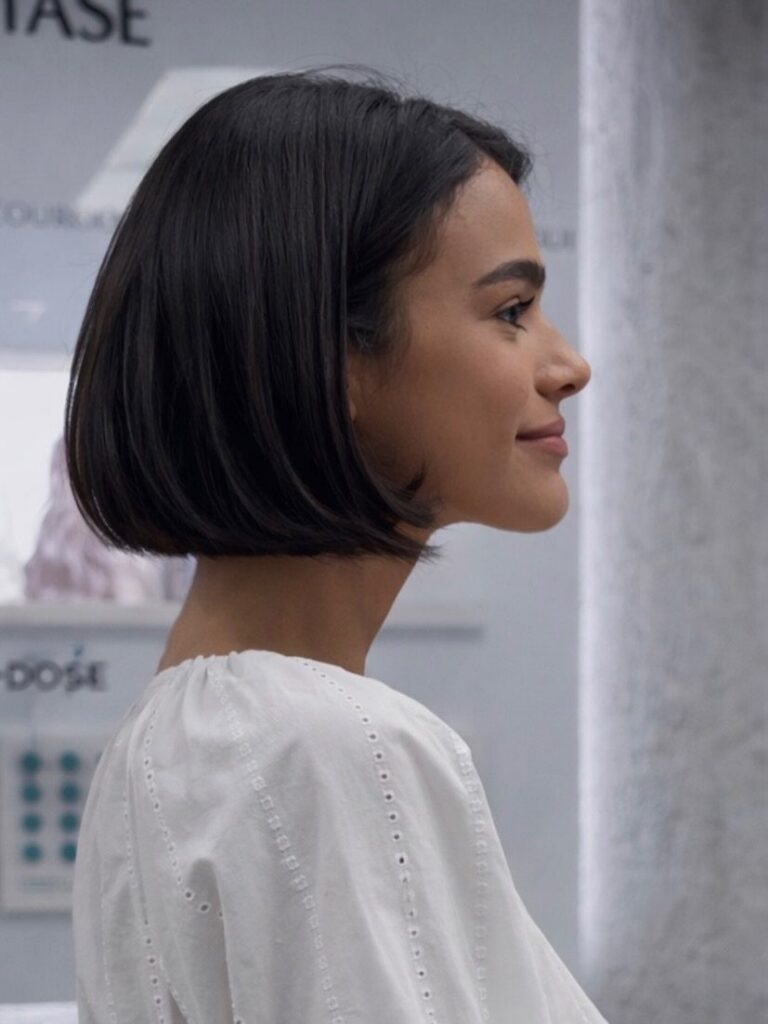
Bob length decides how often you’ll sit in the chair: a French bob cut above the jaw needs a trim every 4 to 6 weeks to hold the shape, while a lob cut between the collarbone and shoulders lets you go several weeks longer before the line falls apart.
1. French Bob
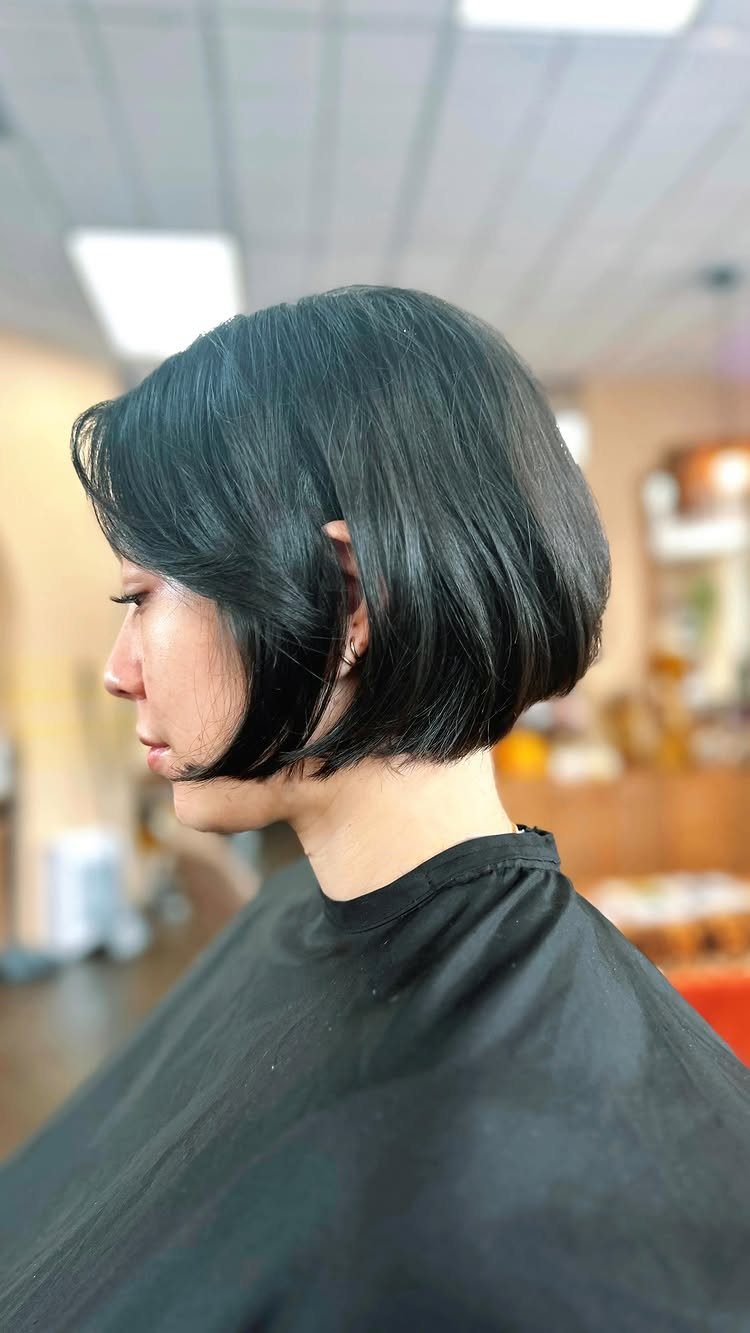
A bob cut short enough that it sits above the jawline, styled with texture rather than precision.
The finish is undone, which makes it easier to manage day to day: you skip the blowout and let the hair fall where it wants.
Ask for length at or above the jaw and mention that you want soft, piecey texture instead of a sleek line.
Most versions sit between ear and chin, and the shorter you go, the more often you’ll need a trim to hold the shape.
2. Bixie
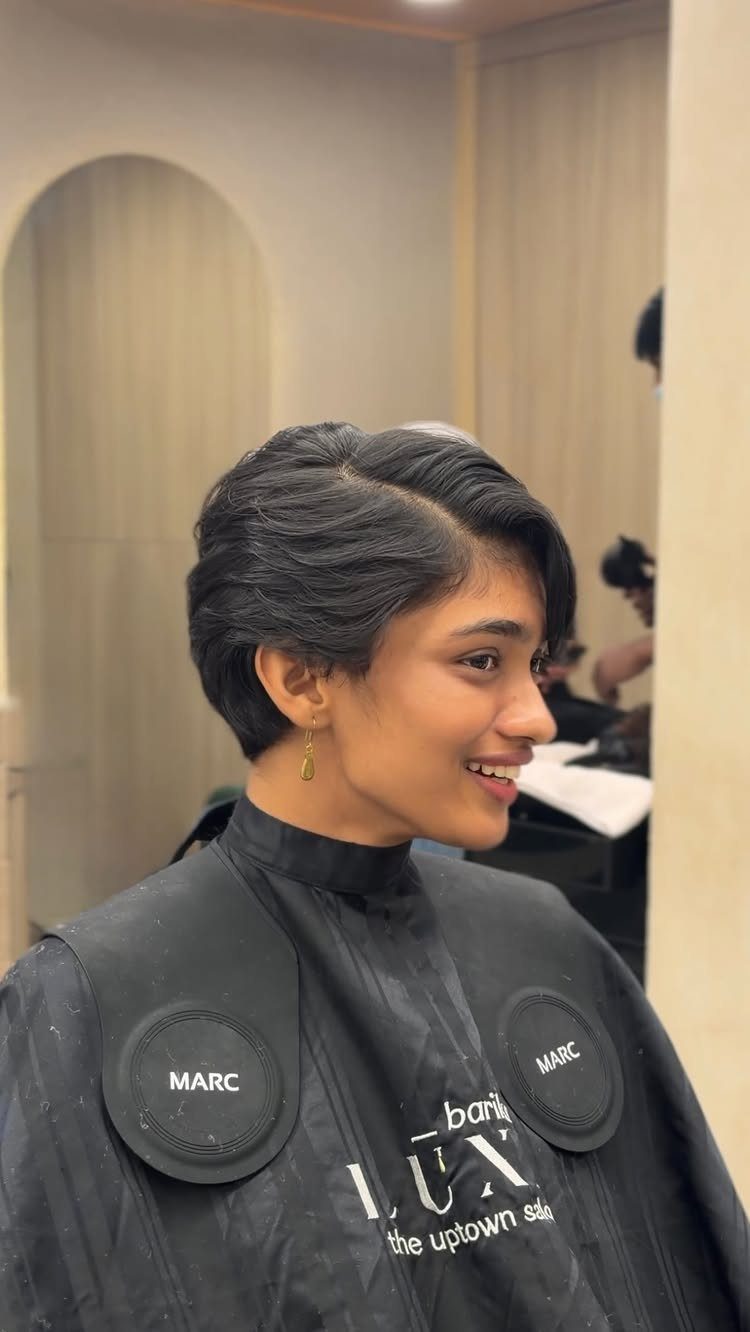
This cut borrows the cropped back and sides of a pixie but keeps enough length on top to tuck behind the ears or style forward.
Layers give it movement without adding bulk, and the shape works whether you blow it smooth or leave it textured.
3. Layered Bob
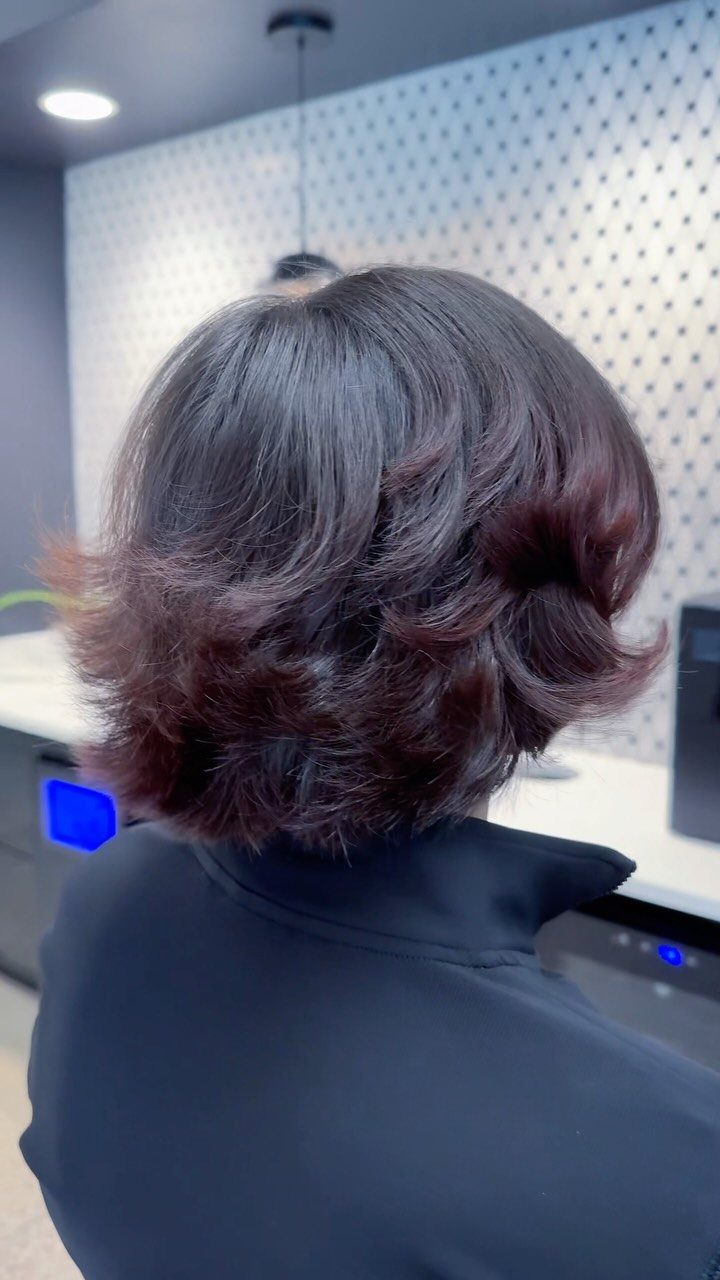
Layers cut through the bob add lift at the crown and keep the ends from sitting flat. Layers stack and curve, which gives the cut dimension from every angle.
The layers can start high for volume or low for subtle movement, depending on your hair thickness. If your hair is fine, ask for interior layers that add body without thinning the perimeter.
Thicker hair benefits from more aggressive layering to reduce weight. Style time stays low: blow-dry with a round brush to emphasize the curve, or let it air-dry for a softer finish.
4. Curly Bob
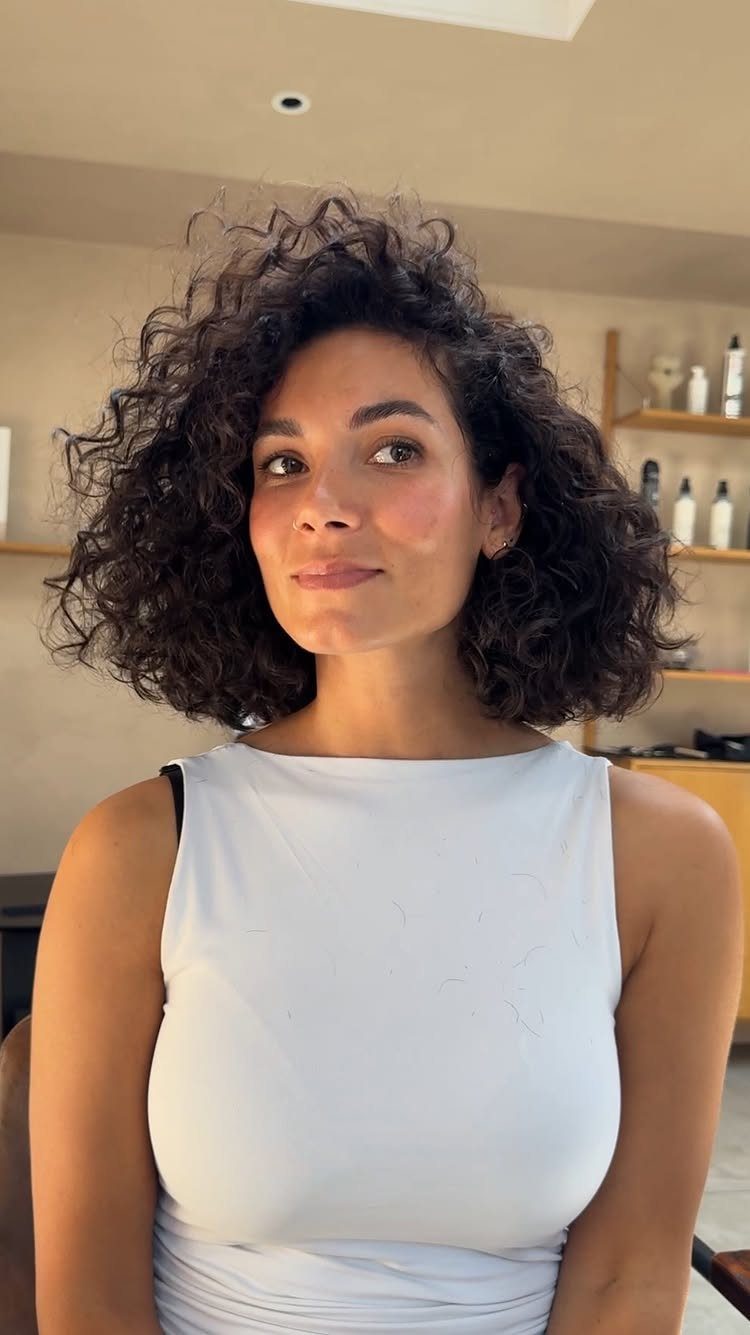
A bob shaped specifically for curls, with layers or a tapered perimeter that lets the curl pattern show without turning into a triangle. Curls add volume that makes the cut feel fuller than a straight bob at the same length.
Ask your stylist to cut dry so they can see how each curl falls. Avoid blunt lines, which can make curly hair look boxy.
Styling is minimal if your curls hold their shape: a leave-in conditioner or curl cream, then air-dry or diffuse. Refresh days are faster than with longer curls since there’s less hair to work with.
5. Round Bob
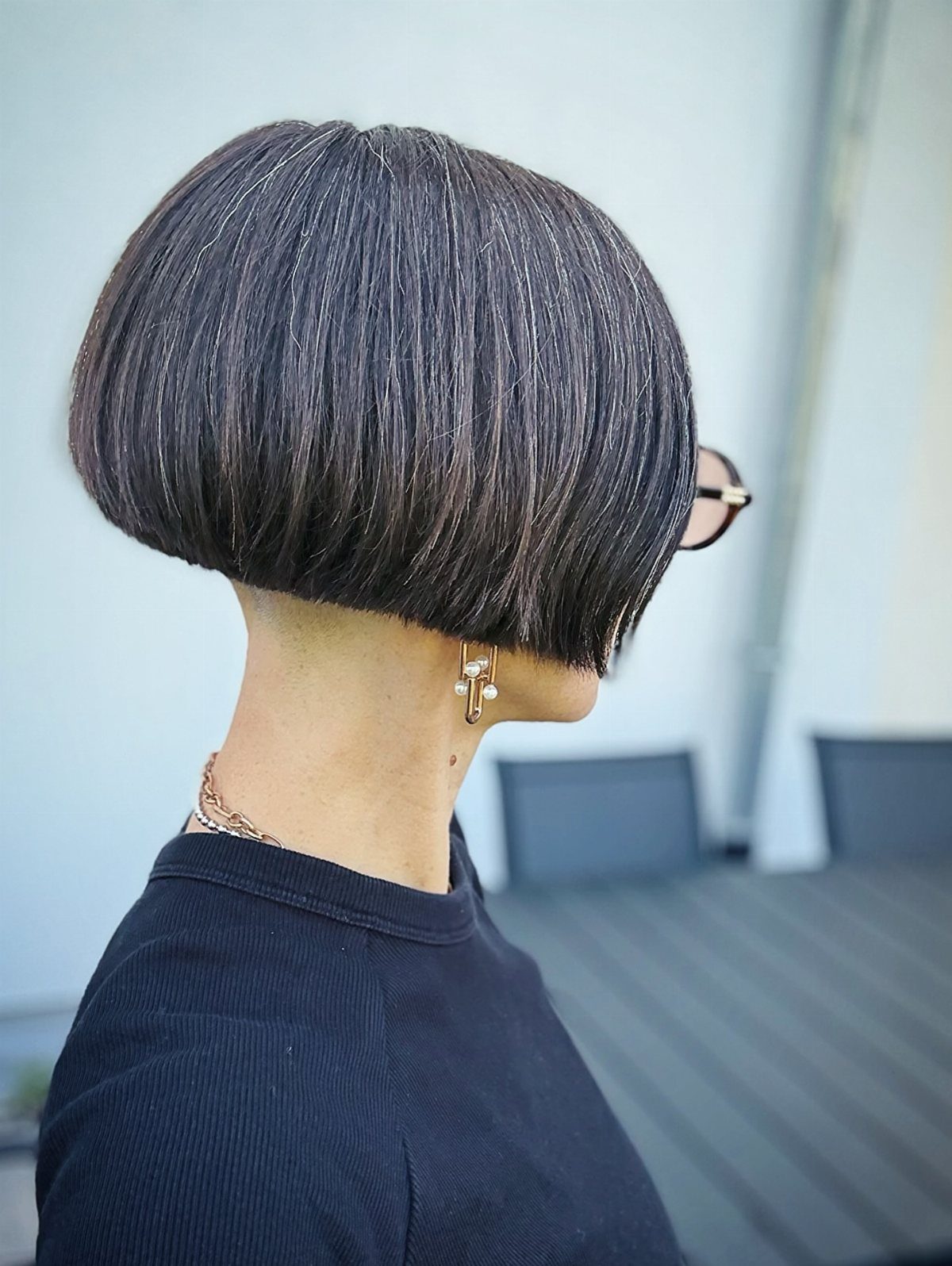
The ends of this bob are curled under to follow the curve of the head, creating a rounded silhouette. The style relies on a blowout or hot tool to set the shape, and the smoothness is part of the look.
You’ll need a round brush and a blow-dryer, or a flat iron to bend the ends inward.
The shape softens angular faces by adding curve, and it works on most hair types as long as your hair holds a curl. Humidity will flatten the curve, so a finishing spray helps if you’re somewhere damp.
6. Short Bob
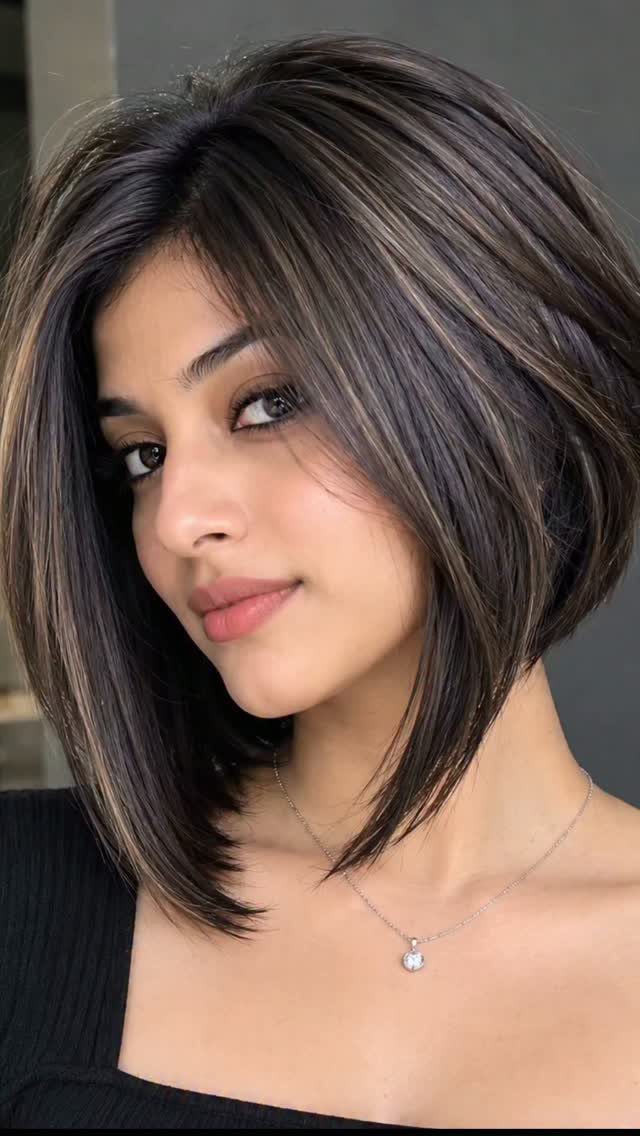
A bob that stops short, usually between the ear and the chin, with length kept minimal. The version here includes subtle highlights and soft layering, but the defining feature is the length itself.
Shorter bobs show off the neck and jawline, which makes them a good fit for oval or heart-shaped faces.
If your hair is thick, the shorter length reduces weight and can make styling faster. Fine hair benefits from the blunt line, which keeps ends from looking thin.
7. Flippy Layers
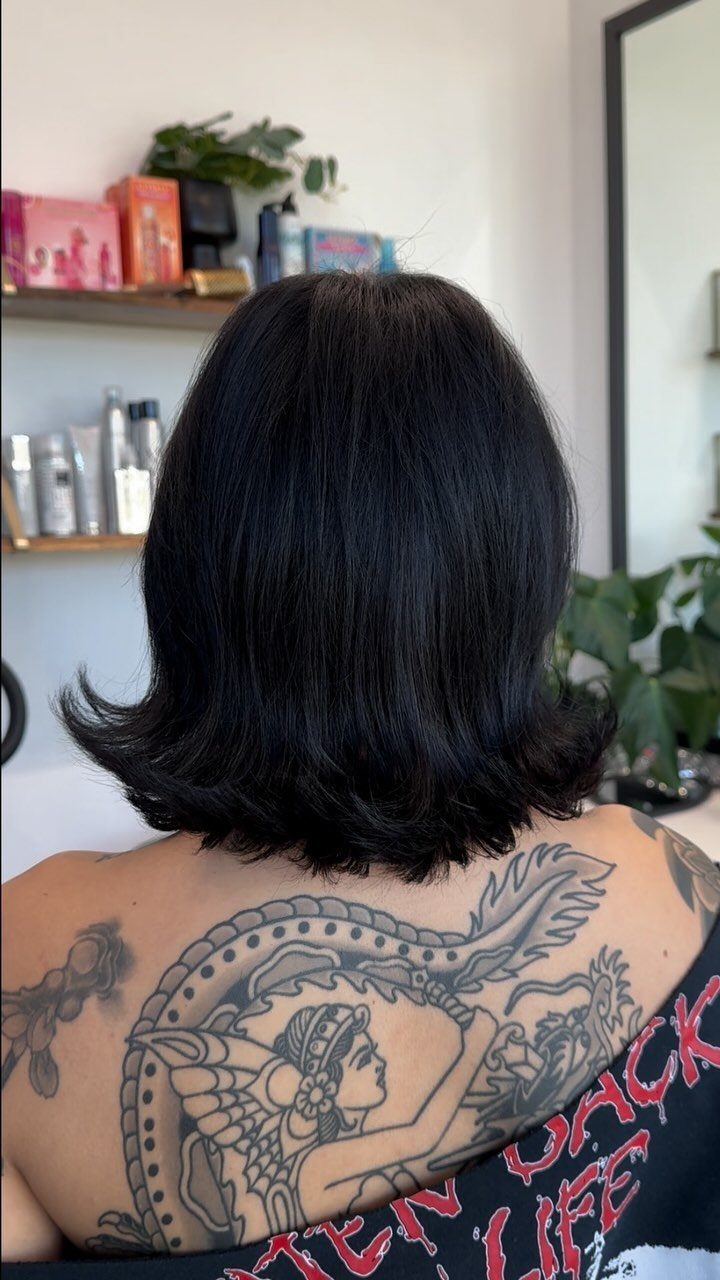
Layers cut to flip outward rather than under give this bob a playful, retro shape. The ends bend away from the face, which adds width and movement at the perimeter.
Ask for layers through the ends and style with a round brush, rolling the brush away from your head as you dry. A flat iron works too: clamp near the ends and twist outward as you pull through.
The flip holds better on hair with some natural body. Fine hair may need a light styling product to keep the bend from falling flat by midday.
8. Hailey Bieber’s Bob
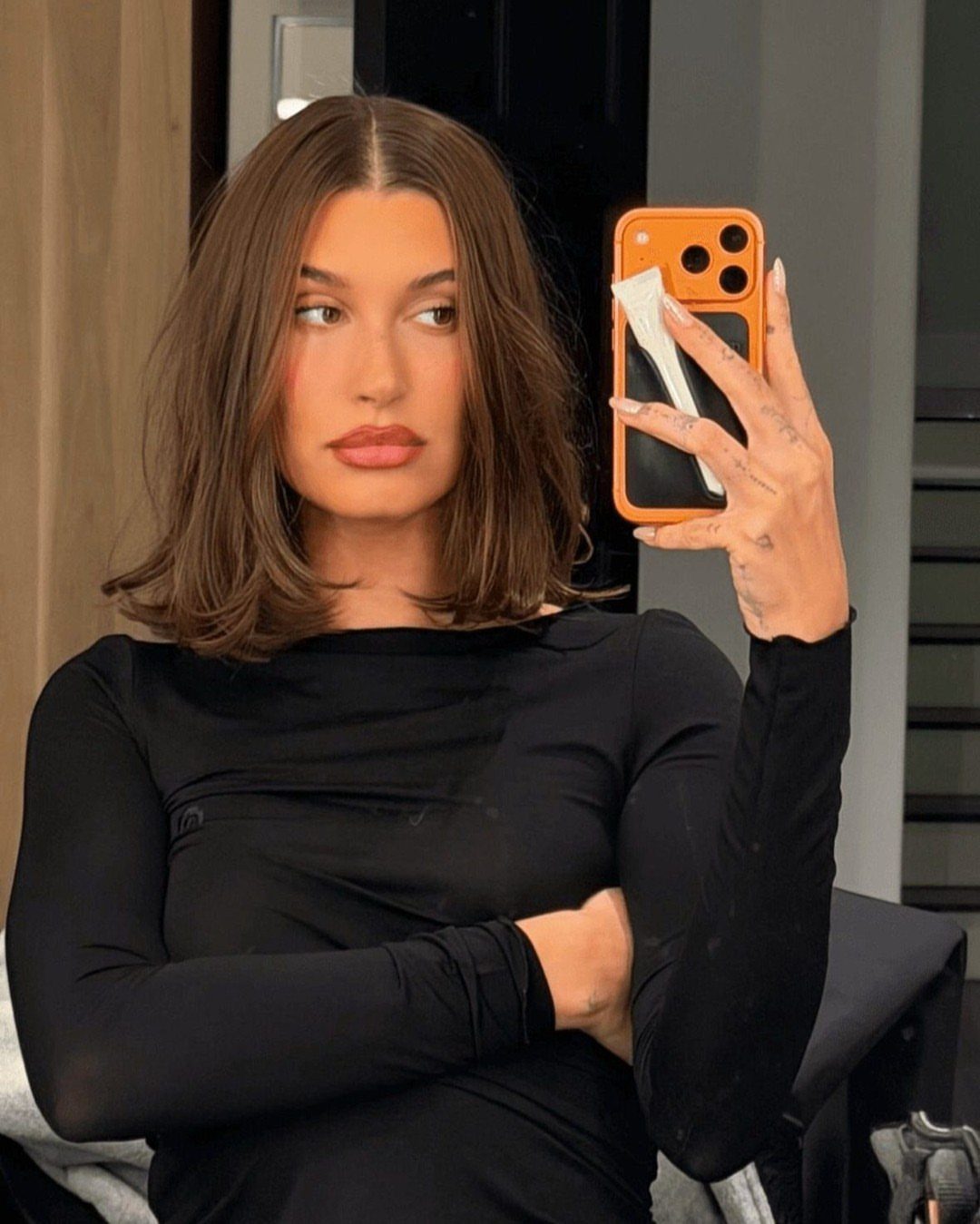
The look is polished but not fussy, and the length is long enough to tuck behind the ears or leave loose.
The cut works on straight to slightly wavy hair and reads as low-effort even when it takes a few minutes with a flat iron.
If your hair air-dries smooth, you can skip the heat. The center part suits balanced or oval faces best.
9. Lob
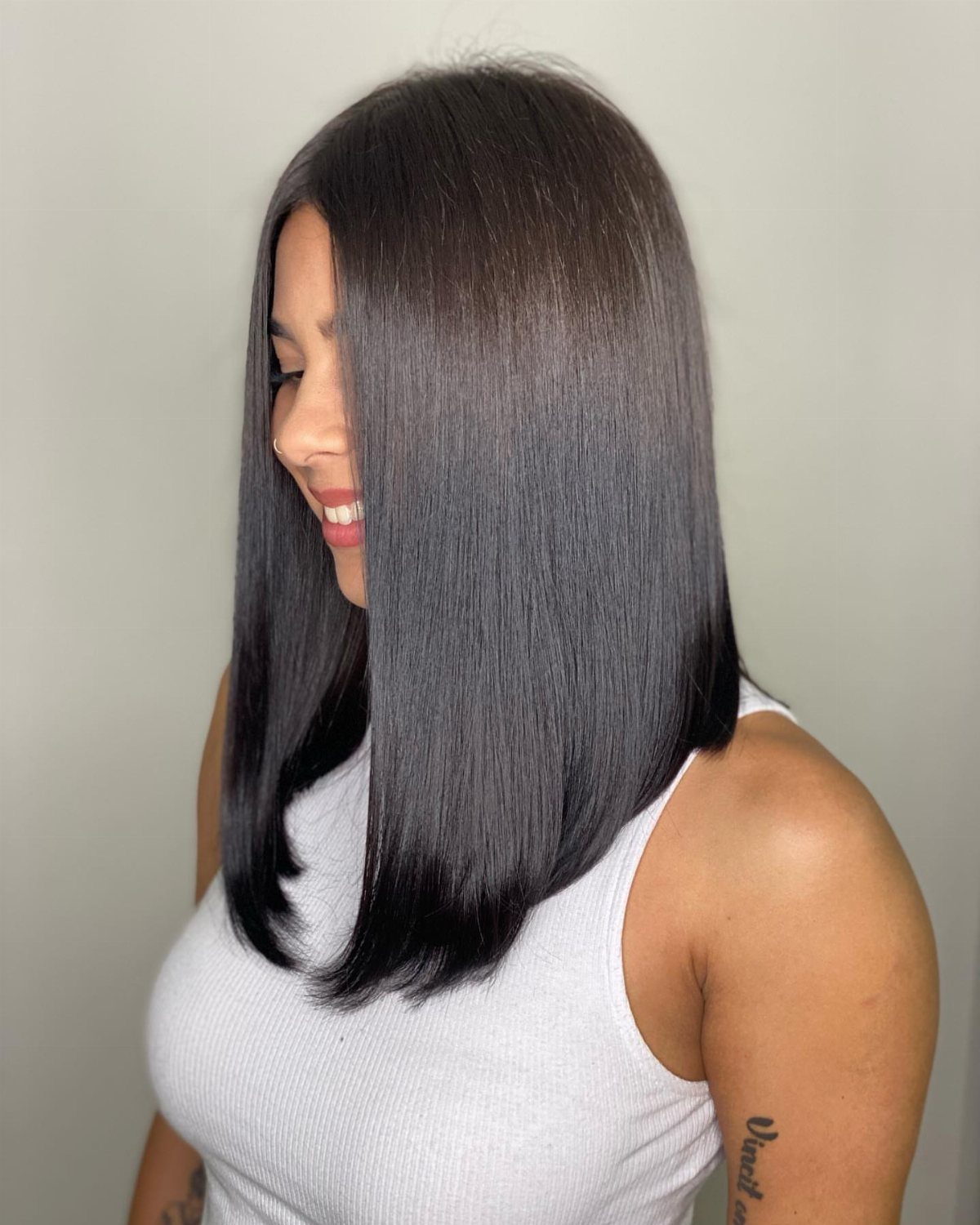
A long bob, typically cut between the collarbone and shoulders, that keeps more length than a traditional bob. The extra inches give you room to curl, braid, or pull into a low ponytail, which a shorter bob won’t allow.
The lob suits most face shapes and hair types, and because it’s longer, you can go several weeks between trims without the shape falling apart.
Styling time depends on what you’re going for: blow it straight for a clean line, add waves for texture, or let it air-dry if your hair holds its natural shape.
10. Italian Bob
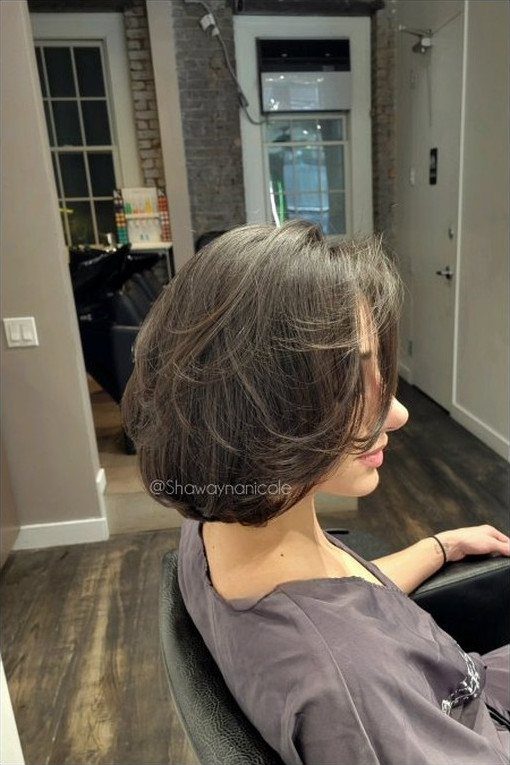
Cut at the nape and styled with volume through the crown, this bob leans on fullness rather than length. The shape is soft and rounded, with layers that lift at the root.
The volume comes from a blowout with a round brush, concentrating lift at the top and curving the ends under. If your hair is fine, this cut gives the appearance of thickness.
Thicker hair may need thinning through the interior to keep the shape from getting too heavy. The style needs regular touch-ups to maintain the curve.
Since then, everyone from Rihanna to Beyoncé has experimented with the dramatic style, but few cuts have been as divisive as Victoria Beckham’s. When she debuted an angular, graduated bob in 2006, dubbed the “Posh Spice bob” or “Pob”, it became a pop culture sensation.
— Vogue
11. Bubble Bob
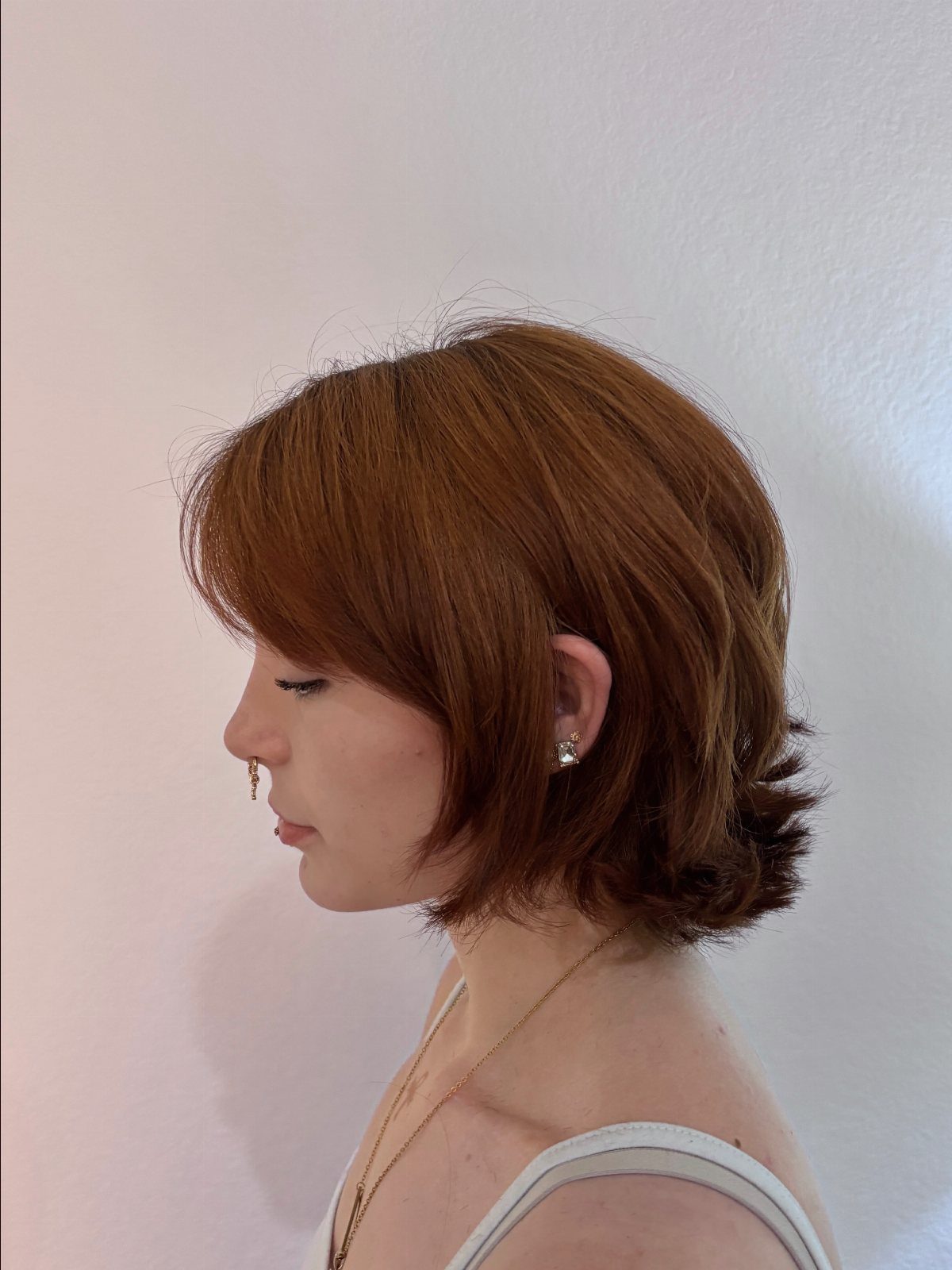
A bob with rounded, curled-under ends that create a soft, bubble-like silhouette. The shape is smooth and polished, with the curve hugging the head rather than flipping out.
You’ll need a curling iron or a round brush to set the inward bend, and the rounder you make it, the more retro the finish reads.
Straight, fine hair may lose the curve faster and need a finishing spray to lock it in.
12. Textured Bob
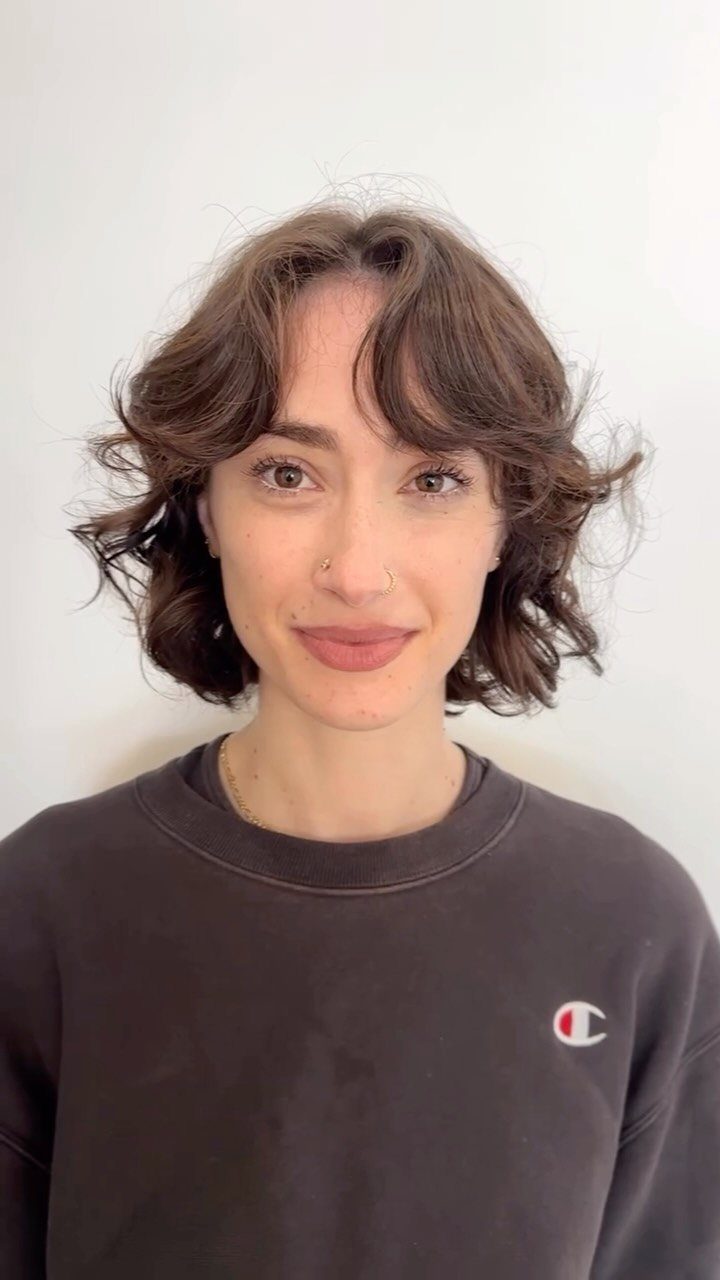
Choppy layers and a piecey finish give this bob an intentionally undone look. The ends are cut with point-cutting or razor techniques to soften the line, and the layers add separation rather than blending smoothly together.
Style with your fingers as you blow-dry, or let it air-dry and rough it up with a small amount of texturizing paste. The cut suits wavy or straight hair and reads casual without looking unfinished.
If your hair is thick, the choppy layers reduce bulk. Fine hair benefits from the added movement, though too much layering can make ends look thin.
13. Blunt Bob with Bangs
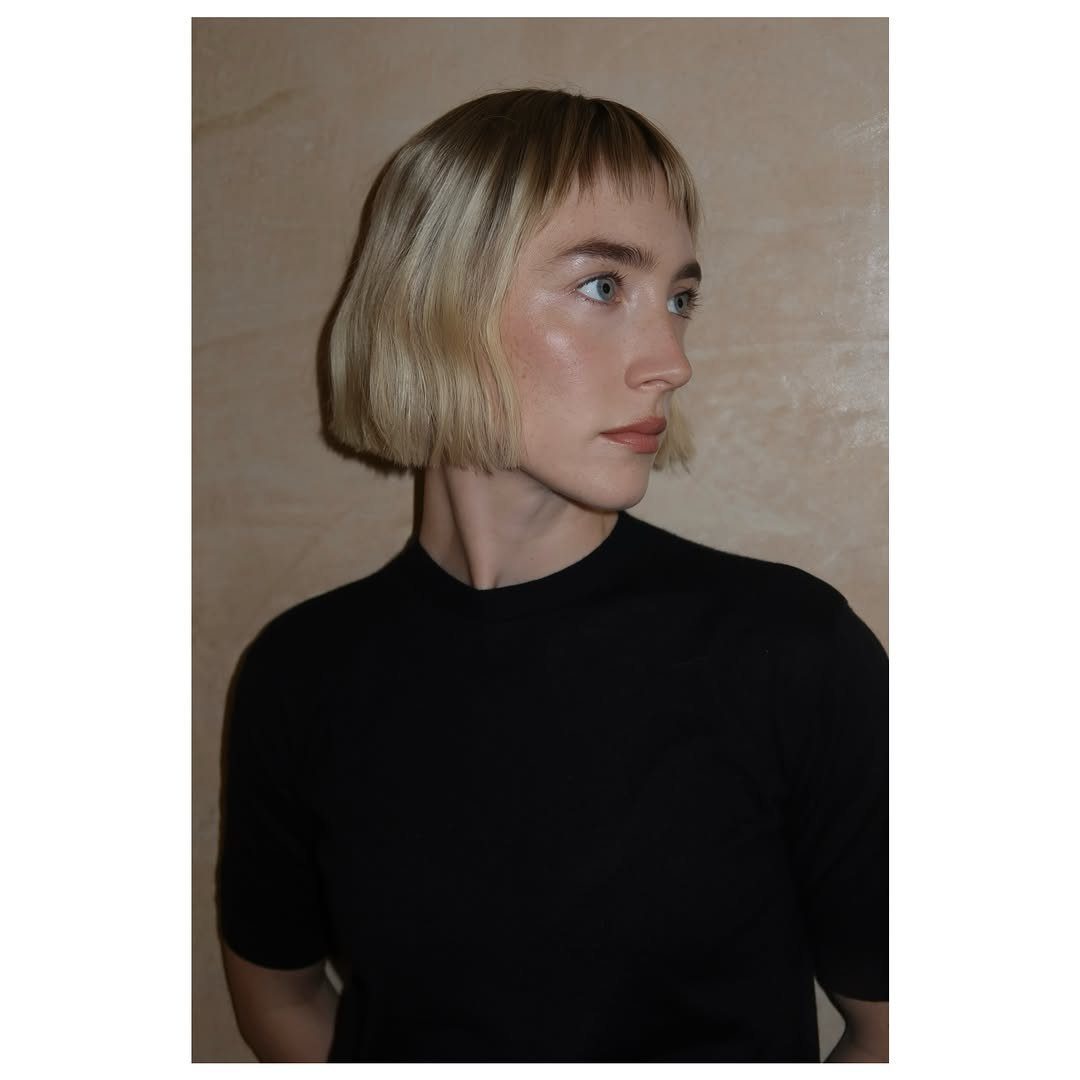
A blunt bob cut at the chin, paired with a straight fringe that sits just above the eyebrows. The two together frame the face with clean, defined lines.
The blunt perimeter keeps fine hair looking thick at the ends, and the bangs add structure to longer foreheads. Both the blunt hem and the fringe need regular trims to hold their shape.
A paddle brush and blow-dryer keep the lines smooth. If your hair has wave, a flat iron helps lock in the sleekness.
14. Inverted Bob
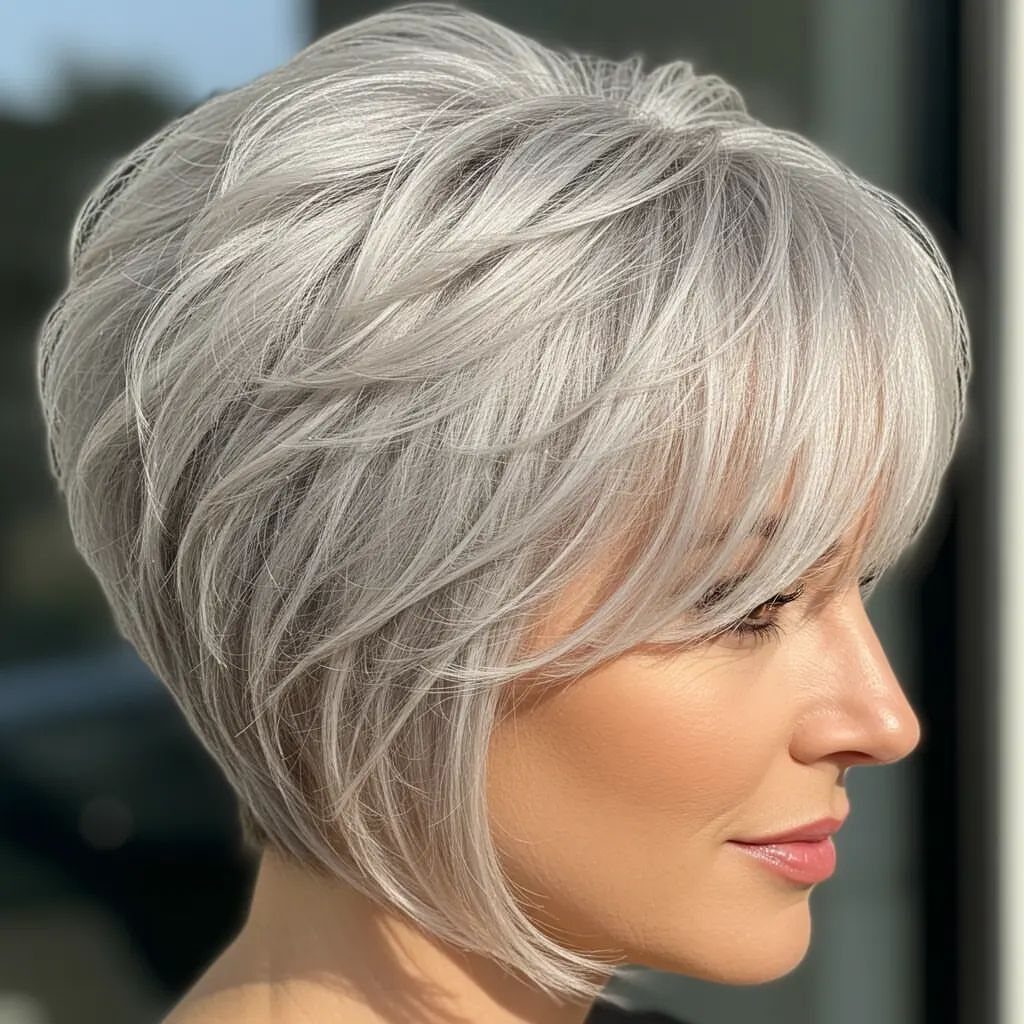
The back is cut short, sometimes stacked, and the front lengths reach the chin or longer. The angle creates a wedge shape that shows the neck while keeping length around the face.
Stacking in the back adds volume, which suits flat or fine hair.
Thicker hair holds the shape without needing as much layering. The front pieces can be tucked behind the ears or left forward, depending on how much coverage you want.
Blow-dry with tension through the front to keep it smooth, and use a round brush in the back if you want lift. The angled shape grows out quickly, so regular trims matter.
15. Side-swept Bob
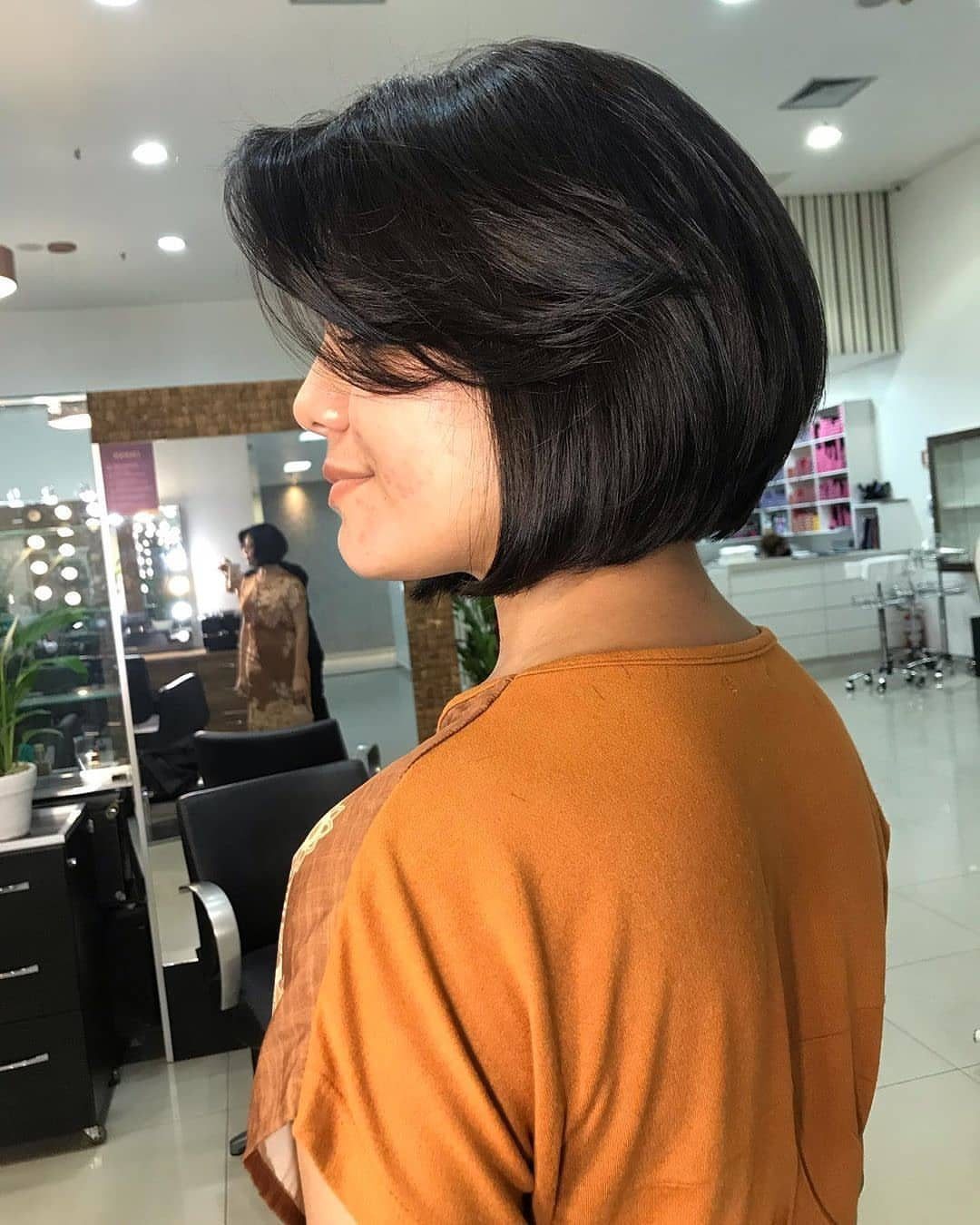
A bob styled with all the hair swept to one side, creating asymmetry and exposing one ear. The part sits far off-center, and the heavier side drapes over the opposite shoulder.
Pin the shorter side behind your ear or tuck it back while the longer side falls forward. The style works on most bob lengths and adds softness to square or angular faces by breaking up symmetry.
If your hair falls back to center easily, a light styling spray or a small clip hidden at the nape helps hold the sweep. The look takes seconds once the part is set.
16. Wispy Bob
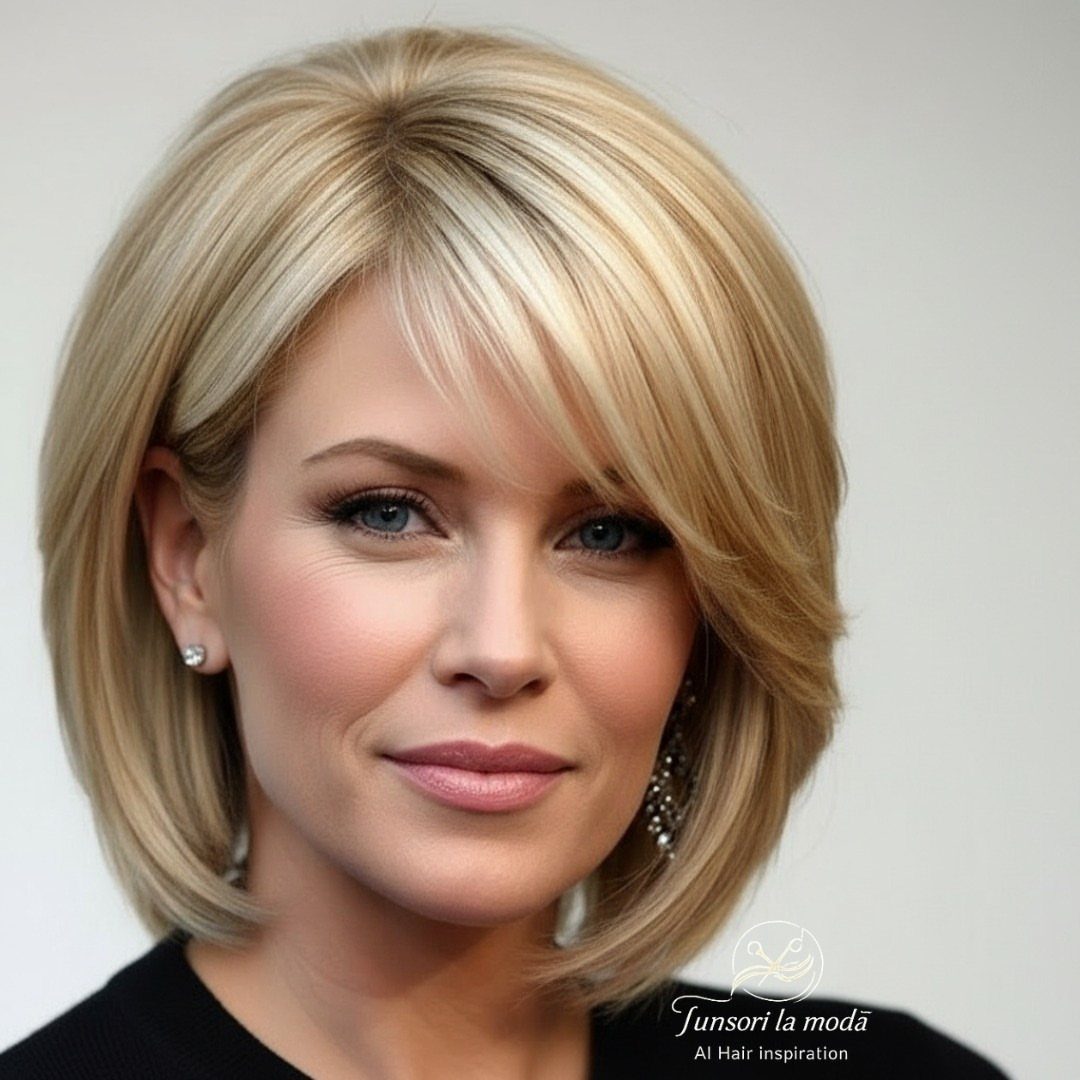
A lightweight bob with fine, feathered ends and, often, long wispy bangs that sweep across the forehead. The texture is soft rather than blunt, which keeps the cut from feeling heavy.
Ask for point-cutting or razor work on the ends to create the feathered finish.
If you add bangs, ask for them long and tapered so they blend into the rest of the cut. The wispy texture suits fine or medium hair; thick hair may need thinning to avoid bulk.
Air-drying works if your hair holds a slight bend. For more control, blow-dry with your fingers to keep the ends from clumping together.
17. Taylor Swift’s Bob with Bangs
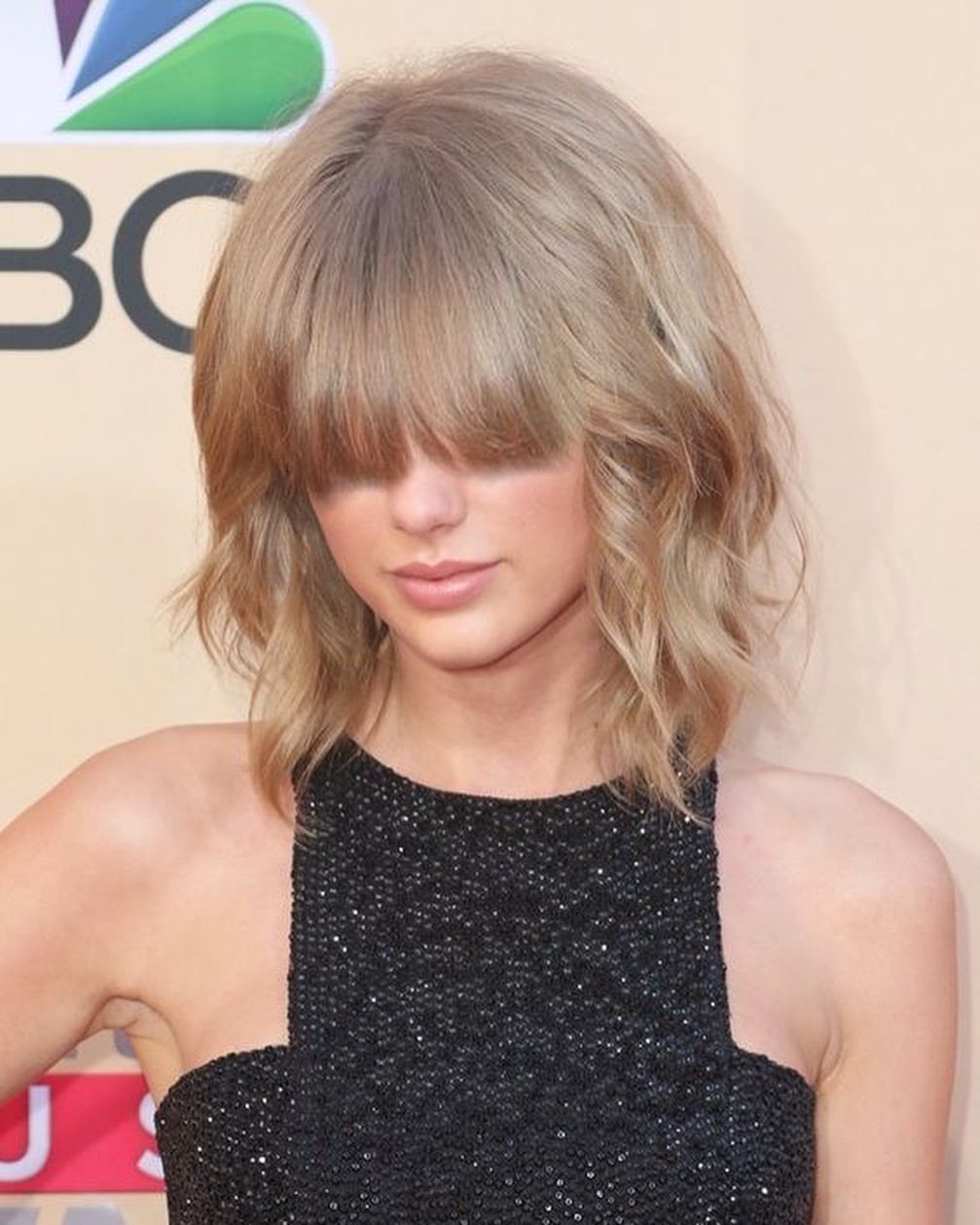
A wavy bob with full bangs, cut to fall just below the chin. The waves add volume and movement, and the bangs sit around brow level, sometimes swept slightly to the side.
If your hair has natural wave or curl, this cut lets you work with it instead of fighting it.
Ask for the bob to be cut dry so the stylist can see how the wave pattern affects the length. The bangs can be left to wave with the rest or blown smooth, depending on what suits your face shape.
Scrunch in a styling cream and air-dry, or diffuse if you want more definition. The waves keep the style from looking too polished, which means less time with a flat iron.
18. Wavy Bob
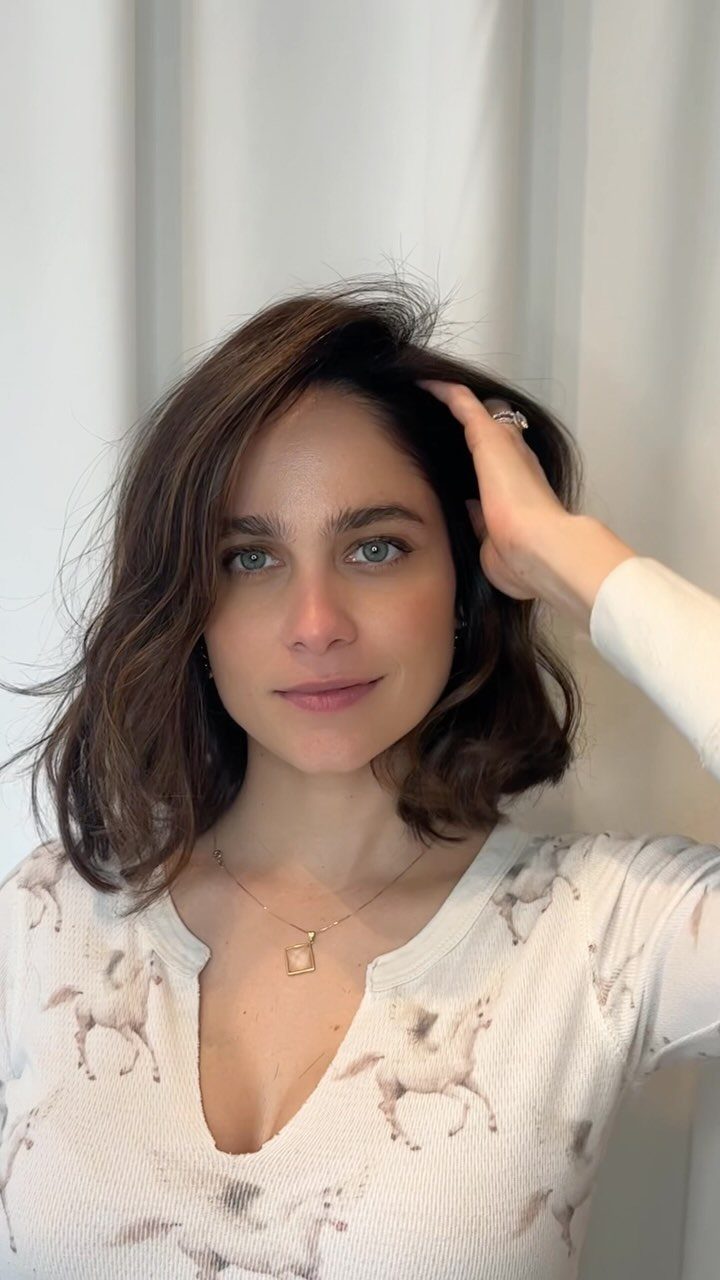
A bob worn with loose waves, either natural or styled in. The waves add texture and keep the cut from sitting flat, and layers help the wave pattern move without getting heavy.
If your hair waves on its own, this cut is minimal upkeep: a leave-in product and air-drying will get you most of the way there.
Straight hair needs a curling iron or wand to build the waves. Wrap sections around the barrel, alternating directions, and break up the curls with your fingers once they cool.
The wavy finish softens the edges of the bob and suits most face shapes.
19. Flicked-out Bob
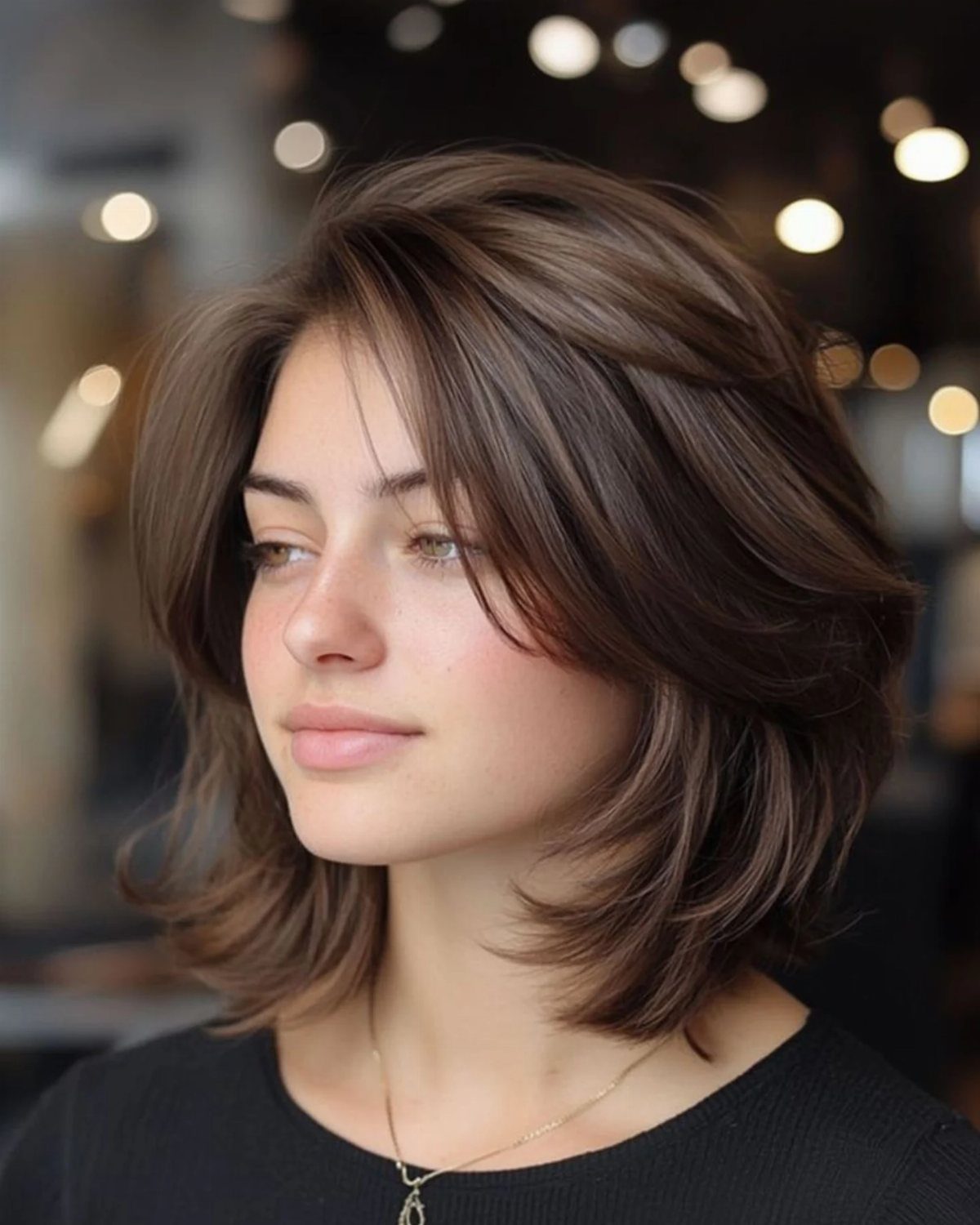
The ends bend away from the face instead of curling under, which adds width at the perimeter and a retro edge to an otherwise straightforward bob.
A round brush or flat iron sets the flick: roll the brush outward as you dry, or clamp the iron near the ends and twist away from your head as you pull through.
The outward bend suits hair with some natural body.
Fine hair may need product to hold the shape past mid-morning. Bangs swept to the side keep the front from feeling heavy.
20. Box Bob
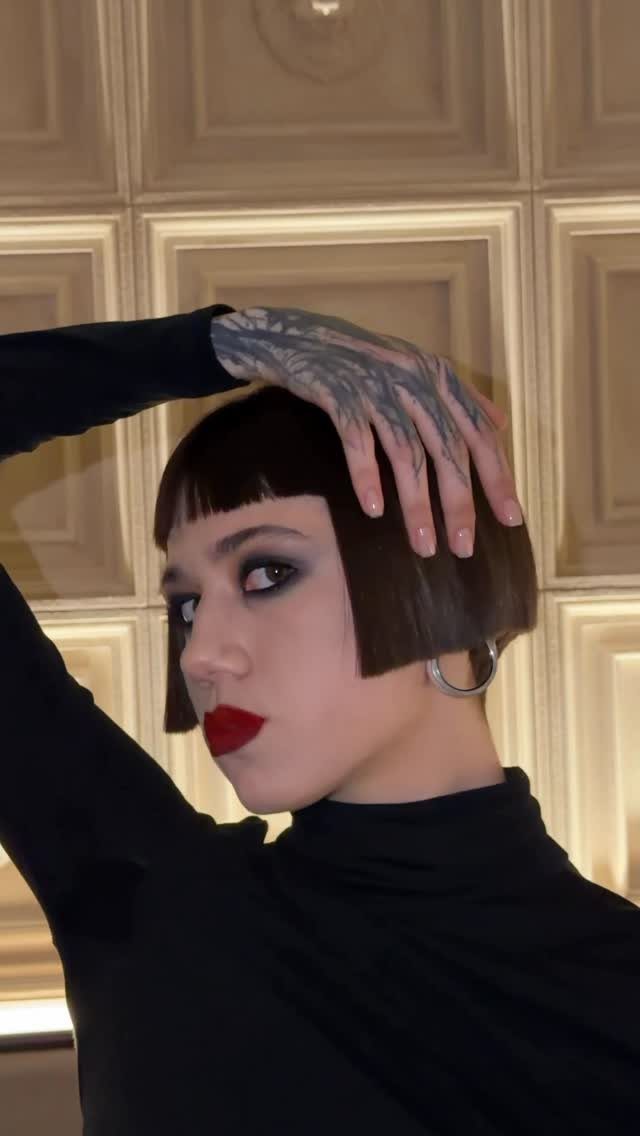
Cut blunt at the chin with a straight fringe, this bob creates a boxy, geometric silhouette. The perimeter and bangs are both blunt, which gives the cut sharp, defined edges.
21. Butterfly Bob
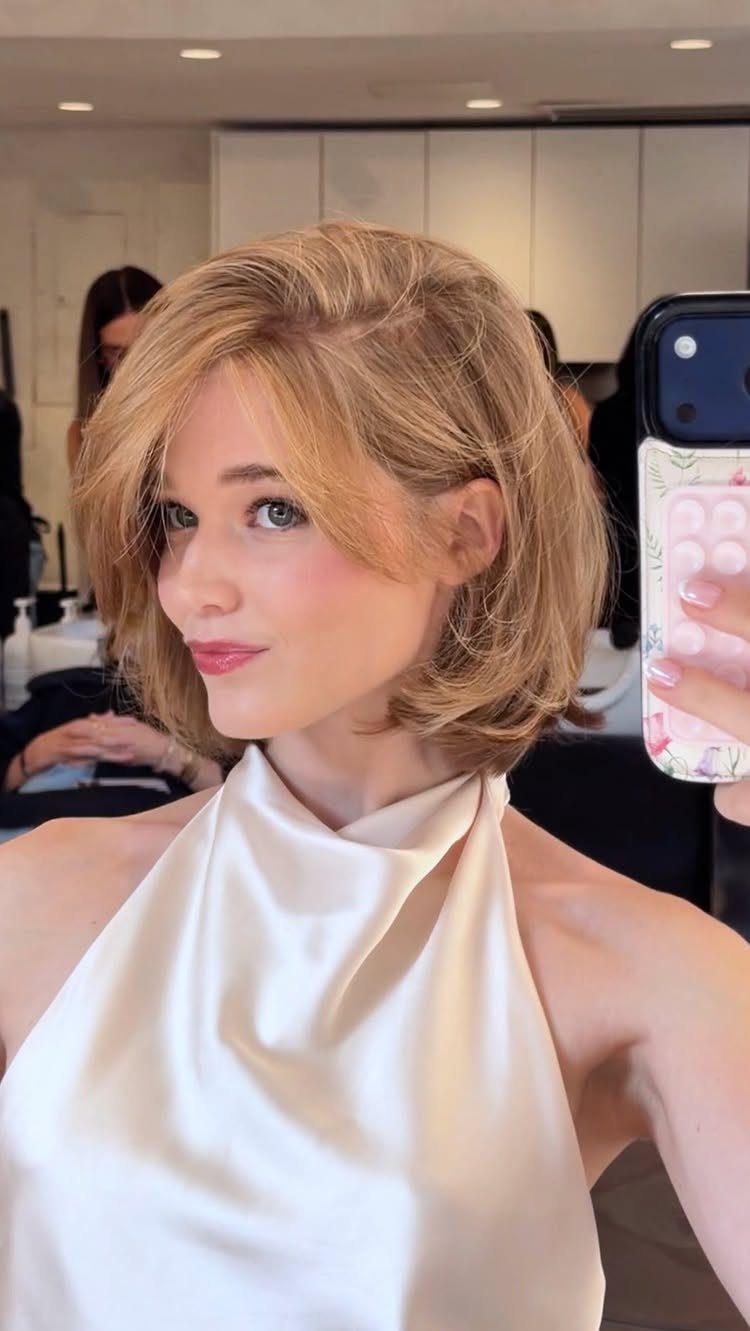
Feathered layers around the face flip outward, mimicking the shape of butterfly wings, while the back stays shorter and closer to the head. Layering keeps the weight off while the cut still moves.
The outward flip suits round or square faces by adding width at the sides. The back can air-dry or be blown smooth.
22. Cowgirl Bob
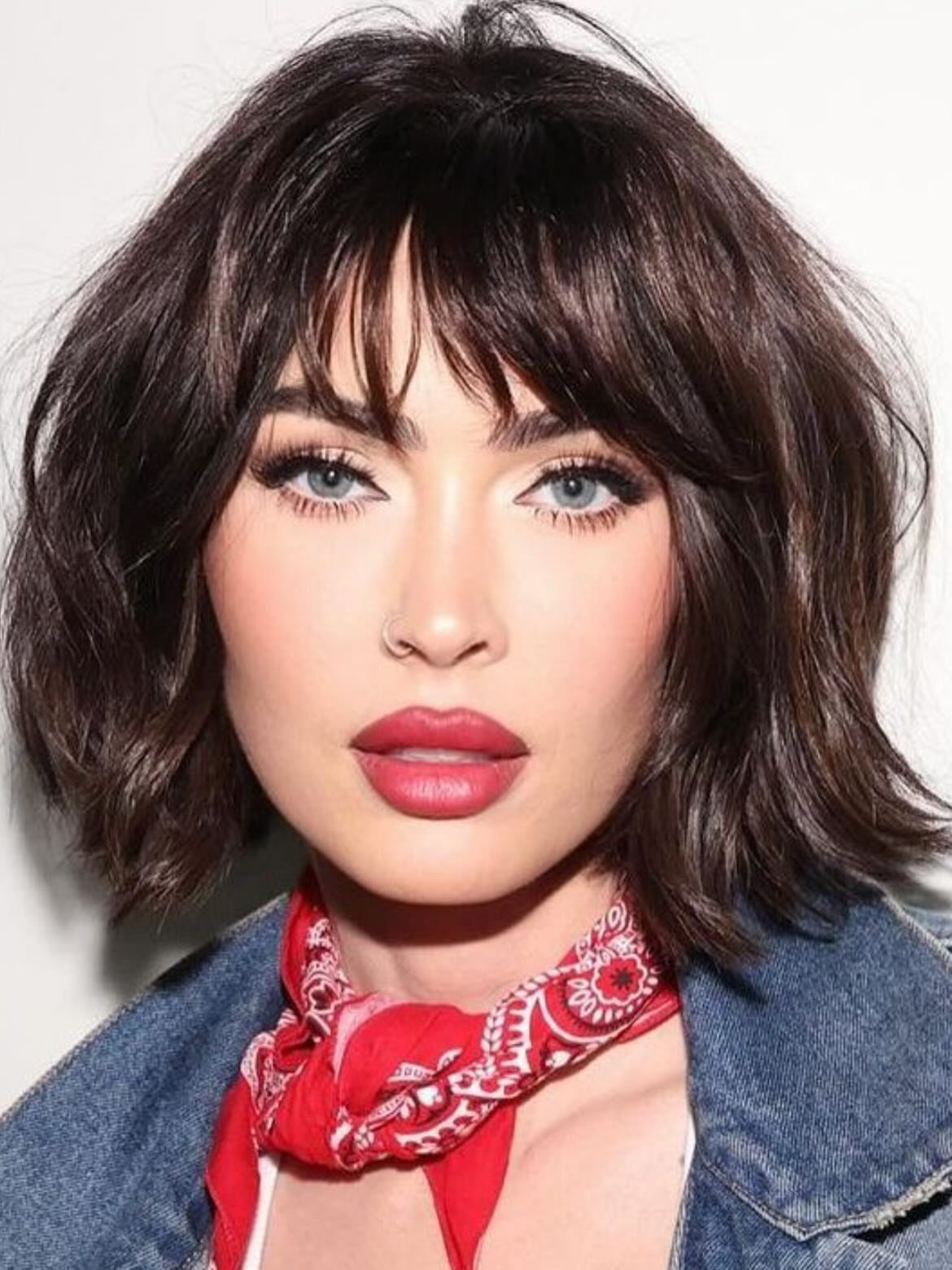
Shaggy layers and wispy bangs give this chin-length bob a tousled, undone finish. The layers add texture and movement, and the curtain bangs fall on either side of the face rather than straight across.
Ask for choppy layers through the ends and long, piece-y bangs that can be swept to the side. Styling is minimal: scrunch in a texturizing spray as you air-dry, or rough it up with your fingers after blow-drying.
23. Elongated Bob
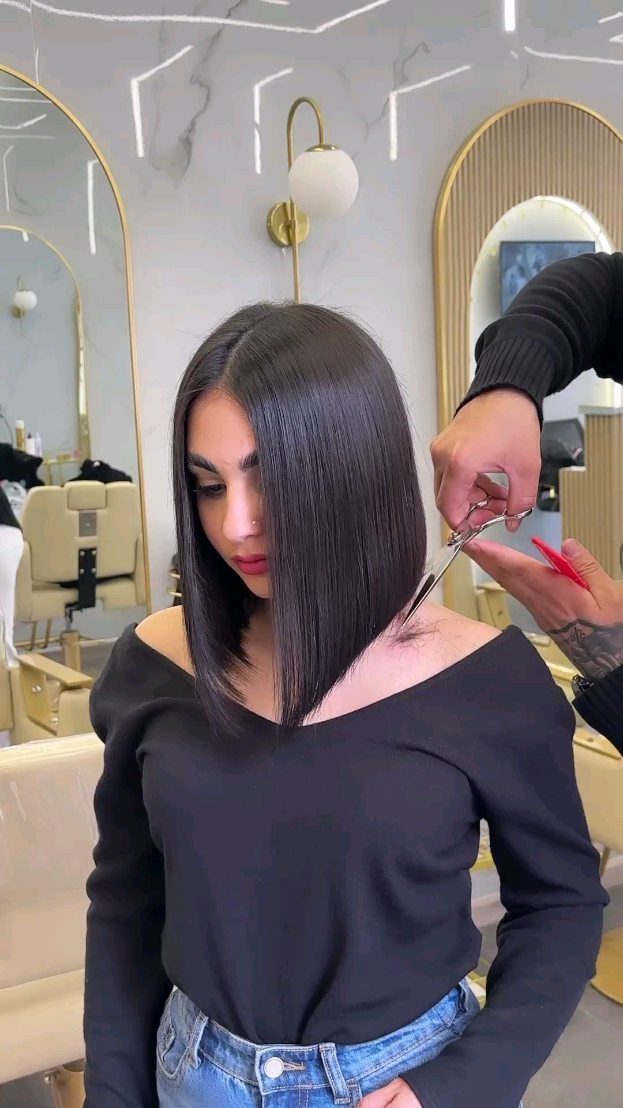
An inverted bob that stretches longer, with the front reaching past the chin and the back cut shorter. The angle is gradual rather than steep, which keeps the shape sleek and modern.
The angled shape suits most face types and works on straight to slightly wavy hair. Regular trims keep the angle sharp as it grows out.
24. Turquoise Bob
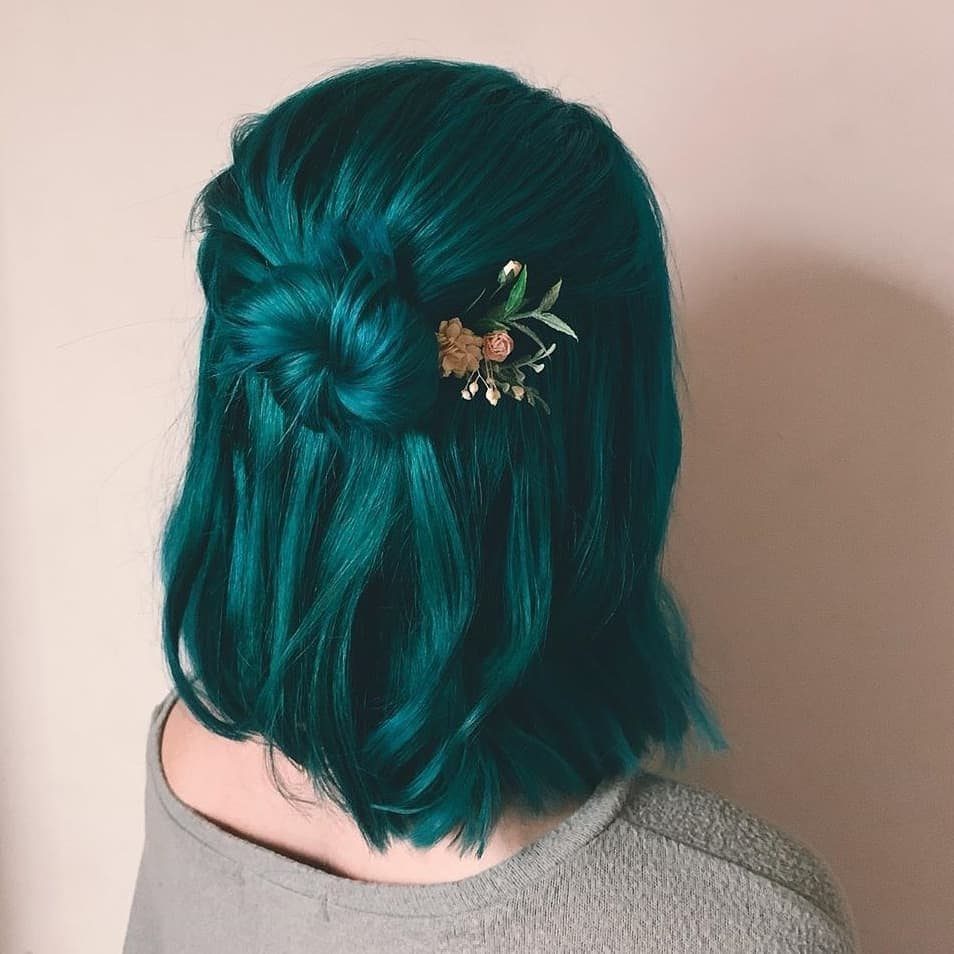
A bob dyed a vivid turquoise, adding color without changing the cut. The bright blue-green reads bold and works on most bob lengths, whether blunt, layered or wavy.
Turquoise fades faster than natural tones, so touch-ups come often if you want the color to stay bright.
A color-safe shampoo and cool water help slow the fade. The color suits cool or neutral skin tones best and pairs well with minimal styling since the color does the work.
25. Messy Bob
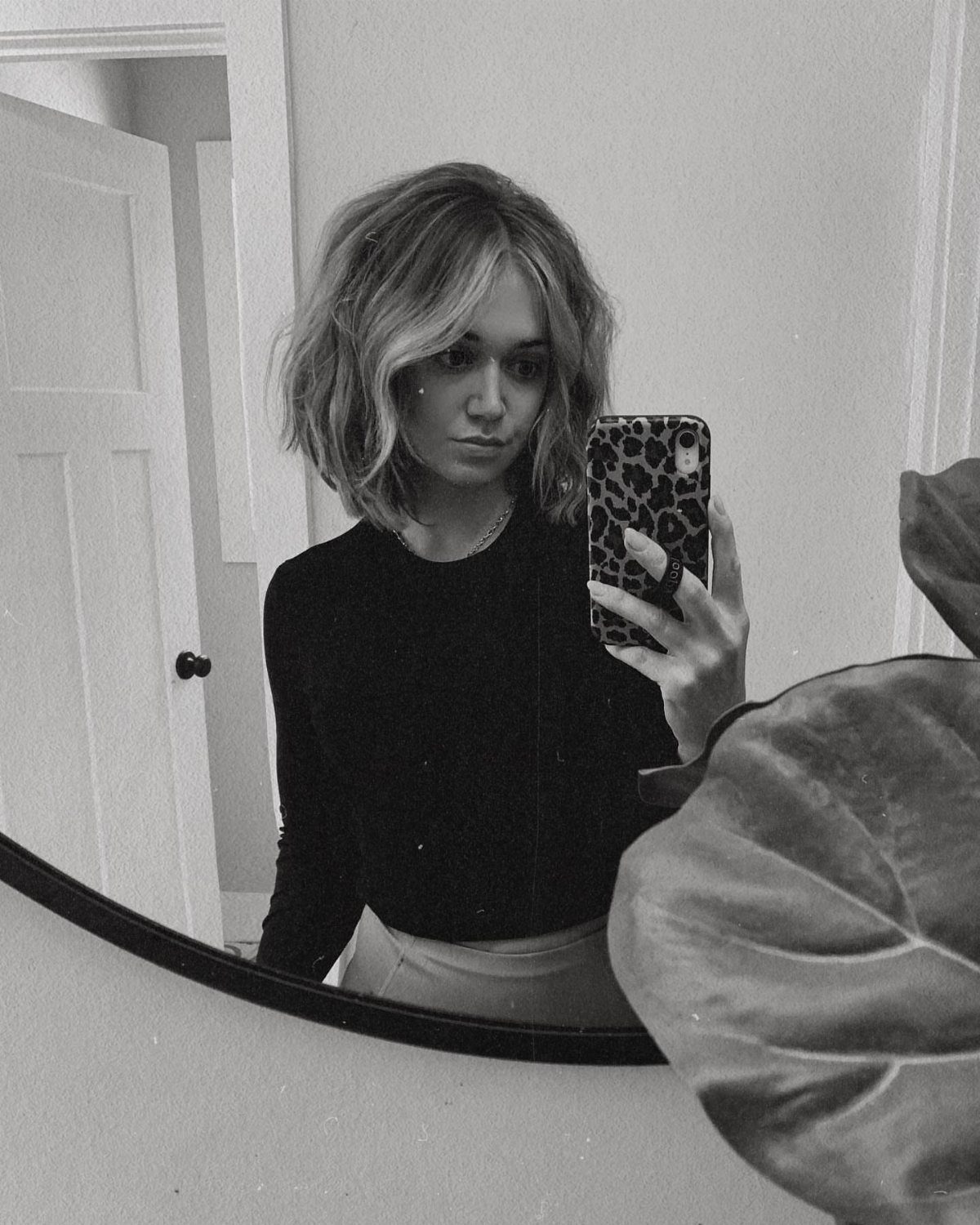
Choppy layers and soft waves give this bob a lived-in texture that works without heat tools. The tousled fringe adds to the undone finish.
The waves don’t need to be uniform, and the more separation in the layers, the better the texture reads.
26. Old Money Bob
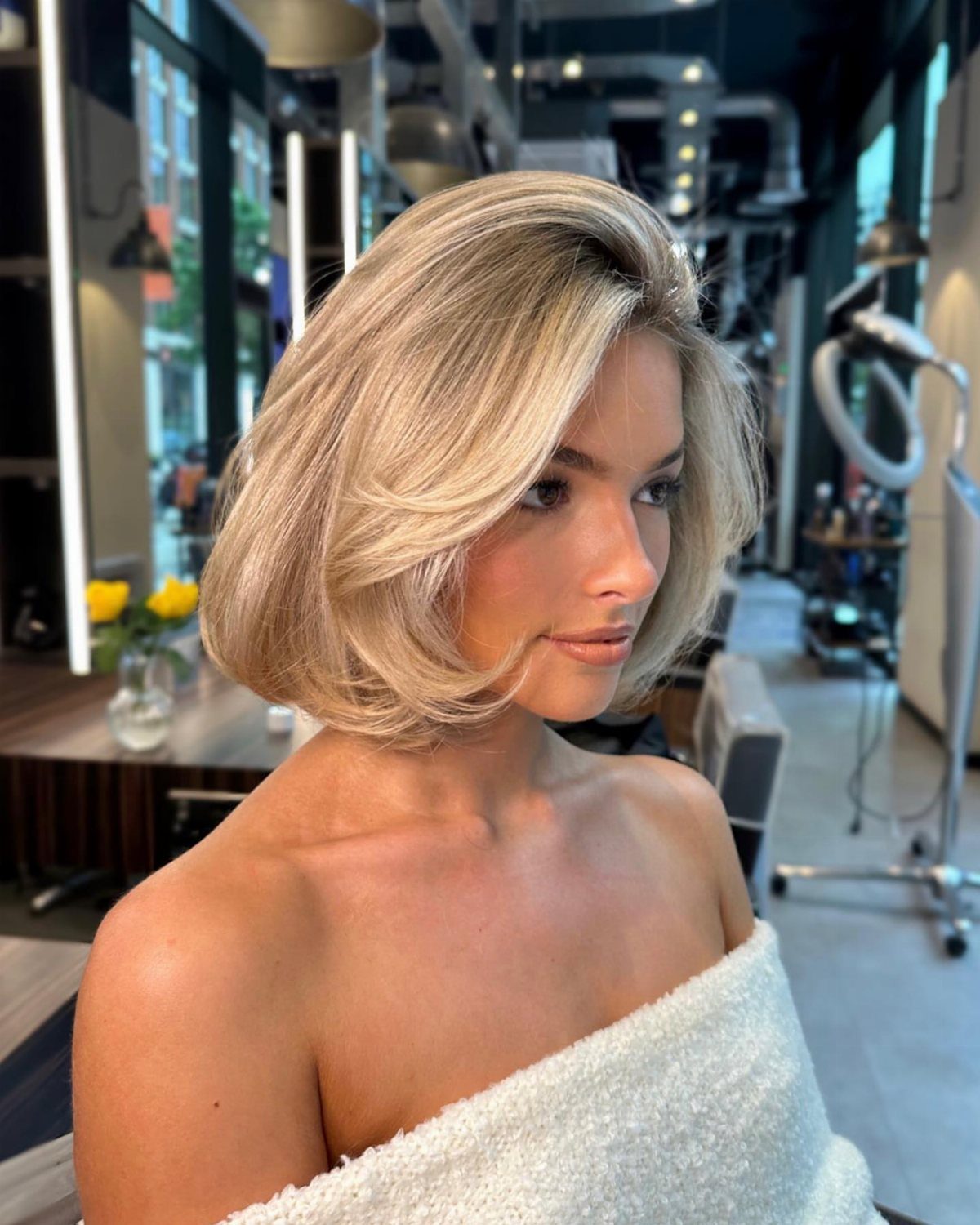
A polished bob with volume through the crown and smooth, glossy ends. The finish is refined and full-bodied, with the roundness concentrated at the top rather than flipping out or curling under.
Blow-dry with a round brush, lifting at the roots and curving the ends slightly inward. A shine serum or gloss spray locks in the glossy finish.
The polished look needs regular trims and styling time each morning to hold the shape.
27. Permed Bob
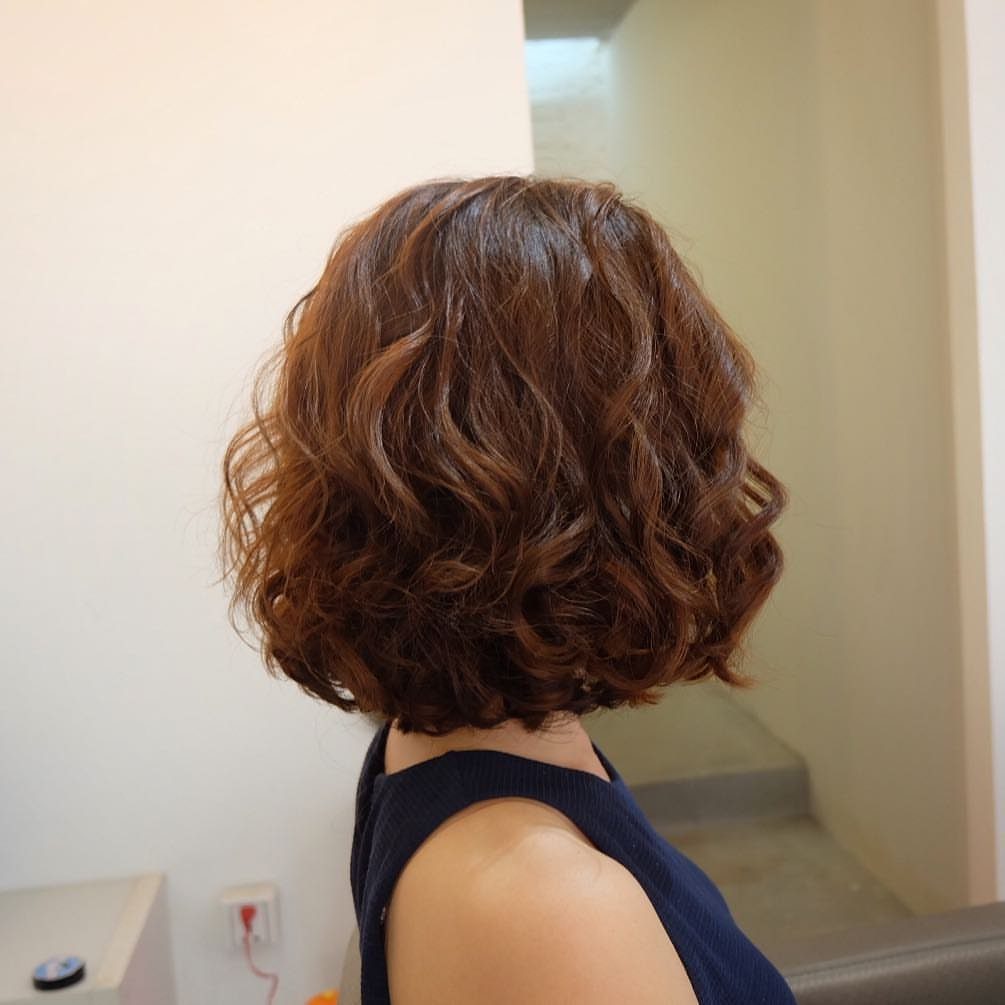
Curls set in with a perm rather than styled in daily. The texture lasts for months, which cuts down on morning styling if you want curl without the iron.
The perm works best on hair that can hold a curl and hold up to the chemicals. Damaged or over-processed hair may not take the perm evenly.
Perms grow out gradually, and the line where the curl stops becomes visible as new growth comes in.
28. Scandi Bob
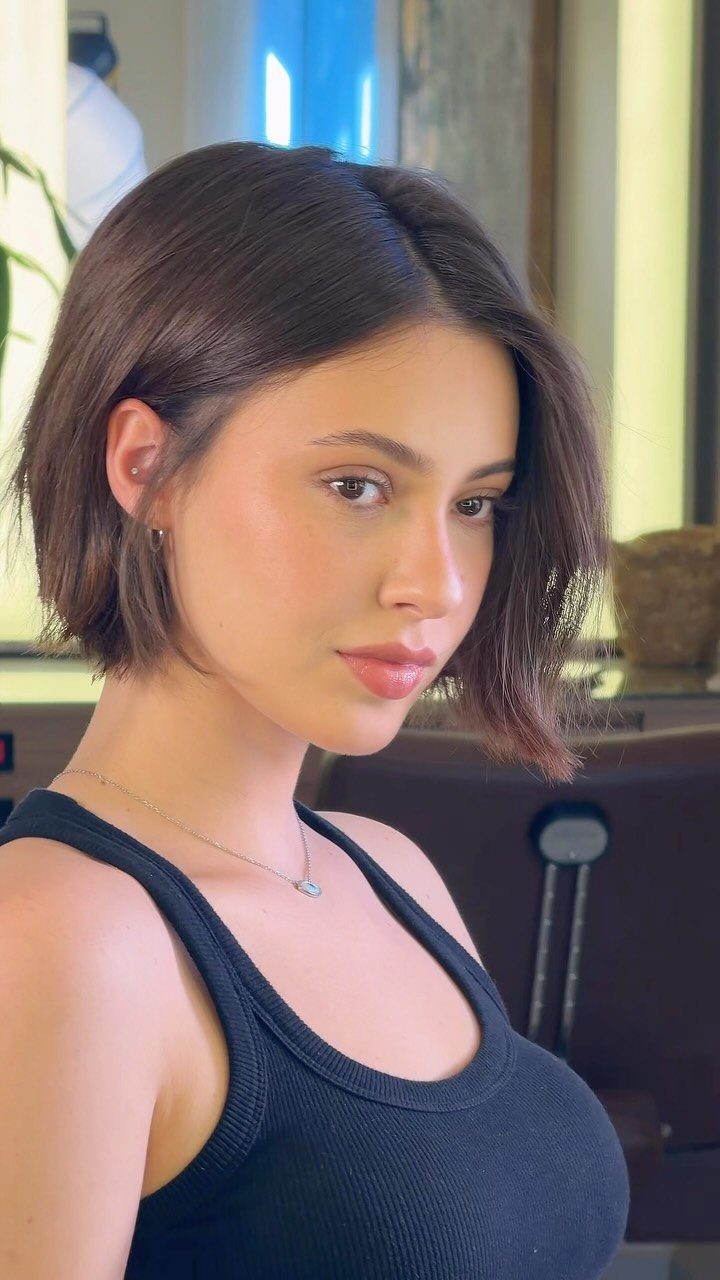
A chin-length bob styled with a deep side part and swept fully to one side, covering one ear while the other side tucks back. The asymmetry softens angular faces and adds movement to a blunt cut.
29. Wedge Bob
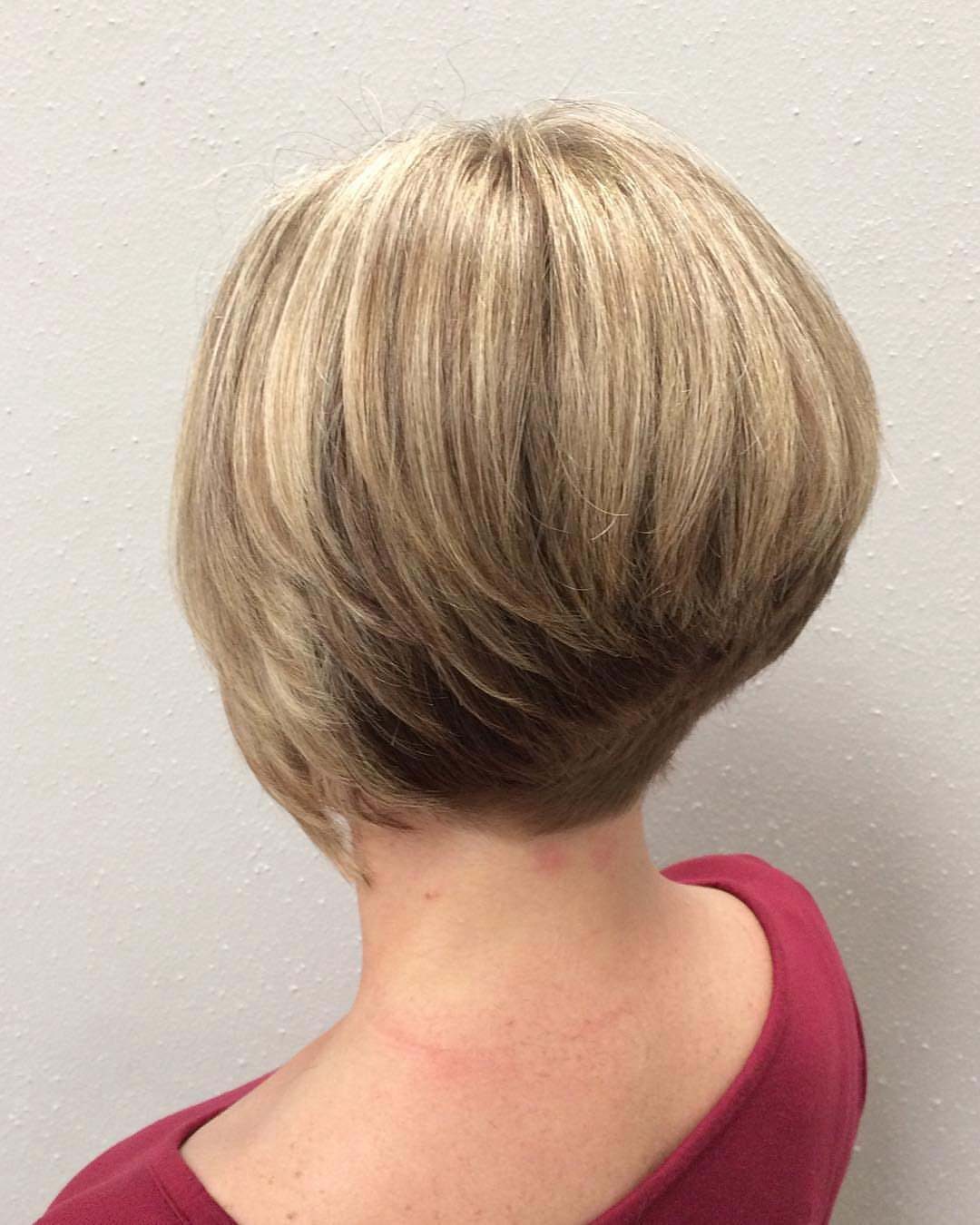
A short bob with stacked, tapered layers in the back that create a wedge shape. The back is cut close to the nape, and the layers build volume as they move forward toward the face.
Golden-blonde highlights through the layers add dimension and make the stacked shape more visible. The wedge suits fine or flat hair because the stacking adds lift without needing product.
Focus the round brush at the nape and crown to build that curved stacked shape.
30. Sleek Blunt Bob
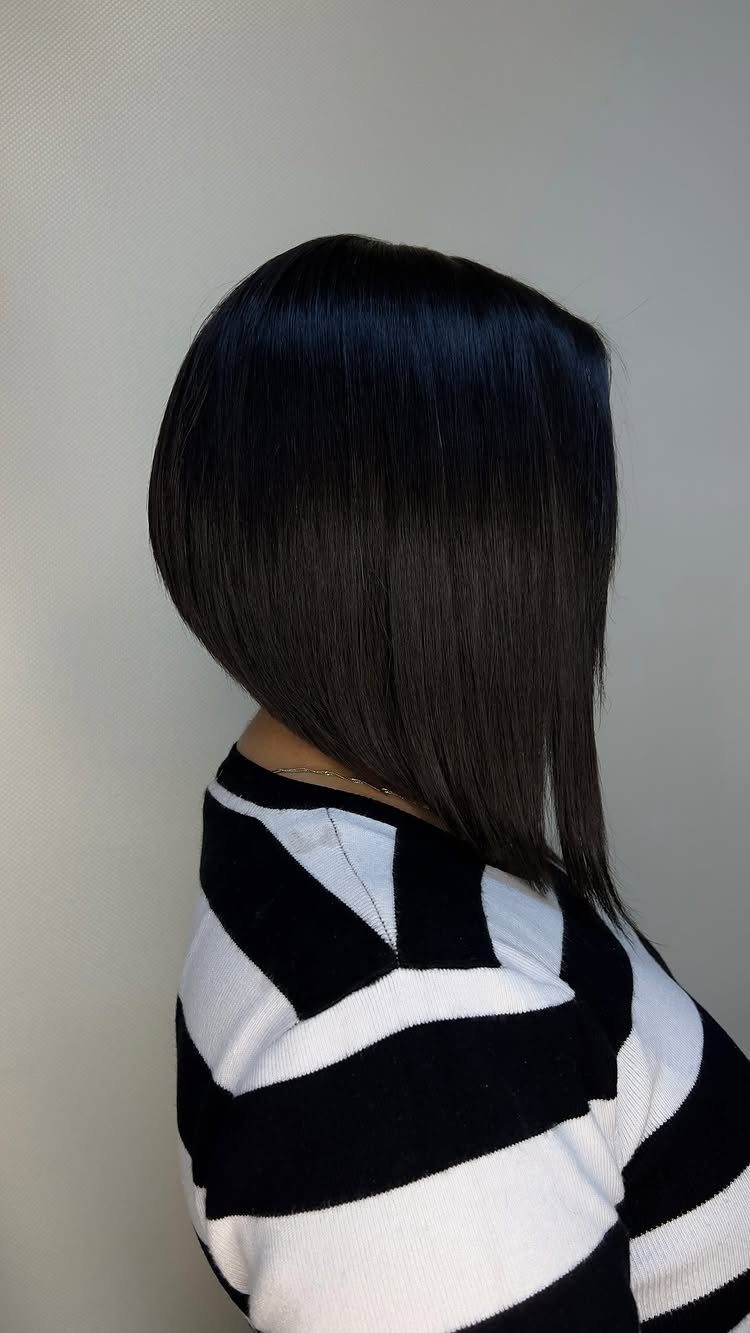
Cut in a clean, straight line with no layers, this bob is smooth and glossy from root to end.
Blow-dry with a paddle brush to pull the hair straight, then finish with a flat iron if your hair has any wave. A smoothing serum or shine spray adds gloss without weighing down the ends.
The blunt line needs regular trims to stay sharp, and the sleek finish takes a few minutes each morning to maintain.
31. Teal-tipped Bob
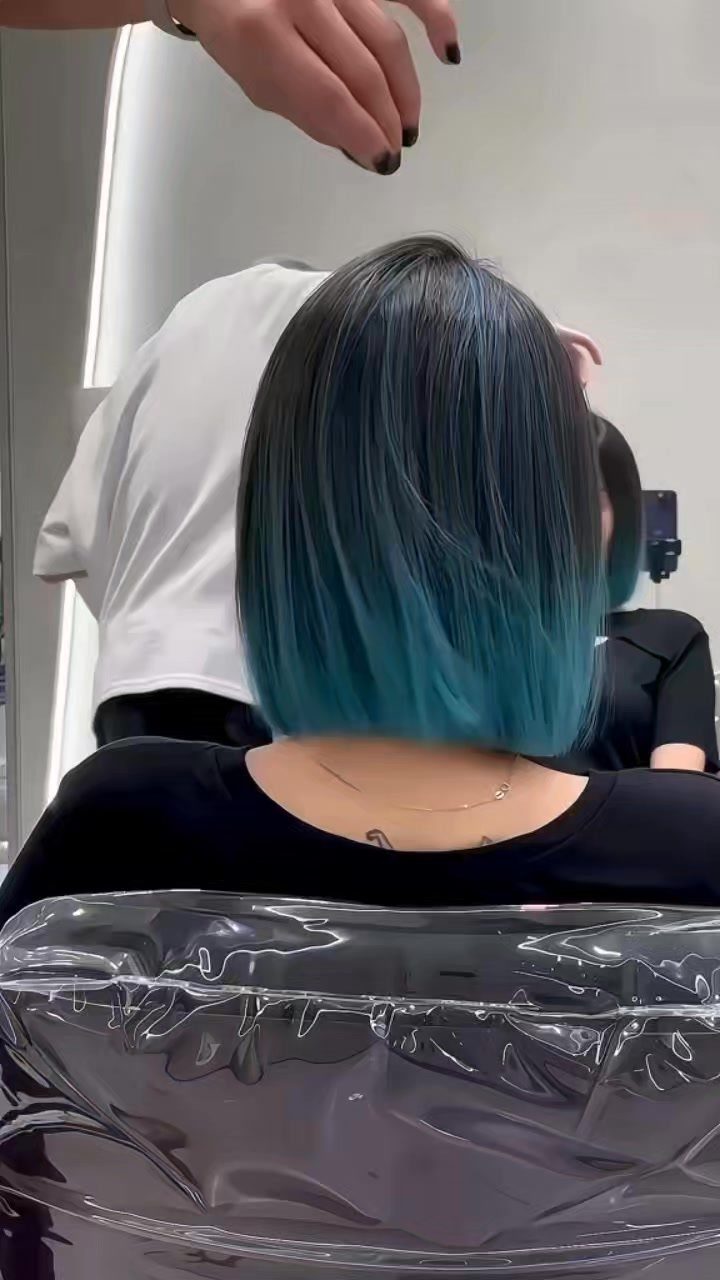
A chin-length bob with dark roots that transition into teal at the ends. The color concentrates at the tips rather than blending through the mid-lengths, which creates a defined split between the base and the vivid blue-green.
Teal holds longer on pre-lightened ends, so if your hair is dark, expect a bleaching session before the color goes on. The fade starts after a few washes, and the contrast becomes less sharp as the teal softens.
A color-depositing conditioner in a similar shade can stretch the time between touch-ups. The cut itself stays simple so the color does the work.
32. Wavy Purple Bob
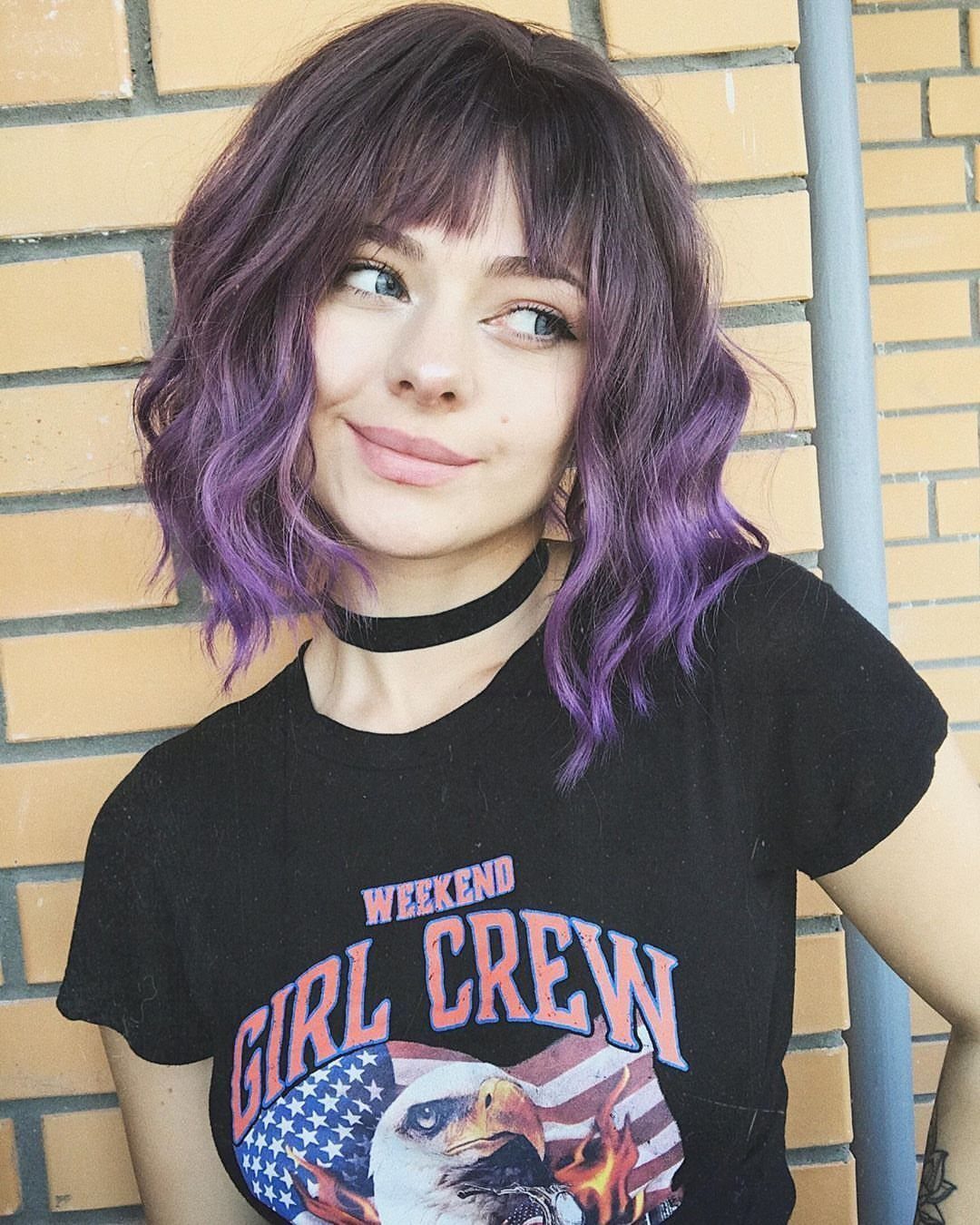
Loose waves and blunt bangs paired with purple-toned color through the mid-lengths and ends. The waves add movement without erasing the structure of the blunt fringe, and the purple reads bold against darker roots.
The color works on medium to light bases and needs regular toning to keep it from shifting too warm or fading into pink.
Purple tones suit cool and neutral skin tones and pair well with wavy texture because the color catches light differently as the hair moves.
Scrunch in a curl cream and let it air-dry, or wrap sections loosely around a wand if your hair sits straight.
33. Rounded Curled-under Bob
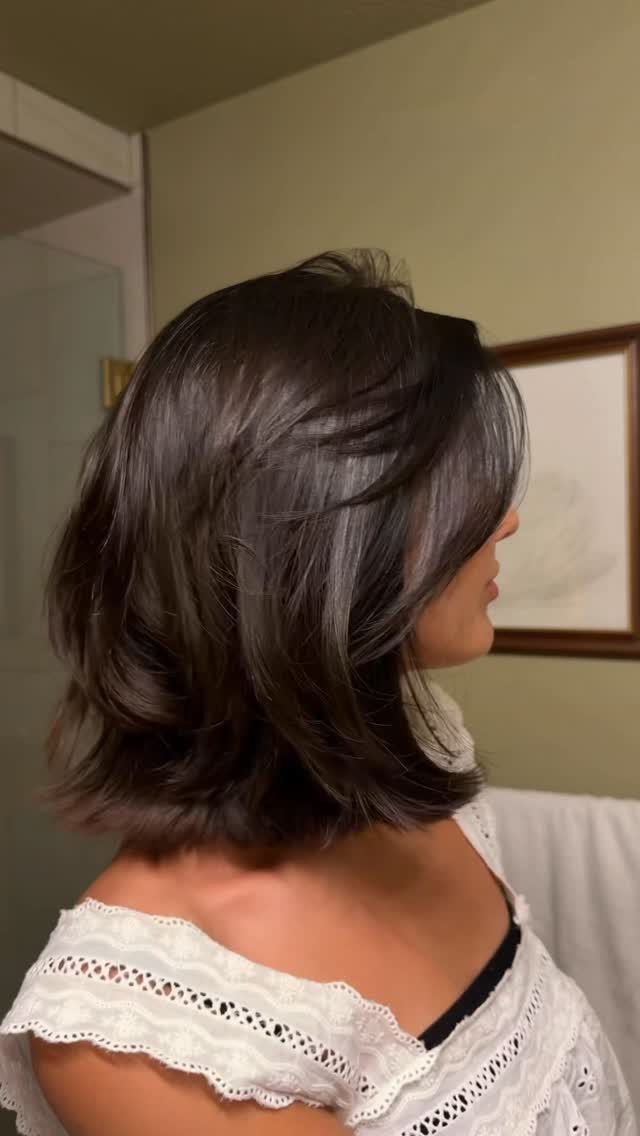
The ends curl smoothly under, creating a rounded silhouette that finishes close to the jawline or just past it. The shape is polished and holds its curve without flipping out or sitting flat.
A round brush does the work if you roll it toward your neck as the dryer follows through.
If your hair dries straight, a flat iron set the curl: clamp near the ends, rotate the iron inward half a turn, and glide through.
The rounded finish softens angular faces and reads formal enough for work.
Choose Length for Face Shape
If your face is wider or rounder, a longer bob balances the proportions better. The length pulls the eye down and creates a vertical line that offsets width.
Longer or slimmer faces benefit from keeping the cut closer to the chin. The horizontal line adds width where it’s needed and shortens the visual length of the face.
Most bob variations can be adjusted to suit your face shape by changing where the length sits. The same cut that works at collarbone level for one person may need to stop at the jawline for another.
Ask your stylist to consider your face proportions when deciding on length, especially if you’re between standard bob lengths. The difference between chin and collarbone is only a few inches, but it changes which features the cut emphasizes.
Frequently Asked Questions
What is a bob?
A bob is a haircut that falls somewhere between the ears and shoulders, with most versions landing between the chin and neckline.
The cut can be blunt, layered, curly, wavy or straight, and works with or without bangs. Length and texture change the look, but the defining feature is that it stops short rather than reaching past the shoulders.
What kinds of bob haircuts are there?
The shortest bobs clear the jaw, the longest graze the collarbone, and everything between those 2 points qualifies.
In between you’ll find the inverted bob with shorter back and longer front, the layered bob with stacked dimension, the blunt bob with a straight line, and variations like the curly bob, wavy bob, textured bob and round bob.
Each name describes a different length, shape or finish.
Which face shapes suit a bob haircut?
Bobs suit most face shapes when the length is adjusted to match your proportions. A longer bob flatters wider or rounder faces, while a shorter bob that sits closer to the chin works better on longer, slimmer faces.
Asymmetric styles like the side-swept bob soften angular faces, and the adaptability of the cut means there’s a version for nearly everyone.
Which hair textures suit a bob haircut?
Bobs work on every texture, but the cut needs to be adapted.
Curly hair benefits from a slightly longer cut to account for shrinkage when it dries, straight hair shows off blunt lines and sharp edges, and wavy hair needs long layers to prevent the shape from going triangular.
Thick hair often benefits from internal layering to remove weight, fine hair from a blunt edge that makes the most of what’s there.
Is a bob low-maintenance?
It depends on the style. A blunt bob asks for a trim every 6 to 8 weeks or the line softens, while a layered cut holds its shape longer as it grows.
Styling time varies too: a textured bob can air-dry with minimal effort, but a sleek or rounded bob takes a few minutes with a blow-dryer or flat iron each morning.
How do I ask for a bob haircut at the salon?
Show your stylist photos of the exact length and finish you’re after, and walk through how your own texture behaves. Discuss what you like and don’t like about the images so the stylist can adjust the cut to suit you.
Make sure your hair is long enough for the style you’re after, or plan to grow it out before the appointment.
How do I style a bob?
Smooth finishes call for a paddle brush, light serum and a pass with the flat iron if you’re working with any natural wave.
Wavy types can diffuse and add definition with a curling iron, curly hair wants a diffuser and curl cream to hold the pattern. Textured bobs can air-dry and be roughed up with your fingers or a small amount of paste.
How do I maintain a bob?
A trim every 6 to 8 weeks keeps the length and shape intact. Leaving it longer means the bob will grow out and the defined shape you started with may disappear.
Blunt cuts need more frequent trims to hold the clean line, while layered or choppy versions can go a bit longer between appointments without falling apart.
What is a low-maintenance short choppy haircut with layers?
A textured bob with choppy layers gives you movement without daily heat styling.
Point-cutting or a razor gives you that separated, piecey texture, and styling is as simple as scrunching in spray or roughing it up with your fingers. It works on wavy or straight hair and lands somewhere between polished and undone.





