Face-framing pieces that start at the cheekbone suit someone who wants minimal change, while graduated layers that stack from crown to ends add lift throughout.
The choice depends on how much length you keep, where the shortest pieces fall, and whether the layers are blended or stacked.
The bottom tier stays long while the top is cut much shorter, creating a two-level silhouette that reads clearly on straight textures.
1. Face-framing Layers
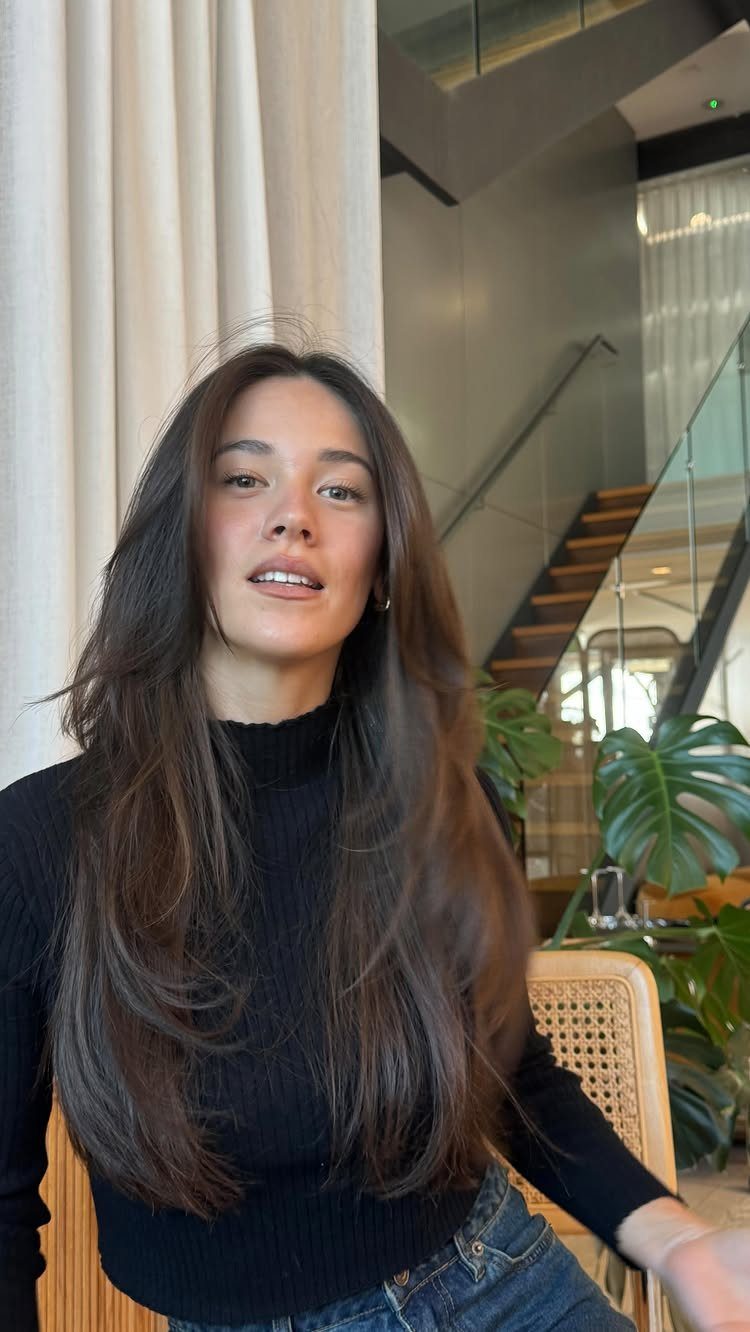
Shorter pieces cut around the front bring attention to the face while the back stays long. The layers begin near the cheekbone or jawline, depending on what you ask for, and taper down toward the rest of the length.
This one keeps the length and adds shape around your face without removing much anywhere else.
The cut works on straight or wavy hair and takes about the same amount of time to style as one-length hair. A round brush and blow-dryer will emphasize the framing, but air-drying still shows the structure.
Ask for where you want the shortest layer to start.
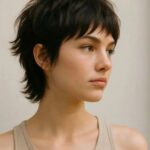
2. Shaggy Layers
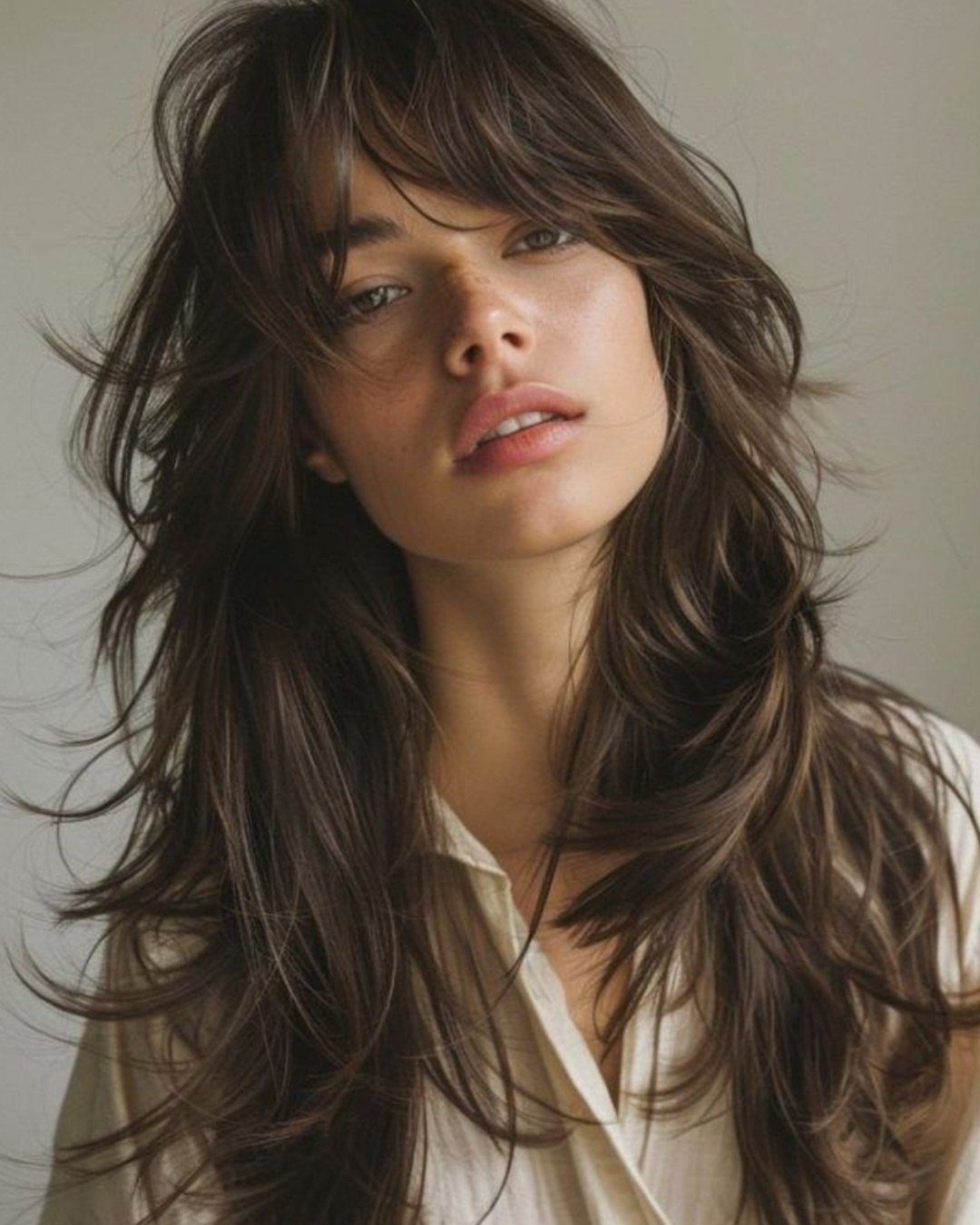
The layers are cut in uneven, choppy intervals rather than smooth transitions, which gives the hair a loose, slightly rough texture. The ends are not blended into one clean line; they sit at different points and create separation.
This cut works best if you already have some natural texture or are willing to add it with a texturizing spray or salt spray.
Straight, fine hair can look stringy without product. The choppy finish also means the cut grows out less evenly, so you will need to trim more often if you want to keep the shape.
The bangs add to the undone look but are not required.
3. Feathered Layers
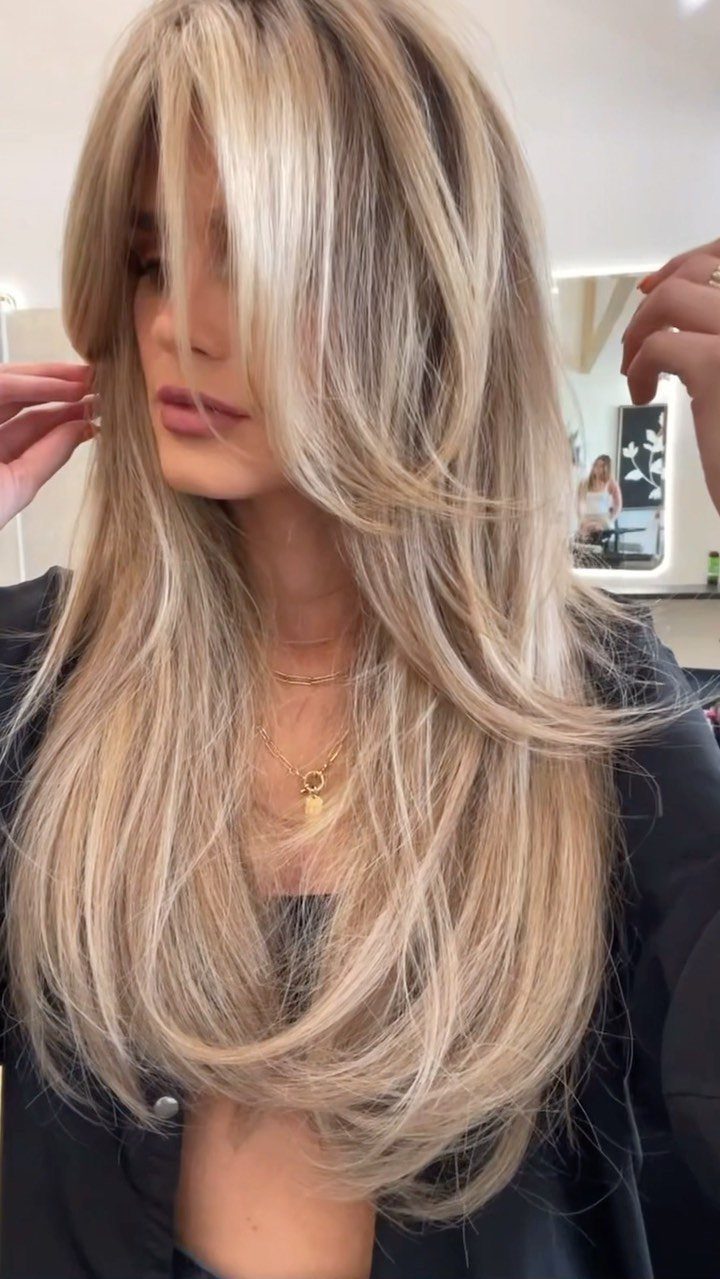
The ends are cut and styled to flip outward instead of curling under, which creates a softer, airier finish.
The outward bend is usually set with a round brush and blow-dryer, though a flat iron or curling iron flipped the opposite direction will do the same thing.
This look takes more styling time than most layered cuts because the direction of the ends matters.
If you let it air-dry, the feathering disappears. The style reads as retro, particularly when paired with curtain bangs, so it suits someone who wants that reference.
The layers themselves can be subtle or heavy depending on how much volume you want.
4. Classic Women’s Layers
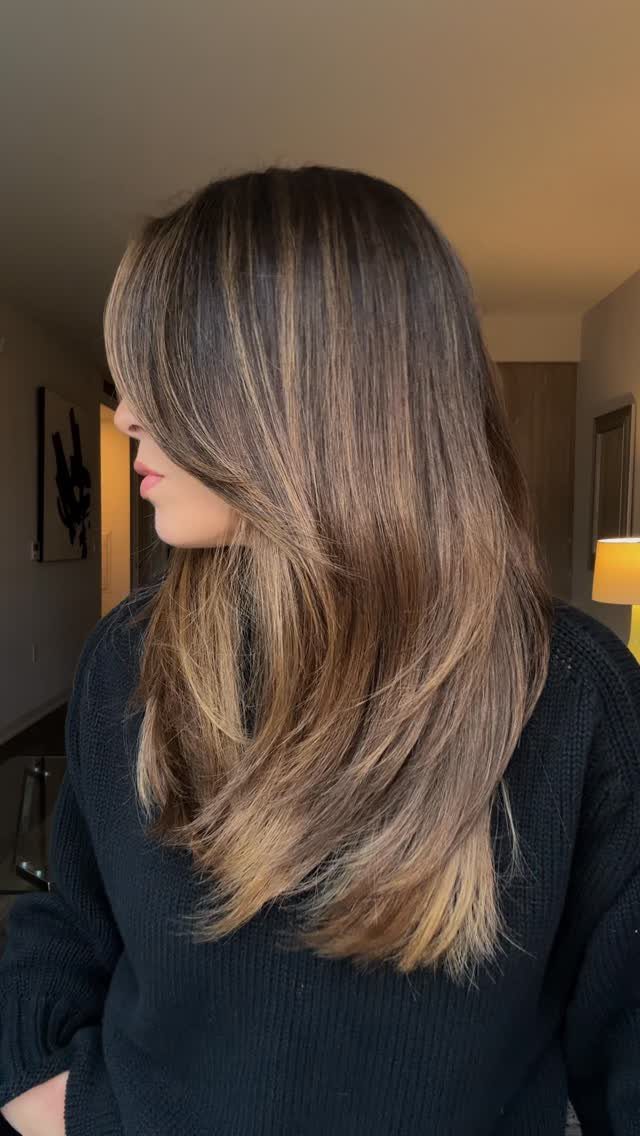
Layers are cut throughout the length but kept long enough that the overall shape stays smooth and blended.
The shortest front pieces usually start near the chin or collarbone, and the back layers remove some weight without creating a choppy edge.
This is the default long layered cut most stylists will give you if you ask for layers without specifying a style.
It works on most hair types and does not require much styling to look finished. The cut grows out evenly, so you can stretch trims if needed.
A good choice if you want dimension without a strong style commitment.
5. Butterfly Cut
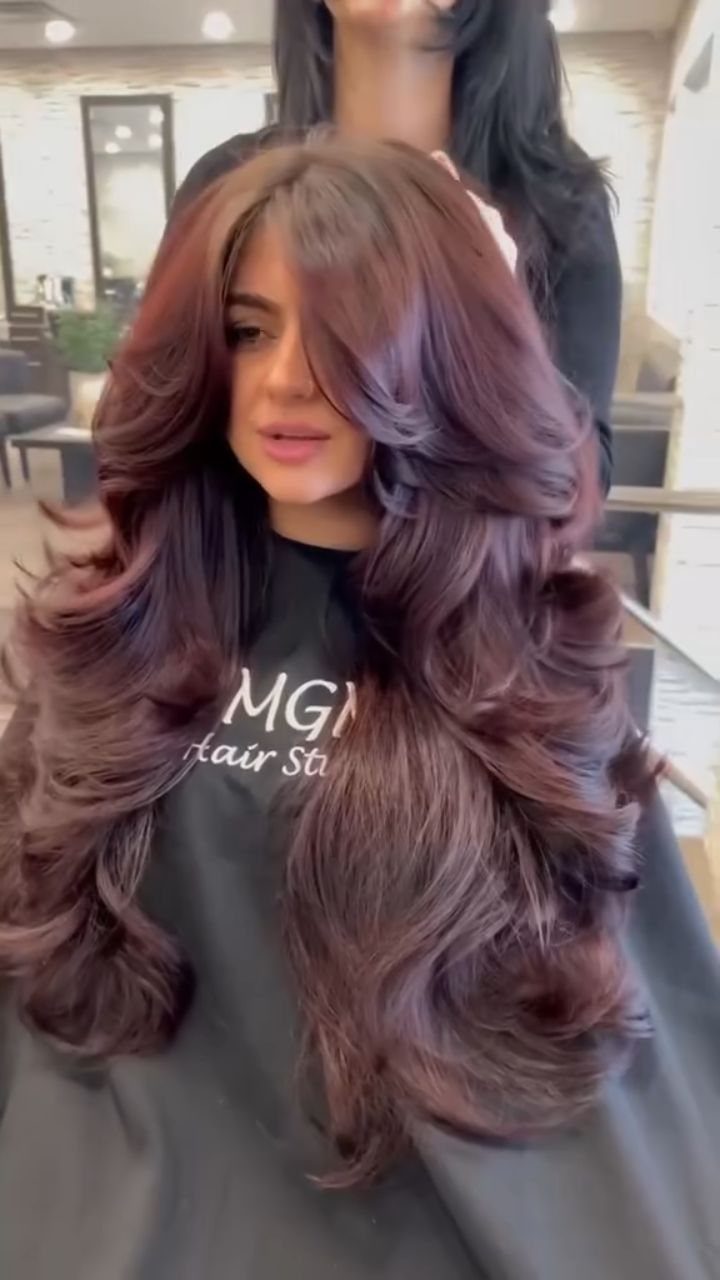
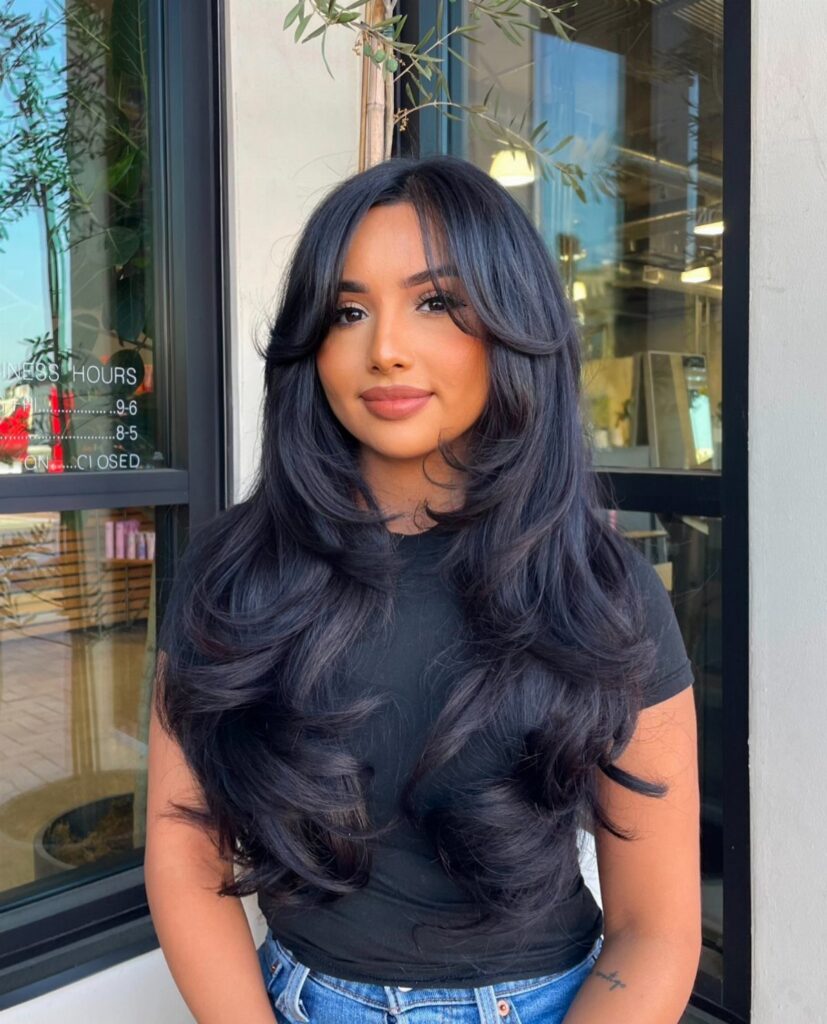
2 distinct lengths create volume at the crown and around the face while the lower half stays long.
The top section is cut shorter, usually to collarbone or shoulder length, and the bottom section remains near waist or hip length. The contrast between the 2 tiers is visible even when the hair is straight.
The cut adds a lot of volume at the top, which suits fine or flat hair.
Thicker hair may look too full unless you also ask for some thinning. Styling takes longer because you are working with 2 separate sections, and the upper tier benefits from a curling iron or blow-dryer to show the shape.
6. Long Layers with Bangs
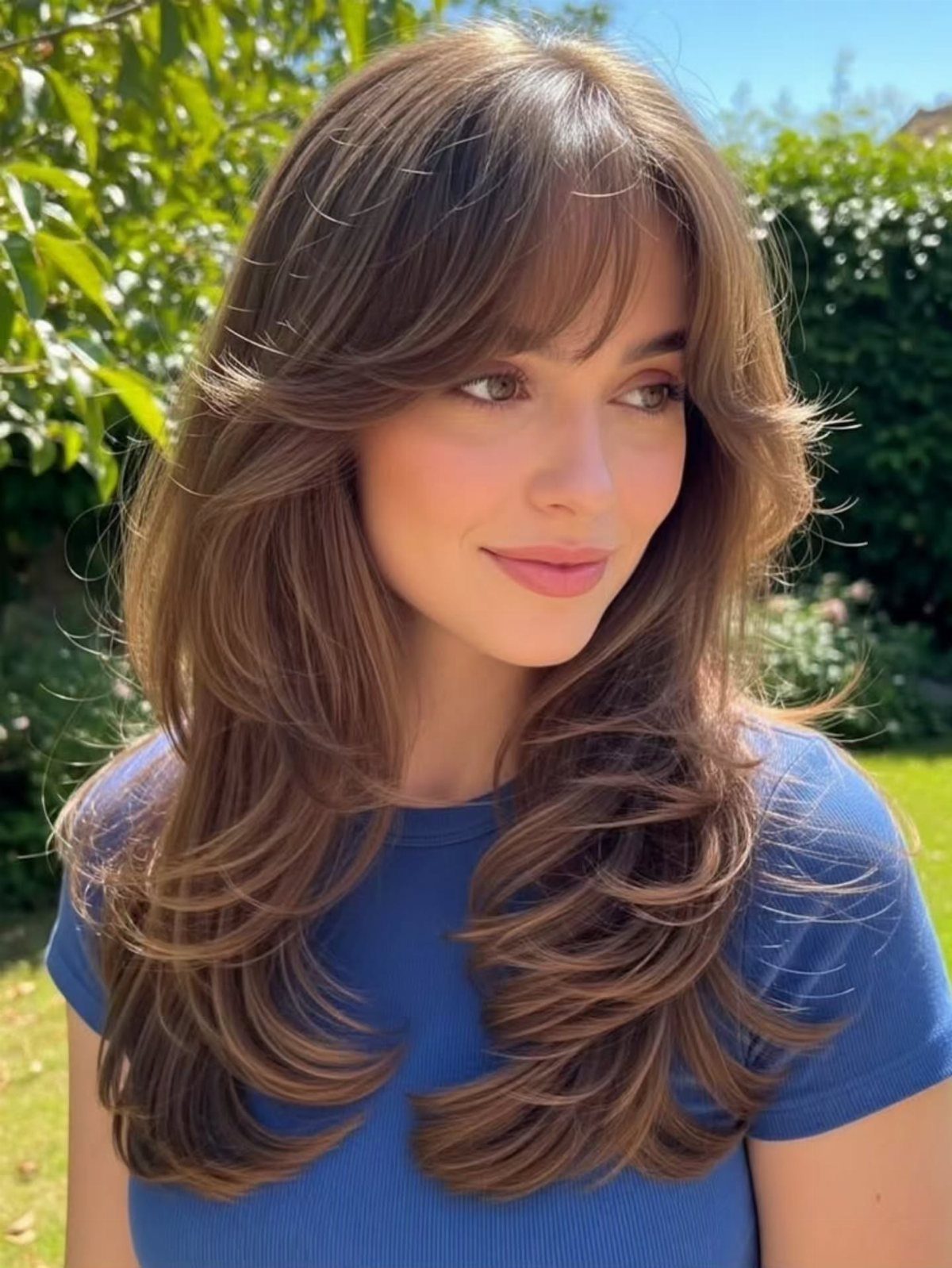
Layers cut throughout long hair, combined with a fringe across the forehead, add both movement and structure.
The bangs can be cut straight, wispy, or curtained depending on what suits your face shape, and the layers behind them can start anywhere from the chin down.
Bangs require more upkeep than the layers alone.
Bangs need regular trims to keep them out of your eyes, and they need to be styled or pinned back on days when they are not cooperating. The layers themselves are low-maintenance and work on straight, wavy, or curly hair.
7. V-cut Layers
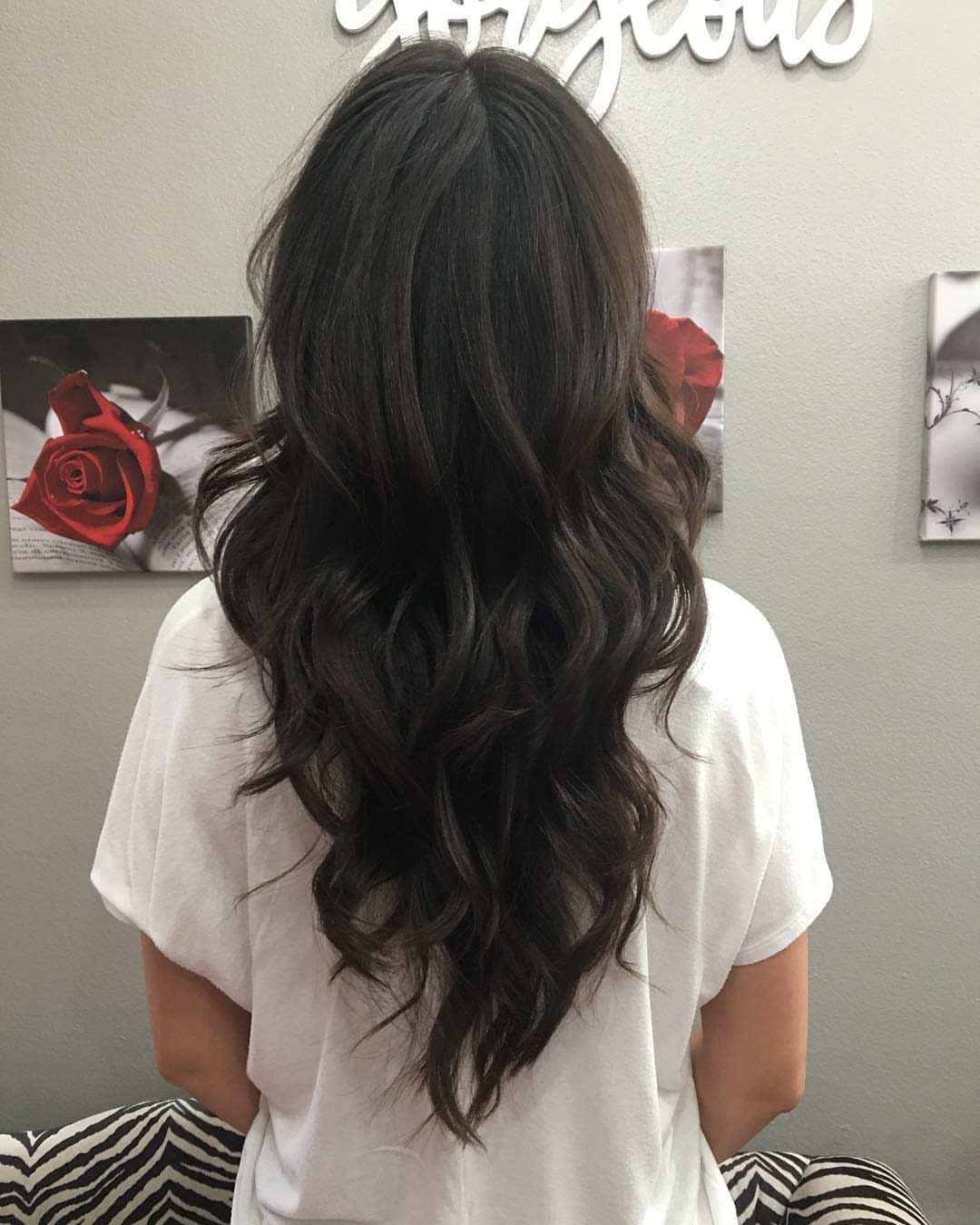
The back is cut to form a point at the center rather than a straight line across. The sides angle down toward the center back, which creates the V shape.
This cut keeps most of the length while adding a shape that shows when your hair is down and straight or wavy.
The layers taper toward the point, so the ends look fuller than a blunt cut. The V grows out gradually and does not need frequent trims to maintain the overall shape.
Most visible when viewed from behind or when hair is pulled to one side.
8. Long Layered Curls
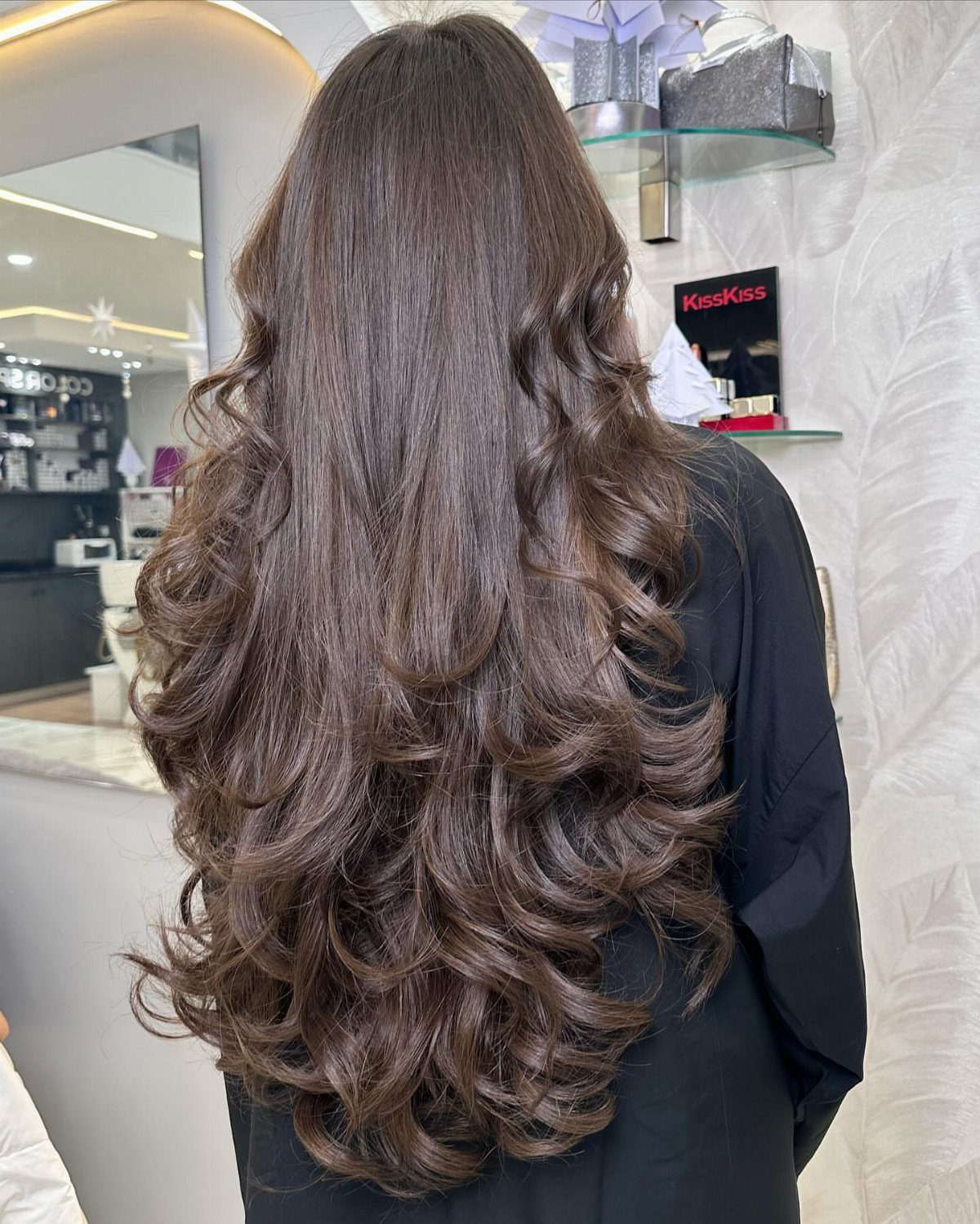
Layers cut into curly hair reduce bulk and let each curl form its own shape instead of clumping into one heavy mass.
The layers start a few inches below the crown and continue through the length, so the curls bounce at different levels.
Curly hair benefits from layers because the weight of one-length curls can pull the curl pattern tight at the roots.
Cutting layers releases that tension and adds volume at the top. Ask your stylist to cut curls dry so they can see where each one sits naturally.
The shape shows whether you air-dry or diffuse.
9. Increased Layering
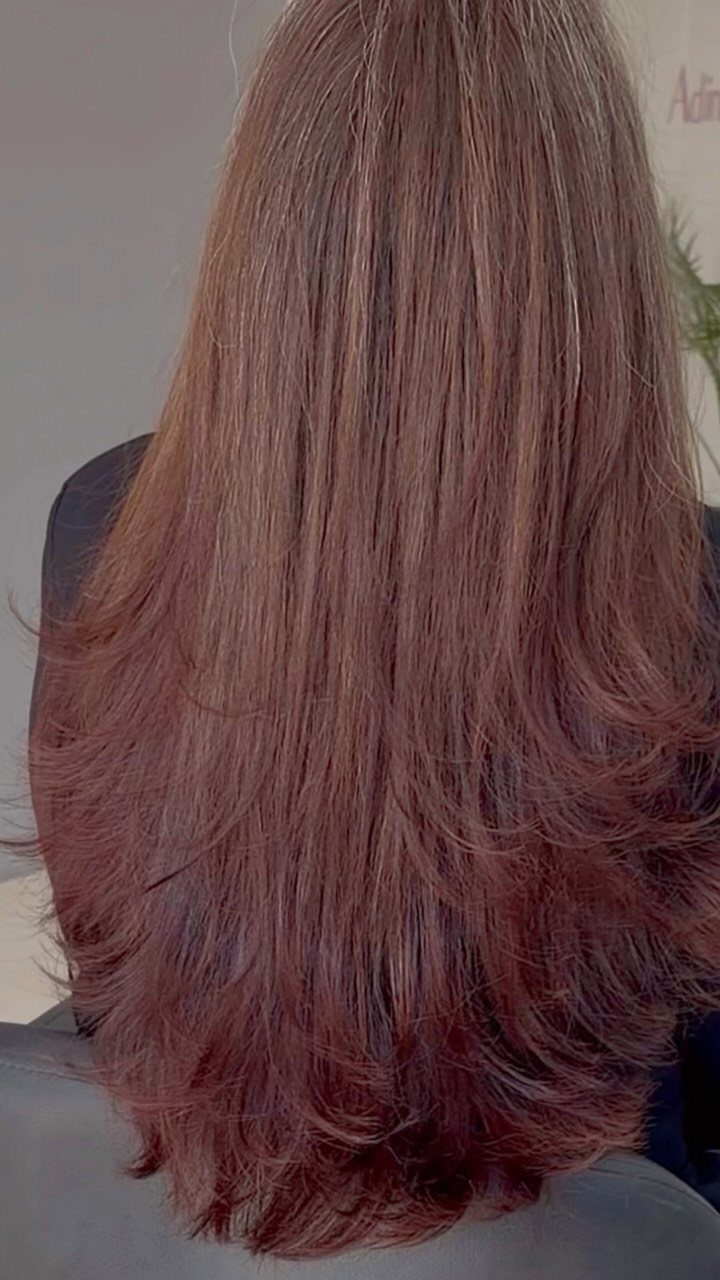
More layers cut through the mid-lengths remove internal weight without shortening the longest pieces. The result is lighter hair that moves more easily while the back perimeter stays at or near the same length.
This option suits thick or heavy hair that feels too full.
The additional layering thins out the interior without creating a choppy look at the ends. Fine hair can look stringy with too many layers, so this works best if you have density to spare.
A good middle step if you want less weight but are not ready to cut the length.
Layered long haircuts for thin hair can feel risky, since adding layers inherently removes volume from your hair. Ghost layers are a sneaky solution, pro hairstylist Hollie Rose Clarke tells Glamour.
— Glamour
10. Long Layers
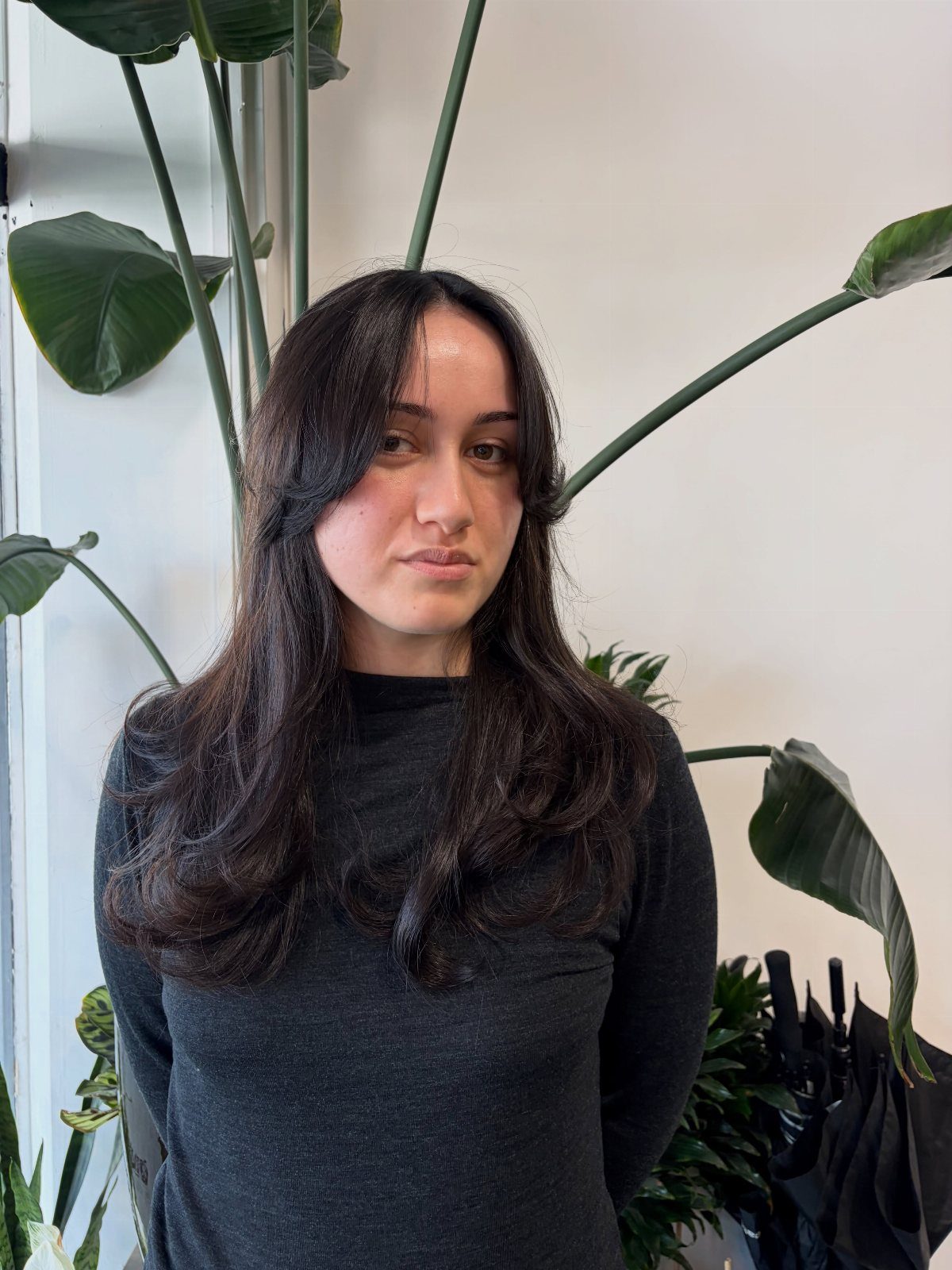
Shorter pieces are cut throughout, starting several inches below the crown and tapering down to blend with the longest length. The shape stays recognizably long, with movement rather than choppy steps.
This cut removes some weight and adds movement without a drastic change. Most textures take it well, and it looks finished whether you flat-iron or air-dry.
11. Hippie Layers
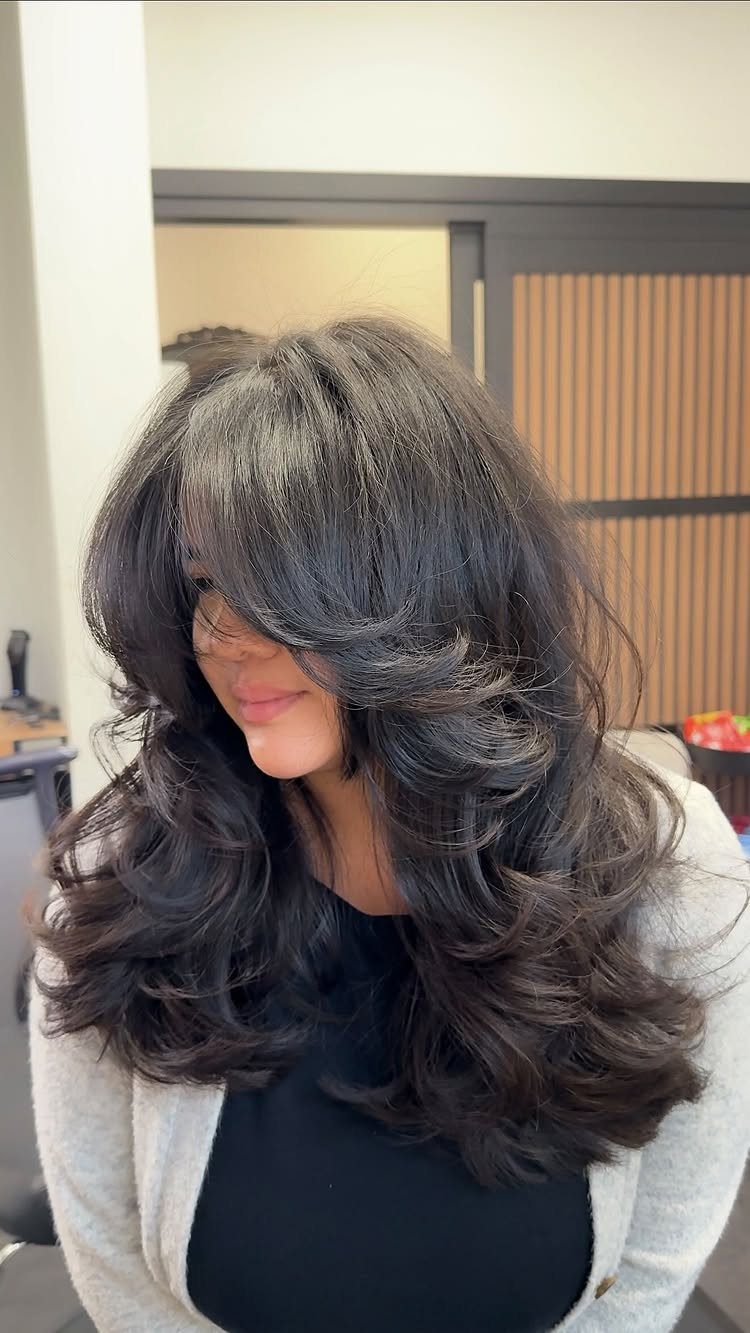
Long, sweeping layers are cut to start around the shoulders or mid-back and taper gently toward the ends.
The result is soft, flowing movement that looks loose and unstructured. Bangs, when included, are usually side-swept or curtained rather than blunt.
The cut suits wavy or slightly textured hair, where the layers add to a relaxed, lived-in look.
Straight hair can work if you add a wave with a curling iron or braid overnight. The layers are long enough that styling time stays minimal.
The longest pieces carry the silhouette even as the face-framing grows past your chin.
12. Waterfall Layers
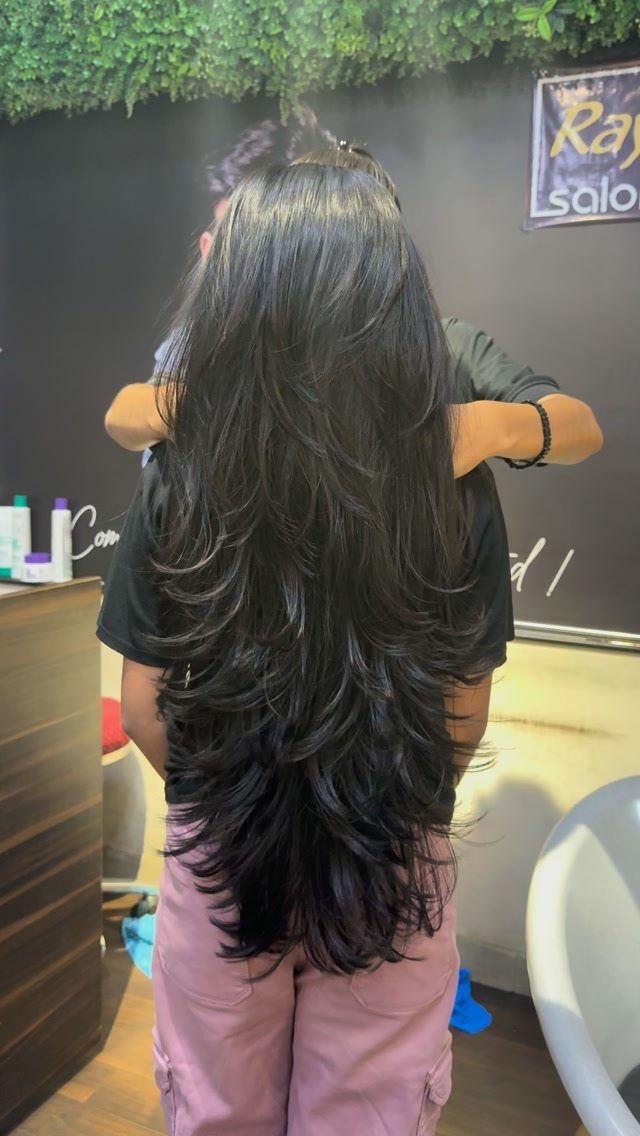
Layers are cut so they cascade smoothly from the crown through the ends, with no abrupt shifts in length. The transitions are gradual, and the shape mimics water flowing down rather than distinct tiers.
This cut adds movement throughout without removing much length.
It works well on straight to wavy hair and can be styled smooth or with loose curls. Because the transitions are gradual, regrowth reads as intentional rather than overgrown.
A good option if you want layered dimension but prefer a softer finish than choppy or piece-y cuts.
13. Curtain Bangs
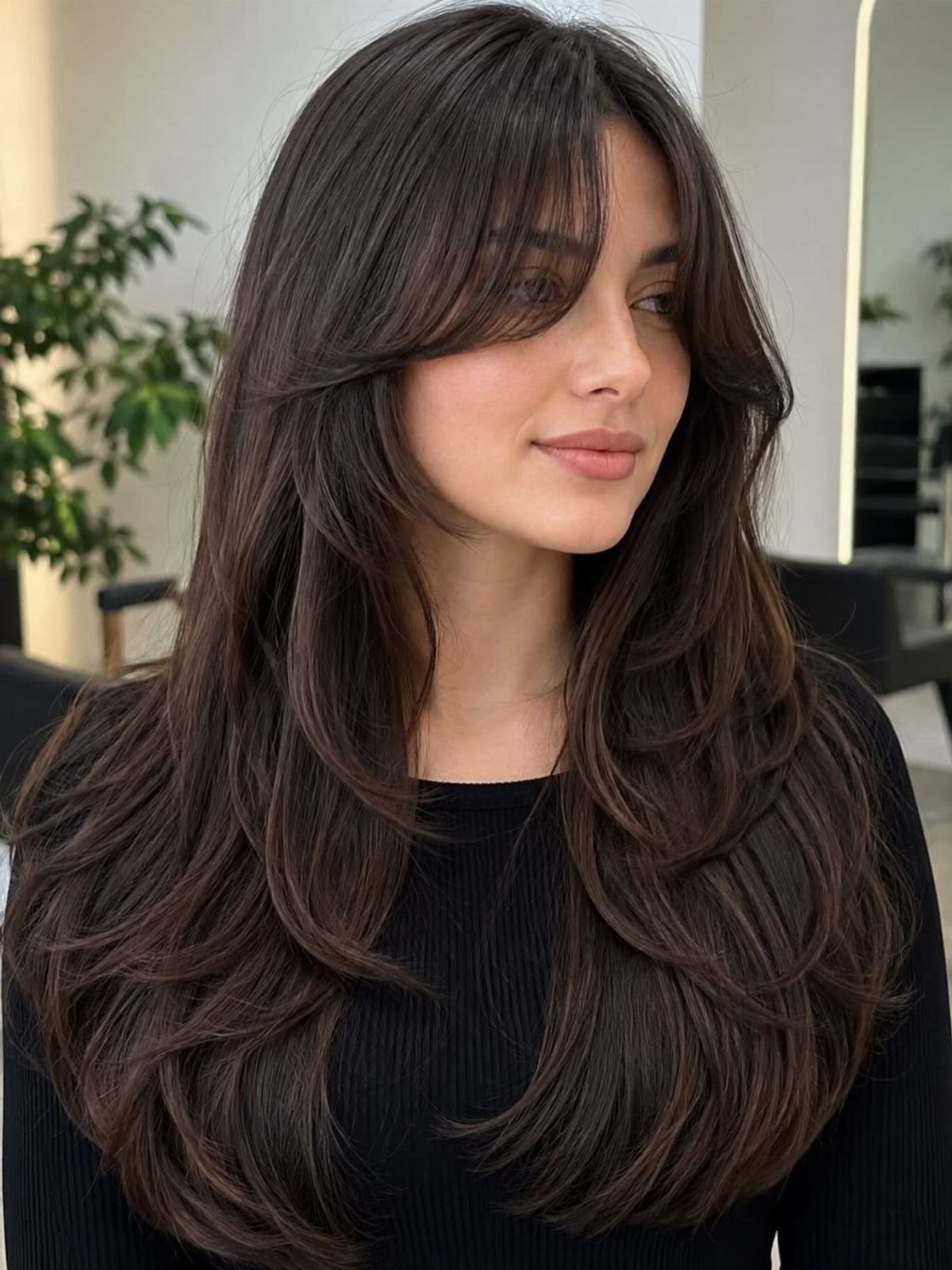
Bangs parted at the center and cut to sweep outward along each side of the face pair naturally with long layers that start just below the jawline.
The fringe tapers from shorter at the center to longer at the edges, where it blends into the layers.
The bangs will need trimming regularly to keep them where you want them. Between trims, they can be pinned back or tucked behind your ears.
This cut suits most face shapes because the sweeping bangs can be adjusted to sit where you want the attention.
14. ’90s Layers
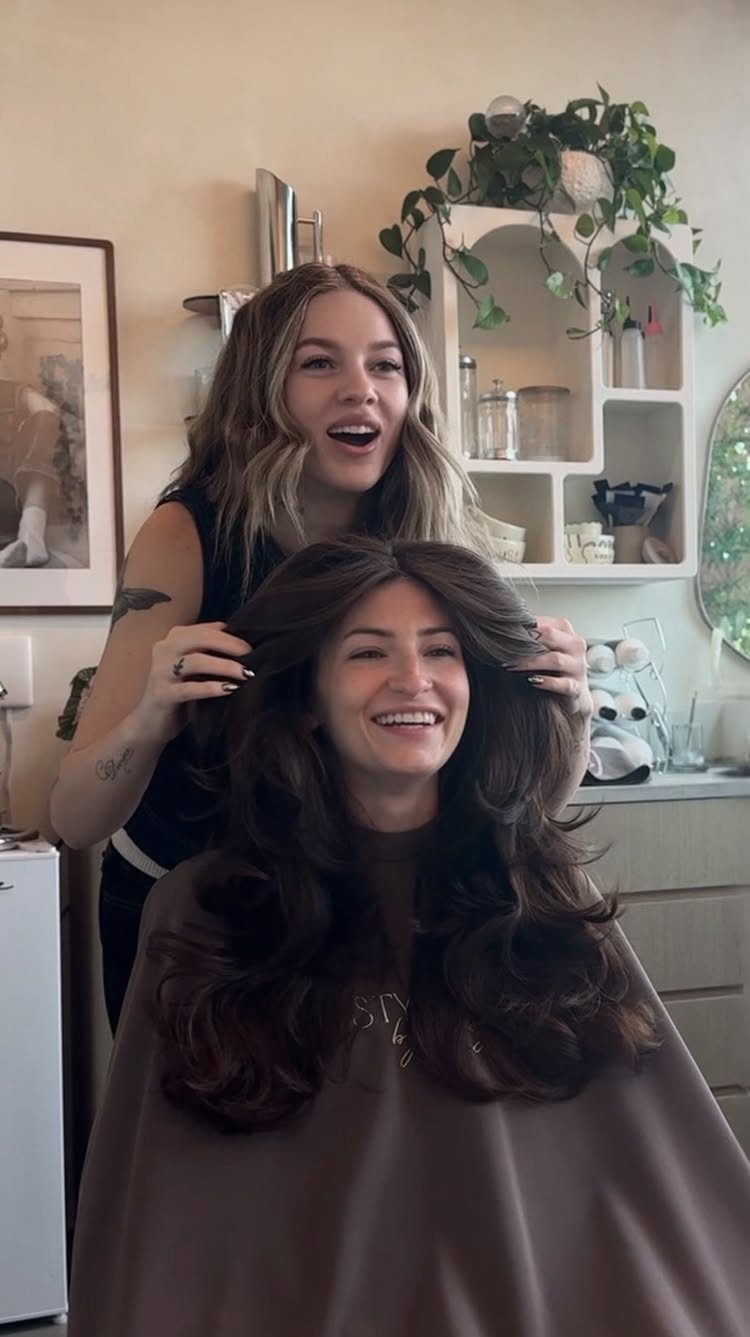
Layers start near the crown and taper through the mid-lengths, which builds lift and fullness at the top while the ends stay relatively even. The layering removes internal weight so the hair fans out rather than lying flat.
Styling brings out the volume this cut is known for.
I blow-dry with a round brush for root lift and use a large-barrel curling iron to bend the ends under. Without styling, the shape reads as subtle layering rather than the high-volume look the decade is known for.
Thick hair takes this cut best because the volume comes from density, not product alone.
15. Soft Layered Haircut
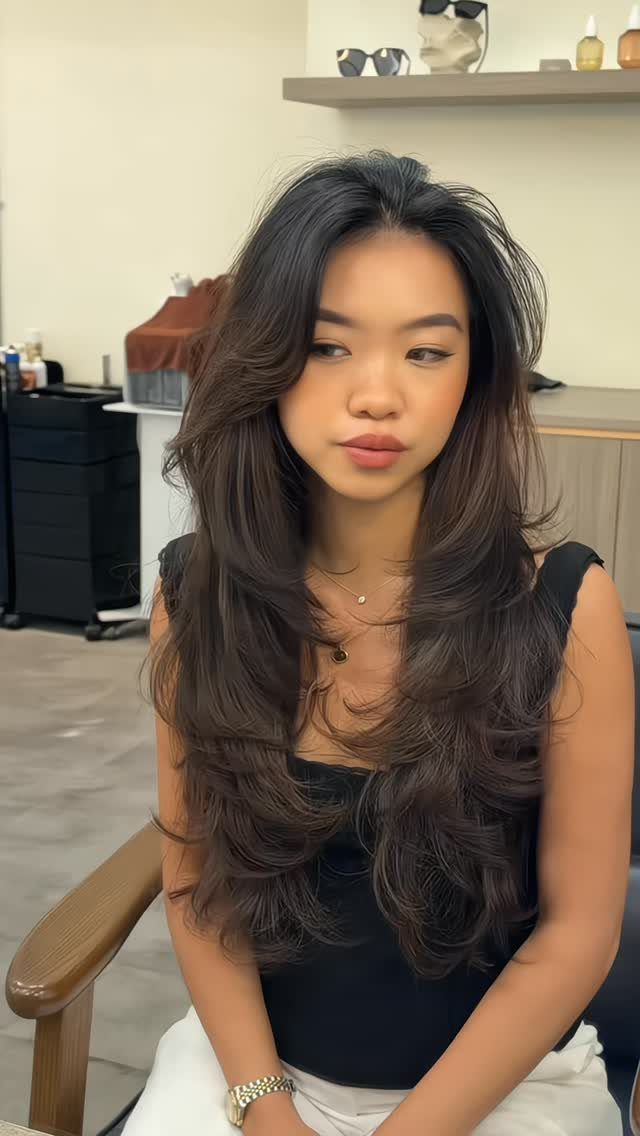
Layers are cut with minimal length variation between sections, so the transitions stay smooth and the overall line looks blended rather than choppy.
The shortest pieces usually start near the collarbone, and the longest stay at or near the original length.
This cut suits someone who wants dimension without a bold style shift.
If you’re unsure how far to go with layering, this is where I’d start.
16. Piece-y Layers
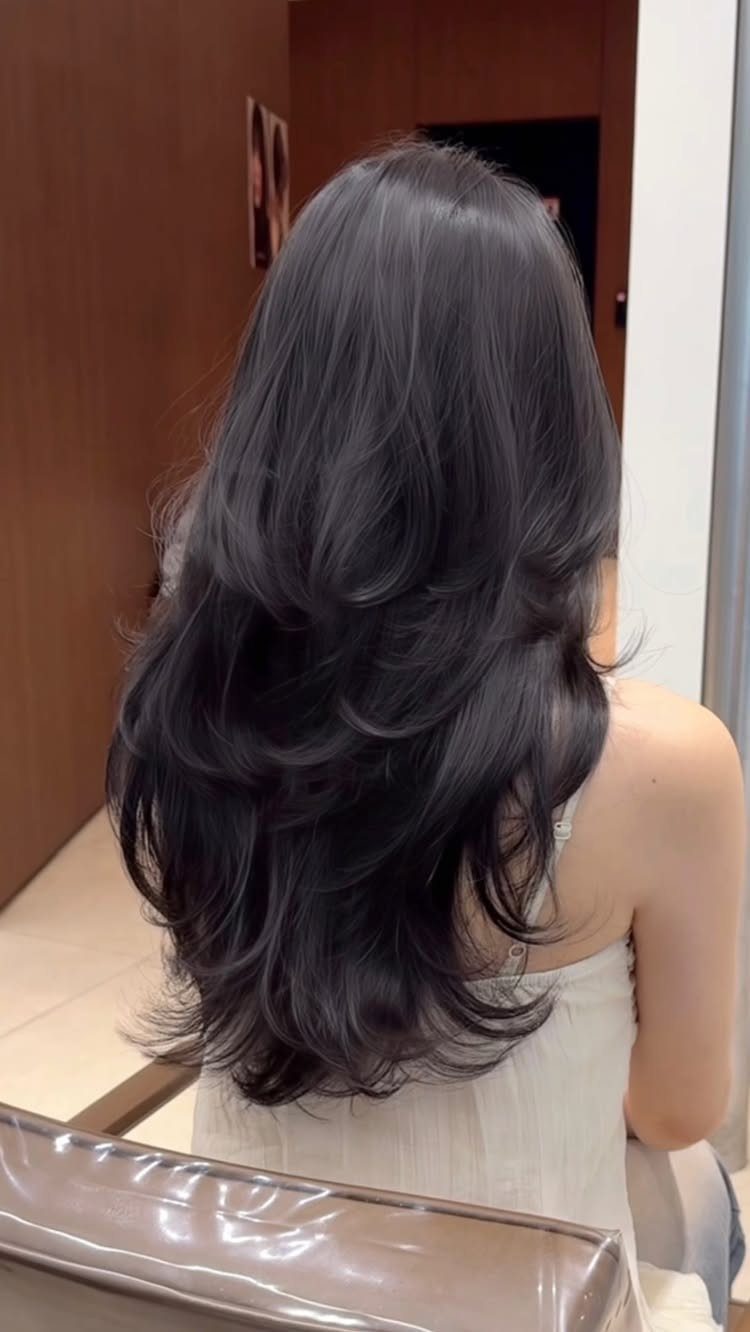
The ends are cut and styled to separate into distinct sections rather than blending into one smooth line.
Texturizing spray or a light pomade helps define the pieces, and a flat iron or curling iron adds movement while keeping the separation visible.
This look requires product and styling time. Without either, the layers may clump together or look uneven.
The perimeter stays long and relatively blunt while the pieces add interest through the lengths.
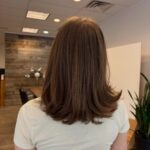
17. Graduated Layers
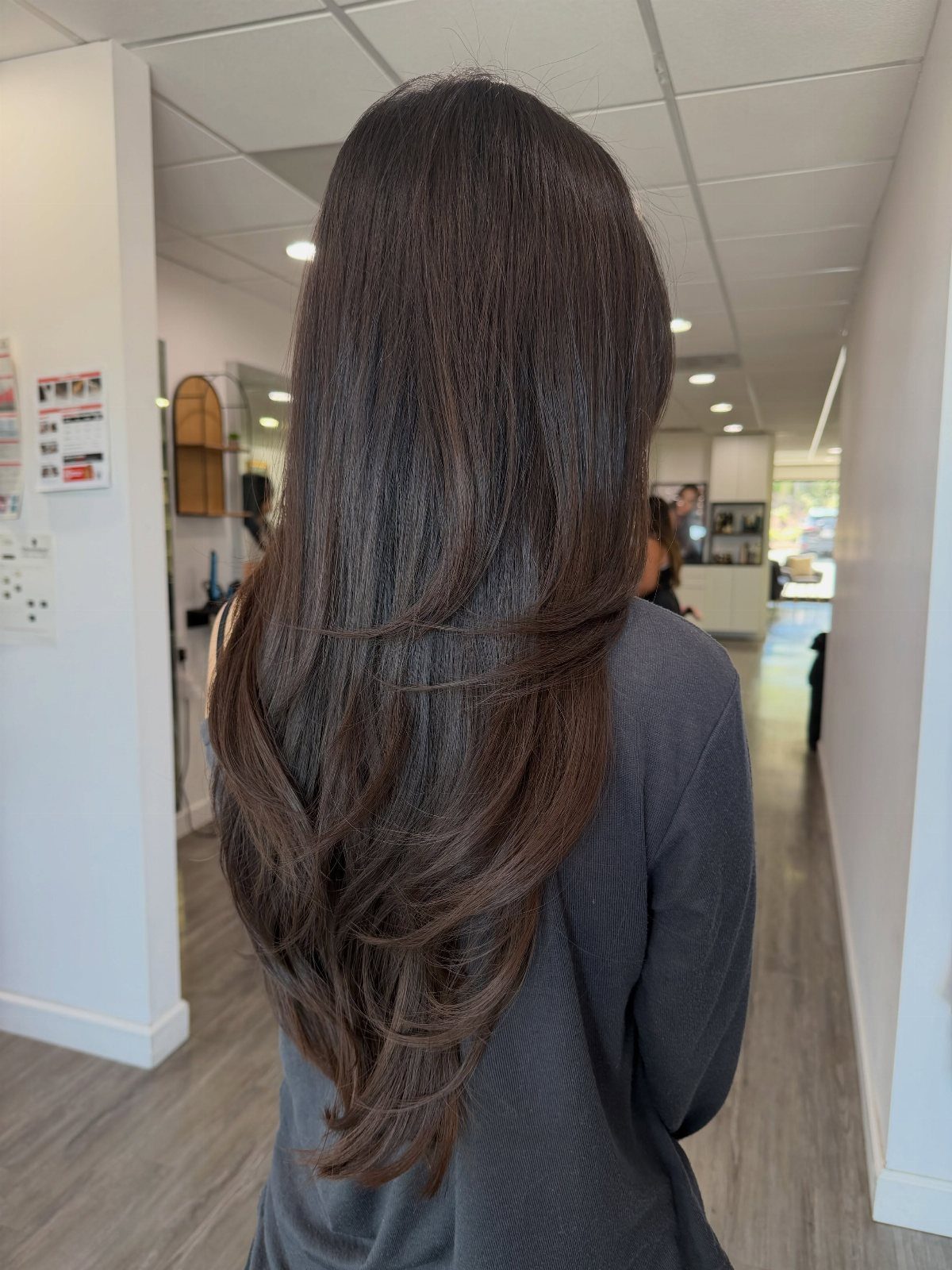
Each layer is cut slightly shorter than the one below it, which creates a stacked effect that builds volume at the crown and tapers smoothly toward the ends.
The progression is visible from the back and adds shape without removing much length at the perimeter.
This cut works well if you want lift at the top without sacrificing long hair.
The layering also removes some weight, so thick hair feels lighter. Fine hair can look too thin at the ends if the graduation is too steep, so ask for subtle transitions.
The shape holds whether you style it straight or add loose curls.
18. Swoopy Layers
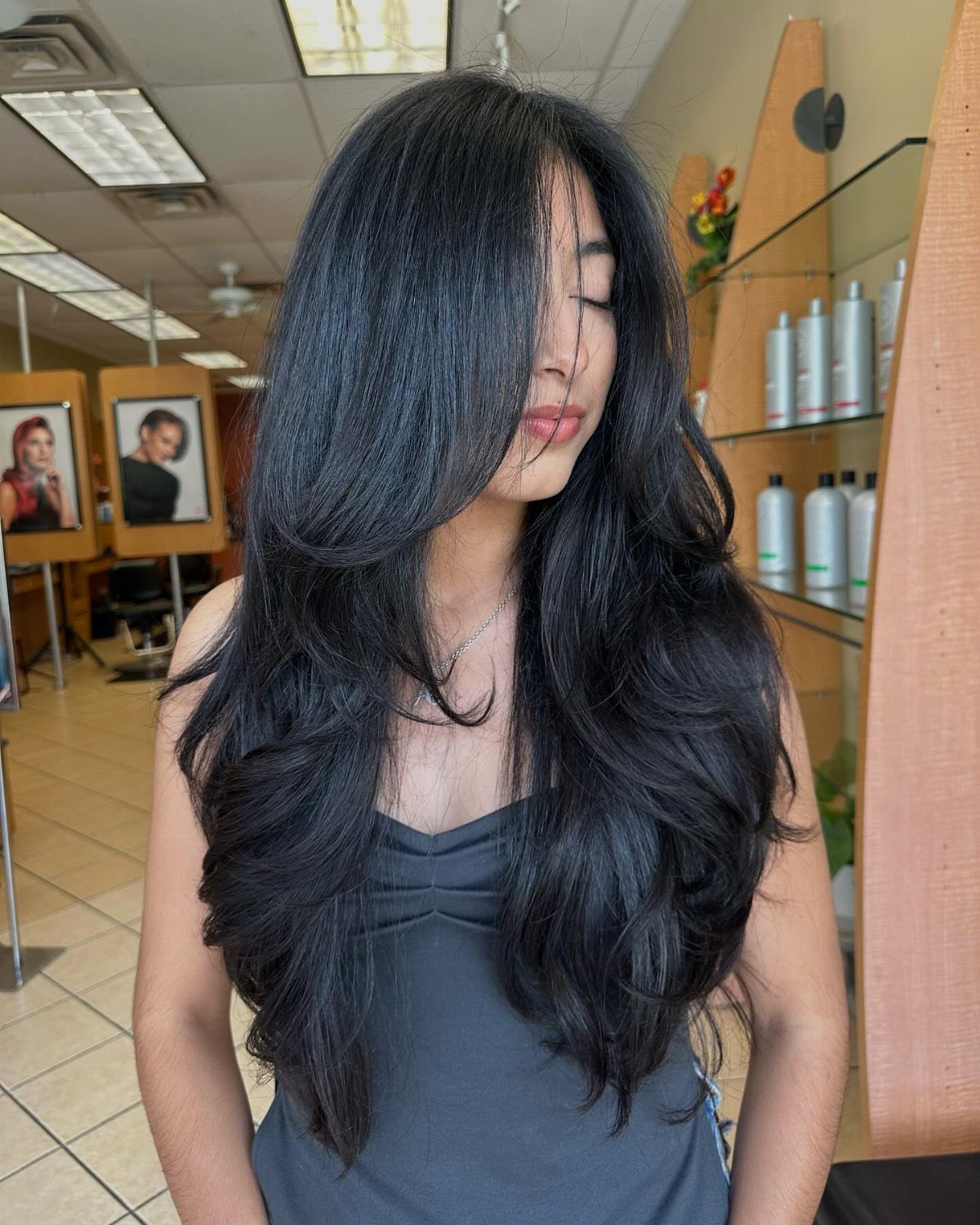
Layers are cut and styled to curve inward or outward in smooth, sweeping arcs rather than falling straight down.
The curved motion is most visible around the face and through the ends, where a round brush or curling iron sets the direction.
This look takes more styling time than low-maintenance layers because the curve needs to be set.
You can blow-dry with a round brush or pull a flat iron through in a C-curve. Air-drying loses the swooping shape and leaves the layers looking like a standard cut.
The style reads as soft and polished rather than undone or textured.
19. Curled Cascading Layers
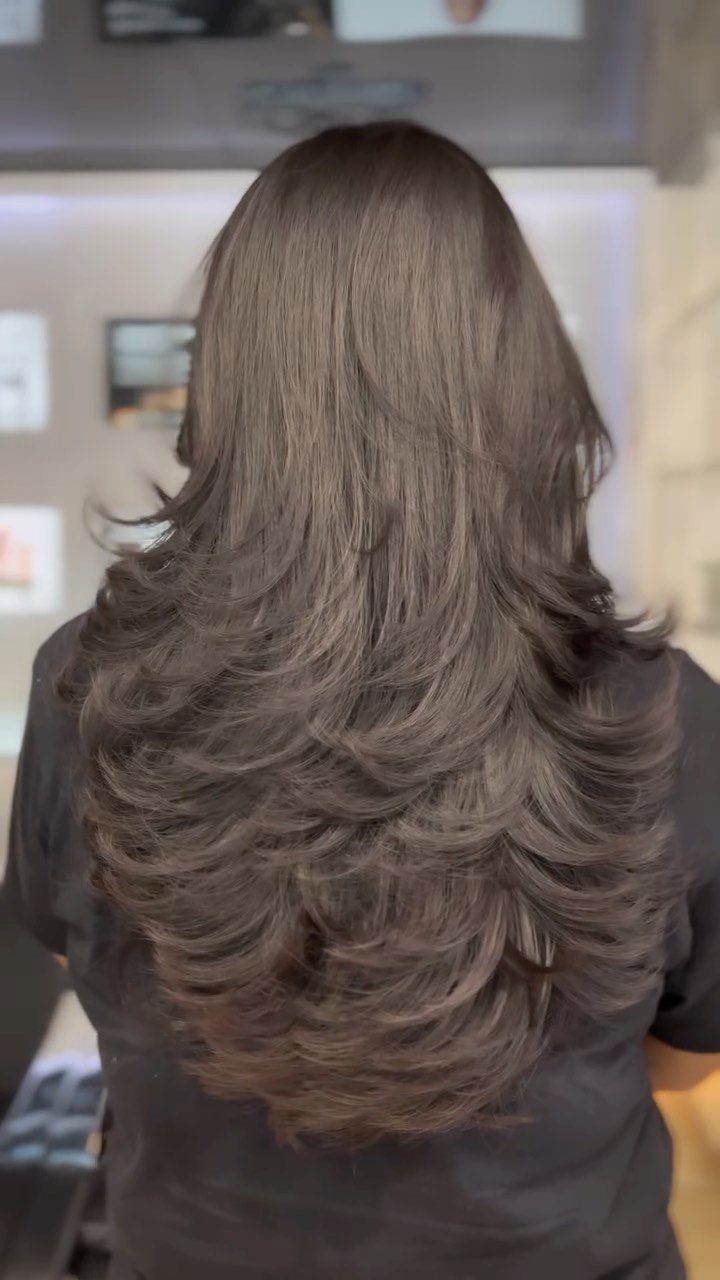
Layers are cut to fall in tiers and styled with curls that flip outward or under at the ends.
The cascading effect shows best when each layer is curled separately with a curling iron or wand, so the pieces sit at different heights rather than blending together.
This look takes time to style.
You need to section the hair and curl each layer individually to keep the tiers visible. Without curling, the layers still move, but the cascading shape flattens out.
The glossy finish comes from smoothing serum or shine spray after styling.
Benefits and Tradeoffs
Layers add movement and dimension to long hair, and when cut well, they work across most textures. Thick hair loses some weight without losing length, which keeps the ends from looking too full or triangular.
The tradeoff is styling time. Growing out layers takes patience because the shortest pieces need time to catch up with the rest, and regular trims help the shape stay intentional rather than overgrown.
Layers also let you customize the cut to your face shape, with shorter pieces placed where you want attention drawn.
Maintenance and Heat Care
Trim schedules depend on how quickly your hair grows and how precise you want the shape to stay.
Some people trim every 6–8 weeks, others stretch it to 3–4 months. Layered cuts grow out more gradually than blunt cuts, so you have more flexibility if you want to go longer between appointments.
Hydration matters more as length increases because the ends are older and more prone to splitting. Masks and oils help, though lightweight products suit fine hair better than heavy creams.
Always apply heat protectant before you pick up a dryer or iron. Blow-dryers, flat irons, and curling irons all pull moisture out of the hair, and protecting it beforehand keeps the ends from looking dry or damaged.
Face Shape Guidance
Longer layers elongate round faces because the length pulls the eye down rather than out.
Square jawlines read as softer with feathered layers that taper near the face. Oval faces suit most layered styles without adjustment.
Front layers can be cut to start where you want the focus: at the cheekbone, the chin, or just below it.
The placement changes where the cut frames your face, so ask your stylist to begin the shortest layer at the point you want highlighted.
Frequently Asked Questions
Which layer cut is best for long hair?
The best cut depends on your texture and how much time you want to spend styling.
Face-framing layers work well if you want shape around your face without losing length, and they air-dry easily. Shaggy or feathered layers need more product or heat styling to look intentional.
Are layers good for long hair?
Layers cut weight from thick hair and add shape to fine hair without touching the longest pieces.
Growing out a layered cut takes months because the shortest sections have to lengthen to meet the rest, and many need a round brush or iron to look intentional.
Most textures benefit from layering if the cut is placed to suit your hair type.
What are the trends for layered hair in 2026?
Face-framing layers and curtain bangs are showing up frequently, often paired with length that can be curled or styled into updos.
Shaggy, textured cuts with choppy ends also remain popular. The focus is on dimension through the lengths rather than blunt, one-weight hair.
What’s a layered haircut?
Hair is cut to different lengths from top to bottom, shortest at the crown and longest at the ends.
Shorter sections are cut above longer ones, which removes internal weight and lets each section fall at a different level. The result is dimension that shows whether you style it or not.
What do layers do to hair?
Removing weight from the interior gives hair more room to move and makes thick hair sit flatter at the root.
Thick hair loses weight without losing length, and the staggered ends create dimension that one-length hair does not have. Curly hair bounces more freely because the weight is distributed across different levels.
What are the pros and cons of layered cuts?
A layered cut lifts flat hair, thins out bulk, and frames your face if the shortest pieces start near your cheekbones or jaw.
How do I ask for a layered haircut?
Bring a photo and tell your stylist where you want the shortest layer to start, whether you want choppy or blended transitions, and how much maintenance you are willing to handle.
Specify if you want face-framing pieces, how much length you want to keep, and whether you plan to air-dry or use heat tools. Clear direction on placement and texture will get you closer to the cut you want.
Why are long layered haircuts trending?
Long layers work with textured styling like waves and curls while still offering face-framing pieces and enough length for updos or ponytails. Wispy, face-framing layers and curtain bangs are being requested frequently.