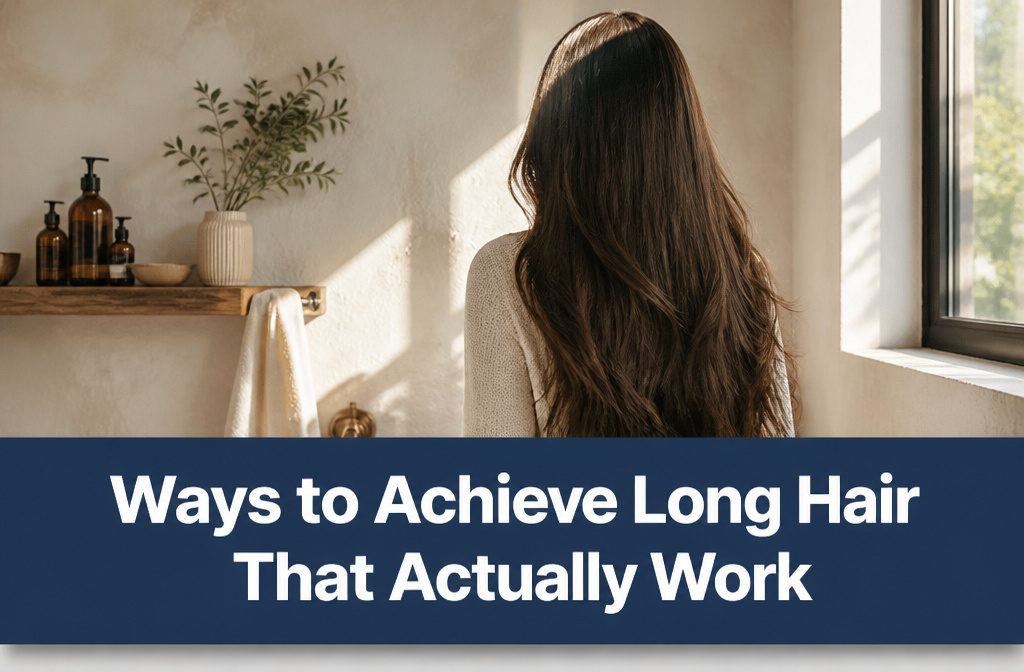
Hair grows about half an inch per month no matter what you buy, and genetics set how long each strand stays in the growth phase before it stops. What you control is breakage.
A trim every 10 to 12 weeks removes split ends before they travel up the shaft, heat protection up to 428°F keeps the strand from drying out, and a clarifying shampoo once a week clears the buildup that can stall growth at the scalp.
1. Protect Your Scalp and Remove Buildup
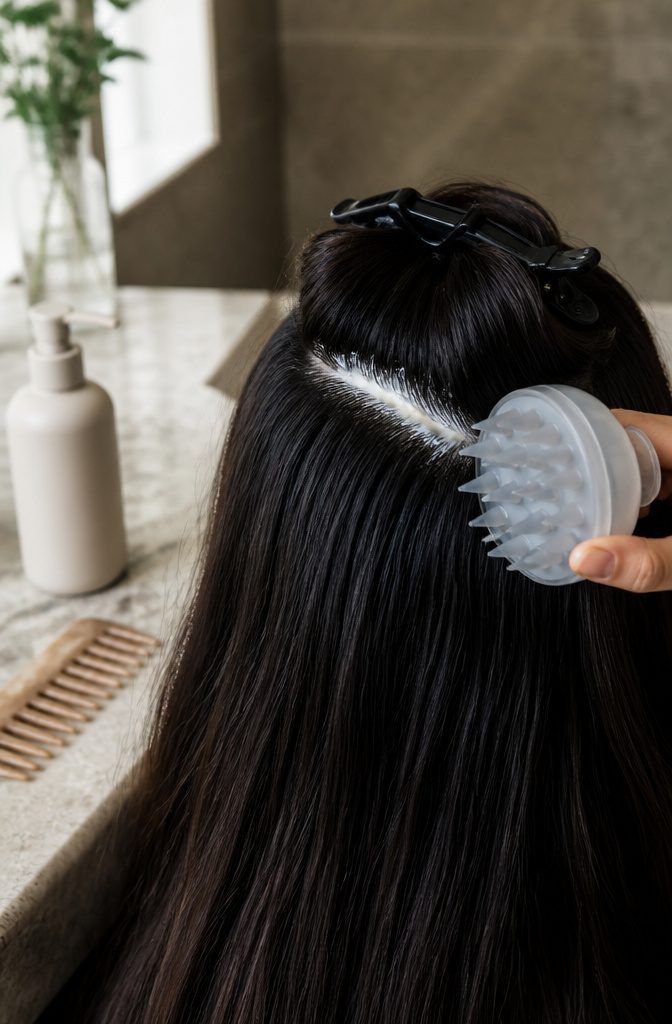
A clean scalp gives follicles what they need to grow strong hair. Inflammation from dandruff, product buildup, or irritation can stall growth before it starts.
Washing frequency depends on hair type: straight, thin hair often needs multiple washes per week, while coarser textures may wash just once. You want to prevent flaking and clogging without stripping natural moisture.
Use a clarifying shampoo once a week or every two weeks to remove oil, styling product residue, and grime that regular washing leaves behind. Buildup blocks the scalp and creates the kind of irritation that shuts down growth.
Between clarifying washes, choose a shampoo matched to your scalp rather than your hair texture. If you lean oily, go lightweight and hydrating; if you deal with dryness or sensitivity, skip heavily fragranced formulas that trigger flaking.
A scalp scrub or massager used once to twice a week cleanses, exfoliates, and stimulates circulation.
Some prefer oils or cream-based masks with peppermint, tea tree, or citrus over grainy scrubs, which can scratch the scalp and invite bacteria. Massage the treatment in, let a scalp shampoo sit five minutes, then rinse and condition as usual.
2. Trim Split Ends Every Two to Three Months
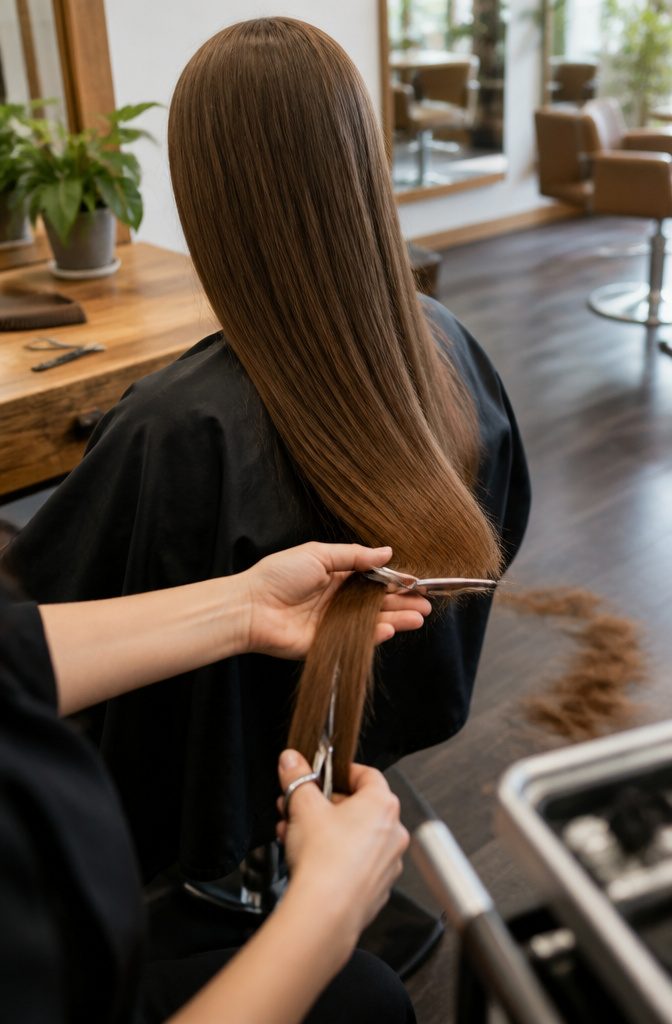
A trim does nothing for the follicle. Hair still grows from the scalp at its own pace, and scissors can’t change that.
What a trim does is remove the oldest, weakest ends before a split can travel up the strand like a run in a stocking, which leaves you shorter than the split started.
Aim for an eighth of an inch every 10 to 12 weeks, or every two to three months.
Ask for a dusting, not a cut, and tell your stylist you’re growing it out. I’d skip the bigger "reset" trims: a split left alone ends up costing more length than the small trims would have.
3. Eat a Balanced, Protein-Rich Diet

Each strand is made of keratin, a protein, so protein at every meal matters more than any single vitamin.
Eggs, oily fish, beans, nuts, dairy, tofu and lean chicken all count. When intake runs short, your body sends protein to more critical organs first, and hair gets what’s left.
Iron, zinc and vitamins A, B, C, D and E fill in the rest, along with omega-3 fats from fish and healthy fats like avocado and olive oil.
Biotin shows up in salmon, eggs and chicken. A varied plate covers most of this, and if you eat vegetarian or vegan, a doctor or dietitian can check the protein gaps.
Crash dieting is the fastest way to stall growth.
4. Use Supplements Only When Appropriate

Biotin is the supplement everyone reaches for, and it only earns its place when a deficiency is the actual problem. Eggs, salmon, chicken, nuts, seeds and sweet potatoes already supply it, so a balanced plate covers most people.
Your body keeps what it needs and gets rid of the rest, which means doubling up on a gummy mostly buys expensive waste. Too much supplementation can even cause hair loss.
If you suspect a gap, iron, zinc and vitamin D are the ones tied to growth.
Ask a doctor before buying anything, because supplements aren’t FDA regulated and can interact with medications. Collagen needs more research before I’d spend money on it.
5. Limit Heat Styling and Use Protection Up to 428°F
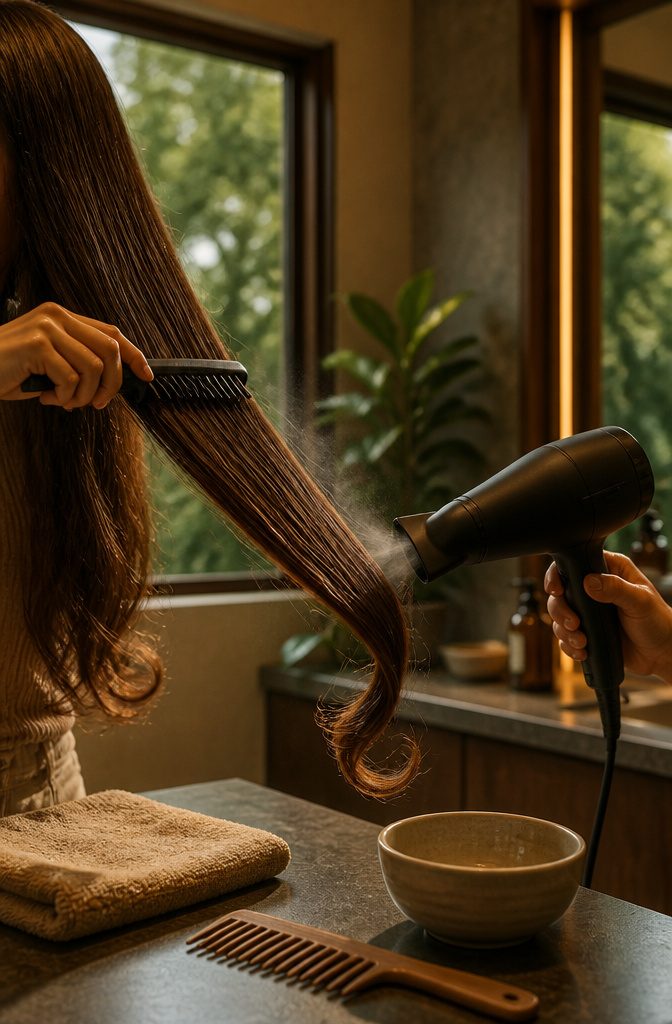
Blow-dryers, curling irons, straighteners and hot combs all dry the strand out, and dry hair snaps before it ever reaches the length you’re growing toward. Fewer heat days beat any product, so start there.
When you do style, use the lowest setting and spray a protectant first.
Kenra’s heat spray protects up to 428°F, and Kérastase’s L’Incroyable Blowdry Lotion goes up to 450°F. Still, set the tool lower than the label allows: under 250°F for fine hair, under 300°F for medium hair.
Never put a tool on soaking hair, since the water can form bubbles in the shaft. I’d also stop the blow-dryer at about 80% dry and let air finish the job.
6. Avoid Chemical and Color Damage
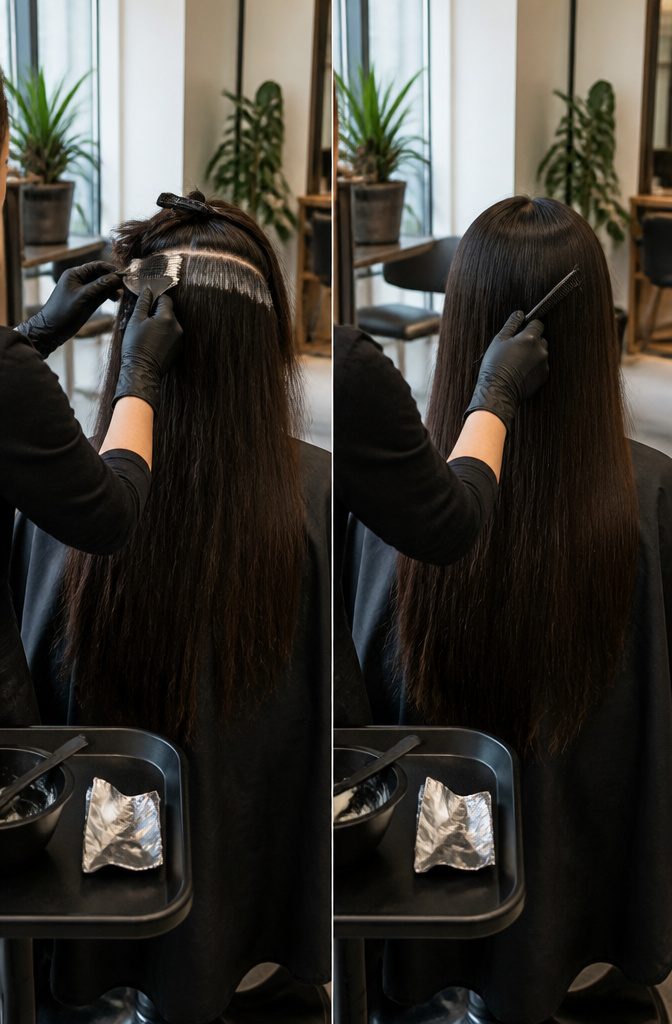
Bleach opens the cuticle every time it touches a strand, and darker hair takes the worst of it.
Hair that has been bleached, relaxed, or permed also breaks more easily, and every break means a trim that costs you length. Some alcohol-based styling products can harm the follicle, so check labels on anything you use daily.
If you relax, touch up only every 2 to 3 months, and only on the new growth. Overlapping product onto hair that has already been processed is how a relaxer turns into a haircut.
Space bleach, perms, and relaxers apart rather than stacking them in one visit, and ask your stylist to apply carefully at the roots. For growing long hair, I would skip bleach altogether.
7. Handle Wet Hair and Brush Gently
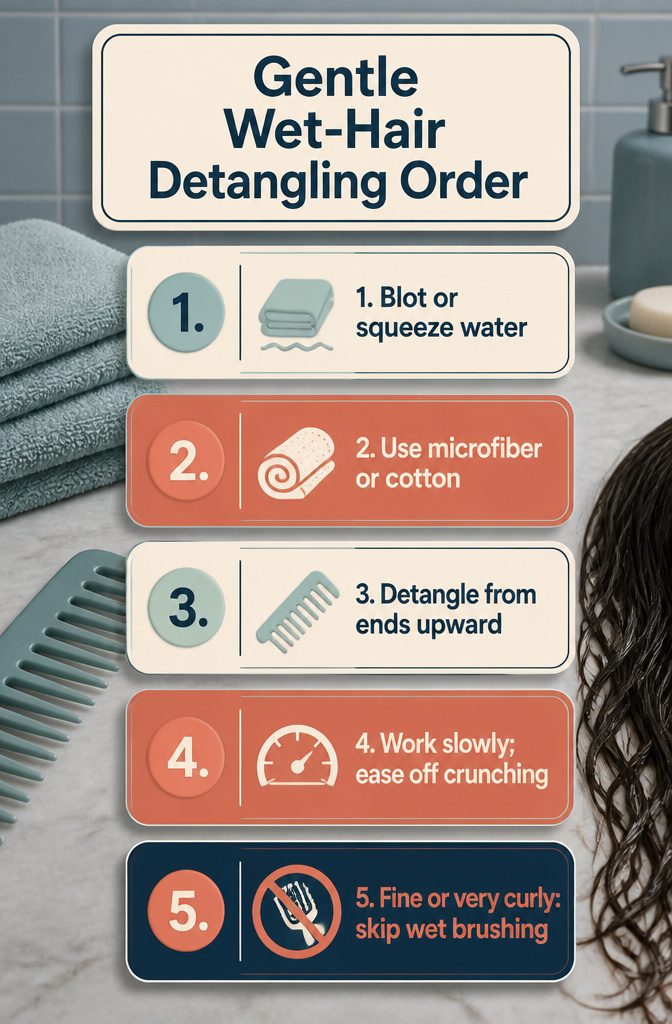
Wet hair stretches, and a stretched strand snaps more easily than a dry one. Rubbing with a towel also roughens the cuticle and can pull strands out at the root, which leaves hair frizzier and more porous.
Blot or squeeze the water out with a soft cotton or microfiber towel, or wrap it in a microfiber turban.
Detangle from the ends up, working slowly. Brushing from the scalp down pushes small tangles together into one big knot, and then you lose hair getting it out.
If you can hear the brush crunching through strands, ease off. A wide-tooth comb or a Wet Brush is gentler than most brushes.
If your hair is fine or very curly, skip wet brushing entirely, as Cleveland Clinic advises.
8. Keep Hair Moisturized and Conditioned
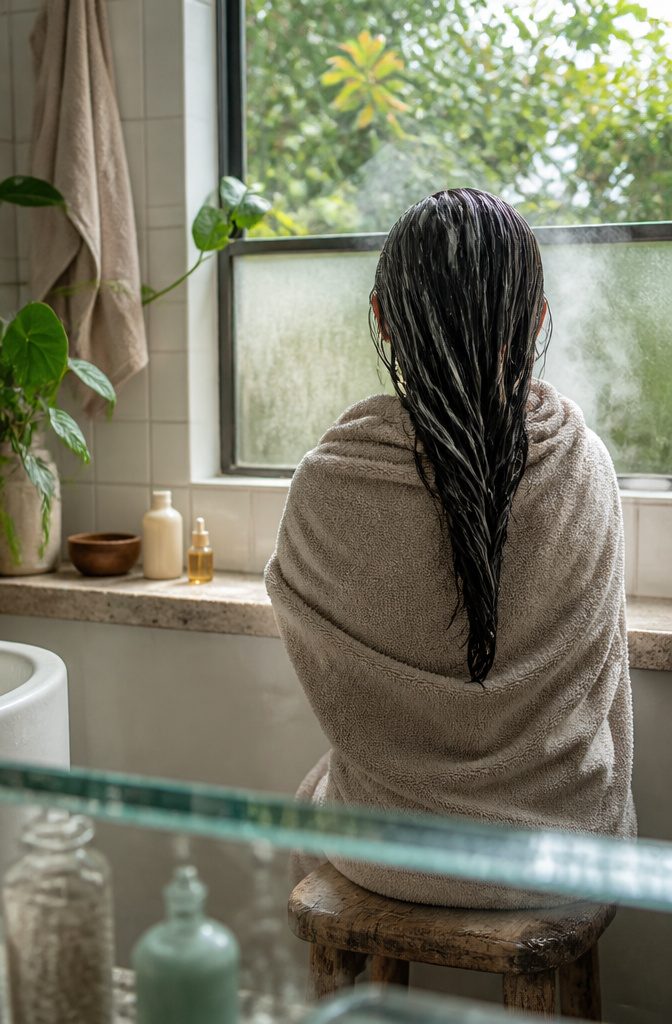
Dry hair breaks first at the ends, and ends are the oldest part of your length, so they need the most help.
A heavier conditioner is the right move if your hair runs dry, and washing less often keeps it from stripping back out.
A weekly mask does more than a daily rinse-out.
Apply it to damp hair and wrap a warm towel around your head for 5 minutes so it can soak in. Mask, leave-in, oil and deep treatment all do the same job: less dryness, fewer tangles, less snapping.
Olaplex shampoo and conditioner can go in twice a week. On scalp-shampoo day, leave it on for five minutes before rinsing, then condition.
9. Reduce Stress and Support Sleep

Stress raises cortisol, and that can slow growth or push more strands into shedding.
A big physical or emotional event, such as surgery, a hospital stay or exam season, can trigger telogen effluvium, where hair drops out in a wave a while after the event.
It tends to improve on its own in four to six months once the trigger is resolved, so a thinner ponytail after a rough season is not a reason to panic.
I’d put daily stress relief ahead of any new serum: a walk outside, yoga, or a few minutes of deep breathing.
Sleep matters too, since melatonin helps regulate your sleep cycle and has been linked to hair growth. A silk pillowcase is a cheap way to cut overnight friction and breakage.
10. Use Low-Manipulation or Protective Styles
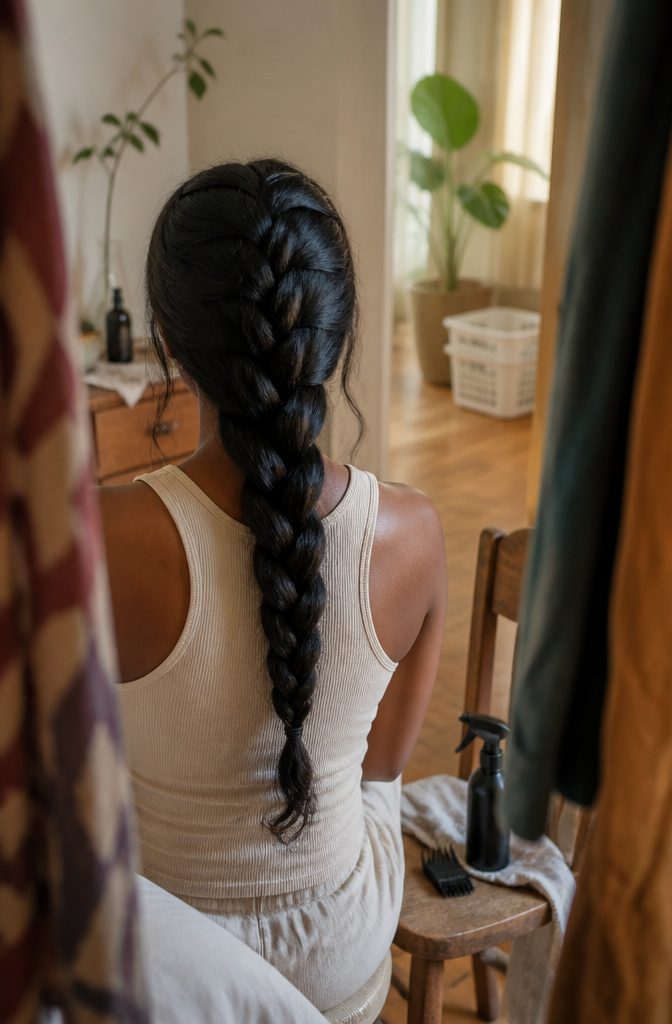
Hair left down tangles and dries out, mostly at the ends, so loose twists, rolls, and French braids are the easiest protective styles to do yourself at any hair type.
Type 4 hair does well with jumbo box braids or faux twists from a braider, since they last longer.
Prep matters more than the style.
Saturate wet hair with leave-in conditioner, apply heat protectant, then blow-dry on a comb attachment until it is fully dry, stretching each section as you go. That keeps hair from shrinking and drying out inside the style.
Tight buns and braids pull on the follicle and can cause traction alopecia, usually at the frontal hairline. Extensions and weaves add tension too, so keep them in for no more than 2 to 3 months at a time.
11. Consider Clinically Supported Treatment for Thinning
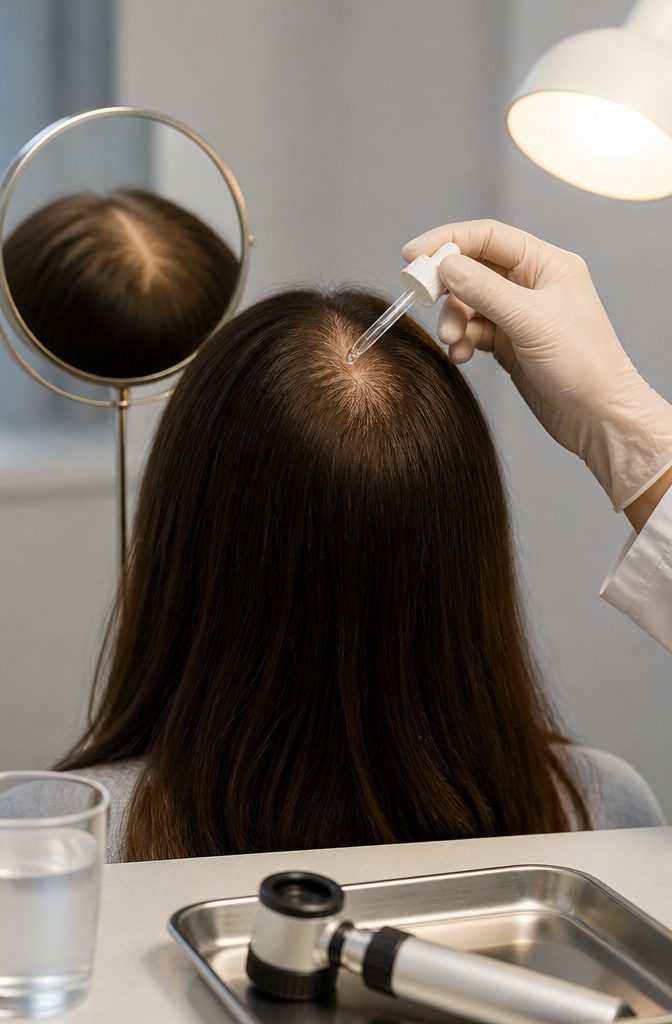
Persistent or unexplained thinning deserves a board-certified dermatologist before you buy anything, because the right treatment depends on the cause.
Alopecia areata responds best to corticosteroid injections, female pattern loss may call for hormone regulation, and stress-related shedding often settles on its own in four to six months.
Minoxidil (Rogaine in the US, Regaine in the UK) is where most people start, and I’d try it before anything pricier.
A compounded topical like HairStim bundles higher-dose minoxidil with other prescription ingredients. It runs $60 for a 30 to 60-day supply, and results need 10 to 12 weeks.
PRP usually takes four sessions at $600–$1,200 each, and it’s no guarantee.
Hair Grows Around Half an Inch Per Month
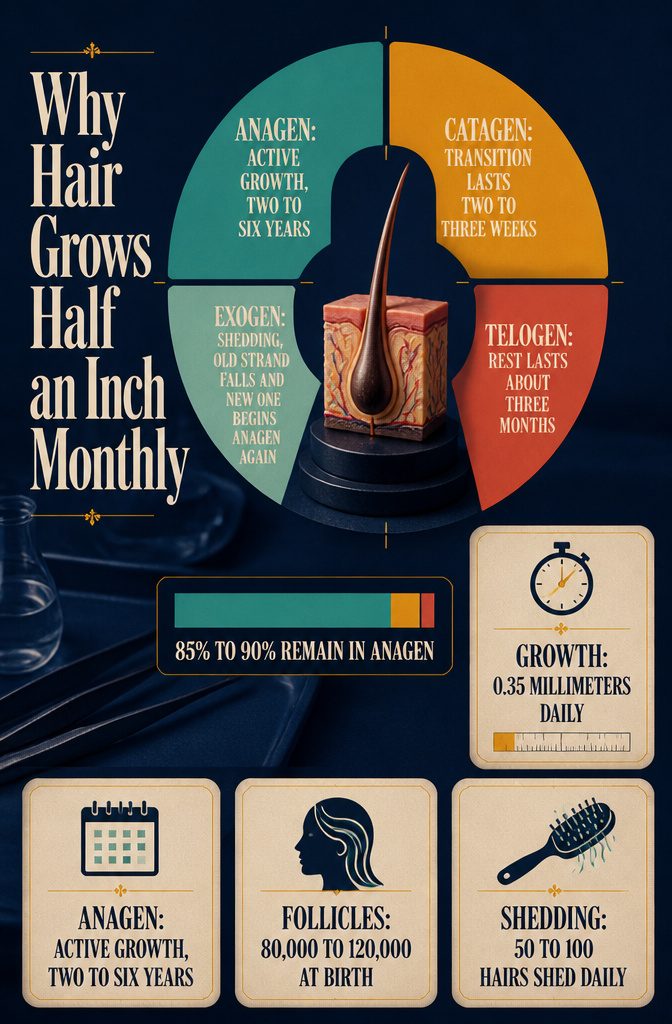
Your hair follicles shift through four distinct phases, and which phase a strand is in decides whether it grows or waits.
The anagen phase is active growth and runs two to six years for scalp hair, though it lasts only months for eyebrows or lashes. Catagen follows: a two- to three-week transition that stops growth.
Telogen is rest, typically three months, and nothing happens. Exogen is shedding, when the old strand falls and a new one begins anagen again.
The longer the hair is in the anagen phase, the lengthier it gets.
At any moment, 85% to 90% of your hairs are in anagen, 10% to 15% in telogen, and just 1% in catagen.
Growth happens at 0.35 millimeters per day, roughly half an inch per month or six inches per year. You were born with every follicle you will ever have, between 80,000 and 120,000, and losing 50 to 100 hairs a day is normal turnover, not damage.
Genetics Affect the Anagen Phase and Maximum Length
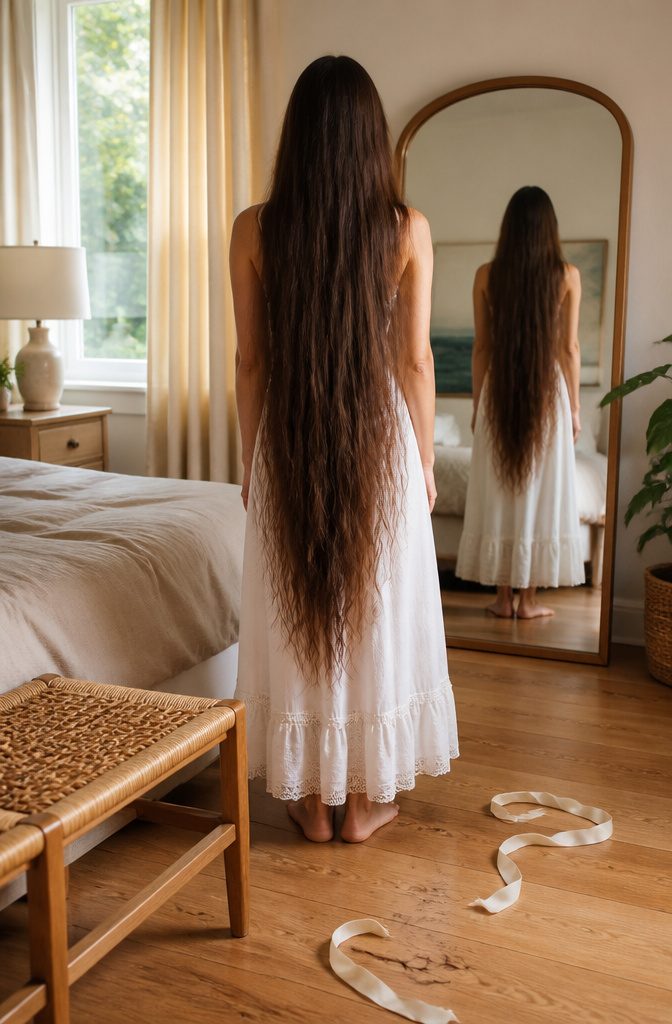
Two things set how long your hair can get: how long each strand stays in the anagen (growth) phase, and how much of it breaks off along the way.
Genetics largely decide the first, with hormones, age, nutrition, and overall health nudging it.
Someone with a long anagen phase can grow hair well past the shoulders, while someone with a short one stalls out sooner, no matter what they buy.
No commercially available test can tell you your own anagen length, so I would skip any service that claims to.
No product or routine makes hair grow dramatically faster, unless a deficiency or health condition is holding growth back, and then a doctor is the right stop. Breakage is the part you control.
Hair-Type-Specific Care
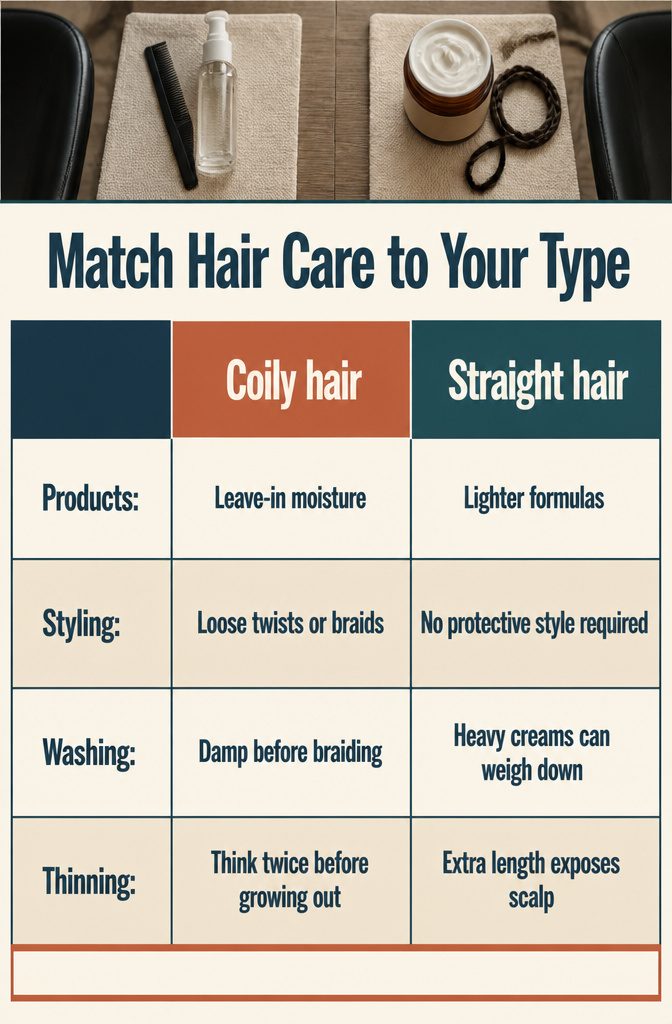
Your hair type decides which long-hair habits pay off and which backfire:
- Coily hair holds length best in protective styles such as loose twists, rolls, or French braids, paired with moisture-retaining products. Saturate damp hair with leave-in conditioner before braiding, never braid it dry.
- Straight hair can stay on lighter products; heavy creams just weigh it down.
- Dry hair does better with fewer washes and a heavier conditioner.
- Fine or very curly hair damages easily, so skip brushing it wet and choose products made for your type.
- Thick hair is the better candidate for length. Fine hair can look stringy once it gets long.
- If you’re thinning, I’d think twice before growing out. The extra weight pulls on the hair and exposes more scalp.
Postpartum and Stress-Related Shedding
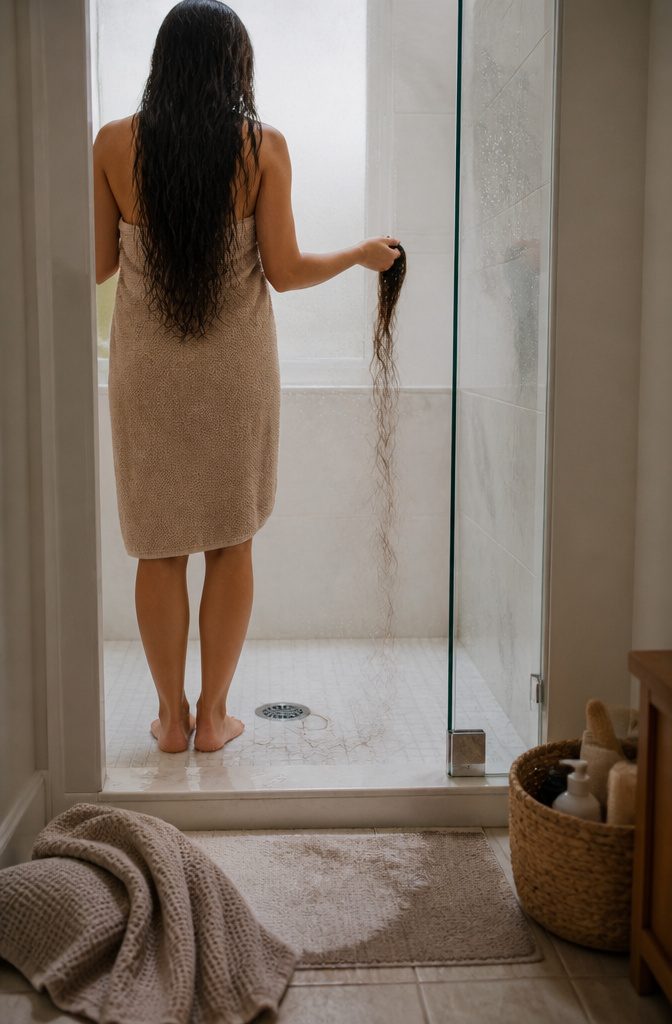
Hair can start falling out about five to six months after childbirth, and the volume of it in the shower drain can be alarming.
This is telogen effluvium, the same temporary shedding that follows major physical or emotional events such as surgery, a serious illness, or a rough stretch of grief. Many hairs shift into the resting phase together, then release together.
Length isn’t lost for good.
Shedding of this kind tends to improve within four to six months after the trigger is resolved, and I’d hold off on panic trims or expensive fixes until that window passes. Gentle handling is enough in the meantime.
Loss that keeps going past that point, or shows up with no clear cause, deserves a visit to a doctor or dermatologist.
Rosemary Oil Was Compared With 2% Minoxidil in a 2015 Study
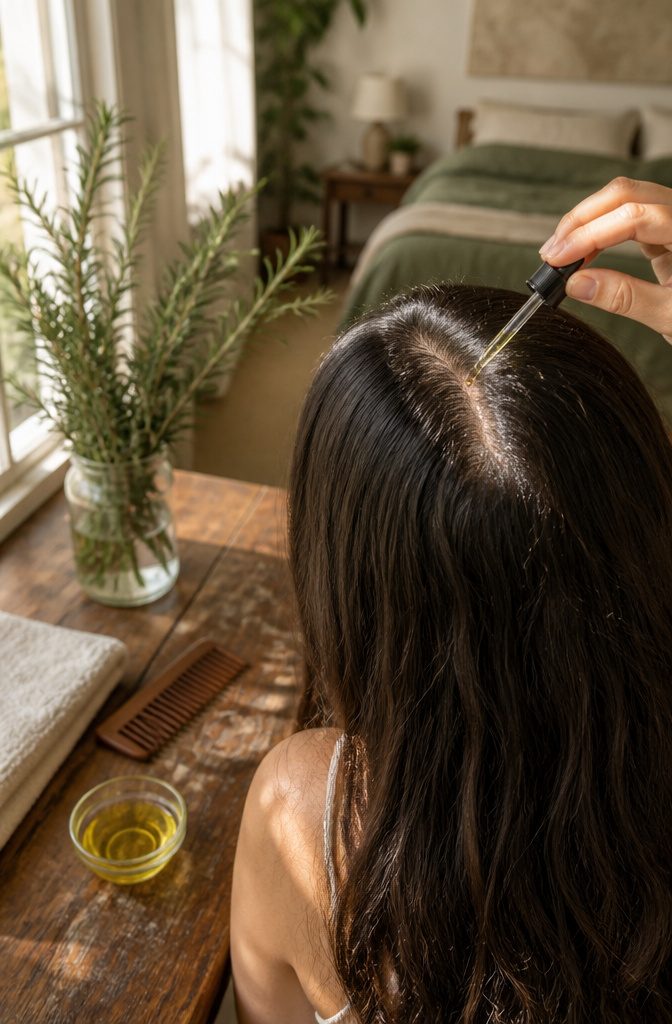
A 2015 study put rosemary oil head to head with 2% minoxidil and found comparable results after six months of daily use. Both groups saw an increase in hair count, though neither worked quickly.
The takeaway is that massaging in a few drops of rosemary oil once a day for at least 15 minutes gives you a natural option with clinical backing, but it requires the same patience as the pharmaceutical route.
This is one tool in the kit, not a silver bullet. If you go this route, dilute the rosemary oil in a carrier like jojoba or sweet almond before applying it to your scalp.
Consistency matters more than intensity. Six months is a long time to stick with something that shows no visible change in the first month, but the study group that quit early saw nothing at all.
Frequently Asked Questions
How fast does hair grow?
Hair grows about 0.35 millimeters per day, which works out to roughly half an inch per month or 6 inches per year.
Growth happens during the anagen phase, which lasts 2 to 6 years for scalp hair. At any moment, 85% to 90% of your hair is actively growing.
What determines hair length?
Two things set maximum length: how long each strand stays in the anagen (growth) phase, and how much breaks off along the way.
Genetics largely decides the anagen length, with hormones, age, nutrition, and health playing smaller roles. Breakage is the part you can control through gentle handling and protective care.
Can you really make your hair grow faster?
No product or routine makes hair grow dramatically faster, unless a deficiency or health condition is holding growth back.
Growth rate is set by genetics, hormones, health, and age. What you can control is breakage, which lets more of the length you’re already growing stay intact.
How can I get long hair naturally?
Eat a balanced diet with protein at every meal, since each strand is made of keratin.
Wash your scalp often enough to prevent buildup, trim split ends every 10 to 12 weeks, and limit heat styling and chemical treatments that dry hair out. Gentle handling when wet and regular conditioning prevent breakage, which is what lets length accumulate.
Are there treatments for severe hair loss?
Treatment depends on the cause, so persistent or unexplained thinning deserves a board-certified dermatologist before you buy anything.
Alopecia areata responds best to corticosteroid injections, female pattern loss may call for hormone regulation, and stress-related shedding often settles on its own in 4 to 6 months. Minoxidil is where most people start for general thinning.