Growing hair past your shoulders takes 5–6 years at the average rate of half an inch a month, and you can’t change that. What you can change is whether the ends snap off as fast as the roots push out.
Most people lose length to breakage, not slow growth, and the fix is less heat, looser ponytails, and trims every 8–10 weeks to cut split ends before they travel.
1. Eat Enough Protein

Hair is built from protein, so a diet that skimps on it shows up as shedding and brittle strands before it shows up anywhere else.
The usual guidance is 50 grams of protein or more per day, spread across meals rather than saved for dinner. Fish, eggs, beans, nuts, dairy, tofu and lean meat all count.
Sources disagree on which nutrients matter most: iron, zinc, vitamin D, omega-3 fats and biotin each get a vote.
I’d stop arguing and eat a varied plate with lentils, pumpkin seeds, salmon and leafy greens. Skip crash diets and cleanses, which starve follicles and slow growth.
2. Cut Back on Heat and Chemicals
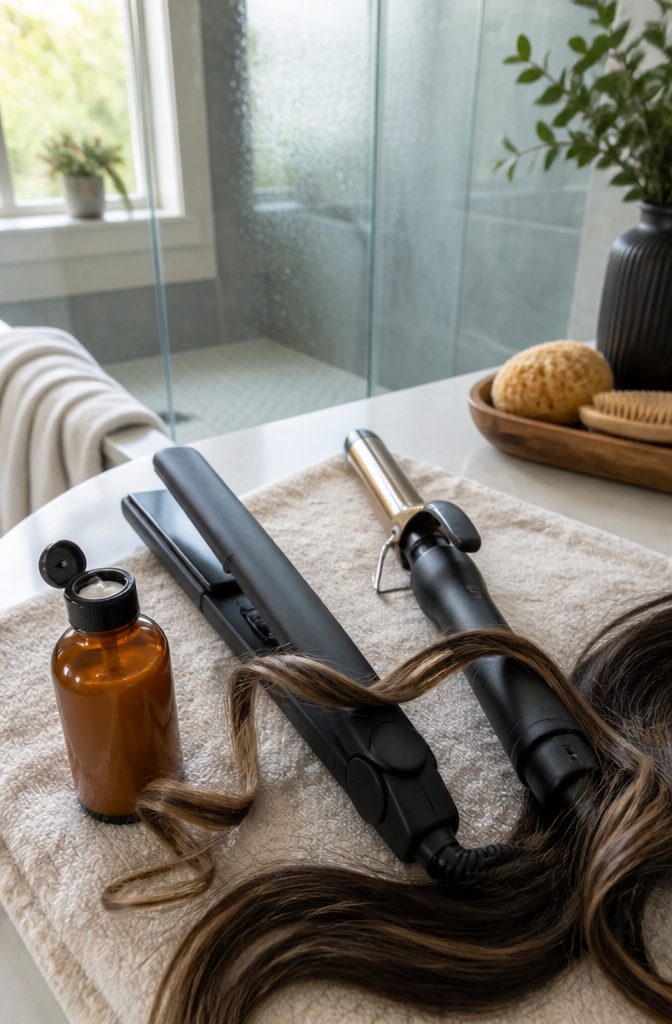
Set flat irons and curling irons between 325° and 350°, not at the top of the dial. Heat strips moisture from the strand, and brittle hair snaps before it ever reaches the length you’re growing toward.
Try the 5:2 pattern: five days off, two days on. If you wash every day, that means air-drying or a quick rough-dry on most mornings.
On heat days, use a protectant first. L’Incroyable Blowdry Lotion is rated to 450°F, which leaves plenty of room under that 325°–350° range.
Bleach is the harder call. Lifting dark pigment breaks down the fatty acids in the shaft, so I’d choose balayage or an ombre over a full platinum.
3. Trim to Keep Length
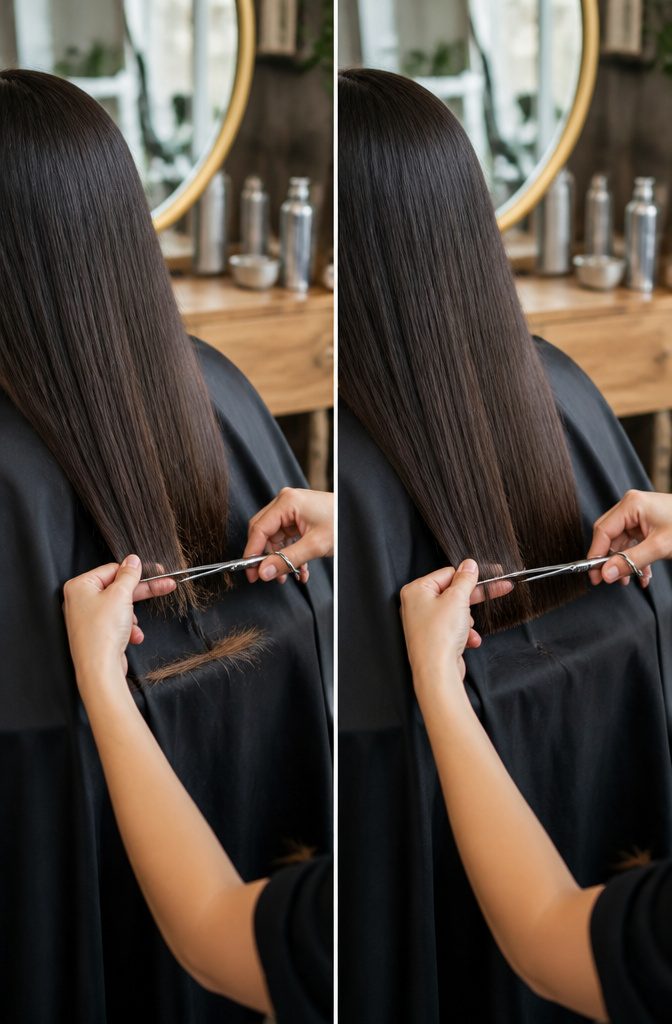
Trims keep the length you already grew; they do not make follicles work faster.
Hair comes out of the scalp at the same rate whether or not you cut it, and a split end that travels up the strand will snap off and take inches with it.
While haircuts don’t make your hair grow any faster, they get rid of split ends that break your hair.
Cutting only the damaged ends costs you less than waiting does.
One camp says cut 0.8–1 inch every 10–12 days; another says every 8–10 weeks. I’d pick the 8–10 week schedule, since the first loses length you are trying to keep.
4. Scalp Care and Massage

A 2016 study of daily 4-minute scalp massages found that all 9 participants had thicker hair after 24 weeks.
That group is tiny, and the study showed no noticeable change in growth speed, so I treat massage as support for strand thickness and breakage, not a way to grow hair faster.
The likely mechanism is blood flow: massage dilates vessels under the skin, which delivers more oxygen and nutrients to the follicle.
The easiest habit is working your fingertips over the scalp while you shampoo.
If you want a tool, the $12 Rizos Curls Scalp Massage Brush is the one I’d start with. Four minutes a day is the only dose with any evidence behind it.
5. Oils and Masks

Oils and masks sit somewhere between ritual and wishful thinking.
The theory is straightforward: castor or olive oil applied for 30–60 minutes once or twice a week helps restore moisture, which in turn reduces breakage and keeps length you would otherwise lose to split ends and dry, brittle hair.
Castor oil carries vitamin E, olive oil brings omega-3 acids, and both can be mixed with coconut or almond oil if you want more slip.
Jojoba and argan work as leave-ins on damp hair, jojoba offering B vitamins and zinc that may support growth, though the evidence remains thin.
Weekly masks follow the same logic. A 20-minute treatment like Briogeo Don’t Despair, Repair! aims to strengthen from the inside out, and homemade versions exist: beaten egg for protein, mashed banana with olive oil for softer strands.
I lean toward the formulated masks because they rinse cleaner and smell better, but results vary more by consistency than by recipe.
6. Detangle Gently
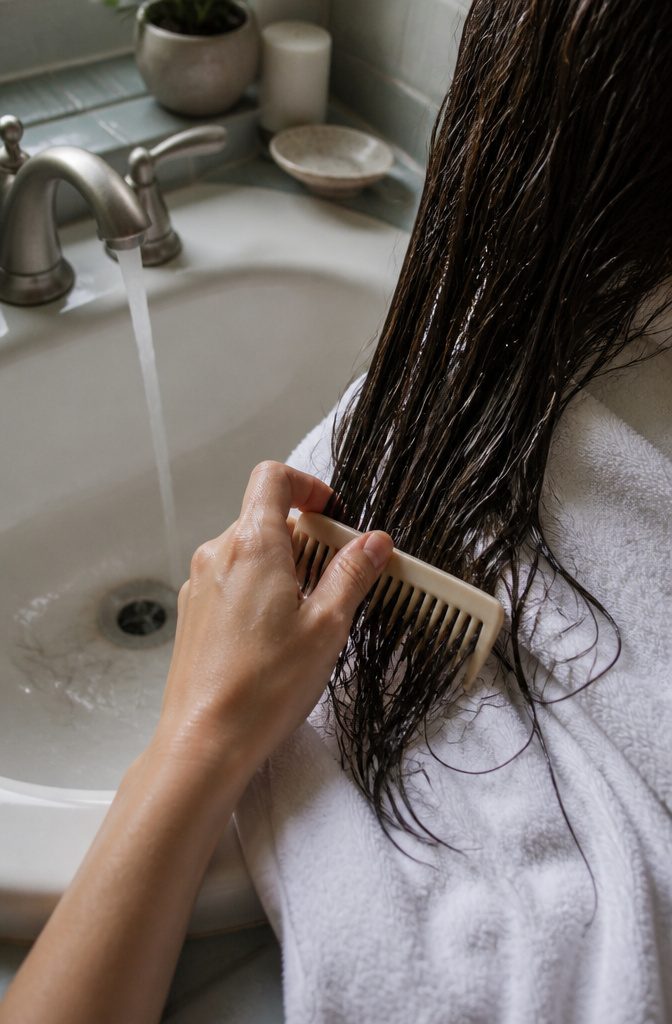
Wet hair stretches and the outer cuticle lifts, so a brush dragged through it snaps strands that dry hair would have held onto.
Detangle before you shampoo when you can. If the knots can’t wait, work a leave-in conditioner from roots to ends, then use a wide-tooth comb or a brush made for wet hair.
Start at the ends and work up in small sections, so a knot never gets pulled against the full length.
Water temperature matters too: hot water dries out the scalp and strands, so I keep showers cooler and finish with a cold rinse after conditioning. Washing two to three times a week is plenty for most people.
7. Silk or Satin Pillowcases

Switching to silk or satin cuts friction while you sleep, and that matters more than it sounds. Cotton grips the hair shaft and tugs as you move through the night, snapping strands that could otherwise add up to visible length.
Silk and satin let hair slide instead of catch, so breakage drops and retention climbs over weeks of use.
The effect compounds because most people spend 7–9 hours asleep.
That window also gives your body time to produce melatonin, a hormone tied to hair growth cycles. Sleep too little and melatonin dips, which can slow growth at the follicle.
Chronic stress layers onto that by pushing follicles into a resting phase where they shed instead of growing new strands, so protecting what you have overnight becomes double duty.
I find the silk swap easier to stick with than most other changes because it asks nothing once the pillowcase is on. No morning step, no product to remember, just less tangling when you wake up.
8. Skip Tight Styles

No hairstyle makes hair grow faster, so the goal here is protecting what you already have. Ponytails, buns and cornrows are the usual offenders, and the damage comes from elastics, clips and hairbands that pull tightly on your roots.
A topknot slapped up most days puts tension on the same patch of hair every time, and that spot is where extra breakage shows up. Broken hair does not keep growing, so you lose length you thought you were saving.
I’d mix it up: wear your hair loose on some days, and when you do tie it back, keep the hold loose enough that you can’t feel it tugging at your hairline. Low-maintenance, natural styles are the safest default.
9. Supplements

Supplements
Supplements make sense only if your diet leaves gaps, and guessing which ones you need rarely works.
Deficiencies in vitamins D, E, and A, along with folic acid, iron, and zinc, can all affect hair structure and growth, but the right move is to check for deficiencies with a clinician first rather than buying bottles on assumption.
If testing shows you are short on something or your diet consistently misses key nutrients, products like Nutrafol ($83) or Viviscal ($33) may help.
Both include biotin, vitamins, and ingredients marketed to support follicle health and circulation, but the evidence backing hair supplements remains uneven.
Omega-3 and omega-6 supplements showed some protection against hair loss in one study of female pattern baldness, though results were measured over six months and effects varied.
If your diet already covers protein, iron, and a range of vitamins, adding supplements on top may do nothing.
10. See a Doctor
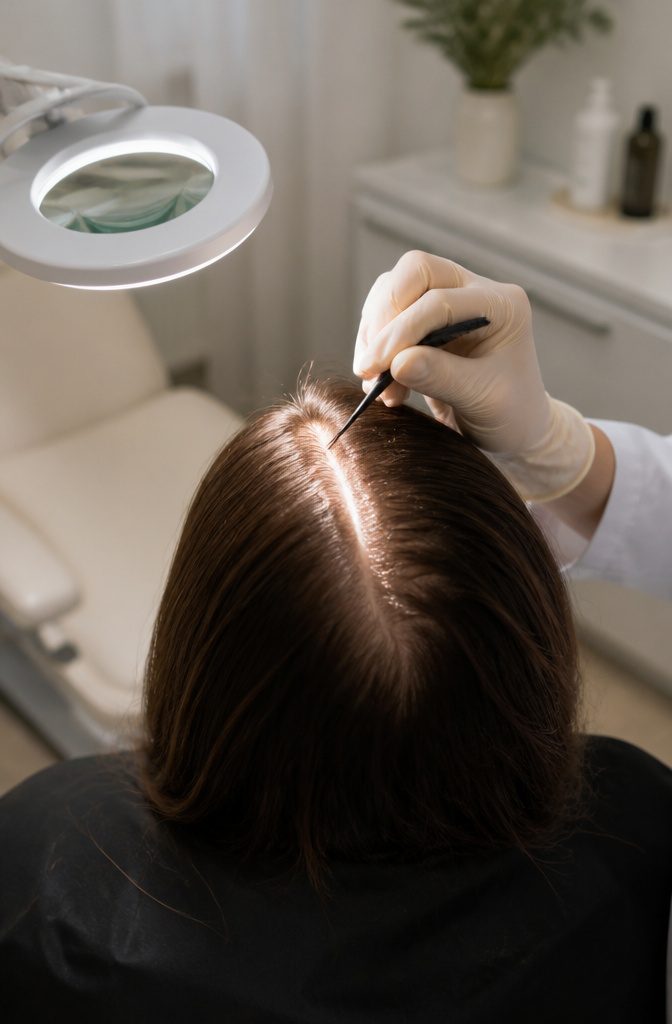
More than 50% of women notice real hair loss at some point, and that count leaves out anyone born with fine or sparse strands.
Shedding 50–100 hairs a day is normal; steady thinning, a wider part, or length that stalls for months is a reason to book a dermatologist.
A diagnosis matters because the causes need different fixes.
Telogen effluvium, the all-over shedding tied to thyroid or autoimmune disease or anemia, usually grows back once the cause is treated. Hereditary thinning does not.
For that, I’d start with minoxidil, sold as Rogaine or Hers 2% in 2% and 5% strengths.
Expect up to 12 months before you see results, and shedding resumes if you stop. PRP injections are the clinic option to ask about.
How Fast Hair Grows
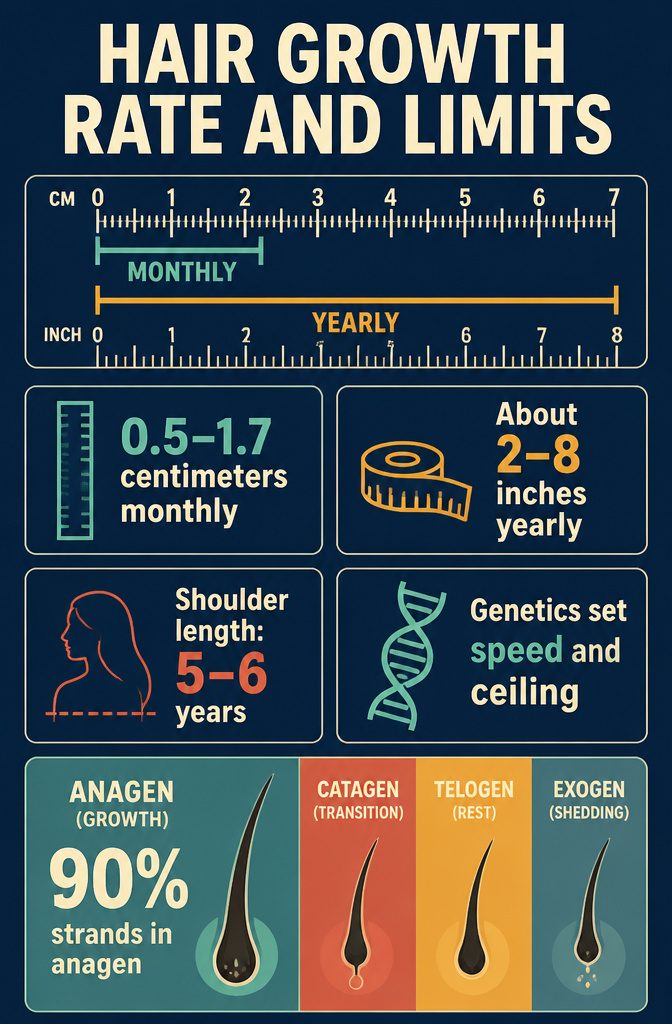
Hair grows about 0.5–1.7 centimeters a month, which works out to roughly 2–8 inches a year, and the rate for most people sits near half an inch a month.
At that pace, reaching shoulder length takes 5–6 years from a short start. Genetics set both the speed and the ceiling, so some people reach their waist while others stall past the shoulders.
Each strand cycles through anagen (growth), catagen (transition), telogen (rest) and exogen (shedding).
About 90% of your strands are in anagen at any moment, so most of your hair is already working. No routine speeds the clock; what you can change is how many strands survive to their full length.
Why Breakage Hides Growth
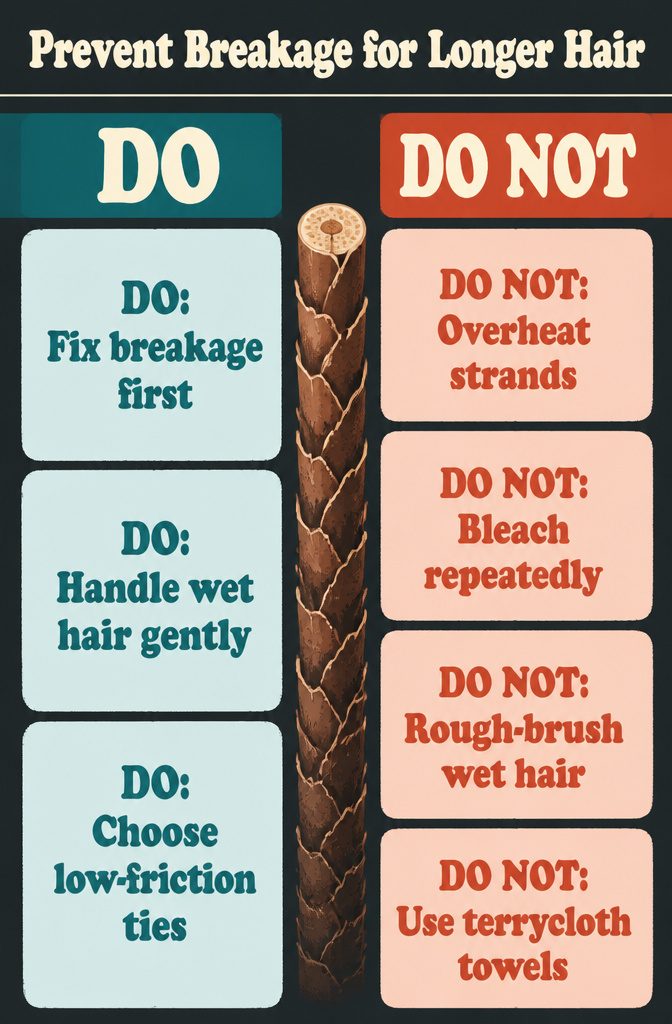
Hair grows about 0.5 inches a month, and that rate is set by genetics, so a trim-free year that leaves you at the same length means the ends are snapping off about as fast as the roots push out.
Heat is the usual culprit: hot tools pull moisture from the strand, and brittle hair breaks.
Bleach does it chemically by breaking down the fatty acids in the shaft, and that damage stays in the hair until it has grown out root to end.
Rough brushing on wet hair, when the cuticle is swollen and lifted, snaps strands, and so do terrycloth towels and tight, friction-heavy hair ties. I’d fix the breakage before buying anything marketed for growth.
Frequently Asked Questions
Can you make your hair grow faster?
No. Genetics set the growth rate at roughly 0.5 inches per month, and no product or routine speeds that up.
What you can control is breakage: reducing heat damage, skipping tight styles, and protecting hair while you sleep keeps more of the length you’re already growing.
How can I increase my hair growth naturally?
You can’t increase the rate, but you can support what’s already happening.
Eat 50 grams of protein daily, cut heat tools to 325–350°, trim every 8–10 weeks, and switch to a silk or satin pillowcase. These steps reduce breakage and let strands reach their full length instead of snapping off early.
Which hairstyles promote healthy hair growth?
No hairstyle makes hair grow faster.
Avoid tight ponytails, buns, and cornrows that pull at the roots, and mix up your style so the same patch isn’t under tension every day. Loose, low-maintenance styles prevent breakage and protect the length you have.
How to grow really long hair fast?
Hair grows about 0.5 inches a month, so reaching shoulder length from a short start takes 5–6 years.
You can’t speed that up, but you can stop losing progress: cut heat to 325–350°, detangle gently with a wide-tooth comb, sleep on silk or satin, and trim split ends every 8–10 weeks.
How can I protect my hair while sleeping?
Switch to a silk or satin pillowcase.
Cotton grips the hair shaft and snaps strands as you move through the night, while silk and satin let hair slide without friction. Over the 7–9 hours most people sleep, that difference adds up to less breakage and more length retained.
Should I brush my hair daily?
Brushing dry hair daily is fine, but wet hair is fragile and stretches easily.
Detangle before you shampoo when possible, or work a leave-in conditioner through damp hair and use a wide-tooth comb, starting at the ends and moving up. Dragging a brush through wet strands snaps them.
Does stress affect hair growth?
Yes. Chronic stress pushes follicles into a resting phase where they shed instead of growing new strands, and it can lower melatonin, a hormone tied to hair growth cycles.
Managing stress and getting 7–9 hours of sleep helps keep more follicles in the active growth phase.